International Neonatology Training Program" INTP


                                    BY DR M OSAMA HUSSEIN MD
DEFINITIONS OF TERMS IN PRACTICE GUIDELINE ON THE MANAGEMENT
                    OF FEVER IN INFANTS AND YOUNG CHILDREN


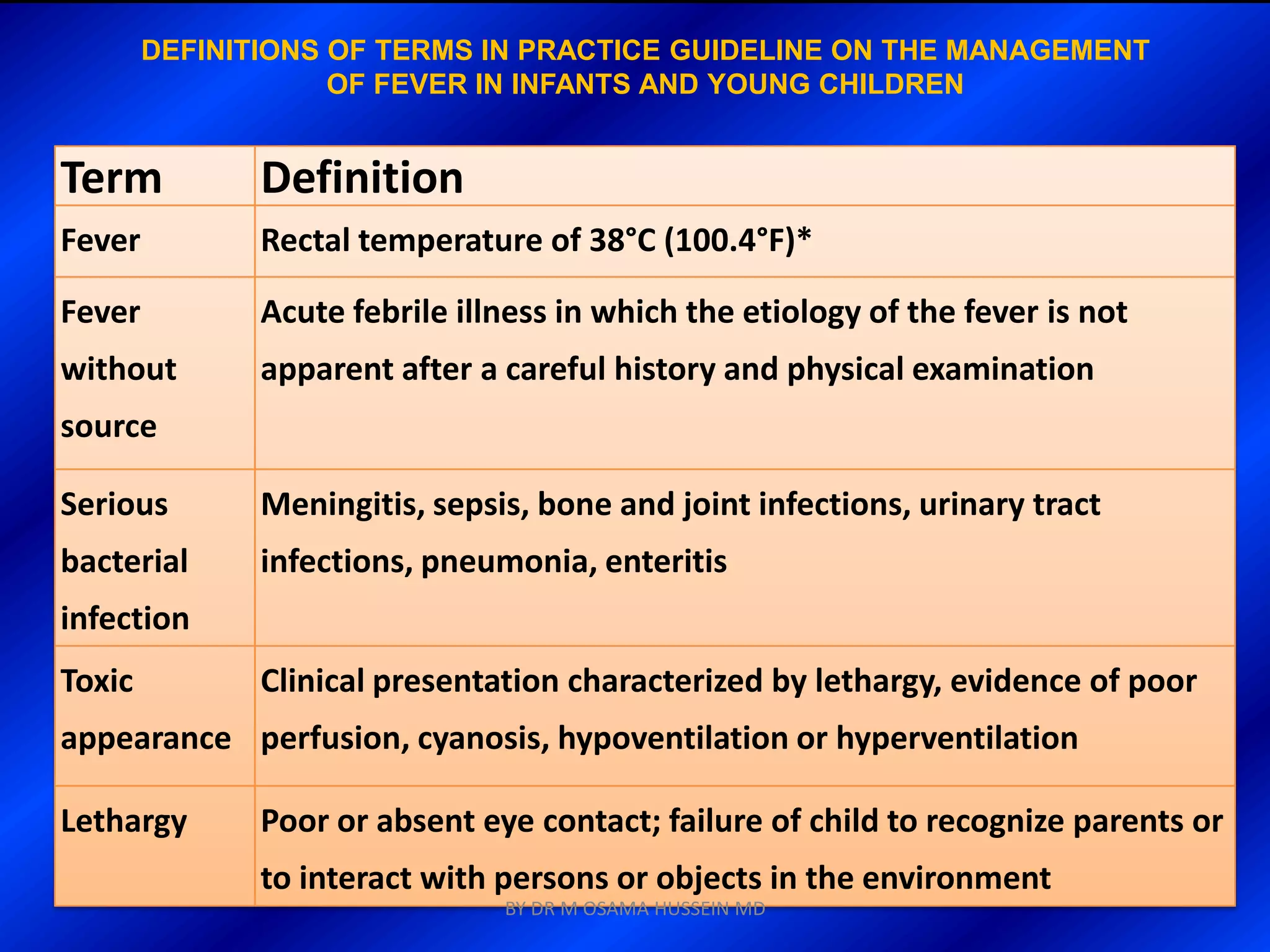
Term           Definition
Fever          Rectal temperature of 38°C (100.4°F)*

Fever          Acute febrile illness in which the etiology of the fever is not
without        apparent after a careful history and physical examination
source

Serious        Meningitis, sepsis, bone and joint infections, urinary tract
bacterial      infections, pneumonia, enteritis
infection
Toxic          Clinical presentation characterized by lethargy, evidence of poor
appearance perfusion, cyanosis, hypoventilation or hyperventilation

Lethargy       Poor or absent eye contact; failure of child to recognize parents or
               to interact with persons or objects in the environment
                                BY DR M OSAMA HUSSEIN MD
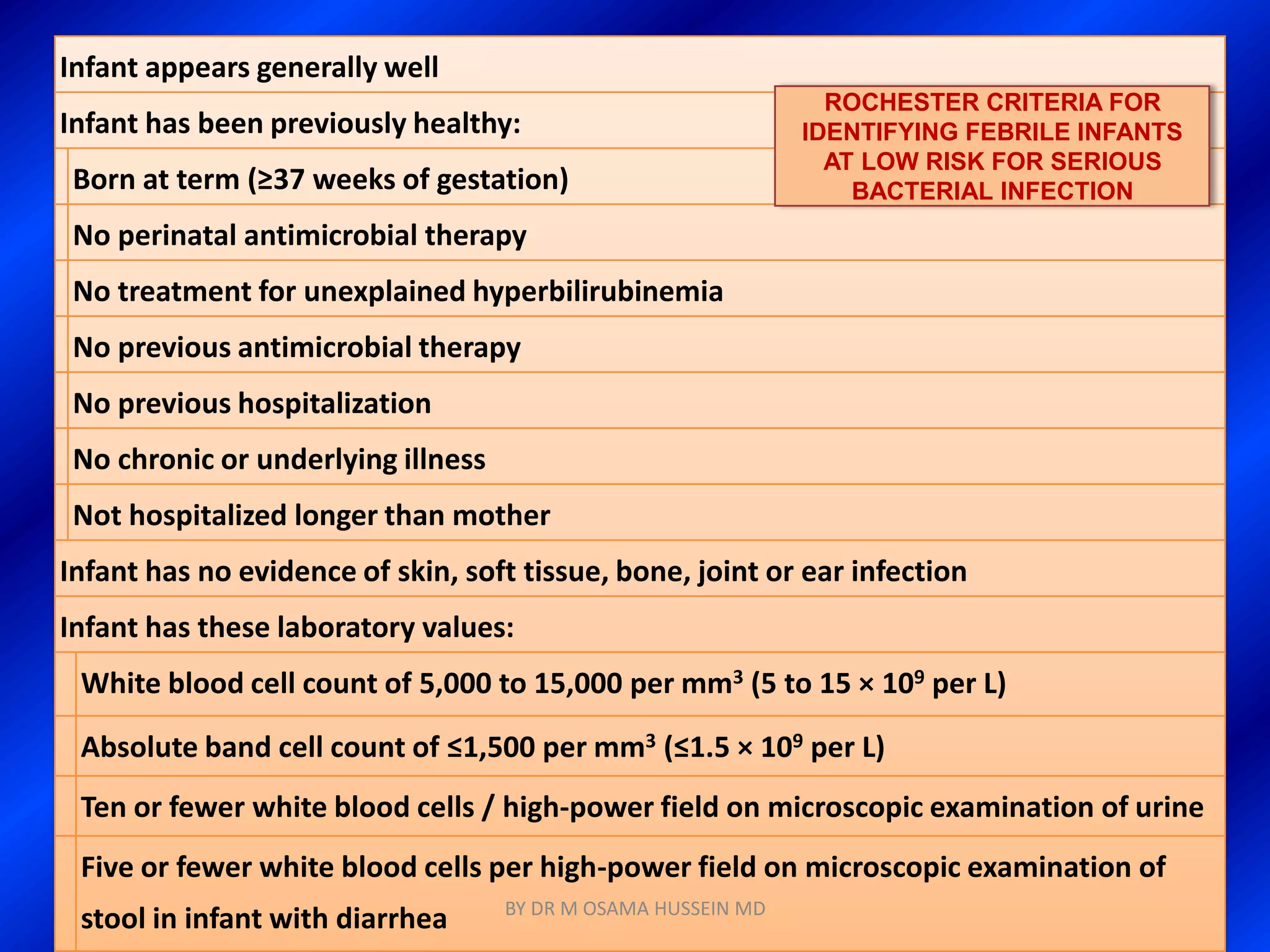
Infant appears generally well
                                                                 ROCHESTER CRITERIA FOR
Infant has been previously healthy:                            IDENTIFYING FEBRILE INFANTS
                                                                 AT LOW RISK FOR SERIOUS
 Born at term (≥37 weeks of gestation)                             BACTERIAL INFECTION
 No perinatal antimicrobial therapy
 No treatment for unexplained hyperbilirubinemia
 No previous antimicrobial therapy
 No previous hospitalization
 No chronic or underlying illness
 Not hospitalized longer than mother
Infant has no evidence of skin, soft tissue, bone, joint or ear infection
Infant has these laboratory values:
 White blood cell count of 5,000 to 15,000 per mm3 (5 to 15 × 109 per L)

 Absolute band cell count of ≤1,500 per mm3 (≤1.5 × 10⁹ per L)
 Ten or fewer white blood cells / high-power field on microscopic examination of urine
 Five or fewer white blood cells per high-power field on microscopic examination of
                                    BY DR M OSAMA HUSSEIN MD
 stool in infant with diarrhea
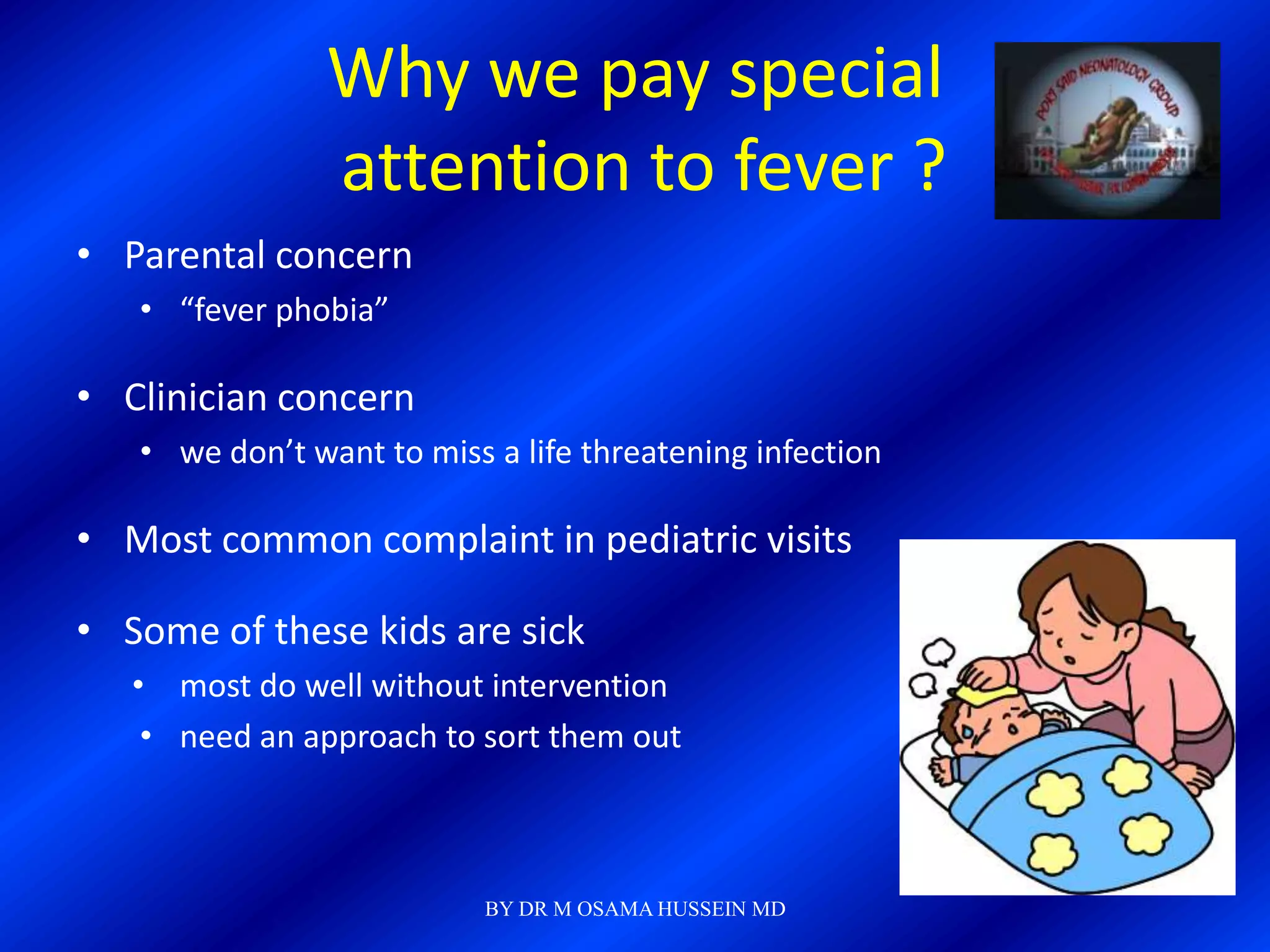
Why we pay special
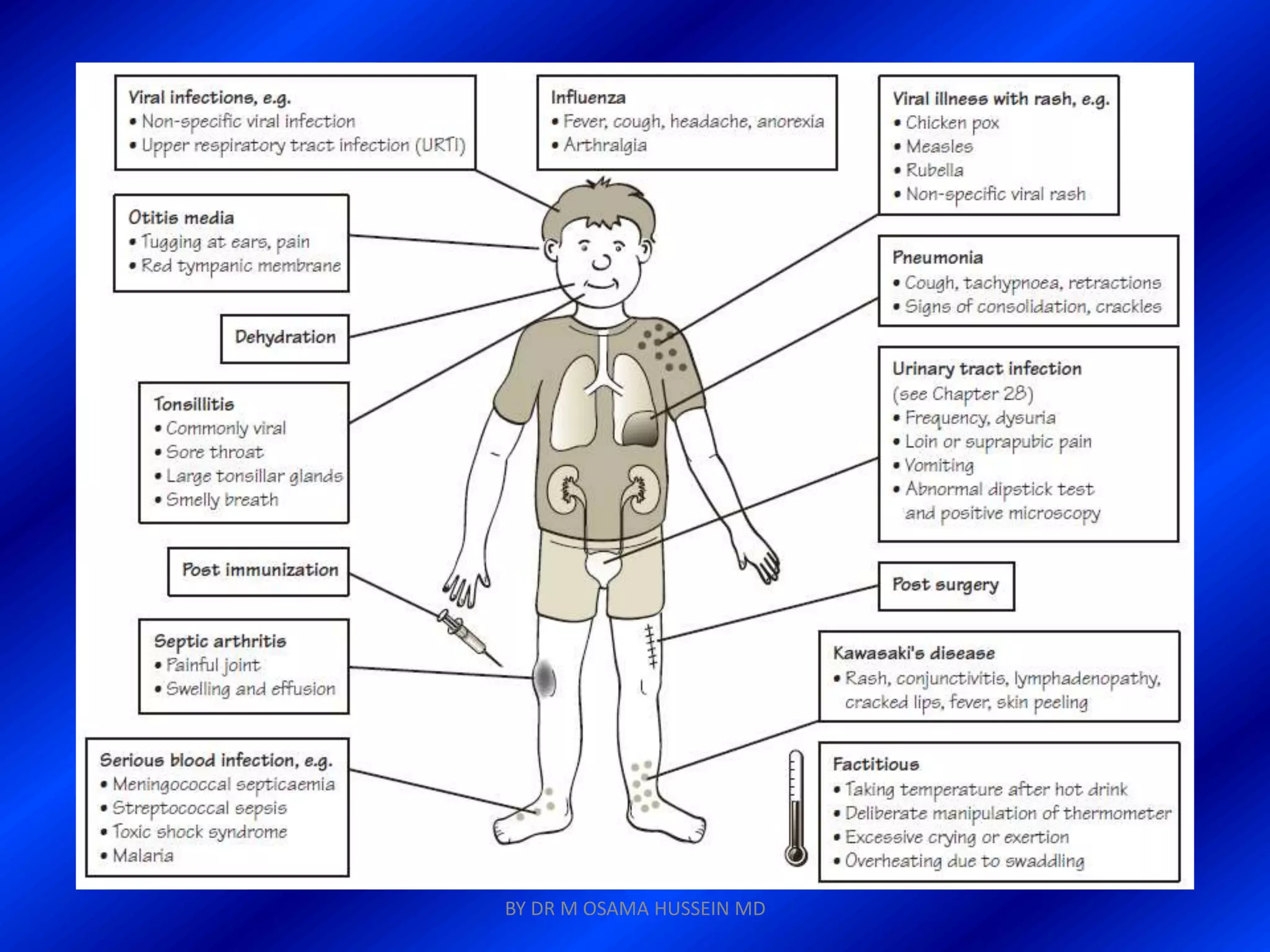
                attention to fever ?
• Parental concern
   • “fever phobia”

• Clinician concern
   • we don’t want to miss a life threatening infection

• Most common complaint in pediatric visits

• Some of these kids are sick
   • most do well without intervention
    • need an approach to sort them out


                           BY DR M OSAMA HUSSEIN MD
BY DR M OSAMA HUSSEIN MD
Fever Without a Source
• Fever without a source “FWS”= fever with no
  apparent cause
• “Fever of Unknown Origin”= a febrile illness of
  at least three weeks' duration, at least 38.3°C
  on at least three occasions and failure to
  establish a diagnosis in spite of intensive
  evaluation.


                  BY DR M OSAMA HUSSEIN MD
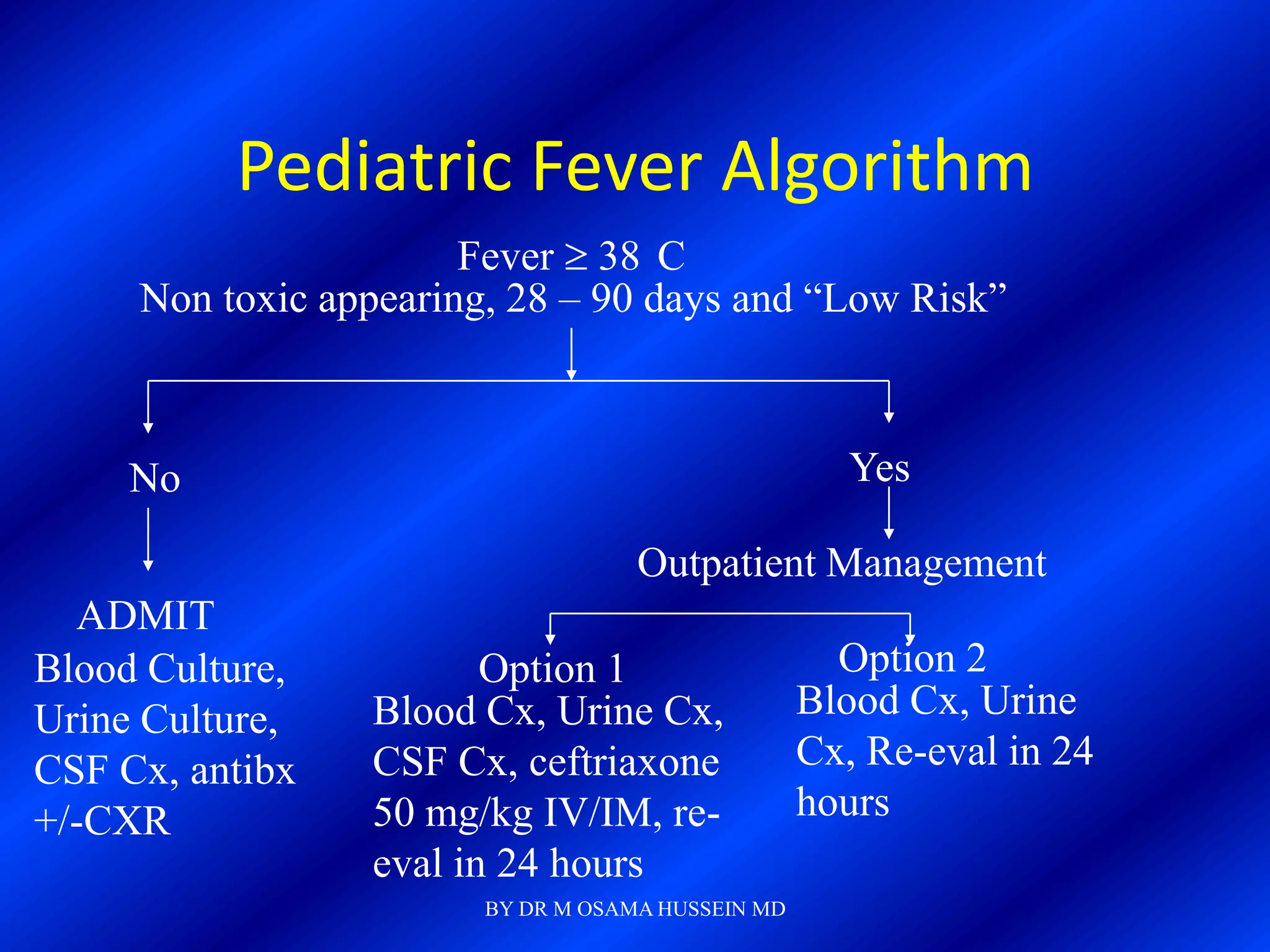
Pediatric Fever Algorithm
                       Fever 38 C
     Non toxic appearing, 28 – 90 days and “Low Risk”


     No                                               Yes
                                    Outpatient Management
  ADMIT
Blood Culture,          Option 1                     Option 2
Urine Culture,   Blood Cx, Urine Cx,               Blood Cx, Urine
CSF Cx, antibx   CSF Cx, ceftriaxone               Cx, Re-eval in 24
+/-CXR           50 mg/kg IV/IM, re-               hours
                 eval in 24 hours
                        BY DR M OSAMA HUSSEIN MD
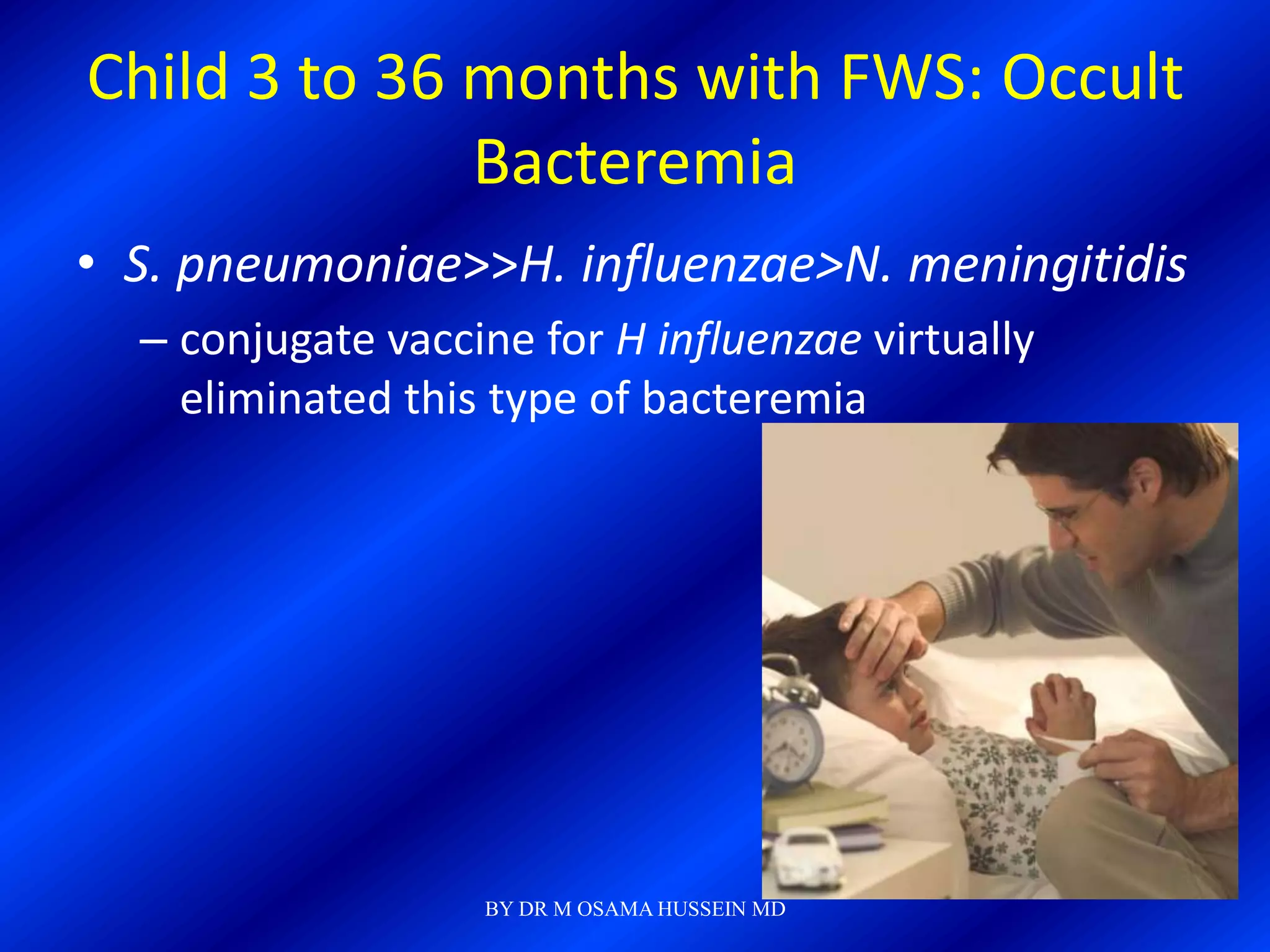
Child 3 to 36 months with FWS: Occult
              Bacteremia
• S. pneumoniae>>H. influenzae>N. meningitidis
  – conjugate vaccine for H influenzae virtually
    eliminated this type of bacteremia


                   BY DR M OSAMA HUSSEIN MD
Child 3 to 36 months with FWS:
          Practice Guidelines
• Toxic - Admit with full work up
• Non-toxic – Consider workup when fever is
  39°C


                 BY DR M OSAMA HUSSEIN MD
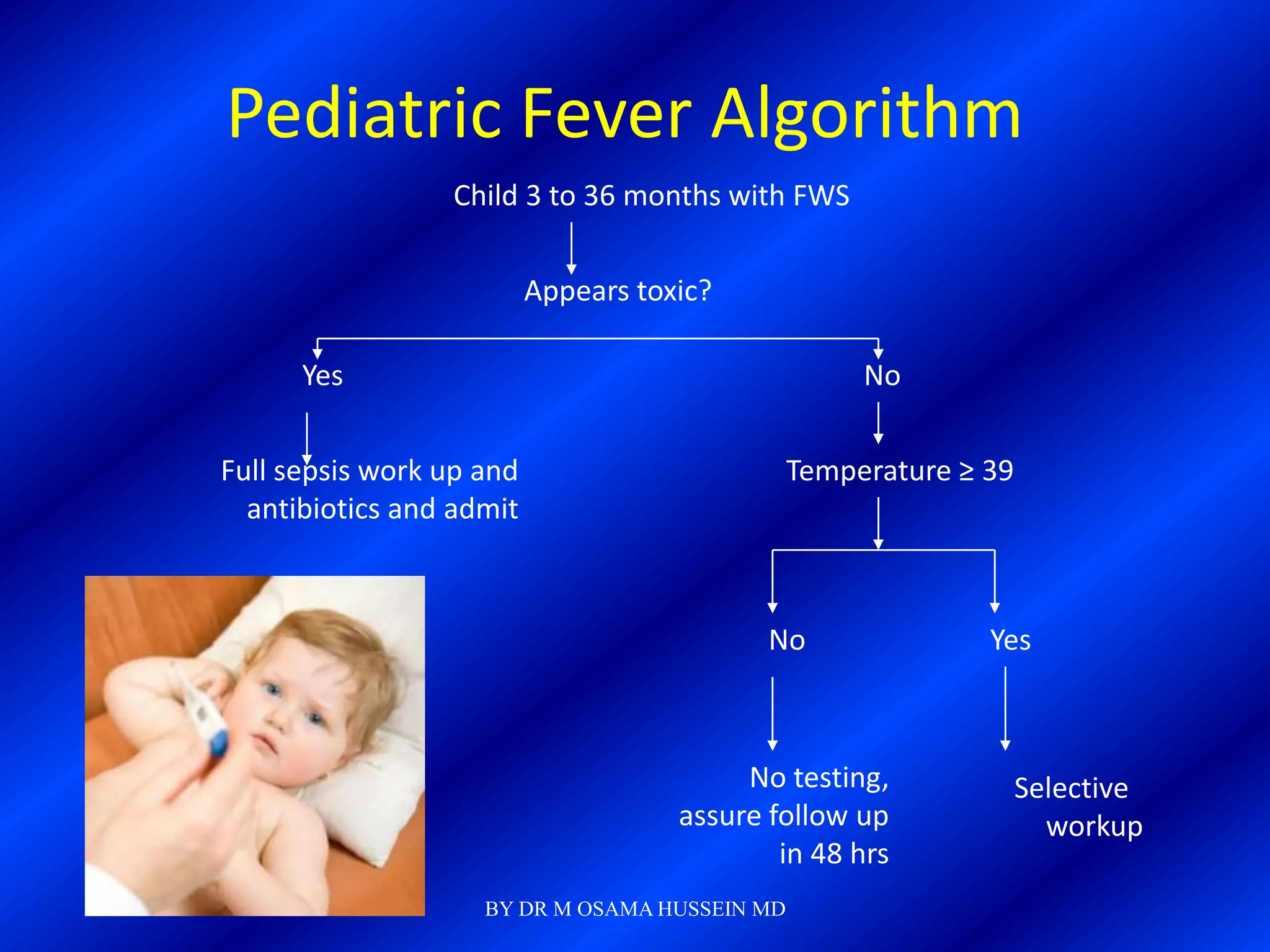
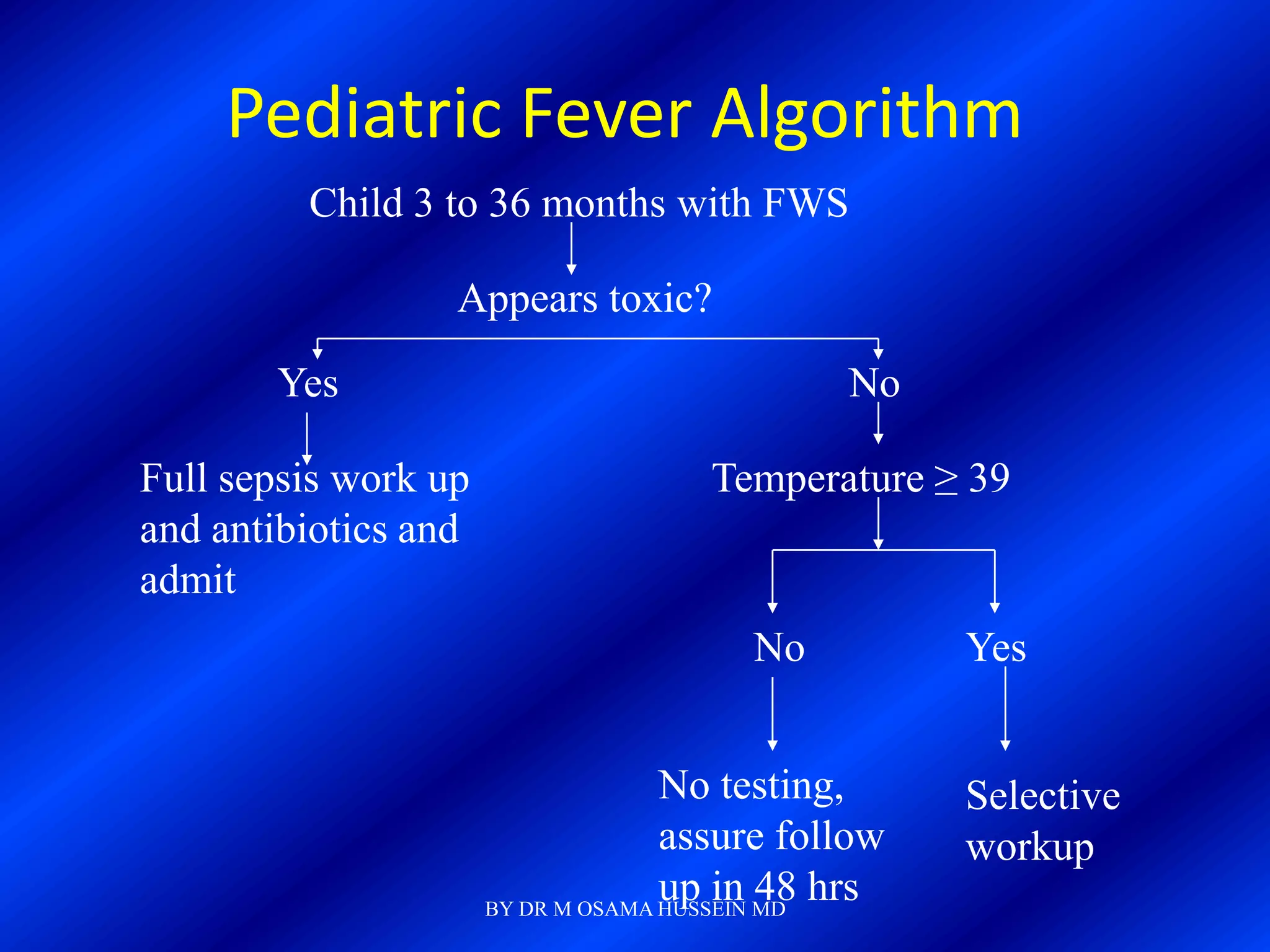
Pediatric Fever Algorithm
                 Child 3 to 36 months with FWS


                          Appears toxic?

      Yes                                           No


Full sepsis work up and                        Temperature ≥ 39
  antibiotics and admit


                                            No               Yes


                                          No testing,             Selective
                                     assure follow up               workup
                                             in 48 hrs
                    BY DR M OSAMA HUSSEIN MD
Child 3 to 36 months with FWS:
          Practice Guidelines
• Toxic - Admit with full work up
• Non-toxic – Consider workup when fever is
  39°C (102.2°F)


                 BY DR M OSAMA HUSSEIN MD
Child 3 to 36 months with FWS:
             Occult Pneumonia

• Children with high fever and leukocytosis are
  more likely to have occult bacterial
  pneumonia
  – some suggest getting CXR with no resp symptoms
    and WBC>20,000 and temp 39.5 C (103.1°F)


                  BY DR M OSAMA HUSSEIN MD
Pediatric Fever Algorithm
         Child 3 to 36 months with FWS

                  Appears toxic?

       Yes                                    No

Full sepsis work up                  Temperature ≥ 39
and antibiotics and
admit
                                        No          Yes


                                    No testing,     Selective
                                    assure follow   workup
                                    up in 48 hrs
                      BY DR M OSAMA HUSSEIN MD
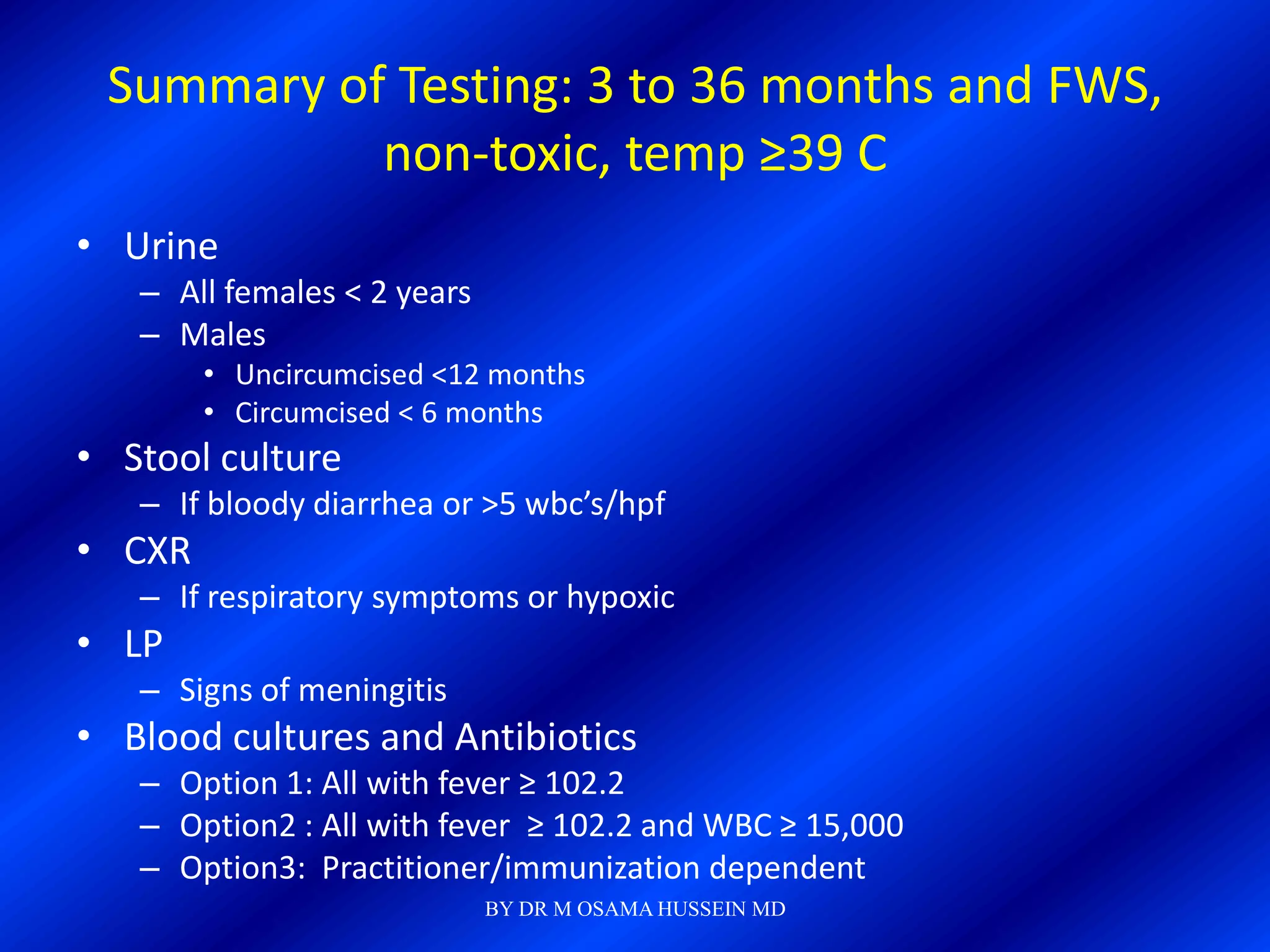
Summary of Testing: 3 to 36 months and FWS,
           non-toxic, temp ≥39 C
• Urine
   – All females < 2 years
   – Males
        • Uncircumcised <12 months
        • Circumcised < 6 months
• Stool culture
   – If bloody diarrhea or >5 wbc’s/hpf
• CXR
   – If respiratory symptoms or hypoxic
• LP
   – Signs of meningitis
• Blood cultures and Antibiotics
   – Option 1: All with fever ≥ 102.2
   – Option2 : All with fever ≥ 102.2 and WBC ≥ 15,000
   – Option3: Practitioner/immunization dependent
                             BY DR M OSAMA HUSSEIN MD
Fever with a Source
• More common than fever without a source
• Clinically identifiable viral or bacterial illnesses


                   BY DR M OSAMA HUSSEIN MD
Fever with a Source: Viral
– Varicella
– Measles (recent outbreaks)
– Mumps (recent Midwest
  outbreaks)
– Adenovirus
  (pharyngoconjunctival fever)
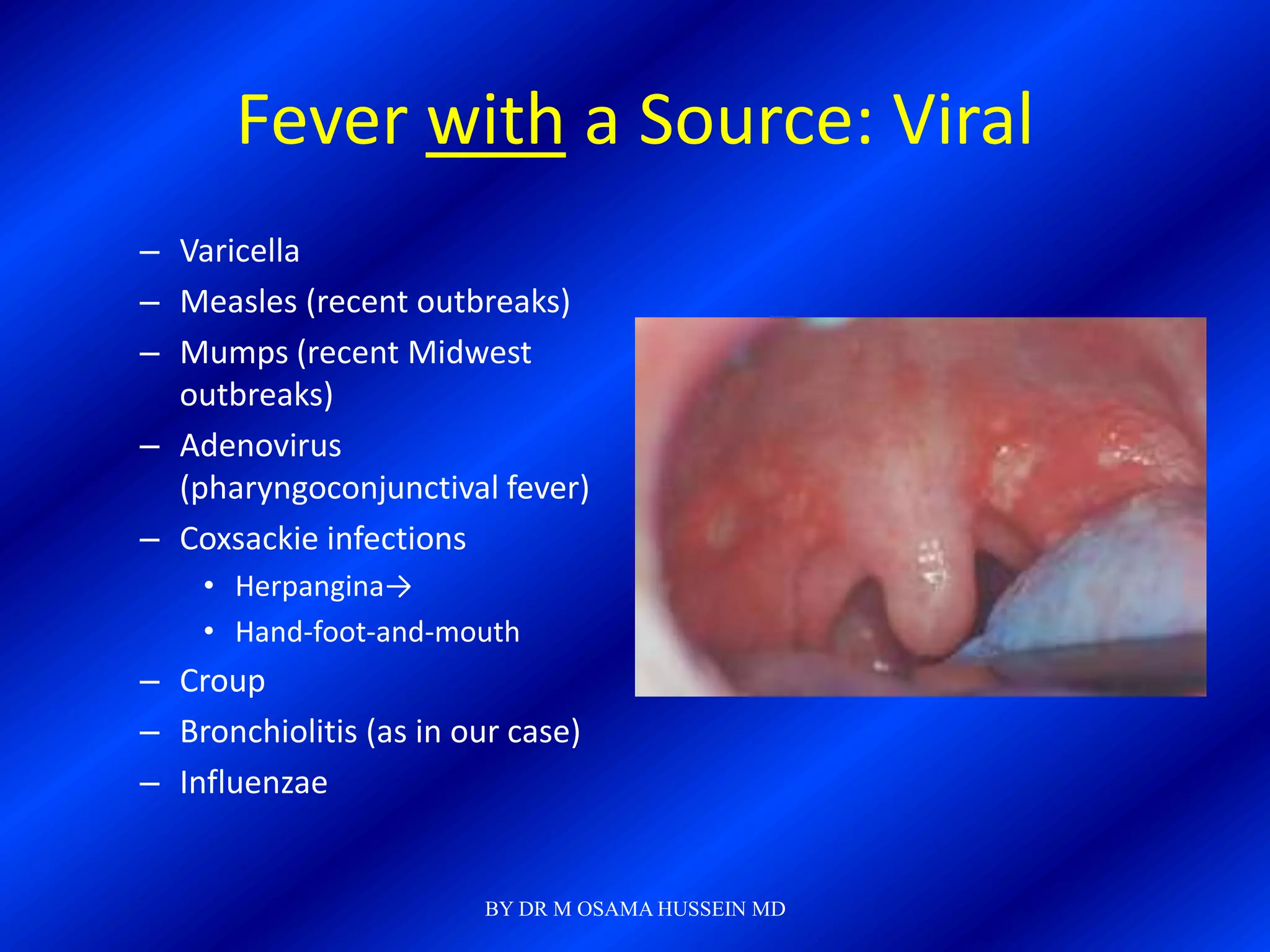
– Coxsackie infections
    • Herpangina→
    • Hand-foot-and-mouth
– Croup
– Bronchiolitis (as in our case)
– Influenzae


                         BY DR M OSAMA HUSSEIN MD
Fever with a Source: Viral
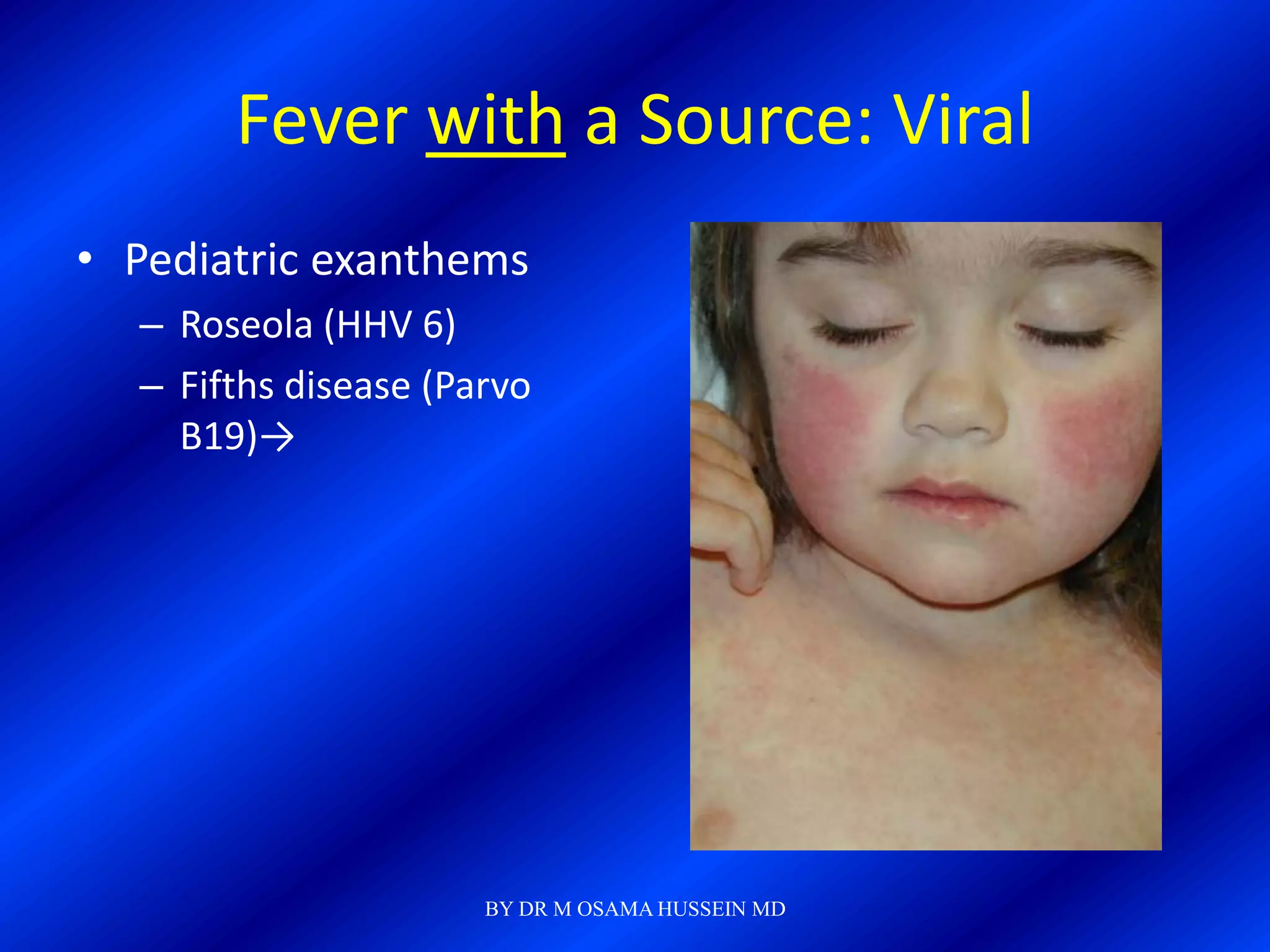
• Pediatric exanthems
  – Roseola (HHV 6)
  – Fifths disease (Parvo
    B19)→


                      BY DR M OSAMA HUSSEIN MD
Fever with a Source: Bacterial
• Clinically evident bacterial infections
  – Readily diagnosed from H&P
     •   Pneumonia
     •   Meningitis
     •   Septic arthritis
     •   Osteomyelitis
     •   Lymphadenitis
     •   Cellulitis/Abscess
     •   Bacterial enteritis


                        BY DR M OSAMA HUSSEIN MD
Antipyretics
• Triage protocols
  – acetaminophen by protocol
• Acetaminophen dose
  – 15 mg/kg q 4 hr prn
• Ibuprofen dose (for greater than 6 months
  old)
  – 10 mg/kg q 6 hr prn


                  BY DR M OSAMA HUSSEIN MD
Bug Drugs: <1 month
• Ampicillin and gentamycin
  – covers GBBS, E. coli, Listeria monocytogenes
  – ampicillin specifically for Listeria and provides
    some synergy with gentamycin for GBBS
• Consider acyclovir
  – Maternal history of Herpes (especially if primary
    outbreak with vaginal delivery) or any noted skin
    or mucosal lesions


                    BY DR M OSAMA HUSSEIN MD
Bug Drugs: 1-2 months
• Ampicillin and cefotaxime
  – covers the < 1 month etiologic agents and also S.
    pneumoniae
  – with cefotaxime you don’t have to worry about
    oto/renal toxicity associated with gentamycin


                   BY DR M OSAMA HUSSEIN MD
Bug Drugs: >2 months
• Ceftriaxone
  – covers S. pneumoniae, H. influenzae, and N.
    meningitidis
  – theoretically shouldn’t give < 1 month because of
    biliary sludging
• Add vancomycin if any concern for S.
  pneumoniae on LP in any age range (resistant
  strains have been appearing in CSF)

                   BY DR M OSAMA HUSSEIN MD
Kawasaki’s Disease
• Fever for at least 5 days' duration and the presence
  of 4 of the following
   – Extremities changes (erythema, edema, and
     desquamation)
   – Conjunctivitis (no exudate).
   – Polymorphous rash (not vesicular) is usually generalized
   – Cervical lymphadenopathy usually unilateral and greater
     than 1.5 cm
   – Lip or oral cavity changes (erythema, dry/fissured or
     swollen lips, and strawberry tongue)

                      BY DR M OSAMA HUSSEIN MD
Febrile Seizures
• Simple Febrile Seizure
   – 1 event in a 24 hour period
   – Non-focal
• Complex
   – Whenever it is not simple
   – Consider larger work-up
• 30% chance of recurrence


                    BY DR M OSAMA HUSSEIN MD
Febrile Seizures
• Work up for the source of the fever
• “Strongly consider LP” for under 12 months –
  AAP guidelines
• Brain imaging not often necessary
• Need to explain to parents why you aren’t
  worried about the seizure


                 BY DR M OSAMA HUSSEIN MD
Pediatric Fever Summary: Golden
                   Rules
• A toxic appearance demands immediate
  action
    – Work-up/antibiotics and admit
•   Know the age-specific algorithm for FWS
•   Test the urine (most common SBI)
•   Look for specific bacterial and viral etiologies
•   Careful follow up must be assured
•   Recommendations continue to evolve with
    new immunizations
                    BY DR M OSAMA HUSSEIN MD
Fever with xanthem
   Infectious causes
       Virus:
            Classic viral exanthem: Measles, Rubella, VZV, Parvovirus, Roseola
            Others:, HSV, EBV, HBV, Enterovirus, Dengue
       Bacteria: Scarlet fever, Staph infection (sepsis, 4S,toxic shock
        syndrome), Meningococcemia, typhoid
       Mycoplasma
       Rickettsial infection
   Noninfectious cause
       Allergy: Food, drug, toxin, serum sickness
       Uncertain cause: Kawasaki disease

                            BY DR M OSAMA HUSSEIN MD
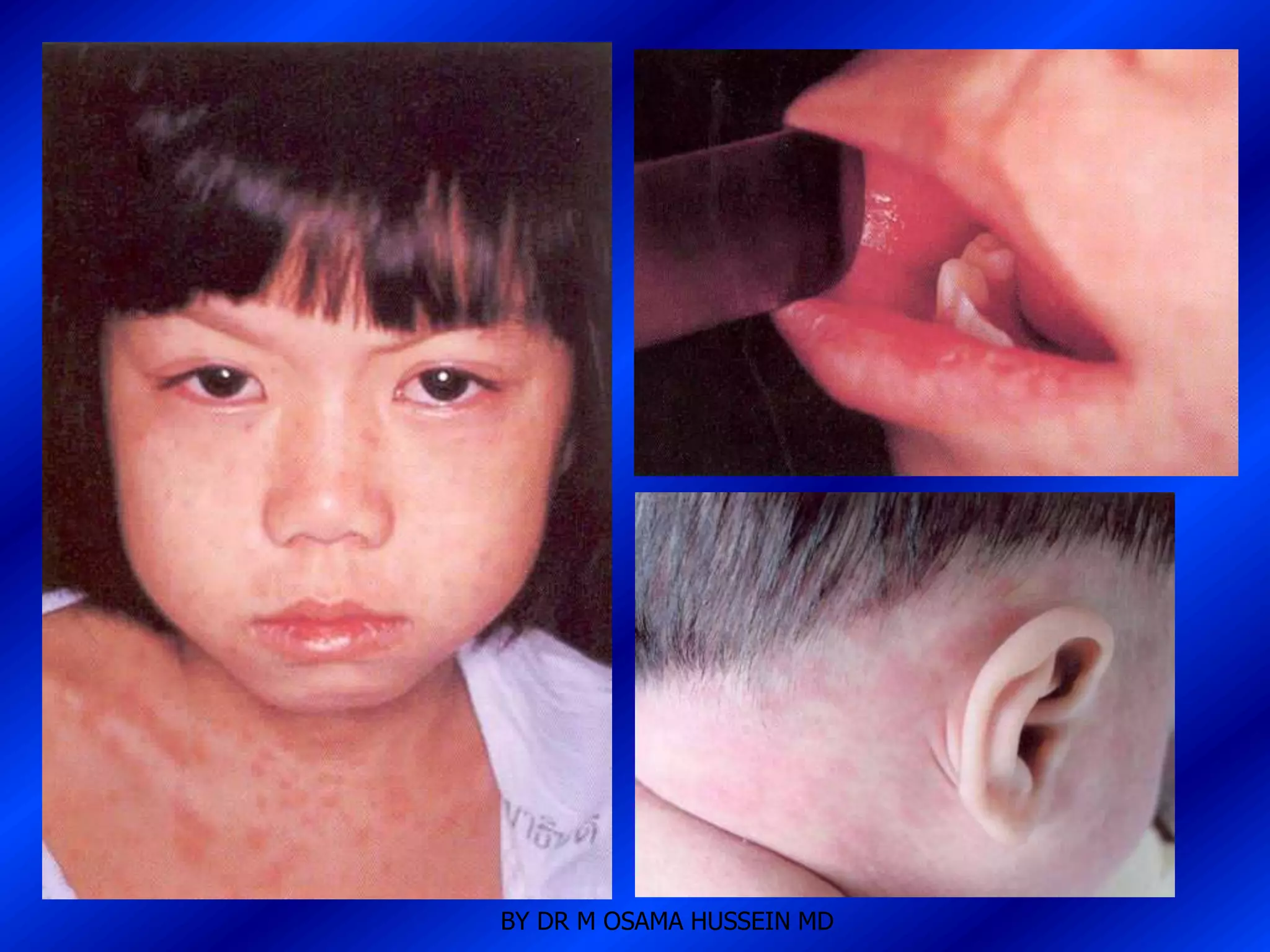
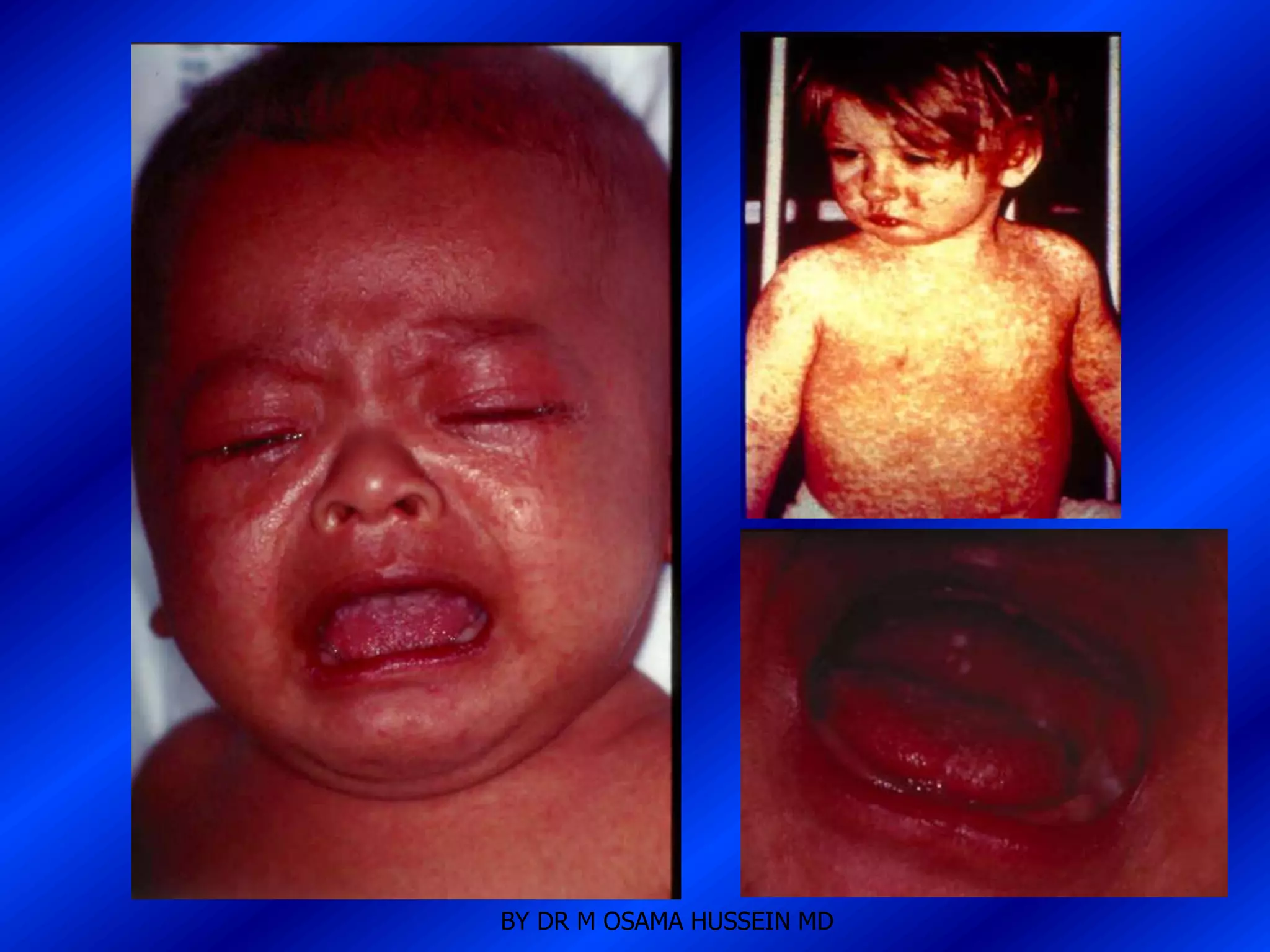
Clinical Manifestation
   Incubation: 8-12 days, the average interval between appearance of
    rash in the source case and subsequent cases is 14 days, with a range
    of 7-18 days.
   Prodromal period: fever 2-4 day + 3C
      cough

      coryza

      conjunctivitis

      Koplik spot

   Rash: erythematous maculopapular rash
      facesole in 72 hr.

      face and trunk: mostly distributed

      pneumonia

   Convalescence
      cough may persist for 1 week

                       BY DR M OSAMA HUSSEIN MD
BY DR M OSAMA HUSSEIN MD
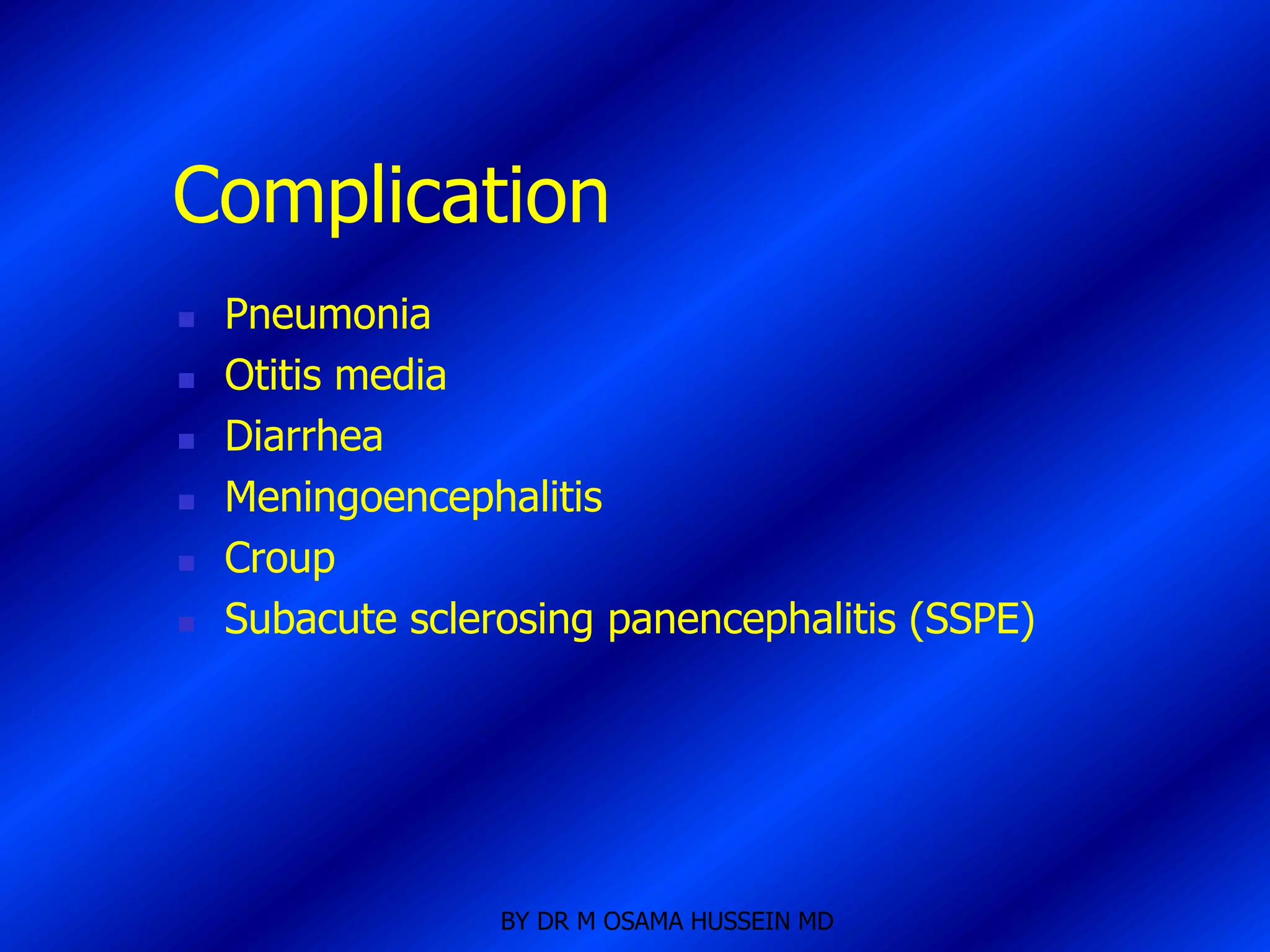
Complication
   Pneumonia
   Otitis media
   Diarrhea
   Meningoencephalitis
   Croup
   Subacute sclerosing panencephalitis (SSPE)


                  BY DR M OSAMA HUSSEIN MD
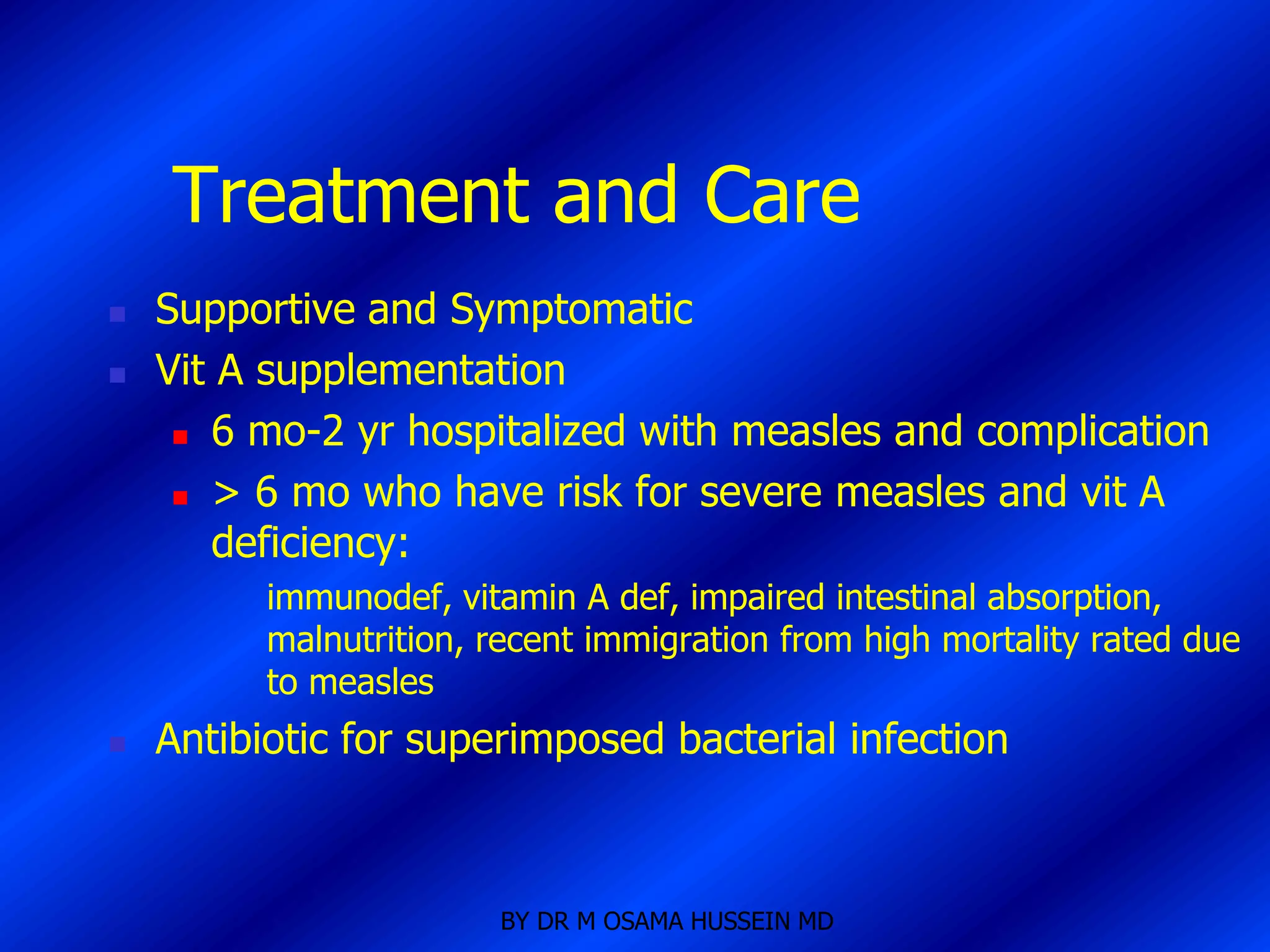
Treatment and Care
   Supportive and Symptomatic
   Vit A supplementation
      6 mo-2 yr hospitalized with measles and complication

      > 6 mo who have risk for severe measles and vit A

       deficiency:
          immunodef, vitamin A def, impaired intestinal absorption,
          malnutrition, recent immigration from high mortality rated due
          to measles
   Antibiotic for superimposed bacterial infection


                        BY DR M OSAMA HUSSEIN MD
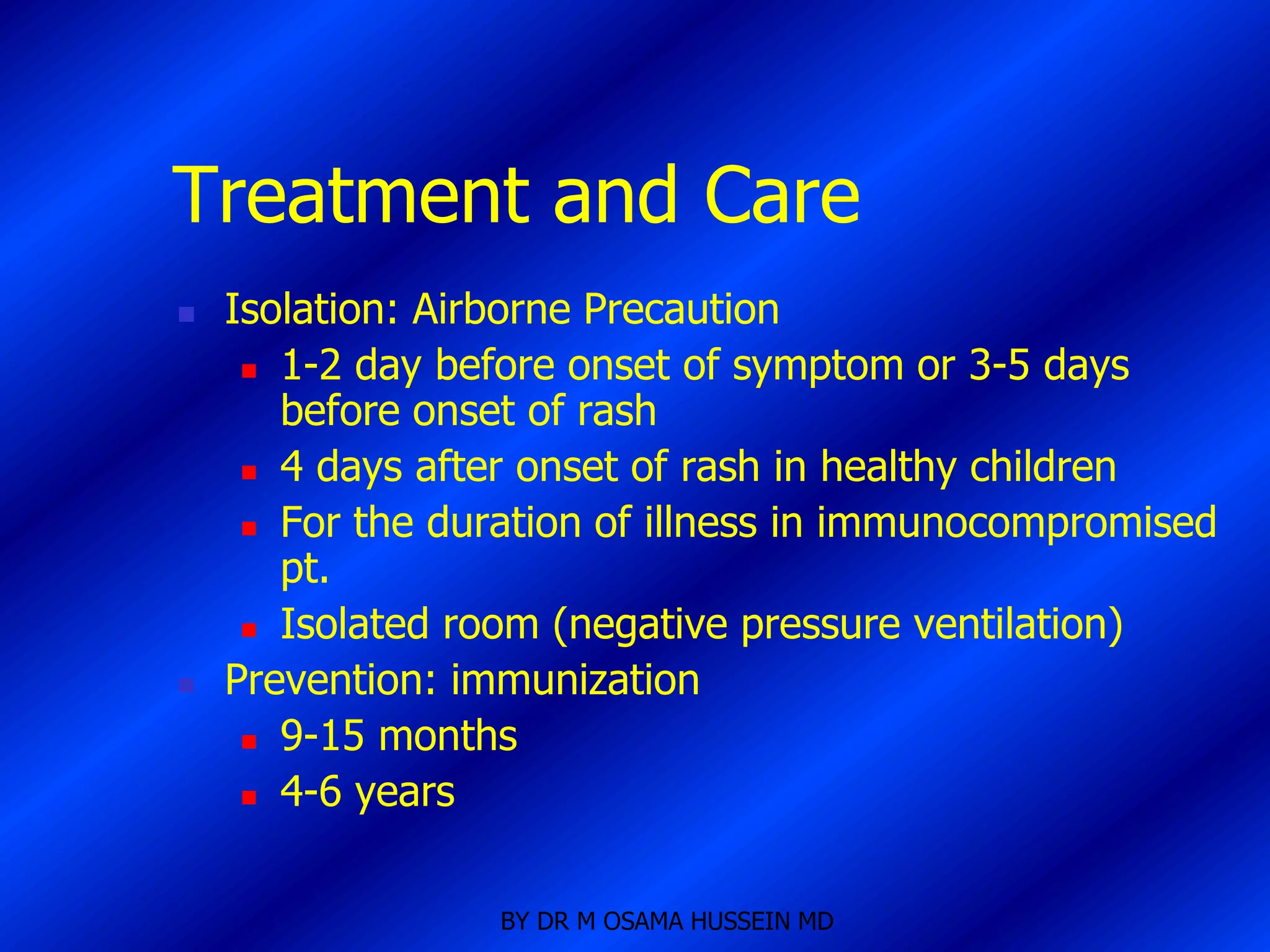
Treatment and Care
   Isolation: Airborne Precaution
      1-2 day before onset of symptom or 3-5 days
       before onset of rash
      4 days after onset of rash in healthy children

      For the duration of illness in immunocompromised
       pt.
      Isolated room (negative pressure ventilation)

   Prevention: immunization
      9-15 months

      4-6 years


                  BY DR M OSAMA HUSSEIN MD
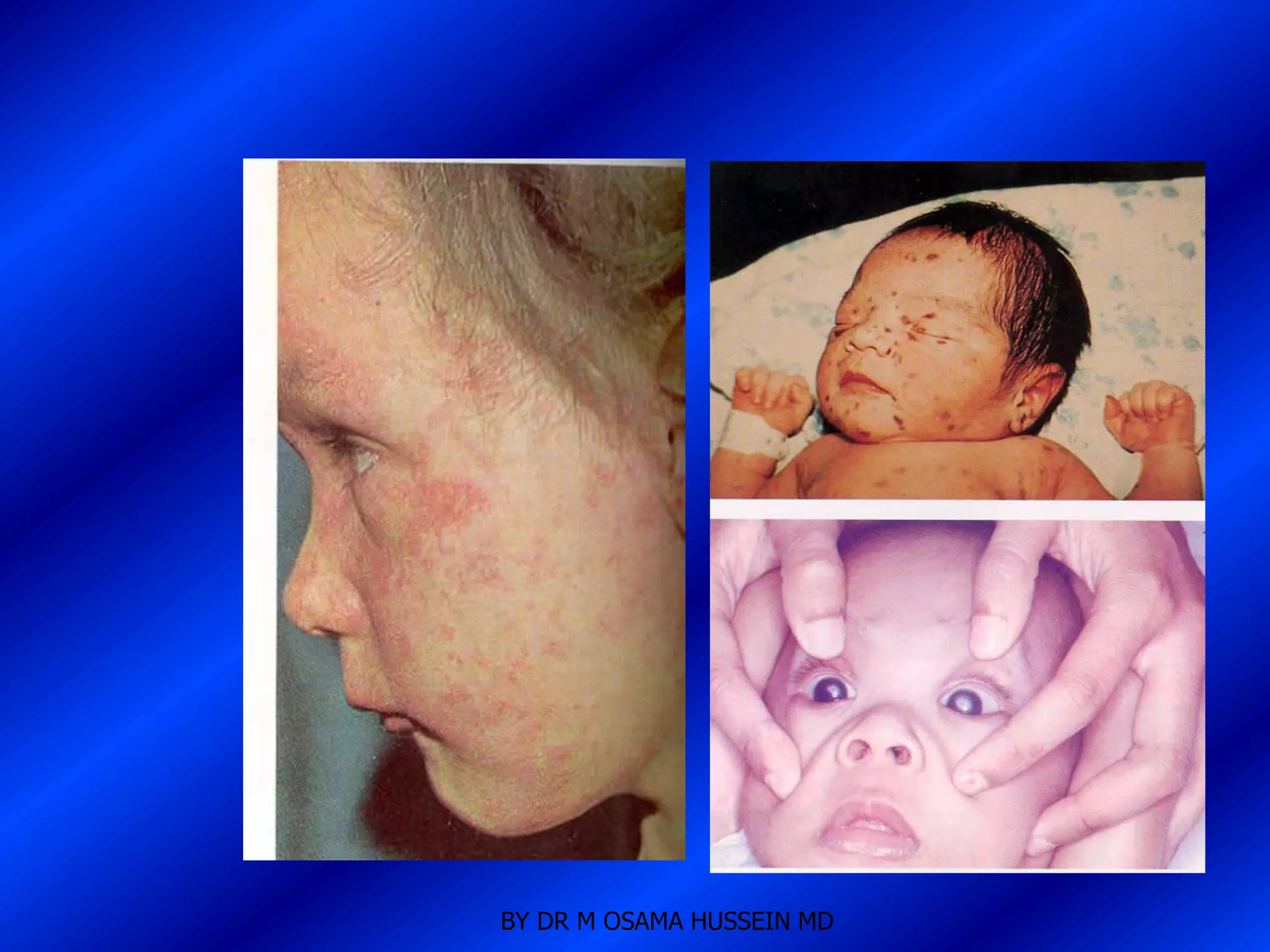
Rubella
   RNA virus: Family Togaviridae, genus Rubivirus
   IP: 14-21 days
   Infectivity: 7 days before – 5 days after onset of
    rash


                   BY DR M OSAMA HUSSEIN MD
Clinical Manifestation
   Prodromal period 1-5 days
   MP rash for < 3 days
   LN at postauricular and cervical area
   CBC: normal range
   Dx: viral isolation
      Serologic test: CF, HI, IgM ELISA


                  BY DR M OSAMA HUSSEIN MD
BY DR M OSAMA HUSSEIN MD
Rubella
   Complication
      arthritis

      thrombocytopenia

      meningoencephalitis

   Treatment: supportive
   Isolation:
      droplet precaution for 7 days after onset of rash,

      contact precaution for congenital rubella until > 1 yr-
       old
   Prevention: immunization

                       BY DR M OSAMA HUSSEIN MD
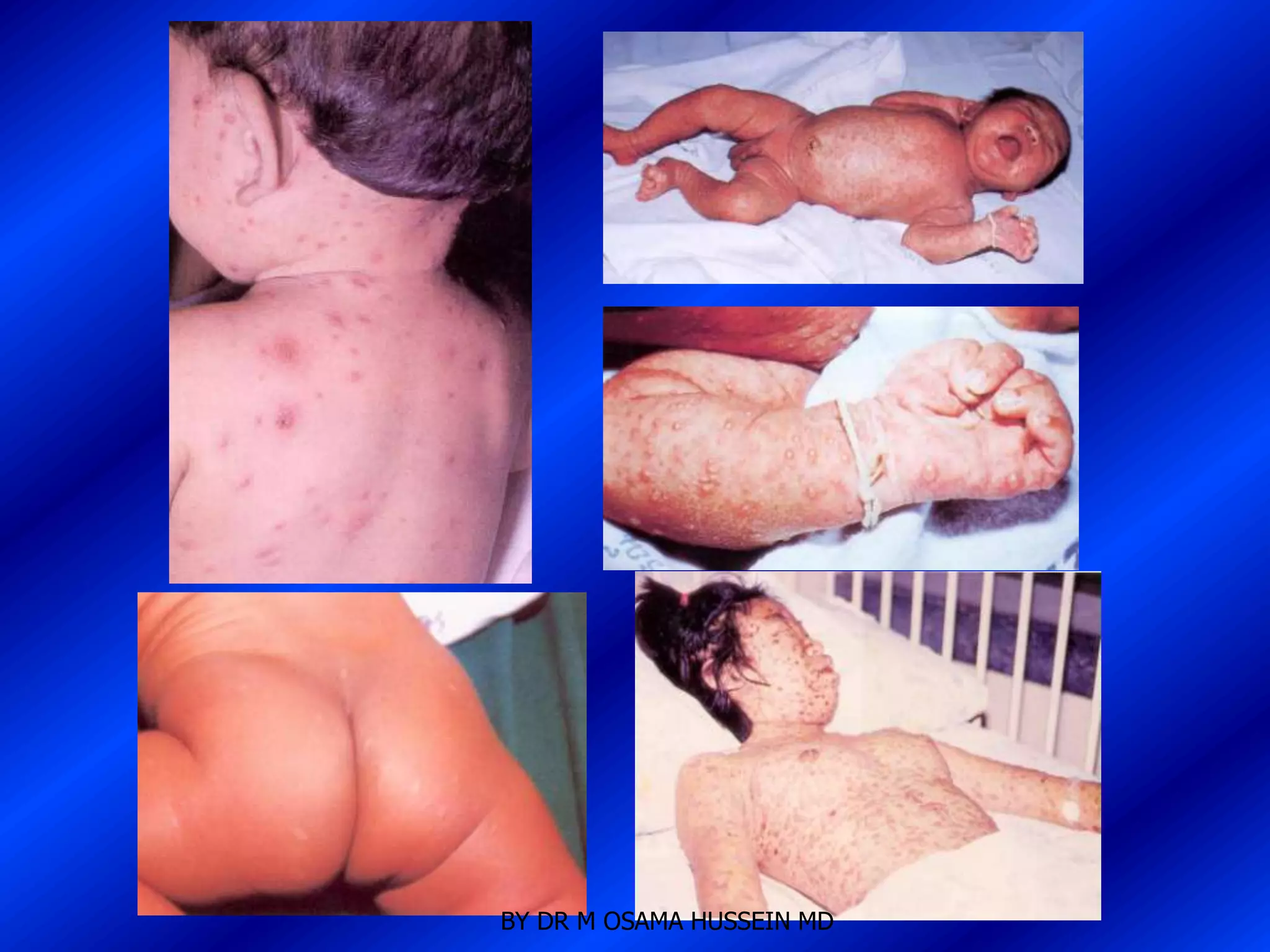
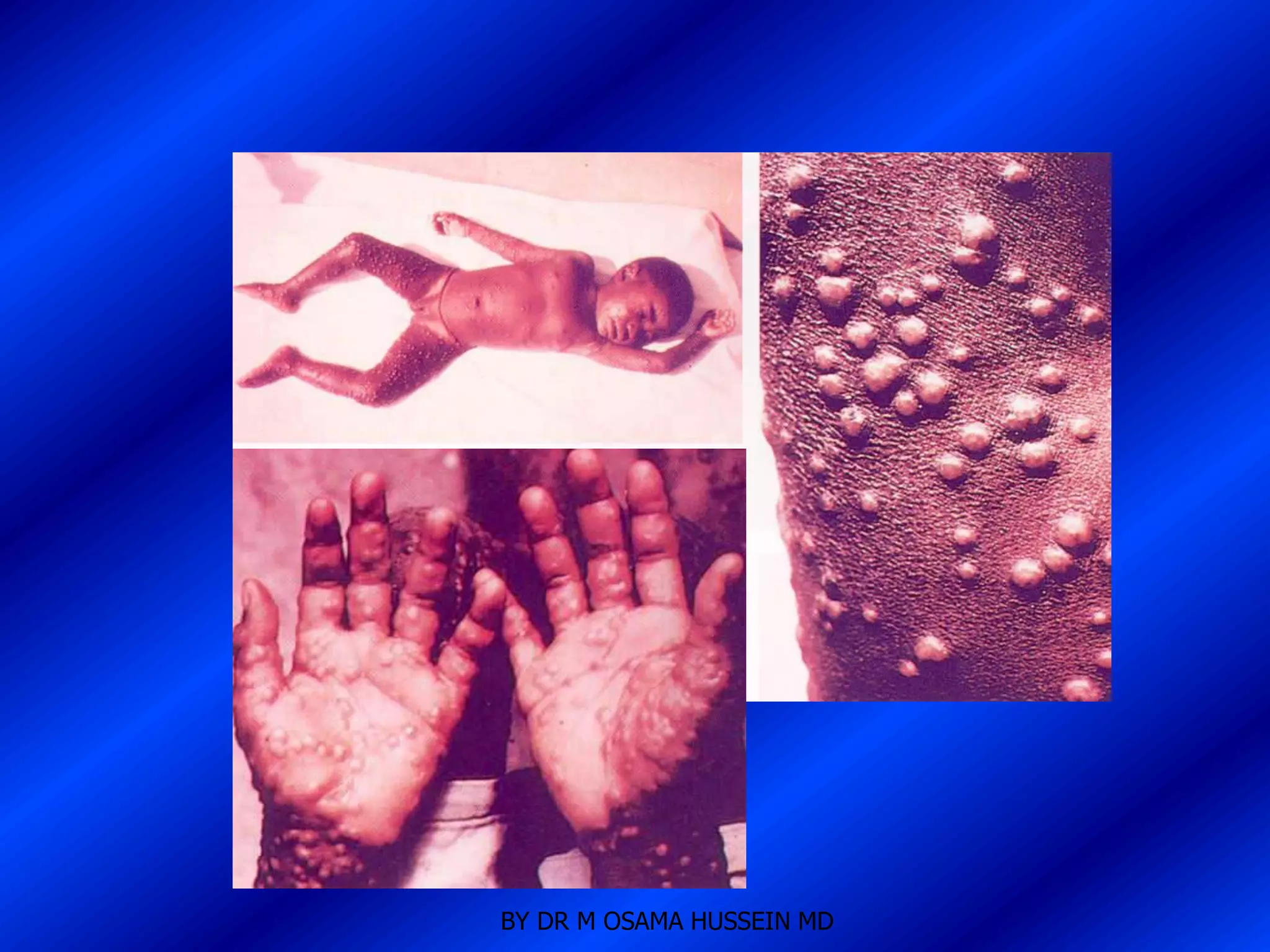
Chickenpox
   VZV, HHV-3:
   Transmission
      airborne

      contact vesicular fluid

      vertical transmission

   Incubation period:
      14-16 days, (10-21days)

   Infectivity: winter season
      Most contagious: 1-2 days before onset of rash until

       crusting of lesion.

                      BY DR M OSAMA HUSSEIN MD
Clinical Manifestation
   Prodromal period: 2-3 days
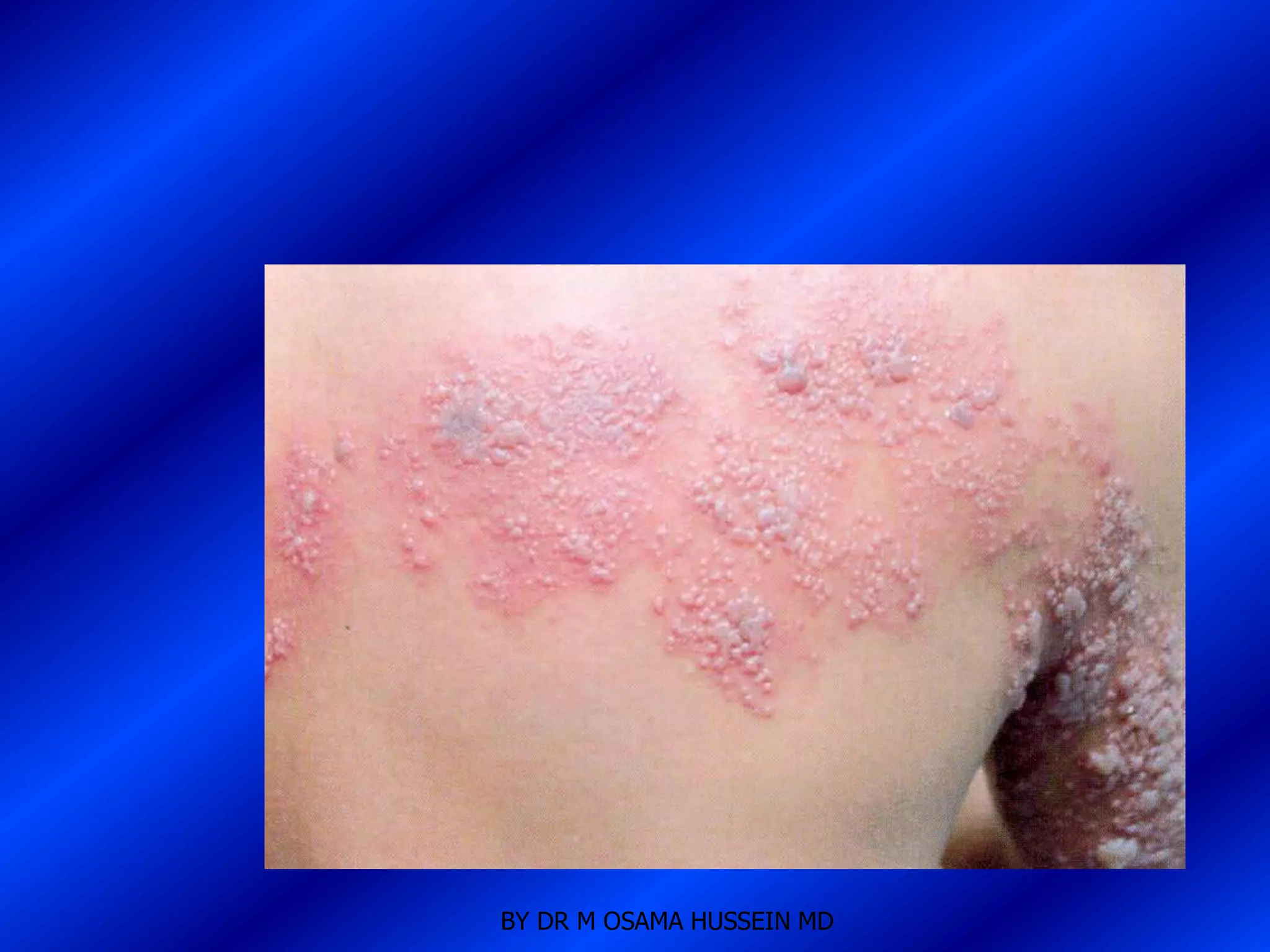
   Generalized, pruritic, vesicular rash 250-500 lesions
    involving skin and oral mucosa
   Complication
      Herpes Zoster, Shingles

      Congenital varicella: Scar, limb, ocular, CNS defect

      Bacterial infection

      Severe chickenpox

      CNS: encephalitis, cerebellar ataxia, Reye’s

       Syndrome

                   BY DR M OSAMA HUSSEIN MD
BY DR M OSAMA HUSSEIN MD
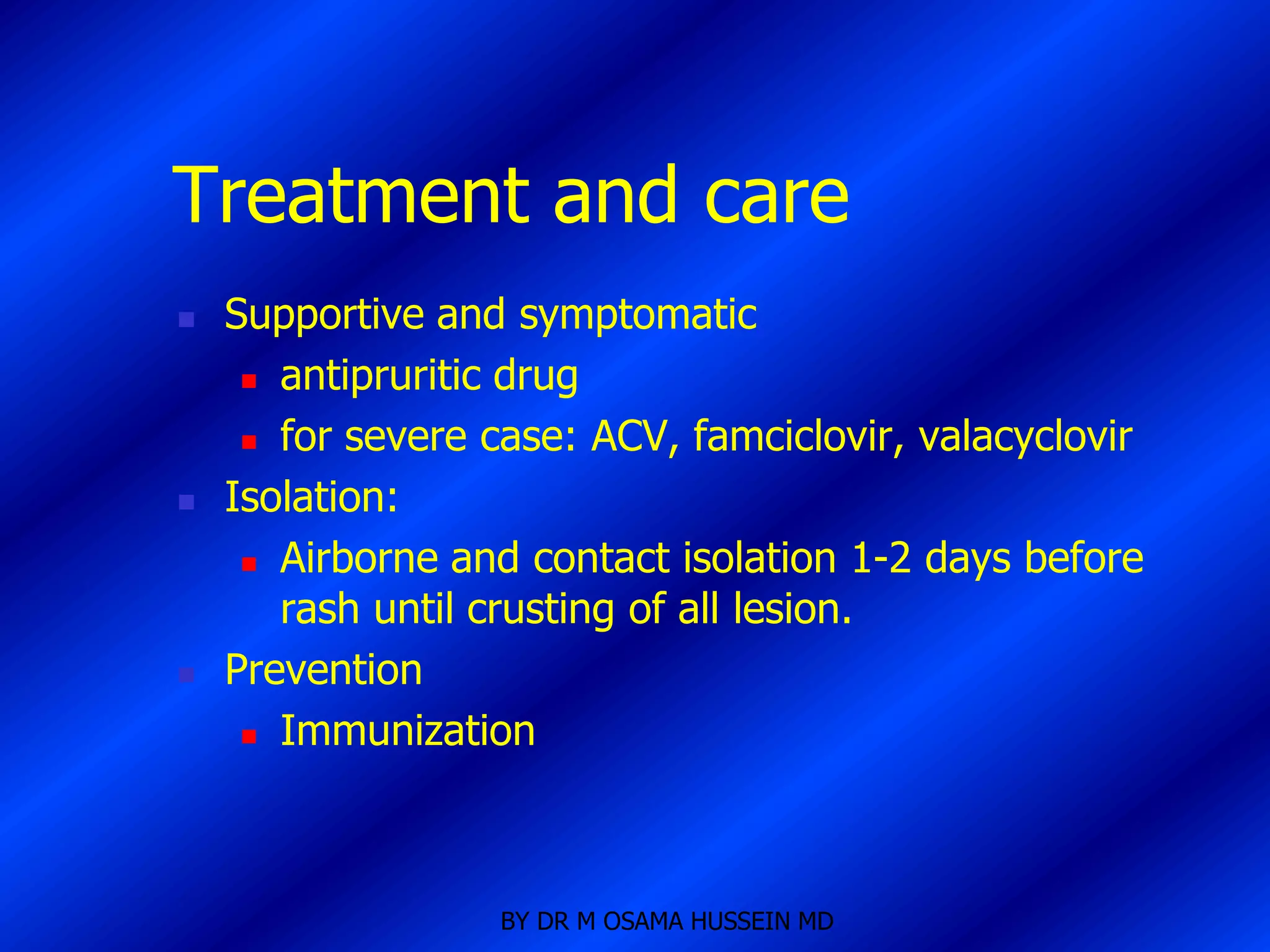
Treatment and care
   Supportive and symptomatic
      antipruritic drug

      for severe case: ACV, famciclovir, valacyclovir

   Isolation:
      Airborne and contact isolation 1-2 days before

       rash until crusting of all lesion.
   Prevention
      Immunization


                   BY DR M OSAMA HUSSEIN MD
Child Care and School
   Children may return to school when all lesion are
    crusted.

   For compromised children with prolonged course
    should excluded for the duration of the vesicular
    eruption.

   Older children and staff members with zoster should
    be instructed to wash their hands if they touch
    potentially infectious lesion

                  BY DR M OSAMA HUSSEIN MD
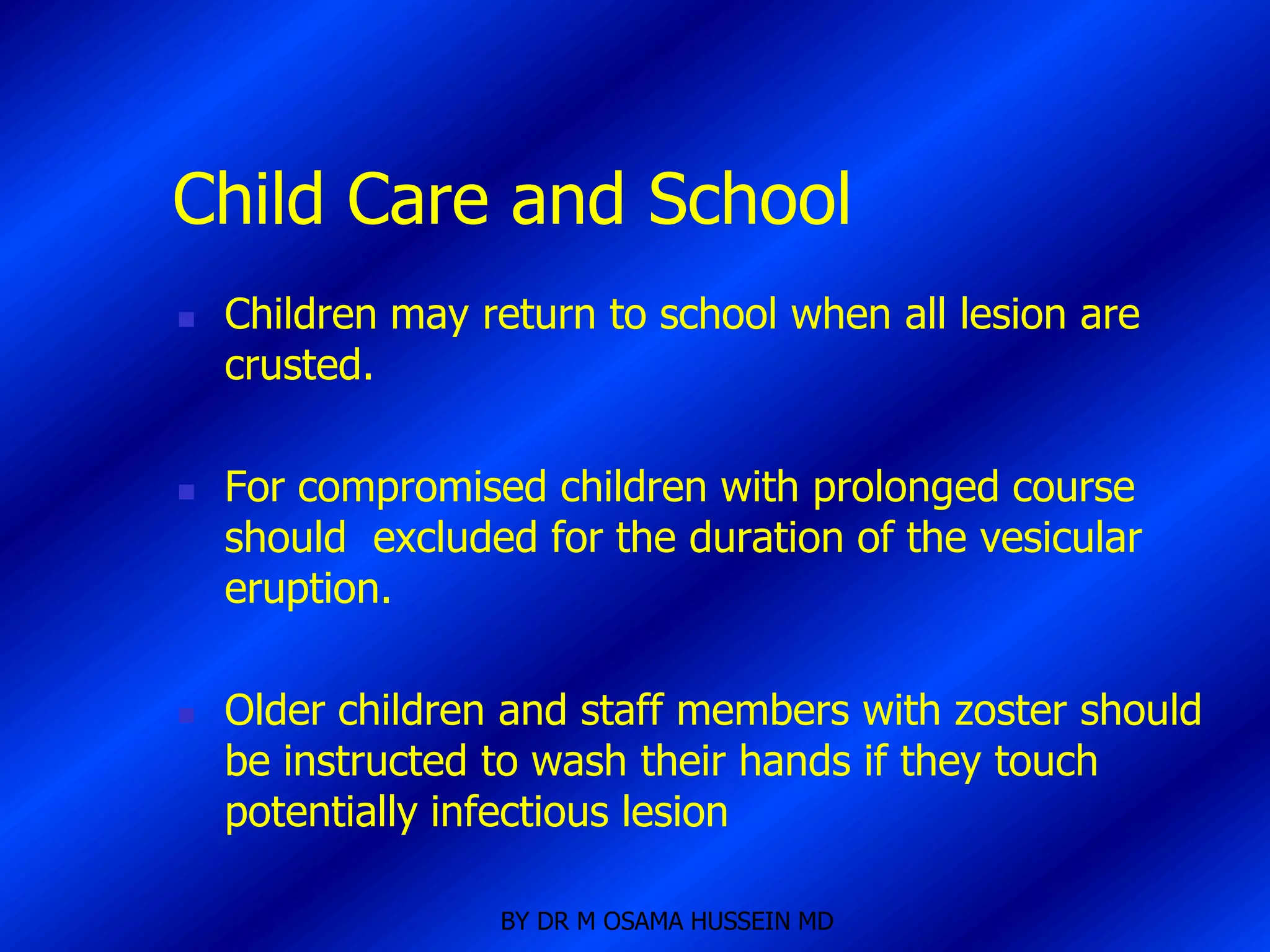
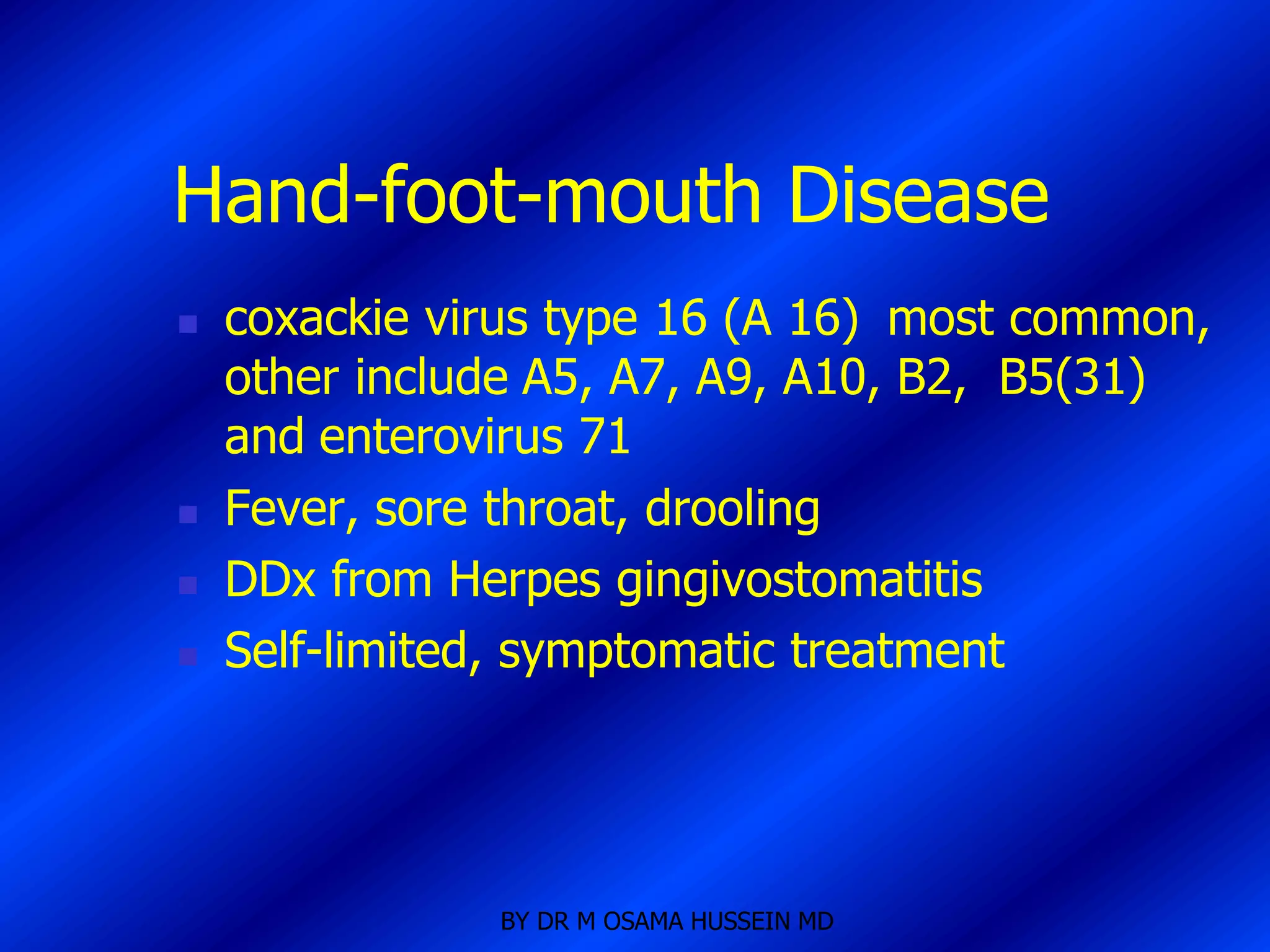
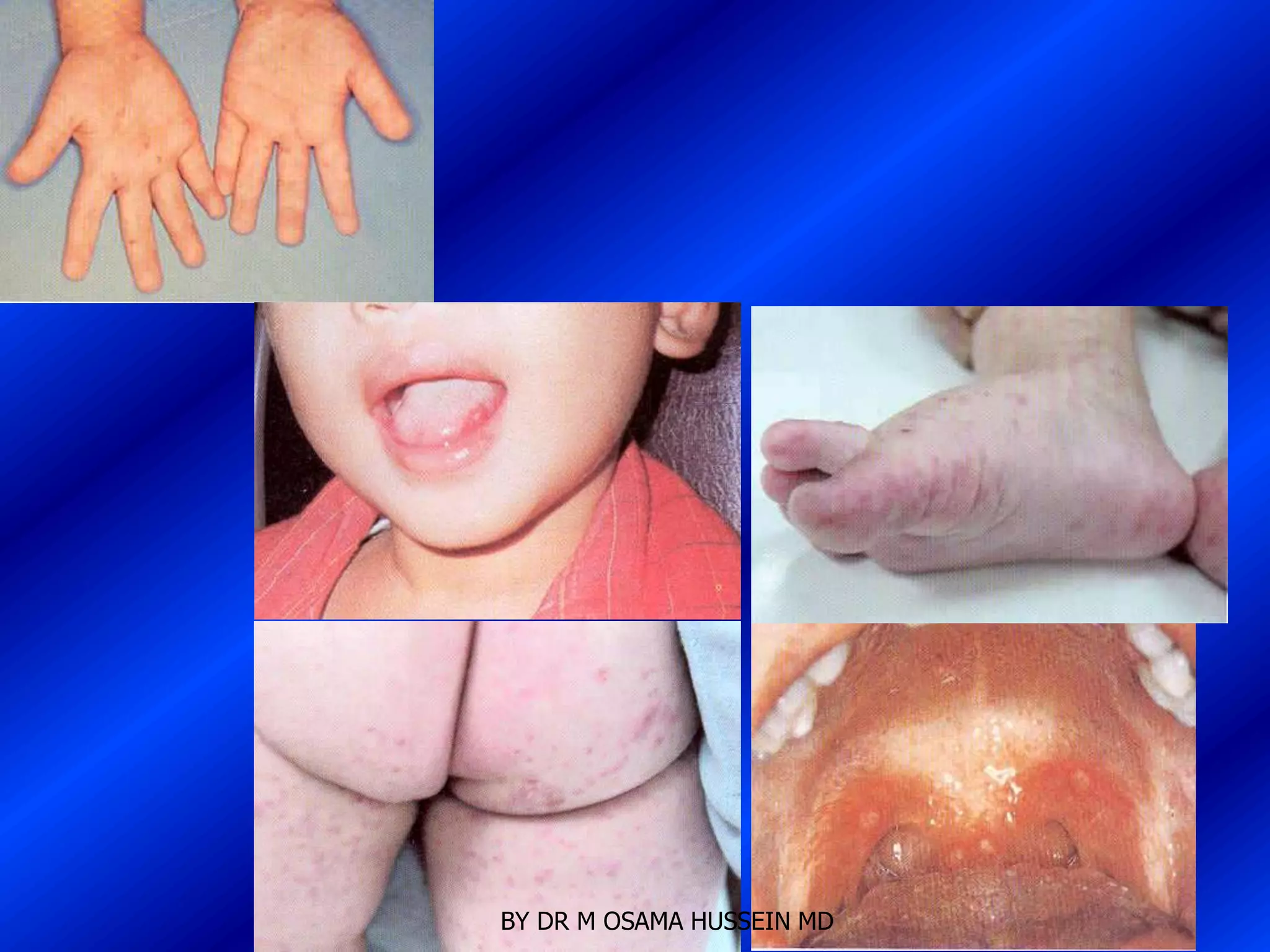
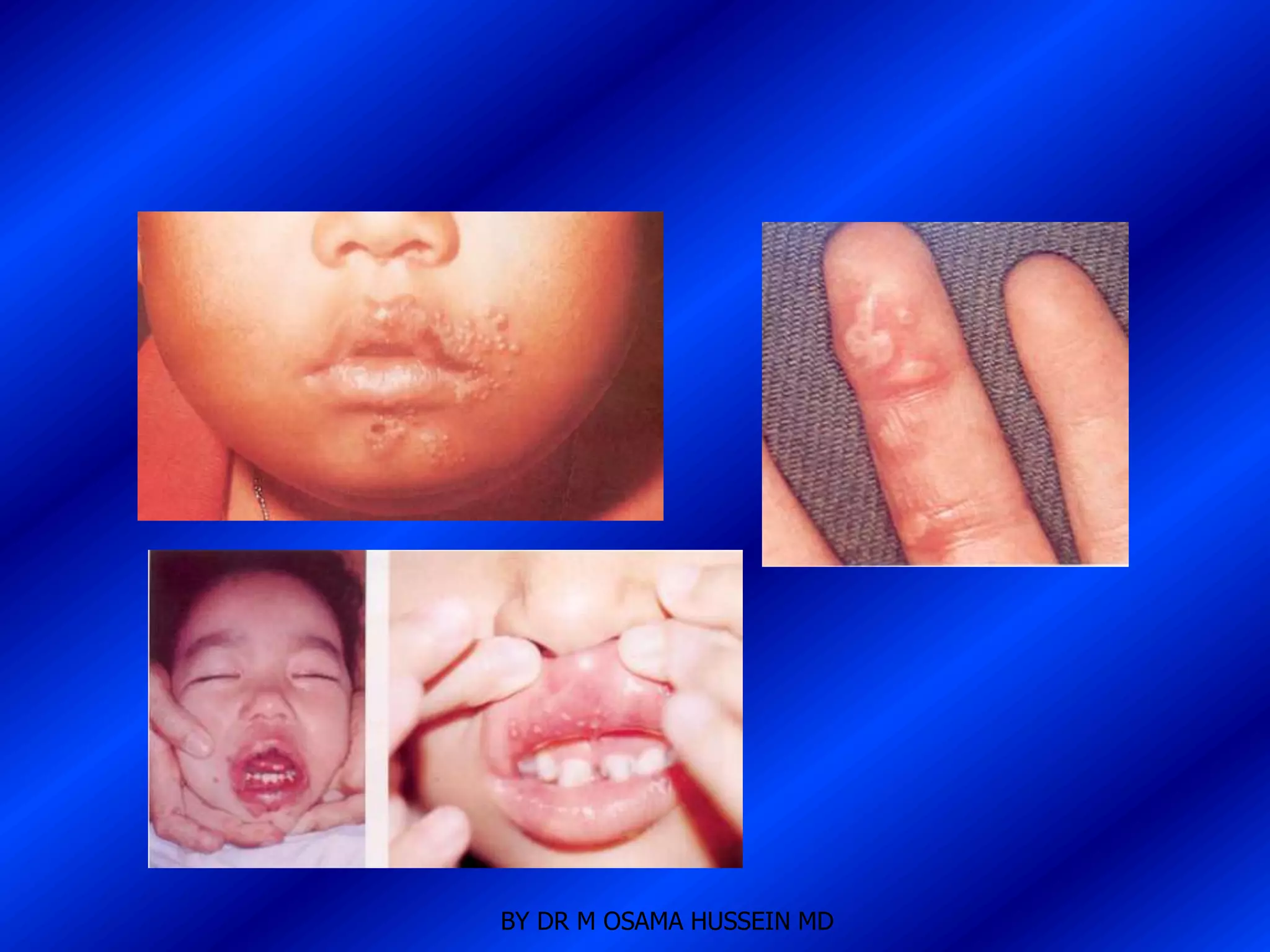
Hand-foot-mouth Disease
   coxackie virus type 16 (A 16) most common,
    other include A5, A7, A9, A10, B2, B5(31)
    and enterovirus 71
   Fever, sore throat, drooling
   DDx from Herpes gingivostomatitis
   Self-limited, symptomatic treatment


               BY DR M OSAMA HUSSEIN MD
HFMD


       BY DR M OSAMA HUSSEIN MD
BY DR M OSAMA HUSSEIN MD
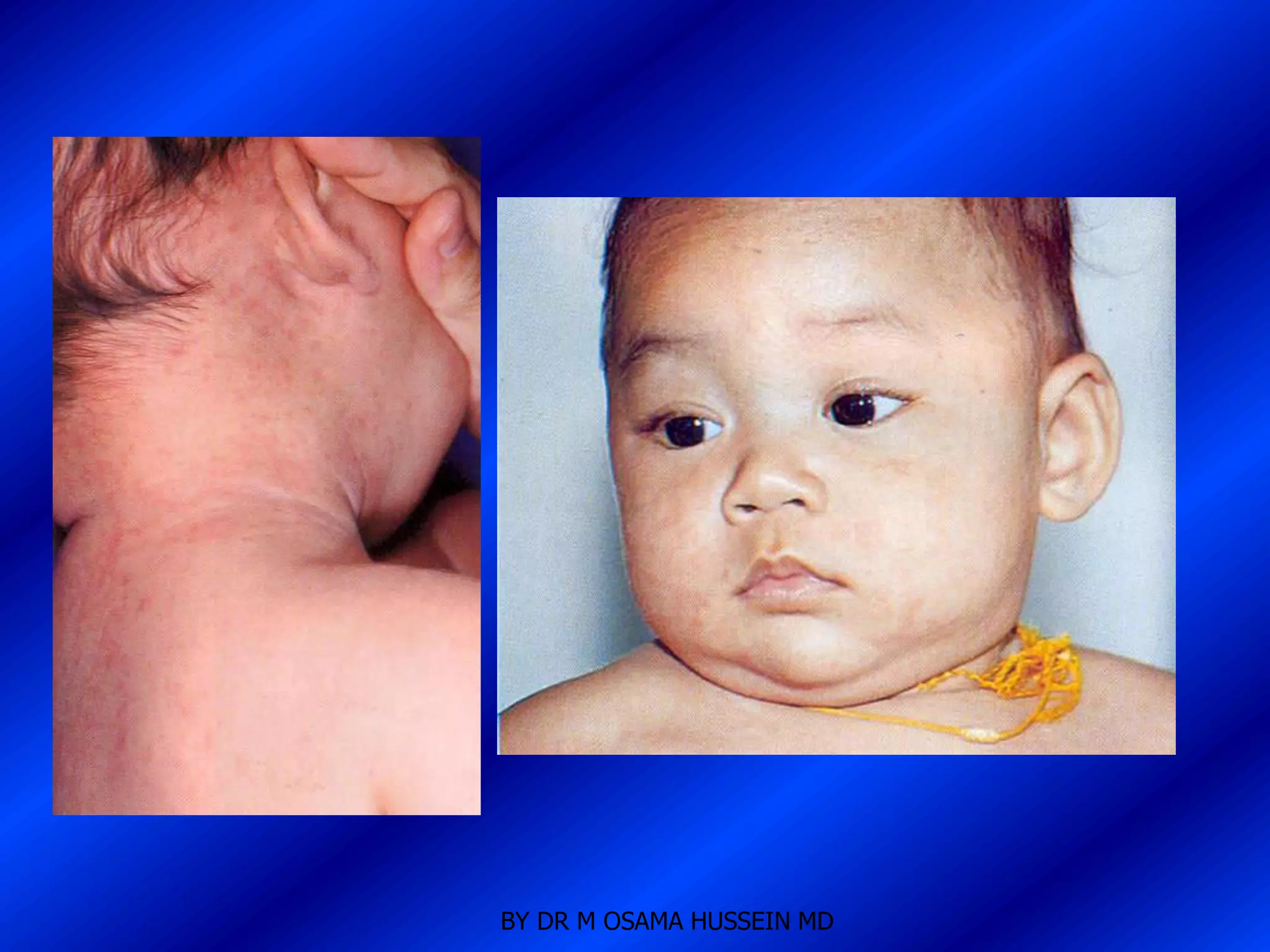
Roseola Infantum

   Exanthem subitum
   3 mo- 3 yr. (6 mo-1 yr)
   HHV-6,7: DNA virus, Herpesviridae
   Uncertain incubation period (9-10 days)


                  BY DR M OSAMA HUSSEIN MD
Clinical Manifestation
   High fever 39-41 c for 3-4 days
      nonspecific symptom

      bulging AF

      febrile convulsion

   MP Rash after defervescence
   CBC: normal range of WBC, lymphocyte
    predominated


                 BY DR M OSAMA HUSSEIN MD
BY DR M OSAMA HUSSEIN MD
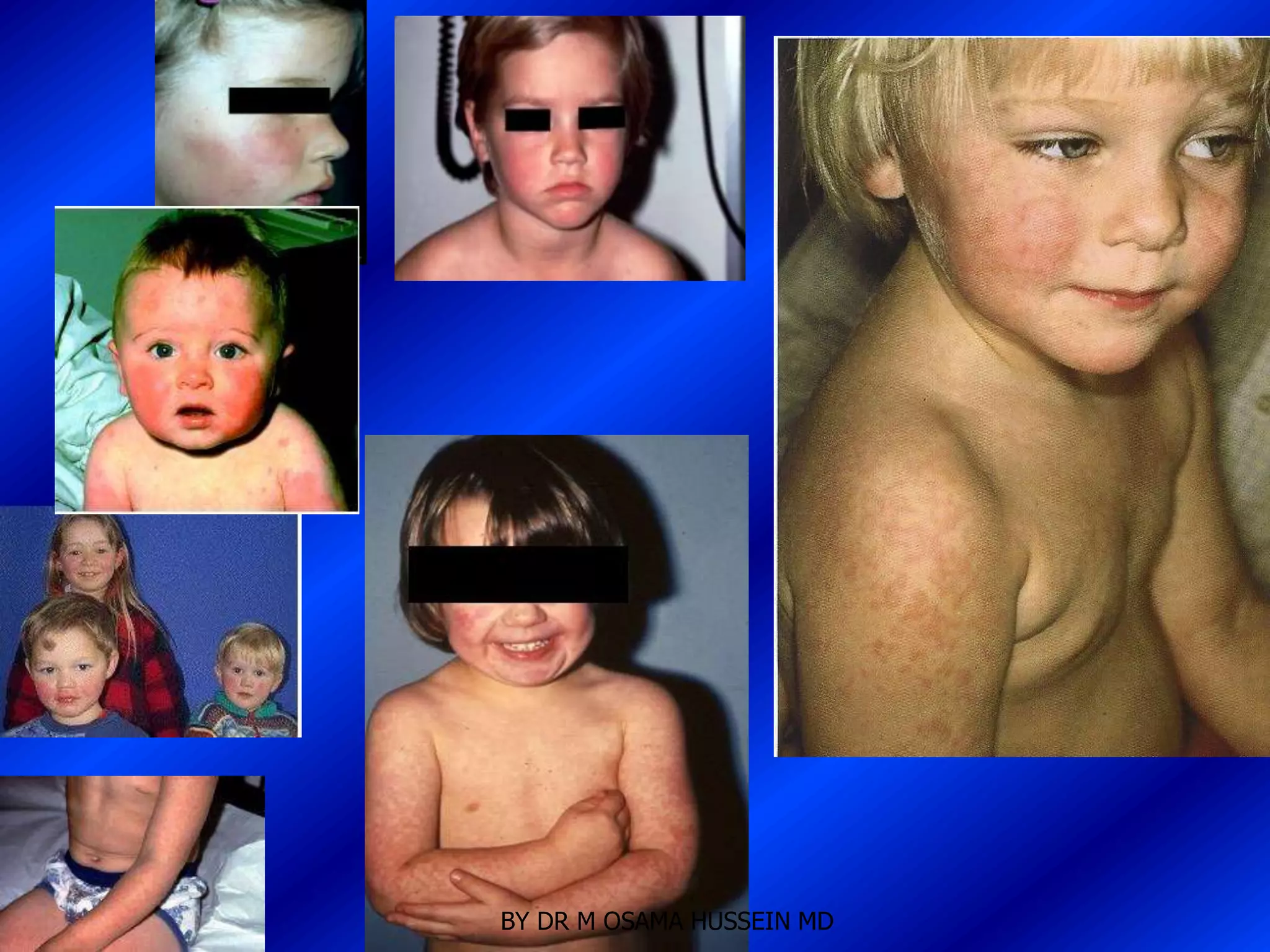
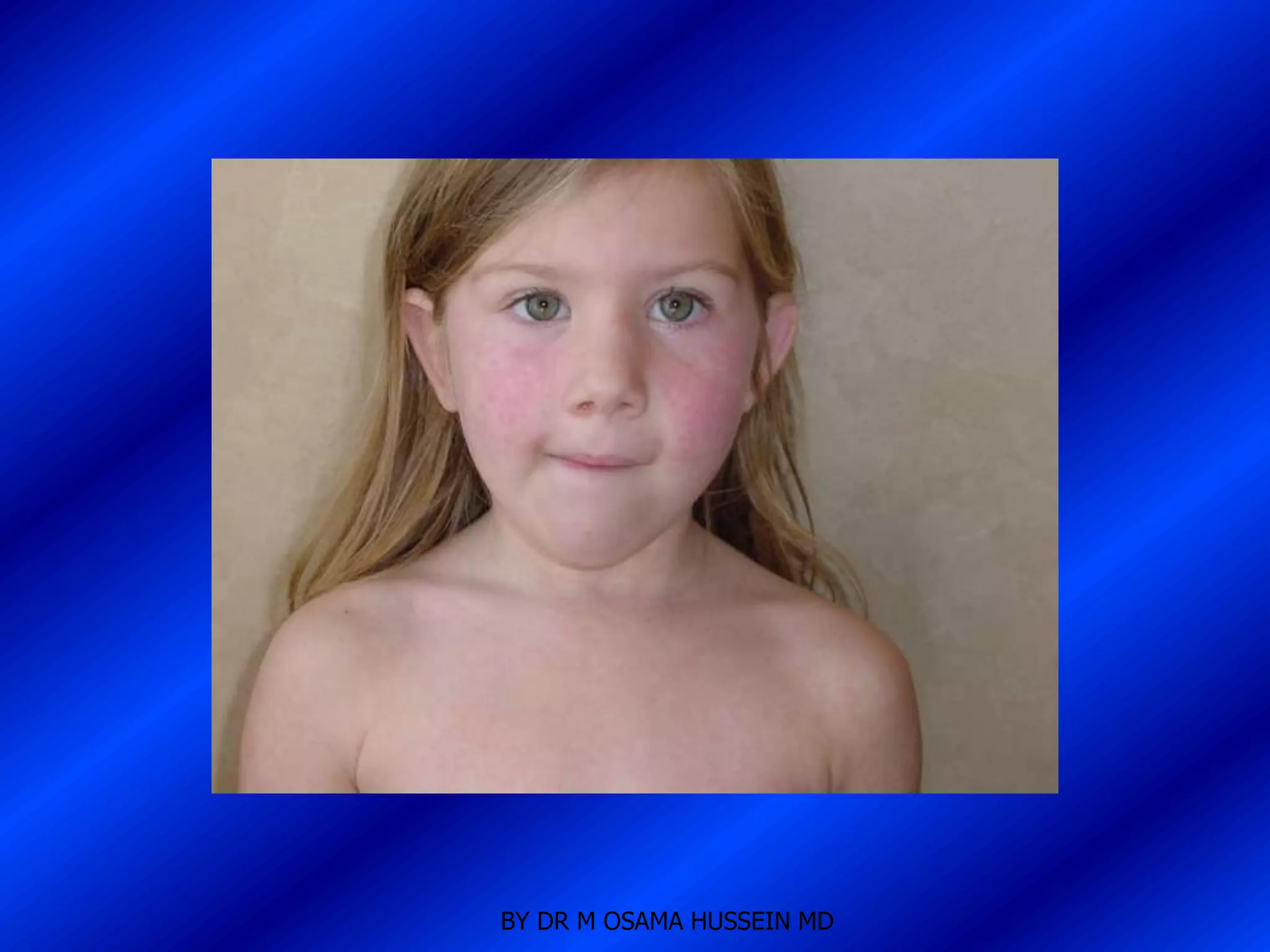
Erythrema infectiosum (Fifth Dz)
   Parvovirus (PV) B19 Family Parvoviridae
   3-15 year
   Droplet transmission
   Incubation period: 4-14 days
   S/S: lowgrade fever, constitutional symptoms, arthralgia
   Classical 3 phases
      Sunburn-like rash both cheek (classic slapped-cheek
       appearance) 2-4
      Day 1-4 after facial rash  macular – to – morbiliform
       eruption at extremities (extensor surface)
      Lacy pattern: some w/o classic slapped-cheek pattern


                     BY DR M OSAMA HUSSEIN MD
BY DR M OSAMA HUSSEIN MD
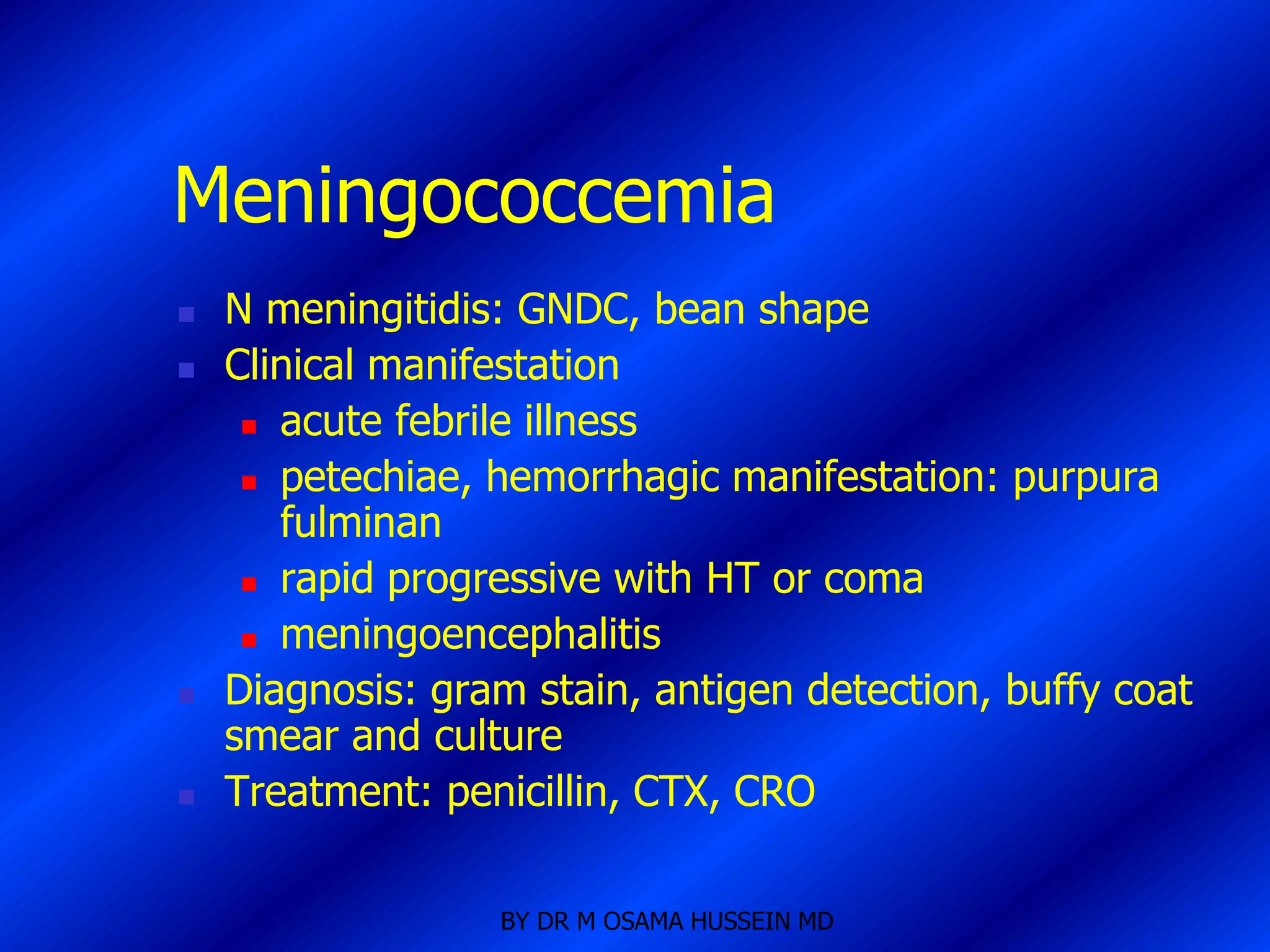
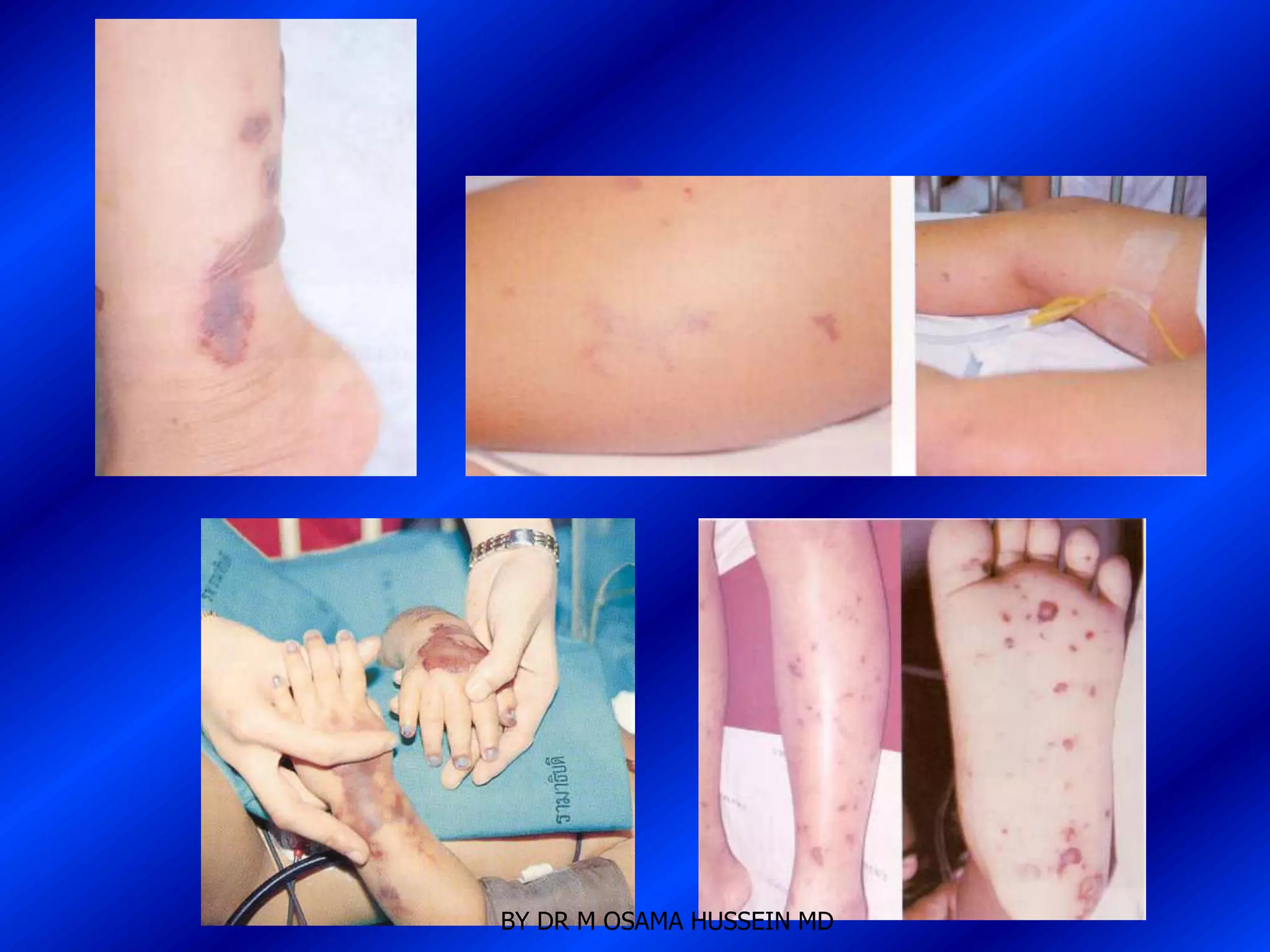
Meningococcemia
   N meningitidis: GNDC, bean shape
   Clinical manifestation
      acute febrile illness

      petechiae, hemorrhagic manifestation: purpura
       fulminan
      rapid progressive with HT or coma

      meningoencephalitis

   Diagnosis: gram stain, antigen detection, buffy coat
    smear and culture
   Treatment: penicillin, CTX, CRO

                  BY DR M OSAMA HUSSEIN MD
BY DR M OSAMA HUSSEIN MD
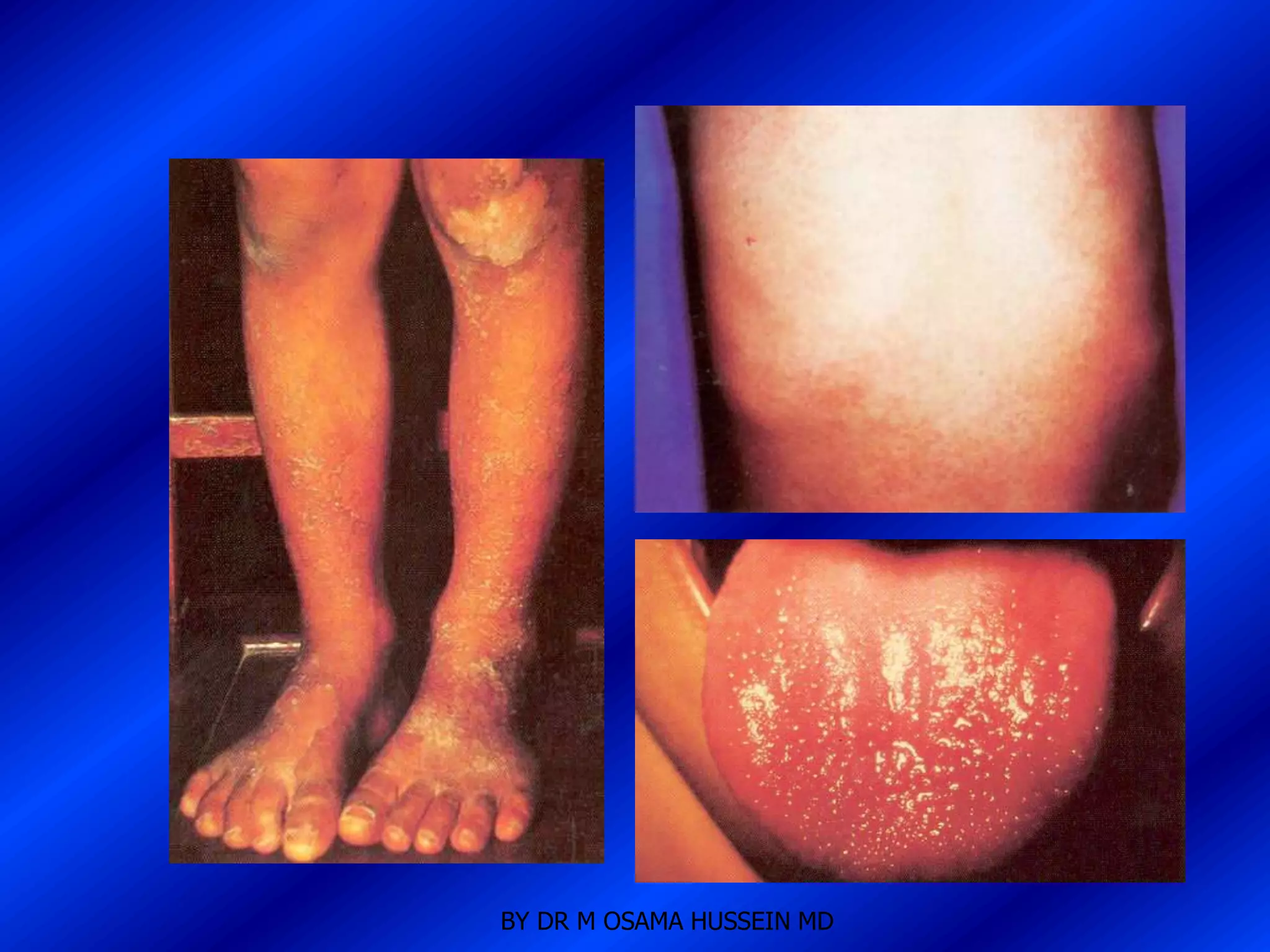
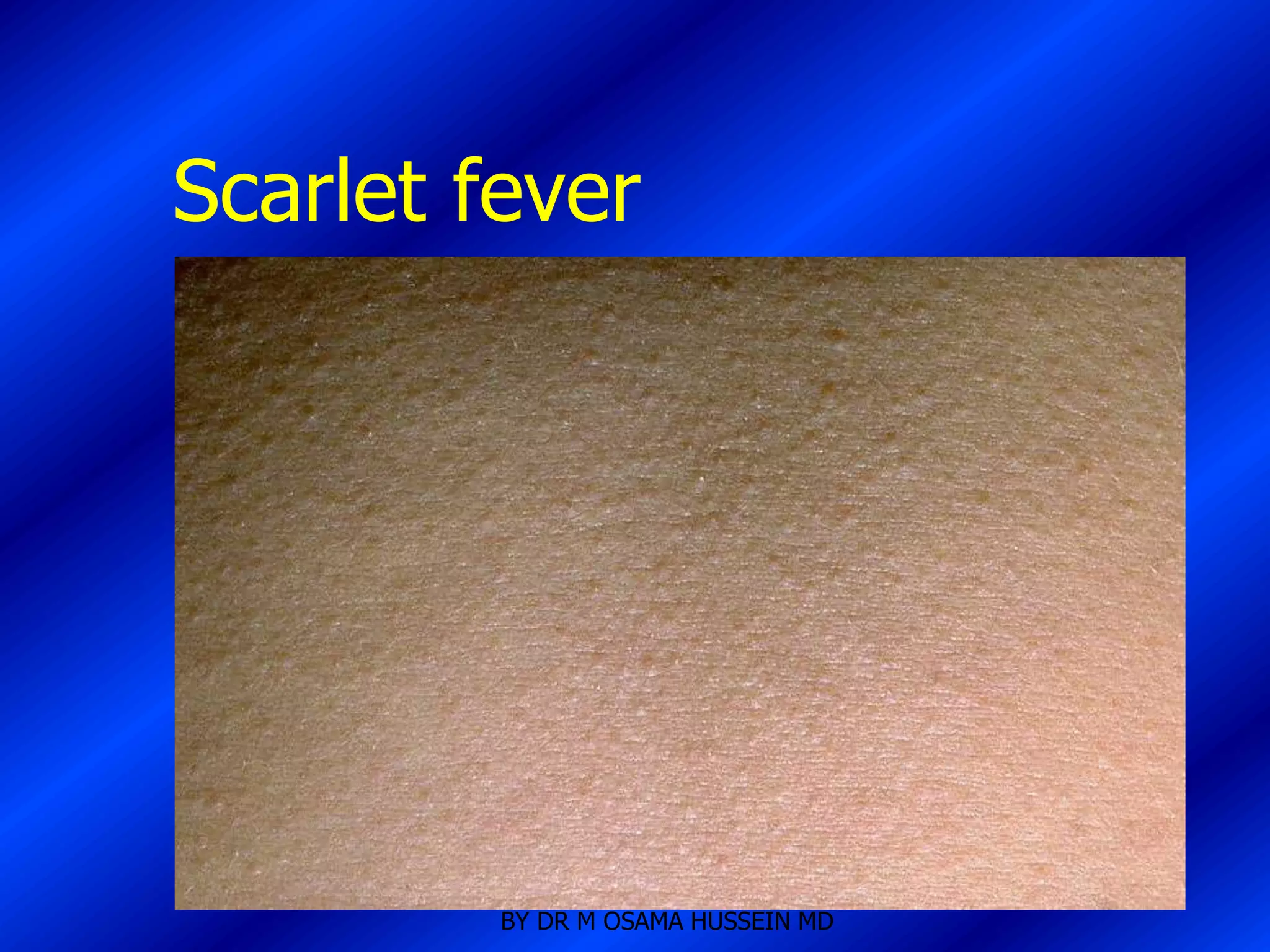
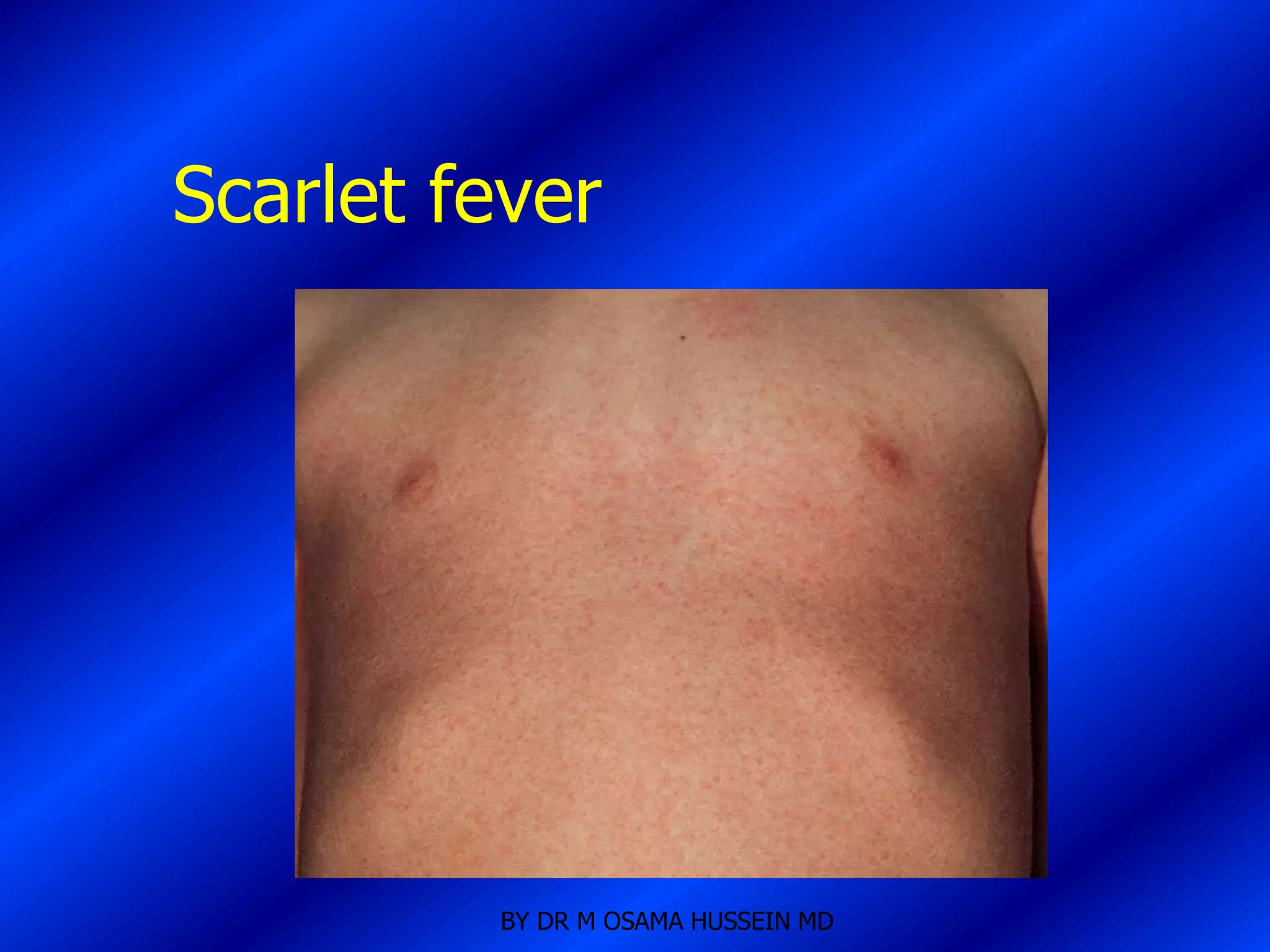
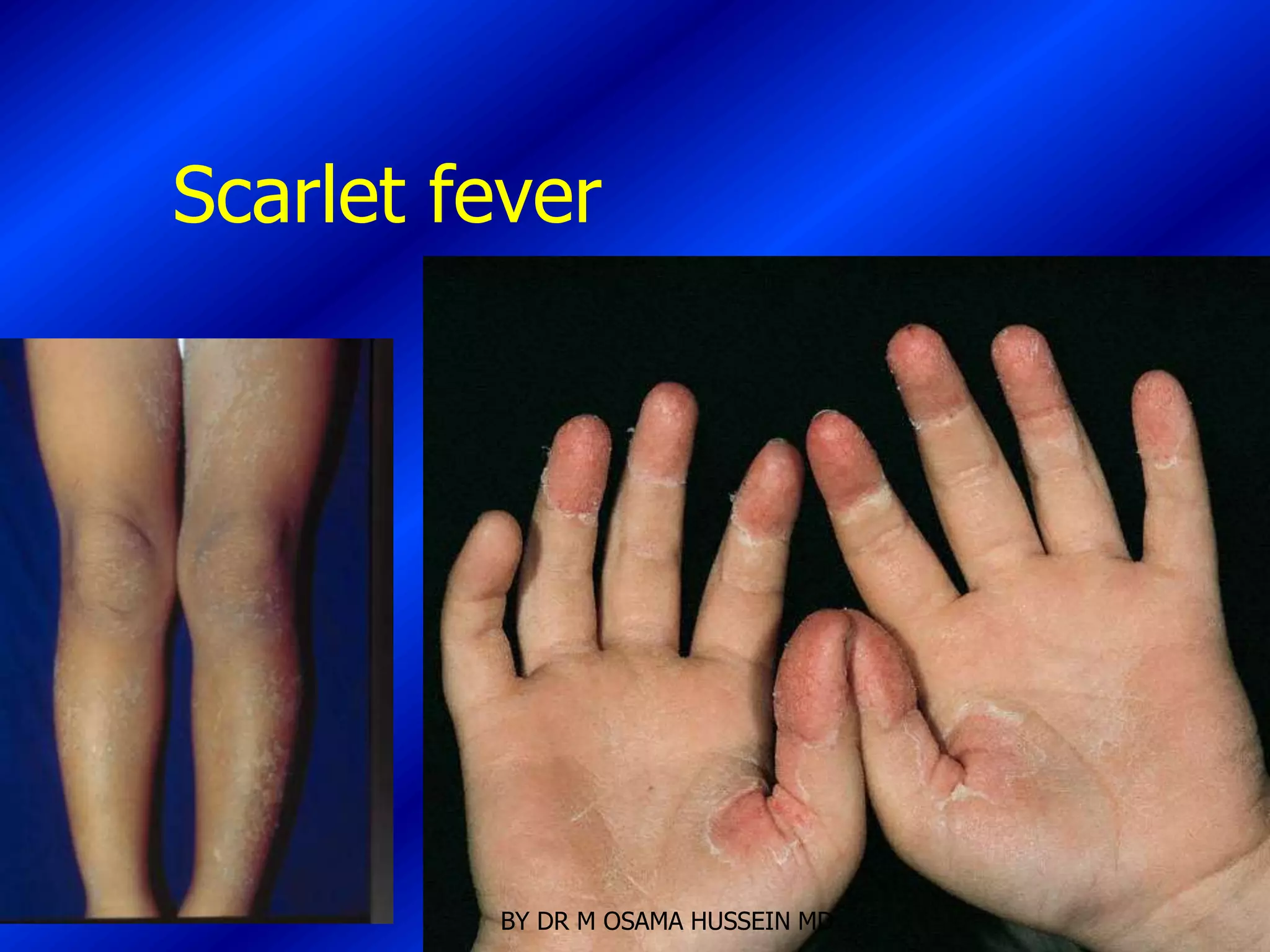
Scarlet fever
   GAS or S aureus: pyrogenic exotoxin (SPE)
   Acute febrile illness with:
      Sore throat

      Gooseflesh or coarse sand-paper rash within 12-
       48 hr.
      Most intense at pressure area: axilla, groin

      Pastia’s line

      Strawberry tongue

      Pustule (Staph scarlet)

   Desquamation begins toward the end of the 1st week

                 BY DR M OSAMA HUSSEIN MD
BY DR M OSAMA HUSSEIN MD
Scarlet fever


         BY DR M OSAMA HUSSEIN MD
Scarlet fever


         BY DR M OSAMA HUSSEIN MD
Scarlet fever


         BY DR M OSAMA HUSSEIN MD
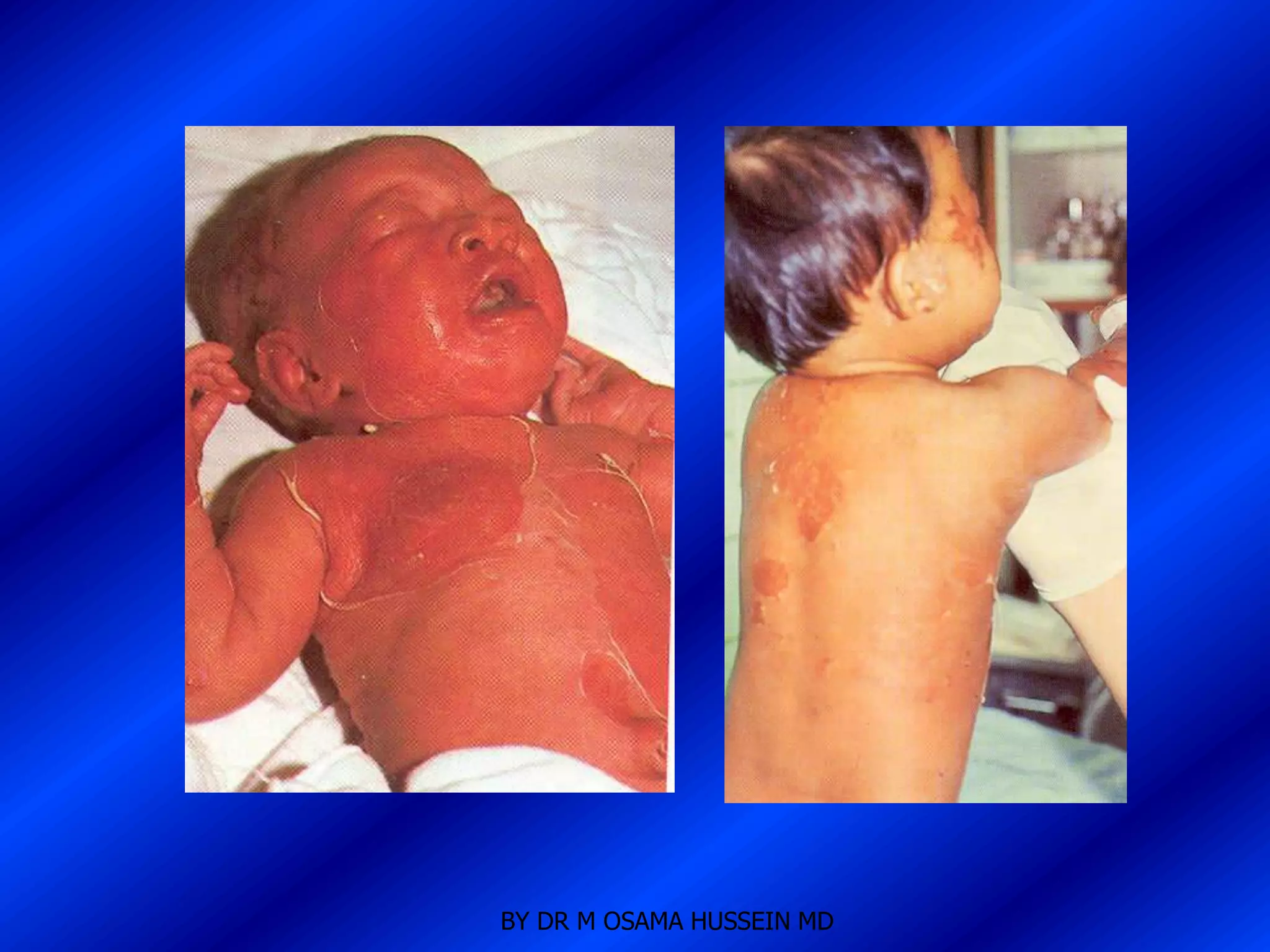
Staphylococcal scalded
skin syndrome (SSSS/4S)
   Staphylococcus toxigenic strain phage group
    2 with epidemolylic toxin A and B
   Start with local infection e.g. purulent
    conjunctivitis, otitis media, nasopharyngeal
    infection
   Fever, MP rash or erythroderma with
    periorificial and flexural accentuation with
    Nikolski sign


                BY DR M OSAMA HUSSEIN MD
BY DR M OSAMA HUSSEIN MD
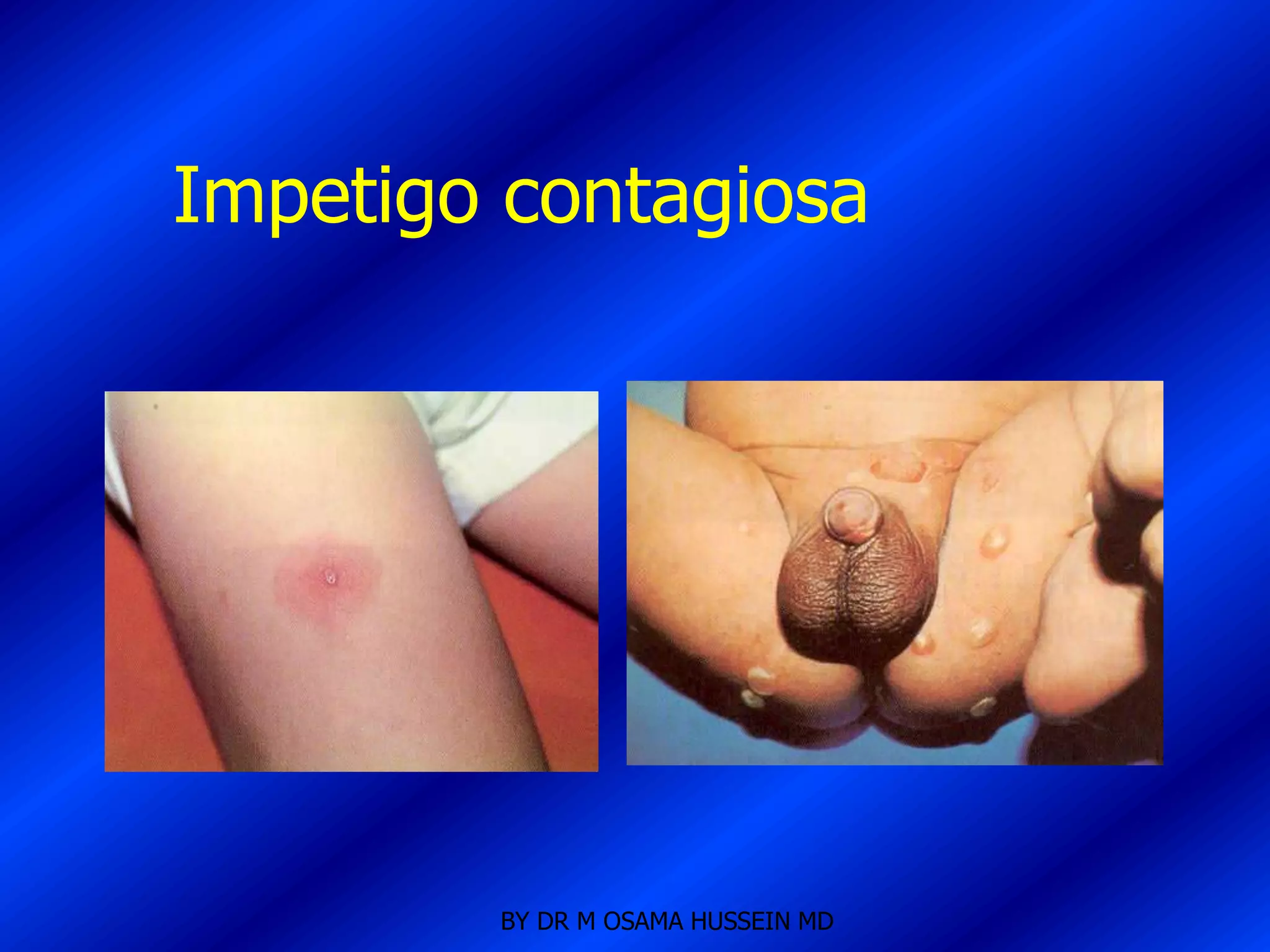
Impetigo contagiosa


        BY DR M OSAMA HUSSEIN MD
BY DR M OSAMA HUSSEIN MD

Fever in pediatric practice

  • 1.
    International Neonatology TrainingProgram" INTP BY DR M OSAMA HUSSEIN MD
  • 2.
    DEFINITIONS OF TERMSIN PRACTICE GUIDELINE ON THE MANAGEMENT OF FEVER IN INFANTS AND YOUNG CHILDREN Term Definition Fever Rectal temperature of 38°C (100.4°F)* Fever Acute febrile illness in which the etiology of the fever is not without apparent after a careful history and physical examination source Serious Meningitis, sepsis, bone and joint infections, urinary tract bacterial infections, pneumonia, enteritis infection Toxic Clinical presentation characterized by lethargy, evidence of poor appearance perfusion, cyanosis, hypoventilation or hyperventilation Lethargy Poor or absent eye contact; failure of child to recognize parents or to interact with persons or objects in the environment BY DR M OSAMA HUSSEIN MD
  • 3.
    Infant appears generallywell ROCHESTER CRITERIA FOR Infant has been previously healthy: IDENTIFYING FEBRILE INFANTS AT LOW RISK FOR SERIOUS Born at term (≥37 weeks of gestation) BACTERIAL INFECTION No perinatal antimicrobial therapy No treatment for unexplained hyperbilirubinemia No previous antimicrobial therapy No previous hospitalization No chronic or underlying illness Not hospitalized longer than mother Infant has no evidence of skin, soft tissue, bone, joint or ear infection Infant has these laboratory values: White blood cell count of 5,000 to 15,000 per mm3 (5 to 15 × 109 per L) Absolute band cell count of ≤1,500 per mm3 (≤1.5 × 10⁹ per L) Ten or fewer white blood cells / high-power field on microscopic examination of urine Five or fewer white blood cells per high-power field on microscopic examination of BY DR M OSAMA HUSSEIN MD stool in infant with diarrhea
  • 4.
    Why we payspecial attention to fever ? • Parental concern • “fever phobia” • Clinician concern • we don’t want to miss a life threatening infection • Most common complaint in pediatric visits • Some of these kids are sick • most do well without intervention • need an approach to sort them out BY DR M OSAMA HUSSEIN MD
  • 5.
    BY DR MOSAMA HUSSEIN MD
  • 6.
    Fever Without aSource • Fever without a source “FWS”= fever with no apparent cause • “Fever of Unknown Origin”= a febrile illness of at least three weeks' duration, at least 38.3°C on at least three occasions and failure to establish a diagnosis in spite of intensive evaluation. BY DR M OSAMA HUSSEIN MD
  • 7.
    Pediatric Fever Algorithm Fever 38 C Non toxic appearing, 28 – 90 days and “Low Risk” No Yes Outpatient Management ADMIT Blood Culture, Option 1 Option 2 Urine Culture, Blood Cx, Urine Cx, Blood Cx, Urine CSF Cx, antibx CSF Cx, ceftriaxone Cx, Re-eval in 24 +/-CXR 50 mg/kg IV/IM, re- hours eval in 24 hours BY DR M OSAMA HUSSEIN MD
  • 8.
    Child 3 to36 months with FWS: Occult Bacteremia • S. pneumoniae>>H. influenzae>N. meningitidis – conjugate vaccine for H influenzae virtually eliminated this type of bacteremia BY DR M OSAMA HUSSEIN MD
  • 9.
    Child 3 to36 months with FWS: Practice Guidelines • Toxic - Admit with full work up • Non-toxic – Consider workup when fever is 39°C BY DR M OSAMA HUSSEIN MD
  • 10.
    Pediatric Fever Algorithm Child 3 to 36 months with FWS Appears toxic? Yes No Full sepsis work up and Temperature ≥ 39 antibiotics and admit No Yes No testing, Selective assure follow up workup in 48 hrs BY DR M OSAMA HUSSEIN MD
  • 11.
    Child 3 to36 months with FWS: Practice Guidelines • Toxic - Admit with full work up • Non-toxic – Consider workup when fever is 39°C (102.2°F) BY DR M OSAMA HUSSEIN MD
  • 12.
    Child 3 to36 months with FWS: Occult Pneumonia • Children with high fever and leukocytosis are more likely to have occult bacterial pneumonia – some suggest getting CXR with no resp symptoms and WBC>20,000 and temp 39.5 C (103.1°F) BY DR M OSAMA HUSSEIN MD
  • 13.
    Pediatric Fever Algorithm Child 3 to 36 months with FWS Appears toxic? Yes No Full sepsis work up Temperature ≥ 39 and antibiotics and admit No Yes No testing, Selective assure follow workup up in 48 hrs BY DR M OSAMA HUSSEIN MD
  • 14.
    Summary of Testing:3 to 36 months and FWS, non-toxic, temp ≥39 C • Urine – All females < 2 years – Males • Uncircumcised <12 months • Circumcised < 6 months • Stool culture – If bloody diarrhea or >5 wbc’s/hpf • CXR – If respiratory symptoms or hypoxic • LP – Signs of meningitis • Blood cultures and Antibiotics – Option 1: All with fever ≥ 102.2 – Option2 : All with fever ≥ 102.2 and WBC ≥ 15,000 – Option3: Practitioner/immunization dependent BY DR M OSAMA HUSSEIN MD
  • 15.
    Fever with aSource • More common than fever without a source • Clinically identifiable viral or bacterial illnesses BY DR M OSAMA HUSSEIN MD
  • 16.
    Fever with aSource: Viral – Varicella – Measles (recent outbreaks) – Mumps (recent Midwest outbreaks) – Adenovirus (pharyngoconjunctival fever) – Coxsackie infections • Herpangina→ • Hand-foot-and-mouth – Croup – Bronchiolitis (as in our case) – Influenzae BY DR M OSAMA HUSSEIN MD
  • 17.
    Fever with aSource: Viral • Pediatric exanthems – Roseola (HHV 6) – Fifths disease (Parvo B19)→ BY DR M OSAMA HUSSEIN MD
  • 18.
    Fever with aSource: Bacterial • Clinically evident bacterial infections – Readily diagnosed from H&P • Pneumonia • Meningitis • Septic arthritis • Osteomyelitis • Lymphadenitis • Cellulitis/Abscess • Bacterial enteritis BY DR M OSAMA HUSSEIN MD
  • 19.
    Antipyretics • Triage protocols – acetaminophen by protocol • Acetaminophen dose – 15 mg/kg q 4 hr prn • Ibuprofen dose (for greater than 6 months old) – 10 mg/kg q 6 hr prn BY DR M OSAMA HUSSEIN MD
  • 20.
    Bug Drugs: <1month • Ampicillin and gentamycin – covers GBBS, E. coli, Listeria monocytogenes – ampicillin specifically for Listeria and provides some synergy with gentamycin for GBBS • Consider acyclovir – Maternal history of Herpes (especially if primary outbreak with vaginal delivery) or any noted skin or mucosal lesions BY DR M OSAMA HUSSEIN MD
  • 21.
    Bug Drugs: 1-2months • Ampicillin and cefotaxime – covers the < 1 month etiologic agents and also S. pneumoniae – with cefotaxime you don’t have to worry about oto/renal toxicity associated with gentamycin BY DR M OSAMA HUSSEIN MD
  • 22.
    Bug Drugs: >2months • Ceftriaxone – covers S. pneumoniae, H. influenzae, and N. meningitidis – theoretically shouldn’t give < 1 month because of biliary sludging • Add vancomycin if any concern for S. pneumoniae on LP in any age range (resistant strains have been appearing in CSF) BY DR M OSAMA HUSSEIN MD
  • 23.
    Kawasaki’s Disease • Feverfor at least 5 days' duration and the presence of 4 of the following – Extremities changes (erythema, edema, and desquamation) – Conjunctivitis (no exudate). – Polymorphous rash (not vesicular) is usually generalized – Cervical lymphadenopathy usually unilateral and greater than 1.5 cm – Lip or oral cavity changes (erythema, dry/fissured or swollen lips, and strawberry tongue) BY DR M OSAMA HUSSEIN MD
  • 24.
    Febrile Seizures • SimpleFebrile Seizure – 1 event in a 24 hour period – Non-focal • Complex – Whenever it is not simple – Consider larger work-up • 30% chance of recurrence BY DR M OSAMA HUSSEIN MD
  • 25.
    Febrile Seizures • Workup for the source of the fever • “Strongly consider LP” for under 12 months – AAP guidelines • Brain imaging not often necessary • Need to explain to parents why you aren’t worried about the seizure BY DR M OSAMA HUSSEIN MD
  • 26.
    Pediatric Fever Summary:Golden Rules • A toxic appearance demands immediate action – Work-up/antibiotics and admit • Know the age-specific algorithm for FWS • Test the urine (most common SBI) • Look for specific bacterial and viral etiologies • Careful follow up must be assured • Recommendations continue to evolve with new immunizations BY DR M OSAMA HUSSEIN MD
  • 27.
    Fever with xanthem  Infectious causes  Virus:  Classic viral exanthem: Measles, Rubella, VZV, Parvovirus, Roseola  Others:, HSV, EBV, HBV, Enterovirus, Dengue  Bacteria: Scarlet fever, Staph infection (sepsis, 4S,toxic shock syndrome), Meningococcemia, typhoid  Mycoplasma  Rickettsial infection  Noninfectious cause  Allergy: Food, drug, toxin, serum sickness  Uncertain cause: Kawasaki disease BY DR M OSAMA HUSSEIN MD
  • 28.
    Clinical Manifestation  Incubation: 8-12 days, the average interval between appearance of rash in the source case and subsequent cases is 14 days, with a range of 7-18 days.  Prodromal period: fever 2-4 day + 3C  cough  coryza  conjunctivitis  Koplik spot  Rash: erythematous maculopapular rash  facesole in 72 hr.  face and trunk: mostly distributed  pneumonia  Convalescence  cough may persist for 1 week BY DR M OSAMA HUSSEIN MD
  • 29.
    BY DR MOSAMA HUSSEIN MD
  • 30.
    BY DR MOSAMA HUSSEIN MD
  • 31.
    Complication  Pneumonia  Otitis media  Diarrhea  Meningoencephalitis  Croup  Subacute sclerosing panencephalitis (SSPE) BY DR M OSAMA HUSSEIN MD
  • 32.
    Treatment and Care  Supportive and Symptomatic  Vit A supplementation  6 mo-2 yr hospitalized with measles and complication  > 6 mo who have risk for severe measles and vit A deficiency: immunodef, vitamin A def, impaired intestinal absorption, malnutrition, recent immigration from high mortality rated due to measles  Antibiotic for superimposed bacterial infection BY DR M OSAMA HUSSEIN MD
  • 33.
    Treatment and Care  Isolation: Airborne Precaution  1-2 day before onset of symptom or 3-5 days before onset of rash  4 days after onset of rash in healthy children  For the duration of illness in immunocompromised pt.  Isolated room (negative pressure ventilation)  Prevention: immunization  9-15 months  4-6 years BY DR M OSAMA HUSSEIN MD
  • 34.
    Rubella  RNA virus: Family Togaviridae, genus Rubivirus  IP: 14-21 days  Infectivity: 7 days before – 5 days after onset of rash BY DR M OSAMA HUSSEIN MD
  • 35.
    Clinical Manifestation  Prodromal period 1-5 days  MP rash for < 3 days  LN at postauricular and cervical area  CBC: normal range  Dx: viral isolation  Serologic test: CF, HI, IgM ELISA BY DR M OSAMA HUSSEIN MD
  • 36.
    BY DR MOSAMA HUSSEIN MD
  • 37.
    Rubella  Complication  arthritis  thrombocytopenia  meningoencephalitis  Treatment: supportive  Isolation:  droplet precaution for 7 days after onset of rash,  contact precaution for congenital rubella until > 1 yr- old  Prevention: immunization BY DR M OSAMA HUSSEIN MD
  • 38.
    Chickenpox  VZV, HHV-3:  Transmission  airborne  contact vesicular fluid  vertical transmission  Incubation period:  14-16 days, (10-21days)  Infectivity: winter season  Most contagious: 1-2 days before onset of rash until crusting of lesion. BY DR M OSAMA HUSSEIN MD
  • 39.
    Clinical Manifestation  Prodromal period: 2-3 days  Generalized, pruritic, vesicular rash 250-500 lesions involving skin and oral mucosa  Complication  Herpes Zoster, Shingles  Congenital varicella: Scar, limb, ocular, CNS defect  Bacterial infection  Severe chickenpox  CNS: encephalitis, cerebellar ataxia, Reye’s Syndrome BY DR M OSAMA HUSSEIN MD
  • 40.
    BY DR MOSAMA HUSSEIN MD
  • 41.
    BY DR MOSAMA HUSSEIN MD
  • 42.
    BY DR MOSAMA HUSSEIN MD
  • 43.
    Treatment and care  Supportive and symptomatic  antipruritic drug  for severe case: ACV, famciclovir, valacyclovir  Isolation:  Airborne and contact isolation 1-2 days before rash until crusting of all lesion.  Prevention  Immunization BY DR M OSAMA HUSSEIN MD
  • 44.
    Child Care andSchool  Children may return to school when all lesion are crusted.  For compromised children with prolonged course should excluded for the duration of the vesicular eruption.  Older children and staff members with zoster should be instructed to wash their hands if they touch potentially infectious lesion BY DR M OSAMA HUSSEIN MD
  • 45.
    Hand-foot-mouth Disease  coxackie virus type 16 (A 16) most common, other include A5, A7, A9, A10, B2, B5(31) and enterovirus 71  Fever, sore throat, drooling  DDx from Herpes gingivostomatitis  Self-limited, symptomatic treatment BY DR M OSAMA HUSSEIN MD
  • 46.
    HFMD BY DR M OSAMA HUSSEIN MD
  • 47.
    BY DR MOSAMA HUSSEIN MD
  • 48.
    Roseola Infantum  Exanthem subitum  3 mo- 3 yr. (6 mo-1 yr)  HHV-6,7: DNA virus, Herpesviridae  Uncertain incubation period (9-10 days) BY DR M OSAMA HUSSEIN MD
  • 49.
    Clinical Manifestation  High fever 39-41 c for 3-4 days  nonspecific symptom  bulging AF  febrile convulsion  MP Rash after defervescence  CBC: normal range of WBC, lymphocyte predominated BY DR M OSAMA HUSSEIN MD
  • 50.
    BY DR MOSAMA HUSSEIN MD
  • 51.
    Erythrema infectiosum (FifthDz)  Parvovirus (PV) B19 Family Parvoviridae  3-15 year  Droplet transmission  Incubation period: 4-14 days  S/S: lowgrade fever, constitutional symptoms, arthralgia  Classical 3 phases  Sunburn-like rash both cheek (classic slapped-cheek appearance) 2-4  Day 1-4 after facial rash  macular – to – morbiliform eruption at extremities (extensor surface)  Lacy pattern: some w/o classic slapped-cheek pattern BY DR M OSAMA HUSSEIN MD
  • 52.
    BY DR MOSAMA HUSSEIN MD
  • 53.
    BY DR MOSAMA HUSSEIN MD
  • 54.
    Meningococcemia  N meningitidis: GNDC, bean shape  Clinical manifestation  acute febrile illness  petechiae, hemorrhagic manifestation: purpura fulminan  rapid progressive with HT or coma  meningoencephalitis  Diagnosis: gram stain, antigen detection, buffy coat smear and culture  Treatment: penicillin, CTX, CRO BY DR M OSAMA HUSSEIN MD
  • 55.
    BY DR MOSAMA HUSSEIN MD
  • 56.
    Scarlet fever  GAS or S aureus: pyrogenic exotoxin (SPE)  Acute febrile illness with:  Sore throat  Gooseflesh or coarse sand-paper rash within 12- 48 hr.  Most intense at pressure area: axilla, groin  Pastia’s line  Strawberry tongue  Pustule (Staph scarlet)  Desquamation begins toward the end of the 1st week BY DR M OSAMA HUSSEIN MD
  • 57.
    BY DR MOSAMA HUSSEIN MD
  • 58.
    Scarlet fever BY DR M OSAMA HUSSEIN MD
  • 59.
    Scarlet fever BY DR M OSAMA HUSSEIN MD
  • 60.
    Scarlet fever BY DR M OSAMA HUSSEIN MD
  • 61.
    Staphylococcal scalded skin syndrome(SSSS/4S)  Staphylococcus toxigenic strain phage group 2 with epidemolylic toxin A and B  Start with local infection e.g. purulent conjunctivitis, otitis media, nasopharyngeal infection  Fever, MP rash or erythroderma with periorificial and flexural accentuation with Nikolski sign BY DR M OSAMA HUSSEIN MD
  • 62.
    BY DR MOSAMA HUSSEIN MD
  • 63.
    Impetigo contagiosa BY DR M OSAMA HUSSEIN MD
  • 64.
    BY DR MOSAMA HUSSEIN MD