COMMON COLD OR
NASOPHARYNGITIS
IN CHILDREN
By NK
Goals
 Introduction
 Etiology
 Pathophysiology
 Clinical manifestations
 Diagnostic evaluation
 Complications
 Differential diagnosis
 Medical Management
 Nursing assessment, diagnosis &
management
 Prevention
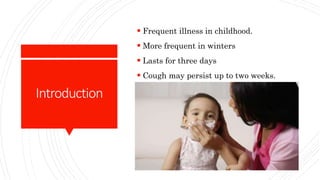
Introduction
 Frequent illness in childhood.
 More frequent in winters
 Lasts for three days
 Cough may persist up to two weeks.
Etiology
Infections of upper respiratory tract with :-
 Adenoviruses, influenza, rhinovirus,
parainfluenza or respiratory syncytial
viruses.
Predisposing factors :-
 Chilling, sudden exposure to cold air &
overcrowding.
 Rhinitis could also be due to allergy.
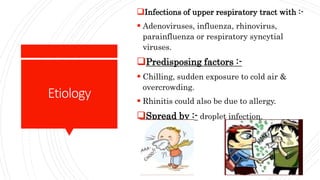
Spread by :- droplet infection.
Pathophysiology
 Due to direct contact with the person
with nasopharyngitis, virus can stay in
unhygienic hands for hours.
 Enter into naso pharynx – binds to
ICAM-1 (Intracellular Adhesion Molecule
1) protein (protein present n leukocytes)
 Through unknown mechanism trigger
inflammatory mediators – signs and
symptoms.
Clinical
manifestations
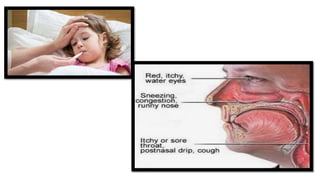
 Fever, nasal irritability, sore throat, fatigue, watery eyes.
 Thin nasal discharge- purulent if secondarily infected
especially younger children, not necessarily as it can result
from shedding of epithelial inflammatory cells results from
viral infection.
 Cervical lymph nodes may enlarge
 Nasopharyngeal congestion – nasal obstruction &
respiratory distress (more pronounced in young infants)
 Eustachian tube opening may blocked – serous otitis media
& congestion of tympanic membrane.
 Allergic rhinitis – clear mucoid discharge with sneezing.
 Narrowing of airway & pharyngeal irritation – dry hacking
cough.
 Blocked lacrimal ducts in nose - Excessive lacrimation.
Diagnostic
evaluation
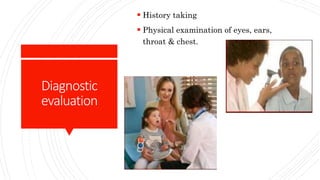
 History taking
 Physical examination of eyes, ears,
throat & chest.
Complications
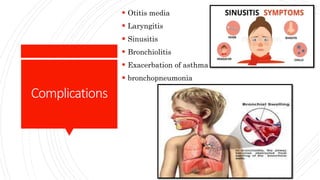
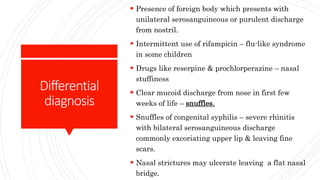
 Otitis media
 Laryngitis
 Sinusitis
 Bronchiolitis
 Exacerbation of asthma
 bronchopneumonia
Differential
diagnosis
 Presence of foreign body which presents with
unilateral serosanguineous or purulent discharge
from nostril.
 Intermittent use of rifampicin – flu-like syndrome
in some children
 Drugs like reserpine & prochlorperazine – nasal
stuffiness
 Clear mucoid discharge from nose in first few
weeks of life – snuffles.
 Snuffles of congenital syphilis – severe rhinitis
with bilateral serosanguineous discharge
commonly excoriating upper lip & leaving fine
scars.
 Nasal strictures may ulcerate leaving a flat nasal
bridge.
Medical
management
Relieve nasal congestion :-
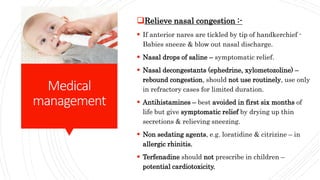
 If anterior nares are tickled by tip of handkerchief -
Babies sneeze & blow out nasal discharge.
 Nasal drops of saline – symptomatic relief.
 Nasal decongestants (ephedrine, xylometozoline) –
rebound congestion, should not use routinely, use only
in refractory cases for limited duration.
 Antihistamines – best avoided in first six months of
life but give symptomatic relief by drying up thin
secretions & relieving sneezing.
 Non sedating agents, e.g. loratidine & citrizine – in
allergic rhinitis.
 Terfenadine should not prescribe in children –
potential cardiotoxicity.
Cont..
Fever :-
 Antipyretics such as paracetamol
(acetaminophen).
 Cough syrups should not be given
 If cough is suppressed in infants & young
children- mucoid secretions may retain in
bronchi & may predispose to spasmodic
cough, sneezing, atelectasis &
suppuration.
Cont..
Antibiotics :-
 Little value in viral infections.
 Used if secretions become purulent, fever
continues to rise & children develops
bronchopneumonia.
 No evidence that large doses of vitamin C
are helpful.
 Children should be protected from sudden
exposure to chills &kept warm during winter
months.
Nursing
assessment
 Asses the child with common cold for :-
 History of exposure to known carriers,
fever, sore throat and other clinical
features.
 History of oral intake & hydration status
should also be taken.
Nursing
diagnosis
 Ineffective breathing pattern related to
inflammatory process in respiratory tract
 Ineffective airway clearance related to
mechanical obstruction of airway
secretions & increased production of
secretions.
 Anxiety related to disease
Nursing
management
Promoting comfort :-
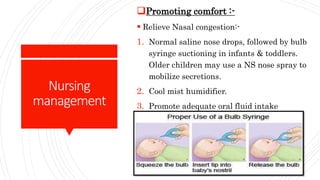
 Relieve Nasal congestion:-
1. Normal saline nose drops, followed by bulb
syringe suctioning in infants & toddlers.
Older children may use a NS nose spray to
mobilize secretions.
2. Cool mist humidifier.
3. Promote adequate oral fluid intake
Cont..
 Adequate rest.
 Position – provide the child a semi-fowlers position
for lung expansion.
 Carrying the child in cool fresh air can aid breathing.
 Administer medications as prescribed.
Providing family education :-
 Encourage parents & families to give a healthy diet.
 Educate parents to keep the child calm and make
comfortable.
 Educate parents about the medications, their use and
effects.
 Educate parents how to use nasal drops and about
suctioning also.
Prevention
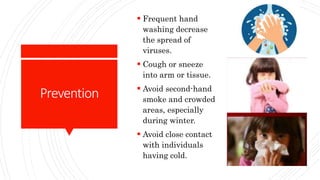
 Frequent hand
washing decrease
the spread of
viruses.
 Cough or sneeze
into arm or tissue.
 Avoid second-hand
smoke and crowded
areas, especially
during winter.
 Avoid close contact
with individuals
having cold.
Thank you
for the
attention!

Common cold or nasopharyngitis in children

  • 1.
  • 2.
    Goals  Introduction  Etiology Pathophysiology  Clinical manifestations  Diagnostic evaluation  Complications  Differential diagnosis  Medical Management  Nursing assessment, diagnosis & management  Prevention
  • 3.
    Introduction  Frequent illnessin childhood.  More frequent in winters  Lasts for three days  Cough may persist up to two weeks.
  • 4.
    Etiology Infections of upperrespiratory tract with :-  Adenoviruses, influenza, rhinovirus, parainfluenza or respiratory syncytial viruses. Predisposing factors :-  Chilling, sudden exposure to cold air & overcrowding.  Rhinitis could also be due to allergy. Spread by :- droplet infection.
  • 5.
    Pathophysiology  Due todirect contact with the person with nasopharyngitis, virus can stay in unhygienic hands for hours.  Enter into naso pharynx – binds to ICAM-1 (Intracellular Adhesion Molecule 1) protein (protein present n leukocytes)  Through unknown mechanism trigger inflammatory mediators – signs and symptoms.
  • 6.
    Clinical manifestations  Fever, nasalirritability, sore throat, fatigue, watery eyes.  Thin nasal discharge- purulent if secondarily infected especially younger children, not necessarily as it can result from shedding of epithelial inflammatory cells results from viral infection.  Cervical lymph nodes may enlarge  Nasopharyngeal congestion – nasal obstruction & respiratory distress (more pronounced in young infants)  Eustachian tube opening may blocked – serous otitis media & congestion of tympanic membrane.  Allergic rhinitis – clear mucoid discharge with sneezing.  Narrowing of airway & pharyngeal irritation – dry hacking cough.  Blocked lacrimal ducts in nose - Excessive lacrimation.
  • 8.
    Diagnostic evaluation  History taking Physical examination of eyes, ears, throat & chest.
  • 9.
    Complications  Otitis media Laryngitis  Sinusitis  Bronchiolitis  Exacerbation of asthma  bronchopneumonia
  • 10.
    Differential diagnosis  Presence offoreign body which presents with unilateral serosanguineous or purulent discharge from nostril.  Intermittent use of rifampicin – flu-like syndrome in some children  Drugs like reserpine & prochlorperazine – nasal stuffiness  Clear mucoid discharge from nose in first few weeks of life – snuffles.  Snuffles of congenital syphilis – severe rhinitis with bilateral serosanguineous discharge commonly excoriating upper lip & leaving fine scars.  Nasal strictures may ulcerate leaving a flat nasal bridge.
  • 11.
    Medical management Relieve nasal congestion:-  If anterior nares are tickled by tip of handkerchief - Babies sneeze & blow out nasal discharge.  Nasal drops of saline – symptomatic relief.  Nasal decongestants (ephedrine, xylometozoline) – rebound congestion, should not use routinely, use only in refractory cases for limited duration.  Antihistamines – best avoided in first six months of life but give symptomatic relief by drying up thin secretions & relieving sneezing.  Non sedating agents, e.g. loratidine & citrizine – in allergic rhinitis.  Terfenadine should not prescribe in children – potential cardiotoxicity.
  • 12.
    Cont.. Fever :-  Antipyreticssuch as paracetamol (acetaminophen).  Cough syrups should not be given  If cough is suppressed in infants & young children- mucoid secretions may retain in bronchi & may predispose to spasmodic cough, sneezing, atelectasis & suppuration.
  • 13.
    Cont.. Antibiotics :-  Littlevalue in viral infections.  Used if secretions become purulent, fever continues to rise & children develops bronchopneumonia.  No evidence that large doses of vitamin C are helpful.  Children should be protected from sudden exposure to chills &kept warm during winter months.
  • 14.
    Nursing assessment  Asses thechild with common cold for :-  History of exposure to known carriers, fever, sore throat and other clinical features.  History of oral intake & hydration status should also be taken.
  • 15.
    Nursing diagnosis  Ineffective breathingpattern related to inflammatory process in respiratory tract  Ineffective airway clearance related to mechanical obstruction of airway secretions & increased production of secretions.  Anxiety related to disease
  • 16.
    Nursing management Promoting comfort :- Relieve Nasal congestion:- 1. Normal saline nose drops, followed by bulb syringe suctioning in infants & toddlers. Older children may use a NS nose spray to mobilize secretions. 2. Cool mist humidifier. 3. Promote adequate oral fluid intake
  • 17.
    Cont..  Adequate rest. Position – provide the child a semi-fowlers position for lung expansion.  Carrying the child in cool fresh air can aid breathing.  Administer medications as prescribed. Providing family education :-  Encourage parents & families to give a healthy diet.  Educate parents to keep the child calm and make comfortable.  Educate parents about the medications, their use and effects.  Educate parents how to use nasal drops and about suctioning also.
  • 18.
    Prevention  Frequent hand washingdecrease the spread of viruses.  Cough or sneeze into arm or tissue.  Avoid second-hand smoke and crowded areas, especially during winter.  Avoid close contact with individuals having cold.
  • 19.