5 COMMON EMERGENCIES
Cardiac Arrest, Respiratory Arrest,
   Airway Obstruction, Burns,
       Soft-Tissue Injuries

      By: Monica Dennison
CARDIAC ARREST
• Unexpected loss of heart function, breathing and
  consciousness
• Results from an electrical disturbance in your
  heart
• Pumping action of the heart is disrupted
• Blood flow to the rest of your body is stopped
SYMPTOMS
• Sudden collapse
• No pulse
• No breathing
• Loss of consciousness
             • OTHER SIGNS MAY BE
• Fatigue, fainting, blackouts, chest pain,
  shortness of breath, weakness, palpitations or
  vomiting
• Often occurs with NO warning
TREATMENT
• If you experience any of these signs see a physician
  immediately
• If you come across someone who is NOT
  breathing…
  ▫ Call 911
  ▫ Perform CPR
  ▫ Use a portable defibrillator
  ▫ Continue this cycle until the patient regains
    consciousness or emergency medical
    technicians take over
  ▫ www.news-medical.net
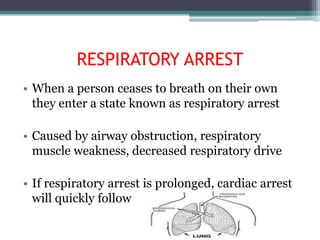
RESPIRATORY ARREST
• When a person ceases to breath on their own
  they enter a state known as respiratory arrest

• Caused by airway obstruction, respiratory
  muscle weakness, decreased respiratory drive

• If respiratory arrest is prolonged, cardiac arrest
  will quickly follow
SYMPTOMS
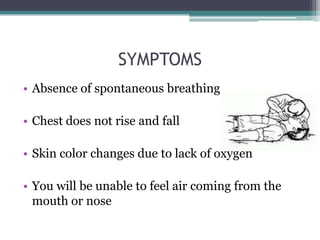
• Absence of spontaneous breathing

• Chest does not rise and fall

• Skin color changes due to lack of oxygen

• You will be unable to feel air coming from the
  mouth or nose
TREATMENT
• Remove any airway obstruction

• Cardiopulmonary resuscitation (CPR)

• Intubation (medical professional)

• Tracheotomy (medical professional)

• www.buzzle.com
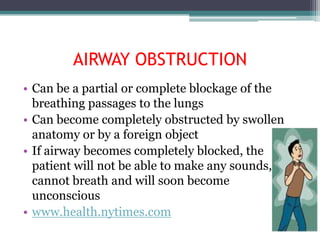
AIRWAY OBSTRUCTION
• Can be a partial or complete blockage of the
  breathing passages to the lungs
• Can become completely obstructed by swollen
  anatomy or by a foreign object
• If airway becomes completely blocked, the
  patient will not be able to make any sounds,
  cannot breath and will soon become
  unconscious
• www.health.nytimes.com
SYMPTOMS
• 3 factors that greatly contribute to choking are…
 ▫ Alcohol
 ▫ Inattention to eating
 ▫ Laughing/talking while eating

 Coughing
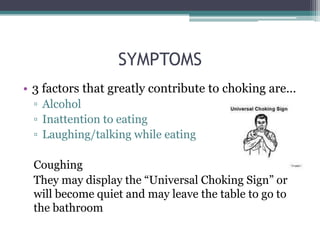
 They may display the “Universal Choking Sign” or
 will become quiet and may leave the table to go to
 the bathroom
TREATMENT
• Encourage victim to cough
• If stop or unable to cough/talk, ask if they are
  choking and if you can help them
• If they say yes, perform the Heimlich maneuver
• If unconscious, begin CPR
• Continue cycle until blockage is removed or EMS
  arrives
• www.wikibooks.org
BURNS
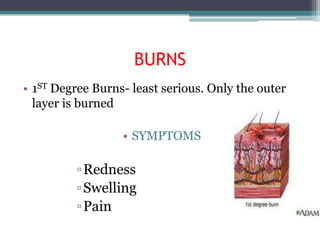
• 1ST Degree Burns- least serious. Only the outer
  layer is burned

                  • SYMPTOMS

          ▫Redness
          ▫Swelling
          ▫Pain
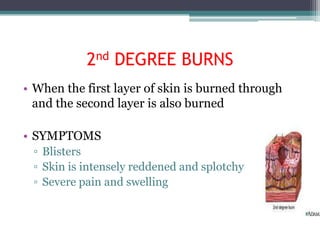
2nd DEGREE BURNS
• When the first layer of skin is burned through
  and the second layer is also burned

• SYMPTOMS
 ▫ Blisters
 ▫ Skin is intensely reddened and splotchy
 ▫ Severe pain and swelling
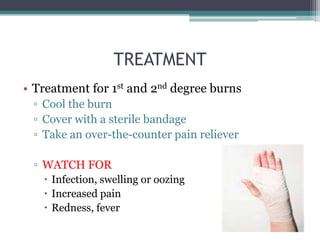
TREATMENT
• Treatment for 1st and 2nd degree burns
 ▫ Cool the burn
 ▫ Cover with a sterile bandage
 ▫ Take an over-the-counter pain reliever

 ▫ WATCH FOR
    Infection, swelling or oozing
    Increased pain
    Redness, fever
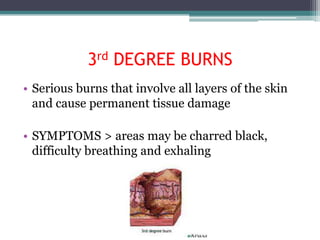
3rd DEGREE BURNS
• Serious burns that involve all layers of the skin
  and cause permanent tissue damage

• SYMPTOMS > areas may be charred black,
  difficulty breathing and exhaling
TREATMENT
• CALL 911

• Check for signs of circulation

• Elevate burned parts

• Cover the burn

• www.medicinenet.com
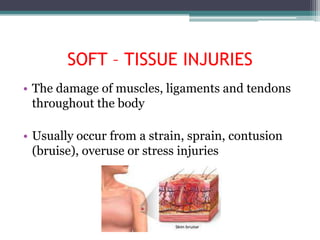
SOFT – TISSUE INJURIES
• The damage of muscles, ligaments and tendons
  throughout the body

• Usually occur from a strain, sprain, contusion
  (bruise), overuse or stress injuries
SOFT – TISSUE INJURIES
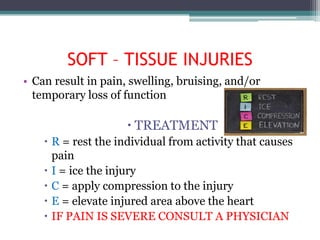
• Can result in pain, swelling, bruising, and/or
  temporary loss of function

                      TREATMENT
     R = rest the individual from activity that causes
      pain
     I = ice the injury
     C = apply compression to the injury
     E = elevate injured area above the heart
     IF PAIN IS SEVERE CONSULT A PHYSICIAN
AUTOMATED EXTERNAL DEFIBRILLATOR
             (AED)


• A portable electronic device that will
  automatically diagnose any potentially life
  threatening cardiac arrhythmias of ventricular
  fibrillation and ventricular tachycardia in a
  patient
• Treats through defibrillation and allows the
  heart to reestablish an effective rhythm
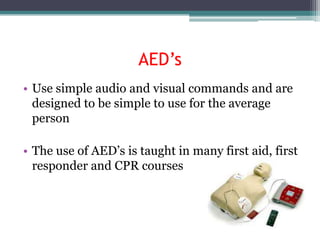
AED’s
• Use simple audio and visual commands and are
  designed to be simple to use for the average
  person

• The use of AED’s is taught in many first aid, first
  responder and CPR courses

5 common emergencies powerpoint

  • 1.
    5 COMMON EMERGENCIES CardiacArrest, Respiratory Arrest, Airway Obstruction, Burns, Soft-Tissue Injuries By: Monica Dennison
  • 2.
    CARDIAC ARREST • Unexpectedloss of heart function, breathing and consciousness • Results from an electrical disturbance in your heart • Pumping action of the heart is disrupted • Blood flow to the rest of your body is stopped
  • 3.
    SYMPTOMS • Sudden collapse •No pulse • No breathing • Loss of consciousness • OTHER SIGNS MAY BE • Fatigue, fainting, blackouts, chest pain, shortness of breath, weakness, palpitations or vomiting • Often occurs with NO warning
  • 4.
    TREATMENT • If youexperience any of these signs see a physician immediately • If you come across someone who is NOT breathing… ▫ Call 911 ▫ Perform CPR ▫ Use a portable defibrillator ▫ Continue this cycle until the patient regains consciousness or emergency medical technicians take over ▫ www.news-medical.net
  • 5.
    RESPIRATORY ARREST • Whena person ceases to breath on their own they enter a state known as respiratory arrest • Caused by airway obstruction, respiratory muscle weakness, decreased respiratory drive • If respiratory arrest is prolonged, cardiac arrest will quickly follow
  • 6.
    SYMPTOMS • Absence ofspontaneous breathing • Chest does not rise and fall • Skin color changes due to lack of oxygen • You will be unable to feel air coming from the mouth or nose
  • 7.
    TREATMENT • Remove anyairway obstruction • Cardiopulmonary resuscitation (CPR) • Intubation (medical professional) • Tracheotomy (medical professional) • www.buzzle.com
  • 8.
    AIRWAY OBSTRUCTION • Canbe a partial or complete blockage of the breathing passages to the lungs • Can become completely obstructed by swollen anatomy or by a foreign object • If airway becomes completely blocked, the patient will not be able to make any sounds, cannot breath and will soon become unconscious • www.health.nytimes.com
  • 9.
    SYMPTOMS • 3 factorsthat greatly contribute to choking are… ▫ Alcohol ▫ Inattention to eating ▫ Laughing/talking while eating Coughing They may display the “Universal Choking Sign” or will become quiet and may leave the table to go to the bathroom
  • 10.
    TREATMENT • Encourage victimto cough • If stop or unable to cough/talk, ask if they are choking and if you can help them • If they say yes, perform the Heimlich maneuver • If unconscious, begin CPR • Continue cycle until blockage is removed or EMS arrives • www.wikibooks.org
  • 11.
    BURNS • 1ST DegreeBurns- least serious. Only the outer layer is burned • SYMPTOMS ▫Redness ▫Swelling ▫Pain
  • 12.
    2nd DEGREE BURNS •When the first layer of skin is burned through and the second layer is also burned • SYMPTOMS ▫ Blisters ▫ Skin is intensely reddened and splotchy ▫ Severe pain and swelling
  • 13.
    TREATMENT • Treatment for1st and 2nd degree burns ▫ Cool the burn ▫ Cover with a sterile bandage ▫ Take an over-the-counter pain reliever ▫ WATCH FOR  Infection, swelling or oozing  Increased pain  Redness, fever
  • 14.
    3rd DEGREE BURNS •Serious burns that involve all layers of the skin and cause permanent tissue damage • SYMPTOMS > areas may be charred black, difficulty breathing and exhaling
  • 15.
    TREATMENT • CALL 911 •Check for signs of circulation • Elevate burned parts • Cover the burn • www.medicinenet.com
  • 16.
    SOFT – TISSUEINJURIES • The damage of muscles, ligaments and tendons throughout the body • Usually occur from a strain, sprain, contusion (bruise), overuse or stress injuries
  • 17.
    SOFT – TISSUEINJURIES • Can result in pain, swelling, bruising, and/or temporary loss of function  TREATMENT  R = rest the individual from activity that causes pain  I = ice the injury  C = apply compression to the injury  E = elevate injured area above the heart  IF PAIN IS SEVERE CONSULT A PHYSICIAN
  • 18.
    AUTOMATED EXTERNAL DEFIBRILLATOR (AED) • A portable electronic device that will automatically diagnose any potentially life threatening cardiac arrhythmias of ventricular fibrillation and ventricular tachycardia in a patient • Treats through defibrillation and allows the heart to reestablish an effective rhythm
  • 19.
    AED’s • Use simpleaudio and visual commands and are designed to be simple to use for the average person • The use of AED’s is taught in many first aid, first responder and CPR courses