Understanding SIDS
Sudden Infant Death Syndrome (SIDS)
• The sudden, unexplained death of an infant 1 year of age or
younger
• Cause is unexplained after a full investigation
• Leading cause of death for children in the U.S. between 1 month
and 1 year of age
Who is affected and what are the
treatment options?
• Infants are at risk until 1 year of age.
• There is no designated treatment - prevention is key!
Risk Factors
• Brain Defects- due to poor brain development.
• Respiratory infection- most infants also had a cold
• Sleeping position- babies placed on their stomach or side
• Bed Sharing- sharing bed with siblings or parents
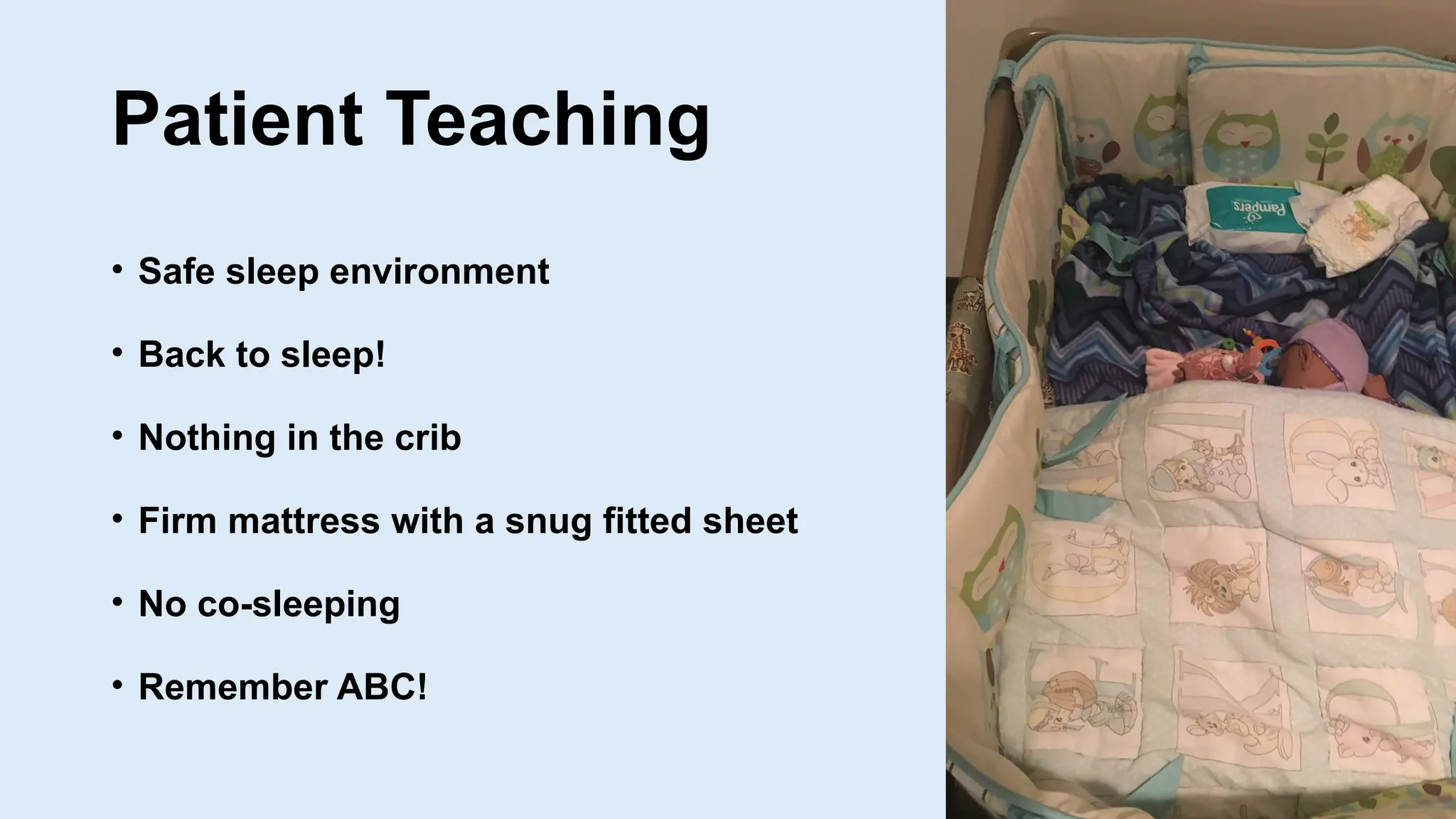
Patient Teaching
• Safe sleep environment
• Back to sleep!
• Nothing in the crib
• Firm mattress with a snug fitted sheet
• No co-sleeping
• Remember ABC!
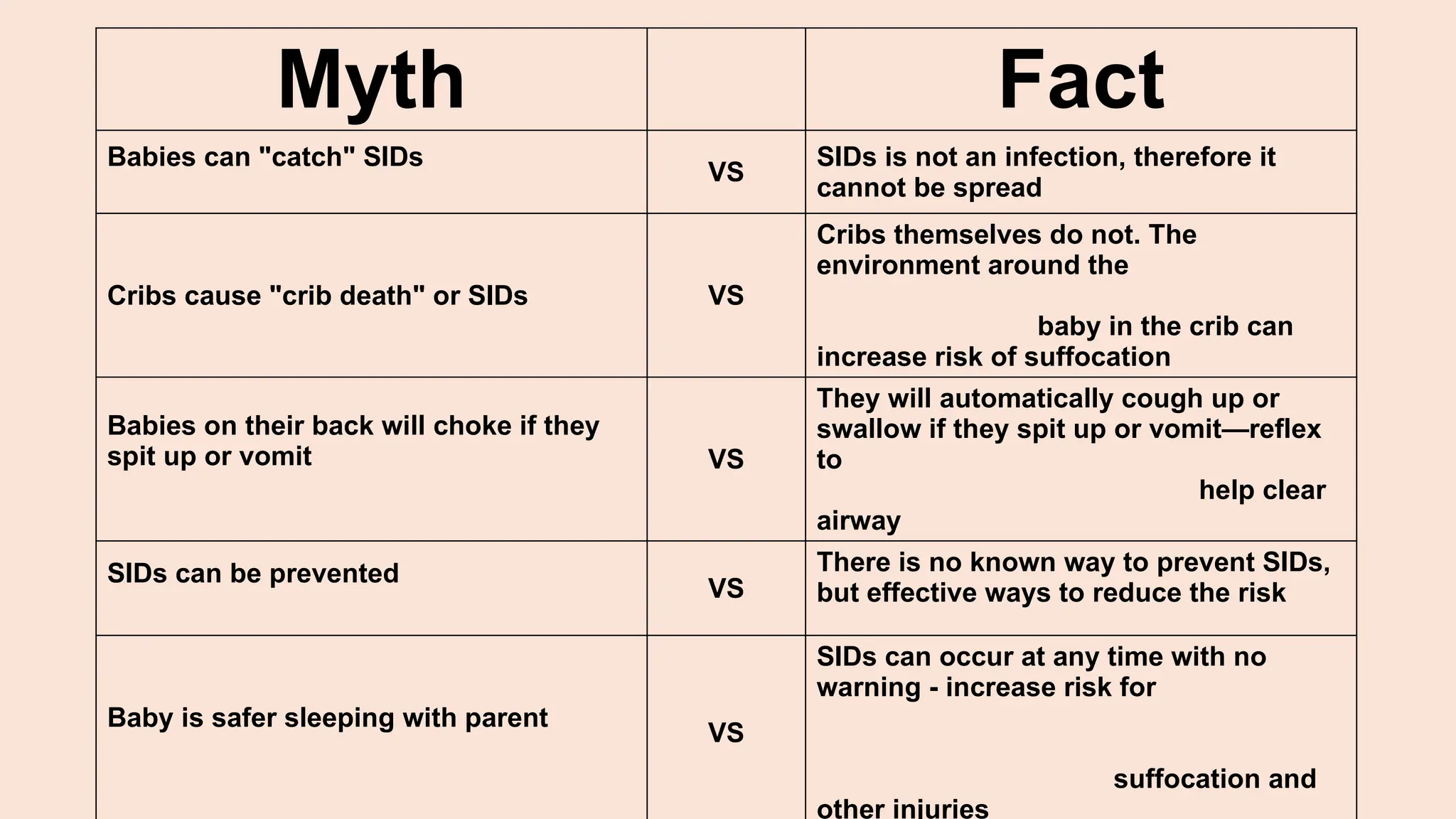
Myth Fact
Babies can "catch" SIDs
VS
SIDs is not an infection, therefore it
cannot be spread
Cribs cause "crib death" or SIDs VS
Cribs themselves do not. The
environment around the
baby in the crib can
increase risk of suffocation
Babies on their back will choke if they
spit up or vomit VS
They will automatically cough up or
swallow if they spit up or vomit—reflex
to
help clear
airway
SIDs can be prevented
VS
There is no known way to prevent SIDs,
but effective ways to reduce the risk
Baby is safer sleeping with parent
VS
SIDs can occur at any time with no
warning - increase risk for
suffocation and
other injuries
SIDs can happen to any family...
Kahoot!
Click here to start
Additional Resources
• https://www.cdc.gov/sudden-infant
-death/index.html
• https://www.aap.org/en/patient-car
e/safe-sleep/
• https://sids.org/
References
• American Academy of Pediatrics (Director). (2020). SIDS Can Happen to Anyone - A Pediatrician Story | American
Academy of Pediatrics (AAP) [Film]. https://youtu.be/UztyHWve7gc?si=KSwgYOH9oqqfNTIi
• Hauck, F. R., Herman, S. M., Donovan, M., Iyasu, S., Merrick Moore. C., Donoghue, E., et al. (2003). Sleep environment
and the risk of sudden infant death syndrome in an urban population: The Chicago Infant Mortality
Study. Pediatrics, 111(Suppl 1), 1207–1214. Retrieved May 3, 2021, from https://pubmed.ncbi.nlm.nih.gov/12728140/.
• Moon, R. Y., & American Academy of Pediatrics Task Force on Sudden Infant Death Syndrome. (2016). SIDS and
other sleep-related infant deaths: Evidence base for 2016 updated recommendations for a safe infant sleeping
environment. Pediatrics, 138(5), e20162940. Retrieved May 3, 2021, from https://pubmed.ncbi.nlm.nih.gov/27940805/.
• U.S. Department of Health and Human Services. (n.d.-a). Sudden infant death syndrome (SIDS). Eunice Kennedy
Shriver National Institute of Child Health and Human Development. https://www.nichd.nih.gov/health/topics/sids

Sudden Infant Death Teaching Presentation.pptx

  • 1.
  • 2.
    Sudden Infant DeathSyndrome (SIDS) • The sudden, unexplained death of an infant 1 year of age or younger • Cause is unexplained after a full investigation • Leading cause of death for children in the U.S. between 1 month and 1 year of age
  • 3.
    Who is affectedand what are the treatment options? • Infants are at risk until 1 year of age. • There is no designated treatment - prevention is key!
  • 4.
    Risk Factors • BrainDefects- due to poor brain development. • Respiratory infection- most infants also had a cold • Sleeping position- babies placed on their stomach or side • Bed Sharing- sharing bed with siblings or parents
  • 5.
    Patient Teaching • Safesleep environment • Back to sleep! • Nothing in the crib • Firm mattress with a snug fitted sheet • No co-sleeping • Remember ABC!
  • 6.
    Myth Fact Babies can"catch" SIDs VS SIDs is not an infection, therefore it cannot be spread Cribs cause "crib death" or SIDs VS Cribs themselves do not. The environment around the baby in the crib can increase risk of suffocation Babies on their back will choke if they spit up or vomit VS They will automatically cough up or swallow if they spit up or vomit—reflex to help clear airway SIDs can be prevented VS There is no known way to prevent SIDs, but effective ways to reduce the risk Baby is safer sleeping with parent VS SIDs can occur at any time with no warning - increase risk for suffocation and other injuries
  • 7.
    SIDs can happento any family...
  • 8.
  • 9.
    Additional Resources • https://www.cdc.gov/sudden-infant -death/index.html •https://www.aap.org/en/patient-car e/safe-sleep/ • https://sids.org/
  • 10.
    References • American Academyof Pediatrics (Director). (2020). SIDS Can Happen to Anyone - A Pediatrician Story | American Academy of Pediatrics (AAP) [Film]. https://youtu.be/UztyHWve7gc?si=KSwgYOH9oqqfNTIi • Hauck, F. R., Herman, S. M., Donovan, M., Iyasu, S., Merrick Moore. C., Donoghue, E., et al. (2003). Sleep environment and the risk of sudden infant death syndrome in an urban population: The Chicago Infant Mortality Study. Pediatrics, 111(Suppl 1), 1207–1214. Retrieved May 3, 2021, from https://pubmed.ncbi.nlm.nih.gov/12728140/. • Moon, R. Y., & American Academy of Pediatrics Task Force on Sudden Infant Death Syndrome. (2016). SIDS and other sleep-related infant deaths: Evidence base for 2016 updated recommendations for a safe infant sleeping environment. Pediatrics, 138(5), e20162940. Retrieved May 3, 2021, from https://pubmed.ncbi.nlm.nih.gov/27940805/. • U.S. Department of Health and Human Services. (n.d.-a). Sudden infant death syndrome (SIDS). Eunice Kennedy Shriver National Institute of Child Health and Human Development. https://www.nichd.nih.gov/health/topics/sids