BY
Deiaa El-Din M. Tamer
P.I.C.U. Specialist
 Recognize signs and symptoms of unstable airway.
 Recognize signs and symptoms of respiratory failure.
 Identify anatomic and physiologic variables involved
in the management of the pediatric airway.
 Describe how to open and maintain an airway
manually and with the help of different airway
maneuvers.
 Explain how to support a patient with bag-mask
ventilation.
 Describe the preparation for and the sequence of
intubating pediatric patient.
 Recognize the potential for difficult intubation and
discuss alternative methods of establishing a stable
airway.
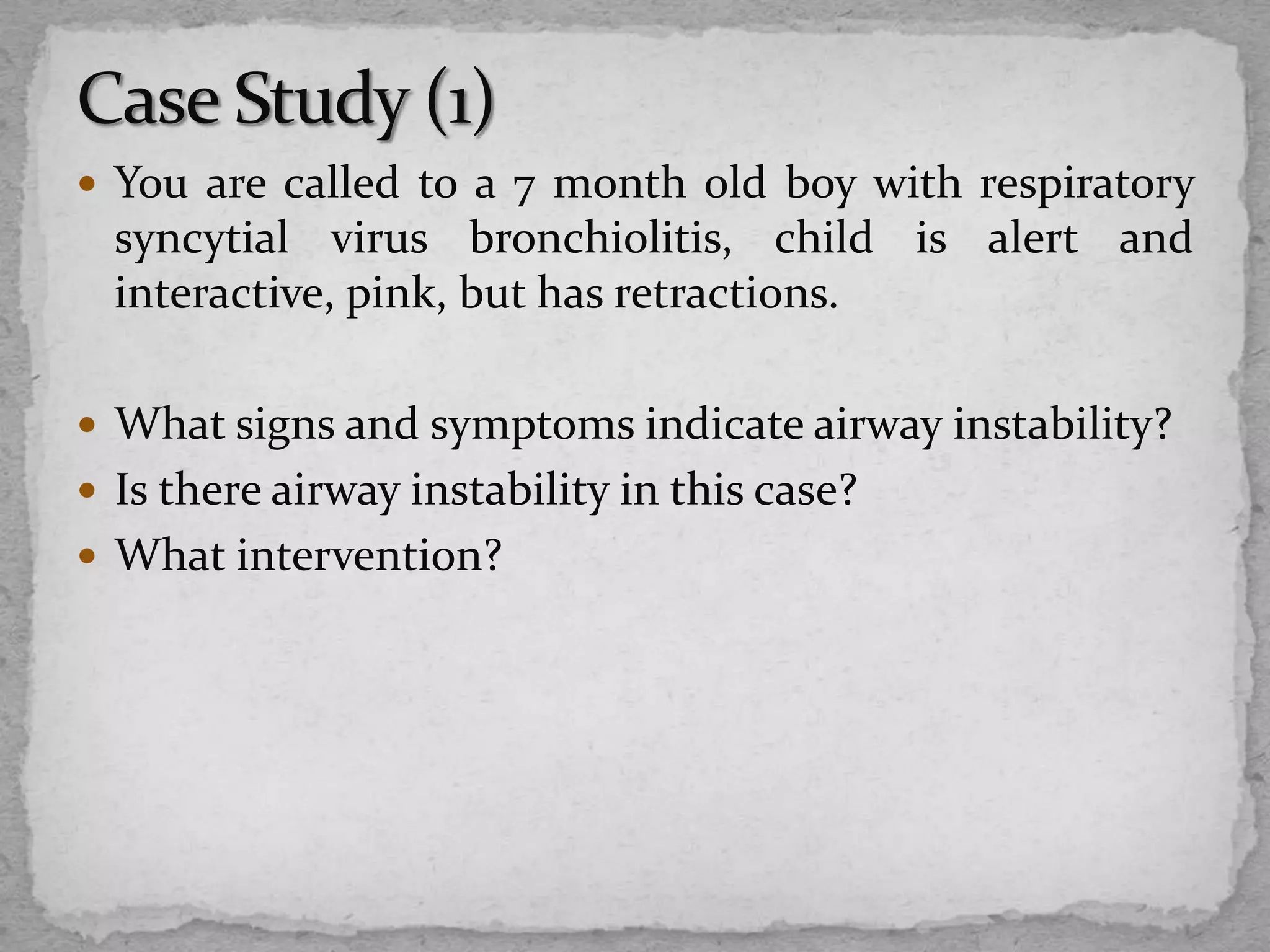
 You are called to a 7 month old boy with respiratory
syncytial virus bronchiolitis, child is alert and
interactive, pink, but has retractions.
 What signs and symptoms indicate airway instability?
 Is there airway instability in this case?
 What intervention?
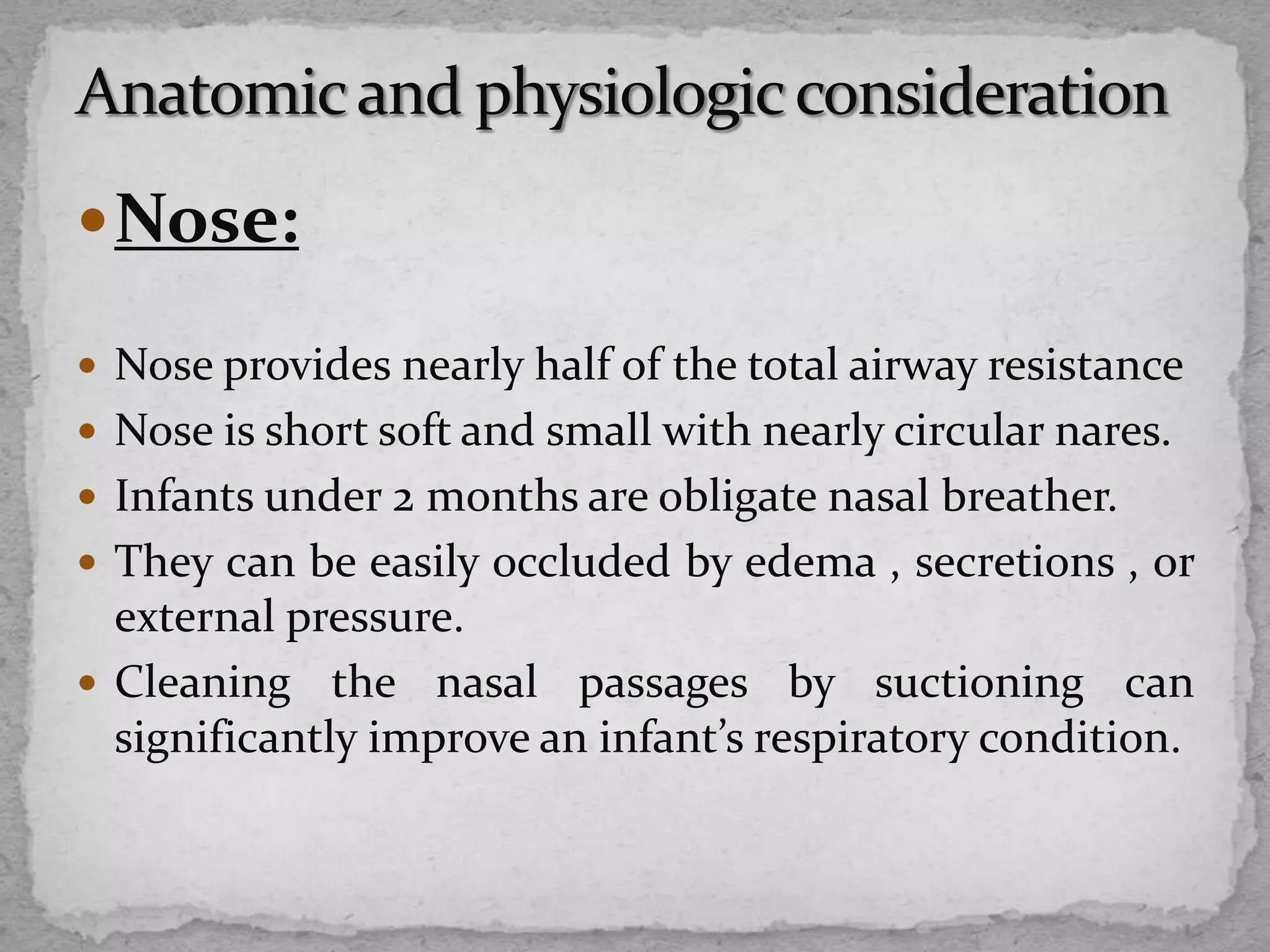
Nose:
 Nose provides nearly half of the total airway resistance
 Nose is short soft and small with nearly circular nares.
 Infants under 2 months are obligate nasal breather.
 They can be easily occluded by edema , secretions , or
external pressure.
 Cleaning the nasal passages by suctioning can
significantly improve an infant’s respiratory condition.
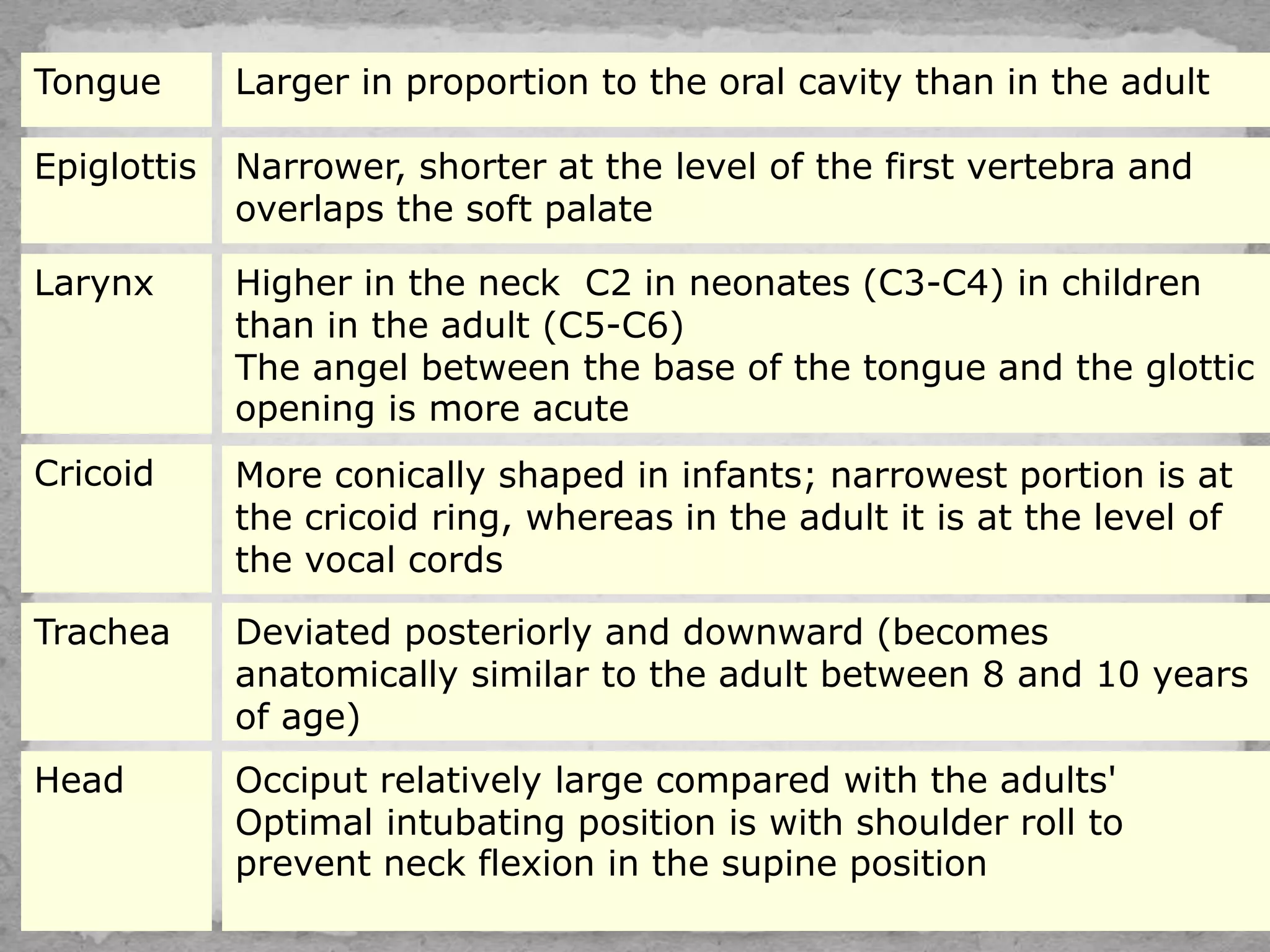
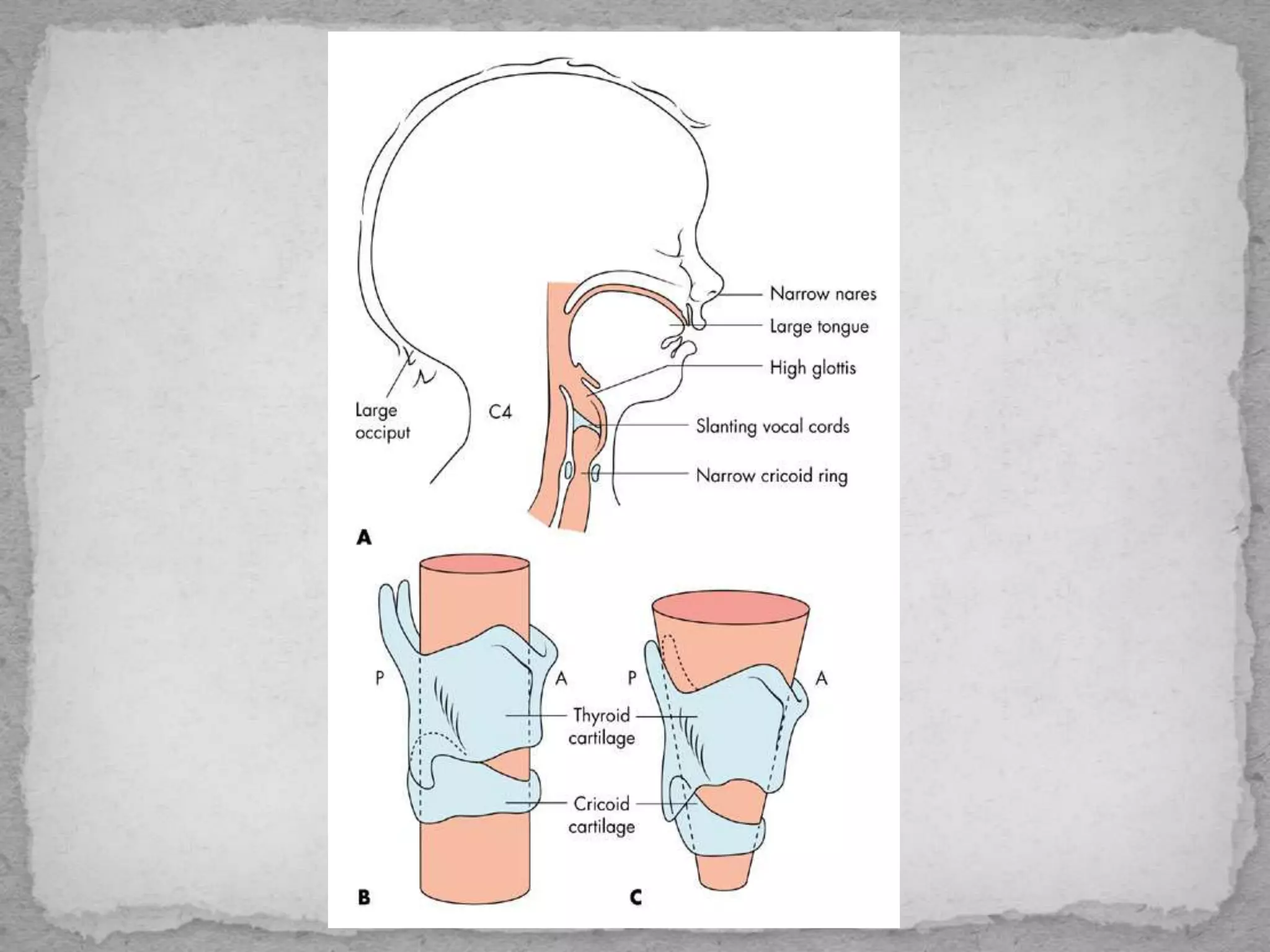
Larger in proportion to the oral cavity than in the adultTongue
Epiglottis
Larynx
Narrower, shorter at the level of the first vertebra and
overlaps the soft palate
Higher in the neck C2 in neonates (C3-C4) in children
than in the adult (C5-C6)
The angel between the base of the tongue and the glottic
opening is more acute
Cricoid More conically shaped in infants; narrowest portion is at
the cricoid ring, whereas in the adult it is at the level of
the vocal cords
Trachea Deviated posteriorly and downward (becomes
anatomically similar to the adult between 8 and 10 years
of age)
Head Occiput relatively large compared with the adults'
Optimal intubating position is with shoulder roll to
prevent neck flexion in the supine position
 Musculoskeletal:
 The chest wall of the infant is relatively weak and
unstable .
 The use of abdominal muscles leads to characteristic
seesaw or abdominal breathing pattern.
 Intercostal, subcostal and suprasternal retractions
become prominent as airway obstruction occur.
 Fatigue of respiratory muscles may lead to decrease
respiratory effort as respiratory failure progresses.
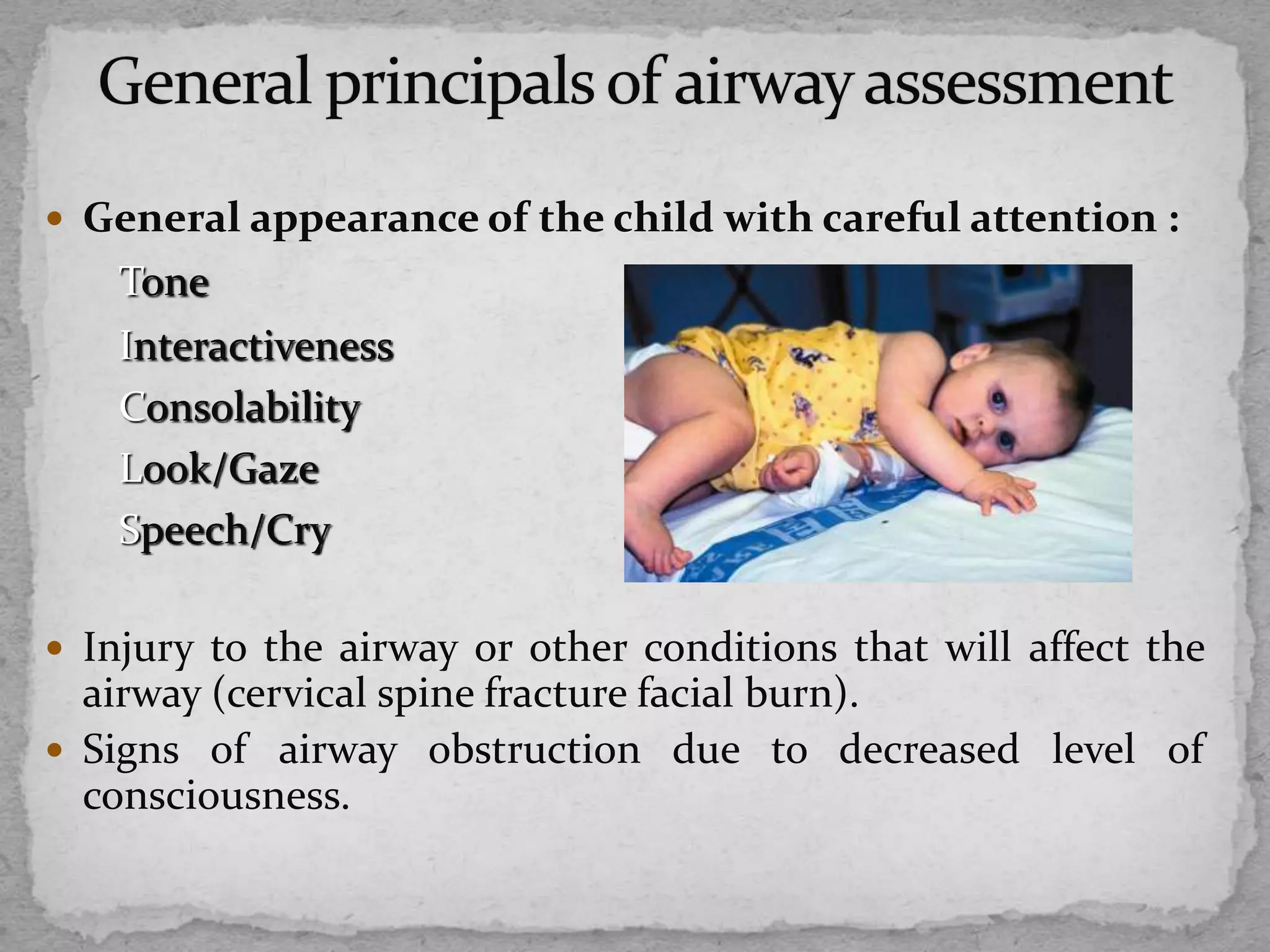
 General appearance of the child with careful attention :
Tone
Interactiveness
Consolability
Look/Gaze
Speech/Cry
 Injury to the airway or other conditions that will affect the
airway (cervical spine fracture facial burn).
 Signs of airway obstruction due to decreased level of
consciousness.
 Assessment of respiratory rate
 Work of breathing
Abnormal airway sounds
Abnormal positioning
Retractions
Nasal flaring
Head bobbing
 Osculates over the mouth, nose and neck as well as
central and peripheral chest listen for quality,
pitch right to left symmetry and magnitude of
breath sound:
 Extrathoracic airway obstruction : high pitched
inspiratory stridor and retractions.
 Intrathoracic airway obstruction : sings and symptoms
that occur predominantly during the expiration , high
pitched expiratory sound (wheezing ).
 Incomplete obstruction (foreign body) : snoring ,
stridor gurgling or noisy breathing.
 Complete airway obstruction : sever respiratory effort
with absent breath sounds.
 Parenchymal lung diseases : Crackles and end
inspiratory noises .
 Asymmetry of breath sounds is an important clue.
 Evaluate mental status:
 Agitation and irritability may indicate hypoxemia.
 Lethargy in the presence of acceptable oxygen
saturation may reflect high carbon dioxide level.
 Presence and strength of protective airway reflexes.
 If respiratory efforts are absent and an immediate
remedy is not available proceed to manual support and
assisted ventilation while preparing to establish an
artificial airway
 Longitudinal physical assessment
 Arterial blood gas
Hypoventilation
Alveolar hyperventilation
Metabolic acidosis
Metabolic alkalosis
 Pulse oximetry
 Exhaled carbon dioxide: ETCO2 numerical values are
dependent on 3 variables:
CO2 production
Delivery of blood to lungs & the lungs ability to exchange gas
Alveolar ventilation
Normal = 35-45mmHg
Hyperventilation = < 35mmHg (Respiratory alkalosis)
Hypoventilation = > 45mmHg (respiratory acidosis)
 Inadequate oxygenation
Low O2
Pneumonia
CHF
 Inadequate ventilation
High CO2
Asthma/COPD
 Inadequate protection
Airway Malformations
Airway trauma
Decrease level of conscious
 Anticipated course
Hematomas
Long transports
Ventilation
Breathe In…Breathe Out…
 This is the active, mechanical
process of breathing.
 How we get rid of CO2
 At the cellular level, O2 &
glucose combine to produce
energy. CO2 is the waste
product.
 CO2 is carried back through
the blood & exhaled through
the lungs via the aveoli.
 Capnography measures
ventilation.
Oxygenation
O2…Did you get it into the body?
 How we get oxygen to the tissues.
 Gas exchange occurs at the
capillary alveolar membrane.
 O2 is transported to the tissues
through the bloodstream.
 Pulse oximetry measures oxygen
in the blood.
 Cardiac and respiratory arrest
 Hypoxaemia (Pao2 < 7.8 kPa, Sao2 < 90%)
 Shock
 Low cardiac output and metabolic acidosis (bicarbonate <
18 mmol/l)
 Respiratory distress
 Ventilationperfusion mismatch (acute asthma, atelectatic
lung zones)
 Inadequate tissue perfusion
 Low haemoglobin concentration
 Abnormal oxygen dissociation curve
(haemoglobinopathies, high carboxyhaemoglobin)
 Histotoxic poisoning of intracellular enzymes
(septicaemia)
 Simple oxygen mask (C)
 Partial rebreathing mask (D)
 Non-rebreathing mask (B)
 Face tent
 Nasal cannula (A)
 A 15 years old female arrived to ED by ambulance after
ingestion of 6 tablets of diazepam for committing
suicide after failure in the exam, she is not responding
to painful stimuli, RR 27 c/min but with retraction and
noisy breathing.
 What is the emergency problem in this case?
 What is the management?
 What is the important points in the assessment?
 INDICATIONS
■ Oropharyngeal airways provide a conduit for airflow
through the mouth to the pharynx.
■ Oropharyngeal airways prevent mandibular tissue
from obstructing the posterior pharynx.
■ Oropharyngeal airways may be used in the
unconscious infant or child if procedures (ie, head tilt-
chin lift or jaw thrust) to open the airway fail to
provide and maintain a clear, unobstructed airway.
 CONTRAINDICATIONS
 Absolute
■ Avoid inserting an oropharyngeal airway in conscious
or semiconscious patients because it may stimulate
gagging and vomiting.
 EQUIPMENT
■ Oropharyngeal airways come in various sizes ranging
from 4 cm to 10 cm.
■ Oropharyngeal airways consist of a flange, a short
biteblock segment, and a curved body usually made of
plastic and shaped to provide an air channel and
suction conduit through the mouth.
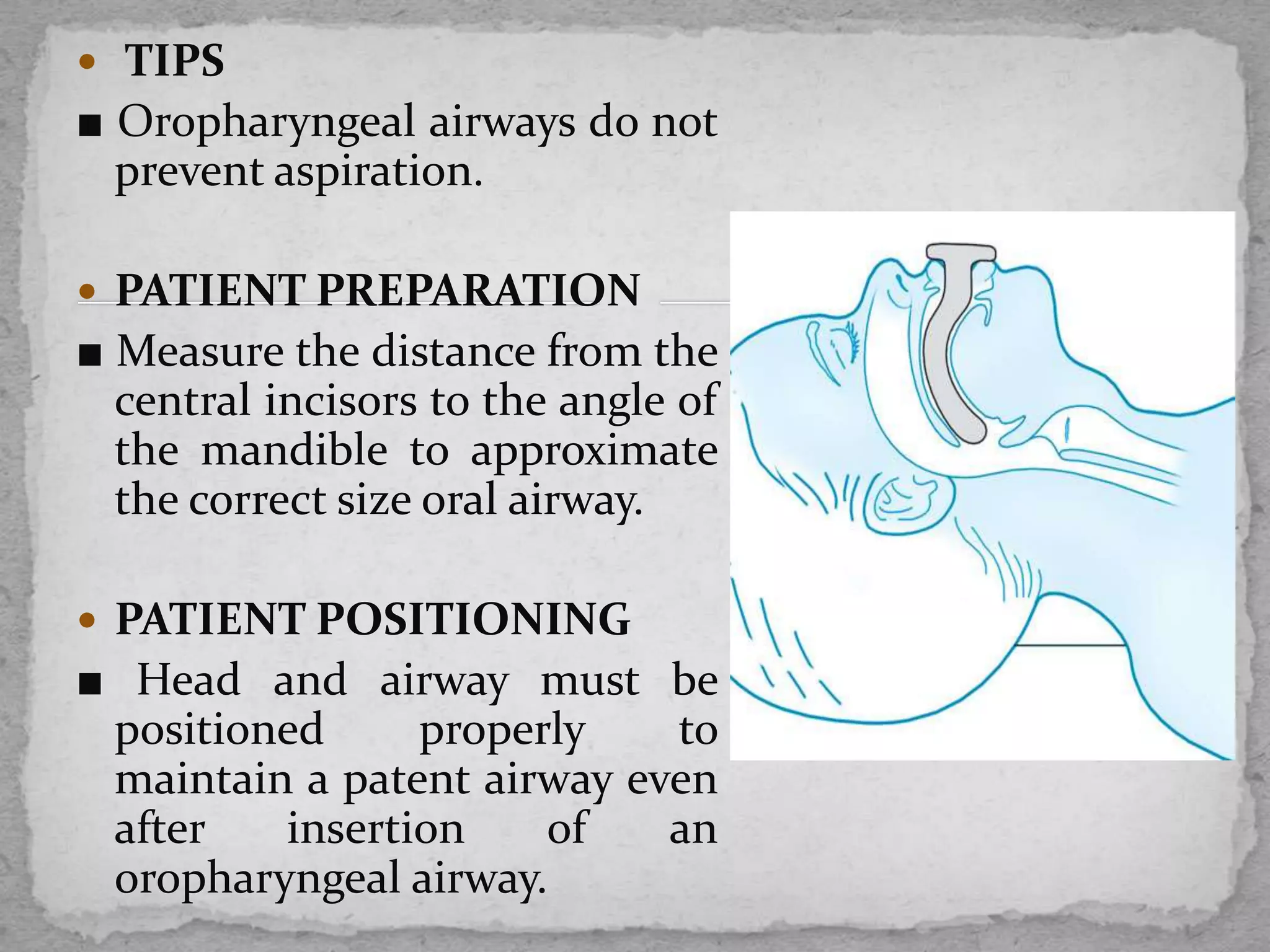
 TIPS
■ Oropharyngeal airways do not
prevent aspiration.
 PATIENT PREPARATION
■ Measure the distance from the
central incisors to the angle of
the mandible to approximate
the correct size oral airway.
 PATIENT POSITIONING
■ Head and airway must be
positioned properly to
maintain a patent airway even
after insertion of an
oropharyngeal airway.
 PROCEDURE
■ The airway can be placed with a tongue blade holding
the tongue on the floor of the mouth.
■ Depress the tongue and gently glide the airway with
the concave side downward, following the curvature of
the tongue.
■ The airway can also be introduced upside down and
gently rotated to the proper position, using rotation to
pull the base of the tongue forward.
• Do not exert pressure on the palate if using this
technique.
• This technique is done without instrumentation.
 MONITORING
■ Monitor for airway obstruction; the following clinical signs
may manifest:
•Agitation.
• Desaturation.
• Impaired air exchange when auscultated.
• Diminished chest rise.
■ Use pulse oximetry to measure oxygen saturation levels.
■ Measure heart rate.
■ Check blood pressure using a noninvasive device.
 COMPLICATIONS
■ If the oropharyngeal airway is too large, it may obstruct the
larynx, make a tight mask fit difficult, and traumatize
laryngeal structures.
■ If the oropharyngeal airway is too small or is inserted
improperly, it pushes the tongue posteriorly, obstructing
the airway.
■ If the oral airway is placed in the awake patient, it may
induce vomiting, aspiration, and laryngospasm.
■ If the airway is too long, it may induce vomiting and
aspiration.
 CAVEAT
■ The oropharyngeal airway may not be sufficient to relieve
upper airway obstruction, and the patient may
subsequently require intubation.
 INDICATIONS
■ Nasopharyngeal airways provide a conduit for airflow
between the nares and the pharynx.
■ Nasopharyngeal airways prevent mandibular tissue
from obstructing the posterior pharynx.
■ Nasopharyngeal airways may be used in conscious
patients (unlike oropharyngeal airways).
■ Nasopharyngeal airways may be used in children with
impaired consciousness or in neurologically impaired
patients with poor pharyngeal tone leading to upper
airway obstruction.
■ Nasopharyngeal airways can be used to suction
secretions.
 CONTRAINDICATIONS
 Absolute
■ Nasal airway occlusions.
■ Nasal fractures.
■ Coagulopathy (because of the risk of epistaxis).
■ Cerebrospinal fluid leak.
■ Basilar skull fracture.
■ Adenoidal hypertrophy.
 EQUIPMENT
■ A nasopharyngeal airway is a soft rubber or plastic tube.
■ Nasopharyngeal airways come in various sizes ranging from
12F to 36F.
■ A shortened tracheal tube may be used as a nasopharyngeal
airway.
■ Lubrication jelly.
 RISKS
■ Nasal bleeding.
■ When using a shortened tracheal tube instead of a soft
nasopharyngeal airway, injury to the soft tissues of the
nasal passages may occur because of the rigid stiff plastic.
 TIPS
■ Nasopharyngeal airways do not prevent aspiration.
 PATIENT PREPARATION
■ Measure the distance from the nares to the tragus of the ear
to approximate the appropriate size and length of tube.
 PATIENT POSITIONING
■ Head and airway must be positioned properly to maintain a
patent airway even after insertion of a nasopharyngeal
airway.
 PROCEDURE
■ The tube is lubricated and inserted into the nostril
and positioned into the posterior pharynx.
■ Advance the tube gently, following the natural
curvature of the nasal passage to direct the tube in a
posterior inferior position.
■ After measuring as above, use the largest diameter
tube that can fit into the nose without causing
blanching of the nares.
■ If passage does not occur easily, attempt the other
nostril because patients may have different size nasal
passages.
 MONITORING
■ Because the nasopharyngeal airway has a small
internal diameter, it can be obstructed with mucus,
blood, vomit, or the soft tissues of the pharynx.
■ When necessary, suction the airway frequently to
ensure patency.
■ Use pulse oximetry to measure oxygen saturation
levels.
■ Measure heart rate.
■ Check blood pressure using a noninvasive device.
 COMPLICATIONS
■ If the nasopharyngeal airway is too long, it may cause
bradycardia through vagal stimulation or it may injure the
epiglottis or vocal cords.
■ Physical irritation of the larynx or lower pharynx may
stimulate coughing, vomiting, or laryngospasm (if the tube
is too long).
■ Nasopharyngeal airways can cause a pressor response with
increased blood pressure.
■ Failure of insertion.
■ Epistaxis (due to mucosal tears or avulsion of turbinates).
■ Submucosal tunneling and pressure sores.
■ Perforation of cartilage into the sinuses.
■ Stimulation of nasal secretions with obstruction of the
tube.
■ Prolonged placement of a tight fitting tube may lead to
nasal necrosis.
CAVEAT
■ The nasopharyngeal airway may not be sufficient to
relieve upper airway obstruction, and the patient may
subsequently require intubation.
 A 15 years old female arrived to ED by ambulance after
ingestion of 6 tablets of diazepam for committing
suicide after failure in the exam, she is not responding
to painful stimuli, RR 27 c/min but with retraction and
noisy breathing.
 What is the emergency problem in this case?
 What is the management?
 What is the important points in the assessment?
 You use the maneuver of head tilt chin lift but the
breathing still noisy with retraction.
 What will you do?
After about an hour the patient develop apnea.
 What will you do?
 What about the oropharyngeal airway?
 INDICATIONS
■ To ventilate and oxygenate a patient.
■ A ventilation face mask may be used with an
oropharyngeal or nasopharyngeal airway during
spontaneous, assisted, or controlled ventilation.
 CONTRAINDICATIONS
 Relative
■ In patients with full stomach, cricoid pressure must be
maintained to avoid vomiting and aspiration.
 EQUIPMENT
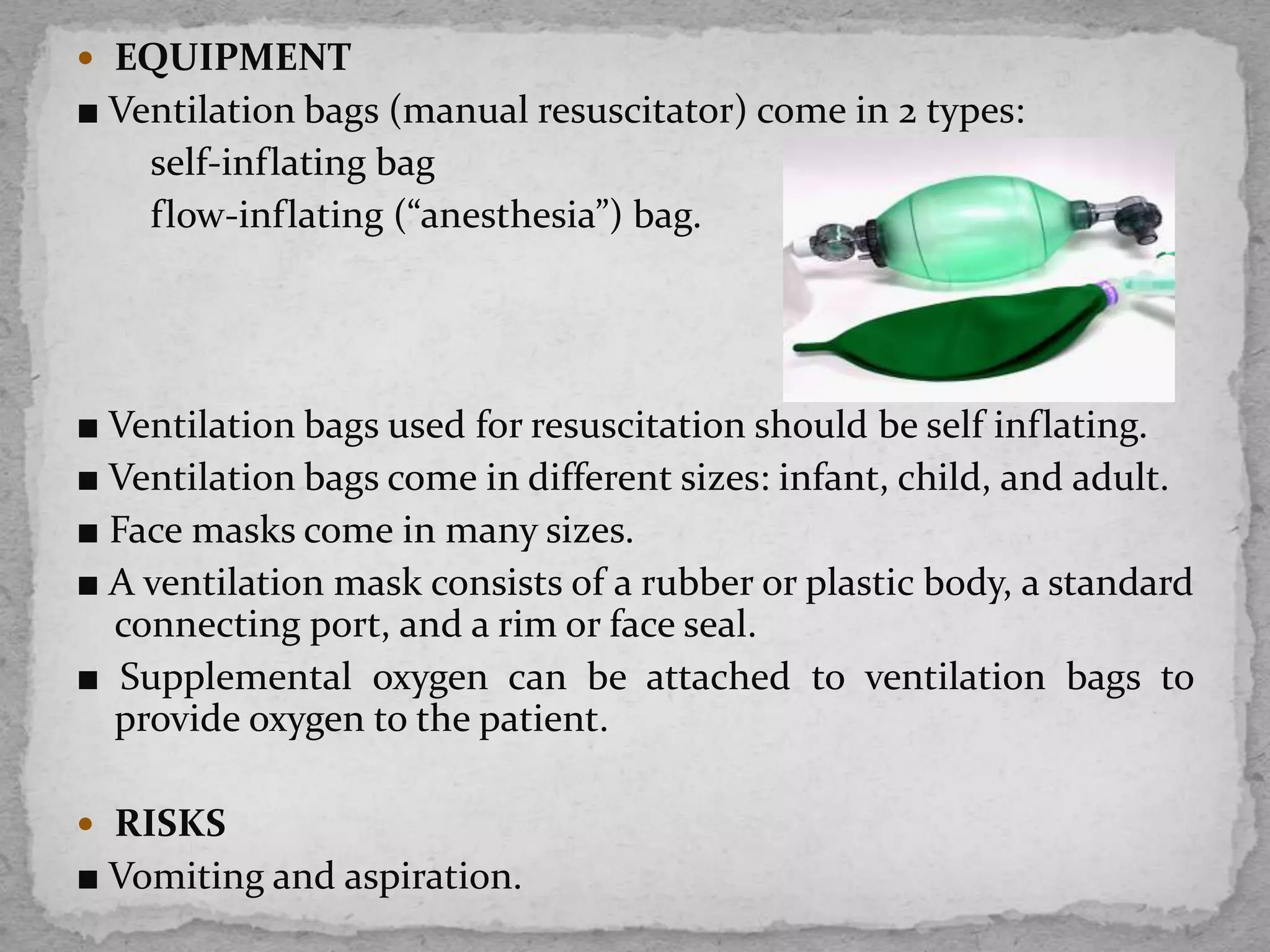
■ Ventilation bags (manual resuscitator) come in 2 types:
self-inflating bag
flow-inflating (“anesthesia”) bag.
■ Ventilation bags used for resuscitation should be self inflating.
■ Ventilation bags come in different sizes: infant, child, and adult.
■ Face masks come in many sizes.
■ A ventilation mask consists of a rubber or plastic body, a standard
connecting port, and a rim or face seal.
■ Supplemental oxygen can be attached to ventilation bags to
provide oxygen to the patient.
 RISKS
■ Vomiting and aspiration.
 TIPS
■ Bag-mask ventilation gives the clinician time to
prepare for more definitive airway management.
■ Good technique involves preserving good mask-face
seal, inflating the chest with minimal required
pressure, and maintaining the optimal patency of the
upper airway through manipulation of the mandible
and cervical spine.
■ The clinician should only use the force and tidal
volume necessary to cause the chest to rise visibly.
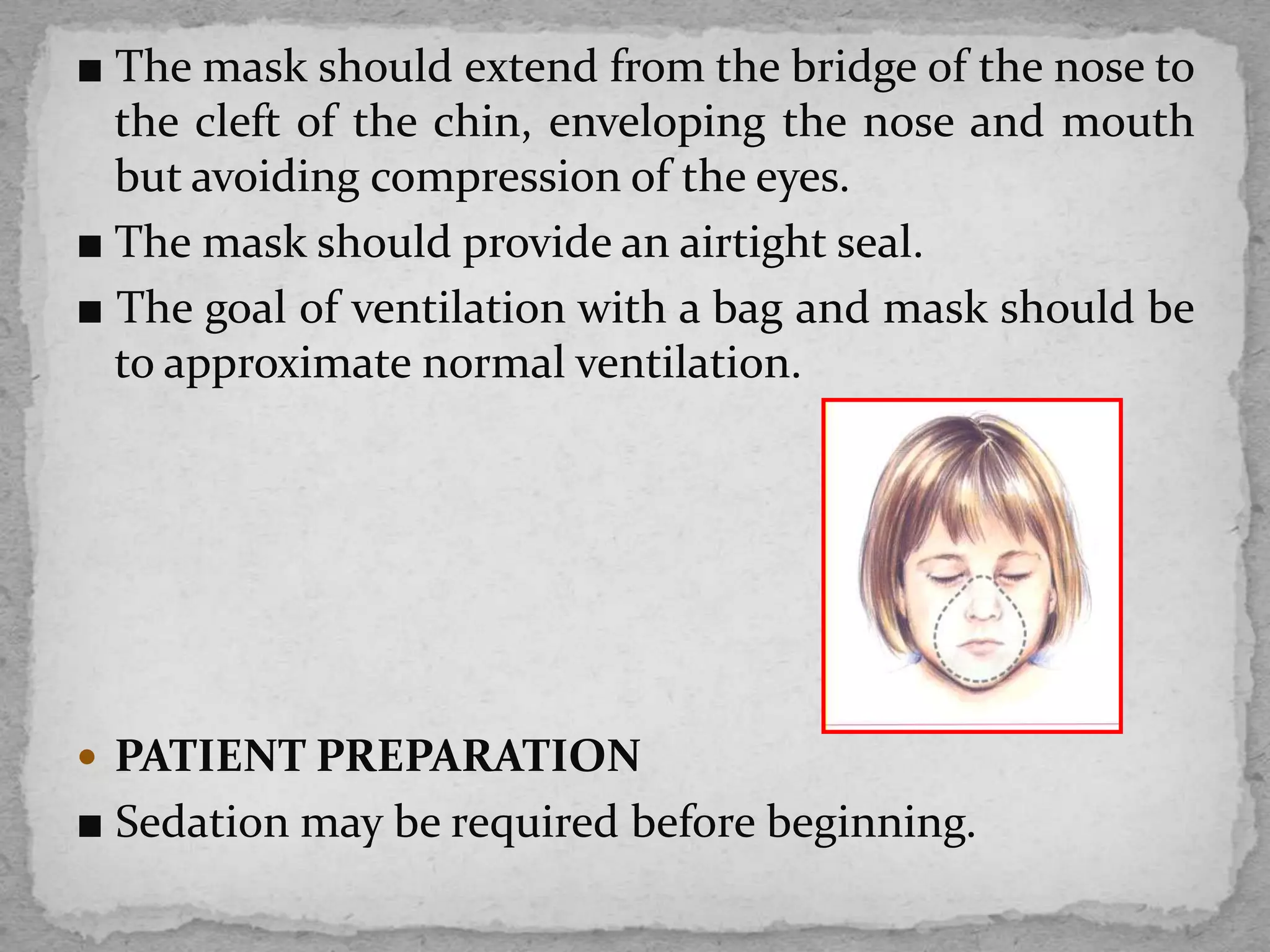
■ The mask should extend from the bridge of the nose to
the cleft of the chin, enveloping the nose and mouth
but avoiding compression of the eyes.
■ The mask should provide an airtight seal.
■ The goal of ventilation with a bag and mask should be
to approximate normal ventilation.
 PATIENT PREPARATION
■ Sedation may be required before beginning.
 PATIENT POSITIONING
■ A neutral “sniffing” position without hyperextension
of the neck is usually appropriate for infants and
toddlers.
■ Avoid extreme hyperextension in infants because it
may produce airway obstruction.
■ In patients with head or neck injuries, the neck must
be maintained in a neutral position.
Head Tilt-Chin Lift Jaw Thrust
 PROCEDURE
 Sequence
■ Open the airway via chin lift/jaw thrust maneuver.
■ Seal the mask to the face.
■ Deliver a tidal volume that makes the chest rise.
 E-C Clamp Technique
■ Tilt the head back and place a towel beneath the head.
■ If head or neck injury is suspected, open the airway with
the jaw thrust technique without tilting the head.
• If a second person is present, have that person immobilize
the spine.
■ Apply the mask to the face.
• Lift the jaw using the third, fourth, and fifth fingers from
the left hand under the angle of the mandible; this forms
the “E”
 When lifting the jaw, the tongue is also lifted away from the
posterior pharynx.
• Do not put pressure on the soft tissues under the jaw
because this may compress the airway.
■ Place the thumb and forefinger of the left hand in a “C”
shape over the mask and exert downward pressure •Create
a tight seal between the mask and the patient’s face using
the left hand and lifting the jaw.
•Compress the ventilation bag with the right hand.
• Be sure the chest rises visibly with each breath.
■ If 2 people are present, then 1 person can hold the mask to
the face while the other person ventilates with the bag.
• One person uses both hands to open the airway and
maintain a tight mask-to-face seal.
• The second person compresses the ventilation bag.
■ If 2 or 3 people are present, someone can apply
pressure to the cricoid cartilage (termed “Sellick
maneuver”) to limit gastric distention in unconscious
patients.
• The Sellick maneuver may also prevent regurgitation
and aspiration of gastric contents.
•Avoid excessive cricoid pressure because it may produce
tracheal compression and obstruction or distortion of
the upper airway anatomy.
■ To relieve gastric distention, a nasogastric tube can be
placed (if not contraindicated).
 MONITORING
■ Use pulse oximetry to measure oxygen saturation
levels continuously.
■ Measure heart rate continuously.
■ Check blood pressure using a noninvasive device.
■ Ensure the chest rises visibly.
 COMPLICATIONS
■ Reduction in cardiac output.
• Excessive ventilation volume and airway pressure may
lower cardiac output by raising intrathoracic pressure
and distending alveoli, increasing afterload of the right
heart, and decreasing venous return.
■ Vomiting and aspiration.
■ Air trapping, barotrauma, air leak, and reduced
cardiac output can be caused by excessive tidal volume
and rate in patients with small airway obstruction (eg,
asthma and bronchiolitis).
 CAVEATS
■ It is important to coordinate bag-mask ventilation
with the patient’s spontaneous breaths in a patient
who is spontaneously breathing. Dyssynchrony can
predispose patients to barotrauma and air leak.
■ While performing bag-mask ventilation, it is
important for someone with more advanced airway
skills to be preparing for intubation, or for someone to
be arranging for the patient’s transport to a facility
where definitive airway management can be
performed.
■ No muscle relaxant should be given unless a person
trained in advanced airway skills is present.
 INDICATIONS
 Respiratory
■ Apnea.
■ Acute respiratory failure (PaO2 < 50 mm Hg in patient with fraction of inspired
oxygen [FIO2] > 0.5 and PaCO2 > 55 mm Hg).
■ Need to control oxygen delivery (e.g. institution of positive end-expiratory
pressure [PEEP], accurate delivery of FIO2 > 0.5)
■ Need to control ventilation (e.g. to decrease work of breathing, to control
PaCO2, to provide muscle relaxation).
 Neurologic
■ Inadequate chest wall function (e.g. in patient with Guillain- Barré syndrome,
poliomyelitis).
■ Absence of protective airway reflexes (e.g. cough, gag).
■ Glasgow Coma Score ≤ 8.
 Airway
■ Upper airway obstruction.
■ Infectious processes (e.g. epiglottis, croup).
■ Trauma to the airway.
■ Burns (concern for airway edema).
 CONTRAINDICATIONS
 Absolute
■ Nasotracheal intubation is contraindicated in patients
with nasal fractures or basilar skull fractures.
 RISKS
■ Desaturation.
■ Bradycardia.
■ Inability to intubate.
■ Tracheal tear or rupture.
 EQUIPMENT
■ Suction.
• Should have a tonsil-tipped suction device or a largebore suction
catheter as well as a suction catheter of appropriate size that fits
into the endotracheal tube.
■ Oxygen.
■ Resuscitation bags.
■ Masks (appropriate sizes for ventilation).
■ Laryngoscope (blade, handle, bulb, battery).
■ Endotracheal tubes (appropriate sizes, cuffed, uncuffed).
■ Forceps.
■ Oropharyngeal airway.
■ Tongue blade.
■ Bite block.
■ Tape (to secure tube).
■ Stylet (appropriate sizes).
■ CO2 detector device.
■ Syringe to inflate the endotracheal tube balloon on cuffed tubes.
Suction equipment: catheters, regulator/canister/tubing.
Oxygen: O2 flowmeter, preoxygenate 2-3 min, manual
resuscitator bag with mask
Airway equipment: ETT, stylet, syringe (cuffed ETT),
laryngoscope and blade, lubricating gel, OPA
Position, pharmacy, personnel: supine, rolls for positioning,
bed height up
Monitors
ETCO2 detector
 TIPS
■ The suggested sizes for endotracheal tubes.
■ Uncuffed tubes are generally recommended in
children younger than 8 years, except in cases of severe
lung disease. Age Internal Diameter (mm)
Premature infant 2.5–3.0
Newborn 3.0
Newborn–6 months 3.5
6 months–12 months 3.5–4.0
12 months–2 years 4.0–4.5
3–4 years 4.5–5.0
5–6 years 5.0–5.5
7–8 years 5.5–6.0
9–10 years 6.0–6.5
11–12 years 6.5–7.0
13–14 years 7.0–7.5
Useful formula:(Age+16)/4
(Age/4)+4
 ■ Laryngoscopes.
•Handle with battery and blade with light source. Adult
and pediatric handles fit all blades, and differ only in
handle diameter.
• A straight blade provides greater displacement of the
tongue into the floor of the mouth and visualization of
a pharynx and anterior larynx .
• A curved blade may be used in the older child; the
broader base and flange allow easier displacement of
the tongue.
■ The suggested sizes of blades.
■ If a difficult intubation is anticipated due to altered
supraglottic anatomy, absolutely no irreversible
anesthetics or muscle relaxants should be
administered.
• Such patients should generally be intubated awake or
in the operating room with halothane.
• For difficult intubations, other techniques, such as
fiberoptic intubation, may be used.
Age Laryngoscope Blade Size
Newborn–6 months Miller 0-1, Wis Hipple 1
1 year Miller 1, Wis Hipple 1.5
Child Miller 2
8–12 years Miller 2, Macintosh 2
Adolescent Miller 3, Macintosh 3
 PATIENT PREPARATION
■ Preoxygenate with 100% FIO2.
■ In an older child, explain each step as it is done.
 PATIENT POSITIONING
■ A neutral “sniffing” position without hyperextension
of the neck is usually appropriate for infants and
toddlers.
•Avoid extreme hyperextension in infants because it may
produce airway obstruction.
■ It is sometimes helpful to place a towel under the
patient’s shoulders.
■ In patients with head or neck injuries, the neck must
be maintained in a neutral position.
 PROCEDURE
 Prior to Intubation
■ Check the intubation equipment before beginning.
■ Attach the blade to the handle and be sure that the
bulb illuminates.
■ Attach suction to a suction machine and be sure that
suction is turned on.
■ If using a stylet, insert stylet into endotracheal tube.
• The tip of the stylet should be 1–2 cm proximal to the
distal end of the endotracheal tube, ensuring that the
stylet does not go through the Murphy eye.
■ Prepare to monitor the patient’s heart rate, oxygen
saturation levels, and blood pressure.
 Sequence
■ Preoxygenate with 100% oxygen.
■ Administer 0.01–0.02 mg/kg IV of atropine (minimum dose, 0.1
mg). Atropine may not be indicated in cases of significant
tachycardia.
■ Administer IV sedation (e.g. fentanyl, morphine, midazolam,
etomidate, thiopental, ketamine).
■ Apply cricoid pressure .
■ Perform bag-mask ventilation with 100% oxygen.
■ Give an IV muscle relaxant.
■ Open the mouth and insert the laryngoscope.
■ Avoid positioning the blade against the teeth, gums, or lips.
■ Visualize the glottic opening.
■ Suction any secretions that may obscure visualization.
■ Insert endotracheal tube; observe the tube to pass through the
glottic opening.
■ Remove the stylet while holding the tube securely in place, and
ventilate the patient.
■ Secure the tube to the face.
 Confirm Correct Position of Tube
■ Auscultation for symmetric breath sounds.
■ Good chest excursion.
■ Effective oxygenation.
■ Disposable colorimetric capnometer (color should change
from purple to yellow if patient has a perfusing rhythm) or
capnograph.
■ Obtain chest radiograph.
■ Absence of breath sounds over the upper abdomen.
■ If unilateral breath sounds are heard on the right, pull back
the tube slowly while ventilating and listen for breath
sounds on the left (probable intubation of right main
bronchus).
■ ETT depth (lip):
ETT size x 3
Age/2+12
 MONITORING
■ Use pulse oximetry to measure oxygen saturation level
scontinuously.
■ Measure heart rate continuously.
■ Check blood pressure frequently using a noninvasive
device.
 COMPLICATIONS
■ Esophageal intubation.
■ Perforation of trachea.
■ Intubation of right main bronchus.
■ Aspiration.
■ Dental damage.
■ Laceration of lips or gums.
 Acute deterioration post-intubation: (DOPE)
 Displaced ETT
 Obstruction of ETT
 Pneumothorax
 Equipment failure
 FOLLOW-UP
■ The importance of follow-up is to make sure that the
endotracheal tube remains in the correct position and
is not obstructed.
■ Monitor end tidal CO2 using capnography.
■ Monitor oxygen saturation levels.
■ Check heart rate.
 Advantages:
 Used in any age
 Easy to place
 Few complications
 Contraindications:
 Gag reflex
 FBs
 Airway obstruction
 High ventilation pressure
 Does not secure airway
Difficult Airway
Nothing valuable can be
lost by taking time
Thank You

Pediatric airway management

  • 1.
    BY Deiaa El-Din M.Tamer P.I.C.U. Specialist
  • 2.
     Recognize signsand symptoms of unstable airway.  Recognize signs and symptoms of respiratory failure.  Identify anatomic and physiologic variables involved in the management of the pediatric airway.  Describe how to open and maintain an airway manually and with the help of different airway maneuvers.  Explain how to support a patient with bag-mask ventilation.  Describe the preparation for and the sequence of intubating pediatric patient.  Recognize the potential for difficult intubation and discuss alternative methods of establishing a stable airway.
  • 3.
     You arecalled to a 7 month old boy with respiratory syncytial virus bronchiolitis, child is alert and interactive, pink, but has retractions.  What signs and symptoms indicate airway instability?  Is there airway instability in this case?  What intervention?
  • 4.
    Nose:  Nose providesnearly half of the total airway resistance  Nose is short soft and small with nearly circular nares.  Infants under 2 months are obligate nasal breather.  They can be easily occluded by edema , secretions , or external pressure.  Cleaning the nasal passages by suctioning can significantly improve an infant’s respiratory condition.
  • 5.
    Larger in proportionto the oral cavity than in the adultTongue Epiglottis Larynx Narrower, shorter at the level of the first vertebra and overlaps the soft palate Higher in the neck C2 in neonates (C3-C4) in children than in the adult (C5-C6) The angel between the base of the tongue and the glottic opening is more acute Cricoid More conically shaped in infants; narrowest portion is at the cricoid ring, whereas in the adult it is at the level of the vocal cords Trachea Deviated posteriorly and downward (becomes anatomically similar to the adult between 8 and 10 years of age) Head Occiput relatively large compared with the adults' Optimal intubating position is with shoulder roll to prevent neck flexion in the supine position
  • 7.
     Musculoskeletal:  Thechest wall of the infant is relatively weak and unstable .  The use of abdominal muscles leads to characteristic seesaw or abdominal breathing pattern.  Intercostal, subcostal and suprasternal retractions become prominent as airway obstruction occur.  Fatigue of respiratory muscles may lead to decrease respiratory effort as respiratory failure progresses.
  • 8.
     General appearanceof the child with careful attention : Tone Interactiveness Consolability Look/Gaze Speech/Cry  Injury to the airway or other conditions that will affect the airway (cervical spine fracture facial burn).  Signs of airway obstruction due to decreased level of consciousness.
  • 9.
     Assessment ofrespiratory rate  Work of breathing Abnormal airway sounds Abnormal positioning Retractions Nasal flaring Head bobbing
  • 10.
     Osculates overthe mouth, nose and neck as well as central and peripheral chest listen for quality, pitch right to left symmetry and magnitude of breath sound:  Extrathoracic airway obstruction : high pitched inspiratory stridor and retractions.  Intrathoracic airway obstruction : sings and symptoms that occur predominantly during the expiration , high pitched expiratory sound (wheezing ).  Incomplete obstruction (foreign body) : snoring , stridor gurgling or noisy breathing.  Complete airway obstruction : sever respiratory effort with absent breath sounds.  Parenchymal lung diseases : Crackles and end inspiratory noises .  Asymmetry of breath sounds is an important clue.
  • 11.
     Evaluate mentalstatus:  Agitation and irritability may indicate hypoxemia.  Lethargy in the presence of acceptable oxygen saturation may reflect high carbon dioxide level.  Presence and strength of protective airway reflexes.  If respiratory efforts are absent and an immediate remedy is not available proceed to manual support and assisted ventilation while preparing to establish an artificial airway
  • 12.
     Longitudinal physicalassessment  Arterial blood gas Hypoventilation Alveolar hyperventilation Metabolic acidosis Metabolic alkalosis  Pulse oximetry  Exhaled carbon dioxide: ETCO2 numerical values are dependent on 3 variables: CO2 production Delivery of blood to lungs & the lungs ability to exchange gas Alveolar ventilation Normal = 35-45mmHg Hyperventilation = < 35mmHg (Respiratory alkalosis) Hypoventilation = > 45mmHg (respiratory acidosis)
  • 13.
     Inadequate oxygenation LowO2 Pneumonia CHF  Inadequate ventilation High CO2 Asthma/COPD  Inadequate protection Airway Malformations Airway trauma Decrease level of conscious  Anticipated course Hematomas Long transports
  • 14.
    Ventilation Breathe In…Breathe Out… This is the active, mechanical process of breathing.  How we get rid of CO2  At the cellular level, O2 & glucose combine to produce energy. CO2 is the waste product.  CO2 is carried back through the blood & exhaled through the lungs via the aveoli.  Capnography measures ventilation. Oxygenation O2…Did you get it into the body?  How we get oxygen to the tissues.  Gas exchange occurs at the capillary alveolar membrane.  O2 is transported to the tissues through the bloodstream.  Pulse oximetry measures oxygen in the blood.
  • 15.
     Cardiac andrespiratory arrest  Hypoxaemia (Pao2 < 7.8 kPa, Sao2 < 90%)  Shock  Low cardiac output and metabolic acidosis (bicarbonate < 18 mmol/l)  Respiratory distress  Ventilationperfusion mismatch (acute asthma, atelectatic lung zones)  Inadequate tissue perfusion  Low haemoglobin concentration  Abnormal oxygen dissociation curve (haemoglobinopathies, high carboxyhaemoglobin)  Histotoxic poisoning of intracellular enzymes (septicaemia)
  • 16.
     Simple oxygenmask (C)  Partial rebreathing mask (D)  Non-rebreathing mask (B)  Face tent  Nasal cannula (A)
  • 17.
     A 15years old female arrived to ED by ambulance after ingestion of 6 tablets of diazepam for committing suicide after failure in the exam, she is not responding to painful stimuli, RR 27 c/min but with retraction and noisy breathing.  What is the emergency problem in this case?  What is the management?  What is the important points in the assessment?
  • 22.
     INDICATIONS ■ Oropharyngealairways provide a conduit for airflow through the mouth to the pharynx. ■ Oropharyngeal airways prevent mandibular tissue from obstructing the posterior pharynx. ■ Oropharyngeal airways may be used in the unconscious infant or child if procedures (ie, head tilt- chin lift or jaw thrust) to open the airway fail to provide and maintain a clear, unobstructed airway.
  • 23.
     CONTRAINDICATIONS  Absolute ■Avoid inserting an oropharyngeal airway in conscious or semiconscious patients because it may stimulate gagging and vomiting.  EQUIPMENT ■ Oropharyngeal airways come in various sizes ranging from 4 cm to 10 cm. ■ Oropharyngeal airways consist of a flange, a short biteblock segment, and a curved body usually made of plastic and shaped to provide an air channel and suction conduit through the mouth.
  • 24.
     TIPS ■ Oropharyngealairways do not prevent aspiration.  PATIENT PREPARATION ■ Measure the distance from the central incisors to the angle of the mandible to approximate the correct size oral airway.  PATIENT POSITIONING ■ Head and airway must be positioned properly to maintain a patent airway even after insertion of an oropharyngeal airway.
  • 25.
     PROCEDURE ■ Theairway can be placed with a tongue blade holding the tongue on the floor of the mouth. ■ Depress the tongue and gently glide the airway with the concave side downward, following the curvature of the tongue. ■ The airway can also be introduced upside down and gently rotated to the proper position, using rotation to pull the base of the tongue forward. • Do not exert pressure on the palate if using this technique. • This technique is done without instrumentation.
  • 26.
     MONITORING ■ Monitorfor airway obstruction; the following clinical signs may manifest: •Agitation. • Desaturation. • Impaired air exchange when auscultated. • Diminished chest rise. ■ Use pulse oximetry to measure oxygen saturation levels. ■ Measure heart rate. ■ Check blood pressure using a noninvasive device.
  • 27.
     COMPLICATIONS ■ Ifthe oropharyngeal airway is too large, it may obstruct the larynx, make a tight mask fit difficult, and traumatize laryngeal structures. ■ If the oropharyngeal airway is too small or is inserted improperly, it pushes the tongue posteriorly, obstructing the airway. ■ If the oral airway is placed in the awake patient, it may induce vomiting, aspiration, and laryngospasm. ■ If the airway is too long, it may induce vomiting and aspiration.  CAVEAT ■ The oropharyngeal airway may not be sufficient to relieve upper airway obstruction, and the patient may subsequently require intubation.
  • 29.
     INDICATIONS ■ Nasopharyngealairways provide a conduit for airflow between the nares and the pharynx. ■ Nasopharyngeal airways prevent mandibular tissue from obstructing the posterior pharynx. ■ Nasopharyngeal airways may be used in conscious patients (unlike oropharyngeal airways). ■ Nasopharyngeal airways may be used in children with impaired consciousness or in neurologically impaired patients with poor pharyngeal tone leading to upper airway obstruction. ■ Nasopharyngeal airways can be used to suction secretions.
  • 30.
     CONTRAINDICATIONS  Absolute ■Nasal airway occlusions. ■ Nasal fractures. ■ Coagulopathy (because of the risk of epistaxis). ■ Cerebrospinal fluid leak. ■ Basilar skull fracture. ■ Adenoidal hypertrophy.  EQUIPMENT ■ A nasopharyngeal airway is a soft rubber or plastic tube. ■ Nasopharyngeal airways come in various sizes ranging from 12F to 36F. ■ A shortened tracheal tube may be used as a nasopharyngeal airway. ■ Lubrication jelly.
  • 31.
     RISKS ■ Nasalbleeding. ■ When using a shortened tracheal tube instead of a soft nasopharyngeal airway, injury to the soft tissues of the nasal passages may occur because of the rigid stiff plastic.  TIPS ■ Nasopharyngeal airways do not prevent aspiration.  PATIENT PREPARATION ■ Measure the distance from the nares to the tragus of the ear to approximate the appropriate size and length of tube.  PATIENT POSITIONING ■ Head and airway must be positioned properly to maintain a patent airway even after insertion of a nasopharyngeal airway.
  • 32.
     PROCEDURE ■ Thetube is lubricated and inserted into the nostril and positioned into the posterior pharynx. ■ Advance the tube gently, following the natural curvature of the nasal passage to direct the tube in a posterior inferior position. ■ After measuring as above, use the largest diameter tube that can fit into the nose without causing blanching of the nares. ■ If passage does not occur easily, attempt the other nostril because patients may have different size nasal passages.
  • 35.
     MONITORING ■ Becausethe nasopharyngeal airway has a small internal diameter, it can be obstructed with mucus, blood, vomit, or the soft tissues of the pharynx. ■ When necessary, suction the airway frequently to ensure patency. ■ Use pulse oximetry to measure oxygen saturation levels. ■ Measure heart rate. ■ Check blood pressure using a noninvasive device.
  • 36.
     COMPLICATIONS ■ Ifthe nasopharyngeal airway is too long, it may cause bradycardia through vagal stimulation or it may injure the epiglottis or vocal cords. ■ Physical irritation of the larynx or lower pharynx may stimulate coughing, vomiting, or laryngospasm (if the tube is too long). ■ Nasopharyngeal airways can cause a pressor response with increased blood pressure. ■ Failure of insertion. ■ Epistaxis (due to mucosal tears or avulsion of turbinates). ■ Submucosal tunneling and pressure sores. ■ Perforation of cartilage into the sinuses. ■ Stimulation of nasal secretions with obstruction of the tube. ■ Prolonged placement of a tight fitting tube may lead to nasal necrosis.
  • 37.
    CAVEAT ■ The nasopharyngealairway may not be sufficient to relieve upper airway obstruction, and the patient may subsequently require intubation.
  • 38.
     A 15years old female arrived to ED by ambulance after ingestion of 6 tablets of diazepam for committing suicide after failure in the exam, she is not responding to painful stimuli, RR 27 c/min but with retraction and noisy breathing.  What is the emergency problem in this case?  What is the management?  What is the important points in the assessment?
  • 39.
     You usethe maneuver of head tilt chin lift but the breathing still noisy with retraction.  What will you do?
  • 40.
    After about anhour the patient develop apnea.  What will you do?  What about the oropharyngeal airway?
  • 42.
     INDICATIONS ■ Toventilate and oxygenate a patient. ■ A ventilation face mask may be used with an oropharyngeal or nasopharyngeal airway during spontaneous, assisted, or controlled ventilation.  CONTRAINDICATIONS  Relative ■ In patients with full stomach, cricoid pressure must be maintained to avoid vomiting and aspiration.
  • 43.
     EQUIPMENT ■ Ventilationbags (manual resuscitator) come in 2 types: self-inflating bag flow-inflating (“anesthesia”) bag. ■ Ventilation bags used for resuscitation should be self inflating. ■ Ventilation bags come in different sizes: infant, child, and adult. ■ Face masks come in many sizes. ■ A ventilation mask consists of a rubber or plastic body, a standard connecting port, and a rim or face seal. ■ Supplemental oxygen can be attached to ventilation bags to provide oxygen to the patient.  RISKS ■ Vomiting and aspiration.
  • 44.
     TIPS ■ Bag-maskventilation gives the clinician time to prepare for more definitive airway management. ■ Good technique involves preserving good mask-face seal, inflating the chest with minimal required pressure, and maintaining the optimal patency of the upper airway through manipulation of the mandible and cervical spine. ■ The clinician should only use the force and tidal volume necessary to cause the chest to rise visibly.
  • 45.
    ■ The maskshould extend from the bridge of the nose to the cleft of the chin, enveloping the nose and mouth but avoiding compression of the eyes. ■ The mask should provide an airtight seal. ■ The goal of ventilation with a bag and mask should be to approximate normal ventilation.  PATIENT PREPARATION ■ Sedation may be required before beginning.
  • 46.
     PATIENT POSITIONING ■A neutral “sniffing” position without hyperextension of the neck is usually appropriate for infants and toddlers. ■ Avoid extreme hyperextension in infants because it may produce airway obstruction. ■ In patients with head or neck injuries, the neck must be maintained in a neutral position. Head Tilt-Chin Lift Jaw Thrust
  • 47.
     PROCEDURE  Sequence ■Open the airway via chin lift/jaw thrust maneuver. ■ Seal the mask to the face. ■ Deliver a tidal volume that makes the chest rise.  E-C Clamp Technique ■ Tilt the head back and place a towel beneath the head. ■ If head or neck injury is suspected, open the airway with the jaw thrust technique without tilting the head. • If a second person is present, have that person immobilize the spine. ■ Apply the mask to the face. • Lift the jaw using the third, fourth, and fifth fingers from the left hand under the angle of the mandible; this forms the “E”
  • 49.
     When liftingthe jaw, the tongue is also lifted away from the posterior pharynx. • Do not put pressure on the soft tissues under the jaw because this may compress the airway. ■ Place the thumb and forefinger of the left hand in a “C” shape over the mask and exert downward pressure •Create a tight seal between the mask and the patient’s face using the left hand and lifting the jaw. •Compress the ventilation bag with the right hand. • Be sure the chest rises visibly with each breath. ■ If 2 people are present, then 1 person can hold the mask to the face while the other person ventilates with the bag. • One person uses both hands to open the airway and maintain a tight mask-to-face seal. • The second person compresses the ventilation bag.
  • 51.
    ■ If 2or 3 people are present, someone can apply pressure to the cricoid cartilage (termed “Sellick maneuver”) to limit gastric distention in unconscious patients. • The Sellick maneuver may also prevent regurgitation and aspiration of gastric contents. •Avoid excessive cricoid pressure because it may produce tracheal compression and obstruction or distortion of the upper airway anatomy. ■ To relieve gastric distention, a nasogastric tube can be placed (if not contraindicated).
  • 53.
     MONITORING ■ Usepulse oximetry to measure oxygen saturation levels continuously. ■ Measure heart rate continuously. ■ Check blood pressure using a noninvasive device. ■ Ensure the chest rises visibly.
  • 54.
     COMPLICATIONS ■ Reductionin cardiac output. • Excessive ventilation volume and airway pressure may lower cardiac output by raising intrathoracic pressure and distending alveoli, increasing afterload of the right heart, and decreasing venous return. ■ Vomiting and aspiration. ■ Air trapping, barotrauma, air leak, and reduced cardiac output can be caused by excessive tidal volume and rate in patients with small airway obstruction (eg, asthma and bronchiolitis).
  • 55.
     CAVEATS ■ Itis important to coordinate bag-mask ventilation with the patient’s spontaneous breaths in a patient who is spontaneously breathing. Dyssynchrony can predispose patients to barotrauma and air leak. ■ While performing bag-mask ventilation, it is important for someone with more advanced airway skills to be preparing for intubation, or for someone to be arranging for the patient’s transport to a facility where definitive airway management can be performed. ■ No muscle relaxant should be given unless a person trained in advanced airway skills is present.
  • 57.
     INDICATIONS  Respiratory ■Apnea. ■ Acute respiratory failure (PaO2 < 50 mm Hg in patient with fraction of inspired oxygen [FIO2] > 0.5 and PaCO2 > 55 mm Hg). ■ Need to control oxygen delivery (e.g. institution of positive end-expiratory pressure [PEEP], accurate delivery of FIO2 > 0.5) ■ Need to control ventilation (e.g. to decrease work of breathing, to control PaCO2, to provide muscle relaxation).  Neurologic ■ Inadequate chest wall function (e.g. in patient with Guillain- Barré syndrome, poliomyelitis). ■ Absence of protective airway reflexes (e.g. cough, gag). ■ Glasgow Coma Score ≤ 8.  Airway ■ Upper airway obstruction. ■ Infectious processes (e.g. epiglottis, croup). ■ Trauma to the airway. ■ Burns (concern for airway edema).
  • 58.
     CONTRAINDICATIONS  Absolute ■Nasotracheal intubation is contraindicated in patients with nasal fractures or basilar skull fractures.  RISKS ■ Desaturation. ■ Bradycardia. ■ Inability to intubate. ■ Tracheal tear or rupture.
  • 59.
     EQUIPMENT ■ Suction. •Should have a tonsil-tipped suction device or a largebore suction catheter as well as a suction catheter of appropriate size that fits into the endotracheal tube. ■ Oxygen. ■ Resuscitation bags. ■ Masks (appropriate sizes for ventilation). ■ Laryngoscope (blade, handle, bulb, battery). ■ Endotracheal tubes (appropriate sizes, cuffed, uncuffed). ■ Forceps. ■ Oropharyngeal airway. ■ Tongue blade. ■ Bite block. ■ Tape (to secure tube). ■ Stylet (appropriate sizes). ■ CO2 detector device. ■ Syringe to inflate the endotracheal tube balloon on cuffed tubes.
  • 60.
    Suction equipment: catheters,regulator/canister/tubing. Oxygen: O2 flowmeter, preoxygenate 2-3 min, manual resuscitator bag with mask Airway equipment: ETT, stylet, syringe (cuffed ETT), laryngoscope and blade, lubricating gel, OPA Position, pharmacy, personnel: supine, rolls for positioning, bed height up Monitors ETCO2 detector
  • 61.
     TIPS ■ Thesuggested sizes for endotracheal tubes. ■ Uncuffed tubes are generally recommended in children younger than 8 years, except in cases of severe lung disease. Age Internal Diameter (mm) Premature infant 2.5–3.0 Newborn 3.0 Newborn–6 months 3.5 6 months–12 months 3.5–4.0 12 months–2 years 4.0–4.5 3–4 years 4.5–5.0 5–6 years 5.0–5.5 7–8 years 5.5–6.0 9–10 years 6.0–6.5 11–12 years 6.5–7.0 13–14 years 7.0–7.5 Useful formula:(Age+16)/4 (Age/4)+4
  • 62.
     ■ Laryngoscopes. •Handlewith battery and blade with light source. Adult and pediatric handles fit all blades, and differ only in handle diameter. • A straight blade provides greater displacement of the tongue into the floor of the mouth and visualization of a pharynx and anterior larynx .
  • 63.
    • A curvedblade may be used in the older child; the broader base and flange allow easier displacement of the tongue.
  • 64.
    ■ The suggestedsizes of blades. ■ If a difficult intubation is anticipated due to altered supraglottic anatomy, absolutely no irreversible anesthetics or muscle relaxants should be administered. • Such patients should generally be intubated awake or in the operating room with halothane. • For difficult intubations, other techniques, such as fiberoptic intubation, may be used. Age Laryngoscope Blade Size Newborn–6 months Miller 0-1, Wis Hipple 1 1 year Miller 1, Wis Hipple 1.5 Child Miller 2 8–12 years Miller 2, Macintosh 2 Adolescent Miller 3, Macintosh 3
  • 65.
     PATIENT PREPARATION ■Preoxygenate with 100% FIO2. ■ In an older child, explain each step as it is done.  PATIENT POSITIONING ■ A neutral “sniffing” position without hyperextension of the neck is usually appropriate for infants and toddlers. •Avoid extreme hyperextension in infants because it may produce airway obstruction. ■ It is sometimes helpful to place a towel under the patient’s shoulders. ■ In patients with head or neck injuries, the neck must be maintained in a neutral position.
  • 66.
     PROCEDURE  Priorto Intubation ■ Check the intubation equipment before beginning. ■ Attach the blade to the handle and be sure that the bulb illuminates. ■ Attach suction to a suction machine and be sure that suction is turned on. ■ If using a stylet, insert stylet into endotracheal tube. • The tip of the stylet should be 1–2 cm proximal to the distal end of the endotracheal tube, ensuring that the stylet does not go through the Murphy eye. ■ Prepare to monitor the patient’s heart rate, oxygen saturation levels, and blood pressure.
  • 67.
     Sequence ■ Preoxygenatewith 100% oxygen. ■ Administer 0.01–0.02 mg/kg IV of atropine (minimum dose, 0.1 mg). Atropine may not be indicated in cases of significant tachycardia. ■ Administer IV sedation (e.g. fentanyl, morphine, midazolam, etomidate, thiopental, ketamine). ■ Apply cricoid pressure . ■ Perform bag-mask ventilation with 100% oxygen. ■ Give an IV muscle relaxant. ■ Open the mouth and insert the laryngoscope. ■ Avoid positioning the blade against the teeth, gums, or lips. ■ Visualize the glottic opening. ■ Suction any secretions that may obscure visualization. ■ Insert endotracheal tube; observe the tube to pass through the glottic opening. ■ Remove the stylet while holding the tube securely in place, and ventilate the patient. ■ Secure the tube to the face.
  • 69.
     Confirm CorrectPosition of Tube ■ Auscultation for symmetric breath sounds. ■ Good chest excursion. ■ Effective oxygenation. ■ Disposable colorimetric capnometer (color should change from purple to yellow if patient has a perfusing rhythm) or capnograph. ■ Obtain chest radiograph. ■ Absence of breath sounds over the upper abdomen. ■ If unilateral breath sounds are heard on the right, pull back the tube slowly while ventilating and listen for breath sounds on the left (probable intubation of right main bronchus). ■ ETT depth (lip): ETT size x 3 Age/2+12
  • 70.
     MONITORING ■ Usepulse oximetry to measure oxygen saturation level scontinuously. ■ Measure heart rate continuously. ■ Check blood pressure frequently using a noninvasive device.  COMPLICATIONS ■ Esophageal intubation. ■ Perforation of trachea. ■ Intubation of right main bronchus. ■ Aspiration. ■ Dental damage. ■ Laceration of lips or gums.
  • 71.
     Acute deteriorationpost-intubation: (DOPE)  Displaced ETT  Obstruction of ETT  Pneumothorax  Equipment failure  FOLLOW-UP ■ The importance of follow-up is to make sure that the endotracheal tube remains in the correct position and is not obstructed. ■ Monitor end tidal CO2 using capnography. ■ Monitor oxygen saturation levels. ■ Check heart rate.
  • 73.
     Advantages:  Usedin any age  Easy to place  Few complications  Contraindications:  Gag reflex  FBs  Airway obstruction  High ventilation pressure  Does not secure airway
  • 75.
  • 82.
    Nothing valuable canbe lost by taking time Thank You