DR. SHAILESH K. KOHAD
ANAESTHESIA SPECIALIST
KING SAUD MEDICAL CITY, RIYADH.
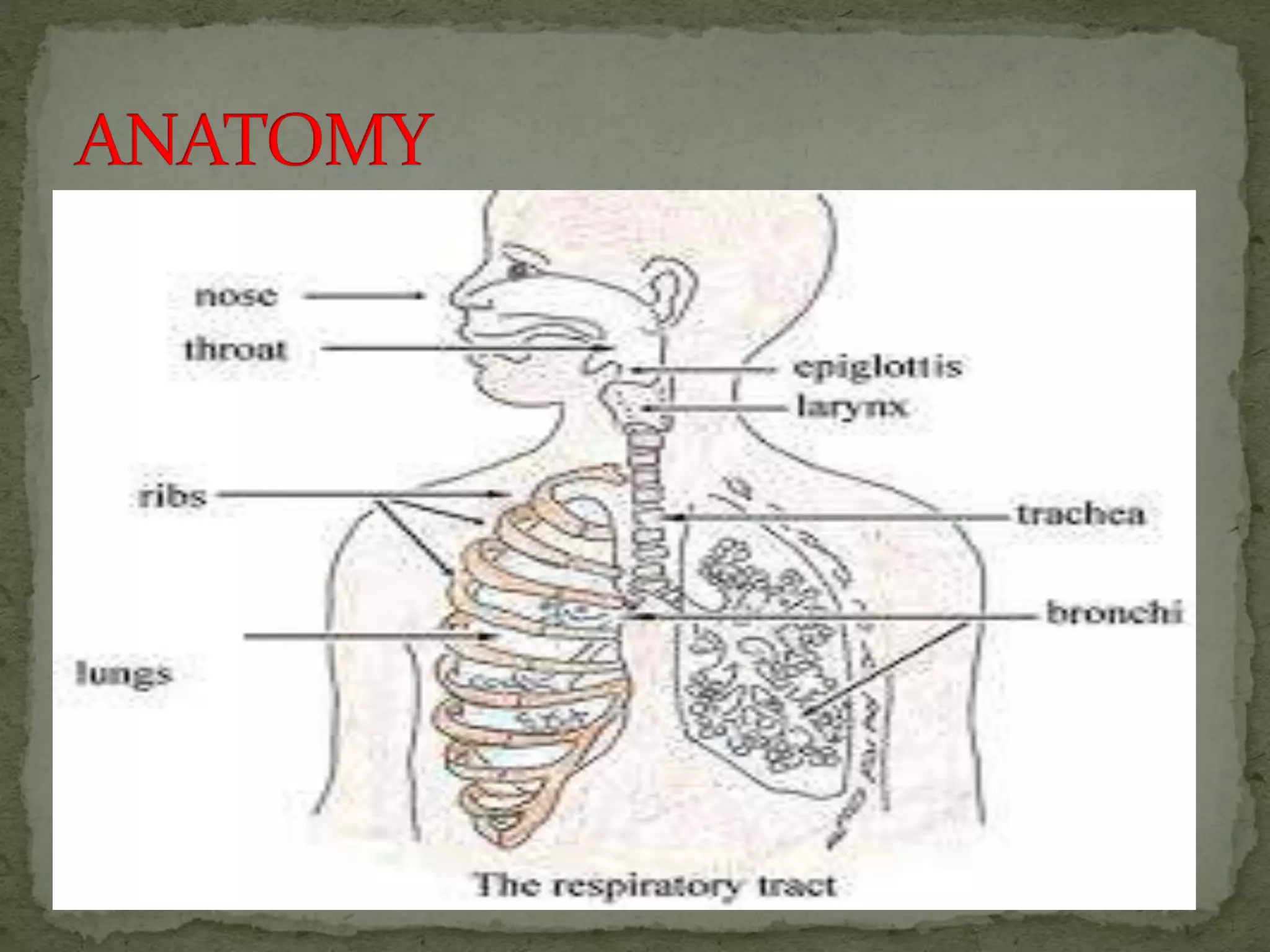
 ANATOMY
 PHYSIOLOGY
 AIRWAY ASSESSMENT
 AIRWAY MANAGEMENT
 DIFFICULT AIRWAY MANAGEMENT
 UNANTICIPATED DIFFICULT AIRWAY
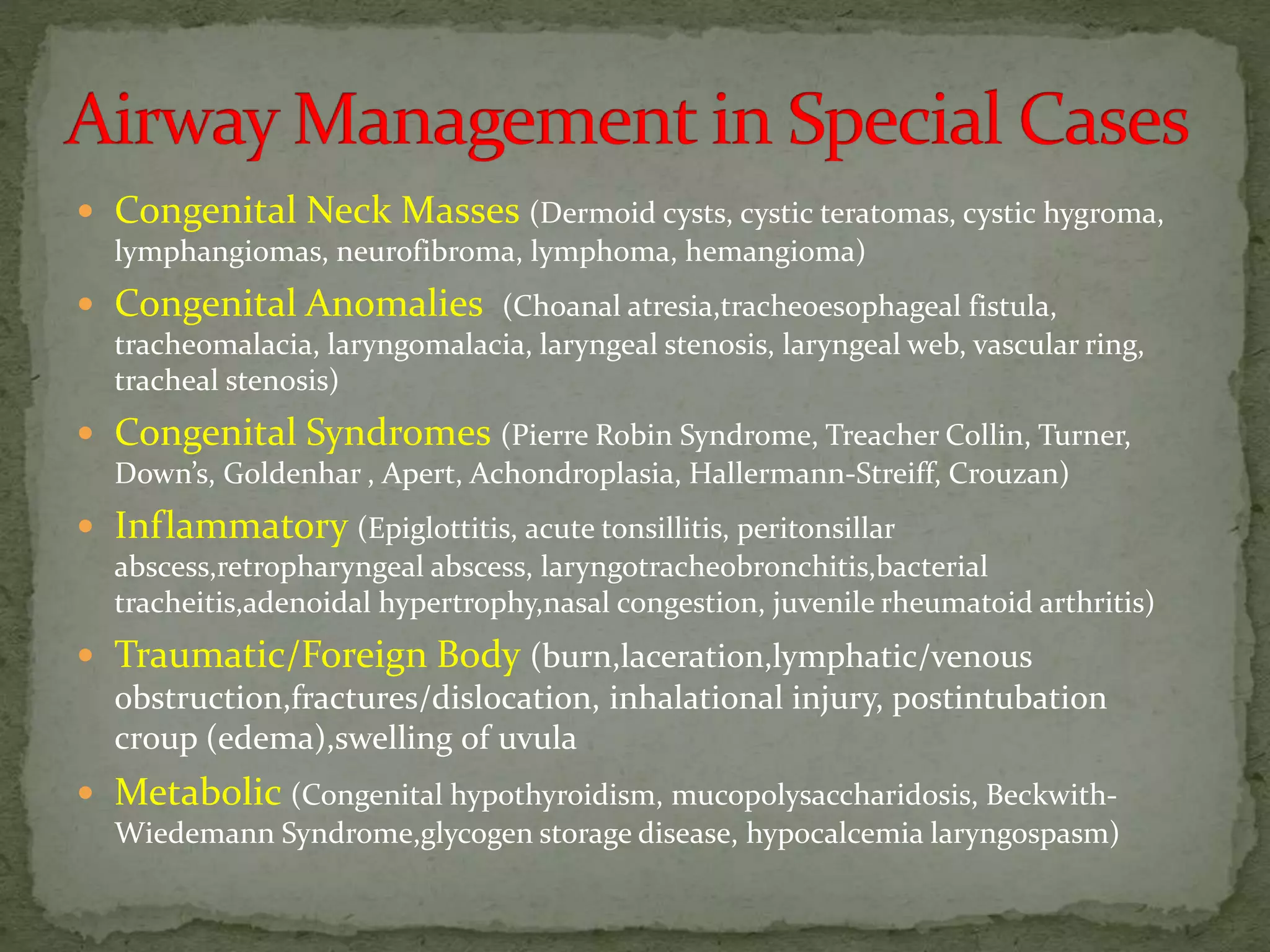
 AIRWAY MANAGEMENT IN SPECIAL CASES
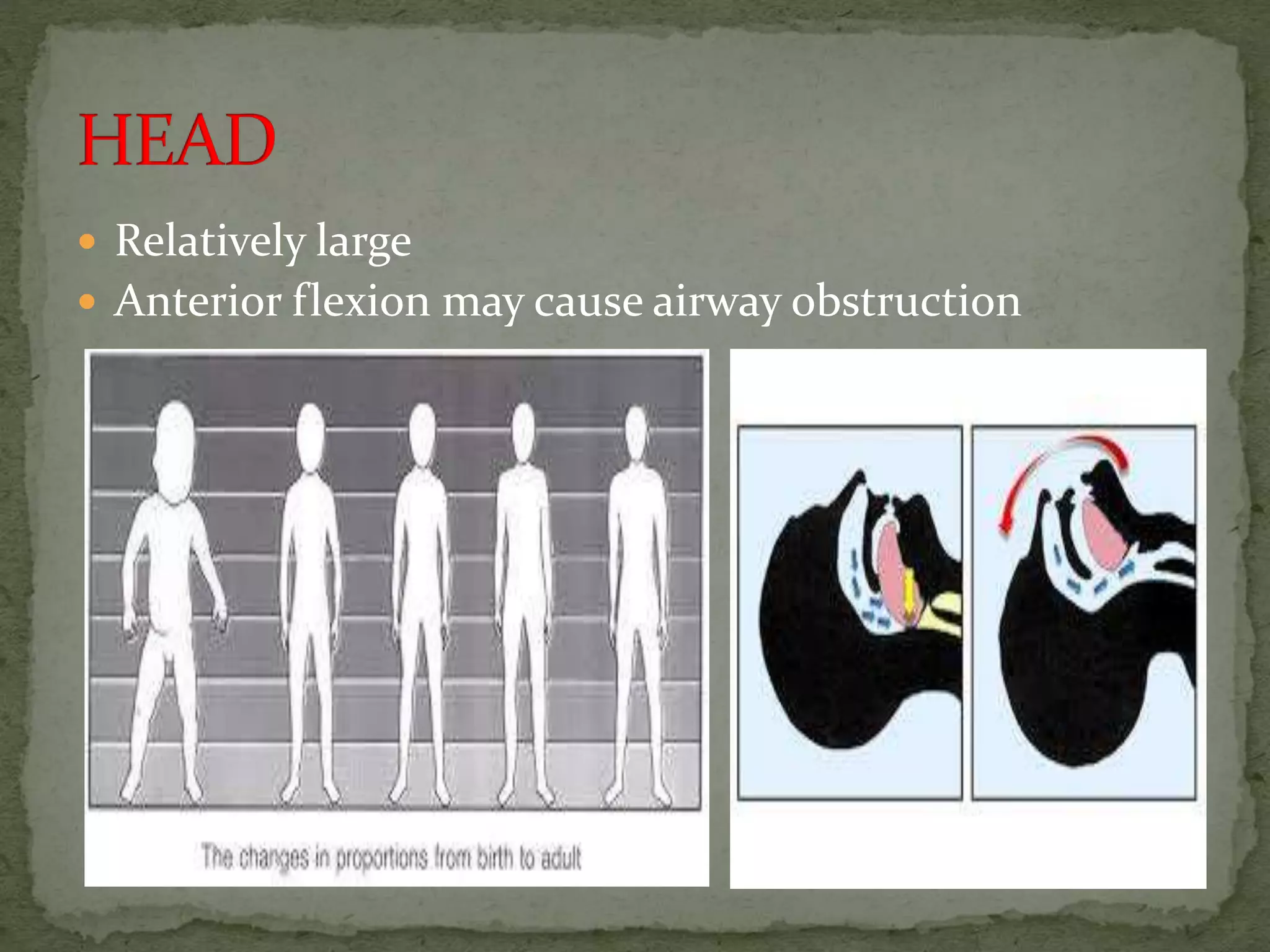
 Relatively large
 Anterior flexion may cause airway obstruction
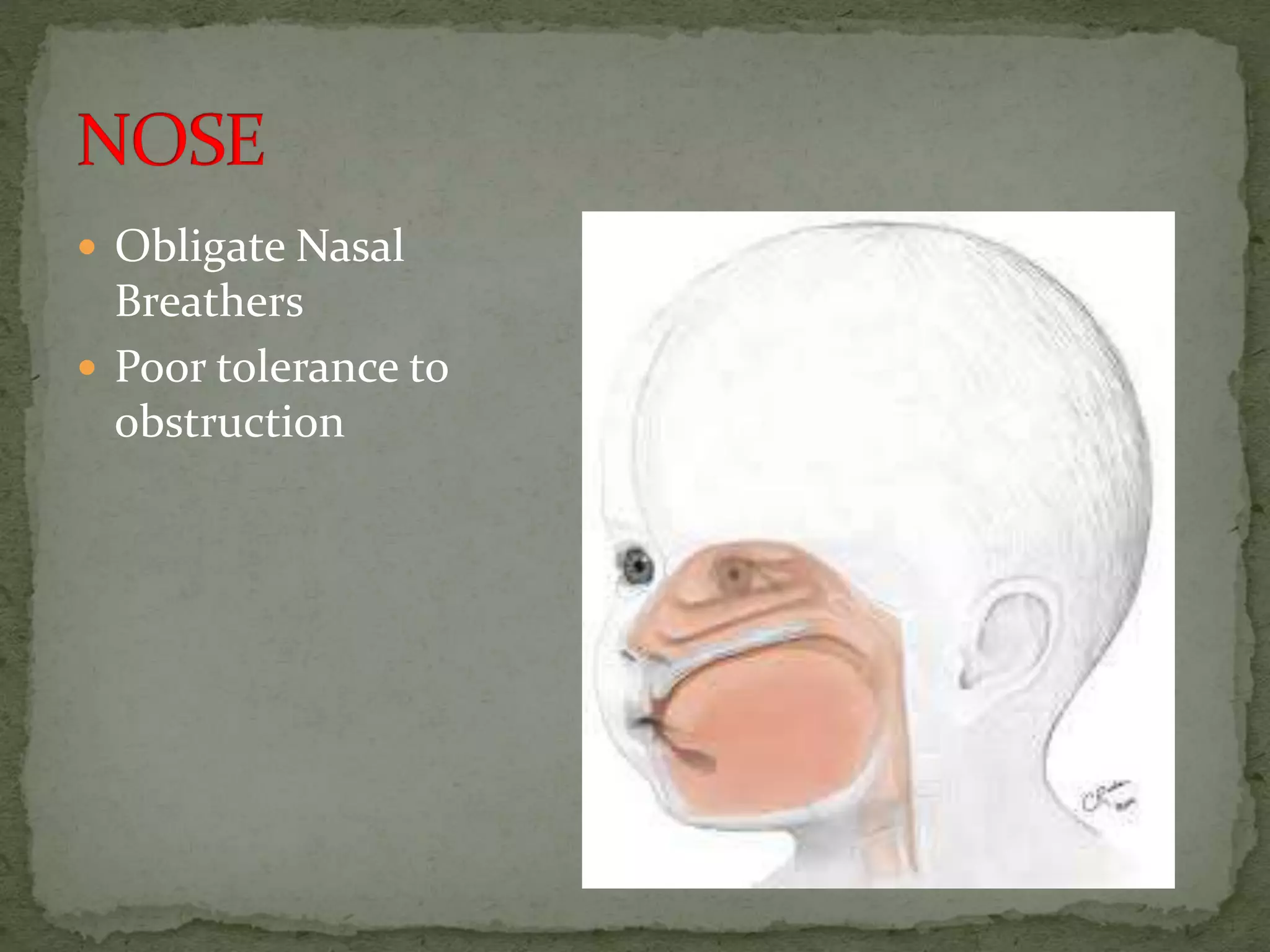
 Obligate Nasal
Breathers
 Poor tolerance to
obstruction
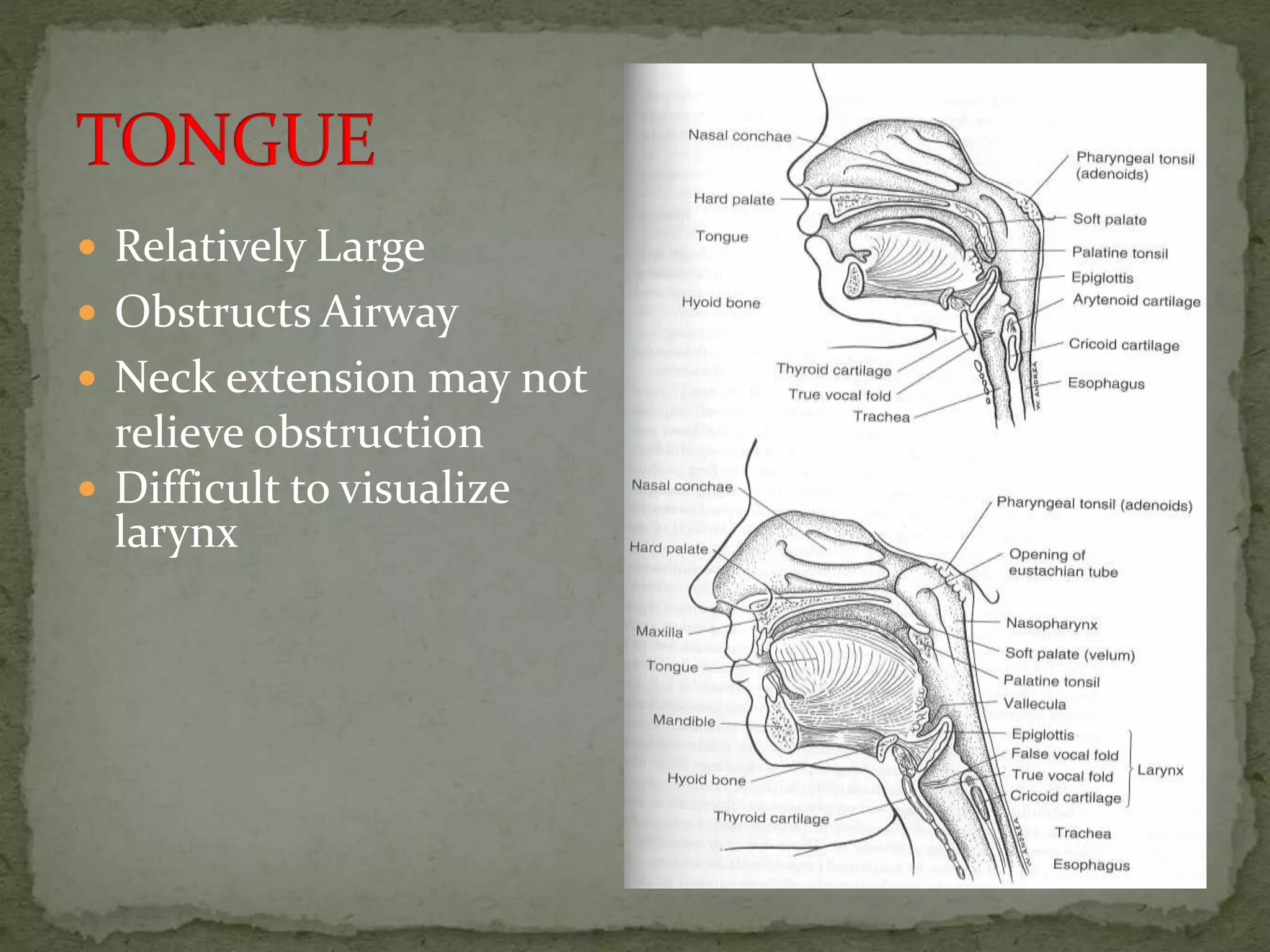
 Relatively Large
 Obstructs Airway
 Neck extension may not
relieve obstruction
 Difficult to visualize
larynx
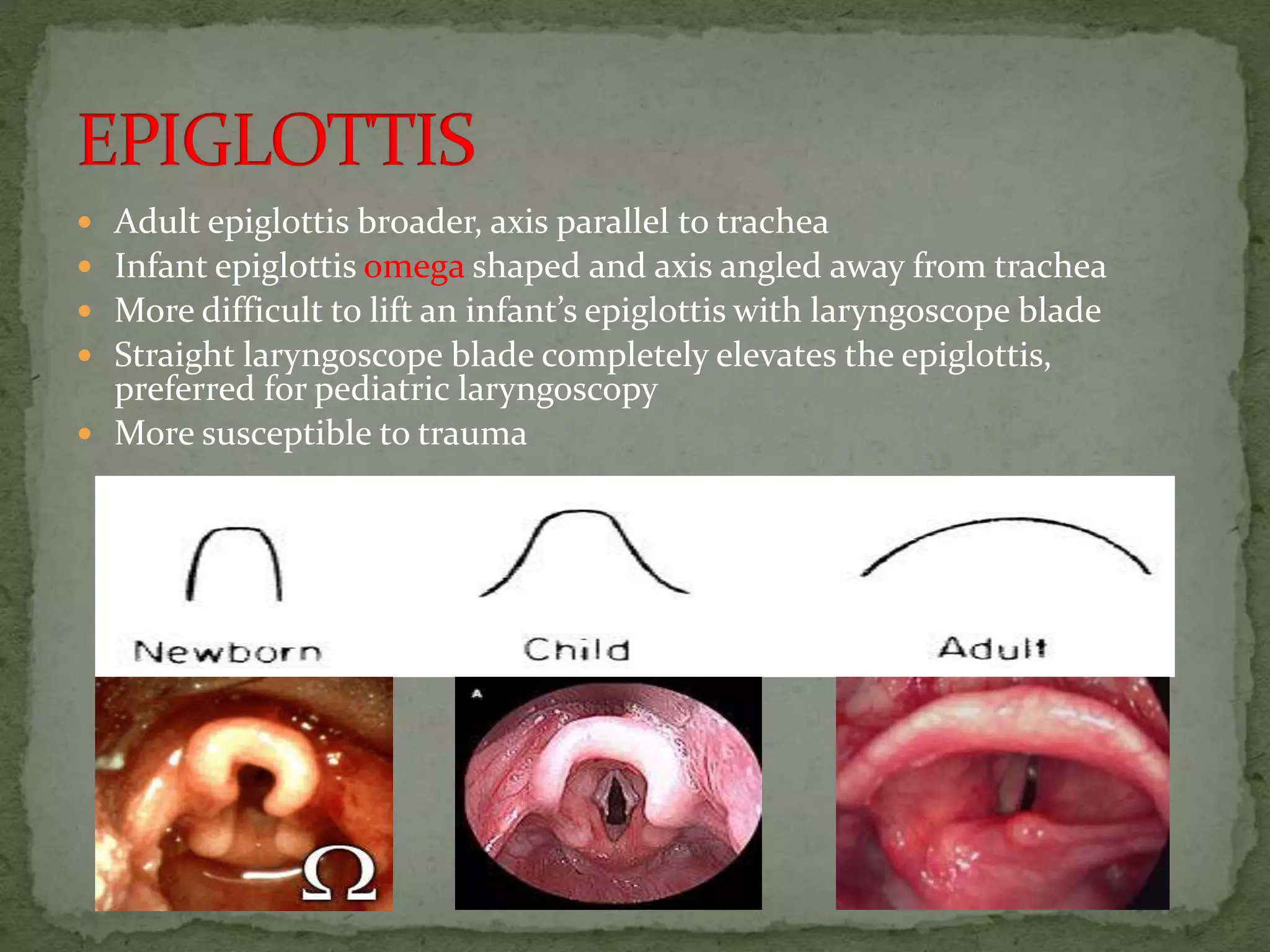
 Adult epiglottis broader, axis parallel to trachea
 Infant epiglottis omega shaped and axis angled away from trachea
 More difficult to lift an infant’s epiglottis with laryngoscope blade
 Straight laryngoscope blade completely elevates the epiglottis,
preferred for pediatric laryngoscopy
 More susceptible to trauma
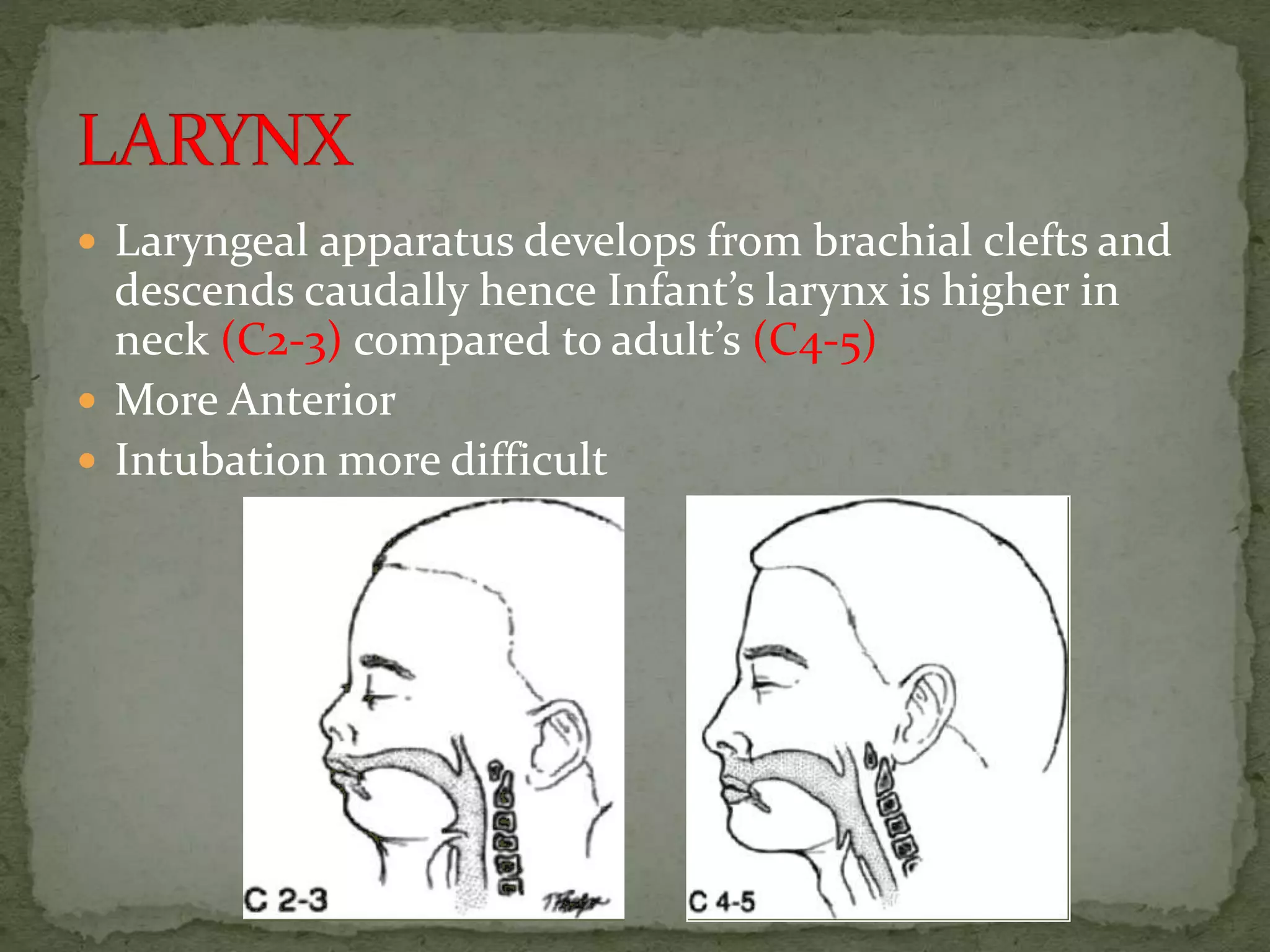
 Laryngeal apparatus develops from brachial clefts and
descends caudally hence Infant’s larynx is higher in
neck (C2-3) compared to adult’s (C4-5)
 More Anterior
 Intubation more difficult
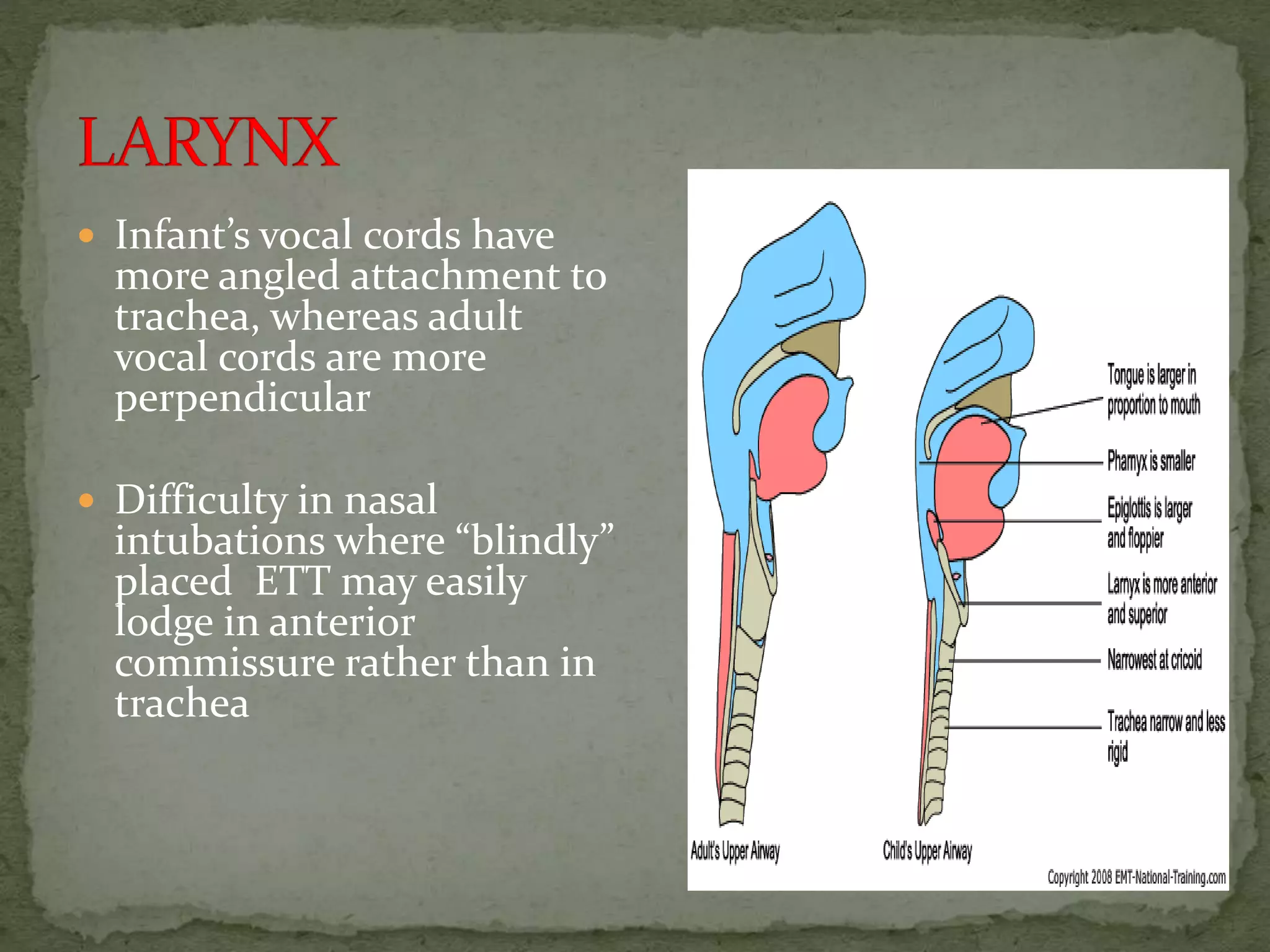
 Infant’s vocal cords have
more angled attachment to
trachea, whereas adult
vocal cords are more
perpendicular
 Difficulty in nasal
intubations where “blindly”
placed ETT may easily
lodge in anterior
commissure rather than in
trachea
 Narrowest portion
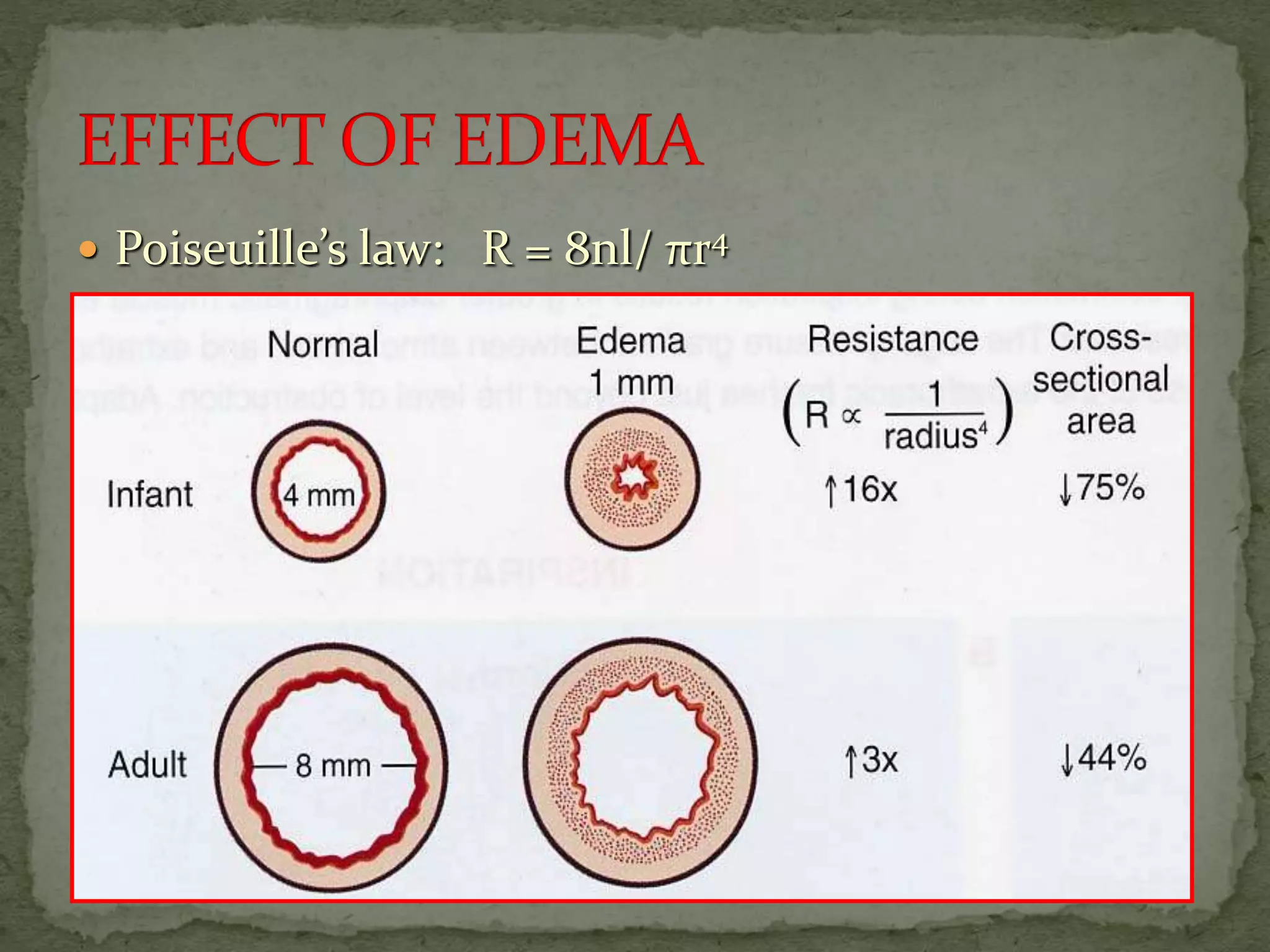
 ↑ resistance with airway
edema or infection
 Acts as “cuff” during
tracheal intubation
 Tight fitting ETT may
cause edema and trouble
upon extubation
 Uncuffed ETT preferred
for children < 8 years old
 Fully developed cricoid
cartilage occurs at 10-12
years of age
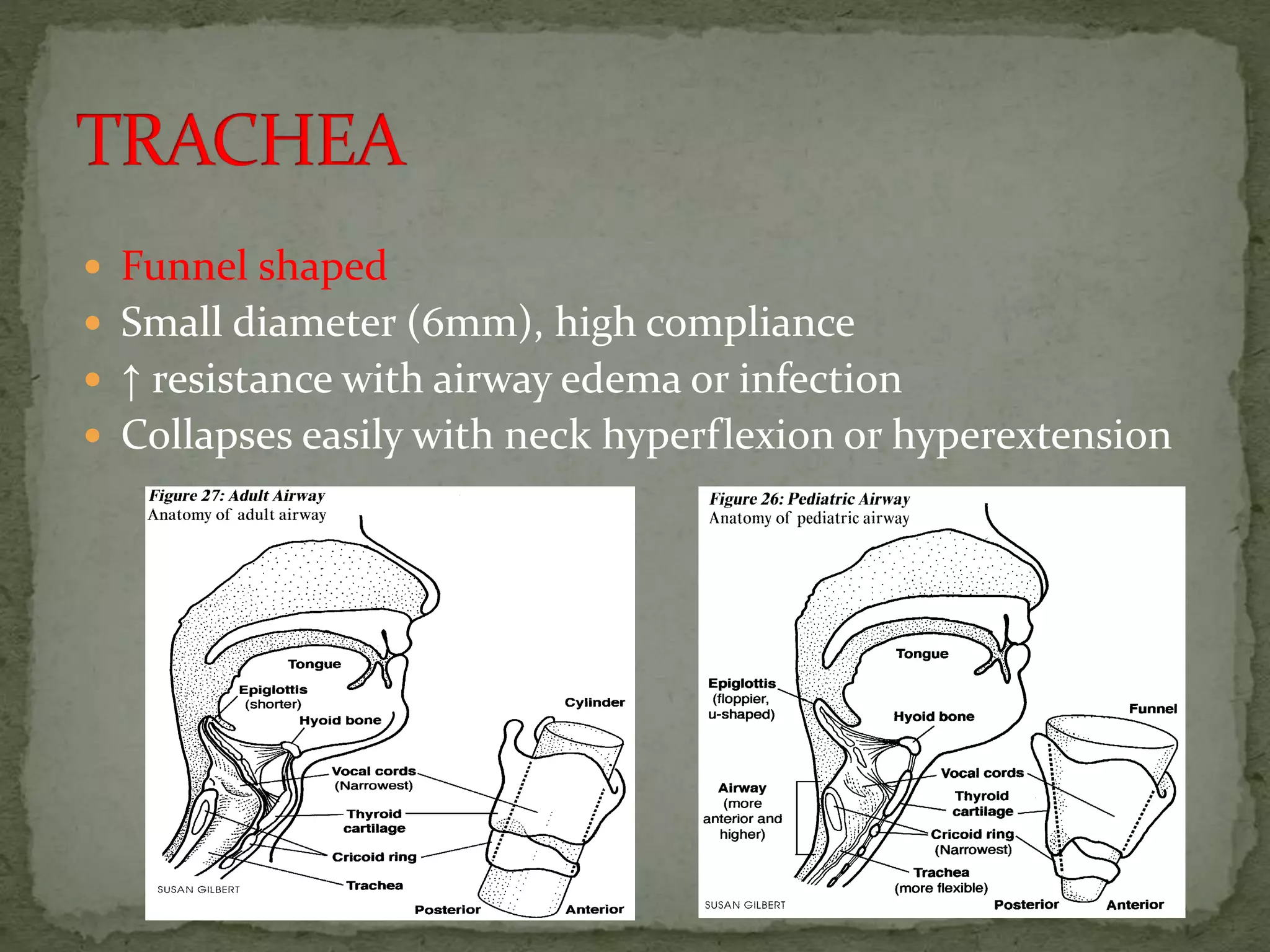
 Funnel shaped
 Small diameter (6mm), high compliance
 ↑ resistance with airway edema or infection
 Collapses easily with neck hyperflexion or hyperextension
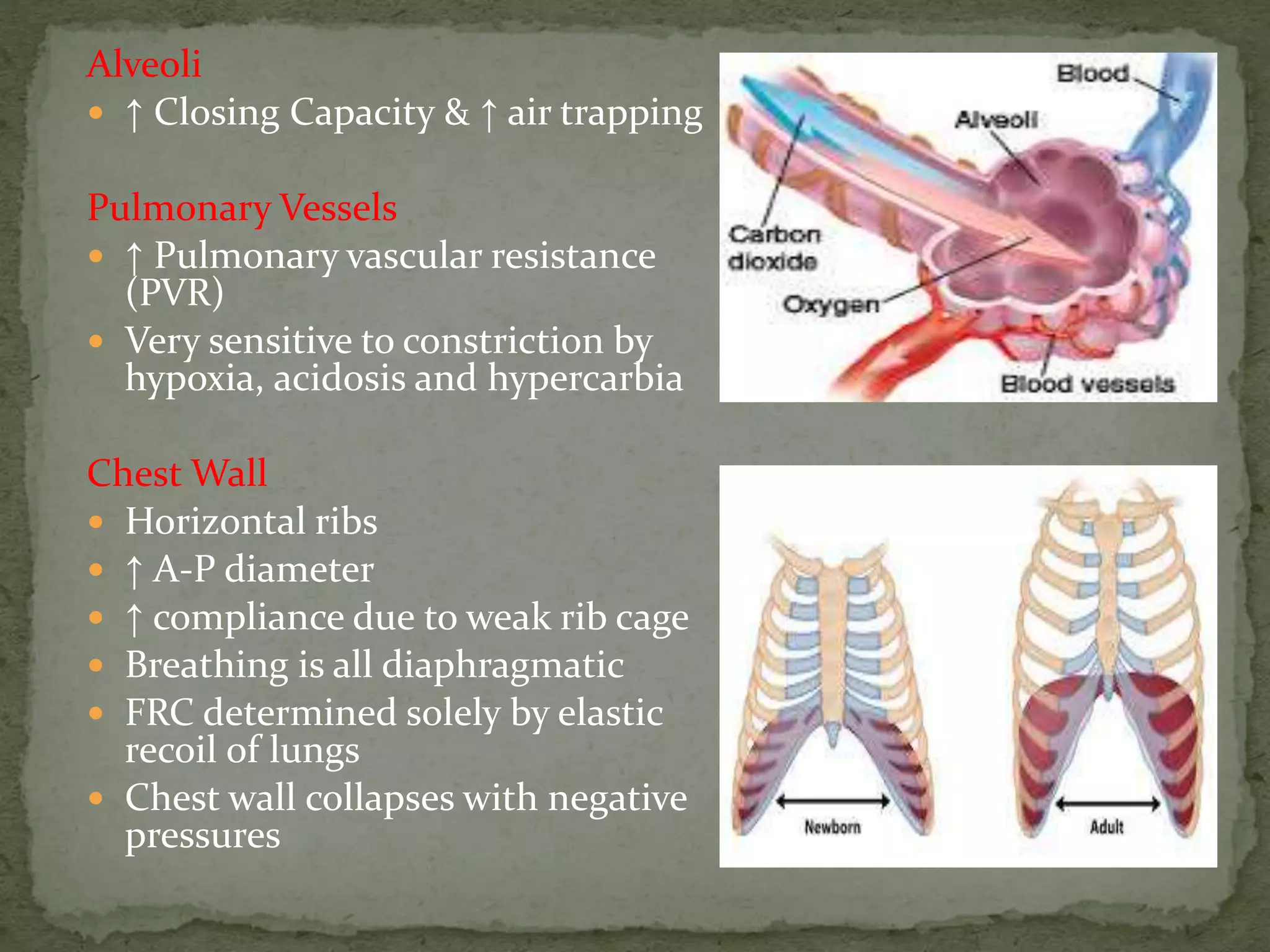
Alveoli
 ↑ Closing Capacity & ↑ air trapping
Pulmonary Vessels
 ↑ Pulmonary vascular resistance
(PVR)
 Very sensitive to constriction by
hypoxia, acidosis and hypercarbia
Chest Wall
 Horizontal ribs
 ↑ A-P diameter
 ↑ compliance due to weak rib cage
 Breathing is all diaphragmatic
 FRC determined solely by elastic
recoil of lungs
 Chest wall collapses with negative
pressures
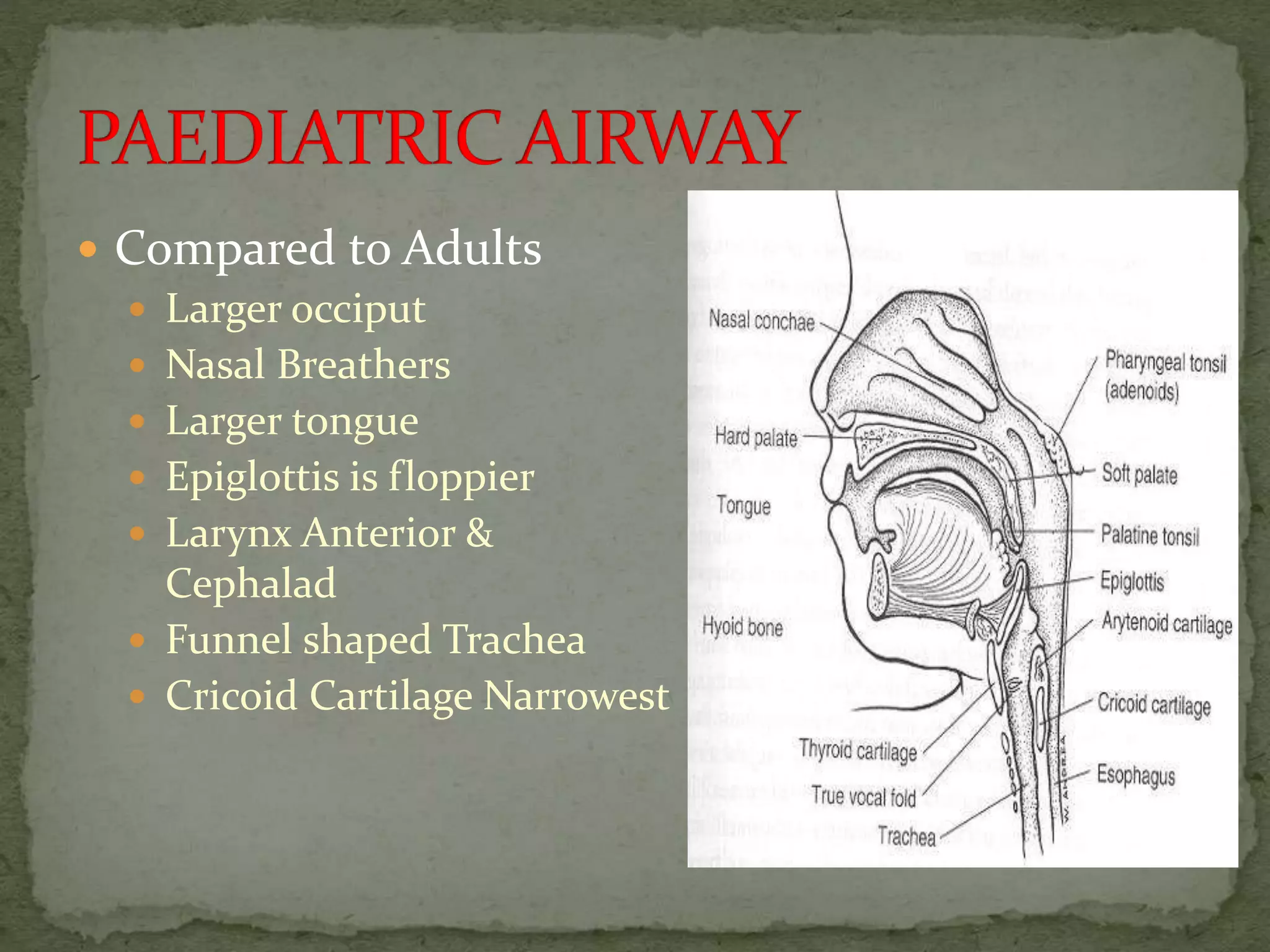
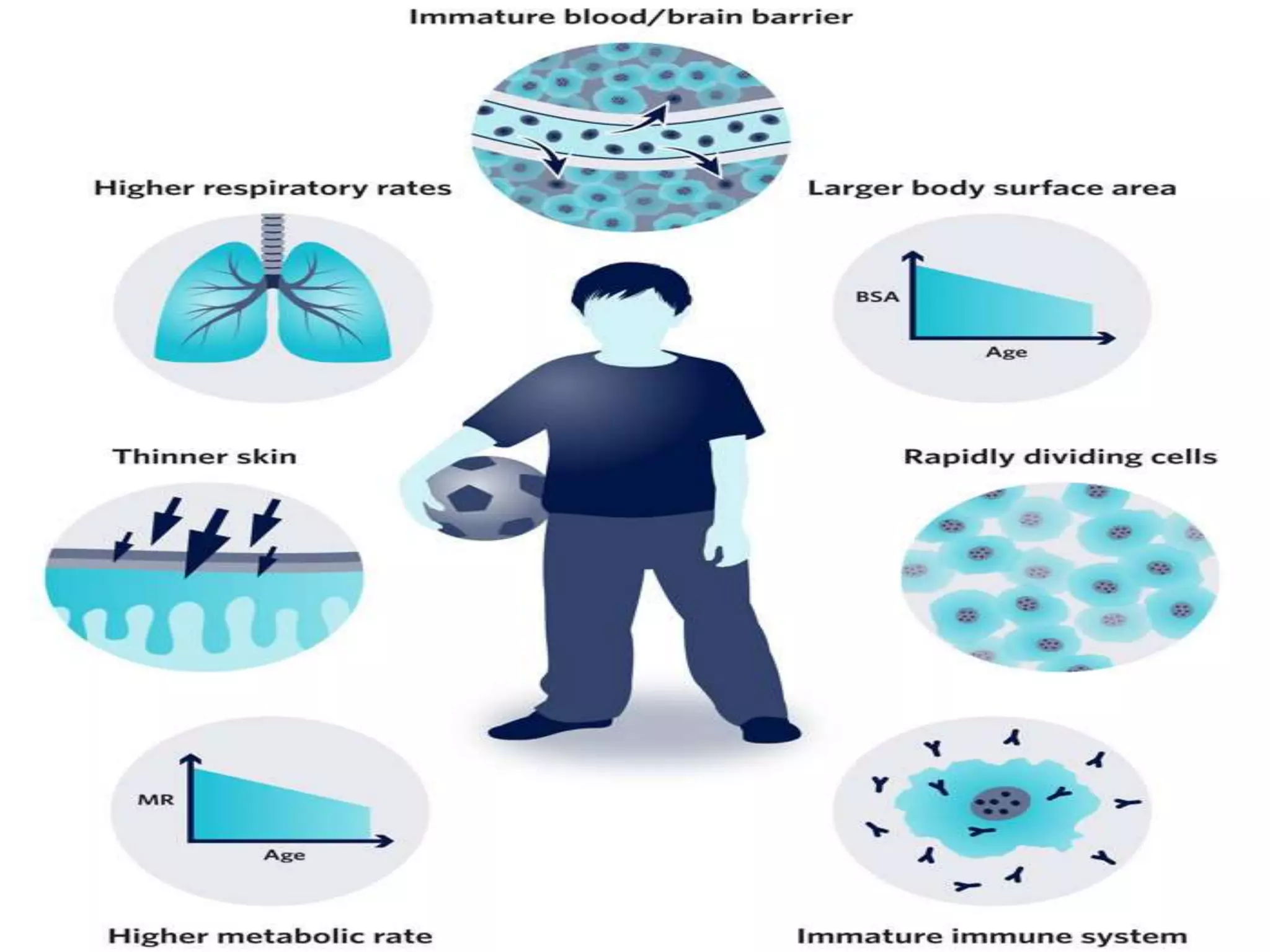
 Compared to Adults
 Larger occiput
 Nasal Breathers
 Larger tongue
 Epiglottis is floppier
 Larynx Anterior &
Cephalad
 Funnel shaped Trachea
 Cricoid Cartilage Narrowest
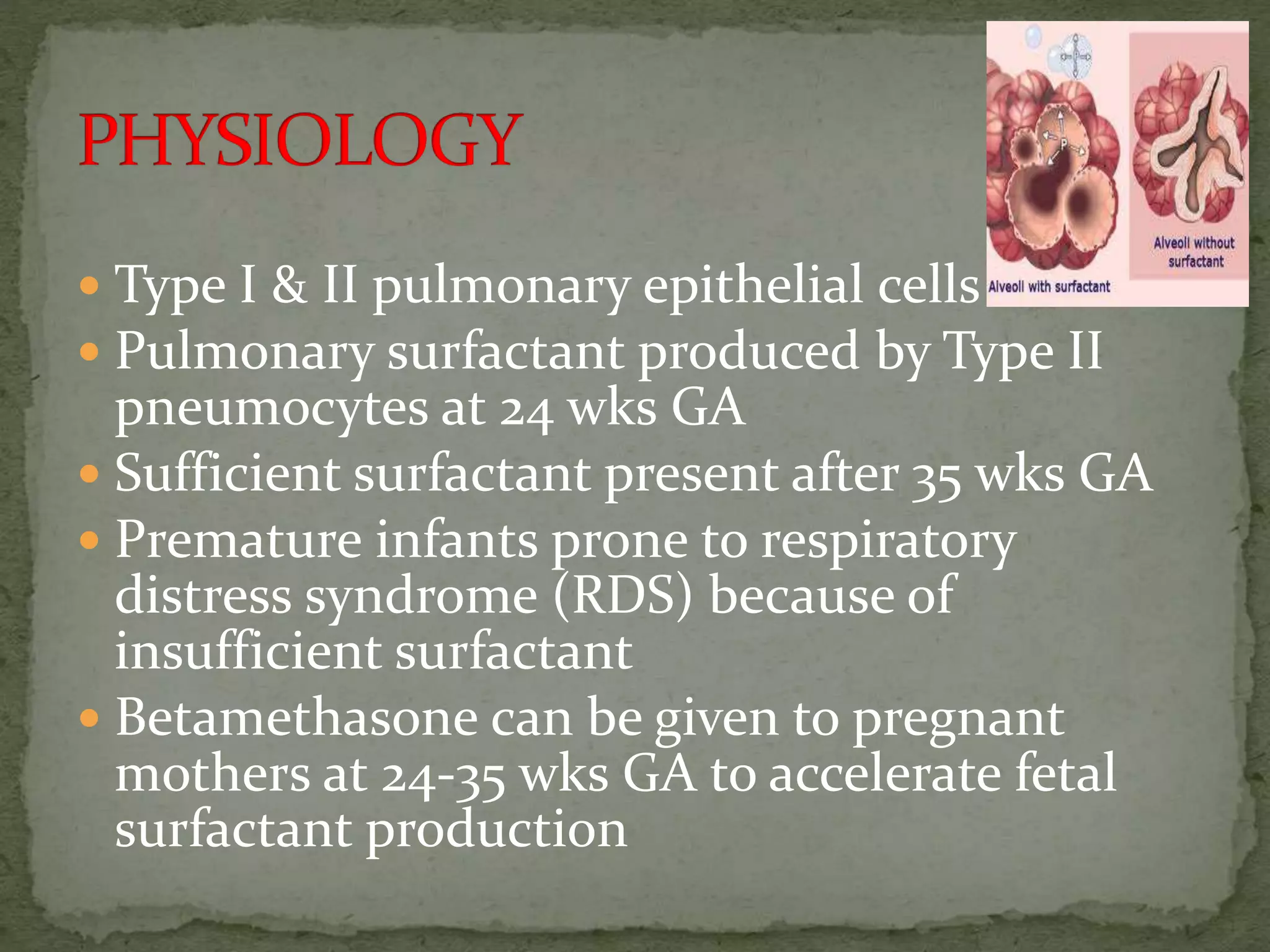
 Type I & II pulmonary epithelial cells
 Pulmonary surfactant produced by Type II
pneumocytes at 24 wks GA
 Sufficient surfactant present after 35 wks GA
 Premature infants prone to respiratory
distress syndrome (RDS) because of
insufficient surfactant
 Betamethasone can be given to pregnant
mothers at 24-35 wks GA to accelerate fetal
surfactant production
 High metabolic rate (5-8 ml/kg/min)
 Oxygen consumption of infant (6 ml/kg/min) is twice that
of an adult (3 ml/kg/min) [Less Oxygen Reserve]
 Tidal volume is relatively fixed (6-7 ml/kg/min)
 Minute Alveolar Ventilation is more dependent on
increased Respiratory Rate than on Tidal Volume
 Ratio of Alveolar Minute Ventilation to FRC is doubled
under circumstances of hypoxia, apnea or anesthesia
 Lung compliance is less while chest wall compliance is
more than those in adults - Reduced FRC and Atelectasis.
 Infant’s FRC is diminished and de-saturation occurs more
precipitously
 Lack Type I muscle fibers, fatigue more easily
 Prone to Bradycardia - Laryngeal stimulation and hypoxia
 Poiseuille’s law: R = 8nl/ πr4
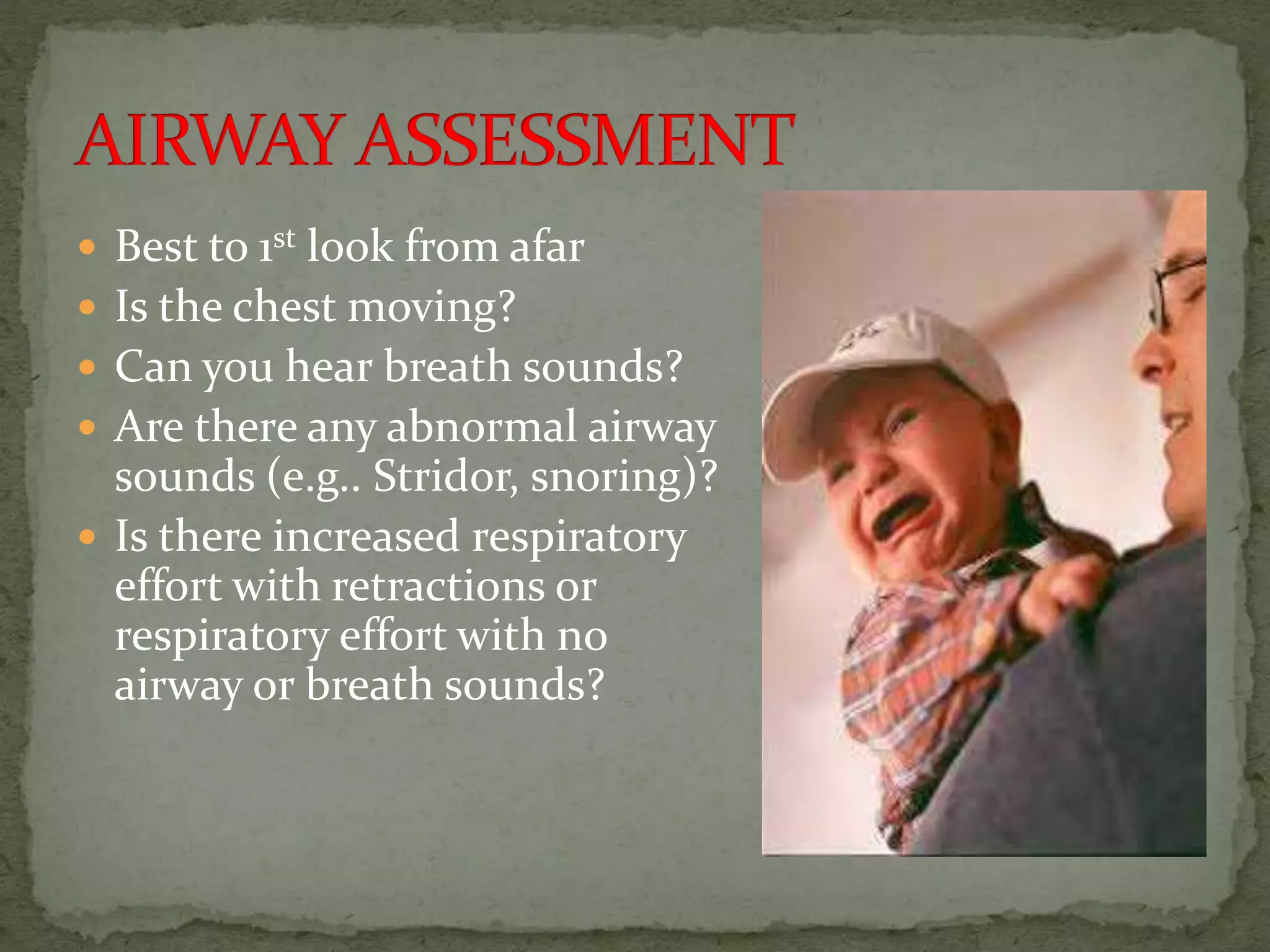
 Best to 1st look from afar
 Is the chest moving?
 Can you hear breath sounds?
 Are there any abnormal airway
sounds (e.g.. Stridor, snoring)?
 Is there increased respiratory
effort with retractions or
respiratory effort with no
airway or breath sounds?
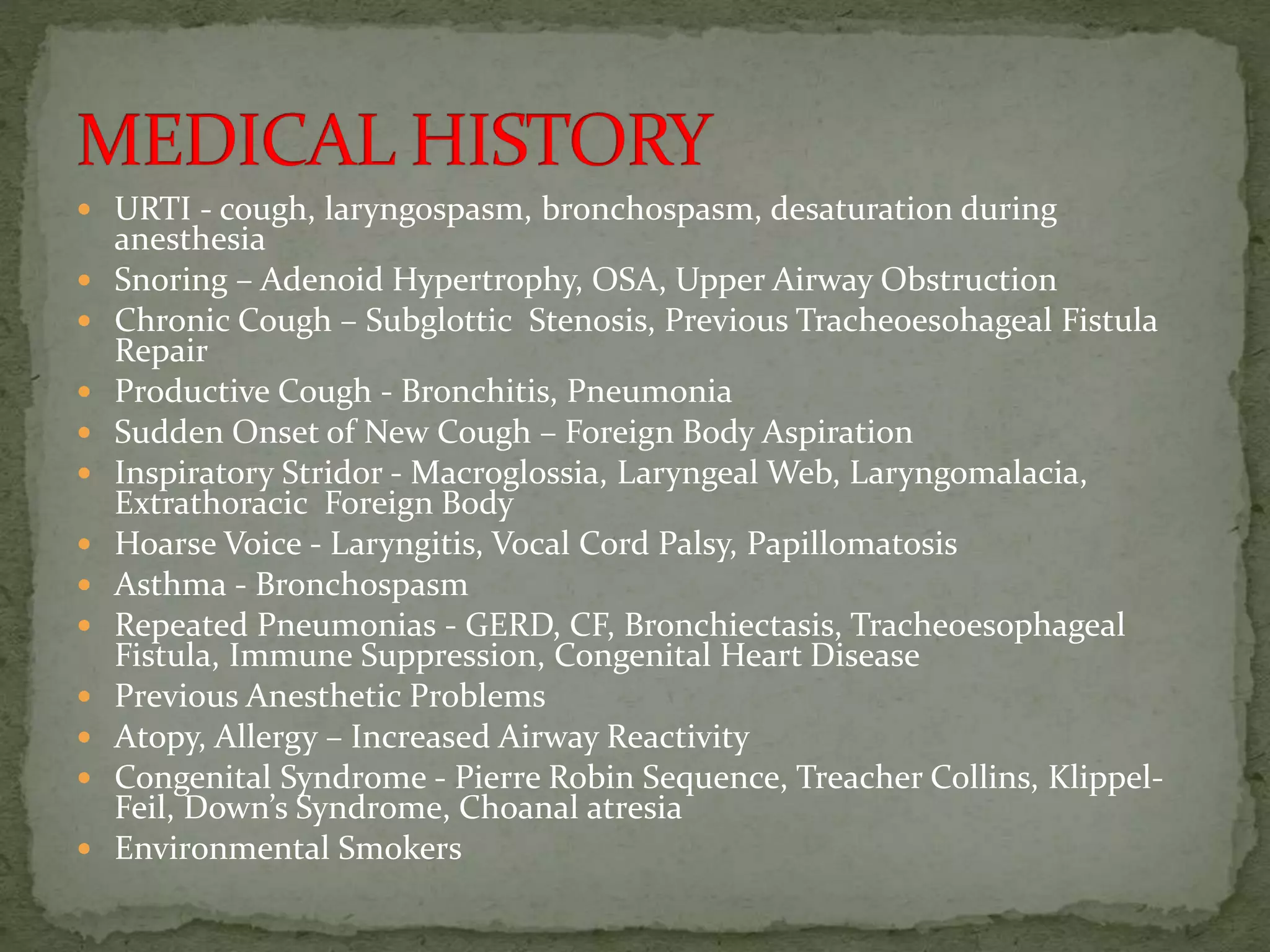
 URTI - cough, laryngospasm, bronchospasm, desaturation during
anesthesia
 Snoring – Adenoid Hypertrophy, OSA, Upper Airway Obstruction
 Chronic Cough – Subglottic Stenosis, Previous Tracheoesohageal Fistula
Repair
 Productive Cough - Bronchitis, Pneumonia
 Sudden Onset of New Cough – Foreign Body Aspiration
 Inspiratory Stridor - Macroglossia, Laryngeal Web, Laryngomalacia,
Extrathoracic Foreign Body
 Hoarse Voice - Laryngitis, Vocal Cord Palsy, Papillomatosis
 Asthma - Bronchospasm
 Repeated Pneumonias - GERD, CF, Bronchiectasis, Tracheoesophageal
Fistula, Immune Suppression, Congenital Heart Disease
 Previous Anesthetic Problems
 Atopy, Allergy – Increased Airway Reactivity
 Congenital Syndrome - Pierre Robin Sequence, Treacher Collins, Klippel-
Feil, Down’s Syndrome, Choanal atresia
 Environmental Smokers
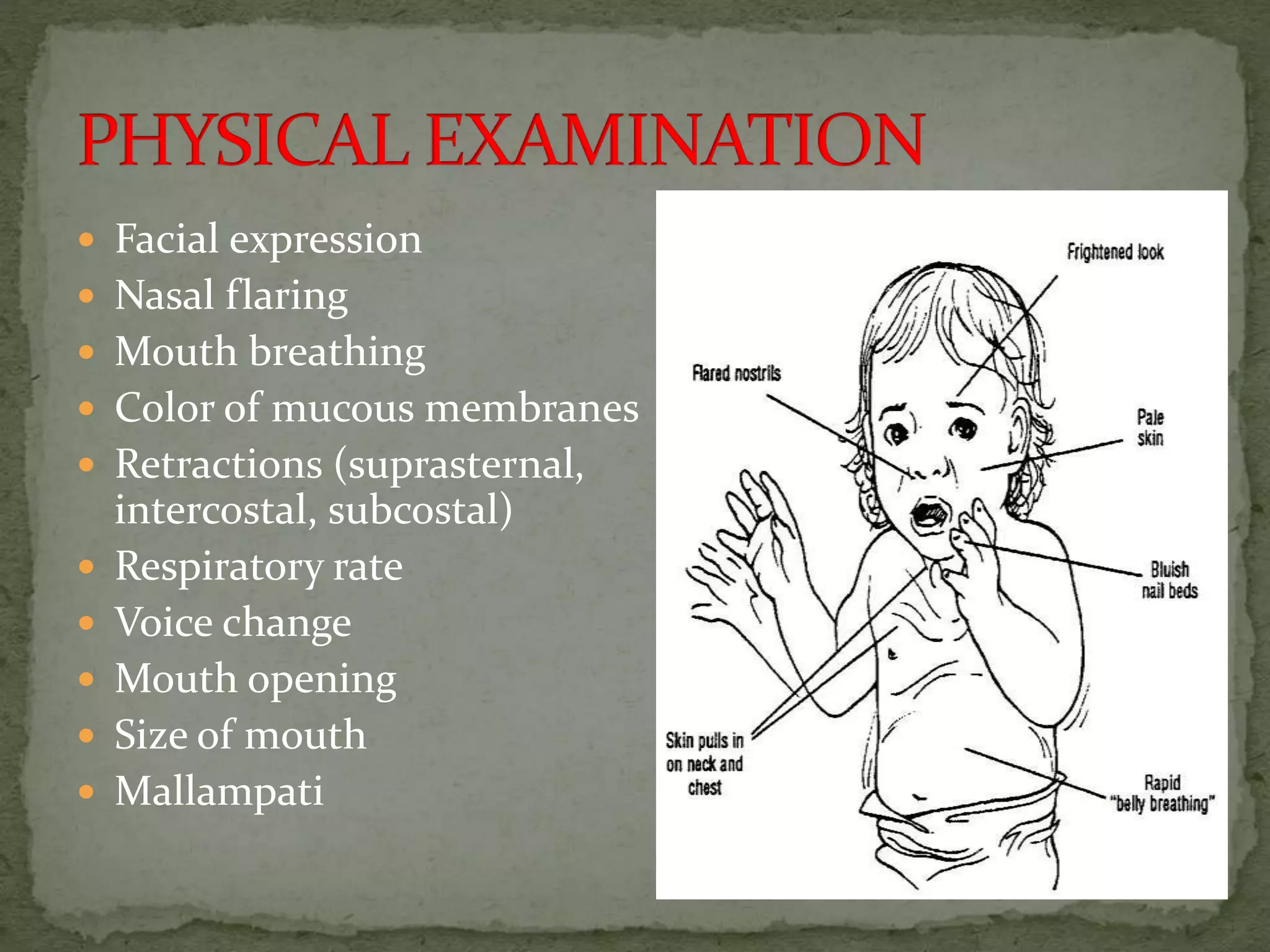
 Facial expression
 Nasal flaring
 Mouth breathing
 Color of mucous membranes
 Retractions (suprasternal,
intercostal, subcostal)
 Respiratory rate
 Voice change
 Mouth opening
 Size of mouth
 Mallampati
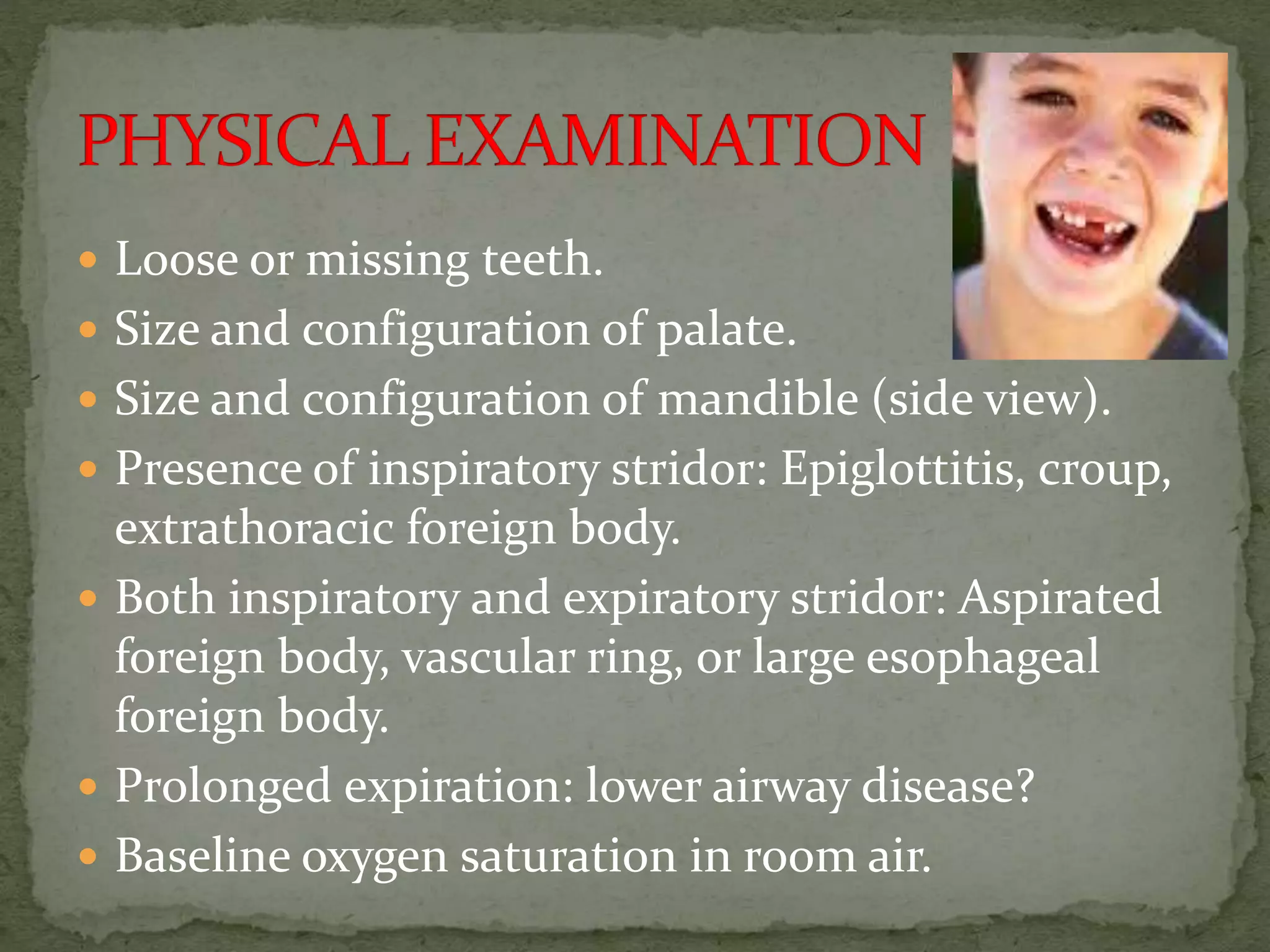
 Loose or missing teeth.
 Size and configuration of palate.
 Size and configuration of mandible (side view).
 Presence of inspiratory stridor: Epiglottitis, croup,
extrathoracic foreign body.
 Both inspiratory and expiratory stridor: Aspirated
foreign body, vascular ring, or large esophageal
foreign body.
 Prolonged expiration: lower airway disease?
 Baseline oxygen saturation in room air.
 Laboratory and radiographic evaluation extremely helpful with
pathologic airway
 AP and lateral films and fluoroscopy may show site and cause of
upper airway obstruction
 MRI/CT more reliable for evaluating neck masses, congenital
anomalies of the lower airway and vascular system
 Perform radiograph exam only when there is no immediate threat
to the child’s safety and in the presence of skilled personnel with
appropriate equipment to manage the airway
 Intubation must not be postponed to obtain radiographic
diagnosis when the patient is severely compromised.
 Blood gases are helpful in assessing the degree of physiologic
compromise; however, performing an arterial puncture on a
stressed child may aggravate the underlying airway obstruction
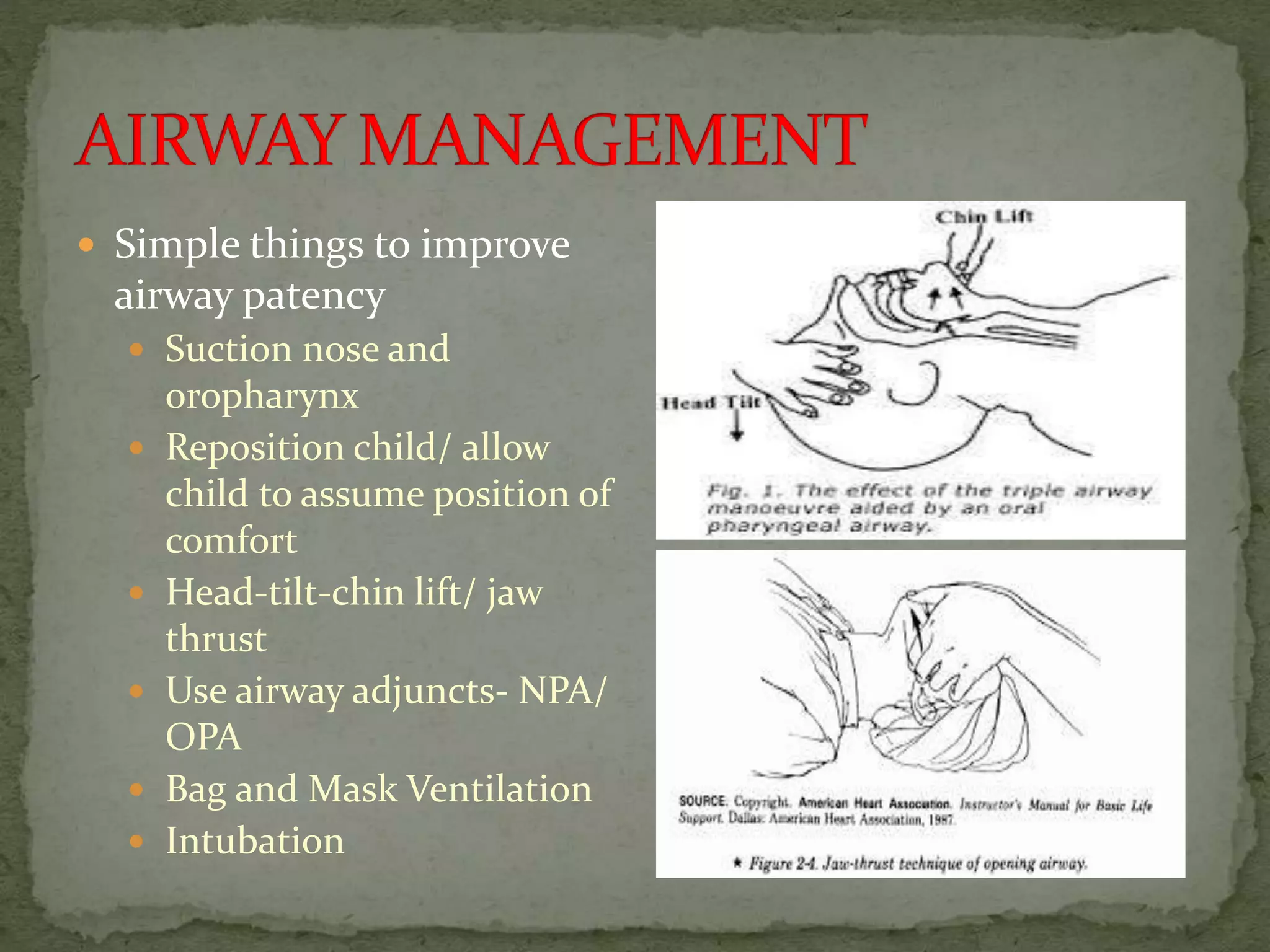
 Simple things to improve
airway patency
 Suction nose and
oropharynx
 Reposition child/ allow
child to assume position of
comfort
 Head-tilt-chin lift/ jaw
thrust
 Use airway adjuncts- NPA/
OPA
 Bag and Mask Ventilation
 Intubation
 S: Suction
 Catheters (6 - 16 french) and Yankauer tips (two sizes)
 O: Oxygen and how to deliver
 Nasal cannula, oxygen flow, masks and appropriate bag
 A: Airway
 Appropriate ETT, oral/nasal airway, stylets, laryngoscopes
 P: Pharmacology
 RSI meds
 ME: Monitoring Equipment
 EtCO2 detector, stethescope, monitors
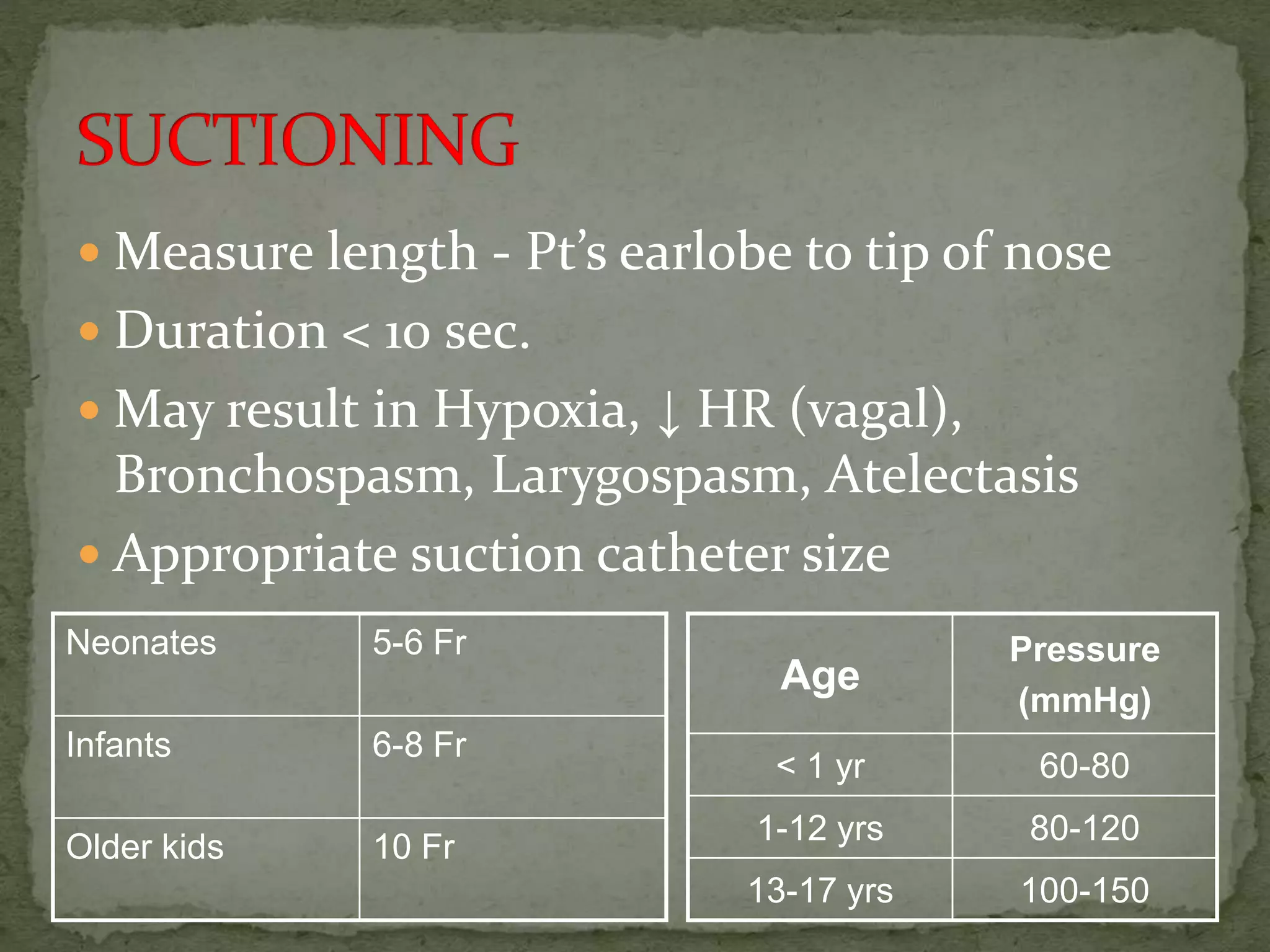
 Measure length - Pt’s earlobe to tip of nose
 Duration < 10 sec.
 May result in Hypoxia, ↓ HR (vagal),
Bronchospasm, Larygospasm, Atelectasis
 Appropriate suction catheter size
Neonates 5-6 Fr
Infants 6-8 Fr
Older kids 10 Fr
Age
Pressure
(mmHg)
< 1 yr 60-80
1-12 yrs 80-120
13-17 yrs 100-150
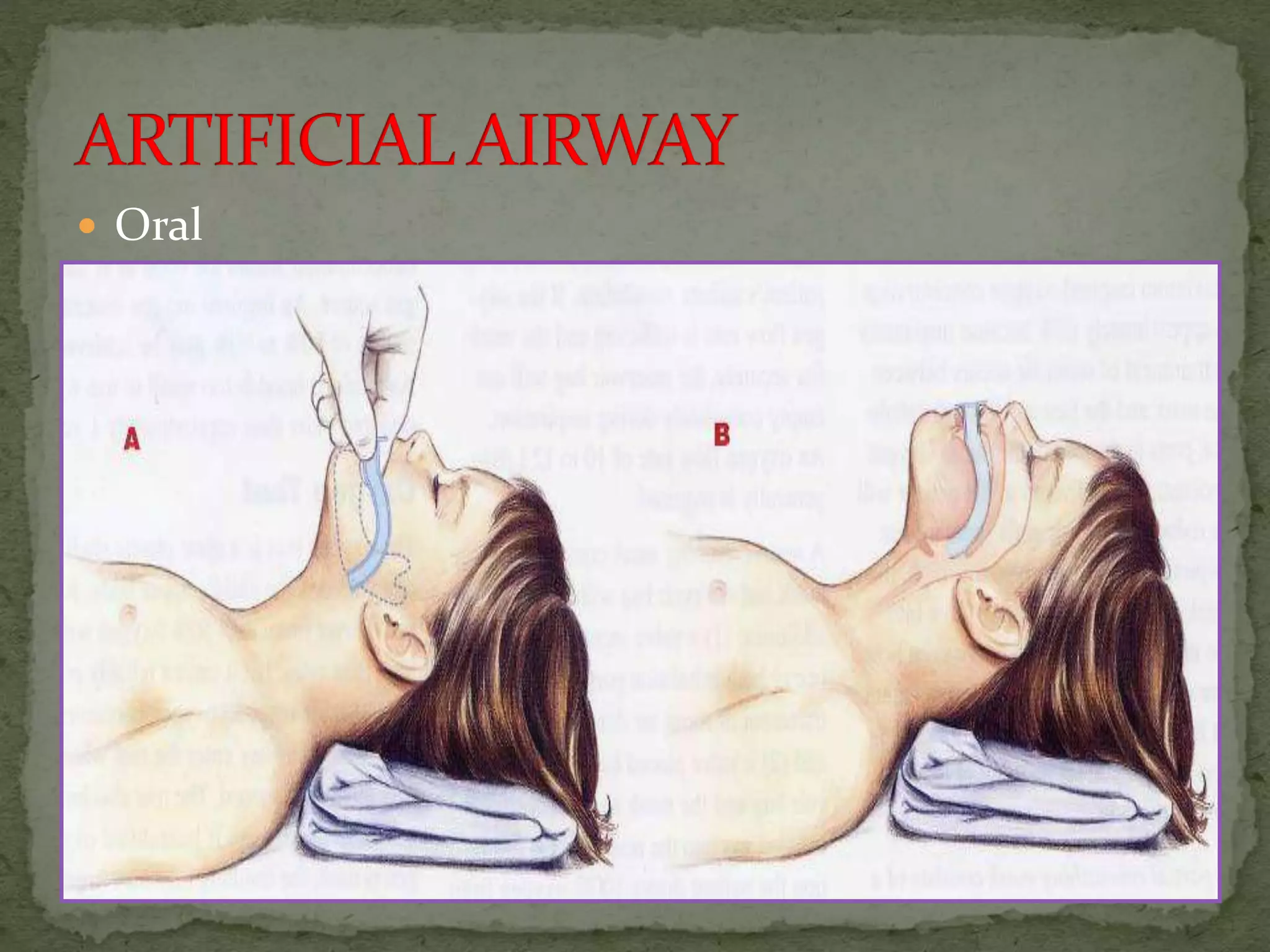
 Oral
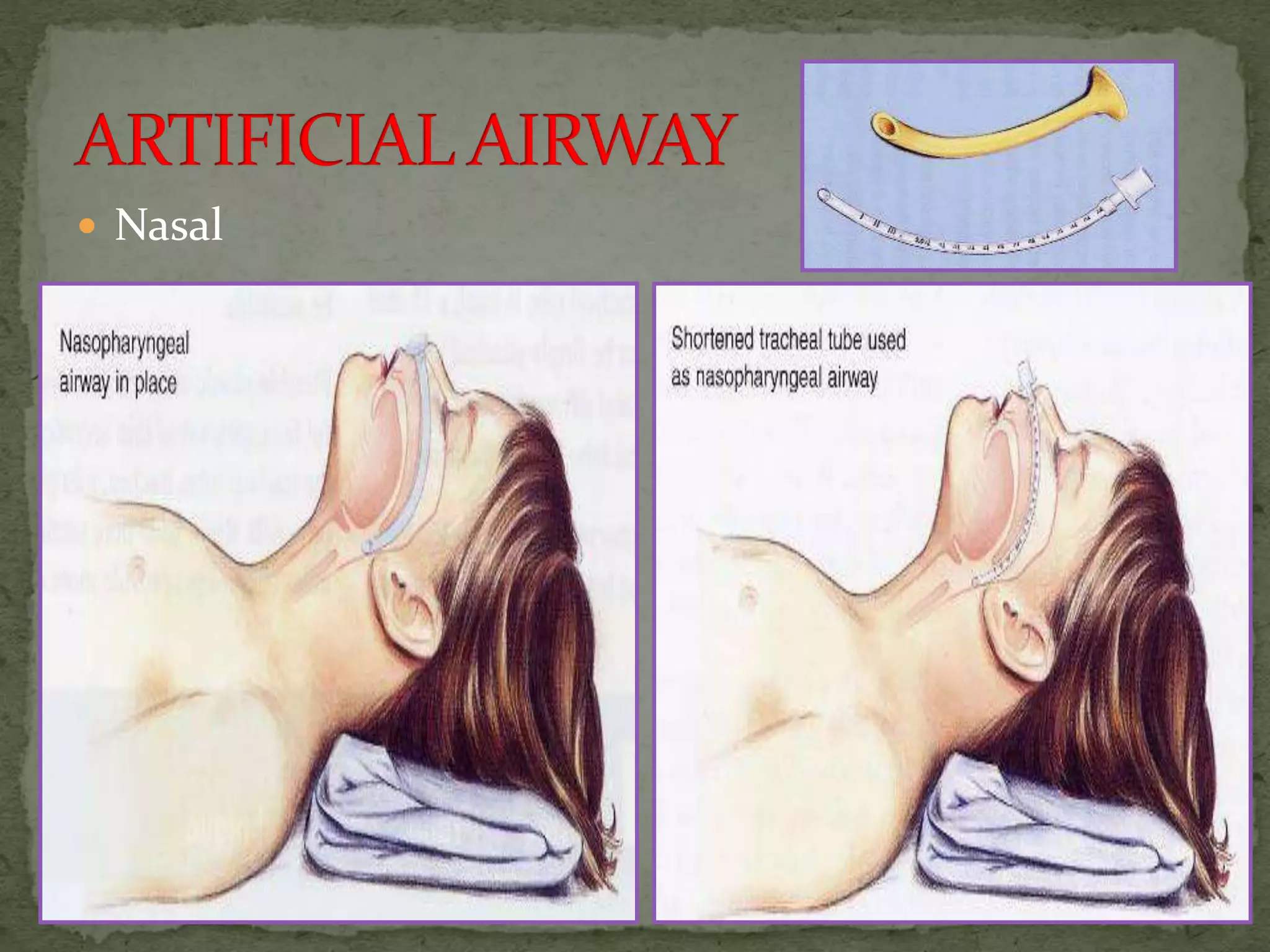
 Nasal
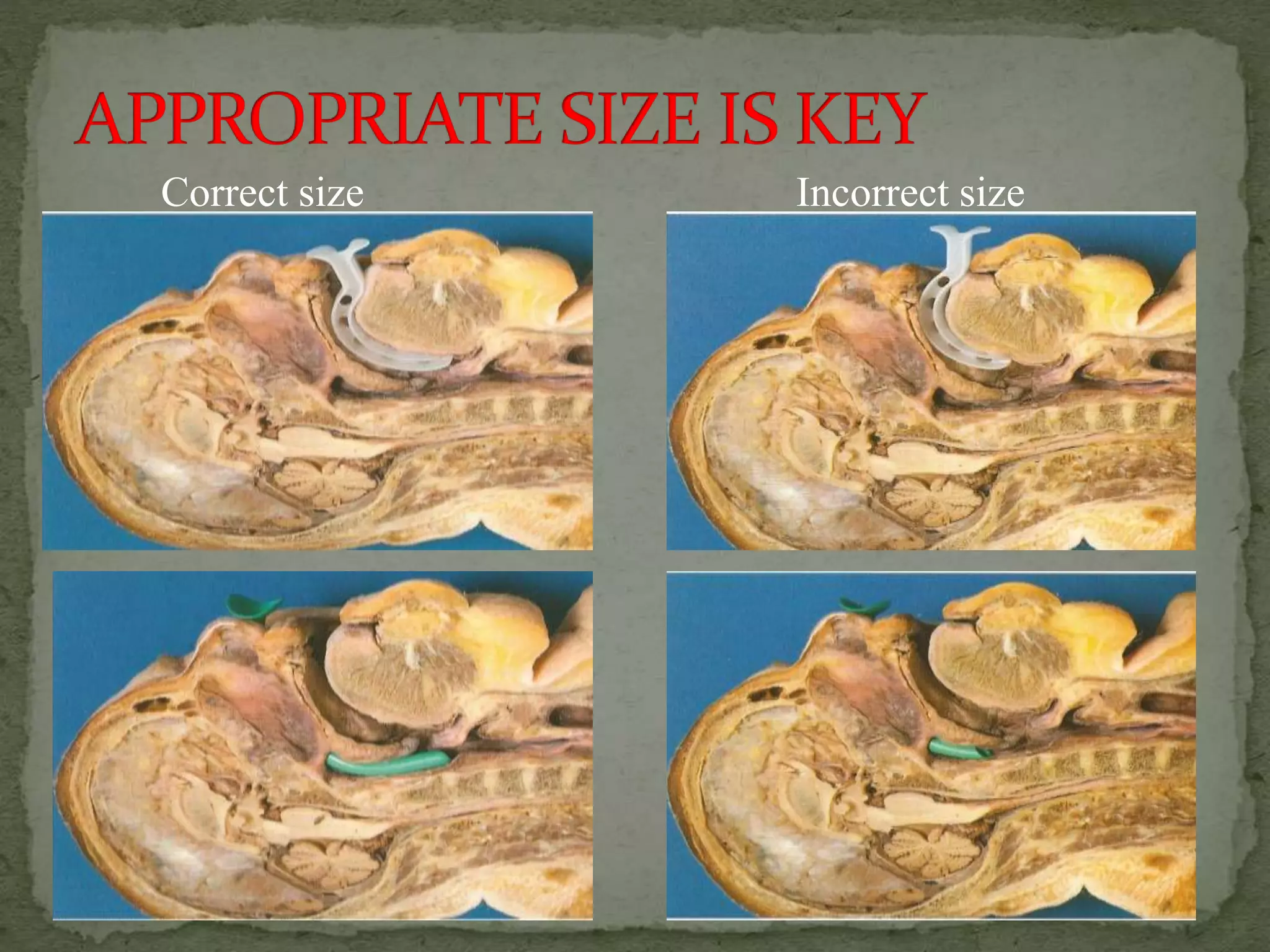
Correct size Incorrect size
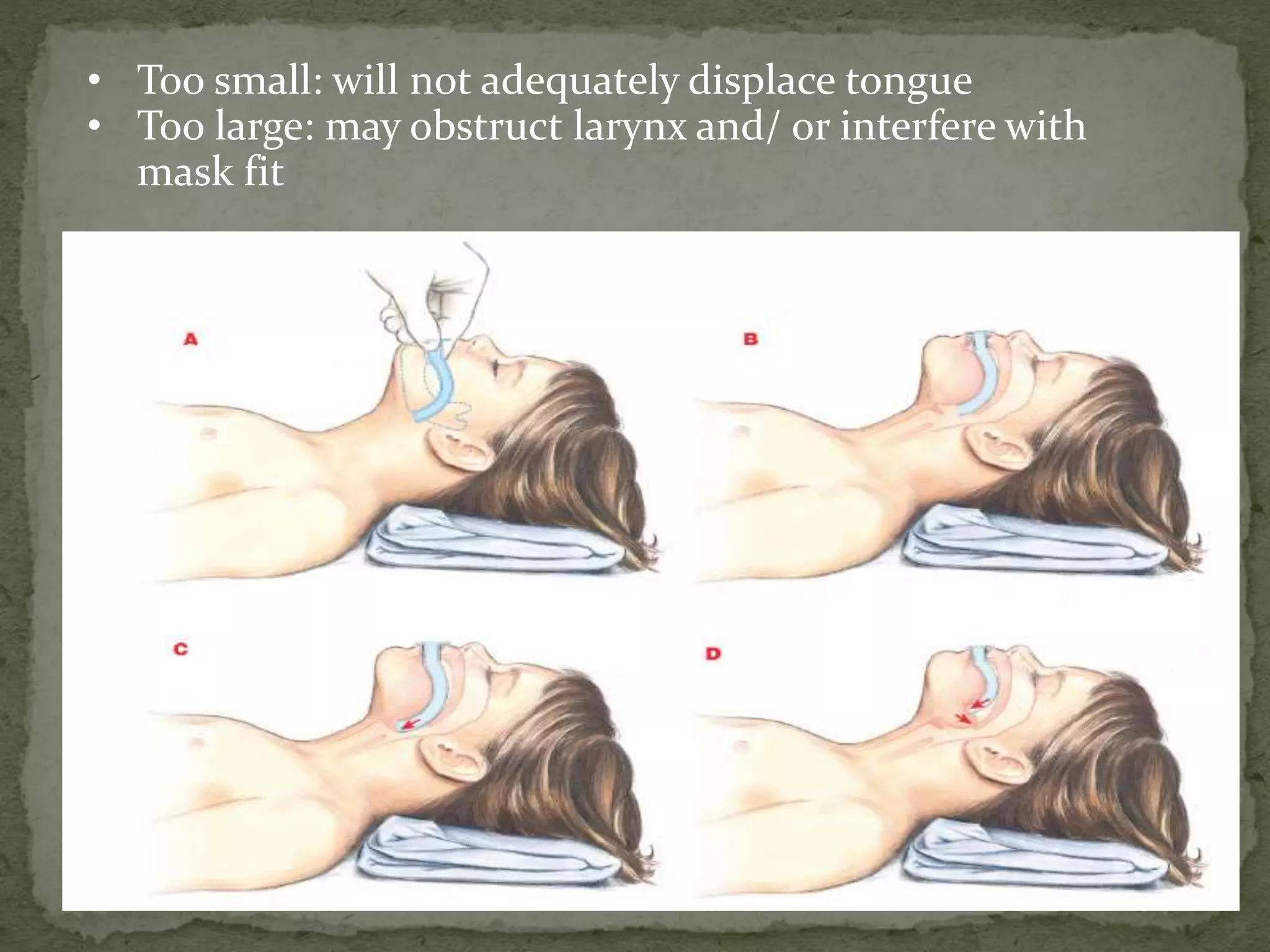
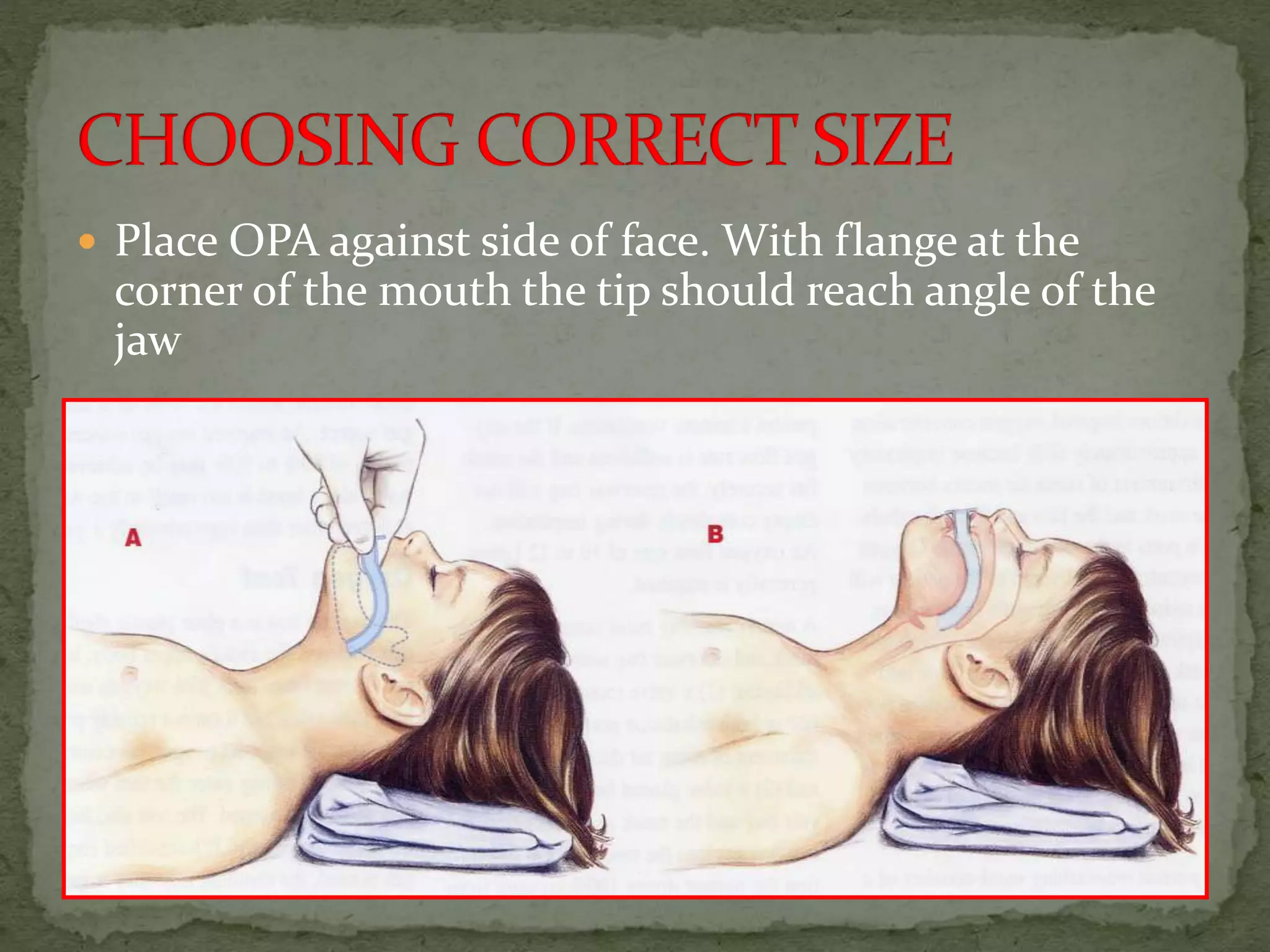
• Too small: will not adequately displace tongue
• Too large: may obstruct larynx and/ or interfere with
mask fit
 Place OPA against side of face. With flange at the
corner of the mouth the tip should reach angle of the
jaw
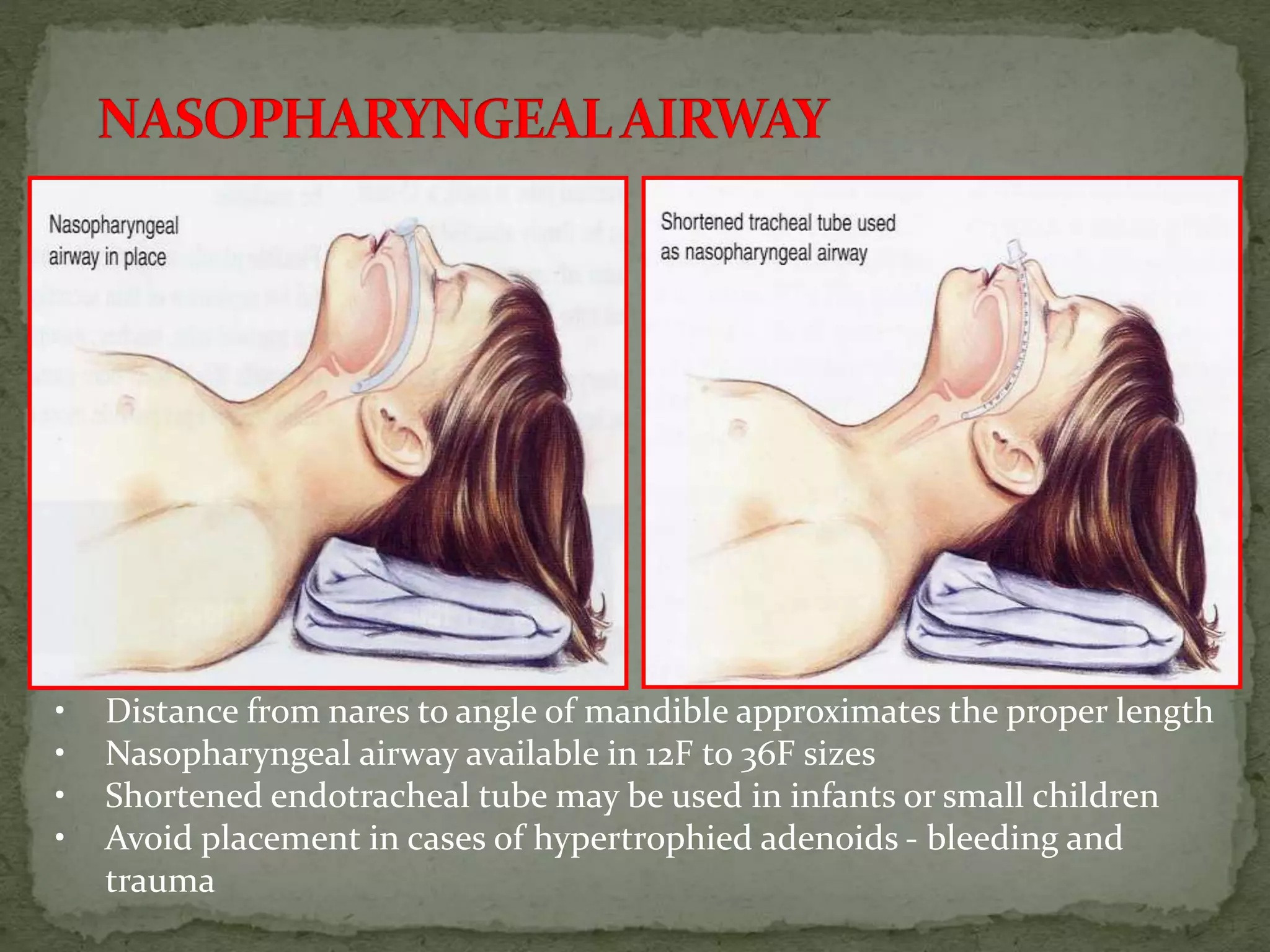
• Distance from nares to angle of mandible approximates the proper length
• Nasopharyngeal airway available in 12F to 36F sizes
• Shortened endotracheal tube may be used in infants or small children
• Avoid placement in cases of hypertrophied adenoids - bleeding and
trauma
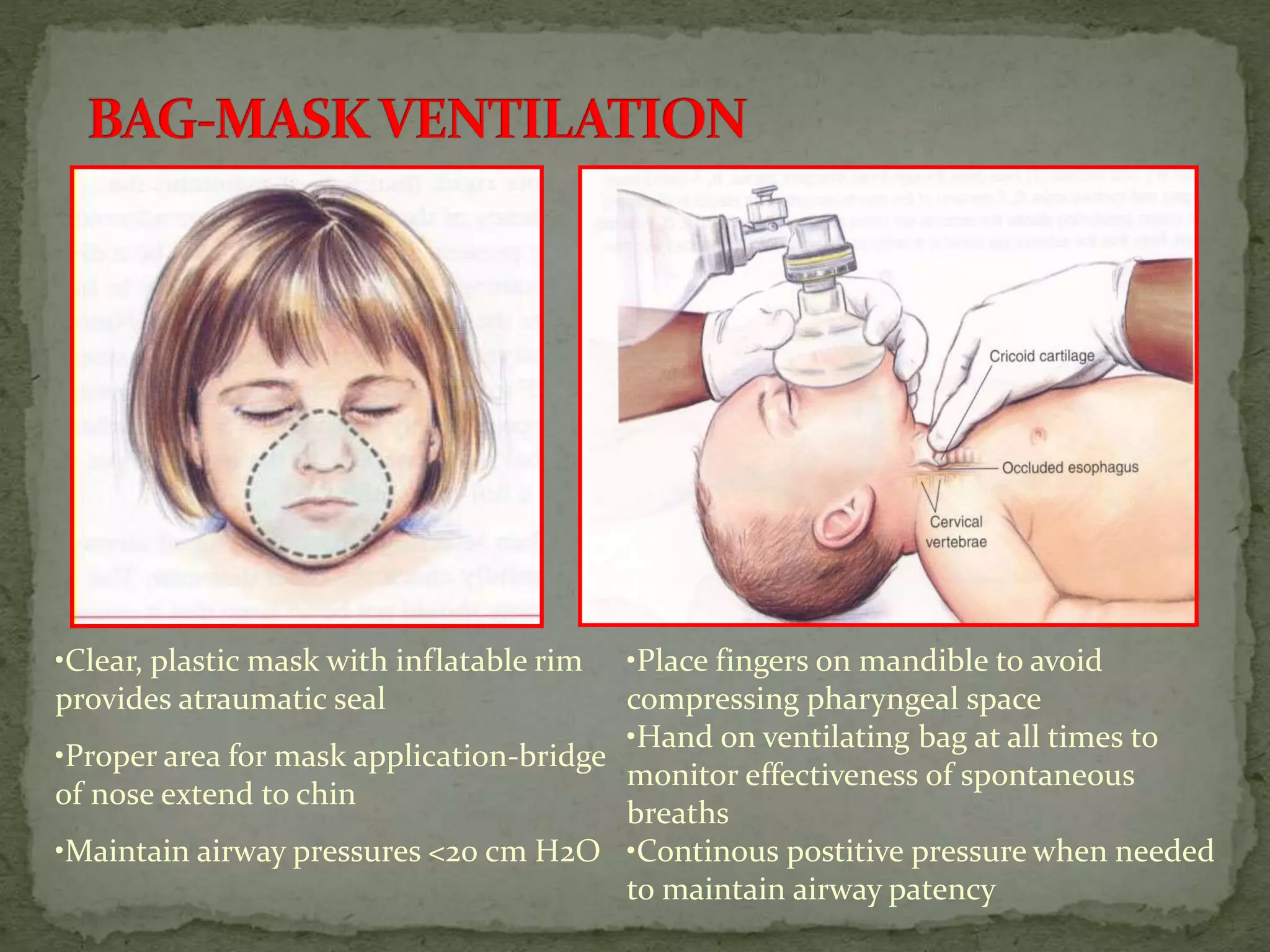
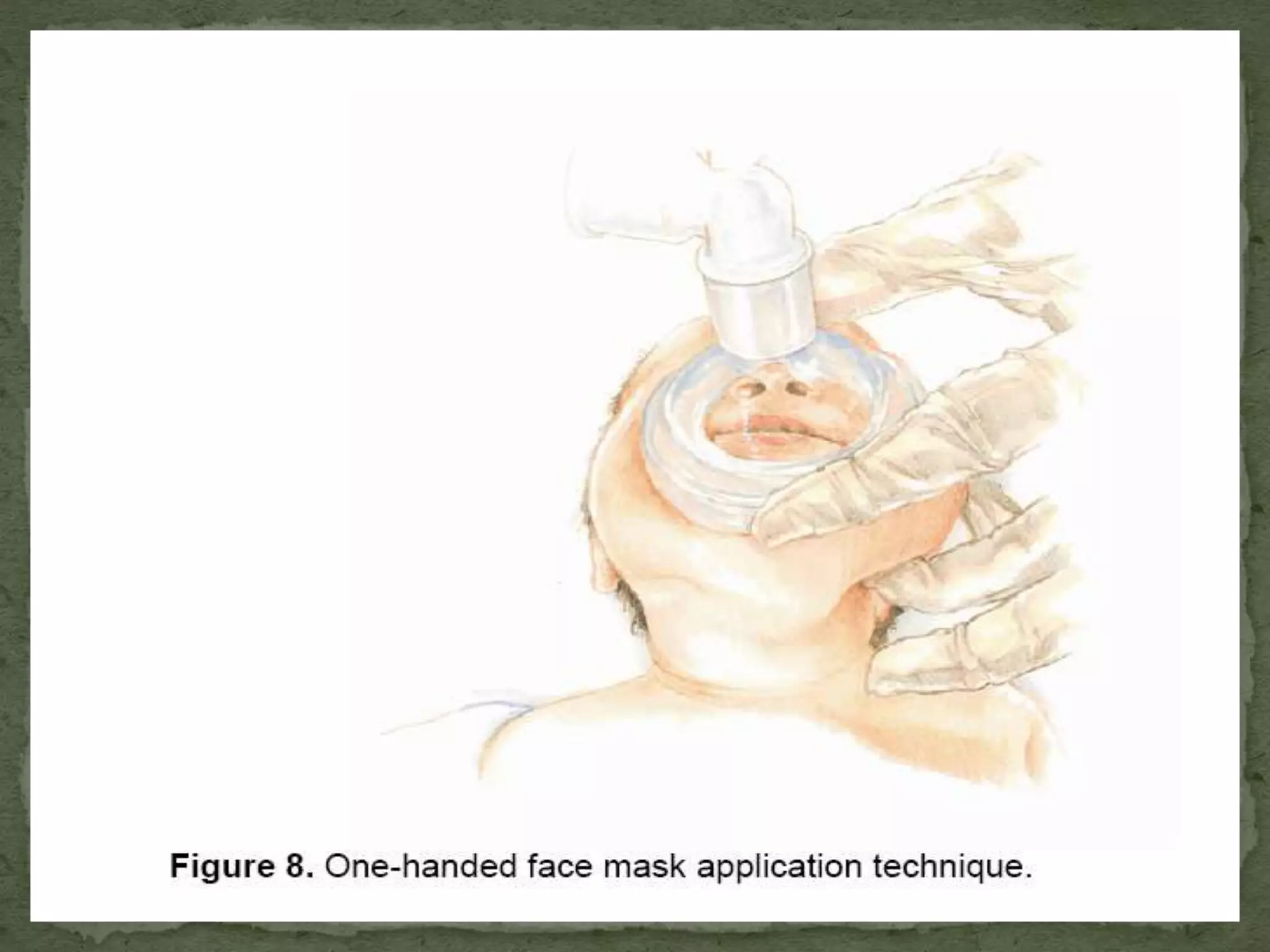
•Clear, plastic mask with inflatable rim
provides atraumatic seal
•Proper area for mask application-bridge
of nose extend to chin
•Maintain airway pressures <20 cm H2O
•Place fingers on mandible to avoid
compressing pharyngeal space
•Hand on ventilating bag at all times to
monitor effectiveness of spontaneous
breaths
•Continous postitive pressure when needed
to maintain airway patency
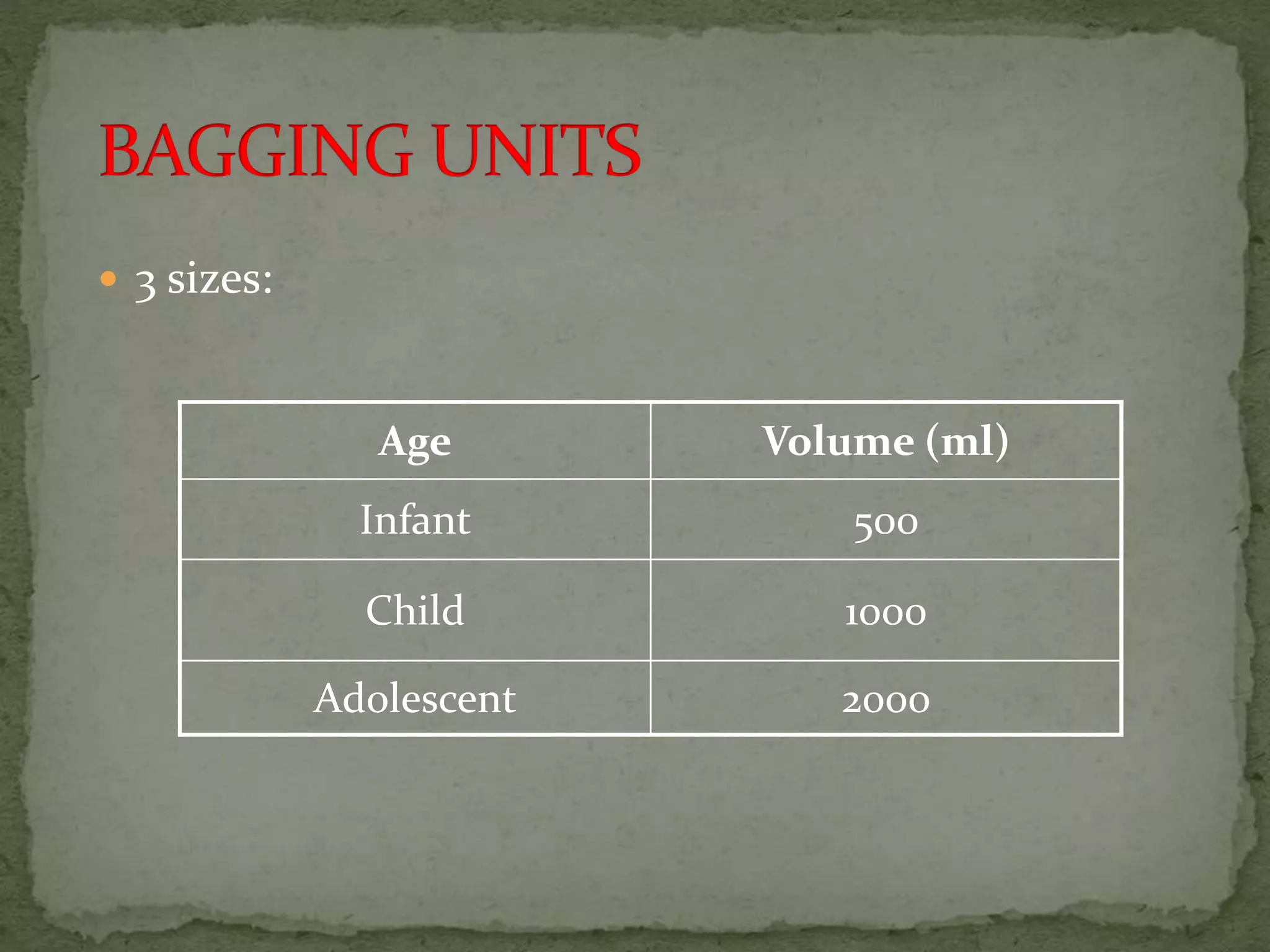
 3 sizes:
Age Volume (ml)
Infant 500
Child 1000
Adolescent 2000
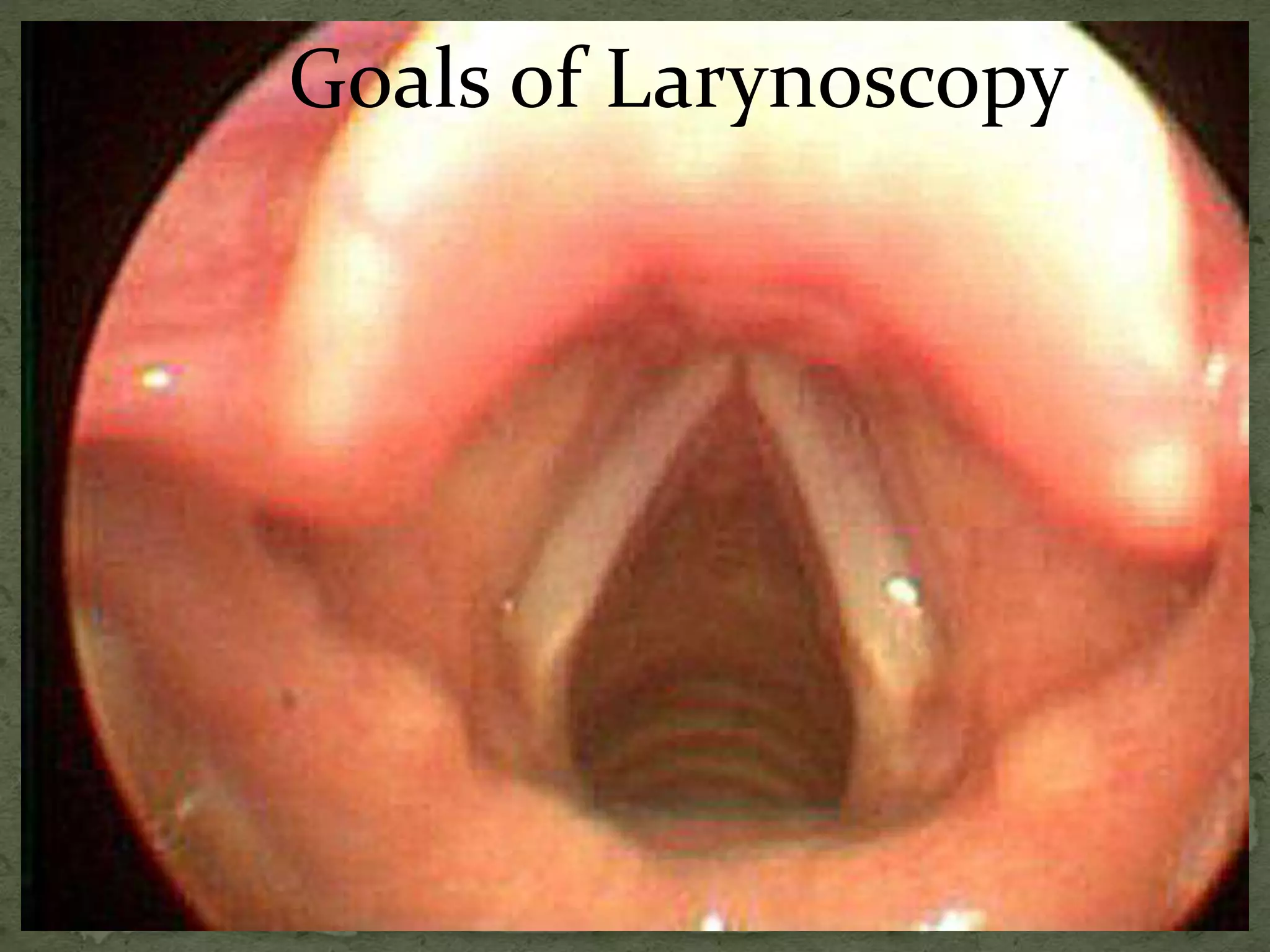
Goals of Larynoscopy
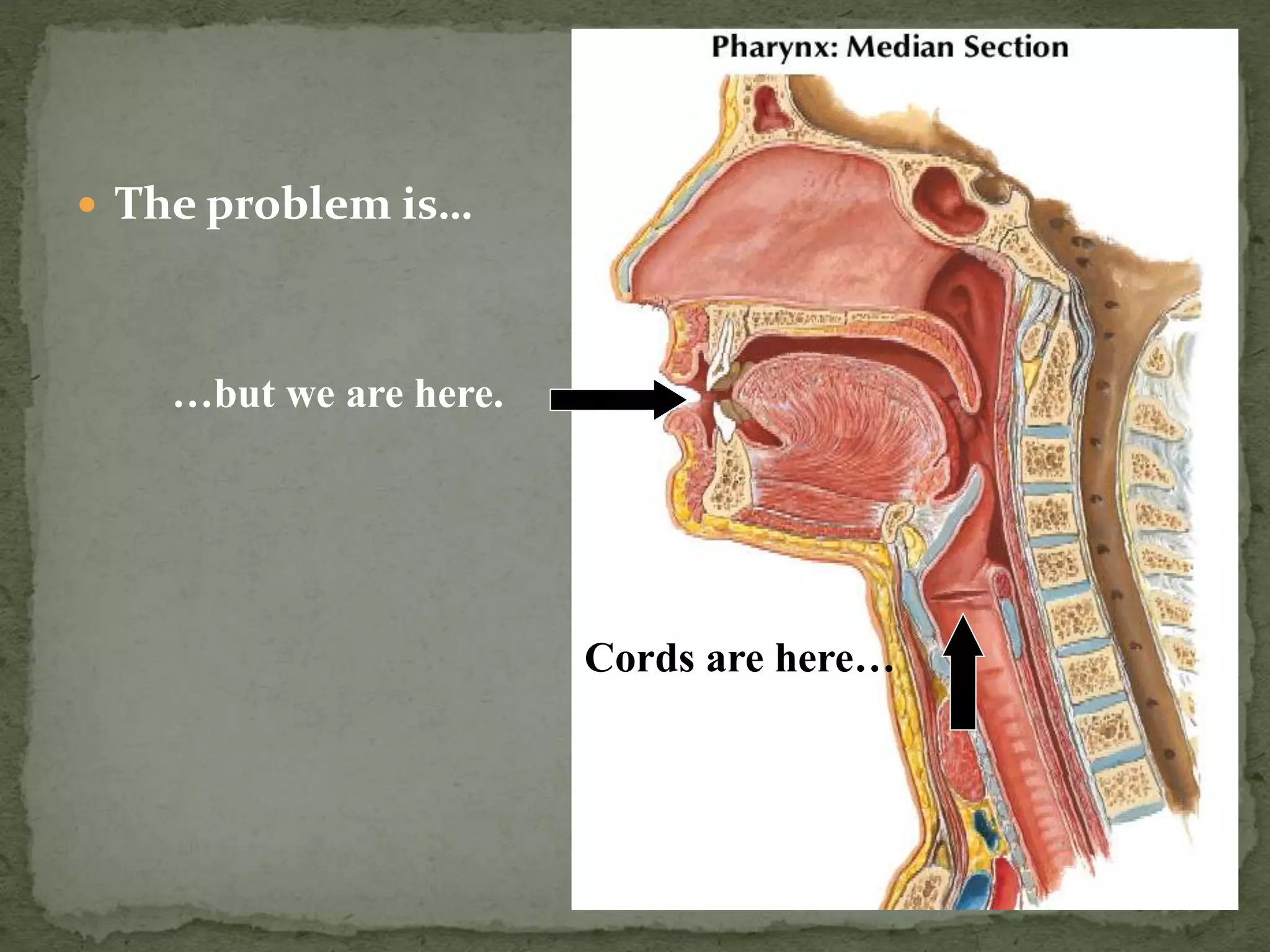
 The problem is…
…but we are here.
Cords are here…
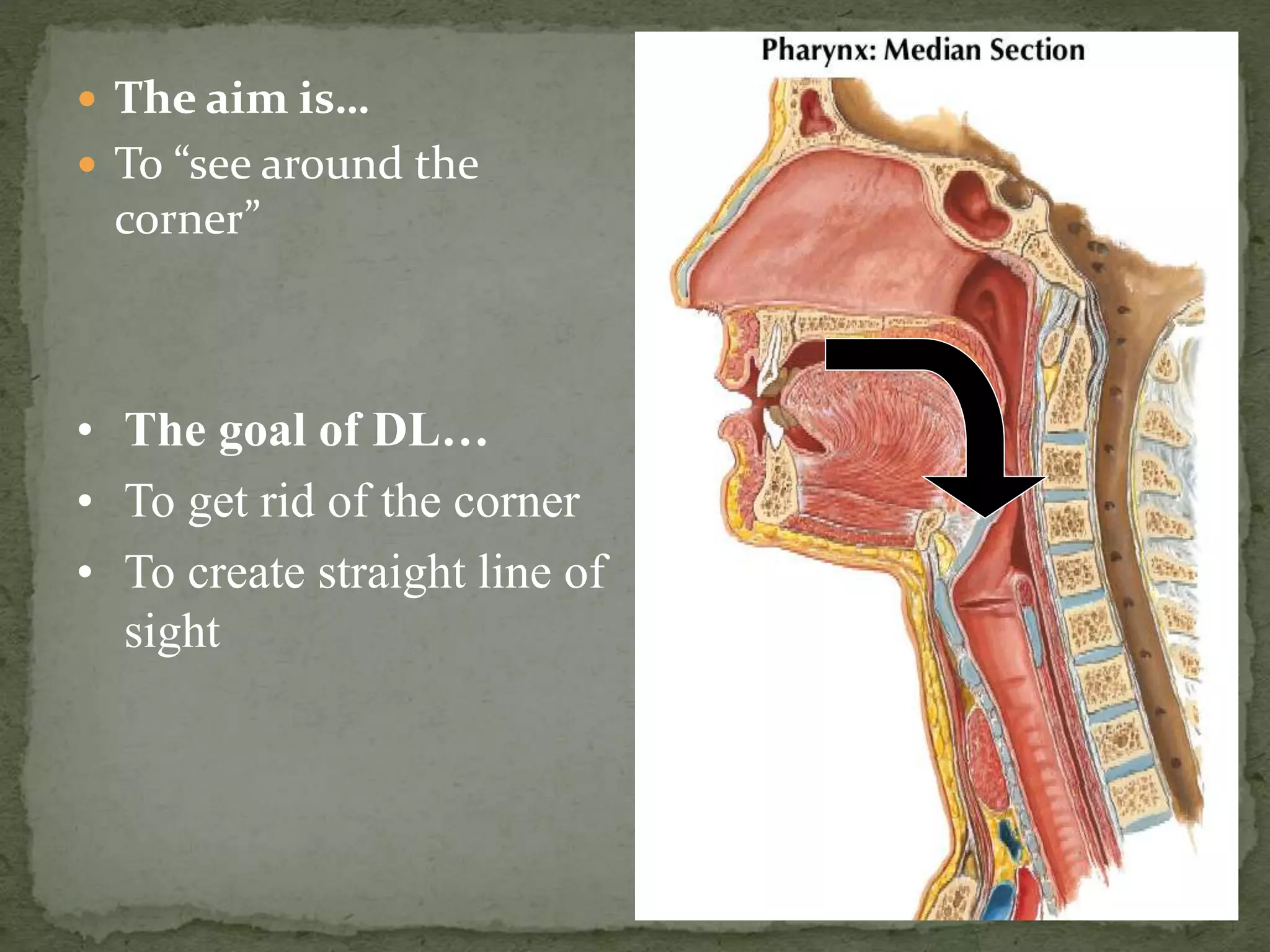
 The aim is…
 To “see around the
corner”
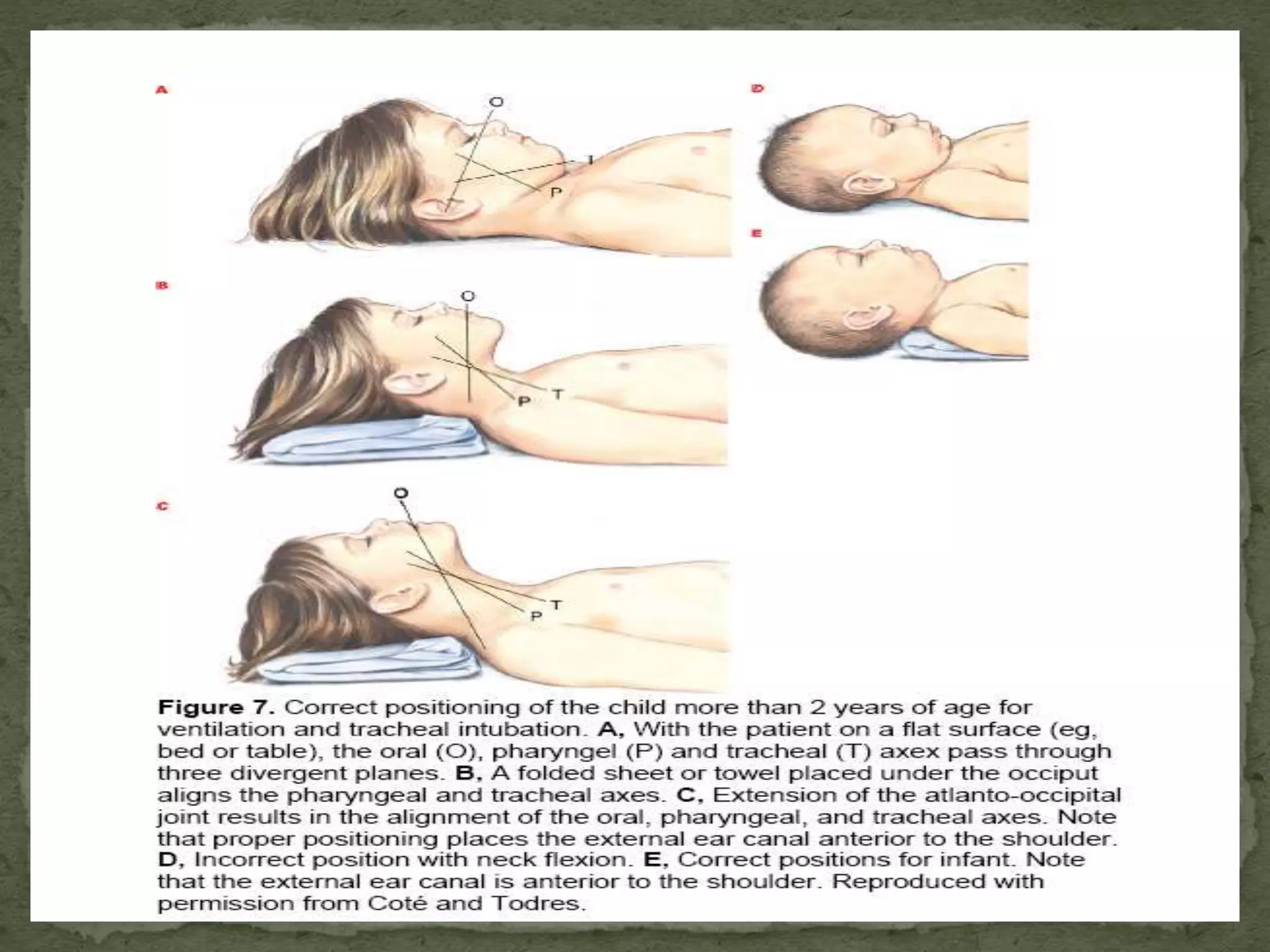
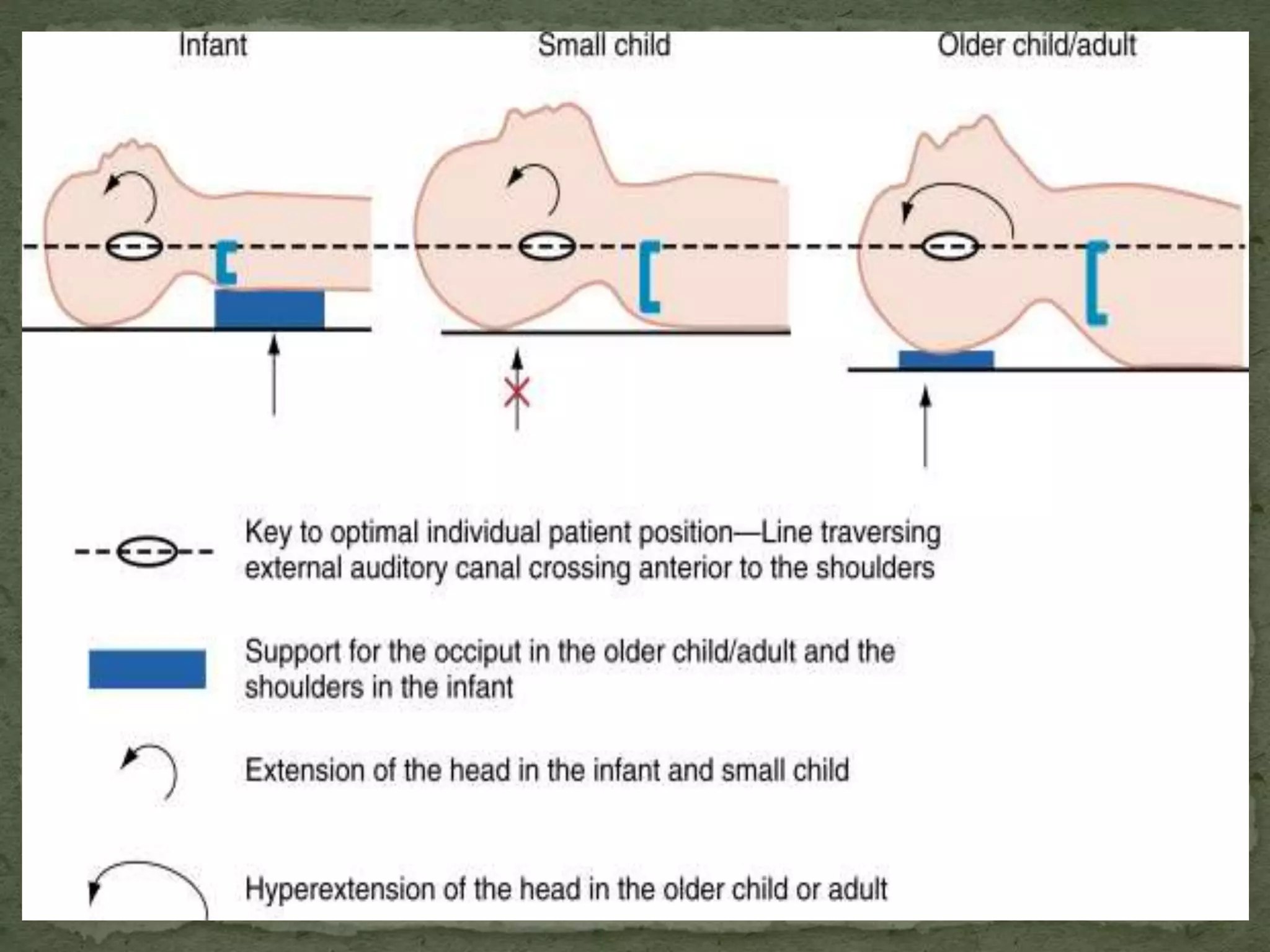
• The goal of DL…
• To get rid of the corner
• To create straight line of
sight
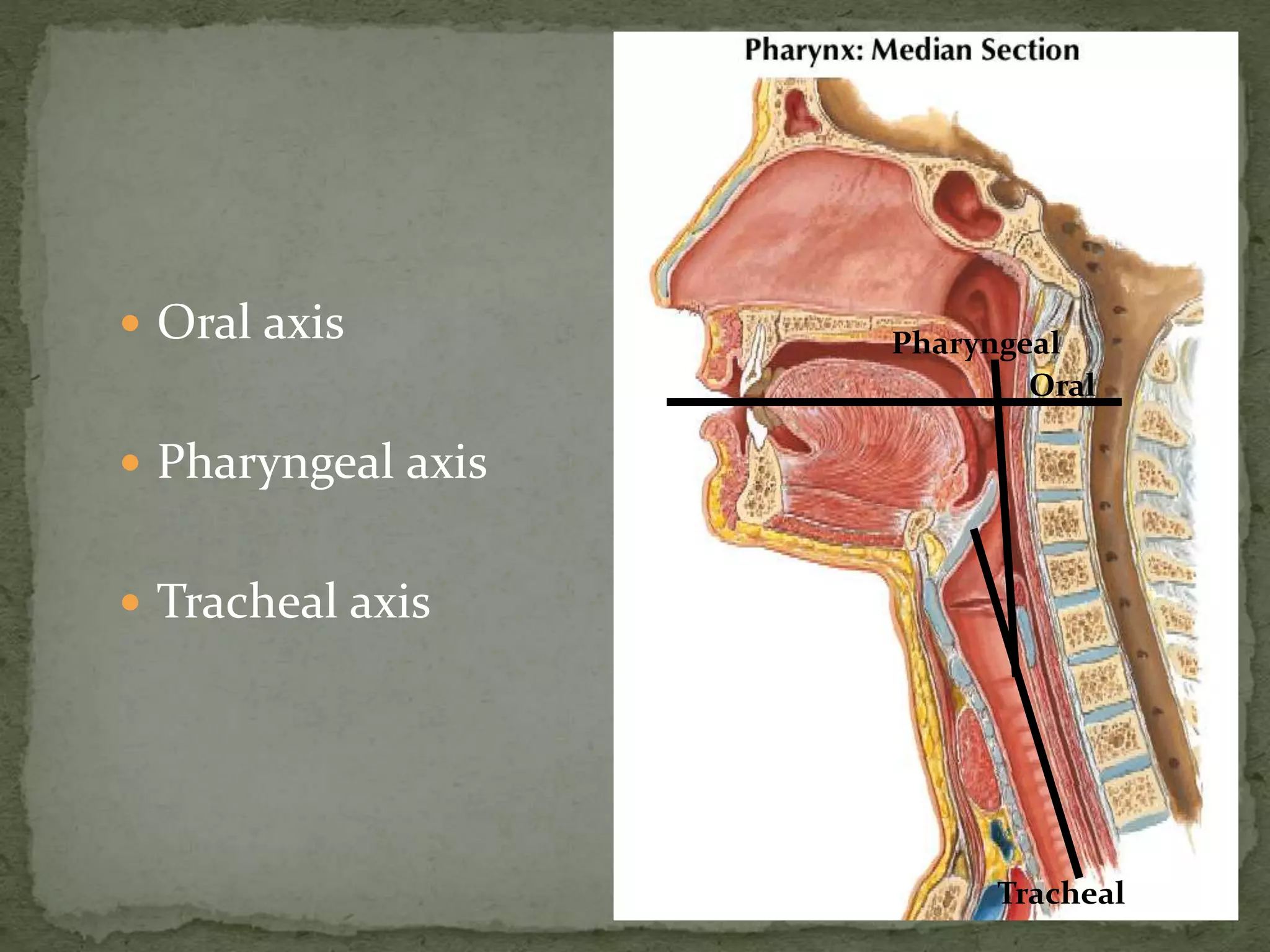
 Oral axis
 Pharyngeal axis
 Tracheal axis
Oral
Pharyngeal
Tracheal
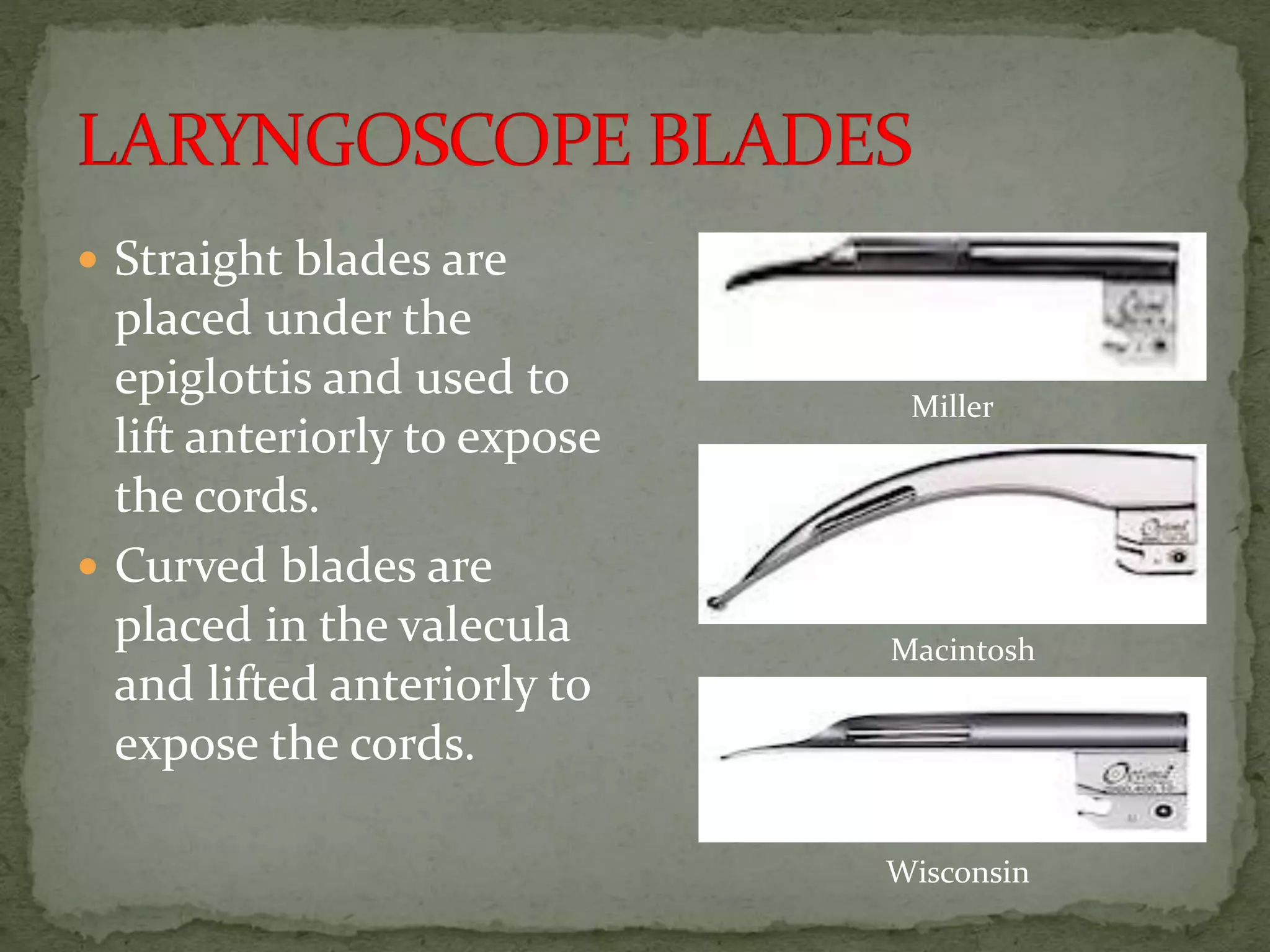
 Straight blades are
placed under the
epiglottis and used to
lift anteriorly to expose
the cords.
 Curved blades are
placed in the valecula
and lifted anteriorly to
expose the cords.
Macintosh
Miller
Wisconsin
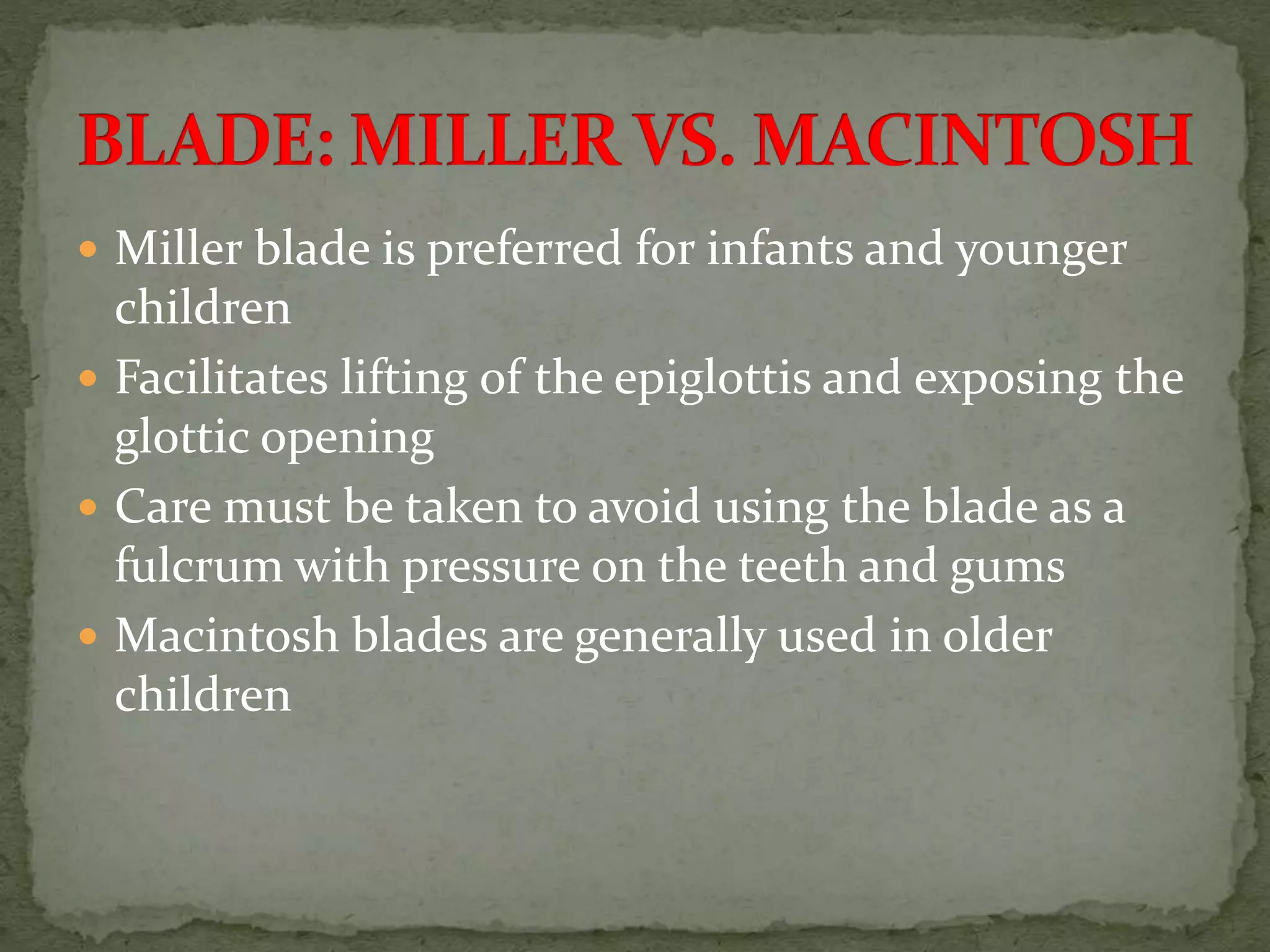
 Miller blade is preferred for infants and younger
children
 Facilitates lifting of the epiglottis and exposing the
glottic opening
 Care must be taken to avoid using the blade as a
fulcrum with pressure on the teeth and gums
 Macintosh blades are generally used in older
children
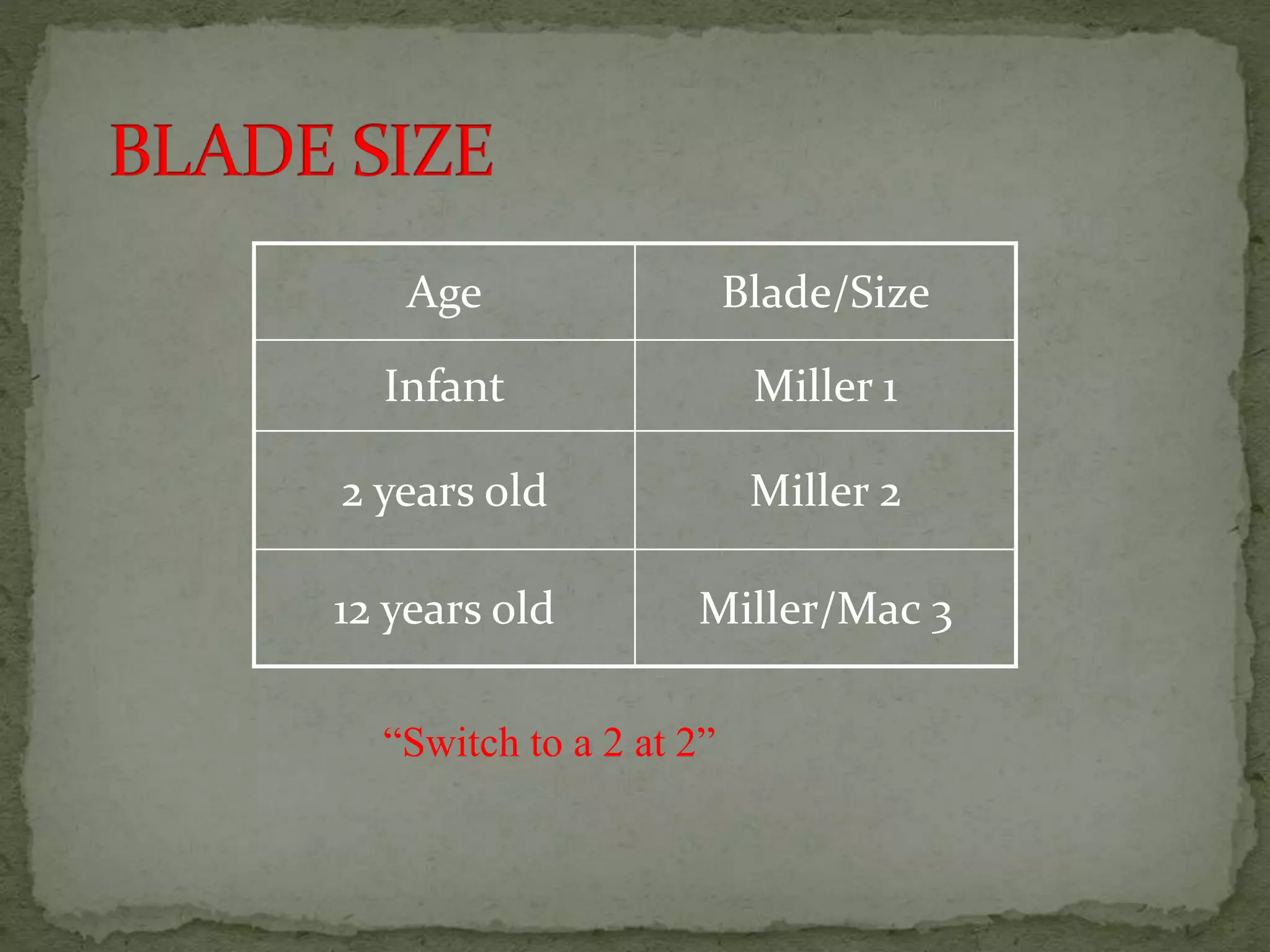
Age Blade/Size
Infant Miller 1
2 years old Miller 2
12 years old Miller/Mac 3
“Switch to a 2 at 2”
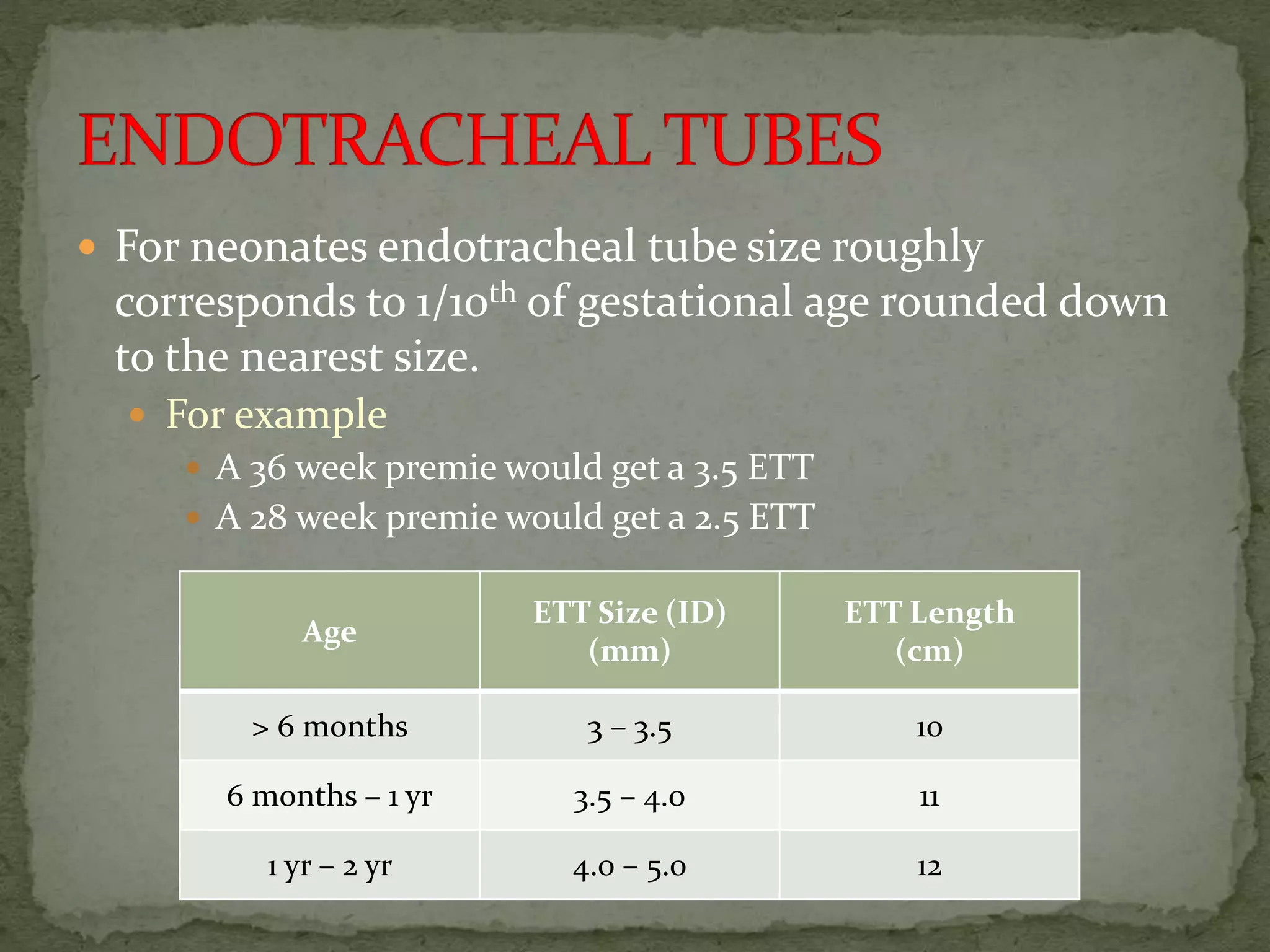
 For neonates endotracheal tube size roughly
corresponds to 1/10th of gestational age rounded down
to the nearest size.
 For example
 A 36 week premie would get a 3.5 ETT
 A 28 week premie would get a 2.5 ETT
Age
ETT Size (ID)
(mm)
ETT Length
(cm)
> 6 months 3 – 3.5 10
6 months – 1 yr 3.5 – 4.0 11
1 yr – 2 yr 4.0 – 5.0 12
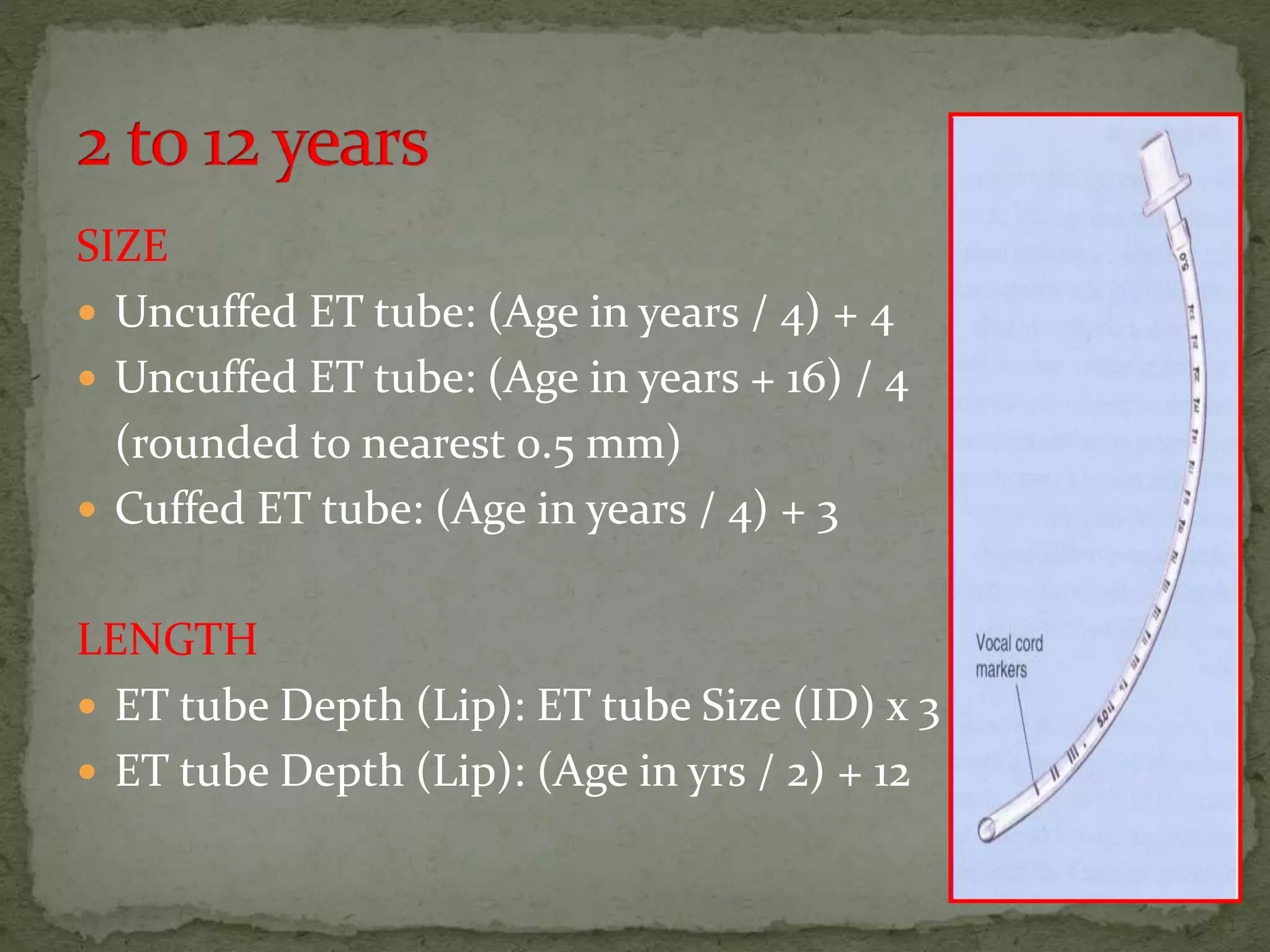
SIZE
 Uncuffed ET tube: (Age in years / 4) + 4
 Uncuffed ET tube: (Age in years + 16) / 4
(rounded to nearest 0.5 mm)
 Cuffed ET tube: (Age in years / 4) + 3
LENGTH
 ET tube Depth (Lip): ET tube Size (ID) x 3
 ET tube Depth (Lip): (Age in yrs / 2) + 12
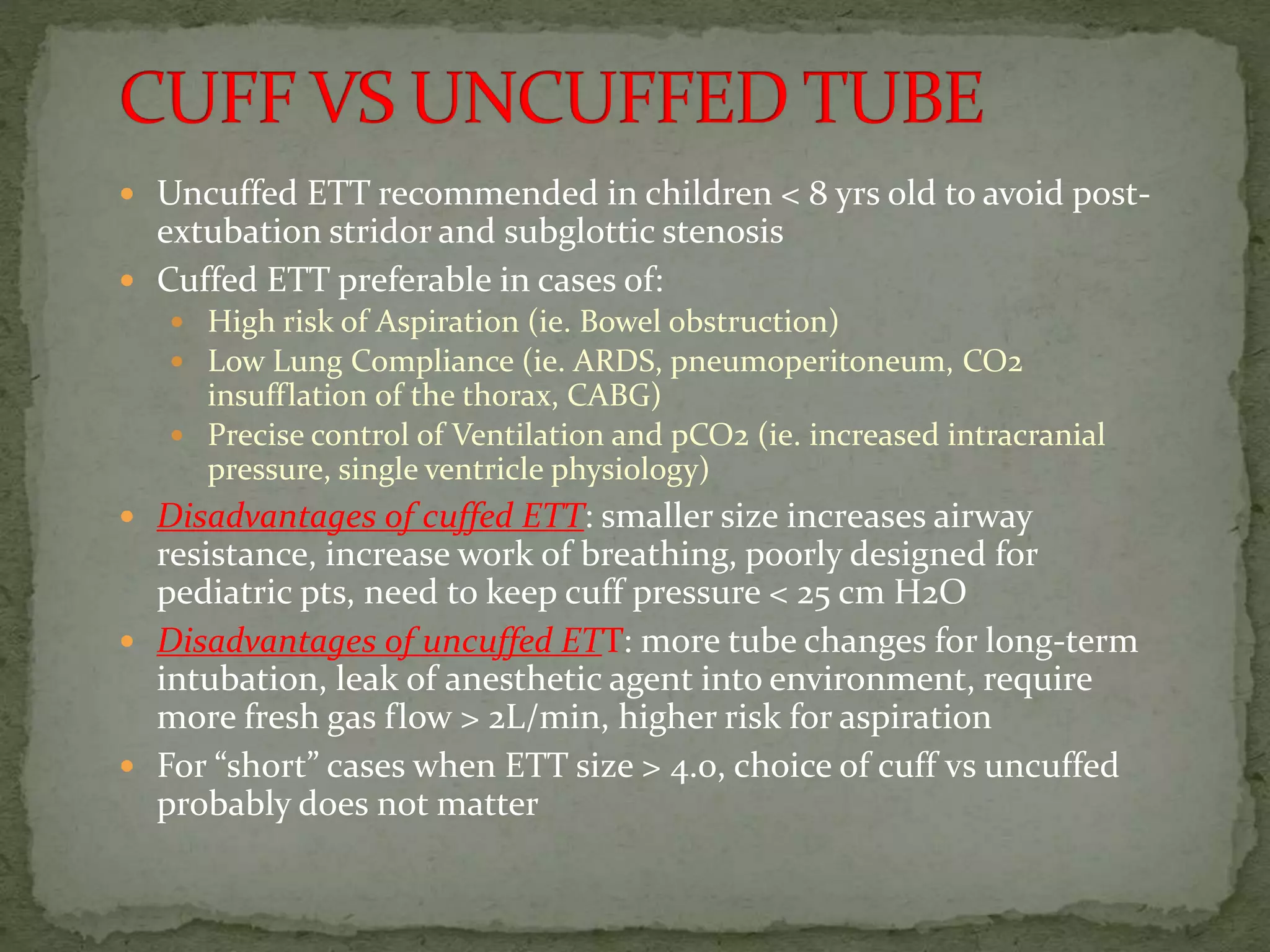
 Uncuffed ETT recommended in children < 8 yrs old to avoid post-
extubation stridor and subglottic stenosis
 Cuffed ETT preferable in cases of:
 High risk of Aspiration (ie. Bowel obstruction)
 Low Lung Compliance (ie. ARDS, pneumoperitoneum, CO2
insufflation of the thorax, CABG)
 Precise control of Ventilation and pCO2 (ie. increased intracranial
pressure, single ventricle physiology)
 Disadvantages of cuffed ETT: smaller size increases airway
resistance, increase work of breathing, poorly designed for
pediatric pts, need to keep cuff pressure < 25 cm H2O
 Disadvantages of uncuffed ETT: more tube changes for long-term
intubation, leak of anesthetic agent into environment, require
more fresh gas flow > 2L/min, higher risk for aspiration
 For “short” cases when ETT size > 4.0, choice of cuff vs uncuffed
probably does not matter
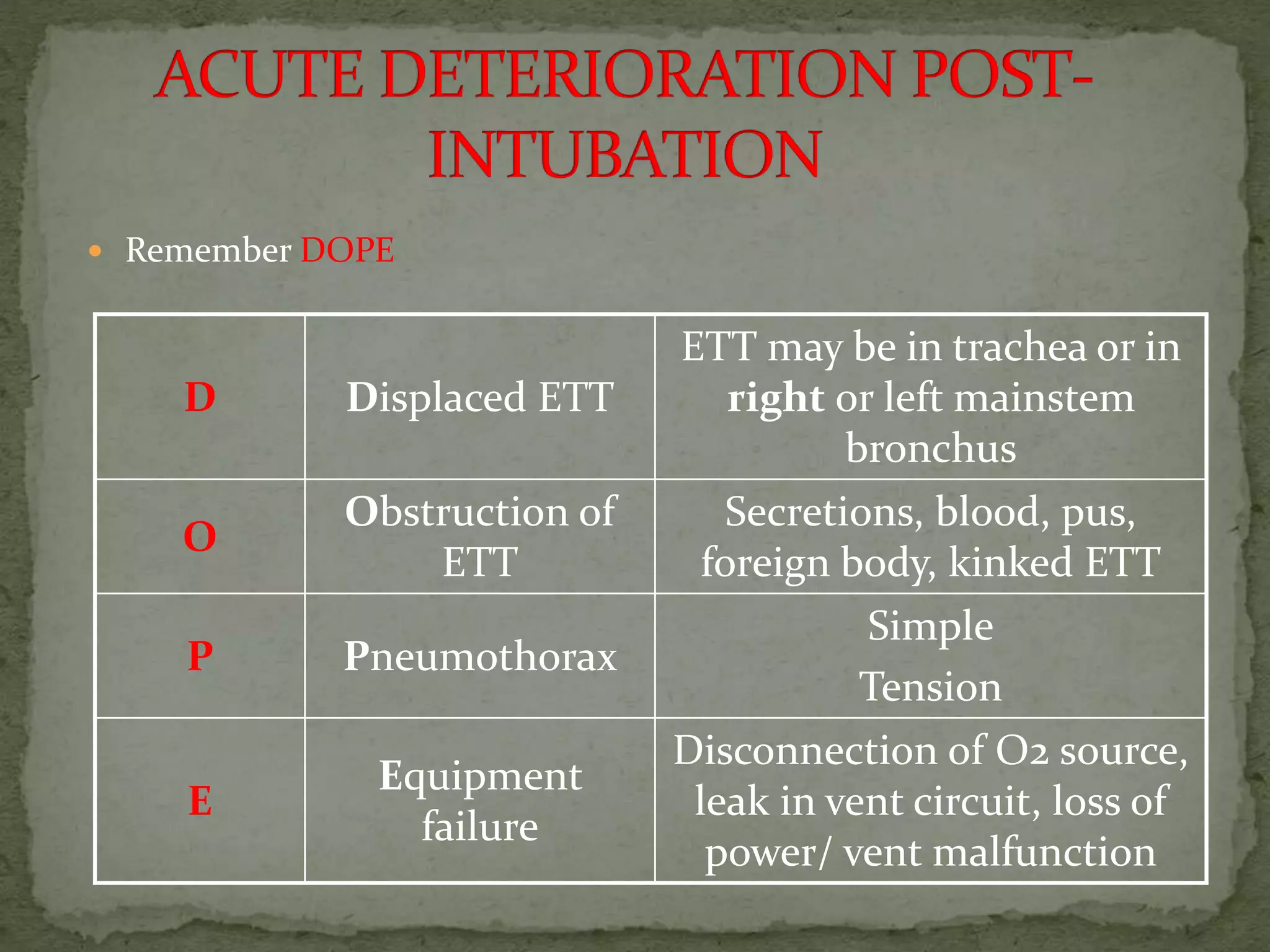
 Remember DOPE
D Displaced ETT
ETT may be in trachea or in
right or left mainstem
bronchus
O
Obstruction of
ETT
Secretions, blood, pus,
foreign body, kinked ETT
P Pneumothorax
Simple
Tension
E
Equipment
failure
Disconnection of O2 source,
leak in vent circuit, loss of
power/ vent malfunction
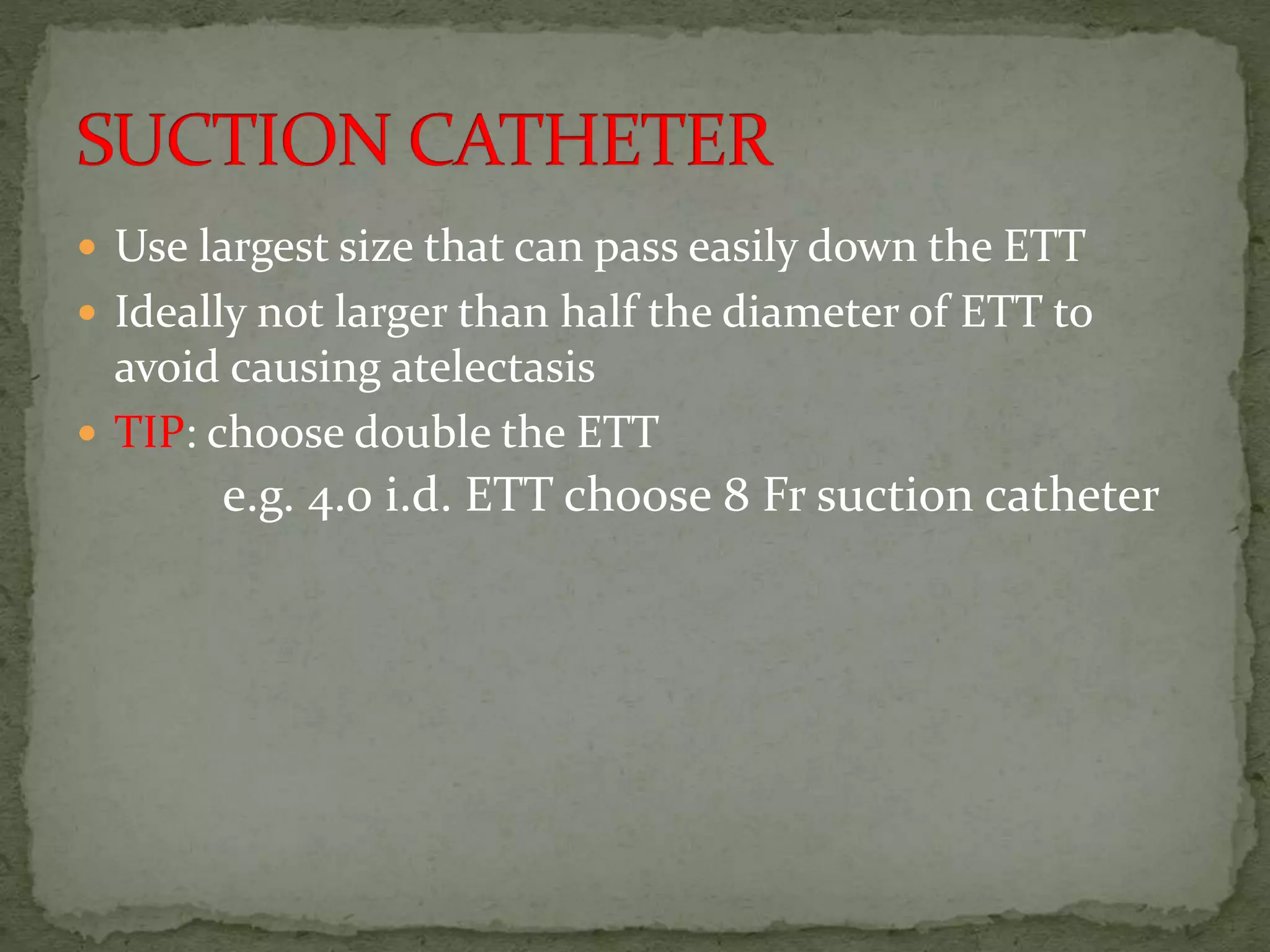
 Use largest size that can pass easily down the ETT
 Ideally not larger than half the diameter of ETT to
avoid causing atelectasis
 TIP: choose double the ETT
e.g. 4.0 i.d. ETT choose 8 Fr suction catheter
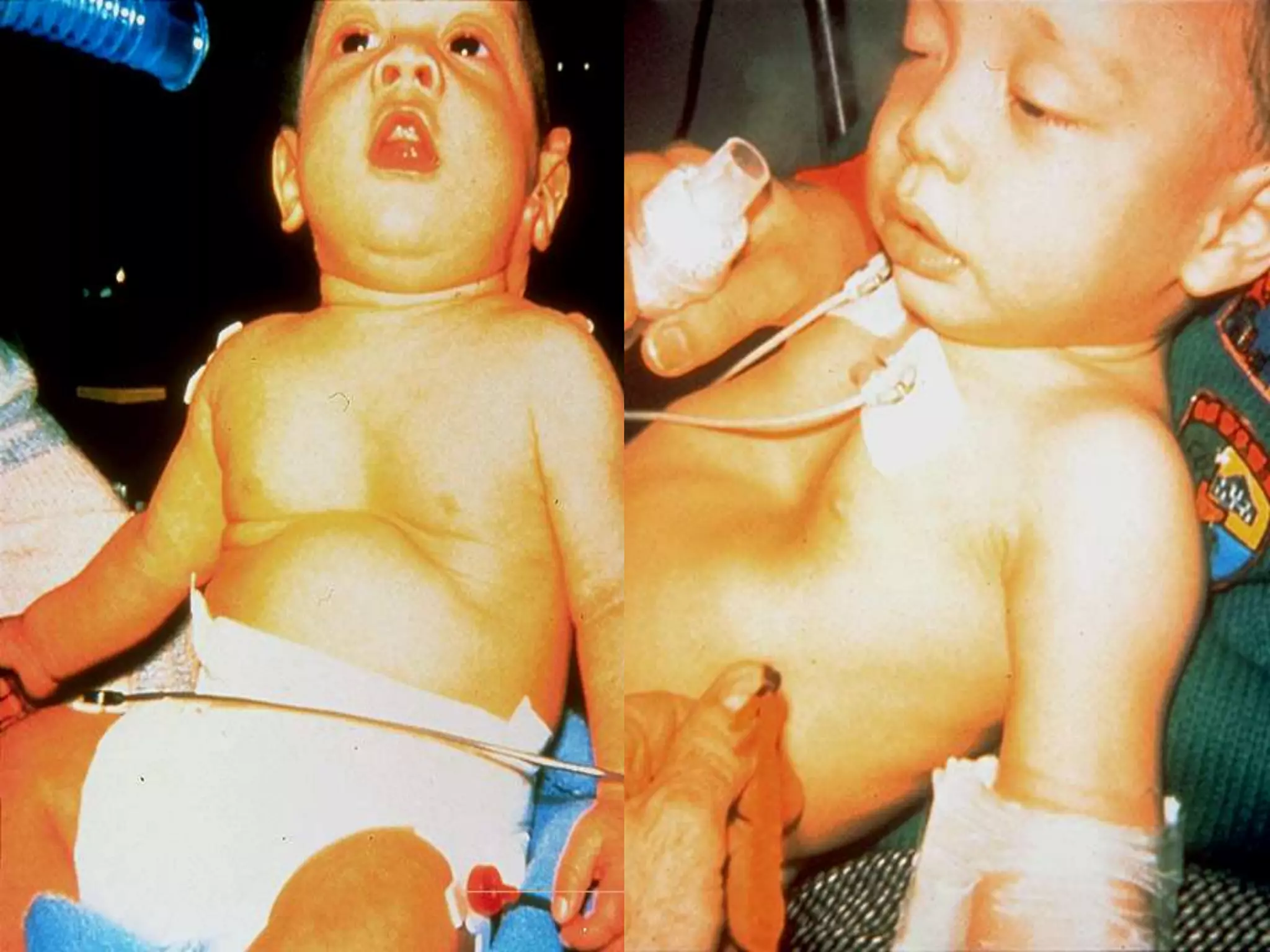
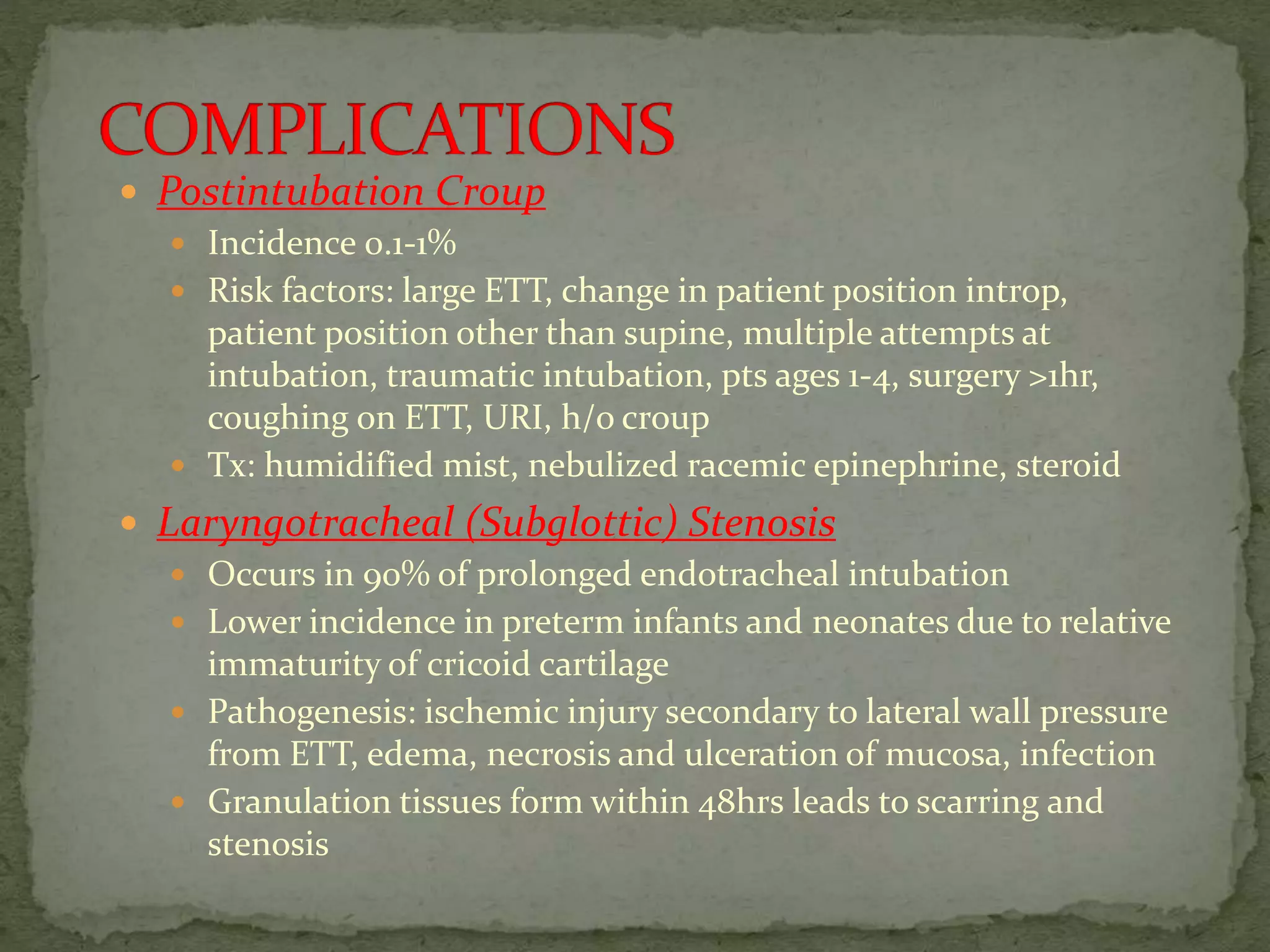
 Postintubation Croup
 Incidence 0.1-1%
 Risk factors: large ETT, change in patient position introp,
patient position other than supine, multiple attempts at
intubation, traumatic intubation, pts ages 1-4, surgery >1hr,
coughing on ETT, URI, h/o croup
 Tx: humidified mist, nebulized racemic epinephrine, steroid
 Laryngotracheal (Subglottic) Stenosis
 Occurs in 90% of prolonged endotracheal intubation
 Lower incidence in preterm infants and neonates due to relative
immaturity of cricoid cartilage
 Pathogenesis: ischemic injury secondary to lateral wall pressure
from ETT, edema, necrosis and ulceration of mucosa, infection
 Granulation tissues form within 48hrs leads to scarring and
stenosis
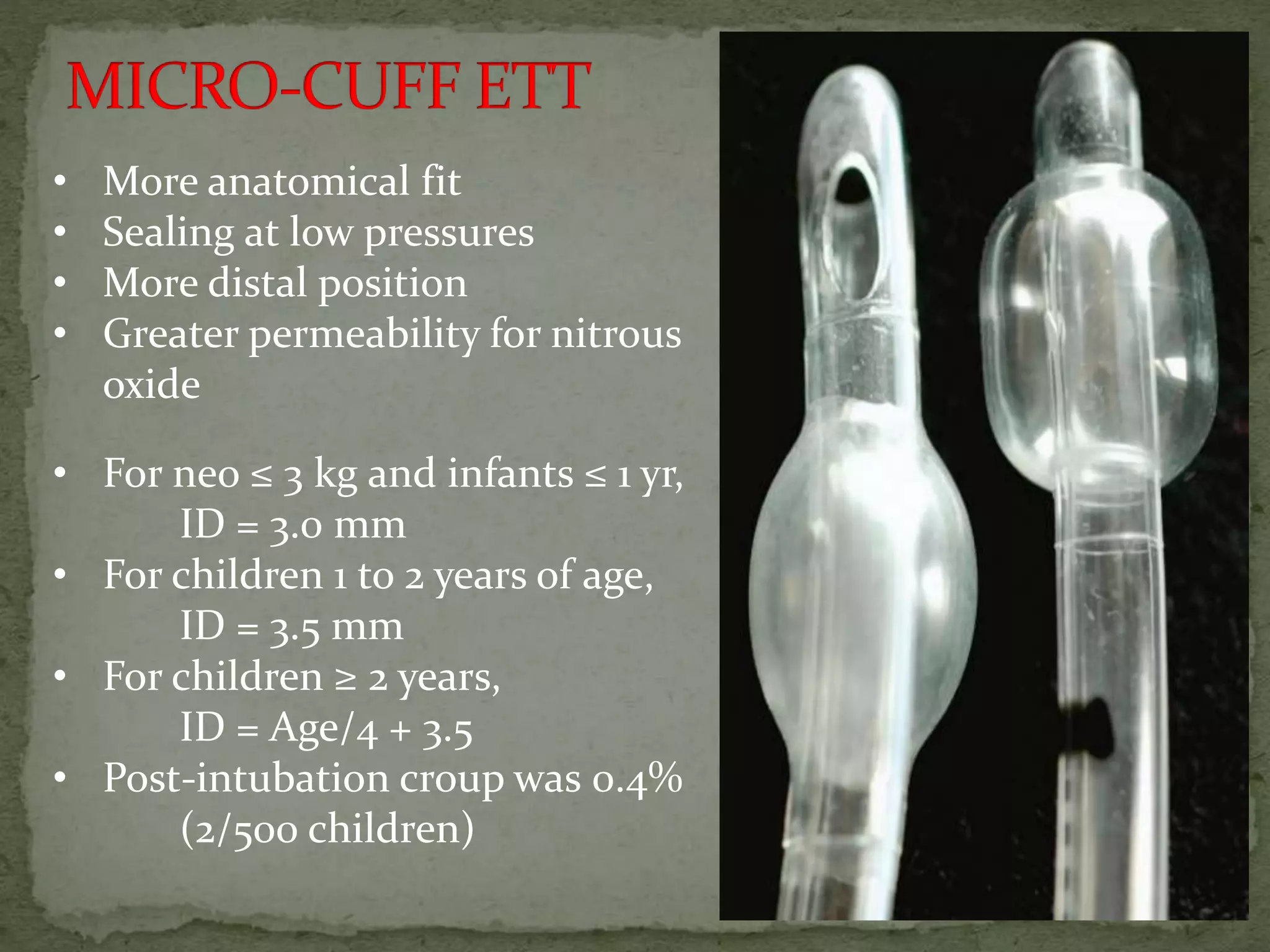
• More anatomical fit
• Sealing at low pressures
• More distal position
• Greater permeability for nitrous
oxide
• For neo ≤ 3 kg and infants ≤ 1 yr,
ID = 3.0 mm
• For children 1 to 2 years of age,
ID = 3.5 mm
• For children ≥ 2 years,
ID = Age/4 + 3.5
• Post-intubation croup was 0.4%
(2/500 children)
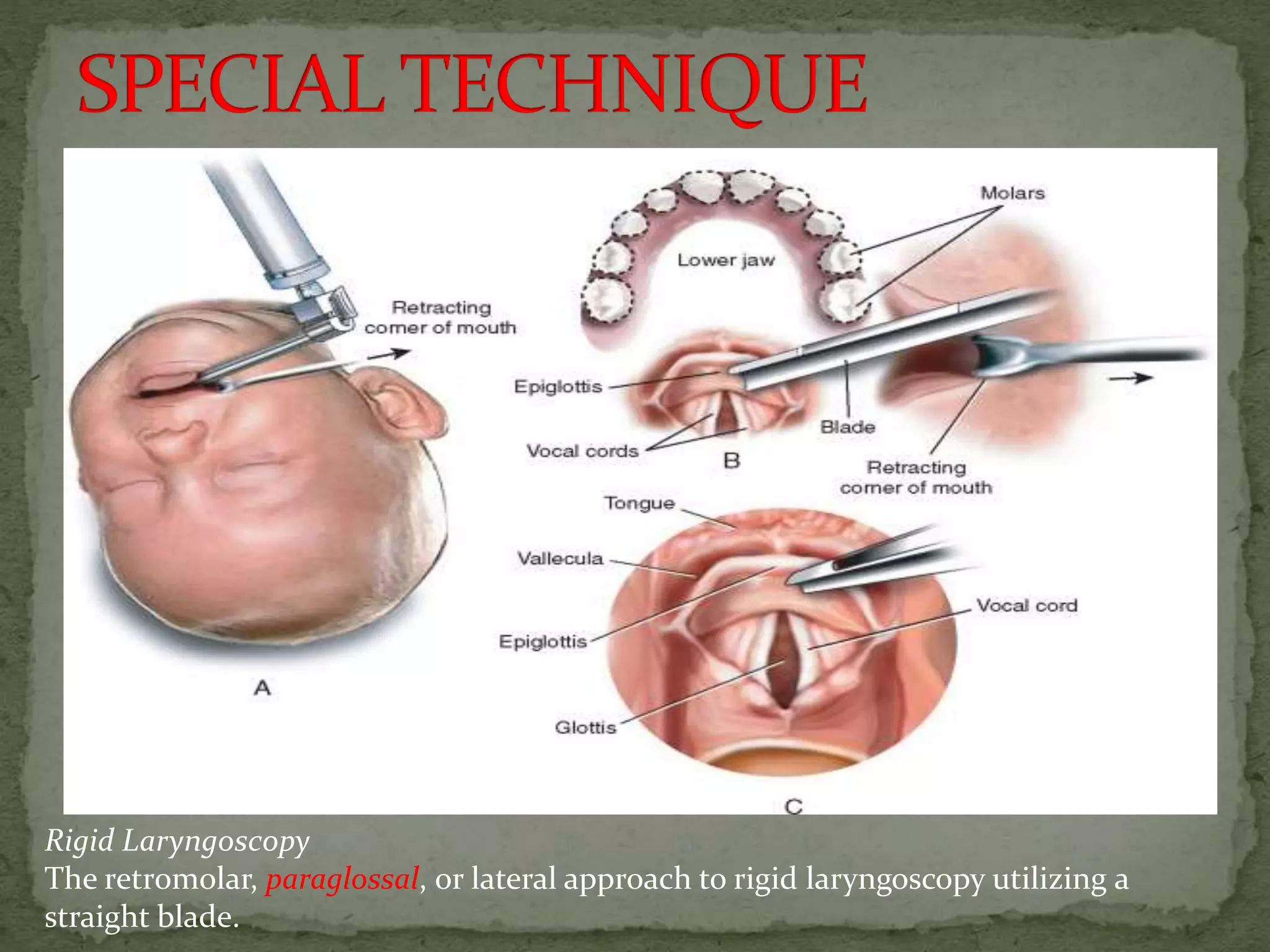
Rigid Laryngoscopy
The retromolar, paraglossal, or lateral approach to rigid laryngoscopy utilizing a
straight blade.
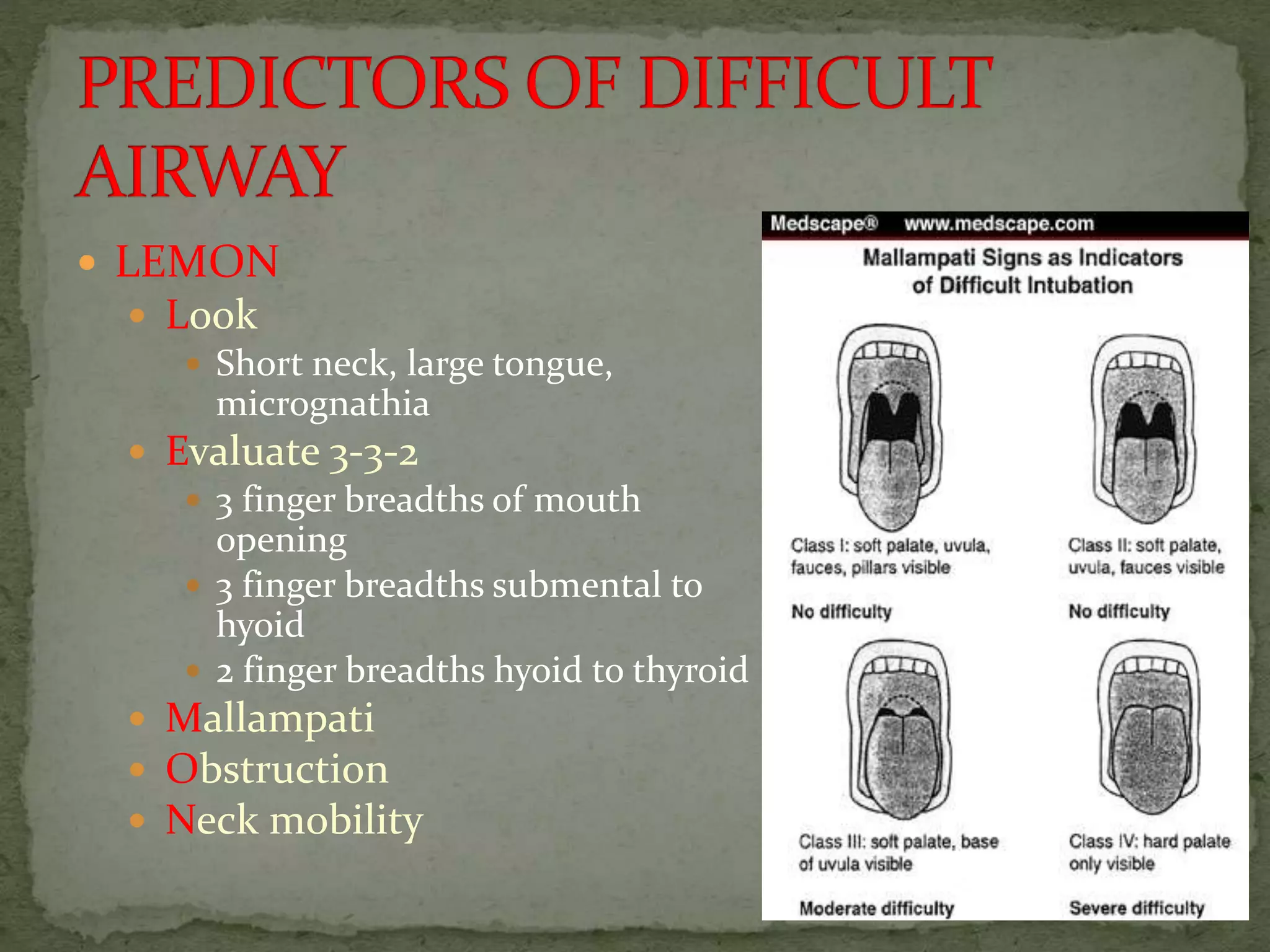
 LEMON
 Look
 Short neck, large tongue,
micrognathia
 Evaluate 3-3-2
 3 finger breadths of mouth
opening
 3 finger breadths submental to
hyoid
 2 finger breadths hyoid to thyroid
 Mallampati
 Obstruction
 Neck mobility
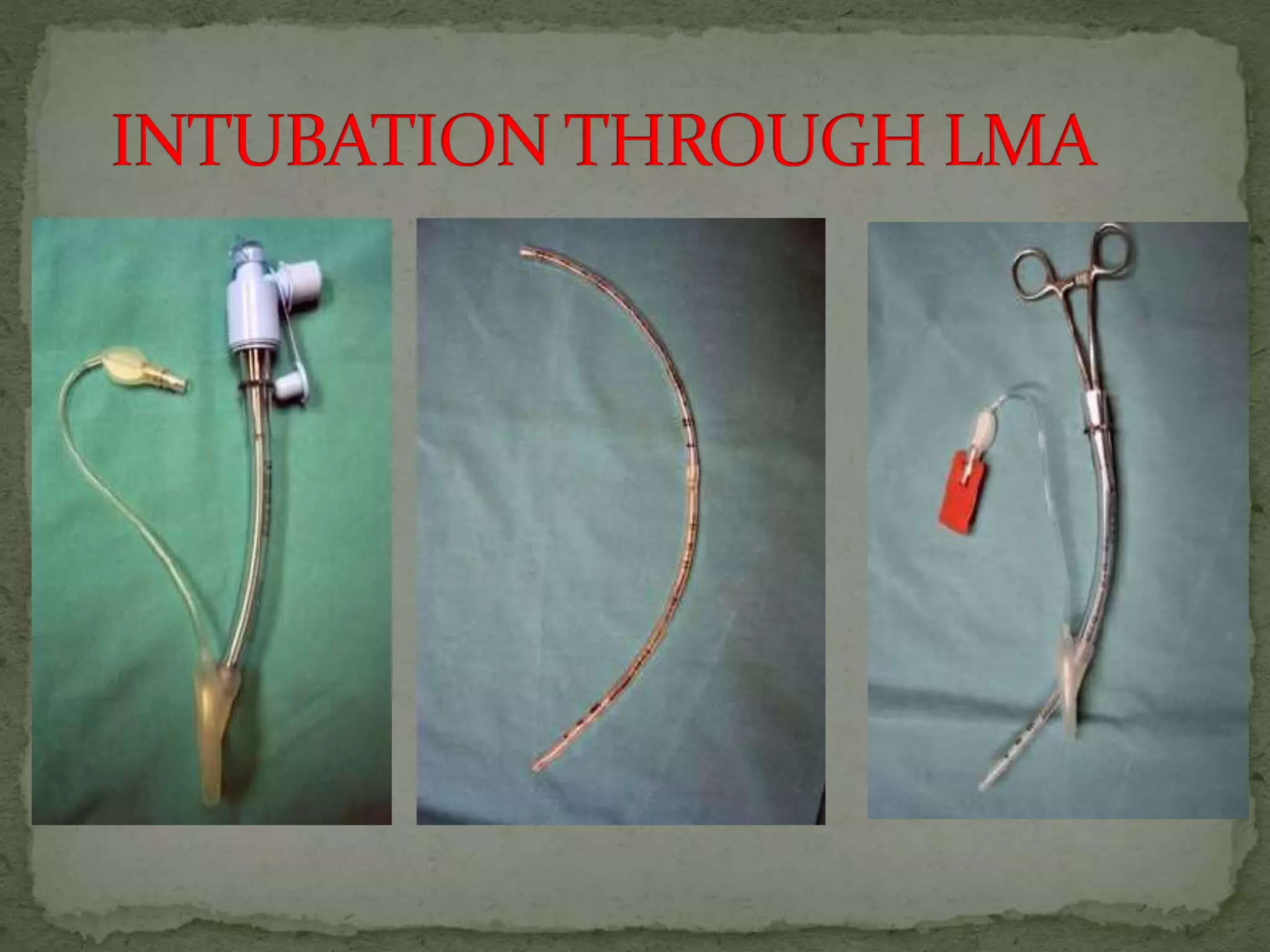
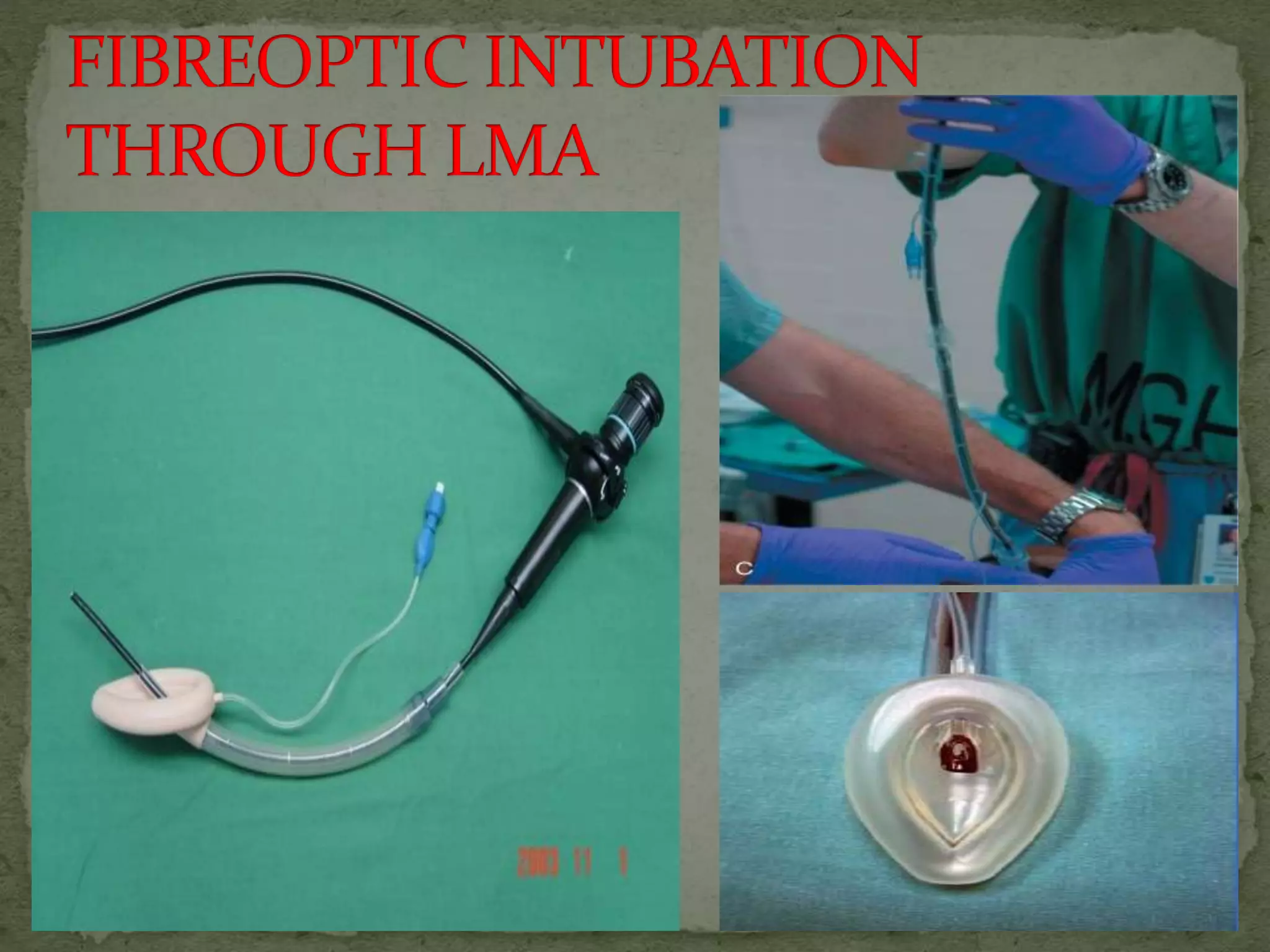
 LMAs (laryngeal mask airway)
 I-LMAs (intubating LMA)
 Rigid bronchoscopy
 Flexible bronchoscopy
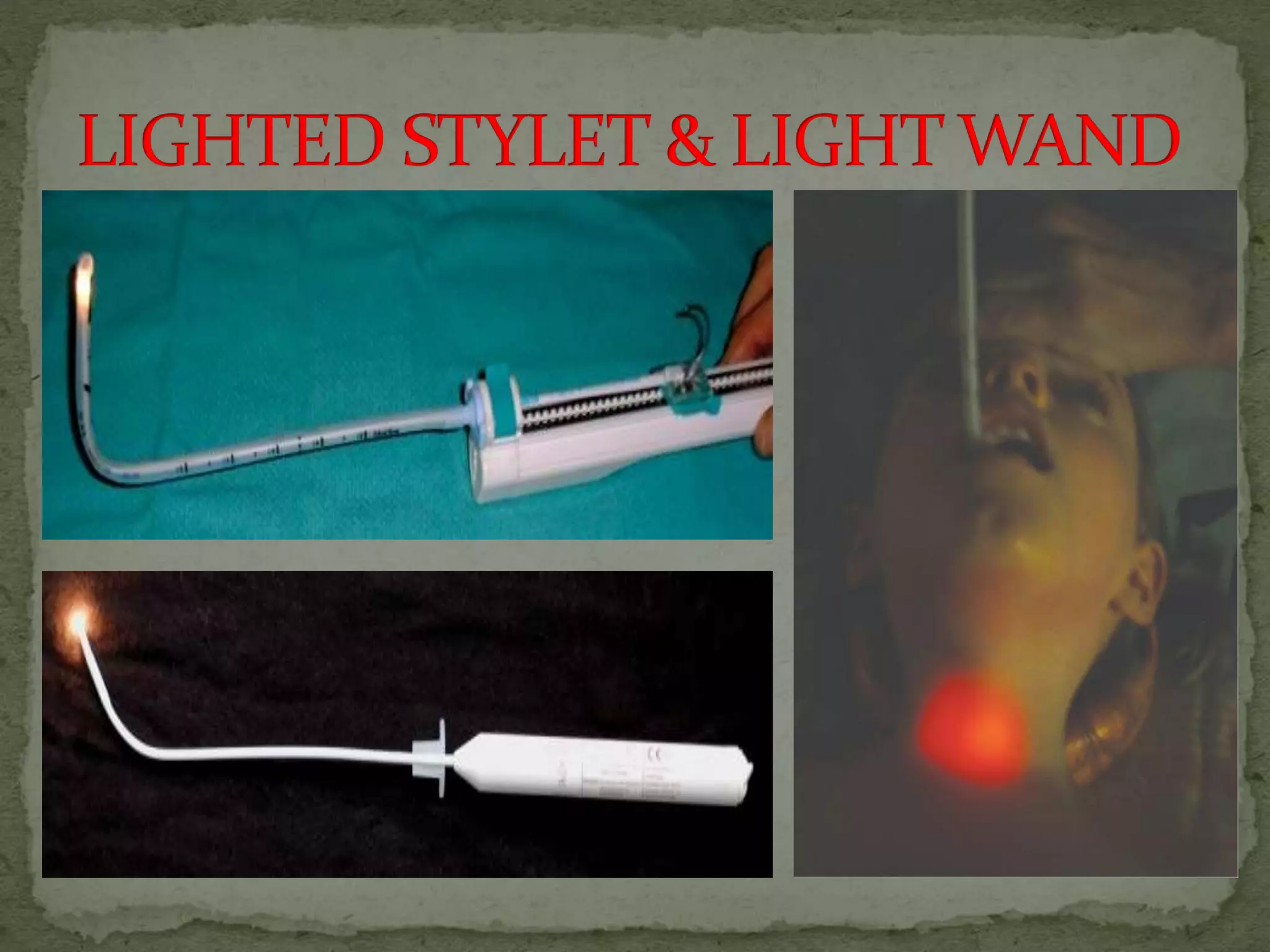
 Lighted stylet
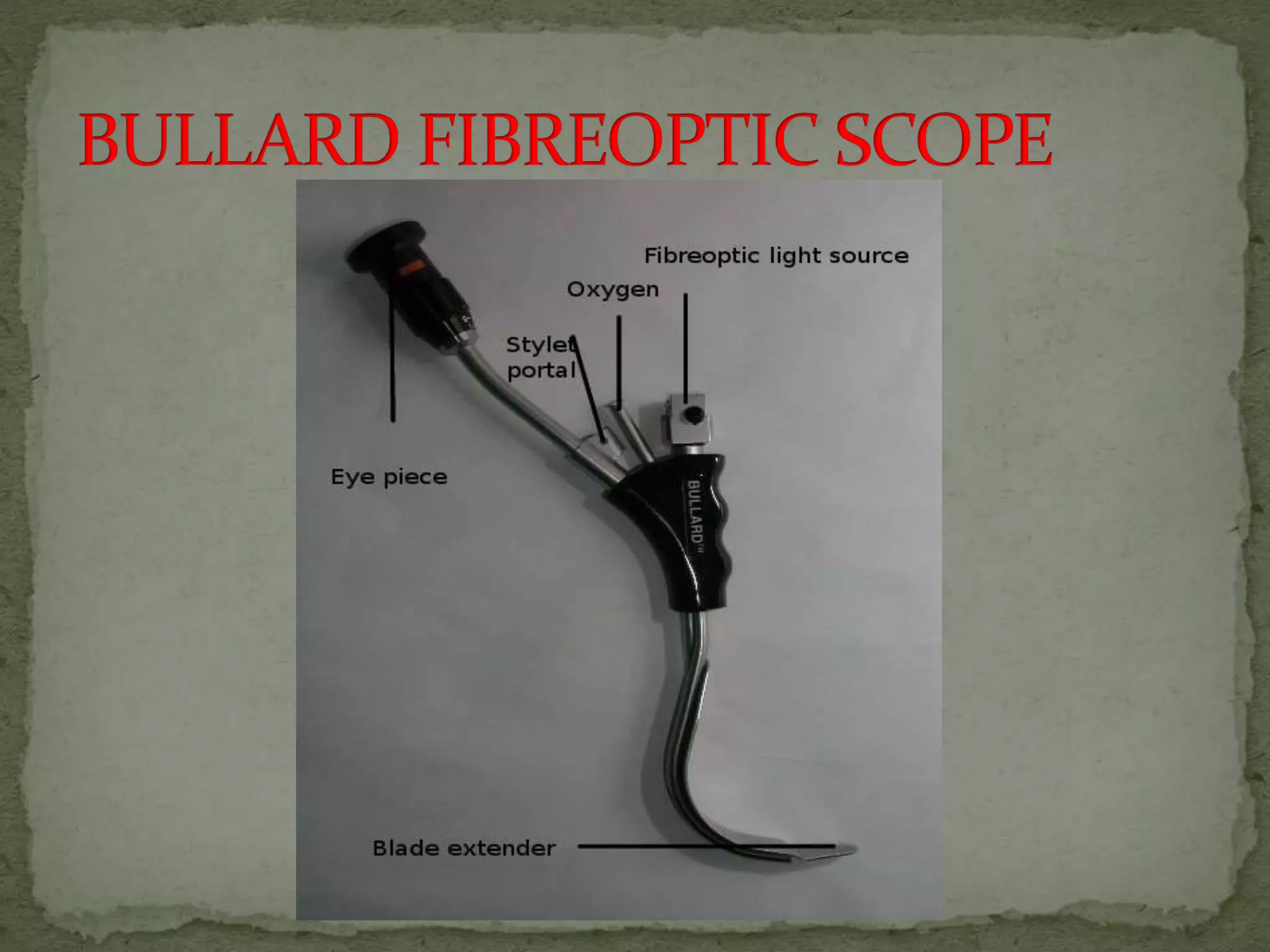
 Bullardscope
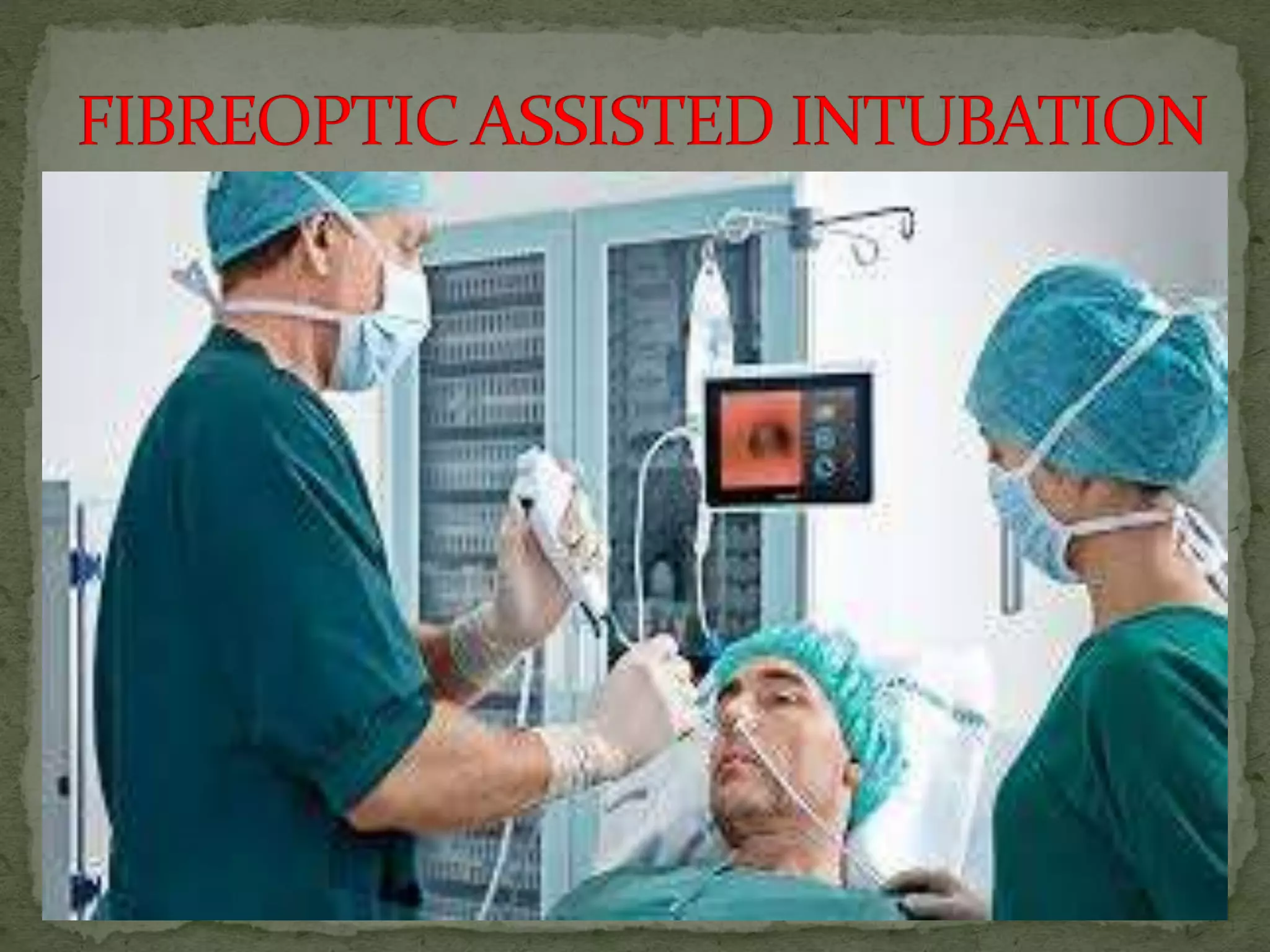
 Fiberoptic intubation
 Surgical airway
 Combitube
 Bougie
Pick one or two and practice
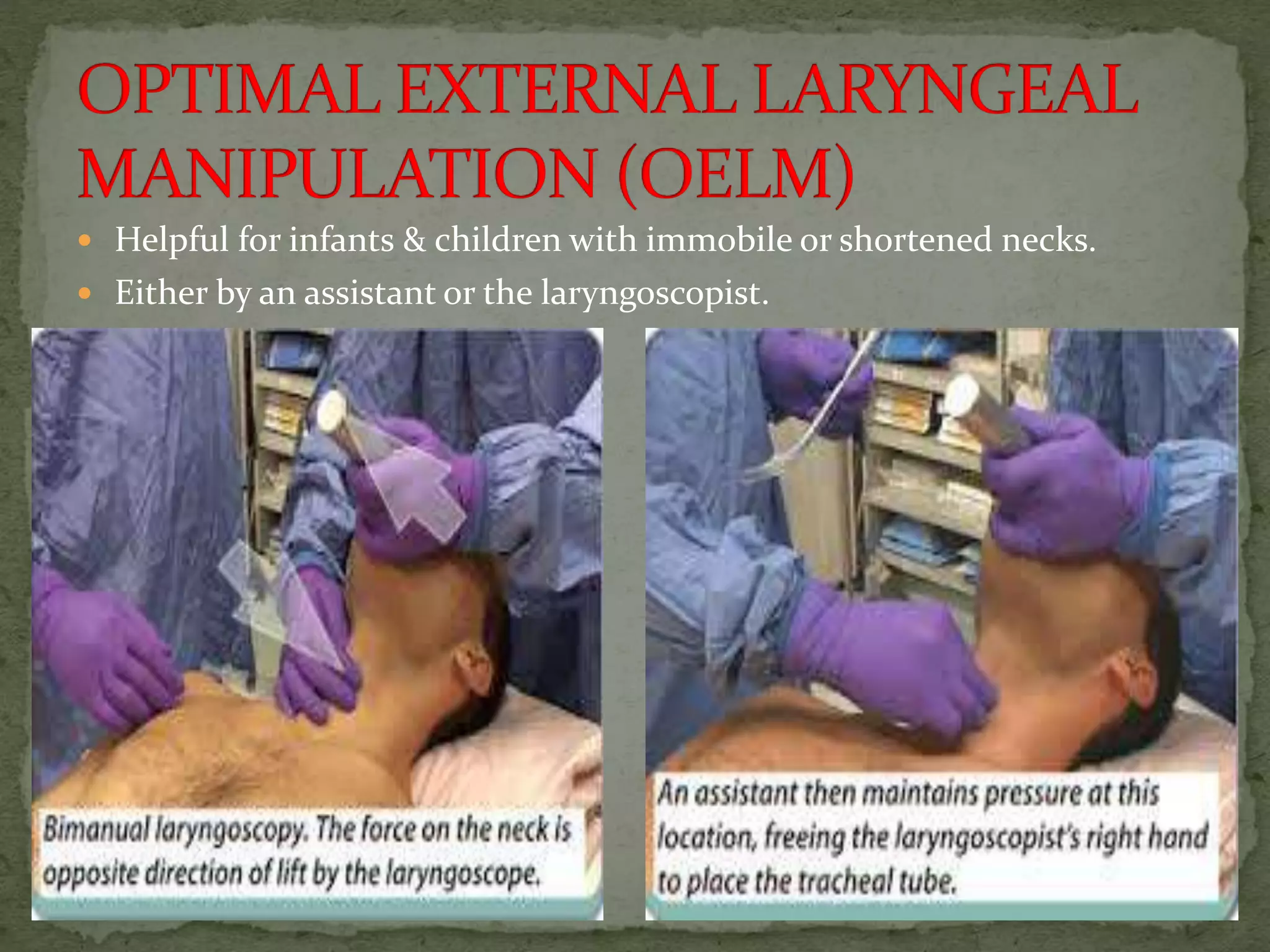
 Helpful for infants & children with immobile or shortened necks.
 Either by an assistant or the laryngoscopist.
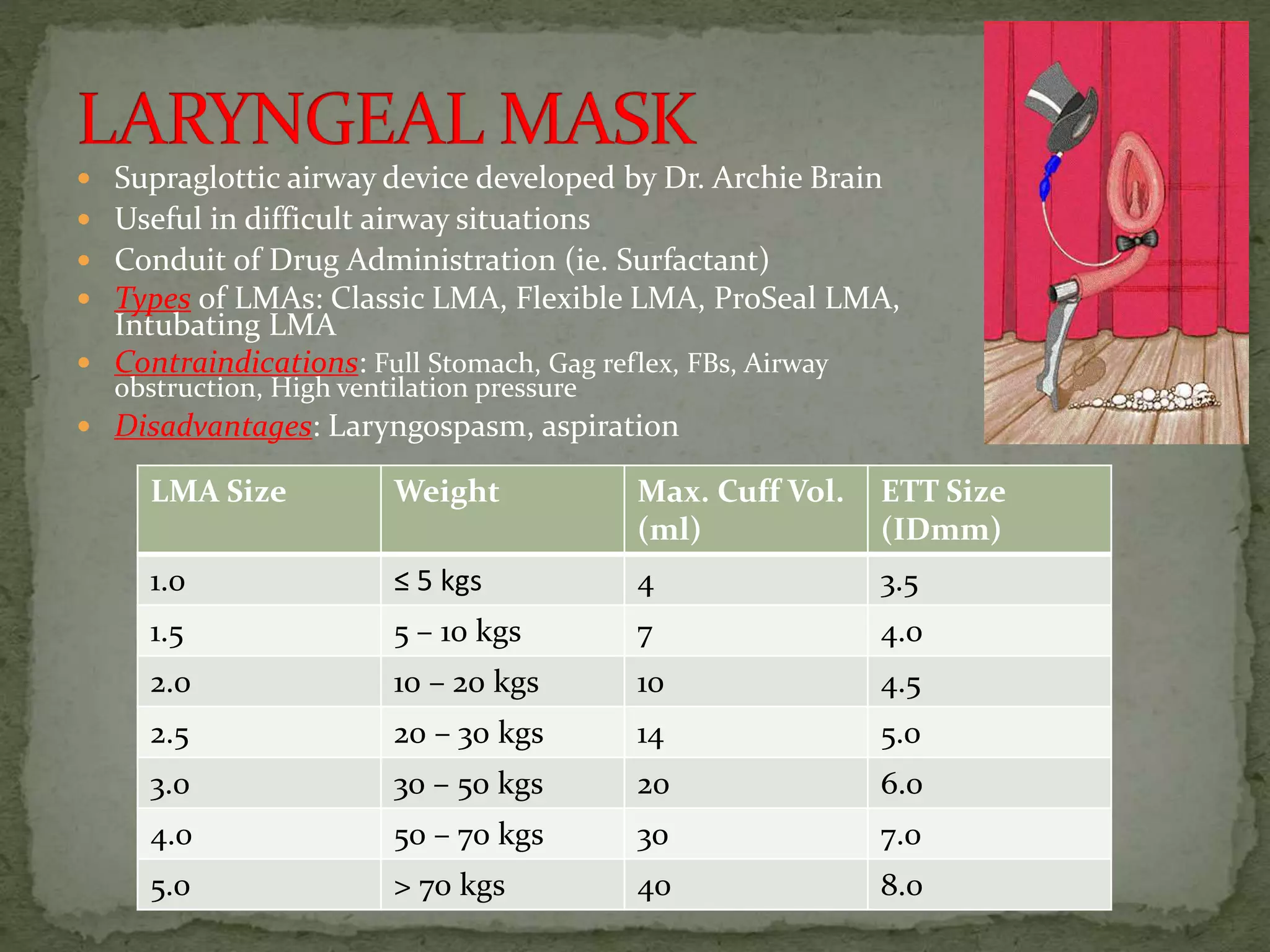
 Supraglottic airway device developed by Dr. Archie Brain
 Useful in difficult airway situations
 Conduit of Drug Administration (ie. Surfactant)
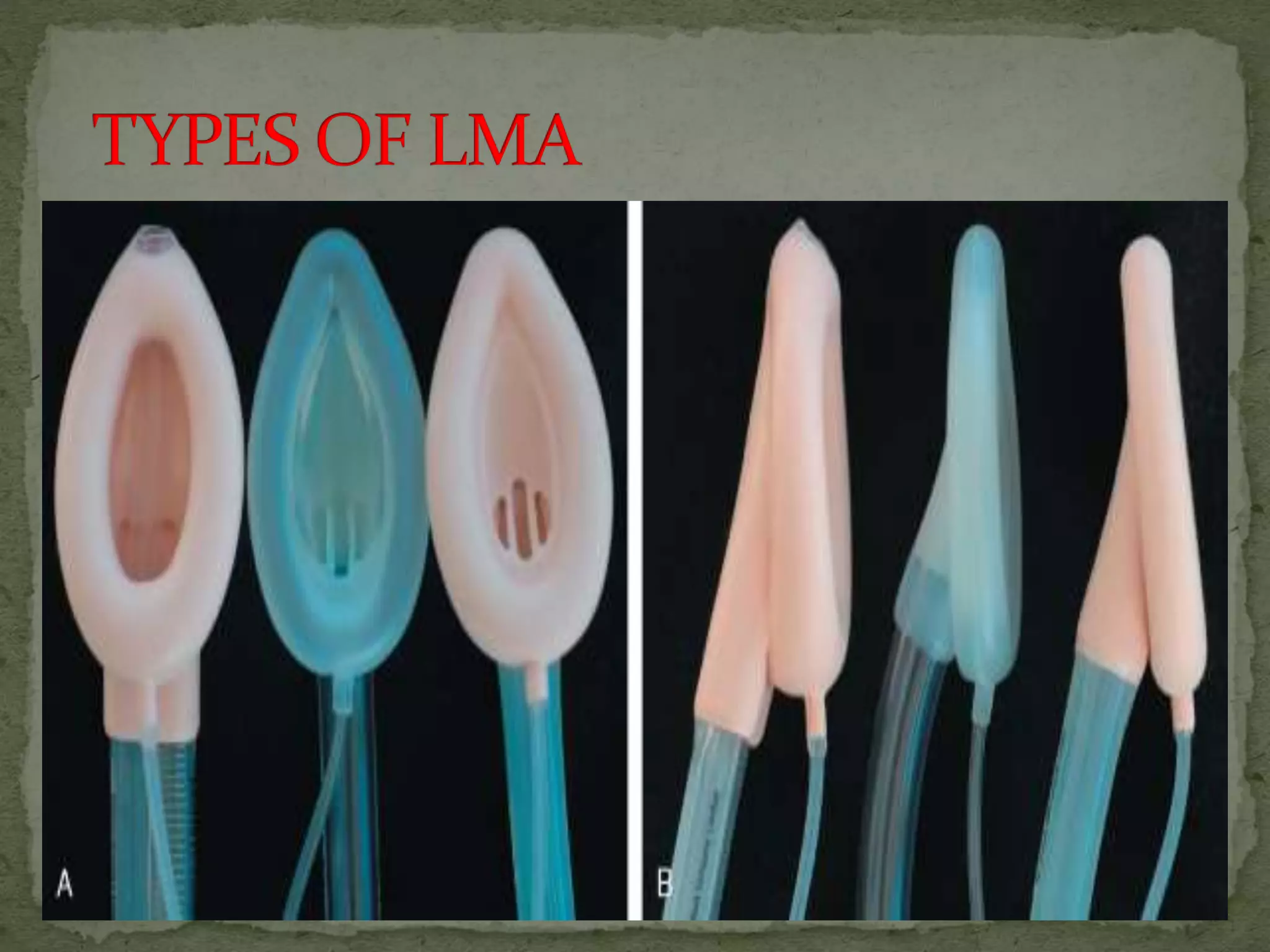
 Types of LMAs: Classic LMA, Flexible LMA, ProSeal LMA,
Intubating LMA
 Contraindications: Full Stomach, Gag reflex, FBs, Airway
obstruction, High ventilation pressure
 Disadvantages: Laryngospasm, aspiration
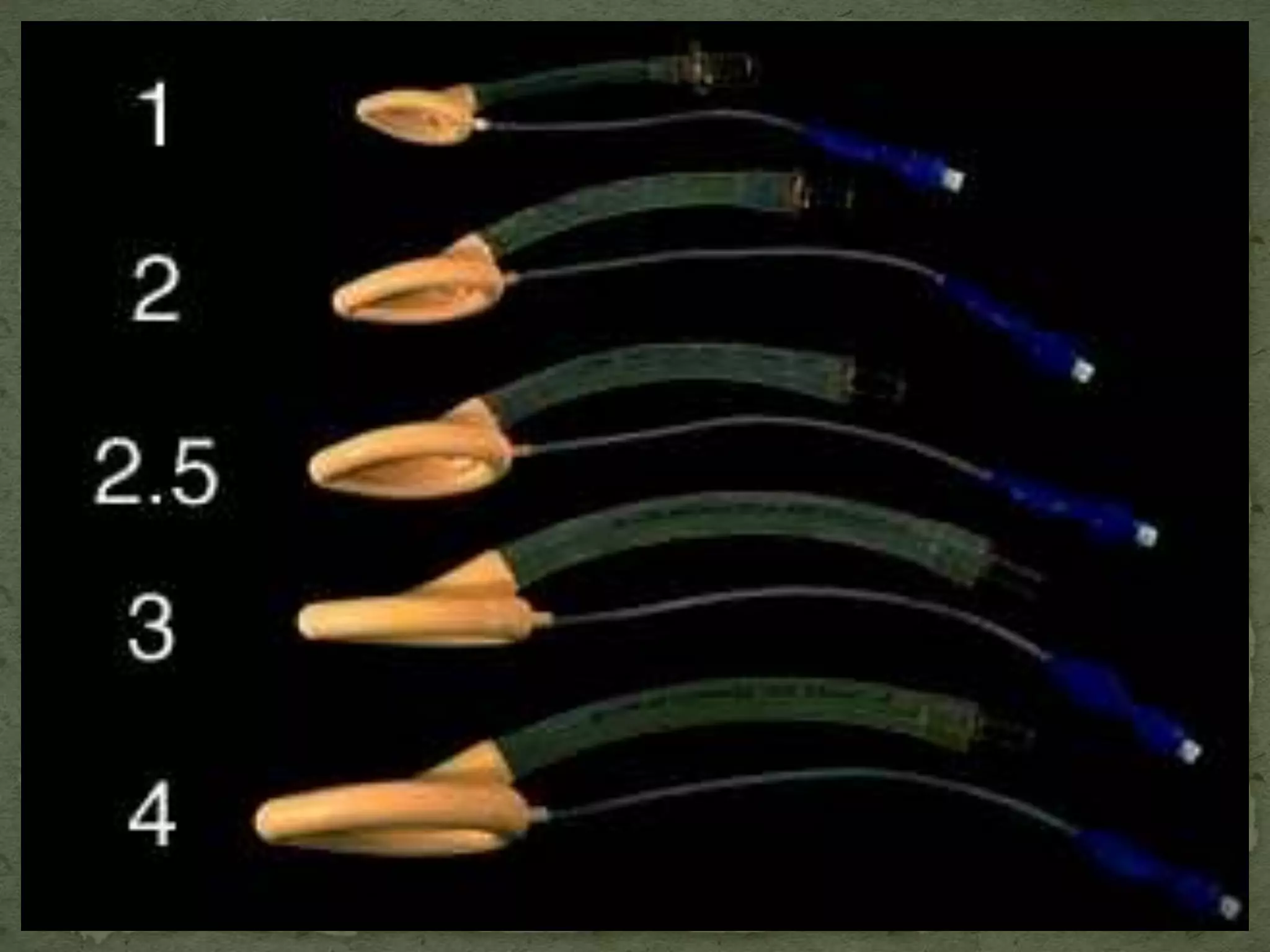
LMA Size Weight Max. Cuff Vol.
(ml)
ETT Size
(IDmm)
1.0 ≤ 5 kgs 4 3.5
1.5 5 – 10 kgs 7 4.0
2.0 10 – 20 kgs 10 4.5
2.5 20 – 30 kgs 14 5.0
3.0 30 – 50 kgs 20 6.0
4.0 50 – 70 kgs 30 7.0
5.0 > 70 kgs 40 8.0
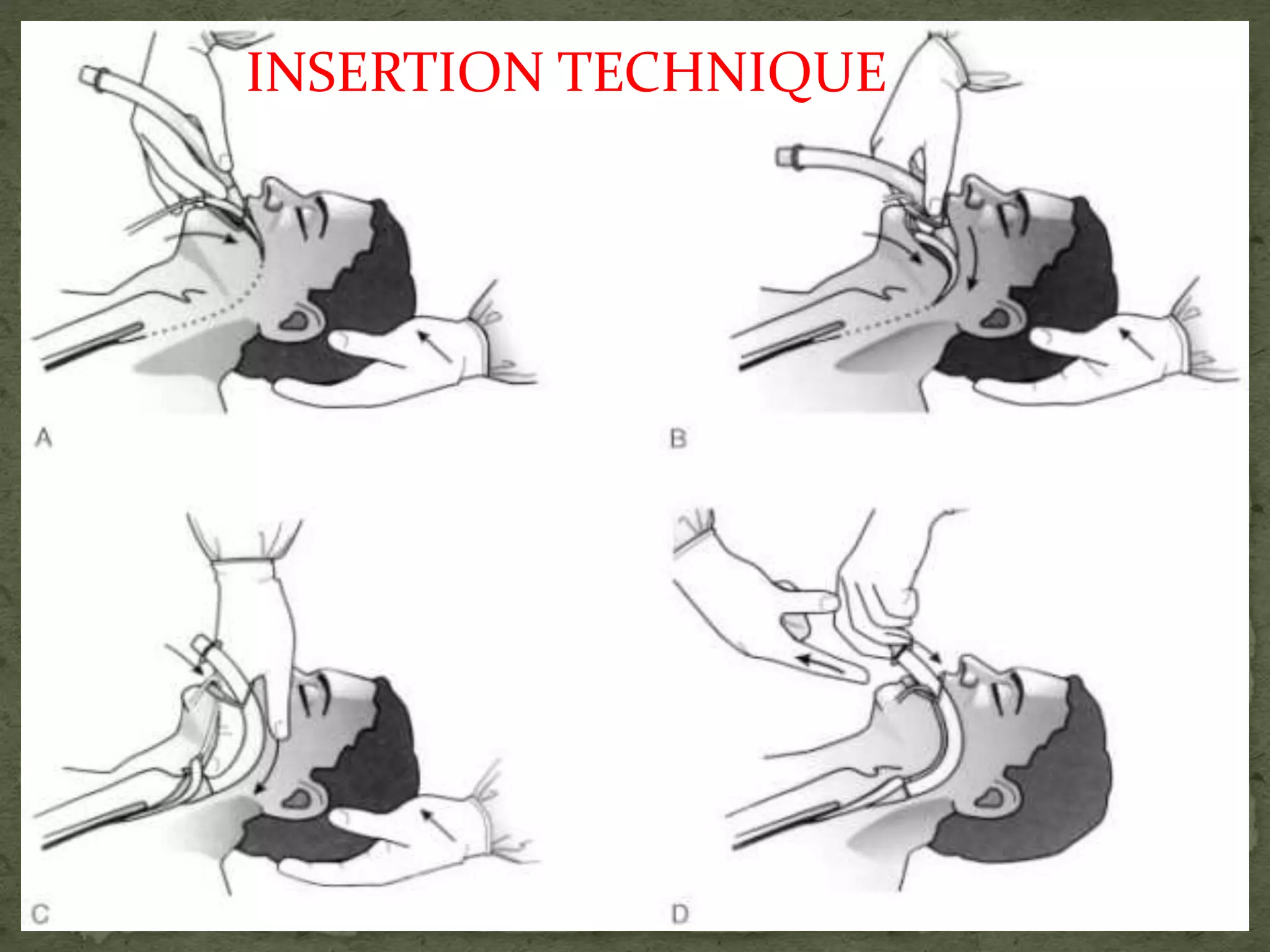
INSERTION TECHNIQUE
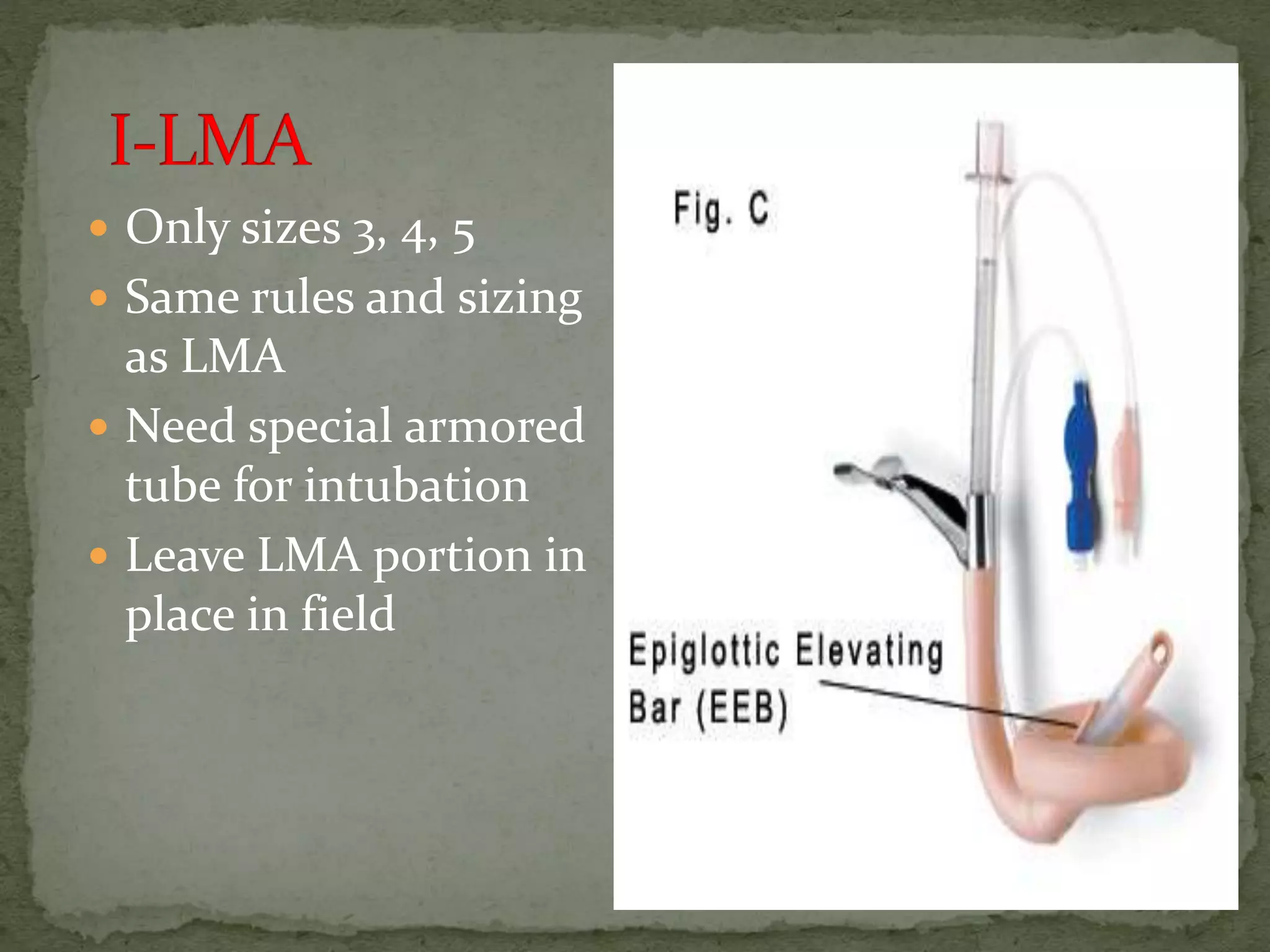
 Only sizes 3, 4, 5
 Same rules and sizing
as LMA
 Need special armored
tube for intubation
 Leave LMA portion in
place in field
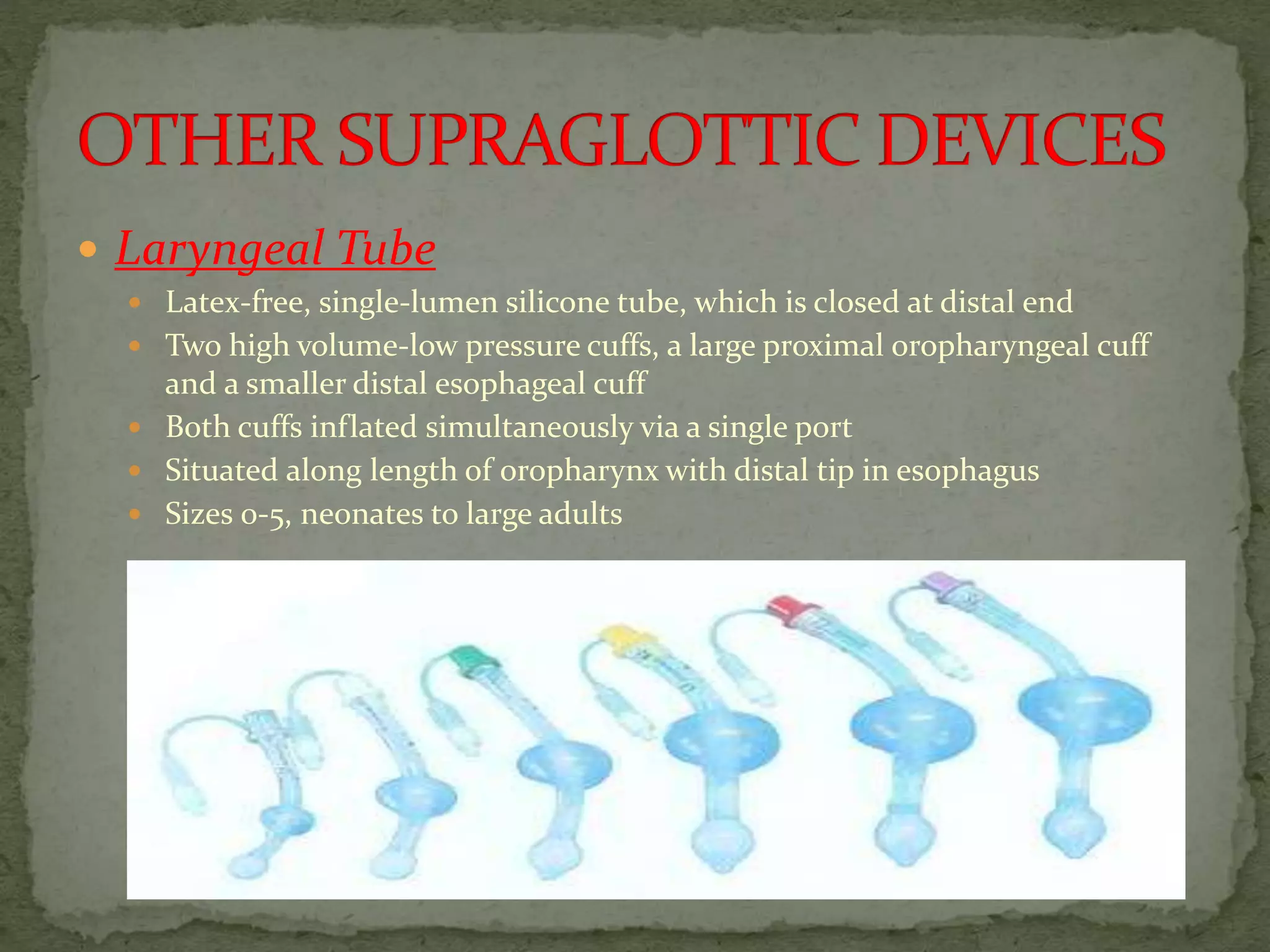
 Laryngeal Tube
 Latex-free, single-lumen silicone tube, which is closed at distal end
 Two high volume-low pressure cuffs, a large proximal oropharyngeal cuff
and a smaller distal esophageal cuff
 Both cuffs inflated simultaneously via a single port
 Situated along length of oropharynx with distal tip in esophagus
 Sizes 0-5, neonates to large adults
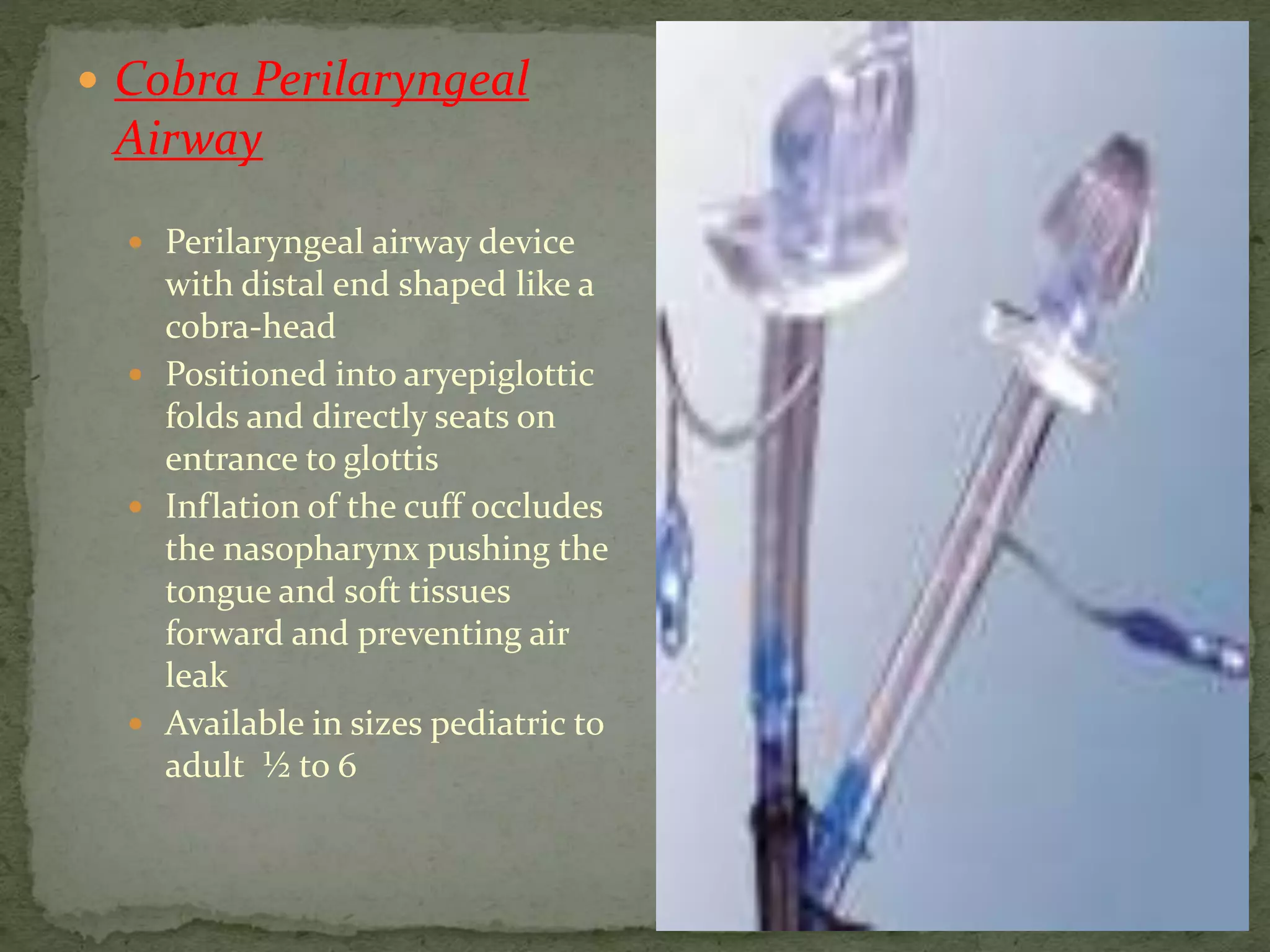
 Cobra Perilaryngeal
Airway
 Perilaryngeal airway device
with distal end shaped like a
cobra-head
 Positioned into aryepiglottic
folds and directly seats on
entrance to glottis
 Inflation of the cuff occludes
the nasopharynx pushing the
tongue and soft tissues
forward and preventing air
leak
 Available in sizes pediatric to
adult ½ to 6
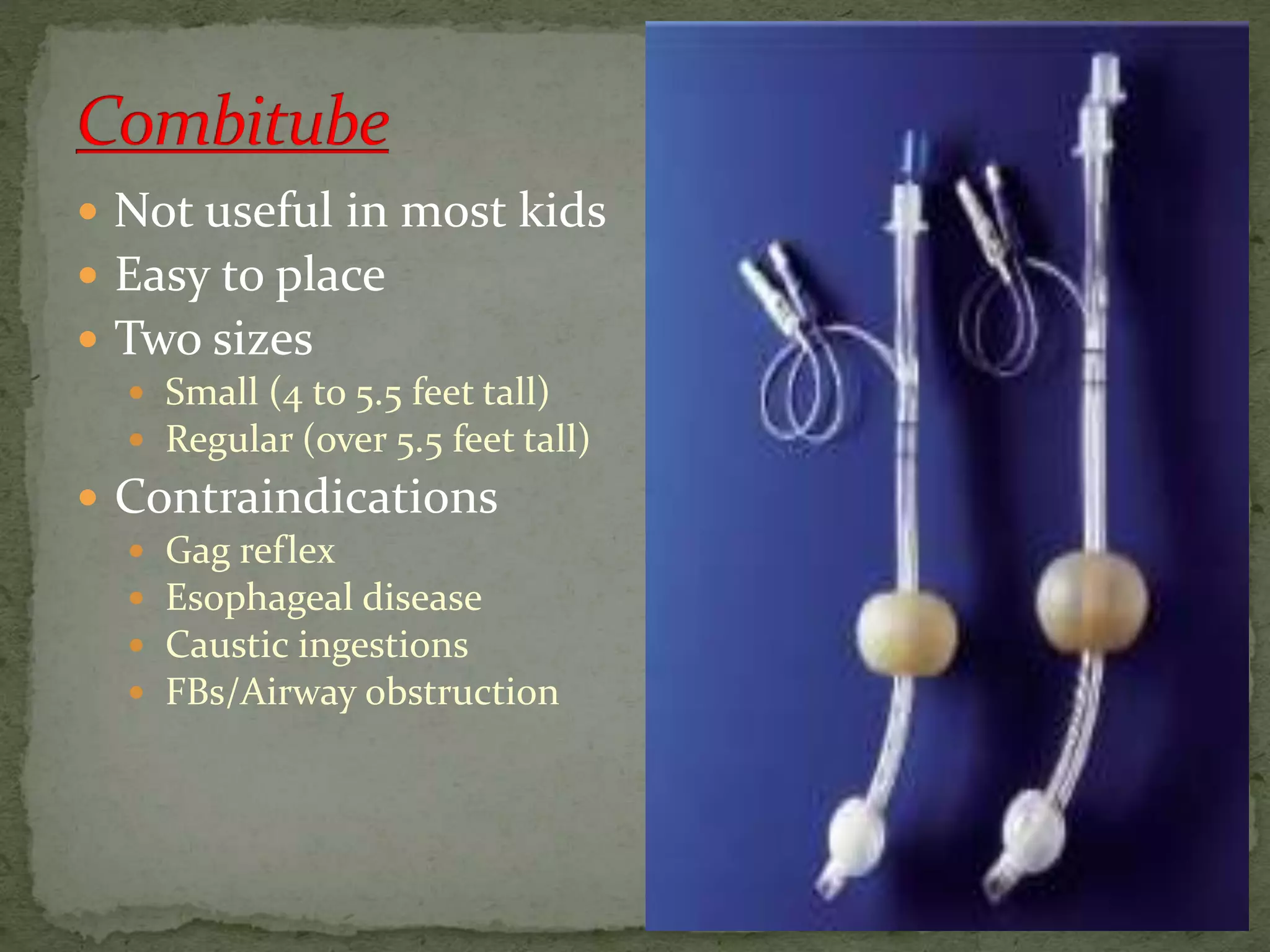
 Not useful in most kids
 Easy to place
 Two sizes
 Small (4 to 5.5 feet tall)
 Regular (over 5.5 feet tall)
 Contraindications
 Gag reflex
 Esophageal disease
 Caustic ingestions
 FBs/Airway obstruction
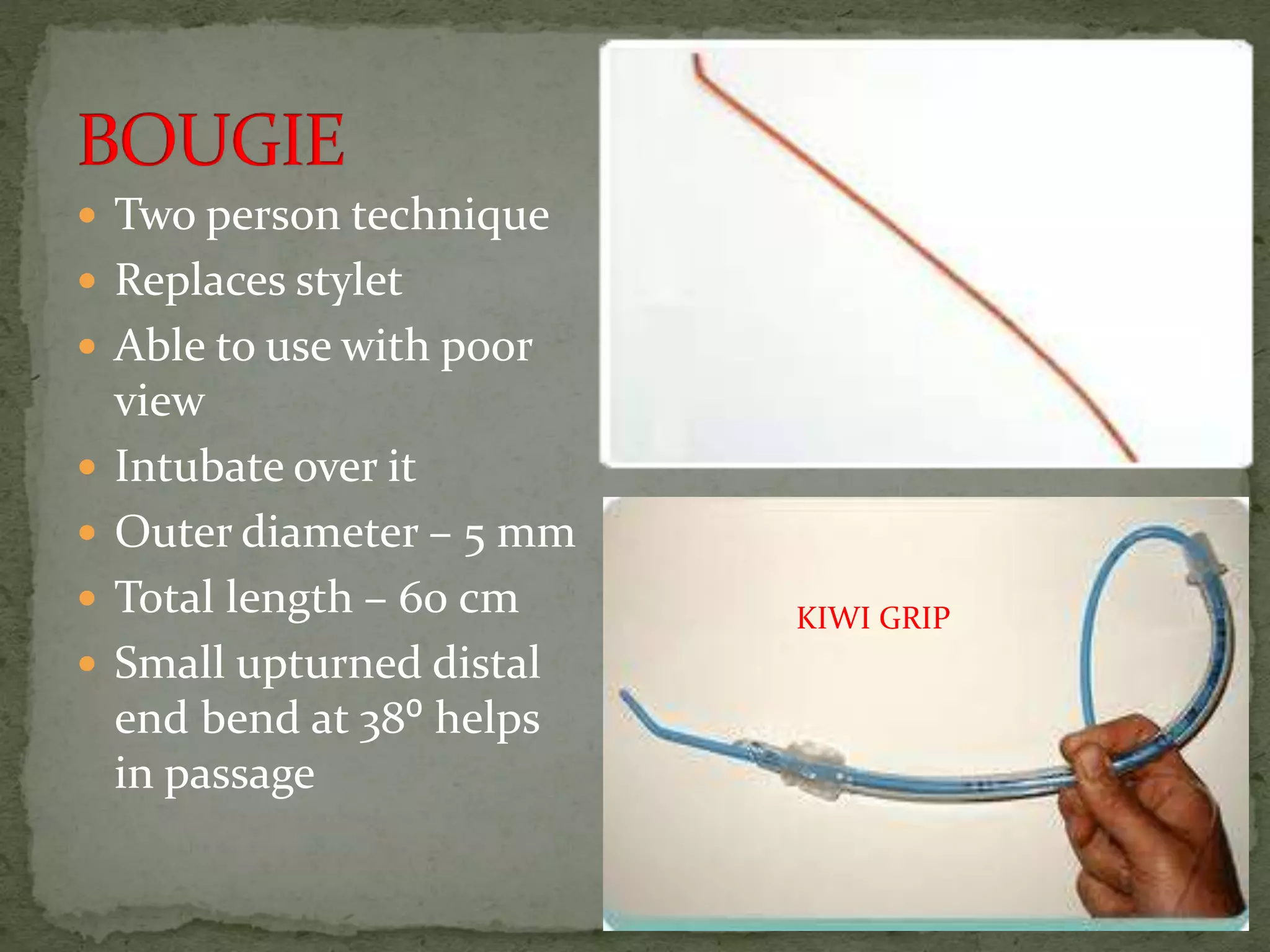
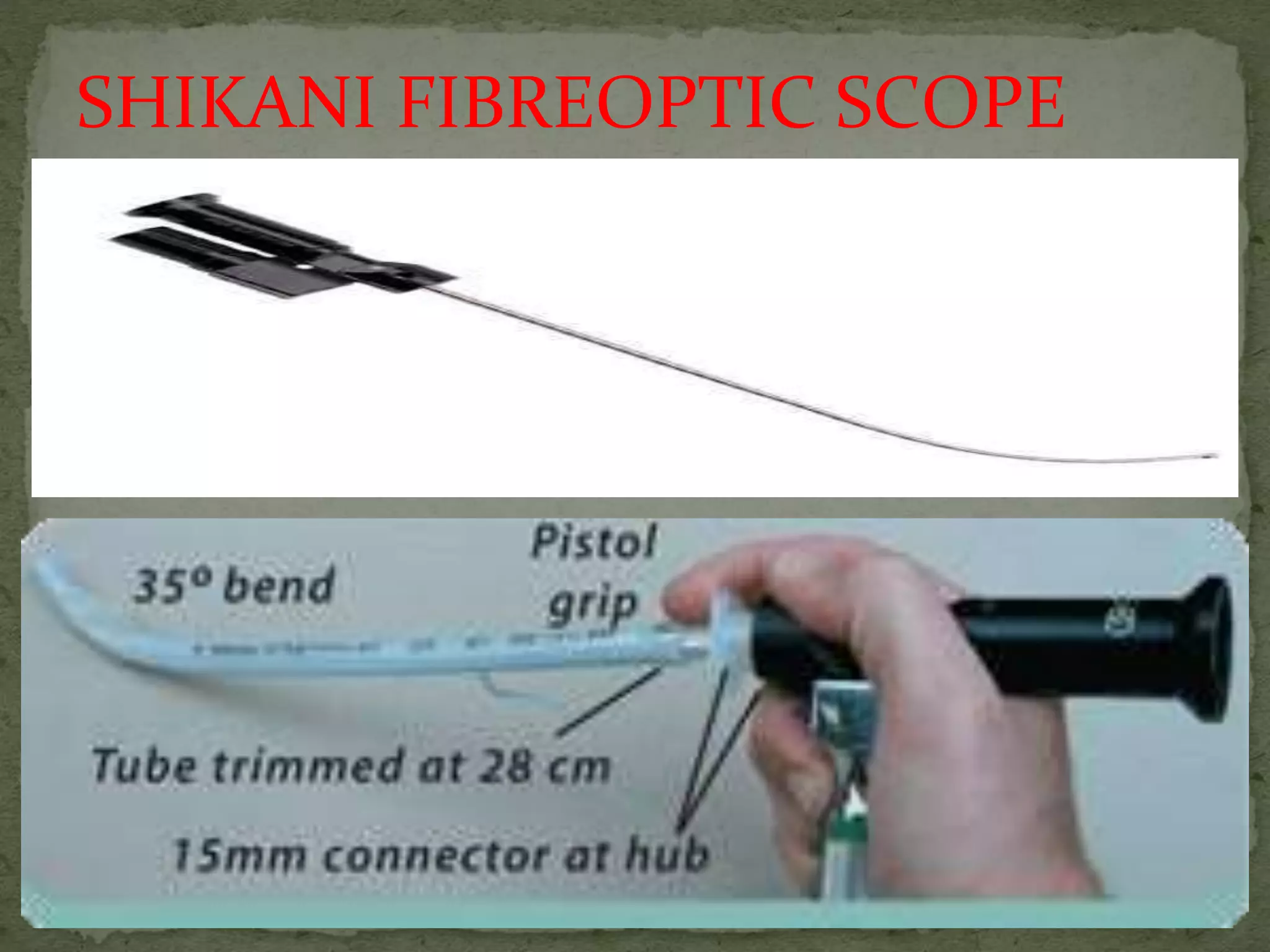
 Two person technique
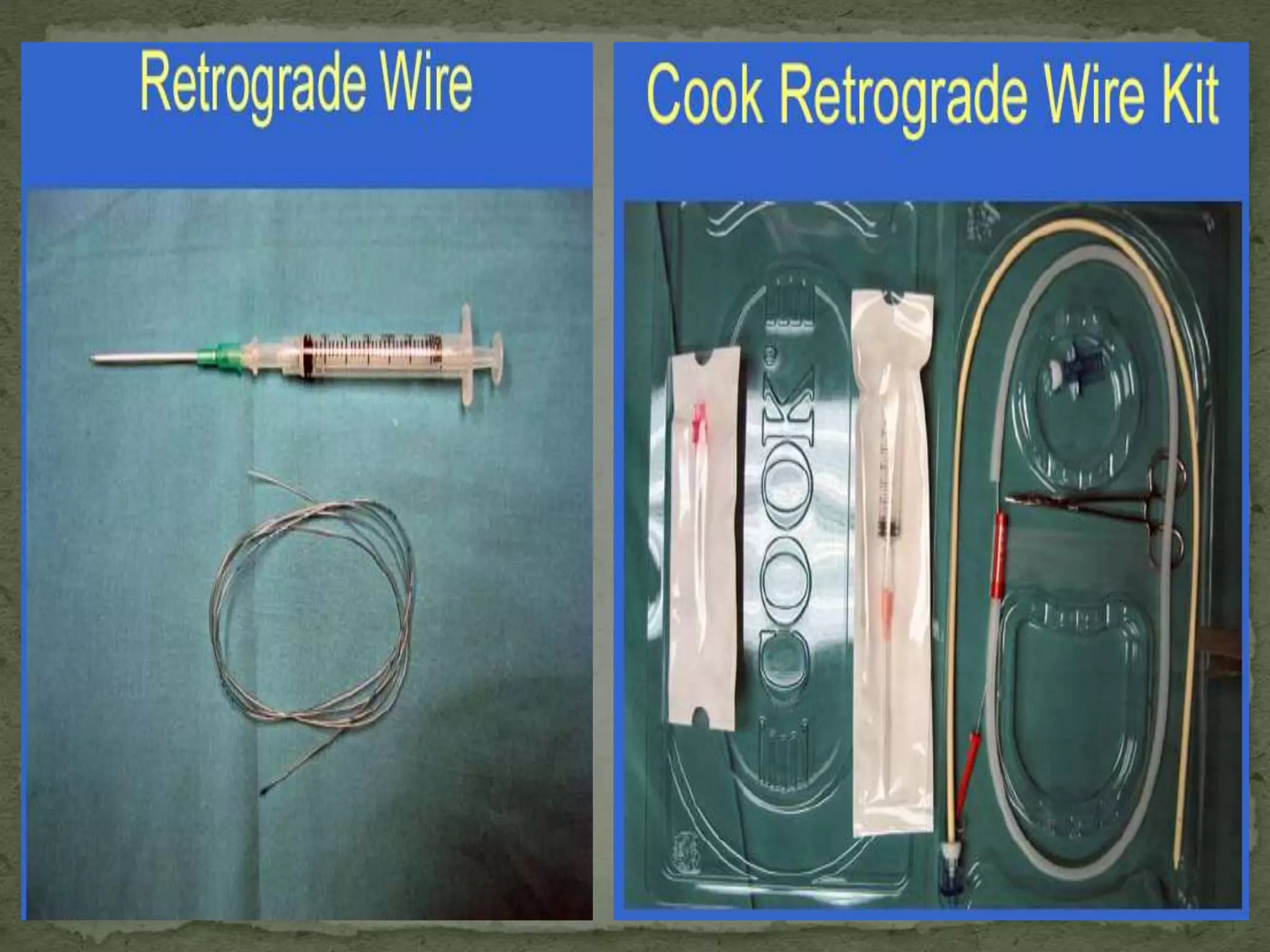
 Replaces stylet
 Able to use with poor
view
 Intubate over it
 Outer diameter – 5 mm
 Total length – 60 cm
 Small upturned distal
end bend at 38⁰ helps
in passage
KIWI GRIP
SHIKANI FIBREOPTIC SCOPE
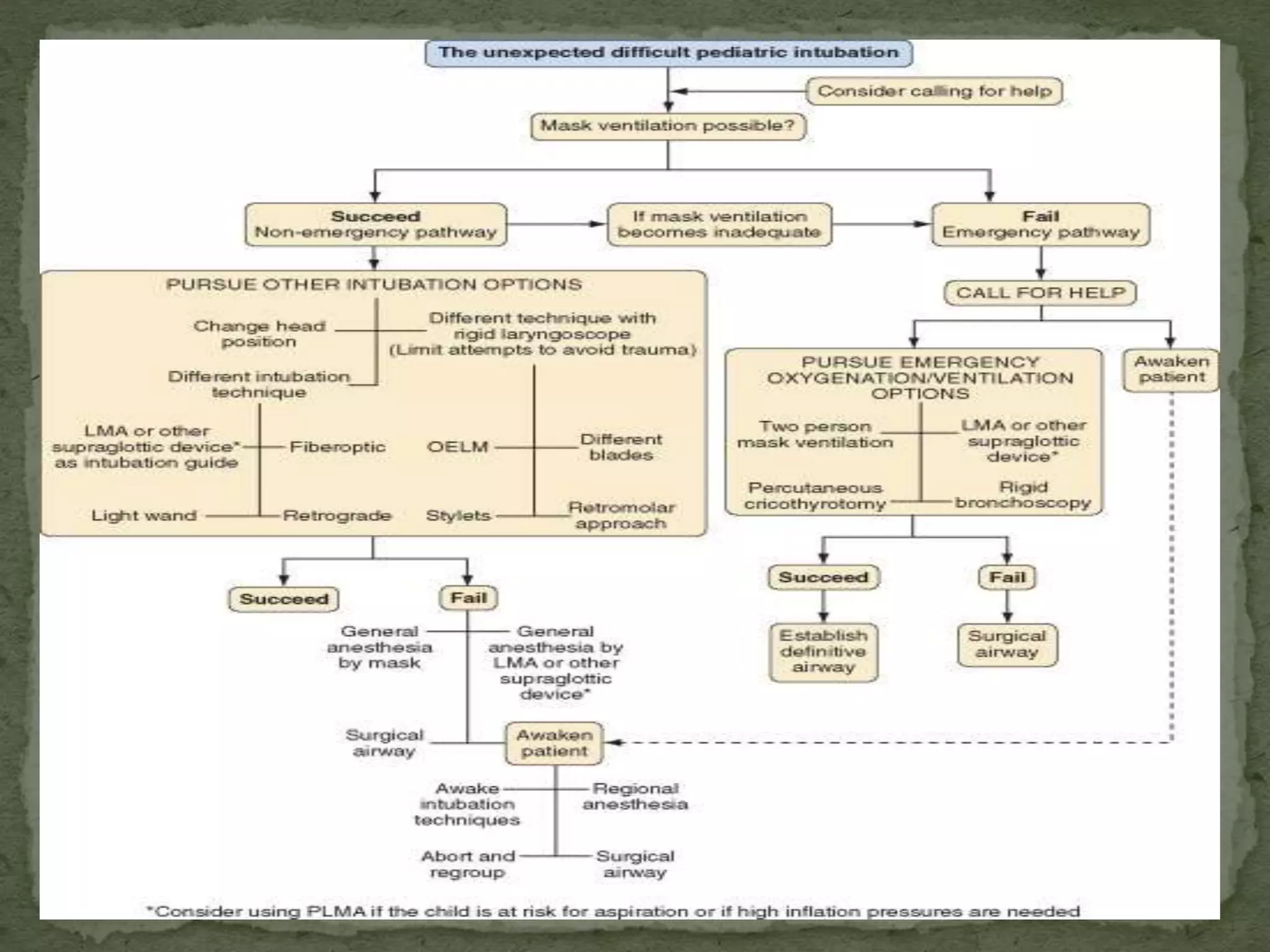
 Can’t ventilate
 Can’t intubate
 LMA contraindication (massive orofacial trauma) or
not working
 All intervations FAILED
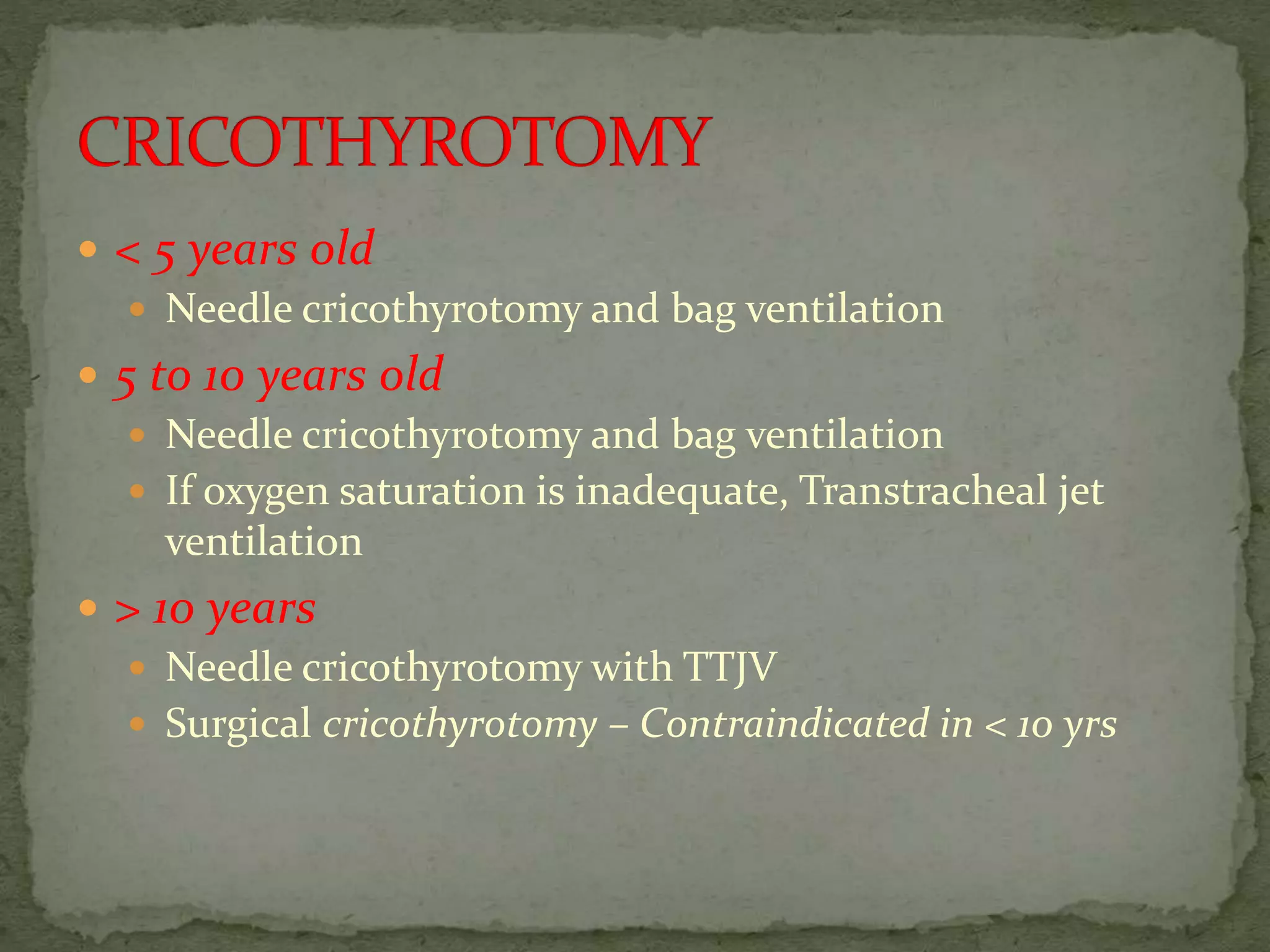
 < 5 years old
 Needle cricothyrotomy and bag ventilation
 5 to 10 years old
 Needle cricothyrotomy and bag ventilation
 If oxygen saturation is inadequate, Transtracheal jet
ventilation
 > 10 years
 Needle cricothyrotomy with TTJV
 Surgical cricothyrotomy – Contraindicated in < 10 yrs
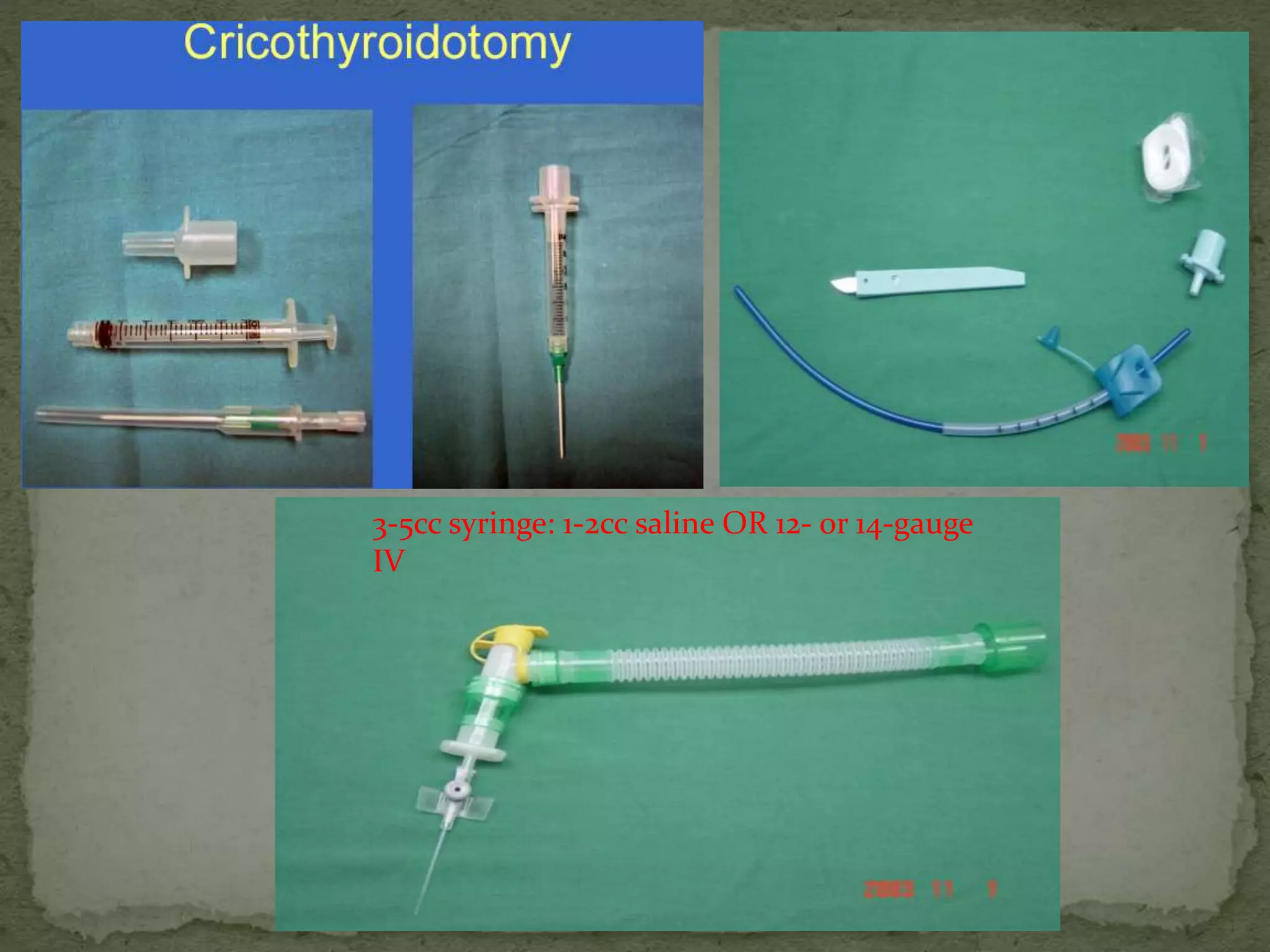
3-5cc syringe: 1-2cc saline OR 12- or 14-gauge
IV
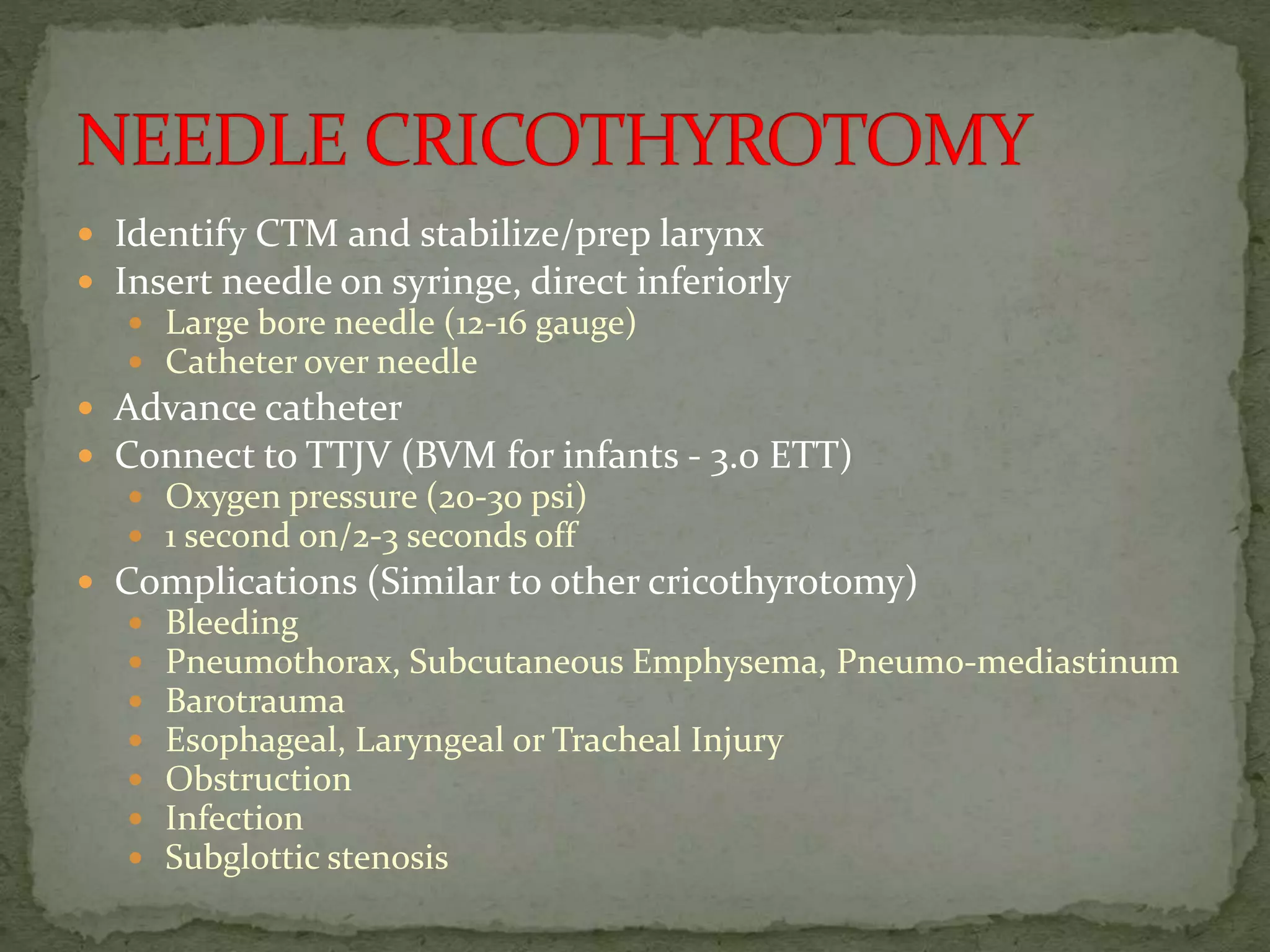
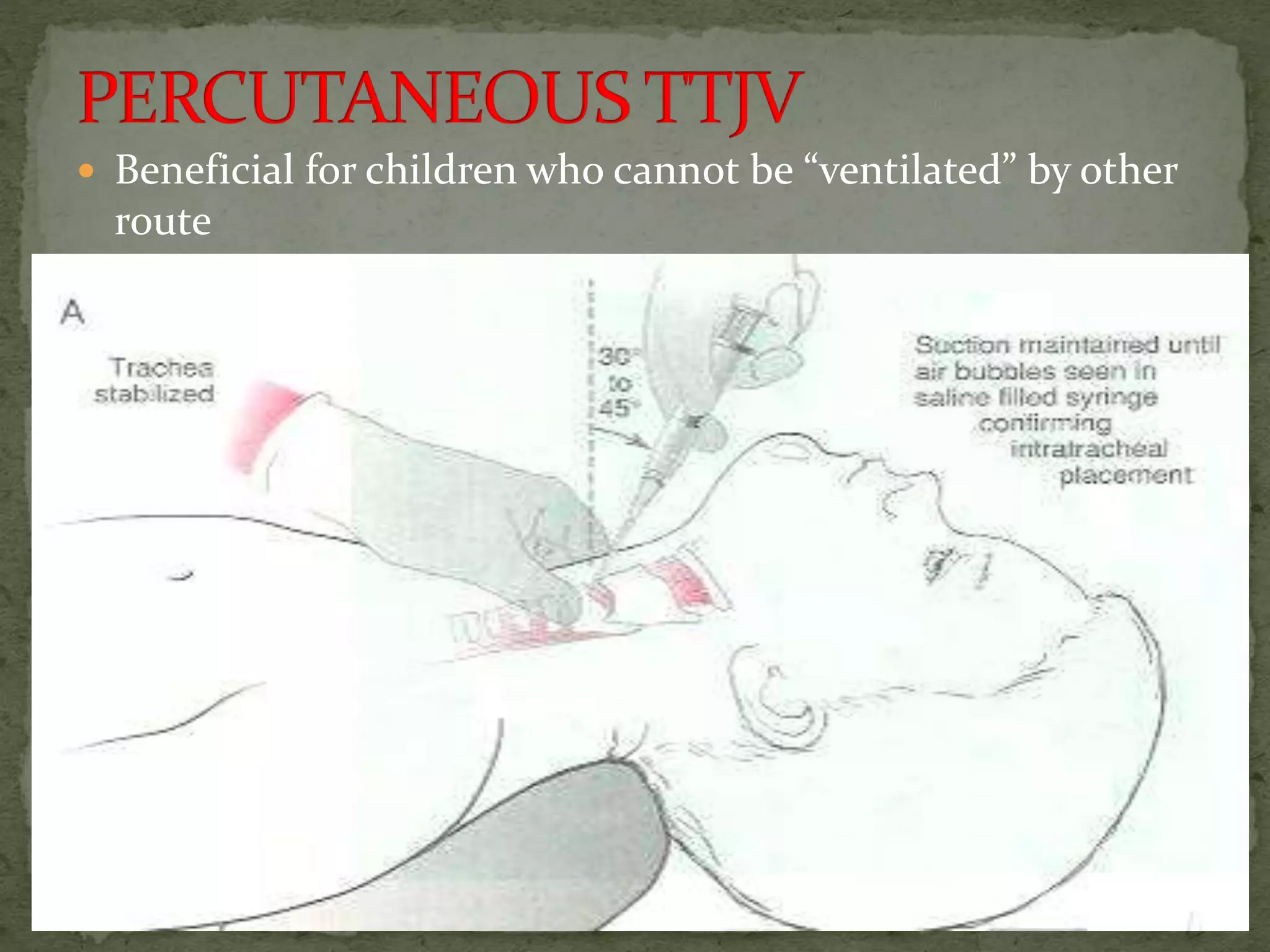
 Identify CTM and stabilize/prep larynx
 Insert needle on syringe, direct inferiorly
 Large bore needle (12-16 gauge)
 Catheter over needle
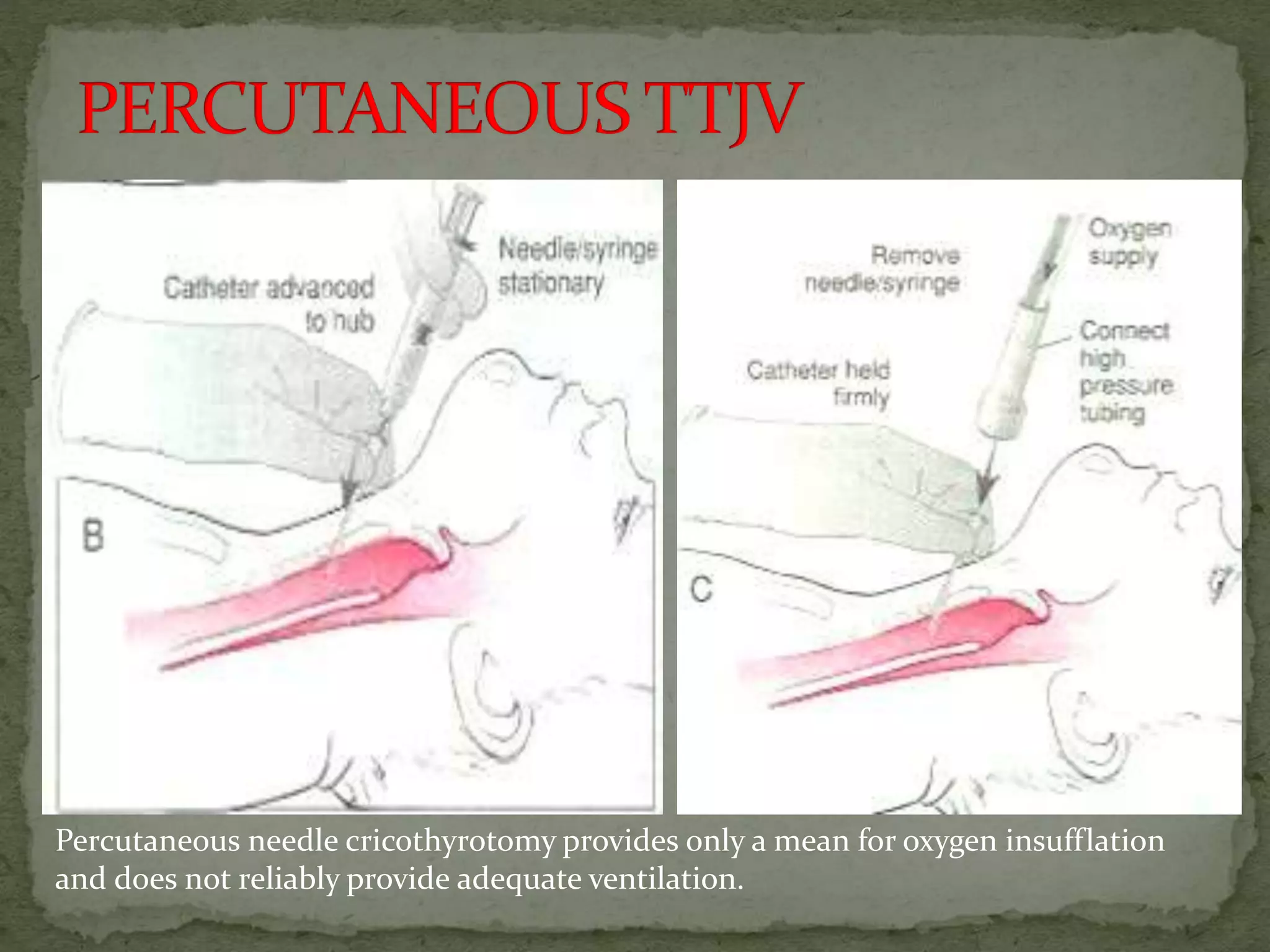
 Advance catheter
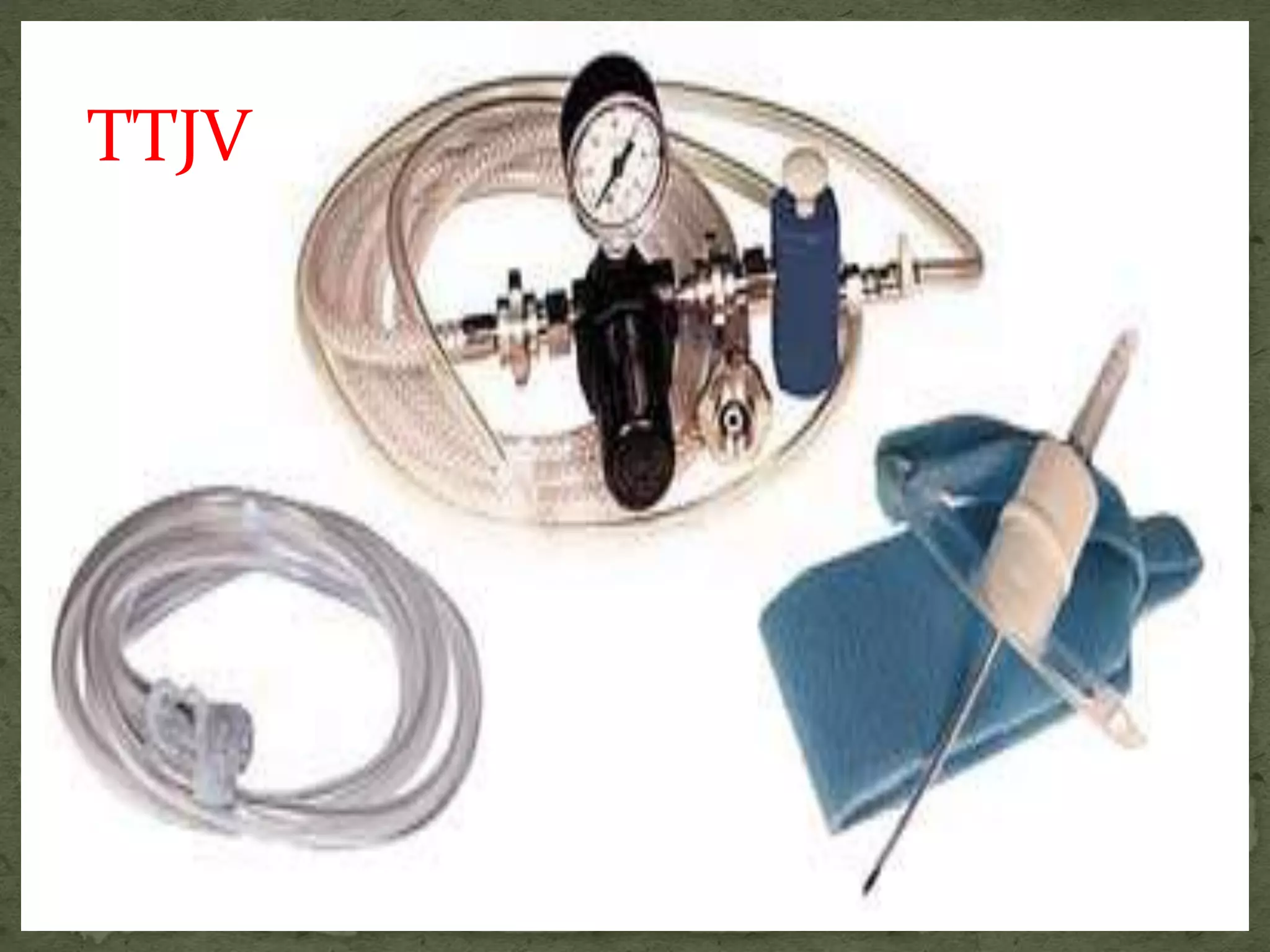
 Connect to TTJV (BVM for infants - 3.0 ETT)
 Oxygen pressure (20-30 psi)
 1 second on/2-3 seconds off
 Complications (Similar to other cricothyrotomy)
 Bleeding
 Pneumothorax, Subcutaneous Emphysema, Pneumo-mediastinum
 Barotrauma
 Esophageal, Laryngeal or Tracheal Injury
 Obstruction
 Infection
 Subglottic stenosis
 Beneficial for children who cannot be “ventilated” by other
route
Percutaneous needle cricothyrotomy provides only a mean for oxygen insufflation
and does not reliably provide adequate ventilation.
TTJV
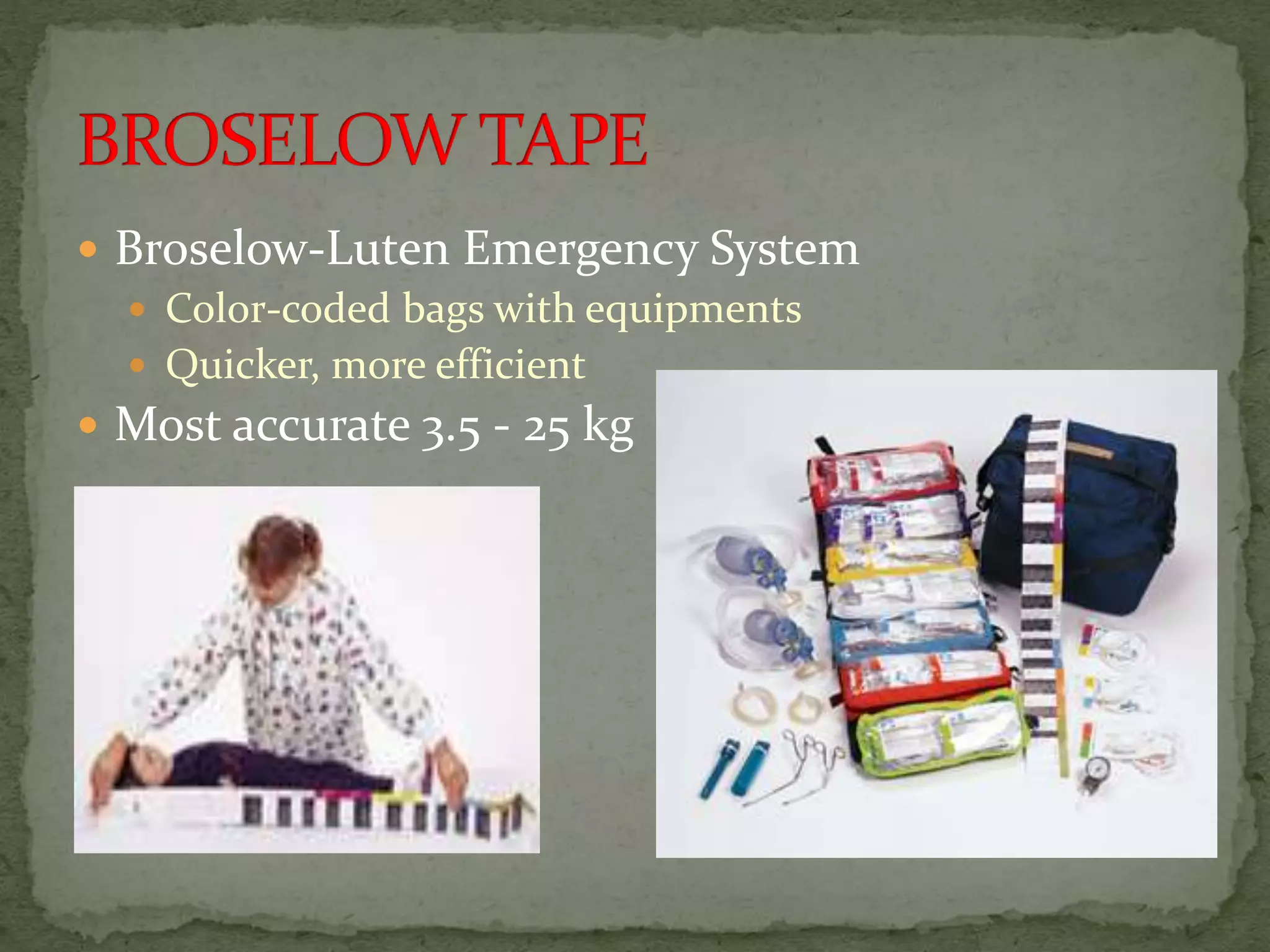
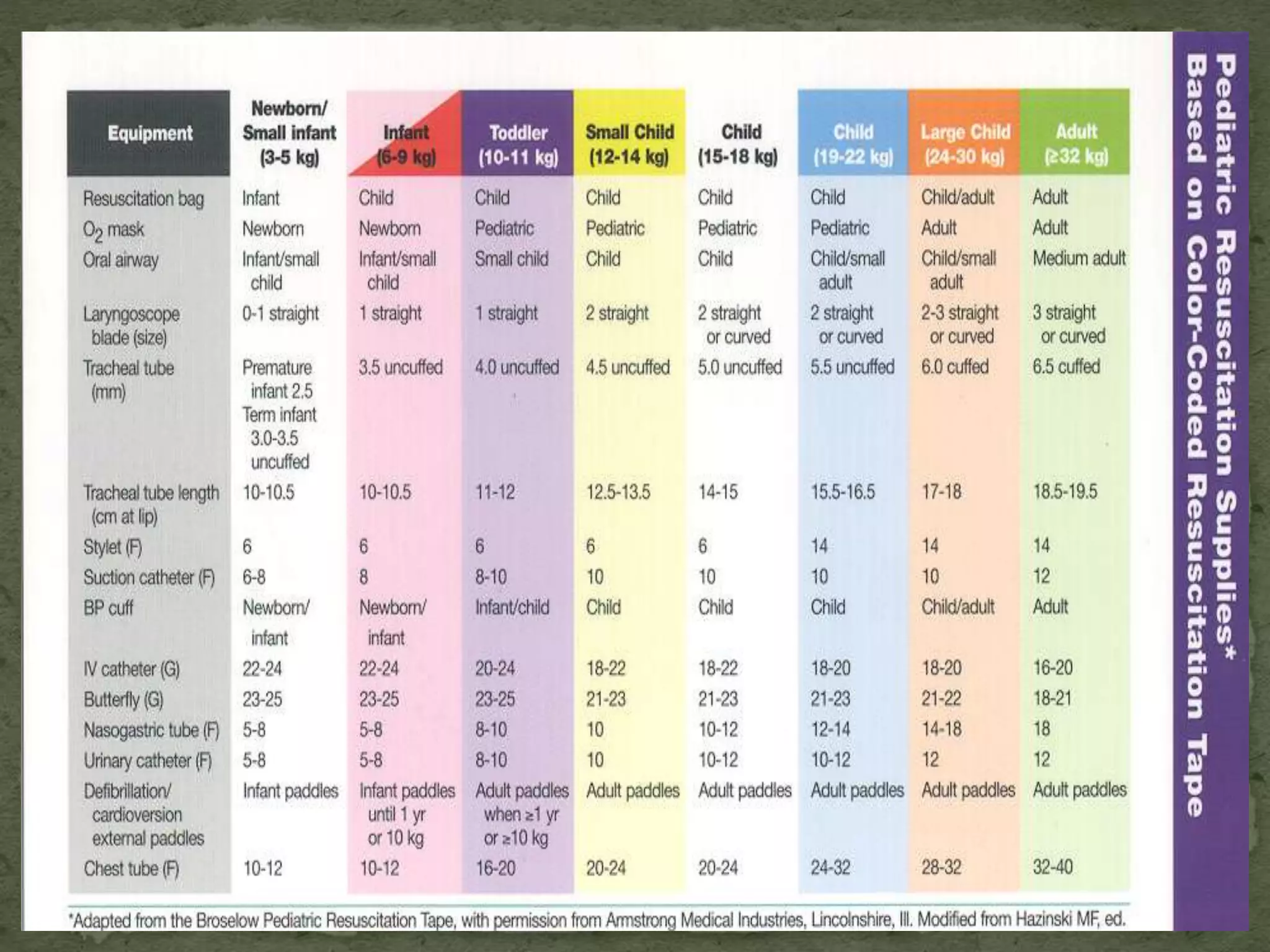
 Broselow-Luten Emergency System
 Color-coded bags with equipments
 Quicker, more efficient
 Most accurate 3.5 - 25 kg
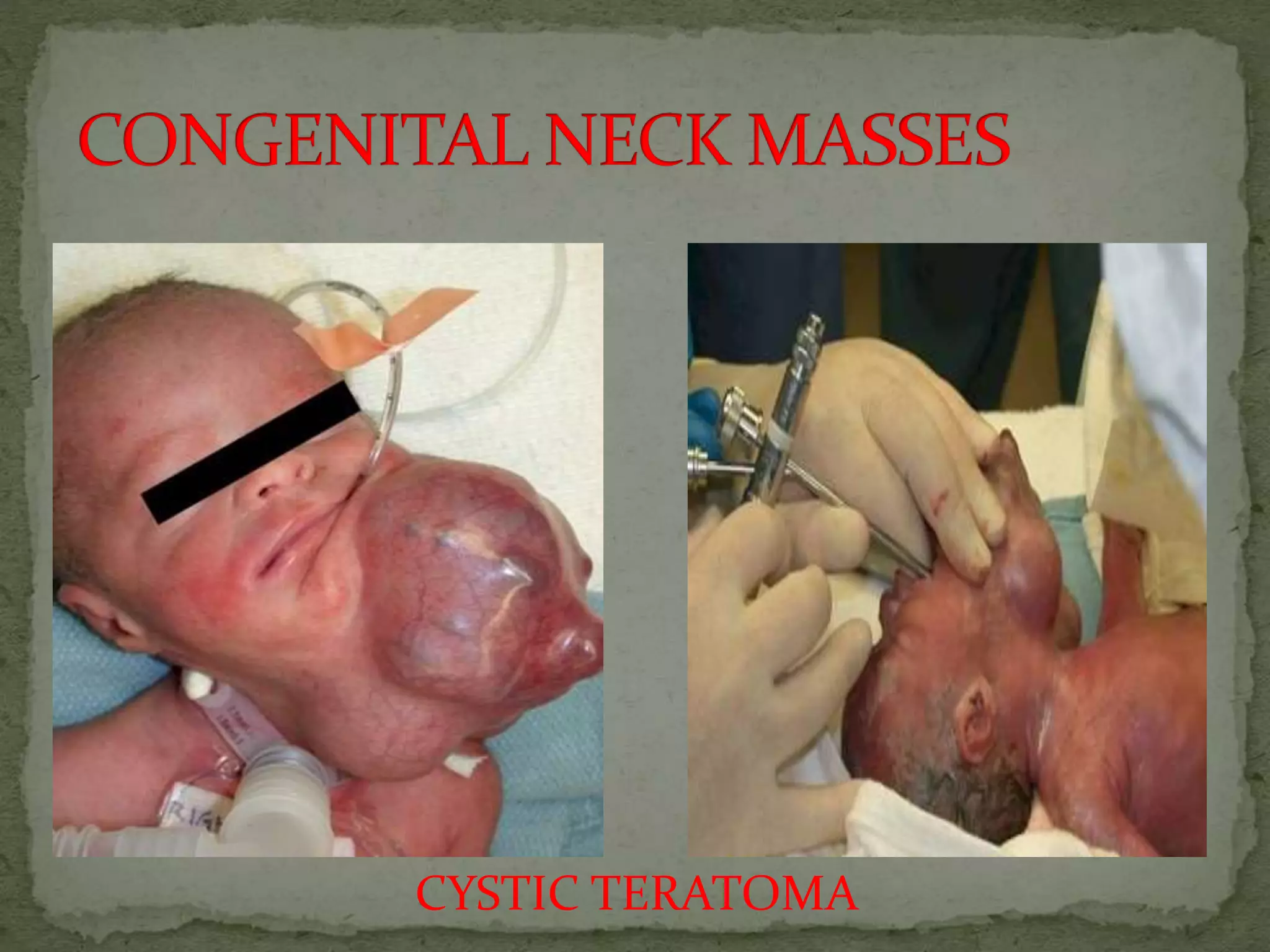
 Congenital Neck Masses (Dermoid cysts, cystic teratomas, cystic hygroma,
lymphangiomas, neurofibroma, lymphoma, hemangioma)
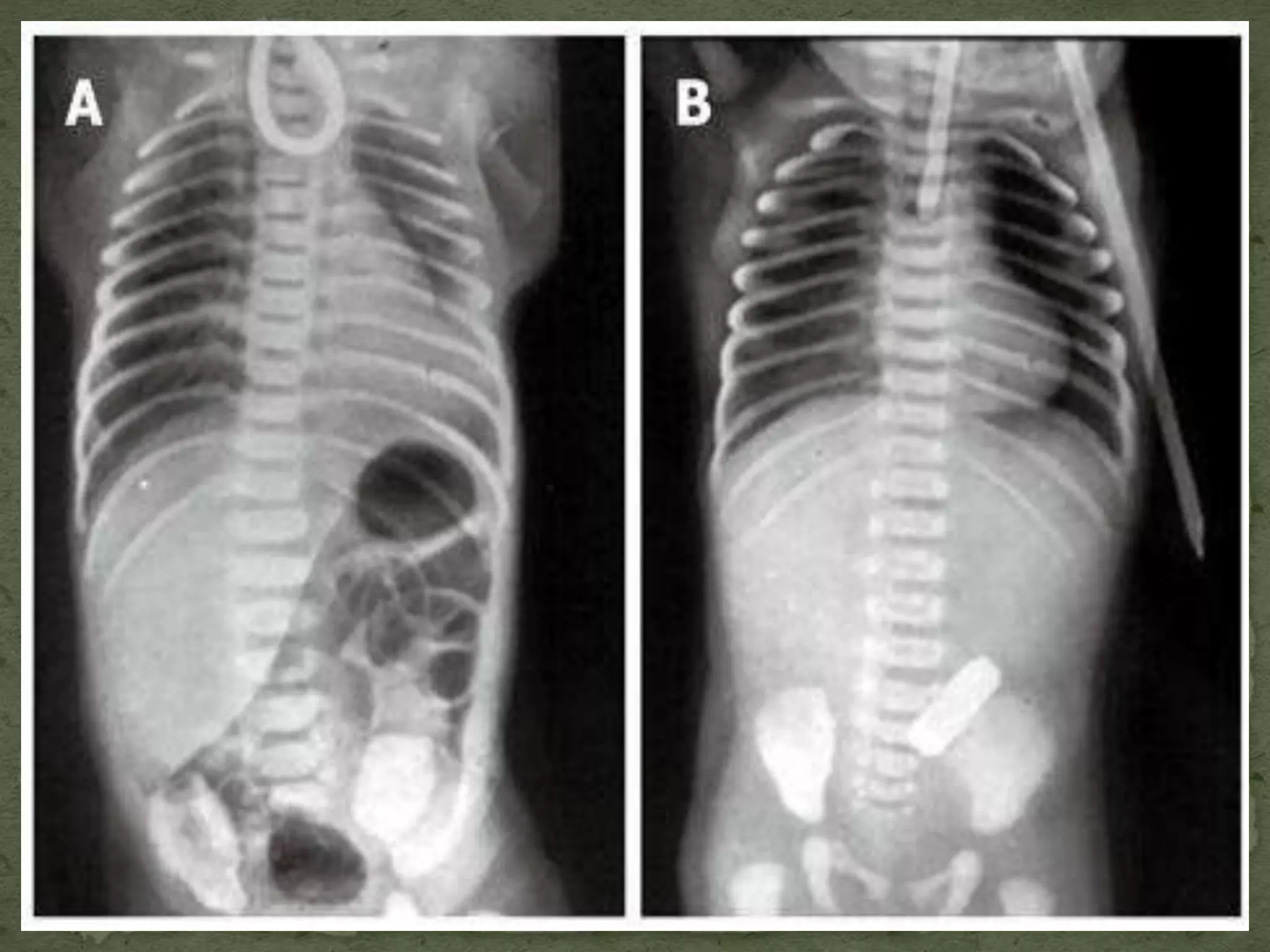
 Congenital Anomalies (Choanal atresia,tracheoesophageal fistula,
tracheomalacia, laryngomalacia, laryngeal stenosis, laryngeal web, vascular ring,
tracheal stenosis)
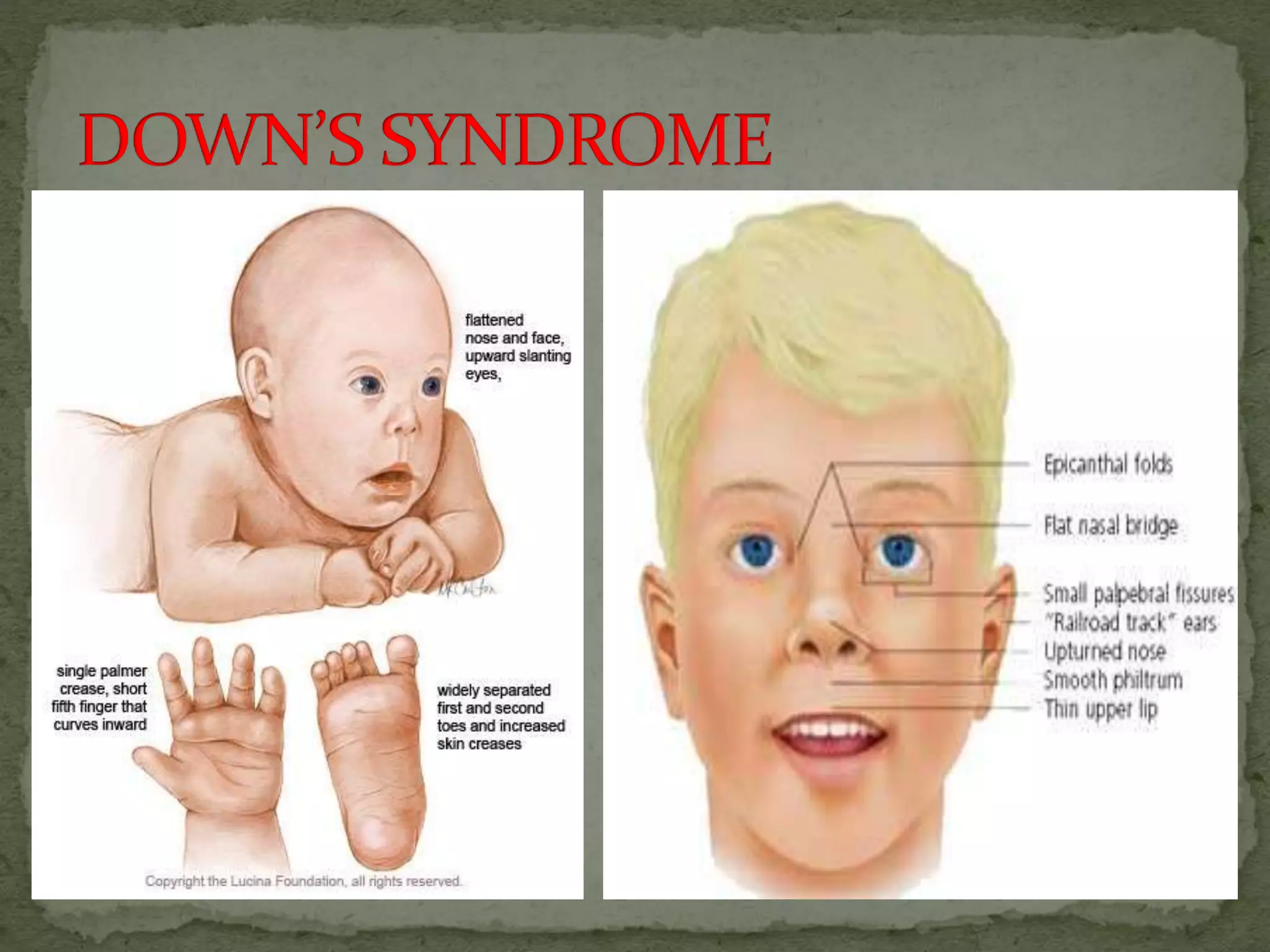
 Congenital Syndromes (Pierre Robin Syndrome, Treacher Collin, Turner,
Down’s, Goldenhar , Apert, Achondroplasia, Hallermann-Streiff, Crouzan)
 Inflammatory (Epiglottitis, acute tonsillitis, peritonsillar
abscess,retropharyngeal abscess, laryngotracheobronchitis,bacterial
tracheitis,adenoidal hypertrophy,nasal congestion, juvenile rheumatoid arthritis)
 Traumatic/Foreign Body (burn,laceration,lymphatic/venous
obstruction,fractures/dislocation, inhalational injury, postintubation
croup (edema),swelling of uvula
 Metabolic (Congenital hypothyroidism, mucopolysaccharidosis, Beckwith-
Wiedemann Syndrome,glycogen storage disease, hypocalcemia laryngospasm)
CYSTIC TERATOMA
 Occurs in 1/ 3000-5000 births
 Most common type is the blind esophageal pouch with a fistula between the
trachea and the distal esophagus (87%)
 Feeding difficulties (coughing, choking and cyanosis) and breathing problems
 Associated with congenital heart (VSA, PDA, TOF), VATER, GI,
musculoskeletal and urinary tract defects
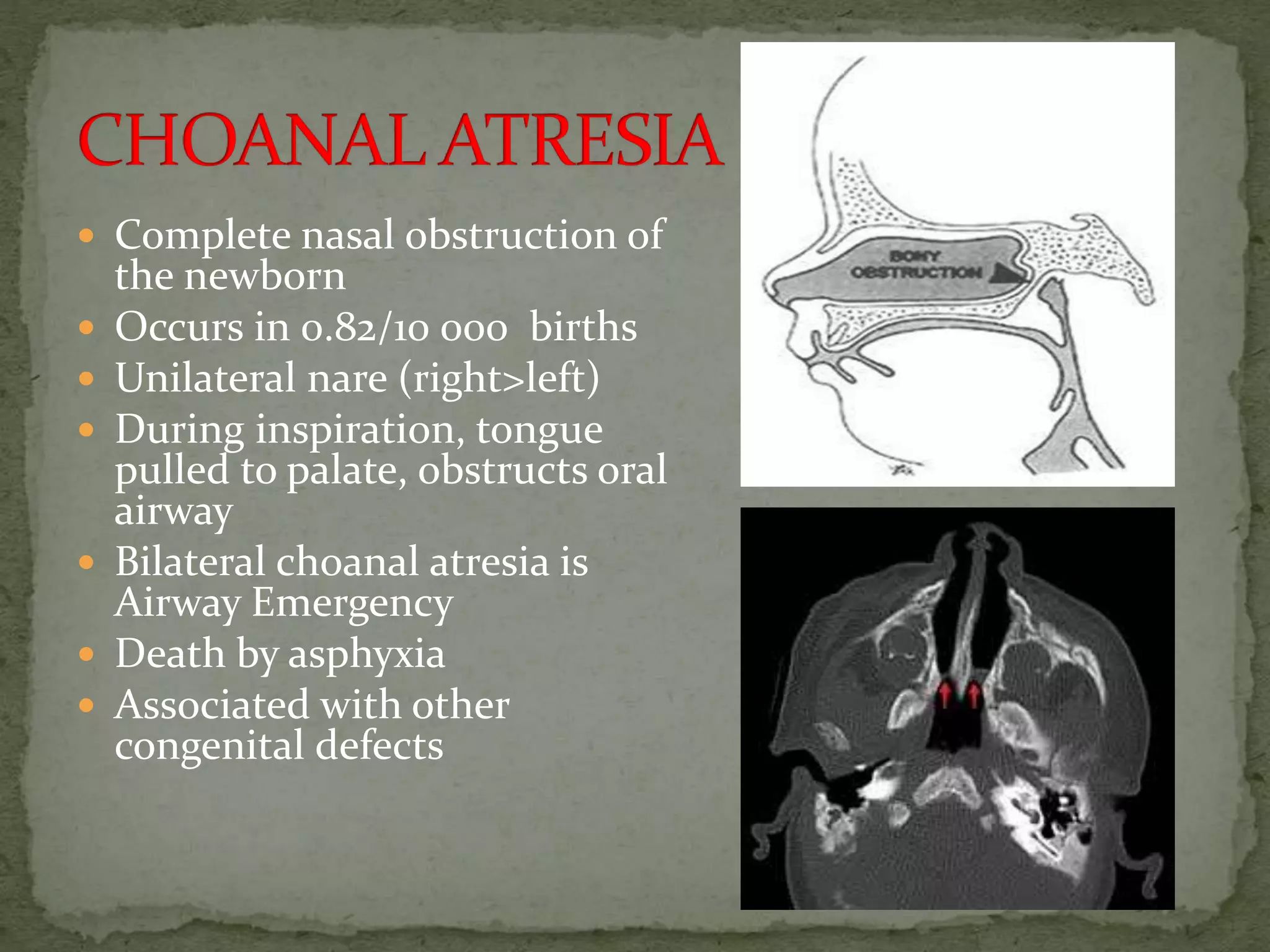
 Complete nasal obstruction of
the newborn
 Occurs in 0.82/10 000 births
 Unilateral nare (right>left)
 During inspiration, tongue
pulled to palate, obstructs oral
airway
 Bilateral choanal atresia is
Airway Emergency
 Death by asphyxia
 Associated with other
congenital defects
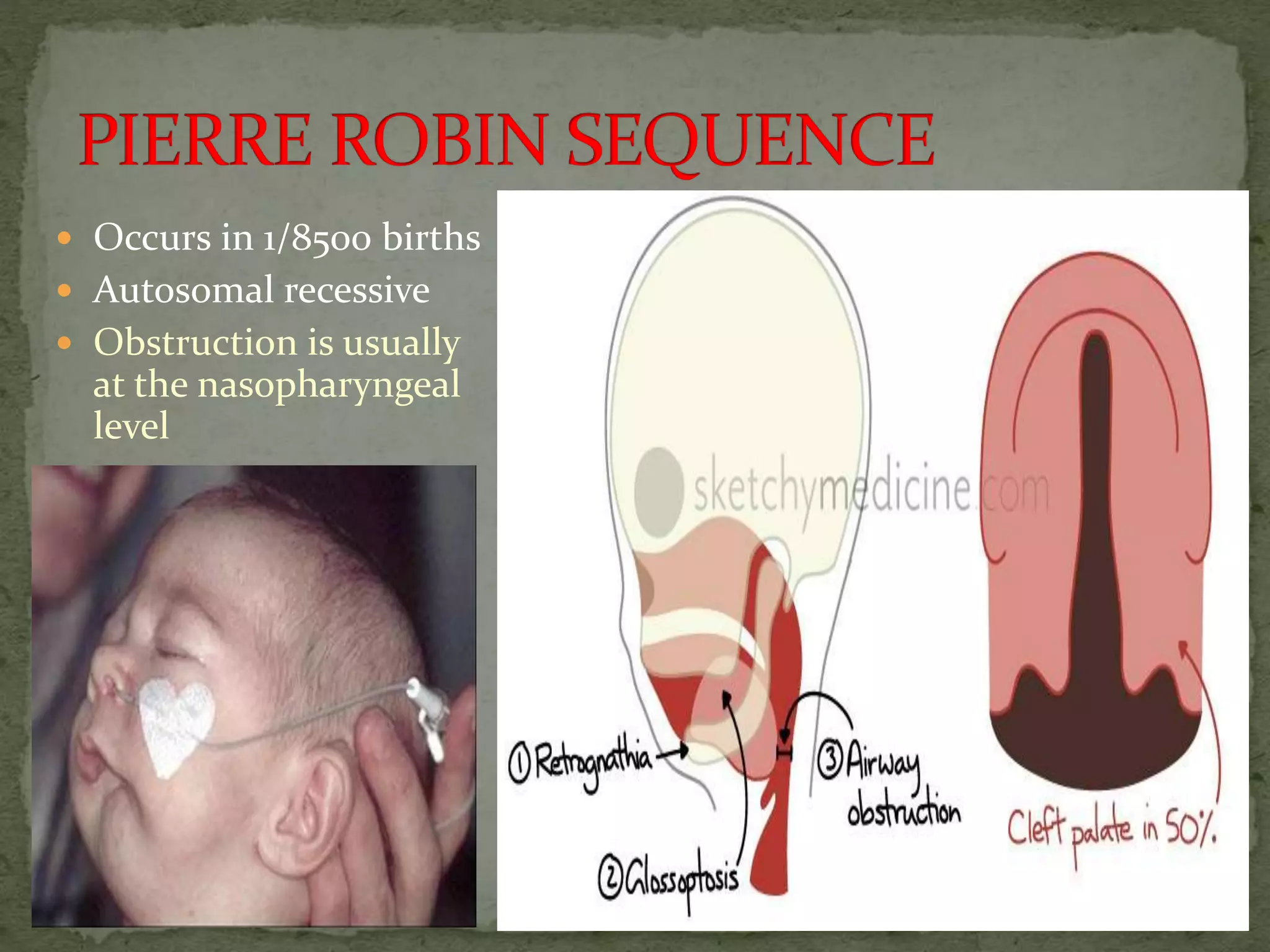
 Occurs in 1/8500 births
 Autosomal recessive
 Obstruction is usually
at the nasopharyngeal
level
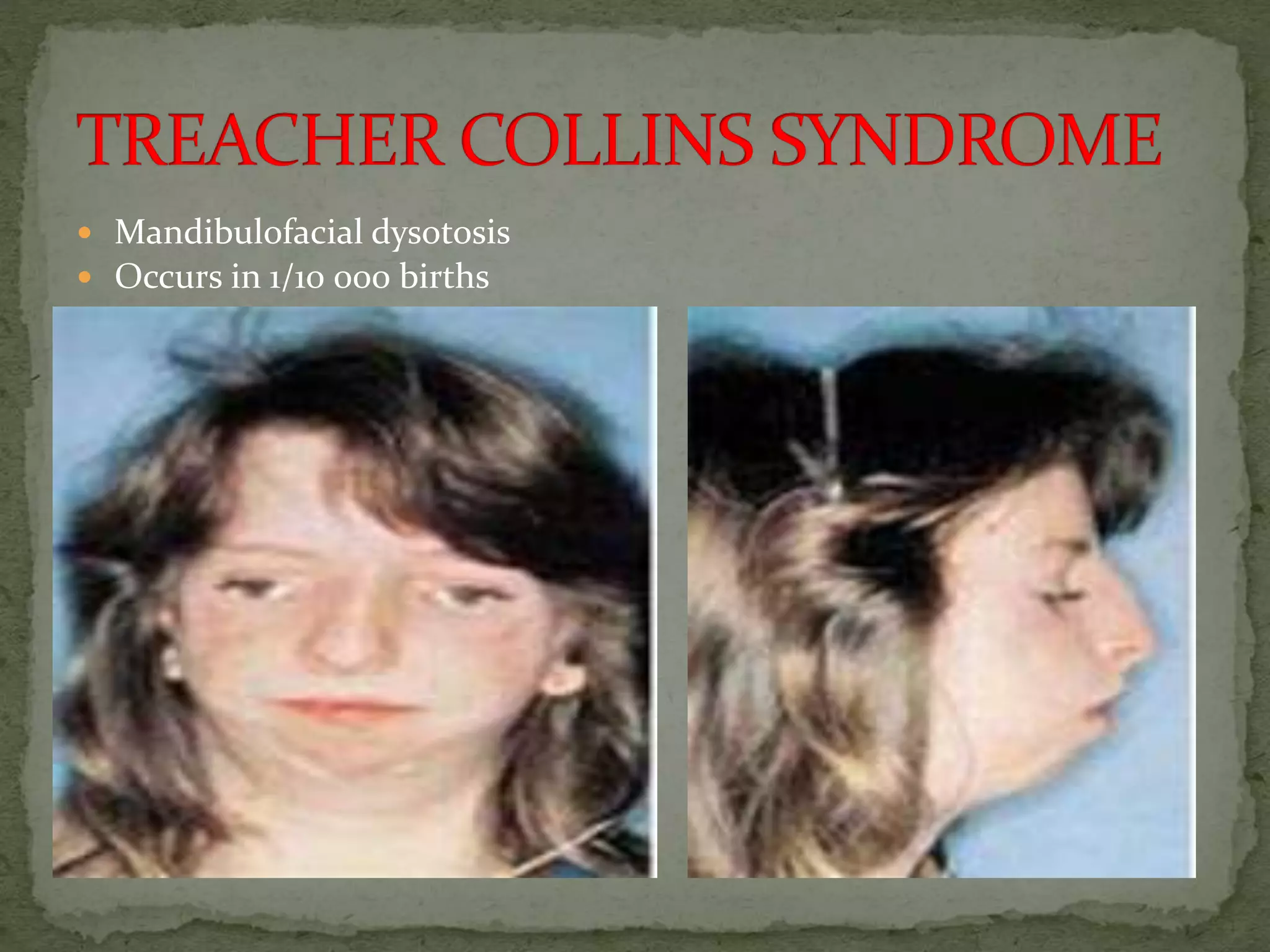
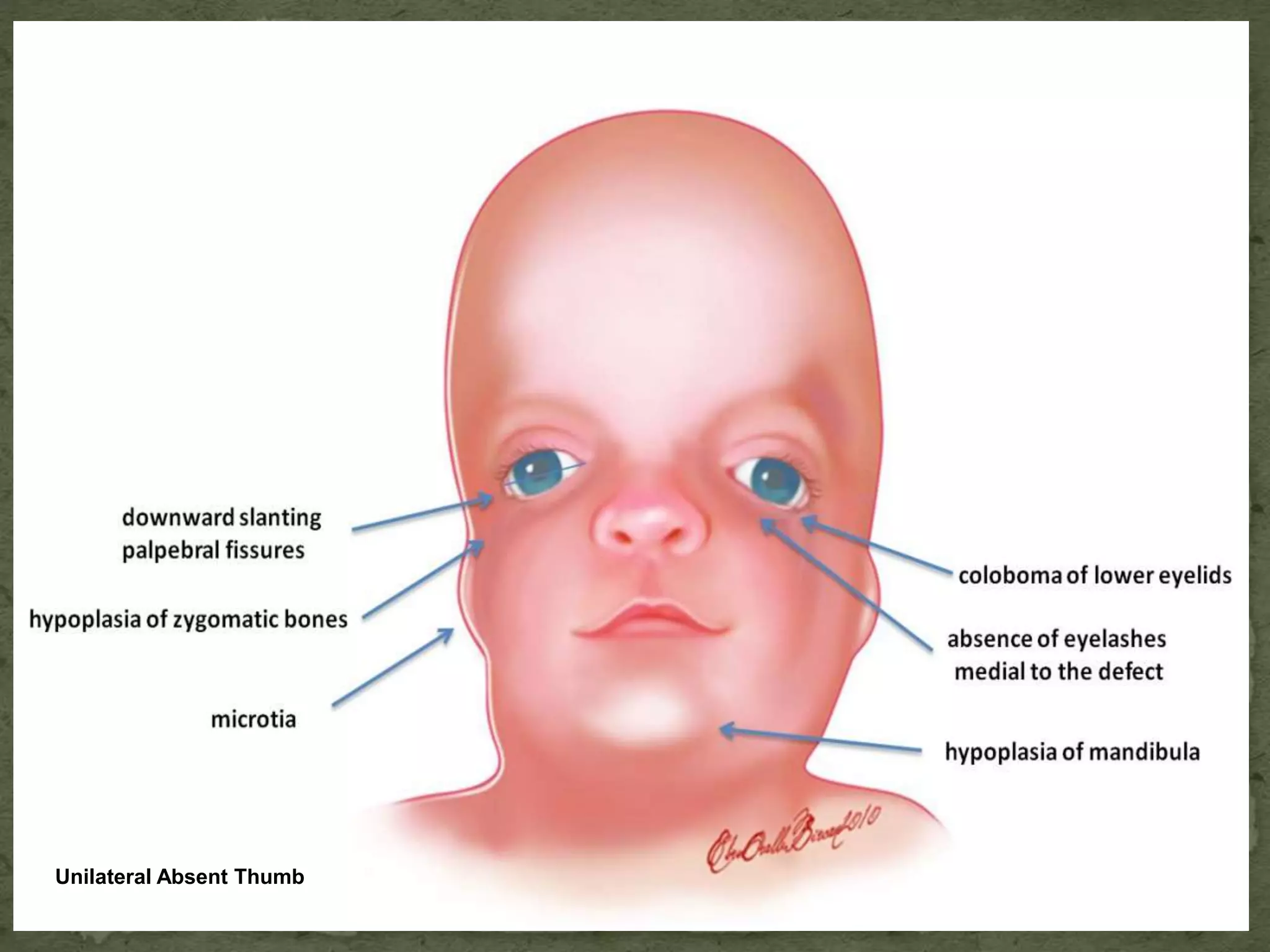
 Mandibulofacial dysotosis
 Occurs in 1/10 000 births
Unilateral Absent Thumb
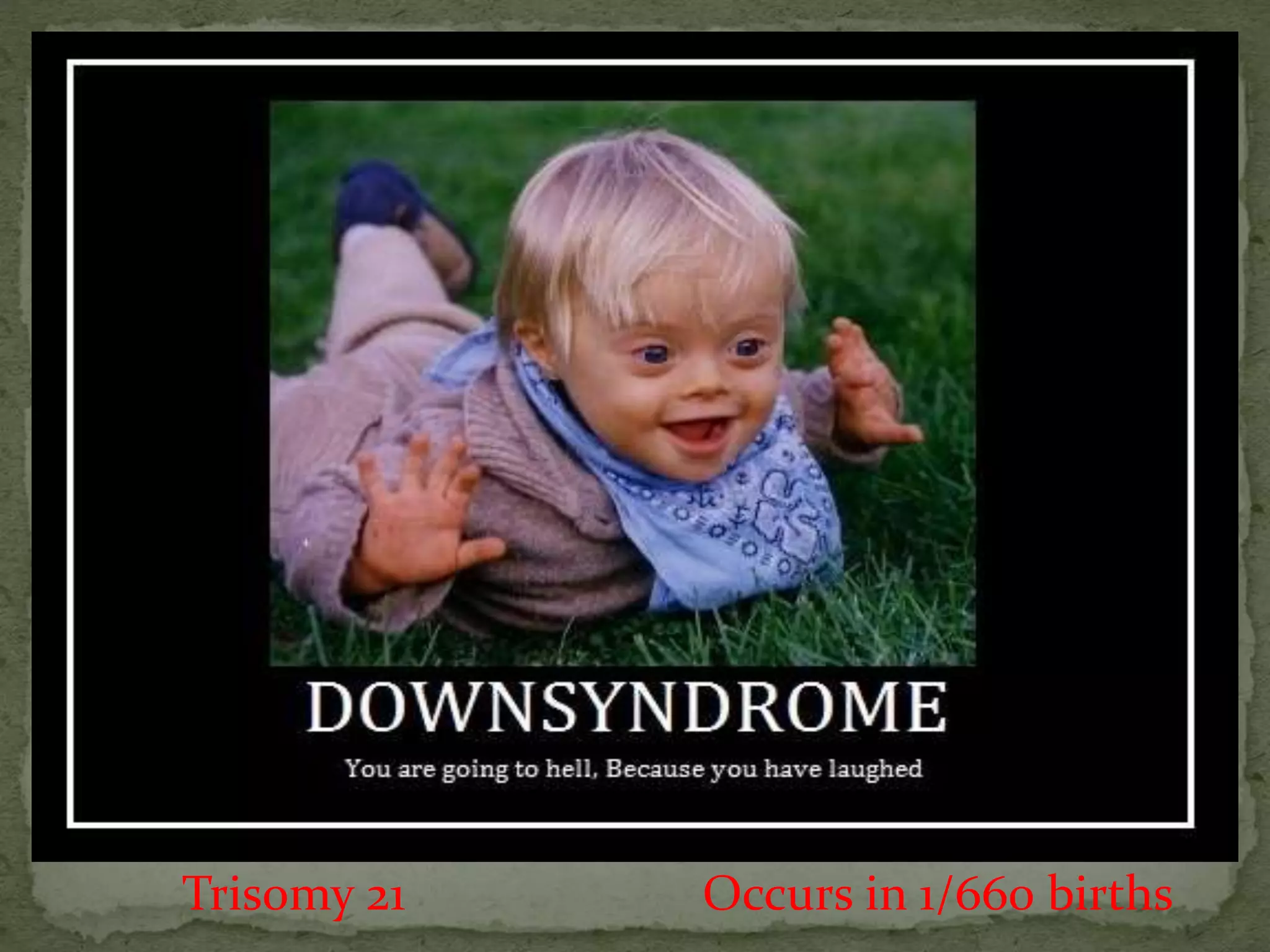
Trisomy 21 Occurs in 1/660 births
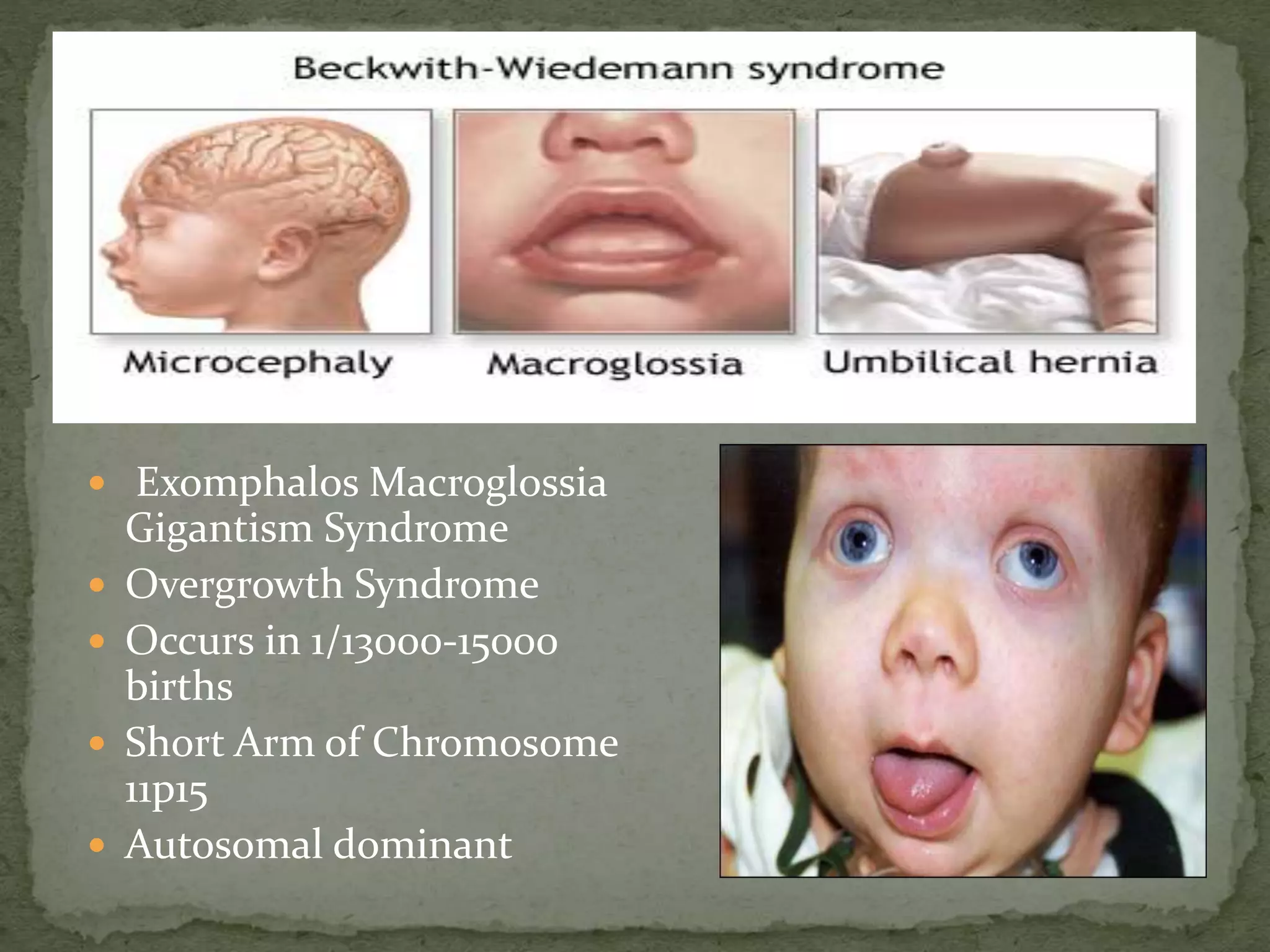
 Exomphalos Macroglossia
Gigantism Syndrome
 Overgrowth Syndrome
 Occurs in 1/13000-15000
births
 Short Arm of Chromosome
11p15
 Autosomal dominant
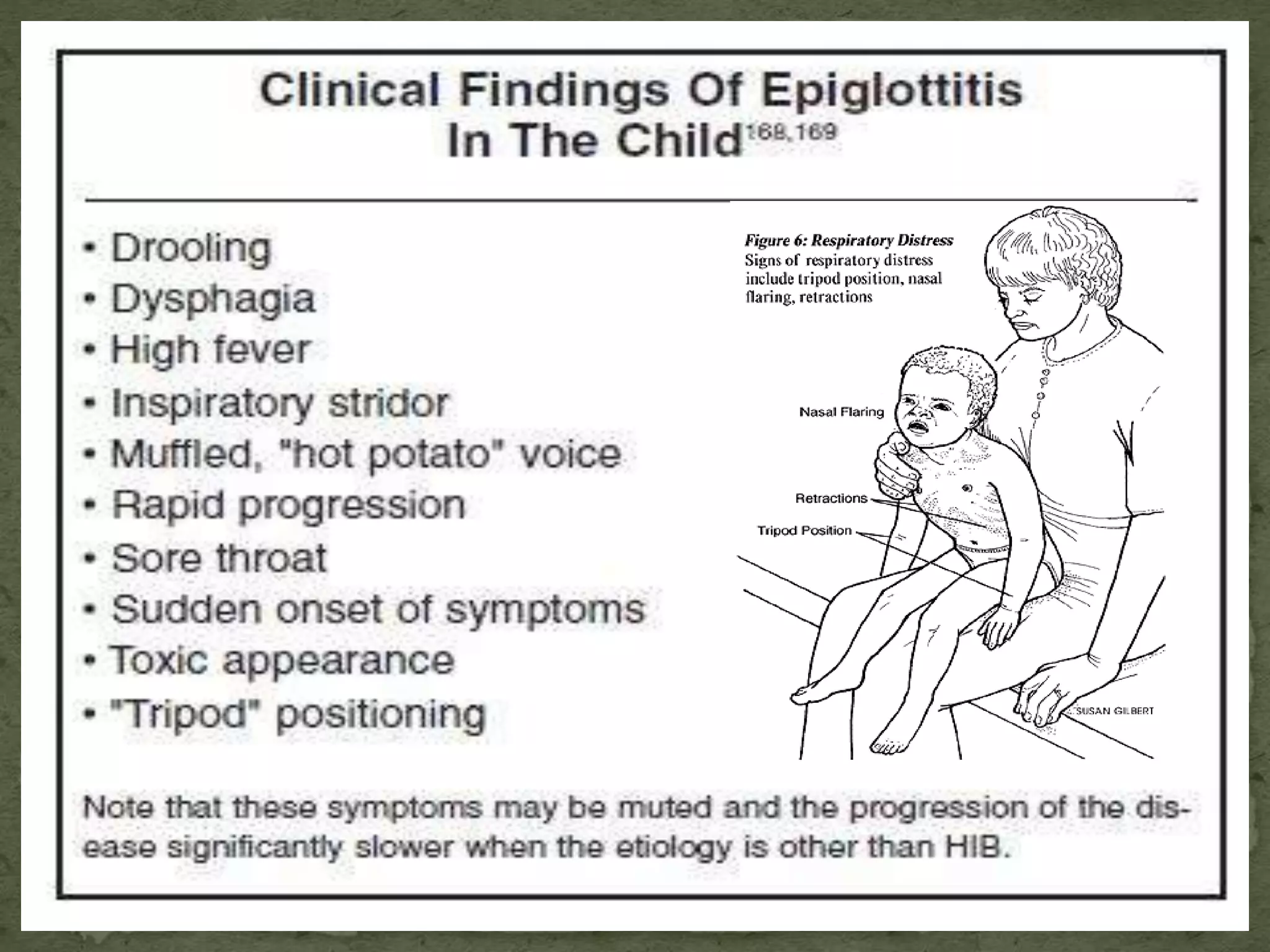
 Haemophilus influenzae type B
 Occurs in children ages 2-6 years
 Disease of adults due to widespread H. influenza vaccine
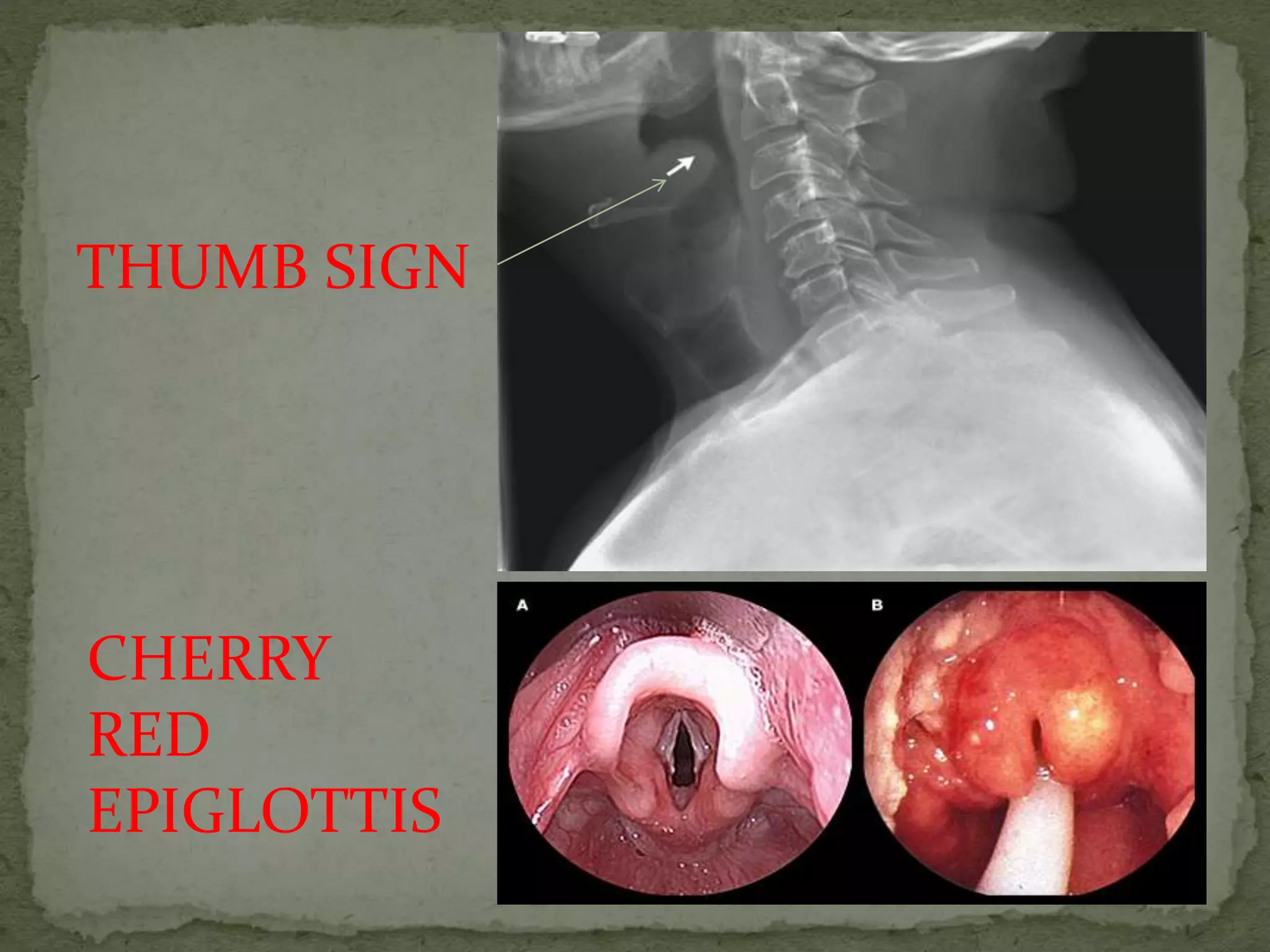
THUMB SIGN
CHERRY
RED
EPIGLOTTIS
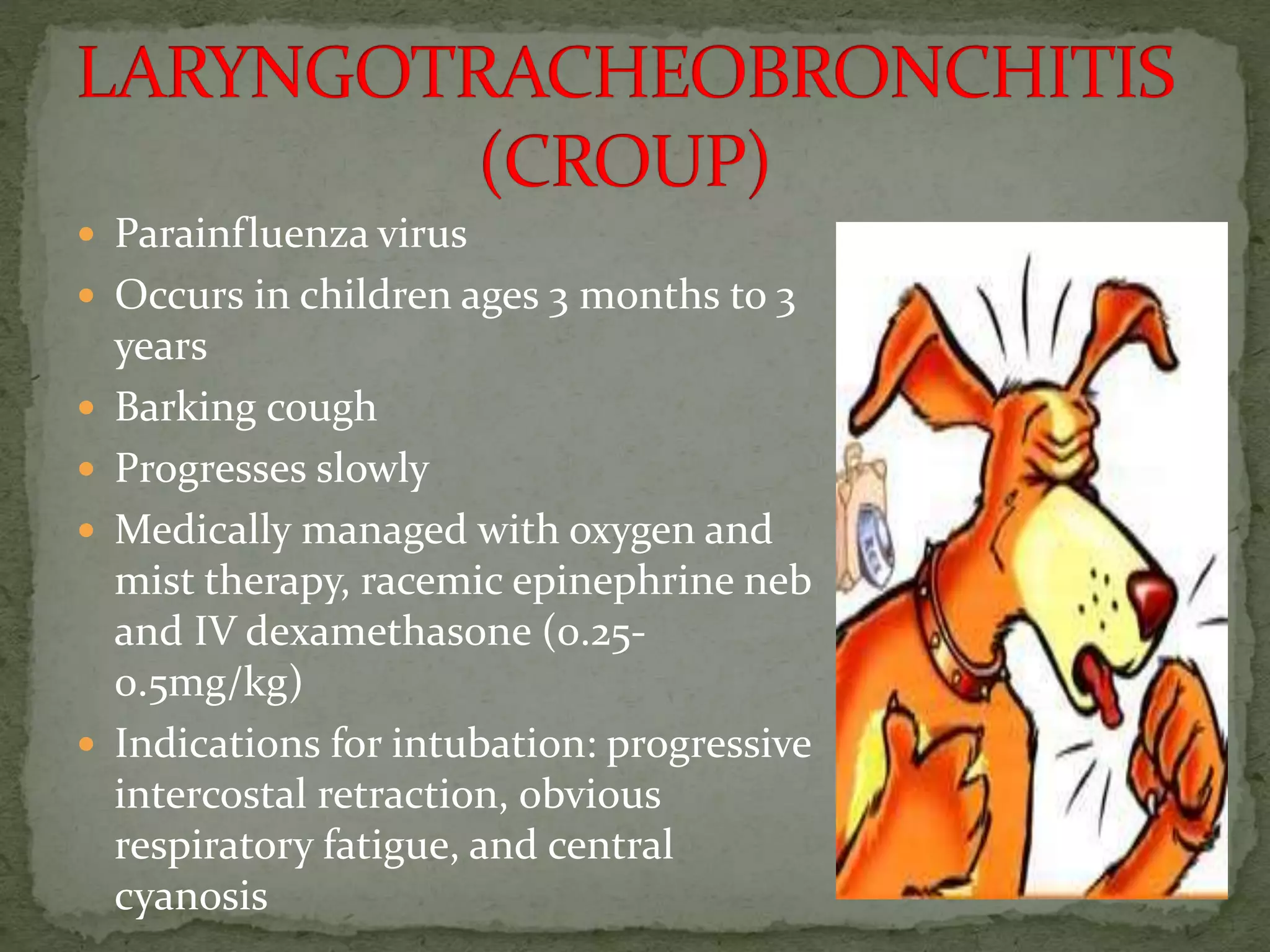
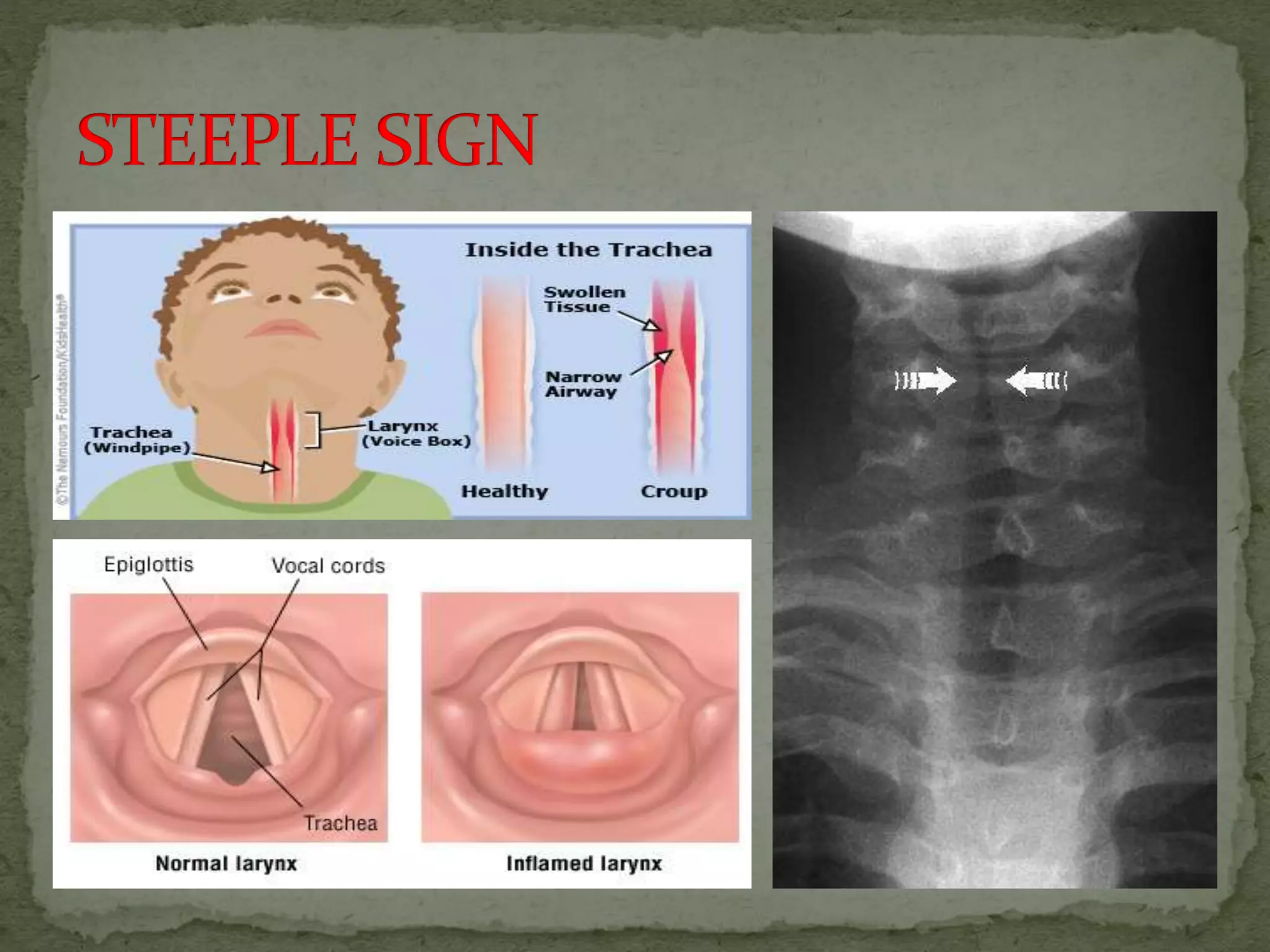
 Parainfluenza virus
 Occurs in children ages 3 months to 3
years
 Barking cough
 Progresses slowly
 Medically managed with oxygen and
mist therapy, racemic epinephrine neb
and IV dexamethasone (0.25-
0.5mg/kg)
 Indications for intubation: progressive
intercostal retraction, obvious
respiratory fatigue, and central
cyanosis
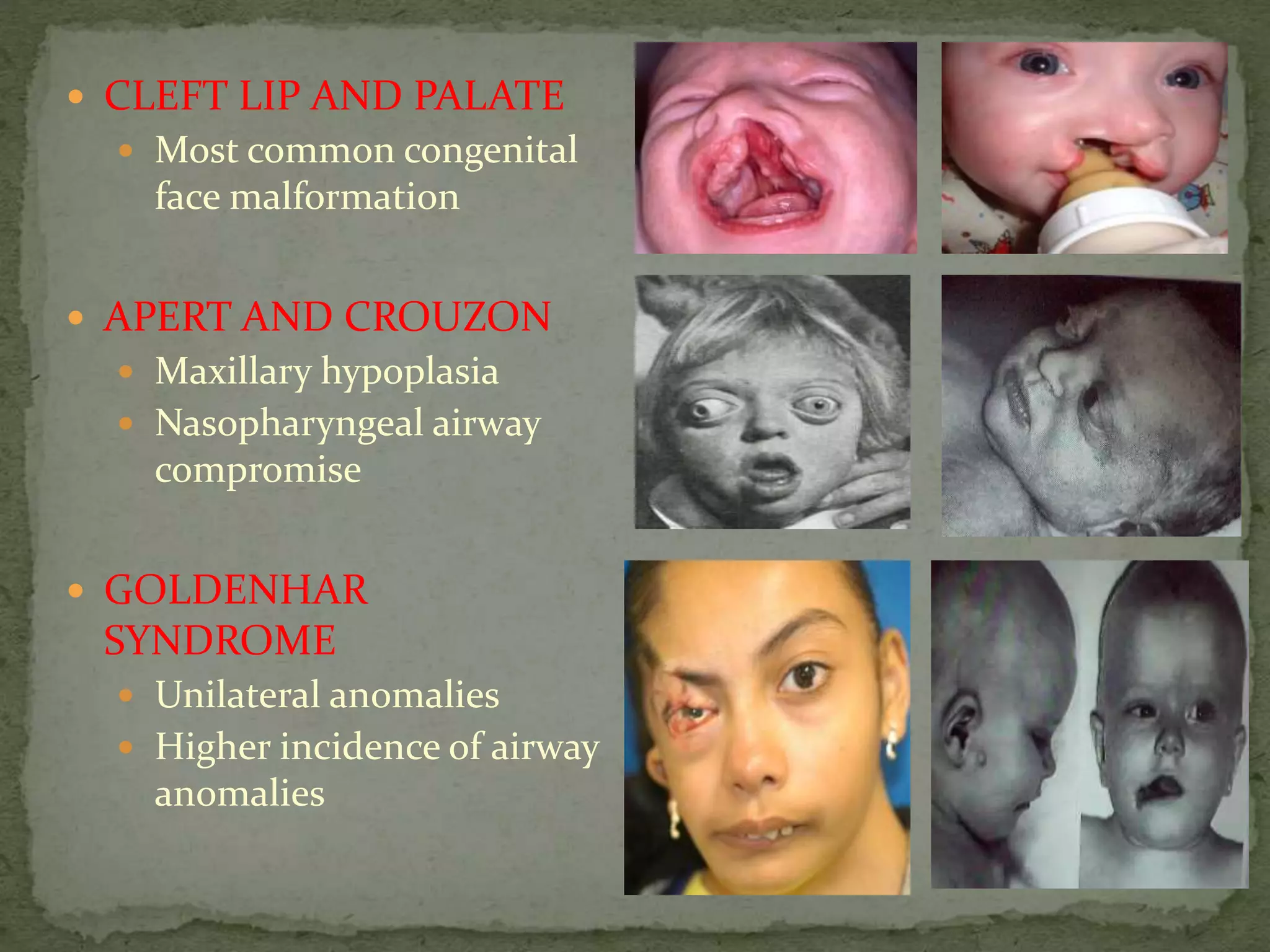
 CLEFT LIP AND PALATE
 Most common congenital
face malformation
 APERT AND CROUZON
 Maxillary hypoplasia
 Nasopharyngeal airway
compromise
 GOLDENHAR
SYNDROME
 Unilateral anomalies
 Higher incidence of airway
anomalies
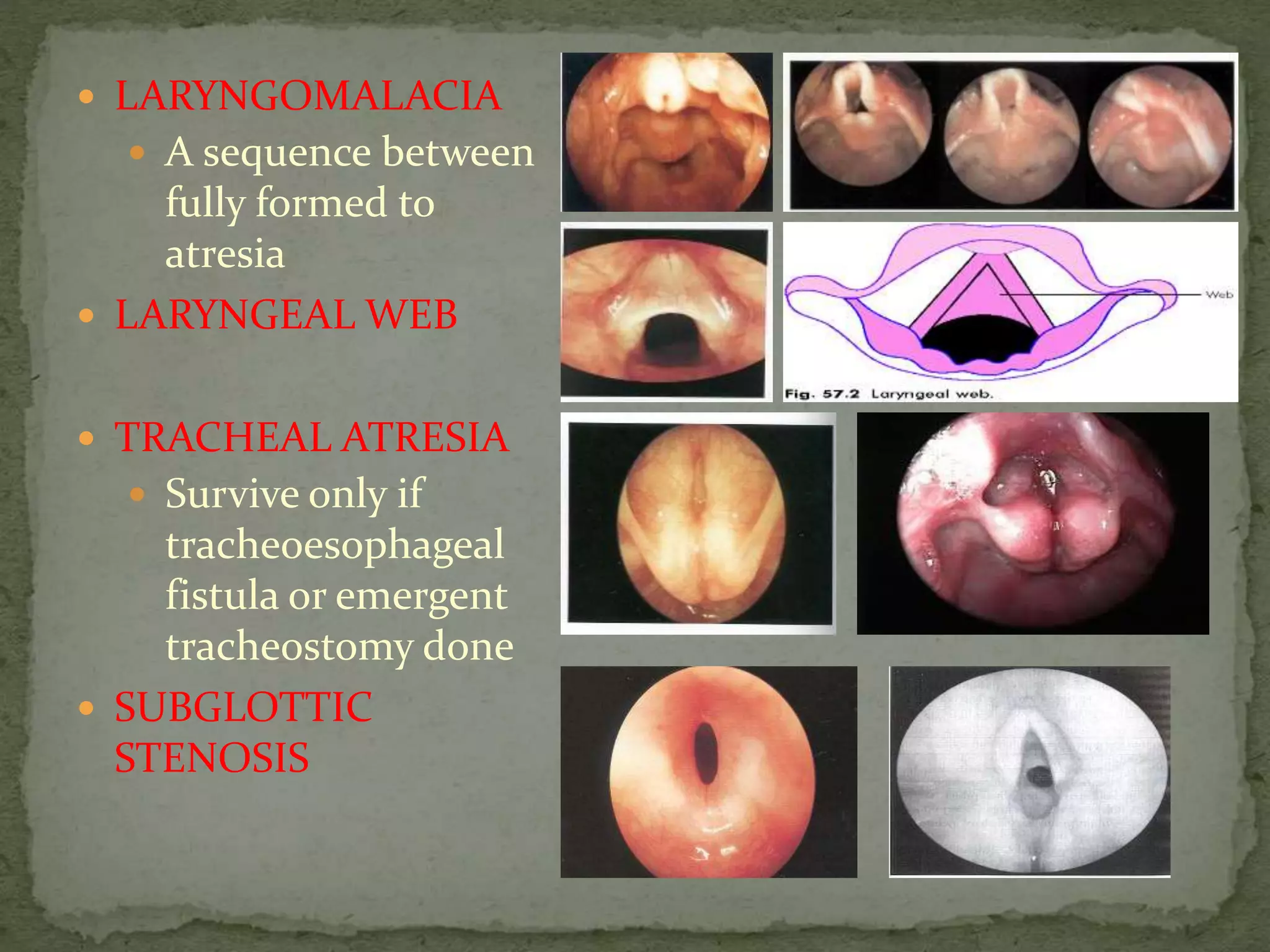
 LARYNGOMALACIA
 A sequence between
fully formed to
atresia
 LARYNGEAL WEB
 TRACHEAL ATRESIA
 Survive only if
tracheoesophageal
fistula or emergent
tracheostomy done
 SUBGLOTTIC
STENOSIS
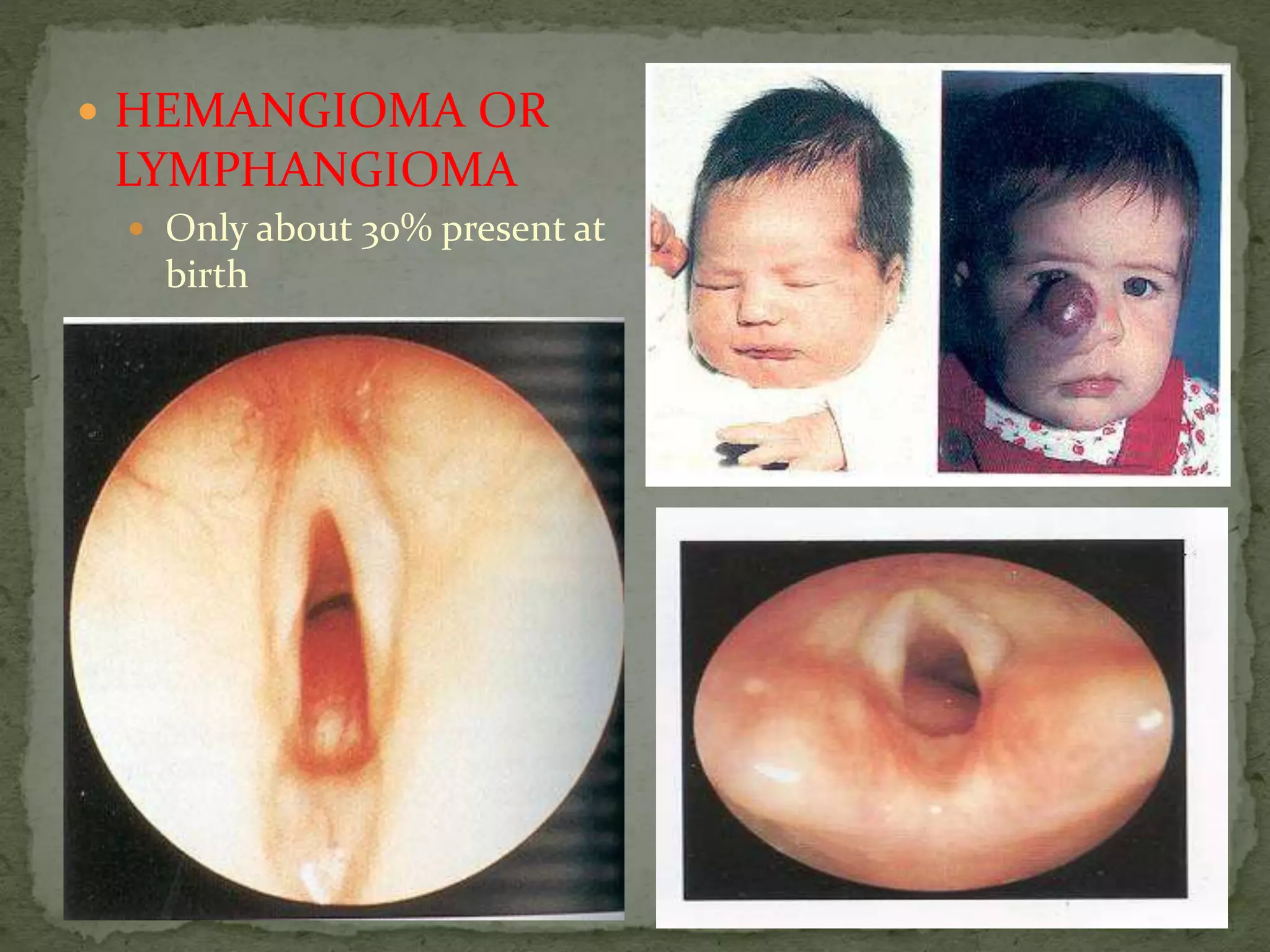
 HEMANGIOMA OR
LYMPHANGIOMA
 Only about 30% present at
birth
RULES
“Use your common sense”
“ Do not continue to do the same thing and expect
different results’’
“Easier comes first”
“Each difficult intubation is a different”
PAEDIATRIC AIRWAY

PAEDIATRIC AIRWAY

  • 1.
    DR. SHAILESH K.KOHAD ANAESTHESIA SPECIALIST KING SAUD MEDICAL CITY, RIYADH.
  • 2.
     ANATOMY  PHYSIOLOGY AIRWAY ASSESSMENT  AIRWAY MANAGEMENT  DIFFICULT AIRWAY MANAGEMENT  UNANTICIPATED DIFFICULT AIRWAY  AIRWAY MANAGEMENT IN SPECIAL CASES
  • 4.
     Relatively large Anterior flexion may cause airway obstruction
  • 5.
     Obligate Nasal Breathers Poor tolerance to obstruction
  • 6.
     Relatively Large Obstructs Airway  Neck extension may not relieve obstruction  Difficult to visualize larynx
  • 7.
     Adult epiglottisbroader, axis parallel to trachea  Infant epiglottis omega shaped and axis angled away from trachea  More difficult to lift an infant’s epiglottis with laryngoscope blade  Straight laryngoscope blade completely elevates the epiglottis, preferred for pediatric laryngoscopy  More susceptible to trauma
  • 8.
     Laryngeal apparatusdevelops from brachial clefts and descends caudally hence Infant’s larynx is higher in neck (C2-3) compared to adult’s (C4-5)  More Anterior  Intubation more difficult
  • 9.
     Infant’s vocalcords have more angled attachment to trachea, whereas adult vocal cords are more perpendicular  Difficulty in nasal intubations where “blindly” placed ETT may easily lodge in anterior commissure rather than in trachea
  • 10.
     Narrowest portion ↑ resistance with airway edema or infection  Acts as “cuff” during tracheal intubation  Tight fitting ETT may cause edema and trouble upon extubation  Uncuffed ETT preferred for children < 8 years old  Fully developed cricoid cartilage occurs at 10-12 years of age
  • 11.
     Funnel shaped Small diameter (6mm), high compliance  ↑ resistance with airway edema or infection  Collapses easily with neck hyperflexion or hyperextension
  • 12.
    Alveoli  ↑ ClosingCapacity & ↑ air trapping Pulmonary Vessels  ↑ Pulmonary vascular resistance (PVR)  Very sensitive to constriction by hypoxia, acidosis and hypercarbia Chest Wall  Horizontal ribs  ↑ A-P diameter  ↑ compliance due to weak rib cage  Breathing is all diaphragmatic  FRC determined solely by elastic recoil of lungs  Chest wall collapses with negative pressures
  • 13.
     Compared toAdults  Larger occiput  Nasal Breathers  Larger tongue  Epiglottis is floppier  Larynx Anterior & Cephalad  Funnel shaped Trachea  Cricoid Cartilage Narrowest
  • 14.
     Type I& II pulmonary epithelial cells  Pulmonary surfactant produced by Type II pneumocytes at 24 wks GA  Sufficient surfactant present after 35 wks GA  Premature infants prone to respiratory distress syndrome (RDS) because of insufficient surfactant  Betamethasone can be given to pregnant mothers at 24-35 wks GA to accelerate fetal surfactant production
  • 15.
     High metabolicrate (5-8 ml/kg/min)  Oxygen consumption of infant (6 ml/kg/min) is twice that of an adult (3 ml/kg/min) [Less Oxygen Reserve]  Tidal volume is relatively fixed (6-7 ml/kg/min)  Minute Alveolar Ventilation is more dependent on increased Respiratory Rate than on Tidal Volume  Ratio of Alveolar Minute Ventilation to FRC is doubled under circumstances of hypoxia, apnea or anesthesia  Lung compliance is less while chest wall compliance is more than those in adults - Reduced FRC and Atelectasis.  Infant’s FRC is diminished and de-saturation occurs more precipitously  Lack Type I muscle fibers, fatigue more easily  Prone to Bradycardia - Laryngeal stimulation and hypoxia
  • 17.
  • 19.
     Best to1st look from afar  Is the chest moving?  Can you hear breath sounds?  Are there any abnormal airway sounds (e.g.. Stridor, snoring)?  Is there increased respiratory effort with retractions or respiratory effort with no airway or breath sounds?
  • 20.
     URTI -cough, laryngospasm, bronchospasm, desaturation during anesthesia  Snoring – Adenoid Hypertrophy, OSA, Upper Airway Obstruction  Chronic Cough – Subglottic Stenosis, Previous Tracheoesohageal Fistula Repair  Productive Cough - Bronchitis, Pneumonia  Sudden Onset of New Cough – Foreign Body Aspiration  Inspiratory Stridor - Macroglossia, Laryngeal Web, Laryngomalacia, Extrathoracic Foreign Body  Hoarse Voice - Laryngitis, Vocal Cord Palsy, Papillomatosis  Asthma - Bronchospasm  Repeated Pneumonias - GERD, CF, Bronchiectasis, Tracheoesophageal Fistula, Immune Suppression, Congenital Heart Disease  Previous Anesthetic Problems  Atopy, Allergy – Increased Airway Reactivity  Congenital Syndrome - Pierre Robin Sequence, Treacher Collins, Klippel- Feil, Down’s Syndrome, Choanal atresia  Environmental Smokers
  • 21.
     Facial expression Nasal flaring  Mouth breathing  Color of mucous membranes  Retractions (suprasternal, intercostal, subcostal)  Respiratory rate  Voice change  Mouth opening  Size of mouth  Mallampati
  • 22.
     Loose ormissing teeth.  Size and configuration of palate.  Size and configuration of mandible (side view).  Presence of inspiratory stridor: Epiglottitis, croup, extrathoracic foreign body.  Both inspiratory and expiratory stridor: Aspirated foreign body, vascular ring, or large esophageal foreign body.  Prolonged expiration: lower airway disease?  Baseline oxygen saturation in room air.
  • 23.
     Laboratory andradiographic evaluation extremely helpful with pathologic airway  AP and lateral films and fluoroscopy may show site and cause of upper airway obstruction  MRI/CT more reliable for evaluating neck masses, congenital anomalies of the lower airway and vascular system  Perform radiograph exam only when there is no immediate threat to the child’s safety and in the presence of skilled personnel with appropriate equipment to manage the airway  Intubation must not be postponed to obtain radiographic diagnosis when the patient is severely compromised.  Blood gases are helpful in assessing the degree of physiologic compromise; however, performing an arterial puncture on a stressed child may aggravate the underlying airway obstruction
  • 24.
     Simple thingsto improve airway patency  Suction nose and oropharynx  Reposition child/ allow child to assume position of comfort  Head-tilt-chin lift/ jaw thrust  Use airway adjuncts- NPA/ OPA  Bag and Mask Ventilation  Intubation
  • 25.
     S: Suction Catheters (6 - 16 french) and Yankauer tips (two sizes)  O: Oxygen and how to deliver  Nasal cannula, oxygen flow, masks and appropriate bag  A: Airway  Appropriate ETT, oral/nasal airway, stylets, laryngoscopes  P: Pharmacology  RSI meds  ME: Monitoring Equipment  EtCO2 detector, stethescope, monitors
  • 26.
     Measure length- Pt’s earlobe to tip of nose  Duration < 10 sec.  May result in Hypoxia, ↓ HR (vagal), Bronchospasm, Larygospasm, Atelectasis  Appropriate suction catheter size Neonates 5-6 Fr Infants 6-8 Fr Older kids 10 Fr Age Pressure (mmHg) < 1 yr 60-80 1-12 yrs 80-120 13-17 yrs 100-150
  • 27.
  • 28.
  • 29.
  • 30.
    • Too small:will not adequately displace tongue • Too large: may obstruct larynx and/ or interfere with mask fit
  • 31.
     Place OPAagainst side of face. With flange at the corner of the mouth the tip should reach angle of the jaw
  • 32.
    • Distance fromnares to angle of mandible approximates the proper length • Nasopharyngeal airway available in 12F to 36F sizes • Shortened endotracheal tube may be used in infants or small children • Avoid placement in cases of hypertrophied adenoids - bleeding and trauma
  • 33.
    •Clear, plastic maskwith inflatable rim provides atraumatic seal •Proper area for mask application-bridge of nose extend to chin •Maintain airway pressures <20 cm H2O •Place fingers on mandible to avoid compressing pharyngeal space •Hand on ventilating bag at all times to monitor effectiveness of spontaneous breaths •Continous postitive pressure when needed to maintain airway patency
  • 35.
     3 sizes: AgeVolume (ml) Infant 500 Child 1000 Adolescent 2000
  • 36.
  • 37.
     The problemis… …but we are here. Cords are here…
  • 38.
     The aimis…  To “see around the corner” • The goal of DL… • To get rid of the corner • To create straight line of sight
  • 39.
     Oral axis Pharyngeal axis  Tracheal axis Oral Pharyngeal Tracheal
  • 42.
     Straight bladesare placed under the epiglottis and used to lift anteriorly to expose the cords.  Curved blades are placed in the valecula and lifted anteriorly to expose the cords. Macintosh Miller Wisconsin
  • 43.
     Miller bladeis preferred for infants and younger children  Facilitates lifting of the epiglottis and exposing the glottic opening  Care must be taken to avoid using the blade as a fulcrum with pressure on the teeth and gums  Macintosh blades are generally used in older children
  • 44.
    Age Blade/Size Infant Miller1 2 years old Miller 2 12 years old Miller/Mac 3 “Switch to a 2 at 2”
  • 45.
     For neonatesendotracheal tube size roughly corresponds to 1/10th of gestational age rounded down to the nearest size.  For example  A 36 week premie would get a 3.5 ETT  A 28 week premie would get a 2.5 ETT Age ETT Size (ID) (mm) ETT Length (cm) > 6 months 3 – 3.5 10 6 months – 1 yr 3.5 – 4.0 11 1 yr – 2 yr 4.0 – 5.0 12
  • 46.
    SIZE  Uncuffed ETtube: (Age in years / 4) + 4  Uncuffed ET tube: (Age in years + 16) / 4 (rounded to nearest 0.5 mm)  Cuffed ET tube: (Age in years / 4) + 3 LENGTH  ET tube Depth (Lip): ET tube Size (ID) x 3  ET tube Depth (Lip): (Age in yrs / 2) + 12
  • 47.
     Uncuffed ETTrecommended in children < 8 yrs old to avoid post- extubation stridor and subglottic stenosis  Cuffed ETT preferable in cases of:  High risk of Aspiration (ie. Bowel obstruction)  Low Lung Compliance (ie. ARDS, pneumoperitoneum, CO2 insufflation of the thorax, CABG)  Precise control of Ventilation and pCO2 (ie. increased intracranial pressure, single ventricle physiology)  Disadvantages of cuffed ETT: smaller size increases airway resistance, increase work of breathing, poorly designed for pediatric pts, need to keep cuff pressure < 25 cm H2O  Disadvantages of uncuffed ETT: more tube changes for long-term intubation, leak of anesthetic agent into environment, require more fresh gas flow > 2L/min, higher risk for aspiration  For “short” cases when ETT size > 4.0, choice of cuff vs uncuffed probably does not matter
  • 49.
     Remember DOPE DDisplaced ETT ETT may be in trachea or in right or left mainstem bronchus O Obstruction of ETT Secretions, blood, pus, foreign body, kinked ETT P Pneumothorax Simple Tension E Equipment failure Disconnection of O2 source, leak in vent circuit, loss of power/ vent malfunction
  • 50.
     Use largestsize that can pass easily down the ETT  Ideally not larger than half the diameter of ETT to avoid causing atelectasis  TIP: choose double the ETT e.g. 4.0 i.d. ETT choose 8 Fr suction catheter
  • 51.
     Postintubation Croup Incidence 0.1-1%  Risk factors: large ETT, change in patient position introp, patient position other than supine, multiple attempts at intubation, traumatic intubation, pts ages 1-4, surgery >1hr, coughing on ETT, URI, h/o croup  Tx: humidified mist, nebulized racemic epinephrine, steroid  Laryngotracheal (Subglottic) Stenosis  Occurs in 90% of prolonged endotracheal intubation  Lower incidence in preterm infants and neonates due to relative immaturity of cricoid cartilage  Pathogenesis: ischemic injury secondary to lateral wall pressure from ETT, edema, necrosis and ulceration of mucosa, infection  Granulation tissues form within 48hrs leads to scarring and stenosis
  • 52.
    • More anatomicalfit • Sealing at low pressures • More distal position • Greater permeability for nitrous oxide • For neo ≤ 3 kg and infants ≤ 1 yr, ID = 3.0 mm • For children 1 to 2 years of age, ID = 3.5 mm • For children ≥ 2 years, ID = Age/4 + 3.5 • Post-intubation croup was 0.4% (2/500 children)
  • 53.
    Rigid Laryngoscopy The retromolar,paraglossal, or lateral approach to rigid laryngoscopy utilizing a straight blade.
  • 54.
     LEMON  Look Short neck, large tongue, micrognathia  Evaluate 3-3-2  3 finger breadths of mouth opening  3 finger breadths submental to hyoid  2 finger breadths hyoid to thyroid  Mallampati  Obstruction  Neck mobility
  • 55.
     LMAs (laryngealmask airway)  I-LMAs (intubating LMA)  Rigid bronchoscopy  Flexible bronchoscopy  Lighted stylet  Bullardscope  Fiberoptic intubation  Surgical airway  Combitube  Bougie Pick one or two and practice
  • 56.
     Helpful forinfants & children with immobile or shortened necks.  Either by an assistant or the laryngoscopist.
  • 58.
     Supraglottic airwaydevice developed by Dr. Archie Brain  Useful in difficult airway situations  Conduit of Drug Administration (ie. Surfactant)  Types of LMAs: Classic LMA, Flexible LMA, ProSeal LMA, Intubating LMA  Contraindications: Full Stomach, Gag reflex, FBs, Airway obstruction, High ventilation pressure  Disadvantages: Laryngospasm, aspiration LMA Size Weight Max. Cuff Vol. (ml) ETT Size (IDmm) 1.0 ≤ 5 kgs 4 3.5 1.5 5 – 10 kgs 7 4.0 2.0 10 – 20 kgs 10 4.5 2.5 20 – 30 kgs 14 5.0 3.0 30 – 50 kgs 20 6.0 4.0 50 – 70 kgs 30 7.0 5.0 > 70 kgs 40 8.0
  • 61.
  • 64.
     Only sizes3, 4, 5  Same rules and sizing as LMA  Need special armored tube for intubation  Leave LMA portion in place in field
  • 65.
     Laryngeal Tube Latex-free, single-lumen silicone tube, which is closed at distal end  Two high volume-low pressure cuffs, a large proximal oropharyngeal cuff and a smaller distal esophageal cuff  Both cuffs inflated simultaneously via a single port  Situated along length of oropharynx with distal tip in esophagus  Sizes 0-5, neonates to large adults
  • 66.
     Cobra Perilaryngeal Airway Perilaryngeal airway device with distal end shaped like a cobra-head  Positioned into aryepiglottic folds and directly seats on entrance to glottis  Inflation of the cuff occludes the nasopharynx pushing the tongue and soft tissues forward and preventing air leak  Available in sizes pediatric to adult ½ to 6
  • 67.
     Not usefulin most kids  Easy to place  Two sizes  Small (4 to 5.5 feet tall)  Regular (over 5.5 feet tall)  Contraindications  Gag reflex  Esophageal disease  Caustic ingestions  FBs/Airway obstruction
  • 68.
     Two persontechnique  Replaces stylet  Able to use with poor view  Intubate over it  Outer diameter – 5 mm  Total length – 60 cm  Small upturned distal end bend at 38⁰ helps in passage KIWI GRIP
  • 71.
  • 74.
     Can’t ventilate Can’t intubate  LMA contraindication (massive orofacial trauma) or not working  All intervations FAILED
  • 77.
     < 5years old  Needle cricothyrotomy and bag ventilation  5 to 10 years old  Needle cricothyrotomy and bag ventilation  If oxygen saturation is inadequate, Transtracheal jet ventilation  > 10 years  Needle cricothyrotomy with TTJV  Surgical cricothyrotomy – Contraindicated in < 10 yrs
  • 78.
    3-5cc syringe: 1-2ccsaline OR 12- or 14-gauge IV
  • 79.
     Identify CTMand stabilize/prep larynx  Insert needle on syringe, direct inferiorly  Large bore needle (12-16 gauge)  Catheter over needle  Advance catheter  Connect to TTJV (BVM for infants - 3.0 ETT)  Oxygen pressure (20-30 psi)  1 second on/2-3 seconds off  Complications (Similar to other cricothyrotomy)  Bleeding  Pneumothorax, Subcutaneous Emphysema, Pneumo-mediastinum  Barotrauma  Esophageal, Laryngeal or Tracheal Injury  Obstruction  Infection  Subglottic stenosis
  • 80.
     Beneficial forchildren who cannot be “ventilated” by other route
  • 81.
    Percutaneous needle cricothyrotomyprovides only a mean for oxygen insufflation and does not reliably provide adequate ventilation.
  • 82.
  • 84.
     Broselow-Luten EmergencySystem  Color-coded bags with equipments  Quicker, more efficient  Most accurate 3.5 - 25 kg
  • 87.
     Congenital NeckMasses (Dermoid cysts, cystic teratomas, cystic hygroma, lymphangiomas, neurofibroma, lymphoma, hemangioma)  Congenital Anomalies (Choanal atresia,tracheoesophageal fistula, tracheomalacia, laryngomalacia, laryngeal stenosis, laryngeal web, vascular ring, tracheal stenosis)  Congenital Syndromes (Pierre Robin Syndrome, Treacher Collin, Turner, Down’s, Goldenhar , Apert, Achondroplasia, Hallermann-Streiff, Crouzan)  Inflammatory (Epiglottitis, acute tonsillitis, peritonsillar abscess,retropharyngeal abscess, laryngotracheobronchitis,bacterial tracheitis,adenoidal hypertrophy,nasal congestion, juvenile rheumatoid arthritis)  Traumatic/Foreign Body (burn,laceration,lymphatic/venous obstruction,fractures/dislocation, inhalational injury, postintubation croup (edema),swelling of uvula  Metabolic (Congenital hypothyroidism, mucopolysaccharidosis, Beckwith- Wiedemann Syndrome,glycogen storage disease, hypocalcemia laryngospasm)
  • 88.
  • 89.
     Occurs in1/ 3000-5000 births  Most common type is the blind esophageal pouch with a fistula between the trachea and the distal esophagus (87%)  Feeding difficulties (coughing, choking and cyanosis) and breathing problems  Associated with congenital heart (VSA, PDA, TOF), VATER, GI, musculoskeletal and urinary tract defects
  • 91.
     Complete nasalobstruction of the newborn  Occurs in 0.82/10 000 births  Unilateral nare (right>left)  During inspiration, tongue pulled to palate, obstructs oral airway  Bilateral choanal atresia is Airway Emergency  Death by asphyxia  Associated with other congenital defects
  • 92.
     Occurs in1/8500 births  Autosomal recessive  Obstruction is usually at the nasopharyngeal level
  • 93.
     Mandibulofacial dysotosis Occurs in 1/10 000 births
  • 94.
  • 95.
    Trisomy 21 Occursin 1/660 births
  • 97.
     Exomphalos Macroglossia GigantismSyndrome  Overgrowth Syndrome  Occurs in 1/13000-15000 births  Short Arm of Chromosome 11p15  Autosomal dominant
  • 98.
     Haemophilus influenzaetype B  Occurs in children ages 2-6 years  Disease of adults due to widespread H. influenza vaccine
  • 100.
  • 101.
     Parainfluenza virus Occurs in children ages 3 months to 3 years  Barking cough  Progresses slowly  Medically managed with oxygen and mist therapy, racemic epinephrine neb and IV dexamethasone (0.25- 0.5mg/kg)  Indications for intubation: progressive intercostal retraction, obvious respiratory fatigue, and central cyanosis
  • 103.
     CLEFT LIPAND PALATE  Most common congenital face malformation  APERT AND CROUZON  Maxillary hypoplasia  Nasopharyngeal airway compromise  GOLDENHAR SYNDROME  Unilateral anomalies  Higher incidence of airway anomalies
  • 104.
     LARYNGOMALACIA  Asequence between fully formed to atresia  LARYNGEAL WEB  TRACHEAL ATRESIA  Survive only if tracheoesophageal fistula or emergent tracheostomy done  SUBGLOTTIC STENOSIS
  • 105.
     HEMANGIOMA OR LYMPHANGIOMA Only about 30% present at birth
  • 106.
    RULES “Use your commonsense” “ Do not continue to do the same thing and expect different results’’ “Easier comes first” “Each difficult intubation is a different”