UNIVERSITY OF DAMMAM.
Collage Of Applied Medical Sciences.
Respiratory Care Department.

High flow nasal cannula (HFNC)
Tarfa Ahmed Al-Sabhan
Clinical instructor :Mr. Maher AlQuaimi
•
•
•
•
•
•

What is high flow nasal cannula?!
Purposed and benefits.
Sitting and setup.
HFNC for adult.
HFNC for newborns and infants.
Indication and contraindication.

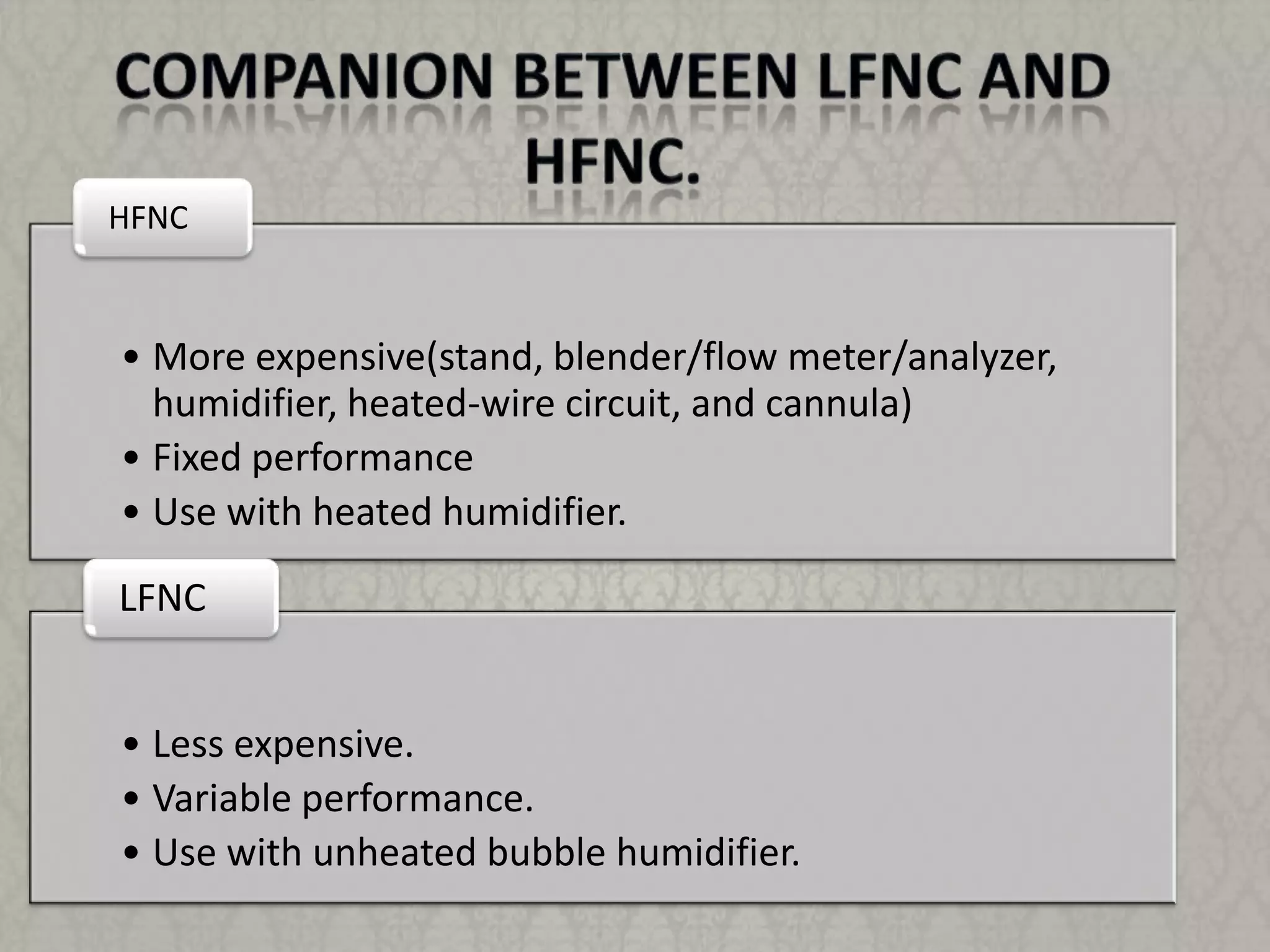
• Comparison between LFNC and HFNC.
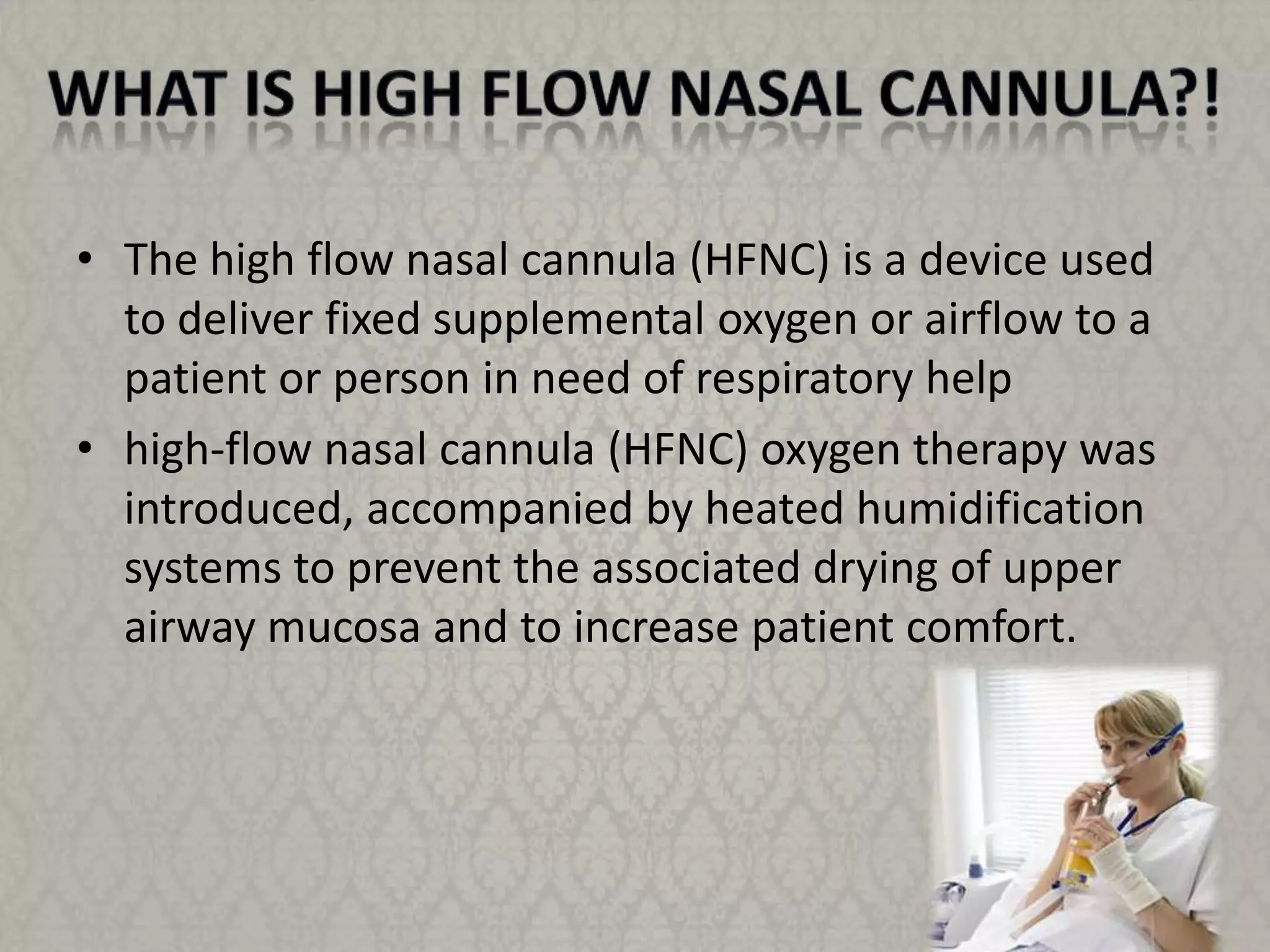
• The high flow nasal cannula (HFNC) is a device used
to deliver fixed supplemental oxygen or airflow to a
patient or person in need of respiratory help
• high-flow nasal cannula (HFNC) oxygen therapy was
introduced, accompanied by heated humidification
systems to prevent the associated drying of upper
airway mucosa and to increase patient comfort.
•
•
•
•
•

Delivery of optimally humidified and warm gases
Decreased work of breathing
Decreased body energy expenditure
Less problems with thickened secretions
Less problems with nasal irritation/septal damage
Patient comfort

Patient compliance

Optimized patient outcomes
• Vapotherm developed the 2000i High-Flow
Therapy system, which consisted of a
designated cannula with a heated
cartridge-type humidifier using membrane
technology for water vapor transfer.
• The Vapotherm 2000i was recalled in 2005
due to concerns of bacterial
contamination, but was reinstated after
manufacturing controls and
recommendations for use of only sterile
water, single-patient use, and disinfection
procedures.
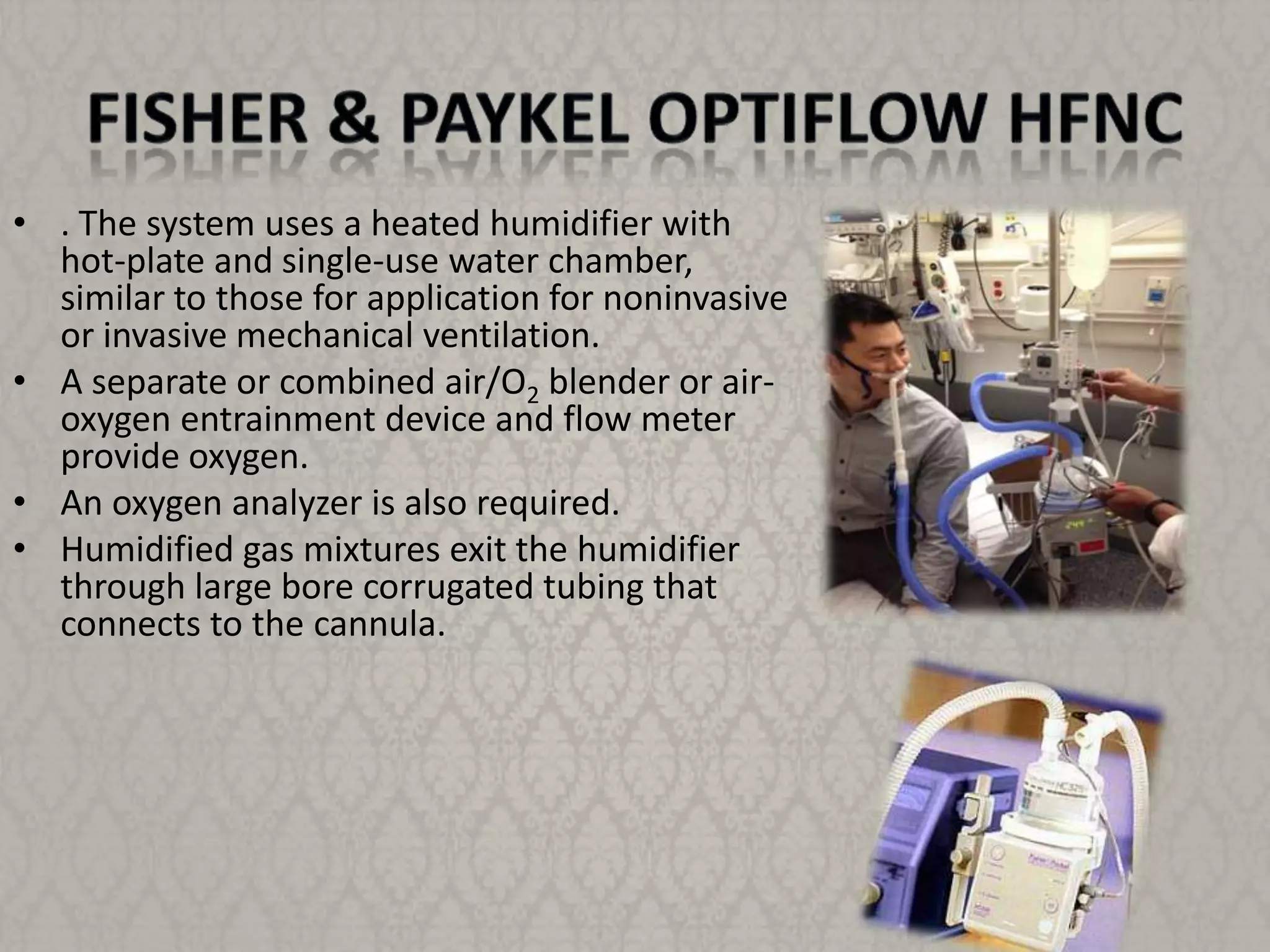
• . The system uses a heated humidifier with
hot-plate and single-use water chamber,
similar to those for application for noninvasive
or invasive mechanical ventilation.
• A separate or combined air/O2 blender or airoxygen entrainment device and flow meter
provide oxygen.
• An oxygen analyzer is also required.
• Humidified gas mixtures exit the humidifier
through large bore corrugated tubing that
connects to the cannula.
Air entrainment mask
Oxygen hood
Incubators
Oxygen tent
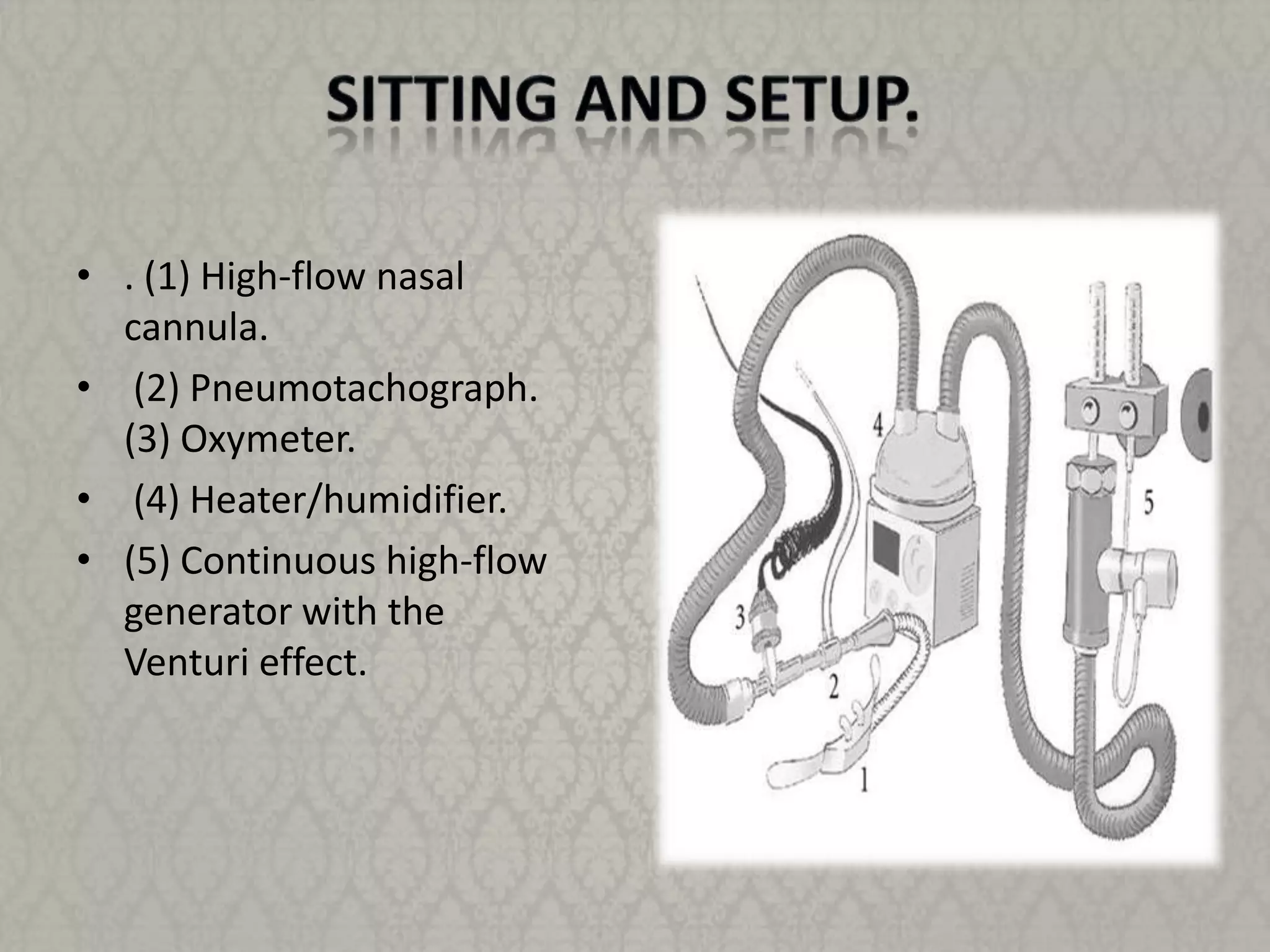
• . (1) High-flow nasal
cannula.
• (2) Pneumotachograph.
(3) Oxymeter.
• (4) Heater/humidifier.
• (5) Continuous high-flow
generator with the
Venturi effect.
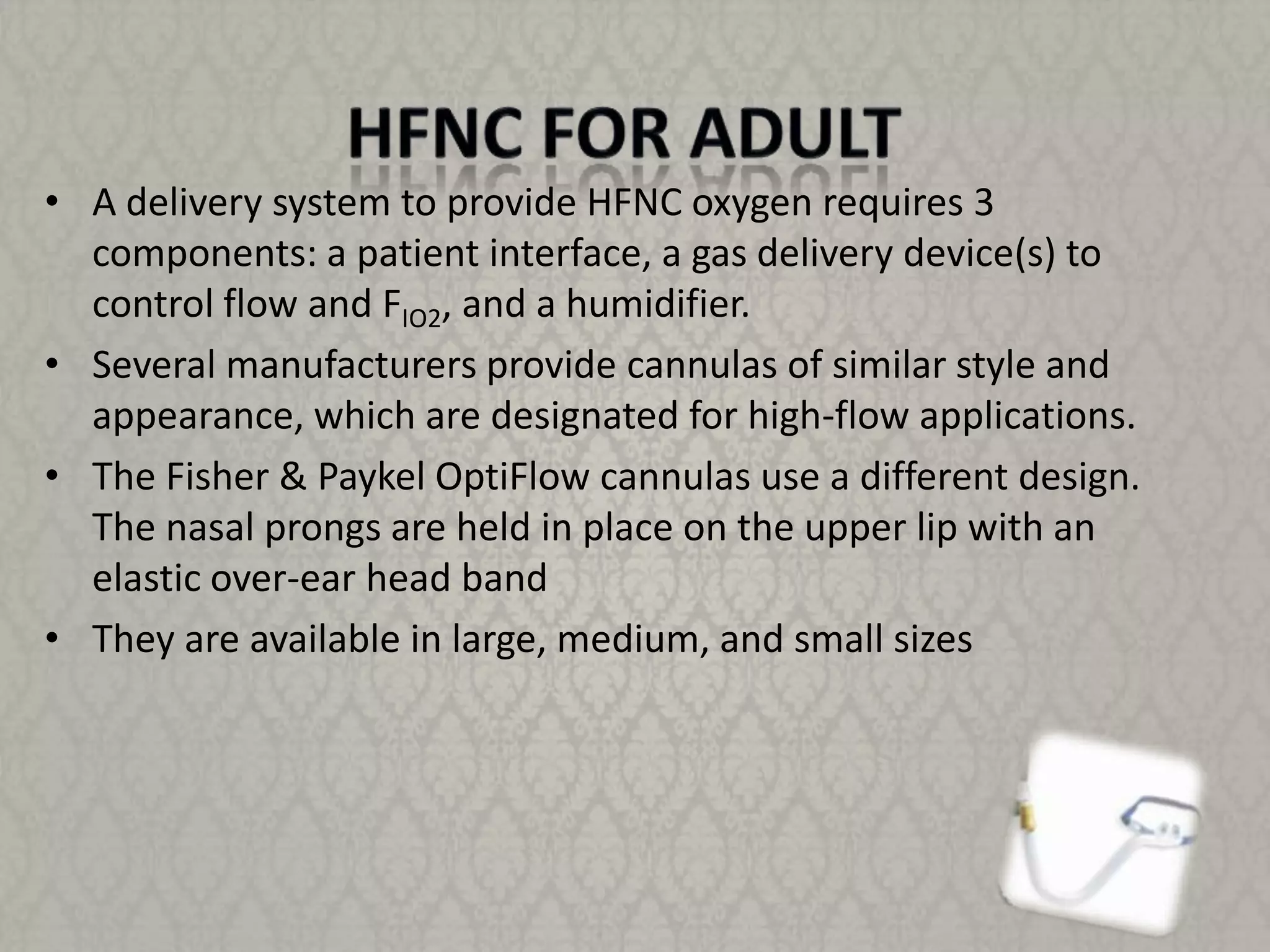
• A delivery system to provide HFNC oxygen requires 3
components: a patient interface, a gas delivery device(s) to
control flow and FIO2, and a humidifier.
• Several manufacturers provide cannulas of similar style and
appearance, which are designated for high-flow applications.
• The Fisher & Paykel OptiFlow cannulas use a different design.
The nasal prongs are held in place on the upper lip with an
elastic over-ear head band
• They are available in large, medium, and small sizes
10 to 60 L/min
• The HFNC offers potential for improved oxygen delivery for a
majority of patients with moderate hypoxemic respiratory
failure.
• The HFNC can be adapted for use in a variety of clinical
settings (exercise lab, ED, and ICU).
• The physical exam findings of reduction in breathing
frequency can provide a reliable guide to predict improved
oxygenation, as well as treatment failures, in addition to SpO2
monitoring.
Continuous positive airway pressure
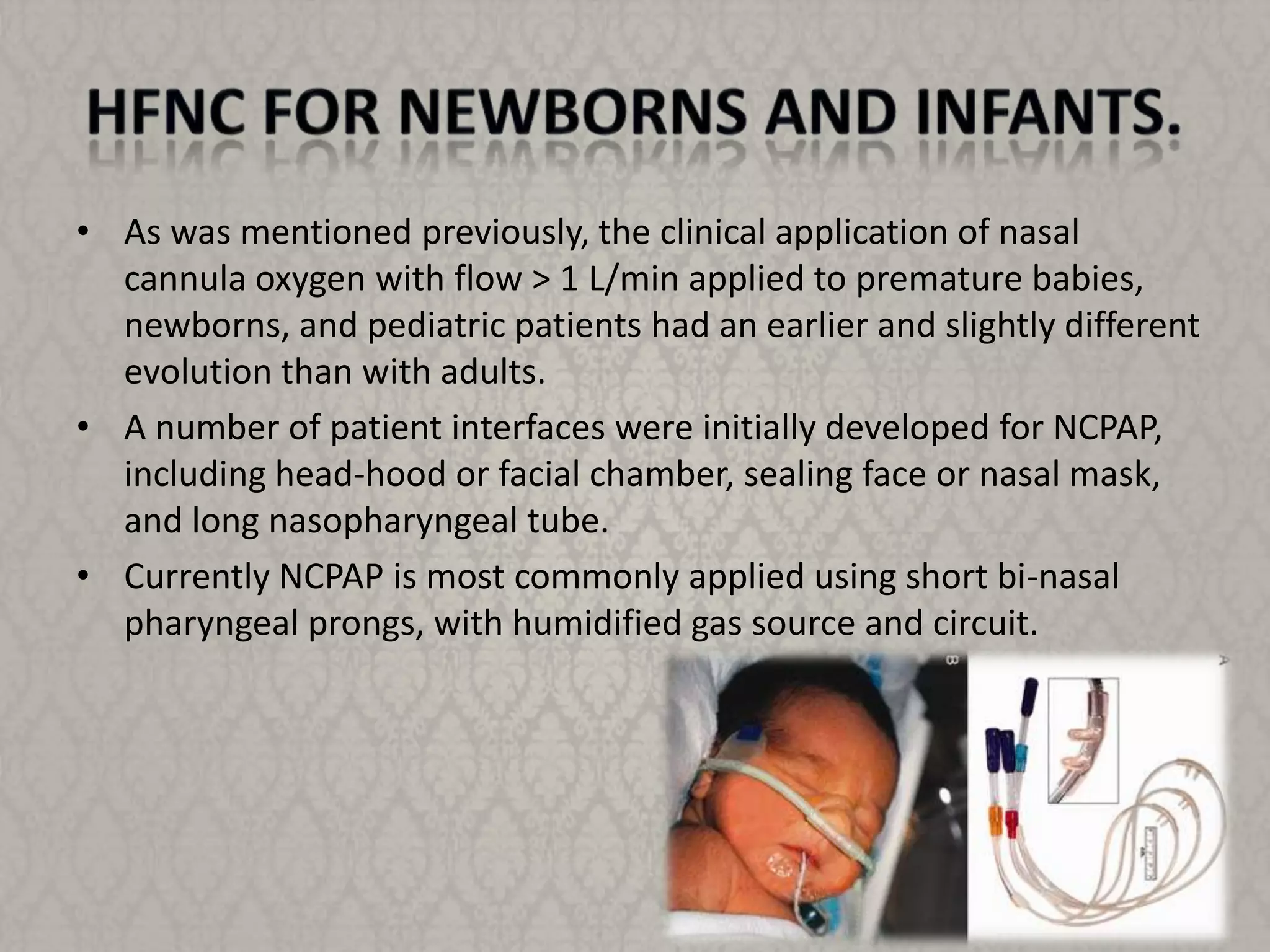
• As was mentioned previously, the clinical application of nasal
cannula oxygen with flow > 1 L/min applied to premature babies,
newborns, and pediatric patients had an earlier and slightly different
evolution than with adults.
• A number of patient interfaces were initially developed for NCPAP,
including head-hood or facial chamber, sealing face or nasal mask,
and long nasopharyngeal tube.
• Currently NCPAP is most commonly applied using short bi-nasal
pharyngeal prongs, with humidified gas source and circuit.
at 1-8L/min
NRM Vs. HFNC
Heated humidifier Fisher & Paykel
• Respiratory distress from bronchiolitis, pneumonia, congestive
heart failure, etc
• Respiratory support post extubation and mechanical ventilation
• Weaning therapy from mask CPAP or BIPAP
• Respiratory support to children with neuromuscular disease
• Apnoea of prematurity
• Blocked nasal passages.
• Trauma/surgery to nasopharanyx
HFNC

• More expensive(stand, blender/flow meter/analyzer,
humidifier, heated-wire circuit, and cannula)
• Fixed performance
• Use with heated humidifier.
LFNC
• Less expensive.
• Variable performance.
• Use with unheated bubble humidifier.
High flow nasal cannula (hfnc) by Tarfa Al-Sabhan

High flow nasal cannula (hfnc) by Tarfa Al-Sabhan

  • 1.
    UNIVERSITY OF DAMMAM. CollageOf Applied Medical Sciences. Respiratory Care Department. High flow nasal cannula (HFNC) Tarfa Ahmed Al-Sabhan Clinical instructor :Mr. Maher AlQuaimi
  • 2.
    • • • • • • What is highflow nasal cannula?! Purposed and benefits. Sitting and setup. HFNC for adult. HFNC for newborns and infants. Indication and contraindication. • Comparison between LFNC and HFNC.
  • 3.
    • The highflow nasal cannula (HFNC) is a device used to deliver fixed supplemental oxygen or airflow to a patient or person in need of respiratory help • high-flow nasal cannula (HFNC) oxygen therapy was introduced, accompanied by heated humidification systems to prevent the associated drying of upper airway mucosa and to increase patient comfort.
  • 4.
    • • • • • Delivery of optimallyhumidified and warm gases Decreased work of breathing Decreased body energy expenditure Less problems with thickened secretions Less problems with nasal irritation/septal damage Patient comfort Patient compliance Optimized patient outcomes
  • 5.
    • Vapotherm developedthe 2000i High-Flow Therapy system, which consisted of a designated cannula with a heated cartridge-type humidifier using membrane technology for water vapor transfer. • The Vapotherm 2000i was recalled in 2005 due to concerns of bacterial contamination, but was reinstated after manufacturing controls and recommendations for use of only sterile water, single-patient use, and disinfection procedures.
  • 6.
    • . Thesystem uses a heated humidifier with hot-plate and single-use water chamber, similar to those for application for noninvasive or invasive mechanical ventilation. • A separate or combined air/O2 blender or airoxygen entrainment device and flow meter provide oxygen. • An oxygen analyzer is also required. • Humidified gas mixtures exit the humidifier through large bore corrugated tubing that connects to the cannula.
  • 7.
    Air entrainment mask Oxygenhood Incubators Oxygen tent
  • 8.
    • . (1)High-flow nasal cannula. • (2) Pneumotachograph. (3) Oxymeter. • (4) Heater/humidifier. • (5) Continuous high-flow generator with the Venturi effect.
  • 9.
    • A deliverysystem to provide HFNC oxygen requires 3 components: a patient interface, a gas delivery device(s) to control flow and FIO2, and a humidifier. • Several manufacturers provide cannulas of similar style and appearance, which are designated for high-flow applications. • The Fisher & Paykel OptiFlow cannulas use a different design. The nasal prongs are held in place on the upper lip with an elastic over-ear head band • They are available in large, medium, and small sizes
  • 10.
    10 to 60L/min
  • 11.
    • The HFNCoffers potential for improved oxygen delivery for a majority of patients with moderate hypoxemic respiratory failure. • The HFNC can be adapted for use in a variety of clinical settings (exercise lab, ED, and ICU). • The physical exam findings of reduction in breathing frequency can provide a reliable guide to predict improved oxygenation, as well as treatment failures, in addition to SpO2 monitoring.
  • 12.
  • 13.
    • As wasmentioned previously, the clinical application of nasal cannula oxygen with flow > 1 L/min applied to premature babies, newborns, and pediatric patients had an earlier and slightly different evolution than with adults. • A number of patient interfaces were initially developed for NCPAP, including head-hood or facial chamber, sealing face or nasal mask, and long nasopharyngeal tube. • Currently NCPAP is most commonly applied using short bi-nasal pharyngeal prongs, with humidified gas source and circuit.
  • 14.
  • 15.
  • 16.
  • 17.
    • Respiratory distressfrom bronchiolitis, pneumonia, congestive heart failure, etc • Respiratory support post extubation and mechanical ventilation • Weaning therapy from mask CPAP or BIPAP • Respiratory support to children with neuromuscular disease • Apnoea of prematurity
  • 18.
    • Blocked nasalpassages. • Trauma/surgery to nasopharanyx
  • 19.
    HFNC • More expensive(stand,blender/flow meter/analyzer, humidifier, heated-wire circuit, and cannula) • Fixed performance • Use with heated humidifier. LFNC • Less expensive. • Variable performance. • Use with unheated bubble humidifier.