Downloaded 114 times




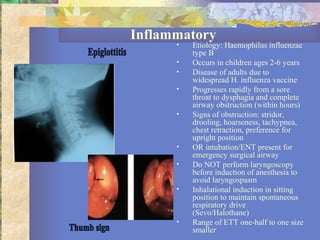


1) Pediatric airway anatomy differs from adults with a higher larynx, larger tongue, angled vocal cords, and narrowest part of the airway being the cricoid cartilage. 2) Respiratory issues are a leading cause of pediatric codes, with the highest risk in infants under 1 year old. 3) Evaluation of the pediatric airway involves medical history, physical exam, and diagnostic testing to identify any anatomical abnormalities or risk factors.


![The basics of peds anesthesia [autosaved]](https://cdn.slidesharecdn.com/ss_thumbnails/thebasicsofpedsanesthesiaautosaved-111017032903-phpapp01-thumbnail.jpg?width=640&height=640&fit=bounds)


