SUSAN SCHOENIAN (Shāy-nē-ŭn) Sheep & Goat SpecialistWestern Maryland Research & Education Centersschoen@umd.edu – www.sheepandgoat.com2011 Ewe and Doe Management Webinar SeriesSmall Ruminant Program
2011 Ewe and Doe Management Webinar SeriesJan 13		I.   Late GestationJan 20		II.  VaccinationsFeb 3			III. ParturitionFeb 10		IV. Neonatal CareFeb 17		V.  LactationFeb 24		VI. Weaning
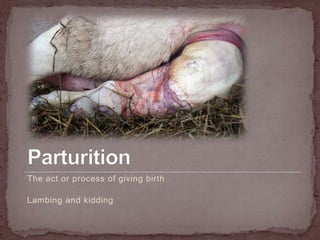
ParturitionThe act or process of giving birthLambing and kidding
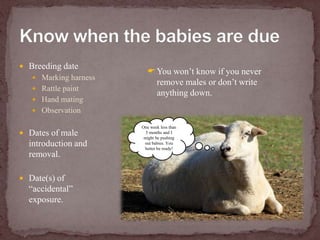
Know when the babies are dueBreeding date Marking harnessRattle paintHand matingObservationDates of male introduction and removal.Date(s) of “accidental” exposure.You won’t know if you never remove males or don’t write anything down.One week less than 5 months and I might be pushing out babies. You better be ready!
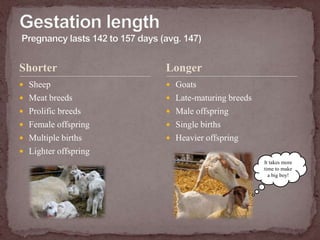
ShorterSheepMeat breedsProlific breedsFemale offspringMultiple birthsLighter offspringGoatsLate-maturing breedsMale offspringSingle birthsHeavier offspringGestation length Pregnancy lasts 142 to 157 days (avg. 147)LongerIt takes more time to make a big boy!
BEHAVIORSeparationIsolationActing more territorialRestlessnessNervousnessTail twitchingFrequent urinationPawing the groundGetting up and downReduced appetiteUdder filling upEngorged teatsVaginal dischargeRelaxation of muscles in hip areaBelly dropsSides cave in Swollen vulvaSigns of approaching parturitionPHYSICAL
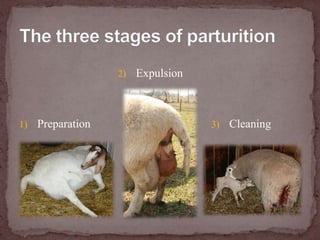
PreparationThe three stages of parturitionExpulsionCleaning
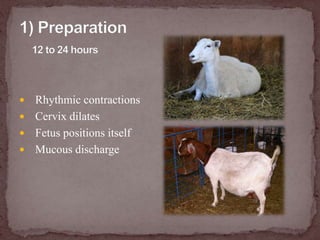
1) Preparation12 to 24 hoursRhythmic contractions Cervix dilatesFetus positions itselfMucous discharge
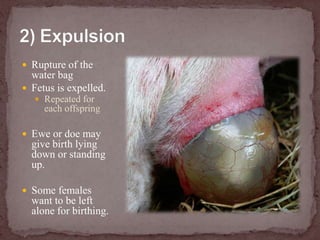
Rupture of the water bagFetus is expelled.Repeated for each offspringEwe or doe may give birth lying down or standing up.Some females want to be left alone for birthing.2) Expulsion
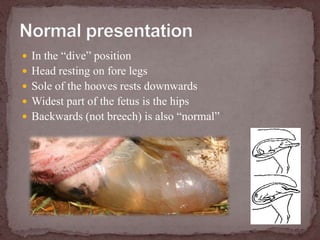
Normal presentationIn the “dive” positionHead resting on fore legsSole of the hooves rests downwardsWidest part of the fetus is the hipsBackwards (not breech) is also “normal”
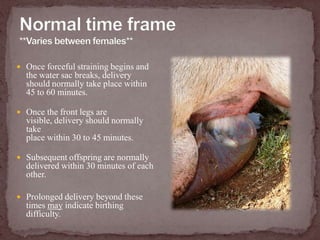
Normal time frame**Varies between females**Once forceful straining begins and the water sac breaks, delivery should normally take place within 45 to 60 minutes.Once the front legs are visible, delivery should normally take place within 30 to 45 minutes.Subsequent offspring are normally  delivered within 30 minutes of each other.Prolonged delivery beyond these times may indicate birthing difficulty.
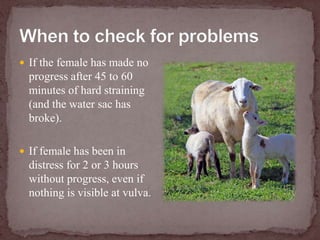
When to check for problemsIf the female has made no progress after 45 to 60 minutes of hard straining (and the water sac has broke).If female has been in distress for 2 or 3 hours without progress, even if nothing is visible at vulva.
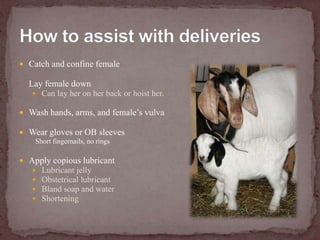
How to assist with deliveriesCatch and confine femaleLay female downCan lay her on her back or hoist her.Wash hands, arms, and female’s vulvaWear gloves or OB sleevesShort fingernails, no ringsApply copious lubricantLubricant jellyObstetrical lubricantBland soap and waterShortening
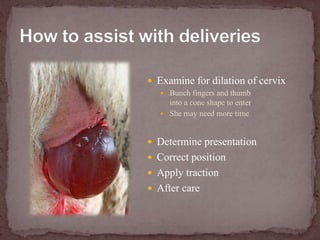
How to assist with deliveriesExamine for dilation of cervixBunch fingers and thumb into a cone shape to enterShe may need more timeDetermine presentationCorrect positionApply tractionAfter care
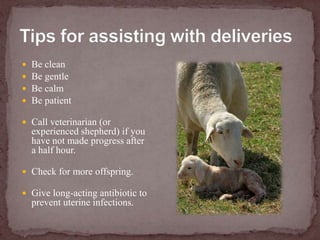
Tips for assisting with deliveriesBe cleanBe gentleBe calmBe patientCall veterinarian (or experienced shepherd) if you have not made progress after a half hour.Check for more offspring.Give long-acting antibiotic to prevent uterine infections.
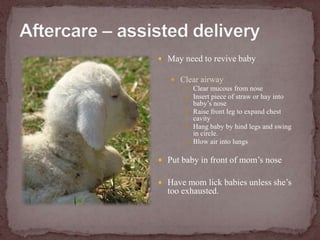
Aftercare – assisted deliveryMay need to revive babyClear airwayClear mucous from nose	Insert piece of straw or hay into baby’s noseRaise front leg to expand chest cavityHang baby by hind legs and swing in circle.Blow air into lungsPut baby in front of mom’s noseHave mom lick babies unless she’s too exhausted.
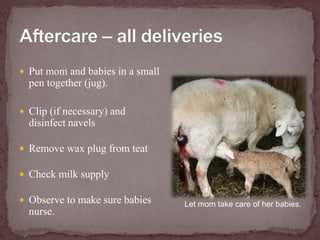
Aftercare – all deliveriesPut mom and babies in a small pen together (jug).Clip (if necessary) and disinfect navelsRemove wax plug from teatCheck milk supplyObserve to make sure babies nurse.Let mom take care of her babies.
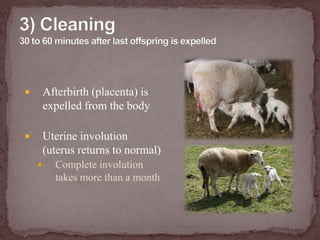
3) Cleaning30 to 60 minutes after last offspring is expelledAfterbirth (placenta) is expelled from the bodyUterine involution(uterus returns to normal)Complete involution takes more than a month
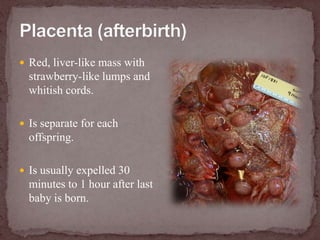
Placenta (afterbirth)Red, liver-like mass with strawberry-like lumps and whitish cords.Is separate for each offspring.Is usually expelled 30 minutes to 1 hour after last baby is born.
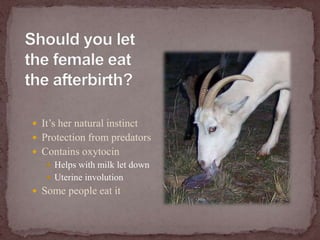
Should you let the female eat the afterbirth?It’s her natural instinctProtection from predatorsContains oxytocinHelps with milk let downUterine involutionSome people eat it
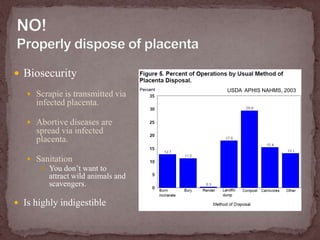
NO!Properly dispose of placentaBiosecurityScrapie is transmitted via infected placenta.Abortive diseases are spread via infected placenta.SanitationYou don’t want to attract wild animals and scavengers.Is highly indigestibleUSDA  APHIS NAHMS, 2003
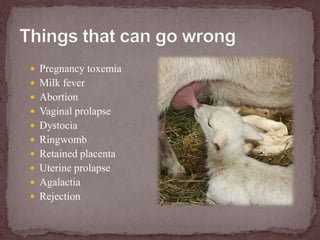
Things that can go wrongPregnancy toxemiaMilk feverAbortionVaginal prolapseDystociaRingwombRetained placentaUterine prolapseAgalactiaRejection
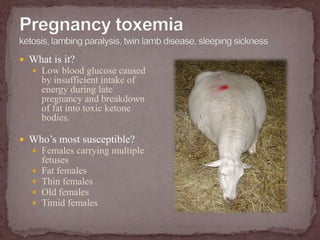
Pregnancy toxemia ketosis, lambing paralysis, twin lamb disease, sleeping sicknessWhat is it?Low blood glucose caused by insufficient intake of energy during late pregnancy and breakdown of fat into toxic ketone bodies.Who’s most susceptible?Females carrying multiple fetusesFat femalesThin femalesOld femalesTimid females
Pregnancy toxemia Occurs during final trimester of pregnancySymptomsLags behindDepressionNeurological symptomsSalivatingRear legs splayed outLack of appetiteRecumbencyDeathTreatmentOral propylene glycolIV dextroseOther TxCalcium borogluconateVitamin B-complexRemove fetuses[Rx] Induce parturition[Vx] Caesarian sectionIf pregnancy toxemia is suspected, you  need to evaluate your feeding program.
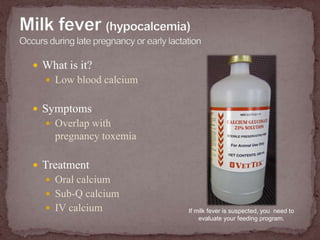
Milk fever (hypocalcemia)Occurs during late pregnancy or early lactationWhat is it?Low blood calciumSymptomsOverlap with pregnancy toxemiaTreatmentOral calciumSub-Q calciumIV calciumIf milk fever is suspected, you  need to evaluate your feeding program.
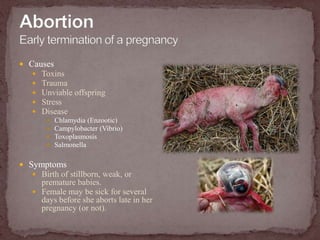
AbortionEarly termination of a pregnancyCausesToxinsTraumaUnviable offspringStressDiseaseChlamydia (Enzootic)Campylobacter (Vibrio)ToxoplasmosisSalmonellaSymptomsBirth of stillborn, weak, or premature babies.Female may be sick for several days before she aborts late in her pregnancy (or not).
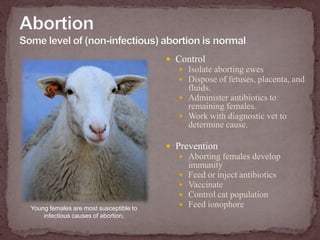
AbortionSome level of (non-infectious) abortion is normalControlIsolate aborting ewesDispose of fetuses, placenta, and fluids.Administer antibiotics to remaining females.Work with diagnostic vet to determine cause.PreventionAborting females develop immunityFeed or inject antibioticsVaccinateControl cat populationFeed ionophoreYoung females are most susceptible to infectious causes of abortion.
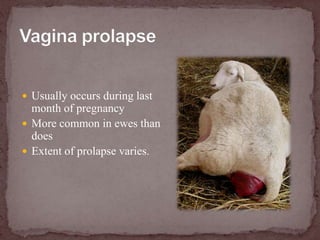
Vagina prolapseUsually occurs during last month of pregnancyMore common in ewes than doesExtent of prolapse varies.
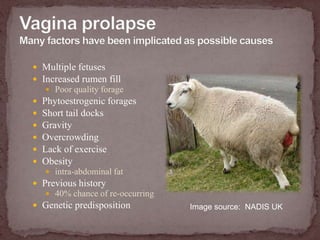
Vagina prolapseMany factors have been implicated as possible causesMultiple fetusesIncreased rumen fillPoor quality foragePhytoestrogenic foragesShort tail docksGravityOvercrowdingLack of exerciseObesity intra-abdominal fatPrevious history40% chance of re-occurringGenetic predispositionImage source:  NADIS UK
Vagina prolapseTreatment[Rx] Pain reliefClean vagina[Use mild soap]Replace vaginaKeep vagina in	Spoon/bearing retainerProlapse harnessProlapse trussPurse-string suture[must remove sutures before lambing]Parturition usually corrects problemCull ewe and her offspring
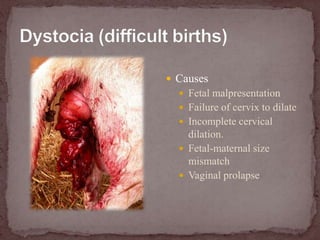
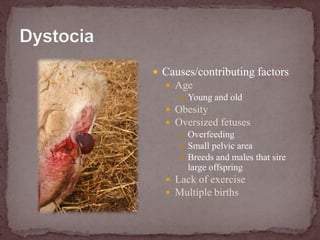
Dystocia (difficult births)CausesFetal malpresentationFailure of cervix to dilateIncomplete cervical dilation.Fetal-maternal size mismatchVaginal prolapse
DystociaCauses/contributing factorsAgeYoung and oldObesityOversized fetusesOverfeedingSmall pelvic areaBreeds and males that sire large offspringLack of exerciseMultiple births
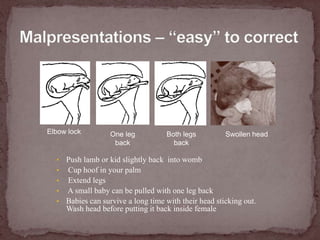
Malpresentations – “easy” to correctElbow lockOne leg backBoth legs backSwollen headPush lamb or kid slightly back  into womb
 Cup hoof in your palm
 Extend legs
 A small baby can be pulled with one leg back
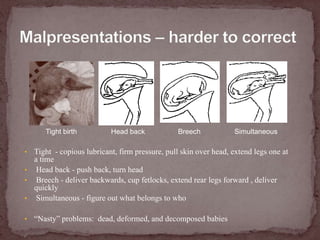
Babies can survive a long time with their head sticking out.Wash head before putting it back inside femaleMalpresentations – harder to correctHead backBreechSimultaneousTight birthTight  - copious lubricant, firm pressure, pull skin over head, extend legs one at a time
 Head back - push back, turn head
 Breech - deliver backwards, cup fetlocks, extend rear legs forward , deliver quickly
 Simultaneous - figure out what belongs to who
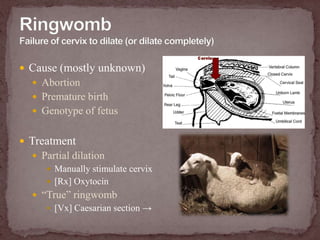
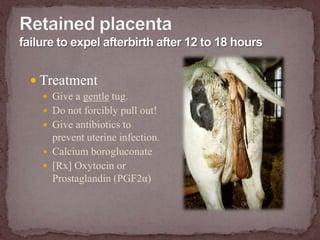
“Nasty” problems:  dead, deformed, and decomposed babiesRingwombFailure of cervix to dilate (or dilate completely)Cause (mostly unknown)AbortionPremature birthGenotype of fetusTreatmentPartial dilationManually stimulate cervix[Rx] Oxytocin“True” ringwomb[Vx] Caesarian section ->Retained placentafailure to expel afterbirth after 12 to 18 hours TreatmentGive a gentle tug.Do not forcibly pull out!Give antibiotics to prevent uterine infection.Calcium borogluconate[Rx] Oxytocin or Prostaglandin (PGF2α)
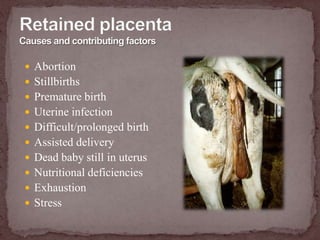
Retained placentaCauses and contributing factorsAbortionStillbirthsPremature birthUterine infectionDifficult/prolonged birthAssisted deliveryDead baby still in uterusNutritional deficienciesExhaustionStress
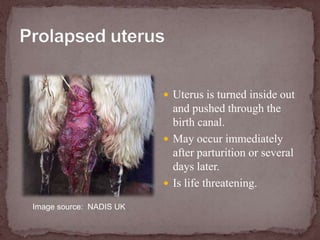
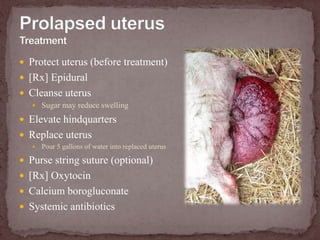
Prolapsed uterusUterus is turned inside out and pushed through the birth canal.May occur immediately after parturition or several days later.Is life threatening.Image source:  NADIS UK
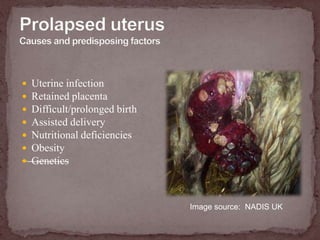
Prolapsed uterusCauses and predisposing factorsUterine infectionRetained placentaDifficult/prolonged birthAssisted deliveryNutritional deficienciesObesityGeneticsImage source:  NADIS UK
Prolapsed uterusTreatmentProtect uterus (before treatment)[Rx] Epidural Cleanse uterusSugar may reduce swellingElevate hindquartersReplace uterusPour 5 gallons of water into replaced uterusPurse string suture (optional)[Rx] OxytocinCalcium borogluconateSystemic antibiotics

Parturition

  • 1.
    SUSAN SCHOENIAN (Shāy-nē-ŭn)Sheep & Goat SpecialistWestern Maryland Research & Education Centersschoen@umd.edu – www.sheepandgoat.com2011 Ewe and Doe Management Webinar SeriesSmall Ruminant Program
  • 2.
    2011 Ewe andDoe Management Webinar SeriesJan 13 I. Late GestationJan 20 II. VaccinationsFeb 3 III. ParturitionFeb 10 IV. Neonatal CareFeb 17 V. LactationFeb 24 VI. Weaning
  • 3.
    ParturitionThe act orprocess of giving birthLambing and kidding
  • 4.
    Know when thebabies are dueBreeding date Marking harnessRattle paintHand matingObservationDates of male introduction and removal.Date(s) of “accidental” exposure.You won’t know if you never remove males or don’t write anything down.One week less than 5 months and I might be pushing out babies. You better be ready!
  • 5.
    ShorterSheepMeat breedsProlific breedsFemaleoffspringMultiple birthsLighter offspringGoatsLate-maturing breedsMale offspringSingle birthsHeavier offspringGestation length Pregnancy lasts 142 to 157 days (avg. 147)LongerIt takes more time to make a big boy!
  • 6.
    BEHAVIORSeparationIsolationActing more territorialRestlessnessNervousnessTailtwitchingFrequent urinationPawing the groundGetting up and downReduced appetiteUdder filling upEngorged teatsVaginal dischargeRelaxation of muscles in hip areaBelly dropsSides cave in Swollen vulvaSigns of approaching parturitionPHYSICAL
  • 7.
    PreparationThe three stagesof parturitionExpulsionCleaning
  • 8.
    1) Preparation12 to24 hoursRhythmic contractions Cervix dilatesFetus positions itselfMucous discharge
  • 9.
    Rupture of thewater bagFetus is expelled.Repeated for each offspringEwe or doe may give birth lying down or standing up.Some females want to be left alone for birthing.2) Expulsion
  • 10.
    Normal presentationIn the“dive” positionHead resting on fore legsSole of the hooves rests downwardsWidest part of the fetus is the hipsBackwards (not breech) is also “normal”
  • 11.
    Normal time frame**Variesbetween females**Once forceful straining begins and the water sac breaks, delivery should normally take place within 45 to 60 minutes.Once the front legs are visible, delivery should normally take place within 30 to 45 minutes.Subsequent offspring are normally delivered within 30 minutes of each other.Prolonged delivery beyond these times may indicate birthing difficulty.
  • 12.
    When to checkfor problemsIf the female has made no progress after 45 to 60 minutes of hard straining (and the water sac has broke).If female has been in distress for 2 or 3 hours without progress, even if nothing is visible at vulva.
  • 13.
    How to assistwith deliveriesCatch and confine femaleLay female downCan lay her on her back or hoist her.Wash hands, arms, and female’s vulvaWear gloves or OB sleevesShort fingernails, no ringsApply copious lubricantLubricant jellyObstetrical lubricantBland soap and waterShortening
  • 14.
    How to assistwith deliveriesExamine for dilation of cervixBunch fingers and thumb into a cone shape to enterShe may need more timeDetermine presentationCorrect positionApply tractionAfter care
  • 15.
    Tips for assistingwith deliveriesBe cleanBe gentleBe calmBe patientCall veterinarian (or experienced shepherd) if you have not made progress after a half hour.Check for more offspring.Give long-acting antibiotic to prevent uterine infections.
  • 16.
    Aftercare – assisteddeliveryMay need to revive babyClear airwayClear mucous from nose Insert piece of straw or hay into baby’s noseRaise front leg to expand chest cavityHang baby by hind legs and swing in circle.Blow air into lungsPut baby in front of mom’s noseHave mom lick babies unless she’s too exhausted.
  • 17.
    Aftercare – alldeliveriesPut mom and babies in a small pen together (jug).Clip (if necessary) and disinfect navelsRemove wax plug from teatCheck milk supplyObserve to make sure babies nurse.Let mom take care of her babies.
  • 18.
    3) Cleaning30 to60 minutes after last offspring is expelledAfterbirth (placenta) is expelled from the bodyUterine involution(uterus returns to normal)Complete involution takes more than a month
  • 19.
    Placenta (afterbirth)Red, liver-likemass with strawberry-like lumps and whitish cords.Is separate for each offspring.Is usually expelled 30 minutes to 1 hour after last baby is born.
  • 20.
    Should you letthe female eat the afterbirth?It’s her natural instinctProtection from predatorsContains oxytocinHelps with milk let downUterine involutionSome people eat it
  • 21.
    NO!Properly dispose ofplacentaBiosecurityScrapie is transmitted via infected placenta.Abortive diseases are spread via infected placenta.SanitationYou don’t want to attract wild animals and scavengers.Is highly indigestibleUSDA APHIS NAHMS, 2003
  • 22.
    Things that cango wrongPregnancy toxemiaMilk feverAbortionVaginal prolapseDystociaRingwombRetained placentaUterine prolapseAgalactiaRejection
  • 23.
    Pregnancy toxemia ketosis,lambing paralysis, twin lamb disease, sleeping sicknessWhat is it?Low blood glucose caused by insufficient intake of energy during late pregnancy and breakdown of fat into toxic ketone bodies.Who’s most susceptible?Females carrying multiple fetusesFat femalesThin femalesOld femalesTimid females
  • 24.
    Pregnancy toxemia Occursduring final trimester of pregnancySymptomsLags behindDepressionNeurological symptomsSalivatingRear legs splayed outLack of appetiteRecumbencyDeathTreatmentOral propylene glycolIV dextroseOther TxCalcium borogluconateVitamin B-complexRemove fetuses[Rx] Induce parturition[Vx] Caesarian sectionIf pregnancy toxemia is suspected, you need to evaluate your feeding program.
  • 25.
    Milk fever (hypocalcemia)Occursduring late pregnancy or early lactationWhat is it?Low blood calciumSymptomsOverlap with pregnancy toxemiaTreatmentOral calciumSub-Q calciumIV calciumIf milk fever is suspected, you need to evaluate your feeding program.
  • 26.
    AbortionEarly termination ofa pregnancyCausesToxinsTraumaUnviable offspringStressDiseaseChlamydia (Enzootic)Campylobacter (Vibrio)ToxoplasmosisSalmonellaSymptomsBirth of stillborn, weak, or premature babies.Female may be sick for several days before she aborts late in her pregnancy (or not).
  • 27.
    AbortionSome level of(non-infectious) abortion is normalControlIsolate aborting ewesDispose of fetuses, placenta, and fluids.Administer antibiotics to remaining females.Work with diagnostic vet to determine cause.PreventionAborting females develop immunityFeed or inject antibioticsVaccinateControl cat populationFeed ionophoreYoung females are most susceptible to infectious causes of abortion.
  • 28.
    Vagina prolapseUsually occursduring last month of pregnancyMore common in ewes than doesExtent of prolapse varies.
  • 29.
    Vagina prolapseMany factorshave been implicated as possible causesMultiple fetusesIncreased rumen fillPoor quality foragePhytoestrogenic foragesShort tail docksGravityOvercrowdingLack of exerciseObesity intra-abdominal fatPrevious history40% chance of re-occurringGenetic predispositionImage source: NADIS UK
  • 30.
    Vagina prolapseTreatment[Rx] PainreliefClean vagina[Use mild soap]Replace vaginaKeep vagina in Spoon/bearing retainerProlapse harnessProlapse trussPurse-string suture[must remove sutures before lambing]Parturition usually corrects problemCull ewe and her offspring
  • 31.
    Dystocia (difficult births)CausesFetalmalpresentationFailure of cervix to dilateIncomplete cervical dilation.Fetal-maternal size mismatchVaginal prolapse
  • 32.
    DystociaCauses/contributing factorsAgeYoung andoldObesityOversized fetusesOverfeedingSmall pelvic areaBreeds and males that sire large offspringLack of exerciseMultiple births
  • 33.
    Malpresentations – “easy”to correctElbow lockOne leg backBoth legs backSwollen headPush lamb or kid slightly back into womb
  • 34.
    Cup hoofin your palm
  • 35.
  • 36.
    A smallbaby can be pulled with one leg back
  • 37.
    Babies can survivea long time with their head sticking out.Wash head before putting it back inside femaleMalpresentations – harder to correctHead backBreechSimultaneousTight birthTight - copious lubricant, firm pressure, pull skin over head, extend legs one at a time
  • 38.
    Head back- push back, turn head
  • 39.
    Breech -deliver backwards, cup fetlocks, extend rear legs forward , deliver quickly
  • 40.
    Simultaneous -figure out what belongs to who
  • 41.
    “Nasty” problems: dead, deformed, and decomposed babiesRingwombFailure of cervix to dilate (or dilate completely)Cause (mostly unknown)AbortionPremature birthGenotype of fetusTreatmentPartial dilationManually stimulate cervix[Rx] Oxytocin“True” ringwomb[Vx] Caesarian section ->Retained placentafailure to expel afterbirth after 12 to 18 hours TreatmentGive a gentle tug.Do not forcibly pull out!Give antibiotics to prevent uterine infection.Calcium borogluconate[Rx] Oxytocin or Prostaglandin (PGF2α)
  • 42.
    Retained placentaCauses andcontributing factorsAbortionStillbirthsPremature birthUterine infectionDifficult/prolonged birthAssisted deliveryDead baby still in uterusNutritional deficienciesExhaustionStress
  • 43.
    Prolapsed uterusUterus isturned inside out and pushed through the birth canal.May occur immediately after parturition or several days later.Is life threatening.Image source: NADIS UK
  • 44.
    Prolapsed uterusCauses andpredisposing factorsUterine infectionRetained placentaDifficult/prolonged birthAssisted deliveryNutritional deficienciesObesityGeneticsImage source: NADIS UK
  • 45.
    Prolapsed uterusTreatmentProtect uterus(before treatment)[Rx] Epidural Cleanse uterusSugar may reduce swellingElevate hindquartersReplace uterusPour 5 gallons of water into replaced uterusPurse string suture (optional)[Rx] OxytocinCalcium borogluconateSystemic antibiotics