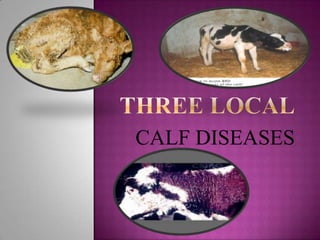
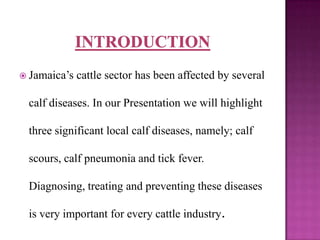
CALF DISEASES
Mariama  Brown
Daneilia Stobbs
Jerlene Webb
 Jamaica’s   cattle sector has been affected by several

 calf diseases. In our Presentation we will highlight

 three significant local calf diseases, namely; calf

 scours, calf pneumonia and tick fever.

 Diagnosing, treating and preventing these diseases

 is very important for every cattle industry.
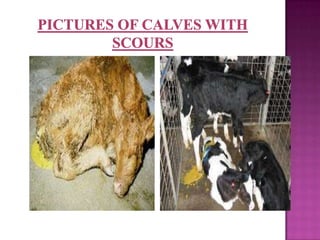
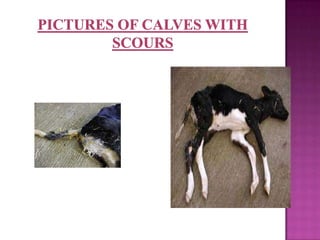
 Calf   scours can be defined as diarrhea in calves.

 Calf scours is not a specific disease with a specific

 cause, but it is actually a clinical sign of a disease

 complex with many possible causes.
1.Bacterial scours –
 E.Coli,
 Salmonella
 Clostridium perfringens Types C & D
2. Viral scours
 Rotavirus and Corona virus
 Bovine Virus Diarrhea (BVD)
3.Protozoan Scours
 Coccidia and Cryptosporidia
   Calves do not drink milk or milk replacer.

   Calves become severely dehydrated and depressed.

   They have a high fever.

   Faeces are watery and often tinged with blood

   Calves show uneasiness and strain or kick at their abdomen

   There may be drooling of saliva
   Calves running around the pasture with their tails in the air,

    bucking and kicking with yellow or white diarrhea may not need

    treatment. The main indications for treatment are:

   General disposition

   Appetite

   Dehydration

   Body temperature
 The   main treatment is fluid therapy

 Secondary   treatments are:

   Antibiotics

   Nursing care.
 If   more than 5% of your calves are scouring

 If   death loss is greater than 2% due to calf scours

 If   after treatment your calves keep getting worse
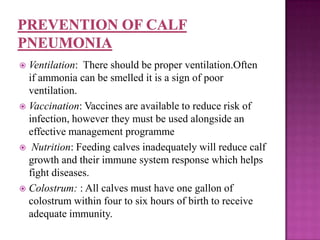
Calf pneumonia is a major
     problem in dairy and beef
    herds. It is a multifactorial
disease, and the most common
     post-mortem diagnosis in
    calves between one to five
                  months of age.
•   Chronic Pneumonia - Chronic
    pneumonia is more gradual in onset with
    no distinct ill phase and the cow may
    appear to still eat well but may have a
    slight nasal discharge, sometimes with an
    increased respiratory rate and cough.
•   Acute Pneumonia - acute (calf or
    enzootic) pneumonia is usually more
    sudden in onset.
 Short-term  consequences - reduced dry
  matter intake, delayed weaning and
  higher risk of an additional pneumonia
  event at weaning.
 Long-term Consequences - delayed
  breeding, higher age at first calving and
  compromised milk production.
 Environmental  Factors
 Low environmental temperature
 High Humidity
 Poor Ventilation
 Direct Draughts onto calves
 Infectious Agents
 Mannheimia haemolytica
 Haemophilus somnus
 Bovine Respiratort syncytial Virus (RSV)
 Dull and depressed
 High temperature
 Raised breathing due to lung damage
 Nasal discharge
 Coughing
 Reduced food intake
 Aloofness
 Weight Loss
 Antibiotics,anti-inflammatories or anthelmintics
  can be prescribed for treatment.
 Ventilation: There should be proper ventilation.Often
  if ammonia can be smelled it is a sign of poor
  ventilation.
 Vaccination: Vaccines are available to reduce risk of
  infection, however they must be used alongside an
  effective management programme
 Nutrition: Feeding calves inadequately will reduce calf
  growth and their immune system response which helps
  fight diseases.
 Colostrum: : All calves must have one gallon of
  colostrum within four to six hours of birth to receive
  adequate immunity.
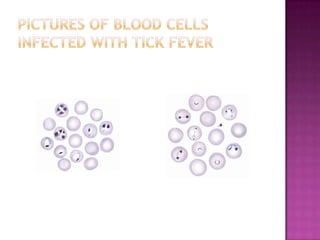
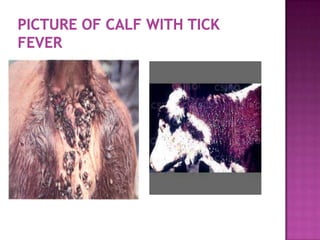
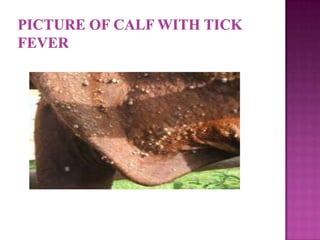
 A febrile   disease transmitted by the bites of

 ticks.The disease is believed to have been

 introduced as early as 1829 by cattle from

 Indonesia infested with the cattle tickBoophilus

 microplus
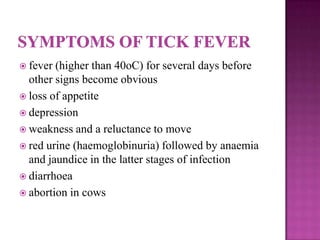
 fever (higher than 40oC) for several days before
  other signs become obvious
 loss of appetite
 depression
 weakness and a reluctance to move
 red urine (haemoglobinuria) followed by anaemia
  and jaundice in the latter stages of infection
 diarrhoea
 abortion in cows
 Treatsick cattle
 Confirm diagnosis
 Remove ticks
 Assess the severity
 Vaccinate all 'at-risk' animals
 Protect the rest of the herd
 Monitor cattle in adjoining paddocks
 Start a long-term risk management strategy
 There   are several options for the prevention of

 tick fever, ranging from keeping animals tick-

 free and use of Imidocarb for short-term

 control, to vaccinating with tick fever vaccine
 www.thecattlesite.com/diseaseinfo/196


 http://www.dairyherd.com/dairy-
  herd/health/Pneumonia-in-dairy-calves-
  145156445.html
 www.thecattlesite.com/diseaseinfo/196/
Calf diseases 4

Calf diseases 4

  • 1.
  • 2.
    Mariama Brown DaneiliaStobbs Jerlene Webb
  • 3.
     Jamaica’s cattle sector has been affected by several calf diseases. In our Presentation we will highlight three significant local calf diseases, namely; calf scours, calf pneumonia and tick fever. Diagnosing, treating and preventing these diseases is very important for every cattle industry.
  • 4.
     Calf scours can be defined as diarrhea in calves. Calf scours is not a specific disease with a specific cause, but it is actually a clinical sign of a disease complex with many possible causes.
  • 5.
    1.Bacterial scours – E.Coli,  Salmonella  Clostridium perfringens Types C & D 2. Viral scours  Rotavirus and Corona virus  Bovine Virus Diarrhea (BVD) 3.Protozoan Scours  Coccidia and Cryptosporidia
  • 6.
    Calves do not drink milk or milk replacer.  Calves become severely dehydrated and depressed.  They have a high fever.  Faeces are watery and often tinged with blood  Calves show uneasiness and strain or kick at their abdomen  There may be drooling of saliva
  • 7.
    Calves running around the pasture with their tails in the air, bucking and kicking with yellow or white diarrhea may not need treatment. The main indications for treatment are:  General disposition  Appetite  Dehydration  Body temperature
  • 8.
     The main treatment is fluid therapy  Secondary treatments are:  Antibiotics  Nursing care.
  • 9.
     If more than 5% of your calves are scouring  If death loss is greater than 2% due to calf scours  If after treatment your calves keep getting worse
  • 12.
    Calf pneumonia isa major problem in dairy and beef herds. It is a multifactorial disease, and the most common post-mortem diagnosis in calves between one to five months of age.
  • 13.
    Chronic Pneumonia - Chronic pneumonia is more gradual in onset with no distinct ill phase and the cow may appear to still eat well but may have a slight nasal discharge, sometimes with an increased respiratory rate and cough. • Acute Pneumonia - acute (calf or enzootic) pneumonia is usually more sudden in onset.
  • 14.
     Short-term consequences - reduced dry matter intake, delayed weaning and higher risk of an additional pneumonia event at weaning.  Long-term Consequences - delayed breeding, higher age at first calving and compromised milk production.
  • 15.
     Environmental Factors  Low environmental temperature  High Humidity  Poor Ventilation  Direct Draughts onto calves  Infectious Agents  Mannheimia haemolytica  Haemophilus somnus  Bovine Respiratort syncytial Virus (RSV)
  • 16.
     Dull anddepressed  High temperature  Raised breathing due to lung damage  Nasal discharge  Coughing  Reduced food intake  Aloofness  Weight Loss
  • 17.
     Antibiotics,anti-inflammatories oranthelmintics can be prescribed for treatment.
  • 18.
     Ventilation: Thereshould be proper ventilation.Often if ammonia can be smelled it is a sign of poor ventilation.  Vaccination: Vaccines are available to reduce risk of infection, however they must be used alongside an effective management programme  Nutrition: Feeding calves inadequately will reduce calf growth and their immune system response which helps fight diseases.  Colostrum: : All calves must have one gallon of colostrum within four to six hours of birth to receive adequate immunity.
  • 21.
     A febrile disease transmitted by the bites of ticks.The disease is believed to have been introduced as early as 1829 by cattle from Indonesia infested with the cattle tickBoophilus microplus
  • 23.
     fever (higherthan 40oC) for several days before other signs become obvious  loss of appetite  depression  weakness and a reluctance to move  red urine (haemoglobinuria) followed by anaemia and jaundice in the latter stages of infection  diarrhoea  abortion in cows
  • 24.
     Treatsick cattle Confirm diagnosis  Remove ticks  Assess the severity  Vaccinate all 'at-risk' animals  Protect the rest of the herd  Monitor cattle in adjoining paddocks  Start a long-term risk management strategy
  • 25.
     There are several options for the prevention of tick fever, ranging from keeping animals tick- free and use of Imidocarb for short-term control, to vaccinating with tick fever vaccine
  • 28.
     www.thecattlesite.com/diseaseinfo/196  http://www.dairyherd.com/dairy- herd/health/Pneumonia-in-dairy-calves- 145156445.html  www.thecattlesite.com/diseaseinfo/196/