What is the purpose
of sociology?
The purpose of sociology is to
• Look at interactions with people and the
phenomenon that those interactions create:
social structure, institutions, stratification,
collective behavior.
• Study human social behavior.
• Note: Anthropology and sociology are closely
related in that they both look at traits and beliefs
of groups. But anthropology focuses on
preliterate society, while sociology focuses on
modern, industrial societies.
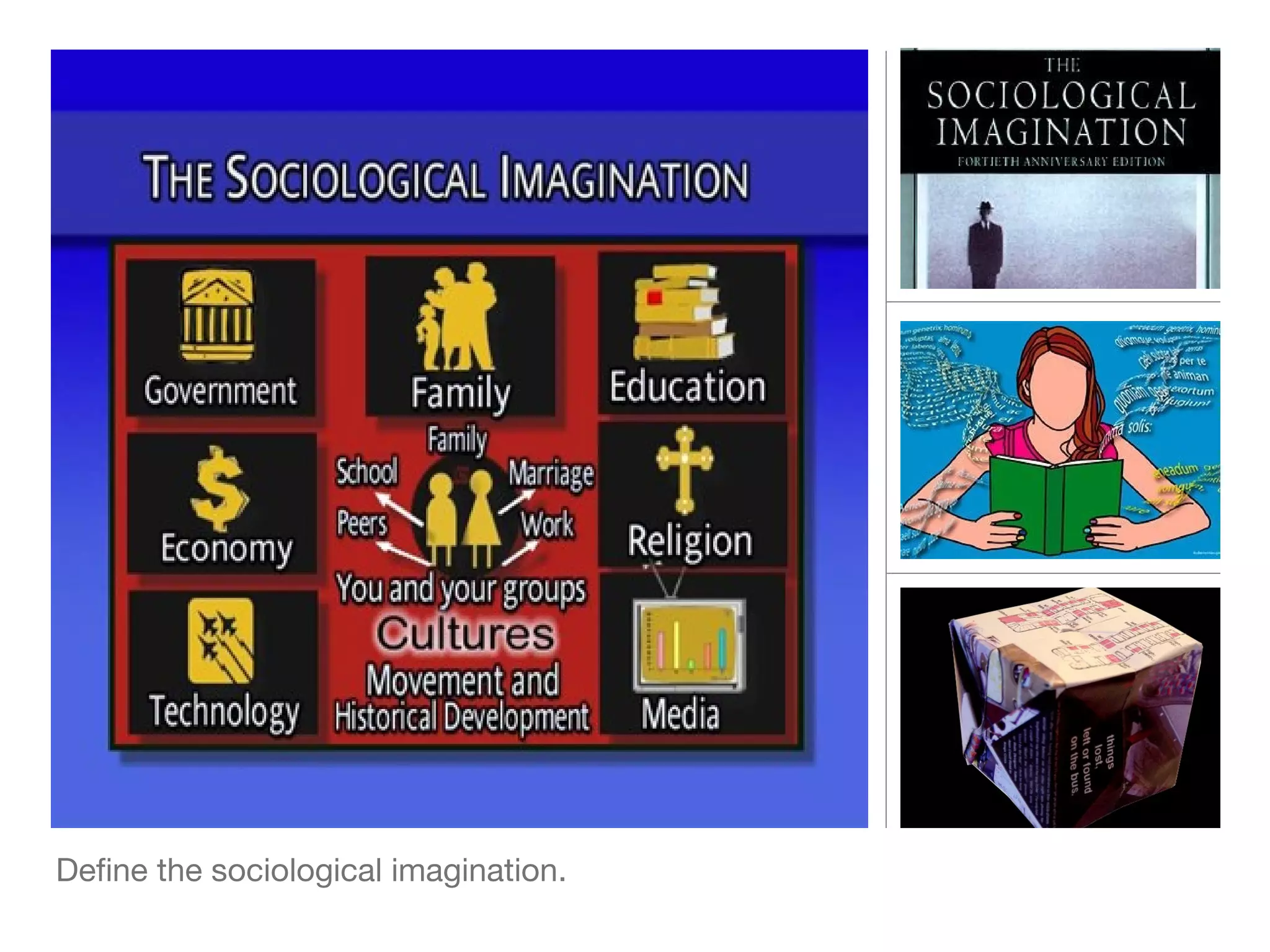
Define the sociological imagination.
Sociological Imagination is
• The ability of individuals to see the relationship between
events in their personal lives and events in society.
• Focus on the history and biography of people in a given
time and place, then make the connection , personal
troubles as public issues.
• Example:
• Divorce in your family is a very personal issue, but also has a
societal impact (changes status of women in society,
increases the need for government funding for families with
dependent children, and alters housing patterns.
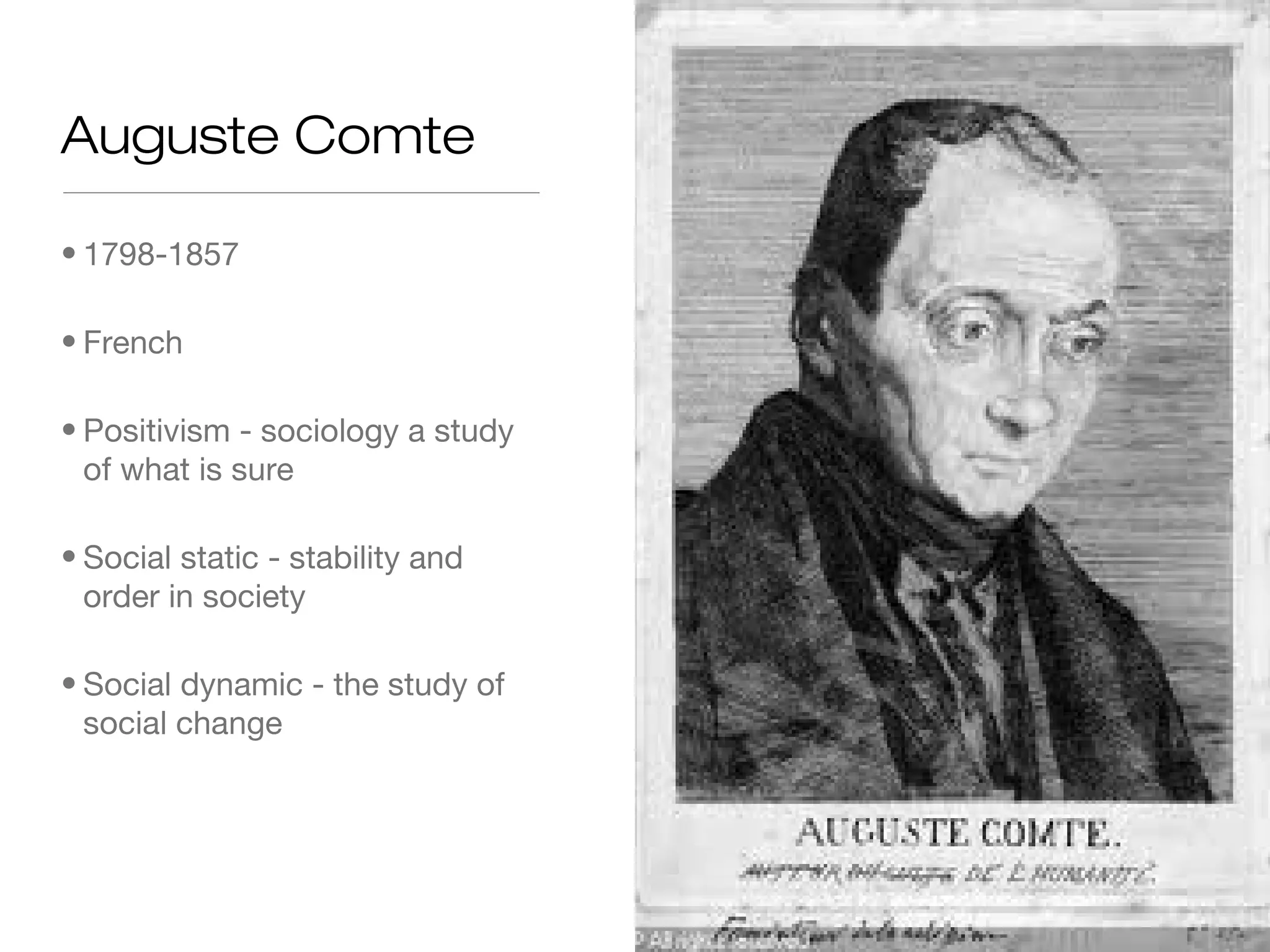
Auguste Comte
• 1798-1857
• French
• Positivism - sociology a study
of what is sure
• Social static - stability and
order in society
• Social dynamic - the study of
social change
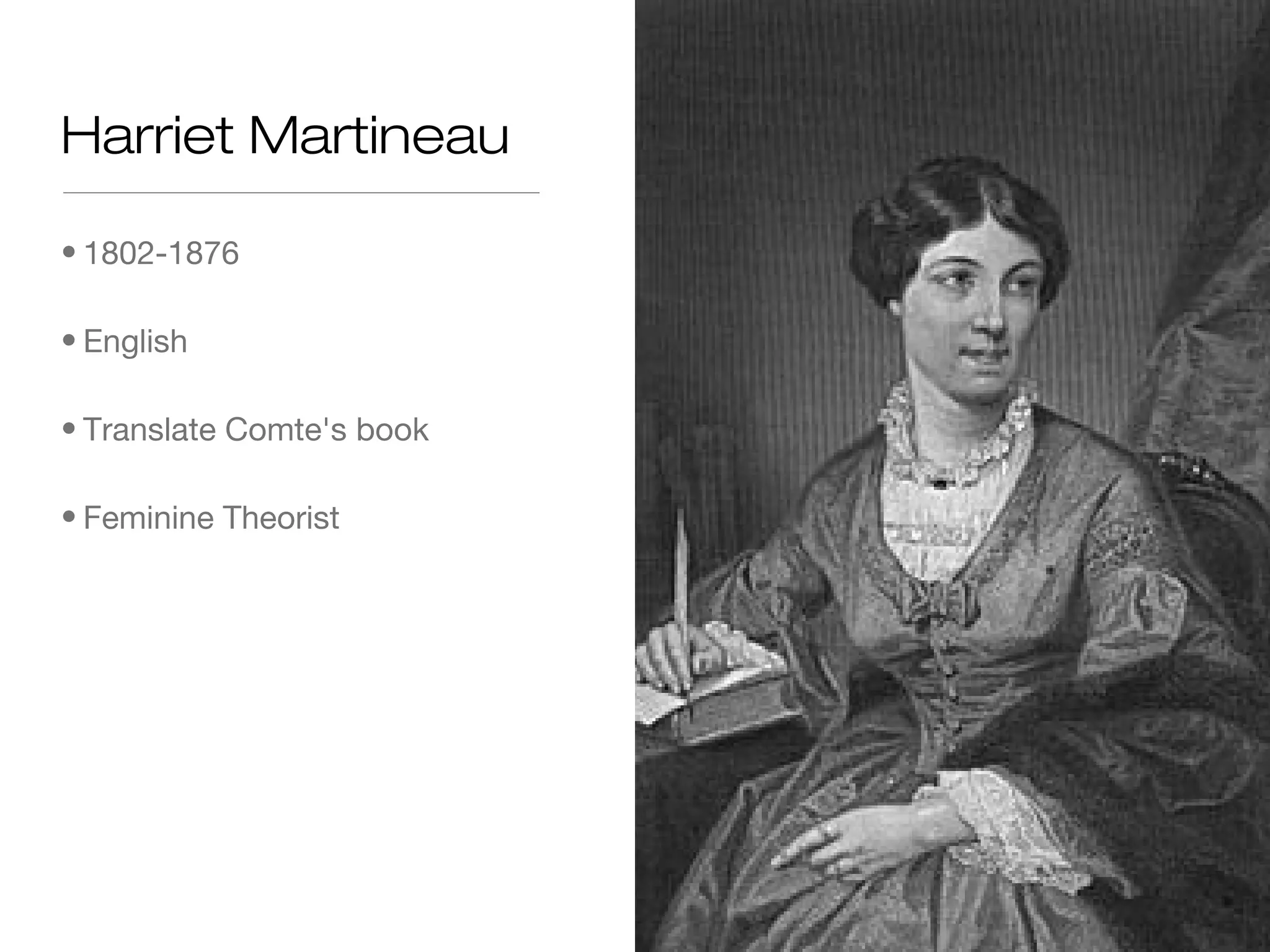
Harriet Martineau
• 1802-1876
• English
• Translate Comte's book
• Feminine Theorist
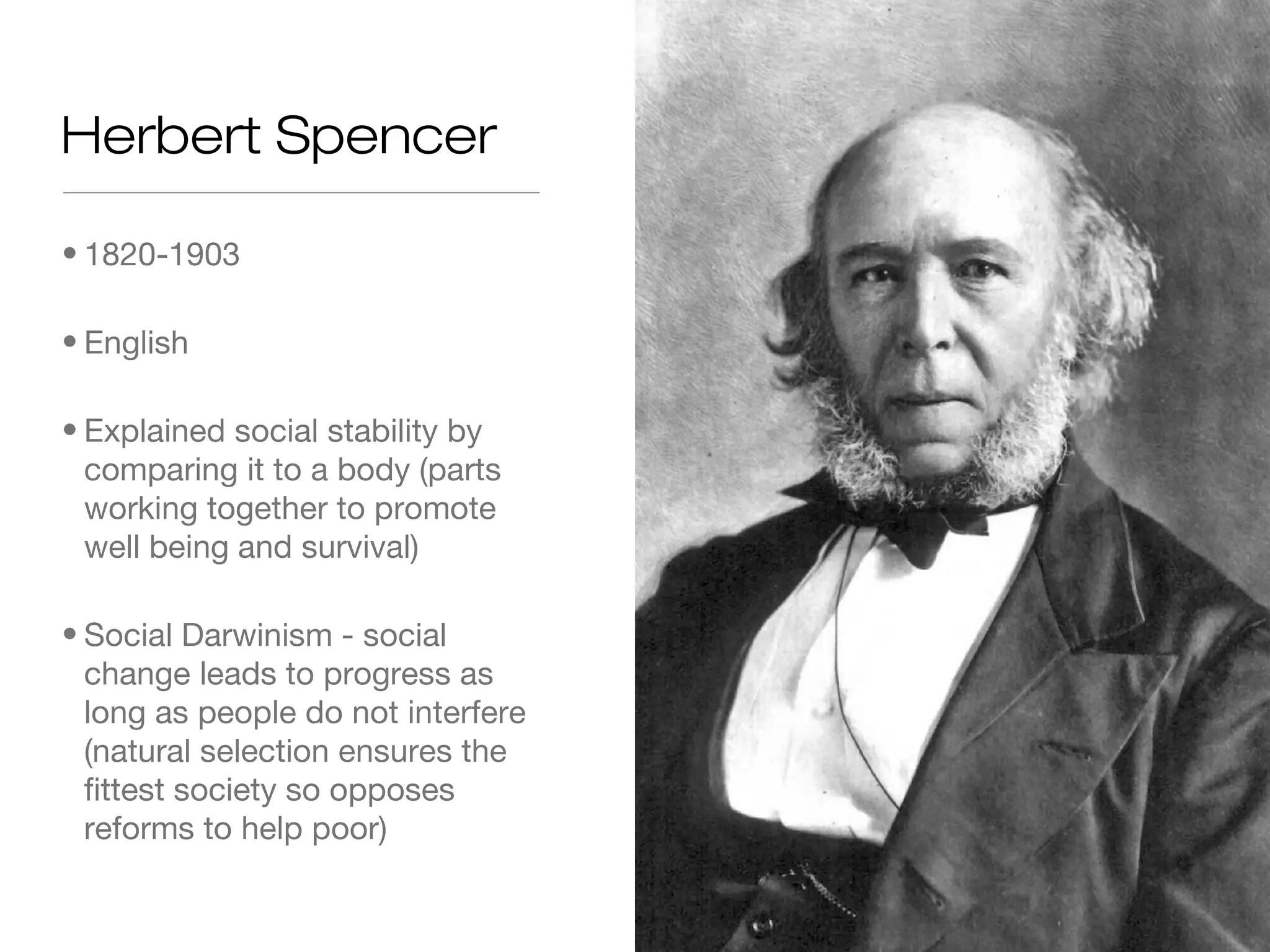
Herbert Spencer
• 1820-1903
• English
• Explained social stability by
comparing it to a body (parts
working together to promote
well being and survival)
• Social Darwinism - social
change leads to progress as
long as people do not interfere
(natural selection ensures the
fittest society so opposes
reforms to help poor)
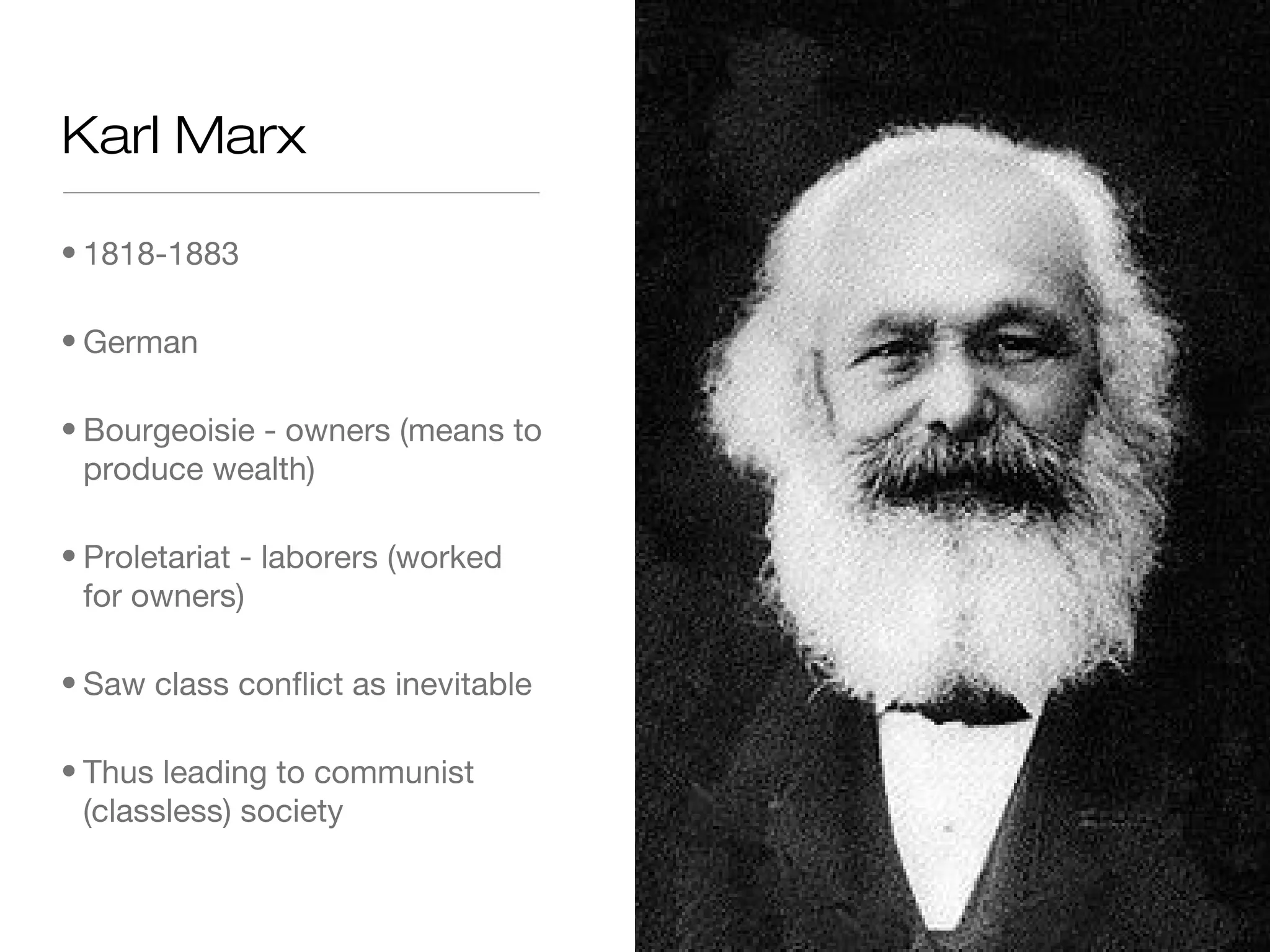
Karl Marx
• 1818-1883
• German
• Bourgeoisie - owners (means to
produce wealth)
• Proletariat - laborers (worked
for owners)
• Saw class conflict as inevitable
• Thus leading to communist
(classless) society
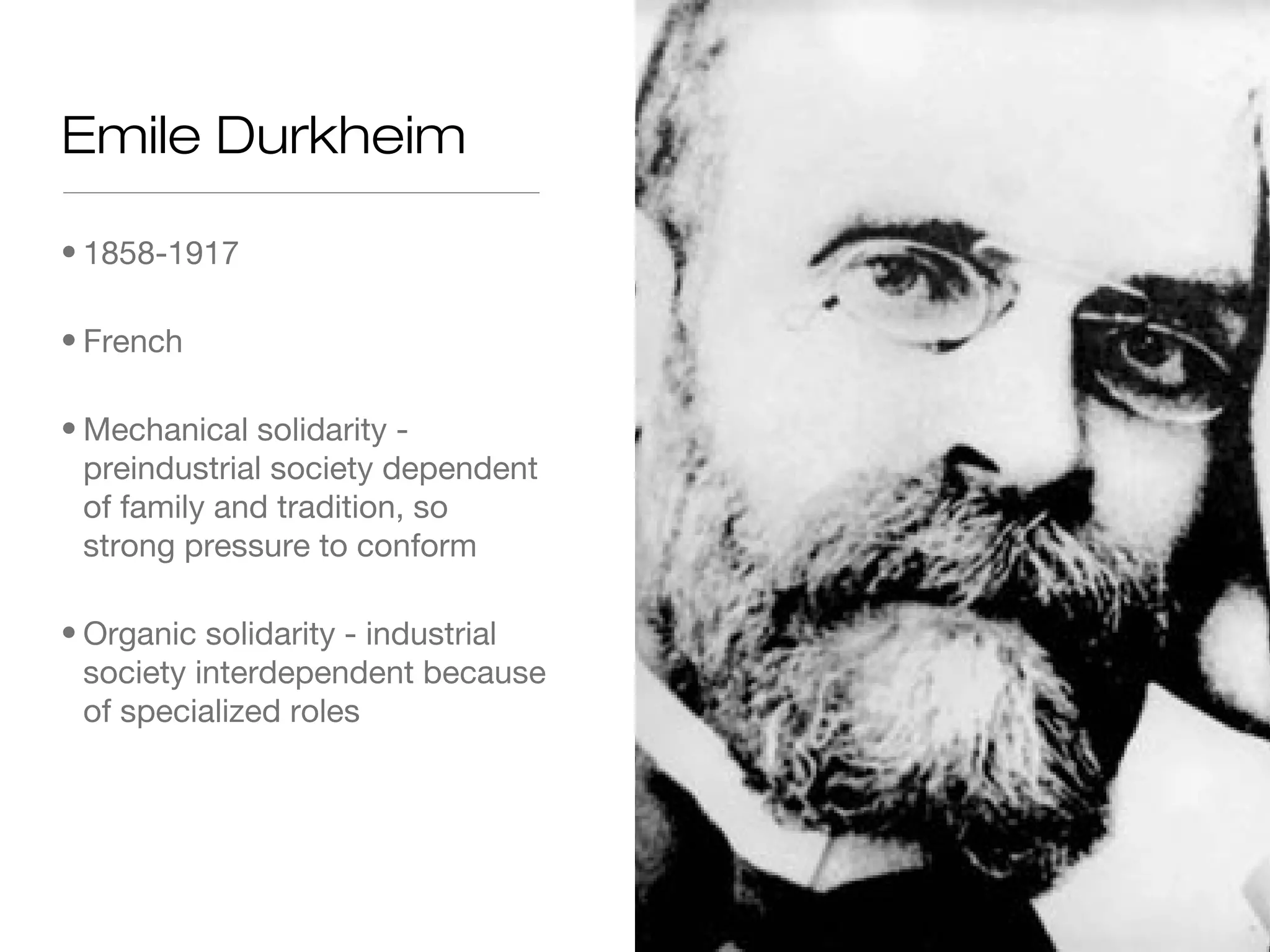
Emile Durkheim
• 1858-1917
• French
• Mechanical solidarity preindustrial society dependent
of family and tradition, so
strong pressure to conform
• Organic solidarity - industrial
society interdependent because
of specialized roles
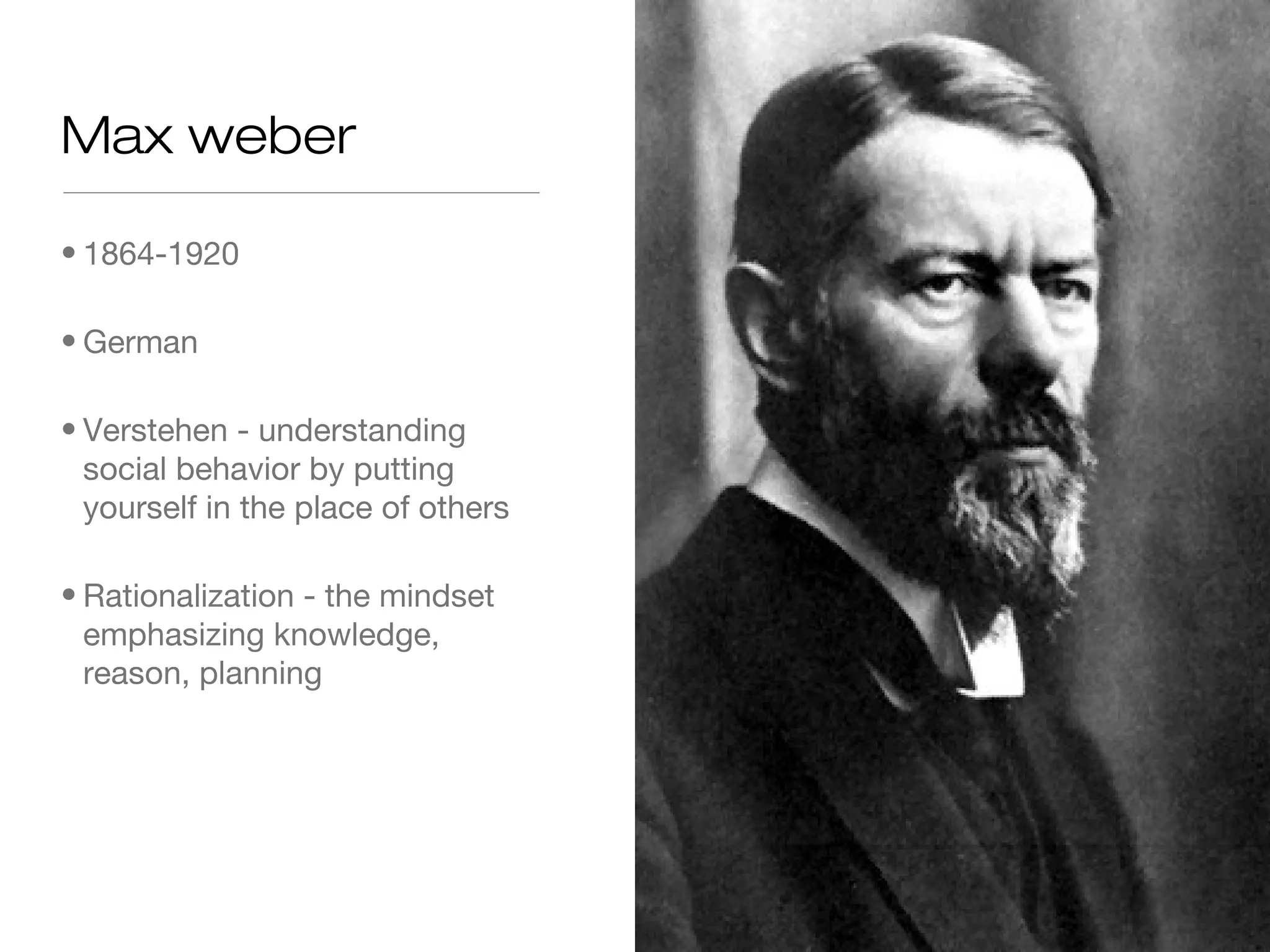
Max weber
• 1864-1920
• German
• Verstehen - understanding
social behavior by putting
yourself in the place of others
• Rationalization - the mindset
emphasizing knowledge,
reason, planning
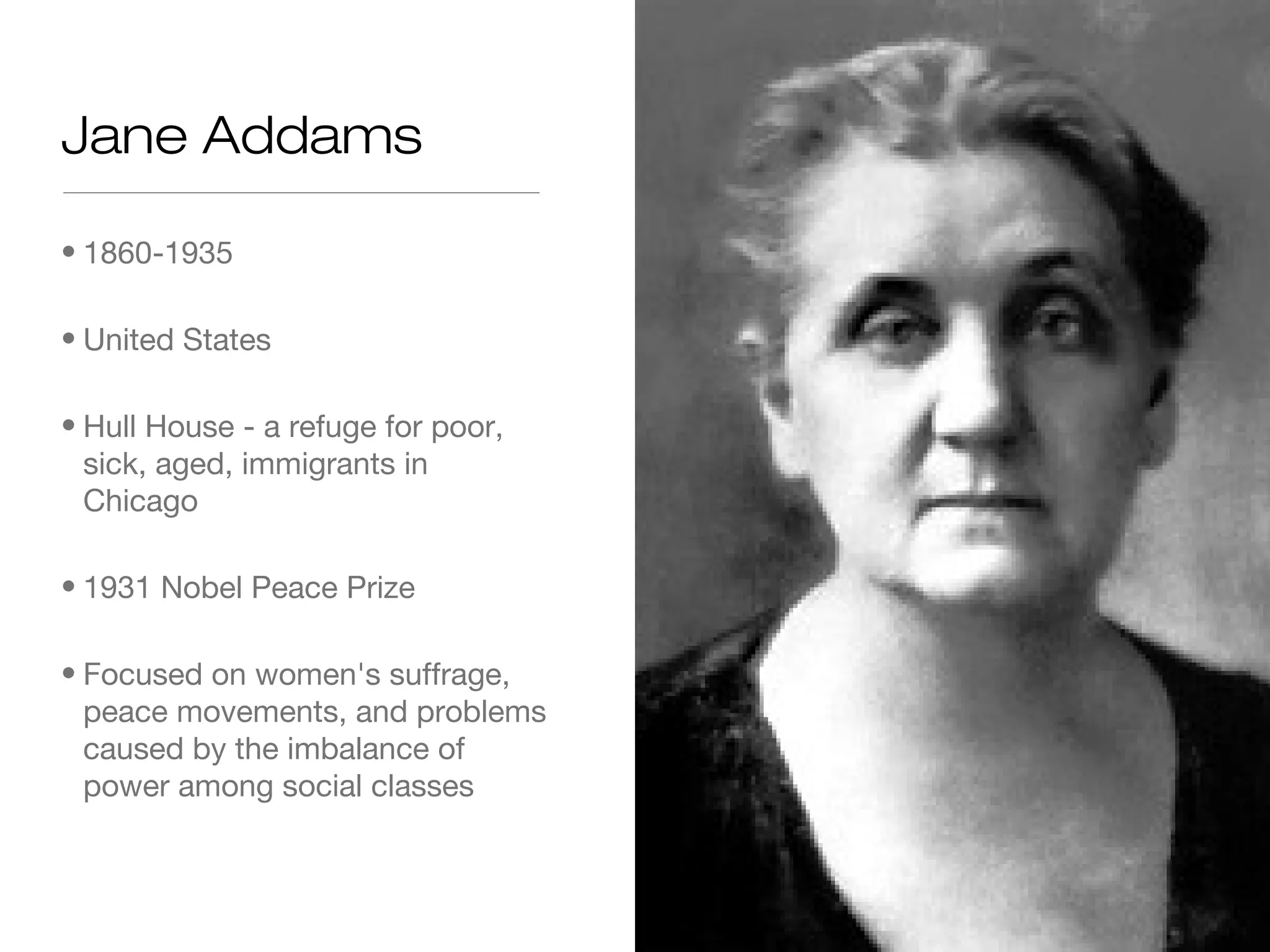
Jane Addams
• 1860-1935
• United States
• Hull House - a refuge for poor,
sick, aged, immigrants in
Chicago
• 1931 Nobel Peace Prize
• Focused on women's suffrage,
peace movements, and problems
caused by the imbalance of
power among social classes
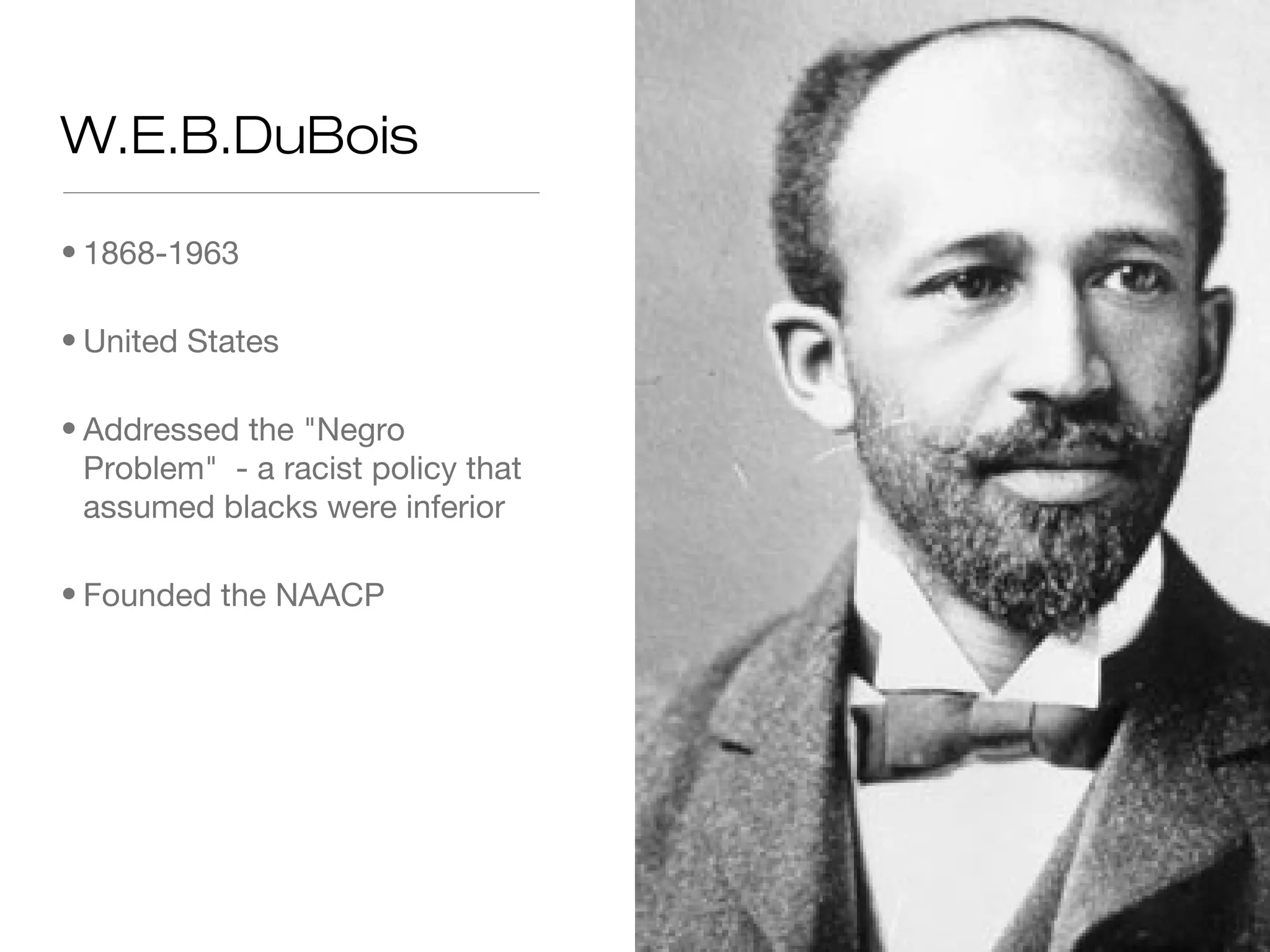
W.E.B.DuBois
• 1868-1963
• United States
• Addressed the "Negro
Problem" - a racist policy that
assumed blacks were inferior
• Founded the NAACP
Theoretical
Perspectives

Functionalist, Conflict, Symbolic Interactionist
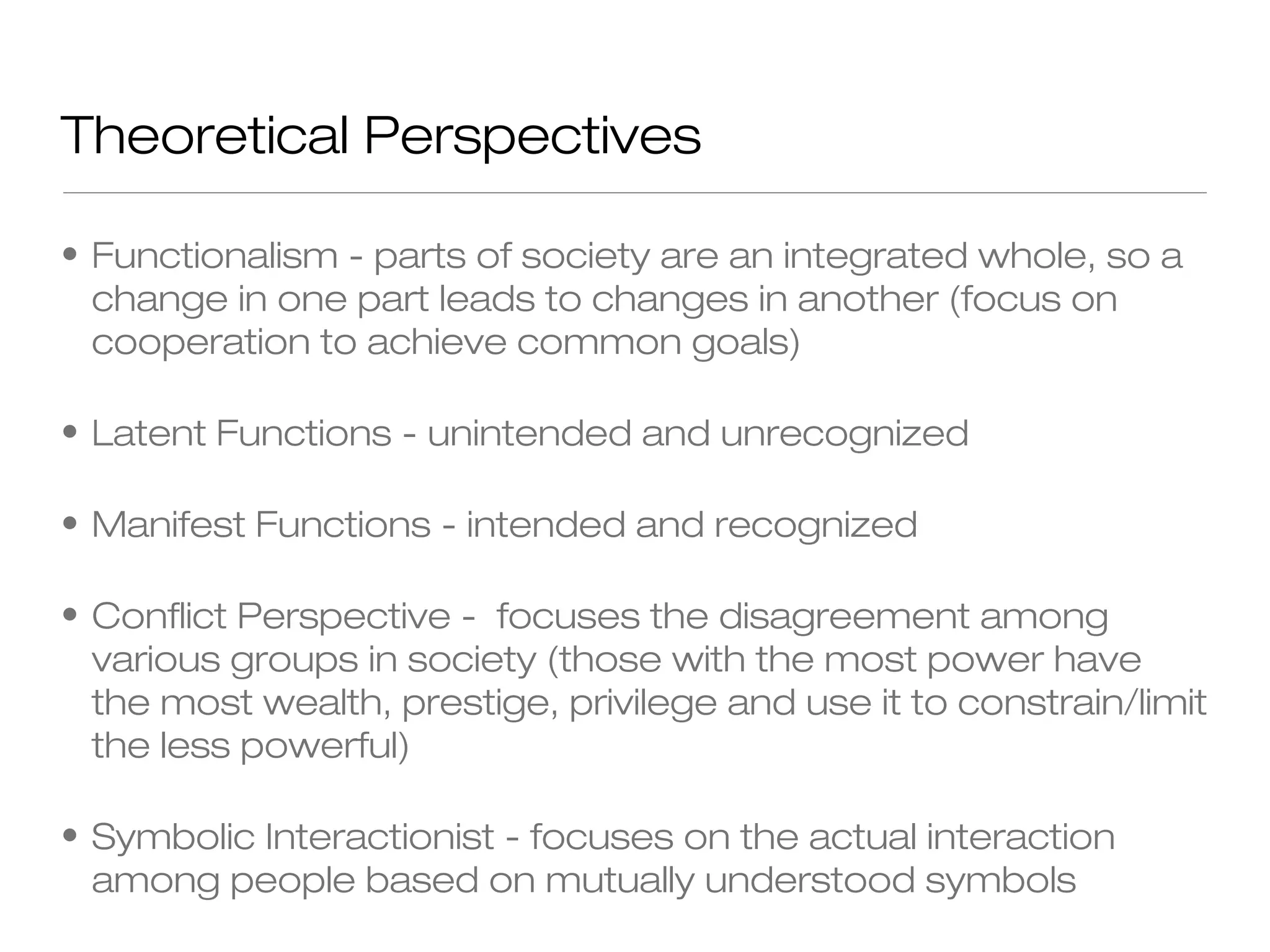
Theoretical Perspectives
• Functionalism - parts of society are an integrated whole, so a
change in one part leads to changes in another (focus on
cooperation to achieve common goals)
• Latent Functions - unintended and unrecognized
• Manifest Functions - intended and recognized
• Conflict Perspective - focuses the disagreement among
various groups in society (those with the most power have
the most wealth, prestige, privilege and use it to constrain/limit
the less powerful)
• Symbolic Interactionist - focuses on the actual interaction
among people based on mutually understood symbols
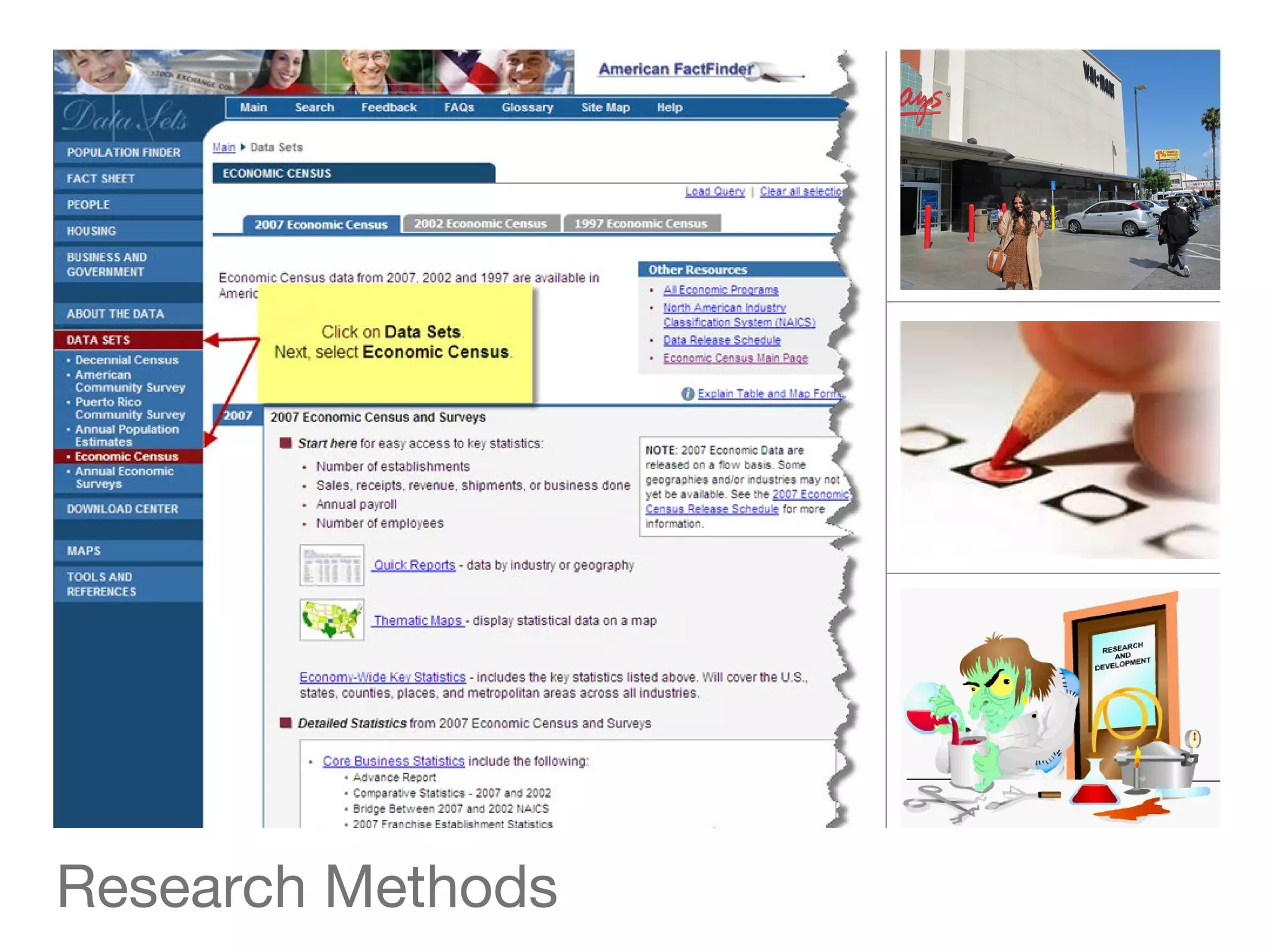
Research Methods
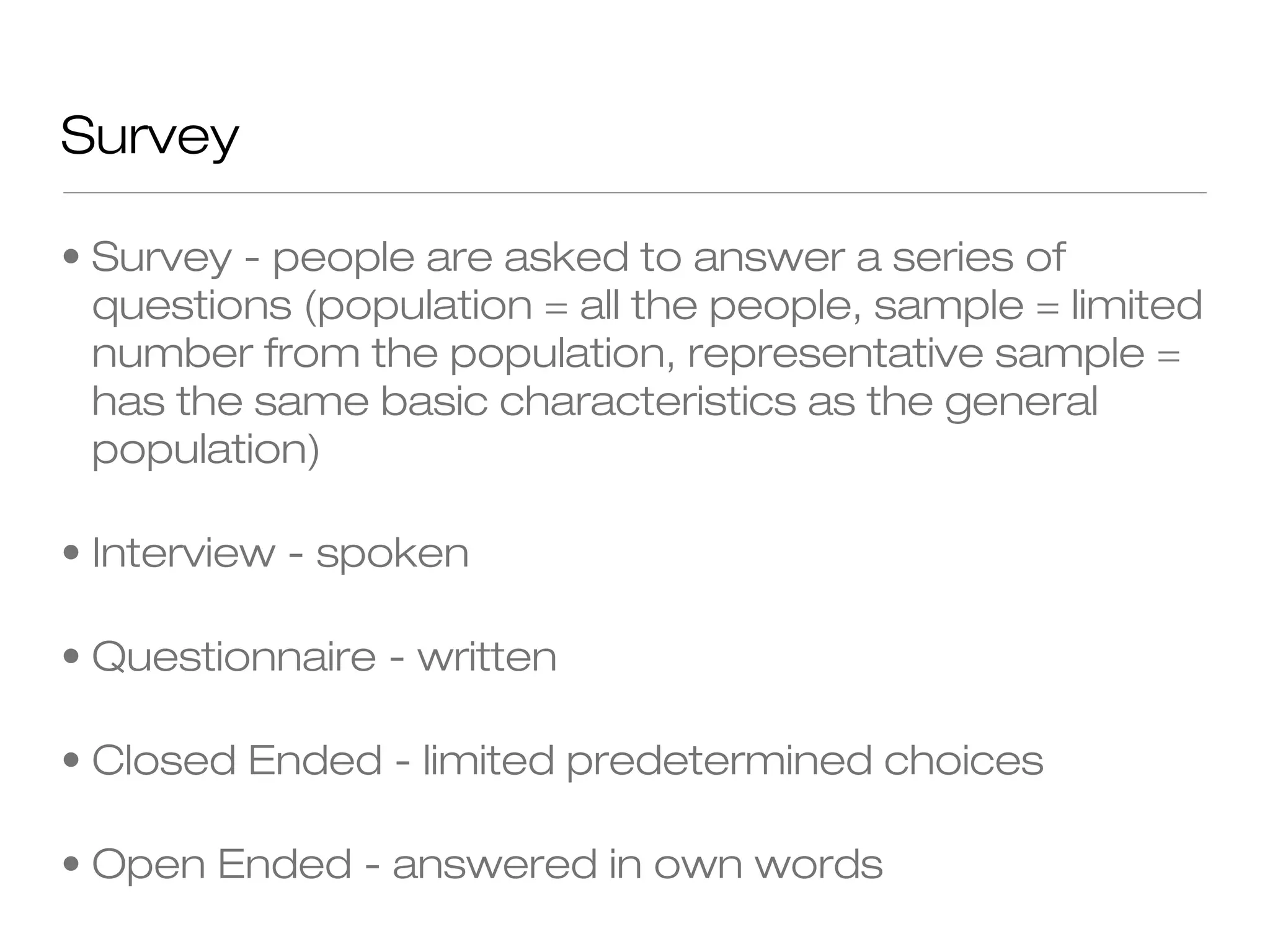
Survey
• Survey - people are asked to answer a series of
questions (population = all the people, sample = limited
number from the population, representative sample =
has the same basic characteristics as the general
population)
• Interview - spoken
• Questionnaire - written
• Closed Ended - limited predetermined choices
• Open Ended - answered in own words
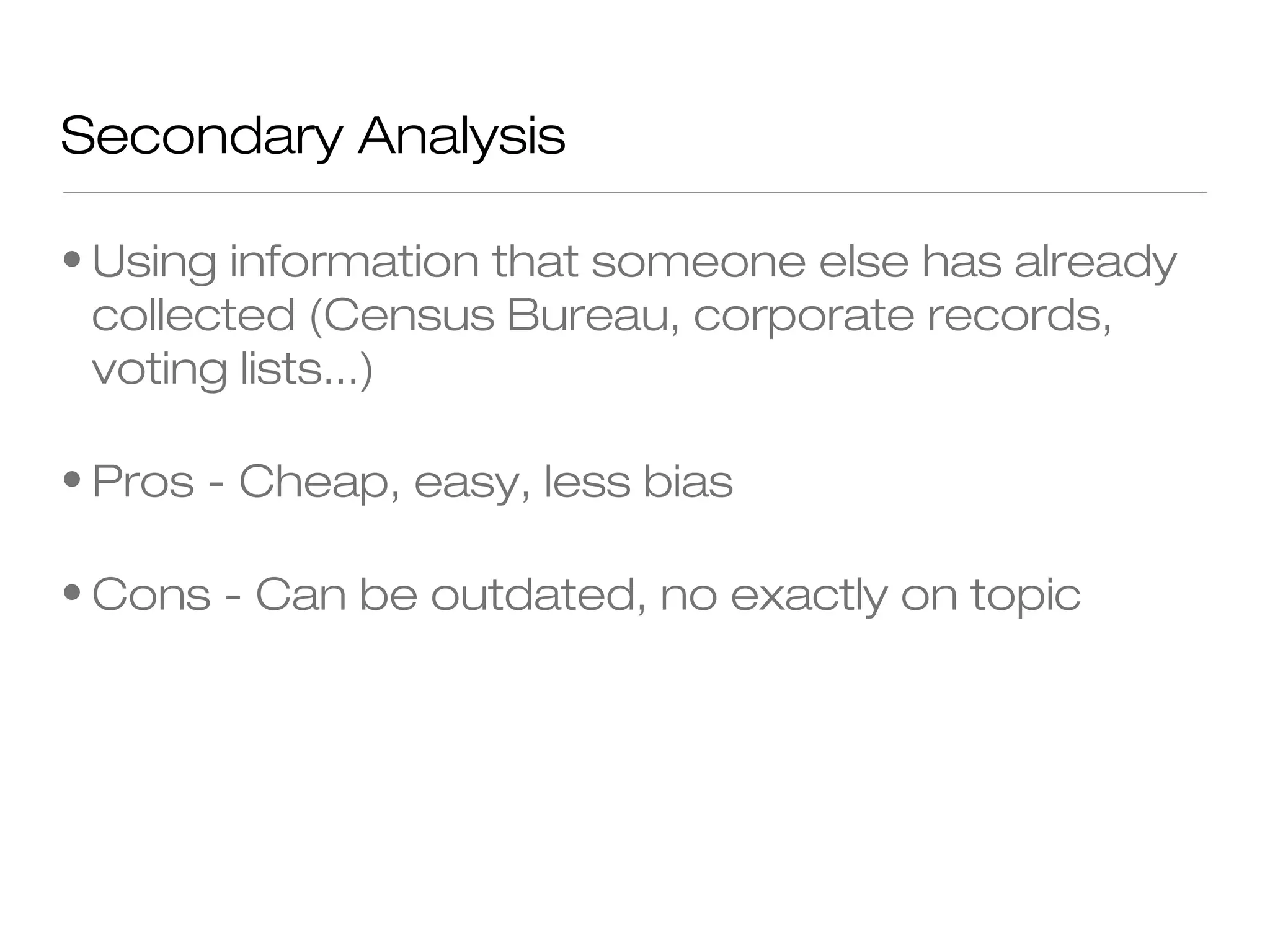
Secondary Analysis
• Using information that someone else has already
collected (Census Bureau, corporate records,
voting lists...)
• Pros - Cheap, easy, less bias
• Cons - Can be outdated, no exactly on topic
Field Research
• Looks at aspects of life that cannot be measured
quantitatively (with numbers), so must be
observed in the natural setting for more accurate
qualitative (descriptive) data
• Case study - investigate a single group, incident,
or community
• Participant observation - researcher becomes a
member of the group studied
Experiments
• Research occurs in a laboratory setting with
minimum contamination
• Not suited to sociology because the environment
artificial
• Used to establish causation (why it happens),
rather than correlation (how are things
associated)
• Sociologists look for multiple causation, because
human interaction is to complicated to be
explained by a single factor
Procedures and Ethics
• Identify the Problem, Review the literature,
Formulate a Hypothesis, Develop a Research
Design, Collect Data, Analyze Data, State Findings
and Conclusions
• Ethics - respect the rights of research subjects
and avoid deceiving or harming them
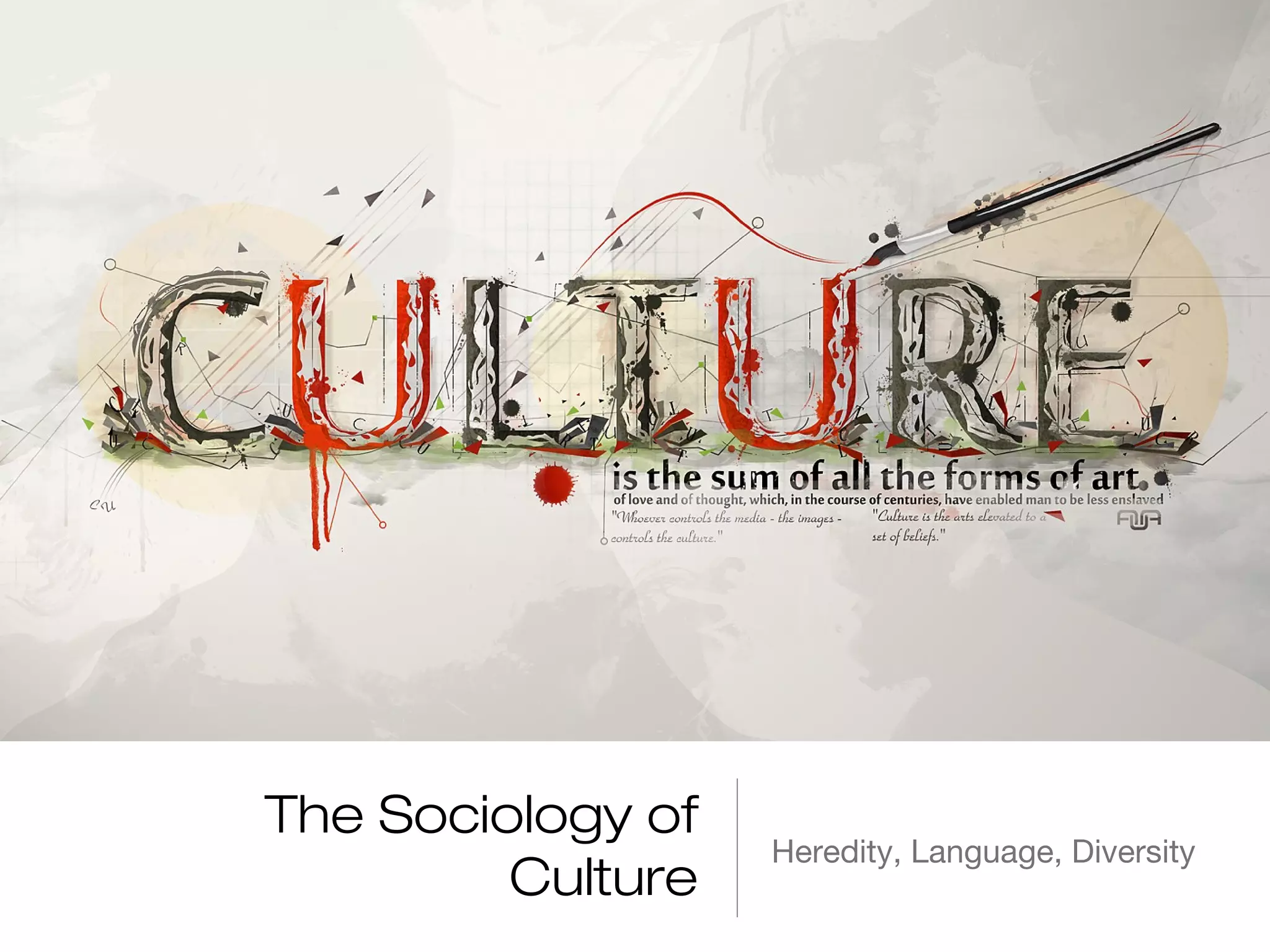
The Sociology of
Culture

Heredity, Language, Diversity
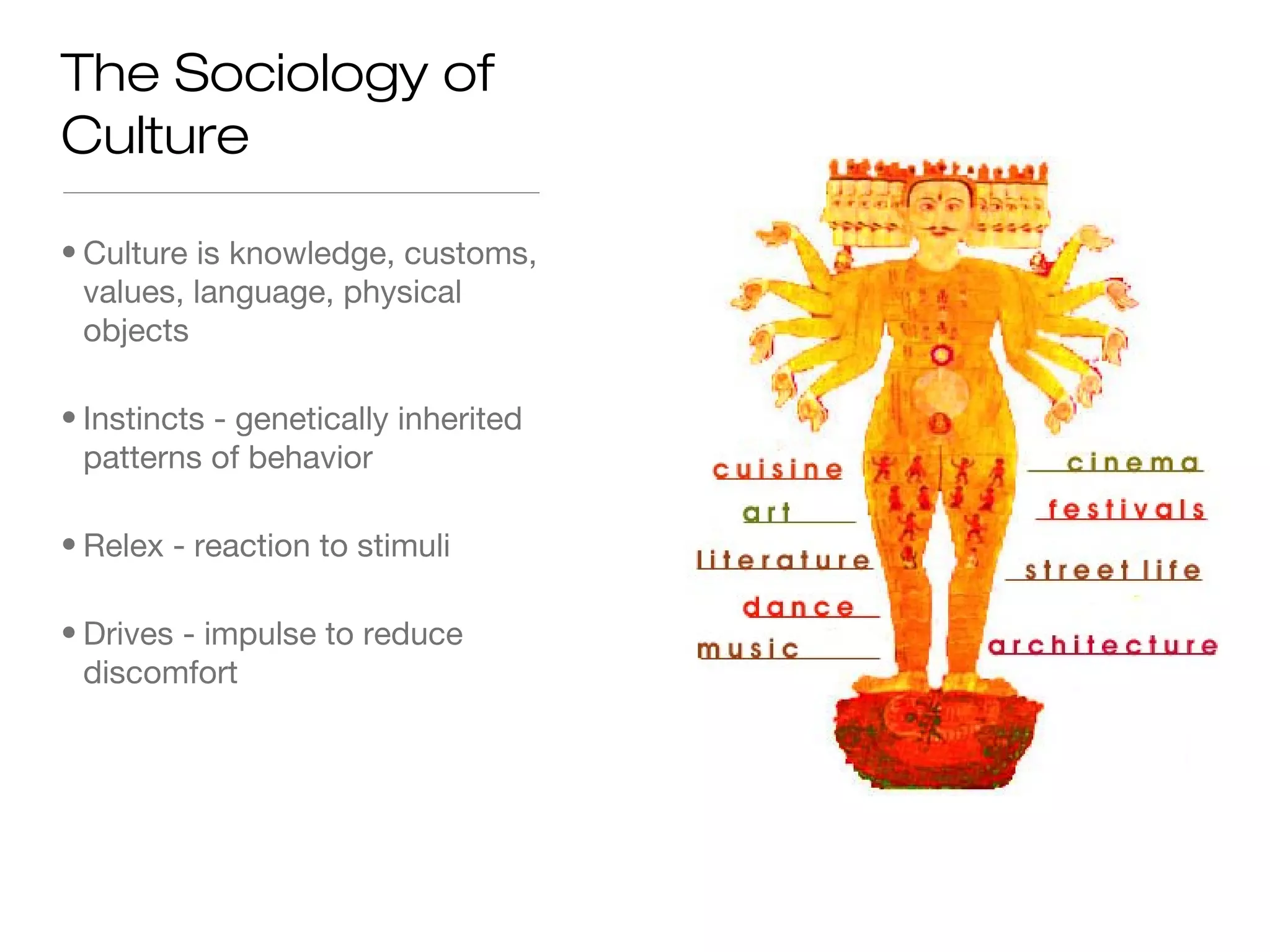
The Sociology of
Culture
• Culture is knowledge, customs,
values, language, physical
objects
• Instincts - genetically inherited
patterns of behavior
• Relex - reaction to stimuli
• Drives - impulse to reduce
discomfort
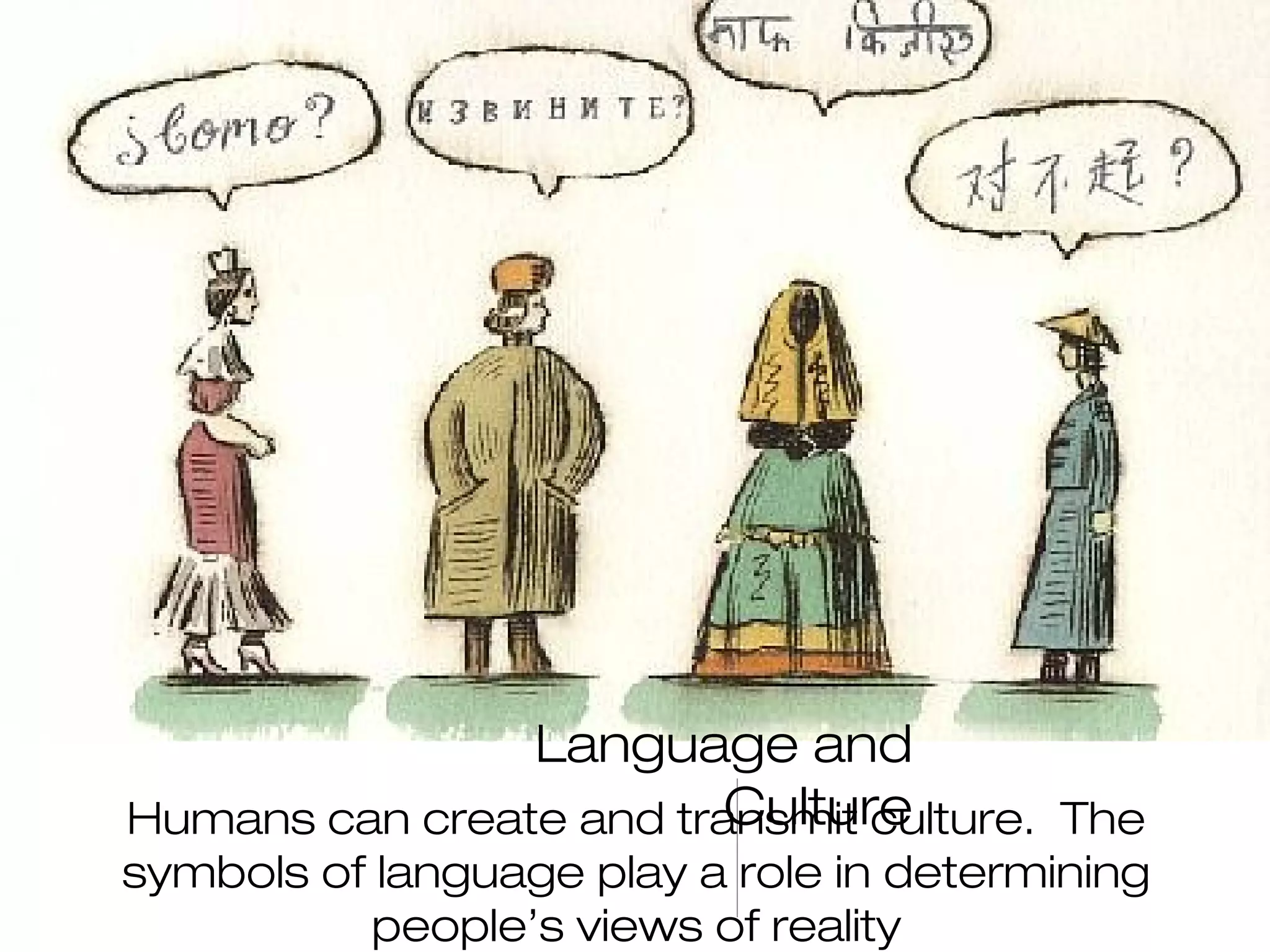
Language and
Culture
Humans can create and transmit culture. The
symbols of language play a role in determining
people’s views of reality
Essential
Components of
Culture - Norms
• Norms - Rules defining appropriate
and inappropriate behavior
• Folkways - Customary was of
thinking, feeling, behaving
• More - morals, conduct related to
right and wrong, foundation for laws
• Taboo - a norm so strong that its
violation demands punishment by
the group
• Sanctions - punishment (formal jail, informal - shunning)
Essential
Components of
Culture - Values
• Values - broad ideas about what
most people in society consider
desirable
• Achievement and Success
• Activity and Work
• Efficiency and Practicality
• Equality
• Democracy
• Group Superiority
Diversity
• Cultural Universals are traits
that exist in all cultures.
• They include: sports, cooking,
courting, educations, etiquette,
family, government, hospitality,
inheritance, music, religious
ritual, sexual restrictions,
property rights, tool making...
• Subculture and Countercultures
belong to the broader culture
but differ in particular ways
(dress, worship, job).
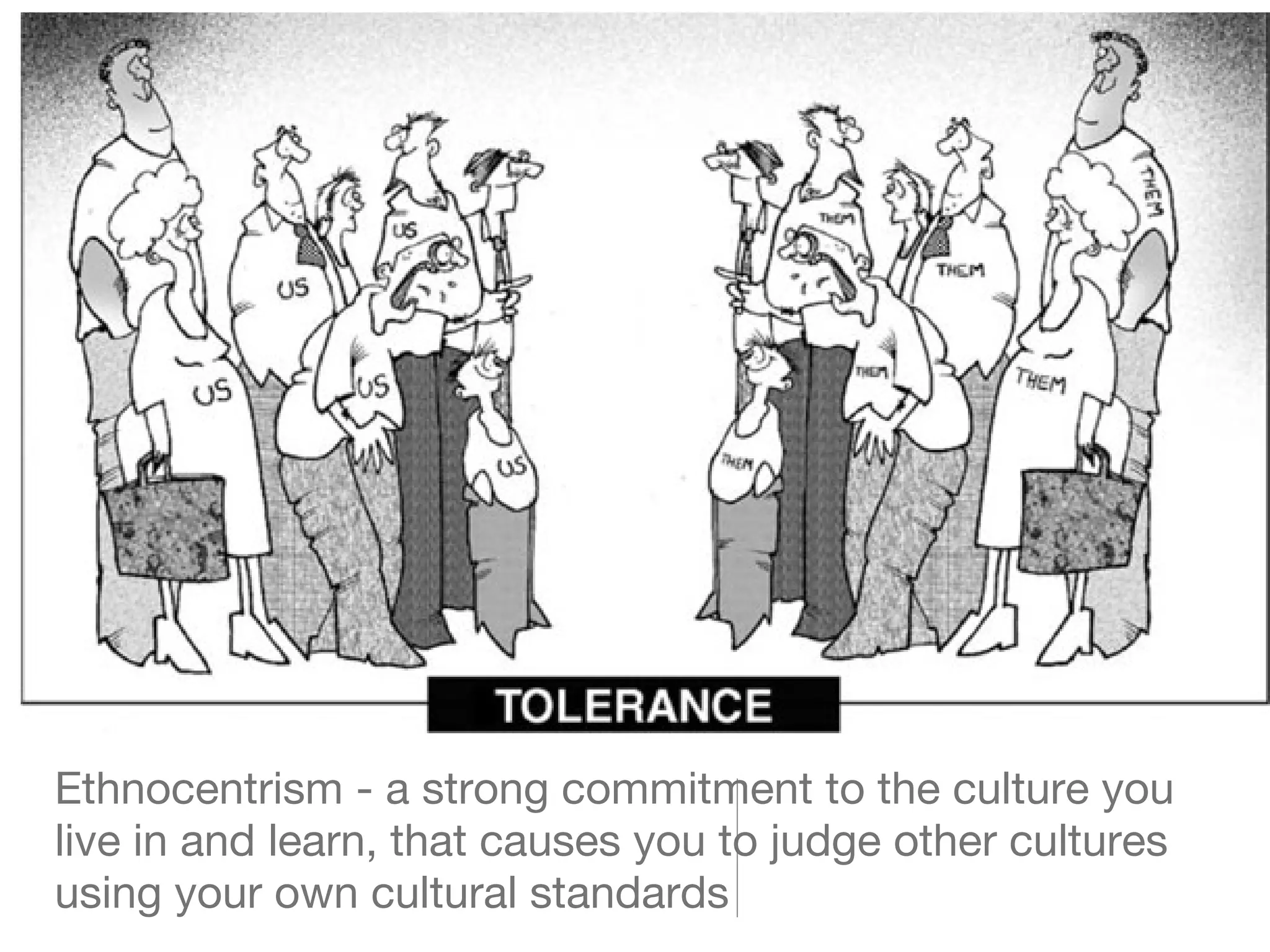
Ethnocentrism - a strong commitment to the culture you
live in and learn, that causes you to judge other cultures
using your own cultural standards
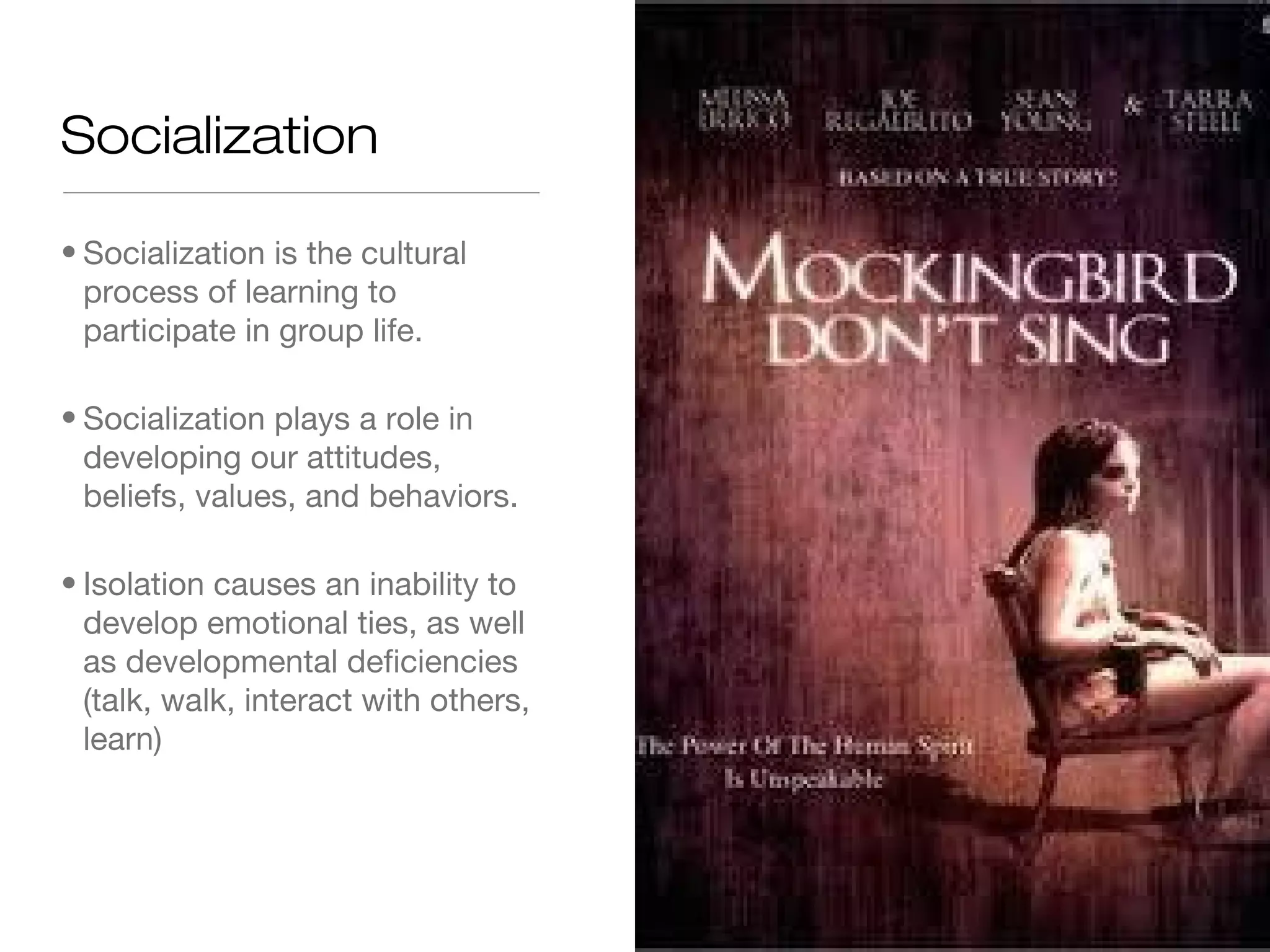
Socialization
• Socialization is the cultural
process of learning to
participate in group life.
• Socialization plays a role in
developing our attitudes,
beliefs, values, and behaviors.
• Isolation causes an inability to
develop emotional ties, as well
as developmental deficiencies
(talk, walk, interact with others,
learn)
Socialization and Theoretical Perspectives
• Functionalist - groups work together, so family
and school teach basic norms, values, and beliefs
• Conflict Perspective - views socialization as a way
of perpetuating the status quo (preserving the
current class system)
• Symbolic Interactionist - uses key concepts to
explain socialization (self-concept, looking-glass
self, significant others, role taking, generalized
other), and believes that socialization is the major
determinant of human nature
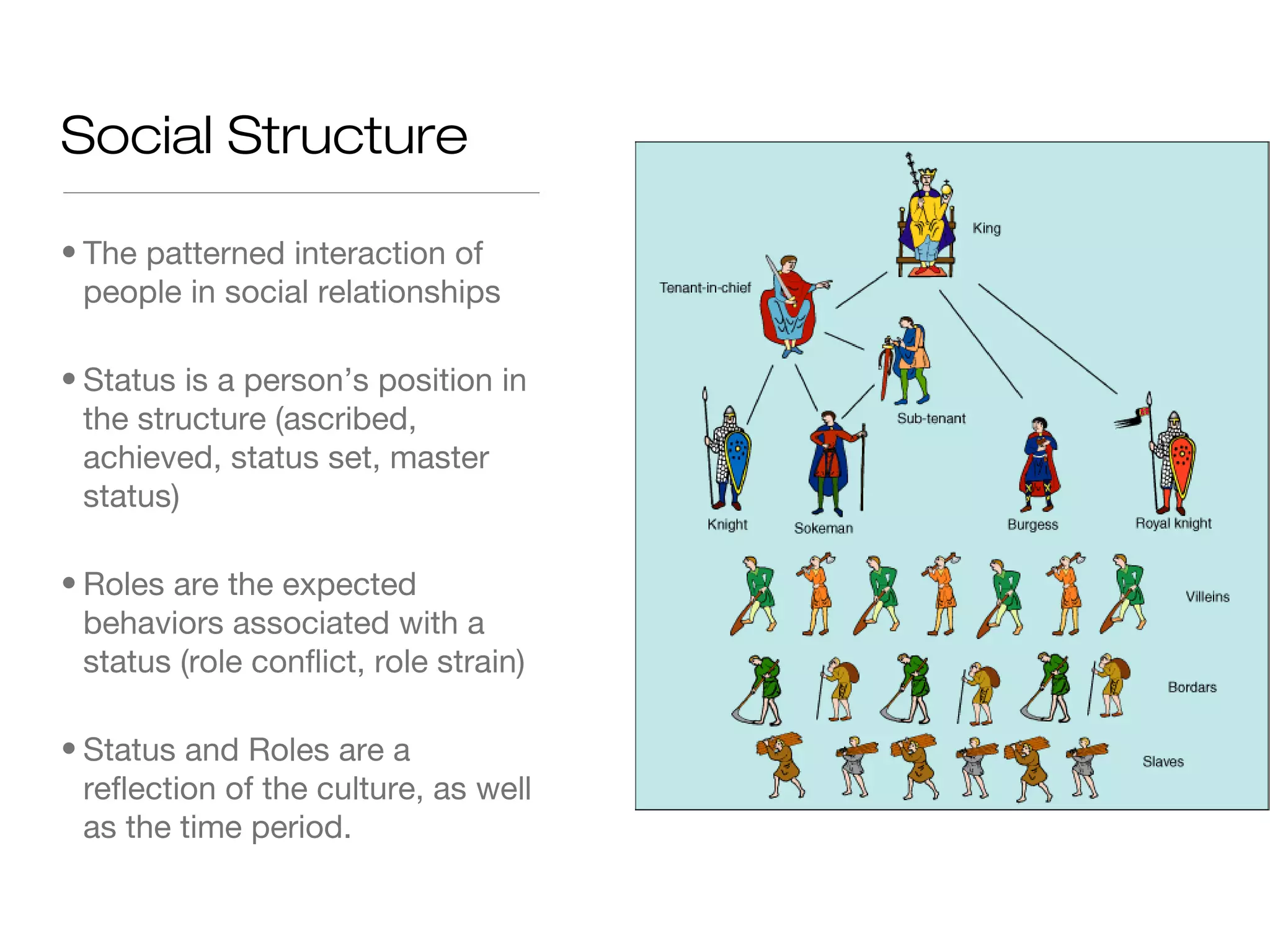
Social Structure
• The patterned interaction of
people in social relationships
• Status is a person’s position in
the structure (ascribed,
achieved, status set, master
status)
• Roles are the expected
behaviors associated with a
status (role conflict, role strain)
• Status and Roles are a
reflection of the culture, as well
as the time period.
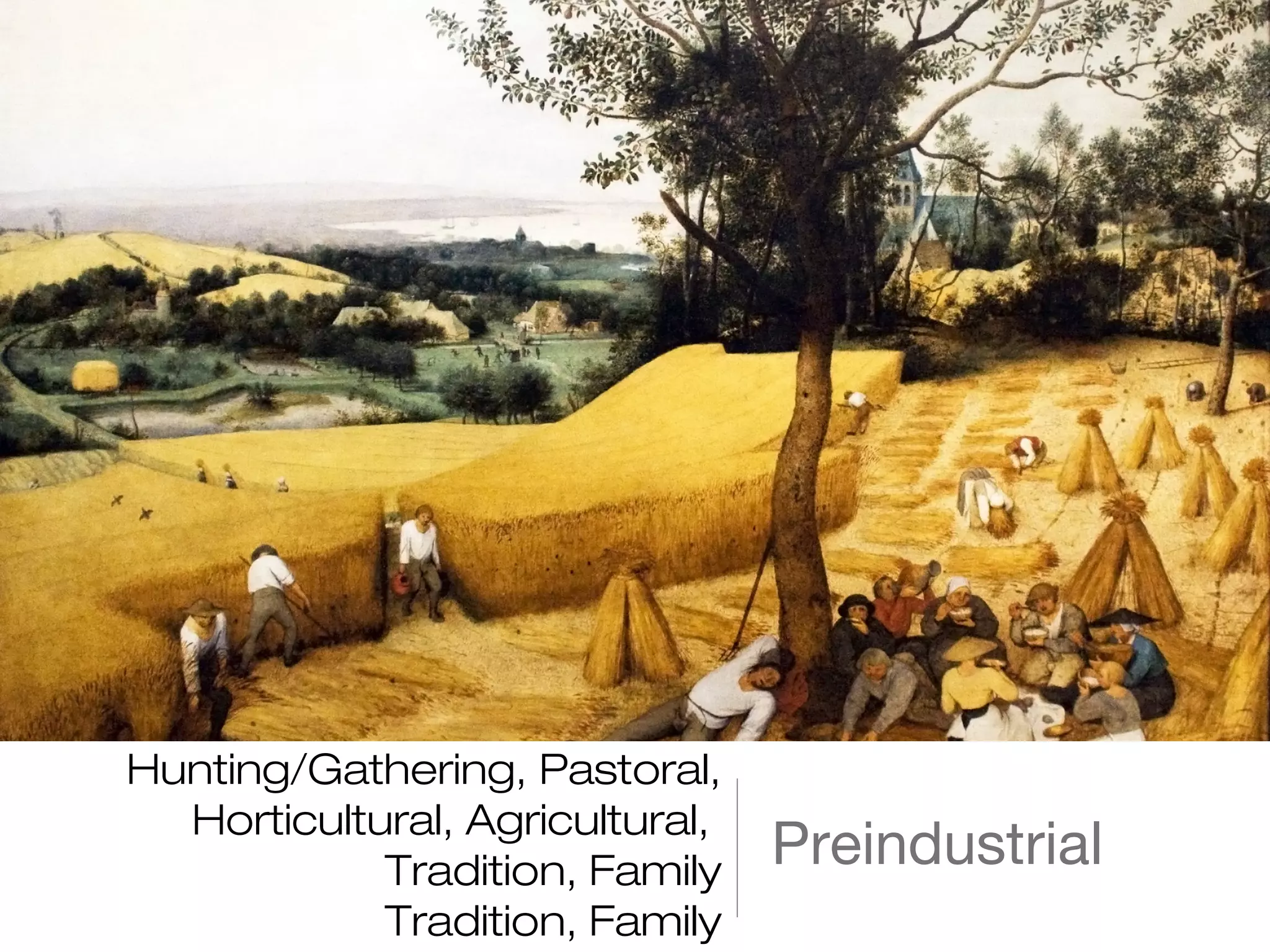
Hunting/Gathering, Pastoral,
Horticultural, Agricultural,
Tradition, Family
Tradition, Family

Preindustrial
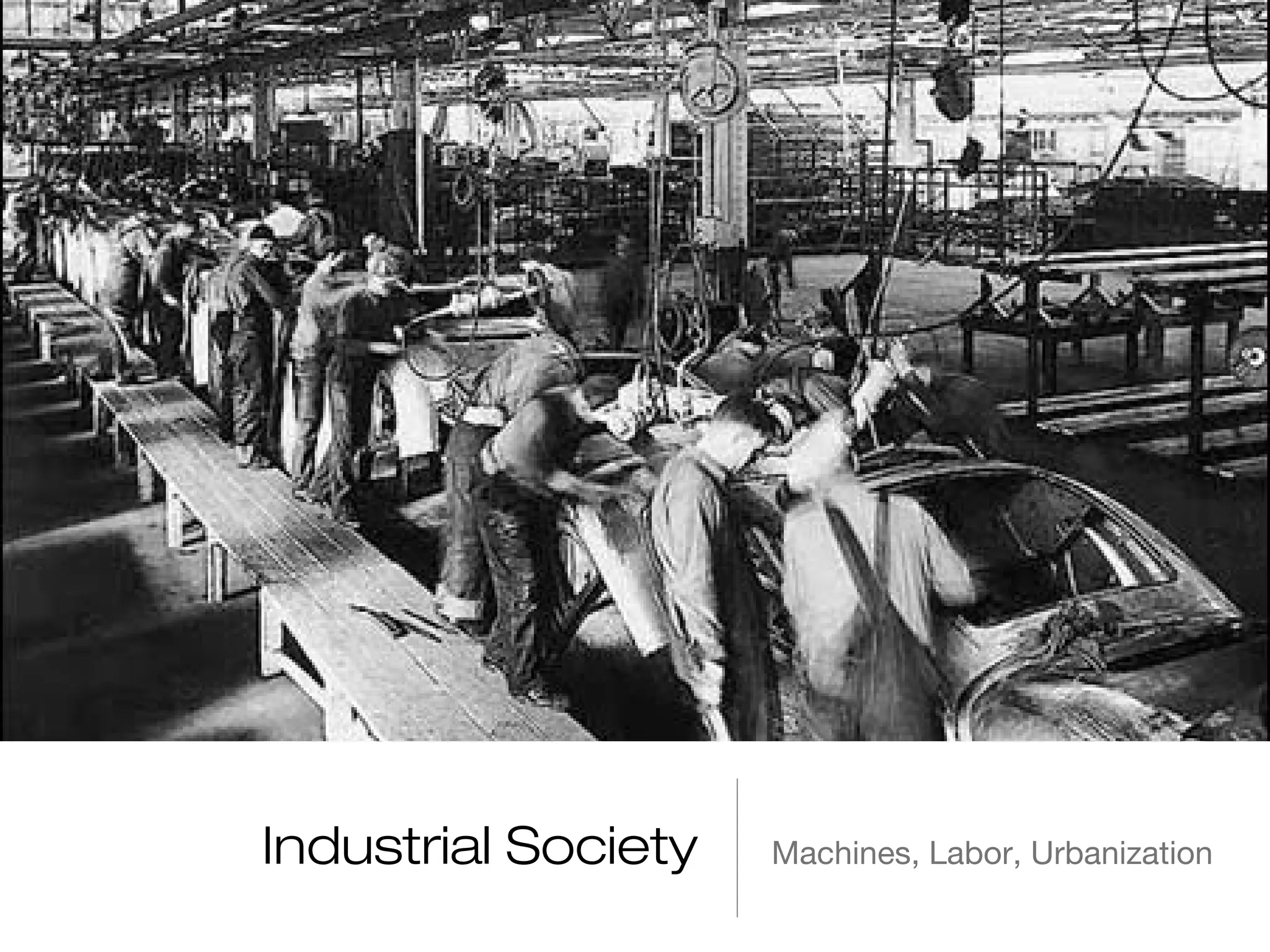
Industrial Society

Machines, Labor, Urbanization
Postindustrial

Service, Technology,
Interdependent
Relationships
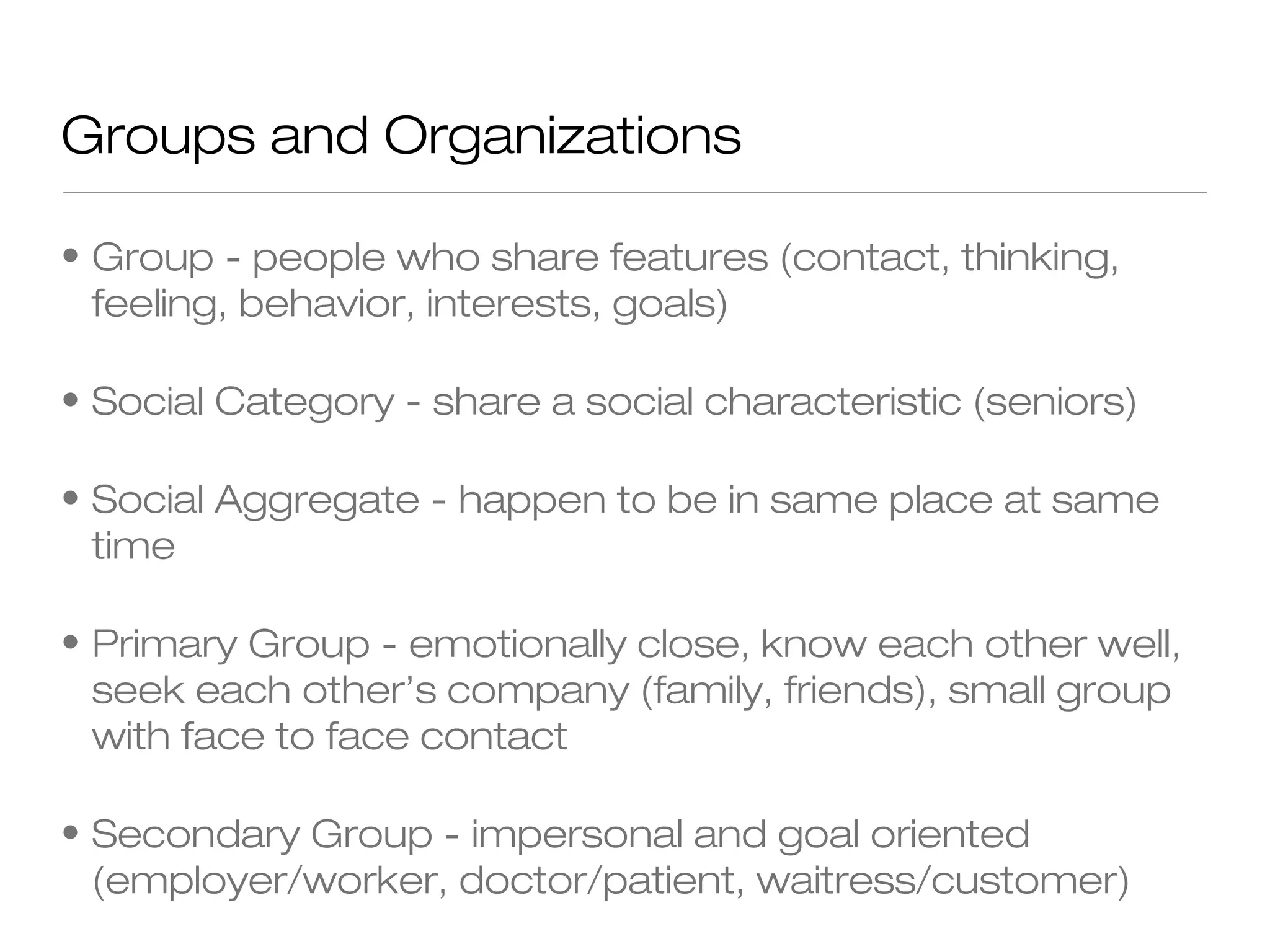
Groups and Organizations
• Group - people who share features (contact, thinking,
feeling, behavior, interests, goals)
• Social Category - share a social characteristic (seniors)
• Social Aggregate - happen to be in same place at same
time
• Primary Group - emotionally close, know each other well,
seek each other’s company (family, friends), small group
with face to face contact
• Secondary Group - impersonal and goal oriented
(employer/worker, doctor/patient, waitress/customer)
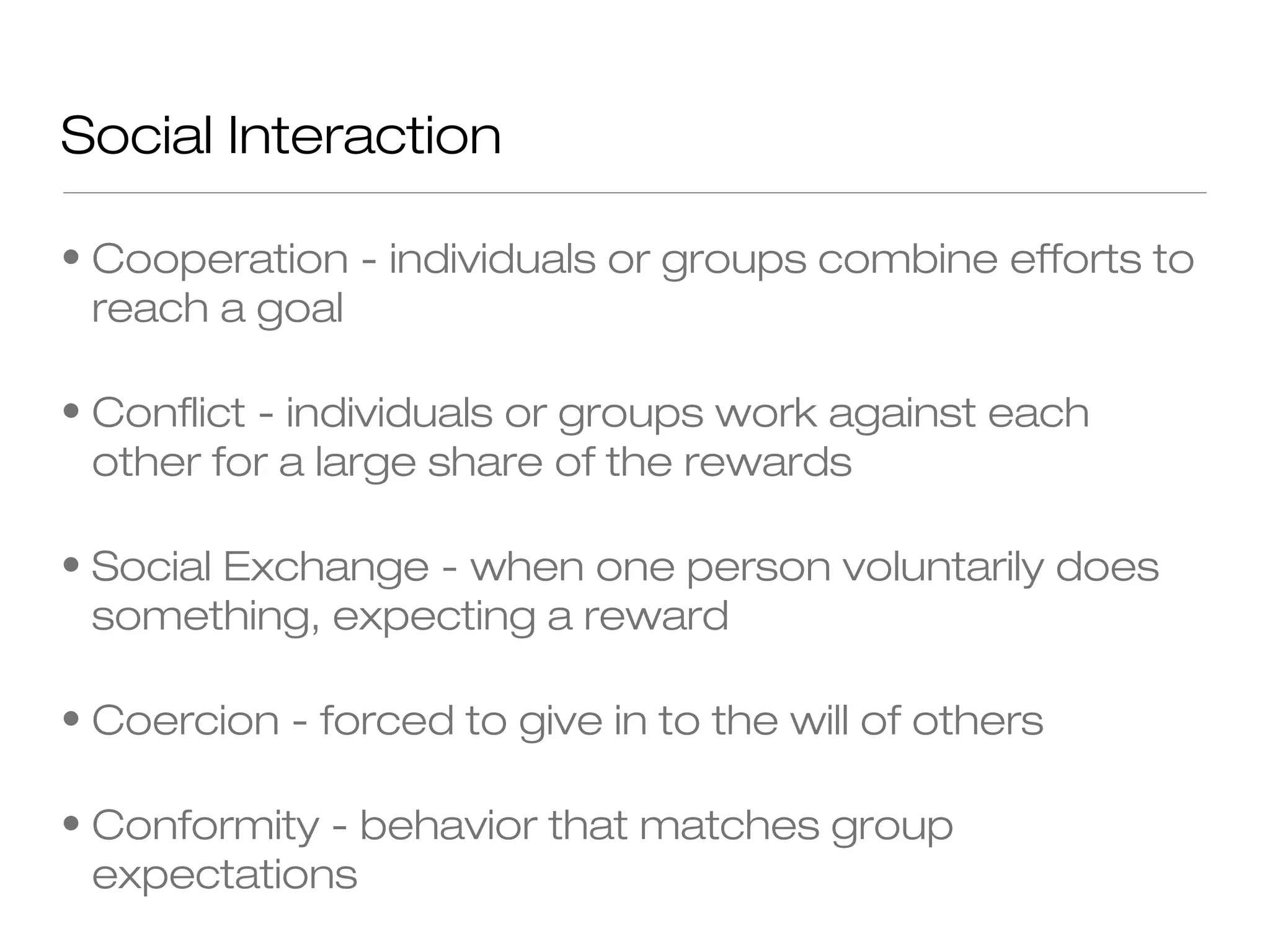
Social Interaction
• Cooperation - individuals or groups combine efforts to
reach a goal
• Conflict - individuals or groups work against each
other for a large share of the rewards
• Social Exchange - when one person voluntarily does
something, expecting a reward
• Coercion - forced to give in to the will of others
• Conformity - behavior that matches group
expectations
Bureaucracy
• Advantages: division of labor, rules/procedures,
written records, promotion based on
merit/qualifications, rationalization (the mindset
emphasizing knowledge, reason, planning over
tradition and superstition)
• Disadvantages: undervalue people
(rules/procedures cause impersonal treatment of
people), red tape (too much paperwork)
Formal and
Informal
Organizations
• Formal Organization deliberately created to achieve
one or more long term goals
(high schools, colleges,
hospitals, corporations)
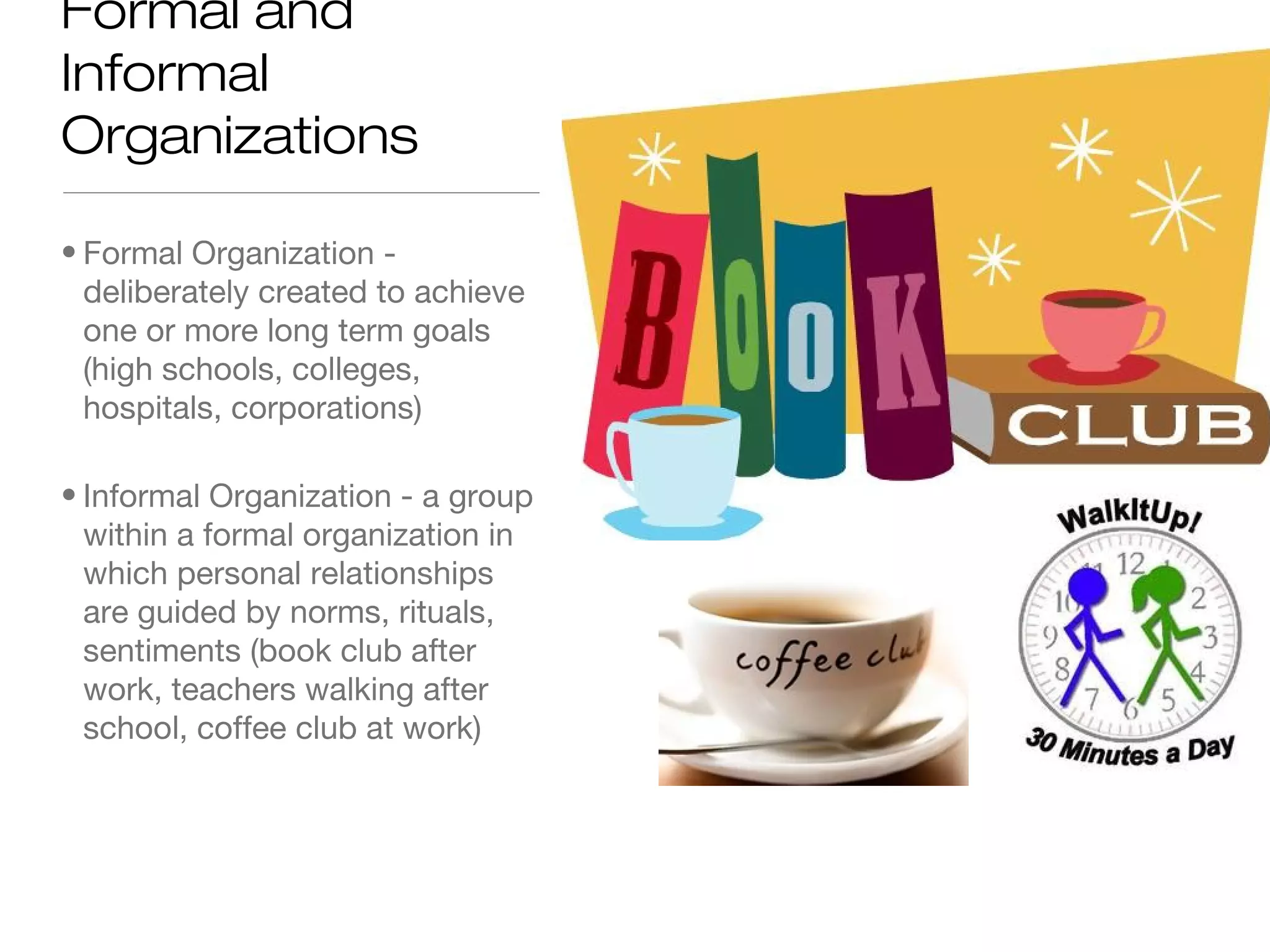
• Informal Organization - a group
within a formal organization in
which personal relationships
are guided by norms, rituals,
sentiments (book club after
work, teachers walking after
school, coffee club at work)
Deviance and
Social Control

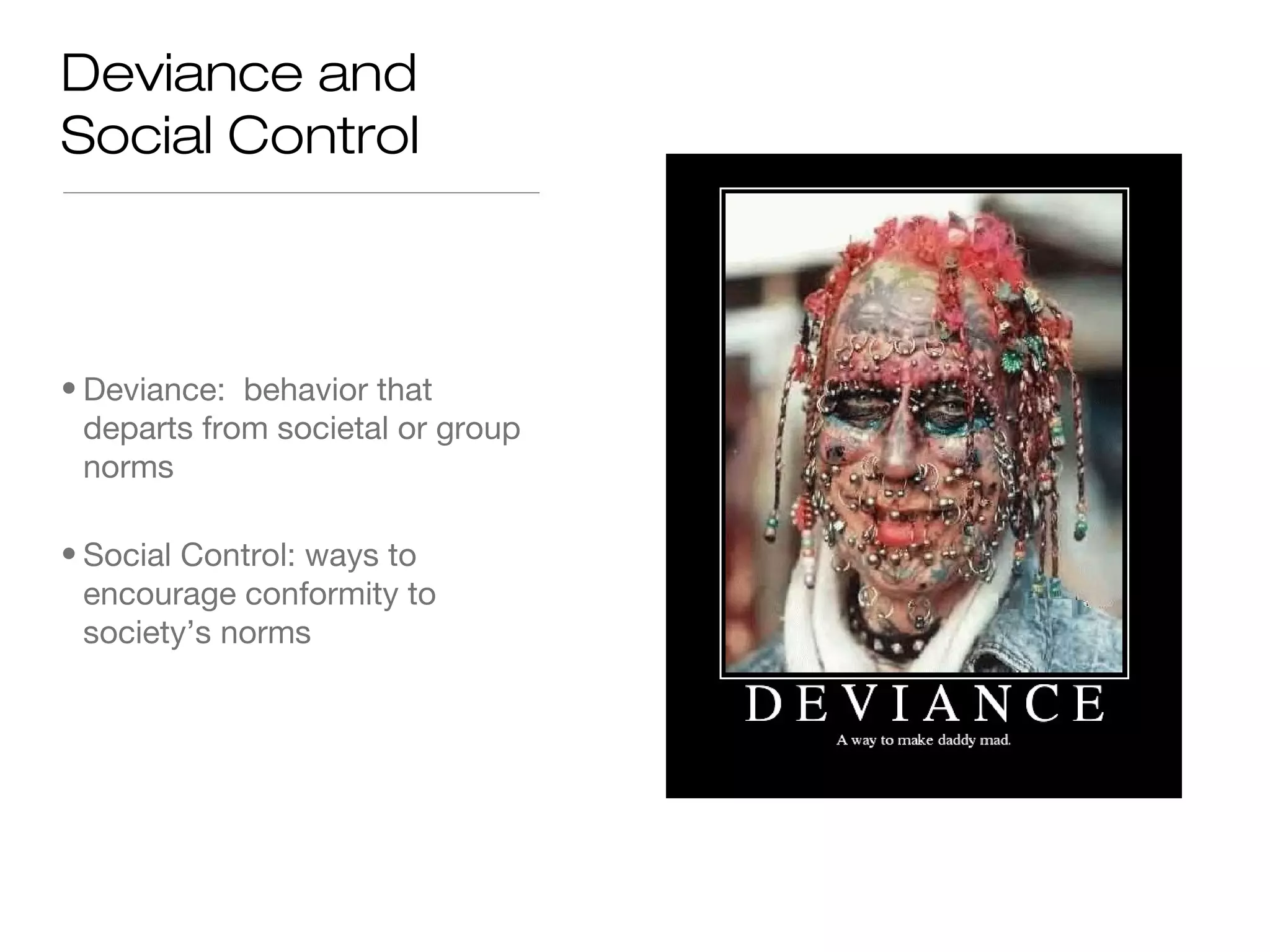
• Deviance: behavior that
departs from societal or group
norms
• Social Control: ways to
encourage conformity to
society’s norms
Positives and
Negatives of
Deviance
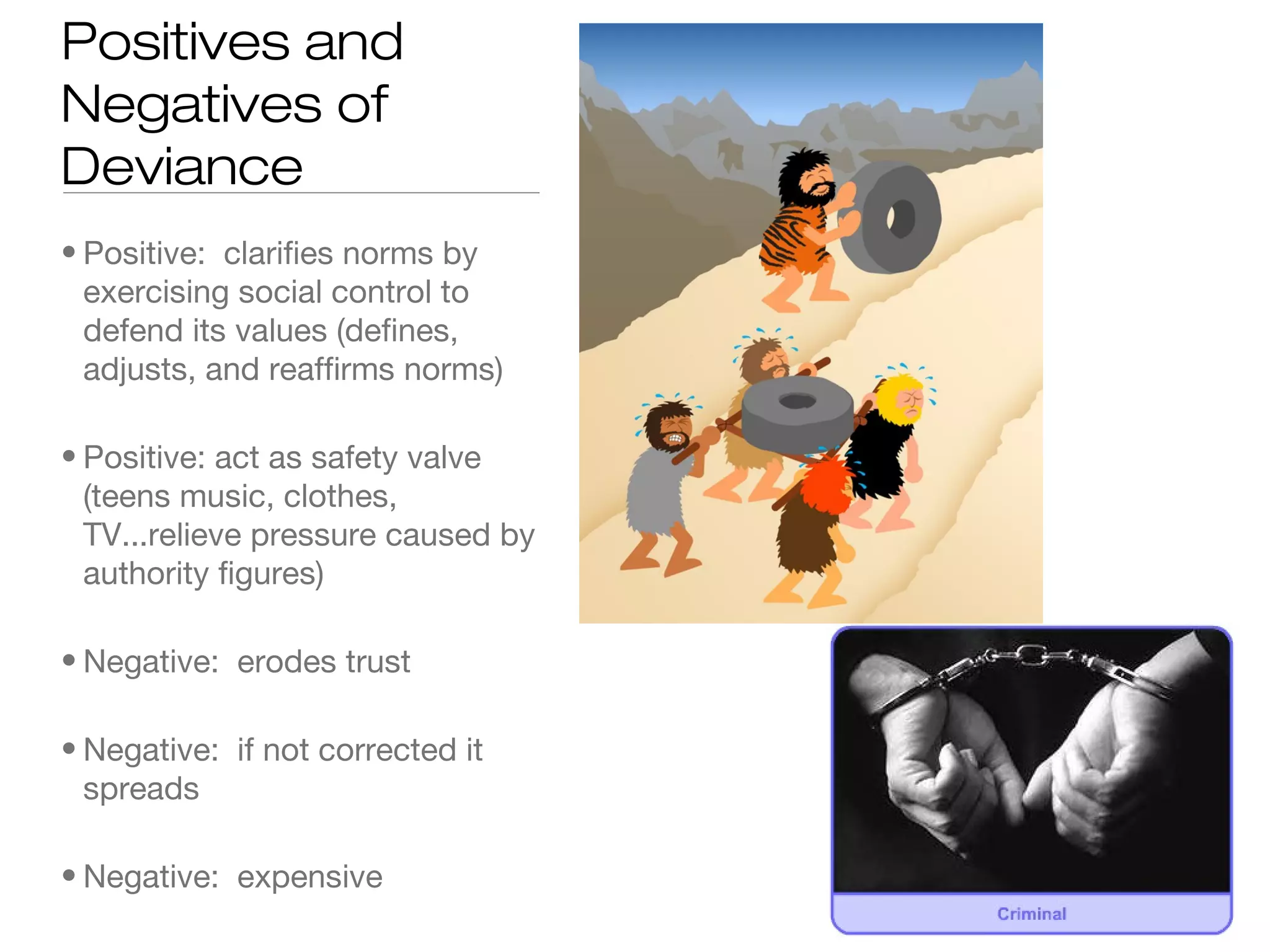
• Positive: clarifies norms by
exercising social control to
defend its values (defines,
adjusts, and reaffirms norms)
• Positive: act as safety valve
(teens music, clothes,
TV...relieve pressure caused by
authority figures)
• Negative: erodes trust
• Negative: if not corrected it
spreads
• Negative: expensive
Major Theories of
Deviance:
Functionalism
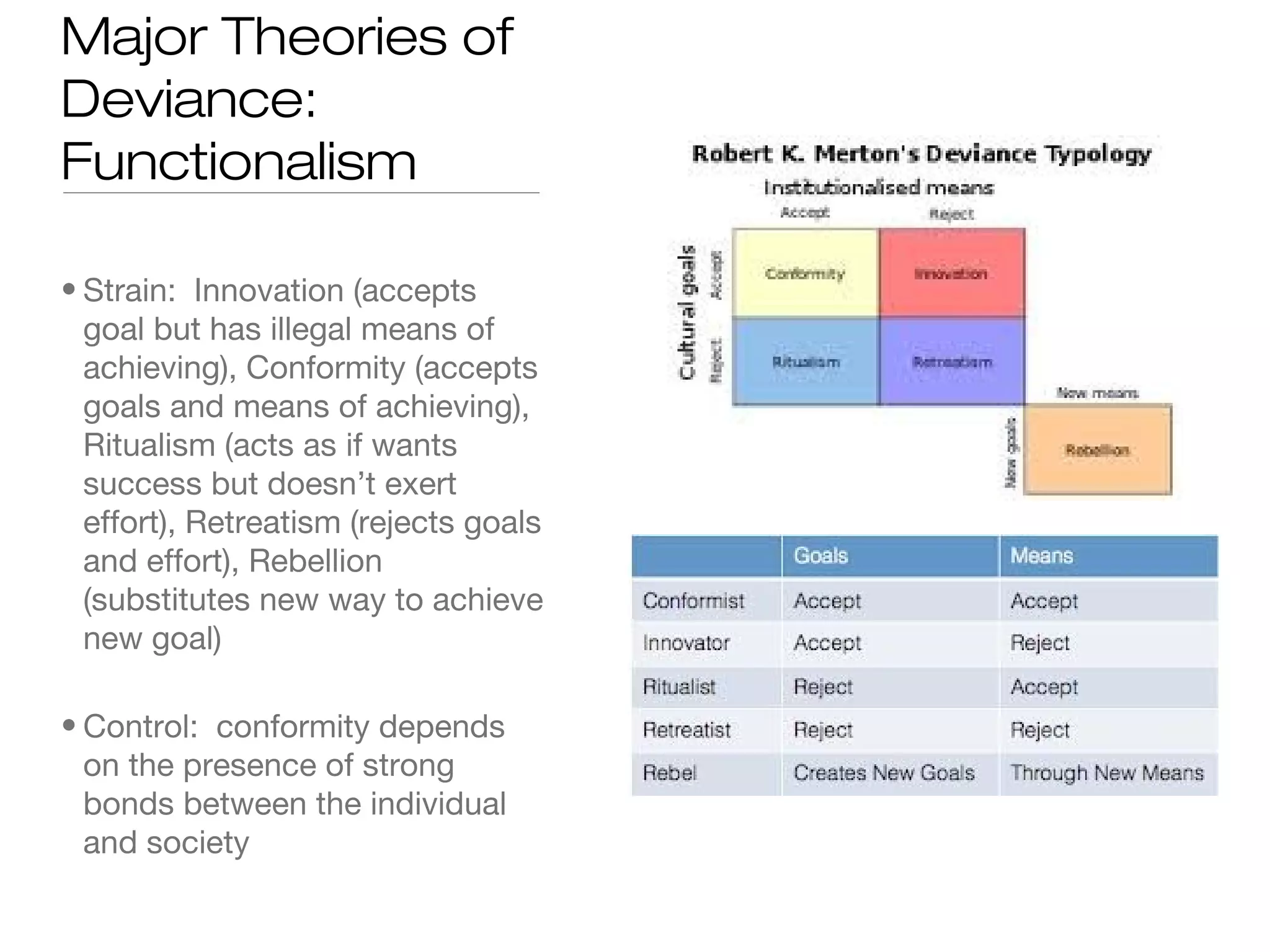
• Strain: Innovation (accepts
goal but has illegal means of
achieving), Conformity (accepts
goals and means of achieving),
Ritualism (acts as if wants
success but doesn’t exert
effort), Retreatism (rejects goals
and effort), Rebellion
(substitutes new way to achieve
new goal)
• Control: conformity depends
on the presence of strong
bonds between the individual
and society
Deviance:
Symbolic
Interactionism

• Differential Association Theory:
individuals learn deviance in
proportion to the number of
deviant acts they are exposed
to
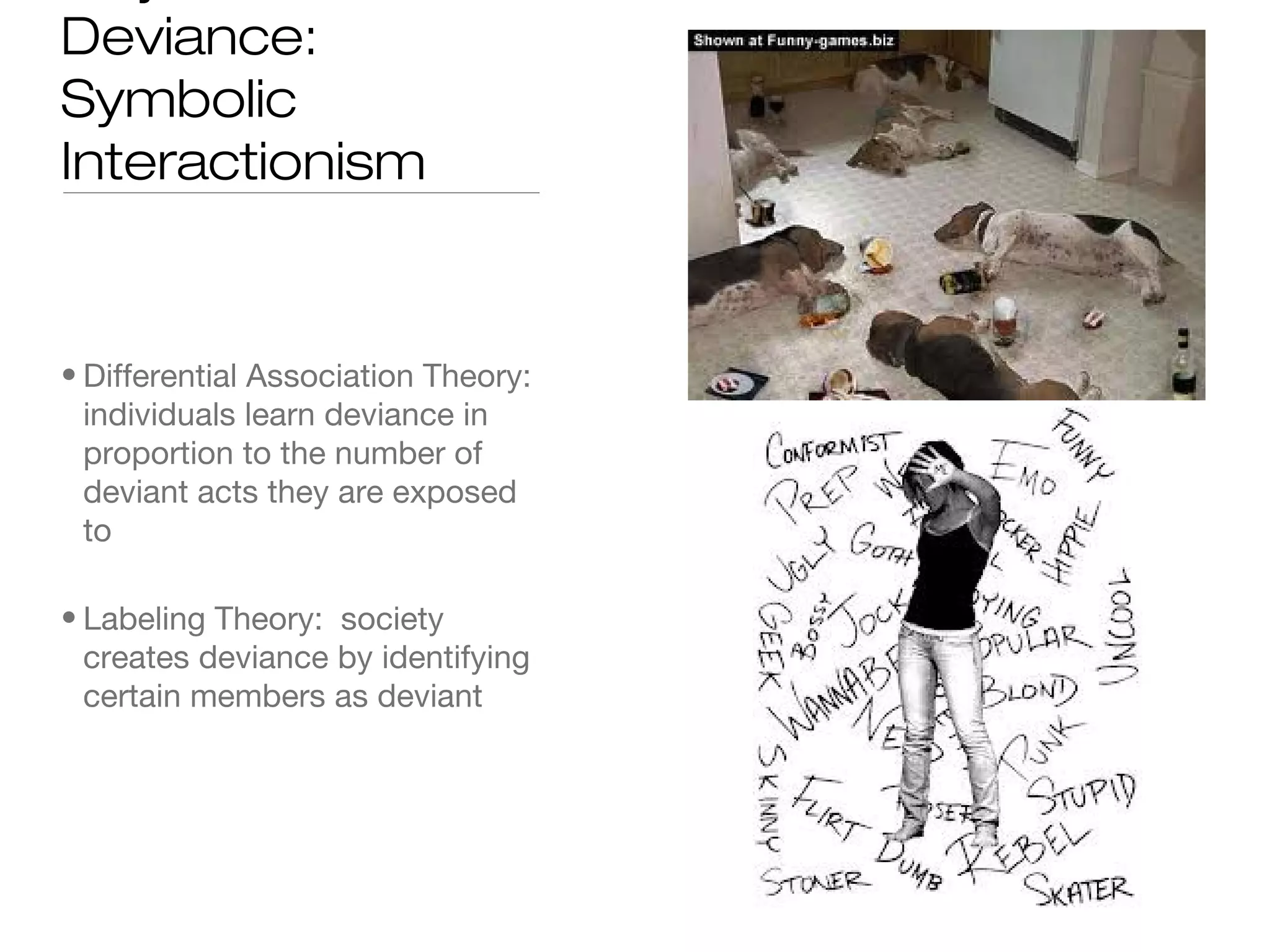
• Labeling Theory: society
creates deviance by identifying
certain members as deviant
Major Theories of
Deviance: Conflict

• Victim Discounting: process of
reducing the seriousness of the
crimes that injure people of
lower status
• White Collar Crime: job related
crimes committed by high
status people
Major
Approached to
Crime Control
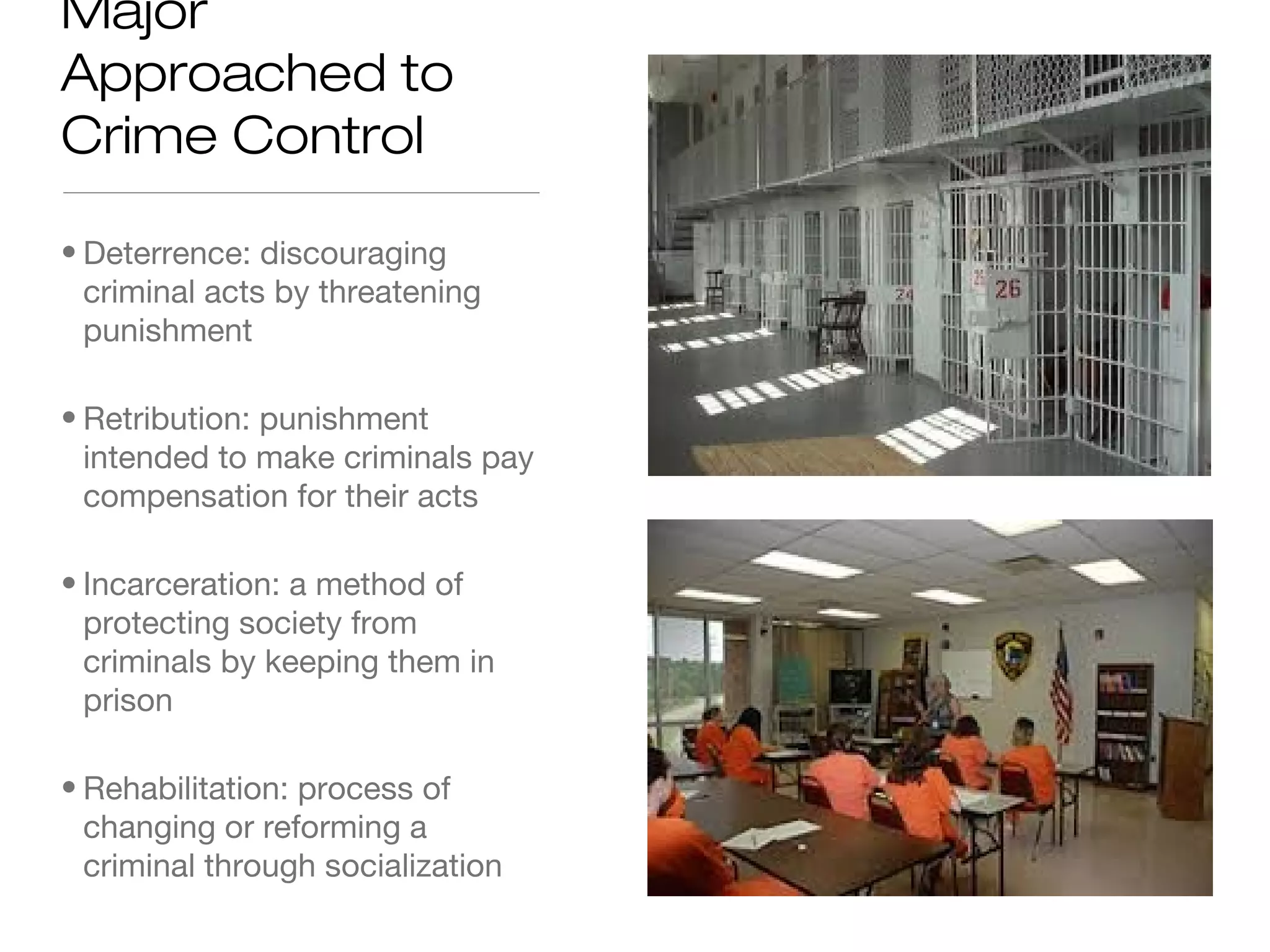
• Deterrence: discouraging
criminal acts by threatening
punishment
• Retribution: punishment
intended to make criminals pay
compensation for their acts
• Incarceration: a method of
protecting society from
criminals by keeping them in
prison
• Rehabilitation: process of
changing or reforming a
criminal through socialization
Social Stratification
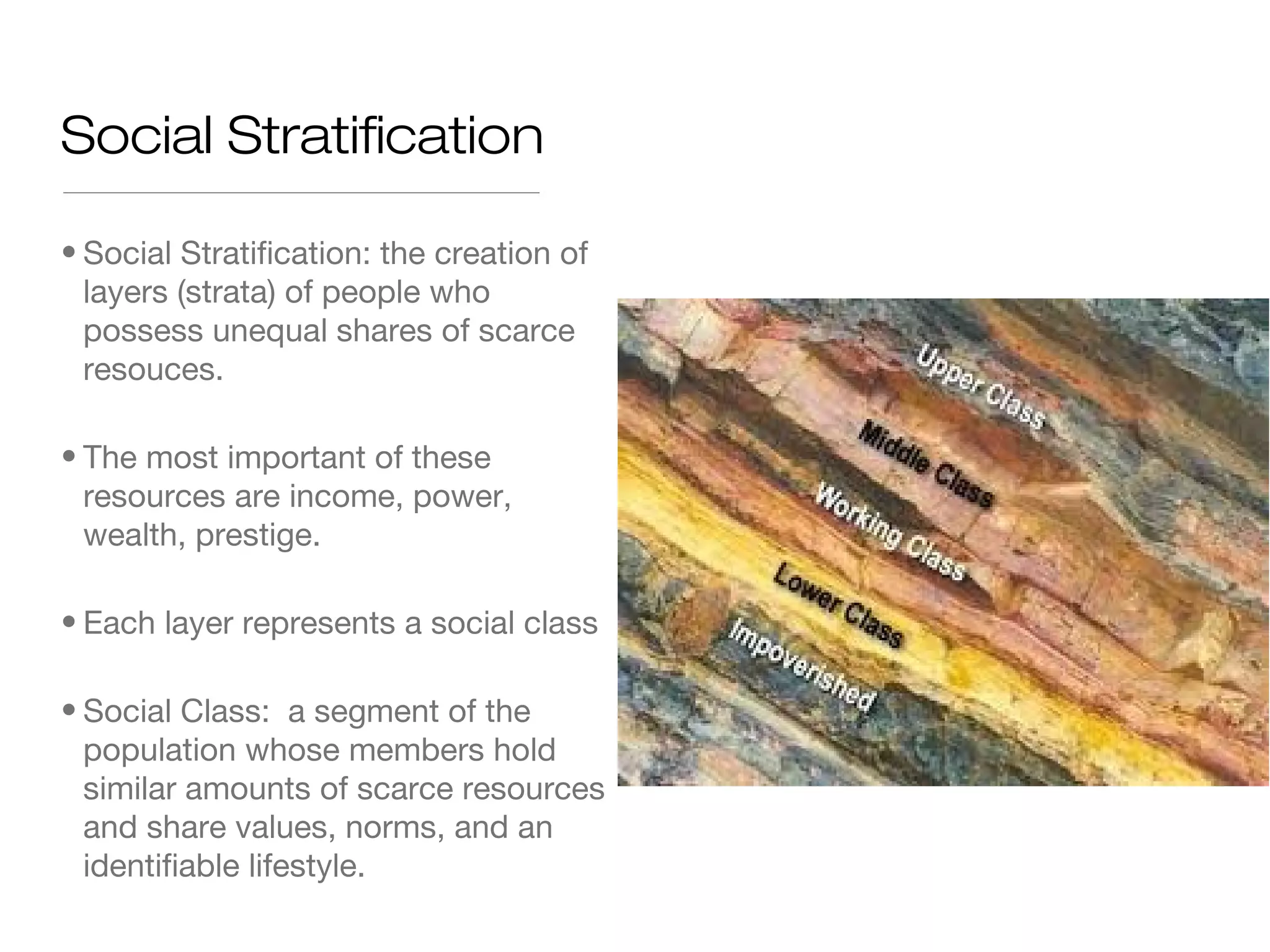
• Social Stratification: the creation of
layers (strata) of people who
possess unequal shares of scarce
resouces.
• The most important of these
resources are income, power,
wealth, prestige.
• Each layer represents a social class
• Social Class: a segment of the
population whose members hold
similar amounts of scarce resources
and share values, norms, and an
identifiable lifestyle.
Theories on Social
Stratification
• Functionalist: inequality exists because certain jobs are more important than
others, and that these jobs involve special talent and training.
• Conflict: inequality exists because people are willing to exploit others.
• Symbolic Interactionism: children taught that social class a result of talent and
effort, causing people to accept the existing system.
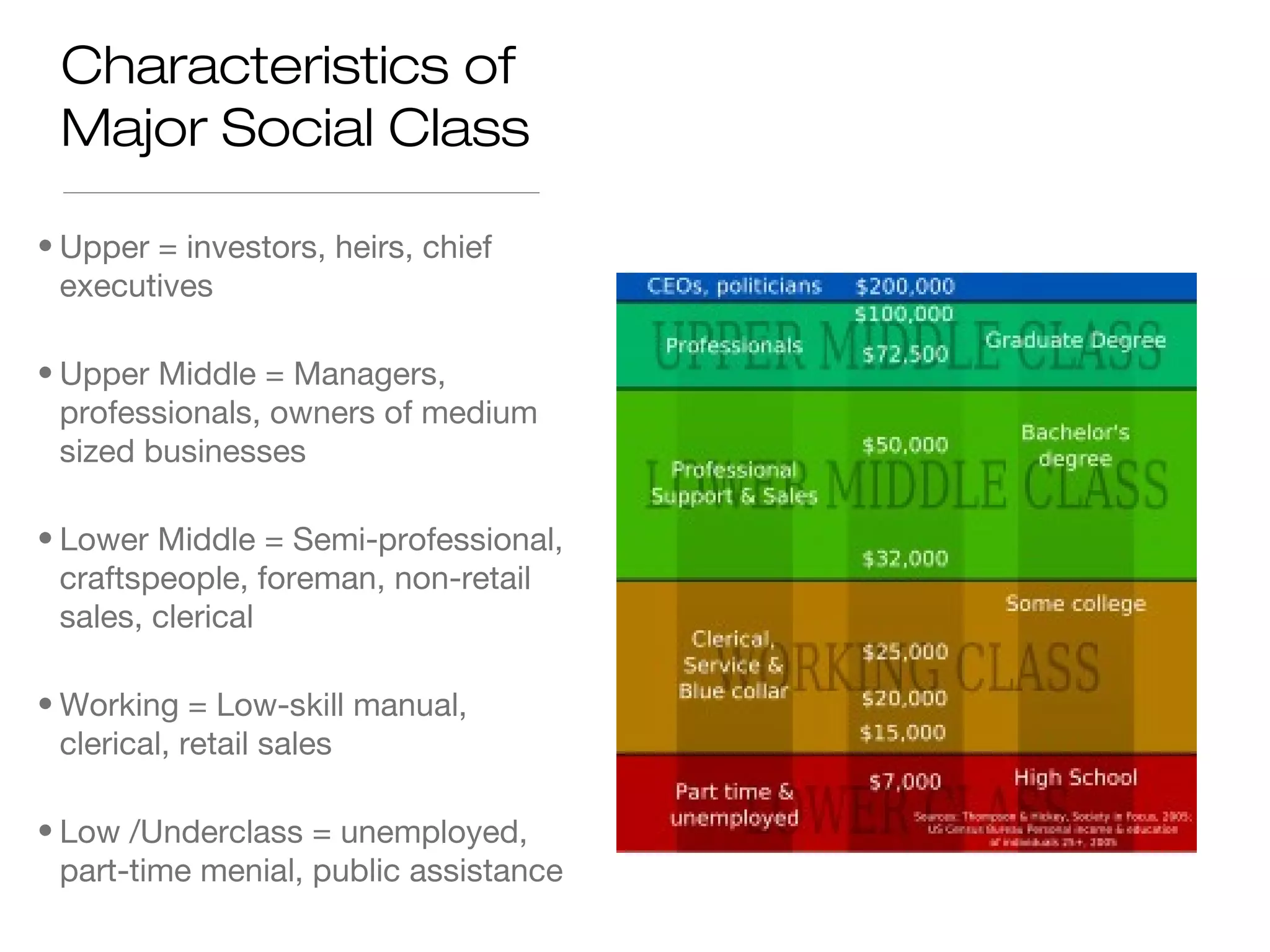
Characteristics of
Major Social Class
• Upper = investors, heirs, chief
executives
• Upper Middle = Managers,
professionals, owners of medium
sized businesses
• Lower Middle = Semi-professional,
craftspeople, foreman, non-retail
sales, clerical
• Working = Low-skill manual,
clerical, retail sales
• Low /Underclass = unemployed,
part-time menial, public assistance
Poverty in
America
• Absolute Poverty: absence of
enough money to secure life’s
necessities - food, shelter, clothes
• Relative Poverty: a measure of
poverty baed on the economic
disparity between those at the
bottom of society and the rest of
society
• Feminization of Poverty: a trend in
the US society in which women
and children make up an
increasing proportion of the poor
Social Mobility
• Social Mobility: the movement
of individuals or groups
between social classes
• horizontal: a change in
occupation within the same
social class
• vertical: a change upward or
downward in occupational
status or social class
• intergenerational mobility: a
change in status or class from
one generation to the next
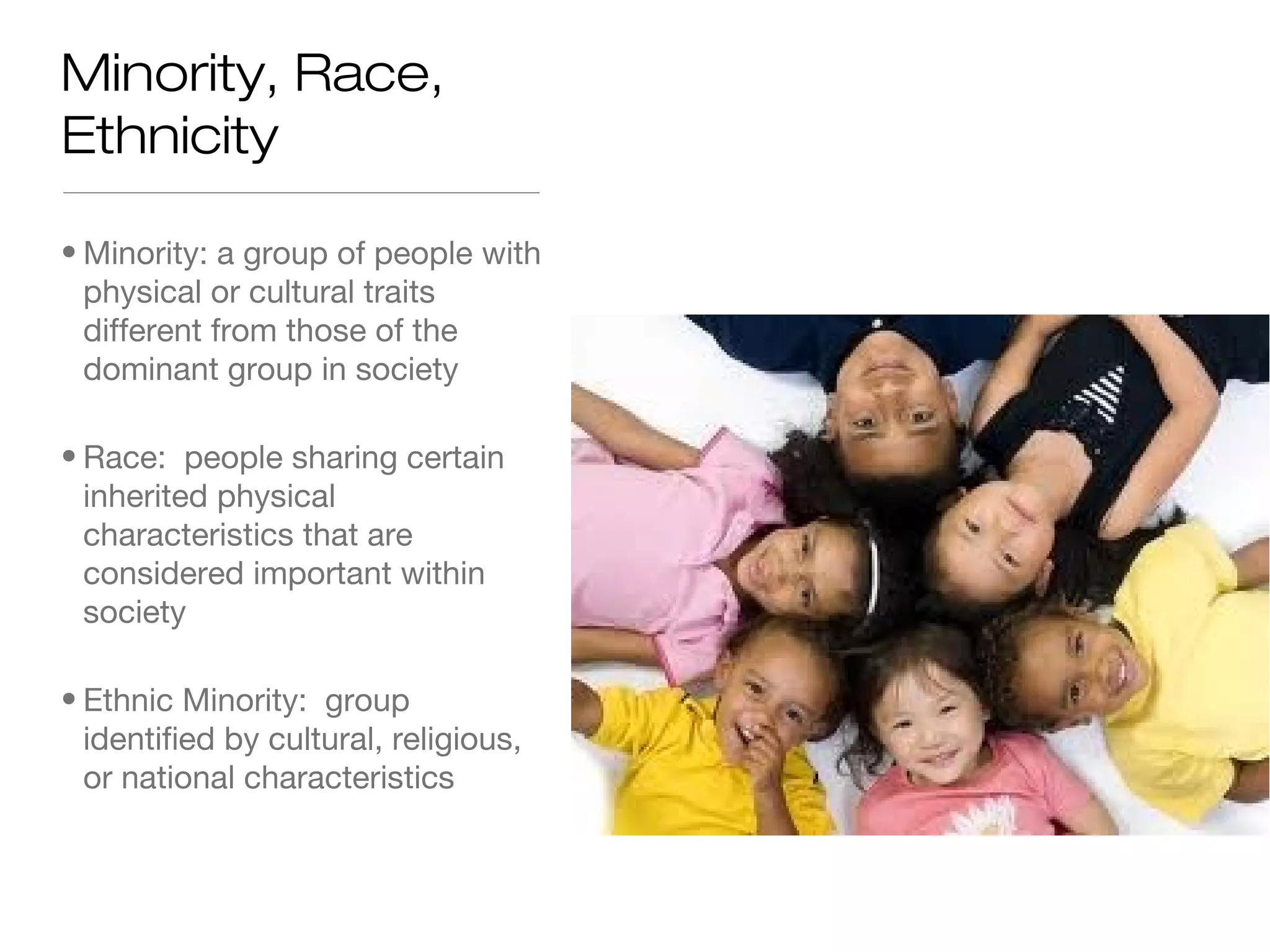
Minority, Race,
Ethnicity
• Minority: a group of people with
physical or cultural traits
different from those of the
dominant group in society
• Race: people sharing certain
inherited physical
characteristics that are
considered important within
society
• Ethnic Minority: group
identified by cultural, religious,
or national characteristics
Racial and Ethnic
Relations
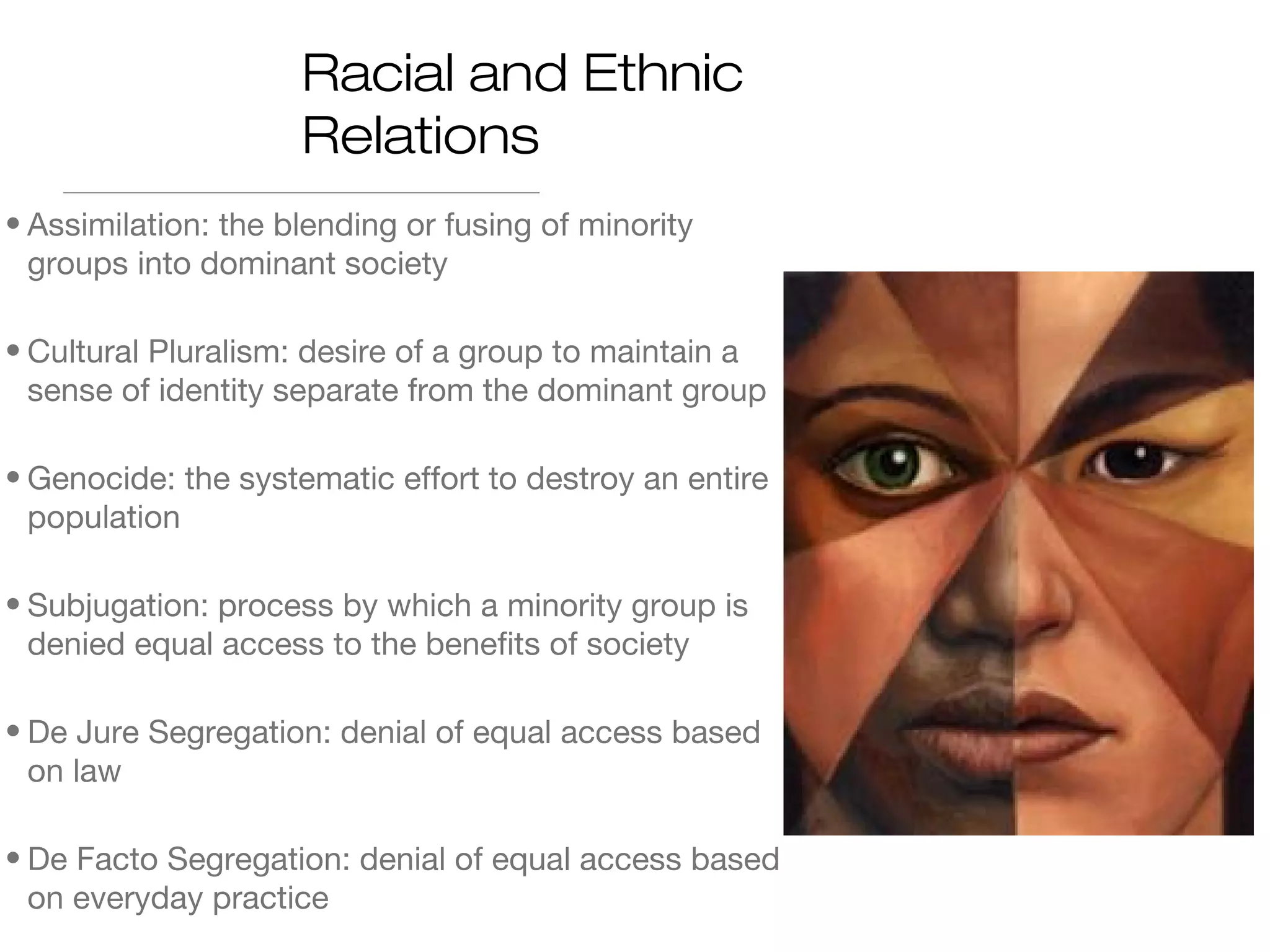
• Assimilation: the blending or fusing of minority
groups into dominant society
• Cultural Pluralism: desire of a group to maintain a
sense of identity separate from the dominant group
• Genocide: the systematic effort to destroy an entire
population
• Subjugation: process by which a minority group is
denied equal access to the benefits of society
• De Jure Segregation: denial of equal access based
on law
• De Facto Segregation: denial of equal access based
on everyday practice
Prejudice and
Discrimination
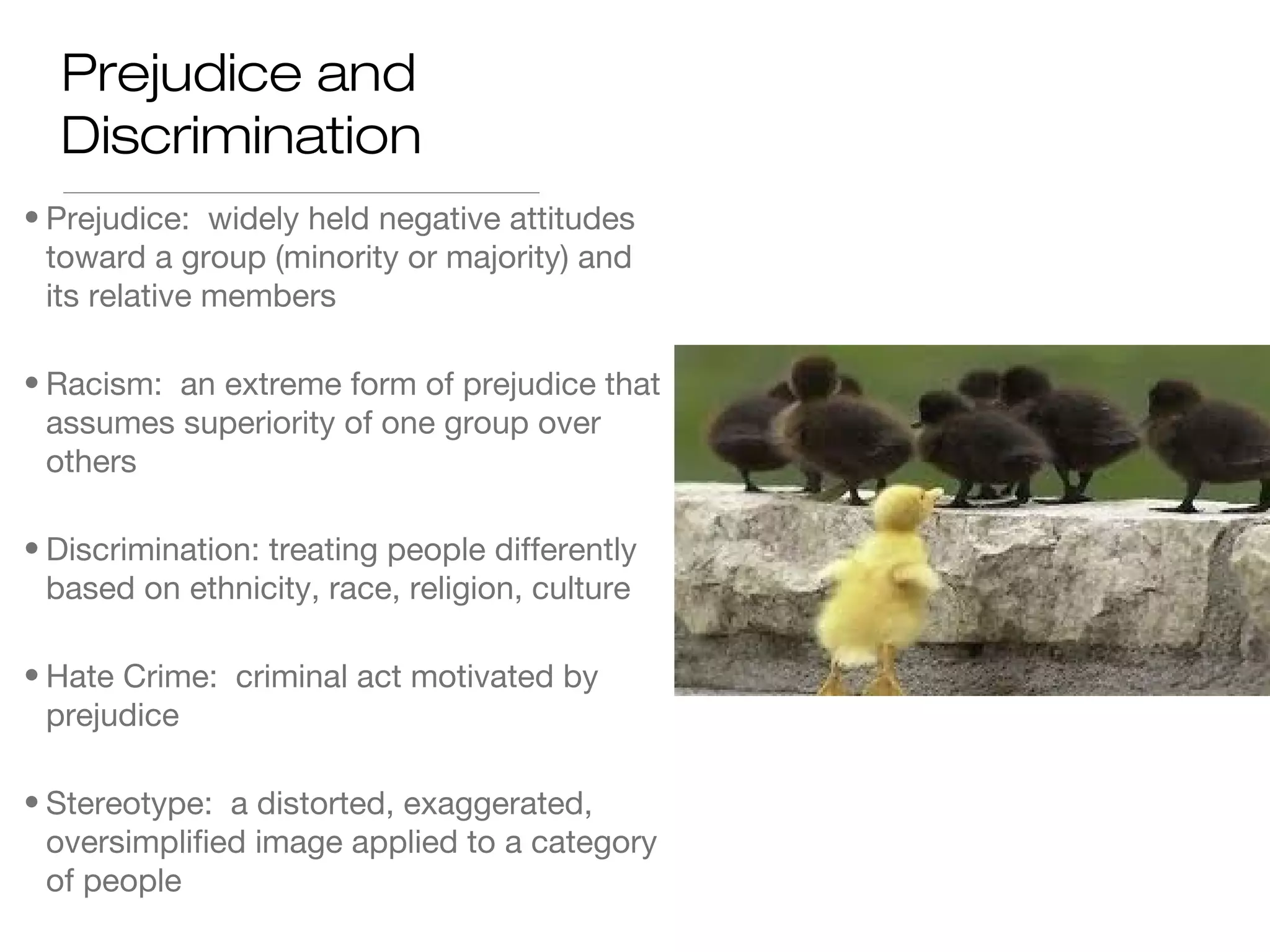
• Prejudice: widely held negative attitudes
toward a group (minority or majority) and
its relative members
• Racism: an extreme form of prejudice that
assumes superiority of one group over
others
• Discrimination: treating people differently
based on ethnicity, race, religion, culture
• Hate Crime: criminal act motivated by
prejudice
• Stereotype: a distorted, exaggerated,
oversimplified image applied to a category
of people
Theoretical Perspectives
on Race And Ethnicity
• Functionalists: focus on the
dysfunction caused by
prejudice and discrimination
• Conflict: a majority uses
prejudice and discrimination as
weapons of power to control a
minority
• Symbolic Interactionist:
members of society learn to
prejudice, much in the same
way they learn to be patriotic
Sex, Gender, and
Gender Identity

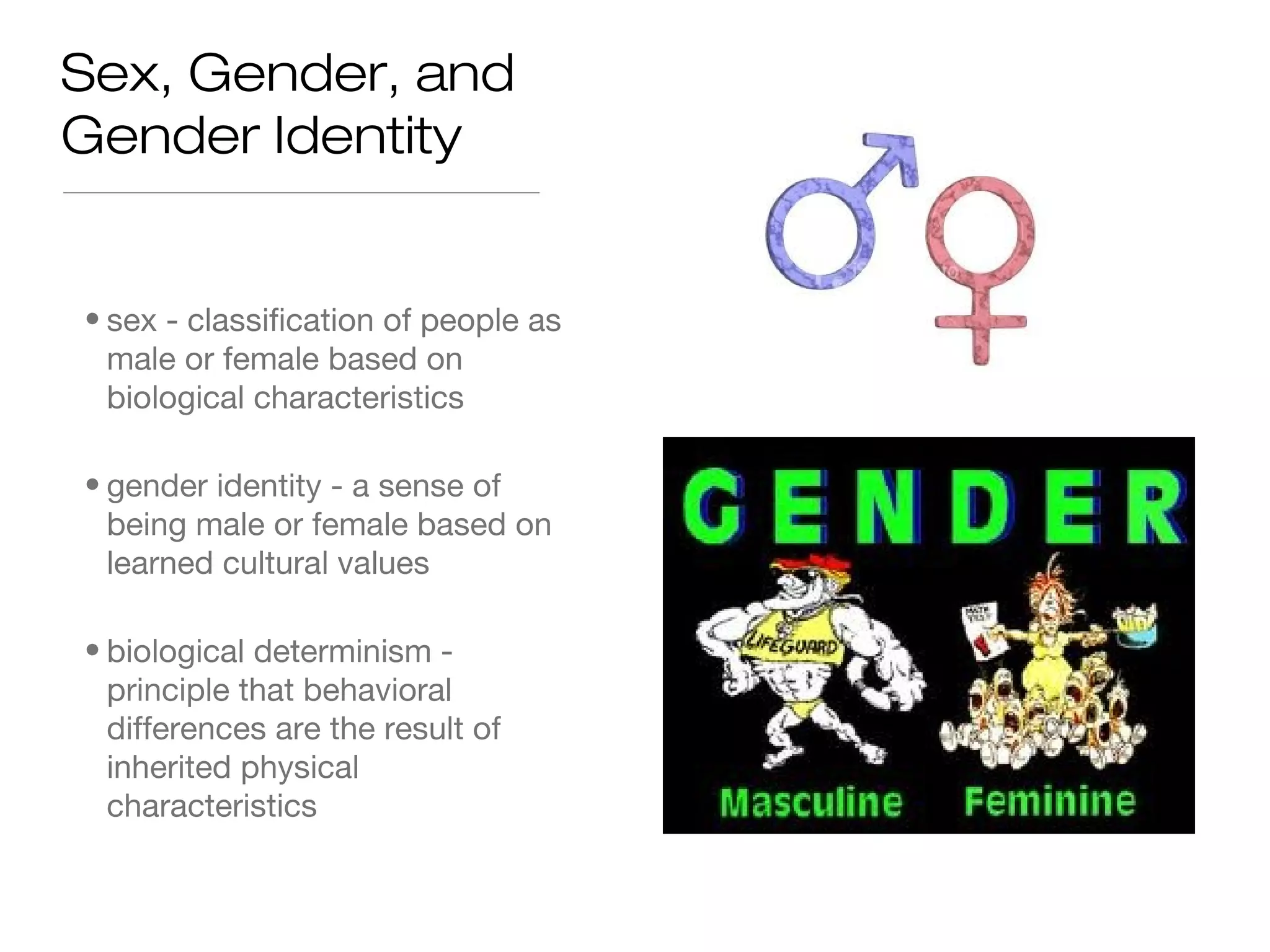
• sex - classification of people as
male or female based on
biological characteristics
• gender identity - a sense of
being male or female based on
learned cultural values
• biological determinism principle that behavioral
differences are the result of
inherited physical
characteristics
Sociological
Perspectives on
Gender and Age
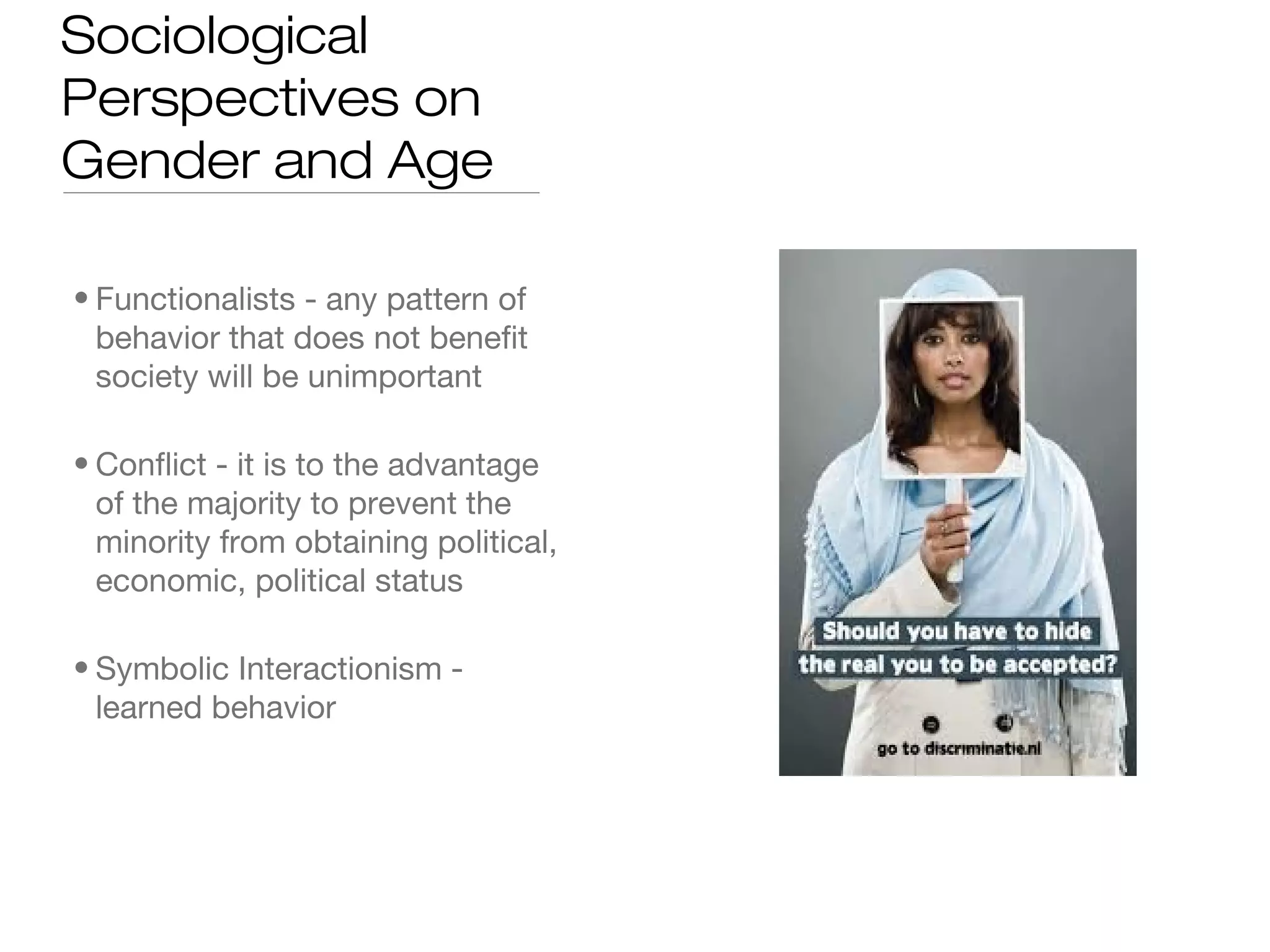
• Functionalists - any pattern of
behavior that does not benefit
society will be unimportant
• Conflict - it is to the advantage
of the majority to prevent the
minority from obtaining political,
economic, political status
• Symbolic Interactionism learned behavior
Inequalities of Sex
and Gender

• Sexism - a set of beliefs,
attitudes, norms, and values
used to justify sexual inequality
• Ageism - a set of beliefs,
attitudes, norms and values
used to justify age-based
prejudice and discrimination

Midterm Sociology Study Guide

  • 1.
    What is thepurpose of sociology?
  • 2.
    The purpose ofsociology is to • Look at interactions with people and the phenomenon that those interactions create: social structure, institutions, stratification, collective behavior. • Study human social behavior. • Note: Anthropology and sociology are closely related in that they both look at traits and beliefs of groups. But anthropology focuses on preliterate society, while sociology focuses on modern, industrial societies.
  • 3.
  • 4.
    Sociological Imagination is •The ability of individuals to see the relationship between events in their personal lives and events in society. • Focus on the history and biography of people in a given time and place, then make the connection , personal troubles as public issues. • Example: • Divorce in your family is a very personal issue, but also has a societal impact (changes status of women in society, increases the need for government funding for families with dependent children, and alters housing patterns.
  • 5.
    Auguste Comte • 1798-1857 •French • Positivism - sociology a study of what is sure • Social static - stability and order in society • Social dynamic - the study of social change
  • 6.
    Harriet Martineau • 1802-1876 •English • Translate Comte's book • Feminine Theorist
  • 7.
    Herbert Spencer • 1820-1903 •English • Explained social stability by comparing it to a body (parts working together to promote well being and survival) • Social Darwinism - social change leads to progress as long as people do not interfere (natural selection ensures the fittest society so opposes reforms to help poor)
  • 8.
    Karl Marx • 1818-1883 •German • Bourgeoisie - owners (means to produce wealth) • Proletariat - laborers (worked for owners) • Saw class conflict as inevitable • Thus leading to communist (classless) society
  • 9.
    Emile Durkheim • 1858-1917 •French • Mechanical solidarity preindustrial society dependent of family and tradition, so strong pressure to conform • Organic solidarity - industrial society interdependent because of specialized roles
  • 10.
    Max weber • 1864-1920 •German • Verstehen - understanding social behavior by putting yourself in the place of others • Rationalization - the mindset emphasizing knowledge, reason, planning
  • 11.
    Jane Addams • 1860-1935 •United States • Hull House - a refuge for poor, sick, aged, immigrants in Chicago • 1931 Nobel Peace Prize • Focused on women's suffrage, peace movements, and problems caused by the imbalance of power among social classes
  • 12.
    W.E.B.DuBois • 1868-1963 • UnitedStates • Addressed the "Negro Problem" - a racist policy that assumed blacks were inferior • Founded the NAACP
  • 13.
  • 14.
    Theoretical Perspectives • Functionalism- parts of society are an integrated whole, so a change in one part leads to changes in another (focus on cooperation to achieve common goals) • Latent Functions - unintended and unrecognized • Manifest Functions - intended and recognized • Conflict Perspective - focuses the disagreement among various groups in society (those with the most power have the most wealth, prestige, privilege and use it to constrain/limit the less powerful) • Symbolic Interactionist - focuses on the actual interaction among people based on mutually understood symbols
  • 15.
  • 16.
    Survey • Survey -people are asked to answer a series of questions (population = all the people, sample = limited number from the population, representative sample = has the same basic characteristics as the general population) • Interview - spoken • Questionnaire - written • Closed Ended - limited predetermined choices • Open Ended - answered in own words
  • 17.
    Secondary Analysis • Usinginformation that someone else has already collected (Census Bureau, corporate records, voting lists...) • Pros - Cheap, easy, less bias • Cons - Can be outdated, no exactly on topic
  • 18.
    Field Research • Looksat aspects of life that cannot be measured quantitatively (with numbers), so must be observed in the natural setting for more accurate qualitative (descriptive) data • Case study - investigate a single group, incident, or community • Participant observation - researcher becomes a member of the group studied
  • 19.
    Experiments • Research occursin a laboratory setting with minimum contamination • Not suited to sociology because the environment artificial • Used to establish causation (why it happens), rather than correlation (how are things associated) • Sociologists look for multiple causation, because human interaction is to complicated to be explained by a single factor
  • 20.
    Procedures and Ethics •Identify the Problem, Review the literature, Formulate a Hypothesis, Develop a Research Design, Collect Data, Analyze Data, State Findings and Conclusions • Ethics - respect the rights of research subjects and avoid deceiving or harming them
  • 21.
  • 22.
    The Sociology of Culture •Culture is knowledge, customs, values, language, physical objects • Instincts - genetically inherited patterns of behavior • Relex - reaction to stimuli • Drives - impulse to reduce discomfort
  • 23.
    Language and Culture Humans cancreate and transmit culture. The symbols of language play a role in determining people’s views of reality
  • 24.
    Essential Components of Culture -Norms • Norms - Rules defining appropriate and inappropriate behavior • Folkways - Customary was of thinking, feeling, behaving • More - morals, conduct related to right and wrong, foundation for laws • Taboo - a norm so strong that its violation demands punishment by the group • Sanctions - punishment (formal jail, informal - shunning)
  • 25.
    Essential Components of Culture -Values • Values - broad ideas about what most people in society consider desirable • Achievement and Success • Activity and Work • Efficiency and Practicality • Equality • Democracy • Group Superiority
  • 26.
    Diversity • Cultural Universalsare traits that exist in all cultures. • They include: sports, cooking, courting, educations, etiquette, family, government, hospitality, inheritance, music, religious ritual, sexual restrictions, property rights, tool making... • Subculture and Countercultures belong to the broader culture but differ in particular ways (dress, worship, job).
  • 27.
    Ethnocentrism - astrong commitment to the culture you live in and learn, that causes you to judge other cultures using your own cultural standards
  • 28.
    Socialization • Socialization isthe cultural process of learning to participate in group life. • Socialization plays a role in developing our attitudes, beliefs, values, and behaviors. • Isolation causes an inability to develop emotional ties, as well as developmental deficiencies (talk, walk, interact with others, learn)
  • 29.
    Socialization and TheoreticalPerspectives • Functionalist - groups work together, so family and school teach basic norms, values, and beliefs • Conflict Perspective - views socialization as a way of perpetuating the status quo (preserving the current class system) • Symbolic Interactionist - uses key concepts to explain socialization (self-concept, looking-glass self, significant others, role taking, generalized other), and believes that socialization is the major determinant of human nature
  • 30.
    Social Structure • Thepatterned interaction of people in social relationships • Status is a person’s position in the structure (ascribed, achieved, status set, master status) • Roles are the expected behaviors associated with a status (role conflict, role strain) • Status and Roles are a reflection of the culture, as well as the time period.
  • 31.
  • 32.
  • 33.
  • 34.
    Groups and Organizations •Group - people who share features (contact, thinking, feeling, behavior, interests, goals) • Social Category - share a social characteristic (seniors) • Social Aggregate - happen to be in same place at same time • Primary Group - emotionally close, know each other well, seek each other’s company (family, friends), small group with face to face contact • Secondary Group - impersonal and goal oriented (employer/worker, doctor/patient, waitress/customer)
  • 35.
    Social Interaction • Cooperation- individuals or groups combine efforts to reach a goal • Conflict - individuals or groups work against each other for a large share of the rewards • Social Exchange - when one person voluntarily does something, expecting a reward • Coercion - forced to give in to the will of others • Conformity - behavior that matches group expectations
  • 36.
    Bureaucracy • Advantages: divisionof labor, rules/procedures, written records, promotion based on merit/qualifications, rationalization (the mindset emphasizing knowledge, reason, planning over tradition and superstition) • Disadvantages: undervalue people (rules/procedures cause impersonal treatment of people), red tape (too much paperwork)
  • 37.
    Formal and Informal Organizations • FormalOrganization deliberately created to achieve one or more long term goals (high schools, colleges, hospitals, corporations) • Informal Organization - a group within a formal organization in which personal relationships are guided by norms, rituals, sentiments (book club after work, teachers walking after school, coffee club at work)
  • 38.
    Deviance and Social Control •Deviance: behavior that departs from societal or group norms • Social Control: ways to encourage conformity to society’s norms
  • 39.
    Positives and Negatives of Deviance •Positive: clarifies norms by exercising social control to defend its values (defines, adjusts, and reaffirms norms) • Positive: act as safety valve (teens music, clothes, TV...relieve pressure caused by authority figures) • Negative: erodes trust • Negative: if not corrected it spreads • Negative: expensive
  • 40.
    Major Theories of Deviance: Functionalism •Strain: Innovation (accepts goal but has illegal means of achieving), Conformity (accepts goals and means of achieving), Ritualism (acts as if wants success but doesn’t exert effort), Retreatism (rejects goals and effort), Rebellion (substitutes new way to achieve new goal) • Control: conformity depends on the presence of strong bonds between the individual and society
  • 41.
    Deviance: Symbolic Interactionism • Differential AssociationTheory: individuals learn deviance in proportion to the number of deviant acts they are exposed to • Labeling Theory: society creates deviance by identifying certain members as deviant
  • 42.
    Major Theories of Deviance:Conflict • Victim Discounting: process of reducing the seriousness of the crimes that injure people of lower status • White Collar Crime: job related crimes committed by high status people
  • 43.
    Major Approached to Crime Control •Deterrence: discouraging criminal acts by threatening punishment • Retribution: punishment intended to make criminals pay compensation for their acts • Incarceration: a method of protecting society from criminals by keeping them in prison • Rehabilitation: process of changing or reforming a criminal through socialization
  • 44.
    Social Stratification • SocialStratification: the creation of layers (strata) of people who possess unequal shares of scarce resouces. • The most important of these resources are income, power, wealth, prestige. • Each layer represents a social class • Social Class: a segment of the population whose members hold similar amounts of scarce resources and share values, norms, and an identifiable lifestyle.
  • 45.
    Theories on Social Stratification •Functionalist: inequality exists because certain jobs are more important than others, and that these jobs involve special talent and training. • Conflict: inequality exists because people are willing to exploit others. • Symbolic Interactionism: children taught that social class a result of talent and effort, causing people to accept the existing system.
  • 46.
    Characteristics of Major SocialClass • Upper = investors, heirs, chief executives • Upper Middle = Managers, professionals, owners of medium sized businesses • Lower Middle = Semi-professional, craftspeople, foreman, non-retail sales, clerical • Working = Low-skill manual, clerical, retail sales • Low /Underclass = unemployed, part-time menial, public assistance
  • 47.
    Poverty in America • AbsolutePoverty: absence of enough money to secure life’s necessities - food, shelter, clothes • Relative Poverty: a measure of poverty baed on the economic disparity between those at the bottom of society and the rest of society • Feminization of Poverty: a trend in the US society in which women and children make up an increasing proportion of the poor
  • 48.
    Social Mobility • SocialMobility: the movement of individuals or groups between social classes • horizontal: a change in occupation within the same social class • vertical: a change upward or downward in occupational status or social class • intergenerational mobility: a change in status or class from one generation to the next
  • 49.
    Minority, Race, Ethnicity • Minority:a group of people with physical or cultural traits different from those of the dominant group in society • Race: people sharing certain inherited physical characteristics that are considered important within society • Ethnic Minority: group identified by cultural, religious, or national characteristics
  • 50.
    Racial and Ethnic Relations •Assimilation: the blending or fusing of minority groups into dominant society • Cultural Pluralism: desire of a group to maintain a sense of identity separate from the dominant group • Genocide: the systematic effort to destroy an entire population • Subjugation: process by which a minority group is denied equal access to the benefits of society • De Jure Segregation: denial of equal access based on law • De Facto Segregation: denial of equal access based on everyday practice
  • 51.
    Prejudice and Discrimination • Prejudice:widely held negative attitudes toward a group (minority or majority) and its relative members • Racism: an extreme form of prejudice that assumes superiority of one group over others • Discrimination: treating people differently based on ethnicity, race, religion, culture • Hate Crime: criminal act motivated by prejudice • Stereotype: a distorted, exaggerated, oversimplified image applied to a category of people
  • 52.
    Theoretical Perspectives on RaceAnd Ethnicity • Functionalists: focus on the dysfunction caused by prejudice and discrimination • Conflict: a majority uses prejudice and discrimination as weapons of power to control a minority • Symbolic Interactionist: members of society learn to prejudice, much in the same way they learn to be patriotic
  • 53.
    Sex, Gender, and GenderIdentity • sex - classification of people as male or female based on biological characteristics • gender identity - a sense of being male or female based on learned cultural values • biological determinism principle that behavioral differences are the result of inherited physical characteristics
  • 54.
    Sociological Perspectives on Gender andAge • Functionalists - any pattern of behavior that does not benefit society will be unimportant • Conflict - it is to the advantage of the majority to prevent the minority from obtaining political, economic, political status • Symbolic Interactionism learned behavior
  • 55.
    Inequalities of Sex andGender • Sexism - a set of beliefs, attitudes, norms, and values used to justify sexual inequality • Ageism - a set of beliefs, attitudes, norms and values used to justify age-based prejudice and discrimination