Defining TheoryA theory is an abstract system of concepts and their relationships that help us to understand a phenomenon.Theorizing is the process of systematically formulating and organizing ideas to understand a particular phenomenon.
Three Features of TheoriesLevel of generalityGrandMid-rangeNarrowComponentsConcepts: Elements of the theoryNominal / realRelationships: How concepts are connectedLinear / interactive / transactional
Three Features of TheoriesGoalsExplanationUnderstandingPredictionSocial change
Approaches to KnowingHow one sees and talks about the world influences how and what one chooses to researchThree major approaches to knowingPositivist/empiricalInterpretiveCritical
Positivist/Empirical ApproachObjective truths can be uncovered about human interactionsResearch processes can be partially value-neutralNatural scientific methods, with control over the variablesGoal is to construct general laws governing human interactions“Theory-then-research”
Interpretive ApproachTruth is subjective and co-created by the participants in the research processComplete objectivity is often impossibleThe study of interaction is believed to be value-relevant, so researchers should “monitor assumptions and inferences”No concern for control or generalizeability; focus is providing rich descriptions“Research-then-theory”
Critical ApproachThose in power shape knowledge in ways that perpetuate the status quoResearchers seek to change the status quo to resolve power imbalances and give voice to the silencedThese imbalances are often reproduced accidentally through social norms
Approaches to KnowingThe types of questions one asks about the world influence how and what one chooses to researchThree major types of questionsOntologicalEpistemologicalAxiological
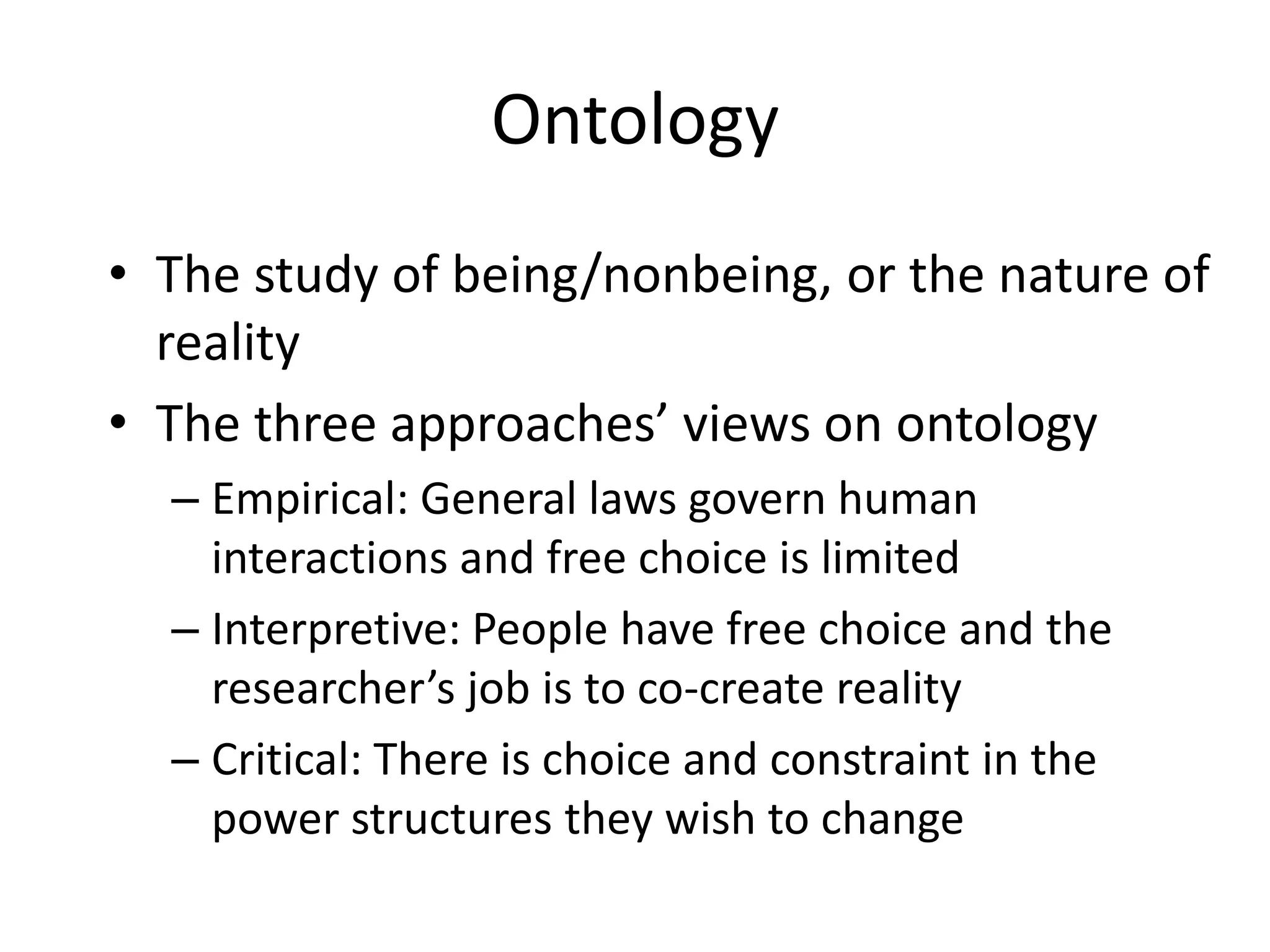
OntologyThe study of being/nonbeing, or the nature of realityThe three approaches’ views on ontologyEmpirical: General laws govern human interactions and free choice is limitedInterpretive: People have free choice and the researcher’s job is to co-create reality Critical: There is choice and constraint in the power structures they wish to change
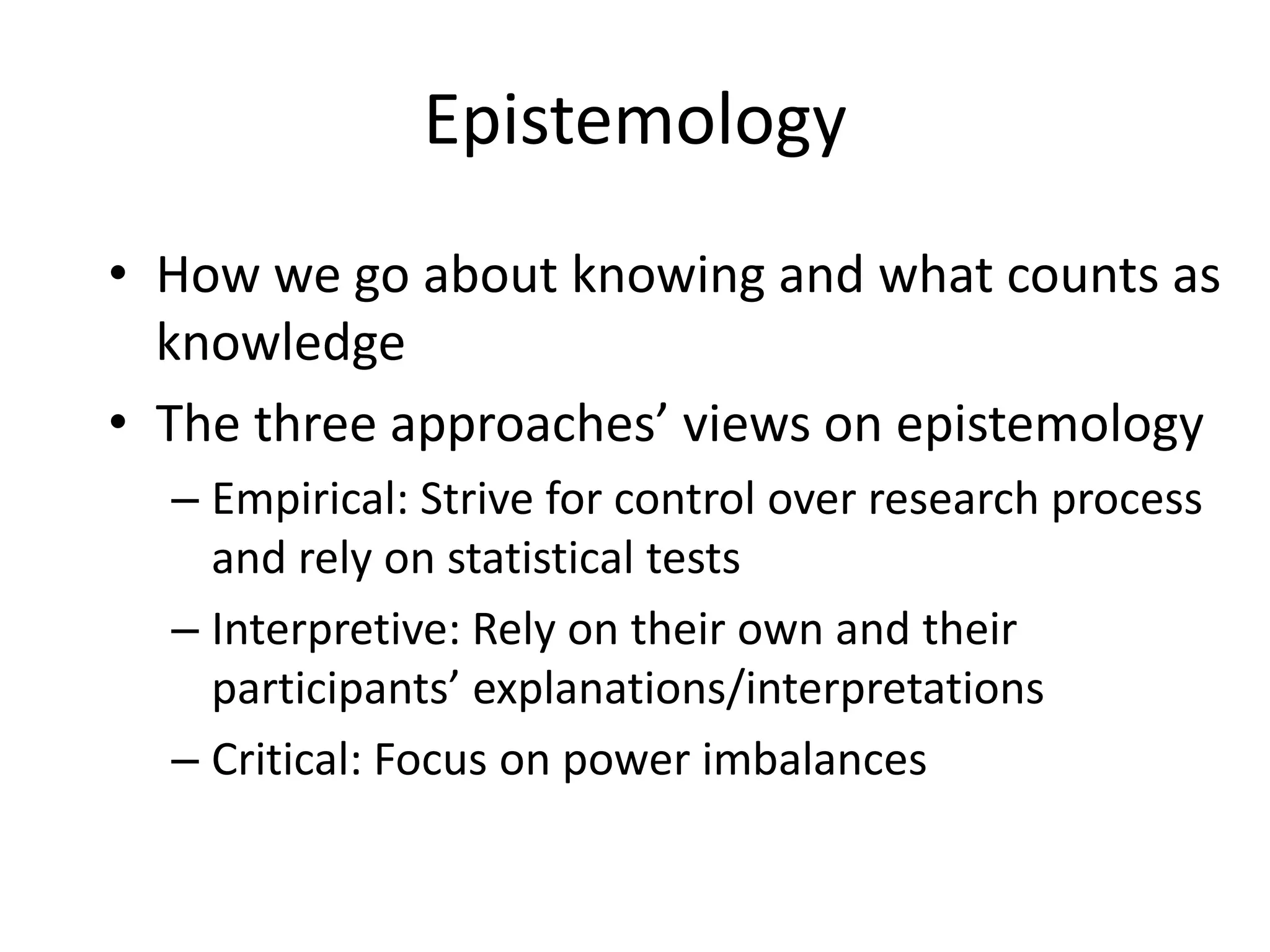
EpistemologyHow we go about knowing and what counts as knowledgeThe three approaches’ views on epistemologyEmpirical: Strive for control over research process and rely on statistical testsInterpretive: Rely on their own and their participants’ explanations/interpretationsCritical: Focus on power imbalances
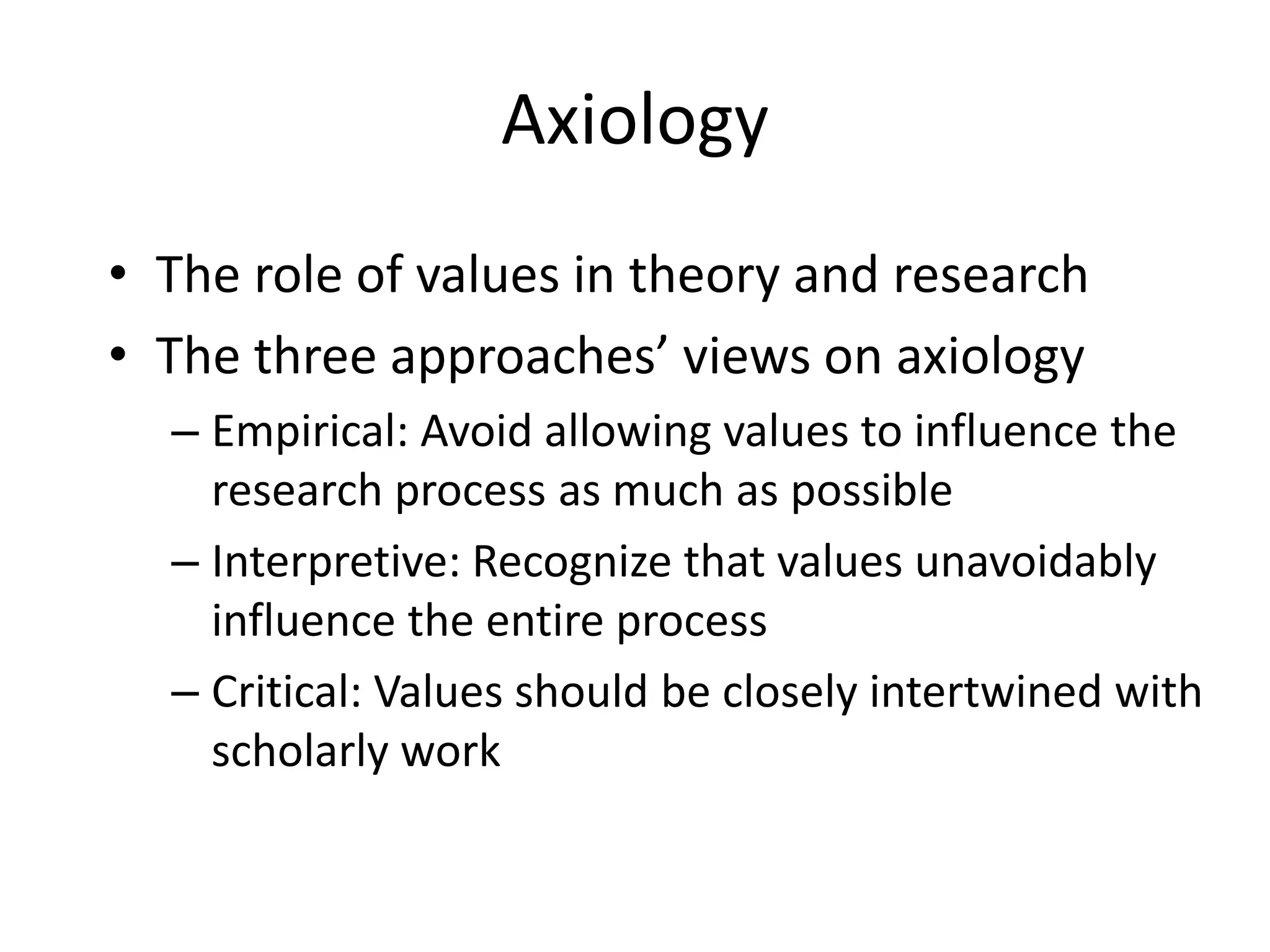
AxiologyThe role of values in theory and researchThe three approaches’ views on axiologyEmpirical: Avoid allowing values to influence the research process as much as possibleInterpretive: Recognize that values unavoidably influence the entire processCritical: Values should be closely intertwined with scholarly work
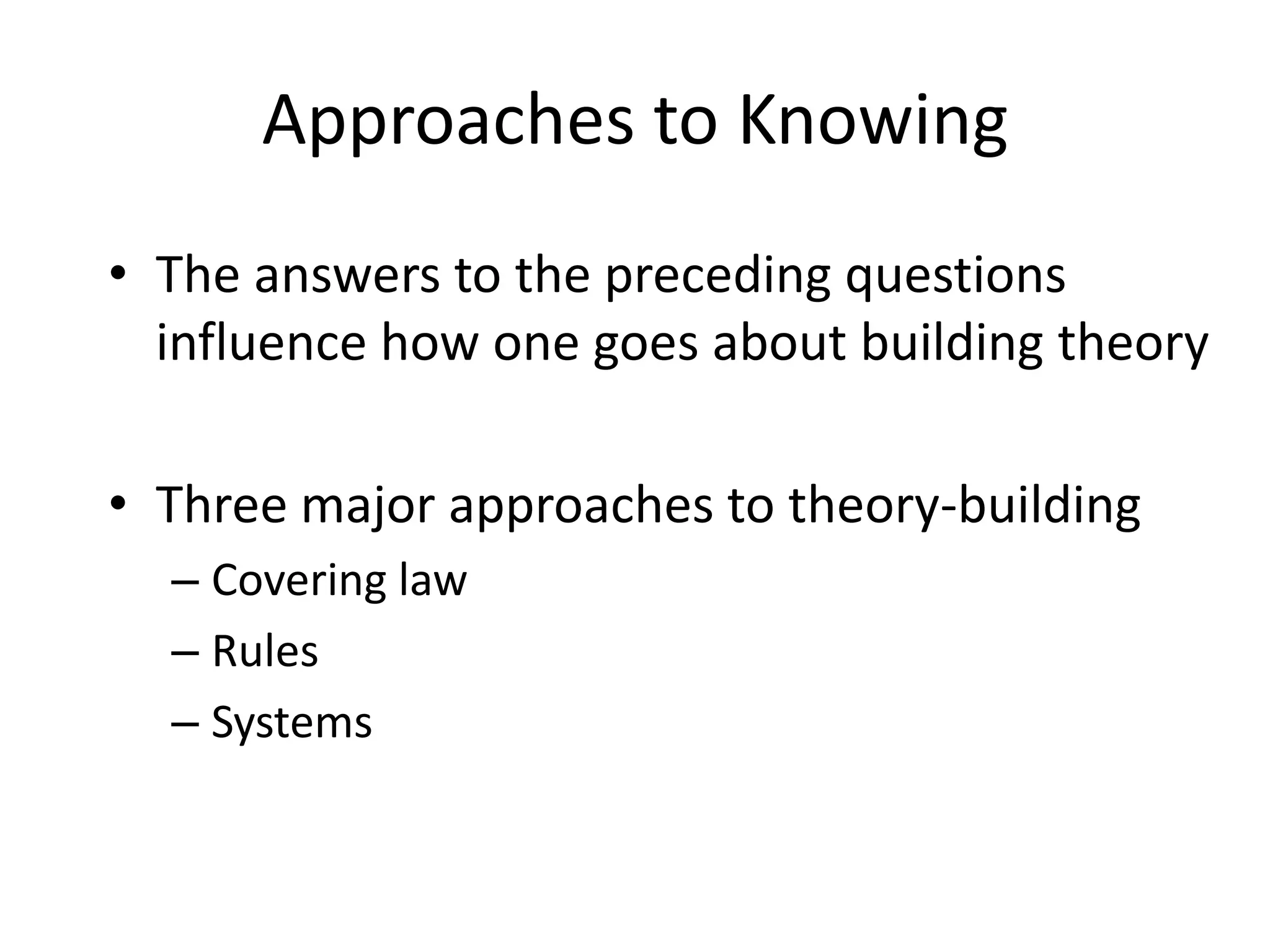
Approaches to KnowingThe answers to the preceding questions influence how one goes about building theoryThree major approaches to theory-buildingCovering lawRulesSystems
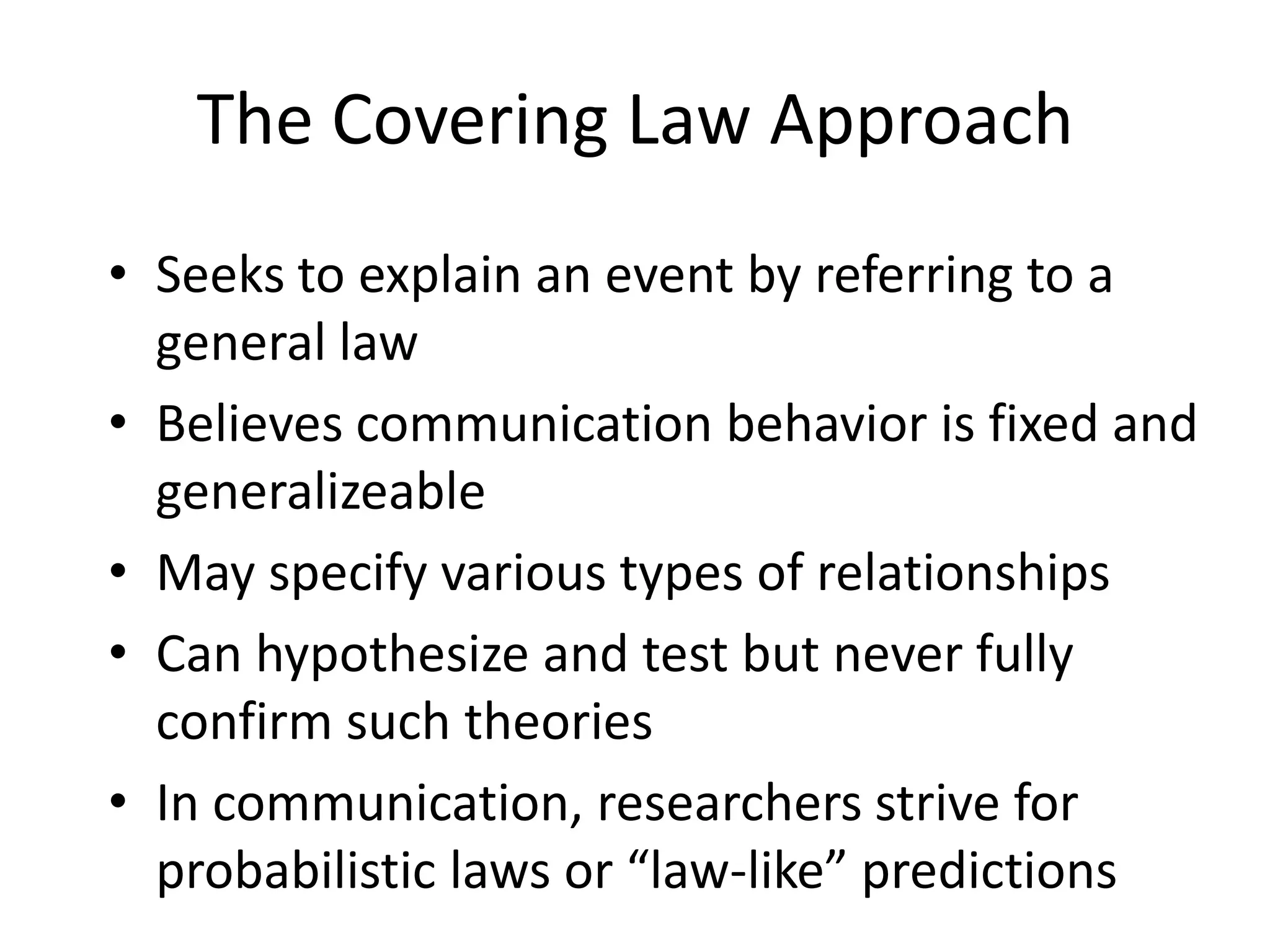
The Covering Law ApproachSeeks to explain an event by referring to a general lawBelieves communication behavior is fixed and generalizeableMay specify various types of relationshipsCan hypothesize and test but never fully confirm such theoriesIn communication, researchers strive for probabilistic laws or “law-like” predictions
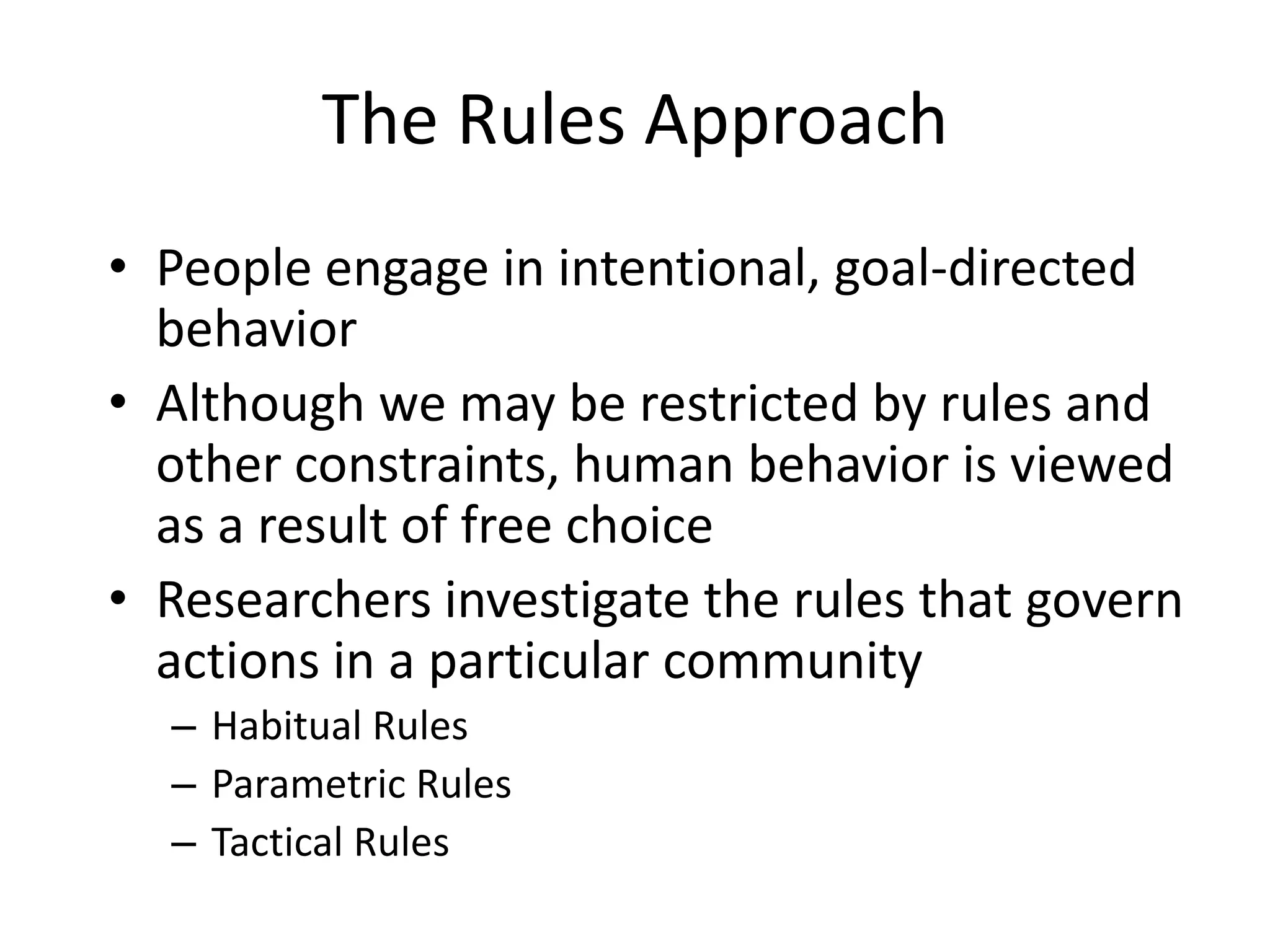
The Rules ApproachPeople engage in intentional, goal-directed behaviorAlthough we may be restricted by rules and other constraints, human behavior is viewed as a result of free choiceResearchers investigate the rules that govern actions in a particular communityHabitual RulesParametric RulesTactical Rules
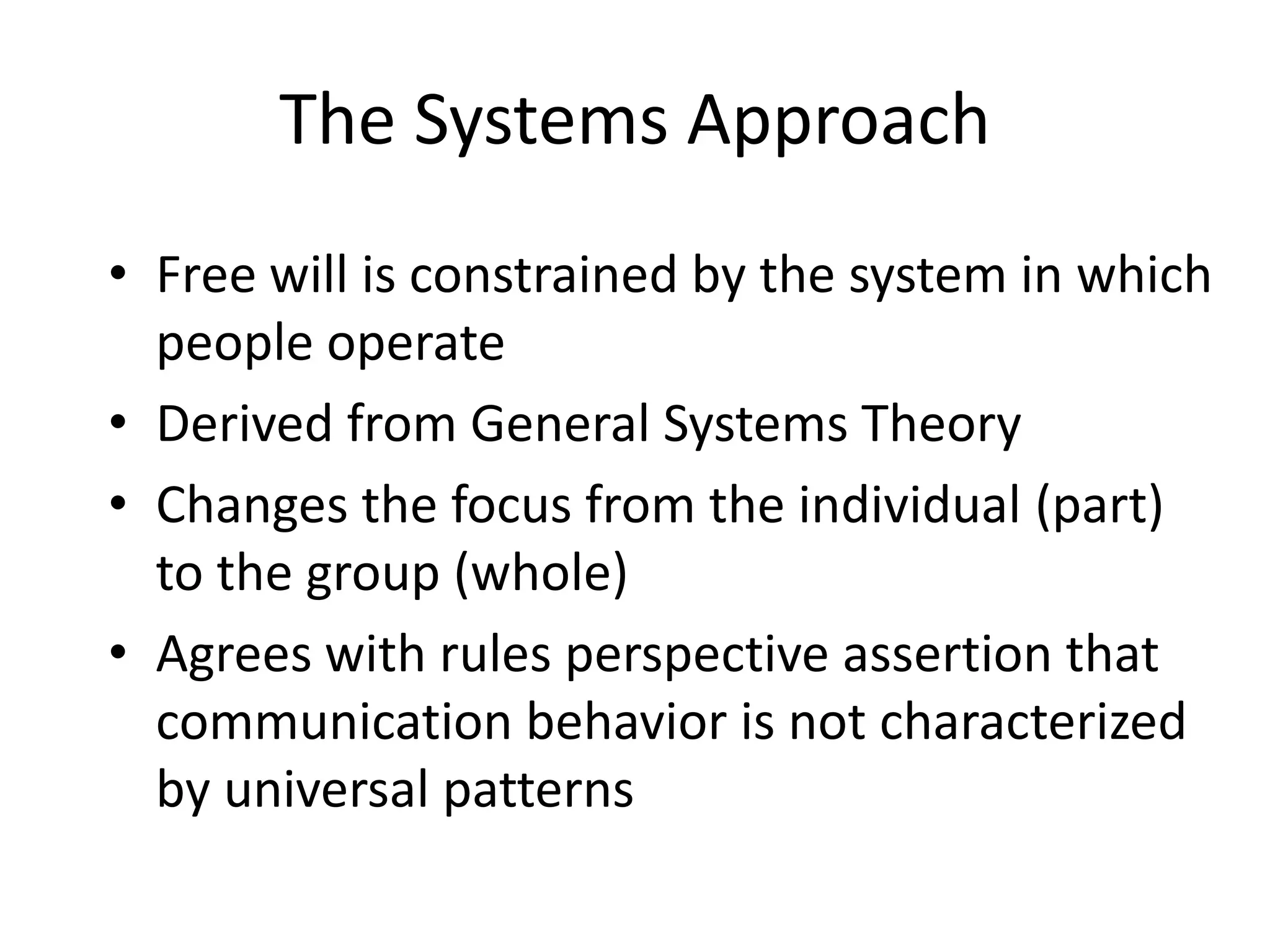
The Systems ApproachFree will is constrained by the system in which people operateDerived from General Systems TheoryChanges the focus from the individual (part) to the group (whole)Agrees with rules perspective assertion that communication behavior is not characterized by universal patterns
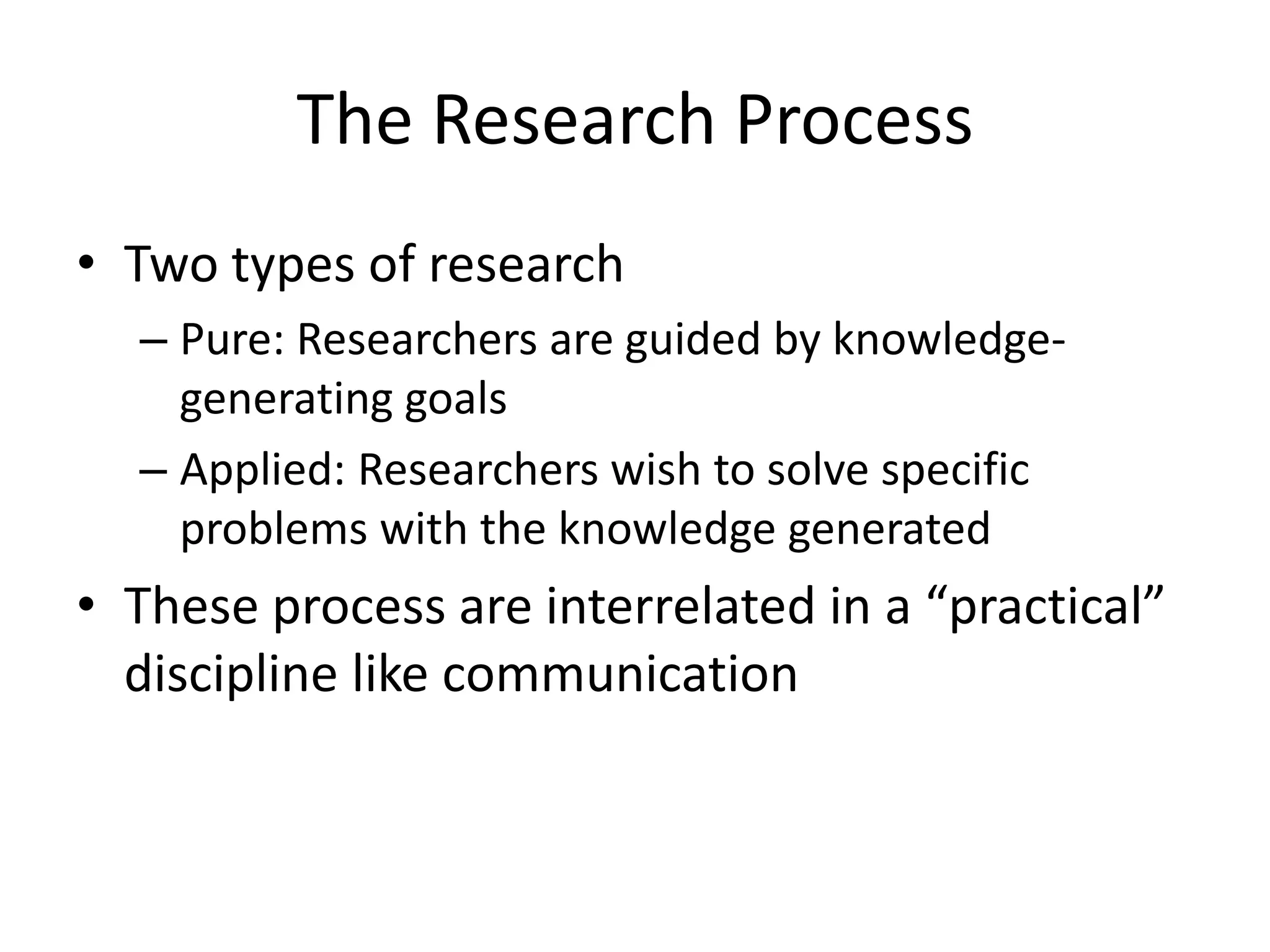
The Research ProcessTwo types of researchPure: Researchers are guided by knowledge-generating goalsApplied: Researchers wish to solve specific problems with the knowledge generatedThese process are interrelated in a “practical” discipline like communication

Theory and research

  • 1.
    Defining TheoryA theoryis an abstract system of concepts and their relationships that help us to understand a phenomenon.Theorizing is the process of systematically formulating and organizing ideas to understand a particular phenomenon.
  • 2.
    Three Features ofTheoriesLevel of generalityGrandMid-rangeNarrowComponentsConcepts: Elements of the theoryNominal / realRelationships: How concepts are connectedLinear / interactive / transactional
  • 3.
    Three Features ofTheoriesGoalsExplanationUnderstandingPredictionSocial change
  • 4.
    Approaches to KnowingHowone sees and talks about the world influences how and what one chooses to researchThree major approaches to knowingPositivist/empiricalInterpretiveCritical
  • 5.
    Positivist/Empirical ApproachObjective truthscan be uncovered about human interactionsResearch processes can be partially value-neutralNatural scientific methods, with control over the variablesGoal is to construct general laws governing human interactions“Theory-then-research”
  • 6.
    Interpretive ApproachTruth issubjective and co-created by the participants in the research processComplete objectivity is often impossibleThe study of interaction is believed to be value-relevant, so researchers should “monitor assumptions and inferences”No concern for control or generalizeability; focus is providing rich descriptions“Research-then-theory”
  • 7.
    Critical ApproachThose inpower shape knowledge in ways that perpetuate the status quoResearchers seek to change the status quo to resolve power imbalances and give voice to the silencedThese imbalances are often reproduced accidentally through social norms
  • 8.
    Approaches to KnowingThetypes of questions one asks about the world influence how and what one chooses to researchThree major types of questionsOntologicalEpistemologicalAxiological
  • 9.
    OntologyThe study ofbeing/nonbeing, or the nature of realityThe three approaches’ views on ontologyEmpirical: General laws govern human interactions and free choice is limitedInterpretive: People have free choice and the researcher’s job is to co-create reality Critical: There is choice and constraint in the power structures they wish to change
  • 10.
    EpistemologyHow we goabout knowing and what counts as knowledgeThe three approaches’ views on epistemologyEmpirical: Strive for control over research process and rely on statistical testsInterpretive: Rely on their own and their participants’ explanations/interpretationsCritical: Focus on power imbalances
  • 11.
    AxiologyThe role ofvalues in theory and researchThe three approaches’ views on axiologyEmpirical: Avoid allowing values to influence the research process as much as possibleInterpretive: Recognize that values unavoidably influence the entire processCritical: Values should be closely intertwined with scholarly work
  • 12.
    Approaches to KnowingTheanswers to the preceding questions influence how one goes about building theoryThree major approaches to theory-buildingCovering lawRulesSystems
  • 13.
    The Covering LawApproachSeeks to explain an event by referring to a general lawBelieves communication behavior is fixed and generalizeableMay specify various types of relationshipsCan hypothesize and test but never fully confirm such theoriesIn communication, researchers strive for probabilistic laws or “law-like” predictions
  • 14.
    The Rules ApproachPeopleengage in intentional, goal-directed behaviorAlthough we may be restricted by rules and other constraints, human behavior is viewed as a result of free choiceResearchers investigate the rules that govern actions in a particular communityHabitual RulesParametric RulesTactical Rules
  • 15.
    The Systems ApproachFreewill is constrained by the system in which people operateDerived from General Systems TheoryChanges the focus from the individual (part) to the group (whole)Agrees with rules perspective assertion that communication behavior is not characterized by universal patterns
  • 16.
    The Research ProcessTwotypes of researchPure: Researchers are guided by knowledge-generating goalsApplied: Researchers wish to solve specific problems with the knowledge generatedThese process are interrelated in a “practical” discipline like communication