Randall Collins Conflict theory Social transmission and reproduction Educational stratification
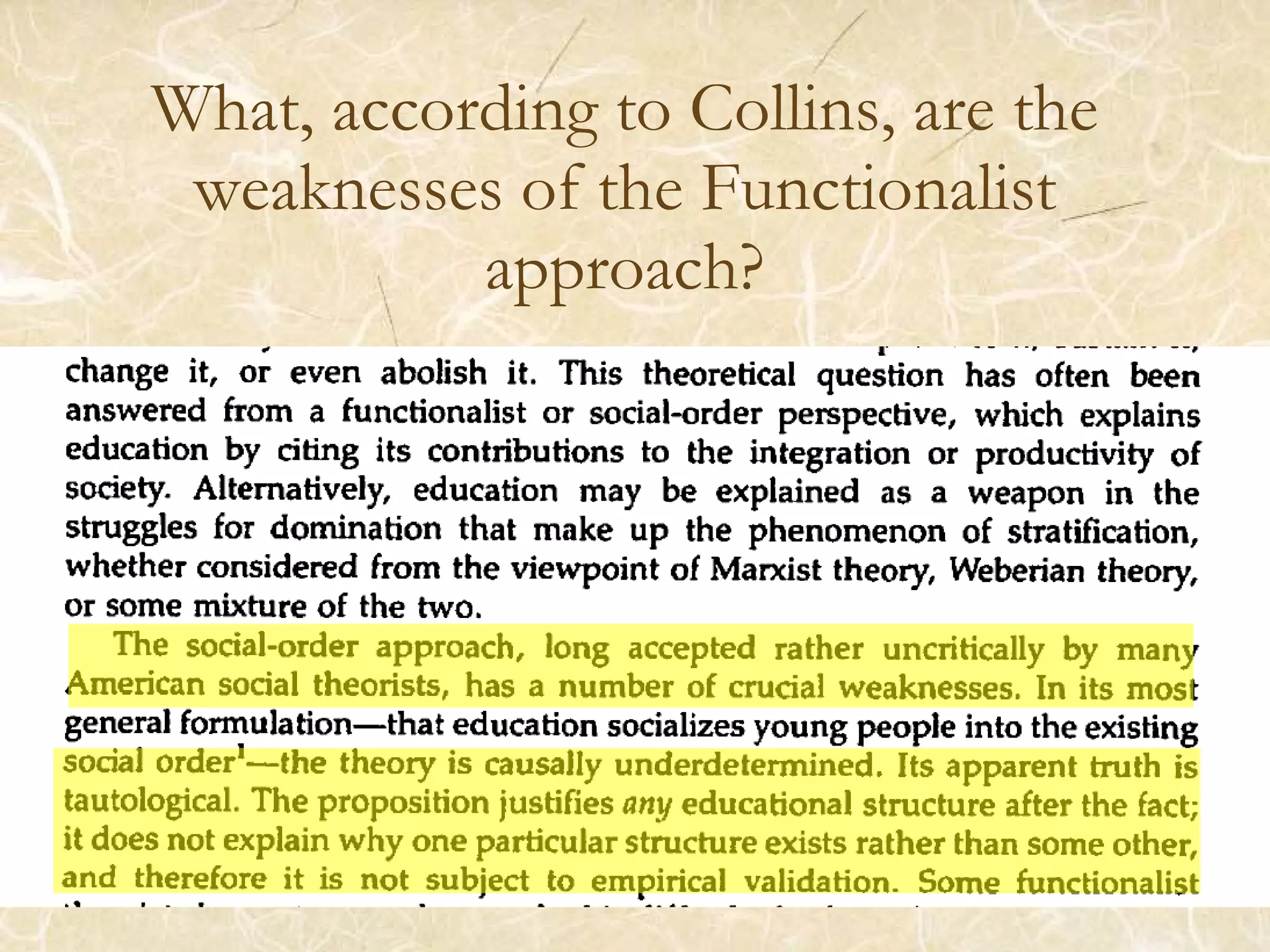
What, according to Collins, are the weaknesses of the Functionalist approach?
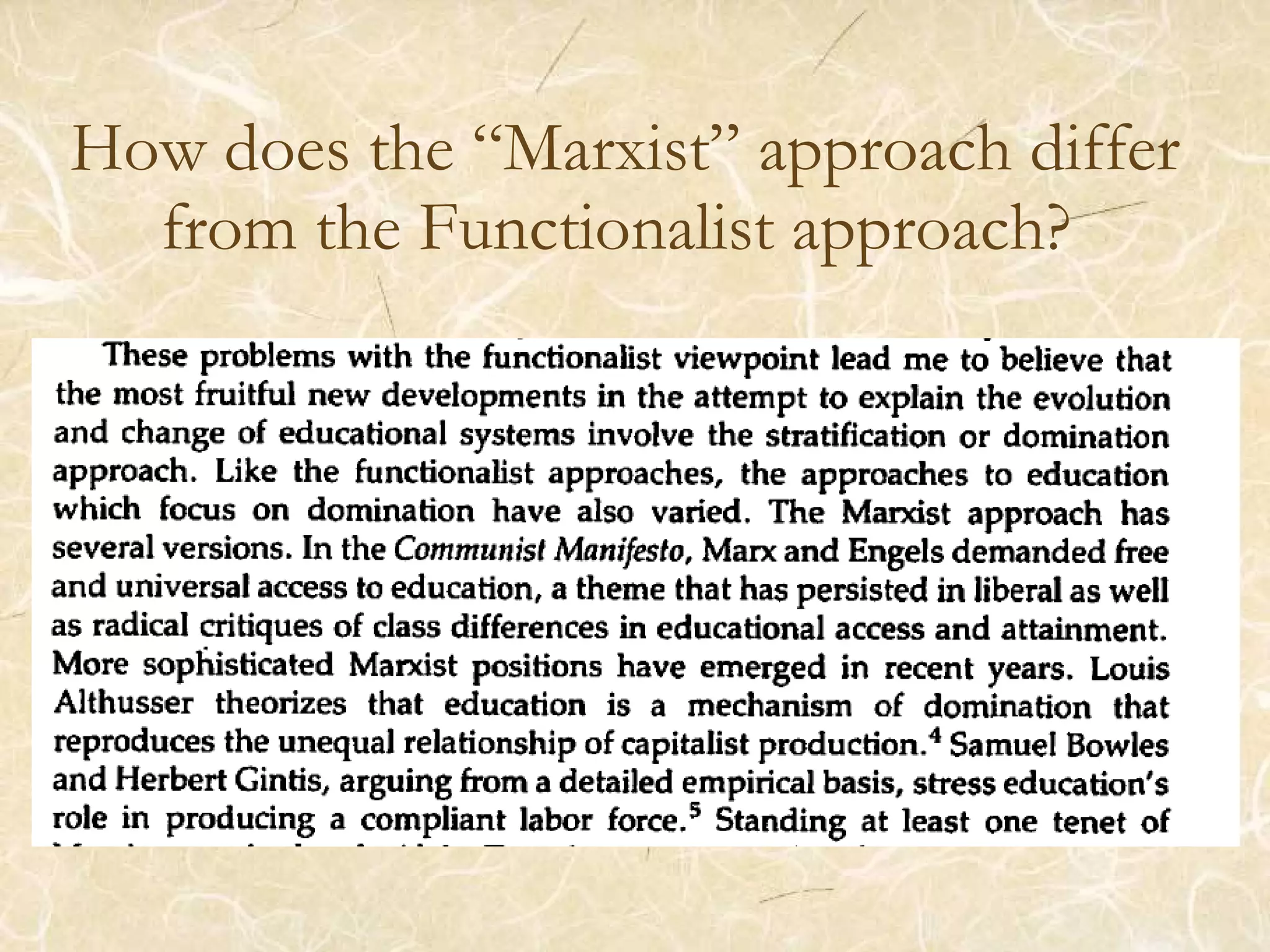
How does the “Marxist” approach differ from the Functionalist approach?
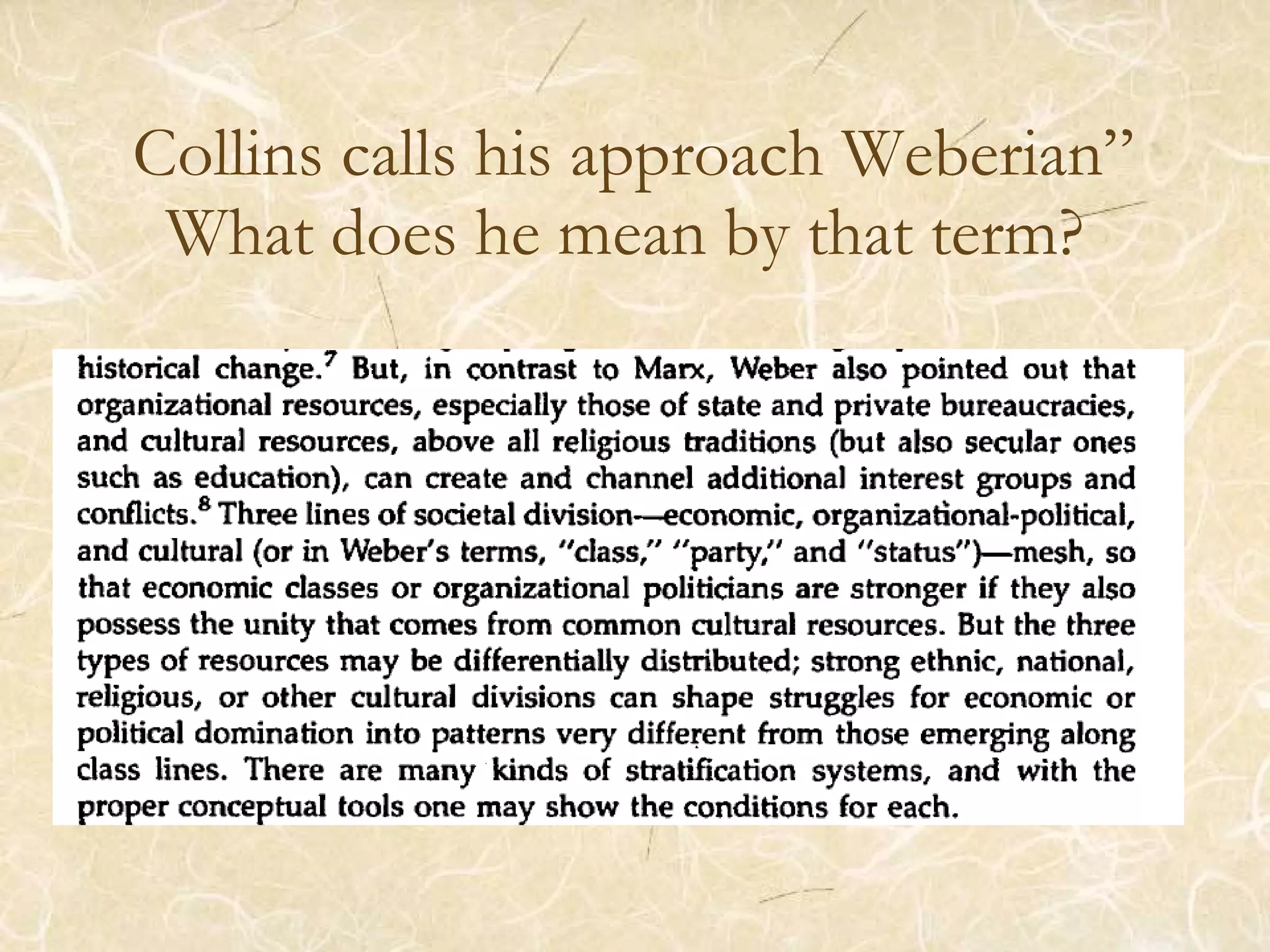
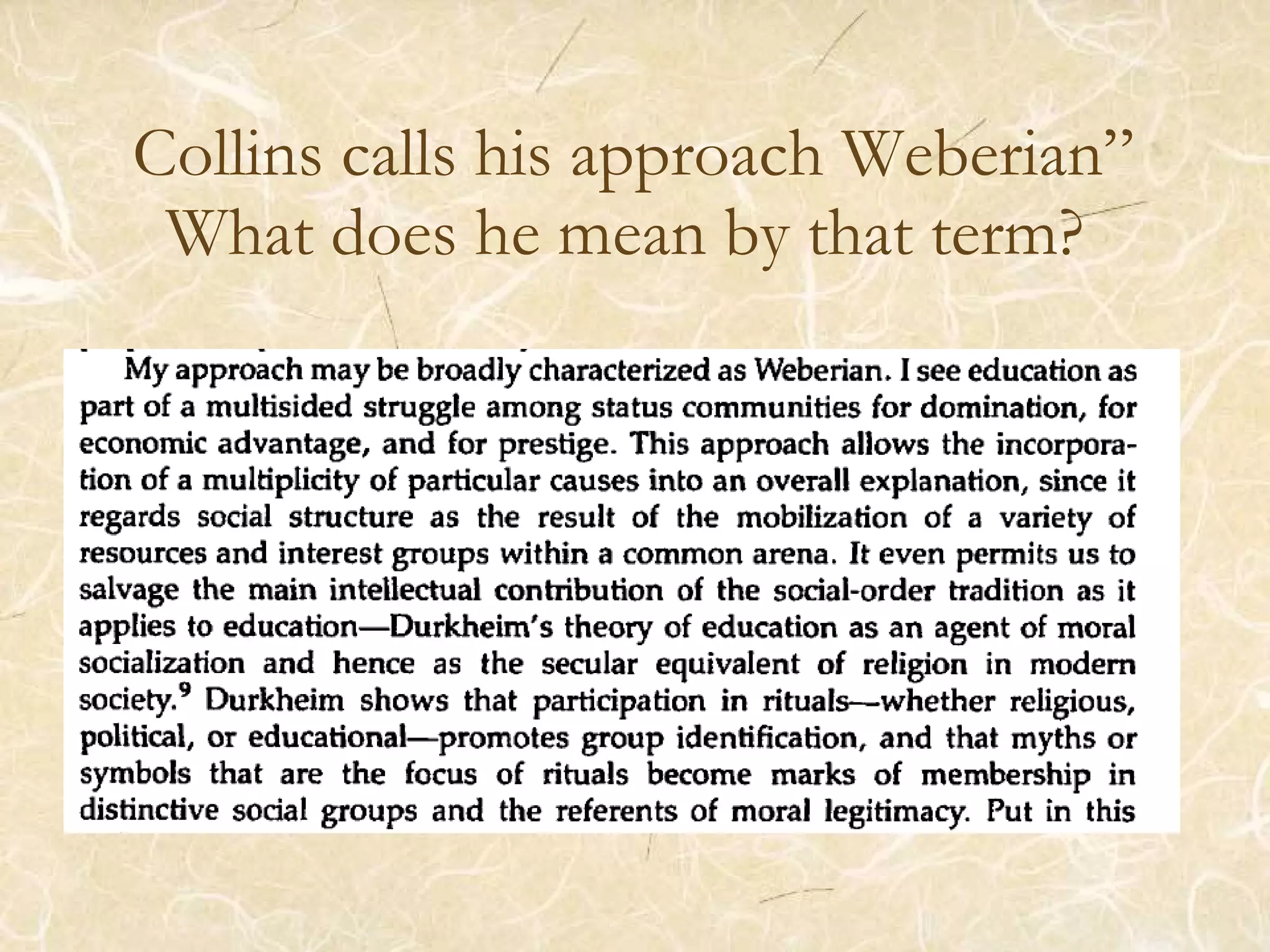
  Collins calls his approach Weberian” What does he mean by that term?
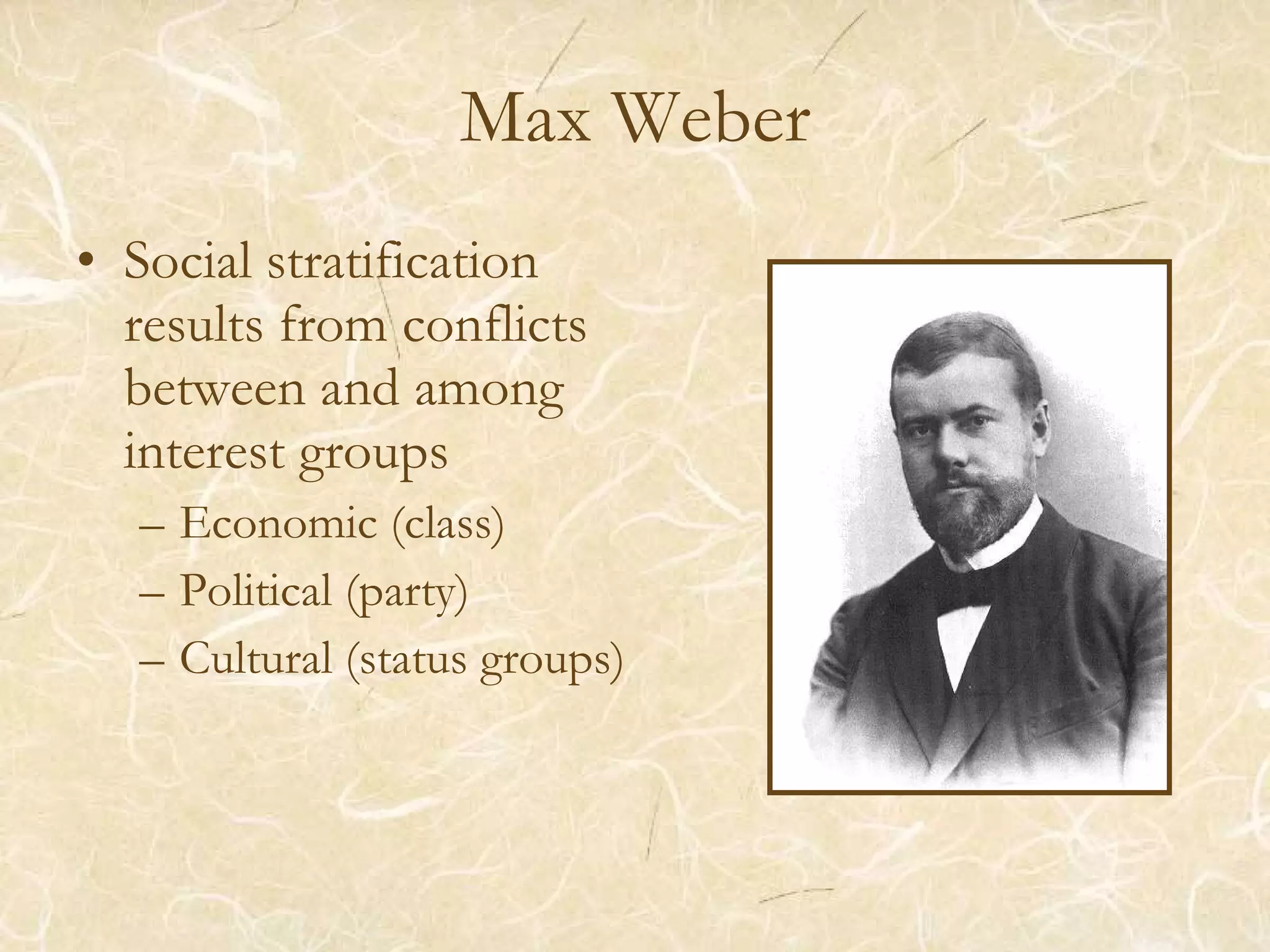
Max Weber Social stratification results from conflicts between and among interest groups Economic (class) Political (party) Cultural (status groups)
  Collins calls his approach Weberian” What does he mean by that term?
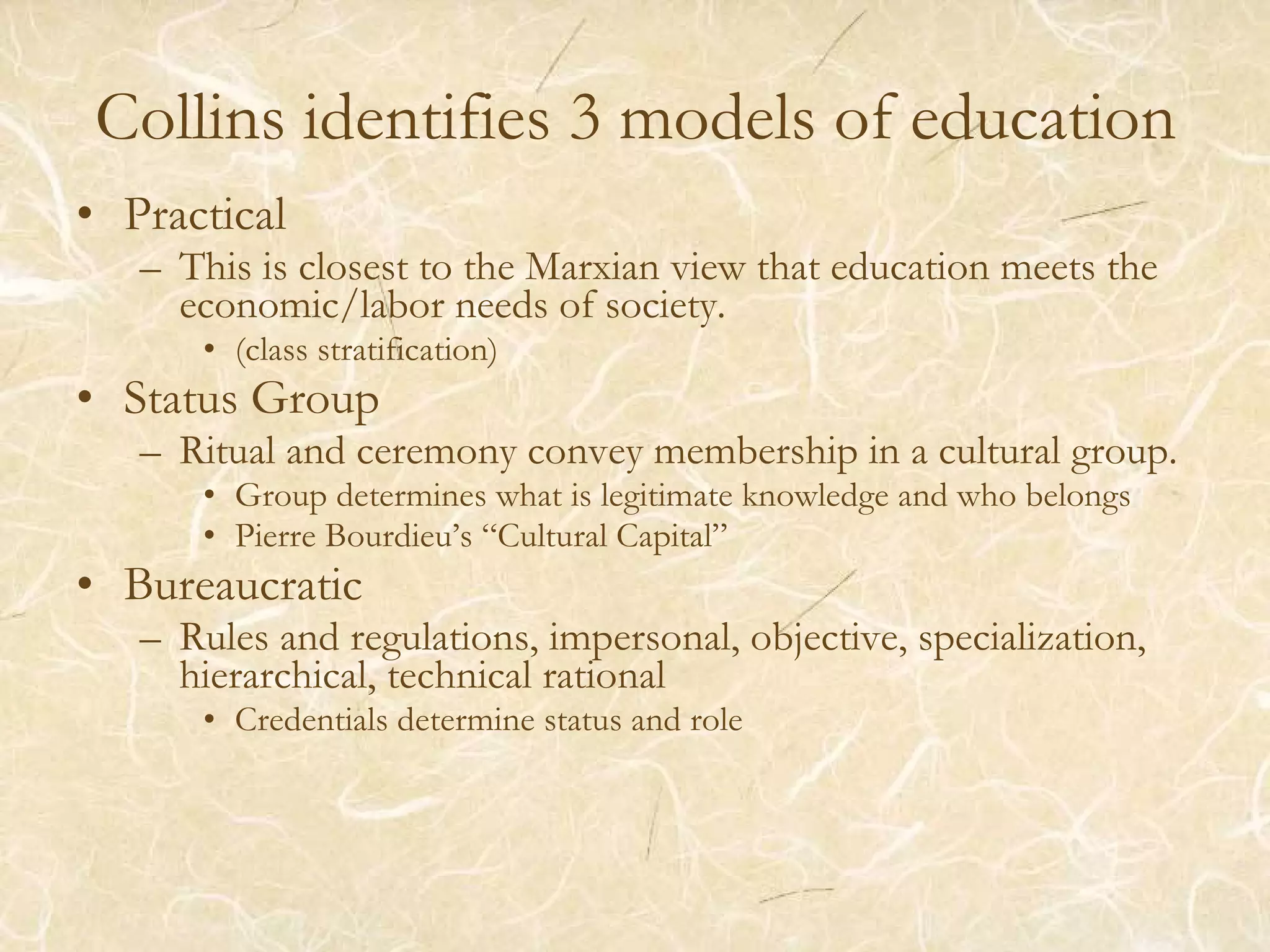
Collins identifies 3 models of education Practical This is closest to the Marxian view that education meets the economic/labor needs of society.  (class stratification) Status Group Ritual and ceremony convey membership in a cultural group. Group determines what is legitimate knowledge and who belongs  Pierre Bourdieu’s “Cultural Capital” Bureaucratic Rules and regulations, impersonal, objective, specialization, hierarchical, technical rational Credentials determine status and role
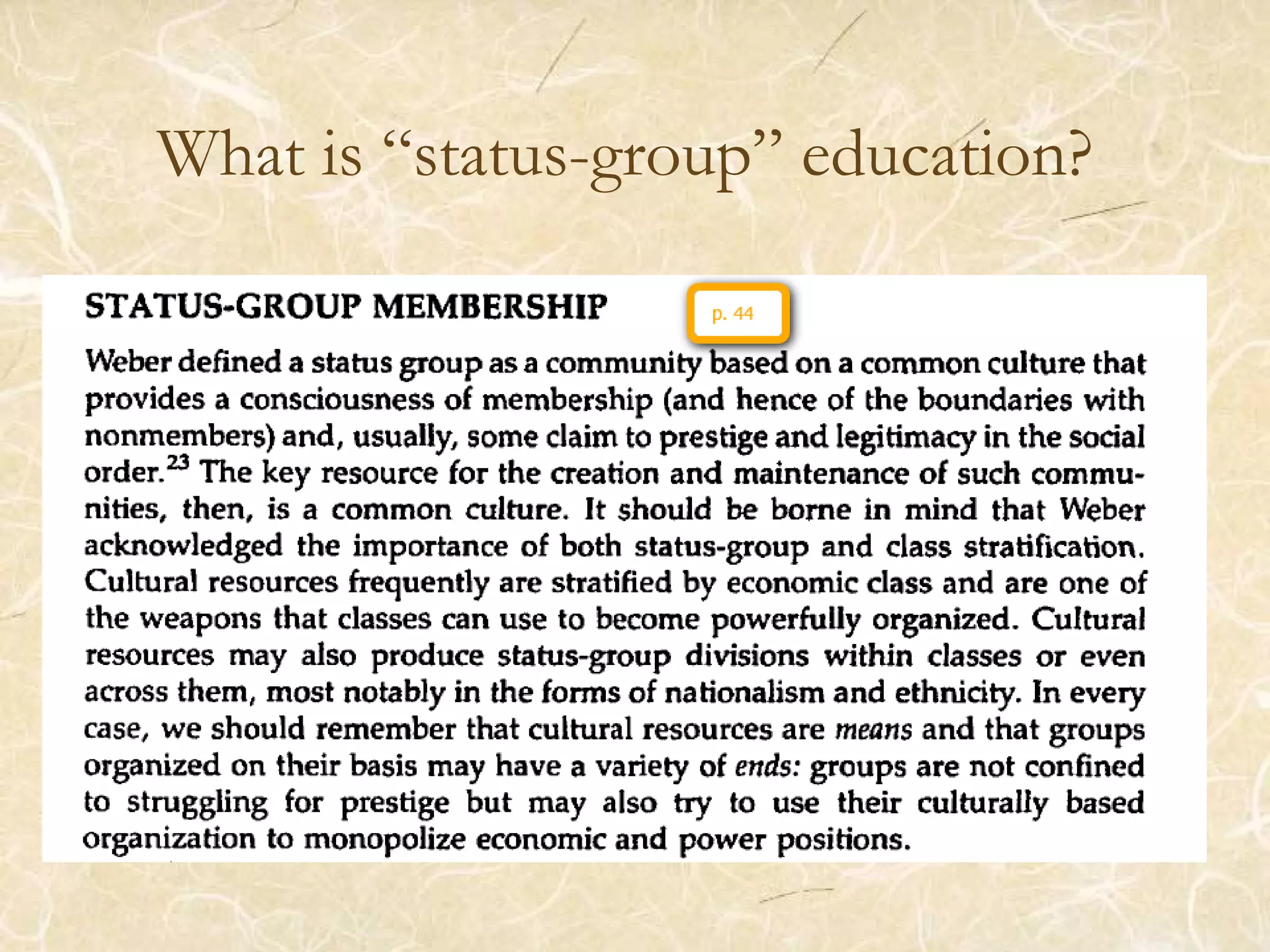
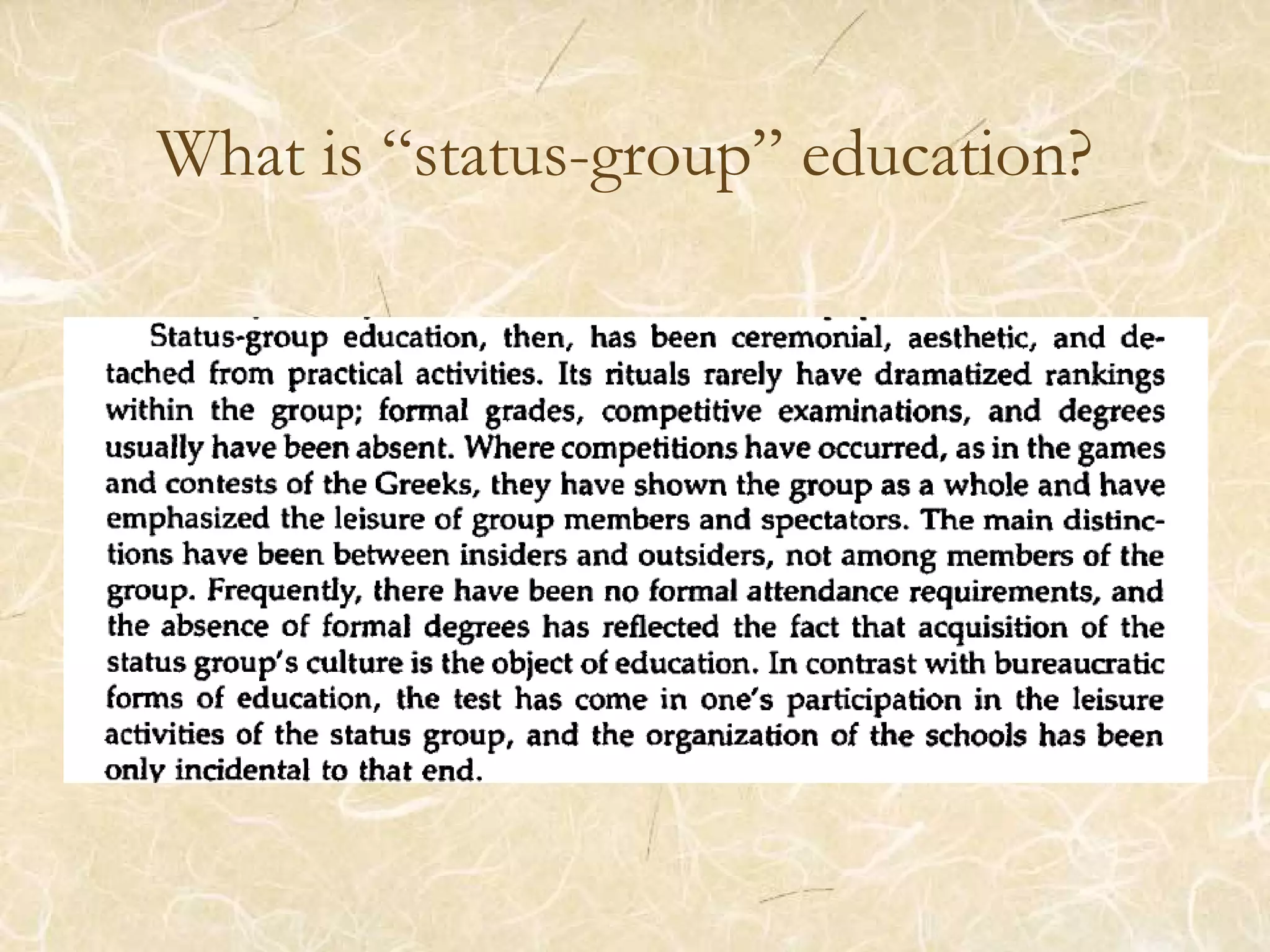
What is “status-group” education?
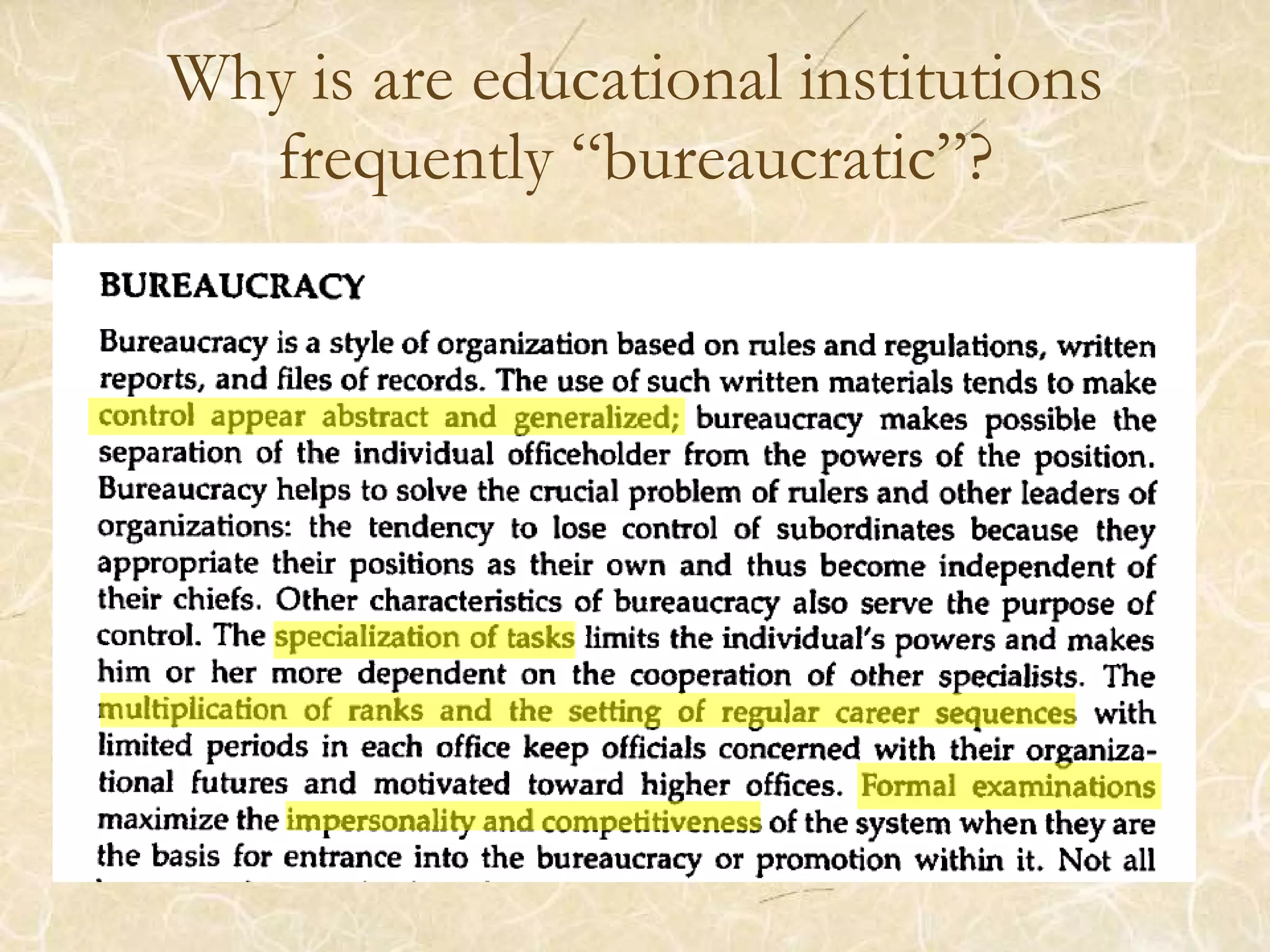
Why is are educational institutions frequently “bureaucratic”?
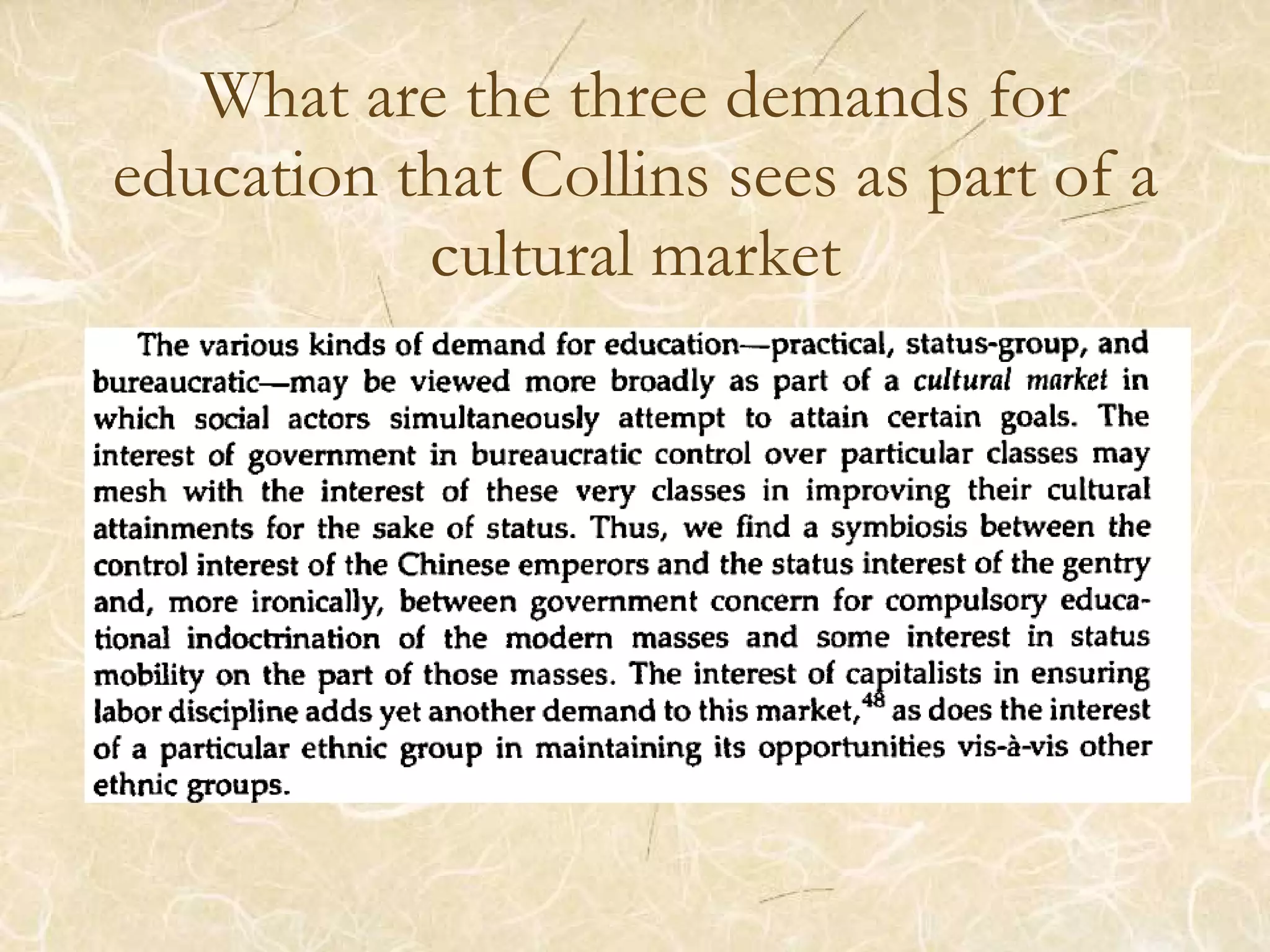
What are the three demands for education that Collins sees as part of a cultural market

Conflict Theory Collins

  • 1.
    Randall Collins Conflicttheory Social transmission and reproduction Educational stratification
  • 2.
    What, according toCollins, are the weaknesses of the Functionalist approach?
  • 3.
    How does the“Marxist” approach differ from the Functionalist approach?
  • 4.
    Collinscalls his approach Weberian” What does he mean by that term?
  • 5.
    Max Weber Socialstratification results from conflicts between and among interest groups Economic (class) Political (party) Cultural (status groups)
  • 6.
    Collinscalls his approach Weberian” What does he mean by that term?
  • 7.
    Collins identifies 3models of education Practical This is closest to the Marxian view that education meets the economic/labor needs of society. (class stratification) Status Group Ritual and ceremony convey membership in a cultural group. Group determines what is legitimate knowledge and who belongs Pierre Bourdieu’s “Cultural Capital” Bureaucratic Rules and regulations, impersonal, objective, specialization, hierarchical, technical rational Credentials determine status and role
  • 8.
  • 9.
  • 10.
    Why is areeducational institutions frequently “bureaucratic”?
  • 11.
    What are thethree demands for education that Collins sees as part of a cultural market
  • 12.
    What are thethree demands for education that Collins sees as part of a cultural market