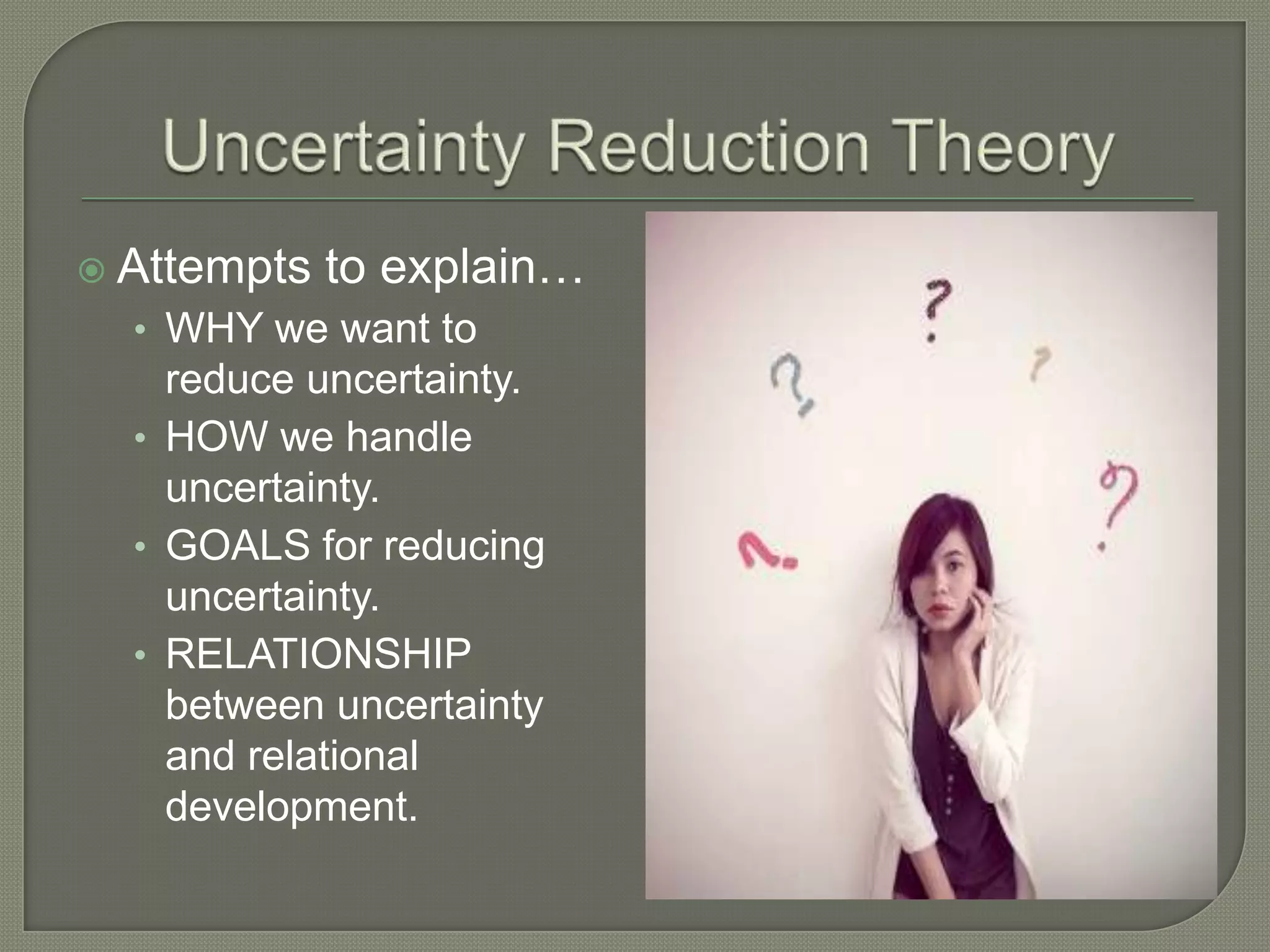
 Attempts   to explain…
  • WHY we want to
    reduce uncertainty.
  • HOW we handle
    uncertainty.
  • GOALS for reducing
    uncertainty.
  • RELATIONSHIP
    between uncertainty
    and relational
    development.
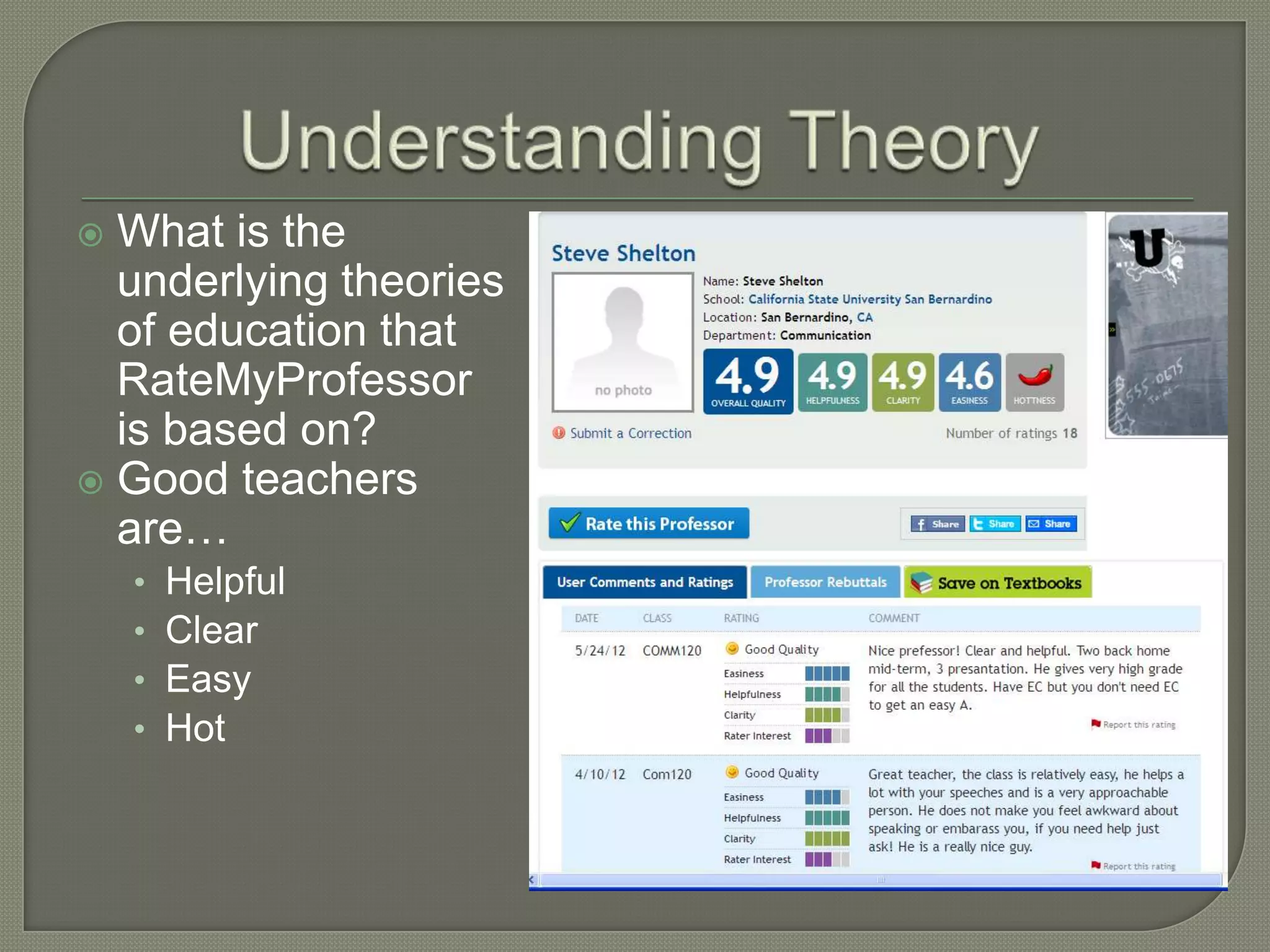
 What is the
  underlying theories
  of education that
  RateMyProfessor
  is based on?
 Good teachers
  are…
    •   Helpful
    •   Clear
    •   Easy
    •   Hot
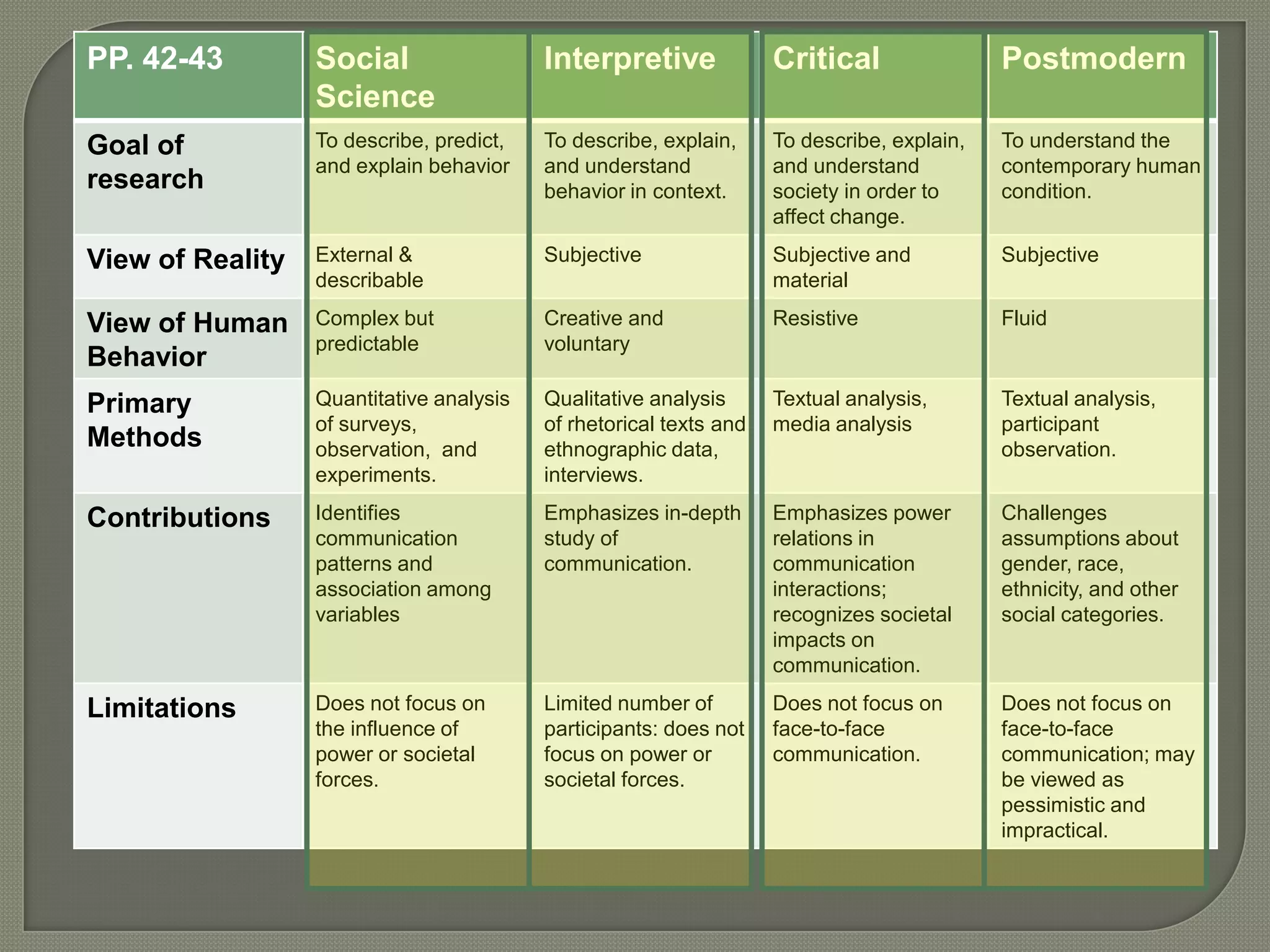
PP. 42-43         Social                  Interpretive              Critical                Postmodern
                  Science
Goal of           To describe, predict,   To describe, explain,     To describe, explain,   To understand the
                  and explain behavior    and understand            and understand          contemporary human
research                                  behavior in context.      society in order to     condition.
                                                                    affect change.

View of Reality   External &              Subjective                Subjective and          Subjective
                  describable                                       material

View of Human     Complex but             Creative and              Resistive               Fluid
                  predictable             voluntary
Behavior
Primary           Quantitative analysis   Qualitative analysis      Textual analysis,       Textual analysis,
                  of surveys,             of rhetorical texts and   media analysis          participant
Methods           observation, and        ethnographic data,                                observation.
                  experiments.            interviews.

Contributions     Identifies              Emphasizes in-depth       Emphasizes power        Challenges
                  communication           study of                  relations in            assumptions about
                  patterns and            communication.            communication           gender, race,
                  association among                                 interactions;           ethnicity, and other
                  variables                                         recognizes societal     social categories.
                                                                    impacts on
                                                                    communication.

Limitations       Does not focus on       Limited number of         Does not focus on       Does not focus on
                  the influence of        participants: does not    face-to-face            face-to-face
                  power or societal       focus on power or         communication.          communication; may
                  forces.                 societal forces.                                  be viewed as
                                                                                            pessimistic and
                                                                                            impractical.
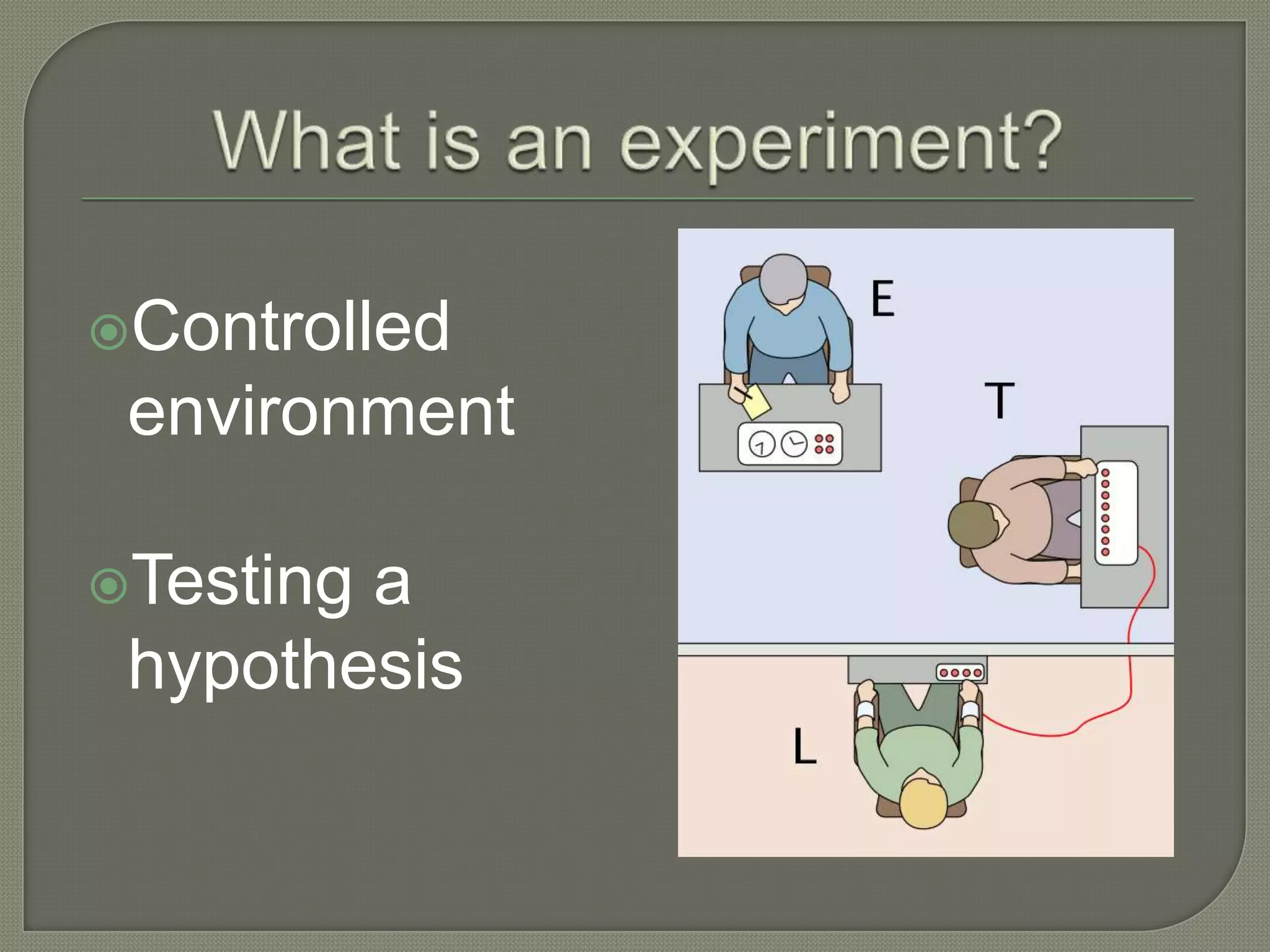
Controlled
 environment

Testinga
 hypothesis
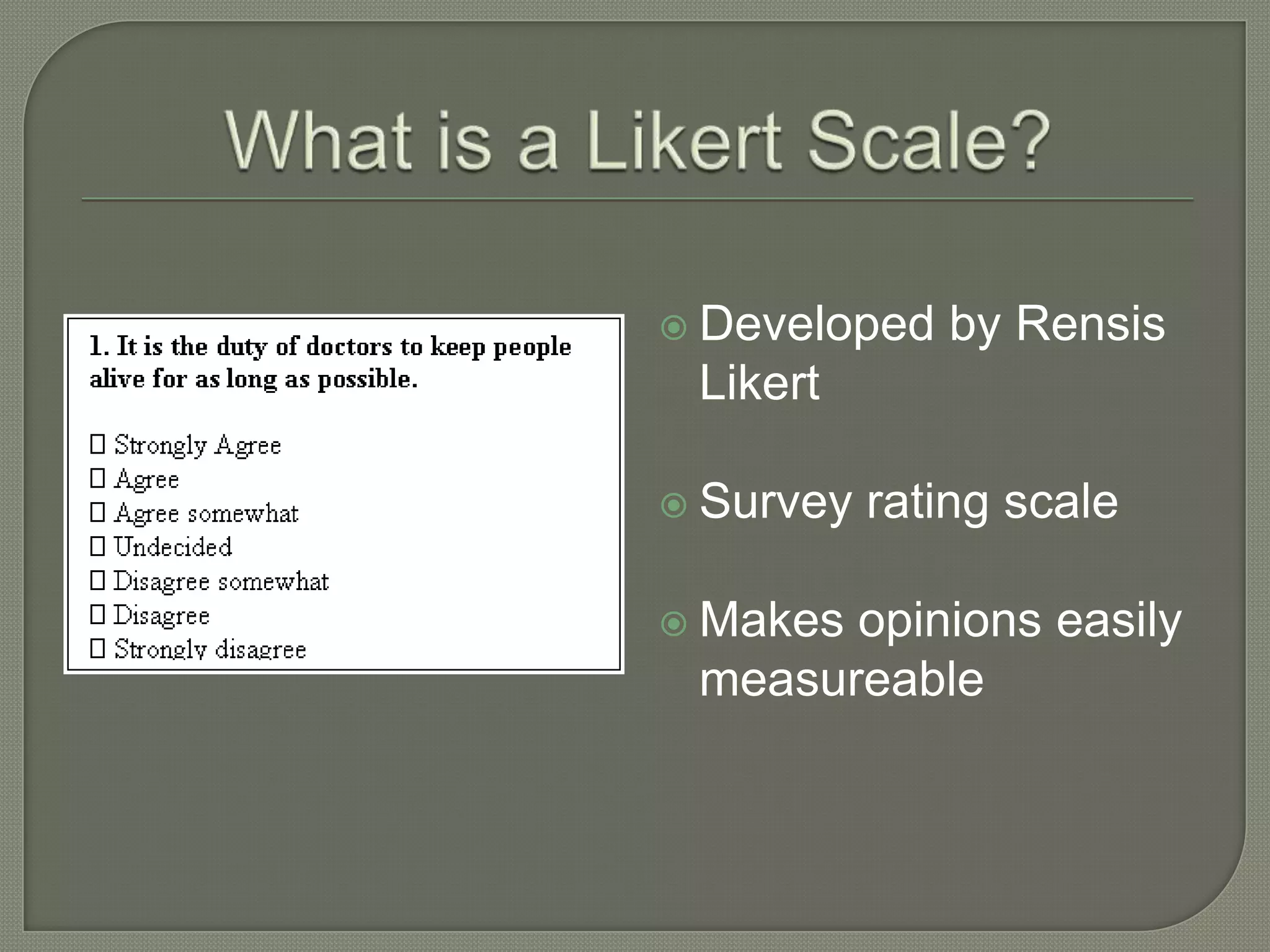
 Developed   by Rensis
 Likert

 Survey   rating scale

 Makesopinions easily
 measureable
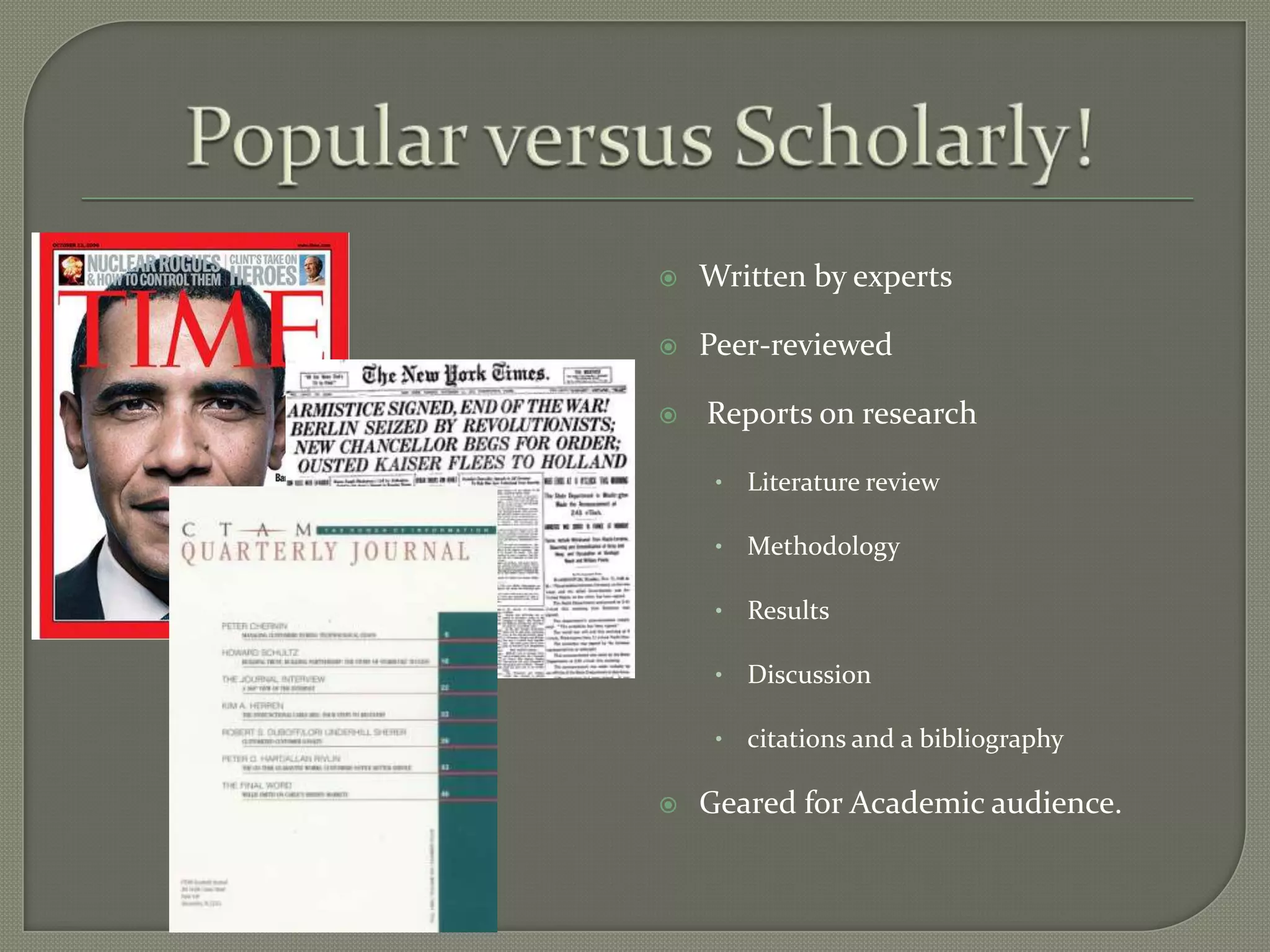
   Written by experts

   Peer-reviewed

   Reports on research

     •   Literature review

     •   Methodology

     •   Results

     •   Discussion

     •   citations and a bibliography

   Geared for Academic audience.
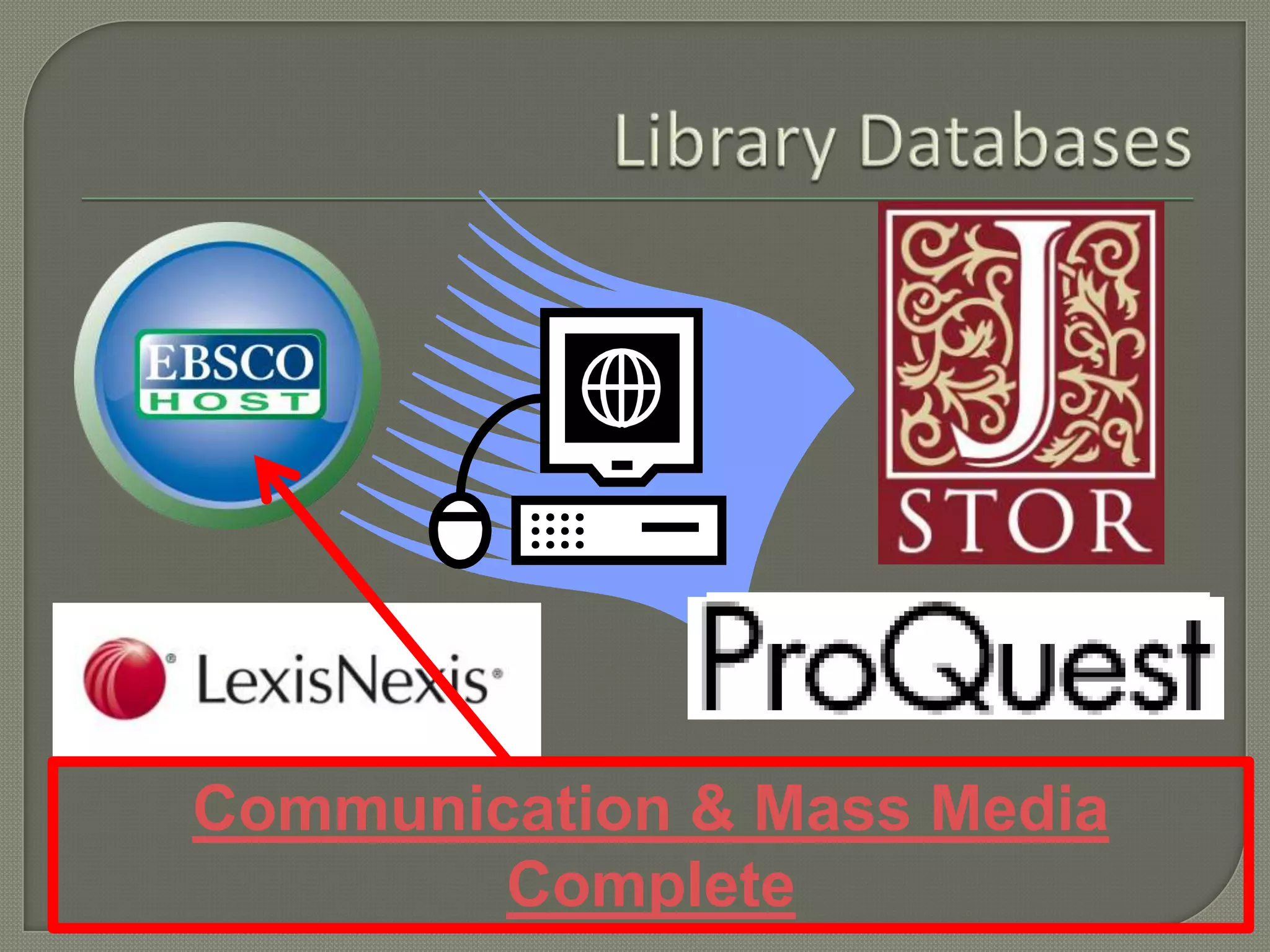
Communication & Mass Media
        Complete
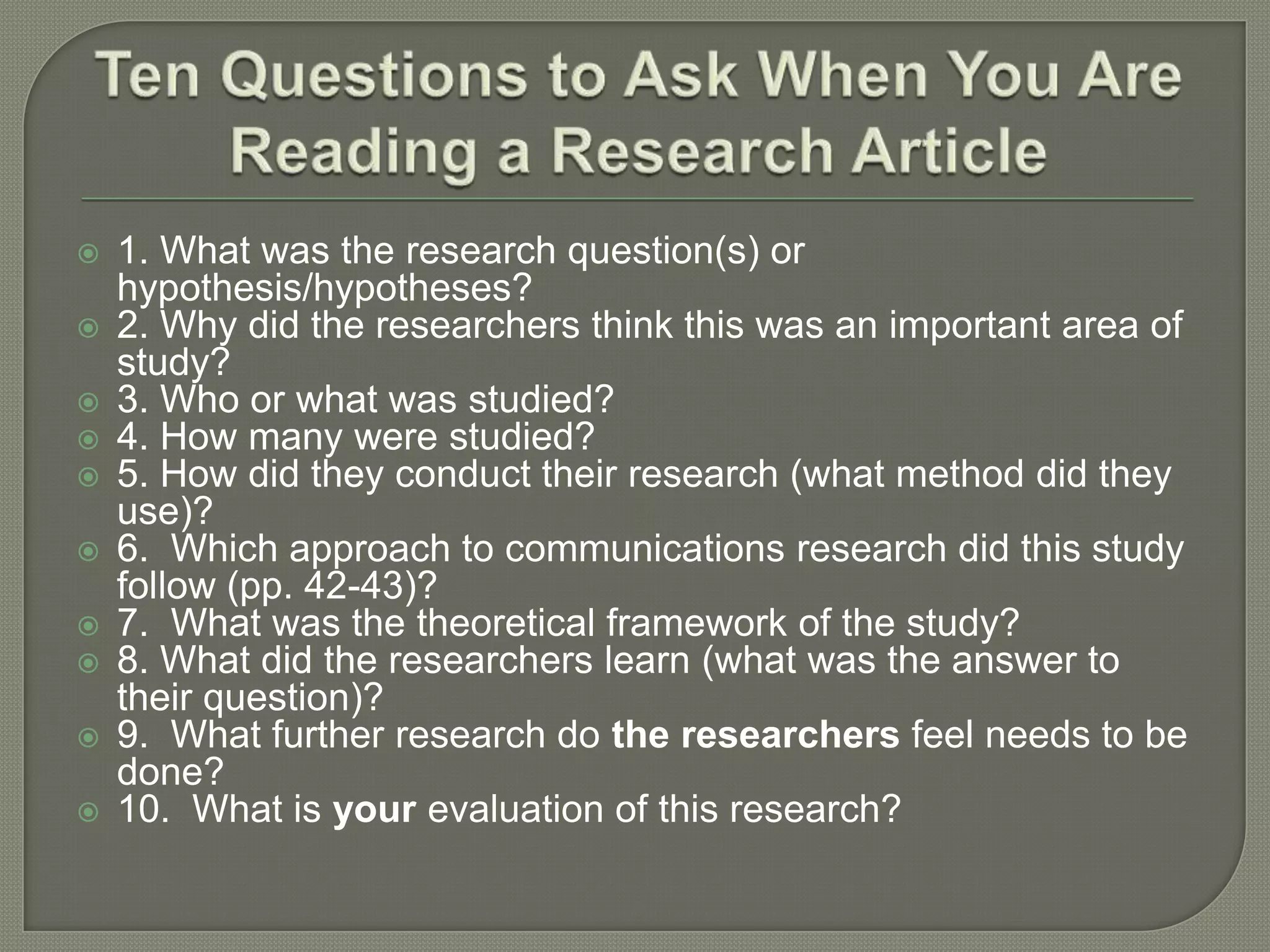
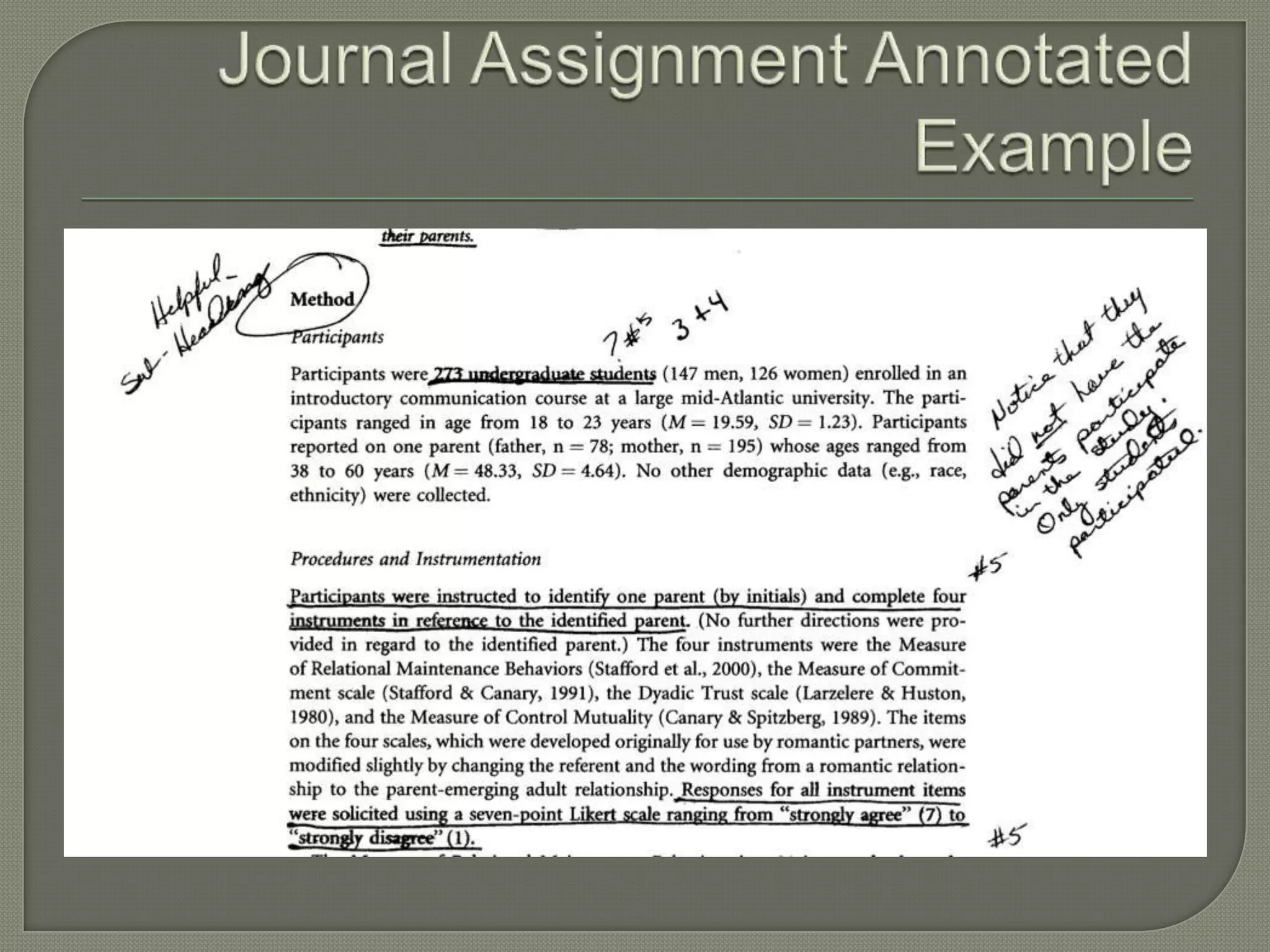
   1. What was the research question(s) or
    hypothesis/hypotheses?
   2. Why did the researchers think this was an important area of
    study?
   3. Who or what was studied?
   4. How many were studied?
   5. How did they conduct their research (what method did they
    use)?
   6. Which approach to communications research did this study
    follow (pp. 42-43)?
   7. What was the theoretical framework of the study?
   8. What did the researchers learn (what was the answer to
    their question)?
   9. What further research do the researchers feel needs to be
    done?
   10. What is your evaluation of this research?
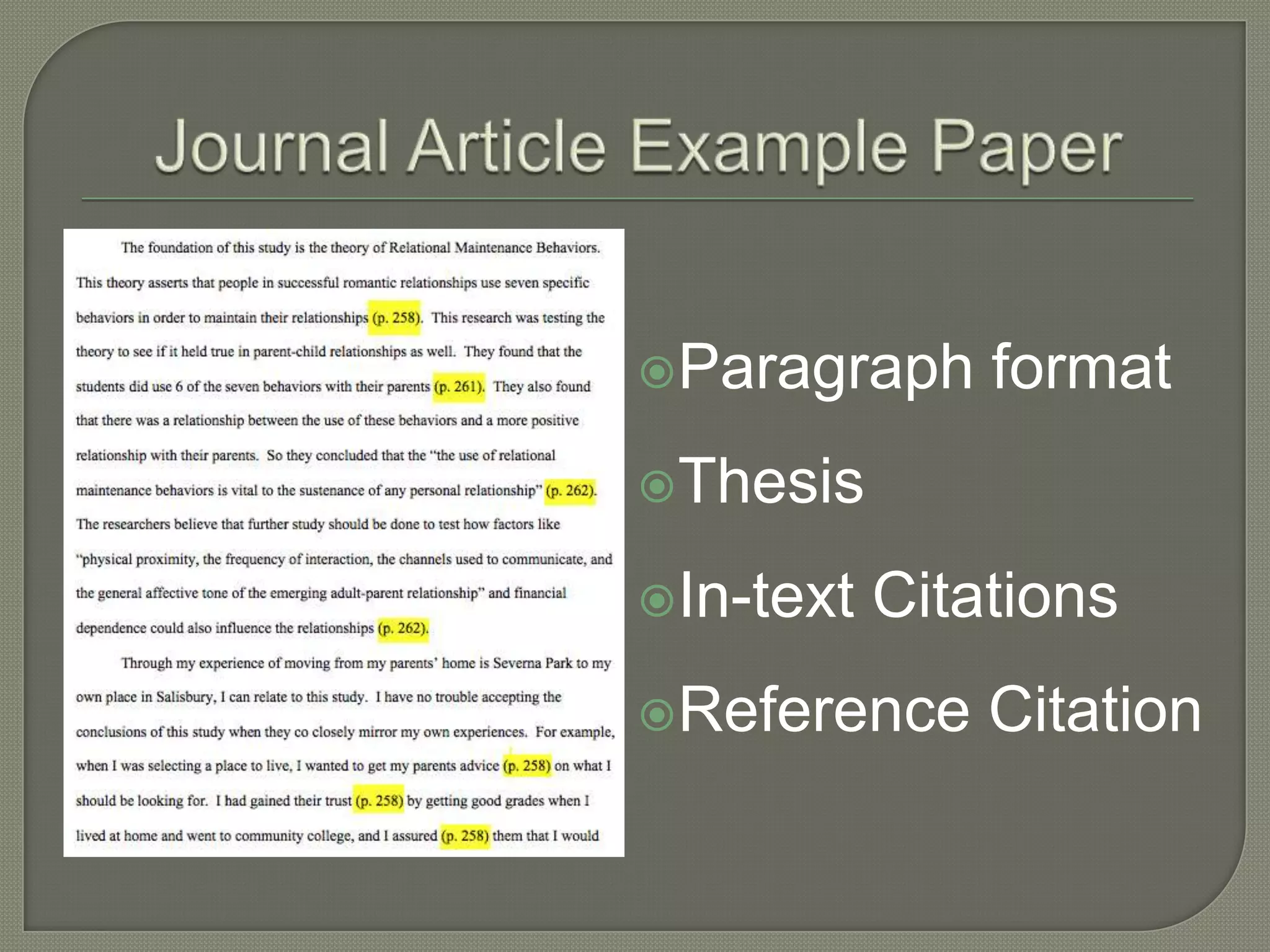
Paragraph     format
Thesis

In-text   Citations
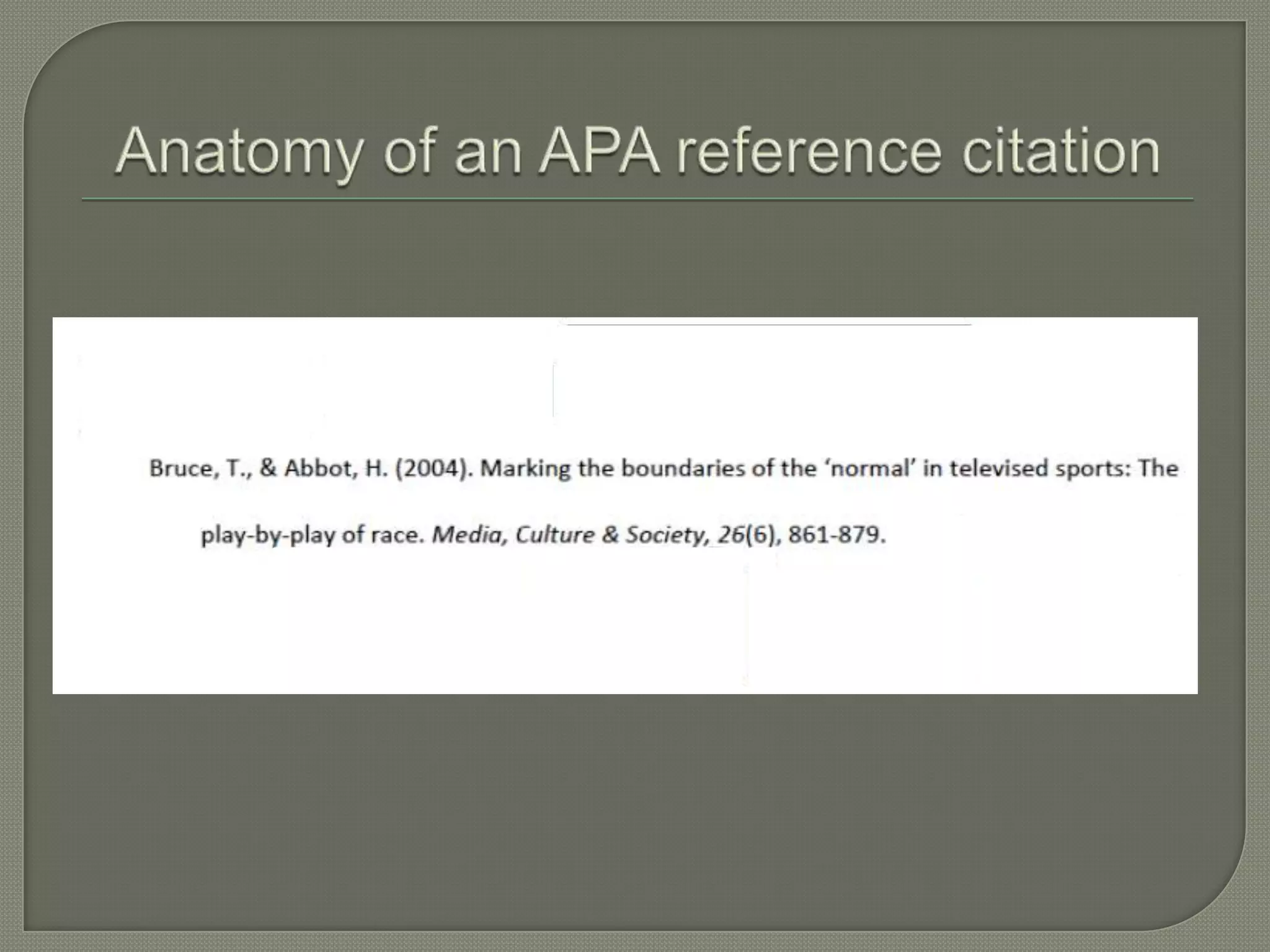
Reference     Citation
Chapter2

Chapter2

  • 2.
     Attempts to explain… • WHY we want to reduce uncertainty. • HOW we handle uncertainty. • GOALS for reducing uncertainty. • RELATIONSHIP between uncertainty and relational development.
  • 3.
     What isthe underlying theories of education that RateMyProfessor is based on?  Good teachers are… • Helpful • Clear • Easy • Hot
  • 4.
    PP. 42-43 Social Interpretive Critical Postmodern Science Goal of To describe, predict, To describe, explain, To describe, explain, To understand the and explain behavior and understand and understand contemporary human research behavior in context. society in order to condition. affect change. View of Reality External & Subjective Subjective and Subjective describable material View of Human Complex but Creative and Resistive Fluid predictable voluntary Behavior Primary Quantitative analysis Qualitative analysis Textual analysis, Textual analysis, of surveys, of rhetorical texts and media analysis participant Methods observation, and ethnographic data, observation. experiments. interviews. Contributions Identifies Emphasizes in-depth Emphasizes power Challenges communication study of relations in assumptions about patterns and communication. communication gender, race, association among interactions; ethnicity, and other variables recognizes societal social categories. impacts on communication. Limitations Does not focus on Limited number of Does not focus on Does not focus on the influence of participants: does not face-to-face face-to-face power or societal focus on power or communication. communication; may forces. societal forces. be viewed as pessimistic and impractical.
  • 5.
  • 6.
     Developed by Rensis Likert  Survey rating scale  Makesopinions easily measureable
  • 7.
    Written by experts  Peer-reviewed  Reports on research • Literature review • Methodology • Results • Discussion • citations and a bibliography  Geared for Academic audience.
  • 9.
    Communication & MassMedia Complete
  • 12.
    1. What was the research question(s) or hypothesis/hypotheses?  2. Why did the researchers think this was an important area of study?  3. Who or what was studied?  4. How many were studied?  5. How did they conduct their research (what method did they use)?  6. Which approach to communications research did this study follow (pp. 42-43)?  7. What was the theoretical framework of the study?  8. What did the researchers learn (what was the answer to their question)?  9. What further research do the researchers feel needs to be done?  10. What is your evaluation of this research?
  • 14.
    Paragraph format Thesis In-text Citations Reference Citation

Editor's Notes

  • #8 Let’s find out what you all know about scholarly versus popular sources!