Chapter 2. Network Models
1. Layered Tasks
2. The OSI Model
3. Layers in the OSI Model
4. TCP/IP Protocol Suite
5. Addressing
2-1
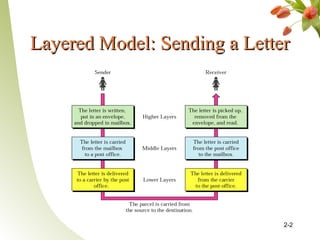
Layered Model: Sending a LetterLayered Model: Sending a Letter
2-2
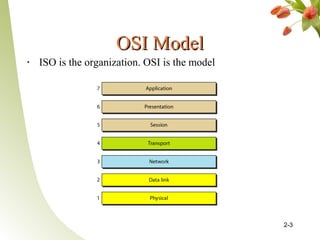
OSI ModelOSI Model
2-3
• ISO is the organization. OSI is the model
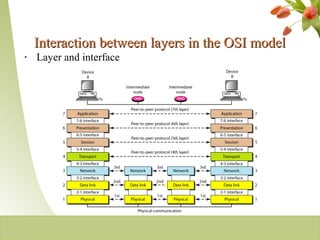
Interaction between layers in the OSI modelInteraction between layers in the OSI model
2-4
• Layer and interface
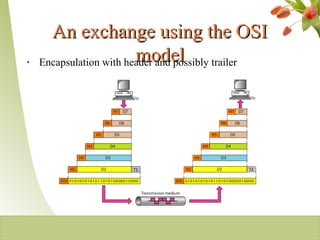
An exchange using the OSIAn exchange using the OSI
modelmodel
2-5
• Encapsulation with header and possibly trailer
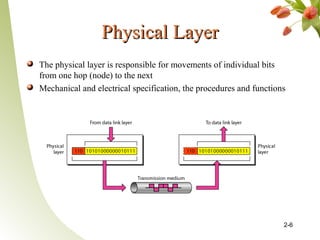
Physical LayerPhysical Layer
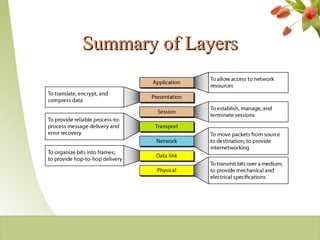
The physical layer is responsible for movements of individual bits
from one hop (node) to the next
Mechanical and electrical specification, the procedures and functions
2-6
Physical Layer: DutiesPhysical Layer: Duties
Physical characteristics of interfaces and media
Representation of bits
Encoded into signals – electrical or optical
Data rate
Synchronization of bits
Line configuration
Physical topology
Transmission mode
2-7
Data Link LayerData Link Layer
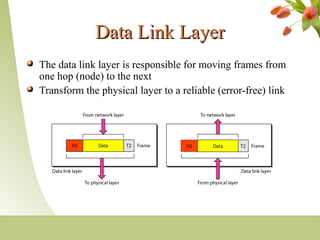
The data link layer is responsible for moving frames from
one hop (node) to the next
Transform the physical layer to a reliable (error-free) link
2-8
Data Link Layer: DutiesData Link Layer: Duties
Framing
Physical addressing
Flow control
Error control
Access control
2-9
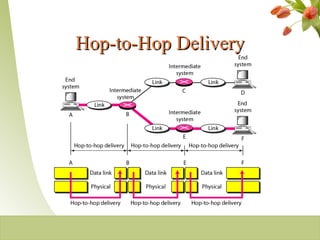
Hop-to-Hop DeliveryHop-to-Hop Delivery
2-10
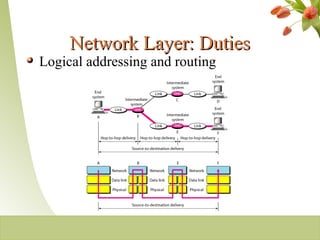
Network LayerNetwork Layer
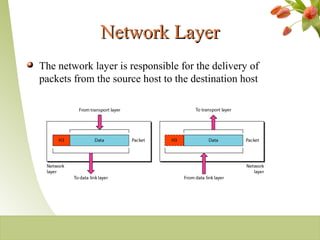
The network layer is responsible for the delivery of
packets from the source host to the destination host
2-11
Network Layer: DutiesNetwork Layer: Duties
Logical addressing and routing
2-12
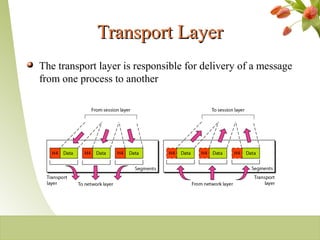
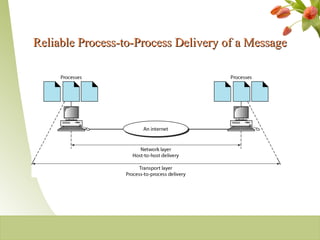
Transport LayerTransport Layer
The transport layer is responsible for delivery of a message
from one process to another
2-13
Transport Layer: DutiesTransport Layer: Duties
Service-point (port) addressing
Segmentation and reassembly
Connection control
Flow control
Error control
2-14
Reliable Process-to-Process Delivery of a MessageReliable Process-to-Process Delivery of a Message
2-15
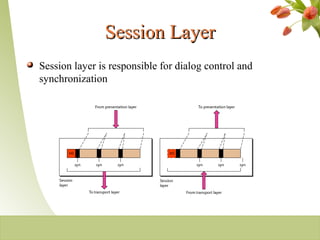
Session LayerSession Layer
Session layer is responsible for dialog control and
synchronization
2-16
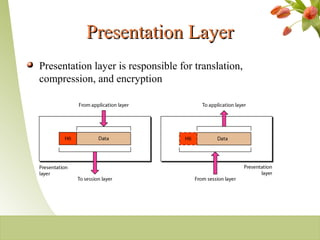
Presentation LayerPresentation Layer
Presentation layer is responsible for translation,
compression, and encryption
2-17
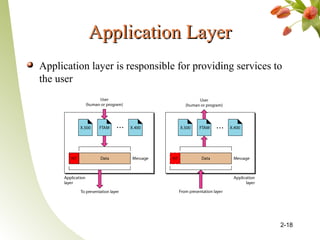
Application LayerApplication Layer
Application layer is responsible for providing services to
the user
2-18
Application Layer: ServicesApplication Layer: Services
Network virtual terminal
Mail services
File transfer, access, and management
Directory services
2-19
Summary of LayersSummary of Layers
2-20
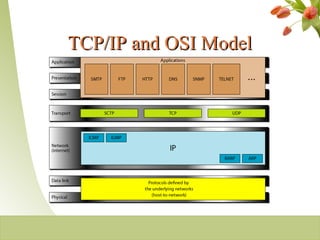
TCP/IP and OSI ModelTCP/IP and OSI Model
2-21
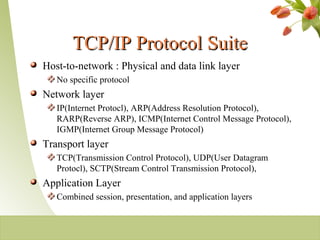
TCP/IP Protocol SuiteTCP/IP Protocol Suite
Host-to-network : Physical and data link layer
No specific protocol
Network layer
IP(Internet Protocl), ARP(Address Resolution Protocol),
RARP(Reverse ARP), ICMP(Internet Control Message Protocol),
IGMP(Internet Group Message Protocol)
Transport layer
TCP(Transmission Control Protocol), UDP(User Datagram
Protocl), SCTP(Stream Control Transmission Protocol),
Application Layer
Combined session, presentation, and application layers
2-22
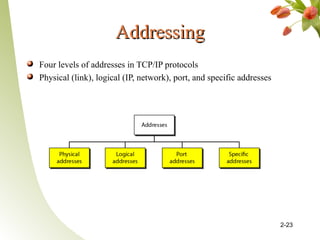
AddressingAddressing
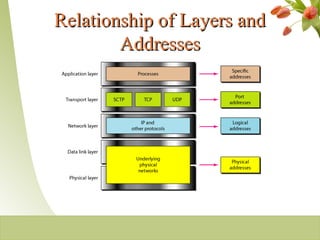
Four levels of addresses in TCP/IP protocols
Physical (link), logical (IP, network), port, and specific addresses
2-23
Relationship of Layers andRelationship of Layers and
AddressesAddresses
2-24
Physical AddressPhysical Address
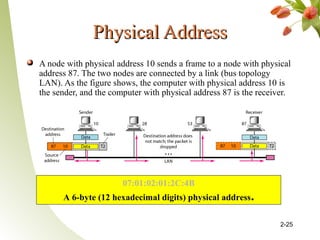
A node with physical address 10 sends a frame to a node with physical
address 87. The two nodes are connected by a link (bus topology
LAN). As the figure shows, the computer with physical address 10 is
the sender, and the computer with physical address 87 is the receiver.
2-25
07:01:02:01:2C:4B
A 6-byte (12 hexadecimal digits) physical address.
Logical (IP) AddressLogical (IP) Address
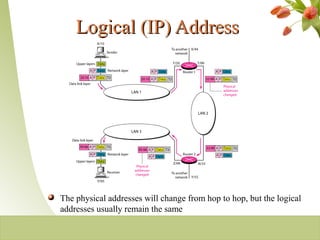
The physical addresses will change from hop to hop, but the logical
addresses usually remain the same
2-26
Port AddressPort Address
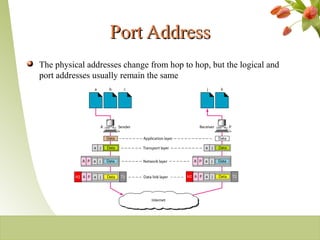
The physical addresses change from hop to hop, but the logical and
port addresses usually remain the same
2-27
Specific AddressSpecific Address
Some application have user-friendly addresses that are designed for that
specific address
Example 1: e-mail address: nayeema.cse@diu.edu.bd
Defines the recipient of an e-mail
Example 2: URL (Universal Resource Locator) :
www.cse.univdhaka.edu
Used to find a document on the WWW
2-28

OSI Model

  • 1.
    Chapter 2. NetworkModels 1. Layered Tasks 2. The OSI Model 3. Layers in the OSI Model 4. TCP/IP Protocol Suite 5. Addressing 2-1
  • 2.
    Layered Model: Sendinga LetterLayered Model: Sending a Letter 2-2
  • 3.
    OSI ModelOSI Model 2-3 •ISO is the organization. OSI is the model
  • 4.
    Interaction between layersin the OSI modelInteraction between layers in the OSI model 2-4 • Layer and interface
  • 5.
    An exchange usingthe OSIAn exchange using the OSI modelmodel 2-5 • Encapsulation with header and possibly trailer
  • 6.
    Physical LayerPhysical Layer Thephysical layer is responsible for movements of individual bits from one hop (node) to the next Mechanical and electrical specification, the procedures and functions 2-6
  • 7.
    Physical Layer: DutiesPhysicalLayer: Duties Physical characteristics of interfaces and media Representation of bits Encoded into signals – electrical or optical Data rate Synchronization of bits Line configuration Physical topology Transmission mode 2-7
  • 8.
    Data Link LayerDataLink Layer The data link layer is responsible for moving frames from one hop (node) to the next Transform the physical layer to a reliable (error-free) link 2-8
  • 9.
    Data Link Layer:DutiesData Link Layer: Duties Framing Physical addressing Flow control Error control Access control 2-9
  • 10.
  • 11.
    Network LayerNetwork Layer Thenetwork layer is responsible for the delivery of packets from the source host to the destination host 2-11
  • 12.
    Network Layer: DutiesNetworkLayer: Duties Logical addressing and routing 2-12
  • 13.
    Transport LayerTransport Layer Thetransport layer is responsible for delivery of a message from one process to another 2-13
  • 14.
    Transport Layer: DutiesTransportLayer: Duties Service-point (port) addressing Segmentation and reassembly Connection control Flow control Error control 2-14
  • 15.
    Reliable Process-to-Process Deliveryof a MessageReliable Process-to-Process Delivery of a Message 2-15
  • 16.
    Session LayerSession Layer Sessionlayer is responsible for dialog control and synchronization 2-16
  • 17.
    Presentation LayerPresentation Layer Presentationlayer is responsible for translation, compression, and encryption 2-17
  • 18.
    Application LayerApplication Layer Applicationlayer is responsible for providing services to the user 2-18
  • 19.
    Application Layer: ServicesApplicationLayer: Services Network virtual terminal Mail services File transfer, access, and management Directory services 2-19
  • 20.
  • 21.
    TCP/IP and OSIModelTCP/IP and OSI Model 2-21
  • 22.
    TCP/IP Protocol SuiteTCP/IPProtocol Suite Host-to-network : Physical and data link layer No specific protocol Network layer IP(Internet Protocl), ARP(Address Resolution Protocol), RARP(Reverse ARP), ICMP(Internet Control Message Protocol), IGMP(Internet Group Message Protocol) Transport layer TCP(Transmission Control Protocol), UDP(User Datagram Protocl), SCTP(Stream Control Transmission Protocol), Application Layer Combined session, presentation, and application layers 2-22
  • 23.
    AddressingAddressing Four levels ofaddresses in TCP/IP protocols Physical (link), logical (IP, network), port, and specific addresses 2-23
  • 24.
    Relationship of LayersandRelationship of Layers and AddressesAddresses 2-24
  • 25.
    Physical AddressPhysical Address Anode with physical address 10 sends a frame to a node with physical address 87. The two nodes are connected by a link (bus topology LAN). As the figure shows, the computer with physical address 10 is the sender, and the computer with physical address 87 is the receiver. 2-25 07:01:02:01:2C:4B A 6-byte (12 hexadecimal digits) physical address.
  • 26.
    Logical (IP) AddressLogical(IP) Address The physical addresses will change from hop to hop, but the logical addresses usually remain the same 2-26
  • 27.
    Port AddressPort Address Thephysical addresses change from hop to hop, but the logical and port addresses usually remain the same 2-27
  • 28.
    Specific AddressSpecific Address Someapplication have user-friendly addresses that are designed for that specific address Example 1: e-mail address: nayeema.cse@diu.edu.bd Defines the recipient of an e-mail Example 2: URL (Universal Resource Locator) : www.cse.univdhaka.edu Used to find a document on the WWW 2-28