Downloaded 318 times
![8.38
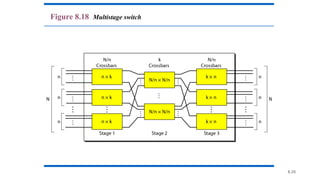
According to the Clos criterion:
n = (N/2)1/2
k > 2n – 1
Crosspoints ≥ 4N [(2N)1/2
– 1]
Note](https://image.slidesharecdn.com/ch08-150120122850-conversion-gate01/85/Chapter-8-Switching-38-320.jpg)
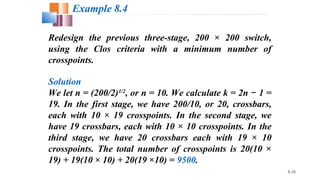
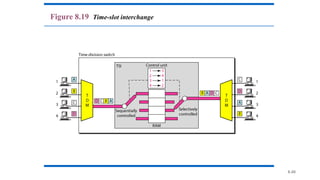
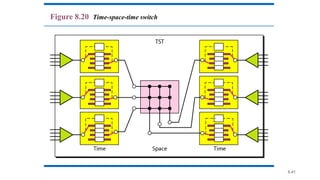
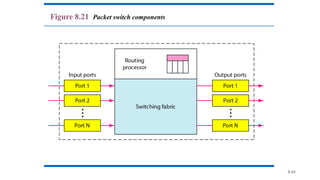
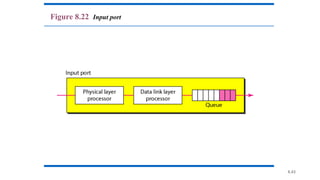
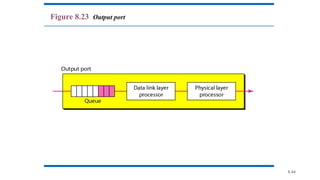
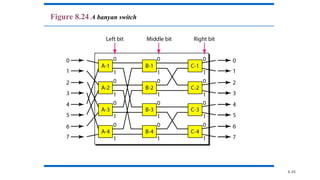
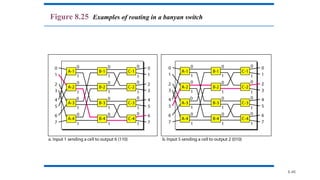
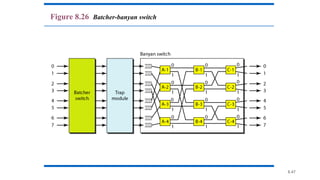

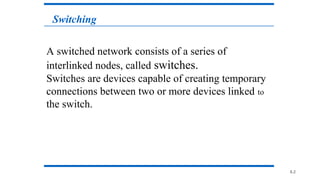
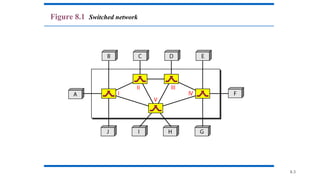
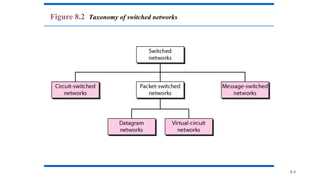
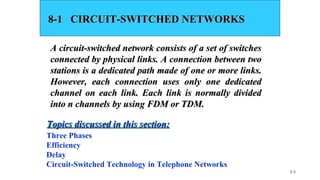
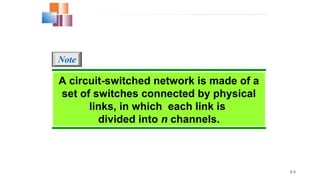
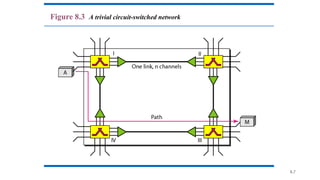
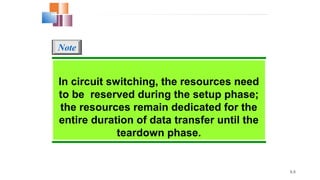
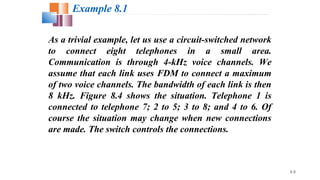
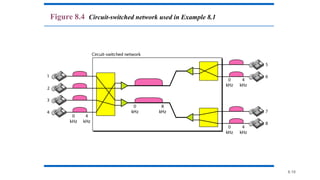
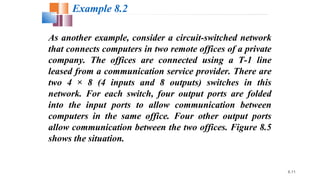
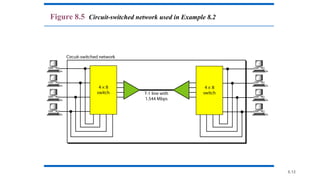
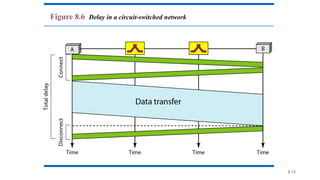
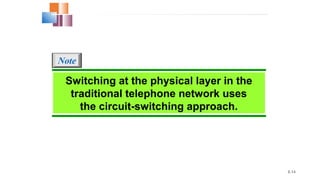
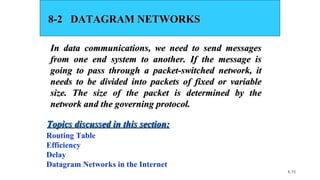
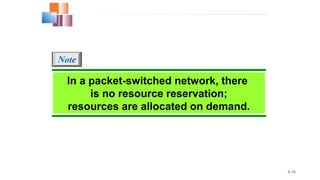
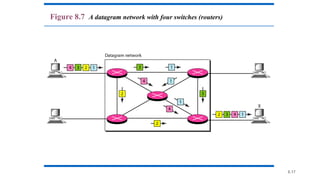
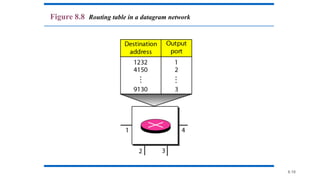
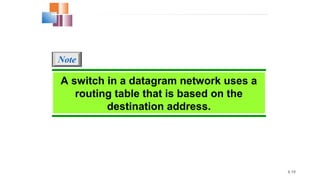
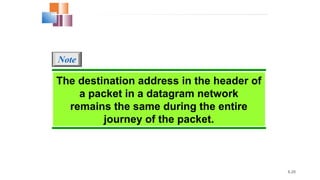
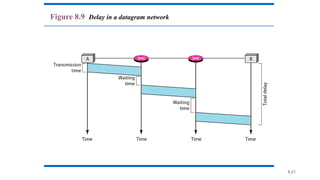
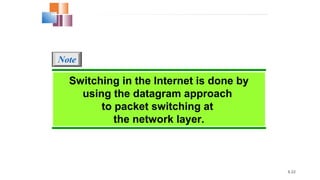
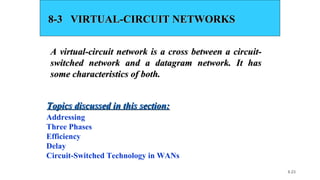
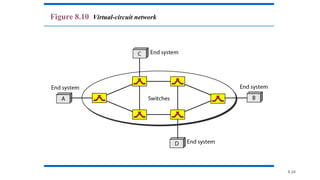
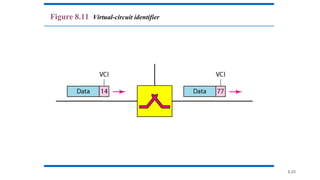
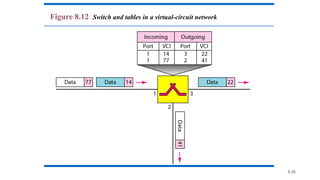
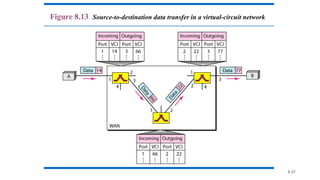
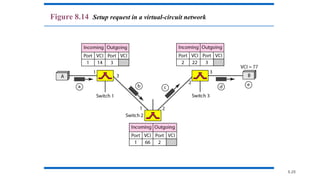
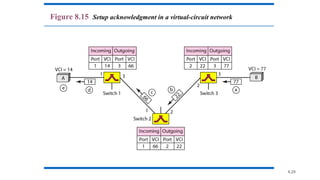
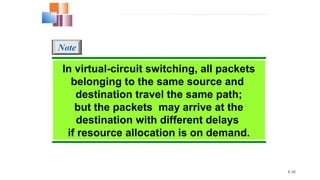
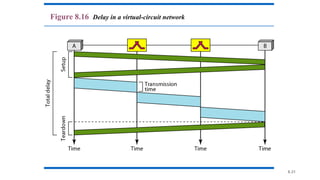
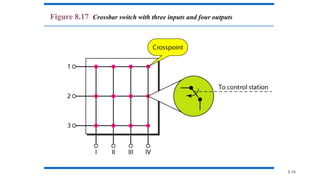
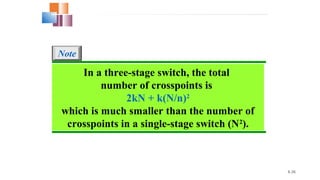
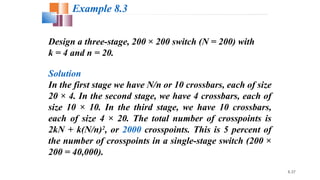
A switched network consists of interconnected nodes called switches that can temporarily connect devices linked to the switch. There are three main types of switching: circuit switching, datagram/packet switching, and virtual circuit switching. Circuit switching requires resource reservation and dedicates resources for the duration of a connection. Datagram switching does not reserve resources and allocates them on demand. Virtual circuit switching has aspects of both by dedicating resources only for packets belonging to the same connection. Switches can be constructed in single-stage or multistage designs, with multistage switches using fewer crosspoints.


