OSI Layer Model Open Systems Interconnection (OSI) Model
CONTENTS What is OSI? Layer Architecture  The 7 OSI Layers Interaction between the OSI layers  Conclusion
What is OSI?  The Open Systems Interconnection (OSI) is a model that was developed by the ISO (International Organization for Standards ) and it describes how information from a software application in one computer, moves through a network medium to a  software application in another computer.
Layer Architecture Layer architecture simplifies the network design. It is easy to debug network applications in a layered architecture network. The network management is easier due to the layered architecture. Network layers follow a set of rules, called protocol. The protocol defines the format of the data being exchanged, and the control and timing for the handshake between layers.
Characteristics of the OSI Upper layers 7 Layers  Lower layers
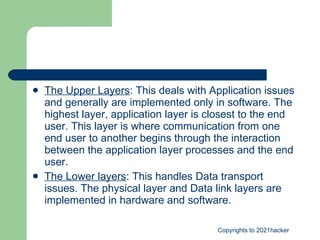
The Upper Layers : This deals with Application issues and generally are implemented only in software. The highest layer, application layer is closest to the end user. This layer is where communication from one end user to another begins through the interaction between the application layer processes and the end user.  The Lower layers : This handles Data transport issues. The physical layer and Data link layers are implemented in hardware and software.
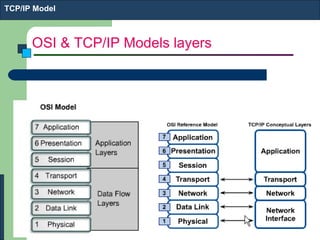
OSI & TCP/IP Models layers TCP/IP Model
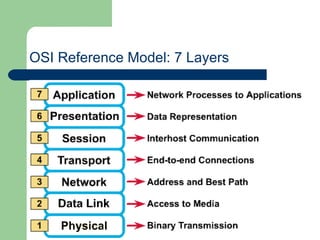
OSI Reference Model: 7 Layers
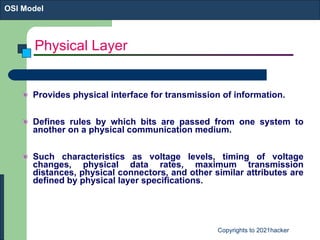
Physical Layer Provides physical interface for transmission of information. Defines rules by which bits are passed from one system to another on a physical communication medium. Such characteristics as voltage levels, timing of voltage changes, physical data rates, maximum transmission distances, physical connectors, and other similar attributes are defined by physical layer specifications.  OSI Model
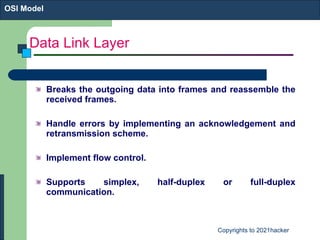
Data Link Layer Breaks the outgoing data into frames and reassemble the received frames. Handle errors by implementing an acknowledgement and retransmission scheme. Implement flow control. Supports simplex, half-duplex or full-duplex communication. OSI Model
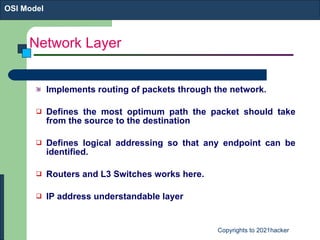
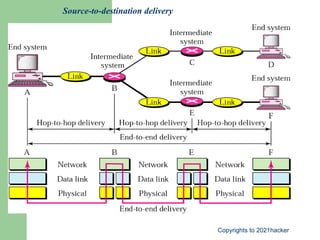
Network Layer Implements routing of packets through the network. Defines the most optimum path the packet should take from the source to the destination Defines logical addressing so that any endpoint can be identified.  Routers and L3 Switches works here. IP address understandable layer OSI Model
Source-to-destination delivery
Transport Layer Purpose of this layer is to provide a reliable mechanism for the exchange of data between two processes in different computers.  Ensures that the data units are delivered error free. Ensures that data units are delivered in sequence. Ensures that there is no loss or duplication of data units. Provides connectionless or connection oriented service. OSI Model
Session Layer Session layer provides mechanism for controlling the dialogue between the two end systems. It defines how to start, control and end conversations (called sessions) between applications. This layer requests for a logical connection to be established on an end-user’s request. Any necessary log-on or password validation is also handled by this layer. Session layer is also responsible for terminating the connection. OSI Model
Presentation Layer Presentation layer defines the format in which the data is to be exchanged between the two communicating entities.  Also handles data compression and data encryption (cryptography). OSI Model
Application Layer Application layer interacts with application programs and is the highest level of OSI model. Examples of application layer are applications such as file transfer, electronic mail, remote login etc. OSI Model
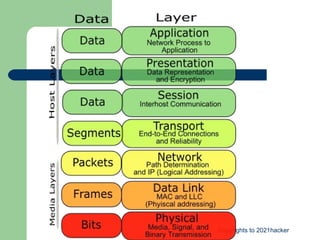
Interaction Between OSI Model Layers Information sent from a software application in one system to a software application in another, must pass through each of the OSI layers. An example of this is shown in the diagram below:
 
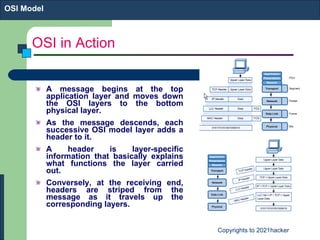
OSI in Action A message begins at the top application layer and moves down the OSI layers to the bottom physical layer.  As the message descends, each successive OSI model layer adds a header to it.  A header is layer-specific information that basically explains what functions the layer carried out.  Conversely, at the receiving end, headers are striped from the message as it travels up the corresponding layers. OSI Model
 
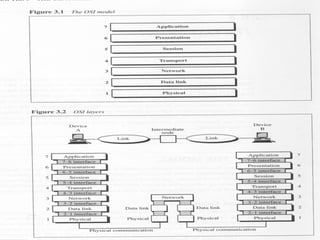
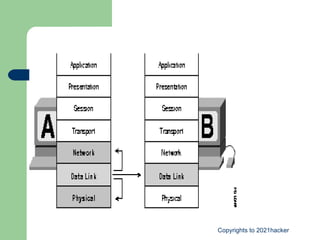
A given layer within the OSI model communicates with three other layers:the layer  directly above it, the layer directly below it and it’s peer layer in other networked computer system. In the diagram below, the data link layer in system A, communicates with the network layer and physical layer of system A. It also communicates with the data link layer of system B.
 
Conclusion  Overall, this presentation has tried to describe the OSI model,what it is all about and how communication occurs through the layers of the model from one user to another .

Osi Layer model provided by TopTechy.com

  • 1.
    OSI Layer ModelOpen Systems Interconnection (OSI) Model
  • 2.
    CONTENTS What isOSI? Layer Architecture The 7 OSI Layers Interaction between the OSI layers Conclusion
  • 3.
    What is OSI? The Open Systems Interconnection (OSI) is a model that was developed by the ISO (International Organization for Standards ) and it describes how information from a software application in one computer, moves through a network medium to a software application in another computer.
  • 4.
    Layer Architecture Layerarchitecture simplifies the network design. It is easy to debug network applications in a layered architecture network. The network management is easier due to the layered architecture. Network layers follow a set of rules, called protocol. The protocol defines the format of the data being exchanged, and the control and timing for the handshake between layers.
  • 5.
    Characteristics of theOSI Upper layers 7 Layers Lower layers
  • 6.
    The Upper Layers: This deals with Application issues and generally are implemented only in software. The highest layer, application layer is closest to the end user. This layer is where communication from one end user to another begins through the interaction between the application layer processes and the end user. The Lower layers : This handles Data transport issues. The physical layer and Data link layers are implemented in hardware and software.
  • 7.
    OSI & TCP/IPModels layers TCP/IP Model
  • 8.
  • 9.
    Physical Layer Providesphysical interface for transmission of information. Defines rules by which bits are passed from one system to another on a physical communication medium. Such characteristics as voltage levels, timing of voltage changes, physical data rates, maximum transmission distances, physical connectors, and other similar attributes are defined by physical layer specifications. OSI Model
  • 10.
    Data Link LayerBreaks the outgoing data into frames and reassemble the received frames. Handle errors by implementing an acknowledgement and retransmission scheme. Implement flow control. Supports simplex, half-duplex or full-duplex communication. OSI Model
  • 11.
    Network Layer Implementsrouting of packets through the network. Defines the most optimum path the packet should take from the source to the destination Defines logical addressing so that any endpoint can be identified. Routers and L3 Switches works here. IP address understandable layer OSI Model
  • 12.
  • 13.
    Transport Layer Purposeof this layer is to provide a reliable mechanism for the exchange of data between two processes in different computers. Ensures that the data units are delivered error free. Ensures that data units are delivered in sequence. Ensures that there is no loss or duplication of data units. Provides connectionless or connection oriented service. OSI Model
  • 14.
    Session Layer Sessionlayer provides mechanism for controlling the dialogue between the two end systems. It defines how to start, control and end conversations (called sessions) between applications. This layer requests for a logical connection to be established on an end-user’s request. Any necessary log-on or password validation is also handled by this layer. Session layer is also responsible for terminating the connection. OSI Model
  • 15.
    Presentation Layer Presentationlayer defines the format in which the data is to be exchanged between the two communicating entities. Also handles data compression and data encryption (cryptography). OSI Model
  • 16.
    Application Layer Applicationlayer interacts with application programs and is the highest level of OSI model. Examples of application layer are applications such as file transfer, electronic mail, remote login etc. OSI Model
  • 17.
    Interaction Between OSIModel Layers Information sent from a software application in one system to a software application in another, must pass through each of the OSI layers. An example of this is shown in the diagram below:
  • 18.
  • 19.
    OSI in ActionA message begins at the top application layer and moves down the OSI layers to the bottom physical layer. As the message descends, each successive OSI model layer adds a header to it. A header is layer-specific information that basically explains what functions the layer carried out. Conversely, at the receiving end, headers are striped from the message as it travels up the corresponding layers. OSI Model
  • 20.
  • 21.
    A given layerwithin the OSI model communicates with three other layers:the layer directly above it, the layer directly below it and it’s peer layer in other networked computer system. In the diagram below, the data link layer in system A, communicates with the network layer and physical layer of system A. It also communicates with the data link layer of system B.
  • 22.
  • 23.
    Conclusion Overall,this presentation has tried to describe the OSI model,what it is all about and how communication occurs through the layers of the model from one user to another .