Organisational Learning How do you create an effective organisation that learns?
What makes a team work?  Why it is important to sustainability! Co-operation and collaboration
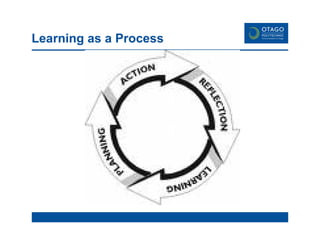
Learning as a Process
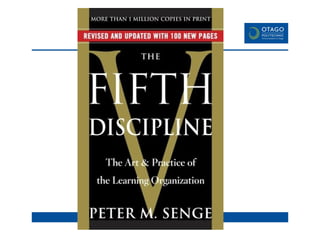
Learning Organisations  "A Learning Organisation is one in which people at all levels, individuals and collectively, are continually increasing their capacity to produce results they really care about.“ An organisation that learns and encourages learning among its people. It promotes exchange of information between employees hence creating a more knowledgable workforce. This produces a very flexible organisation where people will accept and adapt to new ideas and changes through a shared vision. © Mark K. Smith 2001 reviewing  Peter Senge  “The Fifth Discipline”
A company that needs to learn… Your employees seem  unmotivated  or  uninterested  in  their work? Does your workforce  lack the skill  and  knowledge  to adjust  to new jobs? You seem to be  the only one  to come up with all the ideas? And does your  workforce  simply  follow orders ?  your teams  argue  constantly and  lack real productivity ? Or  lack communication  between each other? And when the "guru" is off do things get  put on hold ?  Are you always the last to hear about  problem s?  Or worst still the first to hear about customer  complaints ? And do the  same problems  occur over and over?
 
Five Disciplines Systems thinking Systems theory’s ability to comprehend and address the whole, and to examine the interrelationship between the parts provides. Personal mastery ‘ Organizations learn only through individuals who learn. Individual learning does not guarantee organizational learning. But without it no organizational learning occurs’  © Mark K. Smith 2001 reviewing  Peter Senge  “The Fifth Discipline”
The other three! Mental models These are ‘deeply ingrained assumptions, generalizations, or even pictures and images that influence how we understand the world and how we take action’. Building shared vision ‘ The capacity to hold a share picture of the future we seek to create’. Team learning Such learning is viewed as ‘the process of aligning and developing the capacities of a team to create the results its members truly desire’.  © Mark K. Smith 2001 reviewing  Peter Senge  “The Fifth Discipline”
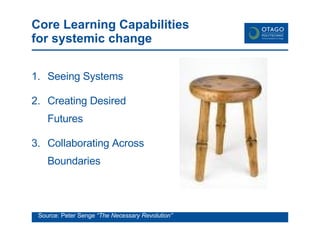
Seeing Systems Creating Desired Futures Collaborating Across Boundaries Core Learning Capabilities for systemic change Source: Peter Senge  “The Necessary Revolution”
Reflect What do you personally look like in a sustainable future? What structure would your business have in a sustainable future? Hierarchical or lateral? What would your employees look in a sustainable future? The purpose is to move away from the same thinking that created the problems. “ No problem can be solved from the same level of consciousness that created it.”  Albert Einstein

Organisational Learning

  • 1.
    Organisational Learning Howdo you create an effective organisation that learns?
  • 2.
    What makes ateam work? Why it is important to sustainability! Co-operation and collaboration
  • 3.
  • 4.
    Learning Organisations "A Learning Organisation is one in which people at all levels, individuals and collectively, are continually increasing their capacity to produce results they really care about.“ An organisation that learns and encourages learning among its people. It promotes exchange of information between employees hence creating a more knowledgable workforce. This produces a very flexible organisation where people will accept and adapt to new ideas and changes through a shared vision. © Mark K. Smith 2001 reviewing Peter Senge “The Fifth Discipline”
  • 5.
    A company thatneeds to learn… Your employees seem unmotivated or uninterested in their work? Does your workforce lack the skill and knowledge to adjust to new jobs? You seem to be the only one to come up with all the ideas? And does your workforce simply follow orders ? your teams argue constantly and lack real productivity ? Or lack communication between each other? And when the "guru" is off do things get put on hold ? Are you always the last to hear about problem s? Or worst still the first to hear about customer complaints ? And do the same problems occur over and over?
  • 6.
  • 7.
    Five Disciplines Systemsthinking Systems theory’s ability to comprehend and address the whole, and to examine the interrelationship between the parts provides. Personal mastery ‘ Organizations learn only through individuals who learn. Individual learning does not guarantee organizational learning. But without it no organizational learning occurs’ © Mark K. Smith 2001 reviewing Peter Senge “The Fifth Discipline”
  • 8.
    The other three!Mental models These are ‘deeply ingrained assumptions, generalizations, or even pictures and images that influence how we understand the world and how we take action’. Building shared vision ‘ The capacity to hold a share picture of the future we seek to create’. Team learning Such learning is viewed as ‘the process of aligning and developing the capacities of a team to create the results its members truly desire’. © Mark K. Smith 2001 reviewing Peter Senge “The Fifth Discipline”
  • 9.
    Seeing Systems CreatingDesired Futures Collaborating Across Boundaries Core Learning Capabilities for systemic change Source: Peter Senge “The Necessary Revolution”
  • 10.
    Reflect What doyou personally look like in a sustainable future? What structure would your business have in a sustainable future? Hierarchical or lateral? What would your employees look in a sustainable future? The purpose is to move away from the same thinking that created the problems. “ No problem can be solved from the same level of consciousness that created it.” Albert Einstein