A Framework for
Organizational Development:
The Why, What and
How of OD Work
www.humanikaconsulting.com
WHAT ?
This definition highlights the explicit connection between
organizational development work and the achievement of
organizational mission. This connection is the rationale for doing OD
work
“Organizational development is the
process through which an
organization develops the internal
capacity to be the most effective it
can be in its mission work and to
sustain itself over the long term.”
ESSENTIAL
• The “O” is about organizations
(people, systems, technology,
and communication ) of all
kinds; the units throughout
society that are human
organizations existing to
accomplish some purpose
• The “D” is about change &
improvement; growing
towards something, getting
better at one’s mission,
improving how work gets
done & people live their lives
WHY ?
• Board and staff members are motivated to
tackle the hard work of OD only when they
are convinced of the connection between
achievement of mission and organizational
development.
• They must understand the “why” of
organizational development.
• They are guided in their OD work by a vision
of an effective and well-functioning
organization that can better achieve its
mission
HOW
The Main Conceptual Framework of O
:
Action Research
(Data based and Action derived from
data)
“No Action without Research, No research withou
Action”
- Kurt Lewin
HOW
• Organizational survival – whether improving basic systems or
providing space to understand and address critical transitions,
organizations credited OD work with their very survival.
• “Being the best we can be” – by improving the quality of their
work through human or technical investments, organizations built
their credibility and accountability in the eyes of their constituents
and supporters.
• Raising more resources for the mission work – as organizations
strengthened their capacity for evaluation, communication,
collaboration and fundraising, they attracted more resources to
increase the level and impact of their program work.
• “Walking our talk” – by focusing on the values that are the
foundation of the mission work, OD led organizations to make a
commitment to practice internally what they are seeking to
accomplish externally.
• Developing staff and board members so they can improve
program results – by creating an environment where people feel
valued and seek continual learning and improvement, staff and
board members increased their energy and effectiveness towards
the achievement of mission.
CORE COMPONENTS OF EFFECTIVE
ORGANIZATIONS
• Vision, Values and Mission
• Governance
• Strategic Thinking and Planning
• Program Development and
Implementation
• Evaluation, Learning and Accountability
• Human Resource Management
• Organizational Culture
• Management Systems and Structures
• Legal Compliance, Fiscal Management
and Public Accountability
• Resource Development
• Constituent Relationships
• Collaboration
LESSONS LEARNED• OD is essential, takes longer
than you think, and can be
messy.
• OD is a never-ending process.
• Balancing OD and mission
work is a challenge.
• People in organizations need
support to sustain change.
• The executive director’s role is
key; board and staff
involvement is essential.
• The right consultants can play
helpful roles, but they are no
substitute for staff and board
involvement.
• Pacing the work is wise.
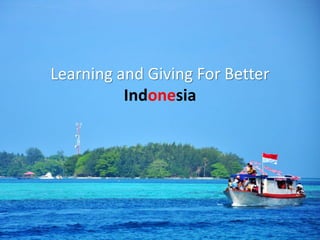
Learning and Giving For Better
Indonesia

A framework for organizational development

  • 1.
    A Framework for OrganizationalDevelopment: The Why, What and How of OD Work www.humanikaconsulting.com
  • 2.
    WHAT ? This definitionhighlights the explicit connection between organizational development work and the achievement of organizational mission. This connection is the rationale for doing OD work “Organizational development is the process through which an organization develops the internal capacity to be the most effective it can be in its mission work and to sustain itself over the long term.”
  • 3.
    ESSENTIAL • The “O”is about organizations (people, systems, technology, and communication ) of all kinds; the units throughout society that are human organizations existing to accomplish some purpose • The “D” is about change & improvement; growing towards something, getting better at one’s mission, improving how work gets done & people live their lives
  • 4.
    WHY ? • Boardand staff members are motivated to tackle the hard work of OD only when they are convinced of the connection between achievement of mission and organizational development. • They must understand the “why” of organizational development. • They are guided in their OD work by a vision of an effective and well-functioning organization that can better achieve its mission
  • 5.
    HOW The Main ConceptualFramework of O : Action Research (Data based and Action derived from data) “No Action without Research, No research withou Action” - Kurt Lewin
  • 7.
    HOW • Organizational survival– whether improving basic systems or providing space to understand and address critical transitions, organizations credited OD work with their very survival. • “Being the best we can be” – by improving the quality of their work through human or technical investments, organizations built their credibility and accountability in the eyes of their constituents and supporters. • Raising more resources for the mission work – as organizations strengthened their capacity for evaluation, communication, collaboration and fundraising, they attracted more resources to increase the level and impact of their program work. • “Walking our talk” – by focusing on the values that are the foundation of the mission work, OD led organizations to make a commitment to practice internally what they are seeking to accomplish externally. • Developing staff and board members so they can improve program results – by creating an environment where people feel valued and seek continual learning and improvement, staff and board members increased their energy and effectiveness towards the achievement of mission.
  • 8.
    CORE COMPONENTS OFEFFECTIVE ORGANIZATIONS • Vision, Values and Mission • Governance • Strategic Thinking and Planning • Program Development and Implementation • Evaluation, Learning and Accountability • Human Resource Management • Organizational Culture • Management Systems and Structures • Legal Compliance, Fiscal Management and Public Accountability • Resource Development • Constituent Relationships • Collaboration
  • 9.
    LESSONS LEARNED• ODis essential, takes longer than you think, and can be messy. • OD is a never-ending process. • Balancing OD and mission work is a challenge. • People in organizations need support to sustain change. • The executive director’s role is key; board and staff involvement is essential. • The right consultants can play helpful roles, but they are no substitute for staff and board involvement. • Pacing the work is wise.
  • 10.
    Learning and GivingFor Better Indonesia