OBSTRUCTIVE JAUNDICE
INTRODUCTION
Dr.B.Selvaraj MS;Mch;FICS;
Professor Of Surgery
Melaka Manipal Medical college
Melaka 75150 Malaysia
Must to know core clinical
problems
1.Acute RLQ pain
2.Acute RUQ pain
3.Acute epigastric pain
4.Acute LLQ pain
5.Dysphagia
6.Abdominal lumps
7.Upper GI haemorrhage
8.Lower GI haemorrhage
9.Obstructive Jaundice
10.Breast lumps, mastalgia & nipple discharge
11.Neck swellings- Thyroid & non thyroidal
12.Groin swellings
13.Scrotal swellings
14.Limb ischemia- Acute & Chronic
15.Varicose veins
16.Renal & ureteric colic
17.Hematuria
18.Acute retention of urine
Obstructive Jaundice- Introduction
Causes of obstructive jaundice
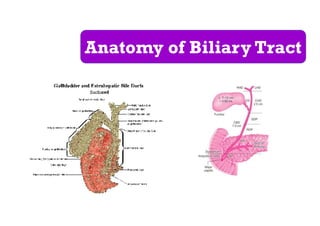
Anatomy of biliary tract
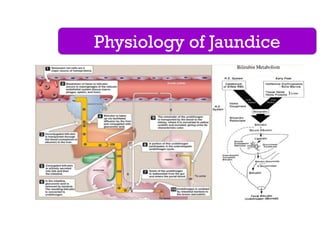
Physiology of jaundice
Labs in obstructive jaundice
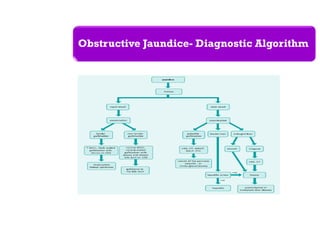
Algorithm in obstructive jaundice
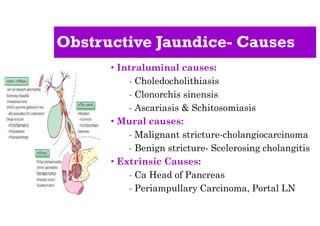
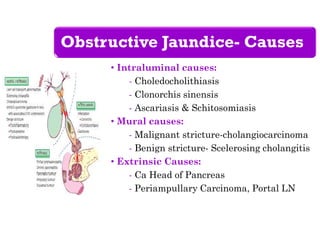
Obstructive Jaundice- Causes
• Intraluminal causes:
- Choledocholithiasis
- Clonorchis sinensis
- Ascariasis & Schitosomiasis
• Mural causes:
- Malignant stricture-cholangiocarcinoma
- Benign stricture- Scelerosing cholangitis
• Extrinsic Causes:
- Ca Head of Pancreas
- Periampullary Carcinoma, Portal LN
Anatomy of Biliary Tract
Physiology of Jaundice
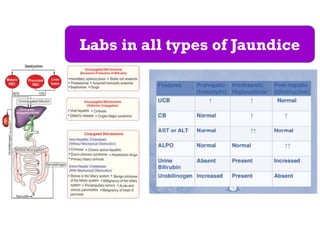
Labs in all types of Jaundice
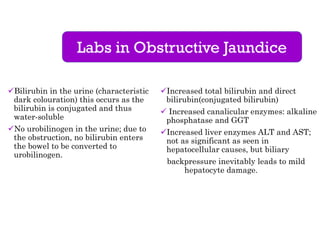
Labs in Obstructive Jaundice
Bilirubin in the urine (characteristic
dark colouration) this occurs as the
bilirubin is conjugated and thus
water-soluble
No urobilinogen in the urine; due to
the obstruction, no bilirubin enters
the bowel to be converted to
urobilinogen.
Increased total bilirubin and direct
bilirubin(conjugated bilirubin)
 Increased canalicular enzymes: alkaline
phosphatase and GGT
Increased liver enzymes ALT and AST;
not as significant as seen in
hepatocellular causes, but biliary
backpressure inevitably leads to mild
hepatocyte damage.
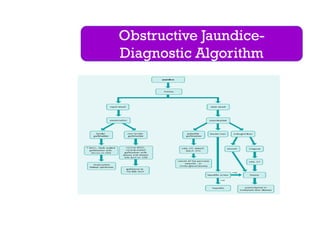
Obstructive Jaundice-
Diagnostic Algorithm
THANK YOU
To watch the video version go
to:
youtube.com/c/surgicaleducator
OBSTRUCTIVE JAUNDICE
Dr.B.Selvaraj MS;Mch;FICS;
Professor Of Surgery
Melaka Manipal Medical college
Melaka 75150 Malaysia
CHOLEDOCHOLITHIASIS
Choledocholithiasis- Overview
Causes of obstructive jaundice
Classical clinical vignette
Etiopathogenesis
Clinical features & complications
Investigations
Treatment
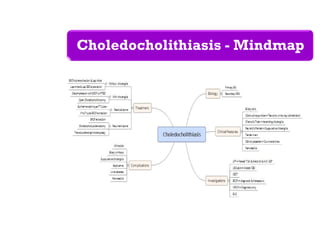
Mindmap of Choledocholithiasis
Diagnostic Algorithm in obstructive jaundice
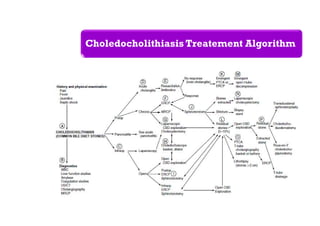
Management algorithm in choledocholithiasis
Obstructive Jaundice- Causes
• Intraluminal causes:
- Choledocholithiasis
- Clonorchis sinensis
- Ascariasis & Schitosomiasis
• Mural causes:
- Malignant stricture-cholangiocarcinoma
- Benign stricture- Scelerosing cholangitis
• Extrinsic Causes:
- Ca Head of Pancreas
- Periampullary Carcinoma, Portal LN
Classical Clinical
Vignette
A 40-year-old female presents with a 24 hour history of right upper
quadrant (RUQ) and epigastric pain, associated with nausea and
vomiting. She has had similar pain in the past, particularly after
eating fatty foods. According to her family, over the last few hours,
the patient has become slightly confused. Past medical history is
negative.
O/E: She is moderately tender in the RUQ to deep palpation. She has
slight scleral icterus. She has noted dark- coloured urine. The
remainder of her abdominal exam is negative.
 Vitals: BP-90/60 mms of Hg; PR-110/mt; RR-16/mt;T:102*F
Classical ClinicalVignette
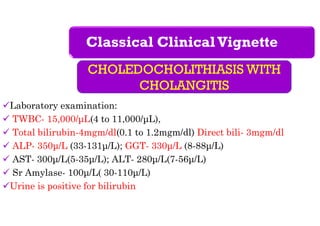
Laboratory examination:
 TWBC- 15,000/µL(4 to 11,000/µL),
 Total bilirubin-4mgm/dl(0.1 to 1.2mgm/dl) Direct bili- 3mgm/dl
 ALP- 350µ/L (33-131µ/L); GGT- 330µ/L (8-88µ/L)
 AST- 300µ/L(5-35µ/L); ALT- 280µ/L(7-56µ/L)
 Sr Amylase- 100µ/L( 30-110µ/L)
Urine is positive for bilirubin
CHOLEDOCHOLITHIASIS WITH
CHOLANGITIS
Choledocholithiasis-Etiology
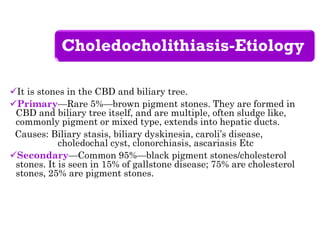
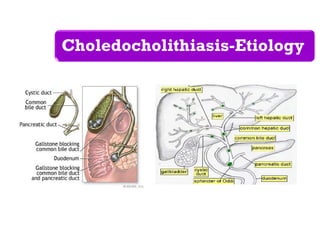
It is stones in the CBD and biliary tree.
Primary—Rare 5%—brown pigment stones. They are formed in
CBD and biliary tree itself, and are multiple, often sludge like,
commonly pigment or mixed type, extends into hepatic ducts.
Causes: Biliary stasis, biliary dyskinesia, caroli’s disease,
choledochal cyst, clonorchiasis, ascariasis Etc
Secondary—Common 95%—black pigment stones/cholesterol
stones. It is seen in 15% of gallstone disease; 75% are cholesterol
stones, 25% are pigment stones.
Choledocholithiasis-Etiology
Clinical Features
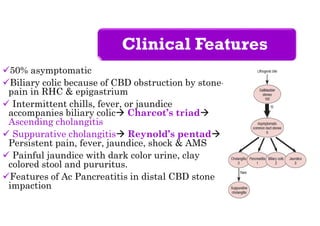
50% asymptomatic
Biliary colic because of CBD obstruction by stone-
pain in RHC & epigastrium
 Intermittent chills, fever, or jaundice
accompanies biliary colic Charcot’s triad
Ascending cholangitis
 Suppurative cholangitis Reynold’s pentad
Persistent pain, fever, jaundice, shock & AMS
 Painful jaundice with dark color urine, clay
colored stool and pururitus.
Features of Ac Pancreatitis in distal CBD stone
impaction
Clinical Features
 Patient may be icteric and toxic, with high fever and chills, or may
appear to be perfectly healthy.
A palpable gallbladder is unusual in patients with obstructive
jaundice from common duct stone because the obstruction is
transient and partial, and scarring of the gallbladder renders it
inelastic and non distensible.
Courvoisier’s Law: “ In a jaundiced patient if GB is palpably
enlarged it is not due to Gall stone”
Tenderness in the right upper quadrant is not often as marked as in
acute cholecystitis, DU perforation or Ac Pancreatitis
 Tender enlarged liver +
Differential diagnosis
Obstructive jaundice due to other causes:
Carcinoma of head of pancreas
 Periampullary carcinoma
Carcinoma of biliary tree- cholangiocarcinoma
Biliary stricture- Scelerosing cholangitis
Intrahepatic cholestasis from drugs, pregnancy, chronic active
hepatitis, or primary biliary cirrhosis may be difficult to distinguish
from extrahepatic obstruction. ERCP would be appropriate to make
the distinction.
COMPLICATIONS
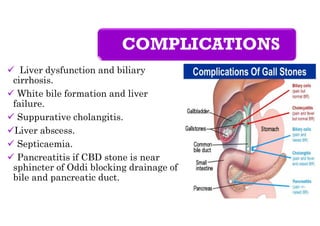
 Liver dysfunction and biliary
cirrhosis.
 White bile formation and liver
failure.
 Suppurative cholangitis.
Liver abscess.
 Septicaemia.
 Pancreatitis if CBD stone is near
sphincter of Oddi blocking drainage of
bile and pancreatic duct.
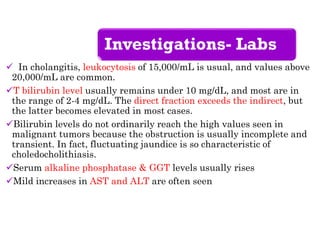
Investigations- Labs
 In cholangitis, leukocytosis of 15,000/mL is usual, and values above
20,000/mL are common.
T bilirubin level usually remains under 10 mg/dL, and most are in
the range of 2-4 mg/dL. The direct fraction exceeds the indirect, but
the latter becomes elevated in most cases.
Bilirubin levels do not ordinarily reach the high values seen in
malignant tumors because the obstruction is usually incomplete and
transient. In fact, fluctuating jaundice is so characteristic of
choledocholithiasis.
Serum alkaline phosphatase & GGT levels usually rises
Mild increases in AST and ALT are often seen
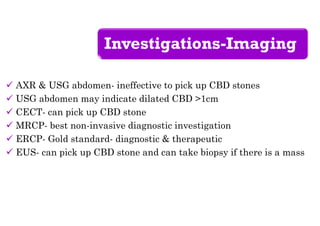
Investigations-Imaging
 AXR & USG abdomen- ineffective to pick up CBD stones
 USG abdomen may indicate dilated CBD >1cm
 CECT- can pick up CBD stone
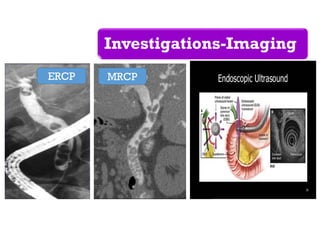
 MRCP- best non-invasive diagnostic investigation
 ERCP- Gold standard- diagnostic & therapeutic
 EUS- can pick up CBD stone and can take biopsy if there is a mass
Investigations-Imaging
ERCP MRCP
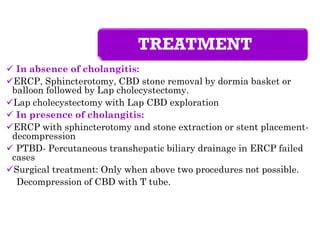
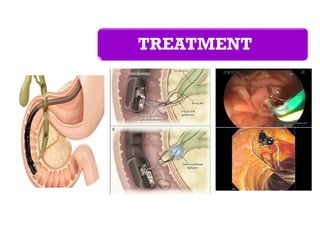
TREATMENT
 In absence of cholangitis:
ERCP, Sphincterotomy, CBD stone removal by dormia basket or
balloon followed by Lap cholecystectomy.
Lap cholecystectomy with Lap CBD exploration
 In presence of cholangitis:
ERCP with sphincterotomy and stone extraction or stent placement-
decompression
 PTBD- Percutaneous transhepatic biliary drainage in ERCP failed
cases
Surgical treatment: Only when above two procedures not possible.
Decompression of CBD with T tube.
TREATMENT
TREATMENT
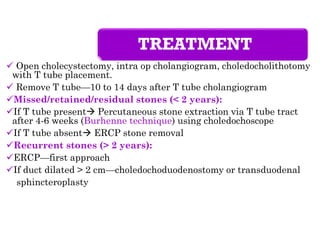
 Open cholecystectomy, intra op cholangiogram, choledocholithotomy
with T tube placement.
 Remove T tube—10 to 14 days after T tube cholangiogram
Missed/retained/residual stones (< 2 years):
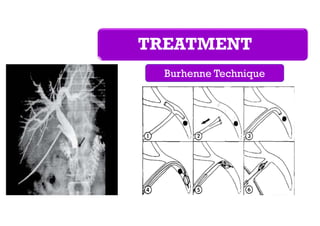
If T tube present Percutaneous stone extraction via T tube tract
after 4-6 weeks (Burhenne technique) using choledochoscope
If T tube absent ERCP stone removal
Recurrent stones (> 2 years):
ERCP—first approach
If duct dilated > 2 cm—choledochoduodenostomy or transduodenal
sphincteroplasty
TREATMENT
Burhenne Technique
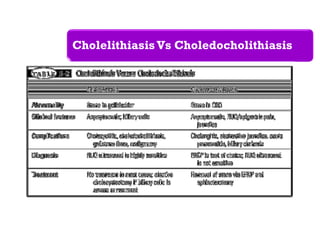
Cholelithiasis Vs Choledocholithiasis
Choledocholithiasis - Mindmap
Obstructive Jaundice- Diagnostic Algorithm
Choledocholithiasis Treatement Algorithm
THANK YOU
Subscribe to get notified
regarding my latest
uploads
PANCREATIC CARCINOMAPANCREATIC CARCINOMA
Dr.B.Selvaraj MS;Mch;FICS
Professor of surgery
Melaka Manipal Medical College
Melaka 75150 Malaysia
OBSTRUCTIVE JAUNDICE
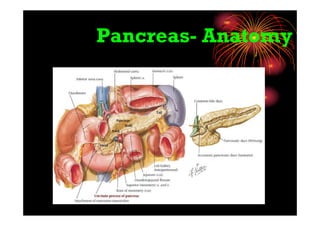
Pancreas- Anatomy
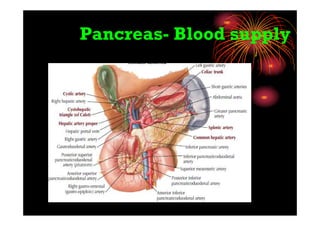
Pancreas- Blood supply
Classical Clinical
Vignette
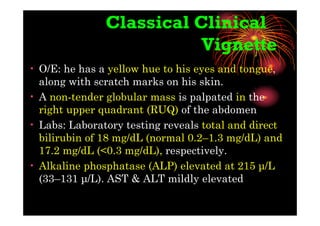
• 72 yrs old man presents with jaundice for 7days
with dull abdominal discomfort for 2 months. He
gives H/O loss of appetite and loss of weight.
• His stools have become lighter in color and his
urine is much darker than before
• He has a 50+ pack-year smoking history before
quitting last year
• He was recently diagnosed with type 2 diabetes,
but has no other medical problems
Classical Clinical
Vignette
• O/E: he has a yellow hue to his eyes and tongue,
along with scratch marks on his skin.
• A non-tender globular mass is palpated in the
right upper quadrant (RUQ) of the abdomen
• Labs: Laboratory testing reveals total and direct
bilirubin of 18 mg/dL (normal 0.2–1.3 mg/dL) and
17.2 mg/dL (<0.3 mg/dL), respectively.
• Alkaline phosphatase (ALP) elevated at 215 µ/L
(33–131 µ/L). AST & ALT mildly elevated
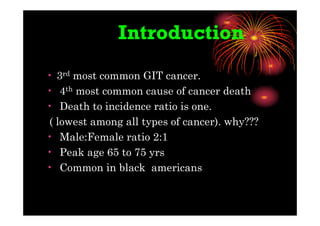
• 3rd most common GIT cancer.
• 4th most common cause of cancer death
• Death to incidence ratio is one.
( lowest among all types of cancer). why???
• Male:Female ratio 2:1
• Peak age 65 to 75 yrs
• Common in black americans
Introduction
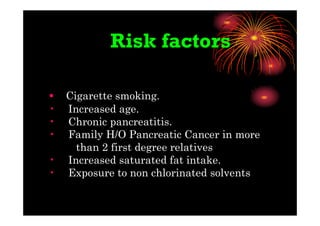
Risk factors
• Cigarette smoking.
• Increased age.
• Chronic pancreatitis.
• Family H/O Pancreatic Cancer in more
than 2 first degree relatives
• Increased saturated fat intake.
• Exposure to non chlorinated solvents
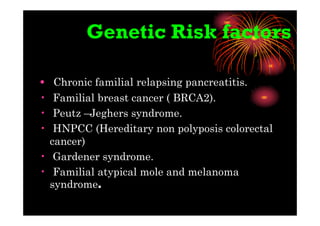
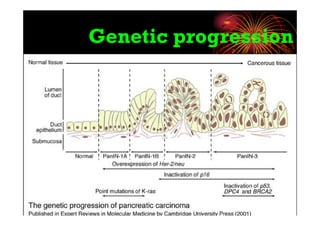
Genetic Risk factors
• Chronic familial relapsing pancreatitis.
• Familial breast cancer ( BRCA2).
• Peutz –Jeghers syndrome.
• HNPCC (Hereditary non polyposis colorectal
cancer)
• Gardener syndrome.
• Familial atypical mole and melanoma
syndrome.
Genetic progression
Pathology
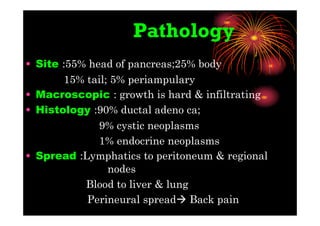
• Site :55% head of pancreas;25% body
15% tail; 5% periampulary
• Macroscopic : growth is hard & infiltrating
• Histology :90% ductal adeno ca;
9% cystic neoplasms
1% endocrine neoplasms
• Spread :Lymphatics to peritoneum & regional
nodes
Blood to liver & lung
Perineural spread Back pain
Clinical features
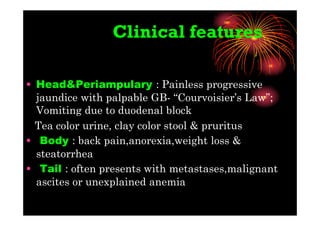
• Head&Periampulary : Painless progressive
jaundice with palpable GB- “Courvoisier’s Law”;
Vomiting due to duodenal block
Tea color urine, clay color stool & pruritus
• Body : back pain,anorexia,weight loss &
steatorrhea
• Tail : often presents with metastases,malignant
ascites or unexplained anemia
Investigations
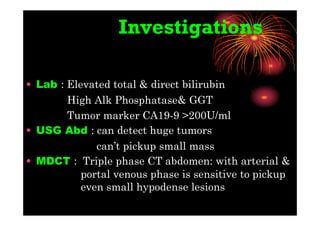
• Lab : Elevated total & direct bilirubin
High Alk Phosphatase& GGT
Tumor marker CA19-9 >200U/ml
• USG Abd : can detect huge tumors
can’t pickup small mass
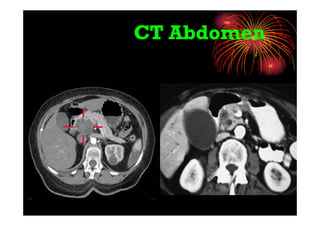
• MDCT : Triple phase CT abdomen: with arterial &
portal venous phase is sensitive to pickup
even small hypodense lesions
Investigations
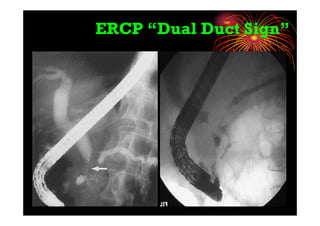
• ERCP & MRCP : “Dual duct sign”
Therapeutic ERCP for palliative stent in CBD
& Duodenum
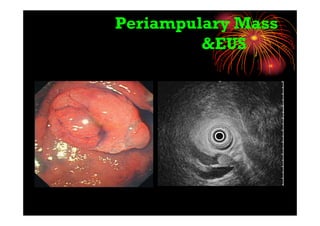
• Endoscopic Ultrasound:(EUS)
Excellent for staging the tumor
EUS guided pancreatic biopsy
CT Abdomen
ERCP “Dual Duct Sign”
Periampulary Mass
&EUS
Staging
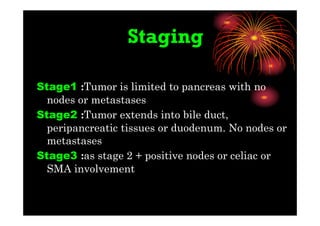
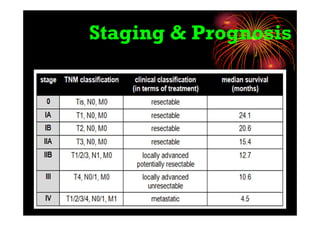
Stage1 :Tumor is limited to pancreas with no
nodes or metastases
Stage2 :Tumor extends into bile duct,
peripancreatic tissues or duodenum. No nodes or
metastases
Stage3 :as stage 2 + positive nodes or celiac or
SMA involvement
Staging
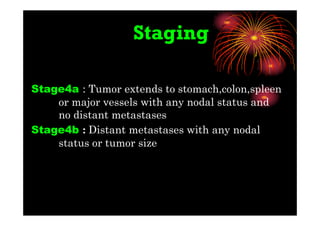
Stage4a : Tumor extends to stomach,colon,spleen
or major vessels with any nodal status and
no distant metastases
Stage4b : Distant metastases with any nodal
status or tumor size
Staging & Prognosis
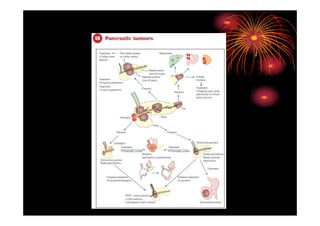
Treatment
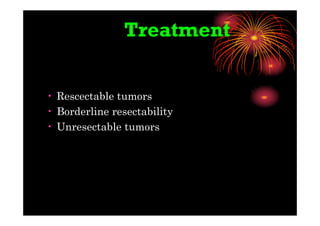
• Rescectable tumors
• Borderline resectability
• Unresectable tumors
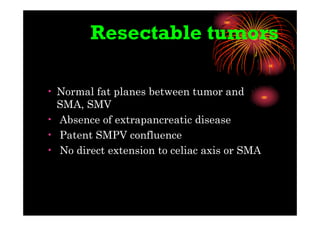
Resectable tumors
• Normal fat planes between tumor and
SMA, SMV
• Absence of extrapancreatic disease
• Patent SMPV confluence
• No direct extension to celiac axis or SMA
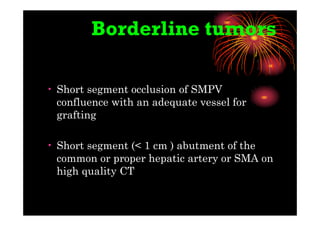
Borderline tumors
• Short segment occlusion of SMPV
confluence with an adequate vessel for
grafting
• Short segment (< 1 cm ) abutment of the
common or proper hepatic artery or SMA on
high quality CT
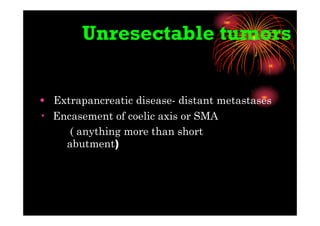
Unresectable tumors
• Extrapancreatic disease- distant metastases
• Encasement of coelic axis or SMA
( anything more than short
abutment)
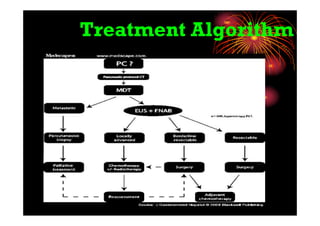
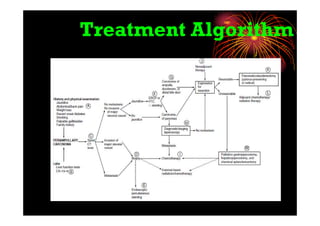
Treatment Algorithm
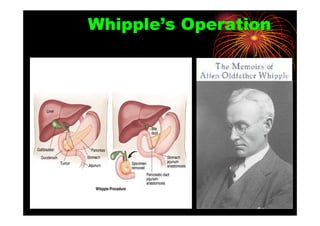
Whipple’s Operation
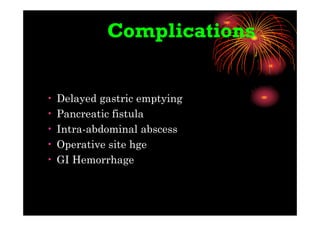
Complications
• Delayed gastric emptying
• Pancreatic fistula
• Intra-abdominal abscess
• Operative site hge
• GI Hemorrhage
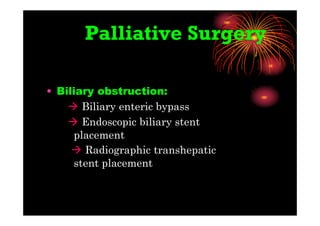
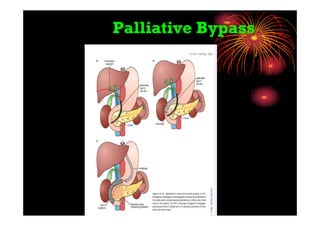
Palliative Surgery
• Biliary obstruction:
 Biliary enteric bypass
 Endoscopic biliary stent
placement
 Radiographic transhepatic
stent placement
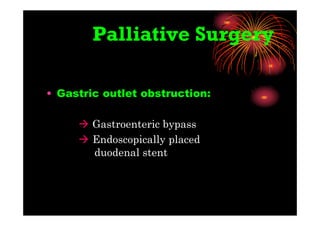
Palliative Surgery
• Gastric outlet obstruction:
 Gastroenteric bypass
 Endoscopically placed
duodenal stent
Palliative Bypass
Adjuvant therapy
• 85% local recurrence .→ RT
• 70% liver metastasis.→CT
• 5 FU is the only active agent.
• Gemcitabine.
• 5 FU + Gemcitabine
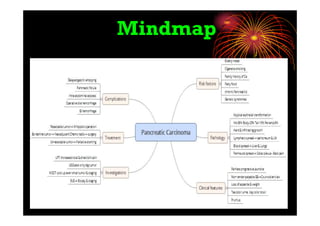
Mindmap
Treatment Algorithm
OBSTRUCTIVE JAUNDICE
Dr.B.Selvaraj MS;Mch;FICS;
Professor Of Surgery
Melaka Manipal Medical college
Melaka 75150 Malaysia
BILIARY ATRESIA
BILIARY ATRESIA- Objectives
To be aware of possible causes of surgical jaundice in infancy
To be aware of clinical features of biliary atresia
To be familiar with the methods of investigation
To understand the management options
To be aware of the surgical outcome and results
BILIARY ATRESIA
Biliary atresia is also known as progressive obliterative
cholangiopathy
Biliary atresia causes a progressive damage of the extrahepatic and
intrahepatic bile ducts with cholestasis because of obstructive
cholangiopathy secondary to inflammation, leading to fibrosis, and if
not recognized and treated, it leads to biliary cirrhosis and liver
failure.
The incidence of biliary atresia is 1:10,000 to 1:15,000 live births
Biliary atresia affects girls more often than boys.
BILIARY ATRESIA
Asians and African-Americans are affected more frequently than
Caucasians - more common in Chinese and Japanese.
Biliary atresia should be recognized and distinguished from neonatal
jaundice. Infants with prolonged jaundice should be thoroughly
investigated for biliary atresia.
Biliary atresia should be considered in all neonates with direct
hyperbilirubinemia
A high index of suspicion is important to make the diagnosis of
biliary atresia because surgical treatment by age 2 months has
clearly been shown to improve the outcome and establishment of bile
flow and to prevent the development of biliary cirrhosis.
BILIARY ATRESIA-Etiology
The exact cause of biliary atresia is not known and many factors
have been incriminated
1. Reovirus 3 infection.
2. Congenital malformation. Early studies postulated a congenital
malformation of the biliary ducts leading to their obstruction.
3. Congenital cytomegalovirus (CMV) infection.
4. Autoimmunity
5. A possible association with the gene GPC1, which is located on the
longarm of chromosome 2 (2q37).
6. Identification of active and progressive inflammation and
destruction of the biliary system
BILIARY ATRESIA-Types
Clinically, biliary atresia occurs in two distinct forms:
 The fetal-embryonic form:
− Appears in the first 2 weeks of life.
− About 10–20 % of affected neonates have associated congenital
defects.
 The postnatal form:
− Appears in neonates and infants aged 2–8 weeks.
− Progressive inflammation and obliteration of the extrahepatic bile
ducts occur after birth.
− Not associated with congenital anomalies.
− Infants may have a short jaundice-free interval.
BILIARY ATRESIA-Types
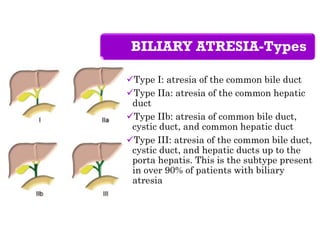
Type I: atresia of the common bile duct
Type IIa: atresia of the common hepatic
duct
Type IIb: atresia of common bile duct,
cystic duct, and common hepatic duct
Type III: atresia of the common bile duct,
cystic duct, and hepatic ducts up to the
porta hepatis. This is the subtype present
in over 90% of patients with biliary
atresia
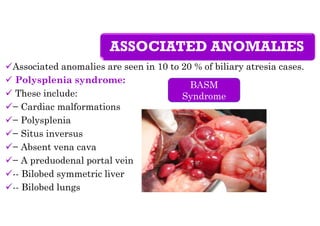
ASSOCIATED ANOMALIES
Associated anomalies are seen in 10 to 20 % of biliary atresia cases.
 Polysplenia syndrome:
 These include:
− Cardiac malformations
− Polysplenia
− Situs inversus
− Absent vena cava
− A preduodenal portal vein
-- Bilobed symmetric liver
-- Bilobed lungs
BASM
Syndrome
Clinical Features
Infants with biliary atresia are typically full term
The symptoms are seen usually between 1 and 6 weeks of life
 Conjugated Jaundice which is prolonged
Dark urine because of bilirubin in urine
Clay-colored stools because of absence of stercobilin.- acholic stools
Vitamin K deficiency and coagulopathy
Antenatally detected subhepatic cyst
Cirrhosis (ascites and hepatosplenomegaly), rarely younger than 3
months
Biliary Atresia- Investigations
 LFT: Total bilirubin and direct bilirubin are elevated
ALP & GGT are elevated; AST & ALT mildly elevated
Medical causes, such as a1-antitrypsin deficiency, Alagille’s
syndrome, cystic fibrosis and neonatal hepatitis, should be
excluded.
 Biliary USG: whether the gallbladder is atrophic, dilated or
abnormal.
 to exclude other etiologies like choledochal cyst
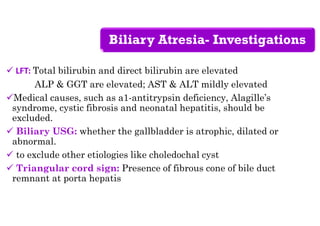
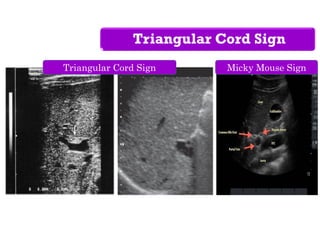
 Triangular cord sign: Presence of fibrous cone of bile duct
remnant at porta hepatis
Triangular Cord Sign
Triangular Cord Sign Micky Mouse Sign
Biliary Atresia- Investigations
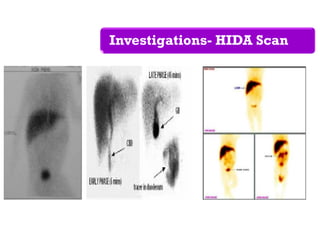
 Hepatobiliary isotope scan- HIDA scan: In biliary atresia,
there is normal uptake by the liver and failure of secretion of the
isotope, while in neonatal hepatitis there is poor liver uptake of
isotope. Intestinal excretion of the isotope confirms patency of the
extrahepatic bile ducts
Percutaneous liver biopsy: bile ductular proliferation; bile duct
plugs; inflammatory cell infiltrate, hepatocyte giant cell
transformation
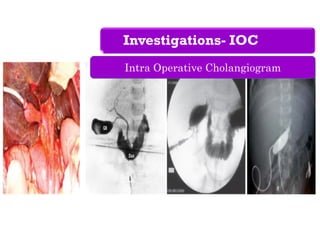
Intraoperative cholangiography: this procedure definitively
demonstrates anatomy and patency of the extrahepatic bile ducts
Investigations- HIDA Scan
Investigations- IOC
Intra Operative Cholangiogram
Biliary Atresia- Treatment
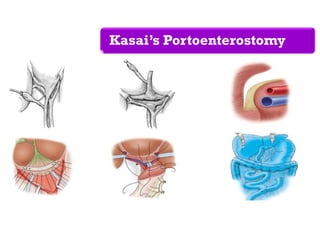
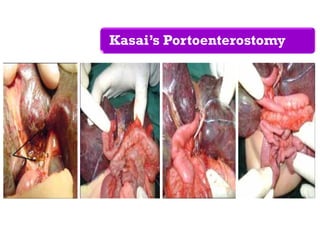
 Kasai’s portoenterostomy: Once biliary atresia is suspected,
surgical intervention in the form of intraoperative cholangiogram and
Kasai portoenterostomy is indicated.
This procedure is not usually curative, but ideally does buy time until
the child can achieve growth and undergo liver transplantation
A considerable number of these patients, even if Kasai
portoenterostomy has been successful, eventually undergo liver
transplantation
Kasai’s Portoenterostomy
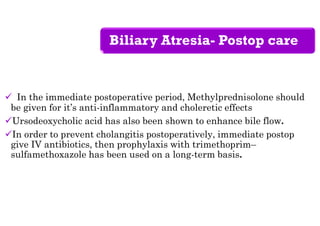
Biliary Atresia- Postop care
 In the immediate postoperative period, Methylprednisolone should
be given for it’s anti-inflammatory and choleretic effects
Ursodeoxycholic acid has also been shown to enhance bile flow.
In order to prevent cholangitis postoperatively, immediate postop
give IV antibiotics, then prophylaxis with trimethoprim–
sulfamethoxazole has been used on a long-term basis.
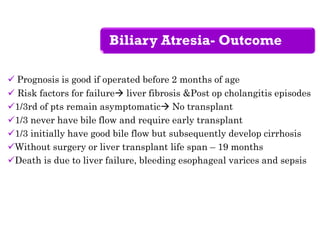
Biliary Atresia- Outcome
 Prognosis is good if operated before 2 months of age
 Risk factors for failure liver fibrosis &Post op cholangitis episodes
1/3rd of pts remain asymptomatic No transplant
1/3 never have bile flow and require early transplant
1/3 initially have good bile flow but subsequently develop cirrhosis
Without surgery or liver transplant life span – 19 months
Death is due to liver failure, bleeding esophageal varices and sepsis
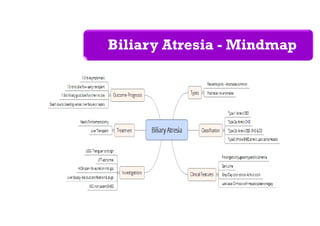
Biliary Atresia - Mindmap
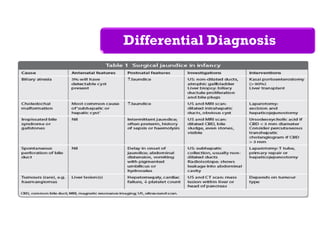
Differential Diagnosis
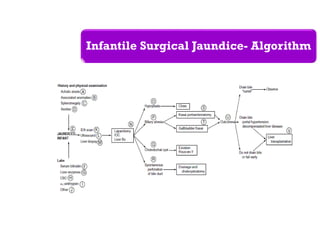
Infantile Surgical Jaundice- Algorithm
THANK YOU
Subscribe to get notified
regarding my latest
uploads

Obstructive jaundice

  • 1.
    OBSTRUCTIVE JAUNDICE INTRODUCTION Dr.B.Selvaraj MS;Mch;FICS; ProfessorOf Surgery Melaka Manipal Medical college Melaka 75150 Malaysia
  • 2.
    Must to knowcore clinical problems 1.Acute RLQ pain 2.Acute RUQ pain 3.Acute epigastric pain 4.Acute LLQ pain 5.Dysphagia 6.Abdominal lumps 7.Upper GI haemorrhage 8.Lower GI haemorrhage 9.Obstructive Jaundice 10.Breast lumps, mastalgia & nipple discharge 11.Neck swellings- Thyroid & non thyroidal 12.Groin swellings 13.Scrotal swellings 14.Limb ischemia- Acute & Chronic 15.Varicose veins 16.Renal & ureteric colic 17.Hematuria 18.Acute retention of urine
  • 3.
    Obstructive Jaundice- Introduction Causesof obstructive jaundice Anatomy of biliary tract Physiology of jaundice Labs in obstructive jaundice Algorithm in obstructive jaundice
  • 4.
    Obstructive Jaundice- Causes •Intraluminal causes: - Choledocholithiasis - Clonorchis sinensis - Ascariasis & Schitosomiasis • Mural causes: - Malignant stricture-cholangiocarcinoma - Benign stricture- Scelerosing cholangitis • Extrinsic Causes: - Ca Head of Pancreas - Periampullary Carcinoma, Portal LN
  • 5.
  • 6.
  • 7.
    Labs in alltypes of Jaundice
  • 8.
    Labs in ObstructiveJaundice Bilirubin in the urine (characteristic dark colouration) this occurs as the bilirubin is conjugated and thus water-soluble No urobilinogen in the urine; due to the obstruction, no bilirubin enters the bowel to be converted to urobilinogen. Increased total bilirubin and direct bilirubin(conjugated bilirubin)  Increased canalicular enzymes: alkaline phosphatase and GGT Increased liver enzymes ALT and AST; not as significant as seen in hepatocellular causes, but biliary backpressure inevitably leads to mild hepatocyte damage.
  • 9.
  • 10.
    THANK YOU To watchthe video version go to: youtube.com/c/surgicaleducator
  • 11.
    OBSTRUCTIVE JAUNDICE Dr.B.Selvaraj MS;Mch;FICS; ProfessorOf Surgery Melaka Manipal Medical college Melaka 75150 Malaysia CHOLEDOCHOLITHIASIS
  • 12.
    Choledocholithiasis- Overview Causes ofobstructive jaundice Classical clinical vignette Etiopathogenesis Clinical features & complications Investigations Treatment Mindmap of Choledocholithiasis Diagnostic Algorithm in obstructive jaundice Management algorithm in choledocholithiasis
  • 13.
    Obstructive Jaundice- Causes •Intraluminal causes: - Choledocholithiasis - Clonorchis sinensis - Ascariasis & Schitosomiasis • Mural causes: - Malignant stricture-cholangiocarcinoma - Benign stricture- Scelerosing cholangitis • Extrinsic Causes: - Ca Head of Pancreas - Periampullary Carcinoma, Portal LN
  • 14.
    Classical Clinical Vignette A 40-year-oldfemale presents with a 24 hour history of right upper quadrant (RUQ) and epigastric pain, associated with nausea and vomiting. She has had similar pain in the past, particularly after eating fatty foods. According to her family, over the last few hours, the patient has become slightly confused. Past medical history is negative. O/E: She is moderately tender in the RUQ to deep palpation. She has slight scleral icterus. She has noted dark- coloured urine. The remainder of her abdominal exam is negative.  Vitals: BP-90/60 mms of Hg; PR-110/mt; RR-16/mt;T:102*F
  • 15.
    Classical ClinicalVignette Laboratory examination: TWBC- 15,000/µL(4 to 11,000/µL),  Total bilirubin-4mgm/dl(0.1 to 1.2mgm/dl) Direct bili- 3mgm/dl  ALP- 350µ/L (33-131µ/L); GGT- 330µ/L (8-88µ/L)  AST- 300µ/L(5-35µ/L); ALT- 280µ/L(7-56µ/L)  Sr Amylase- 100µ/L( 30-110µ/L) Urine is positive for bilirubin CHOLEDOCHOLITHIASIS WITH CHOLANGITIS
  • 16.
    Choledocholithiasis-Etiology It is stonesin the CBD and biliary tree. Primary—Rare 5%—brown pigment stones. They are formed in CBD and biliary tree itself, and are multiple, often sludge like, commonly pigment or mixed type, extends into hepatic ducts. Causes: Biliary stasis, biliary dyskinesia, caroli’s disease, choledochal cyst, clonorchiasis, ascariasis Etc Secondary—Common 95%—black pigment stones/cholesterol stones. It is seen in 15% of gallstone disease; 75% are cholesterol stones, 25% are pigment stones.
  • 17.
  • 18.
    Clinical Features 50% asymptomatic Biliarycolic because of CBD obstruction by stone- pain in RHC & epigastrium  Intermittent chills, fever, or jaundice accompanies biliary colic Charcot’s triad Ascending cholangitis  Suppurative cholangitis Reynold’s pentad Persistent pain, fever, jaundice, shock & AMS  Painful jaundice with dark color urine, clay colored stool and pururitus. Features of Ac Pancreatitis in distal CBD stone impaction
  • 19.
    Clinical Features  Patientmay be icteric and toxic, with high fever and chills, or may appear to be perfectly healthy. A palpable gallbladder is unusual in patients with obstructive jaundice from common duct stone because the obstruction is transient and partial, and scarring of the gallbladder renders it inelastic and non distensible. Courvoisier’s Law: “ In a jaundiced patient if GB is palpably enlarged it is not due to Gall stone” Tenderness in the right upper quadrant is not often as marked as in acute cholecystitis, DU perforation or Ac Pancreatitis  Tender enlarged liver +
  • 20.
    Differential diagnosis Obstructive jaundicedue to other causes: Carcinoma of head of pancreas  Periampullary carcinoma Carcinoma of biliary tree- cholangiocarcinoma Biliary stricture- Scelerosing cholangitis Intrahepatic cholestasis from drugs, pregnancy, chronic active hepatitis, or primary biliary cirrhosis may be difficult to distinguish from extrahepatic obstruction. ERCP would be appropriate to make the distinction.
  • 21.
    COMPLICATIONS  Liver dysfunctionand biliary cirrhosis.  White bile formation and liver failure.  Suppurative cholangitis. Liver abscess.  Septicaemia.  Pancreatitis if CBD stone is near sphincter of Oddi blocking drainage of bile and pancreatic duct.
  • 22.
    Investigations- Labs  Incholangitis, leukocytosis of 15,000/mL is usual, and values above 20,000/mL are common. T bilirubin level usually remains under 10 mg/dL, and most are in the range of 2-4 mg/dL. The direct fraction exceeds the indirect, but the latter becomes elevated in most cases. Bilirubin levels do not ordinarily reach the high values seen in malignant tumors because the obstruction is usually incomplete and transient. In fact, fluctuating jaundice is so characteristic of choledocholithiasis. Serum alkaline phosphatase & GGT levels usually rises Mild increases in AST and ALT are often seen
  • 23.
    Investigations-Imaging  AXR &USG abdomen- ineffective to pick up CBD stones  USG abdomen may indicate dilated CBD >1cm  CECT- can pick up CBD stone  MRCP- best non-invasive diagnostic investigation  ERCP- Gold standard- diagnostic & therapeutic  EUS- can pick up CBD stone and can take biopsy if there is a mass
  • 24.
  • 25.
    TREATMENT  In absenceof cholangitis: ERCP, Sphincterotomy, CBD stone removal by dormia basket or balloon followed by Lap cholecystectomy. Lap cholecystectomy with Lap CBD exploration  In presence of cholangitis: ERCP with sphincterotomy and stone extraction or stent placement- decompression  PTBD- Percutaneous transhepatic biliary drainage in ERCP failed cases Surgical treatment: Only when above two procedures not possible. Decompression of CBD with T tube.
  • 26.
  • 27.
    TREATMENT  Open cholecystectomy,intra op cholangiogram, choledocholithotomy with T tube placement.  Remove T tube—10 to 14 days after T tube cholangiogram Missed/retained/residual stones (< 2 years): If T tube present Percutaneous stone extraction via T tube tract after 4-6 weeks (Burhenne technique) using choledochoscope If T tube absent ERCP stone removal Recurrent stones (> 2 years): ERCP—first approach If duct dilated > 2 cm—choledochoduodenostomy or transduodenal sphincteroplasty
  • 28.
  • 29.
  • 30.
  • 31.
  • 32.
  • 33.
    THANK YOU Subscribe toget notified regarding my latest uploads
  • 34.
    PANCREATIC CARCINOMAPANCREATIC CARCINOMA Dr.B.SelvarajMS;Mch;FICS Professor of surgery Melaka Manipal Medical College Melaka 75150 Malaysia OBSTRUCTIVE JAUNDICE
  • 35.
  • 36.
  • 37.
    Classical Clinical Vignette • 72yrs old man presents with jaundice for 7days with dull abdominal discomfort for 2 months. He gives H/O loss of appetite and loss of weight. • His stools have become lighter in color and his urine is much darker than before • He has a 50+ pack-year smoking history before quitting last year • He was recently diagnosed with type 2 diabetes, but has no other medical problems
  • 38.
    Classical Clinical Vignette • O/E:he has a yellow hue to his eyes and tongue, along with scratch marks on his skin. • A non-tender globular mass is palpated in the right upper quadrant (RUQ) of the abdomen • Labs: Laboratory testing reveals total and direct bilirubin of 18 mg/dL (normal 0.2–1.3 mg/dL) and 17.2 mg/dL (<0.3 mg/dL), respectively. • Alkaline phosphatase (ALP) elevated at 215 µ/L (33–131 µ/L). AST & ALT mildly elevated
  • 39.
    • 3rd mostcommon GIT cancer. • 4th most common cause of cancer death • Death to incidence ratio is one. ( lowest among all types of cancer). why??? • Male:Female ratio 2:1 • Peak age 65 to 75 yrs • Common in black americans Introduction
  • 40.
    Risk factors • Cigarettesmoking. • Increased age. • Chronic pancreatitis. • Family H/O Pancreatic Cancer in more than 2 first degree relatives • Increased saturated fat intake. • Exposure to non chlorinated solvents
  • 41.
    Genetic Risk factors •Chronic familial relapsing pancreatitis. • Familial breast cancer ( BRCA2). • Peutz –Jeghers syndrome. • HNPCC (Hereditary non polyposis colorectal cancer) • Gardener syndrome. • Familial atypical mole and melanoma syndrome.
  • 42.
  • 43.
    Pathology • Site :55%head of pancreas;25% body 15% tail; 5% periampulary • Macroscopic : growth is hard & infiltrating • Histology :90% ductal adeno ca; 9% cystic neoplasms 1% endocrine neoplasms • Spread :Lymphatics to peritoneum & regional nodes Blood to liver & lung Perineural spread Back pain
  • 44.
    Clinical features • Head&Periampulary: Painless progressive jaundice with palpable GB- “Courvoisier’s Law”; Vomiting due to duodenal block Tea color urine, clay color stool & pruritus • Body : back pain,anorexia,weight loss & steatorrhea • Tail : often presents with metastases,malignant ascites or unexplained anemia
  • 45.
    Investigations • Lab :Elevated total & direct bilirubin High Alk Phosphatase& GGT Tumor marker CA19-9 >200U/ml • USG Abd : can detect huge tumors can’t pickup small mass • MDCT : Triple phase CT abdomen: with arterial & portal venous phase is sensitive to pickup even small hypodense lesions
  • 46.
    Investigations • ERCP &MRCP : “Dual duct sign” Therapeutic ERCP for palliative stent in CBD & Duodenum • Endoscopic Ultrasound:(EUS) Excellent for staging the tumor EUS guided pancreatic biopsy
  • 47.
  • 48.
  • 49.
  • 50.
    Staging Stage1 :Tumor islimited to pancreas with no nodes or metastases Stage2 :Tumor extends into bile duct, peripancreatic tissues or duodenum. No nodes or metastases Stage3 :as stage 2 + positive nodes or celiac or SMA involvement
  • 51.
    Staging Stage4a : Tumorextends to stomach,colon,spleen or major vessels with any nodal status and no distant metastases Stage4b : Distant metastases with any nodal status or tumor size
  • 52.
  • 53.
    Treatment • Rescectable tumors •Borderline resectability • Unresectable tumors
  • 54.
    Resectable tumors • Normalfat planes between tumor and SMA, SMV • Absence of extrapancreatic disease • Patent SMPV confluence • No direct extension to celiac axis or SMA
  • 55.
    Borderline tumors • Shortsegment occlusion of SMPV confluence with an adequate vessel for grafting • Short segment (< 1 cm ) abutment of the common or proper hepatic artery or SMA on high quality CT
  • 56.
    Unresectable tumors • Extrapancreaticdisease- distant metastases • Encasement of coelic axis or SMA ( anything more than short abutment)
  • 57.
  • 58.
  • 59.
    Complications • Delayed gastricemptying • Pancreatic fistula • Intra-abdominal abscess • Operative site hge • GI Hemorrhage
  • 60.
    Palliative Surgery • Biliaryobstruction:  Biliary enteric bypass  Endoscopic biliary stent placement  Radiographic transhepatic stent placement
  • 61.
    Palliative Surgery • Gastricoutlet obstruction:  Gastroenteric bypass  Endoscopically placed duodenal stent
  • 62.
  • 63.
    Adjuvant therapy • 85%local recurrence .→ RT • 70% liver metastasis.→CT • 5 FU is the only active agent. • Gemcitabine. • 5 FU + Gemcitabine
  • 65.
  • 66.
  • 68.
    OBSTRUCTIVE JAUNDICE Dr.B.Selvaraj MS;Mch;FICS; ProfessorOf Surgery Melaka Manipal Medical college Melaka 75150 Malaysia BILIARY ATRESIA
  • 69.
    BILIARY ATRESIA- Objectives Tobe aware of possible causes of surgical jaundice in infancy To be aware of clinical features of biliary atresia To be familiar with the methods of investigation To understand the management options To be aware of the surgical outcome and results
  • 70.
    BILIARY ATRESIA Biliary atresiais also known as progressive obliterative cholangiopathy Biliary atresia causes a progressive damage of the extrahepatic and intrahepatic bile ducts with cholestasis because of obstructive cholangiopathy secondary to inflammation, leading to fibrosis, and if not recognized and treated, it leads to biliary cirrhosis and liver failure. The incidence of biliary atresia is 1:10,000 to 1:15,000 live births Biliary atresia affects girls more often than boys.
  • 71.
    BILIARY ATRESIA Asians andAfrican-Americans are affected more frequently than Caucasians - more common in Chinese and Japanese. Biliary atresia should be recognized and distinguished from neonatal jaundice. Infants with prolonged jaundice should be thoroughly investigated for biliary atresia. Biliary atresia should be considered in all neonates with direct hyperbilirubinemia A high index of suspicion is important to make the diagnosis of biliary atresia because surgical treatment by age 2 months has clearly been shown to improve the outcome and establishment of bile flow and to prevent the development of biliary cirrhosis.
  • 72.
    BILIARY ATRESIA-Etiology The exactcause of biliary atresia is not known and many factors have been incriminated 1. Reovirus 3 infection. 2. Congenital malformation. Early studies postulated a congenital malformation of the biliary ducts leading to their obstruction. 3. Congenital cytomegalovirus (CMV) infection. 4. Autoimmunity 5. A possible association with the gene GPC1, which is located on the longarm of chromosome 2 (2q37). 6. Identification of active and progressive inflammation and destruction of the biliary system
  • 73.
    BILIARY ATRESIA-Types Clinically, biliaryatresia occurs in two distinct forms:  The fetal-embryonic form: − Appears in the first 2 weeks of life. − About 10–20 % of affected neonates have associated congenital defects.  The postnatal form: − Appears in neonates and infants aged 2–8 weeks. − Progressive inflammation and obliteration of the extrahepatic bile ducts occur after birth. − Not associated with congenital anomalies. − Infants may have a short jaundice-free interval.
  • 74.
    BILIARY ATRESIA-Types Type I:atresia of the common bile duct Type IIa: atresia of the common hepatic duct Type IIb: atresia of common bile duct, cystic duct, and common hepatic duct Type III: atresia of the common bile duct, cystic duct, and hepatic ducts up to the porta hepatis. This is the subtype present in over 90% of patients with biliary atresia
  • 75.
    ASSOCIATED ANOMALIES Associated anomaliesare seen in 10 to 20 % of biliary atresia cases.  Polysplenia syndrome:  These include: − Cardiac malformations − Polysplenia − Situs inversus − Absent vena cava − A preduodenal portal vein -- Bilobed symmetric liver -- Bilobed lungs BASM Syndrome
  • 76.
    Clinical Features Infants withbiliary atresia are typically full term The symptoms are seen usually between 1 and 6 weeks of life  Conjugated Jaundice which is prolonged Dark urine because of bilirubin in urine Clay-colored stools because of absence of stercobilin.- acholic stools Vitamin K deficiency and coagulopathy Antenatally detected subhepatic cyst Cirrhosis (ascites and hepatosplenomegaly), rarely younger than 3 months
  • 77.
    Biliary Atresia- Investigations LFT: Total bilirubin and direct bilirubin are elevated ALP & GGT are elevated; AST & ALT mildly elevated Medical causes, such as a1-antitrypsin deficiency, Alagille’s syndrome, cystic fibrosis and neonatal hepatitis, should be excluded.  Biliary USG: whether the gallbladder is atrophic, dilated or abnormal.  to exclude other etiologies like choledochal cyst  Triangular cord sign: Presence of fibrous cone of bile duct remnant at porta hepatis
  • 78.
    Triangular Cord Sign TriangularCord Sign Micky Mouse Sign
  • 79.
    Biliary Atresia- Investigations Hepatobiliary isotope scan- HIDA scan: In biliary atresia, there is normal uptake by the liver and failure of secretion of the isotope, while in neonatal hepatitis there is poor liver uptake of isotope. Intestinal excretion of the isotope confirms patency of the extrahepatic bile ducts Percutaneous liver biopsy: bile ductular proliferation; bile duct plugs; inflammatory cell infiltrate, hepatocyte giant cell transformation Intraoperative cholangiography: this procedure definitively demonstrates anatomy and patency of the extrahepatic bile ducts
  • 80.
  • 81.
  • 82.
    Biliary Atresia- Treatment Kasai’s portoenterostomy: Once biliary atresia is suspected, surgical intervention in the form of intraoperative cholangiogram and Kasai portoenterostomy is indicated. This procedure is not usually curative, but ideally does buy time until the child can achieve growth and undergo liver transplantation A considerable number of these patients, even if Kasai portoenterostomy has been successful, eventually undergo liver transplantation
  • 83.
  • 84.
  • 85.
    Biliary Atresia- Postopcare  In the immediate postoperative period, Methylprednisolone should be given for it’s anti-inflammatory and choleretic effects Ursodeoxycholic acid has also been shown to enhance bile flow. In order to prevent cholangitis postoperatively, immediate postop give IV antibiotics, then prophylaxis with trimethoprim– sulfamethoxazole has been used on a long-term basis.
  • 86.
    Biliary Atresia- Outcome Prognosis is good if operated before 2 months of age  Risk factors for failure liver fibrosis &Post op cholangitis episodes 1/3rd of pts remain asymptomatic No transplant 1/3 never have bile flow and require early transplant 1/3 initially have good bile flow but subsequently develop cirrhosis Without surgery or liver transplant life span – 19 months Death is due to liver failure, bleeding esophageal varices and sepsis
  • 87.
  • 88.
  • 89.
  • 90.
    THANK YOU Subscribe toget notified regarding my latest uploads