Dr Muzaffar Mehdi
MBBS ,MD Gastroenterology
Senior Registrar Gastroenterology
Sheikh Zayed Postgraduate Medical Institute Lahore
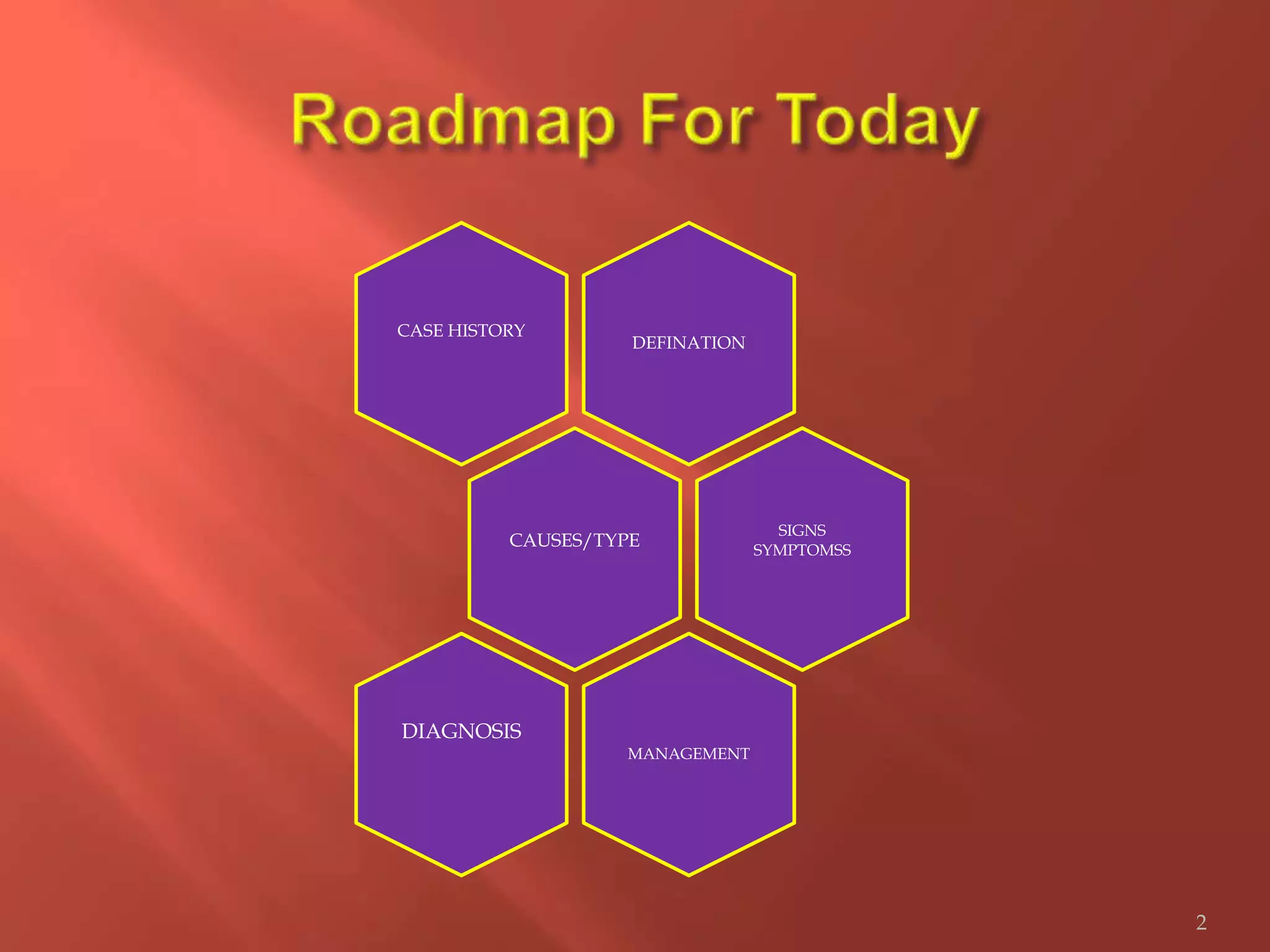
DEFINATION
CASE HISTORY
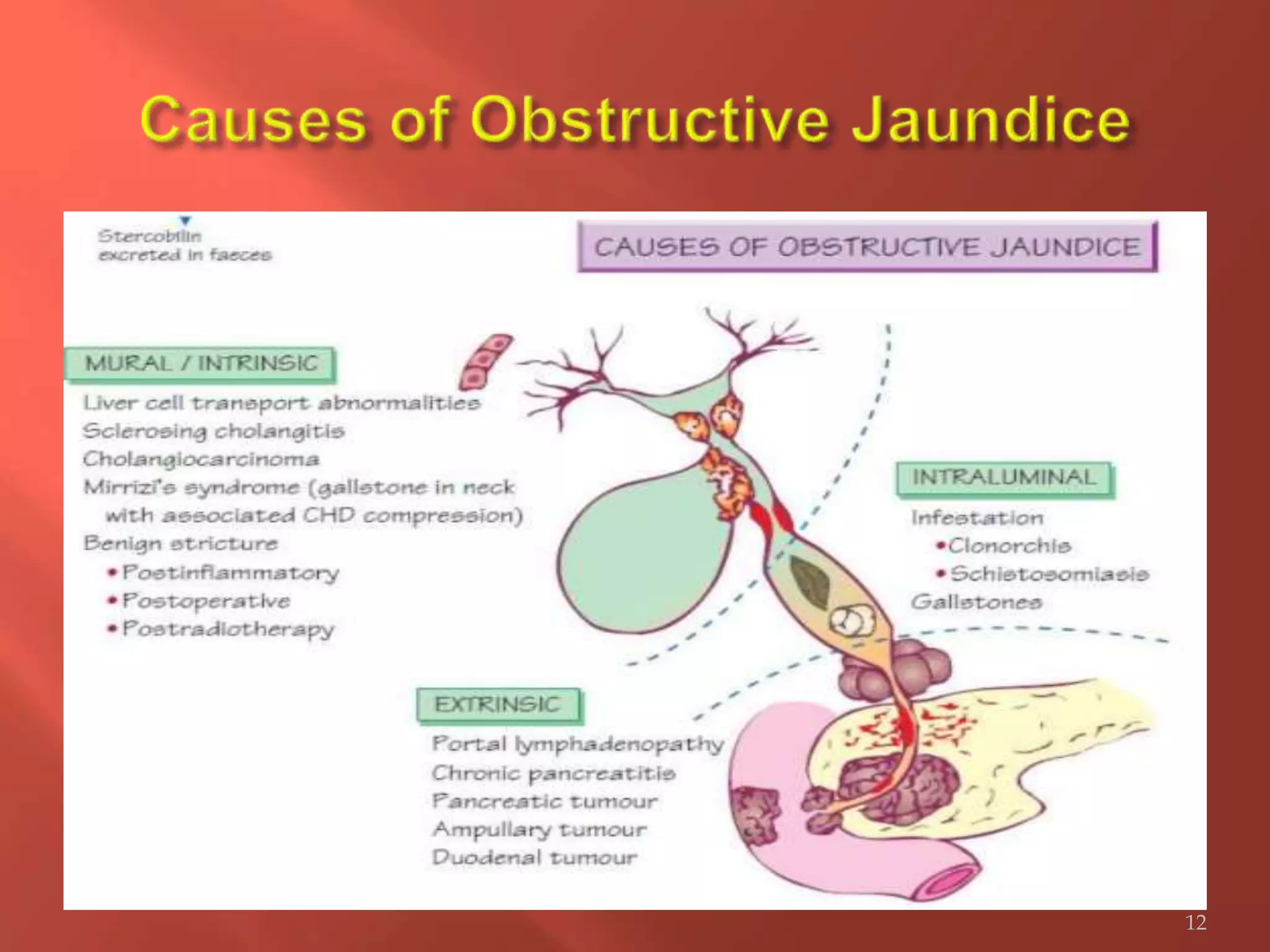
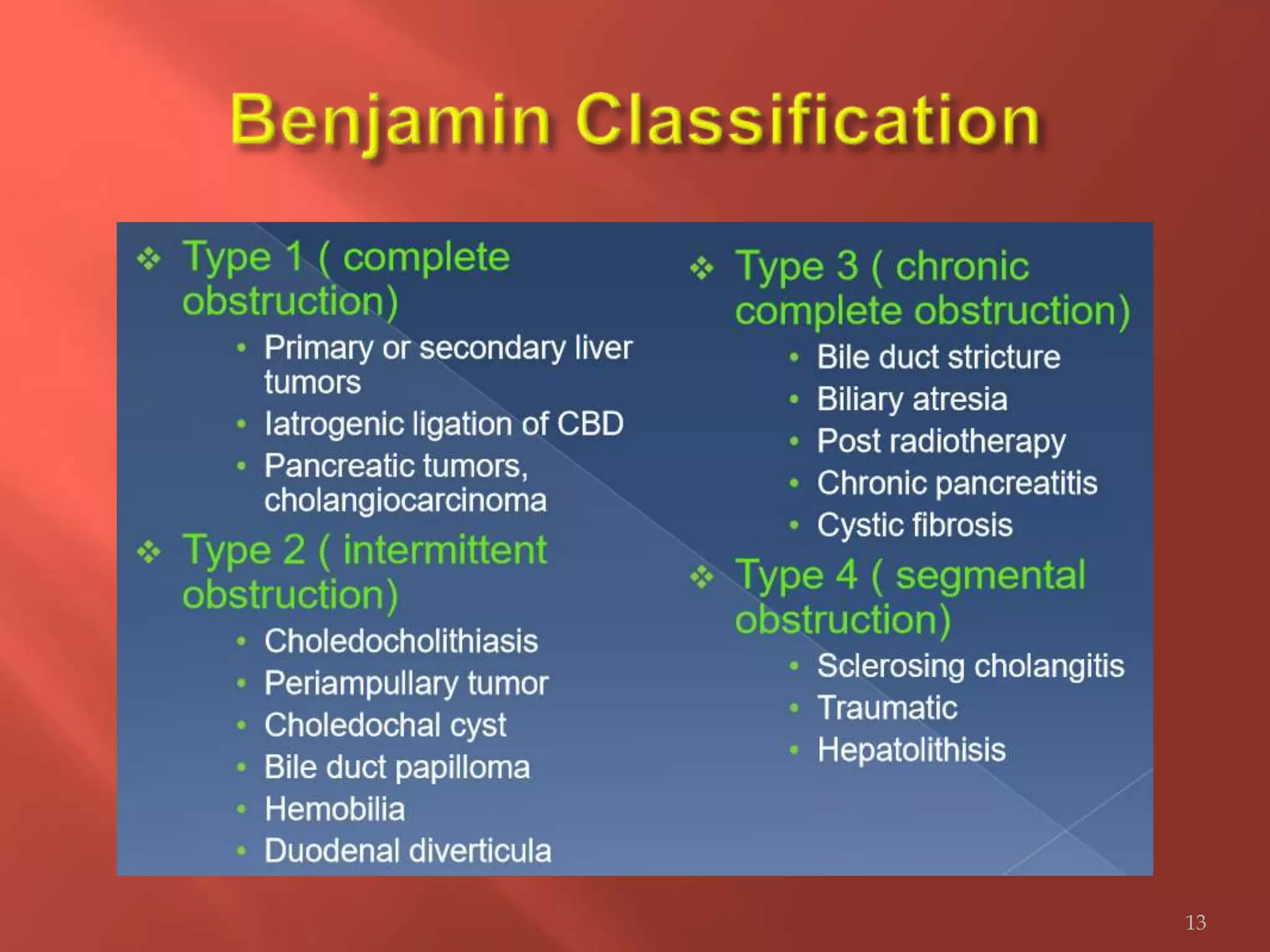
CAUSES/TYPE
SIGNS
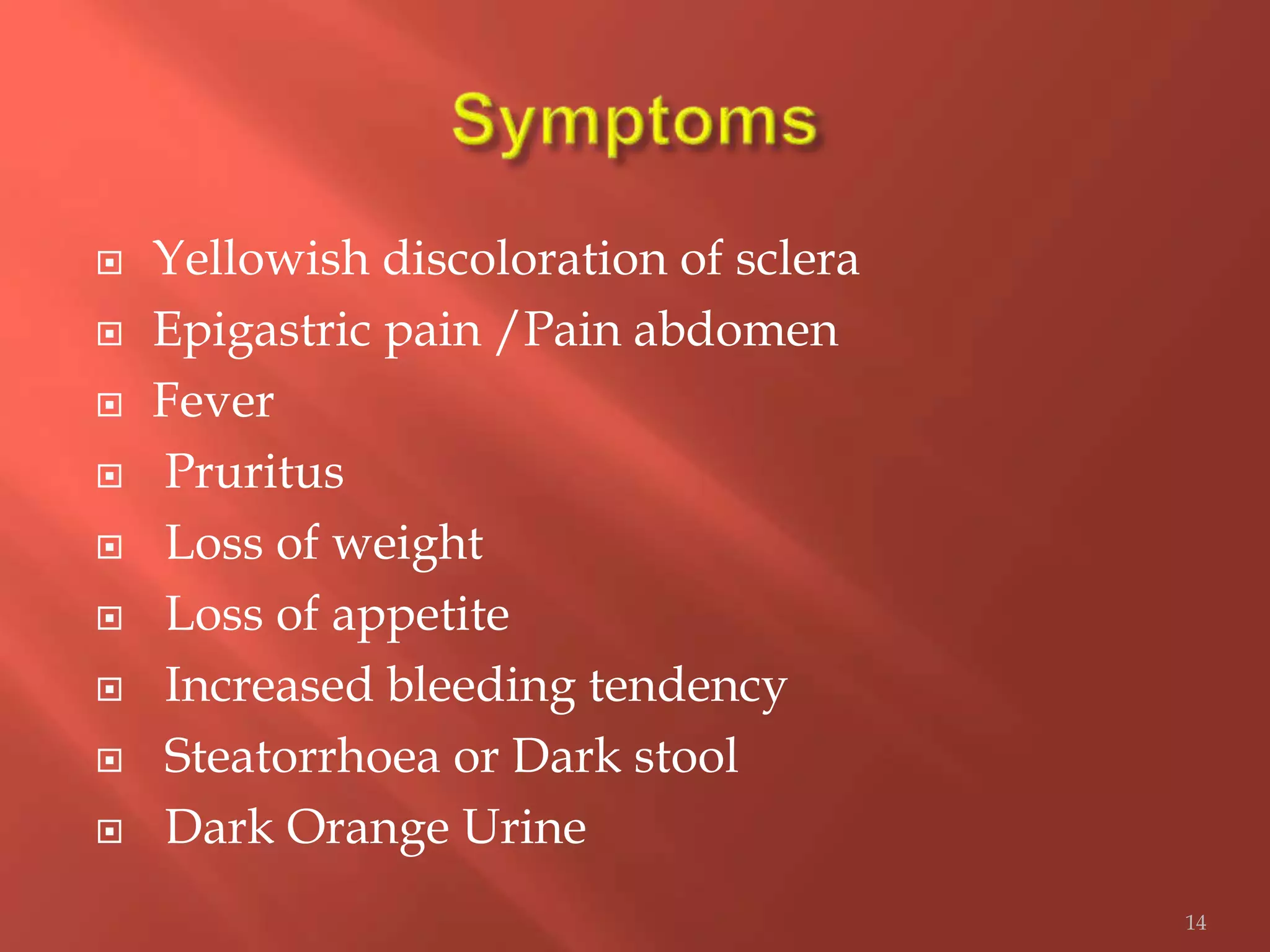
SYMPTOMSS
MANAGEMENT
DIAGNOSIS
2
3
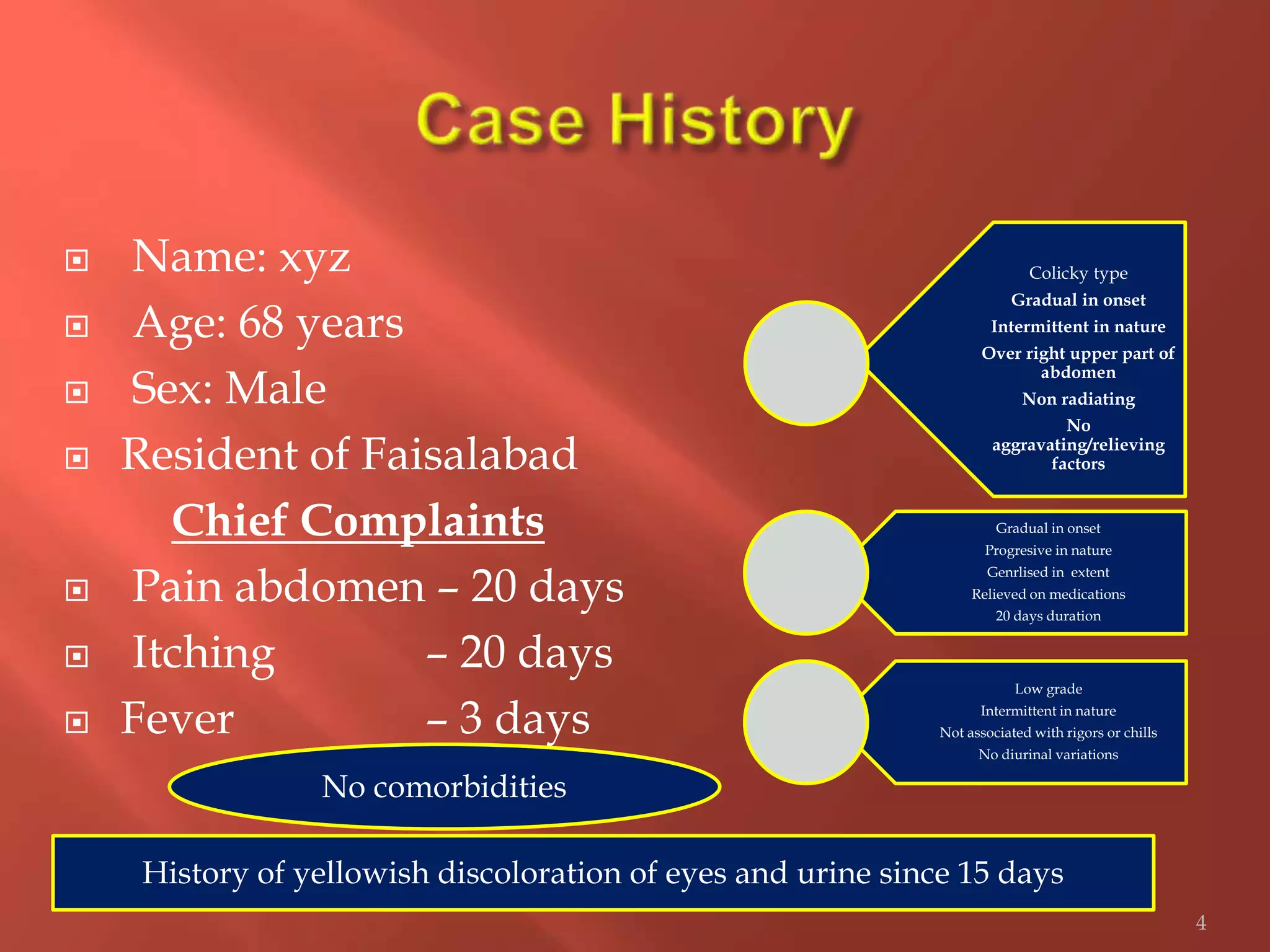
 Name: xyz
 Age: 68 years
 Sex: Male
 Resident of Faisalabad
Chief Complaints
 Pain abdomen – 20 days
 Itching – 20 days
 Fever – 3 days
Colicky type
Gradual in onset
Intermittent in nature
Over right upper part of
abdomen
Non radiating
No
aggravating/relieving
factors
Gradual in onset
Progresive in nature
Genrlised in extent
Relieved on medications
20 days duration
Low grade
Intermittent in nature
Not associated with rigors or chills
No diurinal variations
4
History of yellowish discoloration of eyes and urine since 15 days
No comorbidities
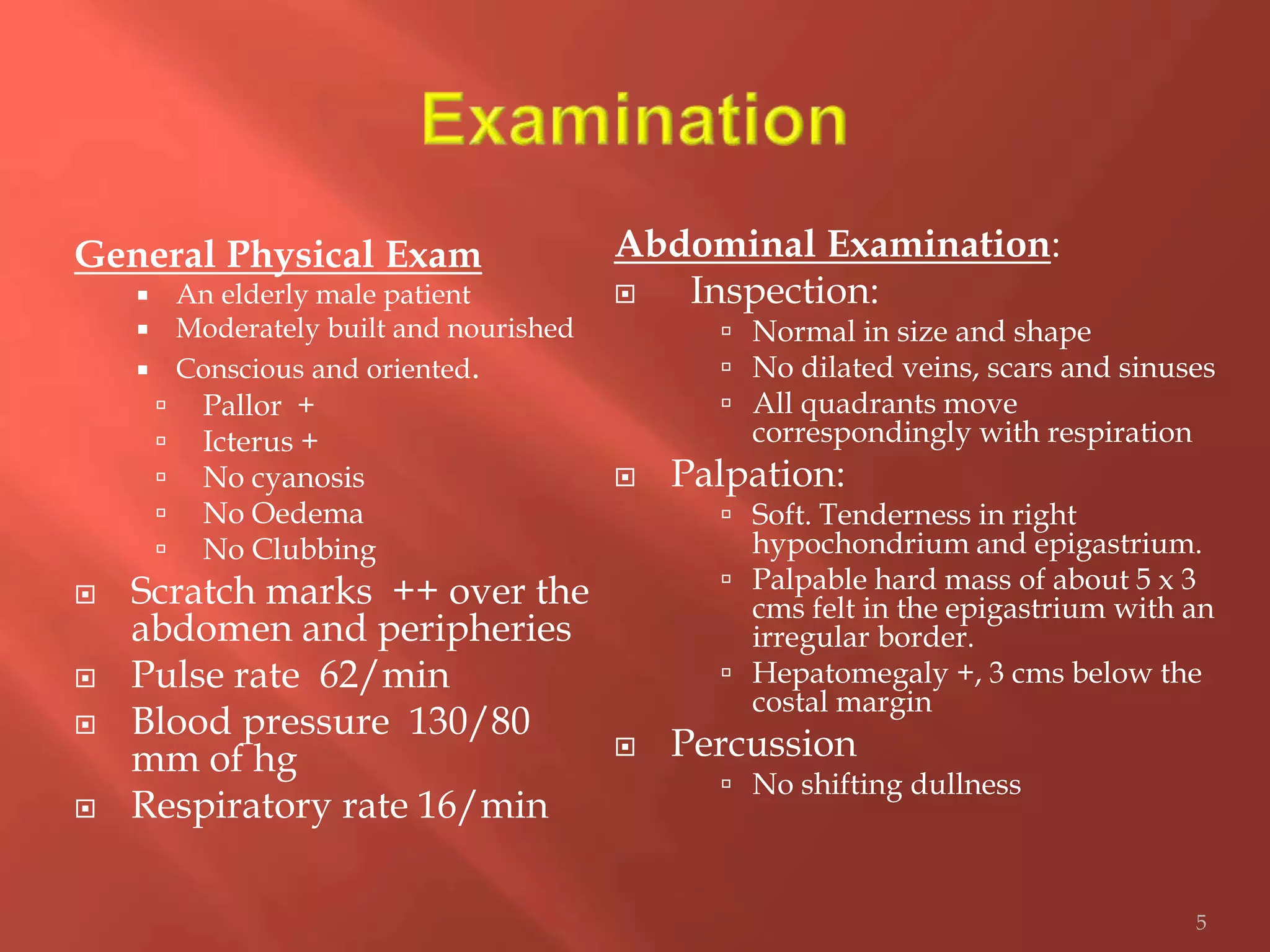
General Physical Exam
 An elderly male patient
 Moderately built and nourished
 Conscious and oriented.
 Pallor +
 Icterus +
 No cyanosis
 No Oedema
 No Clubbing
 Scratch marks ++ over the
abdomen and peripheries
 Pulse rate 62/min
 Blood pressure 130/80
mm of hg
 Respiratory rate 16/min
Abdominal Examination:
 Inspection:
 Normal in size and shape
 No dilated veins, scars and sinuses
 All quadrants move
correspondingly with respiration
 Palpation:
 Soft. Tenderness in right
hypochondrium and epigastrium.
 Palpable hard mass of about 5 x 3
cms felt in the epigastrium with an
irregular border.
 Hepatomegaly +, 3 cms below the
costal margin
 Percussion
 No shifting dullness
5
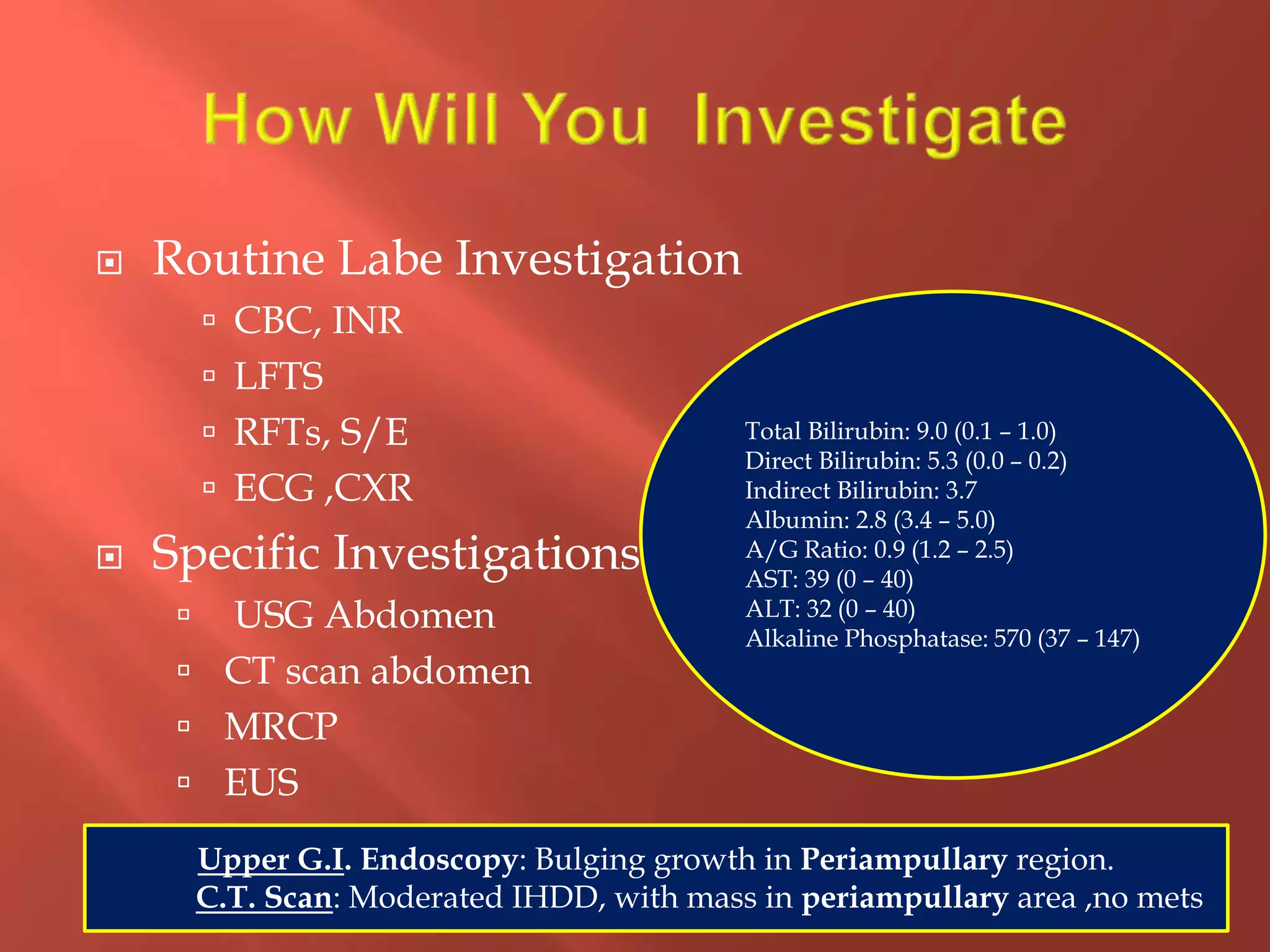
 Routine Labe Investigation
 CBC, INR
 LFTS
 RFTs, S/E
 ECG ,CXR
 Specific Investigations
 USG Abdomen
 CT scan abdomen
 MRCP
 EUS
6
Total Bilirubin: 9.0 (0.1 – 1.0)
Direct Bilirubin: 5.3 (0.0 – 0.2)
Indirect Bilirubin: 3.7
Albumin: 2.8 (3.4 – 5.0)
A/G Ratio: 0.9 (1.2 – 2.5)
AST: 39 (0 – 40)
ALT: 32 (0 – 40)
Alkaline Phosphatase: 570 (37 – 147)
Upper G.I. Endoscopy: Bulging growth in Periampullary region.
C.T. Scan: Moderated IHDD, with mass in periampullary area ,no mets
7
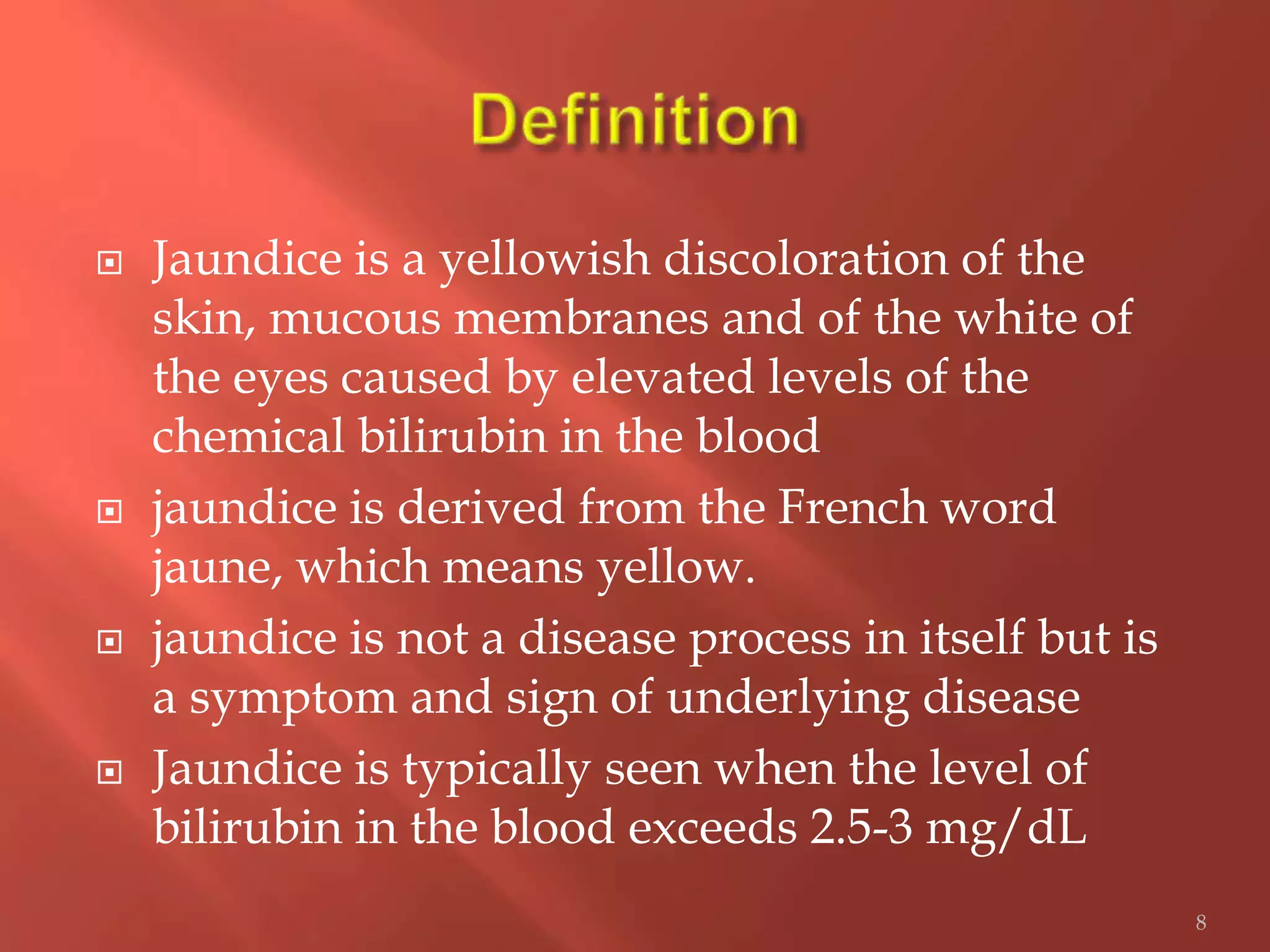
 Jaundice is a yellowish discoloration of the
skin, mucous membranes and of the white of
the eyes caused by elevated levels of the
chemical bilirubin in the blood
 jaundice is derived from the French word
jaune, which means yellow.
 jaundice is not a disease process in itself but is
a symptom and sign of underlying disease
 Jaundice is typically seen when the level of
bilirubin in the blood exceeds 2.5-3 mg/dL
8
9
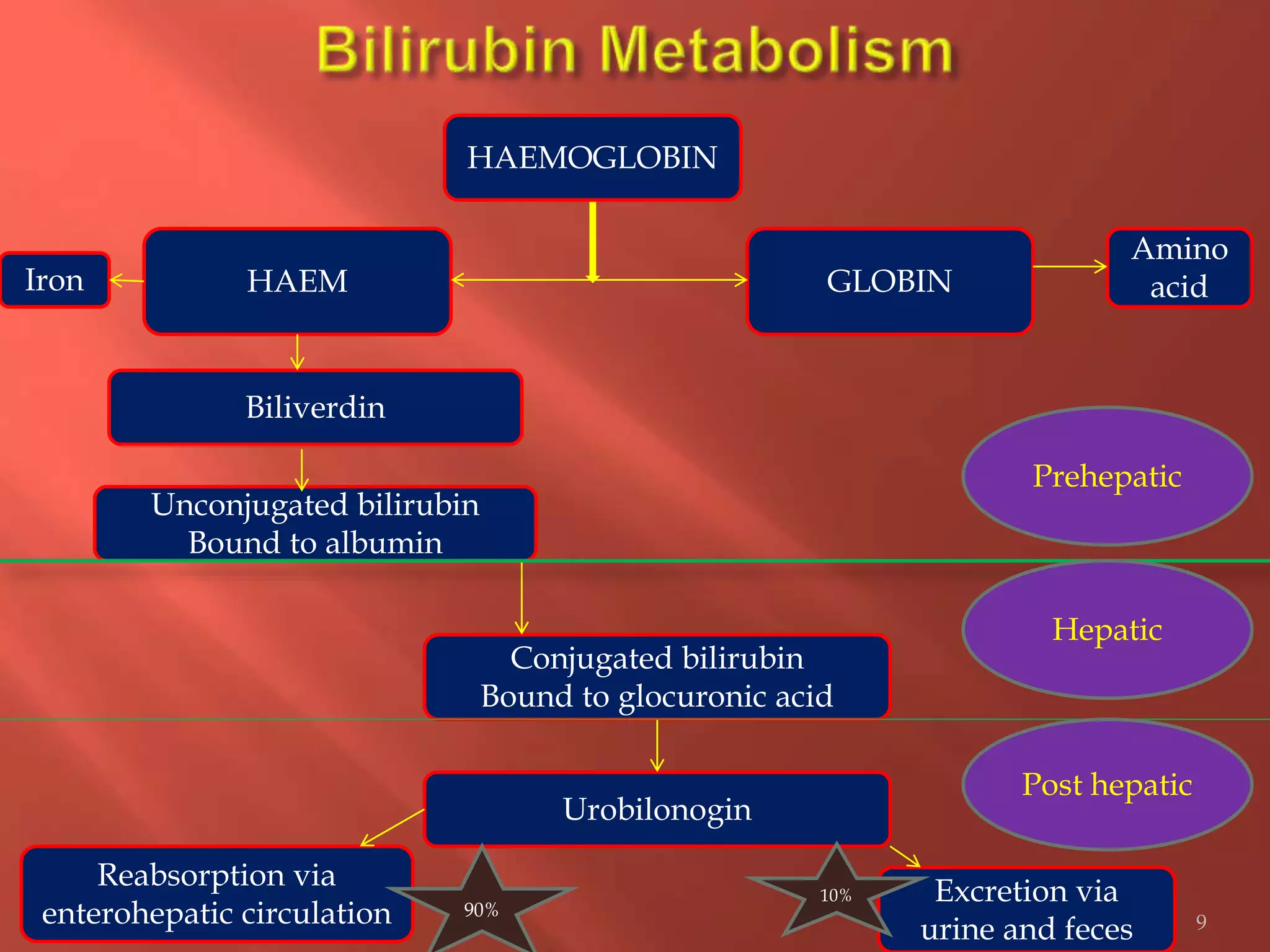
GLOBINHAEM
HAEMOGLOBIN
Biliverdin
Unconjugated bilirubin
Bound to albumin
Conjugated bilirubin
Bound to glocuronic acid
Urobilonogin
Excretion via
urine and feces
Reabsorption via
enterohepatic circulation
Prehepatic
Hepatic
Post hepatic
Iron
Amino
acid
90%
10%
10
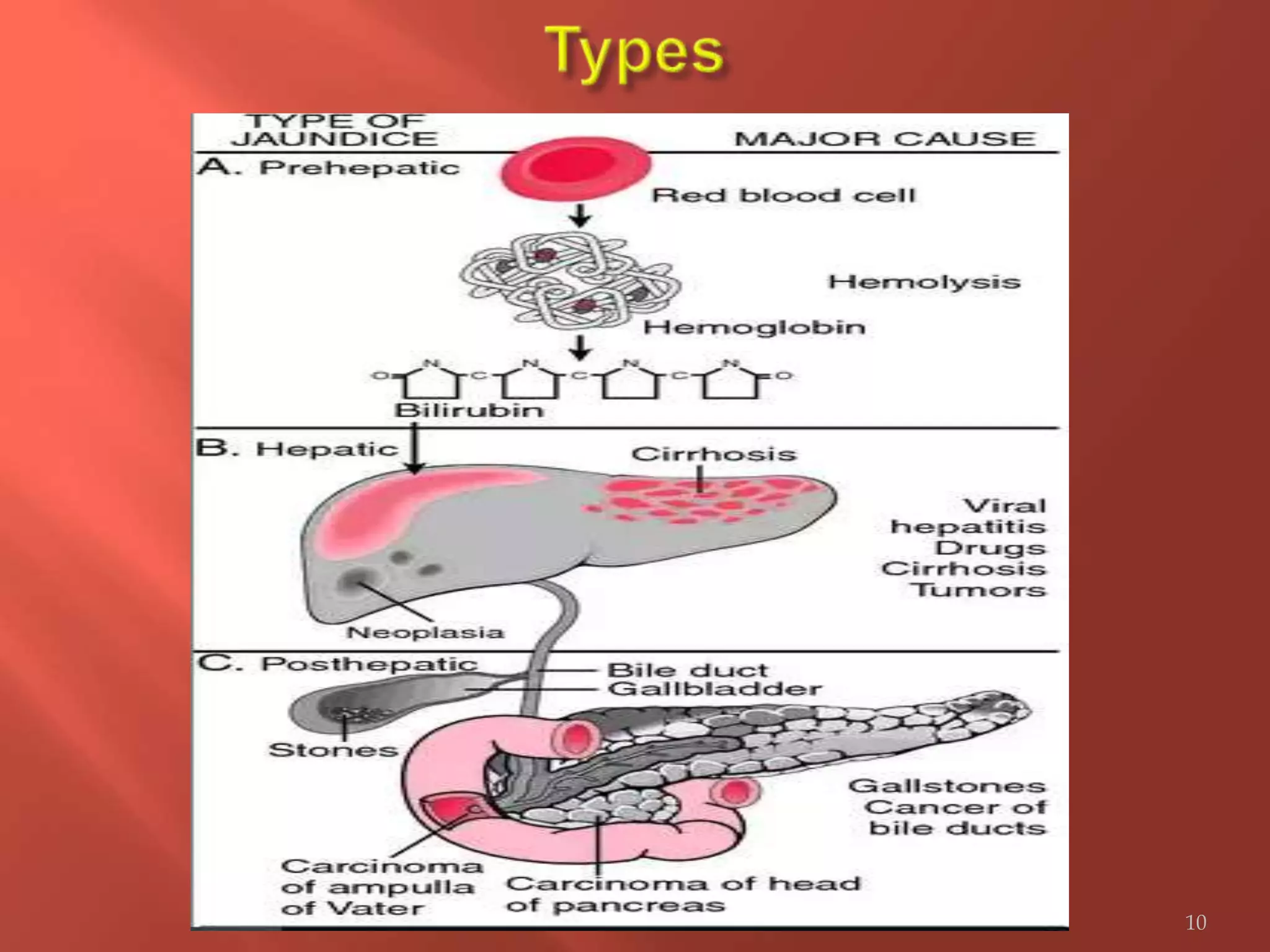
 It can be largely divided into two types:
 Non-obstructive,
i.e. pre-hepatic and hepatic causes.
 Obstructive,
caused by obstruction( partial ,intermittent or
complete) to the outflow of bile resulting in
accumulation of conjugated bilirubin blood i.e. post-
hepatic causes.
11
12
13
 Yellowish discoloration of sclera
 Epigastric pain /Pain abdomen
 Fever
 Pruritus
 Loss of weight
 Loss of appetite
 Increased bleeding tendency
 Steatorrhoea or Dark stool
 Dark Orange Urine
14
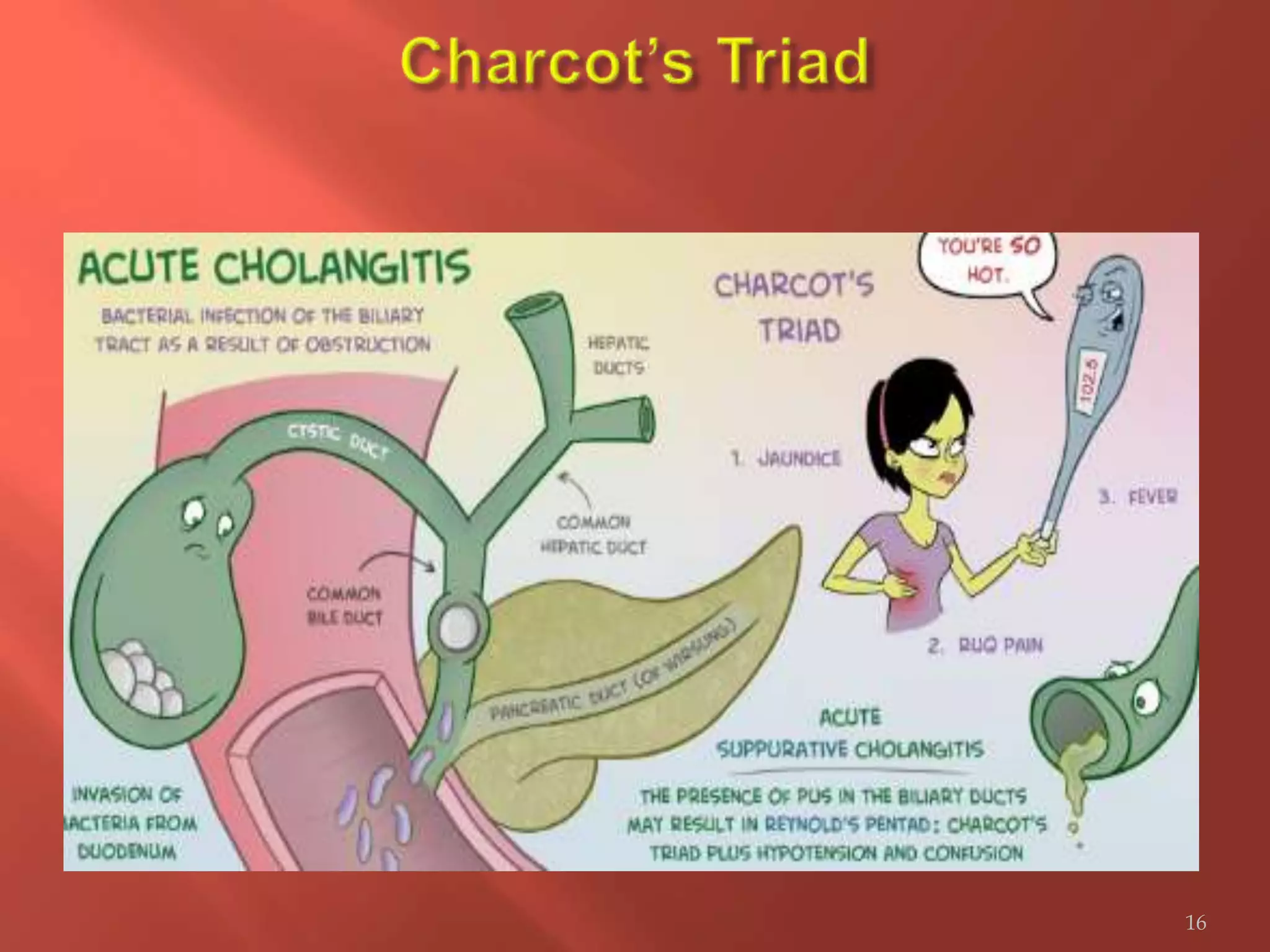
 Charcot’s triad
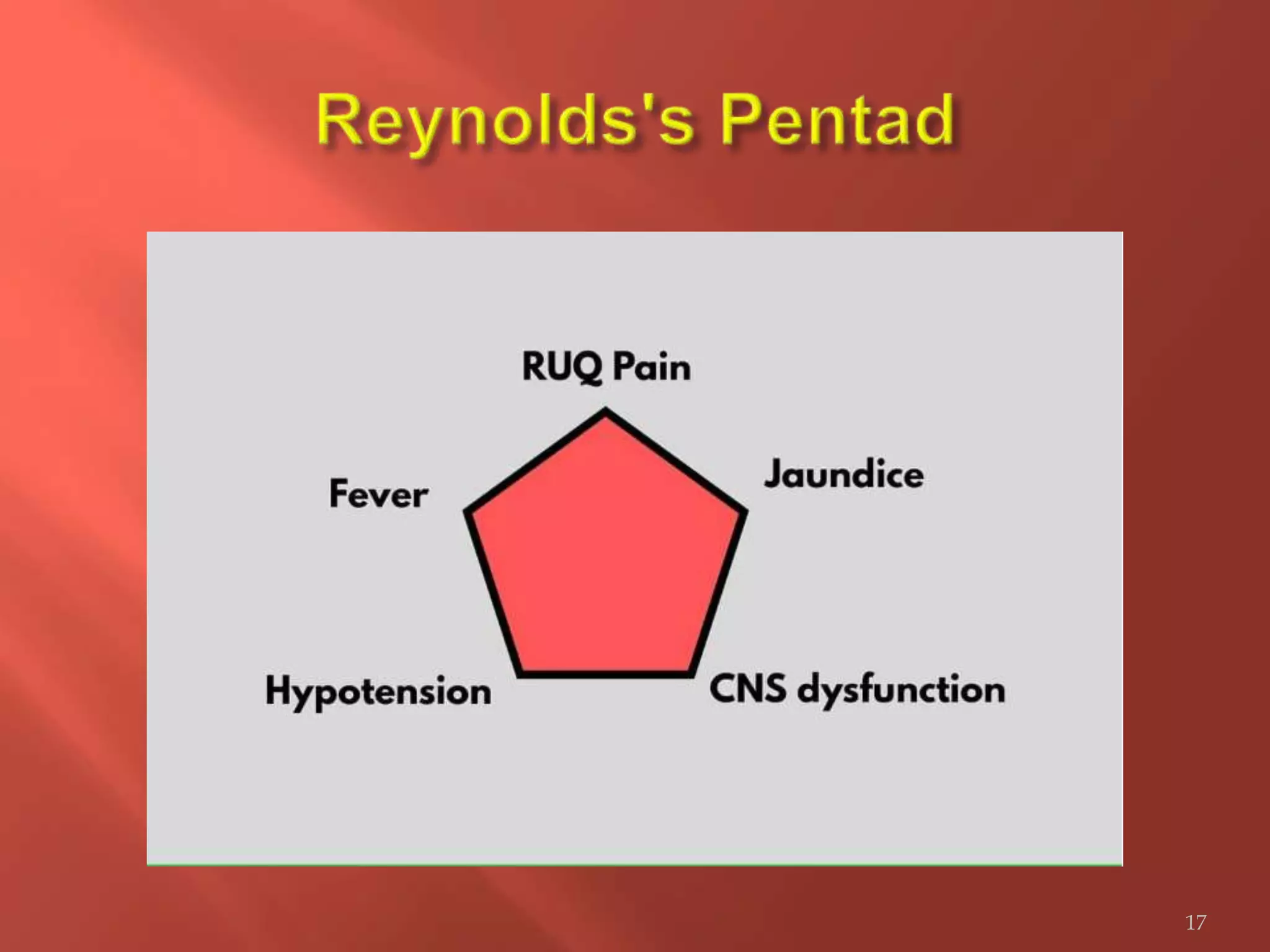
 Reynold’s Pentad
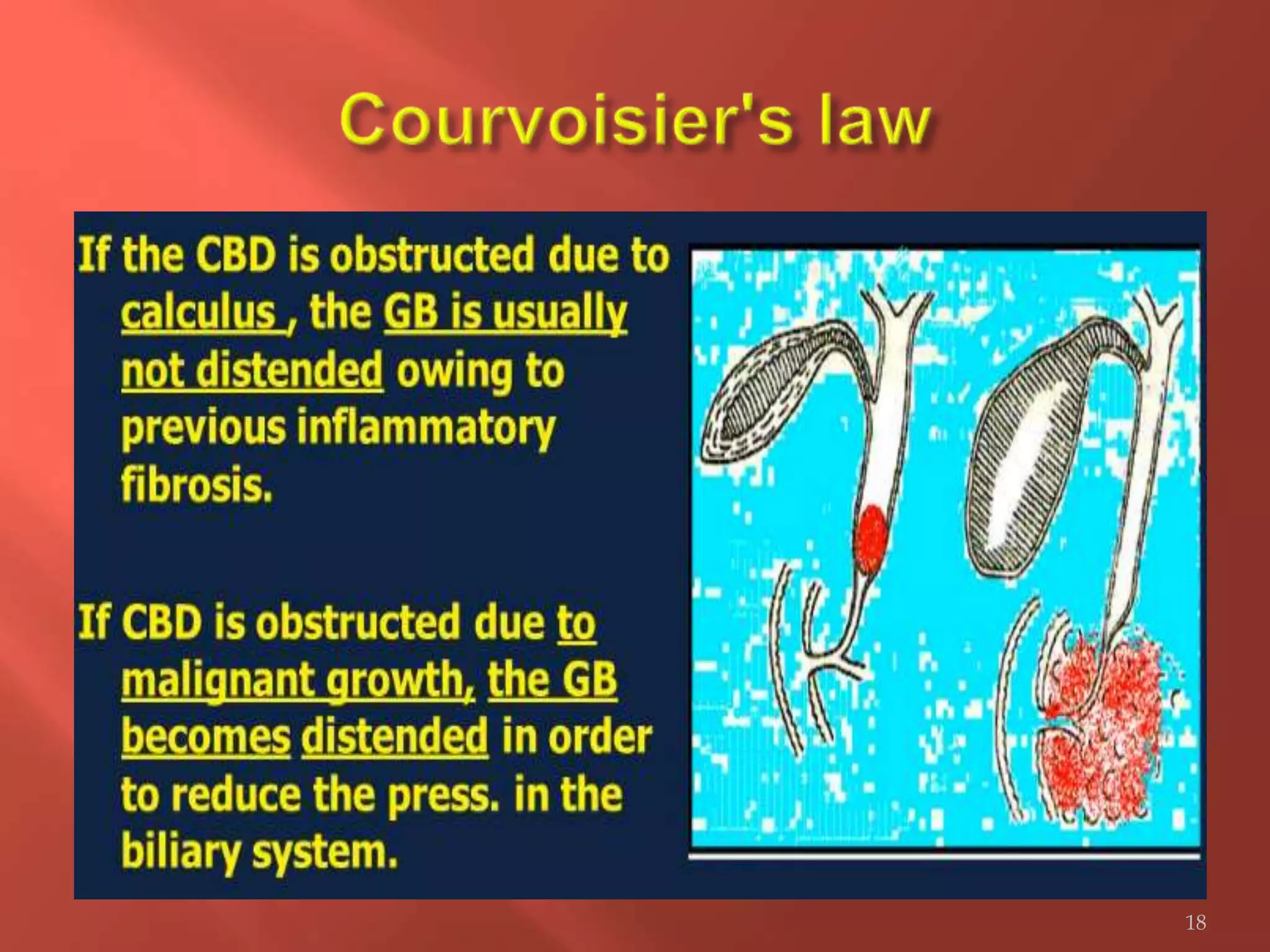
 Palpable and / or tender gallbladder
(Courvioser’s law)
 Hepatomegaly
 Splenomegaly
 Ascites
 Xanthomas xanthelasma
 Scratch marks
 Shiny nails
 Finger clubbing
 Loose, pale, bulky, offensive stools
 Dark orange urine
15
16
17
18
19
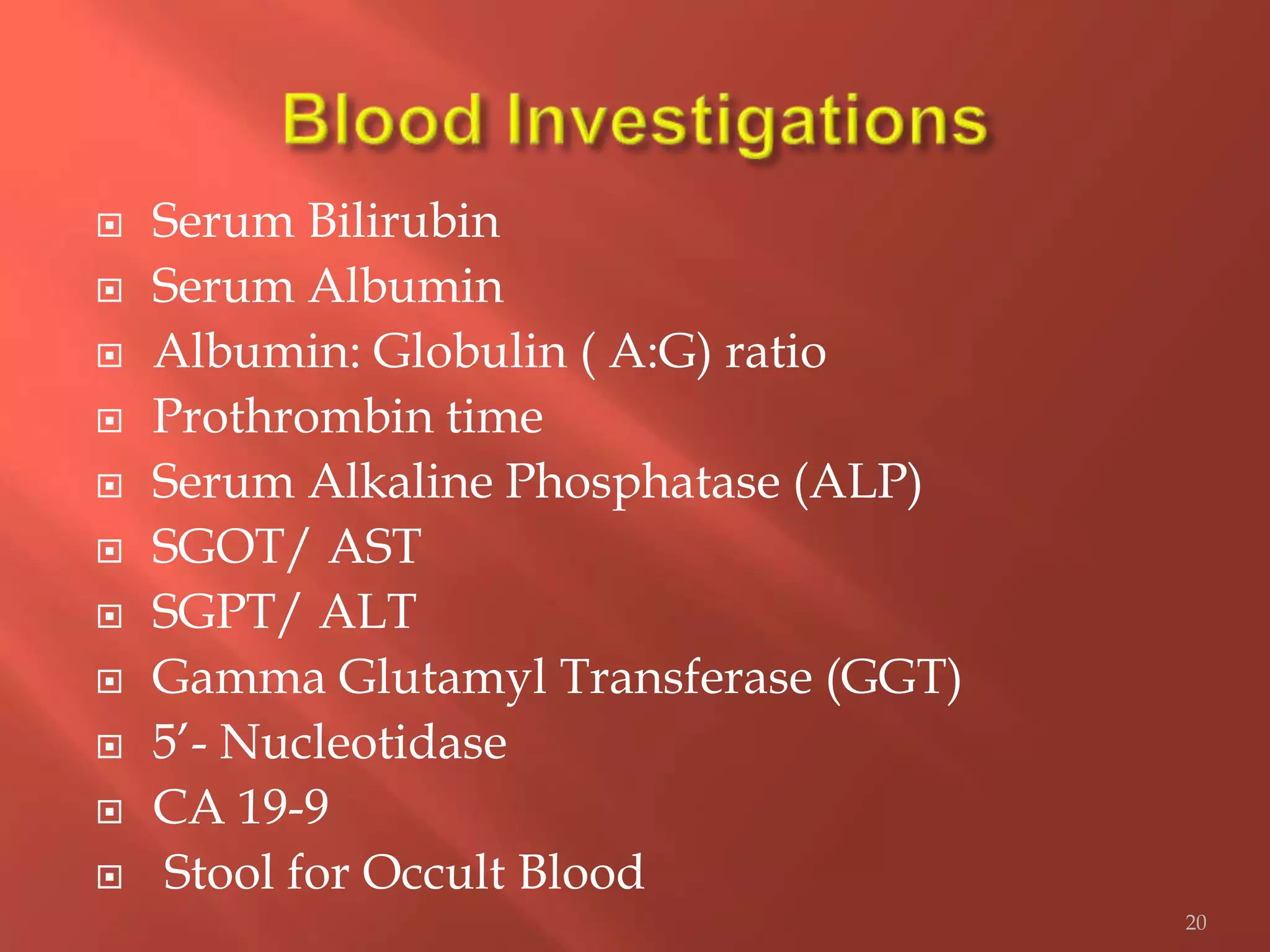
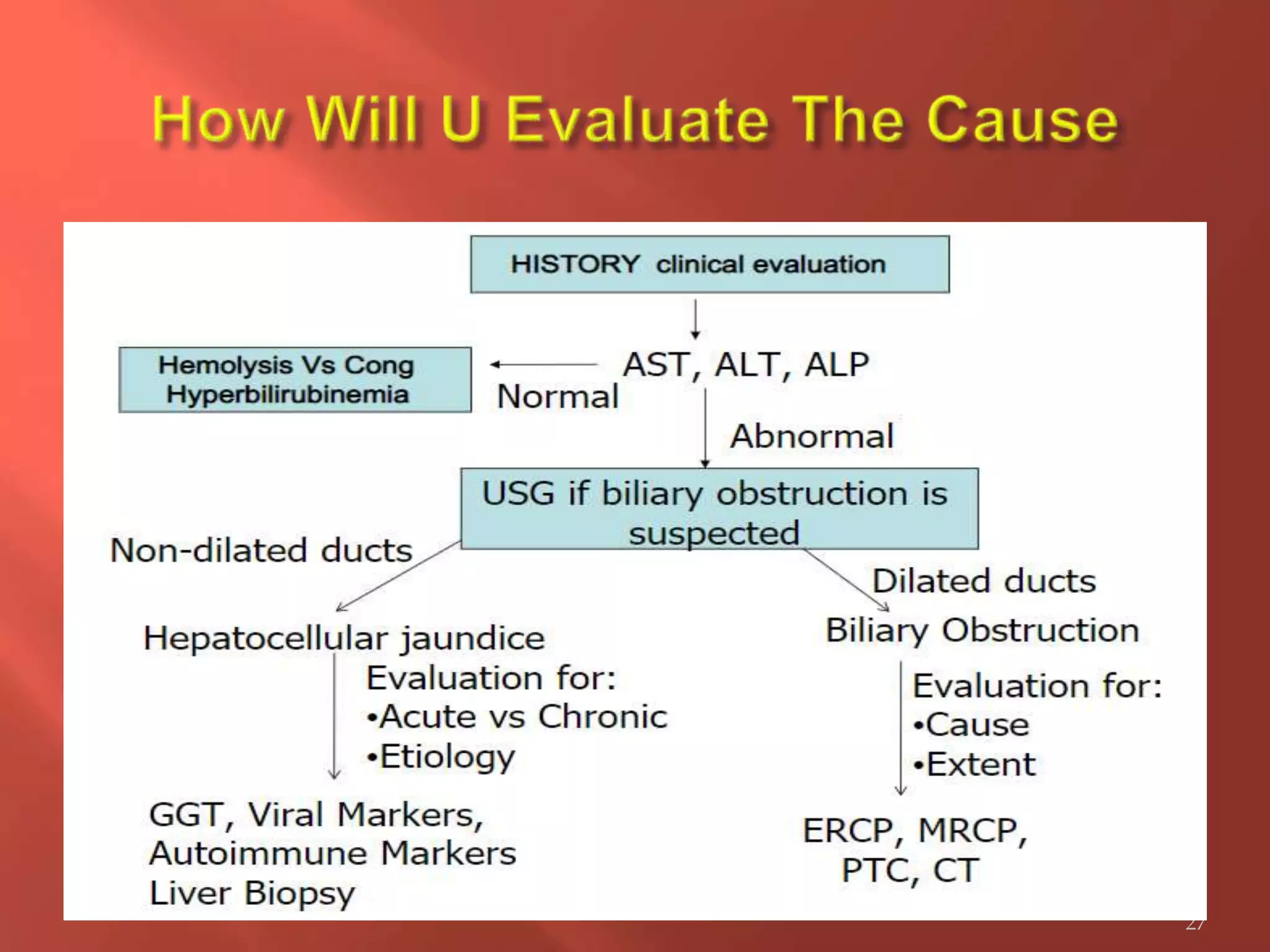
 Serum Bilirubin
 Serum Albumin
 Albumin: Globulin ( A:G) ratio
 Prothrombin time
 Serum Alkaline Phosphatase (ALP)
 SGOT/ AST
 SGPT/ ALT
 Gamma Glutamyl Transferase (GGT)
 5’- Nucleotidase
 CA 19-9
 Stool for Occult Blood
20
21
22
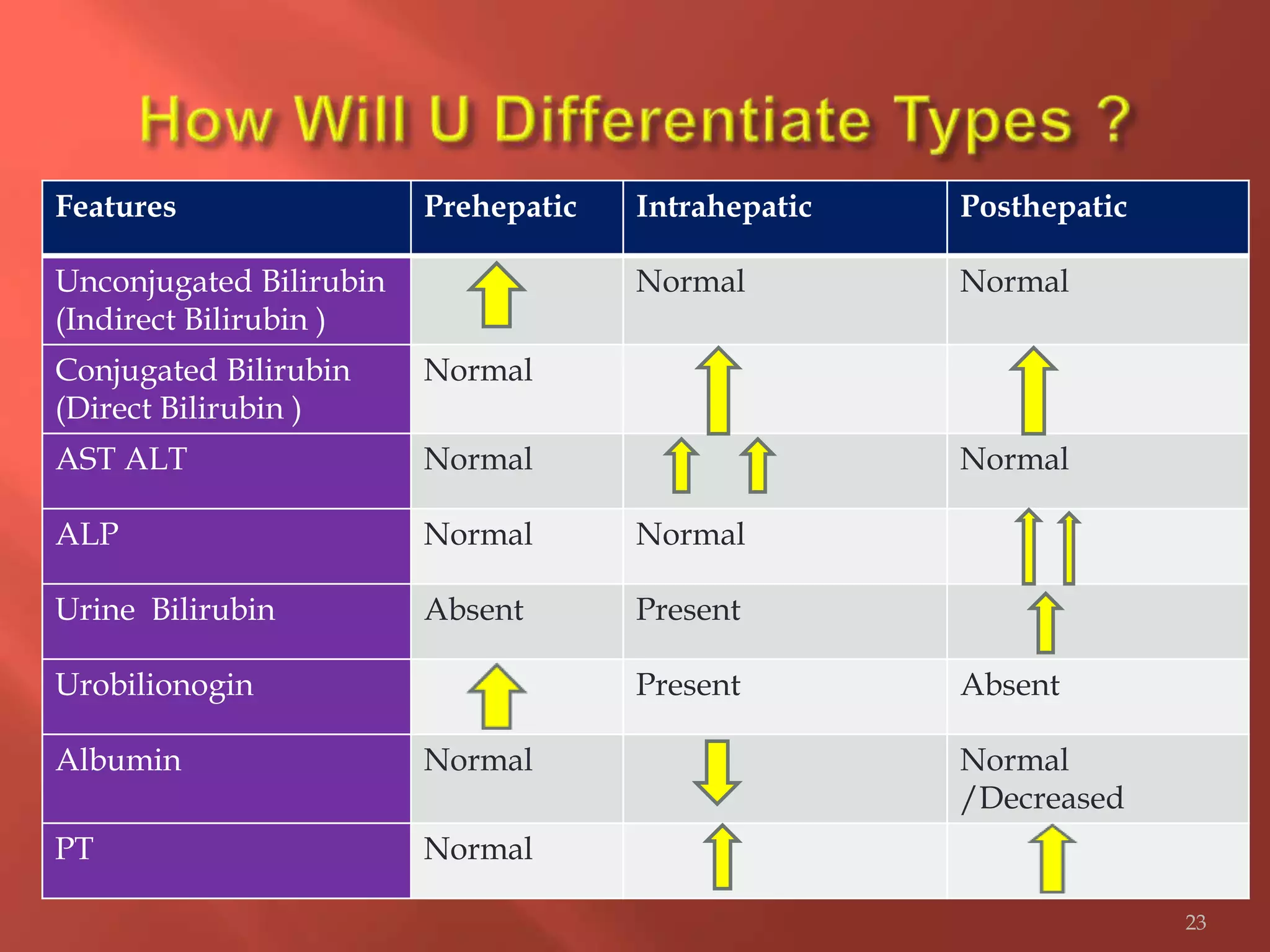
Features Prehepatic Intrahepatic Posthepatic
Unconjugated Bilirubin
(Indirect Bilirubin )
Normal Normal
Conjugated Bilirubin
(Direct Bilirubin )
Normal
AST ALT Normal Normal
ALP Normal Normal
Urine Bilirubin Absent Present
Urobilionogin Present Absent
Albumin Normal Normal
/Decreased
PT Normal
23
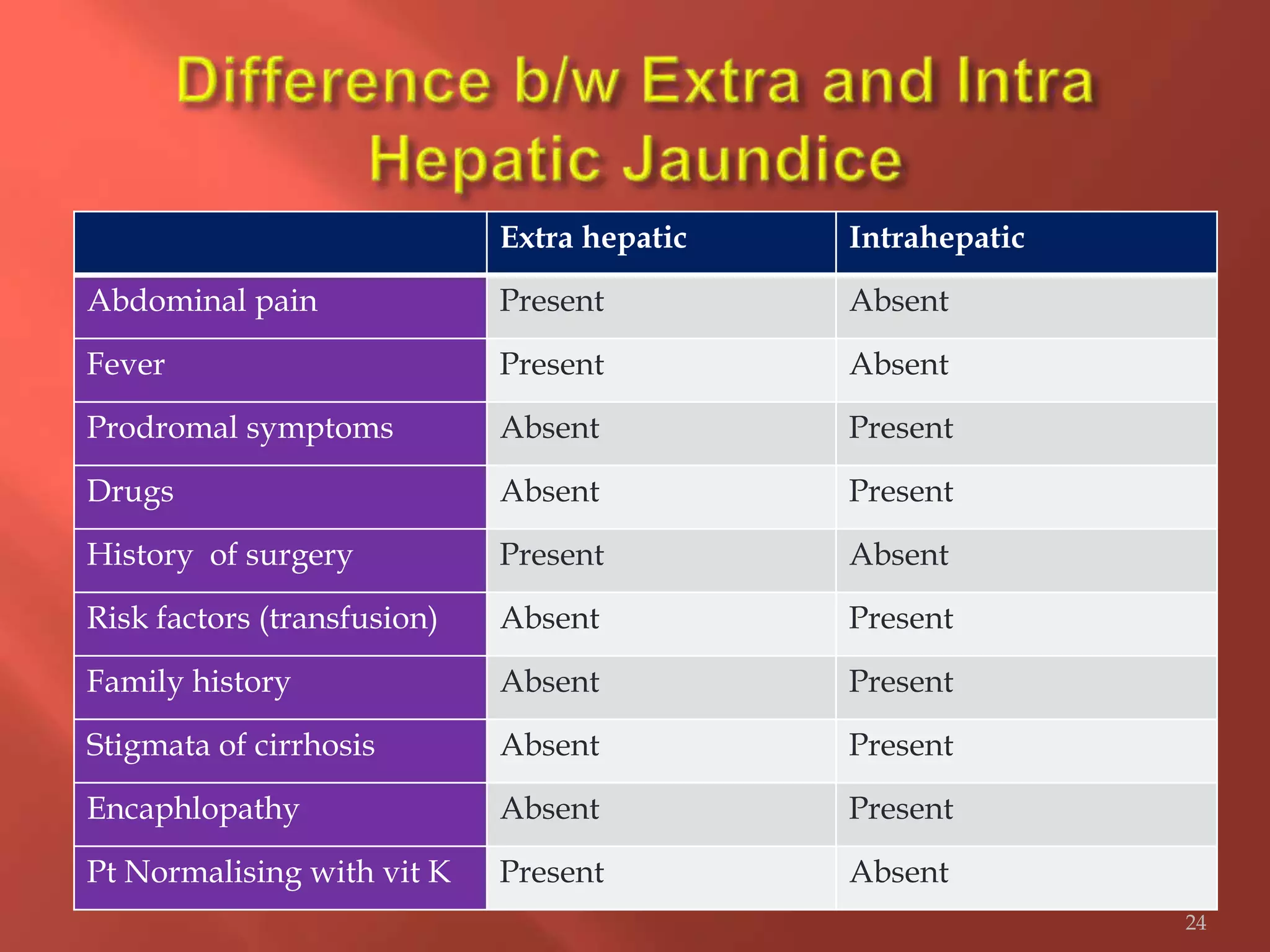
Extra hepatic Intrahepatic
Abdominal pain Present Absent
Fever Present Absent
Prodromal symptoms Absent Present
Drugs Absent Present
History of surgery Present Absent
Risk factors (transfusion) Absent Present
Family history Absent Present
Stigmata of cirrhosis Absent Present
Encaphlopathy Absent Present
Pt Normalising with vit K Present Absent
24
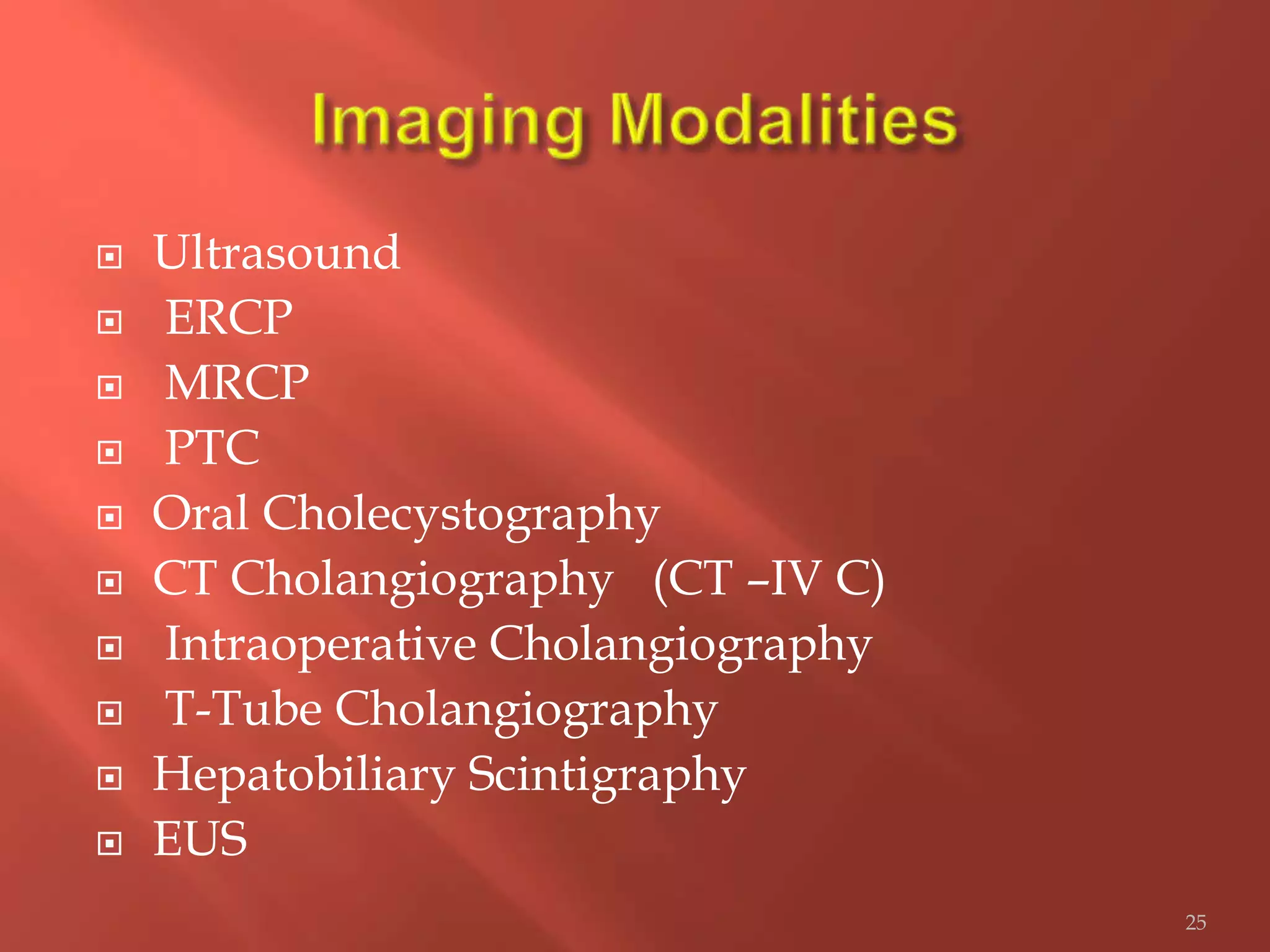
 Ultrasound
 ERCP
 MRCP
 PTC
 Oral Cholecystography
 CT Cholangiography (CT –IV C)
 Intraoperative Cholangiography
 T-Tube Cholangiography
 Hepatobiliary Scintigraphy
 EUS
25
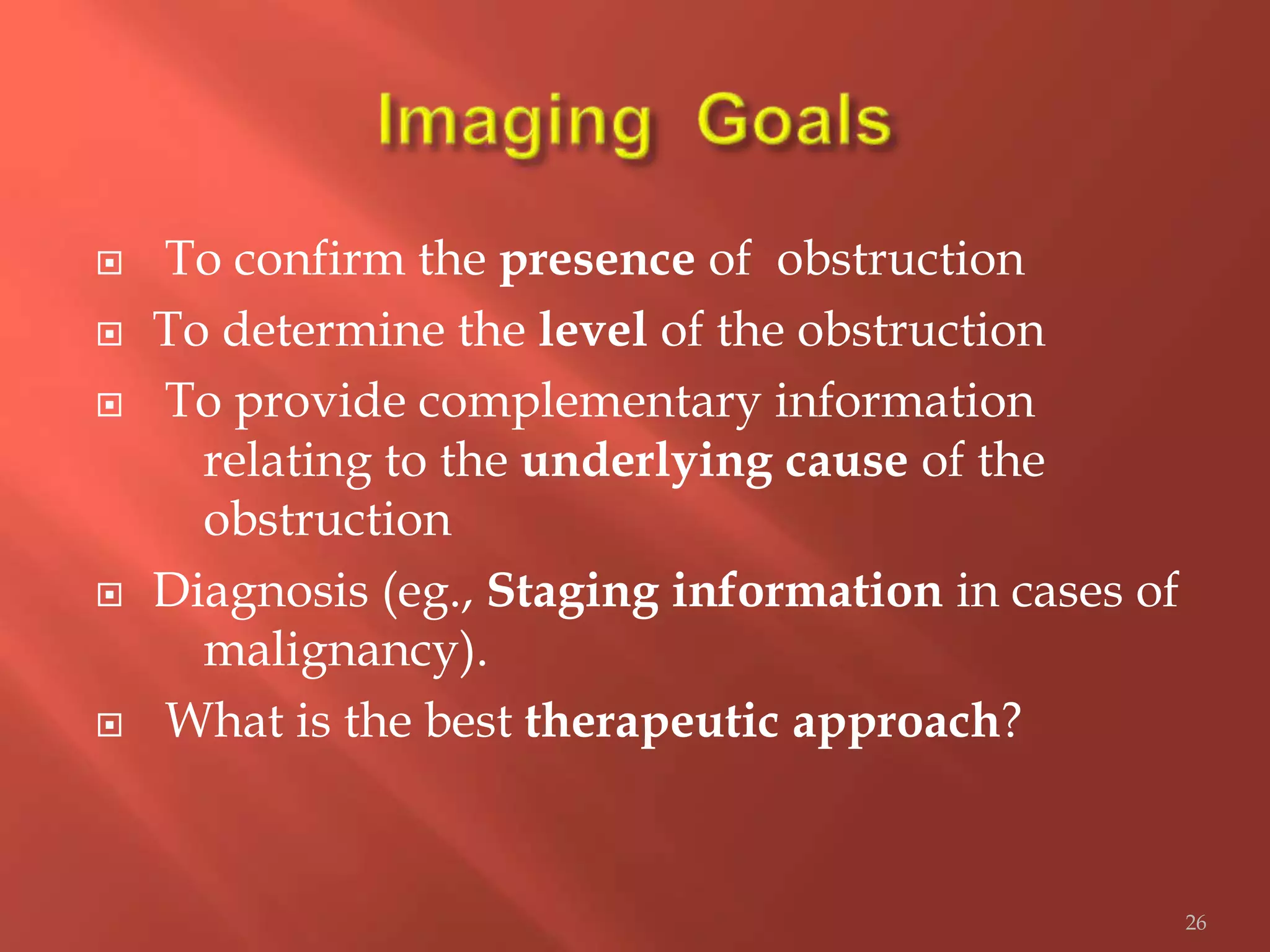
 To confirm the presence of obstruction
 To determine the level of the obstruction
 To provide complementary information
relating to the underlying cause of the
obstruction
 Diagnosis (eg., Staging information in cases of
malignancy).
 What is the best therapeutic approach?
26
27
28
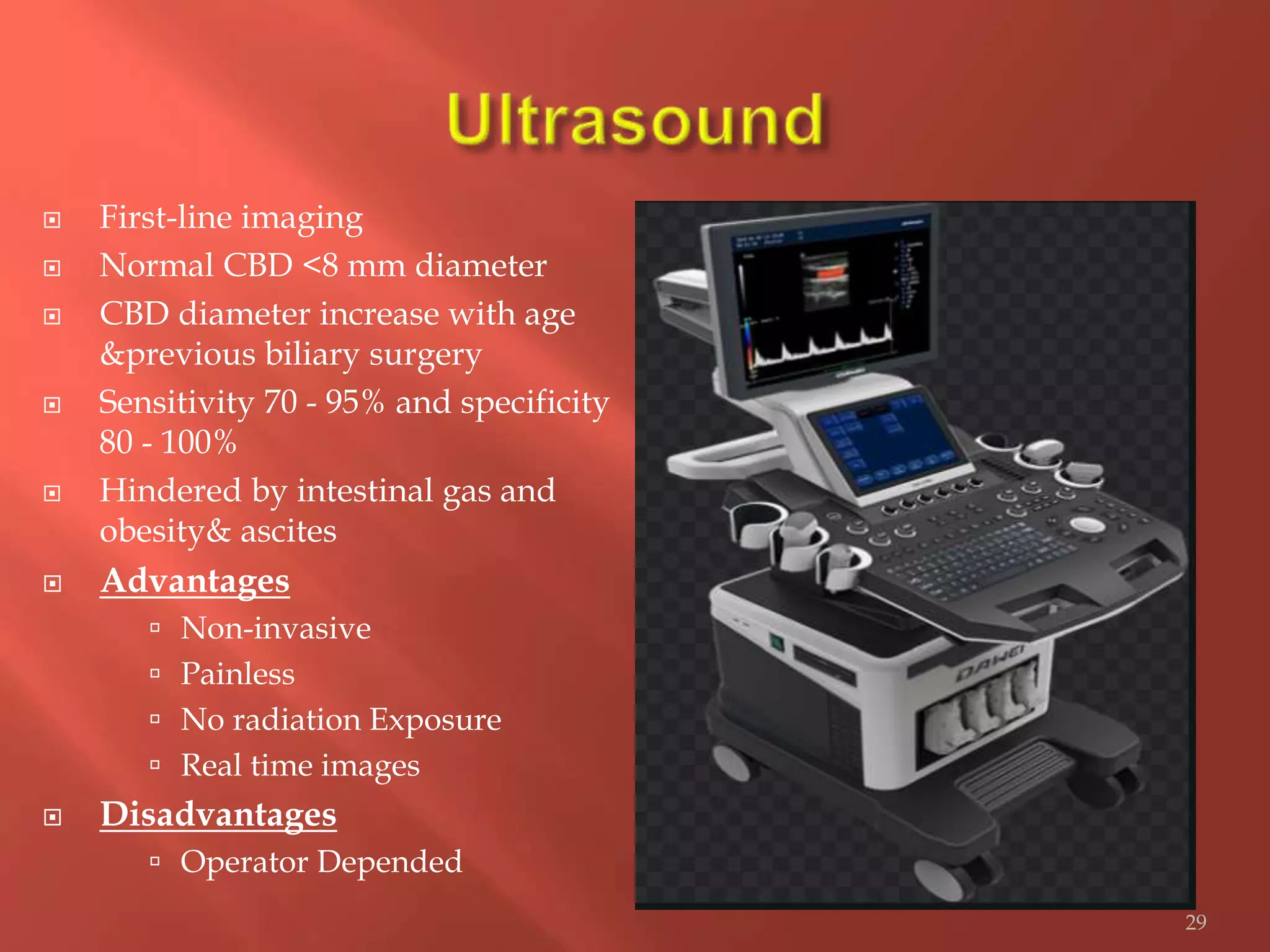
 First-line imaging
 Normal CBD <8 mm diameter
 CBD diameter increase with age
&previous biliary surgery
 Sensitivity 70 - 95% and specificity
80 - 100%
 Hindered by intestinal gas and
obesity& ascites
 Advantages
 Non-invasive
 Painless
 No radiation Exposure
 Real time images
 Disadvantages
 Operator Depended
29
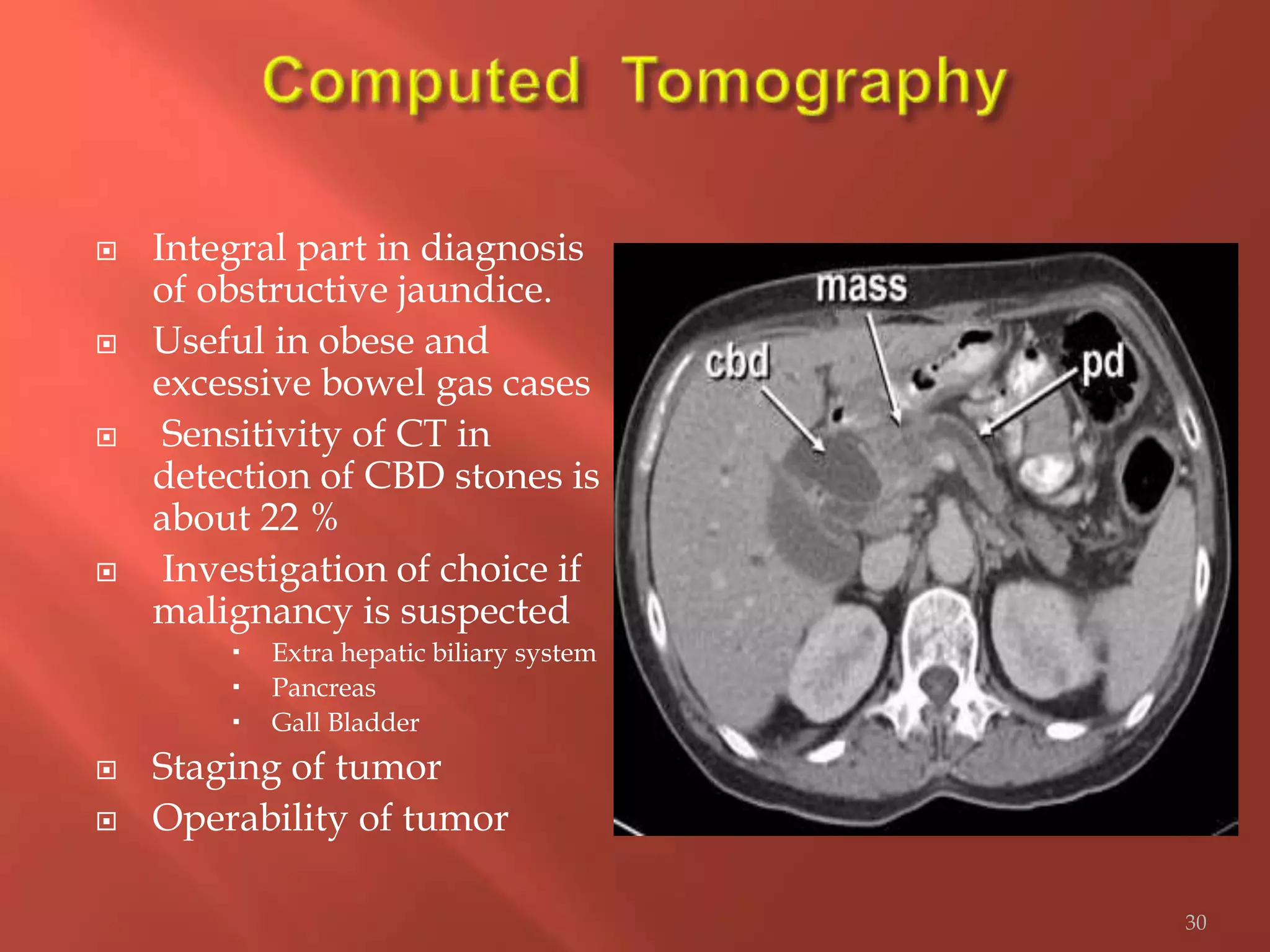
 Integral part in diagnosis
of obstructive jaundice.
 Useful in obese and
excessive bowel gas cases
 Sensitivity of CT in
detection of CBD stones is
about 22 %
 Investigation of choice if
malignancy is suspected
 Extra hepatic biliary system
 Pancreas
 Gall Bladder
 Staging of tumor
 Operability of tumor
30
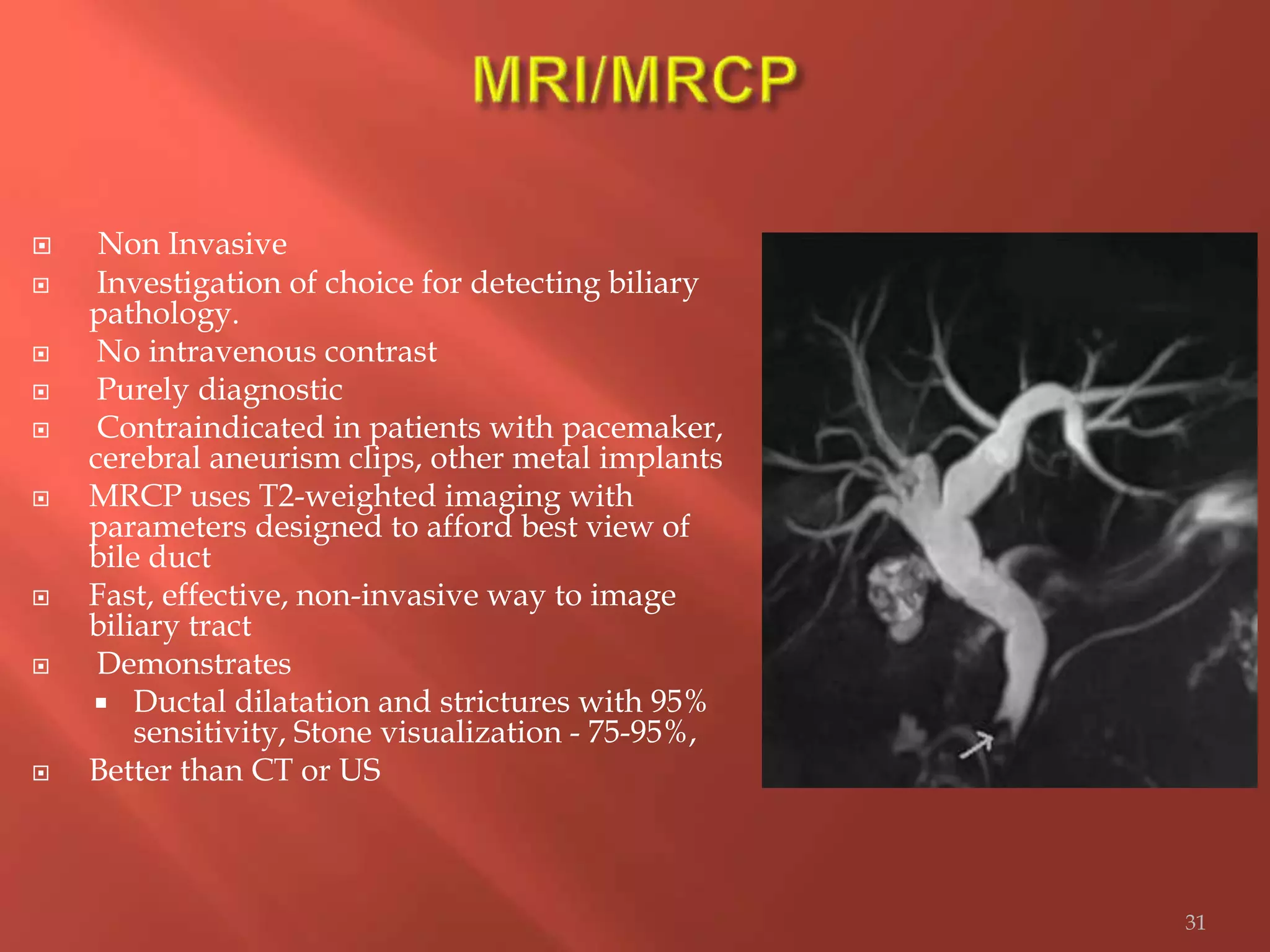
 Non Invasive
 Investigation of choice for detecting biliary
pathology.
 No intravenous contrast
 Purely diagnostic
 Contraindicated in patients with pacemaker,
cerebral aneurism clips, other metal implants
 MRCP uses T2-weighted imaging with
parameters designed to afford best view of
bile duct
 Fast, effective, non-invasive way to image
biliary tract
 Demonstrates
 Ductal dilatation and strictures with 95%
sensitivity, Stone visualization - 75-95%,
 Better than CT or US
31
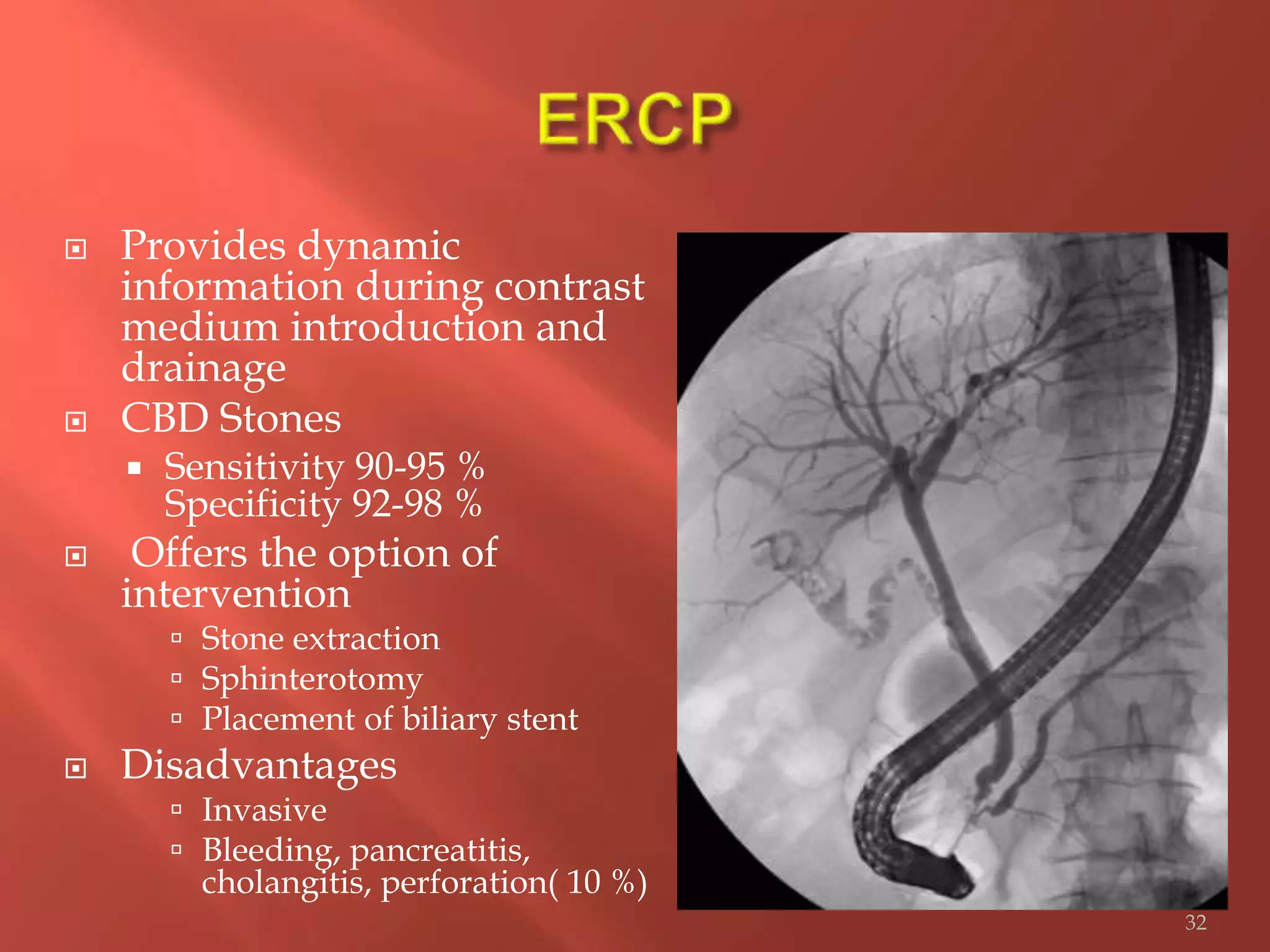
 Provides dynamic
information during contrast
medium introduction and
drainage
 CBD Stones
 Sensitivity 90-95 %
Specificity 92-98 %
 Offers the option of
intervention
 Stone extraction
 Sphinterotomy
 Placement of biliary stent
 Disadvantages
 Invasive
 Bleeding, pancreatitis,
cholangitis, perforation( 10 %)
32
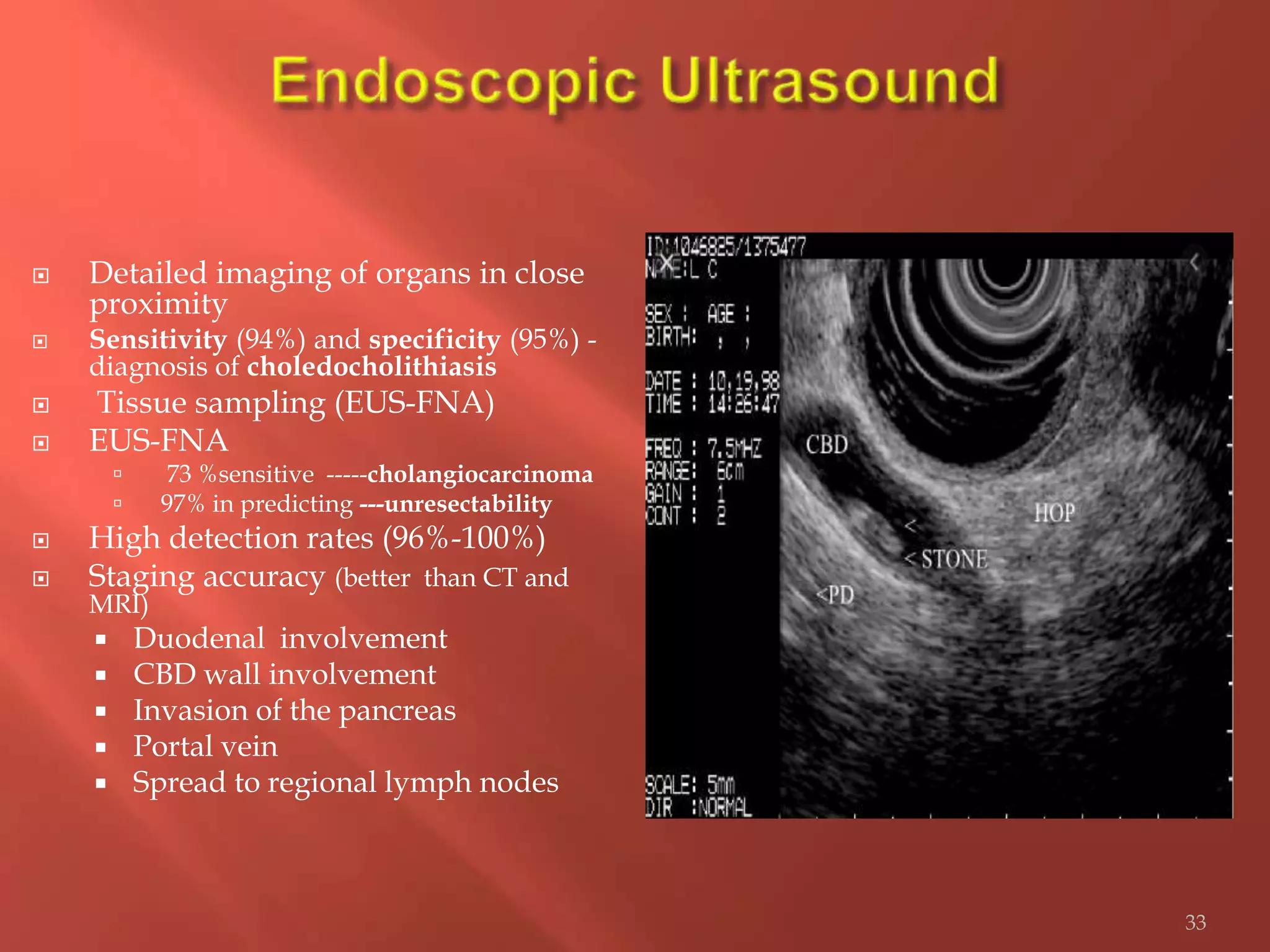
 Detailed imaging of organs in close
proximity
 Sensitivity (94%) and specificity (95%) -
diagnosis of choledocholithiasis
 Tissue sampling (EUS-FNA)
 EUS-FNA
 73 %sensitive -----cholangiocarcinoma
 97% in predicting ---unresectability
 High detection rates (96%-100%)
 Staging accuracy (better than CT and
MRI)
 Duodenal involvement
 CBD wall involvement
 Invasion of the pancreas
 Portal vein
 Spread to regional lymph nodes
33
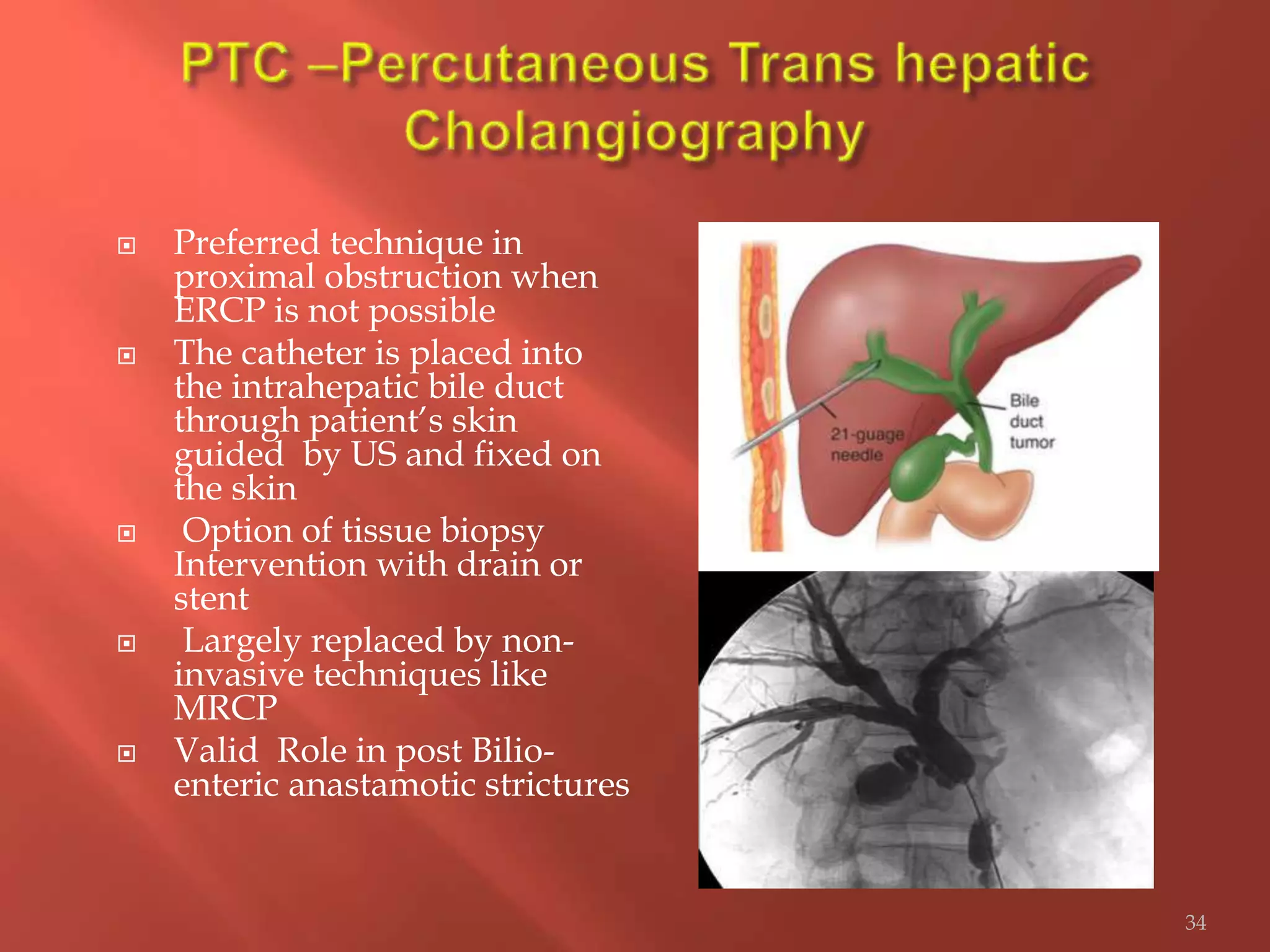
 Preferred technique in
proximal obstruction when
ERCP is not possible
 The catheter is placed into
the intrahepatic bile duct
through patient’s skin
guided by US and fixed on
the skin
 Option of tissue biopsy
Intervention with drain or
stent
 Largely replaced by non-
invasive techniques like
MRCP
 Valid Role in post Bilio-
enteric anastamotic strictures
34
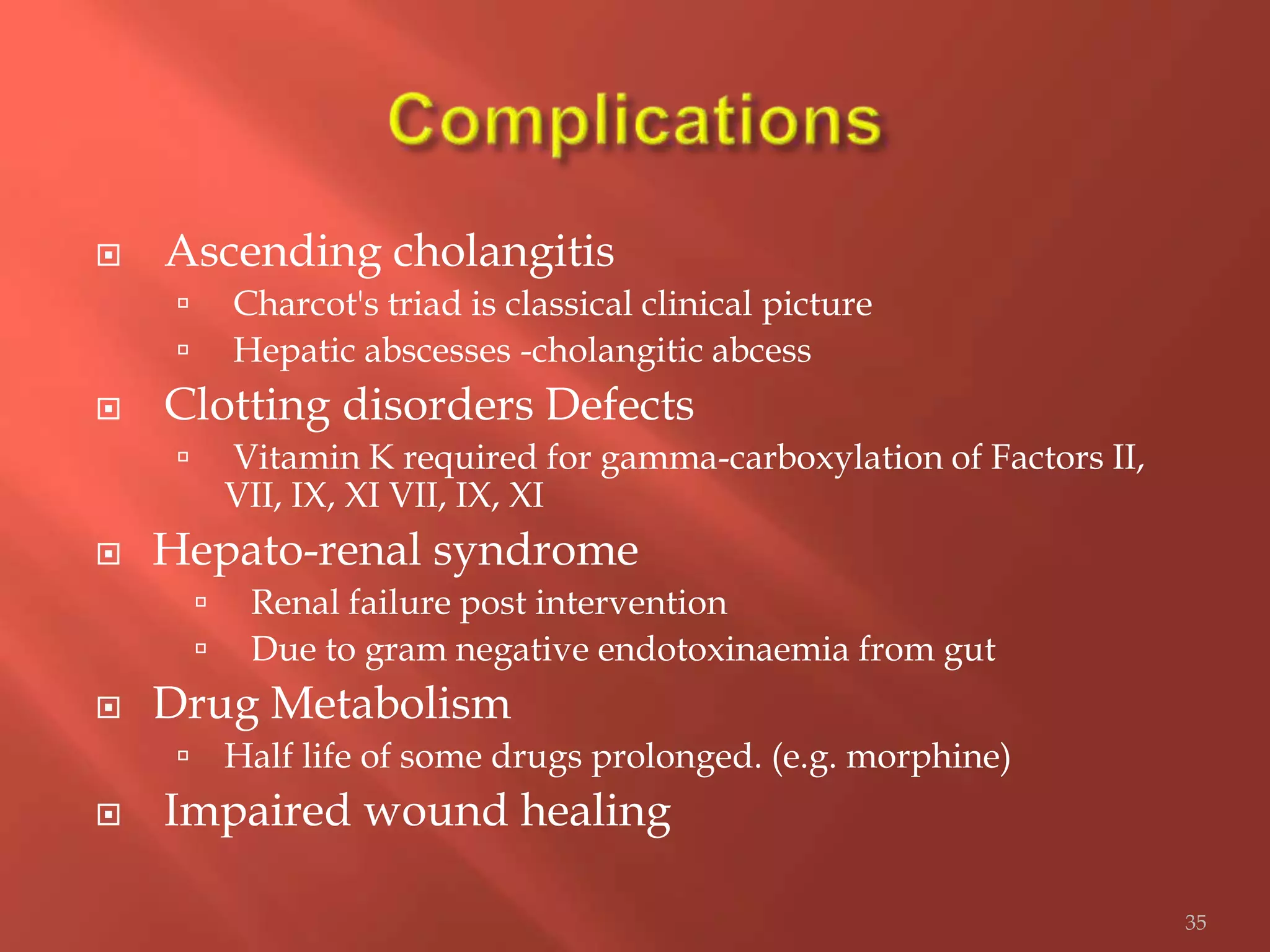
 Ascending cholangitis
 Charcot's triad is classical clinical picture
 Hepatic abscesses -cholangitic abcess
 Clotting disorders Defects
 Vitamin K required for gamma-carboxylation of Factors II,
VII, IX, XI VII, IX, XI
 Hepato-renal syndrome
 Renal failure post intervention
 Due to gram negative endotoxinaemia from gut
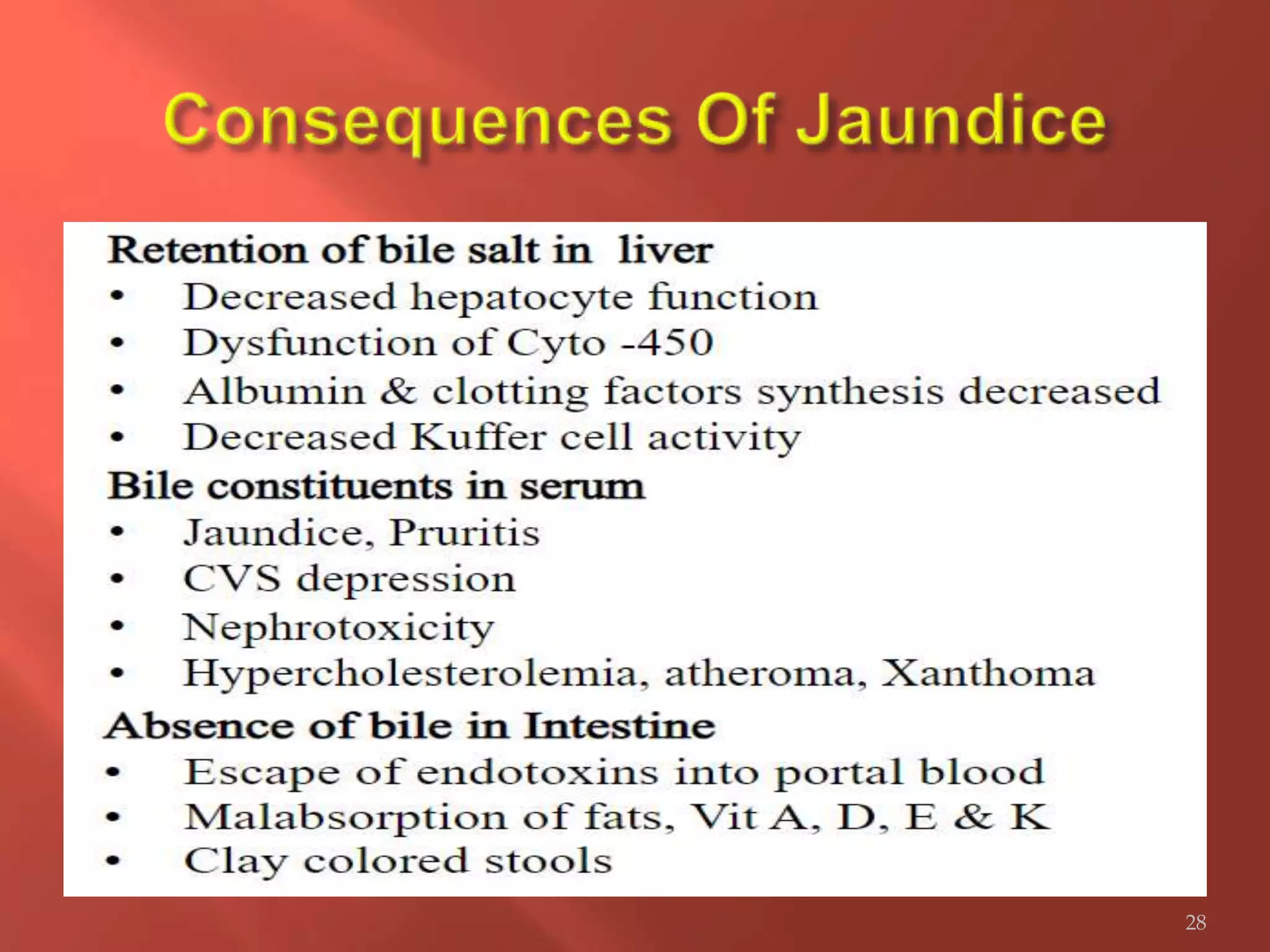
 Drug Metabolism
 Half life of some drugs prolonged. (e.g. morphine)
 Impaired wound healing
35
 Fluid and electrolytes
 Urine output monitoring
 Correction of coagulation defects
 Prevention of infection
 Nutrition ( enteral nutrition preferred
 Preoperative biliary decompression improves
postoperative morbidity
 Broad spectrum antibiotic prophylaxis
36
 Dehydration occurs in obstructive jaundice:
 Recurrent vomiting
 Decreased intake
 Fever
 Prevention of dehydration
 IV access and catheter
 Liberal fluid therapy with correction of electrolytes
 Pre operative fluid expansion
 Need careful post operative fluid balance to correct
depleted ECF compartment
37
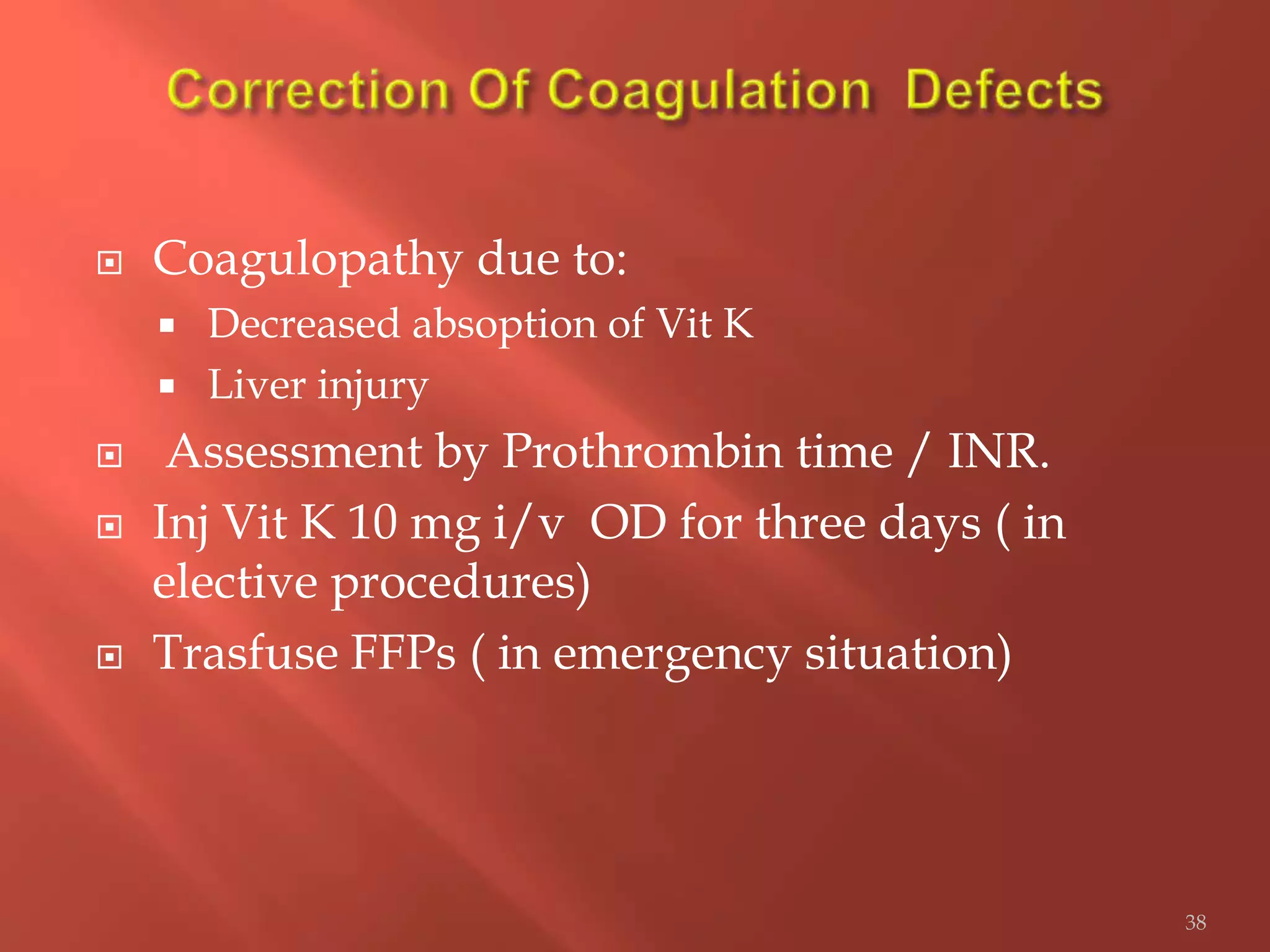
 Coagulopathy due to:
 Decreased absoption of Vit K
 Liver injury
 Assessment by Prothrombin time / INR.
 Inj Vit K 10 mg i/v OD for three days ( in
elective procedures)
 Trasfuse FFPs ( in emergency situation)
38
 Cholangitis and Sepsis :
 Gram negative org ( E.coli, K. pneumonae, P.
mirabilis,etc)
 Anaerobes
 Cephalosporins ( second and third generations)
 Floroquinolones
 Metronidazole
39
 Definitive treatment of the obstructive jaundice.
 Varies with the cause of obstruction and
condition of patient.
 Performed in physically fit and optimised
patients.
40
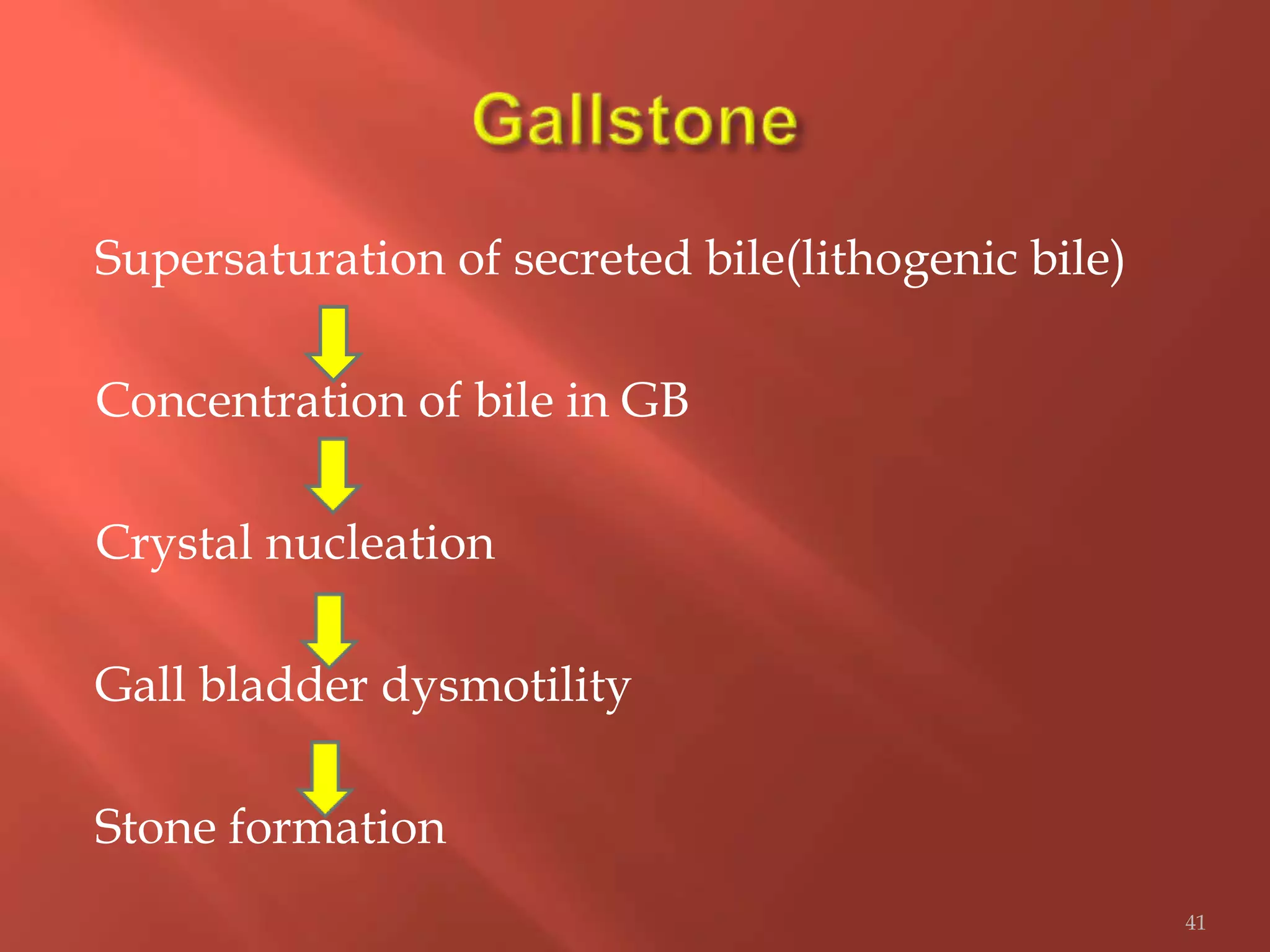
Supersaturation of secreted bile(lithogenic bile)
Concentration of bile in GB
Crystal nucleation
Gall bladder dysmotility
Stone formation
41
 Pure cholesterol stones
 (cholesterol solitaire)
 usually single
 rare (6%)
 Pigment stones
 Green or black coloured
 Usually multiple
 Tiny
 seen in hemolytic conditions
 Mixed
 90% of the gall bladder stones
 Multiple,
 Composed of cholesterol, calcium phosphates, carbonates,
palmitates
 Characteristically multifaceted
42
 TYPES
 PRIMARY- formed de novo in the bile duct. Brown
stones are common and usually multiple
 SECONDARY- stones formed in the gall bladder and
pass into the bile ducts
43
44
 ERCP- Sphincterotomy /Sphinctroplasty
 Laparoscopic CBD exploration
 Open CBD exploration
› Transduodenal sphincteroplasty
› Choledocho duodenostomy
› Roux en y choledocho jejunostomy
 Percutaneous drainage and stone extraction
 Lithotripsy
 Mechanical
 Intraductal Shock Wave Lithotripsy(cholangioscopy )
 Extracorporeal Shock Wave Lithotripsy
45
46

Obstructive jaundice (final year mbbs lecture )

  • 1.
    Dr Muzaffar Mehdi MBBS,MD Gastroenterology Senior Registrar Gastroenterology Sheikh Zayed Postgraduate Medical Institute Lahore
  • 2.
  • 3.
  • 4.
     Name: xyz Age: 68 years  Sex: Male  Resident of Faisalabad Chief Complaints  Pain abdomen – 20 days  Itching – 20 days  Fever – 3 days Colicky type Gradual in onset Intermittent in nature Over right upper part of abdomen Non radiating No aggravating/relieving factors Gradual in onset Progresive in nature Genrlised in extent Relieved on medications 20 days duration Low grade Intermittent in nature Not associated with rigors or chills No diurinal variations 4 History of yellowish discoloration of eyes and urine since 15 days No comorbidities
  • 5.
    General Physical Exam An elderly male patient  Moderately built and nourished  Conscious and oriented.  Pallor +  Icterus +  No cyanosis  No Oedema  No Clubbing  Scratch marks ++ over the abdomen and peripheries  Pulse rate 62/min  Blood pressure 130/80 mm of hg  Respiratory rate 16/min Abdominal Examination:  Inspection:  Normal in size and shape  No dilated veins, scars and sinuses  All quadrants move correspondingly with respiration  Palpation:  Soft. Tenderness in right hypochondrium and epigastrium.  Palpable hard mass of about 5 x 3 cms felt in the epigastrium with an irregular border.  Hepatomegaly +, 3 cms below the costal margin  Percussion  No shifting dullness 5
  • 6.
     Routine LabeInvestigation  CBC, INR  LFTS  RFTs, S/E  ECG ,CXR  Specific Investigations  USG Abdomen  CT scan abdomen  MRCP  EUS 6 Total Bilirubin: 9.0 (0.1 – 1.0) Direct Bilirubin: 5.3 (0.0 – 0.2) Indirect Bilirubin: 3.7 Albumin: 2.8 (3.4 – 5.0) A/G Ratio: 0.9 (1.2 – 2.5) AST: 39 (0 – 40) ALT: 32 (0 – 40) Alkaline Phosphatase: 570 (37 – 147) Upper G.I. Endoscopy: Bulging growth in Periampullary region. C.T. Scan: Moderated IHDD, with mass in periampullary area ,no mets
  • 7.
  • 8.
     Jaundice isa yellowish discoloration of the skin, mucous membranes and of the white of the eyes caused by elevated levels of the chemical bilirubin in the blood  jaundice is derived from the French word jaune, which means yellow.  jaundice is not a disease process in itself but is a symptom and sign of underlying disease  Jaundice is typically seen when the level of bilirubin in the blood exceeds 2.5-3 mg/dL 8
  • 9.
    9 GLOBINHAEM HAEMOGLOBIN Biliverdin Unconjugated bilirubin Bound toalbumin Conjugated bilirubin Bound to glocuronic acid Urobilonogin Excretion via urine and feces Reabsorption via enterohepatic circulation Prehepatic Hepatic Post hepatic Iron Amino acid 90% 10%
  • 10.
  • 11.
     It canbe largely divided into two types:  Non-obstructive, i.e. pre-hepatic and hepatic causes.  Obstructive, caused by obstruction( partial ,intermittent or complete) to the outflow of bile resulting in accumulation of conjugated bilirubin blood i.e. post- hepatic causes. 11
  • 12.
  • 13.
  • 14.
     Yellowish discolorationof sclera  Epigastric pain /Pain abdomen  Fever  Pruritus  Loss of weight  Loss of appetite  Increased bleeding tendency  Steatorrhoea or Dark stool  Dark Orange Urine 14
  • 15.
     Charcot’s triad Reynold’s Pentad  Palpable and / or tender gallbladder (Courvioser’s law)  Hepatomegaly  Splenomegaly  Ascites  Xanthomas xanthelasma  Scratch marks  Shiny nails  Finger clubbing  Loose, pale, bulky, offensive stools  Dark orange urine 15
  • 16.
  • 17.
  • 18.
  • 19.
  • 20.
     Serum Bilirubin Serum Albumin  Albumin: Globulin ( A:G) ratio  Prothrombin time  Serum Alkaline Phosphatase (ALP)  SGOT/ AST  SGPT/ ALT  Gamma Glutamyl Transferase (GGT)  5’- Nucleotidase  CA 19-9  Stool for Occult Blood 20
  • 21.
  • 22.
  • 23.
    Features Prehepatic IntrahepaticPosthepatic Unconjugated Bilirubin (Indirect Bilirubin ) Normal Normal Conjugated Bilirubin (Direct Bilirubin ) Normal AST ALT Normal Normal ALP Normal Normal Urine Bilirubin Absent Present Urobilionogin Present Absent Albumin Normal Normal /Decreased PT Normal 23
  • 24.
    Extra hepatic Intrahepatic Abdominalpain Present Absent Fever Present Absent Prodromal symptoms Absent Present Drugs Absent Present History of surgery Present Absent Risk factors (transfusion) Absent Present Family history Absent Present Stigmata of cirrhosis Absent Present Encaphlopathy Absent Present Pt Normalising with vit K Present Absent 24
  • 25.
     Ultrasound  ERCP MRCP  PTC  Oral Cholecystography  CT Cholangiography (CT –IV C)  Intraoperative Cholangiography  T-Tube Cholangiography  Hepatobiliary Scintigraphy  EUS 25
  • 26.
     To confirmthe presence of obstruction  To determine the level of the obstruction  To provide complementary information relating to the underlying cause of the obstruction  Diagnosis (eg., Staging information in cases of malignancy).  What is the best therapeutic approach? 26
  • 27.
  • 28.
  • 29.
     First-line imaging Normal CBD <8 mm diameter  CBD diameter increase with age &previous biliary surgery  Sensitivity 70 - 95% and specificity 80 - 100%  Hindered by intestinal gas and obesity& ascites  Advantages  Non-invasive  Painless  No radiation Exposure  Real time images  Disadvantages  Operator Depended 29
  • 30.
     Integral partin diagnosis of obstructive jaundice.  Useful in obese and excessive bowel gas cases  Sensitivity of CT in detection of CBD stones is about 22 %  Investigation of choice if malignancy is suspected  Extra hepatic biliary system  Pancreas  Gall Bladder  Staging of tumor  Operability of tumor 30
  • 31.
     Non Invasive Investigation of choice for detecting biliary pathology.  No intravenous contrast  Purely diagnostic  Contraindicated in patients with pacemaker, cerebral aneurism clips, other metal implants  MRCP uses T2-weighted imaging with parameters designed to afford best view of bile duct  Fast, effective, non-invasive way to image biliary tract  Demonstrates  Ductal dilatation and strictures with 95% sensitivity, Stone visualization - 75-95%,  Better than CT or US 31
  • 32.
     Provides dynamic informationduring contrast medium introduction and drainage  CBD Stones  Sensitivity 90-95 % Specificity 92-98 %  Offers the option of intervention  Stone extraction  Sphinterotomy  Placement of biliary stent  Disadvantages  Invasive  Bleeding, pancreatitis, cholangitis, perforation( 10 %) 32
  • 33.
     Detailed imagingof organs in close proximity  Sensitivity (94%) and specificity (95%) - diagnosis of choledocholithiasis  Tissue sampling (EUS-FNA)  EUS-FNA  73 %sensitive -----cholangiocarcinoma  97% in predicting ---unresectability  High detection rates (96%-100%)  Staging accuracy (better than CT and MRI)  Duodenal involvement  CBD wall involvement  Invasion of the pancreas  Portal vein  Spread to regional lymph nodes 33
  • 34.
     Preferred techniquein proximal obstruction when ERCP is not possible  The catheter is placed into the intrahepatic bile duct through patient’s skin guided by US and fixed on the skin  Option of tissue biopsy Intervention with drain or stent  Largely replaced by non- invasive techniques like MRCP  Valid Role in post Bilio- enteric anastamotic strictures 34
  • 35.
     Ascending cholangitis Charcot's triad is classical clinical picture  Hepatic abscesses -cholangitic abcess  Clotting disorders Defects  Vitamin K required for gamma-carboxylation of Factors II, VII, IX, XI VII, IX, XI  Hepato-renal syndrome  Renal failure post intervention  Due to gram negative endotoxinaemia from gut  Drug Metabolism  Half life of some drugs prolonged. (e.g. morphine)  Impaired wound healing 35
  • 36.
     Fluid andelectrolytes  Urine output monitoring  Correction of coagulation defects  Prevention of infection  Nutrition ( enteral nutrition preferred  Preoperative biliary decompression improves postoperative morbidity  Broad spectrum antibiotic prophylaxis 36
  • 37.
     Dehydration occursin obstructive jaundice:  Recurrent vomiting  Decreased intake  Fever  Prevention of dehydration  IV access and catheter  Liberal fluid therapy with correction of electrolytes  Pre operative fluid expansion  Need careful post operative fluid balance to correct depleted ECF compartment 37
  • 38.
     Coagulopathy dueto:  Decreased absoption of Vit K  Liver injury  Assessment by Prothrombin time / INR.  Inj Vit K 10 mg i/v OD for three days ( in elective procedures)  Trasfuse FFPs ( in emergency situation) 38
  • 39.
     Cholangitis andSepsis :  Gram negative org ( E.coli, K. pneumonae, P. mirabilis,etc)  Anaerobes  Cephalosporins ( second and third generations)  Floroquinolones  Metronidazole 39
  • 40.
     Definitive treatmentof the obstructive jaundice.  Varies with the cause of obstruction and condition of patient.  Performed in physically fit and optimised patients. 40
  • 41.
    Supersaturation of secretedbile(lithogenic bile) Concentration of bile in GB Crystal nucleation Gall bladder dysmotility Stone formation 41
  • 42.
     Pure cholesterolstones  (cholesterol solitaire)  usually single  rare (6%)  Pigment stones  Green or black coloured  Usually multiple  Tiny  seen in hemolytic conditions  Mixed  90% of the gall bladder stones  Multiple,  Composed of cholesterol, calcium phosphates, carbonates, palmitates  Characteristically multifaceted 42
  • 43.
     TYPES  PRIMARY-formed de novo in the bile duct. Brown stones are common and usually multiple  SECONDARY- stones formed in the gall bladder and pass into the bile ducts 43
  • 44.
  • 45.
     ERCP- Sphincterotomy/Sphinctroplasty  Laparoscopic CBD exploration  Open CBD exploration › Transduodenal sphincteroplasty › Choledocho duodenostomy › Roux en y choledocho jejunostomy  Percutaneous drainage and stone extraction  Lithotripsy  Mechanical  Intraductal Shock Wave Lithotripsy(cholangioscopy )  Extracorporeal Shock Wave Lithotripsy 45
  • 46.