OBSESSIVE AND COMPULSIVE DISORDER
Prepared by:-
Mrs. Arunjyoti Baruah.
Assoc. Prof & HOD
Dept. of Psychiatric Nursing
LGBRIMH, Tezpur
INTRODUCTION:-
 Obsessive compulsive disorder, OCD is an anxiety
disorder and is characterized by recurrent, unwanted
thoughts (obsessions) and /or repetitive behaviors
(compulsions).
 Repetitive behaviors such as hand washing, counting,
checking, or cleaning are often performed with the hope
of preventing obsessive thoughts or making them go
away.
 Performing these so called “rituals”, however provides
only temporary relief, and not performing them markedly
increases anxiety.
Signs and symptoms:-
 Persistent, unwelcome
thoughts or images, or
by the urgent need to
engage in certain
rituals.
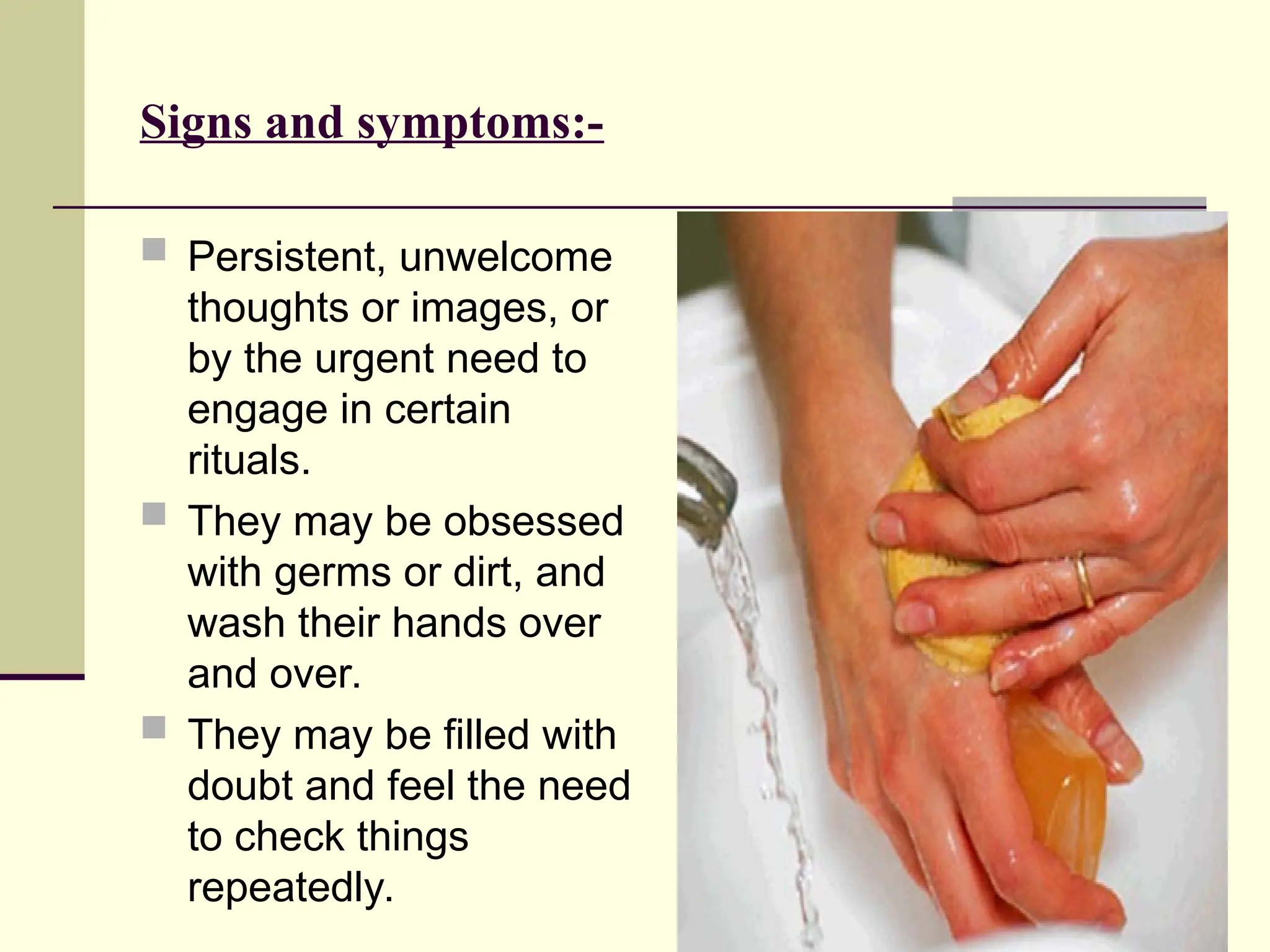
 They may be obsessed
with germs or dirt, and
wash their hands over
and over.
 They may be filled with
doubt and feel the need
to check things
repeatedly.
Diagnostic criteria:-
 To be diagnosed with OCD, a person must have
obsessions and/or compulsions, according to the
DSM-IV-TR diagnostic criteria.
 Obsessions-
 Recurrent and persistent thoughts, impulses, or
images that are experienced as intrusive and that
cause marked anxiety or distress.
 The thoughts, impulses, or images are not simply
excessive worries about real-life problems.
Cont---
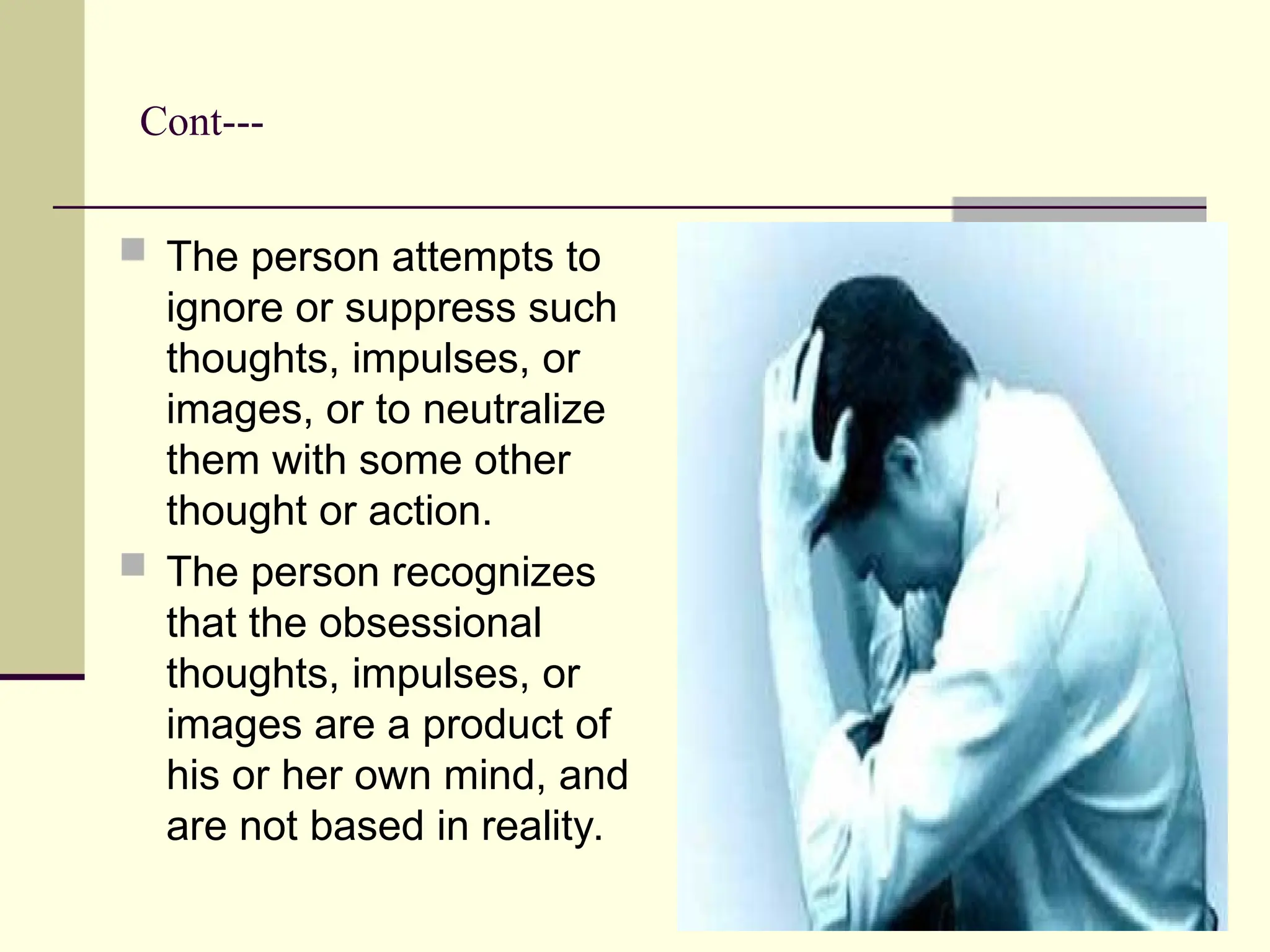
 The person attempts to
ignore or suppress such
thoughts, impulses, or
images, or to neutralize
them with some other
thought or action.
 The person recognizes
that the obsessional
thoughts, impulses, or
images are a product of
his or her own mind, and
are not based in reality.
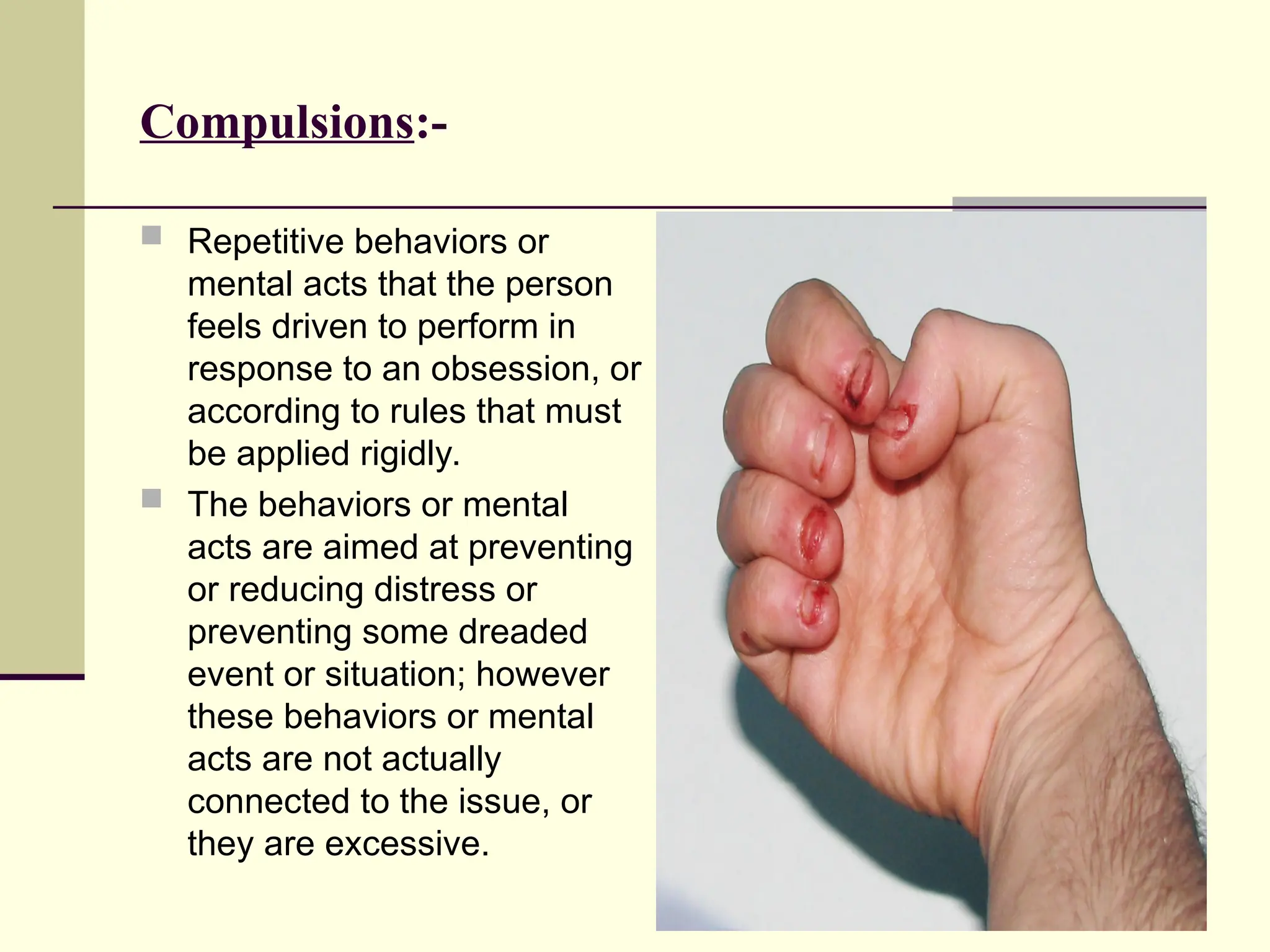
Compulsions:-
 Repetitive behaviors or
mental acts that the person
feels driven to perform in
response to an obsession, or
according to rules that must
be applied rigidly.
 The behaviors or mental
acts are aimed at preventing
or reducing distress or
preventing some dreaded
event or situation; however
these behaviors or mental
acts are not actually
connected to the issue, or
they are excessive.
Cont---
 In addition to these criteria, at some point during the
course of the disorder, the individual must realize that
his/her obsessions or compulsions are unreasonable
or excessive.
 Moreover, the obsessions or compulsions must be
time-consuming (taking up more than one hour per
day), cause distress, or cause impairment in social,
occupational, or school functioning.
 OCD often causes feelings similar to those of
depression.
Related conditions:-
 OCD is often confused with the separate condition
obsessive-compulsive personality disorder. The two
are not the same condition.
 OCD is ego dystonic, meaning that the disorder is
incompatible with the sufferer’s self-concept.
 Because disorders that are ego dystonic go against
an individual’s perception of his/herself, they tend to
cause much distress.
 OCPD, on the other hand, is ego syntonic-marked by
the individual’s acceptance that the characteristics
displayed as a result of this disorder are compatible
with his/her self-image. It does not cause distress.
Etiological theories:-
I. Psychodynamics-
 Freud placed origin for obsessive-compulsive
characteristics in anal stage of development. The
child is mastering bowel and bladder control at this
stage and derives pleasure from controlling his/her
own body and indirectly the actions of others.
 Erikson’s comparable stage for this disorder is
autonomy versus shame and doubt. The child learns
that to be neat and tidy and to handle bodily wastes
properly gains parental approval and to be messy
brings criticism and rejection.
Cont---
 The defensive mechanisms used in obsessive-
compulsive behaviors are unconscious attempts by
the client to protect the self from internal anxiety.
II. Biological-
 Although biological and neurophysiological influences
in the etiology of anxiety disorders have been
investigated, no relationship has yet been
established.
 The mind-body connection is well accepted, but it is
difficult to establish whether the biological changes
cause anxiety or the emotional state causes
physiological manifestations.
Cont---
III. Family dynamics-
 The individual exhibiting dysfunctional behavior is
seen as the representation of family system
problems.
 Multiple factors contribute to anxiety disorders.
Treatment-
 According to the Expert Consensus Guidelines for
the treatment of obsessive-compulsive disorder are
as follows-
 Behavioral therapy.
 Cognitive therapy.
 Medications are first line treatments for OCD.
 Psychodynamic psychotherapy may help in
managing some aspects of the disorder but there are
no controlled studies that demonstrate effectiveness
of psychoanalysis or dynamic psychotherapy in OCD.
Cont---
1. Behavior therapy-
 The specific technique used is called exposure and
ritual prevention (also known as “exposure and
response prevention”) or ERP; this involves gradually
learning to tolerate the anxiety associated with not
performing the ritual behavior without going back and
checking again (ritual prevention).
2. Medication-
 SSRIs such as paroxetine, sertraline, fluoxetine,
fluvoxamine as well as the tricyclic antidepressants,
in particular clomipramine.
Cont---
 Benzodiazepines are also used in treatment.
Although widely prescribed, benzodiazepines have
not been demonstrated as an effective treatment for
OCD and may be habit forming in those with a history
of substance abuse.
 Alternative drug treatments- the naturally occurring
sugar inositol has been suggested as a treatment for
OCD.
Nursing management:-
 Client assessment data base-
- activity/rest.
- ego integrity.
- pre-onset.
- hygiene.
- neurosensory.
- social interactions.
 Nursing planning & implementation-
- assist client to recognize onset of anxiety.
- explore the meaning and purpose of the behavior with
the client
Cont---
- assist client to limit ritualistic behaviors.
- help client learn alternative responses to stress.
- encourage family participation in therapy program.
obsessive compulsive disorder and management .ppt

obsessive compulsive disorder and management .ppt

  • 1.
    OBSESSIVE AND COMPULSIVEDISORDER Prepared by:- Mrs. Arunjyoti Baruah. Assoc. Prof & HOD Dept. of Psychiatric Nursing LGBRIMH, Tezpur
  • 2.
    INTRODUCTION:-  Obsessive compulsivedisorder, OCD is an anxiety disorder and is characterized by recurrent, unwanted thoughts (obsessions) and /or repetitive behaviors (compulsions).  Repetitive behaviors such as hand washing, counting, checking, or cleaning are often performed with the hope of preventing obsessive thoughts or making them go away.  Performing these so called “rituals”, however provides only temporary relief, and not performing them markedly increases anxiety.
  • 3.
    Signs and symptoms:- Persistent, unwelcome thoughts or images, or by the urgent need to engage in certain rituals.  They may be obsessed with germs or dirt, and wash their hands over and over.  They may be filled with doubt and feel the need to check things repeatedly.
  • 4.
    Diagnostic criteria:-  Tobe diagnosed with OCD, a person must have obsessions and/or compulsions, according to the DSM-IV-TR diagnostic criteria.  Obsessions-  Recurrent and persistent thoughts, impulses, or images that are experienced as intrusive and that cause marked anxiety or distress.  The thoughts, impulses, or images are not simply excessive worries about real-life problems.
  • 5.
    Cont---  The personattempts to ignore or suppress such thoughts, impulses, or images, or to neutralize them with some other thought or action.  The person recognizes that the obsessional thoughts, impulses, or images are a product of his or her own mind, and are not based in reality.
  • 6.
    Compulsions:-  Repetitive behaviorsor mental acts that the person feels driven to perform in response to an obsession, or according to rules that must be applied rigidly.  The behaviors or mental acts are aimed at preventing or reducing distress or preventing some dreaded event or situation; however these behaviors or mental acts are not actually connected to the issue, or they are excessive.
  • 7.
    Cont---  In additionto these criteria, at some point during the course of the disorder, the individual must realize that his/her obsessions or compulsions are unreasonable or excessive.  Moreover, the obsessions or compulsions must be time-consuming (taking up more than one hour per day), cause distress, or cause impairment in social, occupational, or school functioning.  OCD often causes feelings similar to those of depression.
  • 8.
    Related conditions:-  OCDis often confused with the separate condition obsessive-compulsive personality disorder. The two are not the same condition.  OCD is ego dystonic, meaning that the disorder is incompatible with the sufferer’s self-concept.  Because disorders that are ego dystonic go against an individual’s perception of his/herself, they tend to cause much distress.  OCPD, on the other hand, is ego syntonic-marked by the individual’s acceptance that the characteristics displayed as a result of this disorder are compatible with his/her self-image. It does not cause distress.
  • 9.
    Etiological theories:- I. Psychodynamics- Freud placed origin for obsessive-compulsive characteristics in anal stage of development. The child is mastering bowel and bladder control at this stage and derives pleasure from controlling his/her own body and indirectly the actions of others.  Erikson’s comparable stage for this disorder is autonomy versus shame and doubt. The child learns that to be neat and tidy and to handle bodily wastes properly gains parental approval and to be messy brings criticism and rejection.
  • 10.
    Cont---  The defensivemechanisms used in obsessive- compulsive behaviors are unconscious attempts by the client to protect the self from internal anxiety. II. Biological-  Although biological and neurophysiological influences in the etiology of anxiety disorders have been investigated, no relationship has yet been established.  The mind-body connection is well accepted, but it is difficult to establish whether the biological changes cause anxiety or the emotional state causes physiological manifestations.
  • 11.
    Cont--- III. Family dynamics- The individual exhibiting dysfunctional behavior is seen as the representation of family system problems.  Multiple factors contribute to anxiety disorders.
  • 12.
    Treatment-  According tothe Expert Consensus Guidelines for the treatment of obsessive-compulsive disorder are as follows-  Behavioral therapy.  Cognitive therapy.  Medications are first line treatments for OCD.  Psychodynamic psychotherapy may help in managing some aspects of the disorder but there are no controlled studies that demonstrate effectiveness of psychoanalysis or dynamic psychotherapy in OCD.
  • 13.
    Cont--- 1. Behavior therapy- The specific technique used is called exposure and ritual prevention (also known as “exposure and response prevention”) or ERP; this involves gradually learning to tolerate the anxiety associated with not performing the ritual behavior without going back and checking again (ritual prevention). 2. Medication-  SSRIs such as paroxetine, sertraline, fluoxetine, fluvoxamine as well as the tricyclic antidepressants, in particular clomipramine.
  • 14.
    Cont---  Benzodiazepines arealso used in treatment. Although widely prescribed, benzodiazepines have not been demonstrated as an effective treatment for OCD and may be habit forming in those with a history of substance abuse.  Alternative drug treatments- the naturally occurring sugar inositol has been suggested as a treatment for OCD.
  • 15.
    Nursing management:-  Clientassessment data base- - activity/rest. - ego integrity. - pre-onset. - hygiene. - neurosensory. - social interactions.  Nursing planning & implementation- - assist client to recognize onset of anxiety. - explore the meaning and purpose of the behavior with the client
  • 16.
    Cont--- - assist clientto limit ritualistic behaviors. - help client learn alternative responses to stress. - encourage family participation in therapy program.