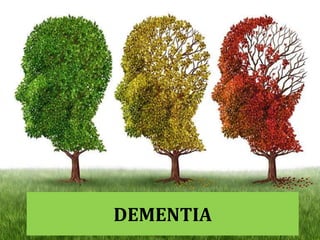
DEMENTIA
INTRODUCTION
• Cognition is that operation of the mind process by
which we become aware of objects of thought and
perception, including all aspects of perceiving,
thinking and remembering. Organic brain
syndrome is general term referring to many
physical disorders that cause impaired mental
function.
DEMENTIA
• Dementia is a loss of mental skills that affects
daily life. It can cause problems with
memory, think and plan. Usually dementia
gets worse over time.
ETIOLOGY
• Neurodegenerative conditions – 60-80 %- alzhiemers,
down syndrome , parkinsons diseses.
• Vascular diseases
• Bacterial conditions – meningitis, encephalitis
• Advanced age is a risk factor .
• Environmental factors: metals and toxins.
• Excessive amount of metal ions, such as zinc and copper,
in brain.
• Head injury
• Stroke
• Brain tumor
• Vascular dementia (also called multi-infarct dementia) –
resulting from brain cell death caused by conditions such as
cerebrovascular disease
• Injury – post-traumatic dementia is directly related to brain cell
death caused by injury.
• Prion diseases – for instance, CJD (Creutzfeldt-Jakob disease).
• HIV infection – how the virus damages brain cells is not certain,
but it is known to occur.
• Reversible factors – some dementias can be treated by reversing
the effects of underlying causes, including medication
interactions, depression, vitamin deficiencies, and thyroid
abnormalities.
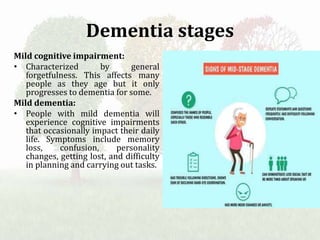
Dementia stages
Mild cognitive impairment:
• Characterized by general
forgetfulness. This affects many
people as they age but it only
progresses to dementia for some.
Mild dementia:
• People with mild dementia will
experience cognitive impairments
that occasionally impact their daily
life. Symptoms include memory
loss, confusion, personality
changes, getting lost, and difficulty
in planning and carrying out tasks.
Moderate dementia:
• Daily life becomes more challenging, and the
individual may need more help. Symptoms
are similar to mild dementia but increased.
Individuals may need help getting dressed
and combing their hair. They may also show
significant changes in personality; for
instance, becoming suspicious or agitated for
no reason. There are also likely to be sleep
disturbances.
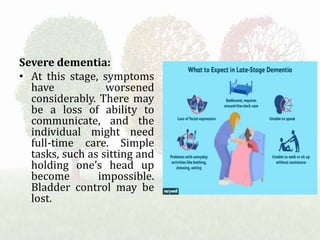
Severe dementia:
• At this stage, symptoms
have worsened
considerably. There may
be a loss of ability to
communicate, and the
individual might need
full-time care. Simple
tasks, such as sitting and
holding one’s head up
become impossible.
Bladder control may be
lost.
Alzheimer’s disease
• The most common type of dementia, Alzheimer’s disease
makes up 60 to 80 percent of dementia cases.
Vascular dementia.
• This type of dementia is caused by reduced blood flow in
the brain. It may be the result of plaque buildup in
arteries that feed blood to the brain or a stroke
Lewy body dementia.
• Protein deposits in nerve cells prevent the brain from sending
chemical signals. This results in lost messages, delayed
reactions, and memory loss.
Parkinson’s disease dementia.
• Individuals with advanced Parkinson’s disease may develop
dementia. Symptoms of this particular type of dementia include
problems with reasoning and judgment, as well as increased
irritability, paranoia, and depression.
Frontotemporal dementia
• Several types of dementia fall into this category. They’re
each affected by changes in the front and side parts of
the brain. Symptoms include difficulty with language and
behavior, as well as loss of inhibitions.
Huntington’s disease
• It is characterized by specific types of uncontrolled
movements but also includes dementia.
DIAGNOSIS
• Medical history
• A physical examination
• Mental status exam
• Laboratory tests
– Thyroid hormone tests to check for an
underactive thyroid.
– Vitamin B12 blood test to look for a vitamin
deficiency.
– Other lab tests that may be done include:
– Complete blood count (CBC) to look for
infections.
– ALT or AST blood tests to check liver function.
– Chemistry screen. This test checks the level of
electrolytes in the blood and checks kidney
function.
– Glucose test to check the level of sugar in the
blood.
– HIV testing to look for AIDS.
– Erythrocyte sedimentation rate
blood test. It looks for signs of
inflammation in the body.
– Toxicology screen. This test
examines blood, urine, or hair to
look for drugs that could be causing
problems.
– Antinuclear antibodies blood test to
diagnose autoimmune diseases.
– Testing, such as a lead test, to look
for heavy metals in the blood.
– A lumbar puncture to test for
certain proteins in the spinal fluid.
This test may also be done to rule
out other causes of symptoms.
• CT
• MRI
• EEG
MANAGEMENT
• Medications used in
treating the Alzheimer’s
diseases are,
– Tacrine hydrochloride
(cognex)
– Donepezil hydrochloride
(Aricept)
• Antipsychotic agents
– Risperidone
– Quetiapine
– Olanzapine
• Anticonvulsant to control
seizures.
• Antidepressant agents and
mood stabilizers
• Low doses of the selective
serotonin reuptake
inhibitors and other newer
anti-depressive agents
should be considered
NURSING INTERVENTION
• Daily routine
• Nutrition and body weight
• Personal hygiene
• Toilet habits and incontinence
• Accidents
• Fluid management
• Moods and emotions
• Wandering
• Disturbed sleep
• Interpersonal relationship
Dementia
Dementia
Dementia

Dementia

  • 1.
  • 2.
    INTRODUCTION • Cognition isthat operation of the mind process by which we become aware of objects of thought and perception, including all aspects of perceiving, thinking and remembering. Organic brain syndrome is general term referring to many physical disorders that cause impaired mental function.
  • 3.
    DEMENTIA • Dementia isa loss of mental skills that affects daily life. It can cause problems with memory, think and plan. Usually dementia gets worse over time.
  • 4.
    ETIOLOGY • Neurodegenerative conditions– 60-80 %- alzhiemers, down syndrome , parkinsons diseses. • Vascular diseases • Bacterial conditions – meningitis, encephalitis • Advanced age is a risk factor . • Environmental factors: metals and toxins. • Excessive amount of metal ions, such as zinc and copper, in brain.
  • 5.
    • Head injury •Stroke • Brain tumor • Vascular dementia (also called multi-infarct dementia) – resulting from brain cell death caused by conditions such as cerebrovascular disease • Injury – post-traumatic dementia is directly related to brain cell death caused by injury. • Prion diseases – for instance, CJD (Creutzfeldt-Jakob disease). • HIV infection – how the virus damages brain cells is not certain, but it is known to occur. • Reversible factors – some dementias can be treated by reversing the effects of underlying causes, including medication interactions, depression, vitamin deficiencies, and thyroid abnormalities.
  • 6.
    Dementia stages Mild cognitiveimpairment: • Characterized by general forgetfulness. This affects many people as they age but it only progresses to dementia for some. Mild dementia: • People with mild dementia will experience cognitive impairments that occasionally impact their daily life. Symptoms include memory loss, confusion, personality changes, getting lost, and difficulty in planning and carrying out tasks.
  • 7.
    Moderate dementia: • Dailylife becomes more challenging, and the individual may need more help. Symptoms are similar to mild dementia but increased. Individuals may need help getting dressed and combing their hair. They may also show significant changes in personality; for instance, becoming suspicious or agitated for no reason. There are also likely to be sleep disturbances.
  • 8.
    Severe dementia: • Atthis stage, symptoms have worsened considerably. There may be a loss of ability to communicate, and the individual might need full-time care. Simple tasks, such as sitting and holding one’s head up become impossible. Bladder control may be lost.
  • 9.
    Alzheimer’s disease • Themost common type of dementia, Alzheimer’s disease makes up 60 to 80 percent of dementia cases. Vascular dementia. • This type of dementia is caused by reduced blood flow in the brain. It may be the result of plaque buildup in arteries that feed blood to the brain or a stroke
  • 10.
    Lewy body dementia. •Protein deposits in nerve cells prevent the brain from sending chemical signals. This results in lost messages, delayed reactions, and memory loss. Parkinson’s disease dementia. • Individuals with advanced Parkinson’s disease may develop dementia. Symptoms of this particular type of dementia include problems with reasoning and judgment, as well as increased irritability, paranoia, and depression.
  • 11.
    Frontotemporal dementia • Severaltypes of dementia fall into this category. They’re each affected by changes in the front and side parts of the brain. Symptoms include difficulty with language and behavior, as well as loss of inhibitions. Huntington’s disease • It is characterized by specific types of uncontrolled movements but also includes dementia.
  • 12.
    DIAGNOSIS • Medical history •A physical examination • Mental status exam • Laboratory tests – Thyroid hormone tests to check for an underactive thyroid. – Vitamin B12 blood test to look for a vitamin deficiency. – Other lab tests that may be done include: – Complete blood count (CBC) to look for infections. – ALT or AST blood tests to check liver function. – Chemistry screen. This test checks the level of electrolytes in the blood and checks kidney function. – Glucose test to check the level of sugar in the blood. – HIV testing to look for AIDS. – Erythrocyte sedimentation rate blood test. It looks for signs of inflammation in the body. – Toxicology screen. This test examines blood, urine, or hair to look for drugs that could be causing problems. – Antinuclear antibodies blood test to diagnose autoimmune diseases. – Testing, such as a lead test, to look for heavy metals in the blood. – A lumbar puncture to test for certain proteins in the spinal fluid. This test may also be done to rule out other causes of symptoms. • CT • MRI • EEG
  • 13.
    MANAGEMENT • Medications usedin treating the Alzheimer’s diseases are, – Tacrine hydrochloride (cognex) – Donepezil hydrochloride (Aricept) • Antipsychotic agents – Risperidone – Quetiapine – Olanzapine • Anticonvulsant to control seizures. • Antidepressant agents and mood stabilizers • Low doses of the selective serotonin reuptake inhibitors and other newer anti-depressive agents should be considered
  • 14.
    NURSING INTERVENTION • Dailyroutine • Nutrition and body weight • Personal hygiene • Toilet habits and incontinence • Accidents • Fluid management • Moods and emotions • Wandering • Disturbed sleep • Interpersonal relationship