INTRODUCTION
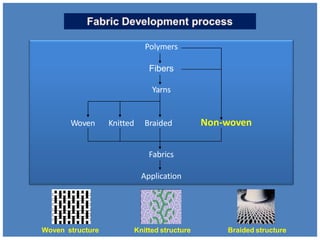
Polymers
Fibers
Yarns
Woven Knitted Braided Non-woven
Fabrics
Application
Woven structure Knitted structure Braided structure
Introduction
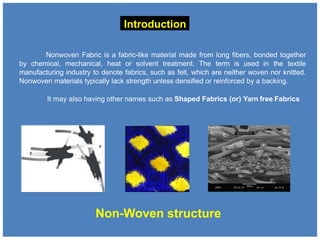
Nonwoven Fabric is a fabric-like material made from long fibers, bonded together
by chemical, mechanical, heat or solvent treatment. The term is used in the textile
manufacturing industry to denote fabrics, such as felt, which are neither woven nor knitted.
Nonwoven materials typically lack strength unless densified or reinforced by a backing.
It may also having other names such as Shaped Fabrics (or) Yarn free Fabrics
Non-Woven structure
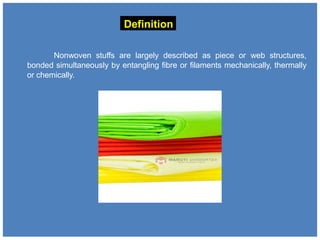
Definition
Nonwoven stuffs are largely described as piece or web structures,
bonded simultaneously by entangling fibre or filaments mechanically, thermally
or chemically.
Commercial Nonwoven
Products
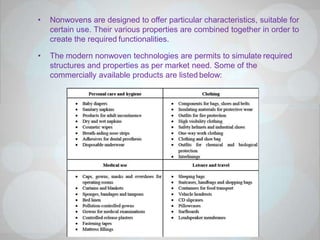
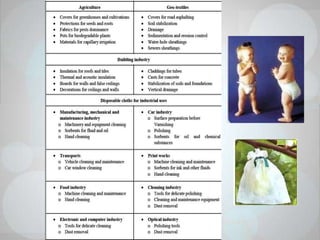
• Nonwovens are designed to offer particular characteristics, suitable for
certain use. Their various properties are combined together in order to
create the required functionalities.
• The modern nonwoven technologies are permits to simulate required
structures and properties as per market need. Some of the
commercially available products are listed below:
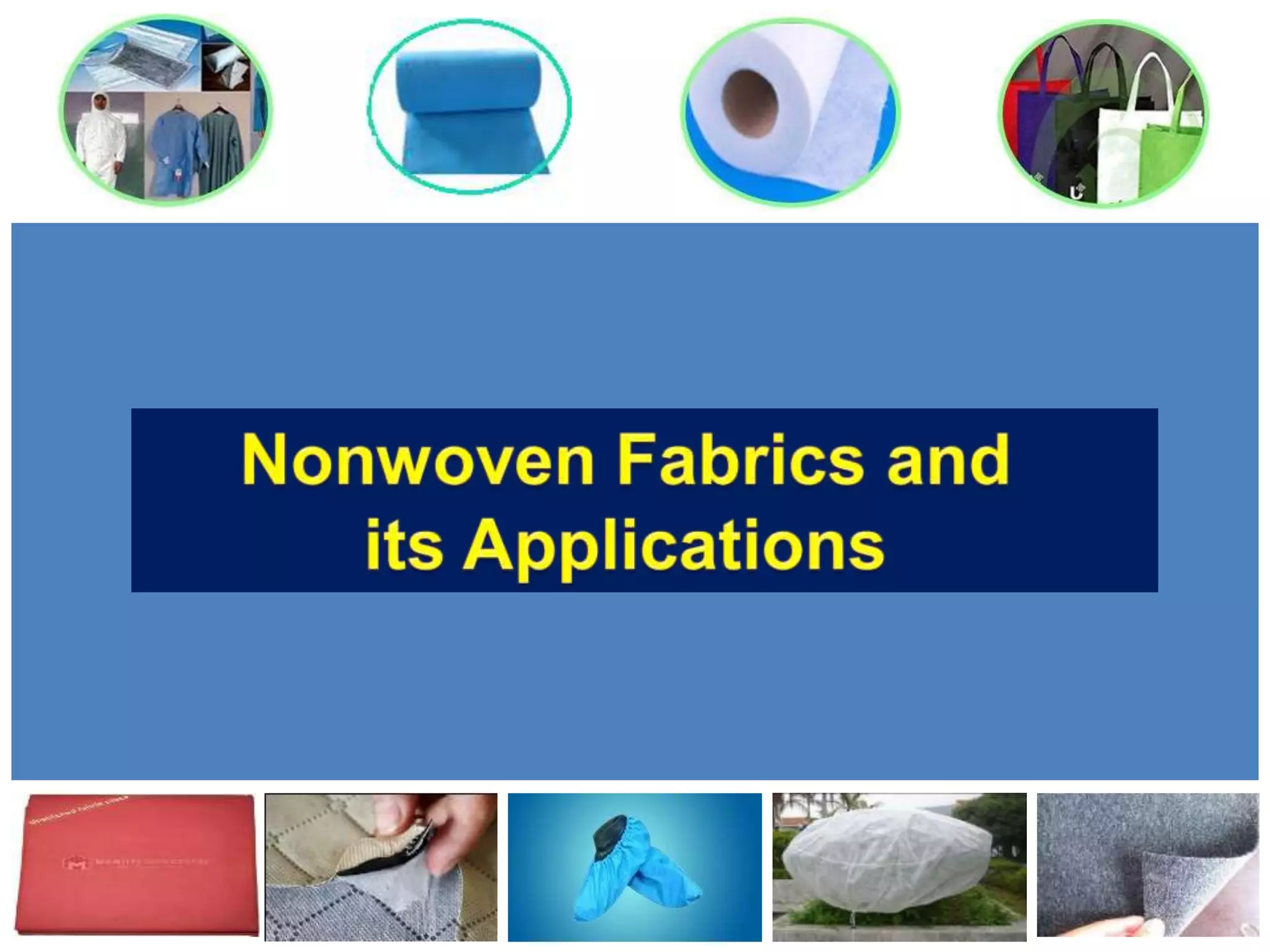
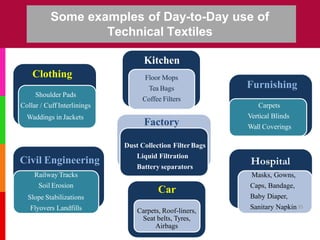
Some examples of Day-to-Day use of
Technical Textiles
Furnishing
Shoulder Pads
Collar / Cuff Interlinings
Waddings in Jackets
Clothing
Kitchen
Floor Mops
Tea Bags
Coffee Filters
Carpets
Vertical Blinds
Wall Coverings
Civil Engineering
Railway Tracks
Soil Erosion
Slope Stabilizations
Flyovers Landfills
Hospital
Masks, Gowns,
Caps, Bandage,
Baby Diaper,
Sanitary Napkin 35
Factory
Dust Collection FilterBags
Liquid Filtration
Battery separators
Carpets, Roof-liners,
Seat belts, Tyres,
Airbags
Car
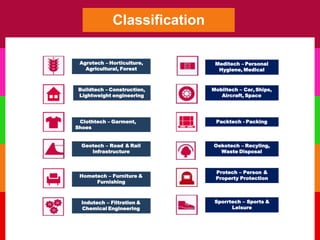
Agrotech – Horticulture,
Agricultural, Forest
Meditech – Personal
Hygiene, Medical
Mobiltech – Car, Ships,
Aircraft, Space
Buildtech – Construction,
Lightweight engineering
Oekotech – Recyling,
Waste Disposal
Clothtech – Garment,
Shoes
Packtech - Packing
Geotech – Road & Rail
Infrastructure
Protech – Person &
Property ProtectionHometech – Furniture &
Furnishing
Sporrtech – Sports &
Leisure
Indutech – Filtration &
Chemical Engineering
Classification
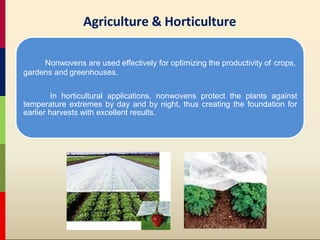
Nonwovens are used effectively for optimizing the productivity of crops,
gardens and greenhouses.
In horticultural applications, nonwovens protect the plants against
temperature extremes by day and by night, thus creating the foundation for
earlier harvests with excellent results.
Agriculture & Horticulture
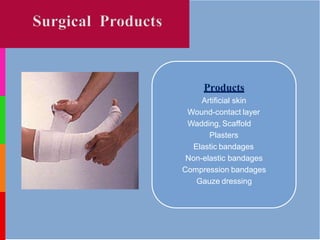
Products
Artificial skin
Wound-contact layer
Wadding, Scaffold
Plasters
Elastic bandages
Non-elastic bandages
Compression bandages
Gauze dressing
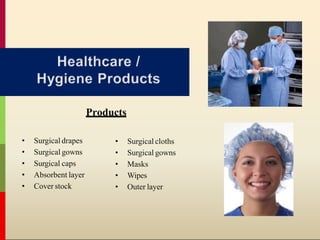
Products
• Surgical drapes
• Surgical gowns
• Surgical caps
• Absorbent layer
• Cover stock
• Surgical cloths
• Surgical gowns
• Masks
• Wipes
• Outer layer
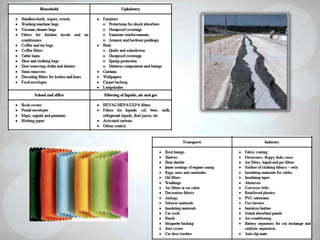
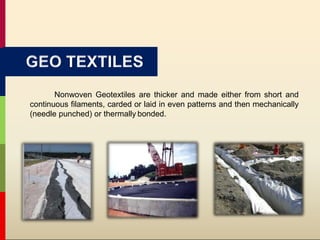
Nonwoven Geotextiles are thicker and made either from short and
continuous filaments, carded or laid in even patterns and then mechanically
(needle punched) or thermally bonded.
GEO TEXTILES
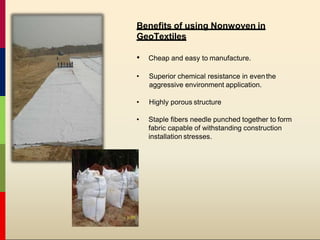
Benefits of using Nonwoven in
GeoTextiles
• Cheap and easy to manufacture.
• Superior chemical resistance in eventhe
aggressive environment application.
• Highly porous structure
• Staple fibers needle punched together to form
fabric capable of withstanding construction
installation stresses.
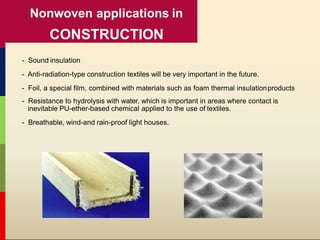
- Sound insulation
- Anti-radiation-type construction textiles will be very important in the future.
- Foil, a special film, combined with materials such as foam thermal insulationproducts
- Resistance to hydrolysis with water, which is important in areas where contact is
inevitable PU-ether-based chemical applied to the use of textiles.
- Breathable, wind-and rain-proof light houses.
Nonwoven applications in
CONSTRUCTION
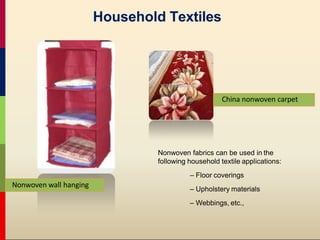
Household Textiles
Nonwoven fabrics can be used in the
following household textile applications:
– Floor coverings
– Upholstery materials
– Webbings, etc.,
Nonwoven wall hanging
China nonwoven carpet
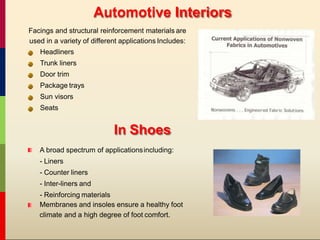
Automotive Interiors
Facings and structural reinforcement materials are
used in a variety of different applications Includes:
Headliners
Trunk liners
Door trim
Package trays
Sun visors
Seats
In Shoes
A broad spectrum of applicationsincluding:
- Liners
- Counter liners
- Inter-liners and
- Reinforcing materials
Membranes and insoles ensure a healthy foot
climate and a high degree of foot comfort.
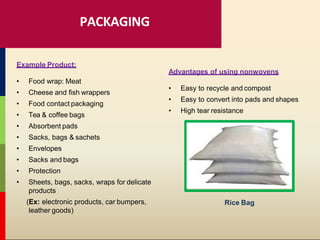
Advantages of using nonwovens
• Easy to recycle and compost
• Easy to convert into pads and shapes
• High tear resistance
Rice Bag
Example Product:
• Food wrap: Meat
• Cheese and fish wrappers
• Food contact packaging
• Tea & coffee bags
• Absorbent pads
• Sacks, bags & sachets
• Envelopes
• Sacks and bags
• Protection
• Sheets, bags, sacks, wraps for delicate
products
(Ex: electronic products, car bumpers,
leather goods)
PACKAGING
Nonwoven fabric

Nonwoven fabric

  • 2.
  • 3.
    Polymers Fibers Yarns Woven Knitted BraidedNon-woven Fabrics Application Woven structure Knitted structure Braided structure
  • 4.
    Introduction Nonwoven Fabric isa fabric-like material made from long fibers, bonded together by chemical, mechanical, heat or solvent treatment. The term is used in the textile manufacturing industry to denote fabrics, such as felt, which are neither woven nor knitted. Nonwoven materials typically lack strength unless densified or reinforced by a backing. It may also having other names such as Shaped Fabrics (or) Yarn free Fabrics Non-Woven structure
  • 5.
    Definition Nonwoven stuffs arelargely described as piece or web structures, bonded simultaneously by entangling fibre or filaments mechanically, thermally or chemically.
  • 6.
  • 7.
    • Nonwovens aredesigned to offer particular characteristics, suitable for certain use. Their various properties are combined together in order to create the required functionalities. • The modern nonwoven technologies are permits to simulate required structures and properties as per market need. Some of the commercially available products are listed below:
  • 10.
    Some examples ofDay-to-Day use of Technical Textiles Furnishing Shoulder Pads Collar / Cuff Interlinings Waddings in Jackets Clothing Kitchen Floor Mops Tea Bags Coffee Filters Carpets Vertical Blinds Wall Coverings Civil Engineering Railway Tracks Soil Erosion Slope Stabilizations Flyovers Landfills Hospital Masks, Gowns, Caps, Bandage, Baby Diaper, Sanitary Napkin 35 Factory Dust Collection FilterBags Liquid Filtration Battery separators Carpets, Roof-liners, Seat belts, Tyres, Airbags Car
  • 11.
    Agrotech – Horticulture, Agricultural,Forest Meditech – Personal Hygiene, Medical Mobiltech – Car, Ships, Aircraft, Space Buildtech – Construction, Lightweight engineering Oekotech – Recyling, Waste Disposal Clothtech – Garment, Shoes Packtech - Packing Geotech – Road & Rail Infrastructure Protech – Person & Property ProtectionHometech – Furniture & Furnishing Sporrtech – Sports & Leisure Indutech – Filtration & Chemical Engineering Classification
  • 12.
    Nonwovens are usedeffectively for optimizing the productivity of crops, gardens and greenhouses. In horticultural applications, nonwovens protect the plants against temperature extremes by day and by night, thus creating the foundation for earlier harvests with excellent results. Agriculture & Horticulture
  • 13.
    Products Artificial skin Wound-contact layer Wadding,Scaffold Plasters Elastic bandages Non-elastic bandages Compression bandages Gauze dressing
  • 14.
    Products • Surgical drapes •Surgical gowns • Surgical caps • Absorbent layer • Cover stock • Surgical cloths • Surgical gowns • Masks • Wipes • Outer layer
  • 15.
    Nonwoven Geotextiles arethicker and made either from short and continuous filaments, carded or laid in even patterns and then mechanically (needle punched) or thermally bonded. GEO TEXTILES
  • 16.
    Benefits of usingNonwoven in GeoTextiles • Cheap and easy to manufacture. • Superior chemical resistance in eventhe aggressive environment application. • Highly porous structure • Staple fibers needle punched together to form fabric capable of withstanding construction installation stresses.
  • 17.
    - Sound insulation -Anti-radiation-type construction textiles will be very important in the future. - Foil, a special film, combined with materials such as foam thermal insulationproducts - Resistance to hydrolysis with water, which is important in areas where contact is inevitable PU-ether-based chemical applied to the use of textiles. - Breathable, wind-and rain-proof light houses. Nonwoven applications in CONSTRUCTION
  • 18.
    Household Textiles Nonwoven fabricscan be used in the following household textile applications: – Floor coverings – Upholstery materials – Webbings, etc., Nonwoven wall hanging China nonwoven carpet
  • 19.
    Automotive Interiors Facings andstructural reinforcement materials are used in a variety of different applications Includes: Headliners Trunk liners Door trim Package trays Sun visors Seats In Shoes A broad spectrum of applicationsincluding: - Liners - Counter liners - Inter-liners and - Reinforcing materials Membranes and insoles ensure a healthy foot climate and a high degree of foot comfort.
  • 20.
    Advantages of usingnonwovens • Easy to recycle and compost • Easy to convert into pads and shapes • High tear resistance Rice Bag Example Product: • Food wrap: Meat • Cheese and fish wrappers • Food contact packaging • Tea & coffee bags • Absorbent pads • Sacks, bags & sachets • Envelopes • Sacks and bags • Protection • Sheets, bags, sacks, wraps for delicate products (Ex: electronic products, car bumpers, leather goods) PACKAGING