textile 
technical making Used in Fibers Prepared by- 
Md. Shariful Islam 
2007100400001 
Mithun Kumar Roy 
2007100400011 
MD. Shahriar Rabbani 
2007100400012 
MD. Touhidul Islam 
2007100400033 
MD. Kamal Hossain 
2007100400040 
MD. Sifath Bin Alam 
2007100400044
Introduction: 
• A Technical textile is a textile product manufactured 
for non-aesthetic purposes, where function is the 
primary criterion. It is a large and growing sector and 
supports a vast array of other industries. 
• . All fiber cannot be used to produce technical 
textiles because of there mechanical and chemical 
properties. 
• Some fibers have selected for making technical 
textile for there special properties.
Objectives: 
• To know which fibers are used in making 
technical textiles. 
• To know which properties allow them to be 
used in producing technical textiles. 
• To know which fiber is used in producing 
which technical textiles.
Descriptions: 
• The technical features of the fibers, 
• Image of there plants or production or 
structure, 
• Which fibers are used in which technical 
textiles are described below-
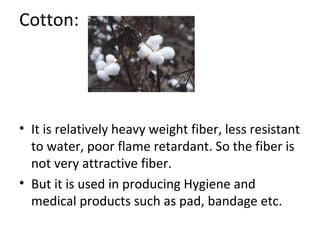
Cotton: 
• It is relatively heavy weight fiber, less resistant 
to water, poor flame retardant. So the fiber is 
not very attractive fiber. 
• But it is used in producing Hygiene and 
medical products such as pad, bandage etc.
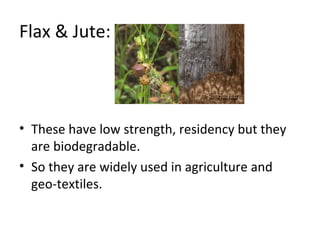
Flax & Jute: 
• These have low strength, residency but they 
are biodegradable. 
• So they are widely used in agriculture and 
geo-textiles.
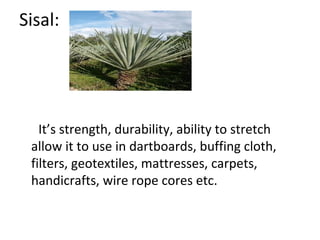
Sisal: 
It’s strength, durability, ability to stretch 
allow it to use in dartboards, buffing cloth, 
filters, geotextiles, mattresses, carpets, 
handicrafts, wire rope cores etc.
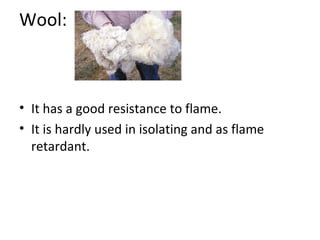
Wool: 
• It has a good resistance to flame. 
• It is hardly used in isolating and as flame 
retardant.
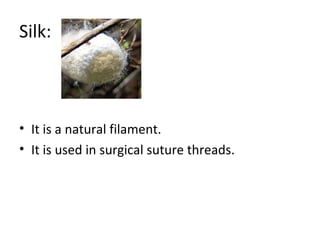
Silk: 
• It is a natural filament. 
• It is used in surgical suture threads.
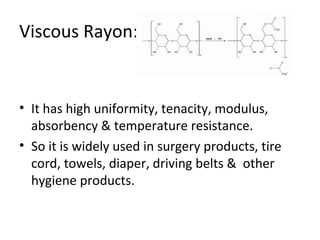
Viscous Rayon: 
• It has high uniformity, tenacity, modulus, 
absorbency & temperature resistance. 
• So it is widely used in surgery products, tire 
cord, towels, diaper, driving belts & other 
hygiene products.
Polyamide: 
• It has good strength, good abrasion 
resistance, good elasticity, uniformity & 
moisture resistance properties. 
• These properties allow it to use as climbing 
ropes, parachute fabric & sails.
Polyester: 
• It has good strength, good abrasion 
resistance, good elasticity, uniformity & 
moisture resistance properties. 
• It is used in home furnishings, bed sheets, tire 
reinforcements, fabrics for conveyor belts, 
cushioning and insulating material in pillows & 
many others.
Polypropylene: 
• It has low cost, low density, good abrasion 
resistance, moisture resistance. 
• Very thin sheets of polypropylene are used as a 
dielectric within certain high performance. 
• over 50% used for diapers or sanitary products. 
• Used in water filters or air conditioning type filters. 
• Packing, carpet packing etc are also uses of 
polypropylene.
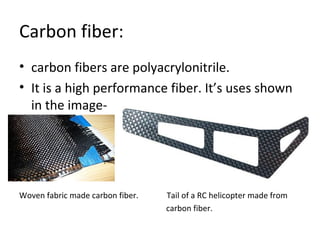
Carbon fiber: 
• carbon fibers are polyacrylonitrile. 
• It is a high performance fiber. It’s uses shown 
in the image- 
Woven fabric made carbon fiber. Tail of a RC helicopter made from 
carbon fiber.
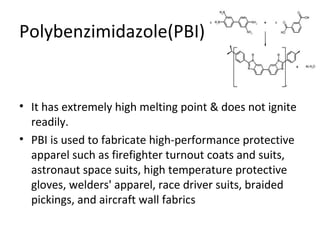
Polybenzimidazole(PBI): 
• It has extremely high melting point & does not ignite 
readily. 
• PBI is used to fabricate high-performance protective 
apparel such as firefighter turnout coats and suits, 
astronaut space suits, high temperature protective 
gloves, welders' apparel, race driver suits, braided 
pickings, and aircraft wall fabrics
High Modulus Polyethelene(HMPE): 
• It has extremely long chain, so it has a very good abrasion 
resistance(15 times more than carbon steel), highest impact 
strength, self-lubricating & non-toxic. 
• Used as body armor, vehicles armor, high-performance sails, 
suspension lines, on sport parachutes and paragliders, high-performance 
ropes for sailing and parasailing etc.
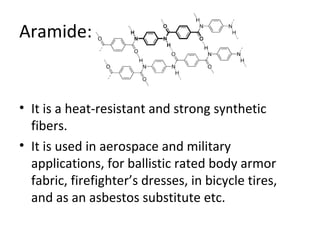
Aramide: 
• It is a heat-resistant and strong synthetic 
fibers. 
• It is used in aerospace and military 
applications, for ballistic rated body armor 
fabric, firefighter’s dresses, in bicycle tires, 
and as an asbestos substitute etc.
Polyether ether ketone (PEEK): 
• It is thermoplastic. 
• It is used in bearings, piston parts, pumps, 
compressor plate valves, and cable insulation.
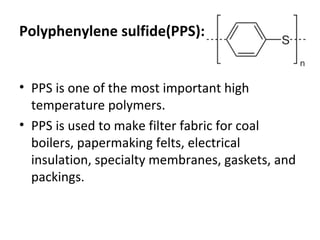
Polyphenylene sulfide(PPS): 
• PPS is one of the most important high 
temperature polymers. 
• PPS is used to make filter fabric for coal 
boilers, papermaking felts, electrical 
insulation, specialty membranes, gaskets, and 
packings.
Conclusion: 
From this presentation we have seen 
that there are some fibers using in high 
performance technology. That means textile is 
developing & enlarging it’s fields.

Fibers used in making technical textile

  • 1.
    textile technical makingUsed in Fibers Prepared by- Md. Shariful Islam 2007100400001 Mithun Kumar Roy 2007100400011 MD. Shahriar Rabbani 2007100400012 MD. Touhidul Islam 2007100400033 MD. Kamal Hossain 2007100400040 MD. Sifath Bin Alam 2007100400044
  • 2.
    Introduction: • ATechnical textile is a textile product manufactured for non-aesthetic purposes, where function is the primary criterion. It is a large and growing sector and supports a vast array of other industries. • . All fiber cannot be used to produce technical textiles because of there mechanical and chemical properties. • Some fibers have selected for making technical textile for there special properties.
  • 3.
    Objectives: • Toknow which fibers are used in making technical textiles. • To know which properties allow them to be used in producing technical textiles. • To know which fiber is used in producing which technical textiles.
  • 4.
    Descriptions: • Thetechnical features of the fibers, • Image of there plants or production or structure, • Which fibers are used in which technical textiles are described below-
  • 5.
    Cotton: • Itis relatively heavy weight fiber, less resistant to water, poor flame retardant. So the fiber is not very attractive fiber. • But it is used in producing Hygiene and medical products such as pad, bandage etc.
  • 6.
    Flax & Jute: • These have low strength, residency but they are biodegradable. • So they are widely used in agriculture and geo-textiles.
  • 7.
    Sisal: It’s strength,durability, ability to stretch allow it to use in dartboards, buffing cloth, filters, geotextiles, mattresses, carpets, handicrafts, wire rope cores etc.
  • 8.
    Wool: • Ithas a good resistance to flame. • It is hardly used in isolating and as flame retardant.
  • 9.
    Silk: • Itis a natural filament. • It is used in surgical suture threads.
  • 10.
    Viscous Rayon: •It has high uniformity, tenacity, modulus, absorbency & temperature resistance. • So it is widely used in surgery products, tire cord, towels, diaper, driving belts & other hygiene products.
  • 11.
    Polyamide: • Ithas good strength, good abrasion resistance, good elasticity, uniformity & moisture resistance properties. • These properties allow it to use as climbing ropes, parachute fabric & sails.
  • 12.
    Polyester: • Ithas good strength, good abrasion resistance, good elasticity, uniformity & moisture resistance properties. • It is used in home furnishings, bed sheets, tire reinforcements, fabrics for conveyor belts, cushioning and insulating material in pillows & many others.
  • 13.
    Polypropylene: • Ithas low cost, low density, good abrasion resistance, moisture resistance. • Very thin sheets of polypropylene are used as a dielectric within certain high performance. • over 50% used for diapers or sanitary products. • Used in water filters or air conditioning type filters. • Packing, carpet packing etc are also uses of polypropylene.
  • 14.
    Carbon fiber: •carbon fibers are polyacrylonitrile. • It is a high performance fiber. It’s uses shown in the image- Woven fabric made carbon fiber. Tail of a RC helicopter made from carbon fiber.
  • 15.
    Polybenzimidazole(PBI): • Ithas extremely high melting point & does not ignite readily. • PBI is used to fabricate high-performance protective apparel such as firefighter turnout coats and suits, astronaut space suits, high temperature protective gloves, welders' apparel, race driver suits, braided pickings, and aircraft wall fabrics
  • 16.
    High Modulus Polyethelene(HMPE): • It has extremely long chain, so it has a very good abrasion resistance(15 times more than carbon steel), highest impact strength, self-lubricating & non-toxic. • Used as body armor, vehicles armor, high-performance sails, suspension lines, on sport parachutes and paragliders, high-performance ropes for sailing and parasailing etc.
  • 17.
    Aramide: • Itis a heat-resistant and strong synthetic fibers. • It is used in aerospace and military applications, for ballistic rated body armor fabric, firefighter’s dresses, in bicycle tires, and as an asbestos substitute etc.
  • 18.
    Polyether ether ketone(PEEK): • It is thermoplastic. • It is used in bearings, piston parts, pumps, compressor plate valves, and cable insulation.
  • 19.
    Polyphenylene sulfide(PPS): •PPS is one of the most important high temperature polymers. • PPS is used to make filter fabric for coal boilers, papermaking felts, electrical insulation, specialty membranes, gaskets, and packings.
  • 20.
    Conclusion: From thispresentation we have seen that there are some fibers using in high performance technology. That means textile is developing & enlarging it’s fields.