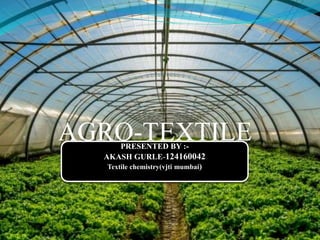
AGRO-TEXTILEPRESENTED BY :-
AKASH GURLE-124160042
Textile chemistry(vjti mumbai)
Content:
Benefits
of Agro-
textile
Classification
of Agro-textile
Fibers used
for Agro-
textile
Application
of Agro-
textile
Product list
of agro-
tech
Conclusion
Agro-Textile
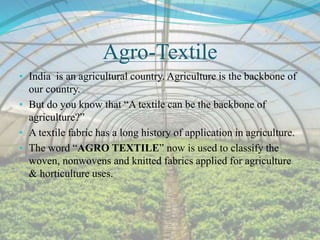
• India is an agricultural country. Agriculture is the backbone of
our country.
• But do you know that “A textile can be the backbone of
agriculture?”
• A textile fabric has a long history of application in agriculture.
• The word “AGRO TEXTILE” now is used to classify the
woven, nonwovens and knitted fabrics applied for agriculture
& horticulture uses.
What is Agro-textile?
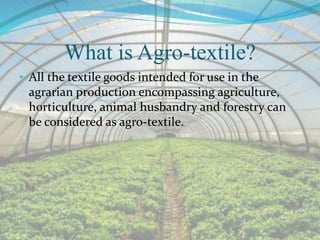
• All the textile goods intended for use in the
agrarian production encompassing agriculture,
horticulture, animal husbandry and forestry can
be considered as agro-textile.
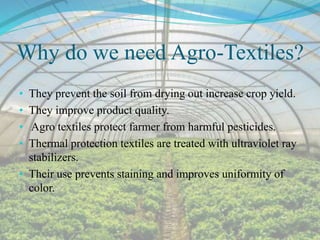
Why do we need Agro-Textiles?
• They prevent the soil from drying out increase crop yield.
• They improve product quality.
• Agro textiles protect farmer from harmful pesticides.
• Thermal protection textiles are treated with ultraviolet ray
stabilizers.
• Their use prevents staining and improves uniformity of
color.
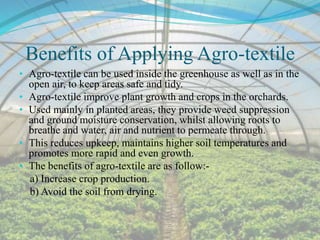
Benefits of Applying Agro-textile
• Agro-textile can be used inside the greenhouse as well as in the
open air, to keep areas safe and tidy.
• Agro-textile improve plant growth and crops in the orchards.
• Used mainly in planted areas, they provide weed suppression
and ground moisture conservation, whilst allowing roots to
breathe and water, air and nutrient to permeate through.
• This reduces upkeep, maintains higher soil temperatures and
promotes more rapid and even growth.
• The benefits of agro-textile are as follow:-
a) Increase crop production.
b) Avoid the soil from drying.
Classification of Agro-textile
• Horticulture, Floriculture, and Forestry
• Animal husbandry, Aqua culture
• Engineering related application
• Crop production
Fibers used for Agro-textile:
There is use of synthetics as well as natural fiber in agro-textile.
Fiber used in agro-textile are as follow:
Synthetics fiber Natural fiber
• Nylon
• Polyester
• Polyethylene
• Polyolefin
• Polypropylene
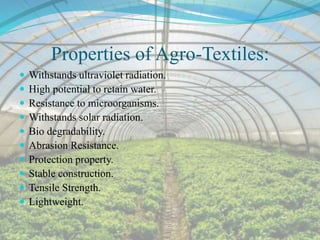
Properties of Agro-Textiles:
 Withstands ultraviolet radiation.
 High potential to retain water.
 Resistance to microorganisms.
 Withstands solar radiation.
 Bio degradability.
 Abrasion Resistance.
 Protection property.
 Stable construction.
 Tensile Strength.
 Lightweight.
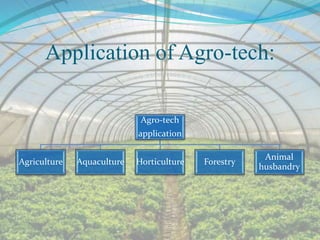
Application of Agro-tech:
Agro-tech
application
Agriculture Aquaculture Horticulture Forestry
Animal
husbandry
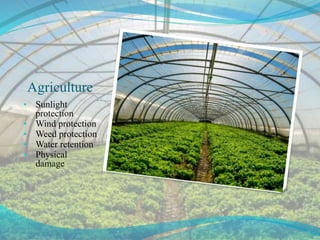
• Sunlight
protection
• Wind protection
• Weed protection
• Water retention
• Physical
damage
Agriculture
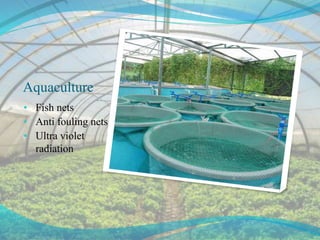
Aquaculture
• Fish nets
• Anti fouling nets
• Ultra violet
radiation
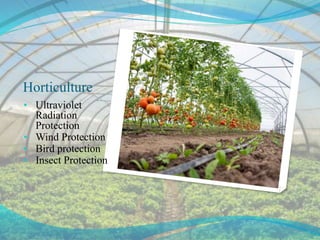
Horticulture
• Ultraviolet
Radiation
Protection
• Wind Protection
• Bird protection
• Insect Protection
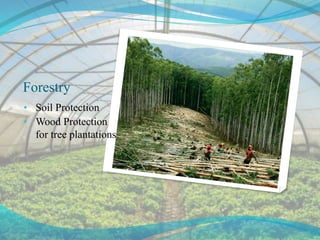
Forestry
• Soil Protection
• Wood Protection
for tree plantations
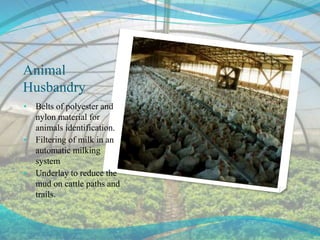
Animal
Husbandry
• Belts of polyester and
nylon material for
animals identification.
• Filtering of milk in an
automatic milking
system
• Underlay to reduce the
mud on cattle paths and
trails.
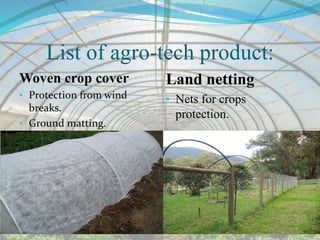
List of agro-tech product:
Woven crop cover
• Protection from wind
breaks.
• Ground matting.
Land netting
• Nets for crops
protection.
List of agro-tech product:
Non woven crop
protection
• Fabric for crop cover &
protection.
Capillary matting
Heavy weight non woven
&ground cover.
List of agro-tech product:
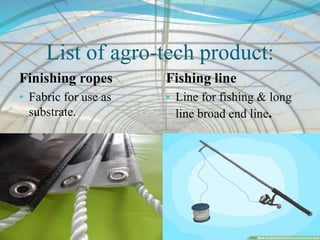
Finishing ropes
• Fabric for use as
substrate.
Fishing line
• Line for fishing & long
line broad end line.
List of agro-tech product:
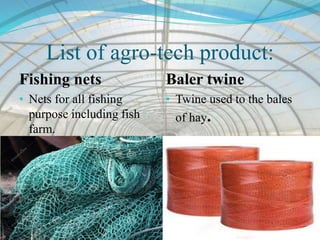
Fishing nets
• Nets for all fishing
purpose including fish
farm.
Baler twine
• Twine used to the bales
of hay.
Conclusion
 Agro textile plays a significant role to help control environment
for crop production. Eliminate variation in climate.Weather
change and generate optimum condition for plant growth.
Thus, the need of textile goods in the field of agriculture has
been stressed and role in the reduced usage of harmful
pesticides and herbicides to render a healthy farming culture
underlined. Unique manufacturing technique and properties of
this blend of agro-textile sector products whose cost is lesser
than that pesticides and chemical herbicides have been
emphasized. Textiles prove to be flexible in their suitability for
specific geographical locations. So now it is our turn, to
carefully and beautifully shape this infant technology, to
contribute to the nation’s economy.
THANK YOU

Agrotech (technical textile)

  • 1.
    AGRO-TEXTILEPRESENTED BY :- AKASHGURLE-124160042 Textile chemistry(vjti mumbai)
  • 2.
    Content: Benefits of Agro- textile Classification of Agro-textile Fibersused for Agro- textile Application of Agro- textile Product list of agro- tech Conclusion
  • 3.
    Agro-Textile • India isan agricultural country. Agriculture is the backbone of our country. • But do you know that “A textile can be the backbone of agriculture?” • A textile fabric has a long history of application in agriculture. • The word “AGRO TEXTILE” now is used to classify the woven, nonwovens and knitted fabrics applied for agriculture & horticulture uses.
  • 4.
    What is Agro-textile? •All the textile goods intended for use in the agrarian production encompassing agriculture, horticulture, animal husbandry and forestry can be considered as agro-textile.
  • 5.
    Why do weneed Agro-Textiles? • They prevent the soil from drying out increase crop yield. • They improve product quality. • Agro textiles protect farmer from harmful pesticides. • Thermal protection textiles are treated with ultraviolet ray stabilizers. • Their use prevents staining and improves uniformity of color.
  • 6.
    Benefits of ApplyingAgro-textile • Agro-textile can be used inside the greenhouse as well as in the open air, to keep areas safe and tidy. • Agro-textile improve plant growth and crops in the orchards. • Used mainly in planted areas, they provide weed suppression and ground moisture conservation, whilst allowing roots to breathe and water, air and nutrient to permeate through. • This reduces upkeep, maintains higher soil temperatures and promotes more rapid and even growth. • The benefits of agro-textile are as follow:- a) Increase crop production. b) Avoid the soil from drying.
  • 7.
    Classification of Agro-textile •Horticulture, Floriculture, and Forestry • Animal husbandry, Aqua culture • Engineering related application • Crop production
  • 8.
    Fibers used forAgro-textile: There is use of synthetics as well as natural fiber in agro-textile. Fiber used in agro-textile are as follow: Synthetics fiber Natural fiber • Nylon • Polyester • Polyethylene • Polyolefin • Polypropylene
  • 9.
    Properties of Agro-Textiles: Withstands ultraviolet radiation.  High potential to retain water.  Resistance to microorganisms.  Withstands solar radiation.  Bio degradability.  Abrasion Resistance.  Protection property.  Stable construction.  Tensile Strength.  Lightweight.
  • 10.
    Application of Agro-tech: Agro-tech application AgricultureAquaculture Horticulture Forestry Animal husbandry
  • 11.
    • Sunlight protection • Windprotection • Weed protection • Water retention • Physical damage Agriculture
  • 12.
    Aquaculture • Fish nets •Anti fouling nets • Ultra violet radiation
  • 13.
    Horticulture • Ultraviolet Radiation Protection • WindProtection • Bird protection • Insect Protection
  • 14.
    Forestry • Soil Protection •Wood Protection for tree plantations
  • 15.
    Animal Husbandry • Belts ofpolyester and nylon material for animals identification. • Filtering of milk in an automatic milking system • Underlay to reduce the mud on cattle paths and trails.
  • 16.
    List of agro-techproduct: Woven crop cover • Protection from wind breaks. • Ground matting. Land netting • Nets for crops protection.
  • 17.
    List of agro-techproduct: Non woven crop protection • Fabric for crop cover & protection. Capillary matting Heavy weight non woven &ground cover.
  • 18.
    List of agro-techproduct: Finishing ropes • Fabric for use as substrate. Fishing line • Line for fishing & long line broad end line.
  • 19.
    List of agro-techproduct: Fishing nets • Nets for all fishing purpose including fish farm. Baler twine • Twine used to the bales of hay.
  • 20.
    Conclusion  Agro textileplays a significant role to help control environment for crop production. Eliminate variation in climate.Weather change and generate optimum condition for plant growth. Thus, the need of textile goods in the field of agriculture has been stressed and role in the reduced usage of harmful pesticides and herbicides to render a healthy farming culture underlined. Unique manufacturing technique and properties of this blend of agro-textile sector products whose cost is lesser than that pesticides and chemical herbicides have been emphasized. Textiles prove to be flexible in their suitability for specific geographical locations. So now it is our turn, to carefully and beautifully shape this infant technology, to contribute to the nation’s economy.
  • 21.