FEM(non
linear
analysis)
Unit-5
S. YUVARAJ
ASSISTANT PROFESSOR
K.S.R. COLLEGE OF ENGINEEING
TIRUCHENGODE
FEM(Finite Element Method)
• The finite element method is a means of
obtaining approximate numerical solutions to
field problems”.
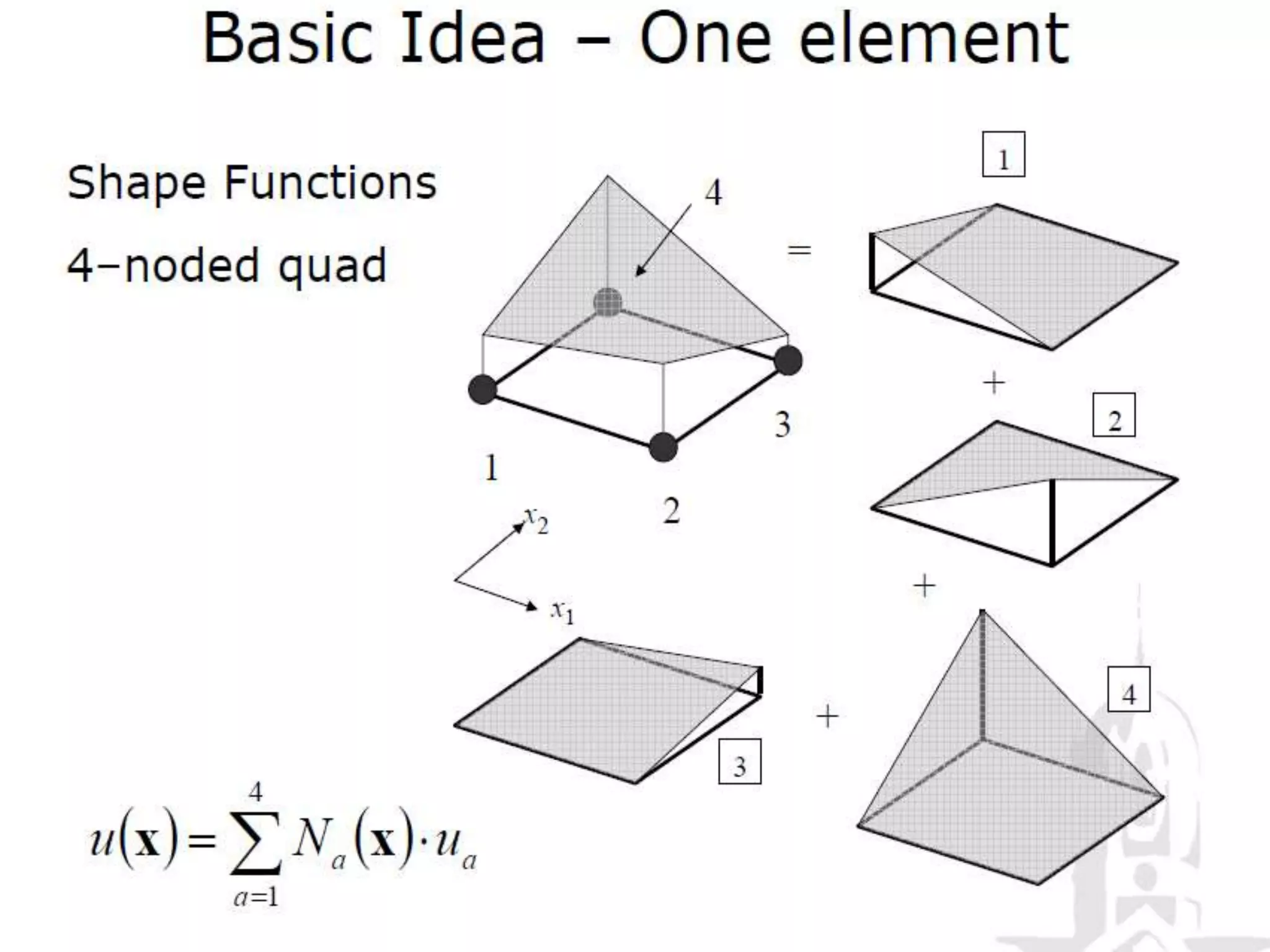
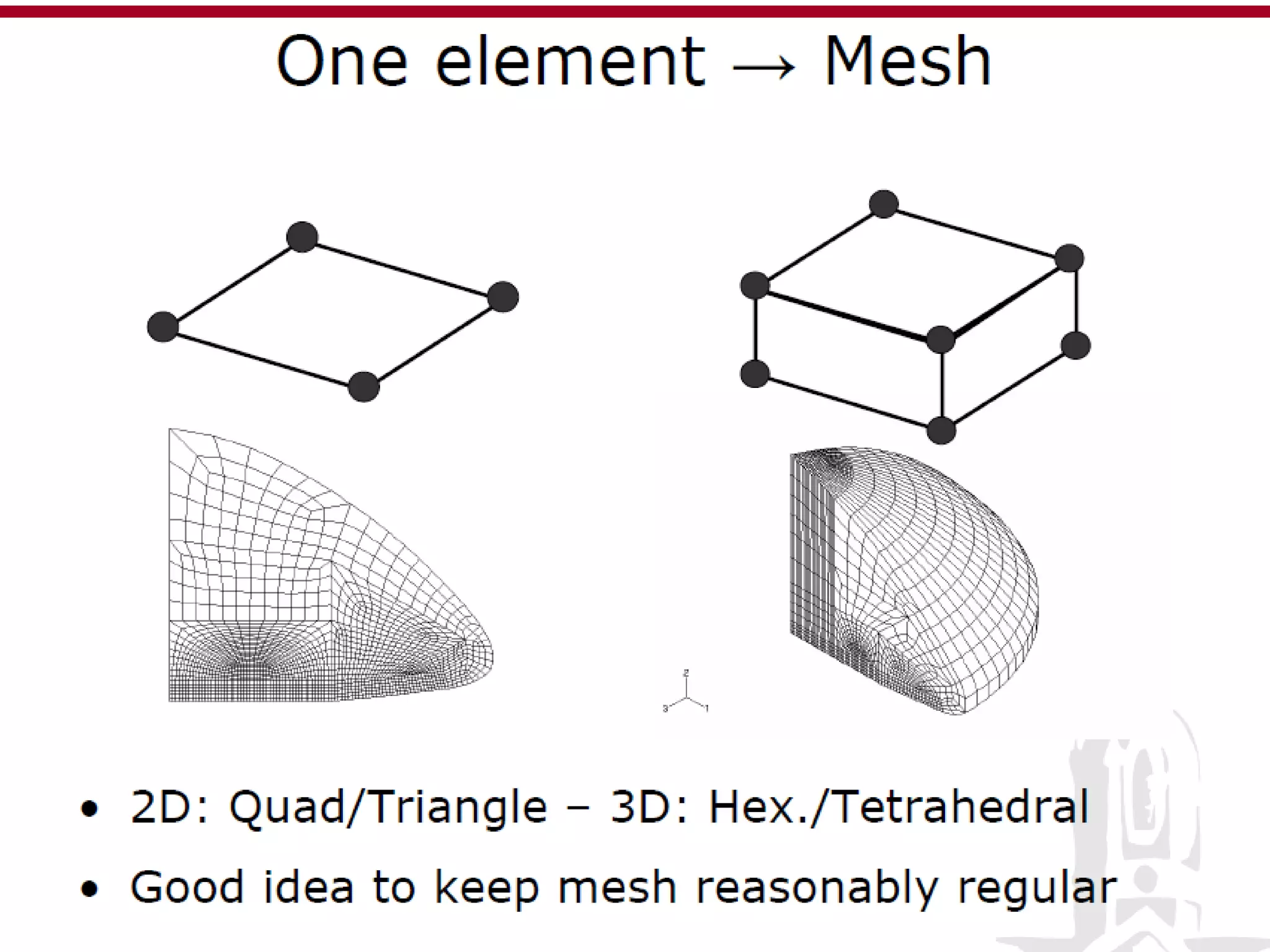
• Replace solution variable distribution with
approximate distribution based on:
– fixed solution “shapes” over elements
– solution variable values at nodes
• Continuous → Discrete
FE Approximation
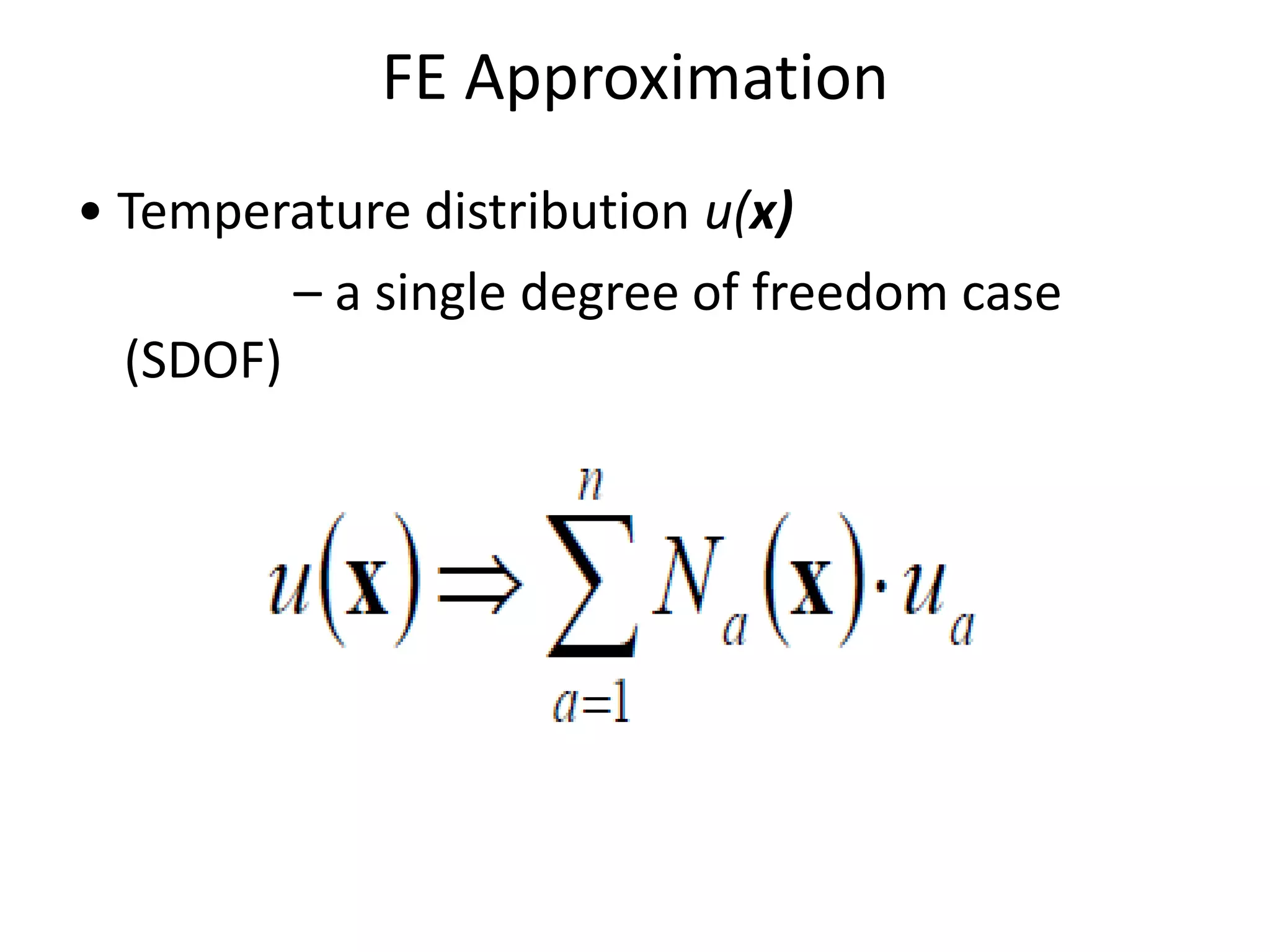
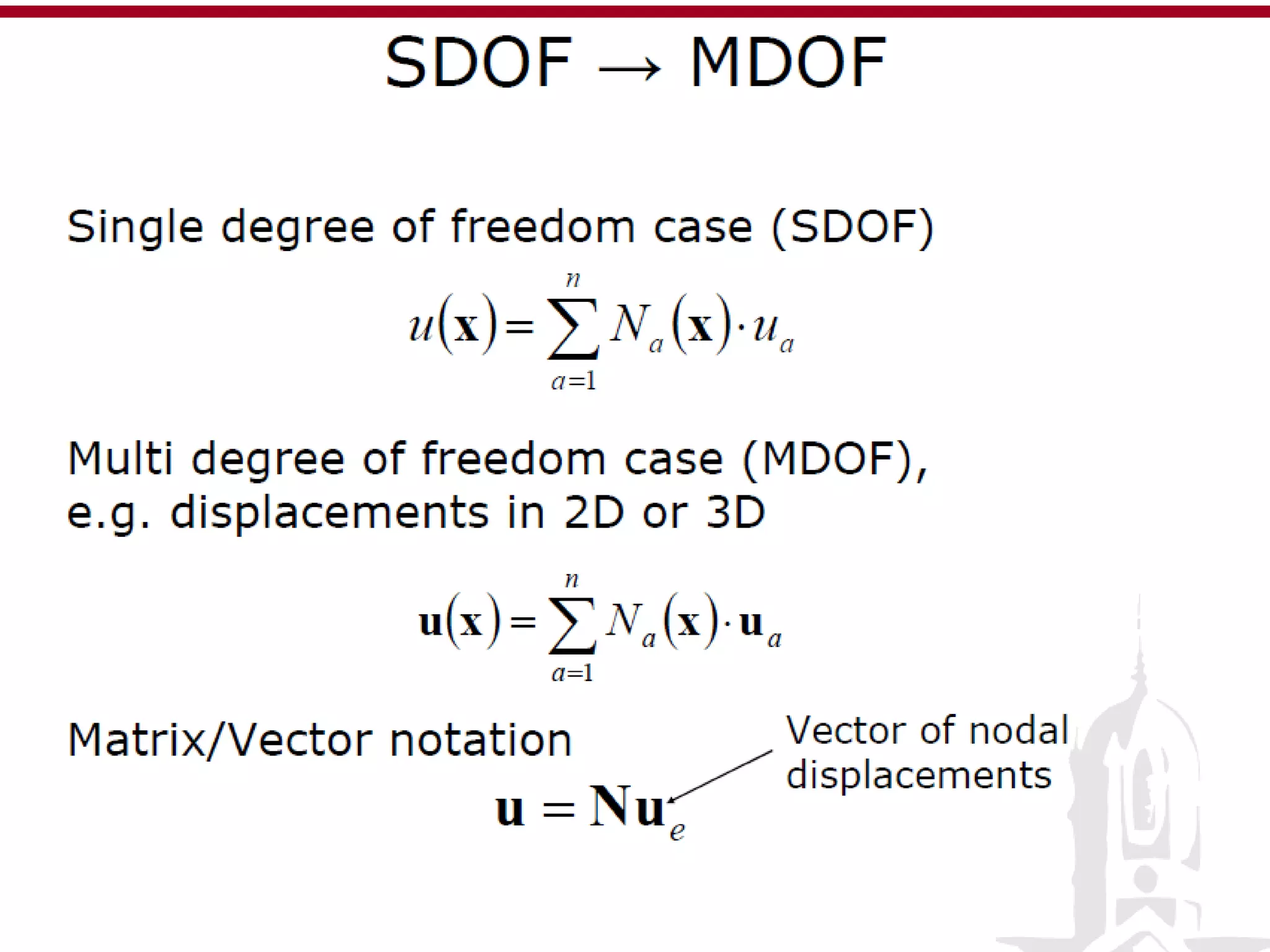
• Temperature distribution u(x)
– a single degree of freedom case
(SDOF)
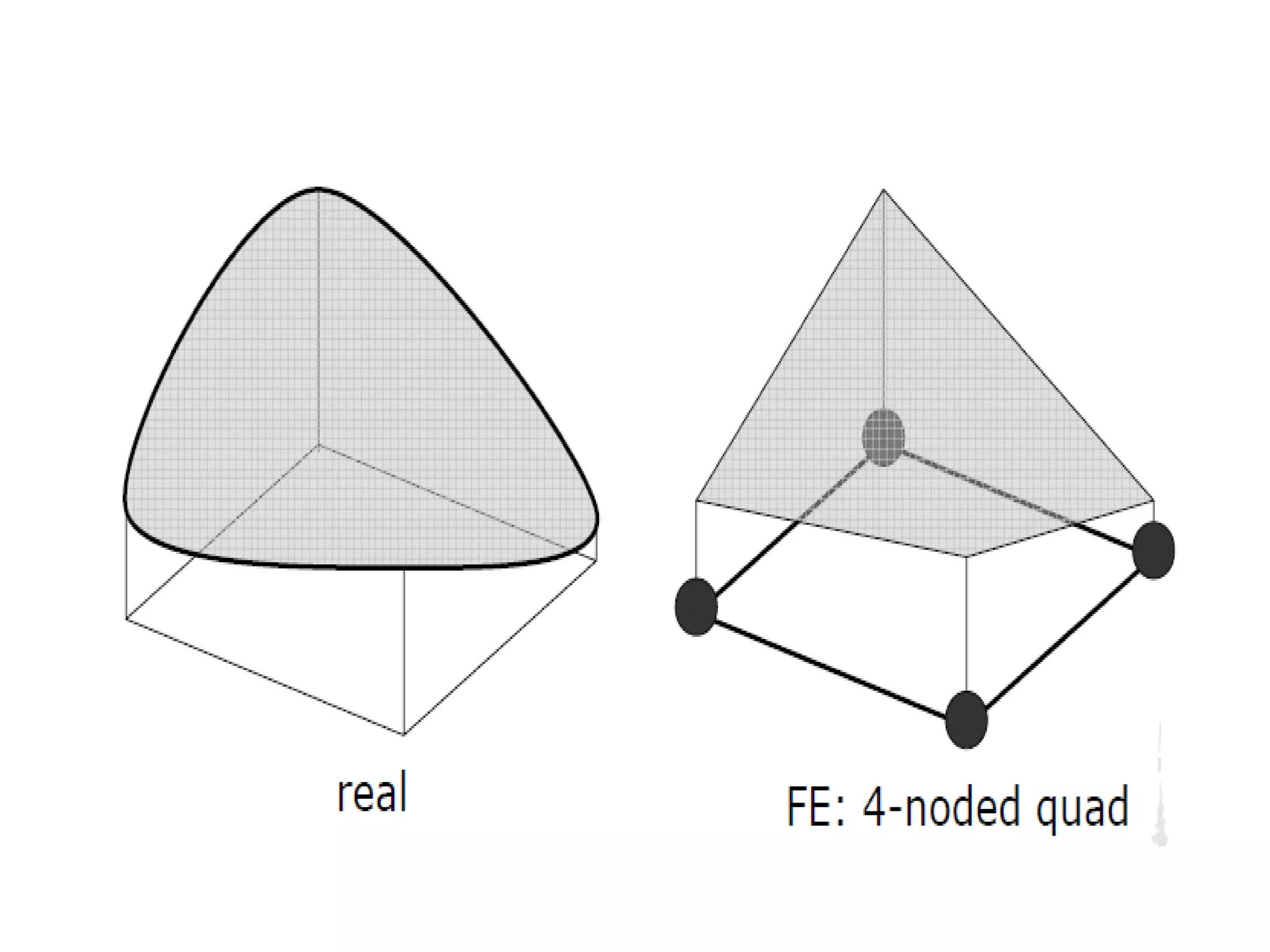
• Approximation: assumption of “shape” of
solution throughout element – usually
polynomial – linear,quadratic,…
• More nodes & elements → greater accuracy
• Generally quadratic better than linear
Types of FEM problems
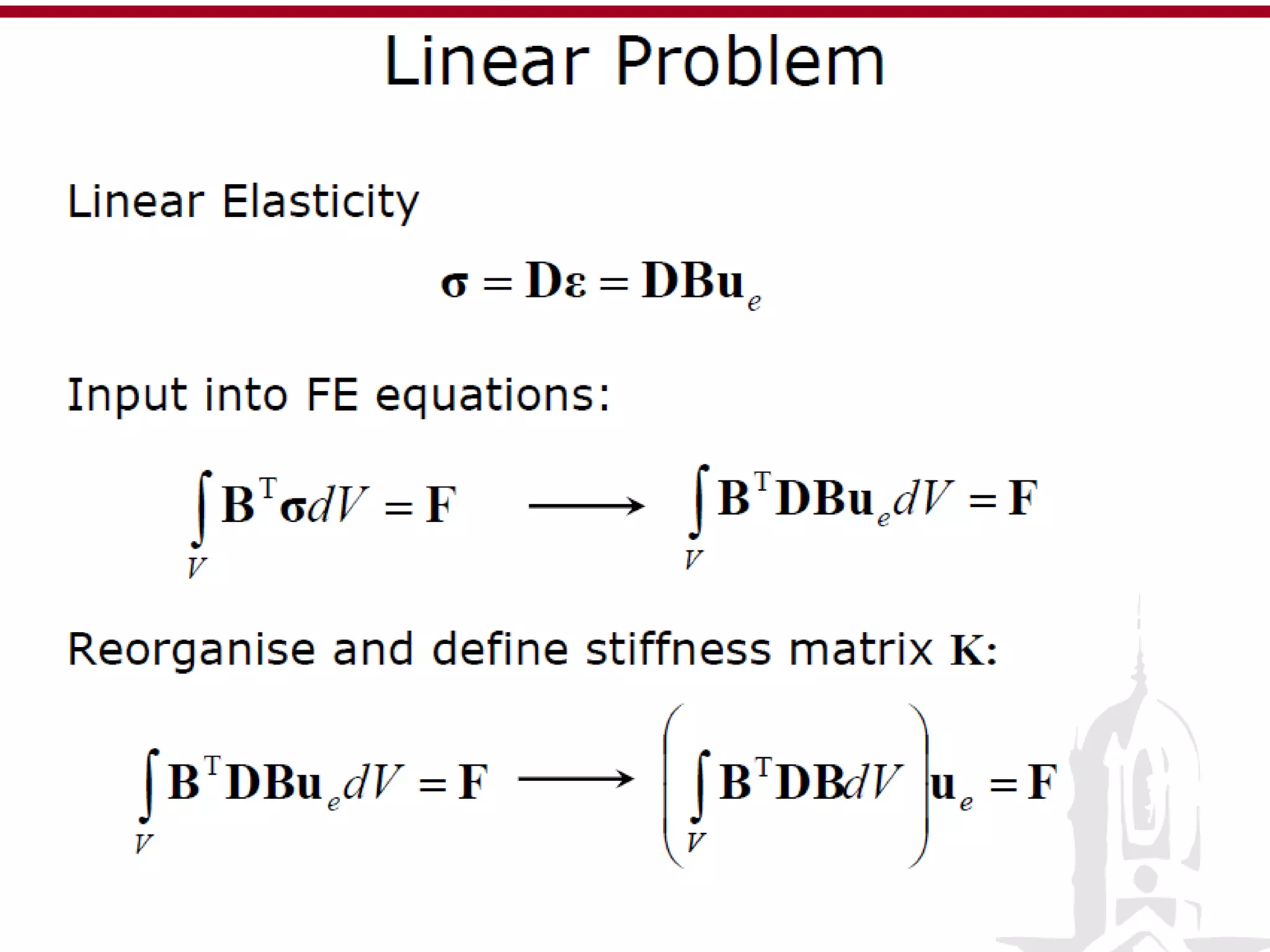
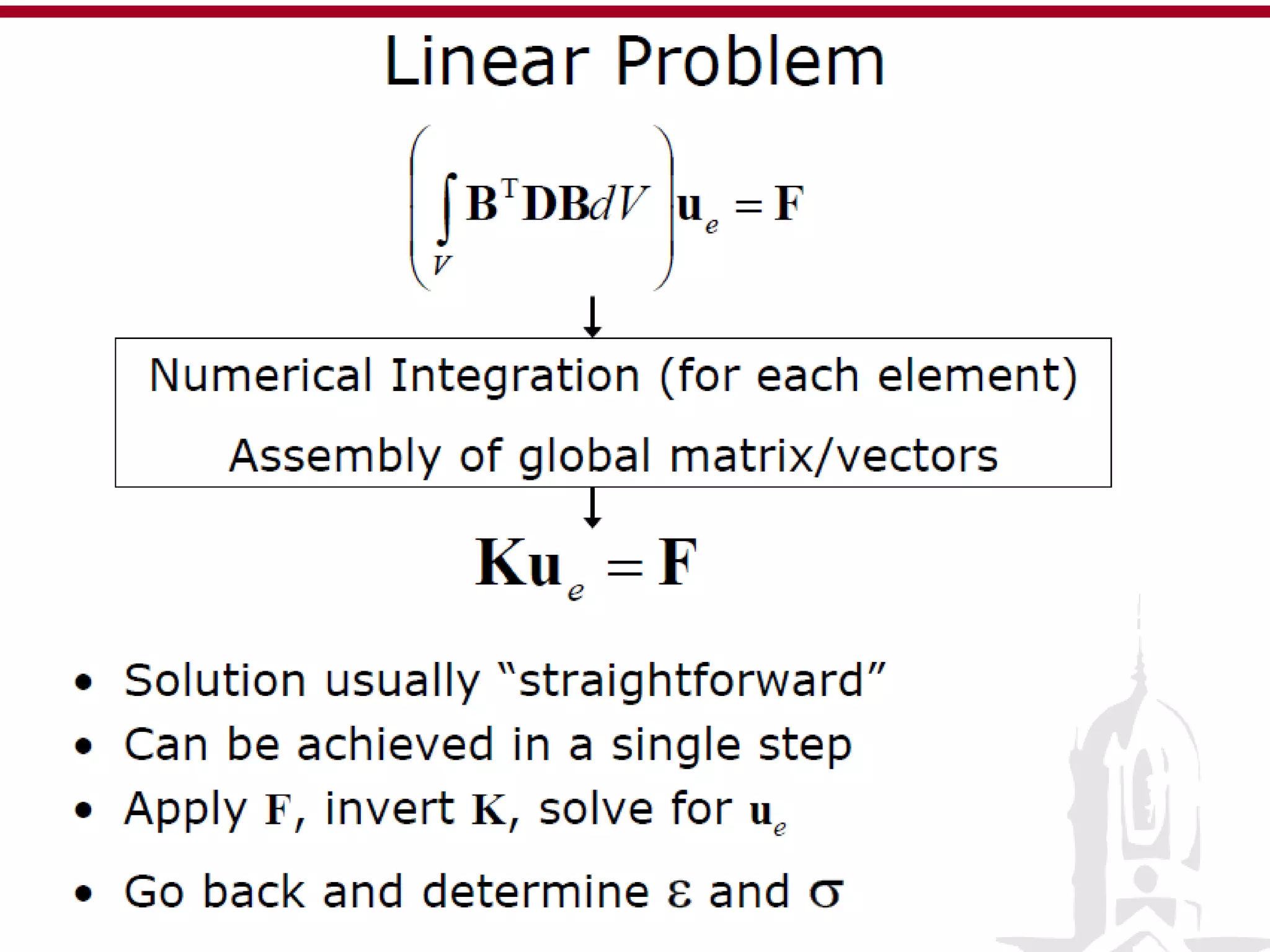
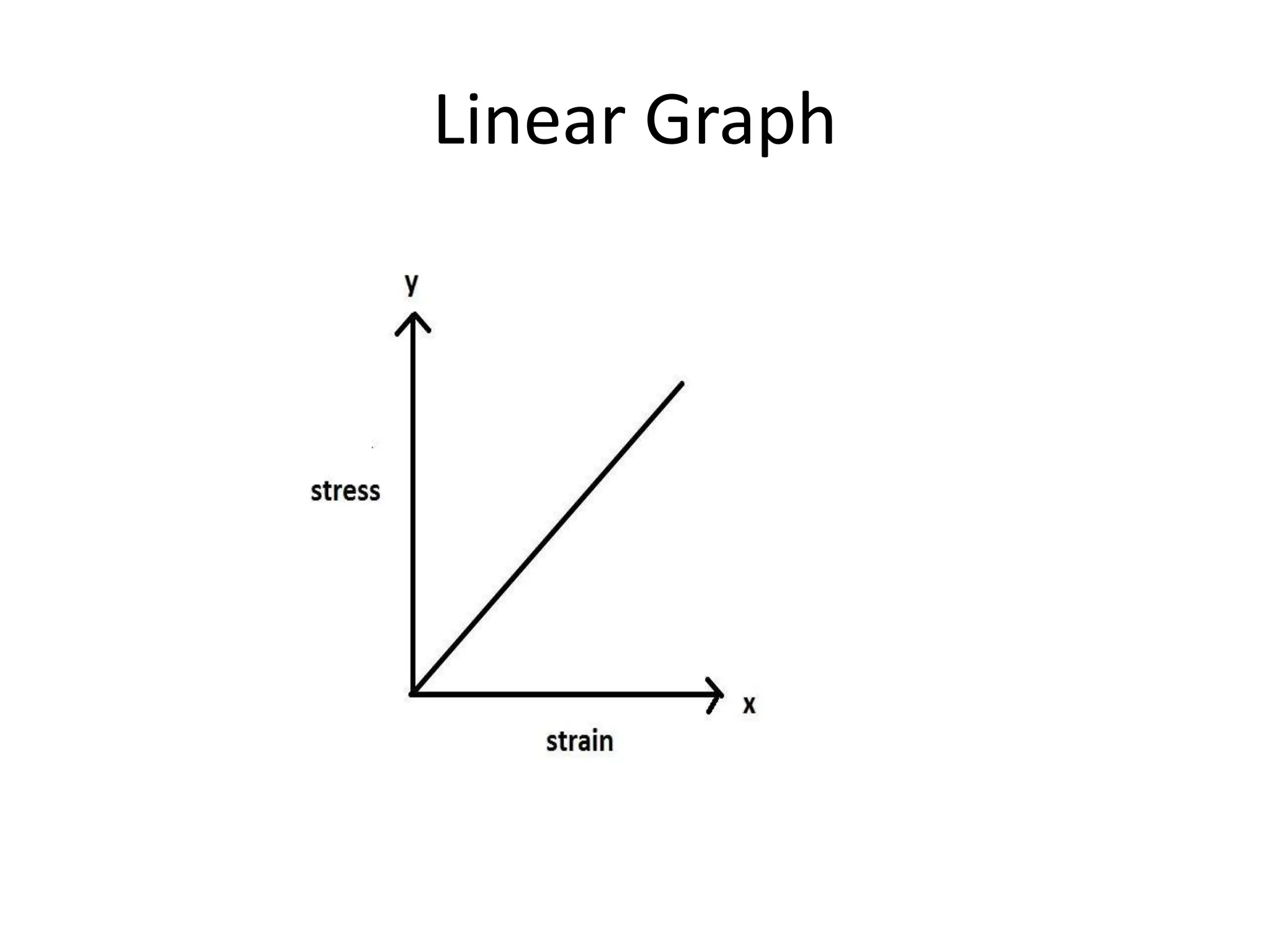
• Linear problems.(obeys hook’s law)
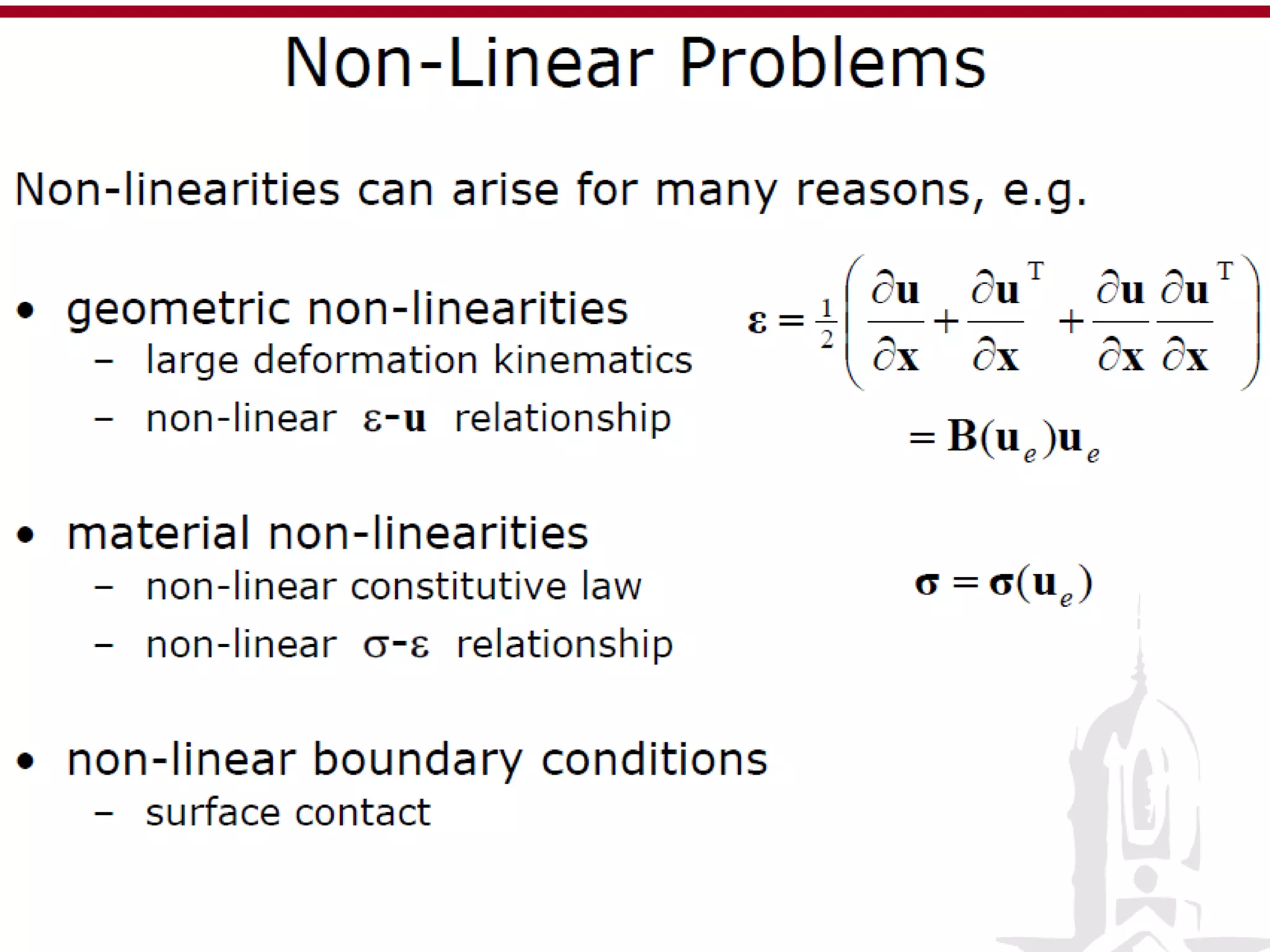
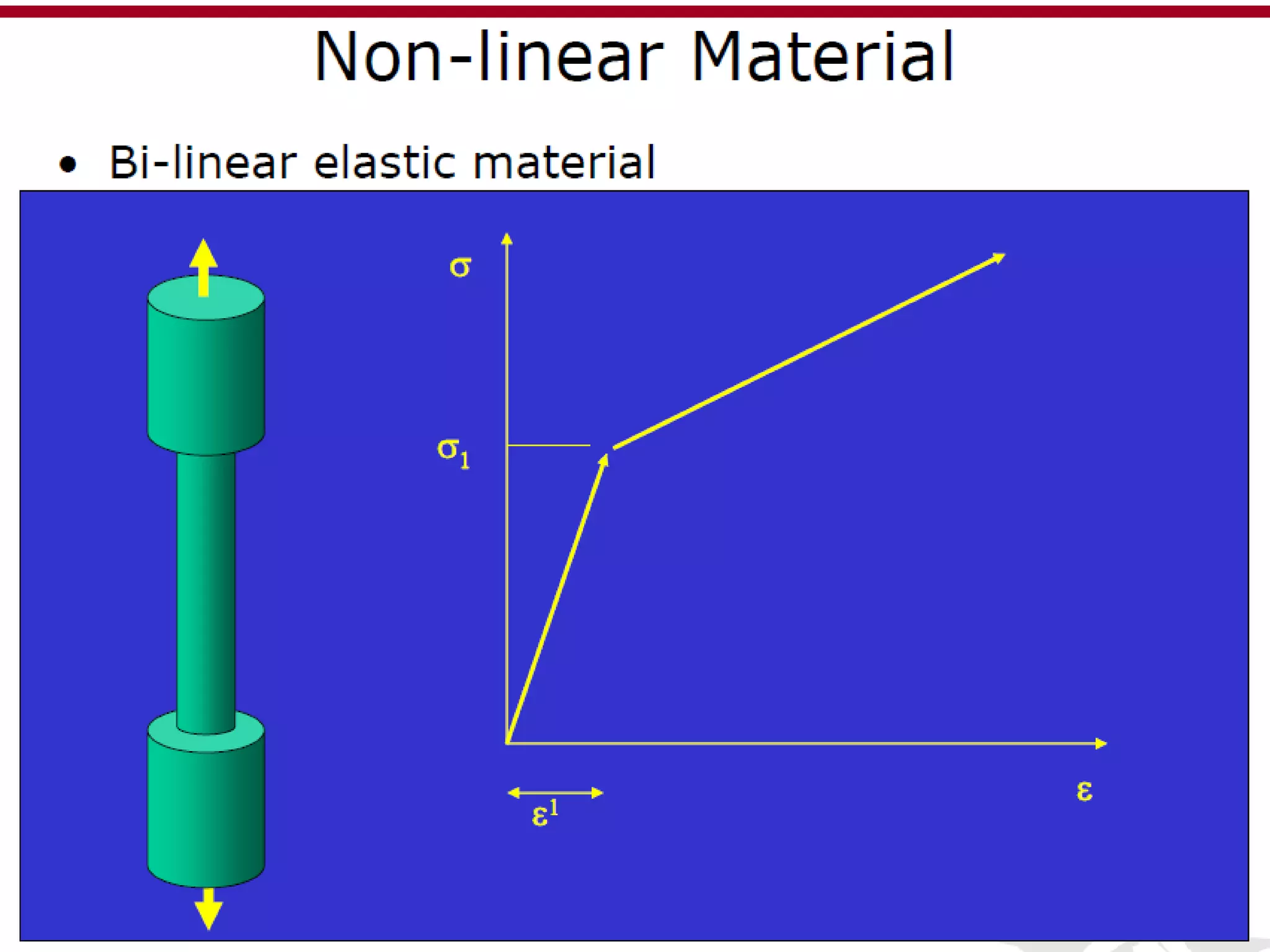
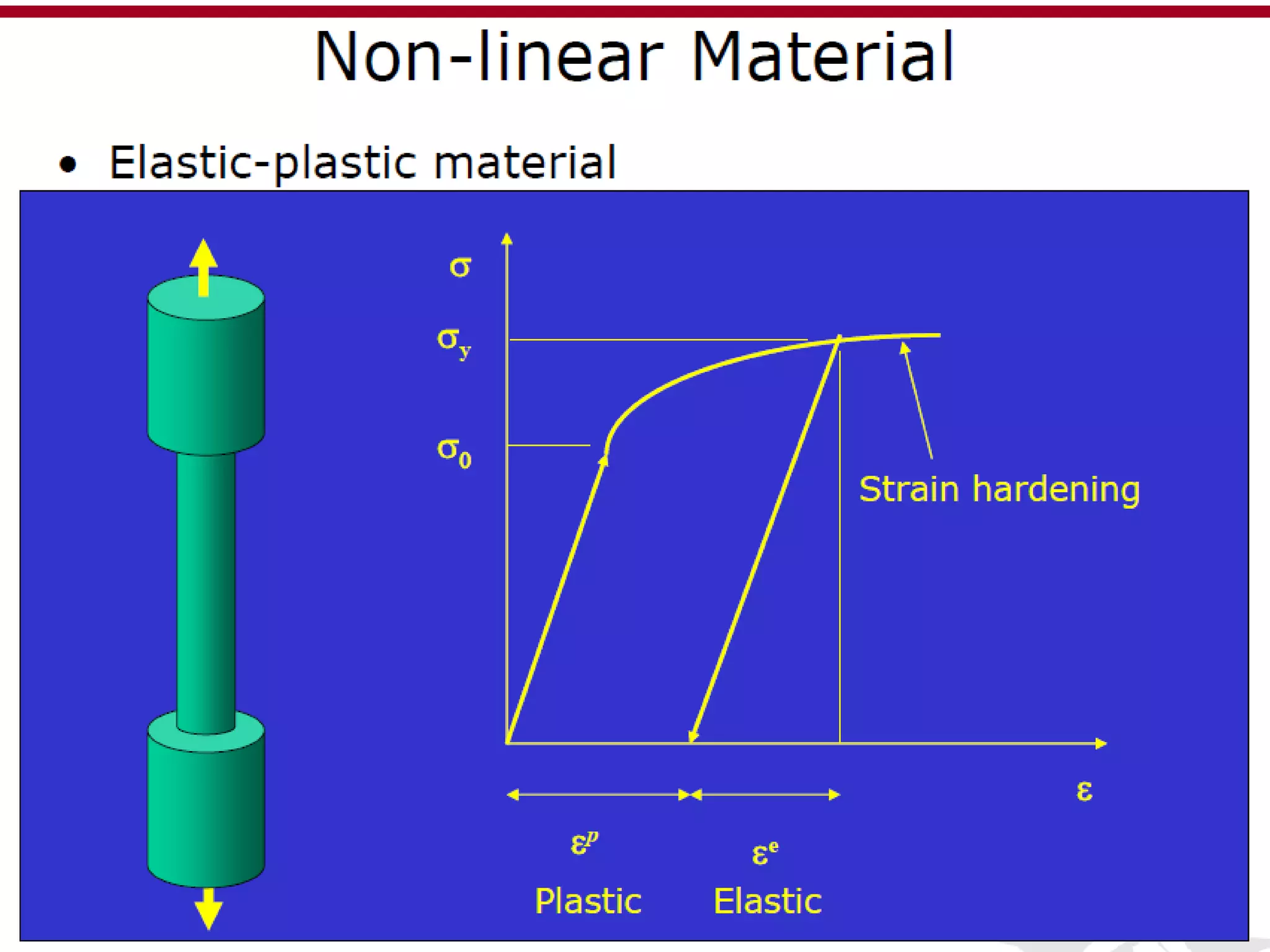
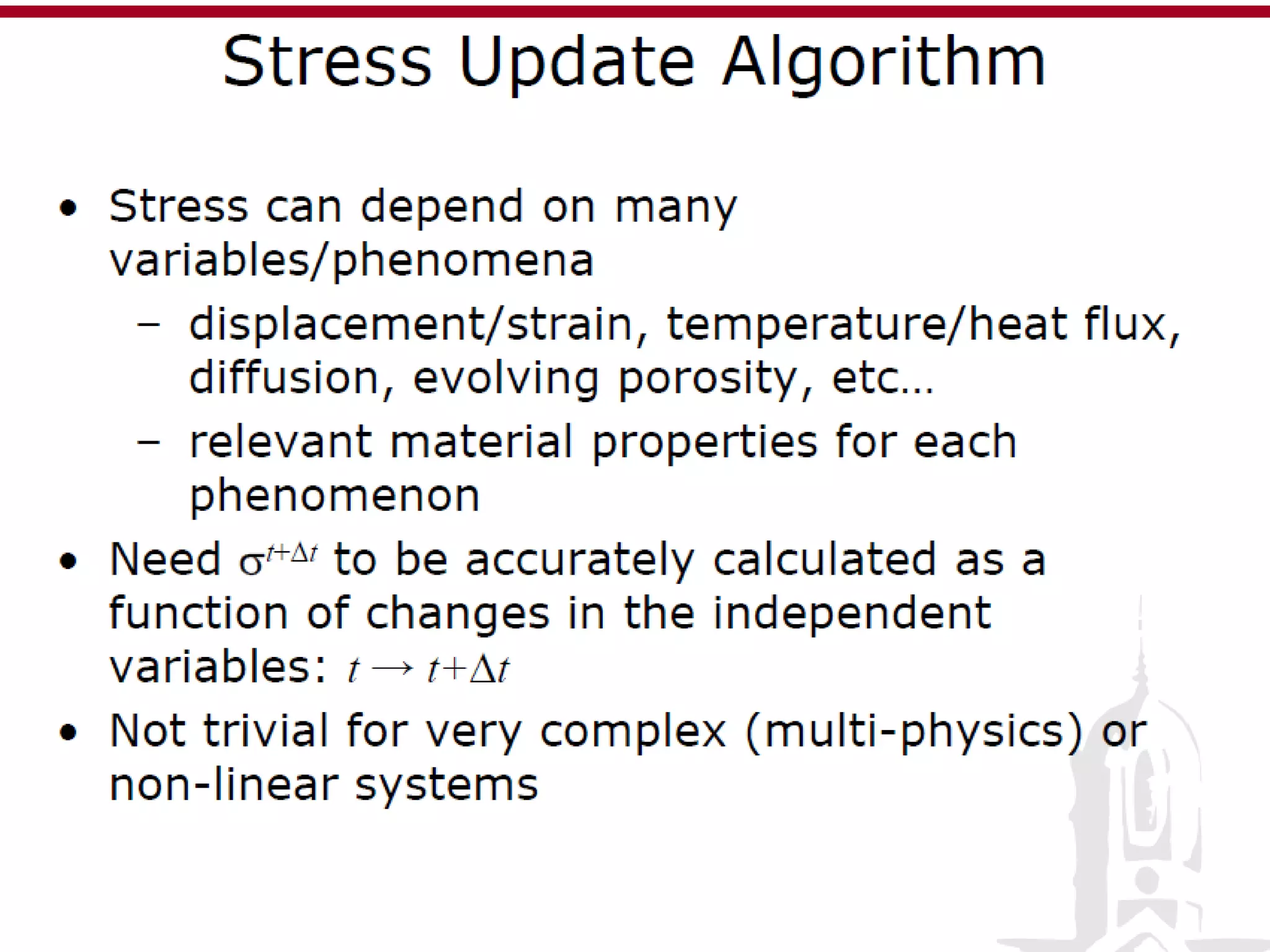
• Non linear problems.(hook’s law not
applicable)
Linear Graph
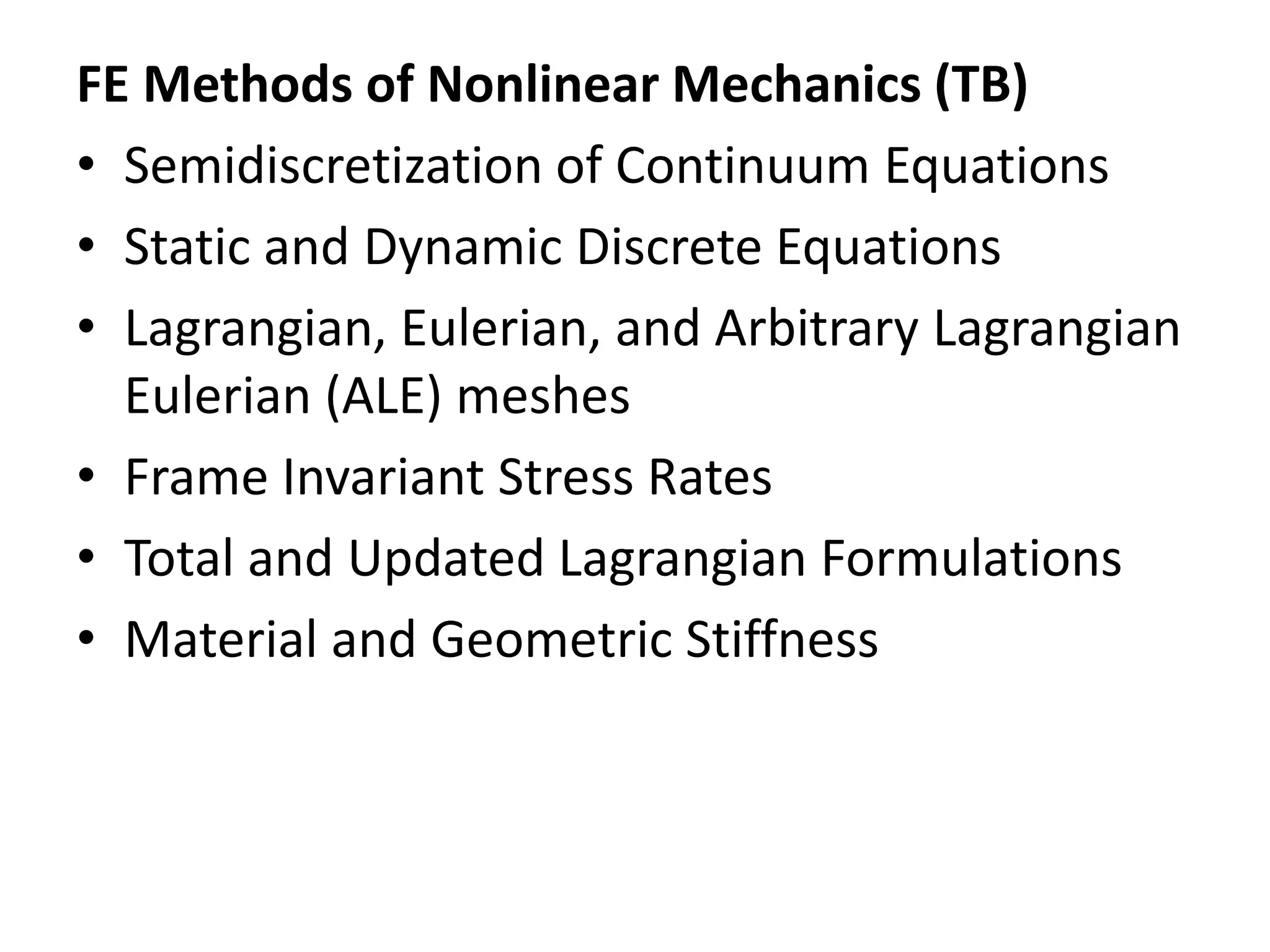
FE Methods of Nonlinear Mechanics (TB)
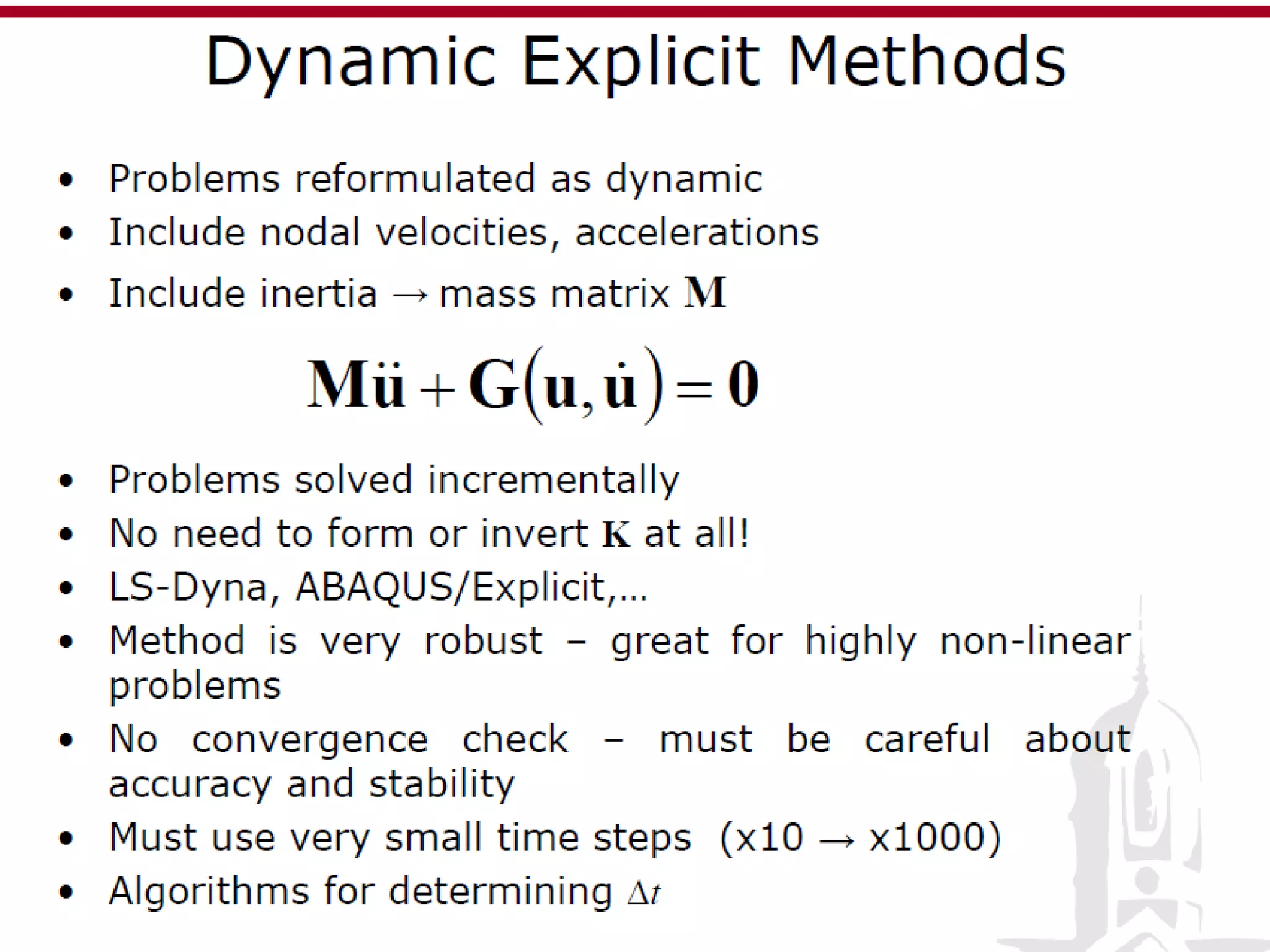
• Semidiscretization of Continuum Equations
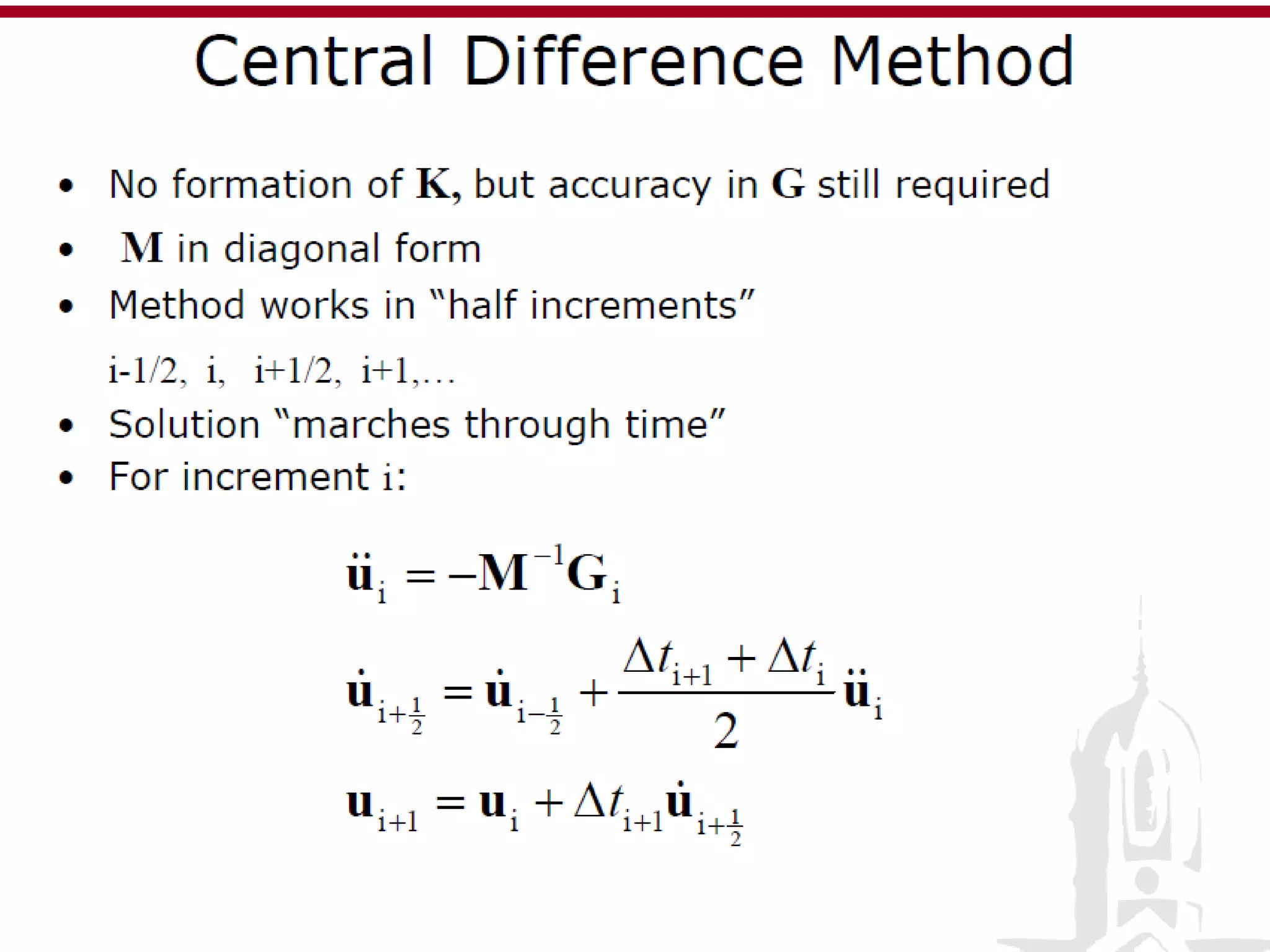
• Static and Dynamic Discrete Equations
• Lagrangian, Eulerian, and Arbitrary Lagrangian
Eulerian (ALE) meshes
• Frame Invariant Stress Rates
• Total and Updated Lagrangian Formulations
• Material and Geometric Stiffness
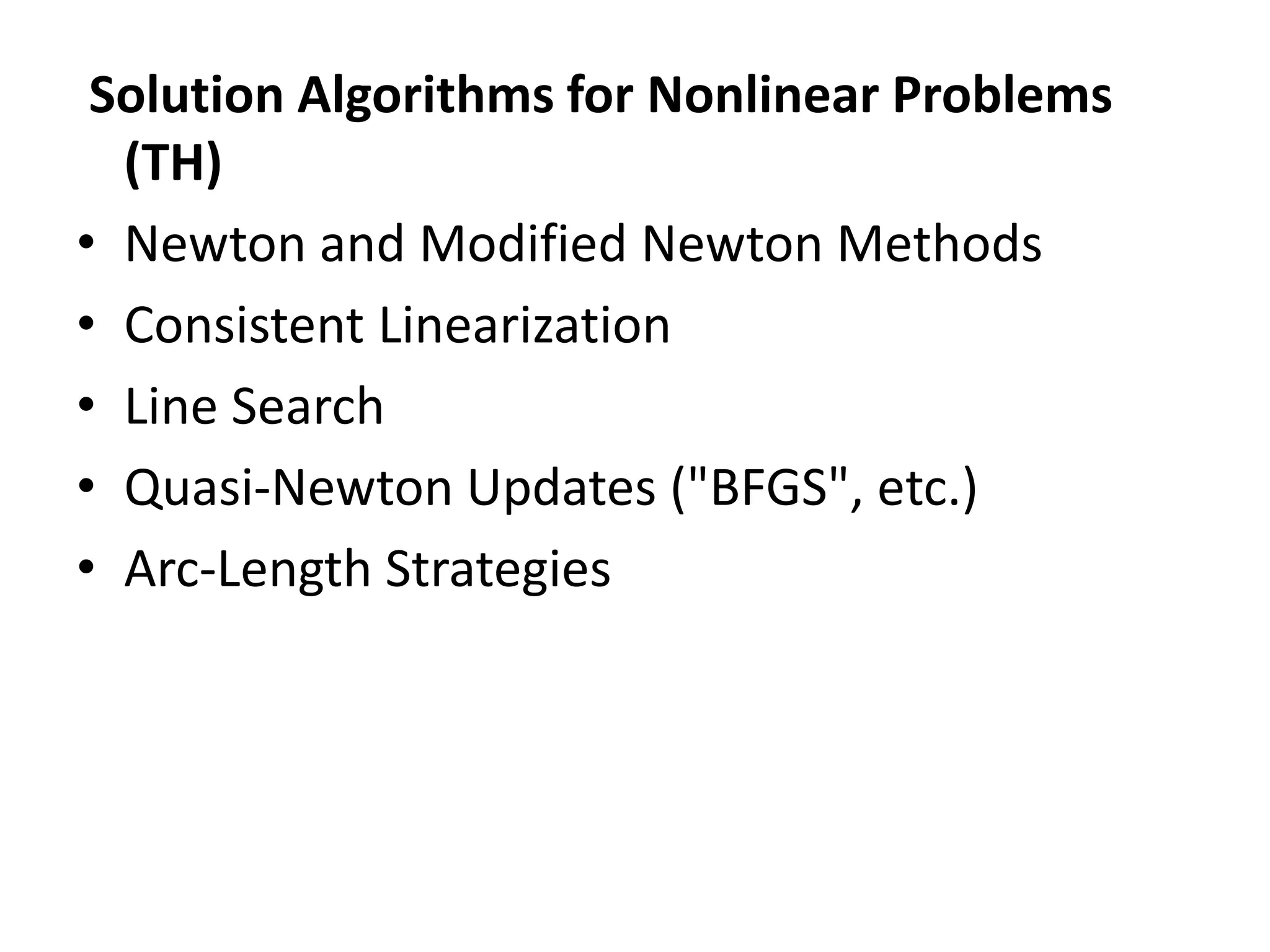
Solution Algorithms for Nonlinear Problems
(TH)
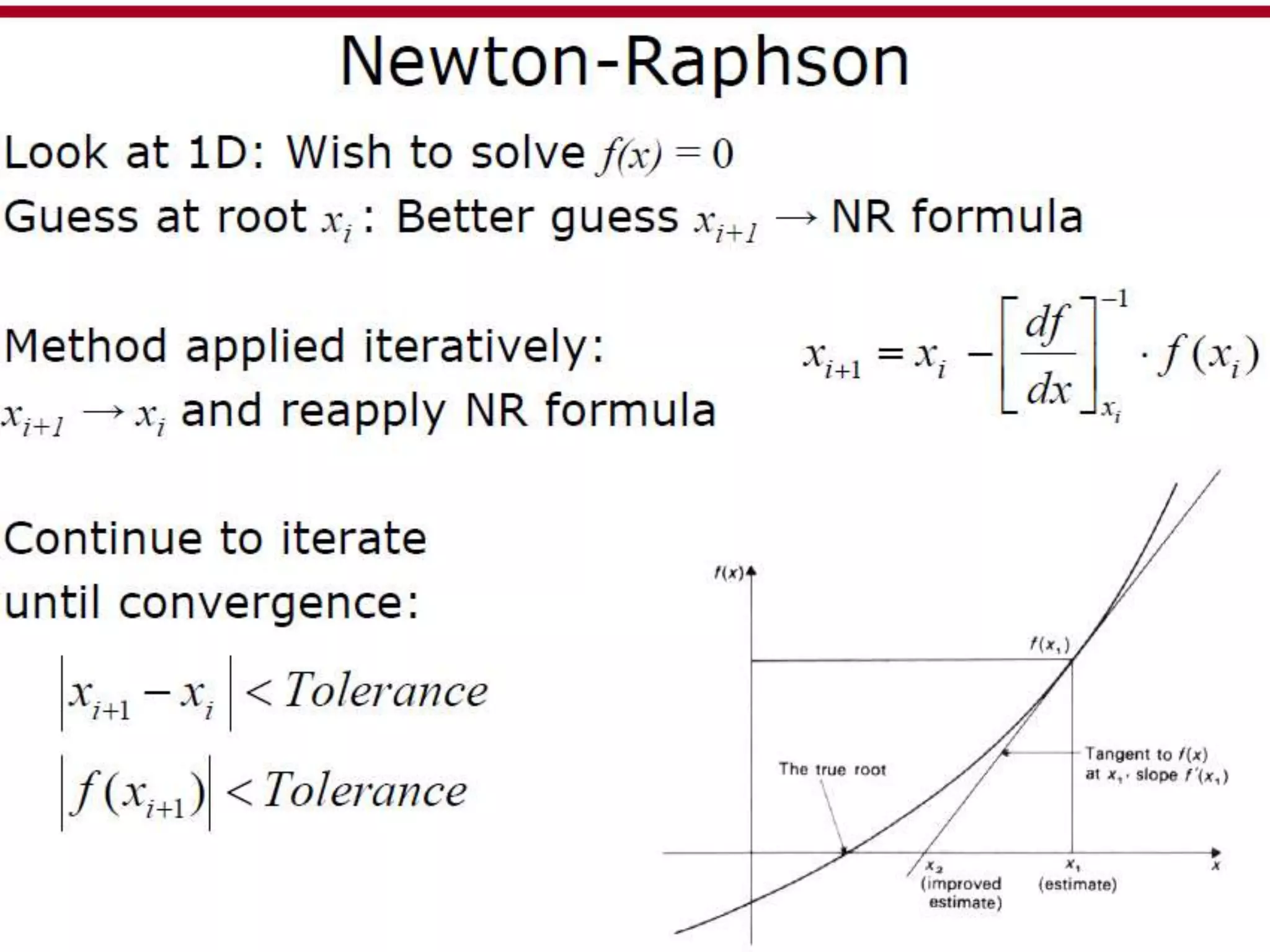
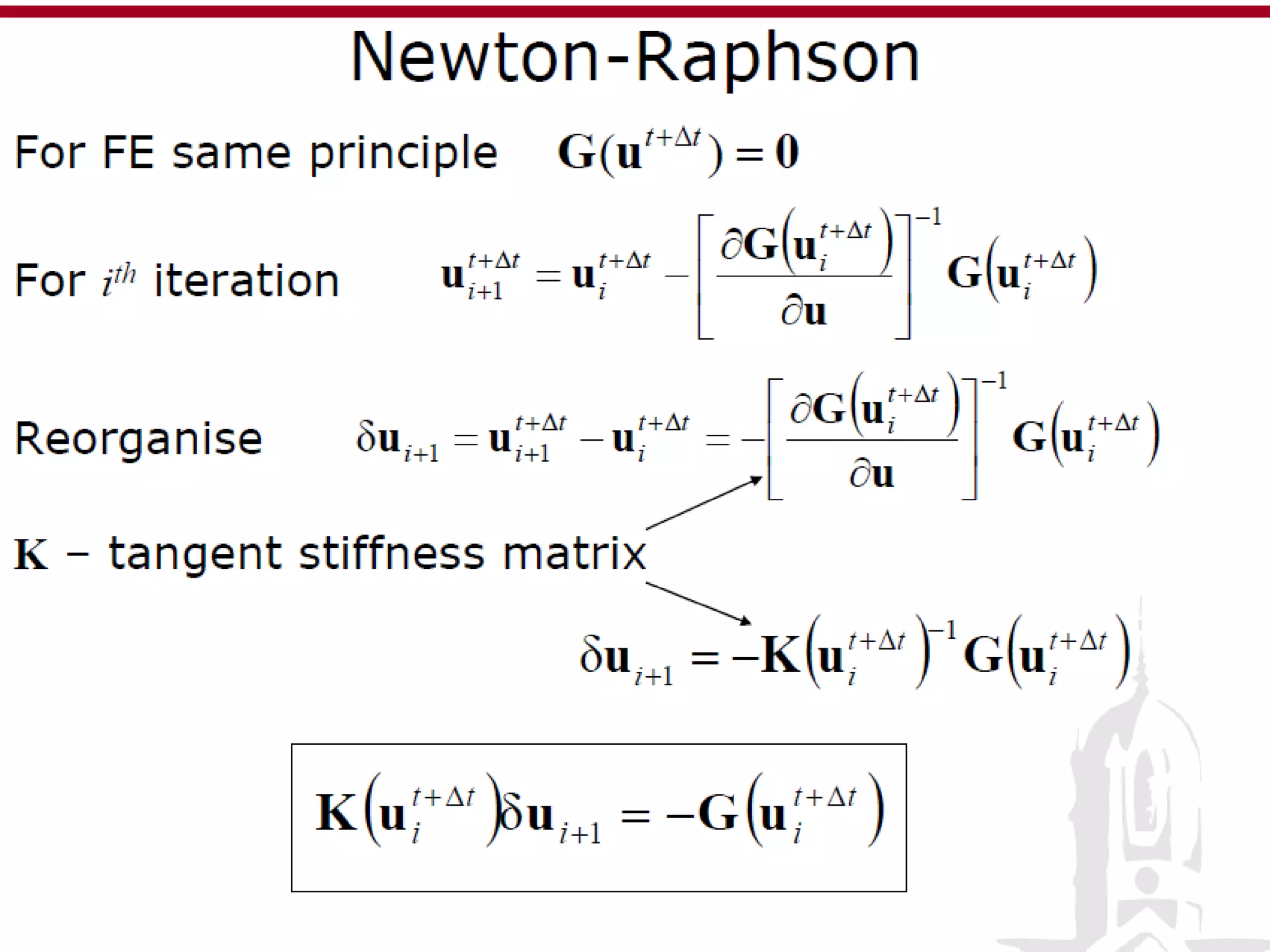
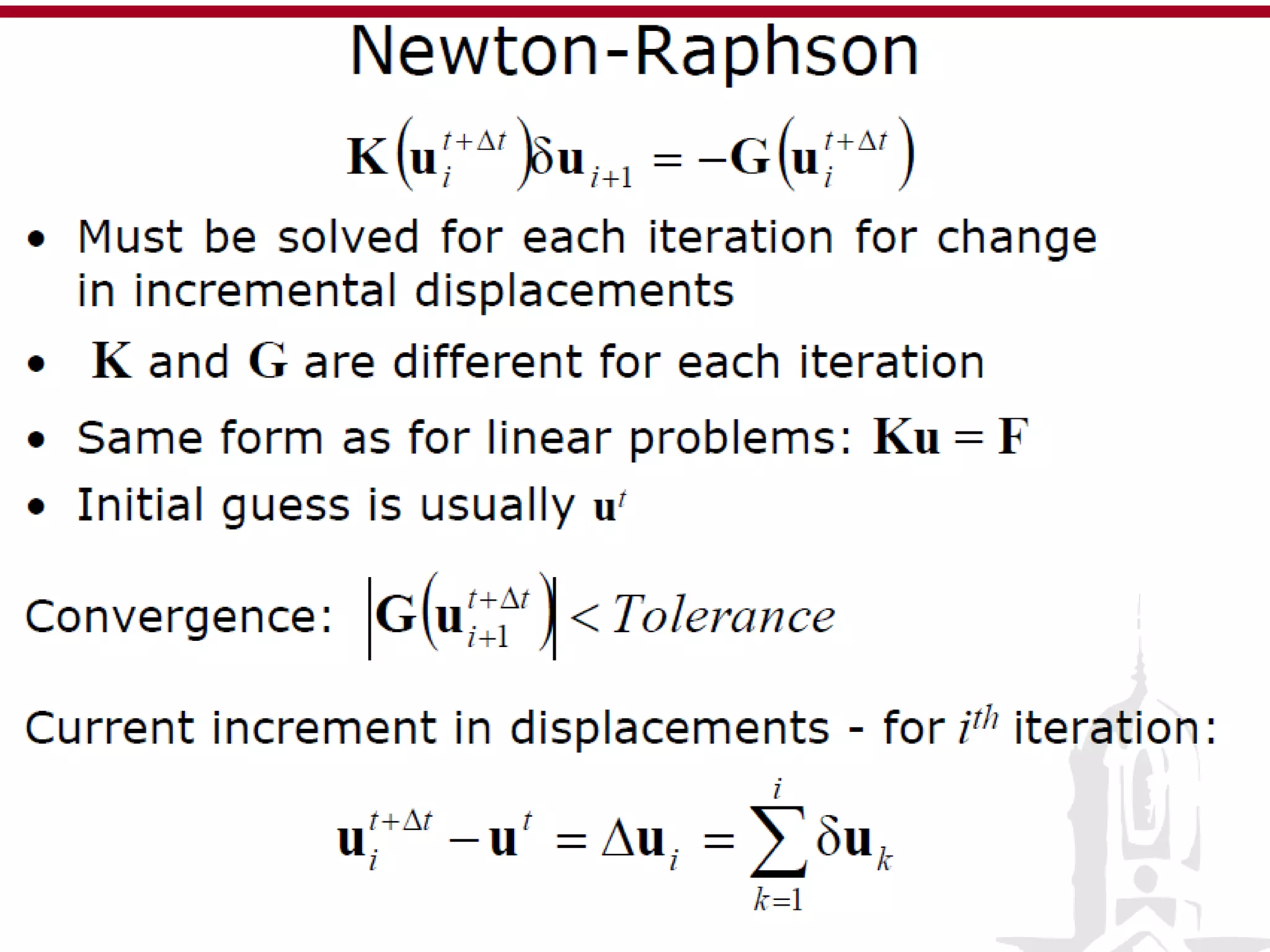
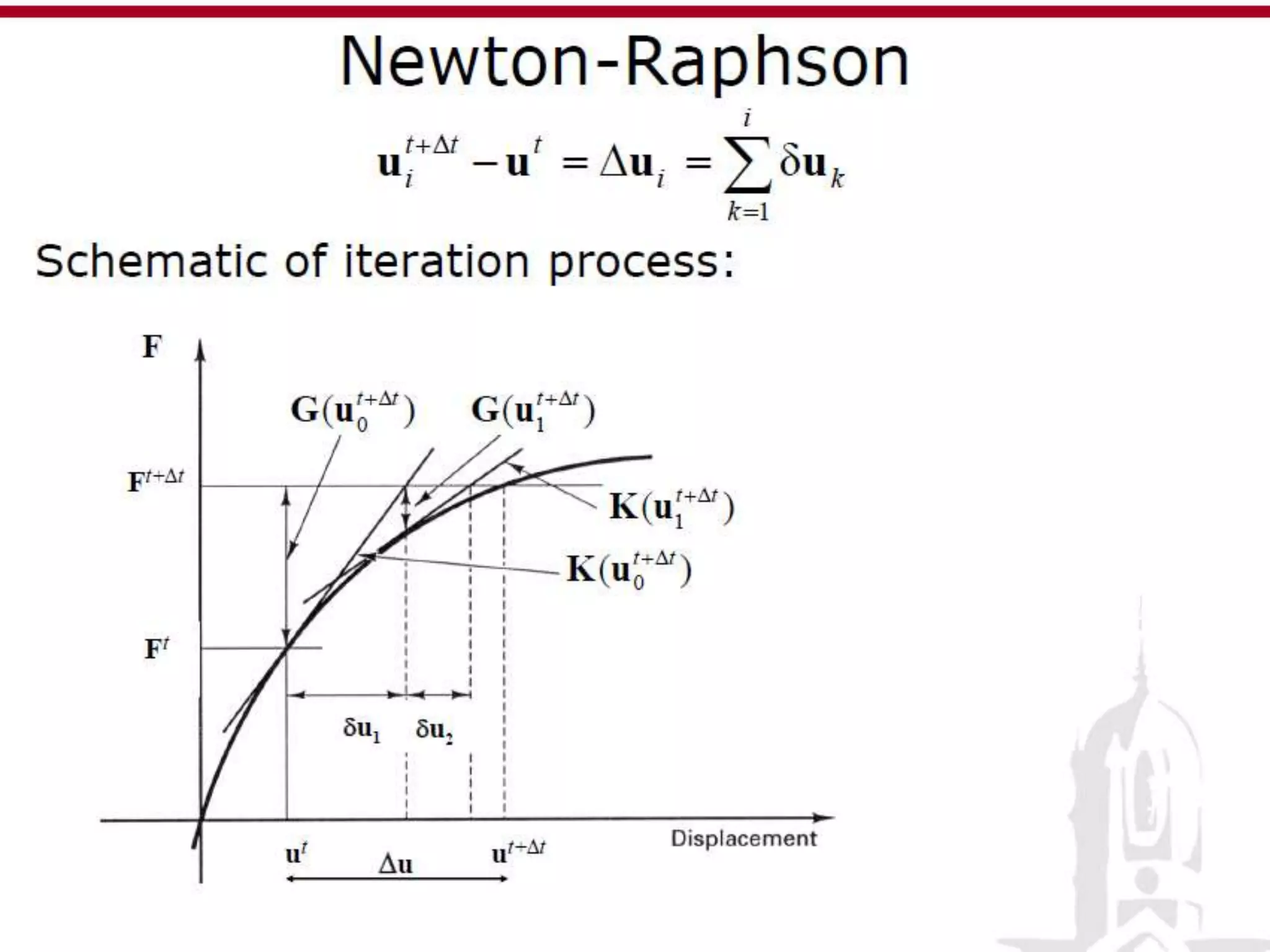
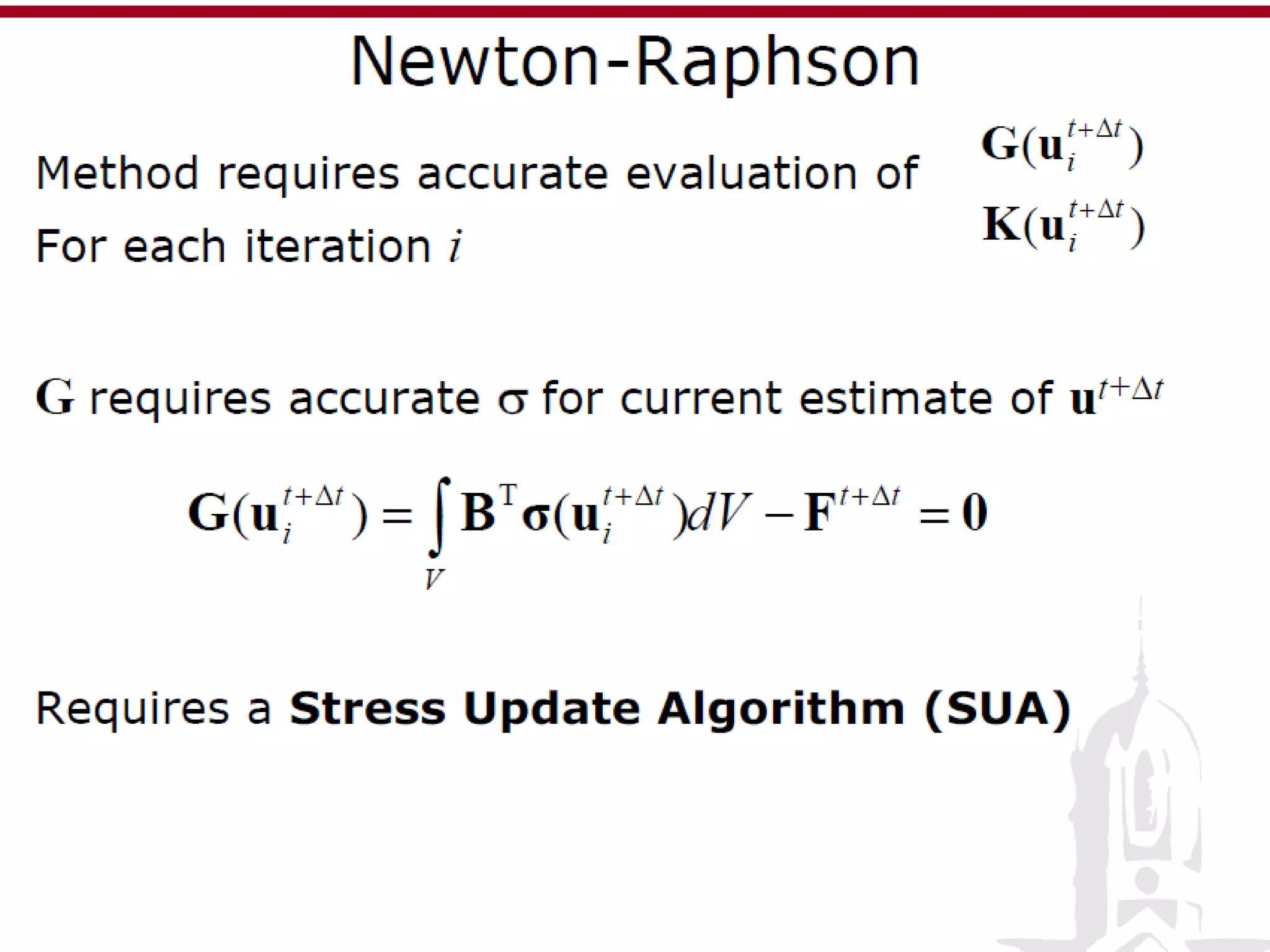
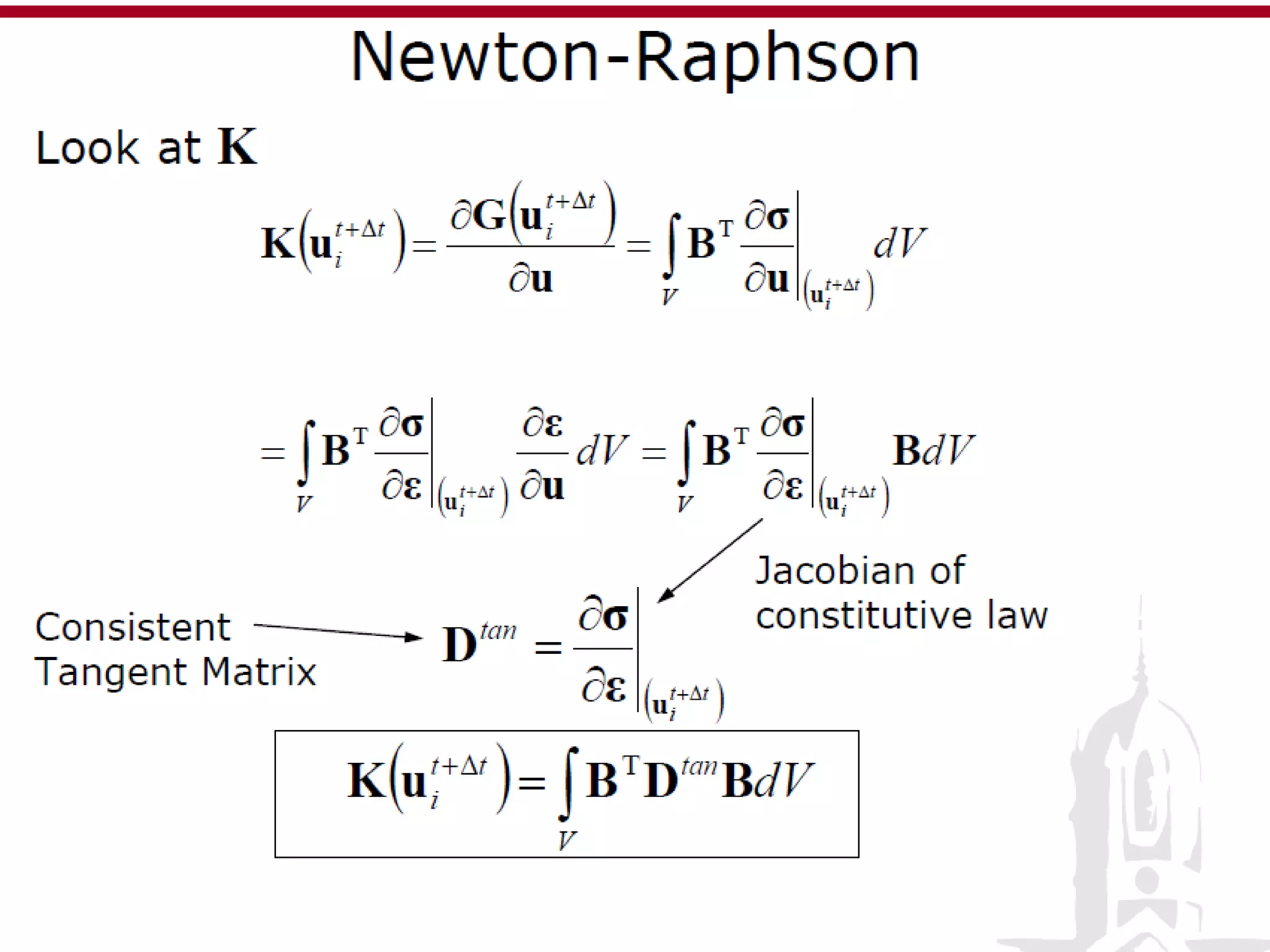
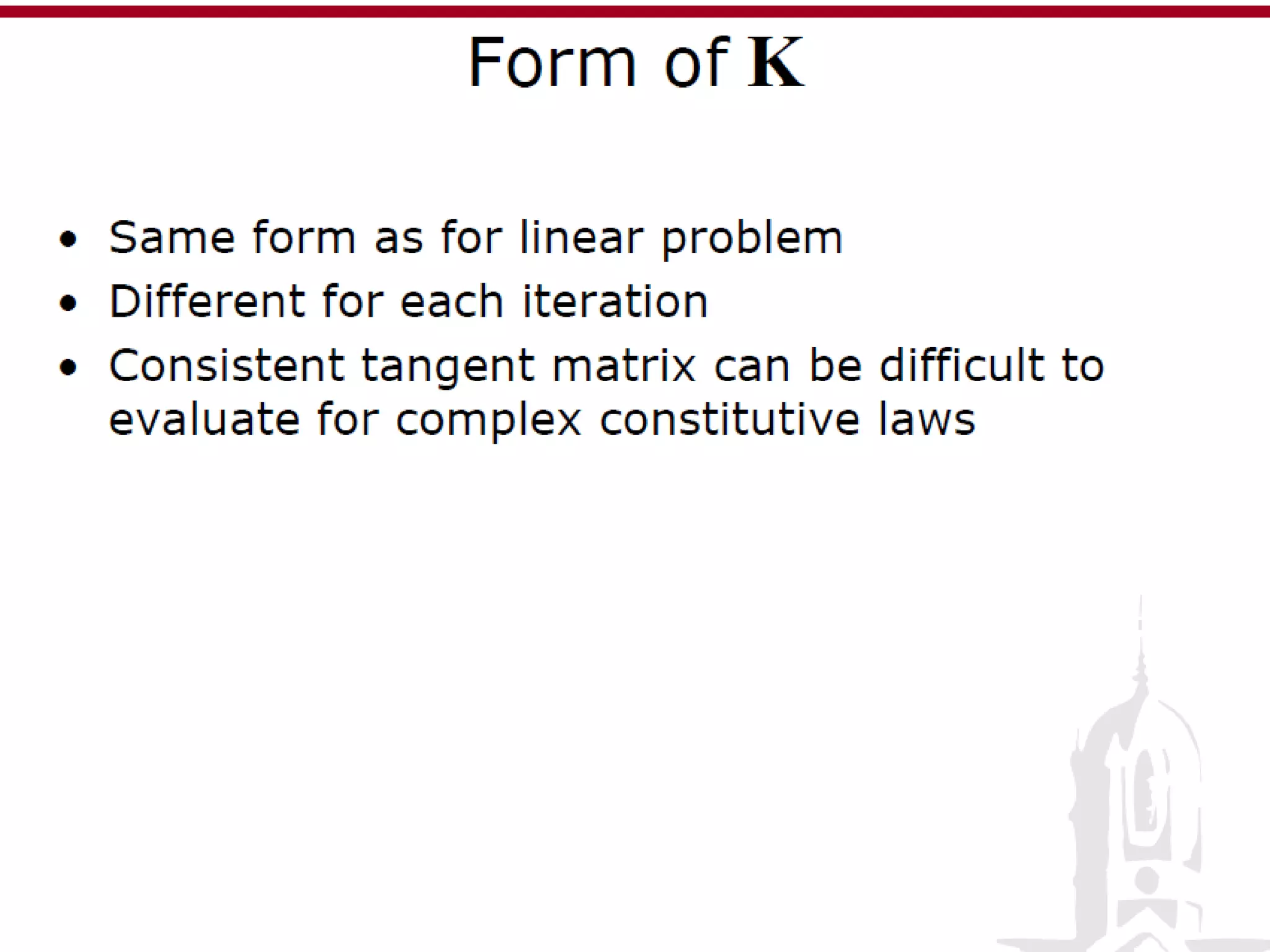
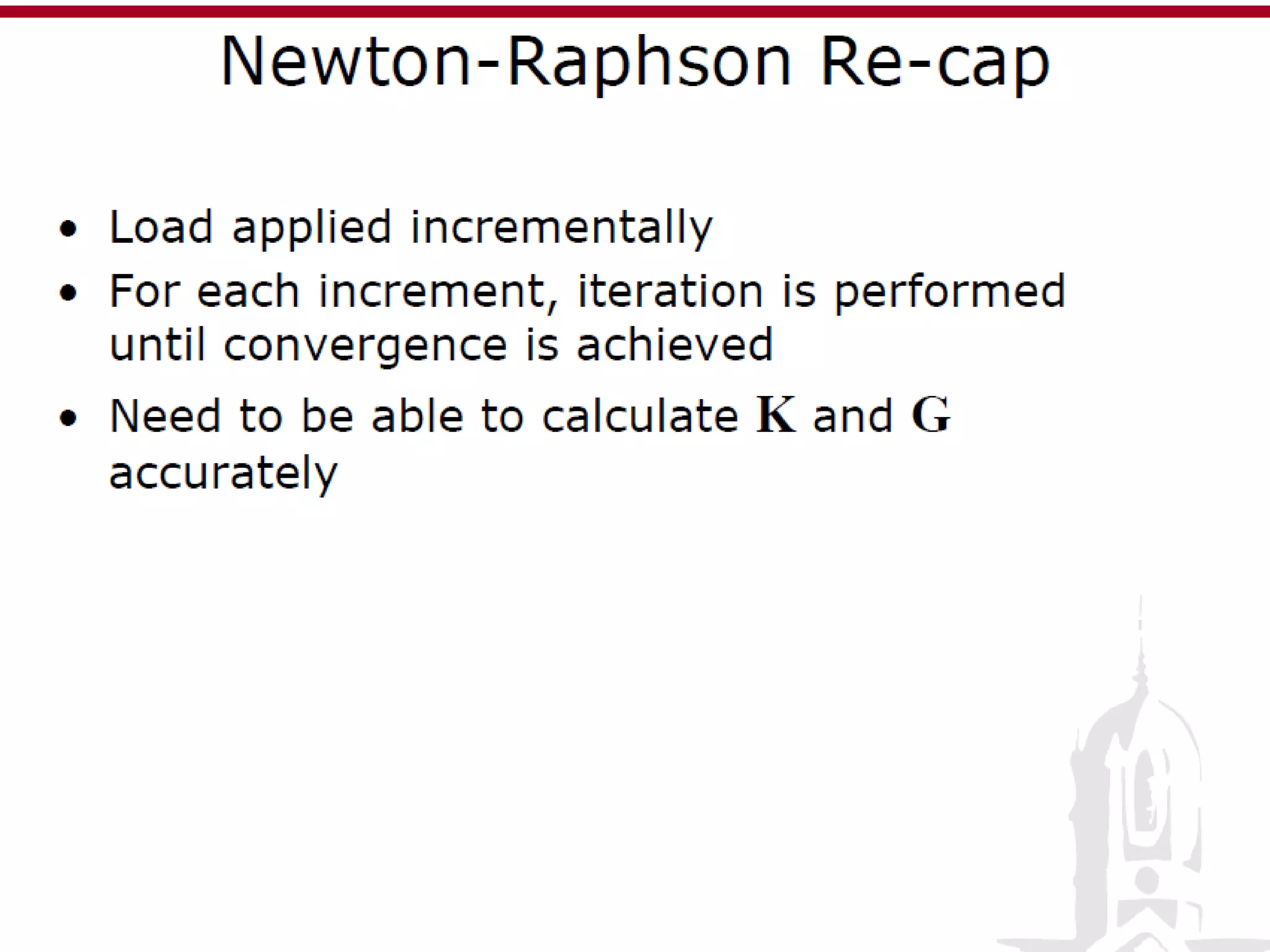
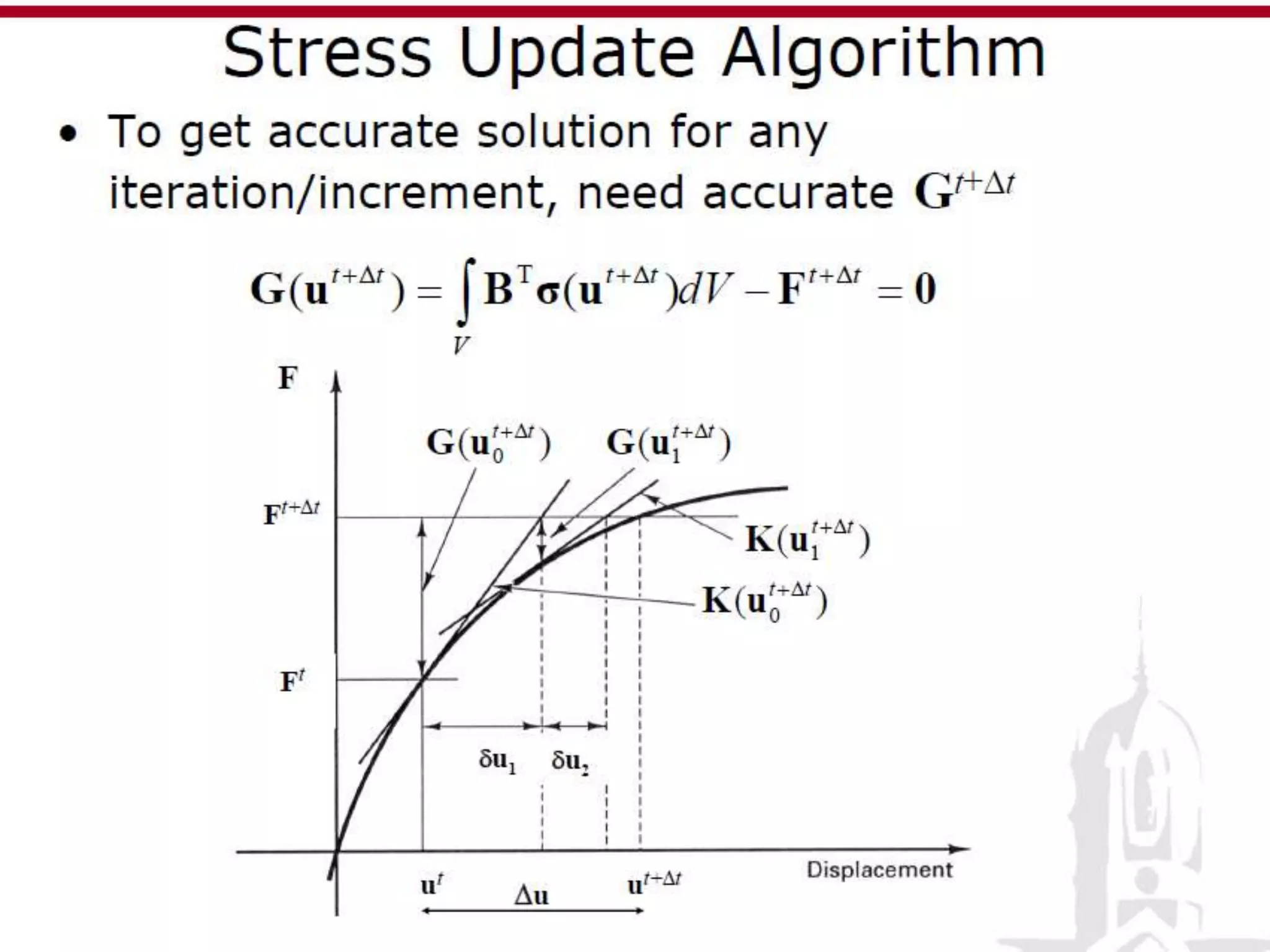
• Newton and Modified Newton Methods
• Consistent Linearization
• Line Search
• Quasi-Newton Updates ("BFGS", etc.)
• Arc-Length Strategies
Information
• For other algorithms refer non-linear finite
element analysis by j.n reddy.

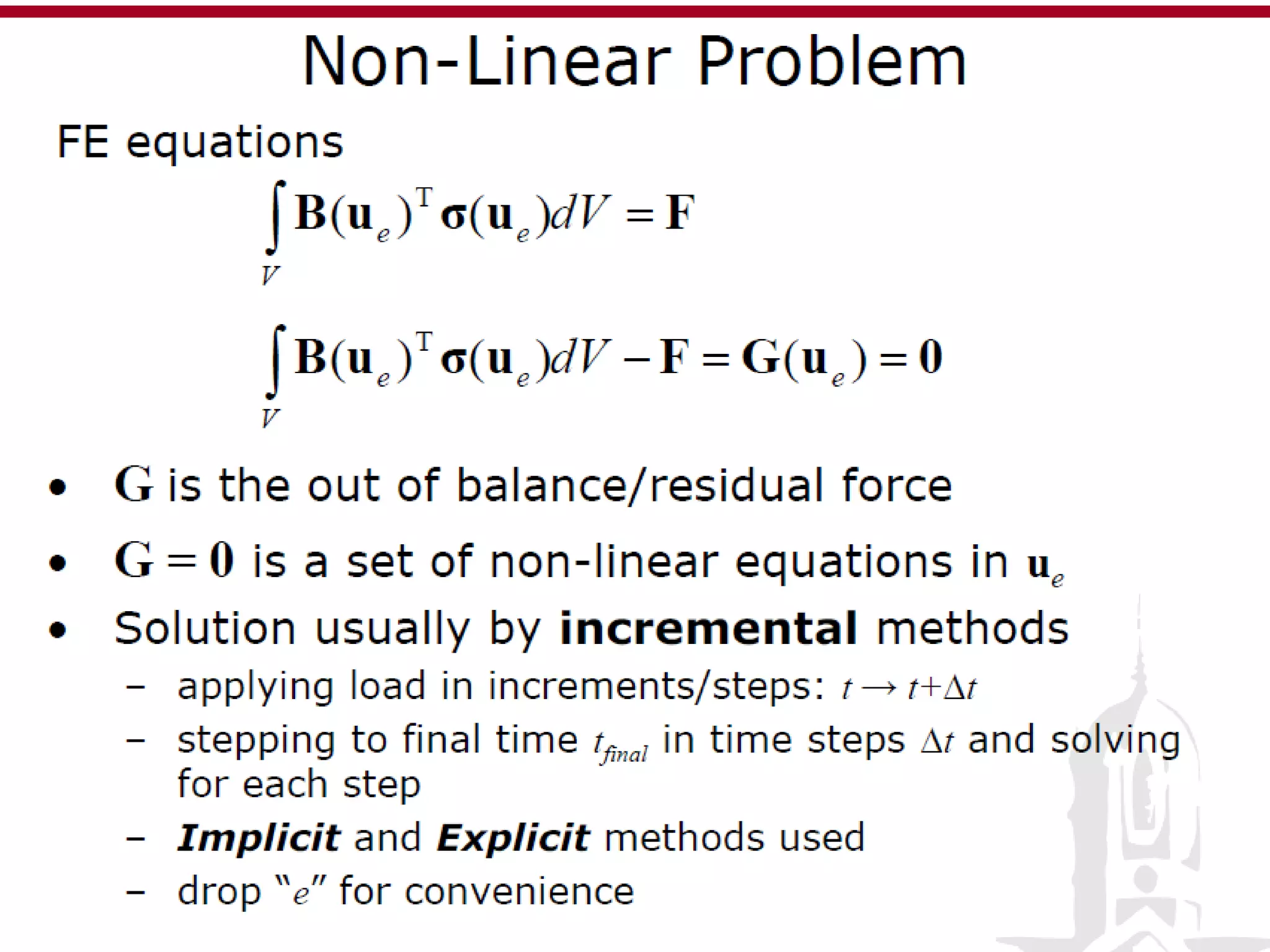
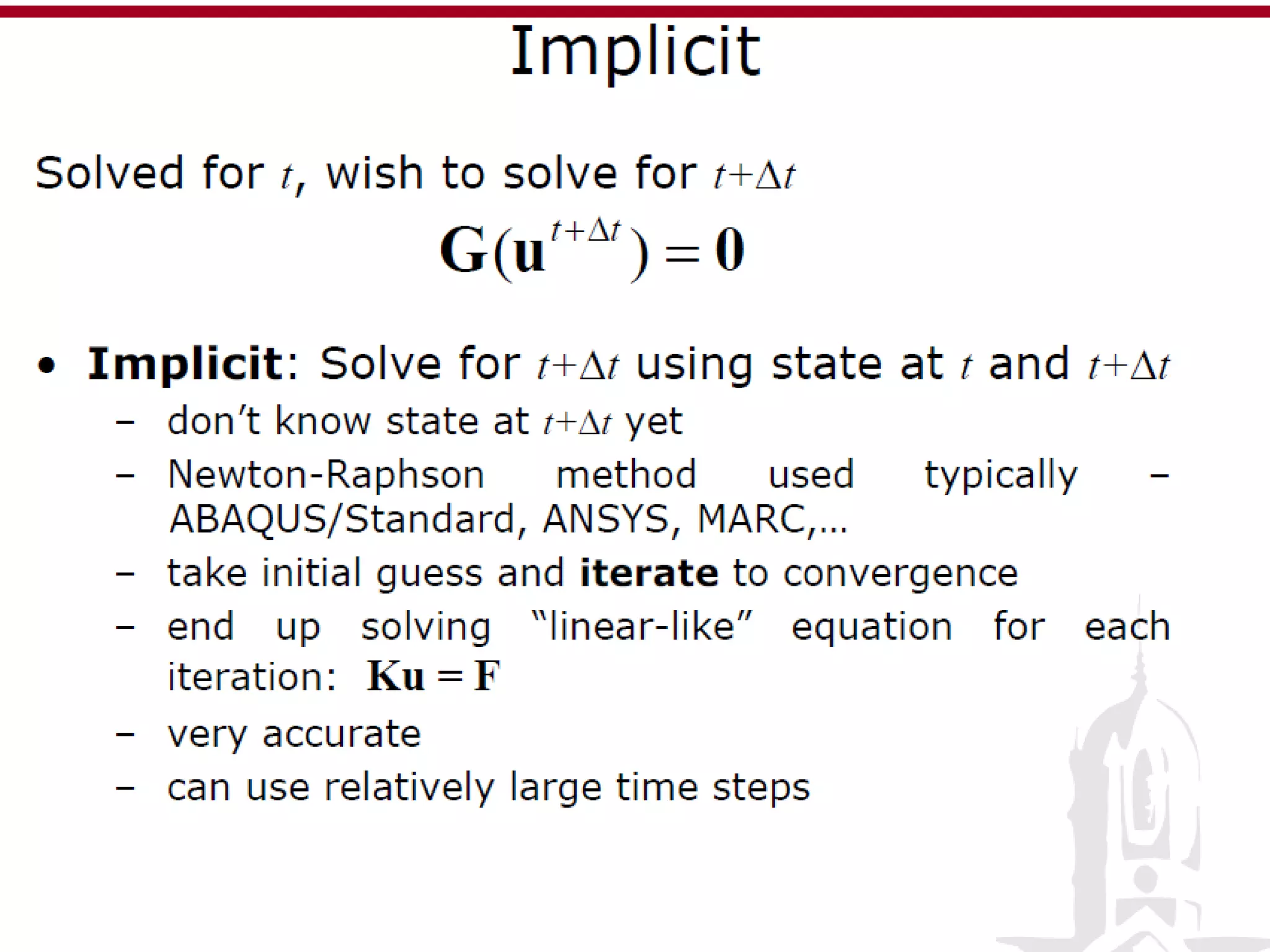
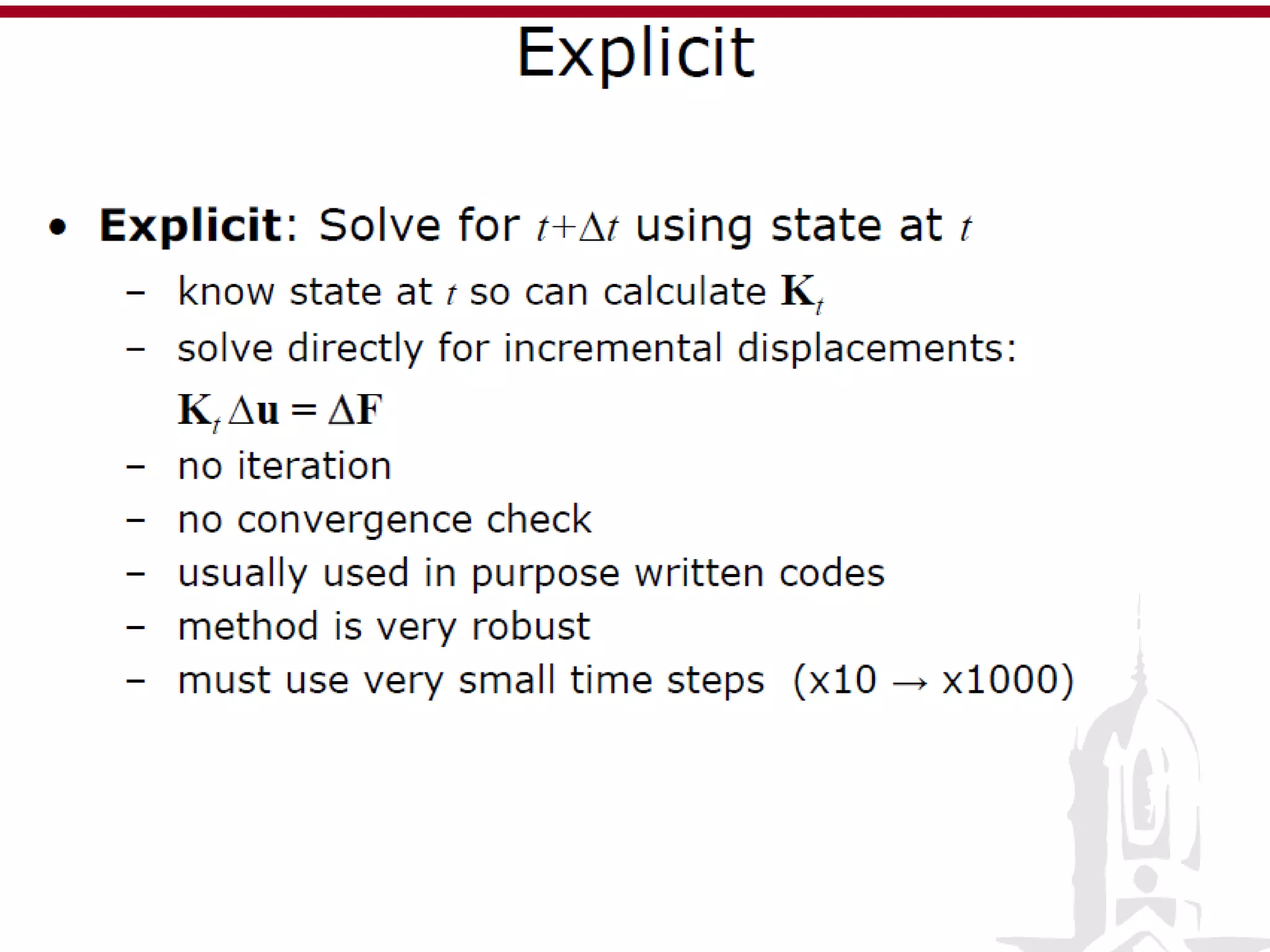
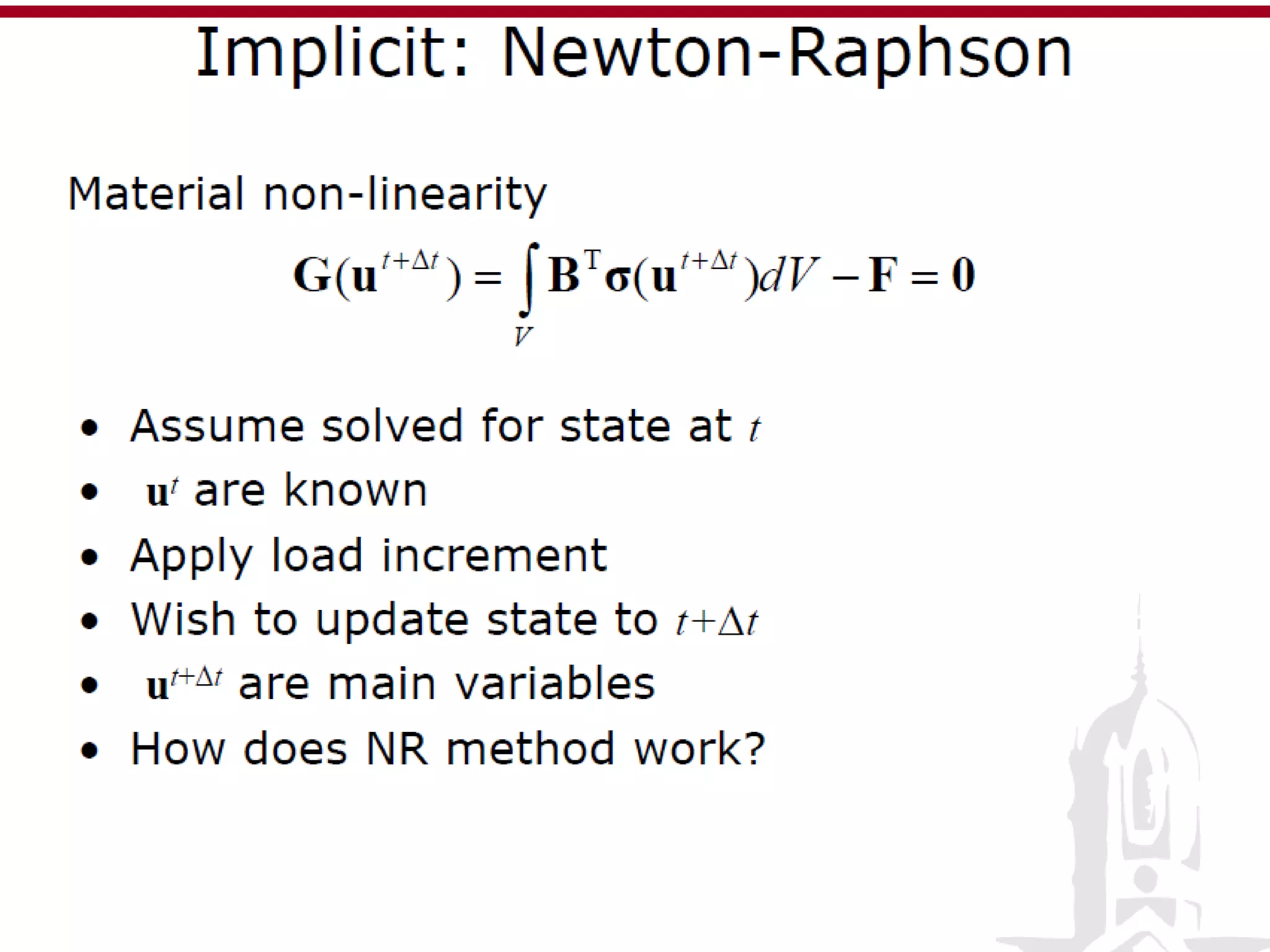
Non linear analysis

  • 1.
  • 2.
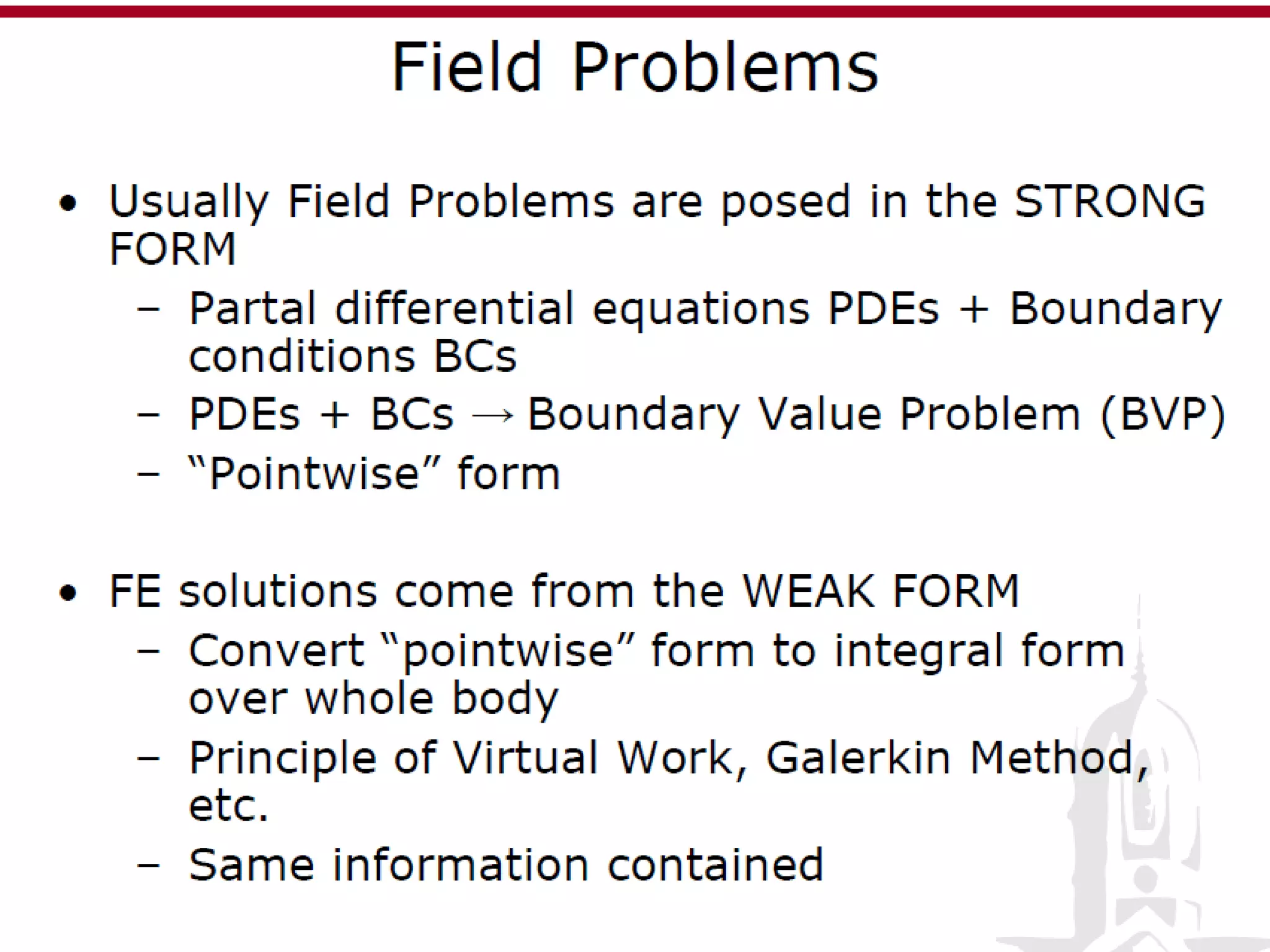
    FEM(Finite Element Method) •The finite element method is a means of obtaining approximate numerical solutions to field problems”. • Replace solution variable distribution with approximate distribution based on: – fixed solution “shapes” over elements – solution variable values at nodes • Continuous → Discrete
  • 4.
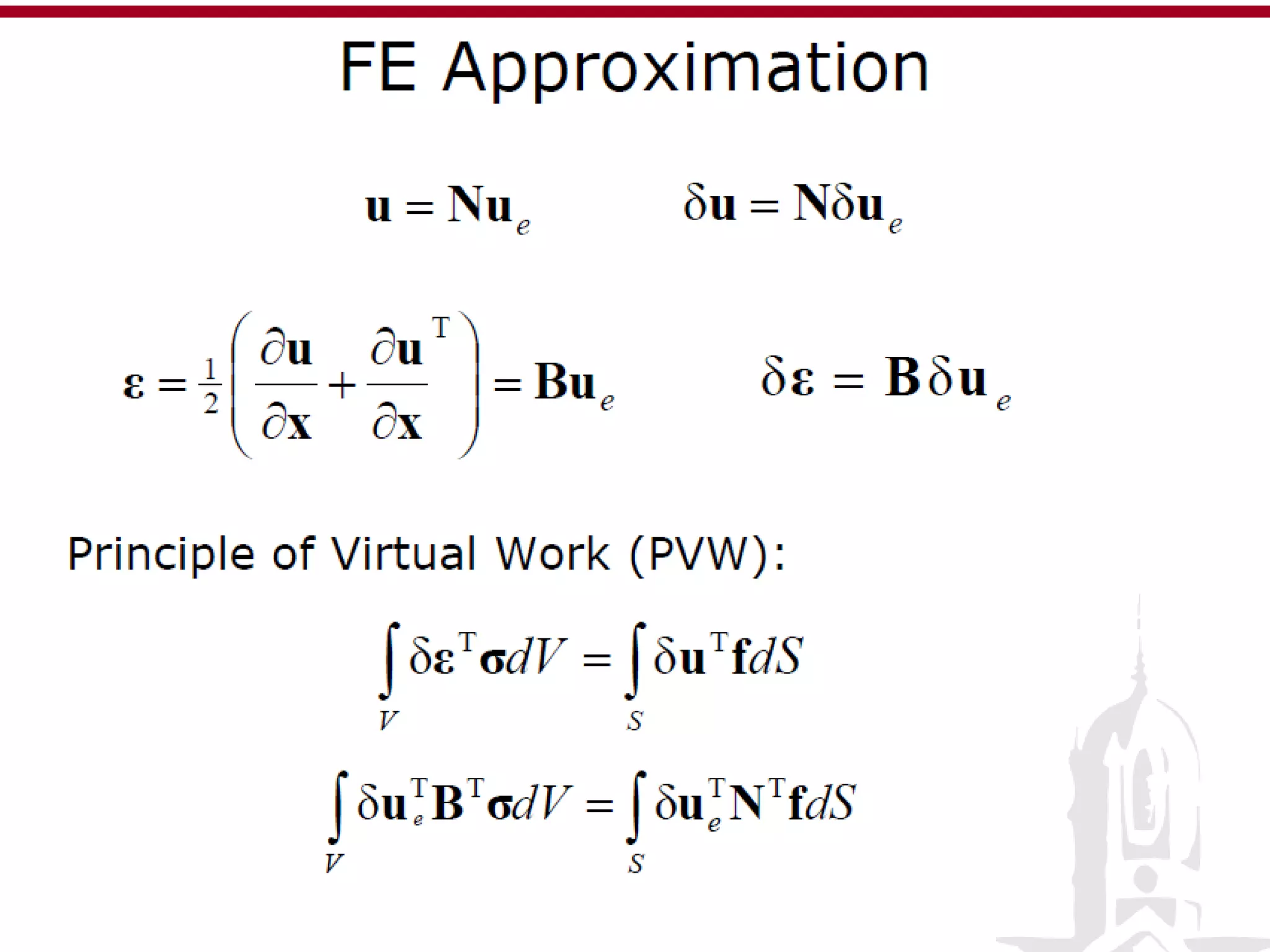
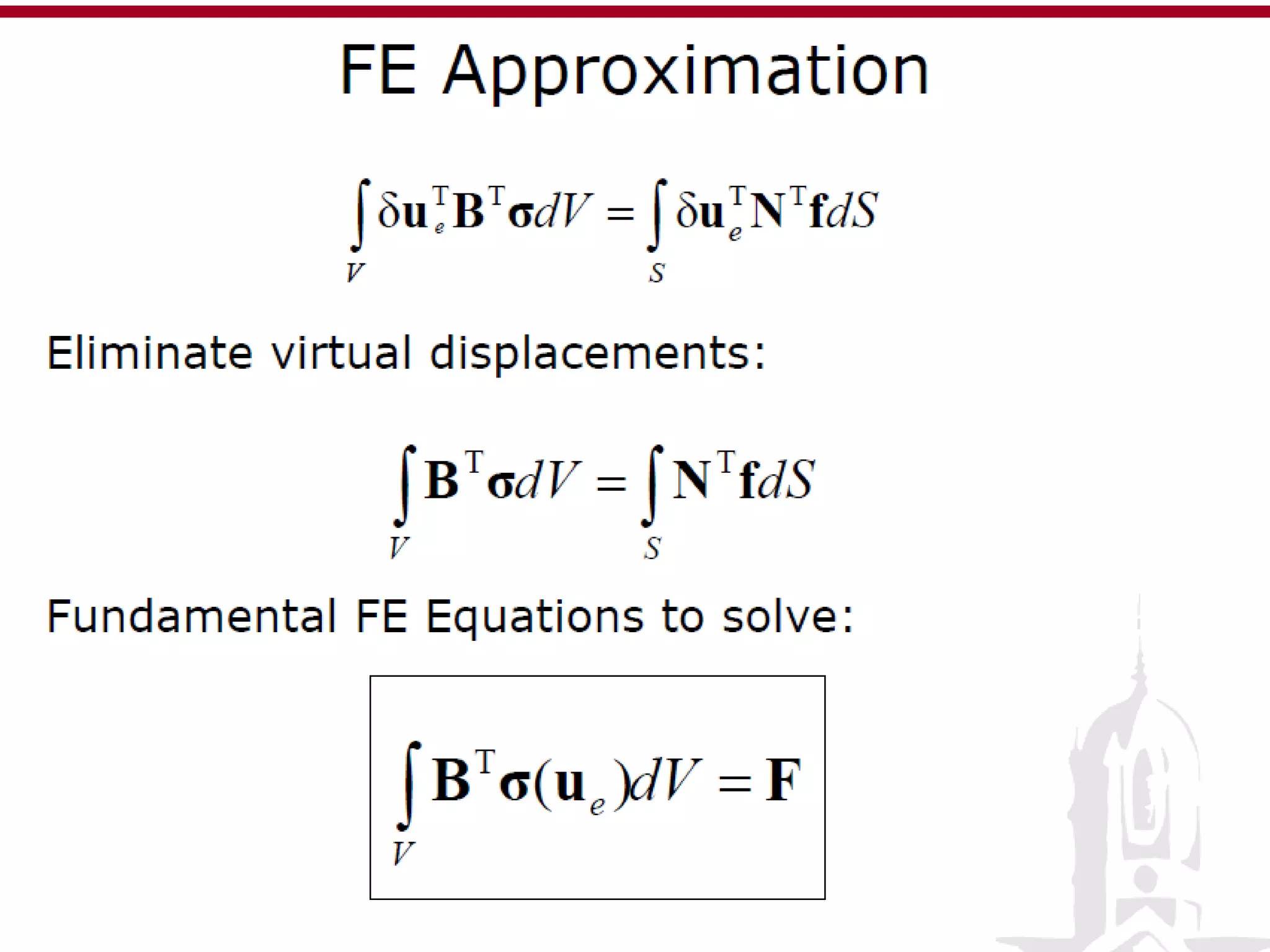
    FE Approximation • Temperaturedistribution u(x) – a single degree of freedom case (SDOF)
  • 5.
    • Approximation: assumptionof “shape” of solution throughout element – usually polynomial – linear,quadratic,… • More nodes & elements → greater accuracy • Generally quadratic better than linear
  • 12.
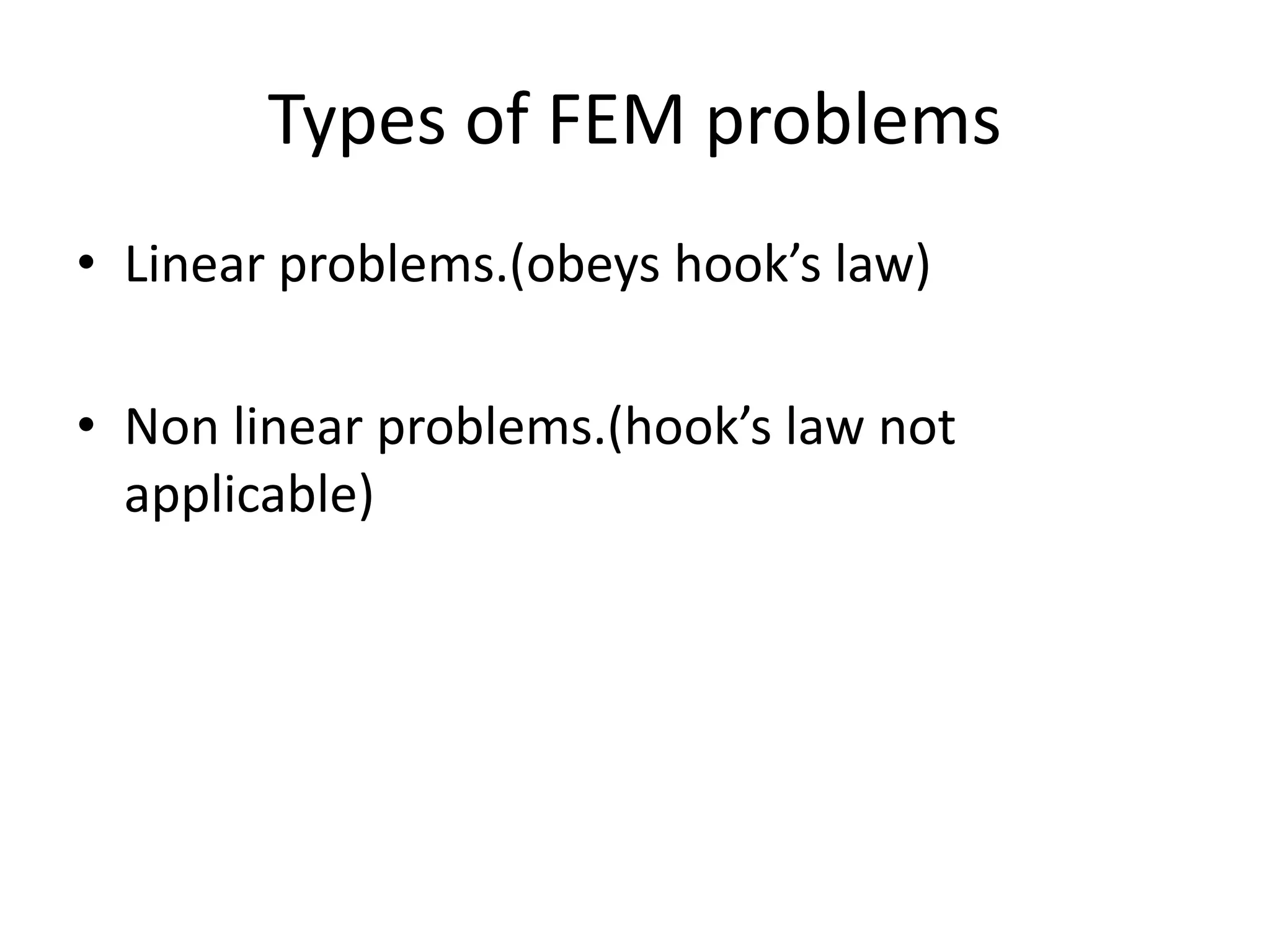
    Types of FEMproblems • Linear problems.(obeys hook’s law) • Non linear problems.(hook’s law not applicable)
  • 15.
  • 19.
    FE Methods ofNonlinear Mechanics (TB) • Semidiscretization of Continuum Equations • Static and Dynamic Discrete Equations • Lagrangian, Eulerian, and Arbitrary Lagrangian Eulerian (ALE) meshes • Frame Invariant Stress Rates • Total and Updated Lagrangian Formulations • Material and Geometric Stiffness
  • 20.
    Solution Algorithms forNonlinear Problems (TH) • Newton and Modified Newton Methods • Consistent Linearization • Line Search • Quasi-Newton Updates ("BFGS", etc.) • Arc-Length Strategies
  • 38.
    Information • For otheralgorithms refer non-linear finite element analysis by j.n reddy.