This document discusses different types of material failures including yielding, fracture, elastic deformation, wear, buckling, corrosion, fatigue, caustic embrittlement, and stress concentration. It provides definitions and descriptions of each type of failure. Yielding is defined as the stress at which a material begins to deform plastically. Fracture occurs when a material undergoes plastic deformation, strain hardening, and necking, ultimately resulting in rupture. Elastic deformation is reversible and materials return to their original shape once forces are removed. Wear is the displacement of material from its original position due to contact with another surface.
Presentation introduced by Parth Gajjar on types of failures and the professor to whom it was submitted.
Overview of types of material failures including yielding, fracture, elastic deformation, wear, buckling, corrosion, fatigue, caustic embrittlement, and stress.
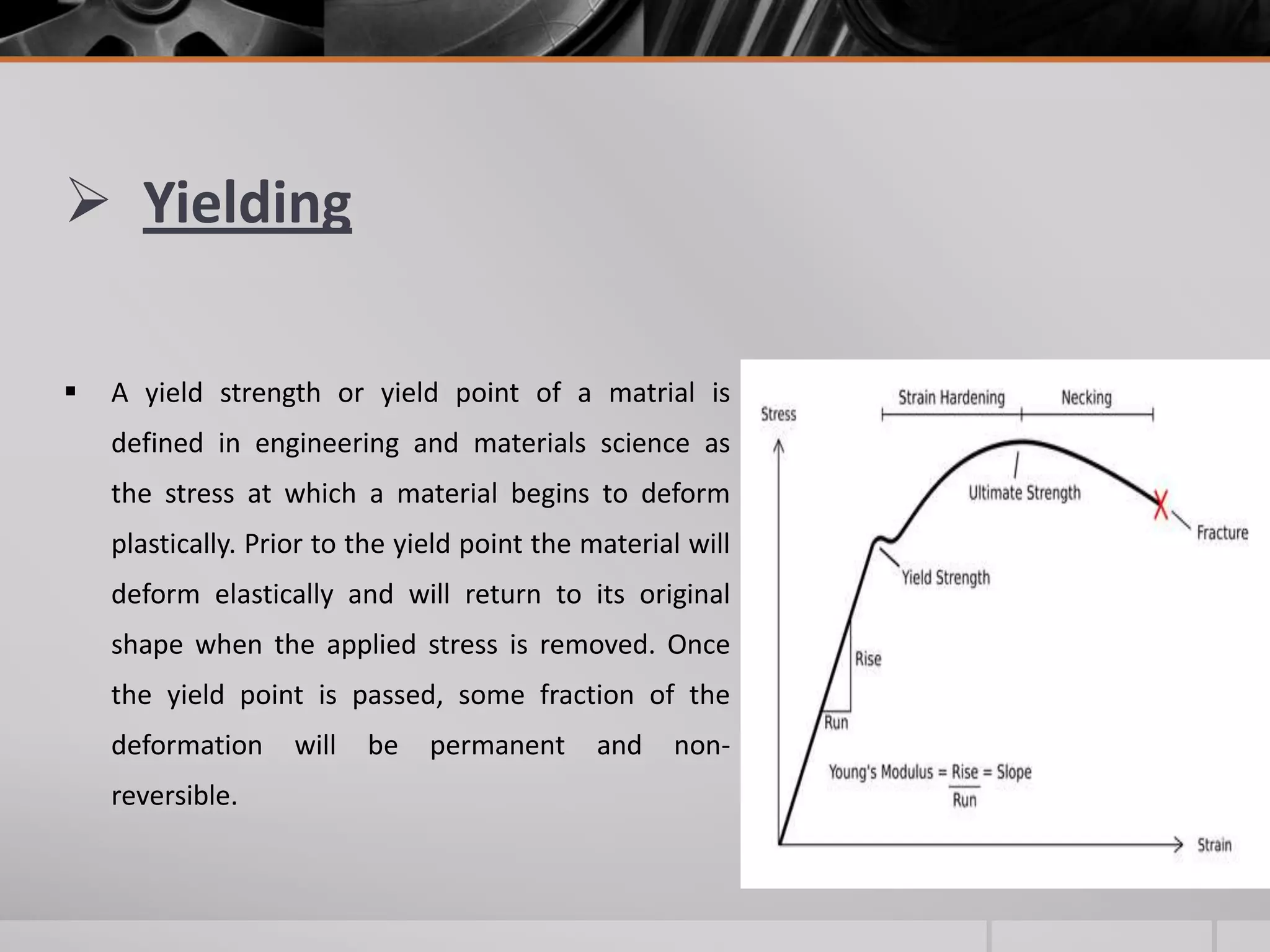
Yielding defined as the stress point where materials begin to deform plastically, with a distinction between reversible and permanent deformation.
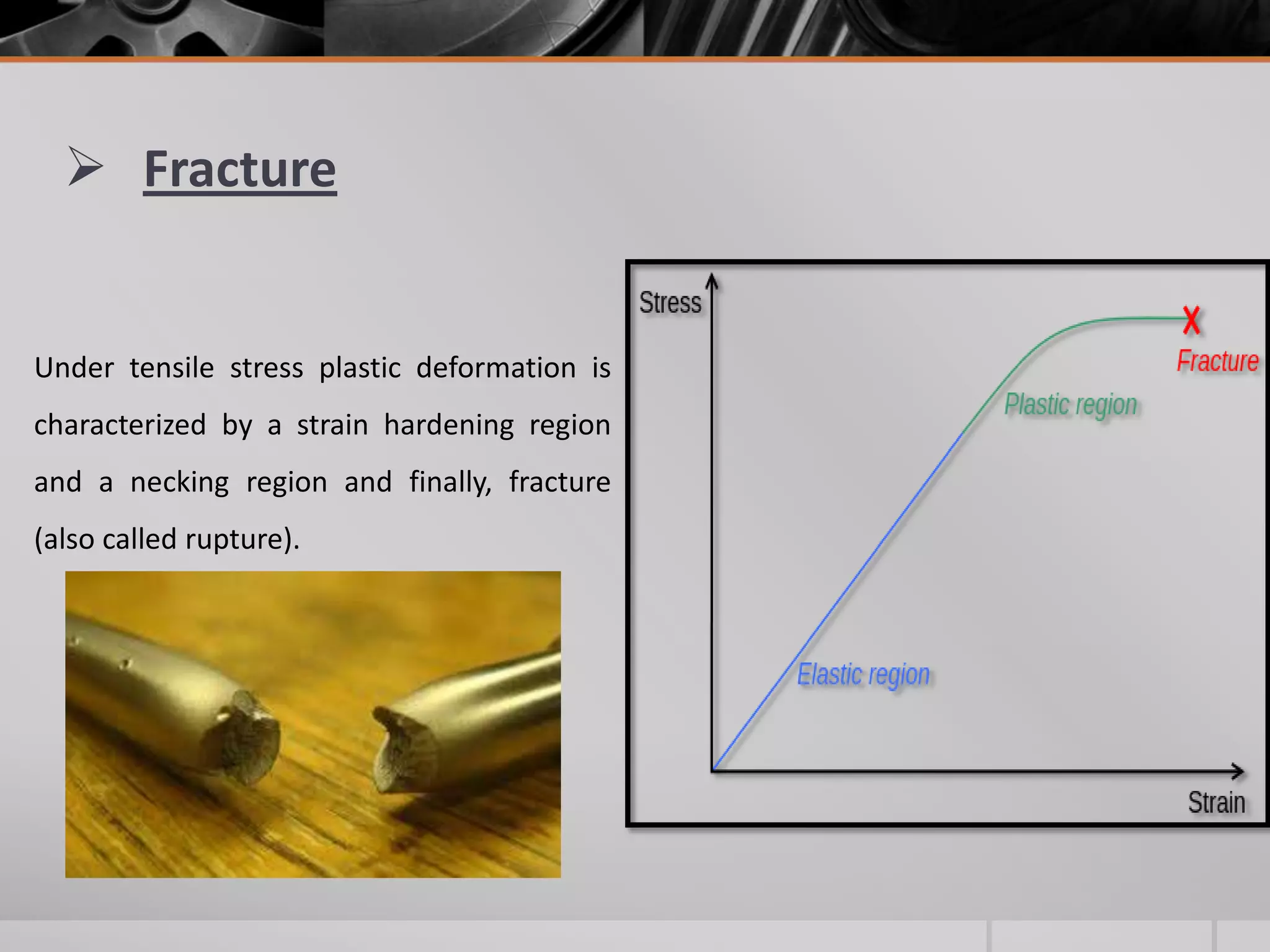
Fracture explained as the final stage of plastic deformation under tensile stress, leading to rupture.
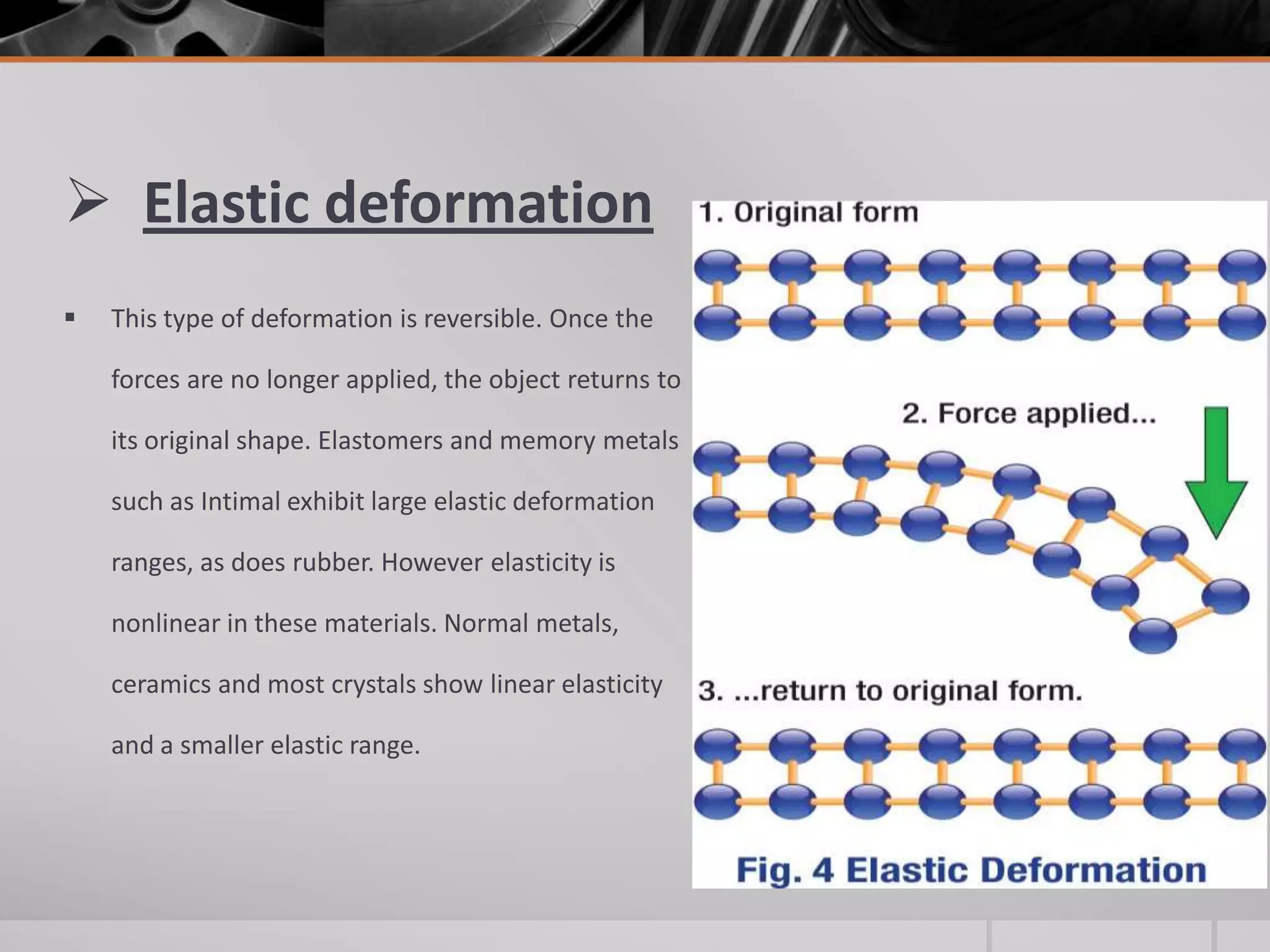
Elastic deformation described as reversible shape change when forces are removed, with examples of elastomers and metals.
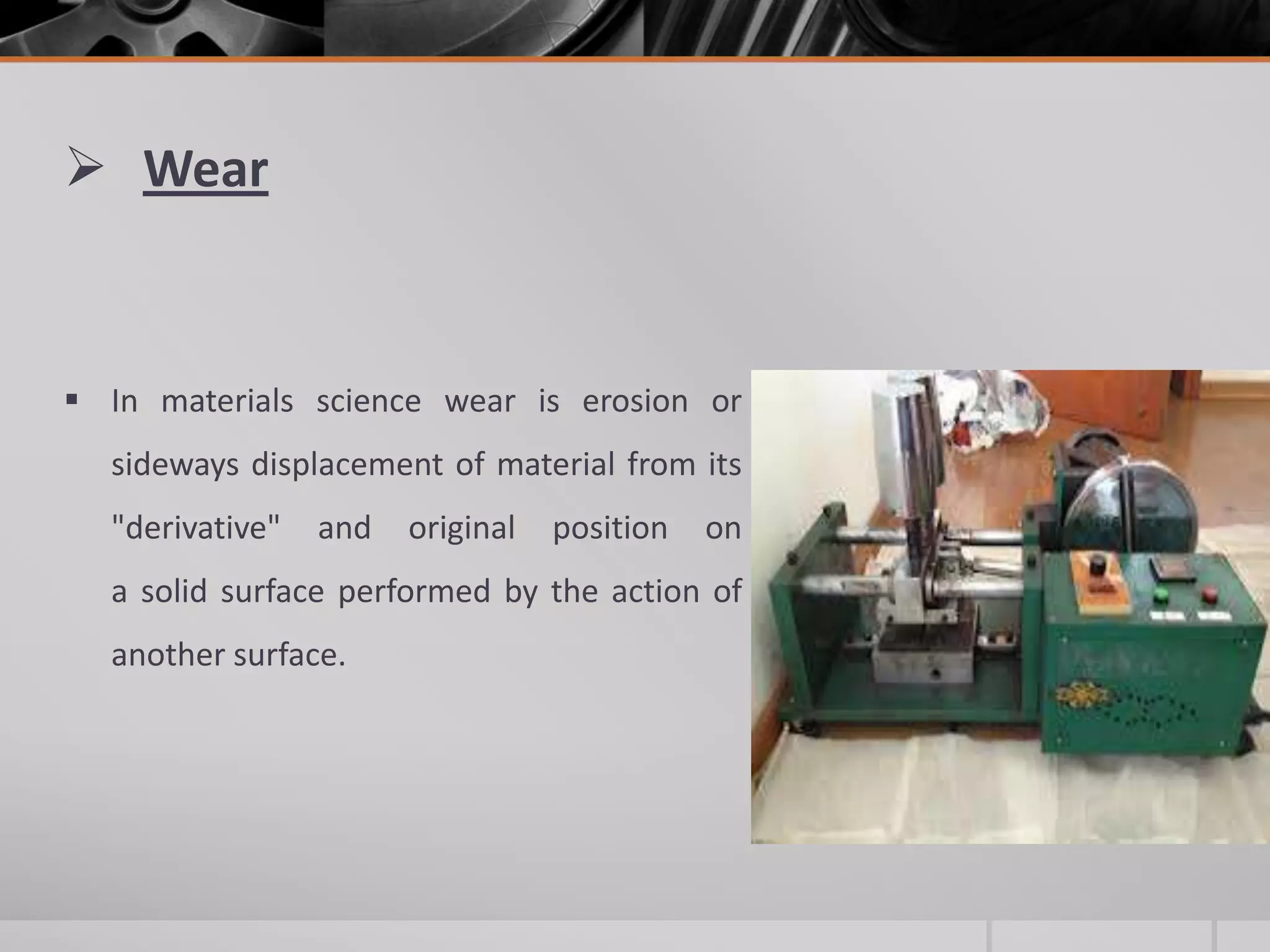
Wear defined as the erosion of material from a solid surface due to another surface's action.
Various wear types include adhesive, abrasive, surface fatigue, fretting, and erosive wear.
Buckling described as sudden failure under compressive stress that is less than the material's capacity.
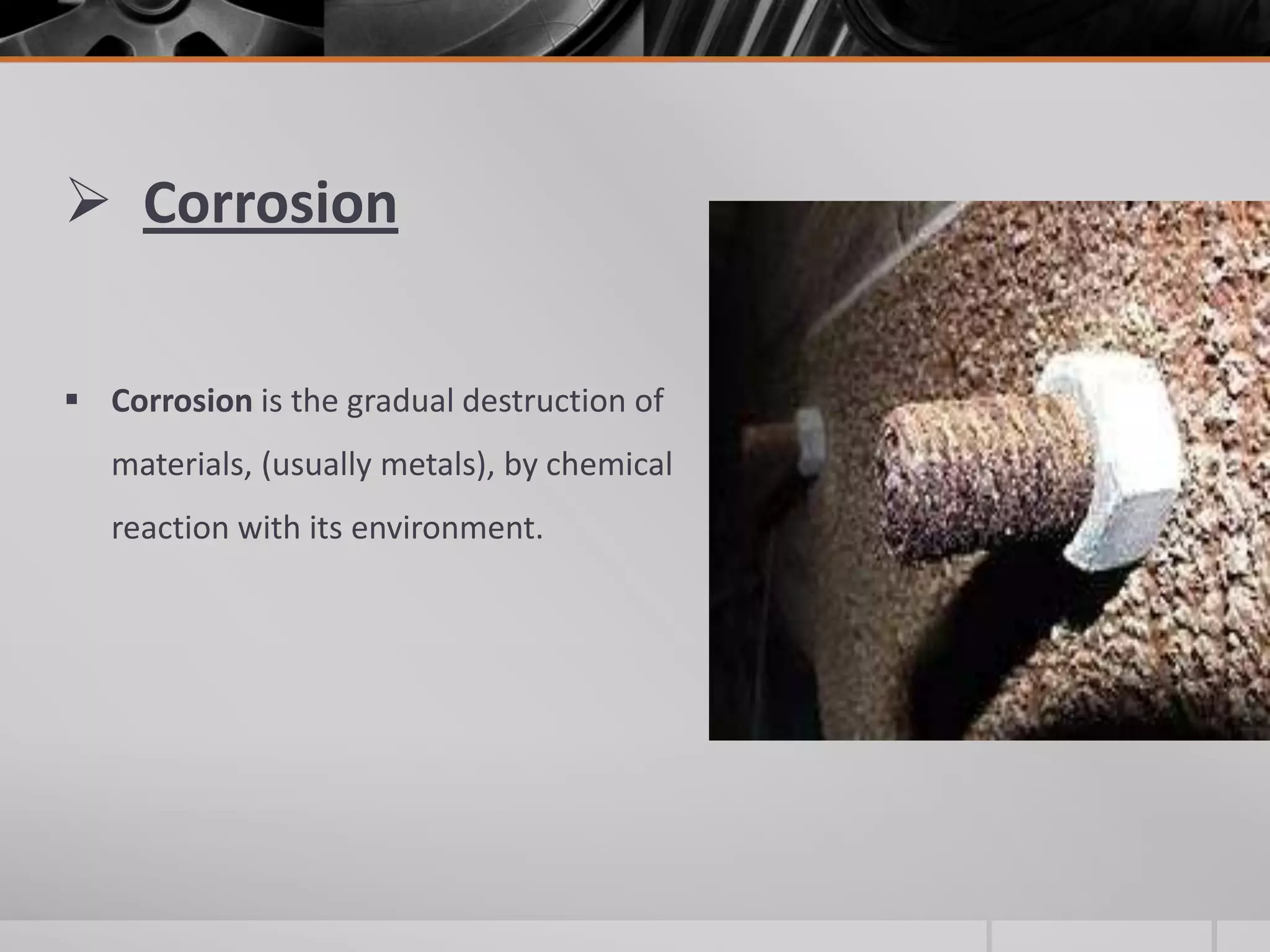
Corrosion as the gradual degradation of materials, typically metals, through chemical reactions.
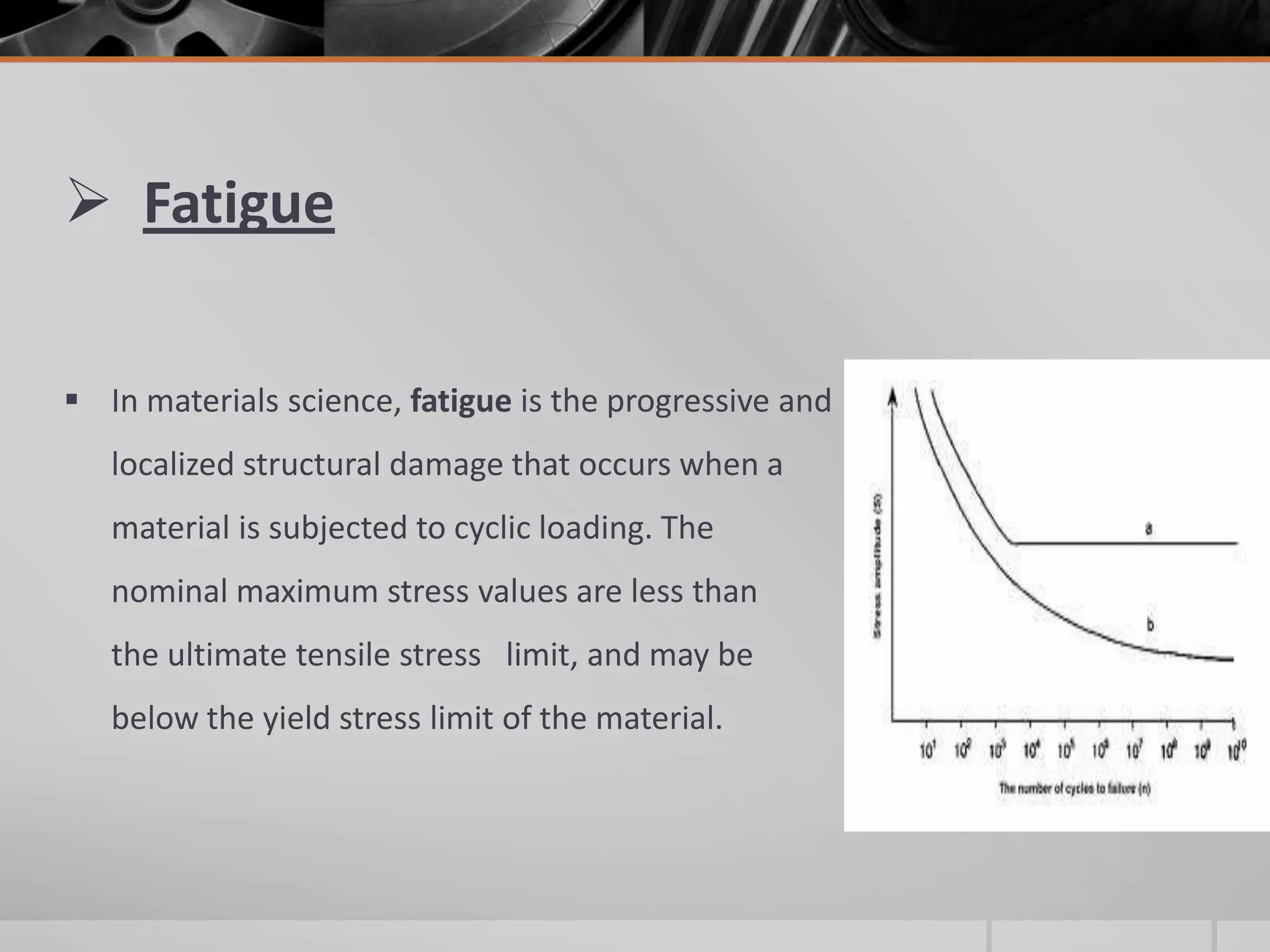
Fatigue characterized as structural damage due to cyclic loading, with stresses below ultimate tensile and yield stress.
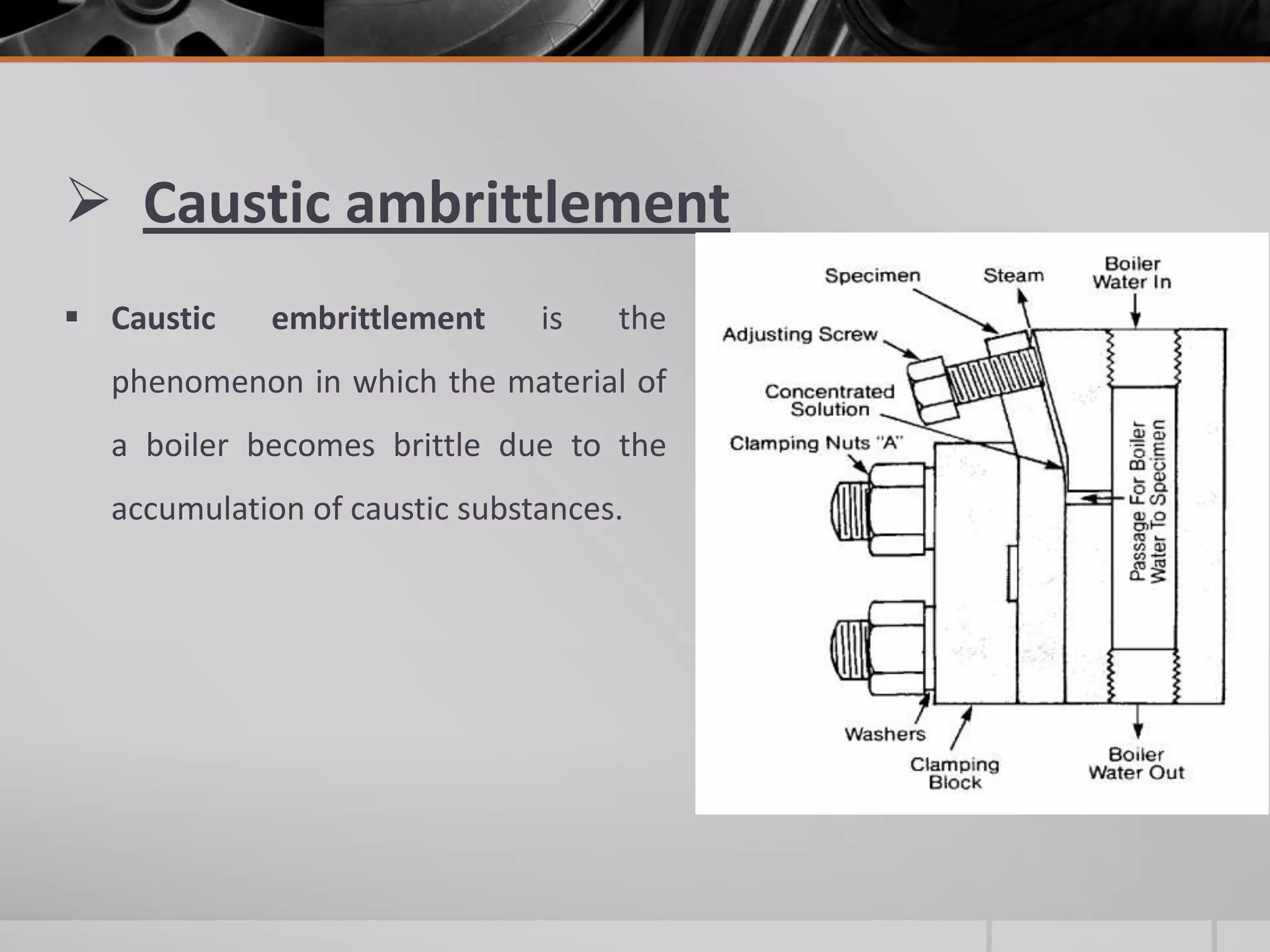
Caustic embrittlement described as materials becoming brittle due to the accumulation of caustic substances.
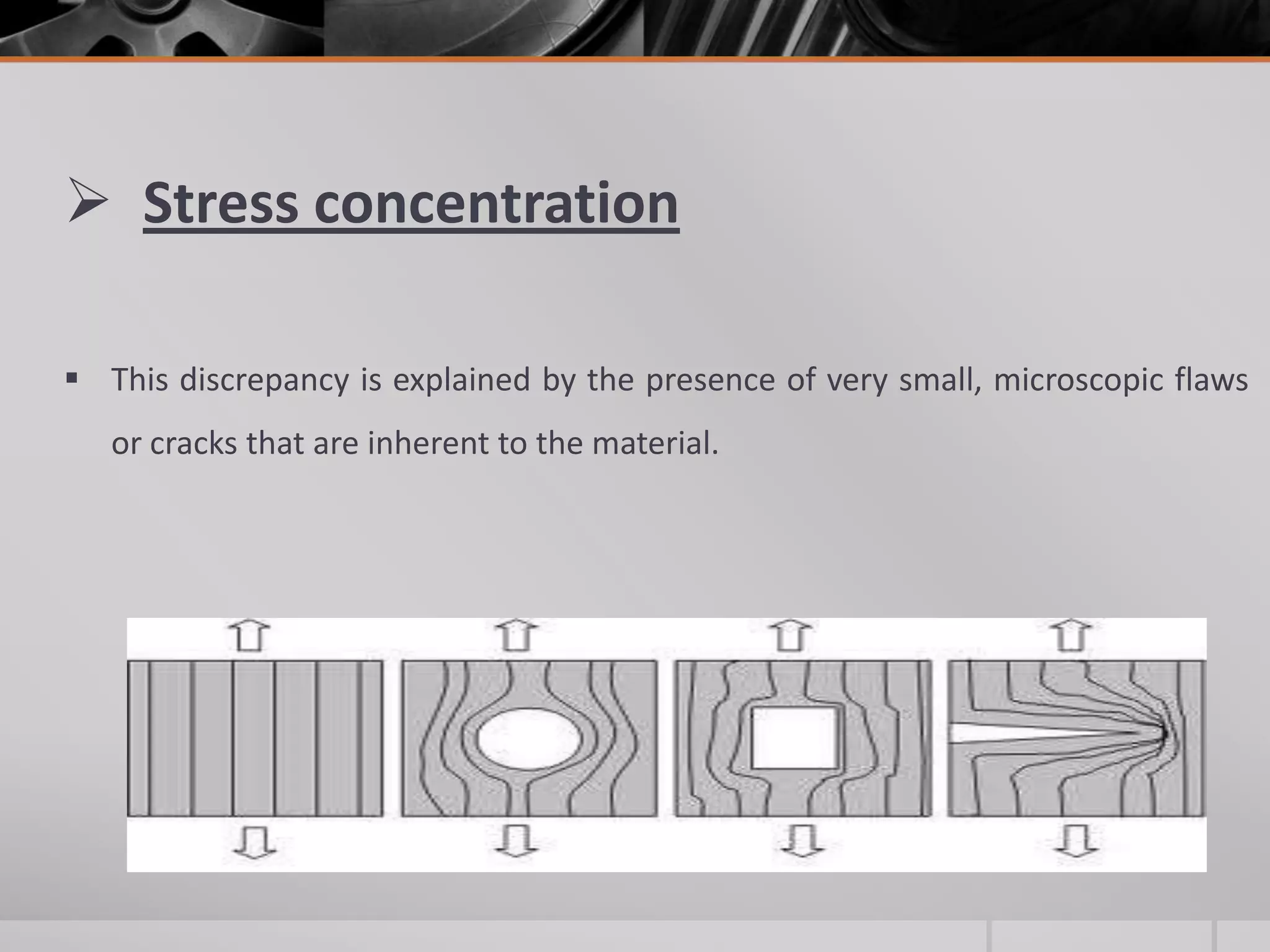
Stress concentration explained as issues caused by microscopic flaws or cracks in materials.
Yielding
A yieldstrength or yield point of a matrial is
defined in engineering and materials science as
the stress at which a material begins to deform
plastically. Prior to the yield point the material will
deform elastically and will return to its original
shape when the applied stress is removed. Once
the yield point is passed, some fraction of the
deformation
reversible.
will
be
permanent
and
non-
4.
Fracture
Under tensilestress plastic deformation is
characterized by a strain hardening region
and a necking region and finally, fracture
(also called rupture).
5.
Elastic deformation
Thistype of deformation is reversible. Once the
forces are no longer applied, the object returns to
its original shape. Elastomers and memory metals
such as Intimal exhibit large elastic deformation
ranges, as does rubber. However elasticity is
nonlinear in these materials. Normal metals,
ceramics and most crystals show linear elasticity
and a smaller elastic range.
6.
Wear
Inmaterials science wear is erosion or
sideways displacement of material from its
"derivative"
and
original
position
on
a solid surface performed by the action of
another surface.
Buckling:
Inpractice, buckling is characterized by a sudden failure of a
structural member subjected to high compressive stress
where the actual compressive stress at the point of failure is
less than the ultimate compressive stresses that the material
is capable of withstanding. For example, during earthquakes,
reinforced concrete members may experience lateral
deformation of the longitudinal reinforcing bars. This mode
of failure is also described as failure due to elastic instability.
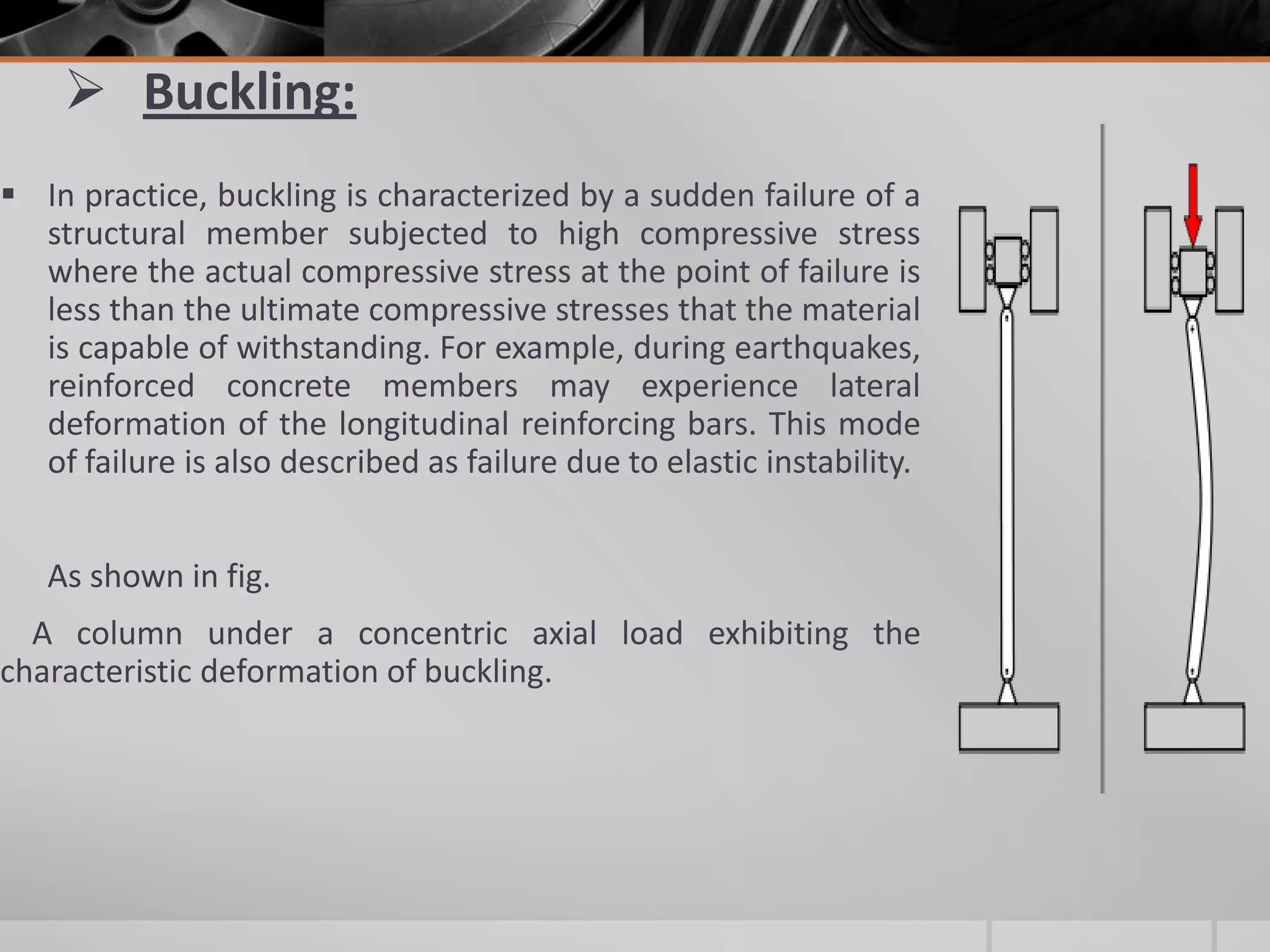
As shown in fig.
A column under a concentric axial load exhibiting the
characteristic deformation of buckling.
9.
Corrosion
Corrosionis the gradual destruction of
materials, (usually metals), by chemical
reaction with its environment.
10.
Fatigue
Inmaterials science, fatigue is the progressive and
localized structural damage that occurs when a
material is subjected to cyclic loading. The
nominal maximum stress values are less than
the ultimate tensile stress limit, and may be
below the yield stress limit of the material.
11.
Caustic ambrittlement
Caustic
embrittlement
is
the
phenomenon in which the material of
a boiler becomes brittle due to the
accumulation of caustic substances.
12.
Stress concentration
This discrepancy is explained by the presence of very small, microscopic flaws
or cracks that are inherent to the material.