NIV FOR EM
Emergency Practice Update
Introduction
* Non Invasive Positive Pressure Ventilation(NIPPV) is
recent phenomenon, mainly because of advances
in noninvasive interfaces and ventilator modes
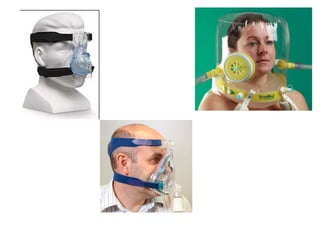
* NIPPV delivered o2 by nasal or oronasal mask
* The efficacy of noninvasive positive-pressure
Ventilation has been demonstrated for acute
pulmonary edema, for respiratory failure in
immunocompromised patients, and to facilitate
extubation in COPD patients.
* Patients who develop respiratory failure or who
refuse intubation are potentially good candidates for
noninvasive positive-pressure ventilation
*Several factors are vital to the success of noninvasive
positive-pressure ventilation: careful patient
selection; properly timed initiation; comfortable,
well-fitting interface; coaching and encouragement;
and careful monitoring.
*Noninvasive ventilation should be used to avert
endotracheal intubation rather than as an
alternative to it.
Indication
โ€ข Strong evidence:
i. Cardiogenic pulmonary
edema.
ii. Acute or chronic respiratory
failure (COPD).
iii. Respiratory failure in
immunocompromised
patients.
โ€ข Intermediate evidence:
i. Asthma.
ii. Community---acquired
pneumonia.
iii. DNR/DNI patients.
โ€ข Weak evidence:
i. Trauma.
ii. Neuromuscular diseases
(e.g., myasthenia gravis).
iii. Cystic fibrosis.
โ€ข Contraindicated
i. Pulmonary fibrosis.
ii. ARDS (when complicated with
multi---organ failure.
โ€ข Relative Contraindications
i. Hemodynamic instability
ii. Severe hypoxia and/or
hypercapnia,
iii. PaO2/FiO2 ratio of < 200 mm
Hg,
iv. PaCO2 > 60 mm Hg
v. Poor patient cooperation
vi. Lack of trained or experienced
staff
โ€ข Absolute Contraindications
i. Need for immediate
endotracheal intubation
ii. Decreased level of
consciousness
iii. Excess respiratory secretions
and risk of vomiting and
aspiration
iv. Past facial surgery precluding
mask fitting
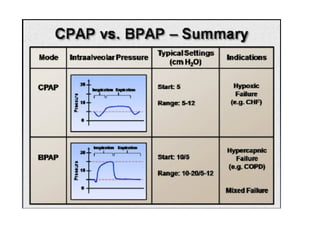
Pressure setting:
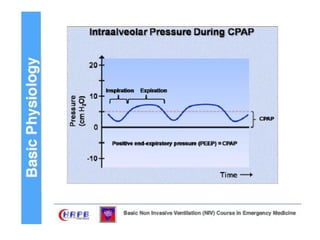
โ€ขFor CPAP start at 10 cm H2O.
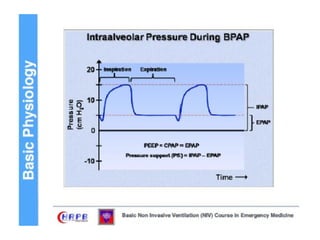
โ€ขFor bi---level NIV start at IPAP 15 cm H2O, EPAP 5 cm
H2O.
โ€ขPressure should not exceed 25 cm H2O
โ€ขIf tolerated and needed, then increasing the inspiratory
pressure by 2 cm of H2O every 20---30 minutes.
โ€ขMay increase the pressure support to a maximum
inspiratory pressure of 20---25 cm of H2O and a
maximum expiratory pressure of 15 cm of H2O.
Parameters of failure in a patient on NIV
include
โ€ข Vomiting
โ€ข Persistent coughing
โ€ข Aspiration
โ€ข Progressive respiratory
distress
โ€ข Respiratory arrest
โ€ข Loss of consciousness
โ€ข Respiratory rate rising
greater than 35---40
โ€ข Persistent hypoxia
despite supplemental
oxygenation.
โ€ข Hemodynamic
instability or shock
โ€ข Worsening arterial pH,
PCO2, PO2, or venous
pH
โ€ข Worsening PaO2/FiO2
ratio
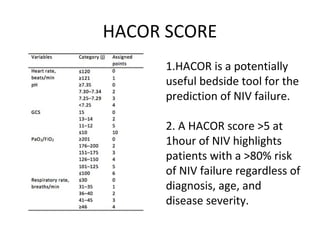
HACOR SCORE
1.HACOR is a potentially
useful bedside tool for the
prediction of NIV failure.
2. A HACOR score >5 at
1hour of NIV highlights
patients with a >80% risk
of NIV failure regardless of
diagnosis, age, and
disease severity.
REMEMBER
โ€ข The Enemy of NIV is LEAK !!!!!!!

Niv practice update

  • 1.
    NIV FOR EM EmergencyPractice Update
  • 2.
    Introduction * Non InvasivePositive Pressure Ventilation(NIPPV) is recent phenomenon, mainly because of advances in noninvasive interfaces and ventilator modes * NIPPV delivered o2 by nasal or oronasal mask * The efficacy of noninvasive positive-pressure Ventilation has been demonstrated for acute pulmonary edema, for respiratory failure in immunocompromised patients, and to facilitate extubation in COPD patients.
  • 4.
    * Patients whodevelop respiratory failure or who refuse intubation are potentially good candidates for noninvasive positive-pressure ventilation *Several factors are vital to the success of noninvasive positive-pressure ventilation: careful patient selection; properly timed initiation; comfortable, well-fitting interface; coaching and encouragement; and careful monitoring. *Noninvasive ventilation should be used to avert endotracheal intubation rather than as an alternative to it.
  • 5.
    Indication โ€ข Strong evidence: i.Cardiogenic pulmonary edema. ii. Acute or chronic respiratory failure (COPD). iii. Respiratory failure in immunocompromised patients. โ€ข Intermediate evidence: i. Asthma. ii. Community---acquired pneumonia. iii. DNR/DNI patients. โ€ข Weak evidence: i. Trauma. ii. Neuromuscular diseases (e.g., myasthenia gravis). iii. Cystic fibrosis.
  • 6.
    โ€ข Contraindicated i. Pulmonaryfibrosis. ii. ARDS (when complicated with multi---organ failure. โ€ข Relative Contraindications i. Hemodynamic instability ii. Severe hypoxia and/or hypercapnia, iii. PaO2/FiO2 ratio of < 200 mm Hg, iv. PaCO2 > 60 mm Hg v. Poor patient cooperation vi. Lack of trained or experienced staff โ€ข Absolute Contraindications i. Need for immediate endotracheal intubation ii. Decreased level of consciousness iii. Excess respiratory secretions and risk of vomiting and aspiration iv. Past facial surgery precluding mask fitting
  • 9.
    Pressure setting: โ€ขFor CPAPstart at 10 cm H2O. โ€ขFor bi---level NIV start at IPAP 15 cm H2O, EPAP 5 cm H2O. โ€ขPressure should not exceed 25 cm H2O โ€ขIf tolerated and needed, then increasing the inspiratory pressure by 2 cm of H2O every 20---30 minutes. โ€ขMay increase the pressure support to a maximum inspiratory pressure of 20---25 cm of H2O and a maximum expiratory pressure of 15 cm of H2O.
  • 10.
    Parameters of failurein a patient on NIV include โ€ข Vomiting โ€ข Persistent coughing โ€ข Aspiration โ€ข Progressive respiratory distress โ€ข Respiratory arrest โ€ข Loss of consciousness โ€ข Respiratory rate rising greater than 35---40 โ€ข Persistent hypoxia despite supplemental oxygenation. โ€ข Hemodynamic instability or shock โ€ข Worsening arterial pH, PCO2, PO2, or venous pH โ€ข Worsening PaO2/FiO2 ratio
  • 11.
    HACOR SCORE 1.HACOR isa potentially useful bedside tool for the prediction of NIV failure. 2. A HACOR score >5 at 1hour of NIV highlights patients with a >80% risk of NIV failure regardless of diagnosis, age, and disease severity.
  • 13.
    REMEMBER โ€ข The Enemyof NIV is LEAK !!!!!!!