VENTILATOR STRATEGIES IN
ARDS
Dr. awaneesh katiyar M.CH.
Trauma Surgery and critical care
What is ARDS??
ARDS definition - AECC 1994
1. Acute onset of hypoxemia (arterial partial pressure of oxygen to fraction of inspired oxygen
[PaO2/FIO2] ≤ 200 mm Hg)
2. Bilateral infiltrates on frontal chest radiograph,
3. No evidence of left heart failure.
4. The presence of predisposing conditions.
(ARDS was first defined in 1994 by the American-European Consensus Conference (AECC) ).
Rawal G, Yadav S, Kumar R. Acute Respiratory Distress Syndrome: An Update and Review. J Transl Int Med. 2018;6(2):74-77. Published 2018 Jun
26. doi:10.1515/jtim-2016-0012
ARDS definition- Berlin 2011
 All four criteria’s to be present for diagnosis of ARDS
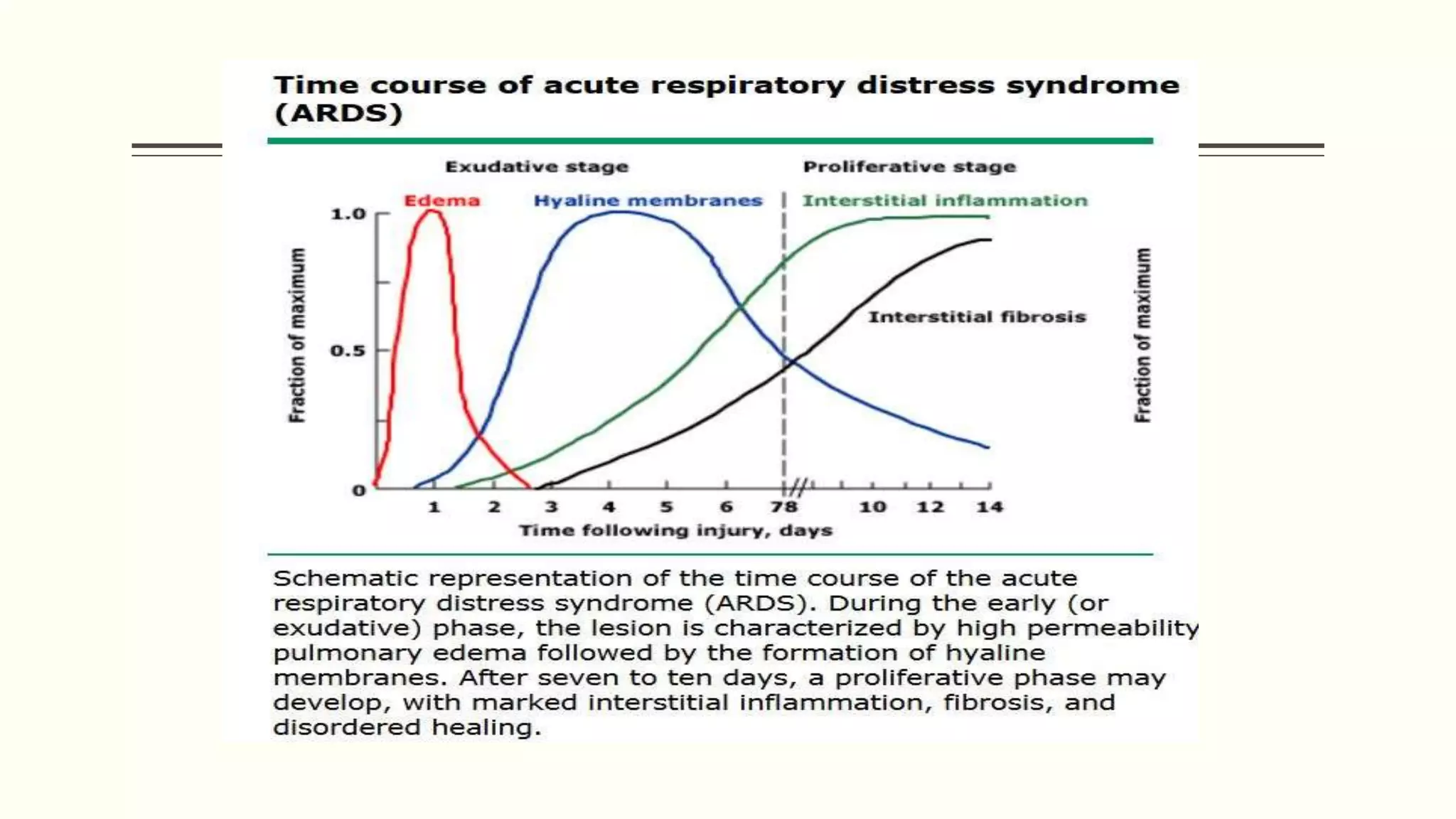
(1) Timing: Respiratory symptoms must have begun within one week of a known clinical insult,
or the patient must have new or worsening symptoms during the past week.
(2) Chest imaging: Bilateral opacities consistent with pulmonary edema must be present on a
chest radiograph or computed tomographic scan, which is not fully explained by pleural
effusions, lobar collapse, lung collapse, or pulmonary nodules.
(3) Origin of edema: The patient’s respiratory failure must not be fully explained by cardiac failure or fluid
overload.
(4) Oxygenation: A moderate to severe impairment of oxygenation must be present, as defined by the PaO2/
FiO2 ratio.
(1) Mild ARDS—The PaO2/FiO2 is > 200 mmHg, but ≤ 300 mmHg, on a ventilator with a positive end-
expiratory pressure (PEEP) or continuous positive airway pressure(CPAP) ≥ 5 cm H2O.
(2) Moderate ARDS—The PaO2/ FiO2 is > 100 mmHg, but ≤ 200 mmHg, on a ventilator with a PEEP ≥ 5 cm
H2O.
(3) Severe ARDS—The PaO2/ FiO2 is ≤ 100 mmHg on a ventilator with a PEEP ≥ 5 cm H2O.
Pathophysiology
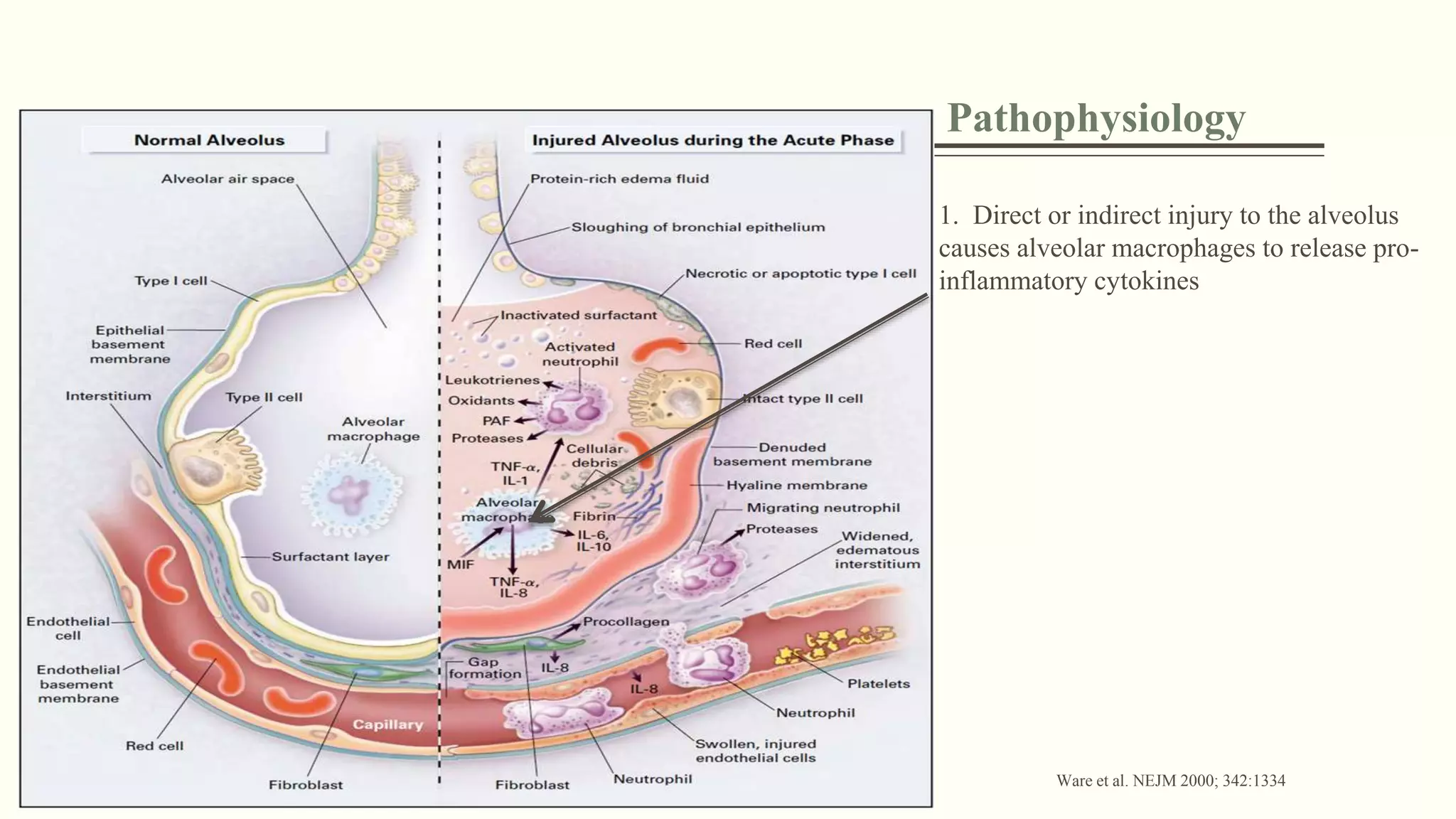
1. Direct or indirect injury to the alveolus
causes alveolar macrophages to release pro-
inflammatory cytokines
Ware et al. NEJM 2000; 342:1334
Pathophysiology
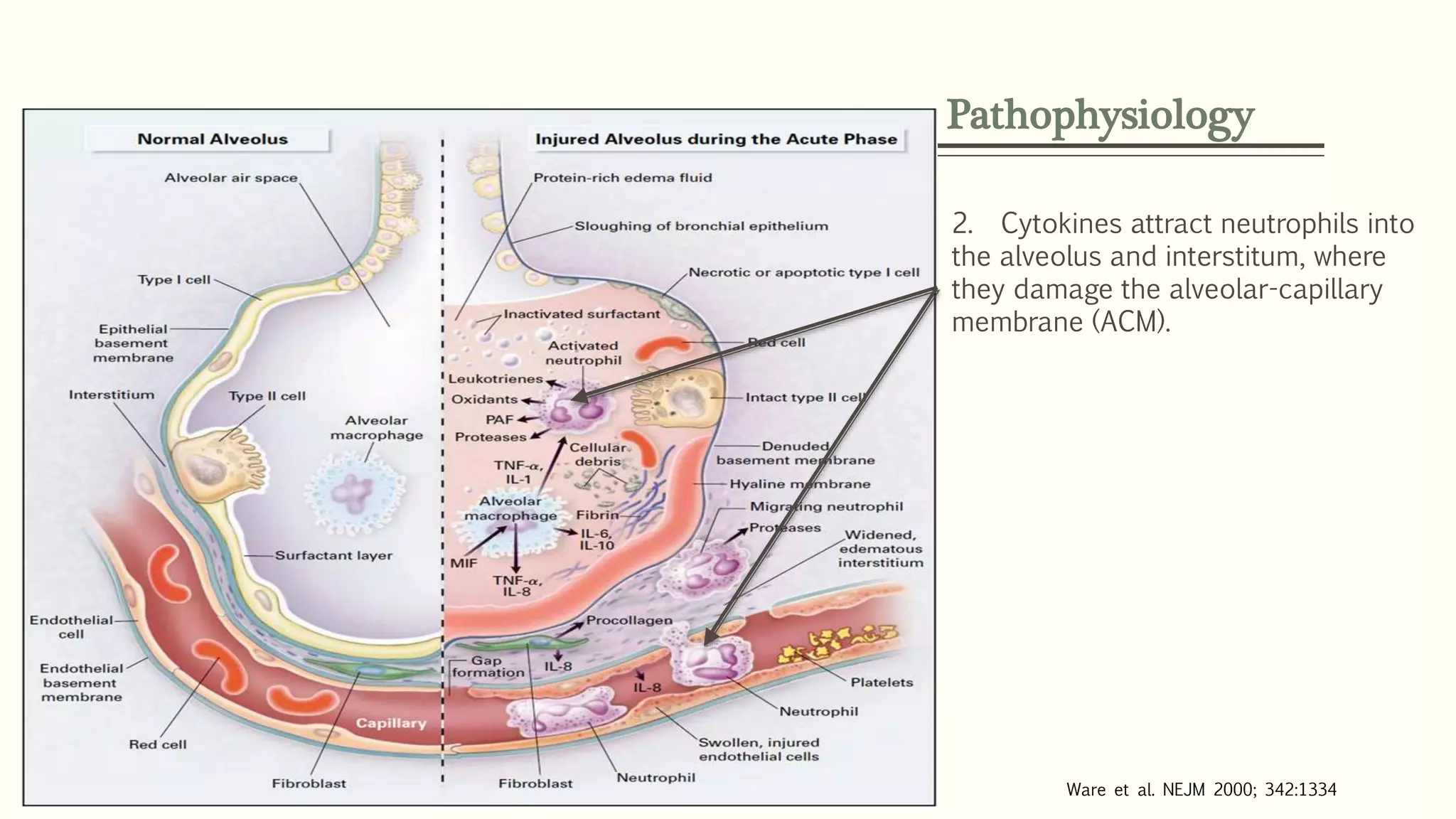
2. Cytokines attract neutrophils into
the alveolus and interstitum, where
they damage the alveolar-capillary
membrane (ACM).
Ware et al. NEJM 2000; 342:1334
Pathophysiology
3. ACM integrity is lost, interstitial and
alveolus fills with proteinaceous fluid,
surfactant can no longer support
alveolus
Ware et al. NEJM 2000; 342:1334
MANAGEMENT OF ARDS
 General Principles
 Management of Hypoxemia- ventilator Strategies
A case study
 23 yrs young man presented in ED (4.3.19), with Left shaft
of femur fracture following RTI 2 days (2.3.19)back, now he
is presented with of breathlessness with left chest pain.
(1) Early recognition and treatment of the underlying medical and surgical disorders (e.g.,
sepsis, aspiration, trauma);
(3) Prophylaxis against venous thromboembolism, gastrointestinal bleeding, and central
venous catheter infections;
(4) Prompt recognition of nosocomial infections; and provision of adequate nutrition,
Glucose control.
(5) Maintaining adequate oxygenation
General Principles:
Management of Hypoxemia
1. Decrease oxygen consumption
2. Increase oxygen delivery
3. Ventilator strategies
a. Non-invasive ventilation
b. Mechanical ventilation
1. Decrease oxygen consumption
 In diseases with severe pulmonary shunting, increasing the saturation of mixed
venous blood (SvO2 ) may increase the SaO2 . Therapies that decrease oxygen
consumption may improve SvO2 (and SaO2 subsequently) by decreasing the
amount of oxygen extracted from the blood.
 Common causes of increased oxygen consumption include fever, anxiety and
pain, and use of respiratory muscles; therefore, arterial saturation may improve
after treatment with anti-pyretics, sedatives, analgesics, or paralytics
Suzuki S, Hotchkiss JR, Takahashi T, et al. Effect of core body temperature on ventilator-induced lung injury. Crit Care Med 2004; 32:144.
2. Increase oxygen delivery
 DO 2 = 10 x CO x (1.34 x Hb x SaO 2 + 0.003 x PaO2 )
 where DO 2 is oxygen delivered, CO is cardiac output, Hb is hemoglobin
concentration, SaO 2 is the arterial oxygen saturation, and PaO 2 is the partial
pressure of oxygen in arterial blood.
 Considering that blood transfusions can cause ARDS, it is wise to avoid
transfusing blood products in patients with ARDS and threshold should be 7 g/dL.
Gong MN, Thompson BT, Williams P, et al. Clinical predictors of and mortality in acute respiratory distress syndrome: potential role of red cell transfusion. Crit Care
Med 2005; 33:1191.
VENTILATOR STRATEGIES
3a. Non invasive ventilation(NIV)
 No trials have compared NIV to invasive mechanical ventilation.
 “Ferrer et al” in which NIPPV is compared with supplemental oxygen by face mask
alone.
 NIPPV was associated with decreased need for intubation compared with oxygen
by face mask in the overall study population, but among patients with ARDS.
 No differences in outcomes.
 Only be considered in patients with mild disease (PaO2/FIO2 > 200 and no other
organ dysfunction) and immunocompromised patients who are hemodynamically
stable, able to tolerate wearing a face mask, and able to maintain a patent airway.
Zhan Q, Sun B, Liang L, et al. Early use of noninvasive positive pressure ventilation for acute lung injury: a multicenter randomized controlled trial*.
Crit Care Med. 2012;40(2):455–460
3b. Lung-Protective Ventilation:
 Since the introduction of positive-pressure mechanical ventilation, large
inflation volumes(TV) were used to ↓ tendency for atelectasis during MV.
 The standard tidal volumes were 10 to 15 mL/kg, which are twice the size of
tidal volumes used during quiet breathing (6 to 7 mL/kg).
 In patients with ARDS, these large inflation volumes are delivered into lungs
that have a marked ↓in functional volume.
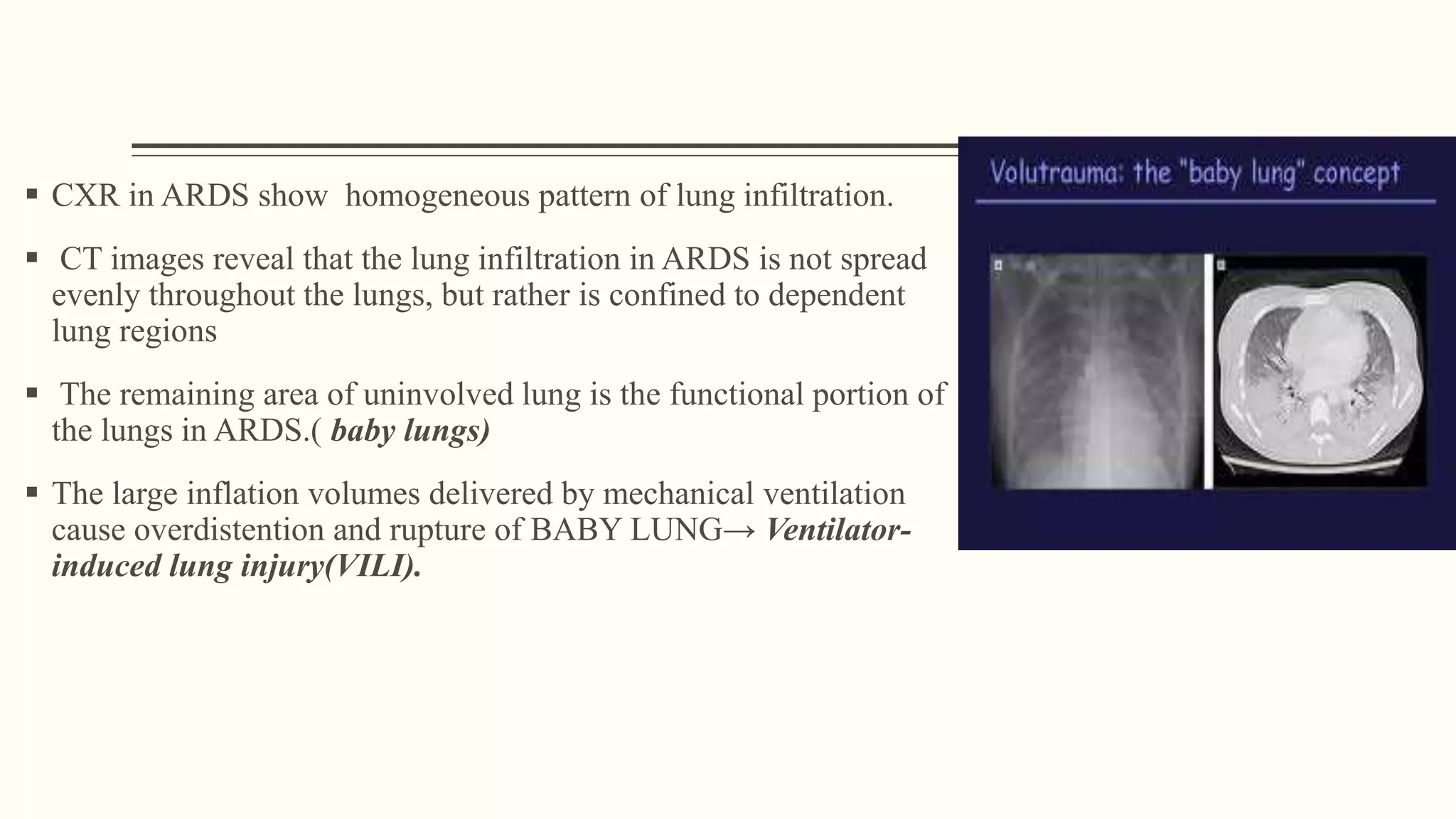
 CXR in ARDS show homogeneous pattern of lung infiltration.
 CT images reveal that the lung infiltration in ARDS is not spread
evenly throughout the lungs, but rather is confined to dependent
lung regions
 The remaining area of uninvolved lung is the functional portion of
the lungs in ARDS.( baby lungs)
 The large inflation volumes delivered by mechanical ventilation
cause overdistention and rupture of BABY LUNG→ Ventilator-
induced lung injury(VILI).
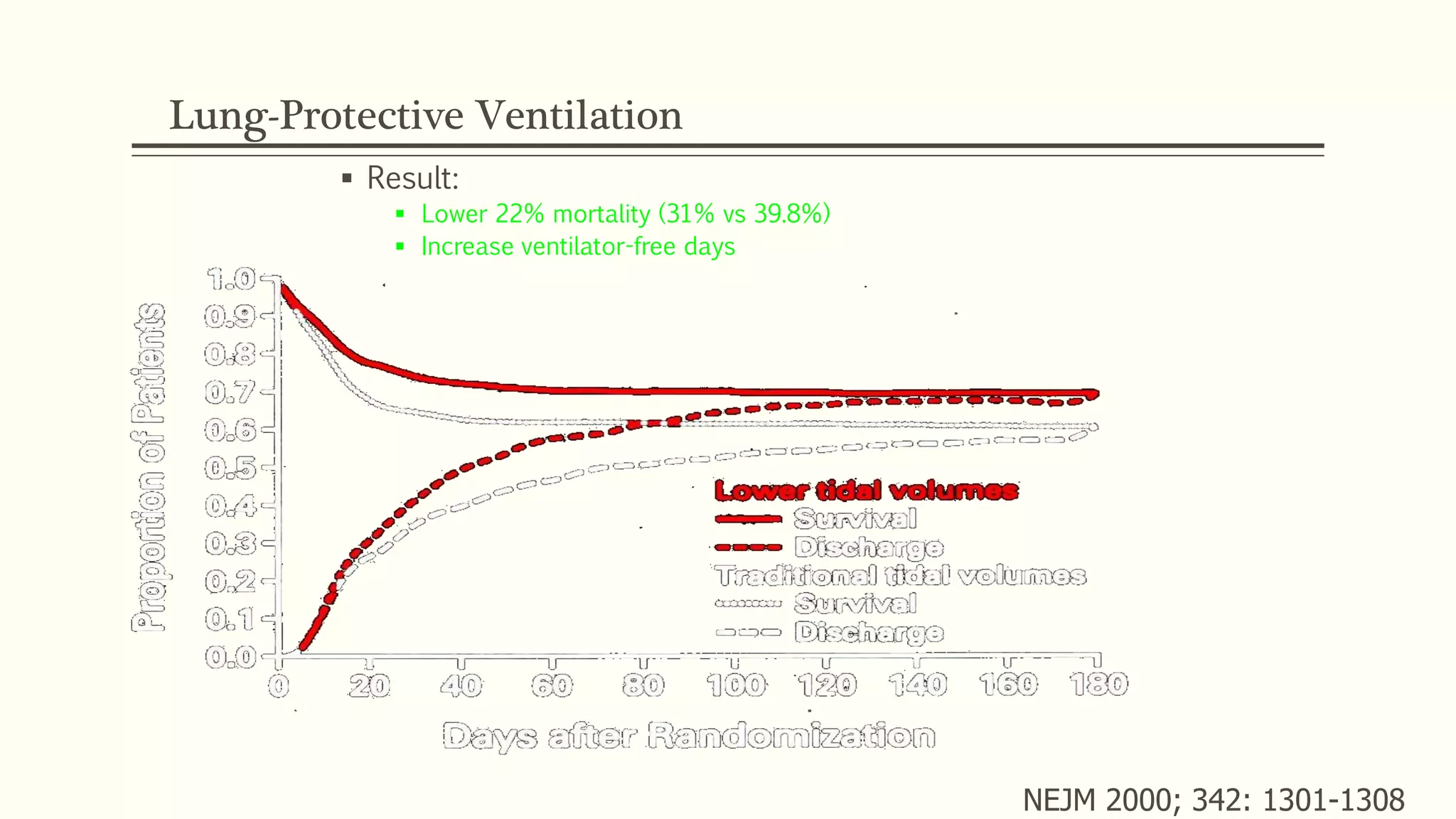
Lung-Protective Ventilation
 Result:
 Lower 22% mortality (31% vs 39.8%)
 Increase ventilator-free days
NEJM 2000; 342: 1301-1308
2. Neuromuscular blockers
Papazian, L, et al. NEJM 2010; 363: 1107-1116.
-Neuromuscular blocking agents may increase oxygenation and decrease ventilator associated
lung injury in severe ARDS patients
-Multicenter double blind trial with 340 patients; received 48hrs of cisatracurium (Nimbex) or
placebo
-Found that early administration of NBA improved 90 day survival and increased time off vent
without increase in muscle weakness
Conclusion: No significant difference in mortality rates at day 60
N Engl J Med 2004; 351:327
ALVEOLI trialHighvsLowPEEP
EXPRESS Study
Mercatt, M, et al. JAMA. 2008; 299(6):646-655.
-Multicenter randomized trial, 767 patients. Set a PEEP aimed to increase alveolar recruitment while
limiting hyperinflation
-Randomly assigned two groups: moderate PEEP (5-9cm H2O) vs. level of PEEP to reach a plateau
pressure of 28-30cm H2O
-Found that it didn’t significantly reduce mortality; however, it did improve lung function and decreased
days on vent and organ failure duration
Strategy ?
Aerated
Non aerated
recruitable
Non aerated
Non recruitable
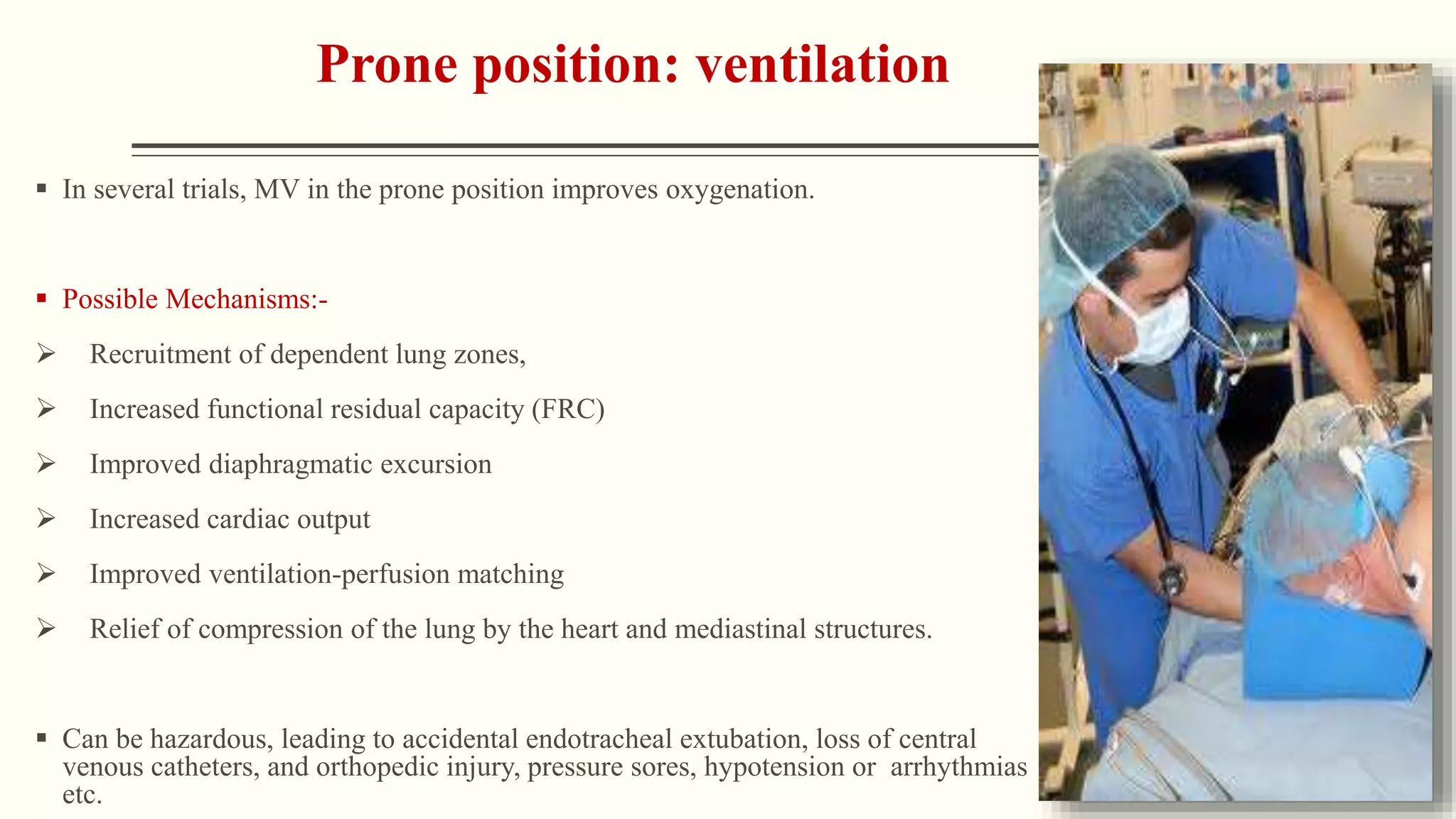
Prone position: ventilation
 In several trials, MV in the prone position improves oxygenation.
 Possible Mechanisms:-
 Recruitment of dependent lung zones,
 Increased functional residual capacity (FRC)
 Improved diaphragmatic excursion
 Increased cardiac output
 Improved ventilation-perfusion matching
 Relief of compression of the lung by the heart and mediastinal structures.
 Can be hazardous, leading to accidental endotracheal extubation, loss of central
venous catheters, and orthopedic injury, pressure sores, hypotension or arrhythmias
etc.
Conclusion: Early application of prolonged prone positioning significantly
decreased 28 day and 90 mortality in patients with severe ARDS.
Guerin et al. NEJM. 2013; 368:2159
PROSEVA Trial
Contraindications:-
 Spinal instability
 Chest tube
 Shock
 Pregnancy
 Raised intracranial pressure
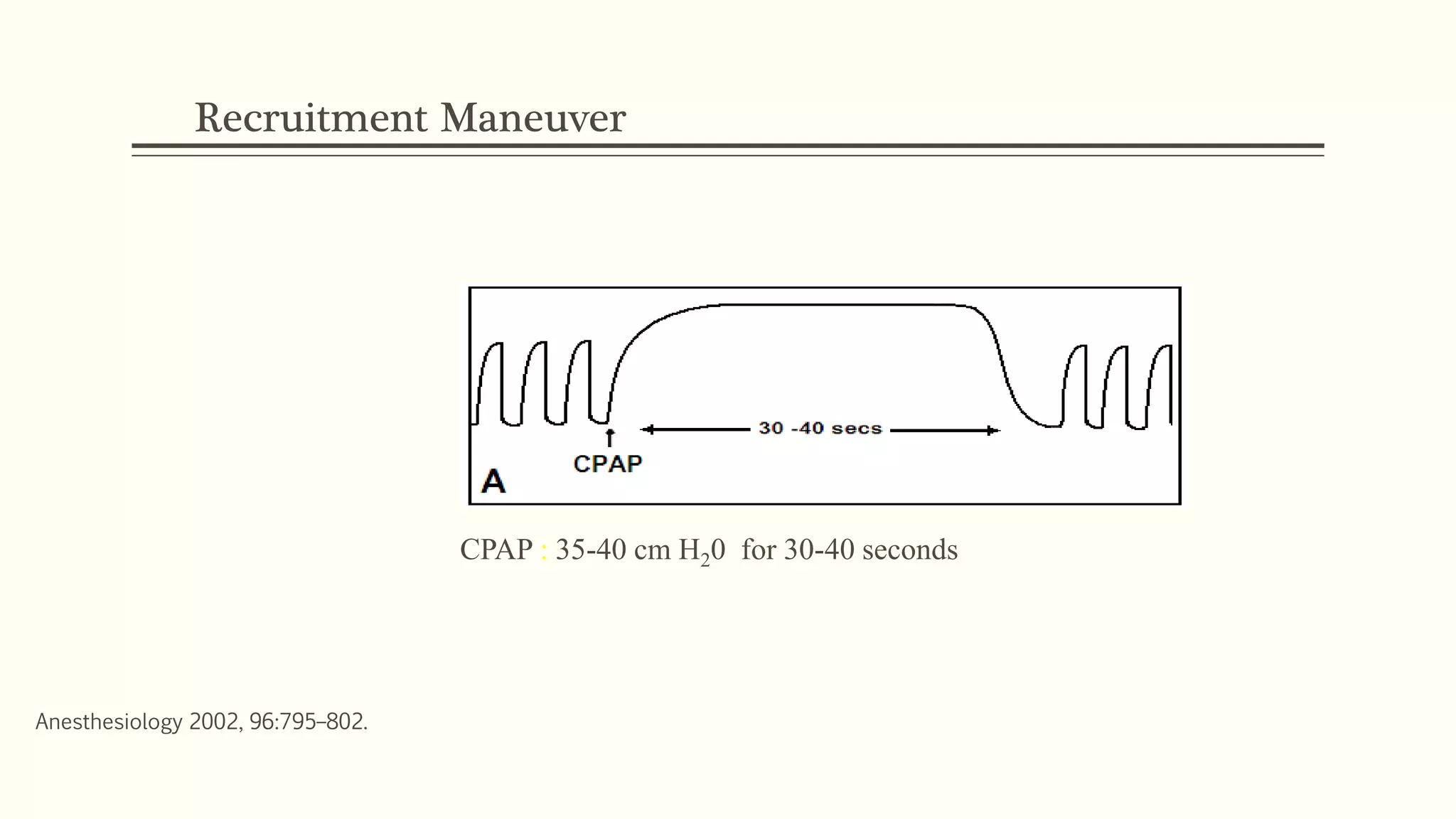
Recruitment Maneuver
• Continuous positive airway pressure (CPAP) of 35-40cm of H20 for 40 seconds.
• one meta-analysis found that recruitment maneuvers did not affect mortality, length of
hospital stay, or the incidence of barotrauma, despite improving the PaO 2 .
• Current evidence suggests that that RMs should not be routinely used on all ARDS
• rescue maneuver to overcome severe hypoxemia
• following evidence of acute lung derecruitment such as a ventilator circuit
disconnect
Hodgson C, Keating JL, Holland AE, et al. Recruitment manoeuvres for adults with acute lung injury receiving mechanical ventilation. Cochrane Database Syst
Rev 2009; :CD006667
Recruitment Maneuver
Anesthesiology 2002, 96:795–802.
CPAP : 35-40 cm H20 for 30-40 seconds
Inverse ratio ventilation (IRV)
 Oxygenation can also be improved by increasing mean airway pressure with "inverse ratio
ventilation."
 The inspiratory (I) time is lengthened so that it is longer than the expiratory (E) time (I:E
ratio as high as 7:1 have been used).
 When the inspiratory time is increased, there is an obligatory decrease in the expiratory
time. This can lead to air trapping, auto-PEEP, barotrauma, hemodynamic instability
 ↓ FIO2 to 0.60 to avoid possible oxygen toxicity
 But no mortality benefit in ARDS has been demonstrated.
High-frequency ventilation (HFV)
 High frequency oscillatory ventilation (HFOV)
delivers small tidal volumes (1–2 mL/kg) using
rapid pressure oscillations (300 cycles/min).
 The small tidal volumes limit the risk of
volutrauma, and the rapid pressure oscillations
create a mean airway pressure that prevents small
airway collapse and limits the risk of
atelectrauma.
 HFOV requires a specialized ventilator
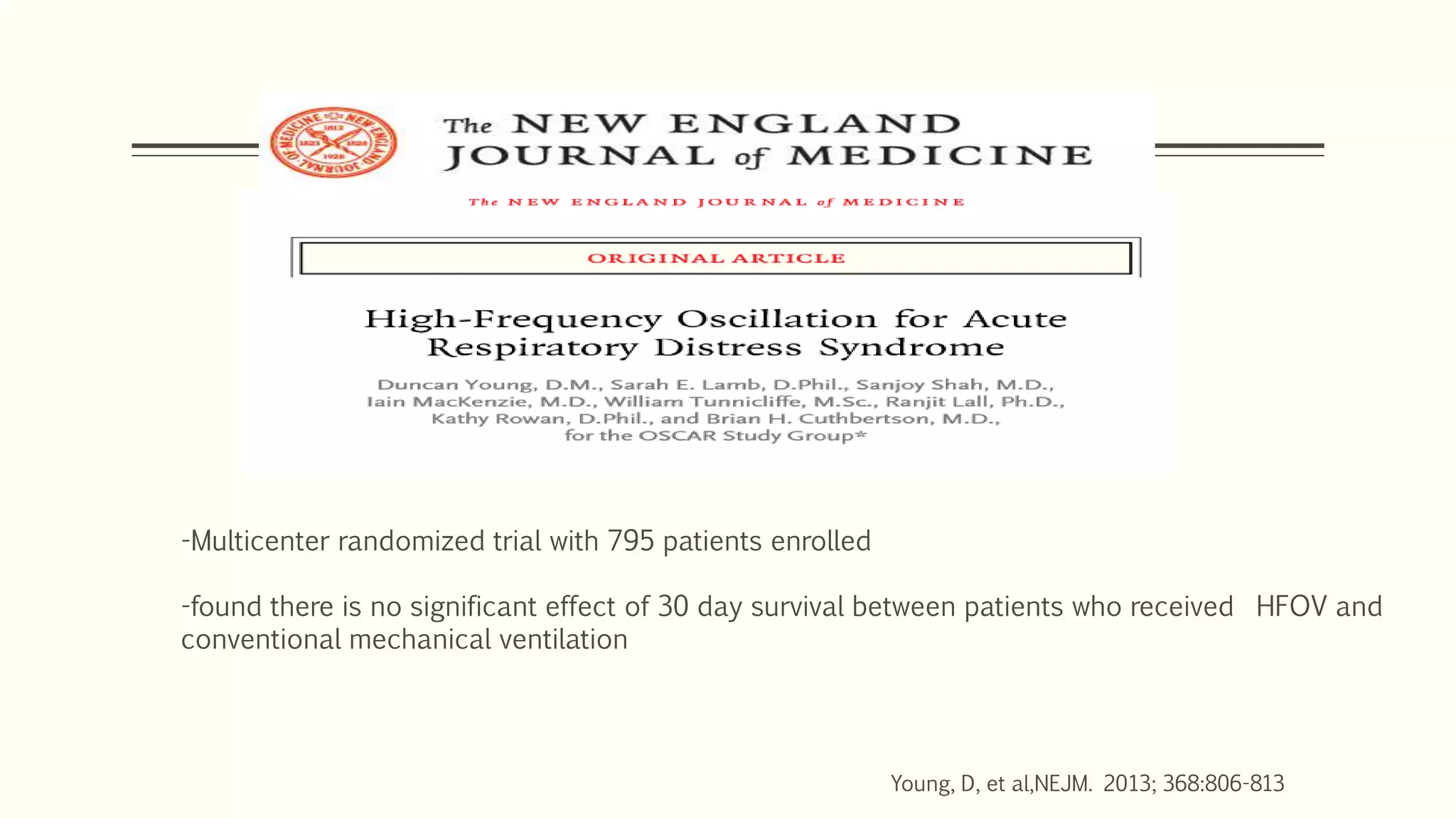
Young, D, et al,NEJM. 2013; 368:806-813
-Multicenter randomized trial with 795 patients enrolled
-found there is no significant effect of 30 day survival between patients who received HFOV and
conventional mechanical ventilation
EXTRA CORPOREAL MEMBRANE OXYGENATION:-
 Extracorporeal membrane oxygenation (ECMO) is the use of a modified heart–lung machine
to provide respiratory, circulatory, or both support at the bedside.
 Extracorporeal membrane oxygenation (ECMO) uses technology derived from
cardiopulmonary bypass (CPB) that allows gas exchange outside the body.
 Management of severe but reversible causes of respiratory failure or cardiogenic shock
refractory to conventional treatment.
 Veno-venous ECMO is designed to provide gas exchange, while veno-arterial ECMO provides
both gas exchange and haemodynamic support.
 Current trials aimed at addressing the use of extracorporeal gas exchange in ARDS, utilizing
updated technology are ongoing.
Mortality:
 Recent mortality estimates for ARDS range from 26 to 58% with
substantial variability.
 The underlying cause of the ARDS is the most common cause of death
among patients who die early. In contrast, nosocomial pneumonia and
sepsis are the most common causes of death among patients who die
later in their clinical course . Patients uncommonly die from respiratory
failure.
 Thus, improvement in survival is likely secondary to advances in the care
of septic/infected patients and those with multiple organ failure.
Stapleton RD, Wang BM, Hudson LD, Rubenfeld GD, Caldwell ES, Steinberg KP. Causes and timing of death in
patients with ARDS. Chest. 2005;128(2):525–532
Ventilator strategies in ARDS

Ventilator strategies in ARDS

  • 1.
    VENTILATOR STRATEGIES IN ARDS Dr.awaneesh katiyar M.CH. Trauma Surgery and critical care
  • 2.
  • 3.
    ARDS definition -AECC 1994 1. Acute onset of hypoxemia (arterial partial pressure of oxygen to fraction of inspired oxygen [PaO2/FIO2] ≤ 200 mm Hg) 2. Bilateral infiltrates on frontal chest radiograph, 3. No evidence of left heart failure. 4. The presence of predisposing conditions. (ARDS was first defined in 1994 by the American-European Consensus Conference (AECC) ). Rawal G, Yadav S, Kumar R. Acute Respiratory Distress Syndrome: An Update and Review. J Transl Int Med. 2018;6(2):74-77. Published 2018 Jun 26. doi:10.1515/jtim-2016-0012
  • 4.
    ARDS definition- Berlin2011  All four criteria’s to be present for diagnosis of ARDS (1) Timing: Respiratory symptoms must have begun within one week of a known clinical insult, or the patient must have new or worsening symptoms during the past week. (2) Chest imaging: Bilateral opacities consistent with pulmonary edema must be present on a chest radiograph or computed tomographic scan, which is not fully explained by pleural effusions, lobar collapse, lung collapse, or pulmonary nodules.
  • 5.
    (3) Origin ofedema: The patient’s respiratory failure must not be fully explained by cardiac failure or fluid overload. (4) Oxygenation: A moderate to severe impairment of oxygenation must be present, as defined by the PaO2/ FiO2 ratio. (1) Mild ARDS—The PaO2/FiO2 is > 200 mmHg, but ≤ 300 mmHg, on a ventilator with a positive end- expiratory pressure (PEEP) or continuous positive airway pressure(CPAP) ≥ 5 cm H2O. (2) Moderate ARDS—The PaO2/ FiO2 is > 100 mmHg, but ≤ 200 mmHg, on a ventilator with a PEEP ≥ 5 cm H2O. (3) Severe ARDS—The PaO2/ FiO2 is ≤ 100 mmHg on a ventilator with a PEEP ≥ 5 cm H2O.
  • 6.
    Pathophysiology 1. Direct orindirect injury to the alveolus causes alveolar macrophages to release pro- inflammatory cytokines Ware et al. NEJM 2000; 342:1334
  • 7.
    Pathophysiology 2. Cytokines attractneutrophils into the alveolus and interstitum, where they damage the alveolar-capillary membrane (ACM). Ware et al. NEJM 2000; 342:1334
  • 8.
    Pathophysiology 3. ACM integrityis lost, interstitial and alveolus fills with proteinaceous fluid, surfactant can no longer support alveolus Ware et al. NEJM 2000; 342:1334
  • 10.
    MANAGEMENT OF ARDS General Principles  Management of Hypoxemia- ventilator Strategies
  • 11.
    A case study 23 yrs young man presented in ED (4.3.19), with Left shaft of femur fracture following RTI 2 days (2.3.19)back, now he is presented with of breathlessness with left chest pain.
  • 12.
    (1) Early recognitionand treatment of the underlying medical and surgical disorders (e.g., sepsis, aspiration, trauma); (3) Prophylaxis against venous thromboembolism, gastrointestinal bleeding, and central venous catheter infections; (4) Prompt recognition of nosocomial infections; and provision of adequate nutrition, Glucose control. (5) Maintaining adequate oxygenation General Principles:
  • 13.
    Management of Hypoxemia 1.Decrease oxygen consumption 2. Increase oxygen delivery 3. Ventilator strategies a. Non-invasive ventilation b. Mechanical ventilation
  • 14.
    1. Decrease oxygenconsumption  In diseases with severe pulmonary shunting, increasing the saturation of mixed venous blood (SvO2 ) may increase the SaO2 . Therapies that decrease oxygen consumption may improve SvO2 (and SaO2 subsequently) by decreasing the amount of oxygen extracted from the blood.  Common causes of increased oxygen consumption include fever, anxiety and pain, and use of respiratory muscles; therefore, arterial saturation may improve after treatment with anti-pyretics, sedatives, analgesics, or paralytics Suzuki S, Hotchkiss JR, Takahashi T, et al. Effect of core body temperature on ventilator-induced lung injury. Crit Care Med 2004; 32:144.
  • 15.
    2. Increase oxygendelivery  DO 2 = 10 x CO x (1.34 x Hb x SaO 2 + 0.003 x PaO2 )  where DO 2 is oxygen delivered, CO is cardiac output, Hb is hemoglobin concentration, SaO 2 is the arterial oxygen saturation, and PaO 2 is the partial pressure of oxygen in arterial blood.  Considering that blood transfusions can cause ARDS, it is wise to avoid transfusing blood products in patients with ARDS and threshold should be 7 g/dL. Gong MN, Thompson BT, Williams P, et al. Clinical predictors of and mortality in acute respiratory distress syndrome: potential role of red cell transfusion. Crit Care Med 2005; 33:1191.
  • 16.
    VENTILATOR STRATEGIES 3a. Noninvasive ventilation(NIV)  No trials have compared NIV to invasive mechanical ventilation.  “Ferrer et al” in which NIPPV is compared with supplemental oxygen by face mask alone.  NIPPV was associated with decreased need for intubation compared with oxygen by face mask in the overall study population, but among patients with ARDS.  No differences in outcomes.  Only be considered in patients with mild disease (PaO2/FIO2 > 200 and no other organ dysfunction) and immunocompromised patients who are hemodynamically stable, able to tolerate wearing a face mask, and able to maintain a patent airway. Zhan Q, Sun B, Liang L, et al. Early use of noninvasive positive pressure ventilation for acute lung injury: a multicenter randomized controlled trial*. Crit Care Med. 2012;40(2):455–460
  • 17.
    3b. Lung-Protective Ventilation: Since the introduction of positive-pressure mechanical ventilation, large inflation volumes(TV) were used to ↓ tendency for atelectasis during MV.  The standard tidal volumes were 10 to 15 mL/kg, which are twice the size of tidal volumes used during quiet breathing (6 to 7 mL/kg).  In patients with ARDS, these large inflation volumes are delivered into lungs that have a marked ↓in functional volume.
  • 18.
     CXR inARDS show homogeneous pattern of lung infiltration.  CT images reveal that the lung infiltration in ARDS is not spread evenly throughout the lungs, but rather is confined to dependent lung regions  The remaining area of uninvolved lung is the functional portion of the lungs in ARDS.( baby lungs)  The large inflation volumes delivered by mechanical ventilation cause overdistention and rupture of BABY LUNG→ Ventilator- induced lung injury(VILI).
  • 20.
    Lung-Protective Ventilation  Result: Lower 22% mortality (31% vs 39.8%)  Increase ventilator-free days NEJM 2000; 342: 1301-1308
  • 21.
    2. Neuromuscular blockers Papazian,L, et al. NEJM 2010; 363: 1107-1116. -Neuromuscular blocking agents may increase oxygenation and decrease ventilator associated lung injury in severe ARDS patients -Multicenter double blind trial with 340 patients; received 48hrs of cisatracurium (Nimbex) or placebo -Found that early administration of NBA improved 90 day survival and increased time off vent without increase in muscle weakness
  • 22.
    Conclusion: No significantdifference in mortality rates at day 60 N Engl J Med 2004; 351:327 ALVEOLI trialHighvsLowPEEP
  • 23.
    EXPRESS Study Mercatt, M,et al. JAMA. 2008; 299(6):646-655. -Multicenter randomized trial, 767 patients. Set a PEEP aimed to increase alveolar recruitment while limiting hyperinflation -Randomly assigned two groups: moderate PEEP (5-9cm H2O) vs. level of PEEP to reach a plateau pressure of 28-30cm H2O -Found that it didn’t significantly reduce mortality; however, it did improve lung function and decreased days on vent and organ failure duration
  • 24.
  • 25.
    Prone position: ventilation In several trials, MV in the prone position improves oxygenation.  Possible Mechanisms:-  Recruitment of dependent lung zones,  Increased functional residual capacity (FRC)  Improved diaphragmatic excursion  Increased cardiac output  Improved ventilation-perfusion matching  Relief of compression of the lung by the heart and mediastinal structures.  Can be hazardous, leading to accidental endotracheal extubation, loss of central venous catheters, and orthopedic injury, pressure sores, hypotension or arrhythmias etc.
  • 26.
    Conclusion: Early applicationof prolonged prone positioning significantly decreased 28 day and 90 mortality in patients with severe ARDS. Guerin et al. NEJM. 2013; 368:2159 PROSEVA Trial
  • 27.
    Contraindications:-  Spinal instability Chest tube  Shock  Pregnancy  Raised intracranial pressure
  • 28.
    Recruitment Maneuver • Continuouspositive airway pressure (CPAP) of 35-40cm of H20 for 40 seconds. • one meta-analysis found that recruitment maneuvers did not affect mortality, length of hospital stay, or the incidence of barotrauma, despite improving the PaO 2 . • Current evidence suggests that that RMs should not be routinely used on all ARDS • rescue maneuver to overcome severe hypoxemia • following evidence of acute lung derecruitment such as a ventilator circuit disconnect Hodgson C, Keating JL, Holland AE, et al. Recruitment manoeuvres for adults with acute lung injury receiving mechanical ventilation. Cochrane Database Syst Rev 2009; :CD006667
  • 29.
    Recruitment Maneuver Anesthesiology 2002,96:795–802. CPAP : 35-40 cm H20 for 30-40 seconds
  • 30.
    Inverse ratio ventilation(IRV)  Oxygenation can also be improved by increasing mean airway pressure with "inverse ratio ventilation."  The inspiratory (I) time is lengthened so that it is longer than the expiratory (E) time (I:E ratio as high as 7:1 have been used).  When the inspiratory time is increased, there is an obligatory decrease in the expiratory time. This can lead to air trapping, auto-PEEP, barotrauma, hemodynamic instability  ↓ FIO2 to 0.60 to avoid possible oxygen toxicity  But no mortality benefit in ARDS has been demonstrated.
  • 31.
    High-frequency ventilation (HFV) High frequency oscillatory ventilation (HFOV) delivers small tidal volumes (1–2 mL/kg) using rapid pressure oscillations (300 cycles/min).  The small tidal volumes limit the risk of volutrauma, and the rapid pressure oscillations create a mean airway pressure that prevents small airway collapse and limits the risk of atelectrauma.  HFOV requires a specialized ventilator
  • 32.
    Young, D, etal,NEJM. 2013; 368:806-813 -Multicenter randomized trial with 795 patients enrolled -found there is no significant effect of 30 day survival between patients who received HFOV and conventional mechanical ventilation
  • 33.
    EXTRA CORPOREAL MEMBRANEOXYGENATION:-  Extracorporeal membrane oxygenation (ECMO) is the use of a modified heart–lung machine to provide respiratory, circulatory, or both support at the bedside.  Extracorporeal membrane oxygenation (ECMO) uses technology derived from cardiopulmonary bypass (CPB) that allows gas exchange outside the body.  Management of severe but reversible causes of respiratory failure or cardiogenic shock refractory to conventional treatment.  Veno-venous ECMO is designed to provide gas exchange, while veno-arterial ECMO provides both gas exchange and haemodynamic support.  Current trials aimed at addressing the use of extracorporeal gas exchange in ARDS, utilizing updated technology are ongoing.
  • 34.
    Mortality:  Recent mortalityestimates for ARDS range from 26 to 58% with substantial variability.  The underlying cause of the ARDS is the most common cause of death among patients who die early. In contrast, nosocomial pneumonia and sepsis are the most common causes of death among patients who die later in their clinical course . Patients uncommonly die from respiratory failure.  Thus, improvement in survival is likely secondary to advances in the care of septic/infected patients and those with multiple organ failure. Stapleton RD, Wang BM, Hudson LD, Rubenfeld GD, Caldwell ES, Steinberg KP. Causes and timing of death in patients with ARDS. Chest. 2005;128(2):525–532