Food
as a meicine
National InstituPharmaceutical Education and Research,
2
3

INTRODUCTION ABOUT NEUTRACEUTICALS
COMPONENTS-Carbohydrates
- Fats,essential oils
-vitamins, minerals
-phytochemicals etc.,
GLOBAL MARKET
INTRODUCTION ABOUT FUNCTIONAL FOODS
Current Brands
Relation between Neutraceuticals and functional foods
4
Introduction
 Nutrition + Pharmaceuticals Term commonly used in marketing but has no regulatory
definition
 The term "nutraceutical" was coined from "nutrition" and "pharmaceutical" in 1989 by
Stephen DeFelice, MD, founder and chairman of the Foundation for Innovation in Medicine
(FIM), Cranford, NJ.
[Nutr (ition) + (pharm) aceutical]
 "Nutraceutical" is creating the concept that extracts from food can be used as drugs, i.e. food
supplements.
 A food or part of food or nutrient,that provides health benefits, including the prevention and
treatment of a disease
5

6
 Nutraceuticals are products purified from foods that are generally sold in medicinal forms,
such as powders, tablets or capsules, to provide protection against chronic disease.
 Nutraceuticals can be derived from plants, from animals and microorganisms (e.g.
essential fatty acids, enzymes, etc.) and from marine sources (e.g. glucosamine, chitosan,
fish oils, etc.).
 The purpose of Nutraceuticals is to maintain or improve key functional aspects of the
human body, such as:
Digestive systems
Immune system
Cardiovascular system
Dental health
Bone strength
or
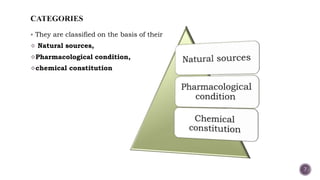
 They are classified on the basis of their
 Natural sources,
Pharmacological condition,
chemical constitution
7
Carbohydrates & Fiber
Fat & Essential fatty acids
Protein
Minerals like Macrominerals & Trace minerals
Vitamins
Water
Other nutrients like Antioxidants, Phytochemicals & Intestinal bacterial flora
8
9
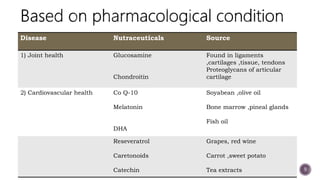
Disease Nutraceuticals Source
1) Joint health Glucosamine
Chondroitin
Found in ligaments
,cartilages ,tissue, tendons
Proteoglycans of articular
cartilage
2) Cardiovascular health Co Q-10
Melatonin
DHA
Soyabean ,olive oil
Bone marrow ,pineal glands
Fish oil
Reseveratrol
Caretonoids
Catechin
Grapes, red wine
Carrot ,sweet potato
Tea extracts
10
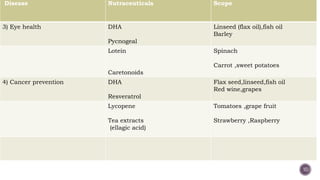
Disease Nutraceuticals Scope
3) Eye health DHA
Pycnogeal
Linseed (flax oil),fish oil
Barley
Lotein
Caretonoids
Spinach
Carrot ,sweet potatoes
4) Cancer prevention DHA
Resveratrol
Flax seed,linseed,fish oil
Red wine,grapes
Lycopene
Tea extracts
(ellagic acid)
Tomatoes ,grape fruit
Strawberry ,Raspberry

11
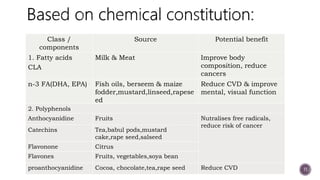
Class /
components
Source Potential benefit
1. Fatty acids
CLA
Milk & Meat Improve body
composition, reduce
cancers
n-3 FA(DHA, EPA) Fish oils, berseem & maize
fodder,mustard,linseed,rapese
ed
Reduce CVD & improve
mental, visual function
2. Polyphenols
Anthocyanidine Fruits Nutralises free radicals,
reduce risk of cancer
Catechins Tea,babul pods,mustard
cake,rape seed,salseed
Flavonone Citrus
Flavones Fruits, vegetables,soya bean
proanthocyanidine Cocoa, chocolate,tea,rape seed Reduce CVD
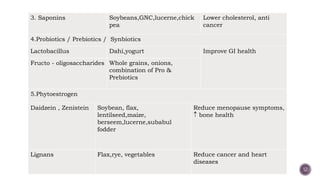
3. Saponins Soybeans,GNC,lucerne,chick
pea
Lower cholesterol, anti
cancer
4.Probiotics / Prebiotics / Synbiotics
Lactobacillus Dahi,yogurt Improve GI health
Fructo - oligosaccharides Whole grains, onions,
combination of Pro &
Prebiotics
12
5.Phytoestrogen
Daidzein , Zenistein Soybean, flax,
lentilseed,maize,
berseem,lucerne,subabul
fodder
Reduce menopause symptoms,
 bone health
Lignans Flax,rye, vegetables Reduce cancer and heart
diseases
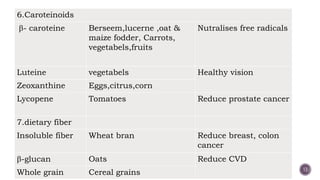
6.Caroteinoids
- caroteine Berseem,lucerne ,oat &
maize fodder, Carrots,
vegetabels,fruits
Nutralises free radicals
Luteine vegetabels Healthy vision
Zeoxanthine Eggs,citrus,corn
Lycopene Tomatoes Reduce prostate cancer
7.dietary fiber
Insoluble fiber Wheat bran Reduce breast, colon
cancer
-glucan Oats Reduce CVD
Whole grain Cereal grains 13

14
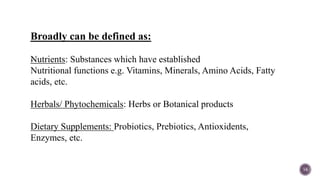
Broadly can be defined as:
Nutrients: Substances which have established
Nutritional functions e.g. Vitamins, Minerals, Amino Acids, Fatty
acids, etc.
Herbals/ Phytochemicals: Herbs or Botanical products
Dietary Supplements: Probiotics, Prebiotics, Antioxidents,
Enzymes, etc.
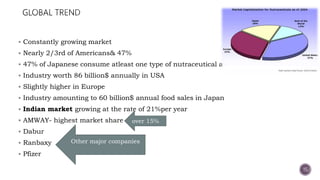
 Constantly growing market
 Nearly 2/3rd of Americans& 47%
 47% of Japanese consume atleast one type of nutraceutical annually
 Industry worth 86 billion$ annually in USA
 Slightly higher in Europe
 Industry amounting to 60 billion$ annual food sales in Japan
 Indian market growing at the rate of 21%per year
 AMWAY- highest market share
 Dabur
 Ranbaxy
 Pfizer
15
Other major companies
over 15%

16
•JOHNSON & JOHNSON
•MONSANTO
•NOVARTIS
•ABBOTT LABORATORIES
•CIPLA
•RANBAXY
•WARNER-LAMBERT
•AMERICAN HOME PRODUCTS
•SMITHKLINE BEECHAM
•HIMALAYAS
•DABUR
•ZANDU
PHARMACEUTICALS
•GLAXO
•DUPONT
17
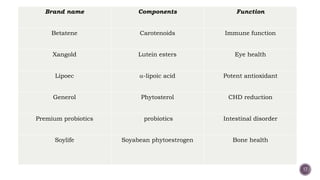
Brand name Components Function
Betatene Carotenoids Immune function
Xangold Lutein esters Eye health
Lipoec -lipoic acid Potent antioxidant
Generol Phytosterol CHD reduction
Premium probiotics probiotics Intestinal disorder
Soylife Soyabean phytoestrogen Bone health
18
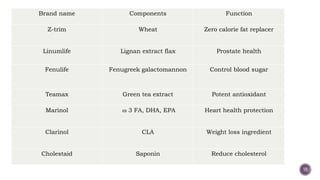
Brand name Components Function
Z-trim Wheat Zero calorie fat replacer
Linumlife Lignan extract flax Prostate health
Fenulife Fenugreek galactomannon Control blood sugar
Teamax Green tea extract Potent antioxidant
Marinol  3 FA, DHA, EPA Heart health protection
Clarinol CLA Weight loss ingredient
Cholestaid Saponin Reduce cholesterol
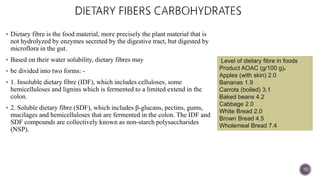
 Dietary fibre is the food material, more precisely the plant material that is
not hydrolyzed by enzymes secreted by the digestive tract, but digested by
microflora in the gut.
 Based on their water solubility, dietary fibres may
 be divided into two forms: -
 1. Insoluble dietary fibre (IDF), which includes celluloses, some
hemicelluloses and lignins which is fermented to a limited extend in the
colon.
 2. Soluble dietary fibre (SDF), which includes β-glucans, pectins, gums,
mucilages and hemicelluloses that are fermented in the colon. The IDF and
SDF compounds are collectively known as non-starch polysaccharides
(NSP).
19
Level of dietary fibre in foods
Product AOAC (g/100 g)a
Apples (with skin) 2.0
Bananas 1.9
Carrots (boiled) 3.1
Baked beans 4.2
Cabbage 2.0
White Bread 2.0
Brown Bread 4.5
Wholemeal Bread 7.4

20
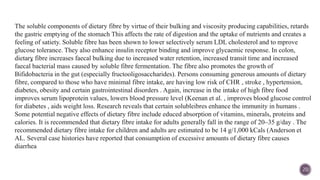
The soluble components of dietary fibre by virtue of their bulking and viscosity producing capabilities, retards
the gastric emptying of the stomach This affects the rate of digestion and the uptake of nutrients and creates a
feeling of satiety. Soluble fibre has been shown to lower selectively serum LDL cholesterol and to mprove
glucose tolerance. They also enhance insulin receptor binding and improve glycaemic response. In colon,
dietary fibre increases faecal bulking due to increased water retention, increased transit time and increased
faecal bacterial mass caused by soluble fibre fermentation. The fibre also promotes the growth of
Bifidobacteria in the gut (especially fructooligosaccharides). Persons consuming generous amounts of dietary
fibre, compared to those who have minimal fibre intake, are having low risk of CHR , stroke , hypertension,
diabetes, obesity and certain gastrointestinal disorders . Again, increase in the intake of high fibre food
improves serum lipoprotein values, lowers blood pressure level (Keenan et al. , improves blood glucose control
for diabetes , aids weight loss. Research reveals that certain solubleibres enhance the immunity in humans .
Some potential negative effects of dietary fibre include educed absorption of vitamins, minerals, proteins and
calories. It is recommended that dietary fibre intake for adults generally fall in the range of 20–35 g/day . The
recommended dietary fibre intake for children and adults are estimated to be 14 g/1,000 kCals (Anderson et
AL. Several case histories have reported that consumption of excessive amounts of dietary fibre causes
diarrhea

21
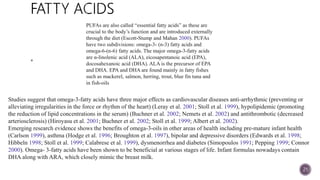
Studies suggest that omega-3-fatty acids have three major effects as cardiovascular diseases anti-arrhythmic (preventing or
alleviating irregularities in the force or rhythm of the heart) (Leray et al. 2001; Stoll et al. 1999), hypolipidemic (promoting
the reduction of lipid concentrations in the serum) (Buchner et al. 2002; Nemets et al. 2002) and antithrombotic (decreased
arteriosclerosis) (Hiroyasu et al. 2001; Buchner et al. 2002; Stoll et al. 1999; Albert et al. 2002).
Emerging research evidence shows the benefits of omega-3-oils in other areas of health including pre-mature infant health
(Carlson 1999), asthma (Hodge et al. 1996; Broughton et al. 1997), bipolar and depressive disorders (Edwards et al. 1998;
Hibbeln 1998; Stoll et al. 1999; Calabrese et al. 1999), dysmenorrhea and diabetes (Simopoulos 1991; Pepping 1999; Connor
2000). Omega- 3-fatty acids have been shown to be beneficial at various stages of life. Infant formulas nowadays contain
DHA along with ARA, which closely mimic the breast milk.
PUFAs are also called “essential fatty acids” as these are
crucial to the body’s function and are introduced externally
through the diet (Escott-Stump and Mahan 2000). PUFAs
have two subdivisions: omega-3- (n-3) fatty acids and
omega-6-(n-6) fatty acids. The major omega-3-fatty acids
are α-linolenic acid (ALA), eicosapentanoic acid (EPA),
docosahexanoic acid (DHA). ALA is the precursor of EPA
and DHA. EPA and DHA are found mainly in fatty fishes
such as mackerel, salmon, herring, trout, blue fin tuna and
in fish-oils

22
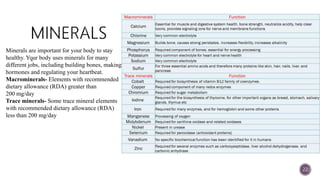
Minerals are important for your body to stay
healthy. Your body uses minerals for many
different jobs, including building bones, making
hormones and regulating your heartbeat.
Macrominerals- Elements with recommended
dietary allowance (RDA) greater than
200 mg/day
Trace minerals- Some trace mineral elements
with recommended dietary allowance (RDA)
less than 200 mg/day
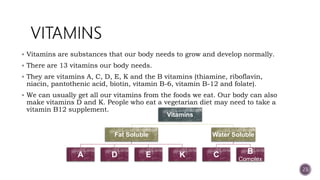
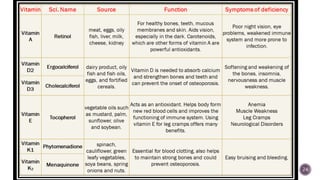
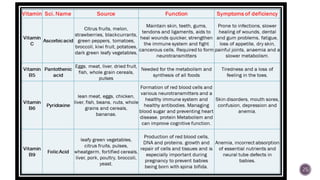
 Vitamins are substances that our body needs to grow and develop normally.
 There are 13 vitamins our body needs.
 They are vitamins A, C, D, E, K and the B vitamins (thiamine, riboflavin,
niacin, pantothenic acid, biotin, vitamin B-6, vitamin B-12 and folate).
 We can usually get all our vitamins from the foods we eat. Our body can also
make vitamins D and K. People who eat a vegetarian diet may need to take a
vitamin B12 supplement.
23
Vitamins
Fat Soluble
A D E K
Water Soluble
C B
Complex
24

25
26
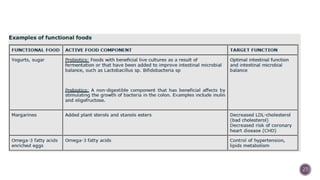
 The term functional foods was first introducedin Japan in the mid-1980s and refers to
processed foods containing ingredients that aid specific bodily functions in addition to being
nutritious. To date, Japan is the only country that has formulated a specific regulatory
approval process for functional foods. Known as Foods for Specified Health Use (FOSHU),
these foods are eligible to bear a seal of approval from the Japanese Ministry of Health and
Welfare (Arai, 1996). Currently, 100 products are licensed as FOSHU foods in Japan
"Functional Food is a Natural or processed food that contains known biologically-active
compounds which when in defined quantitative and qualitative amounts provides a clinically
proven and documented health benefit

27

28
• The Functional Food Market is metameric into six main classes, it is divided based on: sort,
Benefits, Origin, Ingredients, Consumer and geographics. The different varieties of practical Food
include: food, beverages and supplements. The market is driven by the benefits these practical
Foods give, which are: Health and upbeat, Disease hindrance, Fitness and Beauty. All functional
food is derived from 2 sources, either Plants or Animals.
• The Market is also classified supported the Ingredients utilized in the synthesis, they include;
Anti-oxidants, Carotenoids, Fatty Acids, Flavonoids and Minerals among others. Nutraceutical
Products square measure conjointly classified supported its consumer; Adults, Children and
aged. The last classification is based on geographics, the main regions are: Americas, Asia
Pacific, Europe and Rest of the planet
• The U.S. and Japan markets are vital in the practical Food business followed by Asia Pacific and
European markets.
• In 2020, it is predicted that the U.S will still dominate practical Food Market globally with a
CAGR of eight.7%.
29
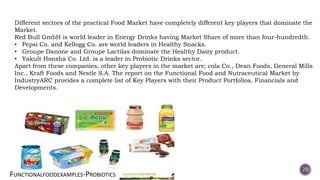
Different sectors of the practical Food Market have completely different key players that dominate the
Market.
Red Bull GmbH is world leader in Energy Drinks having Market Share of more than four-hundredth.
• Pepsi Co. and Kellogg Co. are world leaders in Healthy Snacks.
• Groupe Danone and Groupe Lactilas dominate the Healthy Dairy product.
• Yakult Honsha Co. Ltd. is a leader in Probiotic Drinks sector.
Apart from these companies, other key players in the market are; cola Co., Dean Foods, General Mills
Inc., Kraft Foods and Nestle S.A. The report on the Functional Food and Nutraceutical Market by
IndustryARC provides a complete list of Key Players with their Product Portfolios, Financials and
Developments.
FUNCTIONALFOODEXAMPLES-PROBIOTICS
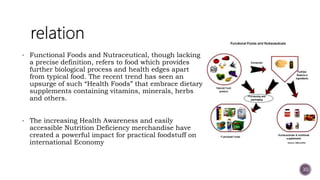
• Functional Foods and Nutraceutical, though lacking
a precise definition, refers to food which provides
further biological process and health edges apart
from typical food. The recent trend has seen an
upsurge of such “Health Foods” that embrace dietary
supplements containing vitamins, minerals, herbs
and others.
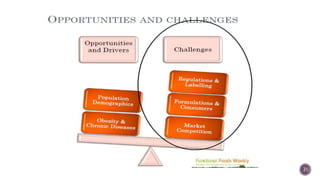
• The increasing Health Awareness and easily
accessible Nutrition Deficiency merchandise have
created a powerful impact for practical foodstuff on
international Economy
30
31
32

Neutraceuticals;functional foods

  • 1.
    Food as a meicine NationalInstituPharmaceutical Education and Research,
  • 2.
  • 3.
  • 4.
    INTRODUCTION ABOUT NEUTRACEUTICALS COMPONENTS-Carbohydrates -Fats,essential oils -vitamins, minerals -phytochemicals etc., GLOBAL MARKET INTRODUCTION ABOUT FUNCTIONAL FOODS Current Brands Relation between Neutraceuticals and functional foods 4
  • 5.
    Introduction  Nutrition +Pharmaceuticals Term commonly used in marketing but has no regulatory definition  The term "nutraceutical" was coined from "nutrition" and "pharmaceutical" in 1989 by Stephen DeFelice, MD, founder and chairman of the Foundation for Innovation in Medicine (FIM), Cranford, NJ. [Nutr (ition) + (pharm) aceutical]  "Nutraceutical" is creating the concept that extracts from food can be used as drugs, i.e. food supplements.  A food or part of food or nutrient,that provides health benefits, including the prevention and treatment of a disease 5
  • 6.
     6  Nutraceuticals areproducts purified from foods that are generally sold in medicinal forms, such as powders, tablets or capsules, to provide protection against chronic disease.  Nutraceuticals can be derived from plants, from animals and microorganisms (e.g. essential fatty acids, enzymes, etc.) and from marine sources (e.g. glucosamine, chitosan, fish oils, etc.).  The purpose of Nutraceuticals is to maintain or improve key functional aspects of the human body, such as: Digestive systems Immune system Cardiovascular system Dental health Bone strength or
  • 7.
     They areclassified on the basis of their  Natural sources, Pharmacological condition, chemical constitution 7
  • 8.
    Carbohydrates & Fiber Fat& Essential fatty acids Protein Minerals like Macrominerals & Trace minerals Vitamins Water Other nutrients like Antioxidants, Phytochemicals & Intestinal bacterial flora 8
  • 9.
    9 Disease Nutraceuticals Source 1)Joint health Glucosamine Chondroitin Found in ligaments ,cartilages ,tissue, tendons Proteoglycans of articular cartilage 2) Cardiovascular health Co Q-10 Melatonin DHA Soyabean ,olive oil Bone marrow ,pineal glands Fish oil Reseveratrol Caretonoids Catechin Grapes, red wine Carrot ,sweet potato Tea extracts
  • 10.
    10 Disease Nutraceuticals Scope 3)Eye health DHA Pycnogeal Linseed (flax oil),fish oil Barley Lotein Caretonoids Spinach Carrot ,sweet potatoes 4) Cancer prevention DHA Resveratrol Flax seed,linseed,fish oil Red wine,grapes Lycopene Tea extracts (ellagic acid) Tomatoes ,grape fruit Strawberry ,Raspberry
  • 11.
     11 Class / components Source Potentialbenefit 1. Fatty acids CLA Milk & Meat Improve body composition, reduce cancers n-3 FA(DHA, EPA) Fish oils, berseem & maize fodder,mustard,linseed,rapese ed Reduce CVD & improve mental, visual function 2. Polyphenols Anthocyanidine Fruits Nutralises free radicals, reduce risk of cancer Catechins Tea,babul pods,mustard cake,rape seed,salseed Flavonone Citrus Flavones Fruits, vegetables,soya bean proanthocyanidine Cocoa, chocolate,tea,rape seed Reduce CVD
  • 12.
    3. Saponins Soybeans,GNC,lucerne,chick pea Lowercholesterol, anti cancer 4.Probiotics / Prebiotics / Synbiotics Lactobacillus Dahi,yogurt Improve GI health Fructo - oligosaccharides Whole grains, onions, combination of Pro & Prebiotics 12 5.Phytoestrogen Daidzein , Zenistein Soybean, flax, lentilseed,maize, berseem,lucerne,subabul fodder Reduce menopause symptoms,  bone health Lignans Flax,rye, vegetables Reduce cancer and heart diseases
  • 13.
    6.Caroteinoids - caroteine Berseem,lucerne,oat & maize fodder, Carrots, vegetabels,fruits Nutralises free radicals Luteine vegetabels Healthy vision Zeoxanthine Eggs,citrus,corn Lycopene Tomatoes Reduce prostate cancer 7.dietary fiber Insoluble fiber Wheat bran Reduce breast, colon cancer -glucan Oats Reduce CVD Whole grain Cereal grains 13
  • 14.
     14 Broadly can bedefined as: Nutrients: Substances which have established Nutritional functions e.g. Vitamins, Minerals, Amino Acids, Fatty acids, etc. Herbals/ Phytochemicals: Herbs or Botanical products Dietary Supplements: Probiotics, Prebiotics, Antioxidents, Enzymes, etc.
  • 15.
     Constantly growingmarket  Nearly 2/3rd of Americans& 47%  47% of Japanese consume atleast one type of nutraceutical annually  Industry worth 86 billion$ annually in USA  Slightly higher in Europe  Industry amounting to 60 billion$ annual food sales in Japan  Indian market growing at the rate of 21%per year  AMWAY- highest market share  Dabur  Ranbaxy  Pfizer 15 Other major companies over 15%
  • 16.
     16 •JOHNSON & JOHNSON •MONSANTO •NOVARTIS •ABBOTTLABORATORIES •CIPLA •RANBAXY •WARNER-LAMBERT •AMERICAN HOME PRODUCTS •SMITHKLINE BEECHAM •HIMALAYAS •DABUR •ZANDU PHARMACEUTICALS •GLAXO •DUPONT
  • 17.
    17 Brand name ComponentsFunction Betatene Carotenoids Immune function Xangold Lutein esters Eye health Lipoec -lipoic acid Potent antioxidant Generol Phytosterol CHD reduction Premium probiotics probiotics Intestinal disorder Soylife Soyabean phytoestrogen Bone health
  • 18.
    18 Brand name ComponentsFunction Z-trim Wheat Zero calorie fat replacer Linumlife Lignan extract flax Prostate health Fenulife Fenugreek galactomannon Control blood sugar Teamax Green tea extract Potent antioxidant Marinol  3 FA, DHA, EPA Heart health protection Clarinol CLA Weight loss ingredient Cholestaid Saponin Reduce cholesterol
  • 19.
     Dietary fibreis the food material, more precisely the plant material that is not hydrolyzed by enzymes secreted by the digestive tract, but digested by microflora in the gut.  Based on their water solubility, dietary fibres may  be divided into two forms: -  1. Insoluble dietary fibre (IDF), which includes celluloses, some hemicelluloses and lignins which is fermented to a limited extend in the colon.  2. Soluble dietary fibre (SDF), which includes β-glucans, pectins, gums, mucilages and hemicelluloses that are fermented in the colon. The IDF and SDF compounds are collectively known as non-starch polysaccharides (NSP). 19 Level of dietary fibre in foods Product AOAC (g/100 g)a Apples (with skin) 2.0 Bananas 1.9 Carrots (boiled) 3.1 Baked beans 4.2 Cabbage 2.0 White Bread 2.0 Brown Bread 4.5 Wholemeal Bread 7.4
  • 20.
     20 The soluble componentsof dietary fibre by virtue of their bulking and viscosity producing capabilities, retards the gastric emptying of the stomach This affects the rate of digestion and the uptake of nutrients and creates a feeling of satiety. Soluble fibre has been shown to lower selectively serum LDL cholesterol and to mprove glucose tolerance. They also enhance insulin receptor binding and improve glycaemic response. In colon, dietary fibre increases faecal bulking due to increased water retention, increased transit time and increased faecal bacterial mass caused by soluble fibre fermentation. The fibre also promotes the growth of Bifidobacteria in the gut (especially fructooligosaccharides). Persons consuming generous amounts of dietary fibre, compared to those who have minimal fibre intake, are having low risk of CHR , stroke , hypertension, diabetes, obesity and certain gastrointestinal disorders . Again, increase in the intake of high fibre food improves serum lipoprotein values, lowers blood pressure level (Keenan et al. , improves blood glucose control for diabetes , aids weight loss. Research reveals that certain solubleibres enhance the immunity in humans . Some potential negative effects of dietary fibre include educed absorption of vitamins, minerals, proteins and calories. It is recommended that dietary fibre intake for adults generally fall in the range of 20–35 g/day . The recommended dietary fibre intake for children and adults are estimated to be 14 g/1,000 kCals (Anderson et AL. Several case histories have reported that consumption of excessive amounts of dietary fibre causes diarrhea
  • 21.
     21 Studies suggest thatomega-3-fatty acids have three major effects as cardiovascular diseases anti-arrhythmic (preventing or alleviating irregularities in the force or rhythm of the heart) (Leray et al. 2001; Stoll et al. 1999), hypolipidemic (promoting the reduction of lipid concentrations in the serum) (Buchner et al. 2002; Nemets et al. 2002) and antithrombotic (decreased arteriosclerosis) (Hiroyasu et al. 2001; Buchner et al. 2002; Stoll et al. 1999; Albert et al. 2002). Emerging research evidence shows the benefits of omega-3-oils in other areas of health including pre-mature infant health (Carlson 1999), asthma (Hodge et al. 1996; Broughton et al. 1997), bipolar and depressive disorders (Edwards et al. 1998; Hibbeln 1998; Stoll et al. 1999; Calabrese et al. 1999), dysmenorrhea and diabetes (Simopoulos 1991; Pepping 1999; Connor 2000). Omega- 3-fatty acids have been shown to be beneficial at various stages of life. Infant formulas nowadays contain DHA along with ARA, which closely mimic the breast milk. PUFAs are also called “essential fatty acids” as these are crucial to the body’s function and are introduced externally through the diet (Escott-Stump and Mahan 2000). PUFAs have two subdivisions: omega-3- (n-3) fatty acids and omega-6-(n-6) fatty acids. The major omega-3-fatty acids are α-linolenic acid (ALA), eicosapentanoic acid (EPA), docosahexanoic acid (DHA). ALA is the precursor of EPA and DHA. EPA and DHA are found mainly in fatty fishes such as mackerel, salmon, herring, trout, blue fin tuna and in fish-oils
  • 22.
     22 Minerals are importantfor your body to stay healthy. Your body uses minerals for many different jobs, including building bones, making hormones and regulating your heartbeat. Macrominerals- Elements with recommended dietary allowance (RDA) greater than 200 mg/day Trace minerals- Some trace mineral elements with recommended dietary allowance (RDA) less than 200 mg/day
  • 23.
     Vitamins aresubstances that our body needs to grow and develop normally.  There are 13 vitamins our body needs.  They are vitamins A, C, D, E, K and the B vitamins (thiamine, riboflavin, niacin, pantothenic acid, biotin, vitamin B-6, vitamin B-12 and folate).  We can usually get all our vitamins from the foods we eat. Our body can also make vitamins D and K. People who eat a vegetarian diet may need to take a vitamin B12 supplement. 23 Vitamins Fat Soluble A D E K Water Soluble C B Complex
  • 24.
  • 25.
  • 26.
    26  The termfunctional foods was first introducedin Japan in the mid-1980s and refers to processed foods containing ingredients that aid specific bodily functions in addition to being nutritious. To date, Japan is the only country that has formulated a specific regulatory approval process for functional foods. Known as Foods for Specified Health Use (FOSHU), these foods are eligible to bear a seal of approval from the Japanese Ministry of Health and Welfare (Arai, 1996). Currently, 100 products are licensed as FOSHU foods in Japan "Functional Food is a Natural or processed food that contains known biologically-active compounds which when in defined quantitative and qualitative amounts provides a clinically proven and documented health benefit
  • 27.
  • 28.
     28 • The FunctionalFood Market is metameric into six main classes, it is divided based on: sort, Benefits, Origin, Ingredients, Consumer and geographics. The different varieties of practical Food include: food, beverages and supplements. The market is driven by the benefits these practical Foods give, which are: Health and upbeat, Disease hindrance, Fitness and Beauty. All functional food is derived from 2 sources, either Plants or Animals. • The Market is also classified supported the Ingredients utilized in the synthesis, they include; Anti-oxidants, Carotenoids, Fatty Acids, Flavonoids and Minerals among others. Nutraceutical Products square measure conjointly classified supported its consumer; Adults, Children and aged. The last classification is based on geographics, the main regions are: Americas, Asia Pacific, Europe and Rest of the planet • The U.S. and Japan markets are vital in the practical Food business followed by Asia Pacific and European markets. • In 2020, it is predicted that the U.S will still dominate practical Food Market globally with a CAGR of eight.7%.
  • 29.
    29 Different sectors ofthe practical Food Market have completely different key players that dominate the Market. Red Bull GmbH is world leader in Energy Drinks having Market Share of more than four-hundredth. • Pepsi Co. and Kellogg Co. are world leaders in Healthy Snacks. • Groupe Danone and Groupe Lactilas dominate the Healthy Dairy product. • Yakult Honsha Co. Ltd. is a leader in Probiotic Drinks sector. Apart from these companies, other key players in the market are; cola Co., Dean Foods, General Mills Inc., Kraft Foods and Nestle S.A. The report on the Functional Food and Nutraceutical Market by IndustryARC provides a complete list of Key Players with their Product Portfolios, Financials and Developments. FUNCTIONALFOODEXAMPLES-PROBIOTICS
  • 30.
    • Functional Foodsand Nutraceutical, though lacking a precise definition, refers to food which provides further biological process and health edges apart from typical food. The recent trend has seen an upsurge of such “Health Foods” that embrace dietary supplements containing vitamins, minerals, herbs and others. • The increasing Health Awareness and easily accessible Nutrition Deficiency merchandise have created a powerful impact for practical foodstuff on international Economy 30
  • 31.
  • 32.