The Benefits and Risks of Functional Foods
and Nutraceuticals
By
Gaston Odiwuor Adoyo
MSc Food Science and Technology
Introduction
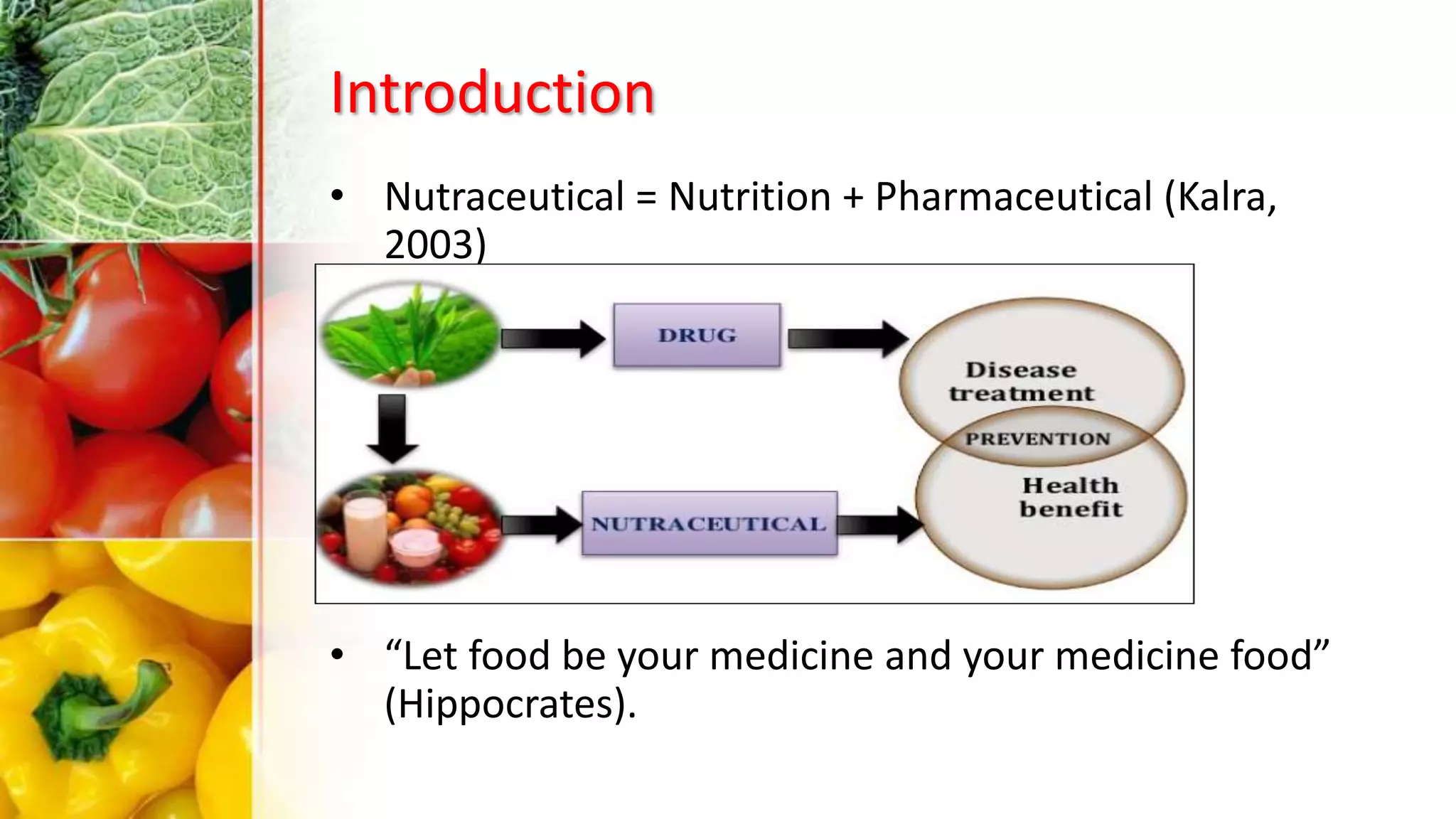
• Nutraceutical = Nutrition + Pharmaceutical (Kalra,
2003)
• “Let food be your medicine and your medicine food”
(Hippocrates).
• Nutraceuticals are naturally derived bioactive
compounds that are found in foods, dietary
supplements and herbal products, and have
health promoting, disease preventing, or
medicinal products.
• On the other hand, functional foods are foods
which contain an ingredient that gives that food
health-promoting properties over and above its
usual nutritional value e.g. Probiotic Yoghurt
(Kalra, 2003).
Benefits of Functional Foods and
Nutraceuticals
Component Source Potential Benefits
1. Fatty Acids
a) Conjugated linoleic
acid (CLA)
Milk and Meat Reduction of body fat
while increasing the
lean muscle mass.
b) Omega-3 (n-3)
fatty acid
Fish oils, beerseam,
mustard, rapeseed,
linseed.
Reduce
cardiovascular
diseases (CVD), and
improve mental
health.
2. Polyphenols
a) Anthocyanidine Fruits
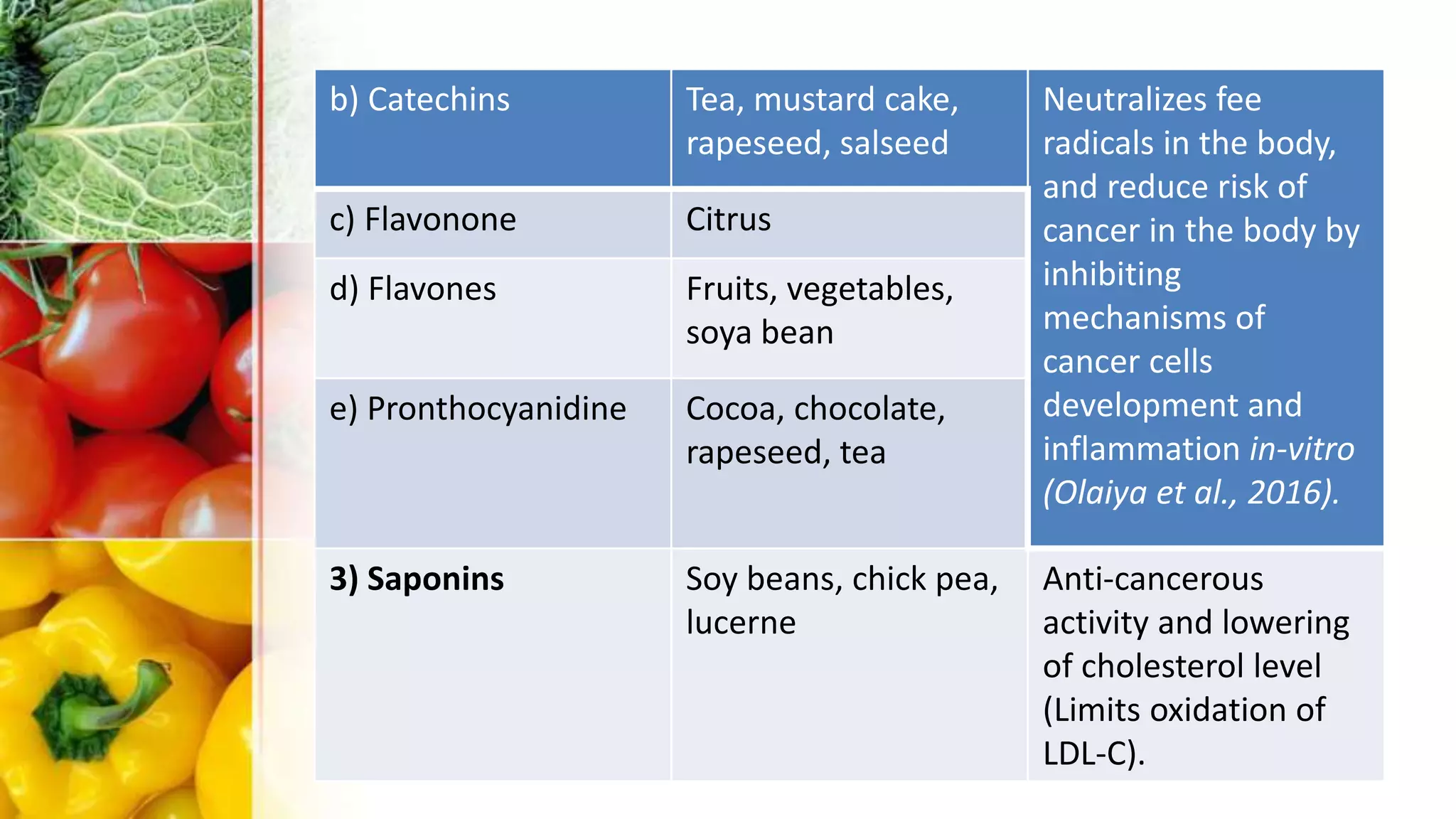
b) Catechins Tea, mustard cake,
rapeseed, salseed
Neutralizes fee
radicals in the body,
and reduce risk of
cancer in the body by
inhibiting
mechanisms of
cancer cells
development and
inflammation in-vitro
(Olaiya et al., 2016).
c) Flavonone Citrus
d) Flavones Fruits, vegetables,
soya bean
e) Pronthocyanidine Cocoa, chocolate,
rapeseed, tea
3) Saponins Soy beans, chick pea,
lucerne
Anti-cancerous
activity and lowering
of cholesterol level
(Limits oxidation of
LDL-C).
4. Phytoestrogen
a) Daidzen, Zenistein Soy bean, flax, lentil
seed
Reduce menopause
symptoms and
improve bone health.
b) Lignans Flax, rye, vegetables Reduce cancer and
CVDs
5. Carateinoids
a) Beta-caroteine Berseem, lucerne,
carrots, vegetables,
fruits
Neutralizes free
radicals
b) Luteine Vegetables Healthy vision
c) Zeoxanthine Eggs, citrus, corn
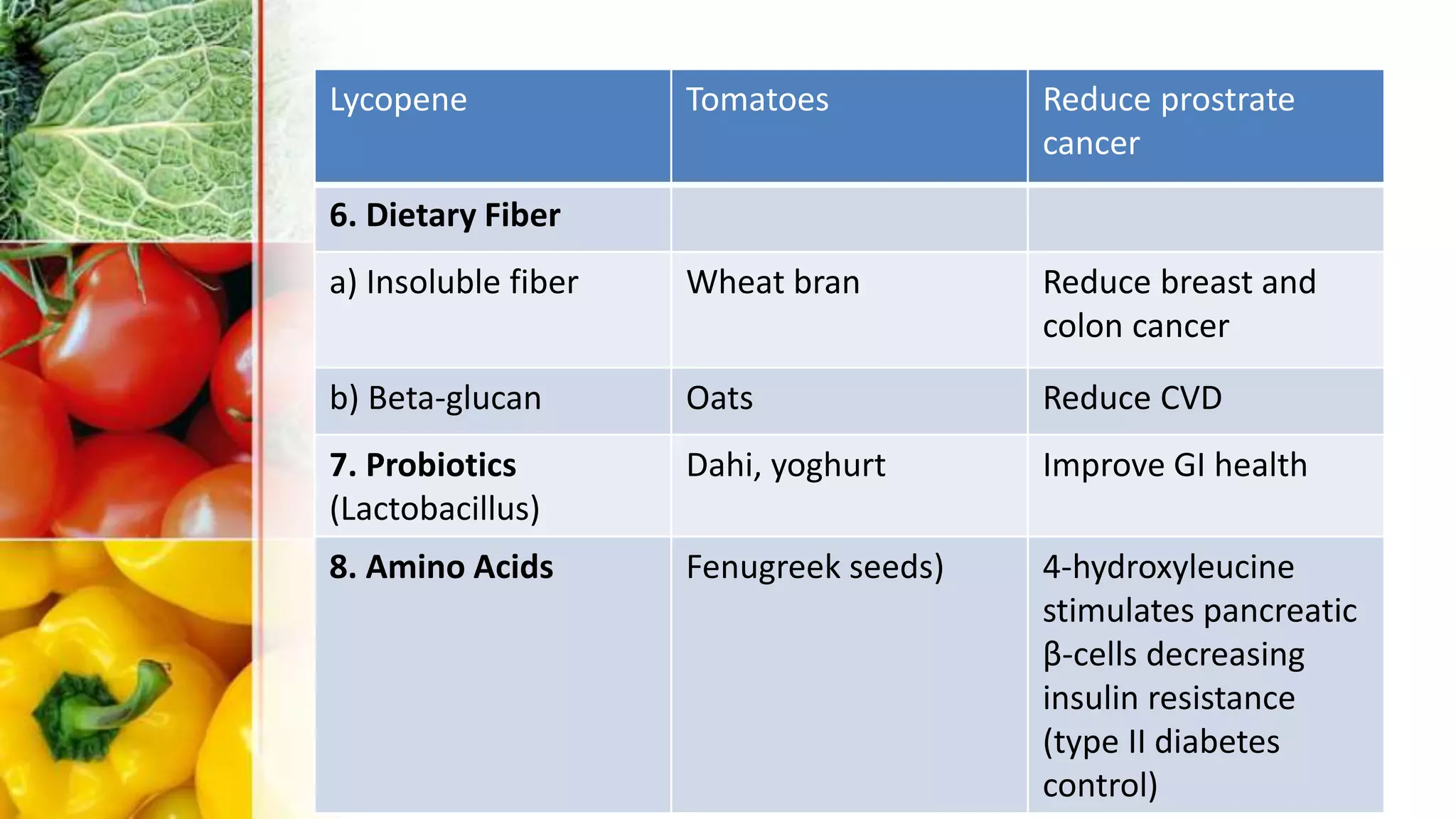
Lycopene Tomatoes Reduce prostrate
cancer
6. Dietary Fiber
a) Insoluble fiber Wheat bran Reduce breast and
colon cancer
b) Beta-glucan Oats Reduce CVD
7. Probiotics
(Lactobacillus)
Dahi, yoghurt Improve GI health
8. Amino Acids Fenugreek seeds) 4-hydroxyleucine
stimulates pancreatic
β-cells decreasing
insulin resistance
(type II diabetes
control)
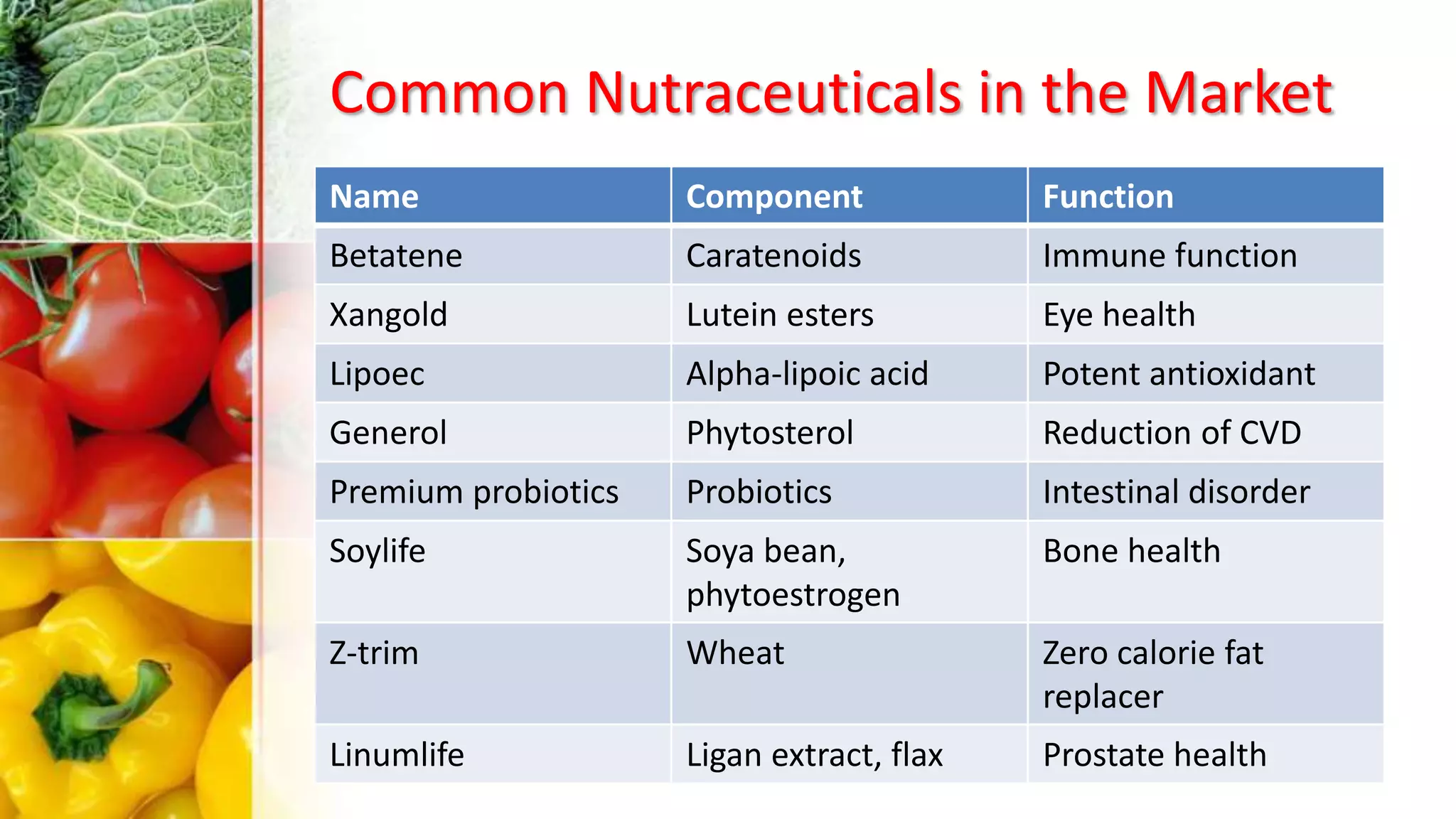
Common Nutraceuticals in the Market
Name Component Function
Betatene Caratenoids Immune function
Xangold Lutein esters Eye health
Lipoec Alpha-lipoic acid Potent antioxidant
Generol Phytosterol Reduction of CVD
Premium probiotics Probiotics Intestinal disorder
Soylife Soya bean,
phytoestrogen
Bone health
Z-trim Wheat Zero calorie fat
replacer
Linumlife Ligan extract, flax Prostate health
Fenulife Fenugreek,
galactomannon
Control blood sugar
Teamax Green tea extract Potent antioxidant
Marinol FA Heart health
protection
Clarinol CLA Weigh loss ingredient
Cholestaid Saponin Reduce cholesterol
Risks Associated with Functional Foods and
Nutraceuticals
• Risks of inaccurate health claims
 The benefits of functional foods may be
confounded by other lifestyle or genetic factors.
 The active ingredients of functional foods may
not be obvious: The active components can react
with the food matrix altering bioavailability.
 Many functional foods have been tested in
animals or in vitro, which may not be true in the
case of humans (Ameratunga et al., 2016).
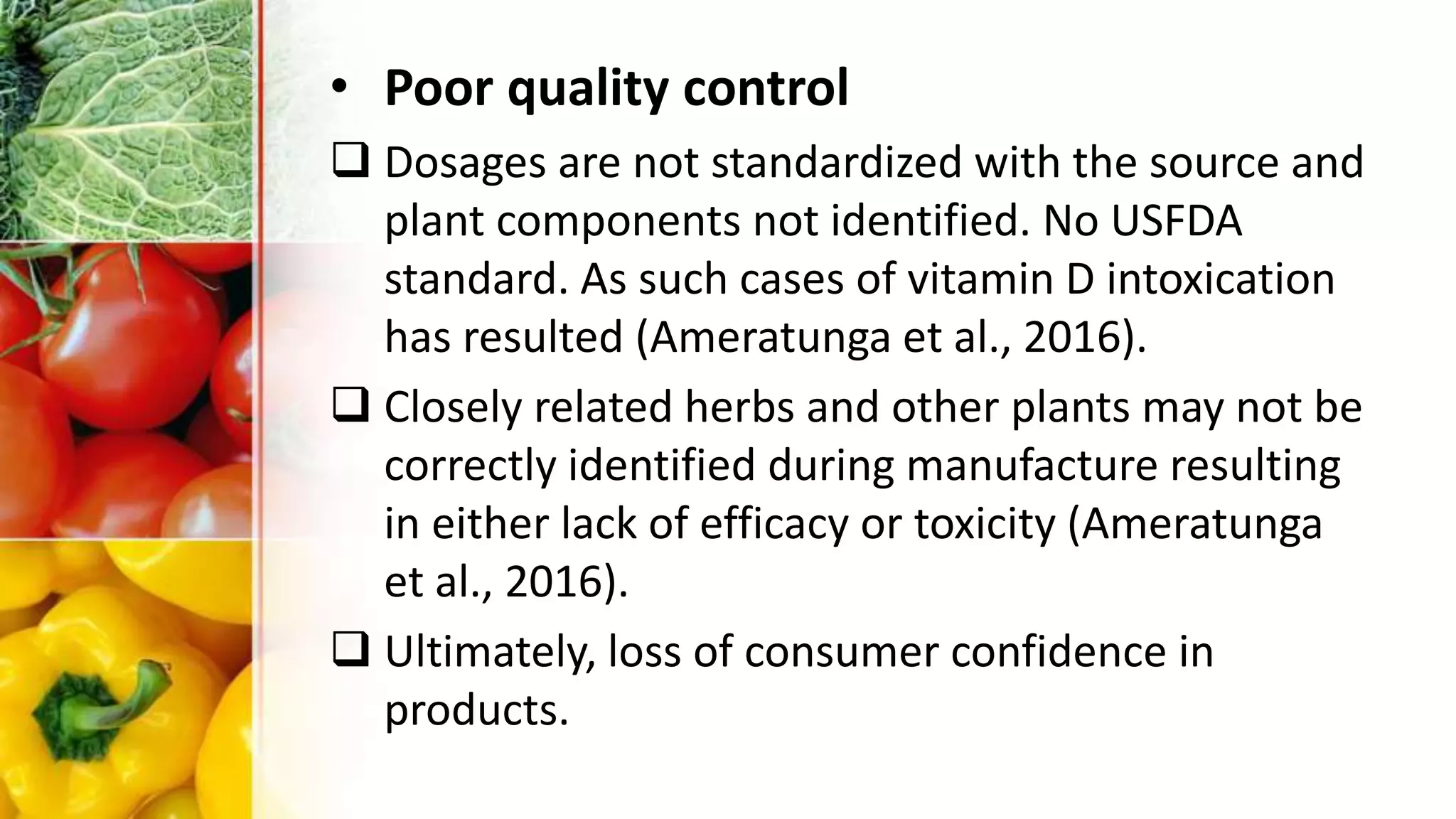
• Poor quality control
 Dosages are not standardized with the source and
plant components not identified. No USFDA
standard. As such cases of vitamin D intoxication
has resulted (Ameratunga et al., 2016).
 Closely related herbs and other plants may not be
correctly identified during manufacture resulting
in either lack of efficacy or toxicity (Ameratunga
et al., 2016).
 Ultimately, loss of consumer confidence in
products.
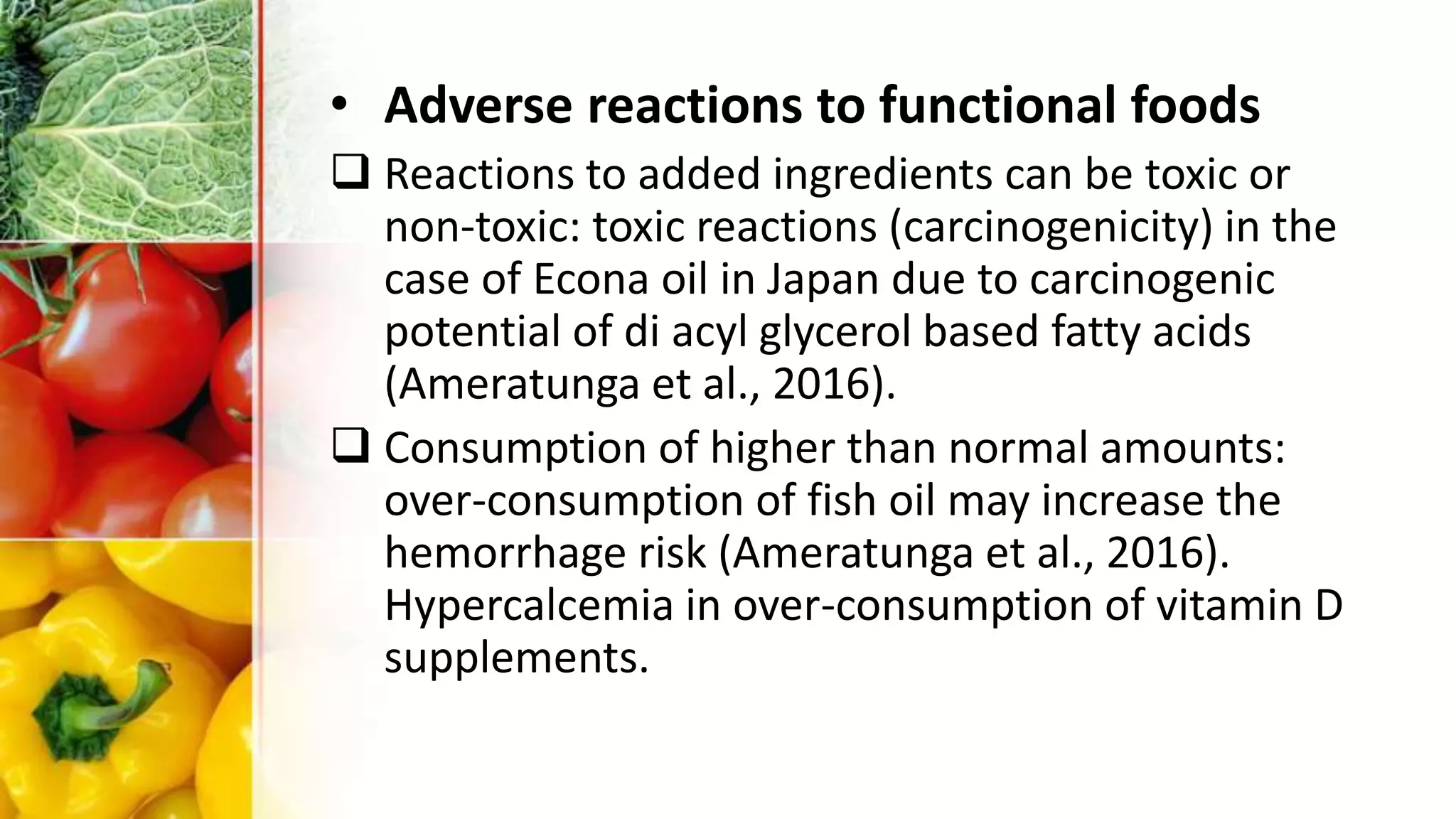
• Adverse reactions to functional foods
 Reactions to added ingredients can be toxic or
non-toxic: toxic reactions (carcinogenicity) in the
case of Econa oil in Japan due to carcinogenic
potential of di acyl glycerol based fatty acids
(Ameratunga et al., 2016).
 Consumption of higher than normal amounts:
over-consumption of fish oil may increase the
hemorrhage risk (Ameratunga et al., 2016).
Hypercalcemia in over-consumption of vitamin D
supplements.
• Allergenicity
 Allergic reactions are mediated by the immune
system. The incorporation of a foreign protein
elicits the process.
 Case: A new functional food Wh2ole®, made two
children to suffer from anaphylaxis due to higher
concentrations of β-lactoglobulin in comparison
to bovine milk (Ameratunga & Woon, 2010).
Way Forward: Risks Prevention
• It is important for regulatory authorities to
develop an uniform definition of a functional
food.
 On a positive note, many regulatory authorities
are moving towards a common goal of assessing
health claims (Agget, 2009).
 The more critical the health claim, the more
stringent the evidence base for approval.
• As suggested by Codex, regulatory authorities
should classify the strength of evidence for health
claims using a verbal scale from weak to
conclusive.
 Each rating should be specific for an individual
product.
 This approach will allow consumers to make an
informed choice.
• Periodic re-evaluation of health claims on
food labelling should be done.
 The strength of the claim could increase with the
provision of new data.
 Consumers will have confidence that health
claims have been carefully reviewed by regulatory
authorities in their jurisdiction.
 This will also add to the credibility of the
regulatory authority.
• Allergen risk assessment should be an
essential part of the pre-market safety and
risk analysis for functional foods.
 Allergic patients are at risk of severe reactions if
they accidentally consume foods to which they
are hypersensitive.
 Manufacturers have a legal responsibility to
clearly label their products if they contain well-
recognised allergens.
Conclusion
• It is evident that functional foods and
nutraceuticals play a critical role in disease
prevention and health promotion.
• However, there are risks ranging from
inaccurate health claims to allergenic
reactions.
• Therefore, proper and favorable regulatory
framework should be available to deal
with the risks.
References
• Ameratunga, R., Crooks, C., Simmons, G., & Woon, S.-T.
(2016). Health Risks and Adverse Reactions to Functional
Foods. Critical Reviews in Food Science and Nutrition, 56(2),
318–325. https://doi.org/10.1080/10408398.2012.751895
• Kalra, E. K. (2003). Nutraceutical-definition and
introduction. AAPS PharmSci, 5(3), 27–28.
https://doi.org/10.1208/ps050325
• Olaiya, C. O., Soetan, K. O., & Esan, A. M. (2016). The role of
nutraceuticals, functional foods and value added food
products in the prevention and treatment of chronic
diseases. African Journal of Food Science, 10(10), 185–193.
https://doi.org/10.5897/AJFS2015.1402
The End Thank You!

Functional Foods and Nutraceuticals

  • 1.
    The Benefits andRisks of Functional Foods and Nutraceuticals By Gaston Odiwuor Adoyo MSc Food Science and Technology
  • 2.
    Introduction • Nutraceutical =Nutrition + Pharmaceutical (Kalra, 2003) • “Let food be your medicine and your medicine food” (Hippocrates).
  • 3.
    • Nutraceuticals arenaturally derived bioactive compounds that are found in foods, dietary supplements and herbal products, and have health promoting, disease preventing, or medicinal products. • On the other hand, functional foods are foods which contain an ingredient that gives that food health-promoting properties over and above its usual nutritional value e.g. Probiotic Yoghurt (Kalra, 2003).
  • 4.
    Benefits of FunctionalFoods and Nutraceuticals Component Source Potential Benefits 1. Fatty Acids a) Conjugated linoleic acid (CLA) Milk and Meat Reduction of body fat while increasing the lean muscle mass. b) Omega-3 (n-3) fatty acid Fish oils, beerseam, mustard, rapeseed, linseed. Reduce cardiovascular diseases (CVD), and improve mental health. 2. Polyphenols a) Anthocyanidine Fruits
  • 5.
    b) Catechins Tea,mustard cake, rapeseed, salseed Neutralizes fee radicals in the body, and reduce risk of cancer in the body by inhibiting mechanisms of cancer cells development and inflammation in-vitro (Olaiya et al., 2016). c) Flavonone Citrus d) Flavones Fruits, vegetables, soya bean e) Pronthocyanidine Cocoa, chocolate, rapeseed, tea 3) Saponins Soy beans, chick pea, lucerne Anti-cancerous activity and lowering of cholesterol level (Limits oxidation of LDL-C).
  • 6.
    4. Phytoestrogen a) Daidzen,Zenistein Soy bean, flax, lentil seed Reduce menopause symptoms and improve bone health. b) Lignans Flax, rye, vegetables Reduce cancer and CVDs 5. Carateinoids a) Beta-caroteine Berseem, lucerne, carrots, vegetables, fruits Neutralizes free radicals b) Luteine Vegetables Healthy vision c) Zeoxanthine Eggs, citrus, corn
  • 7.
    Lycopene Tomatoes Reduceprostrate cancer 6. Dietary Fiber a) Insoluble fiber Wheat bran Reduce breast and colon cancer b) Beta-glucan Oats Reduce CVD 7. Probiotics (Lactobacillus) Dahi, yoghurt Improve GI health 8. Amino Acids Fenugreek seeds) 4-hydroxyleucine stimulates pancreatic β-cells decreasing insulin resistance (type II diabetes control)
  • 8.
    Common Nutraceuticals inthe Market Name Component Function Betatene Caratenoids Immune function Xangold Lutein esters Eye health Lipoec Alpha-lipoic acid Potent antioxidant Generol Phytosterol Reduction of CVD Premium probiotics Probiotics Intestinal disorder Soylife Soya bean, phytoestrogen Bone health Z-trim Wheat Zero calorie fat replacer Linumlife Ligan extract, flax Prostate health
  • 9.
    Fenulife Fenugreek, galactomannon Control bloodsugar Teamax Green tea extract Potent antioxidant Marinol FA Heart health protection Clarinol CLA Weigh loss ingredient Cholestaid Saponin Reduce cholesterol
  • 10.
    Risks Associated withFunctional Foods and Nutraceuticals • Risks of inaccurate health claims  The benefits of functional foods may be confounded by other lifestyle or genetic factors.  The active ingredients of functional foods may not be obvious: The active components can react with the food matrix altering bioavailability.  Many functional foods have been tested in animals or in vitro, which may not be true in the case of humans (Ameratunga et al., 2016).
  • 11.
    • Poor qualitycontrol  Dosages are not standardized with the source and plant components not identified. No USFDA standard. As such cases of vitamin D intoxication has resulted (Ameratunga et al., 2016).  Closely related herbs and other plants may not be correctly identified during manufacture resulting in either lack of efficacy or toxicity (Ameratunga et al., 2016).  Ultimately, loss of consumer confidence in products.
  • 12.
    • Adverse reactionsto functional foods  Reactions to added ingredients can be toxic or non-toxic: toxic reactions (carcinogenicity) in the case of Econa oil in Japan due to carcinogenic potential of di acyl glycerol based fatty acids (Ameratunga et al., 2016).  Consumption of higher than normal amounts: over-consumption of fish oil may increase the hemorrhage risk (Ameratunga et al., 2016). Hypercalcemia in over-consumption of vitamin D supplements.
  • 13.
    • Allergenicity  Allergicreactions are mediated by the immune system. The incorporation of a foreign protein elicits the process.  Case: A new functional food Wh2ole®, made two children to suffer from anaphylaxis due to higher concentrations of β-lactoglobulin in comparison to bovine milk (Ameratunga & Woon, 2010).
  • 14.
    Way Forward: RisksPrevention • It is important for regulatory authorities to develop an uniform definition of a functional food.  On a positive note, many regulatory authorities are moving towards a common goal of assessing health claims (Agget, 2009).  The more critical the health claim, the more stringent the evidence base for approval.
  • 15.
    • As suggestedby Codex, regulatory authorities should classify the strength of evidence for health claims using a verbal scale from weak to conclusive.  Each rating should be specific for an individual product.  This approach will allow consumers to make an informed choice.
  • 16.
    • Periodic re-evaluationof health claims on food labelling should be done.  The strength of the claim could increase with the provision of new data.  Consumers will have confidence that health claims have been carefully reviewed by regulatory authorities in their jurisdiction.  This will also add to the credibility of the regulatory authority.
  • 17.
    • Allergen riskassessment should be an essential part of the pre-market safety and risk analysis for functional foods.  Allergic patients are at risk of severe reactions if they accidentally consume foods to which they are hypersensitive.  Manufacturers have a legal responsibility to clearly label their products if they contain well- recognised allergens.
  • 18.
    Conclusion • It isevident that functional foods and nutraceuticals play a critical role in disease prevention and health promotion. • However, there are risks ranging from inaccurate health claims to allergenic reactions. • Therefore, proper and favorable regulatory framework should be available to deal with the risks.
  • 19.
    References • Ameratunga, R.,Crooks, C., Simmons, G., & Woon, S.-T. (2016). Health Risks and Adverse Reactions to Functional Foods. Critical Reviews in Food Science and Nutrition, 56(2), 318–325. https://doi.org/10.1080/10408398.2012.751895 • Kalra, E. K. (2003). Nutraceutical-definition and introduction. AAPS PharmSci, 5(3), 27–28. https://doi.org/10.1208/ps050325 • Olaiya, C. O., Soetan, K. O., & Esan, A. M. (2016). The role of nutraceuticals, functional foods and value added food products in the prevention and treatment of chronic diseases. African Journal of Food Science, 10(10), 185–193. https://doi.org/10.5897/AJFS2015.1402
  • 20.