
NUTRACEUTICALS:
AND FUNCTIONAL FOODS:
GAURAV
Department of natural products,
National Institute of
Pharmaceutical education and
Research
E-mail: gautamgaurav878@gmail.com
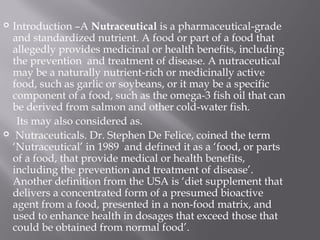
 Introduction –A Nutraceutical is a pharmaceutical-grade
and standardized nutrient. A food or part of a food that
allegedly provides medicinal or health benefits, including
the prevention  and treatment of disease. A nutraceutical
may be a naturally nutrient-rich or medicinally active
food, such as garlic or soybeans, or it may be a specific
component of a food, such as the omega-3 fish oil that can
be derived from salmon and other cold-water fish.
Its may also considered as.
 Nutraceuticals. Dr. Stephen De Felice, coined the term
‘Nutraceutical’ in 1989 and defined it as a ‘food, or parts
of a food, that provide medical or health benefits,
including the prevention and treatment of disease’.
Another definition from the USA is ‘diet supplement that
delivers a concentrated form of a presumed bioactive
agent from a food, presented in a non-food matrix, and
used to enhance health in dosages that exceed those that
could be obtained from normal food’.
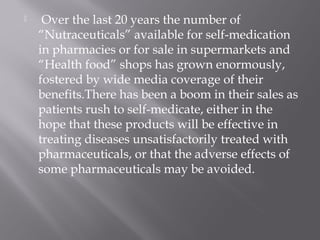
 Over the last 20 years the number of
“Nutraceuticals” available for self-medication
in pharmacies or for sale in supermarkets and
“Health food” shops has grown enormously,
fostered by wide media coverage of their
benefits.There has been a boom in their sales as
patients rush to self-medicate, either in the
hope that these products will be effective in
treating diseases unsatisfactorily treated with
pharmaceuticals, or that the adverse effects of
some pharmaceuticals may be avoided.
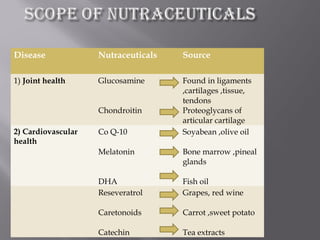
Disease Nutraceuticals Source
1) Joint health Glucosamine
Chondroitin
Found in ligaments
,cartilages ,tissue,
tendons
Proteoglycans of
articular cartilage
2) Cardiovascular
health
Co Q-10
Melatonin
DHA
Soyabean ,olive oil
Bone marrow ,pineal
glands
Fish oil
Reseveratrol
Caretonoids
Catechin
Grapes, red wine
Carrot ,sweet potato
Tea extracts
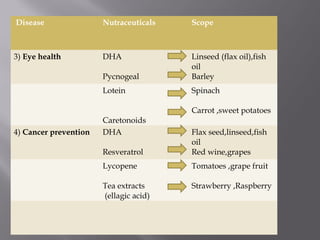
Disease Nutraceuticals Scope
3) Eye health DHA
Pycnogeal
Linseed (flax oil),fish
oil
Barley
Lotein
Caretonoids
Spinach
Carrot ,sweet potatoes
4) Cancer prevention DHA
Resveratrol
Flax seed,linseed,fish
oil
Red wine,grapes
Lycopene
Tea extracts
(ellagic acid)
Tomatoes ,grape fruit
Strawberry ,Raspberry
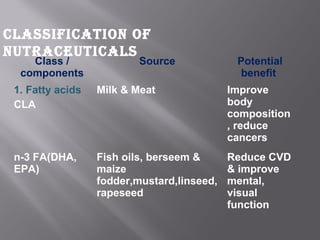
Class /
components
Source Potential
benefit
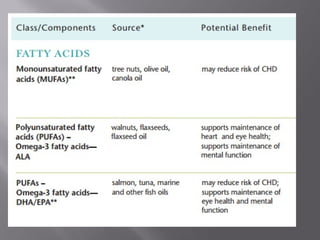
1. Fatty acids
CLA
Milk & Meat Improve
body
composition
, reduce
cancers
n-3 FA(DHA,
EPA)
Fish oils, berseem &
maize
fodder,mustard,linseed,
rapeseed
Reduce CVD
& improve
mental,
visual
function
CLASSIFICATION OF
NUTRACEUTICALS
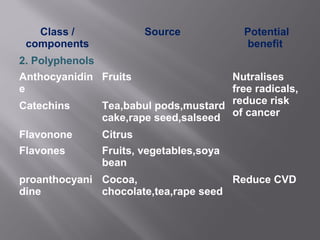
Class /
components
Source Potential
benefit
2. Polyphenols
Anthocyanidin
e
Fruits Nutralises
free radicals,
reduce risk
of cancer
Catechins Tea,babul pods,mustard
cake,rape seed,salseed
Flavonone Citrus
Flavones Fruits, vegetables,soya
bean
proanthocyani
dine
Cocoa,
chocolate,tea,rape seed
Reduce CVD
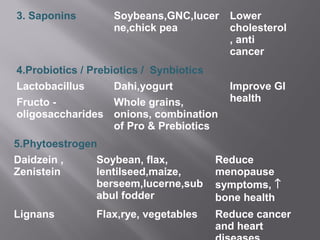
3. Saponins Soybeans,GNC,lucer
ne,chick pea
Lower
cholesterol
, anti
cancer
4.Probiotics / Prebiotics / Synbiotics
Lactobacillus Dahi,yogurt Improve GI
healthFructo -
oligosaccharides
Whole grains,
onions, combination
of Pro & Prebiotics
5.Phytoestrogen
Daidzein ,
Zenistein
Soybean, flax,
lentilseed,maize,
berseem,lucerne,sub
abul fodder
Reduce
menopause
symptoms, ↑
bone health
Lignans Flax,rye, vegetables Reduce cancer
and heart
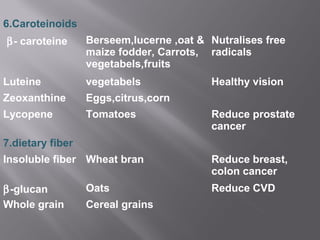
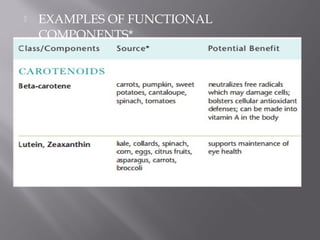
6.Caroteinoids
β- caroteine Berseem,lucerne ,oat &
maize fodder, Carrots,
vegetabels,fruits
Nutralises free
radicals
Luteine vegetabels Healthy vision
Zeoxanthine Eggs,citrus,corn
Lycopene Tomatoes Reduce prostate
cancer
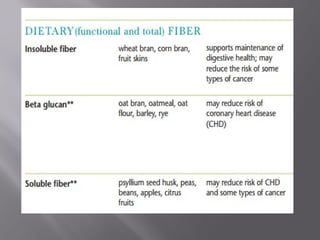
7.dietary fiber
Insoluble fiber Wheat bran Reduce breast,
colon cancer
β-glucan Oats Reduce CVD
Whole grain Cereal grains
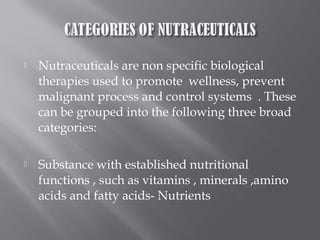
 Nutraceuticals are non specific biological
therapies used to promote wellness, prevent
malignant process and control systems . These
can be grouped into the following three broad
categories:
 Substance with established nutritional
functions , such as vitamins , minerals ,amino
acids and fatty acids- Nutrients
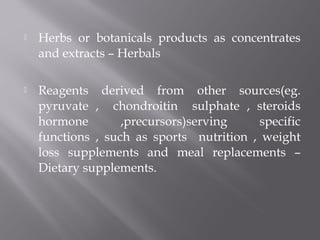
 Herbs or botanicals products as concentrates
and extracts – Herbals
 Reagents derived from other sources(eg.
pyruvate , chondroitin sulphate , steroids
hormone ,precursors)serving specific
functions , such as sports nutrition , weight
loss supplements and meal replacements –
Dietary supplements.
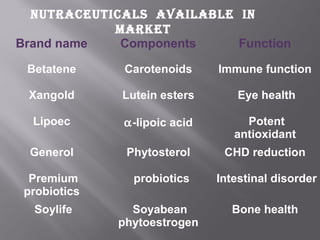
Brand name Components Function
Betatene Carotenoids Immune function
Xangold Lutein esters Eye health
Lipoec α-lipoic acid Potent
antioxidant
Generol Phytosterol CHD reduction
Premium
probiotics
probiotics Intestinal disorder
Soylife Soyabean
phytoestrogen
Bone health
NUTRACEUTICALS AVAILABLE IN
MARKET
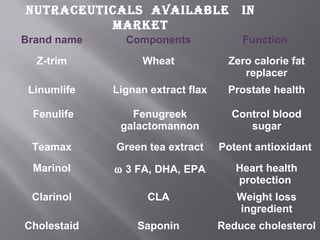
Brand name Components Function
Z-trim Wheat Zero calorie fat
replacer
Linumlife Lignan extract flax Prostate health
Fenulife Fenugreek
galactomannon
Control blood
sugar
Teamax Green tea extract Potent antioxidant
Marinol ω 3 FA, DHA, EPA Heart health
protection
Clarinol CLA Weight loss
ingredient
Cholestaid Saponin Reduce cholesterol
NUTRACEUTICALS AVAILABLE IN
MARKET
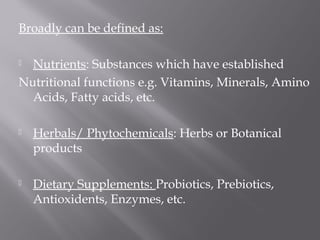
Broadly can be defined as:
 Nutrients: Substances which have established
Nutritional functions e.g. Vitamins, Minerals, Amino
Acids, Fatty acids, etc.
 Herbals/ Phytochemicals: Herbs or Botanical
products
 Dietary Supplements: Probiotics, Prebiotics,
Antioxidents, Enzymes, etc.
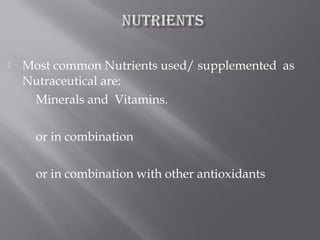
 Most common Nutrients used/ supplemented as
Nutraceutical are:
Minerals and Vitamins.
or in combination
or in combination with other antioxidants
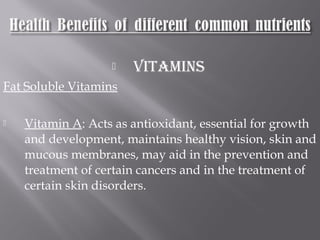
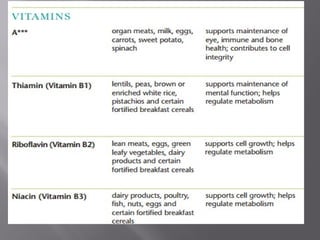
 VITAMINS
Fat Soluble Vitamins
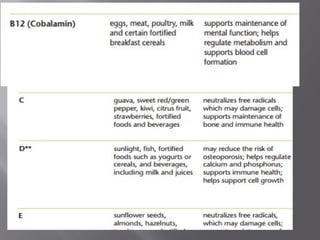
 Vitamin A: Acts as antioxidant, essential for growth
and development, maintains healthy vision, skin and
mucous membranes, may aid in the prevention and
treatment of certain cancers and in the treatment of
certain skin disorders.
 Vitamin D: Essential for formation of bones and
teeth, helps the body to absorb and use
calcium
 Vitamin E: Antioxidant, helps to form blood cells,
boosts immune system
 Vitamin K: Essential for blood clotting
 Vitamin C: Antioxidant, necessary for healthy bones,
gums, teeth and skin. Helps in wound healing,
prevent from common cold
 Vitamin B 1: Helps in carbohydrate metabolism,
essential for neurological function.
 Vitamin B 2: Energy metabolism, maintain healthy
eye, skin and nerve function.
 Vitamin B 3: Energy metabolism, brain function
 Vitamin B 6: Helps to produce essential proteins,
convert proteins to energy
 Vitamin B 12: Help in producing genetic material,
formation of RBC, maintenance of CNS, synthesis of
amino acids, involved in metabolism of protein, fat
and carbohydrate.
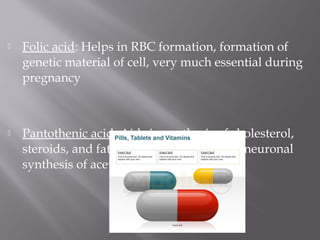
 Folic acid: Helps in RBC formation, formation of
genetic material of cell, very much essential during
pregnancy
 Pantothenic acid: Aids in synthesis of cholesterol,
steroids, and fatty acids, crucial for intraneuronal
synthesis of acetylcholine
 L- Carnitine: Helps in oxidation of fatty acids, role in
oxidative phosphorylation,
 Choline: Lipotropic agent, used to treat fatty liver
and disturbed fat metabolism,
 Inositol: For amino acid transport and movement of
Potassium and sodium,
 Taurine: Helps in retinal photoreceptor activity, bile
acid conjugation, WBC antioxidant activity, CNS
neuromodulation, platelet aggregation, cardiac
contractibility, sperm motility, insuline activity,
 Calcium: essential for bone and teeth, maintaining
bone strength, nerve, muscle and glandular function,
blood clotting,
 Iron: energy production, Hb, oxygen transport,
 Magnesium: for healthy nerve and muscle function,
bone formation,
 Phosphorous: energy production, phosphorylation
process, bone and teeth, for genetic material,
 Cobalt: component of Vit. B 12 and B 12 coenzymes,
 Copper: Hb and collagen production, function of
heart, energy production, absorption of Iron,
 Iodine: proper function of Thyroid gland,
 Chromium: with insulin it helps in conversion of
carbohydrate and fat into energy, treatment of
diabetes,
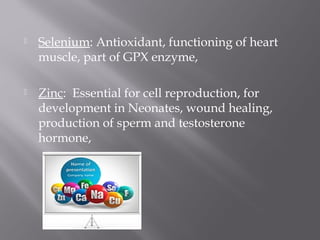
 Selenium: Antioxidant, functioning of heart
muscle, part of GPX enzyme,
 Zinc: Essential for cell reproduction, for
development in Neonates, wound healing,
production of sperm and testosterone
hormone,
 Aloe vera: Anti-inflammatory, emollient, wound
healing,
 Evening Primrose oil: Dietary supplement of linoleic
acid, treatment of atopic eczema,
 Garlic: Antibacterial, antifungal, antithrombotic,
antiinflammatory,
 Ginger: carminative, antiemetic, treatment of
dizziness
 Ginseng: Adaptogen,
 Green tea: Antioxidant, reduces risk of CVD,
enhances humoral and cell mediated Immunity,
 Vegetables, fruits, whole grain, herbs, nuts and
various seeds contain an abundance of phenolic
compounds, terpenoids, sulphur compounds,
pigments etc. that has been associated with
protection / treatment of certain disease conditions,
 Phytochemicals could provide health benefits as:
1. Substrate for biochemical reactions
2. Cofactors of enzymatic reactions
3. Inhibitors of enzymatic reactions
4. Absorbents that bind to & eliminate undesirable
constituent in the intestine
5. Scavengers of reactive or toxic chemicals
6. Enhance the absorption and / or stability of
essential nutrients
7. Selective growth factor for beneficial bacteria
8. Fermentation substrate for beneficial bacteria
9. Selective inhibitors of deleterious intestinal
bacteria
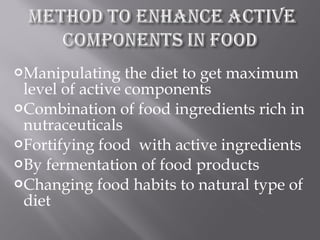
Manipulating the diet to get maximum
level of active components
Combination of food ingredients rich in
nutraceuticals
Fortifying food with active ingredients
By fermentation of food products
Changing food habits to natural type of
diet
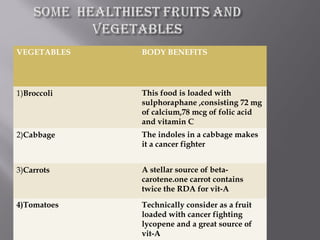
VEGETABLES BODY BENEFITS
1)Broccoli This food is loaded with
sulphoraphane ,consisting 72 mg
of calcium,78 mcg of folic acid
and vitamin C
2)Cabbage The indoles in a cabbage makes
it a cancer fighter
3)Carrots A stellar source of beta-
carotene.one carrot contains
twice the RDA for vit-A
4)Tomatoes Technically consider as a fruit
loaded with cancer fighting
lycopene and a great source of
vit-A
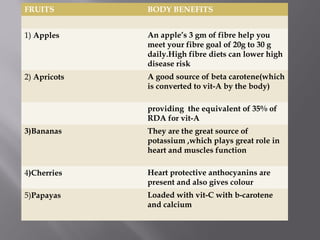
FRUITS BODY BENEFITS
1) Apples An apple’s 3 gm of fibre help you
meet your fibre goal of 20g to 30 g
daily.High fibre diets can lower high
disease risk
2) Apricots A good source of beta carotene(which
is converted to vit-A by the body)
providing the equivalent of 35% of
RDA for vit-A
3)Bananas They are the great source of
potassium ,which plays great role in
heart and muscles function
4)Cherries Heart protective anthocyanins are
present and also gives colour
5)Papayas Loaded with vit-C with b-carotene
and calcium
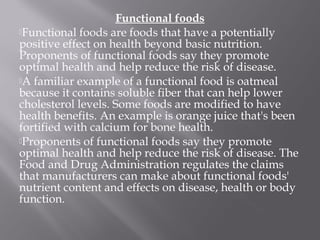
Functional foods
Functional foods are foods that have a potentially
positive effect on health beyond basic nutrition.
Proponents of functional foods say they promote
optimal health and help reduce the risk of disease.
A familiar example of a functional food is oatmeal
because it contains soluble fiber that can help lower
cholesterol levels. Some foods are modified to have
health benefits. An example is orange juice that's been
fortified with calcium for bone health.
Proponents of functional foods say they promote
optimal health and help reduce the risk of disease. The
Food and Drug Administration regulates the claims
that manufacturers can make about functional foods'
nutrient content and effects on disease, health or body
function.
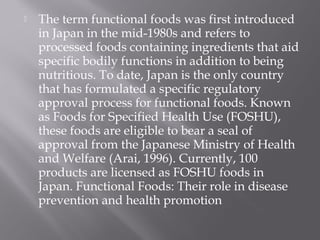
 The term functional foods was first introduced
in Japan in the mid-1980s and refers to
processed foods containing ingredients that aid
specific bodily functions in addition to being
nutritious. To date, Japan is the only country
that has formulated a specific regulatory
approval process for functional foods. Known
as Foods for Specified Health Use (FOSHU),
these foods are eligible to bear a seal of
approval from the Japanese Ministry of Health
and Welfare (Arai, 1996). Currently, 100
products are licensed as FOSHU foods in
Japan. Functional Foods: Their role in disease
prevention and health promotion
 EXAMPLES OF FUNCTIONAL
COMPONENTS*
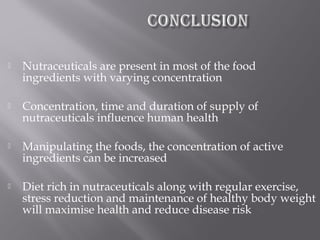
 Nutraceuticals are present in most of the food
ingredients with varying concentration
 Concentration, time and duration of supply of
nutraceuticals influence human health
 Manipulating the foods, the concentration of active
ingredients can be increased
 Diet rich in nutraceuticals along with regular exercise,
stress reduction and maintenance of healthy body weight
will maximise health and reduce disease risk
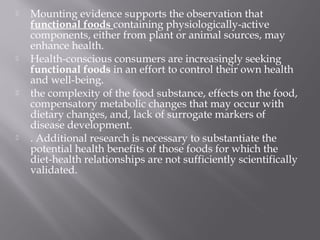
 Mounting evidence supports the observation that
functional foods containing physiologically-active
components, either from plant or animal sources, may
enhance health.
 Health-conscious consumers are increasingly seeking
functional foods in an effort to control their own health
and well-being.
 the complexity of the food substance, effects on the food,
compensatory metabolic changes that may occur with
dietary changes, and, lack of surrogate markers of
disease development.
 . Additional research is necessary to substantiate the
potential health benefits of those foods for which the
diet-health relationships are not sufficiently scientifically
validated.
Thank you

nutracuticals

  • 1.
    NUTRACEUTICALS: AND FUNCTIONAL FOODS: GAURAV Departmentof natural products, National Institute of Pharmaceutical education and Research E-mail: gautamgaurav878@gmail.com
  • 2.
     Introduction –A Nutraceutical isa pharmaceutical-grade and standardized nutrient. A food or part of a food that allegedly provides medicinal or health benefits, including the prevention  and treatment of disease. A nutraceutical may be a naturally nutrient-rich or medicinally active food, such as garlic or soybeans, or it may be a specific component of a food, such as the omega-3 fish oil that can be derived from salmon and other cold-water fish. Its may also considered as.  Nutraceuticals. Dr. Stephen De Felice, coined the term ‘Nutraceutical’ in 1989 and defined it as a ‘food, or parts of a food, that provide medical or health benefits, including the prevention and treatment of disease’. Another definition from the USA is ‘diet supplement that delivers a concentrated form of a presumed bioactive agent from a food, presented in a non-food matrix, and used to enhance health in dosages that exceed those that could be obtained from normal food’.
  • 3.
     Over thelast 20 years the number of “Nutraceuticals” available for self-medication in pharmacies or for sale in supermarkets and “Health food” shops has grown enormously, fostered by wide media coverage of their benefits.There has been a boom in their sales as patients rush to self-medicate, either in the hope that these products will be effective in treating diseases unsatisfactorily treated with pharmaceuticals, or that the adverse effects of some pharmaceuticals may be avoided.
  • 4.
    Disease Nutraceuticals Source 1)Joint health Glucosamine Chondroitin Found in ligaments ,cartilages ,tissue, tendons Proteoglycans of articular cartilage 2) Cardiovascular health Co Q-10 Melatonin DHA Soyabean ,olive oil Bone marrow ,pineal glands Fish oil Reseveratrol Caretonoids Catechin Grapes, red wine Carrot ,sweet potato Tea extracts
  • 5.
    Disease Nutraceuticals Scope 3)Eye health DHA Pycnogeal Linseed (flax oil),fish oil Barley Lotein Caretonoids Spinach Carrot ,sweet potatoes 4) Cancer prevention DHA Resveratrol Flax seed,linseed,fish oil Red wine,grapes Lycopene Tea extracts (ellagic acid) Tomatoes ,grape fruit Strawberry ,Raspberry
  • 6.
    Class / components Source Potential benefit 1.Fatty acids CLA Milk & Meat Improve body composition , reduce cancers n-3 FA(DHA, EPA) Fish oils, berseem & maize fodder,mustard,linseed, rapeseed Reduce CVD & improve mental, visual function CLASSIFICATION OF NUTRACEUTICALS
  • 7.
    Class / components Source Potential benefit 2.Polyphenols Anthocyanidin e Fruits Nutralises free radicals, reduce risk of cancer Catechins Tea,babul pods,mustard cake,rape seed,salseed Flavonone Citrus Flavones Fruits, vegetables,soya bean proanthocyani dine Cocoa, chocolate,tea,rape seed Reduce CVD
  • 8.
    3. Saponins Soybeans,GNC,lucer ne,chickpea Lower cholesterol , anti cancer 4.Probiotics / Prebiotics / Synbiotics Lactobacillus Dahi,yogurt Improve GI healthFructo - oligosaccharides Whole grains, onions, combination of Pro & Prebiotics 5.Phytoestrogen Daidzein , Zenistein Soybean, flax, lentilseed,maize, berseem,lucerne,sub abul fodder Reduce menopause symptoms, ↑ bone health Lignans Flax,rye, vegetables Reduce cancer and heart
  • 9.
    6.Caroteinoids β- caroteine Berseem,lucerne,oat & maize fodder, Carrots, vegetabels,fruits Nutralises free radicals Luteine vegetabels Healthy vision Zeoxanthine Eggs,citrus,corn Lycopene Tomatoes Reduce prostate cancer 7.dietary fiber Insoluble fiber Wheat bran Reduce breast, colon cancer β-glucan Oats Reduce CVD Whole grain Cereal grains
  • 10.
     Nutraceuticals arenon specific biological therapies used to promote wellness, prevent malignant process and control systems . These can be grouped into the following three broad categories:  Substance with established nutritional functions , such as vitamins , minerals ,amino acids and fatty acids- Nutrients
  • 11.
     Herbs orbotanicals products as concentrates and extracts – Herbals  Reagents derived from other sources(eg. pyruvate , chondroitin sulphate , steroids hormone ,precursors)serving specific functions , such as sports nutrition , weight loss supplements and meal replacements – Dietary supplements.
  • 12.
    Brand name ComponentsFunction Betatene Carotenoids Immune function Xangold Lutein esters Eye health Lipoec α-lipoic acid Potent antioxidant Generol Phytosterol CHD reduction Premium probiotics probiotics Intestinal disorder Soylife Soyabean phytoestrogen Bone health NUTRACEUTICALS AVAILABLE IN MARKET
  • 13.
    Brand name ComponentsFunction Z-trim Wheat Zero calorie fat replacer Linumlife Lignan extract flax Prostate health Fenulife Fenugreek galactomannon Control blood sugar Teamax Green tea extract Potent antioxidant Marinol ω 3 FA, DHA, EPA Heart health protection Clarinol CLA Weight loss ingredient Cholestaid Saponin Reduce cholesterol NUTRACEUTICALS AVAILABLE IN MARKET
  • 14.
    Broadly can bedefined as:  Nutrients: Substances which have established Nutritional functions e.g. Vitamins, Minerals, Amino Acids, Fatty acids, etc.  Herbals/ Phytochemicals: Herbs or Botanical products  Dietary Supplements: Probiotics, Prebiotics, Antioxidents, Enzymes, etc.
  • 15.
     Most commonNutrients used/ supplemented as Nutraceutical are: Minerals and Vitamins. or in combination or in combination with other antioxidants
  • 16.
     VITAMINS Fat SolubleVitamins  Vitamin A: Acts as antioxidant, essential for growth and development, maintains healthy vision, skin and mucous membranes, may aid in the prevention and treatment of certain cancers and in the treatment of certain skin disorders.
  • 17.
     Vitamin D:Essential for formation of bones and teeth, helps the body to absorb and use calcium  Vitamin E: Antioxidant, helps to form blood cells, boosts immune system  Vitamin K: Essential for blood clotting
  • 18.
     Vitamin C:Antioxidant, necessary for healthy bones, gums, teeth and skin. Helps in wound healing, prevent from common cold  Vitamin B 1: Helps in carbohydrate metabolism, essential for neurological function.  Vitamin B 2: Energy metabolism, maintain healthy eye, skin and nerve function.
  • 19.
     Vitamin B3: Energy metabolism, brain function  Vitamin B 6: Helps to produce essential proteins, convert proteins to energy  Vitamin B 12: Help in producing genetic material, formation of RBC, maintenance of CNS, synthesis of amino acids, involved in metabolism of protein, fat and carbohydrate.
  • 20.
     Folic acid:Helps in RBC formation, formation of genetic material of cell, very much essential during pregnancy  Pantothenic acid: Aids in synthesis of cholesterol, steroids, and fatty acids, crucial for intraneuronal synthesis of acetylcholine
  • 21.
     L- Carnitine:Helps in oxidation of fatty acids, role in oxidative phosphorylation,  Choline: Lipotropic agent, used to treat fatty liver and disturbed fat metabolism,  Inositol: For amino acid transport and movement of Potassium and sodium,  Taurine: Helps in retinal photoreceptor activity, bile acid conjugation, WBC antioxidant activity, CNS neuromodulation, platelet aggregation, cardiac contractibility, sperm motility, insuline activity,
  • 22.
     Calcium: essentialfor bone and teeth, maintaining bone strength, nerve, muscle and glandular function, blood clotting,  Iron: energy production, Hb, oxygen transport,  Magnesium: for healthy nerve and muscle function, bone formation,  Phosphorous: energy production, phosphorylation process, bone and teeth, for genetic material,
  • 23.
     Cobalt: componentof Vit. B 12 and B 12 coenzymes,  Copper: Hb and collagen production, function of heart, energy production, absorption of Iron,  Iodine: proper function of Thyroid gland,  Chromium: with insulin it helps in conversion of carbohydrate and fat into energy, treatment of diabetes,
  • 24.
     Selenium: Antioxidant,functioning of heart muscle, part of GPX enzyme,  Zinc: Essential for cell reproduction, for development in Neonates, wound healing, production of sperm and testosterone hormone,
  • 25.
     Aloe vera:Anti-inflammatory, emollient, wound healing,  Evening Primrose oil: Dietary supplement of linoleic acid, treatment of atopic eczema,  Garlic: Antibacterial, antifungal, antithrombotic, antiinflammatory,  Ginger: carminative, antiemetic, treatment of dizziness
  • 26.
     Ginseng: Adaptogen, Green tea: Antioxidant, reduces risk of CVD, enhances humoral and cell mediated Immunity,  Vegetables, fruits, whole grain, herbs, nuts and various seeds contain an abundance of phenolic compounds, terpenoids, sulphur compounds, pigments etc. that has been associated with protection / treatment of certain disease conditions,
  • 27.
     Phytochemicals couldprovide health benefits as: 1. Substrate for biochemical reactions 2. Cofactors of enzymatic reactions 3. Inhibitors of enzymatic reactions 4. Absorbents that bind to & eliminate undesirable constituent in the intestine 5. Scavengers of reactive or toxic chemicals
  • 28.
    6. Enhance theabsorption and / or stability of essential nutrients 7. Selective growth factor for beneficial bacteria 8. Fermentation substrate for beneficial bacteria 9. Selective inhibitors of deleterious intestinal bacteria
  • 29.
    Manipulating the dietto get maximum level of active components Combination of food ingredients rich in nutraceuticals Fortifying food with active ingredients By fermentation of food products Changing food habits to natural type of diet
  • 30.
    VEGETABLES BODY BENEFITS 1)BroccoliThis food is loaded with sulphoraphane ,consisting 72 mg of calcium,78 mcg of folic acid and vitamin C 2)Cabbage The indoles in a cabbage makes it a cancer fighter 3)Carrots A stellar source of beta- carotene.one carrot contains twice the RDA for vit-A 4)Tomatoes Technically consider as a fruit loaded with cancer fighting lycopene and a great source of vit-A
  • 31.
    FRUITS BODY BENEFITS 1)Apples An apple’s 3 gm of fibre help you meet your fibre goal of 20g to 30 g daily.High fibre diets can lower high disease risk 2) Apricots A good source of beta carotene(which is converted to vit-A by the body) providing the equivalent of 35% of RDA for vit-A 3)Bananas They are the great source of potassium ,which plays great role in heart and muscles function 4)Cherries Heart protective anthocyanins are present and also gives colour 5)Papayas Loaded with vit-C with b-carotene and calcium
  • 32.
    Functional foods Functional foodsare foods that have a potentially positive effect on health beyond basic nutrition. Proponents of functional foods say they promote optimal health and help reduce the risk of disease. A familiar example of a functional food is oatmeal because it contains soluble fiber that can help lower cholesterol levels. Some foods are modified to have health benefits. An example is orange juice that's been fortified with calcium for bone health. Proponents of functional foods say they promote optimal health and help reduce the risk of disease. The Food and Drug Administration regulates the claims that manufacturers can make about functional foods' nutrient content and effects on disease, health or body function.
  • 33.
     The termfunctional foods was first introduced in Japan in the mid-1980s and refers to processed foods containing ingredients that aid specific bodily functions in addition to being nutritious. To date, Japan is the only country that has formulated a specific regulatory approval process for functional foods. Known as Foods for Specified Health Use (FOSHU), these foods are eligible to bear a seal of approval from the Japanese Ministry of Health and Welfare (Arai, 1996). Currently, 100 products are licensed as FOSHU foods in Japan. Functional Foods: Their role in disease prevention and health promotion
  • 34.
     EXAMPLES OFFUNCTIONAL COMPONENTS*
  • 39.
     Nutraceuticals arepresent in most of the food ingredients with varying concentration  Concentration, time and duration of supply of nutraceuticals influence human health  Manipulating the foods, the concentration of active ingredients can be increased  Diet rich in nutraceuticals along with regular exercise, stress reduction and maintenance of healthy body weight will maximise health and reduce disease risk
  • 40.
     Mounting evidencesupports the observation that functional foods containing physiologically-active components, either from plant or animal sources, may enhance health.  Health-conscious consumers are increasingly seeking functional foods in an effort to control their own health and well-being.  the complexity of the food substance, effects on the food, compensatory metabolic changes that may occur with dietary changes, and, lack of surrogate markers of disease development.  . Additional research is necessary to substantiate the potential health benefits of those foods for which the diet-health relationships are not sufficiently scientifically validated.
  • 41.