PRESENTATION BY:
SARA USMANI
DEPARTMENT OF PHARMACOGNOSY
FIRST SEMESTER
JAMIA HAMDARD
 INTRODUCTION
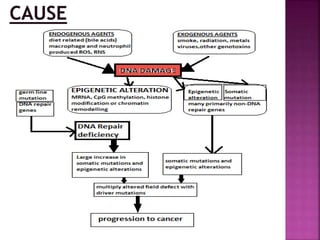
 CAUSE
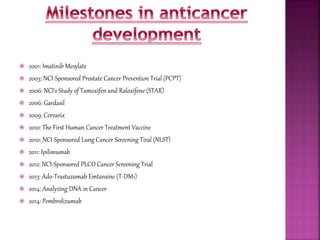
 MILESTONES IN CANCER DISCOVERY
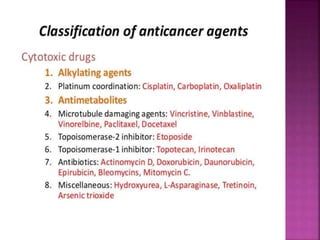
 CLASSIFICATION OF ANTICANCER
DRUGS
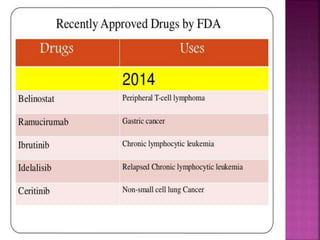
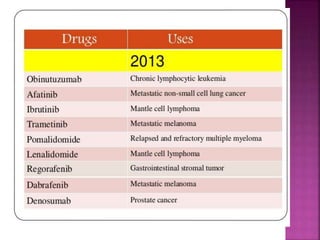
 RECENT LY APPROVED DRUGS BY FDA
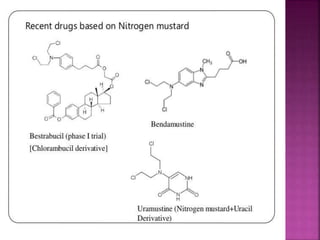
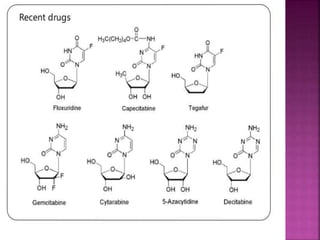
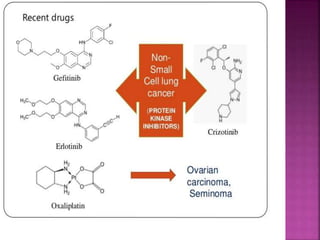
 RECENT DRUGS
 RECENT DEVELOPMENT
1. WHAT IS CANCER??
Uncontrolable divisions
Old or damaged cells survive when they should
die, and new cells form when they are not
needed.
TYPES:
1) Malignant tumour
2) Benign
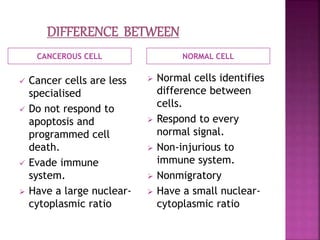
CANCEROUS CELL NORMAL CELL
 Cancer cells are less
specialised
 Do not respond to
apoptosis and
programmed cell
death.
 Evade immune
system.
 Have a large nuclear-
cytoplasmic ratio
 Normal cells identifies
difference between
cells.
 Respond to every
normal signal.
 Non-injurious to
immune system.
 Nonmigratory
 Have a small nuclear-
cytoplasmic ratio
 2001: Imatinib Mesylate
 2003: NCI-Sponsored Prostate Cancer Prevention Trial (PCPT)
 2006: NCI's Study of Tamoxifen and Raloxifene (STAR)
 2006: Gardasil
 2009: Cervarix
 2010: The First Human Cancer Treatment Vaccine
 2010: NCI-Sponsored Lung Cancer Screening Tiral (NLST)
 2011: Ipilimumab
 2012: NCI-Sponsored PLCO Cancer Screening Trial
 2013: Ado-Trastuzumab Emtansine (T-DM1)
 2014: Analyzing DNA in Cancer
 2014: Pembrolizumab
3
7.
8.
 Corticosteroids
 Estrogen
 Selective estrogen receptor modulator
 Selective estrogen receptor down modulator
 Aromatase inhibitor
 Antiandrogen
Phytochemicals derived from such fruits and
vegetables, referred to as chemopreventive agents include
genistein, resveratrol, diallyl
sulfide, S-allyl cysteine, allicin, lycopene, capsaicin,
curcumin, 6-gingerol, ellagic acid,
ursolic acid, silymarin, anethol, catechins and eugenol
suppress cancer cell proliferation, inhibit growth factor
signaling pathways,induce apoptosis, inhibit NF-κB, AP-1 and
JAK-STAT activation pathways, inhibit angiogenesis, suppress
the expression of anti-apoptotic proteins, inhibit
cyclooxygenase-2,
 a sesquiterpene lactone derived from the
sweet wormwood plant Artemisia annua
 It has inhibitory effect in cancer cell growth.
 The cytotoxic effect of artemisinin is specific
to cancer cells
 The artemisinins’ endoperoxide moiety is
responsible for its anti-malarial and anti-
cancer effects.
 High oxidative stress is a common anti-
neoplastic property of anticancer drugs
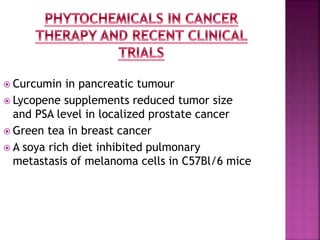
 Curcumin in pancreatic tumour
 Lycopene supplements reduced tumor size
and PSA level in localized prostate cancer
 Green tea in breast cancer
 A soya rich diet inhibited pulmonary
metastasis of melanoma cells in C57Bl/6 mice
 In the present study, the potential anticancer effects of
pomegranate extracts and genistein on inhibition of
cell proliferation and induction of apoptosis in human
breast cancer cells was investigated.
http://www.ncbi.nlm.nih.gov/pubmed/16379557
 It is also used in prostate cancer and pancreatic
cancer; treatment induced cell cycle arrest and
inhibited cell proliferation in PANC-1 cells. PE
treatment increased the proportion of cells lacking
CD44 and CD24 expression, which are associated with
increased tumor-initiating ability, demonstrating that
PE altered cell phenotype. PE was more effective in
inhibiting the proliferation of PANC-1 cells than the
clinically used dose of paclitaxel.
http://www.researchgate.net/publication/51596733_
 Bromelain(a proteolytic enzyme) in Pineapples Kills
Cancer Cells: One such compound is bromelain, an
enzyme that can be extracted from pineapple stems.
Research published in the journal Planta Medica found
that bromelain was superior to the chemotherapy drug
5-fluorauracil in treating cancer in an animal study.i
 Other drugs includes: vitamin C - vitamin C was
selectively cytotoxic against cancer cells.
Eggplant extract - Eggplant extract cream appears to
be particularly useful in treating skin cancer.
 Turmeric (Curcumin Extract) - the primary polyphenol
in turmeric, saw a decrease in experimentally-induced
brain tumors in 9 out of 11 treated "suggesting that
curcumin selectively targets the transformed
[cancerous] cells.“
 http://articles.mercola.com/sites/articles
Cancer Treatment by Targeted Drug Delivery to
Tumor Vasculature in a Mouse Model
Synthesis of thiophene-thiosemicarbazone
derivatives and evaluation of their in vitro and
in vivo antitumor activities.
•In vitro
•In vivo
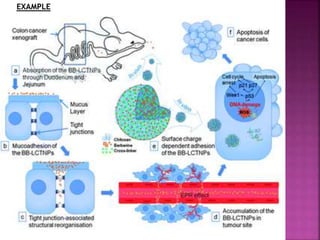
EXAMPLE
5.
www.google.com
6.
shareslides.net
7.
http://www.ncbi.nlm.nih.gov/pubmed/26007283
8.
• http://www.cancer.gov/about-cancer/what-is-cancer
•http://www.sciencemag.org/content/279/5349/377.short
•http://www.ncbi.nlm.nih.gov/pubmed
•KD Tripathi
•http://www.cancer.gov/about-cancer/what-is-cancer
•www.pubmed.com
Anticancer

Anticancer

  • 1.
    PRESENTATION BY: SARA USMANI DEPARTMENTOF PHARMACOGNOSY FIRST SEMESTER JAMIA HAMDARD
  • 2.
     INTRODUCTION  CAUSE MILESTONES IN CANCER DISCOVERY  CLASSIFICATION OF ANTICANCER DRUGS  RECENT LY APPROVED DRUGS BY FDA  RECENT DRUGS  RECENT DEVELOPMENT
  • 3.
    1. WHAT ISCANCER?? Uncontrolable divisions Old or damaged cells survive when they should die, and new cells form when they are not needed. TYPES: 1) Malignant tumour 2) Benign
  • 4.
    CANCEROUS CELL NORMALCELL  Cancer cells are less specialised  Do not respond to apoptosis and programmed cell death.  Evade immune system.  Have a large nuclear- cytoplasmic ratio  Normal cells identifies difference between cells.  Respond to every normal signal.  Non-injurious to immune system.  Nonmigratory  Have a small nuclear- cytoplasmic ratio
  • 7.
     2001: ImatinibMesylate  2003: NCI-Sponsored Prostate Cancer Prevention Trial (PCPT)  2006: NCI's Study of Tamoxifen and Raloxifene (STAR)  2006: Gardasil  2009: Cervarix  2010: The First Human Cancer Treatment Vaccine  2010: NCI-Sponsored Lung Cancer Screening Tiral (NLST)  2011: Ipilimumab  2012: NCI-Sponsored PLCO Cancer Screening Trial  2013: Ado-Trastuzumab Emtansine (T-DM1)  2014: Analyzing DNA in Cancer  2014: Pembrolizumab
  • 12.
  • 22.
  • 23.
  • 24.
     Corticosteroids  Estrogen Selective estrogen receptor modulator  Selective estrogen receptor down modulator  Aromatase inhibitor  Antiandrogen
  • 26.
    Phytochemicals derived fromsuch fruits and vegetables, referred to as chemopreventive agents include genistein, resveratrol, diallyl sulfide, S-allyl cysteine, allicin, lycopene, capsaicin, curcumin, 6-gingerol, ellagic acid, ursolic acid, silymarin, anethol, catechins and eugenol suppress cancer cell proliferation, inhibit growth factor signaling pathways,induce apoptosis, inhibit NF-κB, AP-1 and JAK-STAT activation pathways, inhibit angiogenesis, suppress the expression of anti-apoptotic proteins, inhibit cyclooxygenase-2,
  • 27.
     a sesquiterpenelactone derived from the sweet wormwood plant Artemisia annua  It has inhibitory effect in cancer cell growth.  The cytotoxic effect of artemisinin is specific to cancer cells  The artemisinins’ endoperoxide moiety is responsible for its anti-malarial and anti- cancer effects.  High oxidative stress is a common anti- neoplastic property of anticancer drugs
  • 31.
     Curcumin inpancreatic tumour  Lycopene supplements reduced tumor size and PSA level in localized prostate cancer  Green tea in breast cancer  A soya rich diet inhibited pulmonary metastasis of melanoma cells in C57Bl/6 mice
  • 32.
     In thepresent study, the potential anticancer effects of pomegranate extracts and genistein on inhibition of cell proliferation and induction of apoptosis in human breast cancer cells was investigated. http://www.ncbi.nlm.nih.gov/pubmed/16379557  It is also used in prostate cancer and pancreatic cancer; treatment induced cell cycle arrest and inhibited cell proliferation in PANC-1 cells. PE treatment increased the proportion of cells lacking CD44 and CD24 expression, which are associated with increased tumor-initiating ability, demonstrating that PE altered cell phenotype. PE was more effective in inhibiting the proliferation of PANC-1 cells than the clinically used dose of paclitaxel. http://www.researchgate.net/publication/51596733_
  • 33.
     Bromelain(a proteolyticenzyme) in Pineapples Kills Cancer Cells: One such compound is bromelain, an enzyme that can be extracted from pineapple stems. Research published in the journal Planta Medica found that bromelain was superior to the chemotherapy drug 5-fluorauracil in treating cancer in an animal study.i  Other drugs includes: vitamin C - vitamin C was selectively cytotoxic against cancer cells. Eggplant extract - Eggplant extract cream appears to be particularly useful in treating skin cancer.  Turmeric (Curcumin Extract) - the primary polyphenol in turmeric, saw a decrease in experimentally-induced brain tumors in 9 out of 11 treated "suggesting that curcumin selectively targets the transformed [cancerous] cells.“  http://articles.mercola.com/sites/articles
  • 34.
    Cancer Treatment byTargeted Drug Delivery to Tumor Vasculature in a Mouse Model Synthesis of thiophene-thiosemicarbazone derivatives and evaluation of their in vitro and in vivo antitumor activities. •In vitro •In vivo
  • 35.
  • 37.