Module 1
Communication Issues & Adult Learning Needs
Safety Communication & Training Techniques
– For Small Business –

© 2005 National Safety Council

Safety Communication & Training Techniques

1
Module Objectives

 Assess advantages and disadvantages of several

methods of communication.
 Identify when an adult learning need is being met.
 Complete a learning style assessment to identify

learning styles and improve your ability to reach
employees with safety messages and training.

© 2005 National Safety Council

Safety Communication & Training Techniques

2
Module Objectives (cont.)

 Identify strategies and methods (best practices) for

effective safety communication and training.
 Identify actions to take to address barriers and special

communication or learning needs/challenges.
 Identify 2 actions to implement at your workplace and

potential barriers/how to overcome them.

© 2005 National Safety Council

Safety Communication & Training Techniques

3
Methods of Communication
 Verbal
 Nonverbal

 Written
 Visual Images (Graphics)

Which method is used most at your facility?
How do you know it is effective?

© 2005 National Safety Council

Safety Communication & Training Techniques

4
Adult Learning Needs and Principles
 Need to know why they are learning to apply

learning to immediate, real-life challenges.
 Have experience they apply to all new learning.
 Need to be in control of their learning.
 Want to learn to be more effective and successful.

© 2005 National Safety Council

Safety Communication & Training Techniques

5
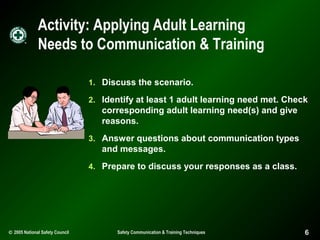
Activity: Applying Adult Learning
Needs to Communication & Training
1. Discuss the scenario.
2. Identify at least 1 adult learning need met. Check

corresponding adult learning need(s) and give
reasons.
3. Answer questions about communication types

and messages.
4. Prepare to discuss your responses as a class.

© 2005 National Safety Council

Safety Communication & Training Techniques

6
Activity: Learning Style Assessment
1. Review each statement. In each column,

respond to each choice by using this scale.
 3 (most preferred)
 2 (somewhat preferred)
 1 (least preferred)

1. Total each column.

© 2005 National Safety Council

Safety Communication & Training Techniques

7
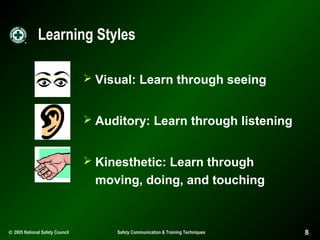
Learning Styles
 Visual: Learn through seeing
 Auditory: Learn through listening
 Kinesthetic: Learn through

moving, doing, and touching

© 2005 National Safety Council

Safety Communication & Training Techniques

8
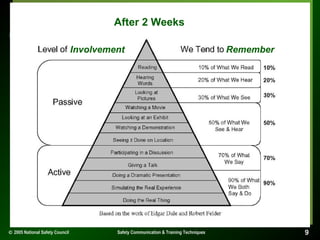
After 2 Weeks

How People Remember
Involvement

© 2005 National Safety Council

Safety Communication & Training Techniques

Remember

9
Basic Elements of Good Communication
 To achieve effective communication, sender and

receiver must be active participants in process.
 A good communicator pays attention to what is said

AND how it is said.
 How can I become a good communicator?
 How can I become a good listener?

© 2005 National Safety Council

Safety Communication & Training Techniques

10
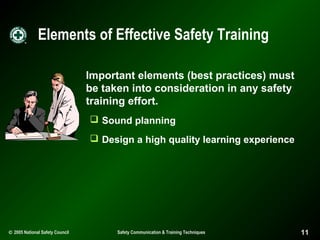
Elements of Effective Safety Training
Important elements (best practices) must
be taken into consideration in any safety
training effort.
 Sound planning
 Design a high quality learning experience

© 2005 National Safety Council

Safety Communication & Training Techniques

11
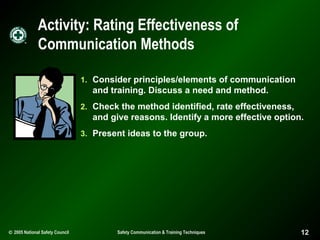
Activity: Rating Effectiveness of
Communication Methods
1. Consider principles/elements of communication

and training. Discuss a need and method.
2. Check the method identified, rate effectiveness,

and give reasons. Identify a more effective option.
3. Present ideas to the group.

© 2005 National Safety Council

Safety Communication & Training Techniques

12
Communication &
Learning Challenges & Barriers
 People see, hear, and interpret information

in different ways.
– Learning disabilities or special learning needs
– Other communication and learning
challenges/barriers

 Recognizing and managing issues will

help ensure successful communication.

© 2005 National Safety Council

Safety Communication & Training Techniques

13
Activity: Addressing Communication &
Learning Challenges in the Safety Setting
1. Identify ways to handle safety communication

or learning challenges/special needs you may
face (or have faced) at your business.
2. Identify as many ways as possible to

effectively handle/manage the issue.
3. Share a challenge/need and strategies with

the class.

© 2005 National Safety Council

Safety Communication & Training Techniques

14
Planning for Your Small Business
1. Identify 2 actions you will take when

you return to your worksite.
2. Identify potential barriers you might

encounter in taking these actions.
3. List ideas for overcoming the barriers.

© 2005 National Safety Council

Safety Communication & Training Techniques

15

Module 1 commication issues and adult learning needs

  • 1.
    Module 1 Communication Issues& Adult Learning Needs Safety Communication & Training Techniques – For Small Business – © 2005 National Safety Council Safety Communication & Training Techniques 1
  • 2.
    Module Objectives  Assessadvantages and disadvantages of several methods of communication.  Identify when an adult learning need is being met.  Complete a learning style assessment to identify learning styles and improve your ability to reach employees with safety messages and training. © 2005 National Safety Council Safety Communication & Training Techniques 2
  • 3.
    Module Objectives (cont.) Identify strategies and methods (best practices) for effective safety communication and training.  Identify actions to take to address barriers and special communication or learning needs/challenges.  Identify 2 actions to implement at your workplace and potential barriers/how to overcome them. © 2005 National Safety Council Safety Communication & Training Techniques 3
  • 4.
    Methods of Communication Verbal  Nonverbal  Written  Visual Images (Graphics) Which method is used most at your facility? How do you know it is effective? © 2005 National Safety Council Safety Communication & Training Techniques 4
  • 5.
    Adult Learning Needsand Principles  Need to know why they are learning to apply learning to immediate, real-life challenges.  Have experience they apply to all new learning.  Need to be in control of their learning.  Want to learn to be more effective and successful. © 2005 National Safety Council Safety Communication & Training Techniques 5
  • 6.
    Activity: Applying AdultLearning Needs to Communication & Training 1. Discuss the scenario. 2. Identify at least 1 adult learning need met. Check corresponding adult learning need(s) and give reasons. 3. Answer questions about communication types and messages. 4. Prepare to discuss your responses as a class. © 2005 National Safety Council Safety Communication & Training Techniques 6
  • 7.
    Activity: Learning StyleAssessment 1. Review each statement. In each column, respond to each choice by using this scale.  3 (most preferred)  2 (somewhat preferred)  1 (least preferred) 1. Total each column. © 2005 National Safety Council Safety Communication & Training Techniques 7
  • 8.
    Learning Styles  Visual:Learn through seeing  Auditory: Learn through listening  Kinesthetic: Learn through moving, doing, and touching © 2005 National Safety Council Safety Communication & Training Techniques 8
  • 9.
    After 2 Weeks HowPeople Remember Involvement © 2005 National Safety Council Safety Communication & Training Techniques Remember 9
  • 10.
    Basic Elements ofGood Communication  To achieve effective communication, sender and receiver must be active participants in process.  A good communicator pays attention to what is said AND how it is said.  How can I become a good communicator?  How can I become a good listener? © 2005 National Safety Council Safety Communication & Training Techniques 10
  • 11.
    Elements of EffectiveSafety Training Important elements (best practices) must be taken into consideration in any safety training effort.  Sound planning  Design a high quality learning experience © 2005 National Safety Council Safety Communication & Training Techniques 11
  • 12.
    Activity: Rating Effectivenessof Communication Methods 1. Consider principles/elements of communication and training. Discuss a need and method. 2. Check the method identified, rate effectiveness, and give reasons. Identify a more effective option. 3. Present ideas to the group. © 2005 National Safety Council Safety Communication & Training Techniques 12
  • 13.
    Communication & Learning Challenges& Barriers  People see, hear, and interpret information in different ways. – Learning disabilities or special learning needs – Other communication and learning challenges/barriers  Recognizing and managing issues will help ensure successful communication. © 2005 National Safety Council Safety Communication & Training Techniques 13
  • 14.
    Activity: Addressing Communication& Learning Challenges in the Safety Setting 1. Identify ways to handle safety communication or learning challenges/special needs you may face (or have faced) at your business. 2. Identify as many ways as possible to effectively handle/manage the issue. 3. Share a challenge/need and strategies with the class. © 2005 National Safety Council Safety Communication & Training Techniques 14
  • 15.
    Planning for YourSmall Business 1. Identify 2 actions you will take when you return to your worksite. 2. Identify potential barriers you might encounter in taking these actions. 3. List ideas for overcoming the barriers. © 2005 National Safety Council Safety Communication & Training Techniques 15