LEA Administrators Conference Atlanta, Georgia March 12, 2009 Plan Change (Listening, Learning, Leading – Session Two) A “Living” Technology Plan
Technology Training MTM Video – Dr. Michael Uden, Gail Potratz, Joan Klaas, Dr. Albert Amling, and Gerald Schmidt Reaction to video – small groups
A Technology Plan
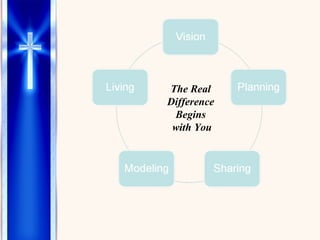
The Real  Difference  Begins  with You


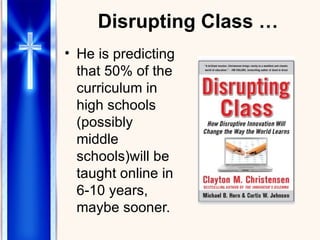
Disrupting Class … He is predicting that 50% of the curriculum in high schools (possibly middle schools)will be taught online in 6-10 years, maybe sooner.
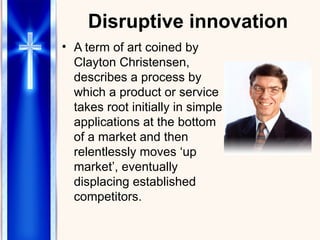
Disruptive innovation A term of art coined by Clayton Christensen, describes a process by which a product or service takes root initially in simple applications at the bottom of a market and then relentlessly moves ‘up market’, eventually displacing established competitors. 
Karen - High School English Teacher “ I have already begun some long-term planning of course alterations I plan to make as a result of my new knowledge gained in this course.  I was speaking with one of our library-media specialists about my hope to make the senior composition course a half live/half online course.”  This is called a hybrid course. Jeff – Technology and Engineering used Google Groups ….
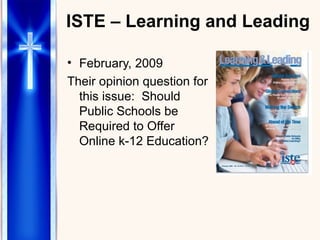
ISTE – Learning and Leading February, 2009  Their opinion question for this issue:  Should Public Schools be Required to Offer Online k-12 Education?
Virtual Education Programs
 
Teachers and Administrators Need to be Trained “…  Before class started, I was nervous to take this course. Not because of the technology part, but because many people  kept telling me how awful on-line courses are. Over half of our cohort opted out of this class and enrolled in a reading course instead. I had never taken an online course before, so I had no idea what to expect, but I wanted to try it.”

“ Let me tell you, I am so happy I stayed in this class! It has not been awful, it's been fantastic. I find the assignments easy to follow ...  I enjoy being able to work from my home and school and yet communicate with my classmates on a regular basis… So to answer the question "How are things going so far?" I would say fabulous...and I feel sorry for the others who are missing out on a great opportunity.  Stefanie” Let me tell you, I am so happy I stayed in this class! It has not been awful, it's been fantastic. I find the assignments easy to follow ...  I enjoy being able to work from my home and school and yet communicate with my classmates on a regular basis… So to answer the question "How are things going so far?" I would say fabulous...and I feel sorry for the others in my cohort
11 Questions to ask yourself on new technologies: Is it focused on student learning? Are there observable results? Does it meet the standards? Can it show results? Does it increase research skills? Does it improve communication skills?
What about accountability? Does it improve student collaboration Does it help students communicate globally? Does it help students deal with massive amounts of information? Does it  teach our students  to be self-directed and understand how to organize more of their own learning? Is it sustainable?
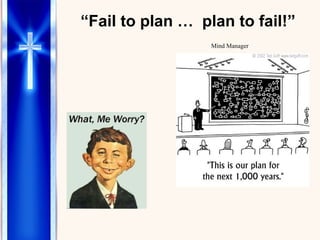
“ Fail to plan …  plan to fail!” Mind Manager
You Tube Video Incident Action Plan – Epic Fail
 
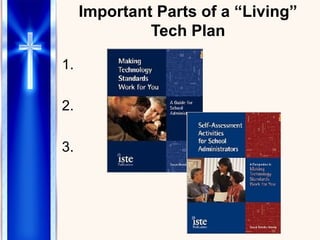
Important Parts of a “Living” Tech Plan 1.  2.  3.
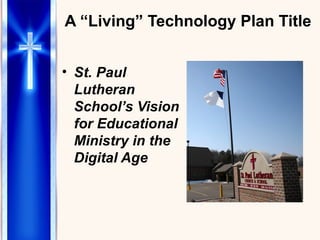
A “Living” Technology Plan Title St. Paul Lutheran School’s Vision for Educational Ministry in the Digital Age
Small Group Activity What are the important parts of a comprehensive technology plan?
 
Small Group Activity Mission and Vision Statements (Core Values) Technology Committee
 
Directions Groups 1A and 1B work on Standard 1 2A and 2B work on Standard 2 3A and 3B work on Standard 3 4A and 4B work on Standard 4 5A and 5B work on Standard 5 Each group is to fill in suggestions in the NEXT STEPS column
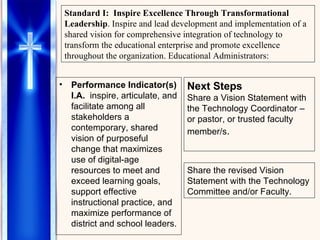
Performance Indicator(s) I.A.   inspire, articulate, and facilitate among all stakeholders a contemporary, shared vision of purposeful change that maximizes use of digital-age resources to meet and exceed learning goals, support effective instructional practice, and maximize performance of district and school leaders. Standard I:   Inspire Excellence Through Transformational Leadership . Inspire and lead development and implementation of a shared vision for comprehensive integration of technology to transform the educational enterprise and promote excellence throughout the organization. Educational Administrators: Next Steps Share a Vision Statement with the Technology Coordinator – or pastor, or trusted faculty member/s . Share the revised Vision Statement with the Technology Committee and/or Faculty.
Questions – Feedback – Recommendations
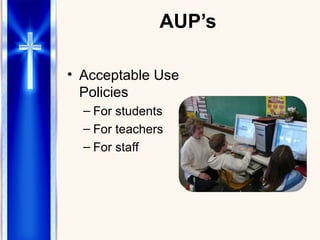
AUP’s Acceptable Use Policies For students For teachers For staff
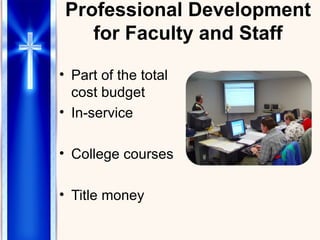
Professional Development for Faculty and Staff Part of the total cost budget In-service College courses Title money
Plans for Assessment – What tool/s do you use to check … How you use technology? How the teachers use technology? How technology is integrated into the classroom curriculum?
Total Cost Budget Routine maintenance of hardware Making repairs on nonfunctioning equipment – do you repair it? Technical support Disposal of outdated hardware Curriculum and instructional support for classroom technology integration Upgrading hardware and software
Organizations You Use to Stay Abreast on Technology Use in Schools ISTE  www.iste.org eSchool News
Documentation Current Hardware Inventory Current Software Inventory Plan to replace both
Strategic Outcomes These should come from your Action Plan Maybe use MTM as an example
 
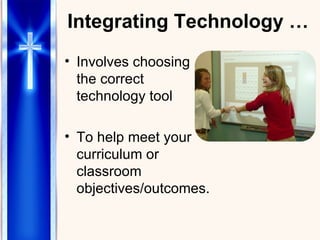
Integrating Technology … Involves choosing the correct technology tool  To help meet your curriculum or classroom objectives/outcomes.
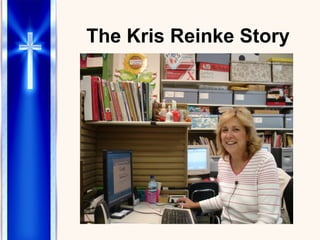
The Kris Reinke Story
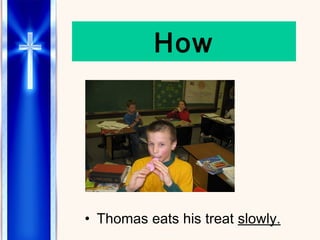
How Thomas eats his treat  slowly.
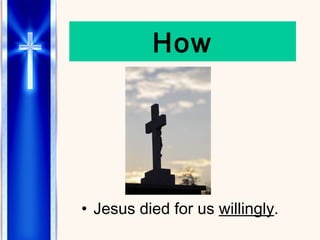
How Jesus died for us  willingly .
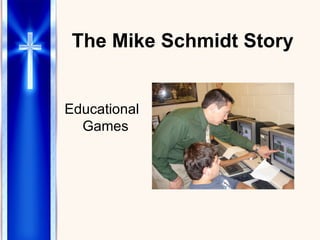
The Mike Schmidt Story Educational Games
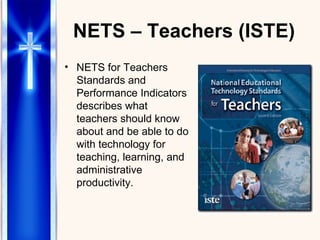
NETS – Teachers (ISTE) NETS for Teachers Standards and Performance Indicators describes what teachers should know about and be able to do with technology for teaching, learning, and administrative productivity.

Lea Admin Conf 2009

  • 1.
    LEA Administrators ConferenceAtlanta, Georgia March 12, 2009 Plan Change (Listening, Learning, Leading – Session Two) A “Living” Technology Plan
  • 2.
    Technology Training MTMVideo – Dr. Michael Uden, Gail Potratz, Joan Klaas, Dr. Albert Amling, and Gerald Schmidt Reaction to video – small groups
  • 3.
  • 4.
    The Real Difference Begins with You
  • 5.
  • 6.
  • 7.
  • 8.
    Disrupting Class …He is predicting that 50% of the curriculum in high schools (possibly middle schools)will be taught online in 6-10 years, maybe sooner.
  • 9.
    Disruptive innovation Aterm of art coined by Clayton Christensen, describes a process by which a product or service takes root initially in simple applications at the bottom of a market and then relentlessly moves ‘up market’, eventually displacing established competitors. 
  • 10.
    Karen - HighSchool English Teacher “ I have already begun some long-term planning of course alterations I plan to make as a result of my new knowledge gained in this course. I was speaking with one of our library-media specialists about my hope to make the senior composition course a half live/half online course.” This is called a hybrid course. Jeff – Technology and Engineering used Google Groups ….
  • 11.
    ISTE – Learningand Leading February, 2009 Their opinion question for this issue: Should Public Schools be Required to Offer Online k-12 Education?
  • 12.
  • 13.
  • 14.
    Teachers and AdministratorsNeed to be Trained “… Before class started, I was nervous to take this course. Not because of the technology part, but because many people kept telling me how awful on-line courses are. Over half of our cohort opted out of this class and enrolled in a reading course instead. I had never taken an online course before, so I had no idea what to expect, but I wanted to try it.”
  • 15.
    “ Let metell you, I am so happy I stayed in this class! It has not been awful, it's been fantastic. I find the assignments easy to follow ... I enjoy being able to work from my home and school and yet communicate with my classmates on a regular basis… So to answer the question "How are things going so far?" I would say fabulous...and I feel sorry for the others who are missing out on a great opportunity. Stefanie” Let me tell you, I am so happy I stayed in this class! It has not been awful, it's been fantastic. I find the assignments easy to follow ... I enjoy being able to work from my home and school and yet communicate with my classmates on a regular basis… So to answer the question "How are things going so far?" I would say fabulous...and I feel sorry for the others in my cohort
  • 16.
    11 Questions toask yourself on new technologies: Is it focused on student learning? Are there observable results? Does it meet the standards? Can it show results? Does it increase research skills? Does it improve communication skills?
  • 17.
    What about accountability?Does it improve student collaboration Does it help students communicate globally? Does it help students deal with massive amounts of information? Does it teach our students to be self-directed and understand how to organize more of their own learning? Is it sustainable?
  • 18.
    “ Fail toplan … plan to fail!” Mind Manager
  • 19.
    You Tube VideoIncident Action Plan – Epic Fail
  • 20.
  • 21.
    Important Parts ofa “Living” Tech Plan 1. 2. 3.
  • 22.
    A “Living” TechnologyPlan Title St. Paul Lutheran School’s Vision for Educational Ministry in the Digital Age
  • 23.
    Small Group ActivityWhat are the important parts of a comprehensive technology plan?
  • 24.
  • 25.
    Small Group ActivityMission and Vision Statements (Core Values) Technology Committee
  • 26.
  • 27.
    Directions Groups 1Aand 1B work on Standard 1 2A and 2B work on Standard 2 3A and 3B work on Standard 3 4A and 4B work on Standard 4 5A and 5B work on Standard 5 Each group is to fill in suggestions in the NEXT STEPS column
  • 28.
    Performance Indicator(s) I.A. inspire, articulate, and facilitate among all stakeholders a contemporary, shared vision of purposeful change that maximizes use of digital-age resources to meet and exceed learning goals, support effective instructional practice, and maximize performance of district and school leaders. Standard I: Inspire Excellence Through Transformational Leadership . Inspire and lead development and implementation of a shared vision for comprehensive integration of technology to transform the educational enterprise and promote excellence throughout the organization. Educational Administrators: Next Steps Share a Vision Statement with the Technology Coordinator – or pastor, or trusted faculty member/s . Share the revised Vision Statement with the Technology Committee and/or Faculty.
  • 29.
    Questions – Feedback– Recommendations
  • 30.
    AUP’s Acceptable UsePolicies For students For teachers For staff
  • 31.
    Professional Development forFaculty and Staff Part of the total cost budget In-service College courses Title money
  • 32.
    Plans for Assessment– What tool/s do you use to check … How you use technology? How the teachers use technology? How technology is integrated into the classroom curriculum?
  • 33.
    Total Cost BudgetRoutine maintenance of hardware Making repairs on nonfunctioning equipment – do you repair it? Technical support Disposal of outdated hardware Curriculum and instructional support for classroom technology integration Upgrading hardware and software
  • 34.
    Organizations You Useto Stay Abreast on Technology Use in Schools ISTE www.iste.org eSchool News
  • 35.
    Documentation Current HardwareInventory Current Software Inventory Plan to replace both
  • 36.
    Strategic Outcomes Theseshould come from your Action Plan Maybe use MTM as an example
  • 37.
  • 38.
    Integrating Technology …Involves choosing the correct technology tool To help meet your curriculum or classroom objectives/outcomes.
  • 39.
  • 40.
    How Thomas eatshis treat slowly.
  • 41.
    How Jesus diedfor us willingly .
  • 42.
    The Mike SchmidtStory Educational Games
  • 43.
    NETS – Teachers(ISTE) NETS for Teachers Standards and Performance Indicators describes what teachers should know about and be able to do with technology for teaching, learning, and administrative productivity.