Module 5
Evaluating Safety Messages & Training
Safety Communication & Training Techniques
– For Small Business –
© 2005 National Safety Council

Safety Communication & Training Techniques

1
Module Objectives

 Identify benefits of measuring effectiveness of a safety

message or training program.
 Recognize levels, types/methods, and elements of training

evaluation.
 Recognize relationship between testing and evaluation.
 Identify 2 actions to implement at your workplace and

potential barriers/how to overcome them.

© 2005 National Safety Council

Safety Communication & Training Techniques

2
Introduction to Evaluation of
Safety Messages & Training
What are benefits of evaluating
safety communication and training
to you and your organization?

© 2005 National Safety Council

Safety Communication & Training Techniques

3
Introduction to Evaluation of
Safety Messages & Training (cont.)
 Purpose of evaluation
Process used to measure the value and
effectiveness of a learning program

 When should evaluation be done?
Ideally, evaluate entire training process and
how effective it achieves objectives

© 2005 National Safety Council

Safety Communication & Training Techniques

4
Levels of Evaluation
What prevents us from
evaluating our safety
efforts?

© 2005 National Safety Council

Safety Communication & Training Techniques

5
Levels of Evaluation
 Identify your business objectives
 Evaluation levels based on

Kirkpatrick’s model (1994)
1. Reaction
2. Learning
3. Behavior/Performance
4. Results/Impact

© 2005 National Safety Council

Safety Communication & Training Techniques

6
Levels of Evaluation
How can you apply the levels
of evaluation to safety efforts
at your business?

© 2005 National Safety Council

Safety Communication & Training Techniques

7
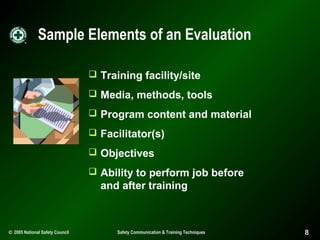
Sample Elements of an Evaluation
 Training facility/site
 Media, methods, tools
 Program content and material
 Facilitator(s)
 Objectives
 Ability to perform job before

and after training

© 2005 National Safety Council

Safety Communication & Training Techniques

8
Evaluating Learning Progress
Through Testing
Process of measuring whether
learners met performance objectives.
Types of Tests

Testing Tools

 Knowledge-based

 Pre-tests

 Skills-based/application

 Review tests
 Post-tests

 Attitudinal tests/scales

© 2005 National Safety Council

Safety Communication & Training Techniques

9
When to Test on Safety Issues
 Training and testing is required and/or

involves certification or qualification
process
 Organizational culture supports use
 Risks of not mastering objectives includes

injury, death, or significant financial loss

© 2005 National Safety Council

Safety Communication & Training Techniques

10
Planning for Your Small Business
1. Identify 2 actions you will take when

you return to your worksite.
2. Identify potential barriers you might

encounter in taking these actions.
3. List ideas for overcoming the barriers.

© 2005 National Safety Council

Safety Communication & Training Techniques

11

Module 5 evaluating safety messages and training

  • 1.
    Module 5 Evaluating SafetyMessages & Training Safety Communication & Training Techniques – For Small Business – © 2005 National Safety Council Safety Communication & Training Techniques 1
  • 2.
    Module Objectives  Identifybenefits of measuring effectiveness of a safety message or training program.  Recognize levels, types/methods, and elements of training evaluation.  Recognize relationship between testing and evaluation.  Identify 2 actions to implement at your workplace and potential barriers/how to overcome them. © 2005 National Safety Council Safety Communication & Training Techniques 2
  • 3.
    Introduction to Evaluationof Safety Messages & Training What are benefits of evaluating safety communication and training to you and your organization? © 2005 National Safety Council Safety Communication & Training Techniques 3
  • 4.
    Introduction to Evaluationof Safety Messages & Training (cont.)  Purpose of evaluation Process used to measure the value and effectiveness of a learning program  When should evaluation be done? Ideally, evaluate entire training process and how effective it achieves objectives © 2005 National Safety Council Safety Communication & Training Techniques 4
  • 5.
    Levels of Evaluation Whatprevents us from evaluating our safety efforts? © 2005 National Safety Council Safety Communication & Training Techniques 5
  • 6.
    Levels of Evaluation Identify your business objectives  Evaluation levels based on Kirkpatrick’s model (1994) 1. Reaction 2. Learning 3. Behavior/Performance 4. Results/Impact © 2005 National Safety Council Safety Communication & Training Techniques 6
  • 7.
    Levels of Evaluation Howcan you apply the levels of evaluation to safety efforts at your business? © 2005 National Safety Council Safety Communication & Training Techniques 7
  • 8.
    Sample Elements ofan Evaluation  Training facility/site  Media, methods, tools  Program content and material  Facilitator(s)  Objectives  Ability to perform job before and after training © 2005 National Safety Council Safety Communication & Training Techniques 8
  • 9.
    Evaluating Learning Progress ThroughTesting Process of measuring whether learners met performance objectives. Types of Tests Testing Tools  Knowledge-based  Pre-tests  Skills-based/application  Review tests  Post-tests  Attitudinal tests/scales © 2005 National Safety Council Safety Communication & Training Techniques 9
  • 10.
    When to Teston Safety Issues  Training and testing is required and/or involves certification or qualification process  Organizational culture supports use  Risks of not mastering objectives includes injury, death, or significant financial loss © 2005 National Safety Council Safety Communication & Training Techniques 10
  • 11.
    Planning for YourSmall Business 1. Identify 2 actions you will take when you return to your worksite. 2. Identify potential barriers you might encounter in taking these actions. 3. List ideas for overcoming the barriers. © 2005 National Safety Council Safety Communication & Training Techniques 11