


Module 2
Organizing Safety Messages & Training Content
Safety Communication & Training Techniques
– For Small Business –

© 2005 National Safety Council

Safety Communication & Training Techniques

1
Module Objectives

 Identify 4 components (action, behavior, condition,

and degree) of a performance objective.
 Write performance objectives for a training program.
 Recognize reasons for testing in performance-based

training.
 Identify Federal, State, and Safety Industry resources

for safety information.

© 2005 National Safety Council

Safety Communication & Training Techniques

2
Module Objectives (cont.)

 Recognize steps for writing a content outline.
 Create a short content outline using the steps

provided for outlining content.
 Identify 2 actions to implement at your workplace

and potential barriers/how to overcome them.

© 2005 National Safety Council

Safety Communication & Training Techniques

3
Performance Objectives
Why are performance objectives
important to safety communication
and training efforts?

© 2005 National Safety Council

Safety Communication & Training Techniques

4
Performance Objectives (cont.)
Specific, measurable, short-term
statements that clearly describe
what a learner will be able to do
(new or different) as a result of
training.

© 2005 National Safety Council

Safety Communication & Training Techniques

5
Characteristics of Performance Objectives
 Should define measurable and observable

behaviors of participant (results-oriented)
 Foundation upon which to build lessons and

assessments you can prove meet overall goals
 Ensure learning is clearly focused so participants

and facilitator are clear about learning path

© 2005 National Safety Council

Safety Communication & Training Techniques

6
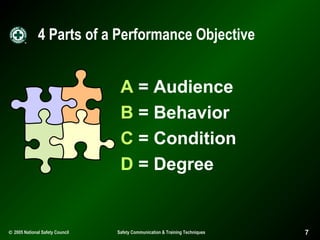
4 Parts of a Performance Objective

A = Audience
B = Behavior
C = Condition
D = Degree

© 2005 National Safety Council

Safety Communication & Training Techniques

7
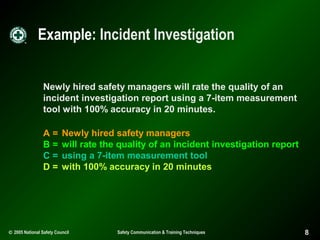
Example: Incident Investigation
Newly hired safety managers will rate the quality of an
incident investigation report using a 7-item measurement
tool with 100% accuracy in 20 minutes.
A=
B=
C=
D=

Newly hired safety managers
will rate the quality of an incident investigation report
using a 7-item measurement tool
with 100% accuracy in 20 minutes

© 2005 National Safety Council

Safety Communication & Training Techniques

8
Activity: Performance Objectives
1. Identify 4 parts of Objectives 1 and 2

and note the A-B-C-D.
2. Share your answers with the class.

© 2005 National Safety Council

Safety Communication & Training Techniques

9
Tips for Creating Performance Objectives
 Action (Behavioral) Verbs
 Verbs to Avoid Using
 Types of Conditions
 Standards of Performance (Degree)

© 2005 National Safety Council

Safety Communication & Training Techniques

10
Activity: Writing Performance Objectives
1. Work in pairs to develop a performance

objective for a topic.
2. Record a brief summary of your work.
3. Present your results to the class.

© 2005 National Safety Council

Safety Communication & Training Techniques

11
Testing on Performance Objectives
Process of measuring whether
learners met performance objectives.
Types of Tests
 Knowledge-based
 Skills-based/application
 Attitudinal tests/scales

© 2005 National Safety Council

Safety Communication & Training Techniques

Testing Tools
 Pre-tests
 Review tests
 Post-tests

12
Resources for Safety Information
 Federal/National
 State
 Safety Industry References
 Federal Publications
 ASSE

© 2005 National Safety Council

Safety Communication & Training Techniques

13
Outlining Training Content
 Identify actions the learner must take to

achieve goals/objectives AND related topics
the learner must know to accomplish actions.
 Training points, content, or topics and

sub-topics (topic outline or lesson plan).

© 2005 National Safety Council

Safety Communication & Training Techniques

14
Steps to Outlining Training Content (cont.)
1. Select an objective.
2. Identify actions the learner must take to achieve

an objective AND related topics (points and
skills) they must know to accomplish the actions.
3. Sequence all training content in appropriate

order and estimate amount of time for each point.

© 2005 National Safety Council

Safety Communication & Training Techniques

15
Activity: Outlining Training Content
1. Create a training content outline to ensure

the learner will achieve the objective.
2. Be prepared to make a brief presentation of

your content outline.
3. If you need help, ask a facilitator for

assistance.

© 2005 National Safety Council

Safety Communication & Training Techniques

16
Planning for Your Small Business
1. Identify 2 actions you will take when

you return to your worksite.
2. Identify potential barriers you might

encounter in taking these actions.
3. List ideas for overcoming the barriers.

© 2005 National Safety Council

Safety Communication & Training Techniques

17

Module 2 organizing safety messages and training content

  • 1.
    Module 2 Organizing SafetyMessages & Training Content Safety Communication & Training Techniques – For Small Business – © 2005 National Safety Council Safety Communication & Training Techniques 1
  • 2.
    Module Objectives  Identify4 components (action, behavior, condition, and degree) of a performance objective.  Write performance objectives for a training program.  Recognize reasons for testing in performance-based training.  Identify Federal, State, and Safety Industry resources for safety information. © 2005 National Safety Council Safety Communication & Training Techniques 2
  • 3.
    Module Objectives (cont.) Recognize steps for writing a content outline.  Create a short content outline using the steps provided for outlining content.  Identify 2 actions to implement at your workplace and potential barriers/how to overcome them. © 2005 National Safety Council Safety Communication & Training Techniques 3
  • 4.
    Performance Objectives Why areperformance objectives important to safety communication and training efforts? © 2005 National Safety Council Safety Communication & Training Techniques 4
  • 5.
    Performance Objectives (cont.) Specific,measurable, short-term statements that clearly describe what a learner will be able to do (new or different) as a result of training. © 2005 National Safety Council Safety Communication & Training Techniques 5
  • 6.
    Characteristics of PerformanceObjectives  Should define measurable and observable behaviors of participant (results-oriented)  Foundation upon which to build lessons and assessments you can prove meet overall goals  Ensure learning is clearly focused so participants and facilitator are clear about learning path © 2005 National Safety Council Safety Communication & Training Techniques 6
  • 7.
    4 Parts ofa Performance Objective A = Audience B = Behavior C = Condition D = Degree © 2005 National Safety Council Safety Communication & Training Techniques 7
  • 8.
    Example: Incident Investigation Newlyhired safety managers will rate the quality of an incident investigation report using a 7-item measurement tool with 100% accuracy in 20 minutes. A= B= C= D= Newly hired safety managers will rate the quality of an incident investigation report using a 7-item measurement tool with 100% accuracy in 20 minutes © 2005 National Safety Council Safety Communication & Training Techniques 8
  • 9.
    Activity: Performance Objectives 1.Identify 4 parts of Objectives 1 and 2 and note the A-B-C-D. 2. Share your answers with the class. © 2005 National Safety Council Safety Communication & Training Techniques 9
  • 10.
    Tips for CreatingPerformance Objectives  Action (Behavioral) Verbs  Verbs to Avoid Using  Types of Conditions  Standards of Performance (Degree) © 2005 National Safety Council Safety Communication & Training Techniques 10
  • 11.
    Activity: Writing PerformanceObjectives 1. Work in pairs to develop a performance objective for a topic. 2. Record a brief summary of your work. 3. Present your results to the class. © 2005 National Safety Council Safety Communication & Training Techniques 11
  • 12.
    Testing on PerformanceObjectives Process of measuring whether learners met performance objectives. Types of Tests  Knowledge-based  Skills-based/application  Attitudinal tests/scales © 2005 National Safety Council Safety Communication & Training Techniques Testing Tools  Pre-tests  Review tests  Post-tests 12
  • 13.
    Resources for SafetyInformation  Federal/National  State  Safety Industry References  Federal Publications  ASSE © 2005 National Safety Council Safety Communication & Training Techniques 13
  • 14.
    Outlining Training Content Identify actions the learner must take to achieve goals/objectives AND related topics the learner must know to accomplish actions.  Training points, content, or topics and sub-topics (topic outline or lesson plan). © 2005 National Safety Council Safety Communication & Training Techniques 14
  • 15.
    Steps to OutliningTraining Content (cont.) 1. Select an objective. 2. Identify actions the learner must take to achieve an objective AND related topics (points and skills) they must know to accomplish the actions. 3. Sequence all training content in appropriate order and estimate amount of time for each point. © 2005 National Safety Council Safety Communication & Training Techniques 15
  • 16.
    Activity: Outlining TrainingContent 1. Create a training content outline to ensure the learner will achieve the objective. 2. Be prepared to make a brief presentation of your content outline. 3. If you need help, ask a facilitator for assistance. © 2005 National Safety Council Safety Communication & Training Techniques 16
  • 17.
    Planning for YourSmall Business 1. Identify 2 actions you will take when you return to your worksite. 2. Identify potential barriers you might encounter in taking these actions. 3. List ideas for overcoming the barriers. © 2005 National Safety Council Safety Communication & Training Techniques 17