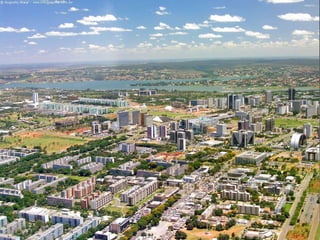

Brasilia is the federal
capital of Brazil and seat of government of
the Federal District. The city is located atop
the Brazilian highlands in the country's center-
western region. It was founded on April 21, 1960,
to serve as the new national capital. Brasília and
its metro had a population of 2,556,149 in 2011,
making it the 4th most populous city in Brazil
Among major Latin American cities, Brasília has
the highest GDP per capita
at R$61,915 (US$36,175).
 From 1763 until 1960, Rio de Janeiro was the capital
of Brazil . Brasília's geographically central location
fostered a more regionally neutral federal capital. An
article of the country's first republican
constitution dating back to 1891 stated that the capital
should be moved from Rio de Janeiro to a place close
to the center of the country.
 The plan was originally conceived in 1827 by José
Bonifácio, an advisor to Emperor Pedro I. He
presented a plan to the General Assembly of
Brazil for a new city called Brasília, with the idea of
moving the capital westward from the heavily
populated southeastern corridor
 Juscelino Kubitschek, President of Brazil from
1956 to 1961, ordered the construction of Brasília
Building Brasília was part of Juscelino's "fifty
years of prosperity in five" plan. Lúcio Costa won
a contest and was the main urban planner in
1957. Oscar Niemeyer, a close friend, was the
chief architect of most public buildings
and Roberto Burle Marx was the landscape
designer. Brasília was built in 41 months, from
1956 to April 21, 1960, when it was officially
inaugurated
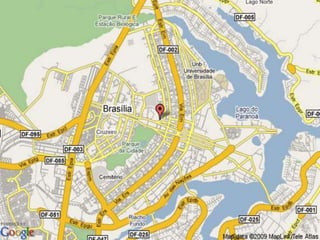
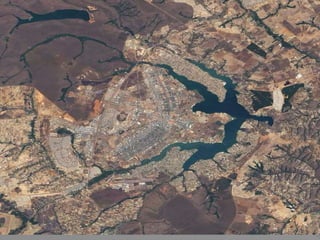
 Paranoá Lake is a large artificial lake built to
increase the amount of water available and the
humidity of the region. It has the second largest
marina in Brazil, and hosts wakeboarders and
windsurfers. Diving can also be practiced and one
of the main attractions is Vila Amaury, an old
village that is submerged in the lake. This is
where the first construction workers of Brasília
used to live
 For new development
 To relieve the pressure of overpopulated from the
old capital Rio De Janerio
 In the 1960 census there were almost 140
thousand residents in the new Federal District
 The city of Brasília proper was planned for only
about 500 thousand inhabitants, but its
metropolitan area has grown past this figure
 Brasília would be a city for government
authorities and staff. However, during the
construction period, Brazilians from all over
the country migrated to Brasília, seeking
public and private jobs
 At the close of the 20th century, Brasília held
the distinction of being the largest city in the
world which had not existed at the beginning
of the century
 Brasília has one of the highest population
growth rates in Brazil, with annual growth of
2.82%, mostly due to internal migration.
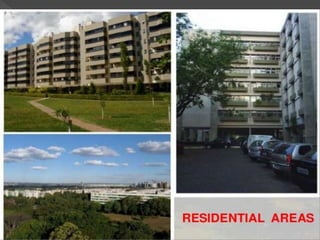
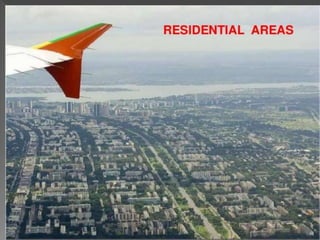
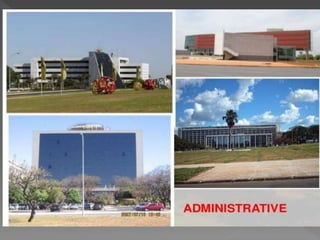
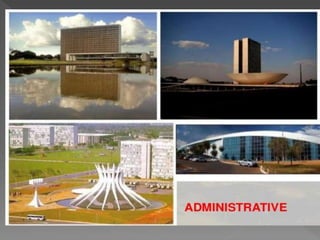
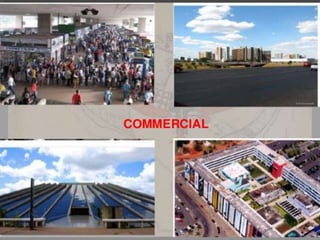
 The city's design divides it into numbered blocks as
well as sectors for specified activities, such as the
Hotel Sector, the Banking Sector and the Embassy
Sector. Brasília was chosen as a UNESCO World
Heritage Site due to its modernist architecture and
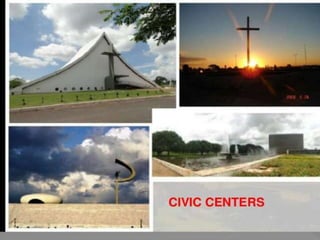
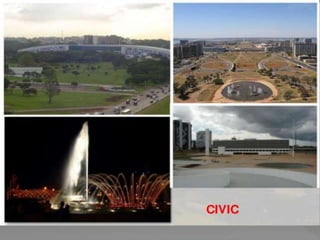
uniquely artistic urban planning. The centers of all
three branches of the federal government of
Brazil are in Brasília, including
the Congress, President, and Supreme Court. The
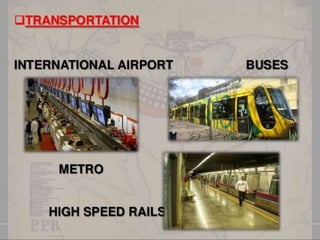
city also hosts 124 foreign embassies Brasília
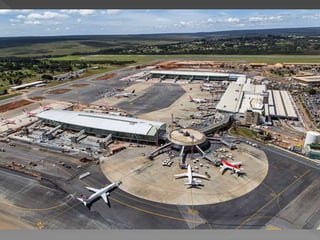
International Airport connects the capital to all major
Brazilian cities and many international destinations,
and is the third busiest airport in Brazil
 The major roles of construction and of services
(government, communications, banking , finance,
food production, entertainment, and legal
services) in Brasília's economy reflect the city's
status as a governmental rather than an industrial
center. Industries connected with construction,
food processing, and furnishings are important, as
are those associated with publishing, printing, and
computer software. GDP is divided in Public
Administration 54.8%, Services 28.7%, Industry
10.2%, Commerce 6.1%, Agribusiness 0.2%
 Brasília has a tropical savanna climate according
to the Köppen system, with two distinct seasons:
the rainy season, from October to April, and a dry
season, from May to September. The average
temperature is 20.6 °C (69.1 °F). September, at
the end of the dry season. January is the month
with the highest rainfall of the year, while June is
the lowest, with only 8.7 mm
Modern city brasilia

Modern city brasilia

  • 2.
    Brasilia is thefederal capital of Brazil and seat of government of the Federal District. The city is located atop the Brazilian highlands in the country's center- western region. It was founded on April 21, 1960, to serve as the new national capital. Brasília and its metro had a population of 2,556,149 in 2011, making it the 4th most populous city in Brazil Among major Latin American cities, Brasília has the highest GDP per capita at R$61,915 (US$36,175).
  • 4.
     From 1763until 1960, Rio de Janeiro was the capital of Brazil . Brasília's geographically central location fostered a more regionally neutral federal capital. An article of the country's first republican constitution dating back to 1891 stated that the capital should be moved from Rio de Janeiro to a place close to the center of the country.  The plan was originally conceived in 1827 by José Bonifácio, an advisor to Emperor Pedro I. He presented a plan to the General Assembly of Brazil for a new city called Brasília, with the idea of moving the capital westward from the heavily populated southeastern corridor
  • 5.
     Juscelino Kubitschek,President of Brazil from 1956 to 1961, ordered the construction of Brasília Building Brasília was part of Juscelino's "fifty years of prosperity in five" plan. Lúcio Costa won a contest and was the main urban planner in 1957. Oscar Niemeyer, a close friend, was the chief architect of most public buildings and Roberto Burle Marx was the landscape designer. Brasília was built in 41 months, from 1956 to April 21, 1960, when it was officially inaugurated
  • 7.
     Paranoá Lakeis a large artificial lake built to increase the amount of water available and the humidity of the region. It has the second largest marina in Brazil, and hosts wakeboarders and windsurfers. Diving can also be practiced and one of the main attractions is Vila Amaury, an old village that is submerged in the lake. This is where the first construction workers of Brasília used to live
  • 10.
     For newdevelopment  To relieve the pressure of overpopulated from the old capital Rio De Janerio  In the 1960 census there were almost 140 thousand residents in the new Federal District  The city of Brasília proper was planned for only about 500 thousand inhabitants, but its metropolitan area has grown past this figure
  • 11.
     Brasília wouldbe a city for government authorities and staff. However, during the construction period, Brazilians from all over the country migrated to Brasília, seeking public and private jobs  At the close of the 20th century, Brasília held the distinction of being the largest city in the world which had not existed at the beginning of the century  Brasília has one of the highest population growth rates in Brazil, with annual growth of 2.82%, mostly due to internal migration.
  • 12.
     The city'sdesign divides it into numbered blocks as well as sectors for specified activities, such as the Hotel Sector, the Banking Sector and the Embassy Sector. Brasília was chosen as a UNESCO World Heritage Site due to its modernist architecture and uniquely artistic urban planning. The centers of all three branches of the federal government of Brazil are in Brasília, including the Congress, President, and Supreme Court. The city also hosts 124 foreign embassies Brasília International Airport connects the capital to all major Brazilian cities and many international destinations, and is the third busiest airport in Brazil
  • 21.
     The majorroles of construction and of services (government, communications, banking , finance, food production, entertainment, and legal services) in Brasília's economy reflect the city's status as a governmental rather than an industrial center. Industries connected with construction, food processing, and furnishings are important, as are those associated with publishing, printing, and computer software. GDP is divided in Public Administration 54.8%, Services 28.7%, Industry 10.2%, Commerce 6.1%, Agribusiness 0.2%
  • 22.
     Brasília hasa tropical savanna climate according to the Köppen system, with two distinct seasons: the rainy season, from October to April, and a dry season, from May to September. The average temperature is 20.6 °C (69.1 °F). September, at the end of the dry season. January is the month with the highest rainfall of the year, while June is the lowest, with only 8.7 mm