Minerals
CHARACTERISTICS Exist in the body and in foods in ionic state Components of organic compounds Minerals are grouped into two:  major or macrominerals are present in the body in larger amounts (> 5 grams)  minor or microminerals or trace minerals.
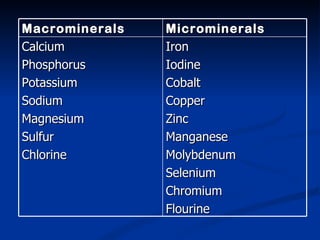
Macrominerals Microminerals Calcium Phosphorus Potassium Sodium Magnesium Sulfur Chlorine Iron Iodine Cobalt Copper Zinc Manganese Molybdenum Selenium Chromium Flourine
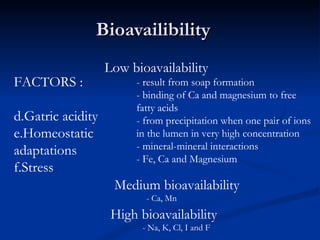
Bioavailibility FACTORS : Gatric acidity Homeostatic adaptations Stress Low bioavailability - result from soap formation - binding of Ca and magnesium to free  fatty acids - from precipitation when one pair of ions  in the lumen in very high concentration - mineral-mineral interactions - Fe, Ca and Magnesium High bioavailability - Na, K, Cl, I and F Medium bioavailability - Ca, Mn
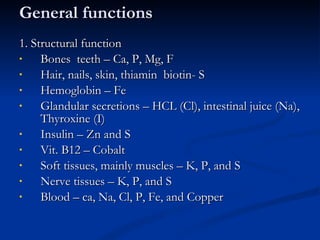
General functions 1. Structural function Bones  teeth – Ca, P, Mg, F Hair, nails, skin, thiamin  biotin- S Hemoglobin – Fe Glandular secretions – HCL (Cl), intestinal juice (Na), Thyroxine (I) Insulin – Zn and S Vit. B12 – Cobalt Soft tissues, mainly muscles – K, P, and S Nerve tissues – K, P, and S Blood – ca, Na, Cl, P, Fe, and Copper
2. Regulatory functions Normal exchange of materials between body fluid compartments – all salts Contractility of muscles – Ca, Na, and K Irritability of nerves – Ca, Na, and K Oxidative Processes and metabolic reactions – Fe and vit B12 Digestive processes – cl and Na Normal blood clotting – Ca Maintenance of acid  Cations (basic elements) – Na, K, Ca, and Mg Anions ( acid elements) – P, S, and Cl
Macrominerals
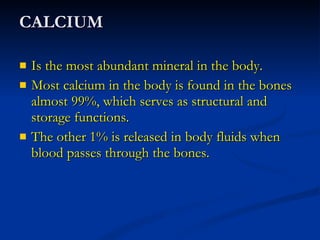
CALCIUM Is the most abundant mineral in the body. Most calcium in the body is found in the bones almost 99%, which serves as structural and storage functions. The other 1% is released in body fluids when blood passes through the bones.
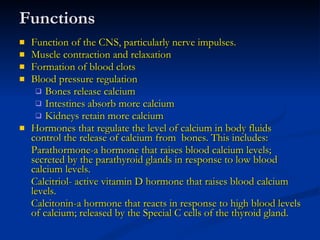
Functions Function of the CNS, particularly nerve impulses. Muscle contraction and relaxation Formation of blood clots Blood pressure regulation Bones release calcium Intestines absorb more calcium Kidneys retain more calcium Hormones that regulate the level of calcium in body fluids control the release of calcium from  bones. This includes: Parathormone-a hormone that raises blood calcium levels; secreted by the parathyroid glands in response to low blood calcium levels. Calcitriol- active vitamin D hormone that raises blood calcium levels. Calcitonin-a hormone that reacts in response to high blood levels of calcium; released by the Special C cells of the thyroid gland.
Absorption Rapid absorption after a meal occurs in the more acidic duodenum. Two mechanisms of absorption: Active transport (duodenum & jejunum) controlled by 1, 25 dihydroxyvitamin which increases the calcium uptake at the brush border of the intestinal mucosal cell by also stimulating the production of CALBINDINS.
Passive transport Independent of vitamin D. Calcium is best absorbed in an acidic medium; the hydrochloric acid secreted in the stomach, such that secreted during meal, increases calcium absorption by lowering the pH in the proximal duodenum..
Regulation If calcium levels gets too low three actions can occur to reestablish calcium homeostasis: Bones release calcium Intestines absorb more calcium Kidneys retain more calcium
Hormones Parathormone Calcitriol Calcitonin Calcium rigor Calcium tetany
Excretion 50% of the ingested calcium is excreted in the urine each day. Hypercalciuria Skin exfoliation and sweat (15 mg/day)
Deficiency Osteoporosis Osteomalacia
Toxicity Oversupplementation may cause constipation, urinary stone formation affecting kidney function and reduced absorption of iron, zinc and other minerals.
Phosphuros 85% is in the bones and teeth as a component of hydroxyapetite Ranks second to calcium
Functions Energy transfer DNA and RNA synthesis Part of phospholipids As buffer in the form of phosphoric acid Part of hypdroxyapetite
Toxicity  Only possible from phosphuros supplements, can cause calcium excretion from the body.. Deficiency Dietary inadequacy is not likely if protein and calcium intake are adequate
Magnesium Second most abundant intracellular cation in the body 60% is found I bones 26% in muscle Remainder in soft tissues and body fluids
Functions Stabilize the structure of ATP in ATP-dependent enzyme reactions. Synthesis of fatty acids and proteins, phosphorylation of glucose and its derivatives Formation of cAMP  Regulates nerve and muscle function, including the actions of the heart, has a role in the blood clotting process and ion the immune system
Deficiency Related to secondary causes (vomiting, diarrhea) Symptoms: tremors, muscle spasms, personality changes, anorexia, nausea, tetany, convulsions and coma. Hypercakalemia and hypercalcemia occur first combined with impairment of individual responsiveness to PTH
Toxicity Can exhibit bone calcifiication
Sulfur Component of protein structures Present in thiamine and biotin Sulfur is also involved with maintaining the acid-base balance of the body
Deficiency Do not occur; basic structure of the human cell
ELECTROLYTES
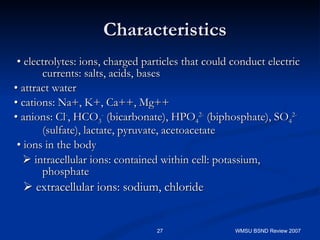
Characteristics •  electrolytes: ions, charged particles that could conduct electric currents: salts, acids, bases •  attract water •  cations: Na+, K+, Ca++, Mg++ •  anions: Cl - , HCO 3 -  (bicarbonate), HPO 4 2-  (biphosphate), SO 4 2-  (sulfate), lactate, pyruvate, acetoacetate •  ions in the body    intracellular ions: contained within cell: potassium, phosphate    extracellular ions: sodium, chloride WMSU BSND Review 2007
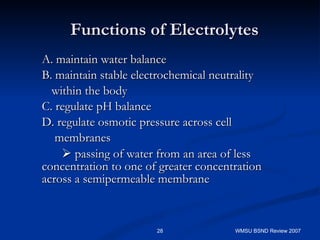
Functions of Electrolytes A. maintain water balance B. maintain stable electrochemical neutrality within the body C. regulate pH balance D. regulate osmotic pressure across cell  membranes    passing of water from an area of less concentration to one of greater concentration across a semipermeable membrane WMSU BSND Review 2007
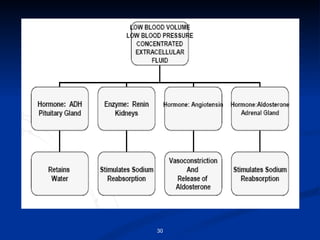
Mechanisms Controlling    Electrolyte Balance in the Body A.  Antidiuretic Hormone ( ADH) or vasopressin : function: water retention    blood pressure or volume,   blood concentration   pituitary gland releases ADH    diuresis, kidneys reabsorb water B.  Angiotensin : function: blood vessel constriction  C.  Aldosterone : function: Na Retention angiotensin   stimulates adrenal glands to release aldosterone    kidneys retain more Na and water WMSU BSND Review 2007
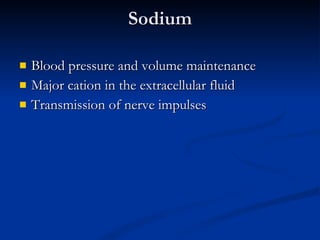
Sodium Blood pressure and volume maintenance  Major cation in the extracellular fluid Transmission of nerve impulses
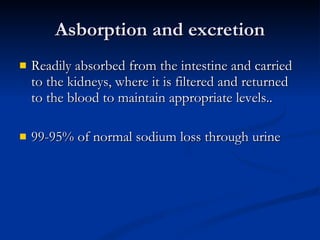
Asborption and excretion Readily absorbed from the intestine and carried to the kidneys, where it is filtered and returned to the blood to maintain appropriate levels.. 99-95% of normal sodium loss through urine
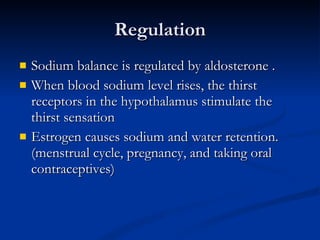
Regulation Sodium balance is regulated by aldosterone . When blood sodium level rises, the thirst receptors in the hypothalamus stimulate the thirst sensation Estrogen causes sodium and water retention. (menstrual cycle, pregnancy, and taking oral contraceptives)
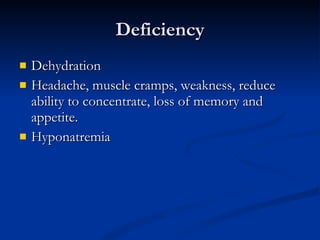
Deficiency Dehydration Headache, muscle cramps, weakness, reduce ability to concentrate, loss of memory and appetite. Hyponatremia
Toxicity Hypertension Edema
Potassium Major cation of intracellular fluid With sodium, involved in maintaining normal water balance, osmotic equilibrium and acid-base regulation. Neuromuscular activity Promotes cellular growth Na/K ATPase pump
Deficiency Similar to magnesium Toxicity Occurs only from supplementation Symptoms are similar to those of deficiency: muscle weakness, vomiting cardiac arrest
Chloride KEY Anion in the extracellular fluids Component of hydrochloric acid. Deficiency Rare, only during  if severe vomiting occur Toxicity FVD
Microminerals
They are… A.k.a.  Trace minerals Group of minerals needed by the body in minute amounts to perform certain fxns. Minerals that can be supplied by an average mixed diet since the amounts needed are very small.  As usual, less amounts taken would lead to  deficiency  while excessive amounts lead to  toxicity .
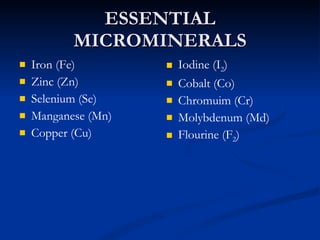
ESSENTIAL MICROMINERALS Iron (Fe) Zinc (Zn) Selenium (Se) Manganese (Mn) Copper (Cu) Iodine (I 2 ) Cobalt (Co) Chromuim (Cr) Molybdenum (Md) Flourine (F 2 )
IRON
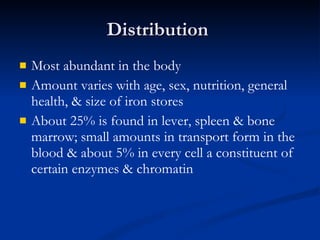
Distribution  Most abundant in the body  Amount varies with age, sex, nutrition, general health, & size of iron stores About 25% is found in lever, spleen & bone marrow; small amounts in transport form in the blood & about 5% in every cell a constituent of certain enzymes & chromatin
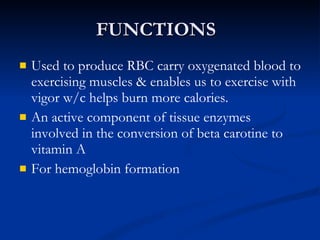
FUNCTIONS Used to produce RBC carry oxygenated blood to exercising muscles & enables us to exercise with vigor w/c helps burn more calories.  An active component of tissue enzymes involved in the conversion of beta carotine to vitamin A For hemoglobin formation
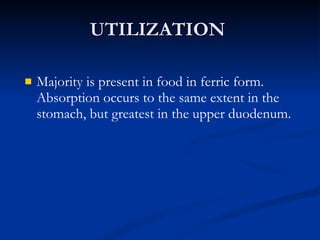
UTILIZATION  Majority is present in food in ferric form. Absorption occurs to the same extent in the stomach, but greatest in the upper duodenum.
Factors affecting the absorption of Fe Form of iron Type of iron Body needs Bulk in the diet Size of dose Presence of phytic & oxalic acids Presence of citrates, sugar, & some animo acids Presence of tannins Intake of Coffee Presence of ascorbic acid  Direction & malabsorption syndromes
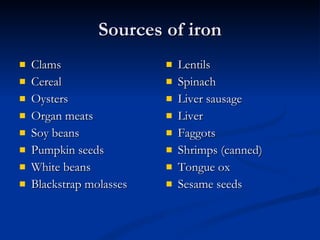
Sources of iron Clams  Cereal Oysters Organ meats Soy beans  Pumpkin seeds  White beans Blackstrap molasses Lentils Spinach Liver sausage Liver Faggots  Shrimps (canned) Tongue ox Sesame seeds
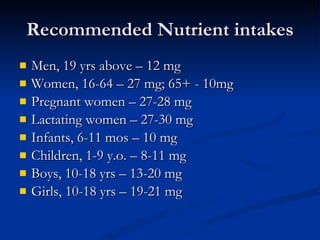
Recommended Nutrient intakes Men, 19 yrs above – 12 mg Women, 16-64 – 27 mg; 65+ - 10mg  Pregnant women – 27-28 mg Lactating women – 27-30 mg  Infants, 6-11 mos – 10 mg  Children, 1-9 y.o. – 8-11 mg  Boys, 10-18 yrs – 13-20 mg  Girls, 10-18 yrs – 19-21 mg
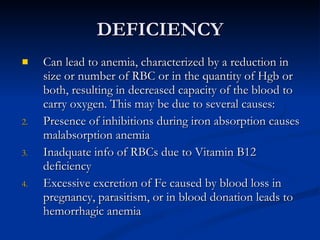
DEFICIENCY Can lead to anemia, characterized by a reduction in size or number of RBC or in the quantity of Hgb or both, resulting in decreased capacity of the blood to carry oxygen. This may be due to several causes: Presence of inhibitions during iron absorption causes malabsorption anemia  Inadquate info of RBCs due to Vitamin B12  deficiency  Excessive excretion of Fe caused by blood loss in pregnancy, parasitism, or in blood donation leads to hemorrhagic anemia
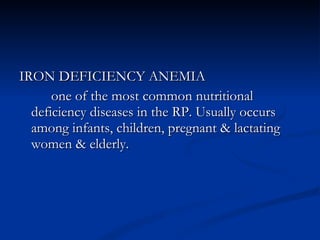
IRON DEFICIENCY ANEMIA  one of the most common nutritional deficiency diseases in the RP. Usually occurs among infants, children, pregnant & lactating women & elderly.
Toxicity Excessive amount of Fe in the body is known as HEMOSIDEROSIS It may be caused by exessive Fe intake through use of supplements.  Excessive intake of Fe is common among Bantus who cook their food in iron pots.  Another kind of overload is hemochromatosis, w/c could be a genetically transmitted disease.
ZINC
Distribution Average adult body contains a total of 1.4 – 2.5 gm Zinc (Zn).  Present in pancreas, liver, kidney, lungs, endocrine glands, & spermatozoa: the skeletal muscles usually represent the greatest proportion (60%) of the total body.
Functions Important factor in host immune defenses Has been associated with stored insulin Plays a role in the acceleration of wound healing & for a normal sense of taste  Necessary for the dev’t of the male reproductive fxns & spermatogenesis, specifically in the formation of testosterone  Essential component of several metalloenzymes
utilization Absrobed mainly in the upper jejunum. This may come from food or from the enteropancreatic circulation of endogenous Zn.  Transported by a carrier into the mucosal cells, picked up by albumin & taken into the liver before redistribution to the other tissues Excretion is mainly through feces.
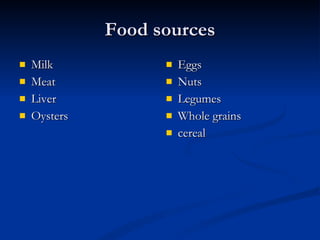
Food sources Milk Meat  Liver Oysters  Eggs  Nuts  Legumes  Whole grains cereal
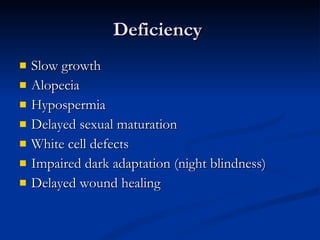
Deficiency  Slow growth  Alopecia  Hypospermia  Delayed sexual maturation White cell defects  Impaired dark adaptation (night blindness) Delayed wound healing
SELENIUM
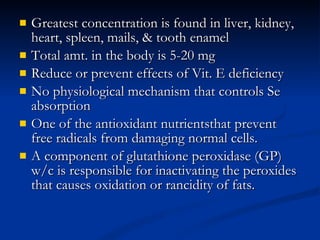
Greatest concentration is found in liver, kidney, heart, spleen, mails, & tooth enamel  Total amt. in the body is 5-20 mg Reduce or prevent effects of Vit. E deficiency  No physiological mechanism that controls Se absorption  One of the antioxidant nutrientsthat prevent free radicals from damaging normal cells.  A component of glutathione peroxidase (GP) w/c is responsible for inactivating the peroxides that causes oxidation or rancidity of fats.
2 major forms of Se Selenomothionine – derived ultimately from plants  Selenocysteine – from animals
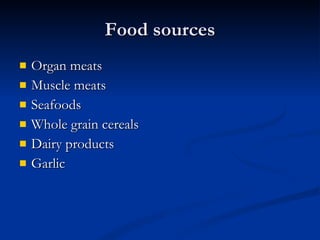
Food sources Organ meats  Muscle meats  Seafoods  Whole grain cereals Dairy products  Garlic
Recommended Nutrient Intakes 31 mcg for adult men & women  Additional 4 mcg for pregnany woemn Additional 9 mg for lactating mothers
Absorption  Rate is dependent upon source, form, solubility of the selenium compound, & the dietary ratio of Selenium to sulfur.  Much is ingested through the form of seleno-amino acid.  Forms of cancer associated with Se are also those influenced by high fat & lower fiber diets, such as in cases of colon, rectum, prostate, & breast cancers.
Deficiency Cardiomyopathy – primary heart muscle disease  Muscle inflamation  Growth retardation
Toxicity  20 – 30 times more than the requirement can lead to Se toxicity.  Signs observed include: loss of hair & nails, dental carries, dermatitis, peripheral neuropathy, irritability, & fatigue.
Manganese
Only about 10-20 mg of Mn is present in the adult body.  A component of cell enzymes pyruvate cocarboxylase, & superoxide dismutase  Acts as a catalyst for a number of enzymes necessary in glucose, protein, & fat metabolism.  Plays a role in the formation of urea as part of enzyme arginase  Increases storage of thiamine & is needed for bone dev’t.
Absorption  Through the intestine is minimal, a portion is rejected by the intestine is excreted by feces.  Small quantity is absorbed in the S.I., & transported, loosely-bound with CHON to the tissues for storage & utilization.  The amount is utilized by the tissues is ultimately discarded to the bile w/c returns to the intestines & excreted w/ other body wastes.  Large intake of Calcium & Fe depresses Mn Absorption
Food sources  Nuts Whole grain  Dried legumes  Tea  Green, leafy vegetables  Dried fruits
Recommended nutrient intakes  Adult males (19 up) – 2-3 mg / day  Adult females (19 up) – 1.8 mg / day  Children (1-12)  - 1.2-1.9 mg / day  Adolesecent girls (13-18) – 16 mg / day  Adolescent boys (13-18) – 2.2 mg / day
Deficiency  Weight loss  Dermatitis Nausea  Hypocholesterolemia  Changes in color & growth of hair & nails
Toxicity  Workers exposed experienced asthenia, apathy, anorexia, headache, muscle cramps, & speech disturbances
COBALT
FXNS & DISTRIBUTIONS Found only in trace amounts in the body  Important as a constituent in Vitamin B12 (for RBC formation) For normal fxning of all cells, particularly bone marrow, Nervous system, & the GIT Quickly excreted in the urine Small amount is excreted in the feces & sweat
Food sources Widely distributed in nature  Liver, kidney, oysters & clams are rich sources.  Lean beef, veal, poultry, salt, water, fish, & milk are good sources.
Requirements  Restricted to the body’s need for vitamin B12. it is an integral part of the vitamin, hence  cobalamin  is the other name given for vitamin B12.
Deficiency & toxicity Result to pernicious anemia Excess cobalt may result in  POLYCYTHEMIA , increase in number of RBCs, & Hyperplasia of the bone marrow.
CHROMIUM
FXNs & Distribution Required trace nutrient for man total body content of Cr is about 6-10 mg.  Cr has the ability to raise abnormally low fasting blood sugar levels & to improve faulty uptake of sugar by body tissues.  As part of Glucose tolerance factor (GTF), its physiological role is to assist insulin in moving through glucose through the membrane into the cell.  Stimulates the synhtsis of fatty acids & cholesterol in the liver.
Food sources  Includes corn oil (500 ppm), clams, whole grain cereals, vegetables (30-50 ppm), meat, & brewer’s yeast.  Fruits contain trace amounts depeding on the soil, species, & the season Drinking water may supply up to 10 mcg/L Imitation from industrial waste may be dangerous & hazardous.
Requirement  50-200 mcg/day – normal adults 10-60 mcg/day – infants  20-200 mcg/day – children & adolescents
Deficiency  Glucose intolerance Increased incidence of diabetes Decreased glycogen reserves Retarded growth Disturbed amino acid metabolism.
Toxicity  Excess intake as a result of inhalation of Cr from industrial wastes has been associated with an increased incidence of bronchial cancer.  Corrosive to the skin & mucous membrane of the respiratory & intestinal tracks.
FLUORINE
FXNs & distribution Found primarily in the bones & teeth, & trace amounts in the thyroid glands & skin Ingested fluorides are completely ionized & rapidly absorbed to be used up by the bones & teeth.  About 50% is rapidly excreted in the urine.  Absorption of F may be retarded by Ca & Al salts.
Crystals of hydroxyapatile w/c normally appear in the teeth are replaced with crystals of fluoroapetite (less solube in acid & are more resistant to cardiogenic cation of acids in the mouth) F in the dentin & enamel of the teeth forms a more stable compound thus reducing dental carries & minimizing bone loss.  F is effective in the treatment of osteoporosis.
Sources & requirement  Water is the major source of F; may be obtained from natural resources or through fluoridation.  Food sources contain with little F w/ the exception of: Tea – contains as much as 100ppm (dry, chinese tea) Ordinary tea – 0.457mg/100gm Coffee – 0.250 mg/100gm Soybeans – 0.40-0.67 mg/100gm Sea food – about 5-10 ppm
Other sources FLUORIDE – CONTAINING DENTRIFICES Children <5 yrs 26-35% of the dentrifice used.  Due to the relative inability of young children to control their swallowing reflex.  An average of 0.30 mg of fluoride is ingested each time the teeth is brushed.
Philippine Recommendation for safe & adequate daily dietary intake Infants – 0-6 months (0.01 mg); 6-11 mo (0.5mg) Adolescent & adult females – 2.5 mg  Adolsecent male – (13-18) 2.5-2.9 mg; (19 above) 3.0 mg.  Children – (1-3 yrs) 0.7 mg; (4-6) 1.0 mg; (7-9) 1.2 mg; (10-12) 1.7-1.8 mg  Recommended dosage ranges from 0.25 mg – 1.0 mg/day.
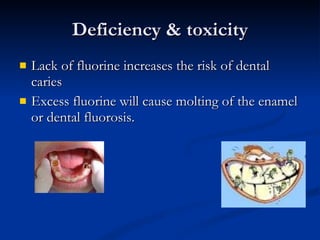
Deficiency & toxicity Lack of fluorine increases the risk of dental caries Excess fluorine will cause molting of the enamel or dental fluorosis.
CRIPPLING SKELETAL FLUOROSIS  Advanced stage of fluoride intoxication Calcification of the tendons & ligaments & a progressive hypermineralization of the skeleton particularly the spinal column & pelvis.  Results in the ingestion of 10-25 mg of F/day for 10-20 years.
MOLYBDENUM
About 9 mg of Mo is present in the body. Though very small, it is as important to health as B vitamins & magnesium Mo is concentrated in the kidneys, adrenal glands & BC. Also present in bound form as an integral part of various enzyme molecules.  Xanthine oxidase – oxidation of xanthine to uric acid.  Liver aldehyde oxidase – catalyzing the oxydaion of aldehydes to corresponding the oxydation of corresponding carboxylic acid
3. Sulfite oxidase – degradation of sulfur derived from amino acids.  Mo is readily absorbed from the GIT, excreted via urine.  High sulfate diets increase urinary excretion of Mo.
Food sources & requirements Legumes like dried peas & beans (3-5 ppm) Lean meats & poultry (2-5 ppm) Milk & milk prods. are relatively rich sources of Mo. Whole grain cereals (0.6-5 ppm) Dark green leafy vegies are fair sources Other vegies & fruits in general are poor sources
Infants – 15-40 mcg/day  Children- 25-150 mcg Adolecents & adults – 75-250 mcg are recommended for adequacy
Deficiency & Toxicity  Toxicity has not been observed in human beings. In experimental animals, it is characterized by diarrhea, anemia, & depressed growth rate.  High intake can alter the activity of alkaline phosphatase & produce certain bone abnormalities.  Doses above 10-15 mg/day, Mo might cause gout-like symptoms.
OTHER TRACE ELEMENTS
LEAD Can cause health problems in children.  Found in paint in old buildings, leaded gasoline, colored newsprints, etc.  High levels can affect the child’s mental dev’t, possibly causing retardation & neurological handicaps. In adults, can be connected to CV disease. Diets low in Ca can increase Pb absorption & decrease its excretion.
BORON Concentrated in leaves & fruits.  Bo affects mineral metabolism of Ca, phosphorous, & Mg; may affect parathormone action; the formation of the active form of calciferol.  Reduces Ca loss & increases levels of circulation estrogen; plays a role in pyramidine metabolism by stimulating RNA synthesis in plants.  Deprivation results in growth retardation.  Toxicity: (signs) nausea, vomiting, diarrhea, dermatitis, & lethargy. It also induces urinary excretion of riboflavin.
ALUMINUM Used to form kitchen utensils & an additive in processed cheese, & as an ingredient in analgesics & antacids.  Adults contain 50-60 mg.  When Al accumulates, the brain & bones are the sites most affected; inhibit mineralization of bones; in the brain, has been associated with Alzheimer’s disease & some other dementia.  Excess Al binds to ferretin Iron deficiency may enhance Aluminum absorption & excess aluminum may cause anemia even without iron deficiency.
CADMIUM Found in kidneys & liver Food sources are seafood & whole grains Can damage the proximal tubule eventually resulting in proteinuria if kidneys are affected.  High levels are associated with hypertension Most Cd are found in cigarette smoke.  Excess may cause growth retardation, impaired reproduction, & even cancer.
ARSENIC Usually found in the skin, hair, & nails.  Rapidly excreted in the urine if ingested. May be involved in phospolipid metabolism but its role is still unclear.  Has a special affinity in keratin & other proteins.  Shellfish, fish, & shrimps are good sources  Chronic toxicity is characterized by weakness, aching muscles, GIT probs, peripheral neuropathy, & changes in the pigmentation fingernails & skin.  Detection of levels of arsenic is best made through monitoring concentrations in hair & urine, rather than those of blood.
WATER
Characteristics and Facts About Water •  classified as BOTH a food and nutrient •  one of the most important 10% water loss in the body    illness 20% water loss in the body    death
Percentage of Body Weight  as Water and Location •  Water makes up to 60 % of the total body weight of an adult and 75% of that of an  infant   •  Body water tends to decrease as body fat  increases
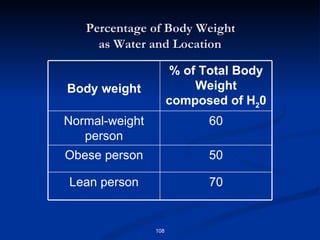
Percentage of Body Weight  as Water and Location   Body weight % of Total Body Weight composed of H 2 0 Normal-weight person 60 Obese person 50 Lean person 70
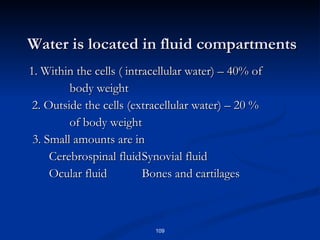
Water is located in fluid compartments   1. Within the cells ( intracellular water) – 40% of  body weight   2. Outside the cells (extracellular water) – 20 %  of body weight 3. Small amounts are in   Cerebrospinal fluid Synovial fluid   Ocular fluid Bones and cartilages
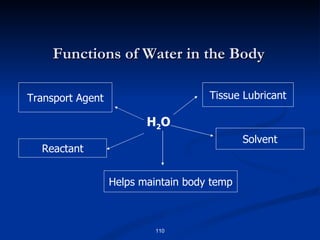
Functions of Water in the Body H 2 O Transport Agent Reactant Tissue Lubricant Helps maintain body temp Solvent
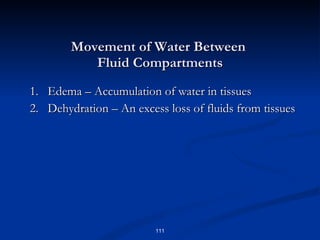
Movement of Water Between  Fluid Compartments 1.  Edema – Accumulation of water in tissues 2.  Dehydration – An excess loss of fluids from tissues
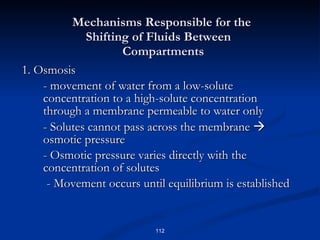
Mechanisms Responsible for the    Shifting of Fluids Between    Compartments 1. Osmosis - movement of water from a low-solute concentration to a high-solute concentration through a membrane permeable to water only - Solutes cannot pass across the membrane    osmotic pressure - Osmotic pressure varies directly with the concentration of solutes - Movement occurs until equilibrium is established
2. Osmolality - the number of osmoles per kilogram of solvent A. Osmole – the standard unit of measure of osmotic pressure B. Milliosmole (mOsm) – equals 1/1000 th  of an osmole Criteria to determine the osmolality of a solution A. The number of solute particles in a solution  concentration of a solution     osmolality B.  Size of the particles smaller particles      osmolality Mechanisms Responsible for the    Shifting of Fluids Between    Compartments
Osmolality of Body Fluids Osmolality of normal body fluids  ~ 300 mOsm/kg 1. Isotonic – osmolalities of the plasma & the RBC are equal   - No net change occurs in the RBC 2. Hypotonic – the osmolality of the plasma is    than that of the RBC   - results to movement of water    RBC 3. Hypertonic – osmolarity of the plasma is higher than that of the RBC   - water moves out of the RBC    RBC shrink
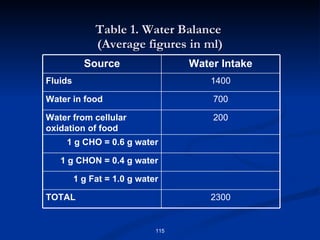
Table 1. Water Balance    (Average figures in ml) Source Water Intake Fluids 1400 Water in food 700 Water from cellular oxidation of food 200 1 g CHO = 0.6 g water 1 g CHON = 0.4 g water 1 g Fat = 1.0 g water TOTAL 2300
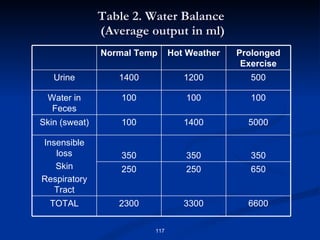
Water Balance   •  The amount of water taken in daily is approximately equivalent to the amount lost when intake > output (edema) when intake < output (dehydration)
Table 2. Water Balance    (Average output in ml) Normal Temp Hot Weather Prolonged Exercise Urine 1400 1200 500 Water in Feces 100 100 100 Skin (sweat) 100 1400 5000 Insensible loss Skin Respiratory Tract 350 350 350 250 250 650 TOTAL 2300 3300 6600
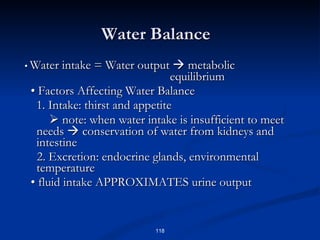
Water Balance •  Water intake = Water output    metabolic  equilibrium •  Factors Affecting Water Balance 1. Intake: thirst and appetite    note: when water intake is insufficient to meet needs    conservation of water from kidneys and intestine 2. Excretion: endocrine glands, environmental temperature •  fluid intake APPROXIMATES urine output
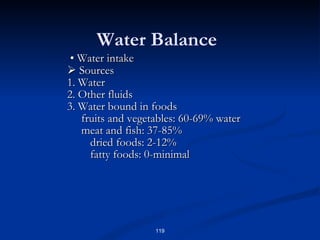
   •  Water intake    Sources 1. Water 2. Other fluids 3. Water bound in foods fruits and vegetables: 60-69% water meat and fish: 37-85%   dried foods: 2-12%   fatty foods: 0-minimal Water Balance
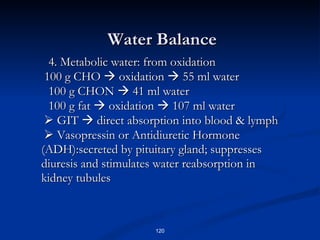
Water Balance 4. Metabolic water: from oxidation    100 g CHO    oxidation    55 ml water 100 g CHON    41 ml water 100 g fat    oxidation    107 ml water      GIT    direct absorption into blood & lymph      Vasopressin or Antidiuretic Hormone (ADH):secreted by pituitary gland; suppresses diuresis and stimulates water reabsorption in  kidney tubules
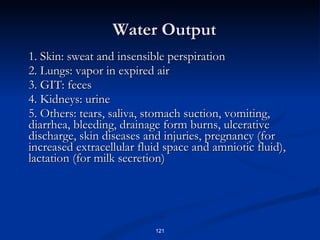
Water Output 1. Skin: sweat and insensible perspiration 2. Lungs: vapor in expired air 3. GIT: feces 4. Kidneys: urine 5. Others: tears, saliva, stomach suction, vomiting, diarrhea, bleeding, drainage form burns, ulcerative discharge, skin diseases and injuries, pregnancy (for increased extracellular fluid space and amniotic fluid), lactation (for milk secretion)
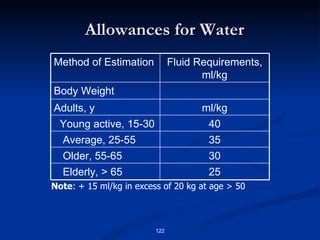
Allowances for Water Note : + 15 ml/kg in excess of 20 kg at age > 50 Method of Estimation Fluid Requirements, ml/kg Body Weight Adults, y ml/kg Young active, 15-30 40 Average, 25-55 35 Older, 55-65 30 Elderly, > 65 25
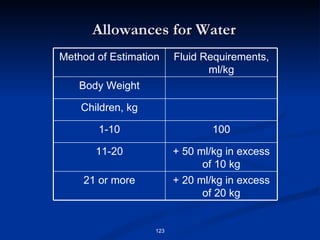
Allowances for Water Method of Estimation Fluid Requirements, ml/kg Body Weight Children, kg 1-10 100 11-20 + 50 ml/kg in excess of 10 kg 21 or more + 20 ml/kg in excess of 20 kg
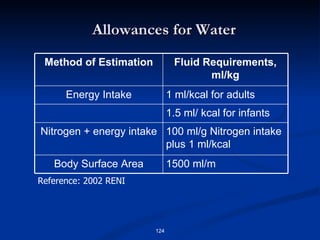
Allowances for Water Reference: 2002 RENI Method of Estimation Fluid Requirements, ml/kg Energy Intake 1 ml/kcal for adults 1.5 ml/ kcal for infants Nitrogen + energy intake 100 ml/g Nitrogen intake plus 1 ml/kcal Body Surface Area 1500 ml/m
Daghang salamat!! XOXO

Minerals, water and electrolytes

  • 1.
  • 2.
    CHARACTERISTICS Exist inthe body and in foods in ionic state Components of organic compounds Minerals are grouped into two: major or macrominerals are present in the body in larger amounts (> 5 grams) minor or microminerals or trace minerals.
  • 3.
    Macrominerals Microminerals CalciumPhosphorus Potassium Sodium Magnesium Sulfur Chlorine Iron Iodine Cobalt Copper Zinc Manganese Molybdenum Selenium Chromium Flourine
  • 4.
    Bioavailibility FACTORS :Gatric acidity Homeostatic adaptations Stress Low bioavailability - result from soap formation - binding of Ca and magnesium to free fatty acids - from precipitation when one pair of ions in the lumen in very high concentration - mineral-mineral interactions - Fe, Ca and Magnesium High bioavailability - Na, K, Cl, I and F Medium bioavailability - Ca, Mn
  • 5.
    General functions 1.Structural function Bones teeth – Ca, P, Mg, F Hair, nails, skin, thiamin biotin- S Hemoglobin – Fe Glandular secretions – HCL (Cl), intestinal juice (Na), Thyroxine (I) Insulin – Zn and S Vit. B12 – Cobalt Soft tissues, mainly muscles – K, P, and S Nerve tissues – K, P, and S Blood – ca, Na, Cl, P, Fe, and Copper
  • 6.
    2. Regulatory functionsNormal exchange of materials between body fluid compartments – all salts Contractility of muscles – Ca, Na, and K Irritability of nerves – Ca, Na, and K Oxidative Processes and metabolic reactions – Fe and vit B12 Digestive processes – cl and Na Normal blood clotting – Ca Maintenance of acid Cations (basic elements) – Na, K, Ca, and Mg Anions ( acid elements) – P, S, and Cl
  • 7.
  • 8.
    CALCIUM Is themost abundant mineral in the body. Most calcium in the body is found in the bones almost 99%, which serves as structural and storage functions. The other 1% is released in body fluids when blood passes through the bones.
  • 9.
    Functions Function ofthe CNS, particularly nerve impulses. Muscle contraction and relaxation Formation of blood clots Blood pressure regulation Bones release calcium Intestines absorb more calcium Kidneys retain more calcium Hormones that regulate the level of calcium in body fluids control the release of calcium from bones. This includes: Parathormone-a hormone that raises blood calcium levels; secreted by the parathyroid glands in response to low blood calcium levels. Calcitriol- active vitamin D hormone that raises blood calcium levels. Calcitonin-a hormone that reacts in response to high blood levels of calcium; released by the Special C cells of the thyroid gland.
  • 10.
    Absorption Rapid absorptionafter a meal occurs in the more acidic duodenum. Two mechanisms of absorption: Active transport (duodenum & jejunum) controlled by 1, 25 dihydroxyvitamin which increases the calcium uptake at the brush border of the intestinal mucosal cell by also stimulating the production of CALBINDINS.
  • 11.
    Passive transport Independentof vitamin D. Calcium is best absorbed in an acidic medium; the hydrochloric acid secreted in the stomach, such that secreted during meal, increases calcium absorption by lowering the pH in the proximal duodenum..
  • 12.
    Regulation If calciumlevels gets too low three actions can occur to reestablish calcium homeostasis: Bones release calcium Intestines absorb more calcium Kidneys retain more calcium
  • 13.
    Hormones Parathormone CalcitriolCalcitonin Calcium rigor Calcium tetany
  • 14.
    Excretion 50% ofthe ingested calcium is excreted in the urine each day. Hypercalciuria Skin exfoliation and sweat (15 mg/day)
  • 15.
  • 16.
    Toxicity Oversupplementation maycause constipation, urinary stone formation affecting kidney function and reduced absorption of iron, zinc and other minerals.
  • 17.
    Phosphuros 85% isin the bones and teeth as a component of hydroxyapetite Ranks second to calcium
  • 18.
    Functions Energy transferDNA and RNA synthesis Part of phospholipids As buffer in the form of phosphoric acid Part of hypdroxyapetite
  • 19.
    Toxicity Onlypossible from phosphuros supplements, can cause calcium excretion from the body.. Deficiency Dietary inadequacy is not likely if protein and calcium intake are adequate
  • 20.
    Magnesium Second mostabundant intracellular cation in the body 60% is found I bones 26% in muscle Remainder in soft tissues and body fluids
  • 21.
    Functions Stabilize thestructure of ATP in ATP-dependent enzyme reactions. Synthesis of fatty acids and proteins, phosphorylation of glucose and its derivatives Formation of cAMP Regulates nerve and muscle function, including the actions of the heart, has a role in the blood clotting process and ion the immune system
  • 22.
    Deficiency Related tosecondary causes (vomiting, diarrhea) Symptoms: tremors, muscle spasms, personality changes, anorexia, nausea, tetany, convulsions and coma. Hypercakalemia and hypercalcemia occur first combined with impairment of individual responsiveness to PTH
  • 23.
    Toxicity Can exhibitbone calcifiication
  • 24.
    Sulfur Component ofprotein structures Present in thiamine and biotin Sulfur is also involved with maintaining the acid-base balance of the body
  • 25.
    Deficiency Do notoccur; basic structure of the human cell
  • 26.
  • 27.
    Characteristics • electrolytes: ions, charged particles that could conduct electric currents: salts, acids, bases • attract water • cations: Na+, K+, Ca++, Mg++ • anions: Cl - , HCO 3 - (bicarbonate), HPO 4 2- (biphosphate), SO 4 2- (sulfate), lactate, pyruvate, acetoacetate • ions in the body  intracellular ions: contained within cell: potassium, phosphate  extracellular ions: sodium, chloride WMSU BSND Review 2007
  • 28.
    Functions of ElectrolytesA. maintain water balance B. maintain stable electrochemical neutrality within the body C. regulate pH balance D. regulate osmotic pressure across cell membranes  passing of water from an area of less concentration to one of greater concentration across a semipermeable membrane WMSU BSND Review 2007
  • 29.
    Mechanisms Controlling Electrolyte Balance in the Body A. Antidiuretic Hormone ( ADH) or vasopressin : function: water retention  blood pressure or volume,  blood concentration  pituitary gland releases ADH  diuresis, kidneys reabsorb water B. Angiotensin : function: blood vessel constriction C. Aldosterone : function: Na Retention angiotensin  stimulates adrenal glands to release aldosterone  kidneys retain more Na and water WMSU BSND Review 2007
  • 31.
    Sodium Blood pressureand volume maintenance Major cation in the extracellular fluid Transmission of nerve impulses
  • 32.
    Asborption and excretionReadily absorbed from the intestine and carried to the kidneys, where it is filtered and returned to the blood to maintain appropriate levels.. 99-95% of normal sodium loss through urine
  • 33.
    Regulation Sodium balanceis regulated by aldosterone . When blood sodium level rises, the thirst receptors in the hypothalamus stimulate the thirst sensation Estrogen causes sodium and water retention. (menstrual cycle, pregnancy, and taking oral contraceptives)
  • 34.
    Deficiency Dehydration Headache,muscle cramps, weakness, reduce ability to concentrate, loss of memory and appetite. Hyponatremia
  • 35.
  • 36.
    Potassium Major cationof intracellular fluid With sodium, involved in maintaining normal water balance, osmotic equilibrium and acid-base regulation. Neuromuscular activity Promotes cellular growth Na/K ATPase pump
  • 37.
    Deficiency Similar tomagnesium Toxicity Occurs only from supplementation Symptoms are similar to those of deficiency: muscle weakness, vomiting cardiac arrest
  • 38.
    Chloride KEY Anionin the extracellular fluids Component of hydrochloric acid. Deficiency Rare, only during if severe vomiting occur Toxicity FVD
  • 39.
  • 40.
    They are… A.k.a. Trace minerals Group of minerals needed by the body in minute amounts to perform certain fxns. Minerals that can be supplied by an average mixed diet since the amounts needed are very small. As usual, less amounts taken would lead to deficiency while excessive amounts lead to toxicity .
  • 41.
    ESSENTIAL MICROMINERALS Iron(Fe) Zinc (Zn) Selenium (Se) Manganese (Mn) Copper (Cu) Iodine (I 2 ) Cobalt (Co) Chromuim (Cr) Molybdenum (Md) Flourine (F 2 )
  • 42.
  • 43.
    Distribution Mostabundant in the body Amount varies with age, sex, nutrition, general health, & size of iron stores About 25% is found in lever, spleen & bone marrow; small amounts in transport form in the blood & about 5% in every cell a constituent of certain enzymes & chromatin
  • 44.
    FUNCTIONS Used toproduce RBC carry oxygenated blood to exercising muscles & enables us to exercise with vigor w/c helps burn more calories. An active component of tissue enzymes involved in the conversion of beta carotine to vitamin A For hemoglobin formation
  • 45.
    UTILIZATION Majorityis present in food in ferric form. Absorption occurs to the same extent in the stomach, but greatest in the upper duodenum.
  • 46.
    Factors affecting theabsorption of Fe Form of iron Type of iron Body needs Bulk in the diet Size of dose Presence of phytic & oxalic acids Presence of citrates, sugar, & some animo acids Presence of tannins Intake of Coffee Presence of ascorbic acid Direction & malabsorption syndromes
  • 47.
    Sources of ironClams Cereal Oysters Organ meats Soy beans Pumpkin seeds White beans Blackstrap molasses Lentils Spinach Liver sausage Liver Faggots Shrimps (canned) Tongue ox Sesame seeds
  • 48.
    Recommended Nutrient intakesMen, 19 yrs above – 12 mg Women, 16-64 – 27 mg; 65+ - 10mg Pregnant women – 27-28 mg Lactating women – 27-30 mg Infants, 6-11 mos – 10 mg Children, 1-9 y.o. – 8-11 mg Boys, 10-18 yrs – 13-20 mg Girls, 10-18 yrs – 19-21 mg
  • 49.
    DEFICIENCY Can leadto anemia, characterized by a reduction in size or number of RBC or in the quantity of Hgb or both, resulting in decreased capacity of the blood to carry oxygen. This may be due to several causes: Presence of inhibitions during iron absorption causes malabsorption anemia Inadquate info of RBCs due to Vitamin B12 deficiency Excessive excretion of Fe caused by blood loss in pregnancy, parasitism, or in blood donation leads to hemorrhagic anemia
  • 50.
    IRON DEFICIENCY ANEMIA one of the most common nutritional deficiency diseases in the RP. Usually occurs among infants, children, pregnant & lactating women & elderly.
  • 51.
    Toxicity Excessive amountof Fe in the body is known as HEMOSIDEROSIS It may be caused by exessive Fe intake through use of supplements. Excessive intake of Fe is common among Bantus who cook their food in iron pots. Another kind of overload is hemochromatosis, w/c could be a genetically transmitted disease.
  • 52.
  • 53.
    Distribution Average adultbody contains a total of 1.4 – 2.5 gm Zinc (Zn). Present in pancreas, liver, kidney, lungs, endocrine glands, & spermatozoa: the skeletal muscles usually represent the greatest proportion (60%) of the total body.
  • 54.
    Functions Important factorin host immune defenses Has been associated with stored insulin Plays a role in the acceleration of wound healing & for a normal sense of taste Necessary for the dev’t of the male reproductive fxns & spermatogenesis, specifically in the formation of testosterone Essential component of several metalloenzymes
  • 55.
    utilization Absrobed mainlyin the upper jejunum. This may come from food or from the enteropancreatic circulation of endogenous Zn. Transported by a carrier into the mucosal cells, picked up by albumin & taken into the liver before redistribution to the other tissues Excretion is mainly through feces.
  • 56.
    Food sources MilkMeat Liver Oysters Eggs Nuts Legumes Whole grains cereal
  • 57.
    Deficiency Slowgrowth Alopecia Hypospermia Delayed sexual maturation White cell defects Impaired dark adaptation (night blindness) Delayed wound healing
  • 58.
  • 59.
    Greatest concentration isfound in liver, kidney, heart, spleen, mails, & tooth enamel Total amt. in the body is 5-20 mg Reduce or prevent effects of Vit. E deficiency No physiological mechanism that controls Se absorption One of the antioxidant nutrientsthat prevent free radicals from damaging normal cells. A component of glutathione peroxidase (GP) w/c is responsible for inactivating the peroxides that causes oxidation or rancidity of fats.
  • 60.
    2 major formsof Se Selenomothionine – derived ultimately from plants Selenocysteine – from animals
  • 61.
    Food sources Organmeats Muscle meats Seafoods Whole grain cereals Dairy products Garlic
  • 62.
    Recommended Nutrient Intakes31 mcg for adult men & women Additional 4 mcg for pregnany woemn Additional 9 mg for lactating mothers
  • 63.
    Absorption Rateis dependent upon source, form, solubility of the selenium compound, & the dietary ratio of Selenium to sulfur. Much is ingested through the form of seleno-amino acid. Forms of cancer associated with Se are also those influenced by high fat & lower fiber diets, such as in cases of colon, rectum, prostate, & breast cancers.
  • 64.
    Deficiency Cardiomyopathy –primary heart muscle disease Muscle inflamation Growth retardation
  • 65.
    Toxicity 20– 30 times more than the requirement can lead to Se toxicity. Signs observed include: loss of hair & nails, dental carries, dermatitis, peripheral neuropathy, irritability, & fatigue.
  • 66.
  • 67.
    Only about 10-20mg of Mn is present in the adult body. A component of cell enzymes pyruvate cocarboxylase, & superoxide dismutase Acts as a catalyst for a number of enzymes necessary in glucose, protein, & fat metabolism. Plays a role in the formation of urea as part of enzyme arginase Increases storage of thiamine & is needed for bone dev’t.
  • 68.
    Absorption Throughthe intestine is minimal, a portion is rejected by the intestine is excreted by feces. Small quantity is absorbed in the S.I., & transported, loosely-bound with CHON to the tissues for storage & utilization. The amount is utilized by the tissues is ultimately discarded to the bile w/c returns to the intestines & excreted w/ other body wastes. Large intake of Calcium & Fe depresses Mn Absorption
  • 69.
    Food sources Nuts Whole grain Dried legumes Tea Green, leafy vegetables Dried fruits
  • 70.
    Recommended nutrient intakes Adult males (19 up) – 2-3 mg / day Adult females (19 up) – 1.8 mg / day Children (1-12) - 1.2-1.9 mg / day Adolesecent girls (13-18) – 16 mg / day Adolescent boys (13-18) – 2.2 mg / day
  • 71.
    Deficiency Weightloss Dermatitis Nausea Hypocholesterolemia Changes in color & growth of hair & nails
  • 72.
    Toxicity Workersexposed experienced asthenia, apathy, anorexia, headache, muscle cramps, & speech disturbances
  • 73.
  • 74.
    FXNS & DISTRIBUTIONSFound only in trace amounts in the body Important as a constituent in Vitamin B12 (for RBC formation) For normal fxning of all cells, particularly bone marrow, Nervous system, & the GIT Quickly excreted in the urine Small amount is excreted in the feces & sweat
  • 75.
    Food sources Widelydistributed in nature Liver, kidney, oysters & clams are rich sources. Lean beef, veal, poultry, salt, water, fish, & milk are good sources.
  • 76.
    Requirements Restrictedto the body’s need for vitamin B12. it is an integral part of the vitamin, hence cobalamin is the other name given for vitamin B12.
  • 77.
    Deficiency & toxicityResult to pernicious anemia Excess cobalt may result in POLYCYTHEMIA , increase in number of RBCs, & Hyperplasia of the bone marrow.
  • 78.
  • 79.
    FXNs & DistributionRequired trace nutrient for man total body content of Cr is about 6-10 mg. Cr has the ability to raise abnormally low fasting blood sugar levels & to improve faulty uptake of sugar by body tissues. As part of Glucose tolerance factor (GTF), its physiological role is to assist insulin in moving through glucose through the membrane into the cell. Stimulates the synhtsis of fatty acids & cholesterol in the liver.
  • 80.
    Food sources Includes corn oil (500 ppm), clams, whole grain cereals, vegetables (30-50 ppm), meat, & brewer’s yeast. Fruits contain trace amounts depeding on the soil, species, & the season Drinking water may supply up to 10 mcg/L Imitation from industrial waste may be dangerous & hazardous.
  • 81.
    Requirement 50-200mcg/day – normal adults 10-60 mcg/day – infants 20-200 mcg/day – children & adolescents
  • 82.
    Deficiency Glucoseintolerance Increased incidence of diabetes Decreased glycogen reserves Retarded growth Disturbed amino acid metabolism.
  • 83.
    Toxicity Excessintake as a result of inhalation of Cr from industrial wastes has been associated with an increased incidence of bronchial cancer. Corrosive to the skin & mucous membrane of the respiratory & intestinal tracks.
  • 84.
  • 85.
    FXNs & distributionFound primarily in the bones & teeth, & trace amounts in the thyroid glands & skin Ingested fluorides are completely ionized & rapidly absorbed to be used up by the bones & teeth. About 50% is rapidly excreted in the urine. Absorption of F may be retarded by Ca & Al salts.
  • 86.
    Crystals of hydroxyapatilew/c normally appear in the teeth are replaced with crystals of fluoroapetite (less solube in acid & are more resistant to cardiogenic cation of acids in the mouth) F in the dentin & enamel of the teeth forms a more stable compound thus reducing dental carries & minimizing bone loss. F is effective in the treatment of osteoporosis.
  • 87.
    Sources & requirement Water is the major source of F; may be obtained from natural resources or through fluoridation. Food sources contain with little F w/ the exception of: Tea – contains as much as 100ppm (dry, chinese tea) Ordinary tea – 0.457mg/100gm Coffee – 0.250 mg/100gm Soybeans – 0.40-0.67 mg/100gm Sea food – about 5-10 ppm
  • 88.
    Other sources FLUORIDE– CONTAINING DENTRIFICES Children <5 yrs 26-35% of the dentrifice used. Due to the relative inability of young children to control their swallowing reflex. An average of 0.30 mg of fluoride is ingested each time the teeth is brushed.
  • 89.
    Philippine Recommendation forsafe & adequate daily dietary intake Infants – 0-6 months (0.01 mg); 6-11 mo (0.5mg) Adolescent & adult females – 2.5 mg Adolsecent male – (13-18) 2.5-2.9 mg; (19 above) 3.0 mg. Children – (1-3 yrs) 0.7 mg; (4-6) 1.0 mg; (7-9) 1.2 mg; (10-12) 1.7-1.8 mg Recommended dosage ranges from 0.25 mg – 1.0 mg/day.
  • 90.
    Deficiency & toxicityLack of fluorine increases the risk of dental caries Excess fluorine will cause molting of the enamel or dental fluorosis.
  • 91.
    CRIPPLING SKELETAL FLUOROSIS Advanced stage of fluoride intoxication Calcification of the tendons & ligaments & a progressive hypermineralization of the skeleton particularly the spinal column & pelvis. Results in the ingestion of 10-25 mg of F/day for 10-20 years.
  • 92.
  • 93.
    About 9 mgof Mo is present in the body. Though very small, it is as important to health as B vitamins & magnesium Mo is concentrated in the kidneys, adrenal glands & BC. Also present in bound form as an integral part of various enzyme molecules. Xanthine oxidase – oxidation of xanthine to uric acid. Liver aldehyde oxidase – catalyzing the oxydaion of aldehydes to corresponding the oxydation of corresponding carboxylic acid
  • 94.
    3. Sulfite oxidase– degradation of sulfur derived from amino acids. Mo is readily absorbed from the GIT, excreted via urine. High sulfate diets increase urinary excretion of Mo.
  • 95.
    Food sources &requirements Legumes like dried peas & beans (3-5 ppm) Lean meats & poultry (2-5 ppm) Milk & milk prods. are relatively rich sources of Mo. Whole grain cereals (0.6-5 ppm) Dark green leafy vegies are fair sources Other vegies & fruits in general are poor sources
  • 96.
    Infants – 15-40mcg/day Children- 25-150 mcg Adolecents & adults – 75-250 mcg are recommended for adequacy
  • 97.
    Deficiency & Toxicity Toxicity has not been observed in human beings. In experimental animals, it is characterized by diarrhea, anemia, & depressed growth rate. High intake can alter the activity of alkaline phosphatase & produce certain bone abnormalities. Doses above 10-15 mg/day, Mo might cause gout-like symptoms.
  • 98.
  • 99.
  • 100.
    LEAD Can causehealth problems in children. Found in paint in old buildings, leaded gasoline, colored newsprints, etc. High levels can affect the child’s mental dev’t, possibly causing retardation & neurological handicaps. In adults, can be connected to CV disease. Diets low in Ca can increase Pb absorption & decrease its excretion.
  • 101.
    BORON Concentrated inleaves & fruits. Bo affects mineral metabolism of Ca, phosphorous, & Mg; may affect parathormone action; the formation of the active form of calciferol. Reduces Ca loss & increases levels of circulation estrogen; plays a role in pyramidine metabolism by stimulating RNA synthesis in plants. Deprivation results in growth retardation. Toxicity: (signs) nausea, vomiting, diarrhea, dermatitis, & lethargy. It also induces urinary excretion of riboflavin.
  • 102.
    ALUMINUM Used toform kitchen utensils & an additive in processed cheese, & as an ingredient in analgesics & antacids. Adults contain 50-60 mg. When Al accumulates, the brain & bones are the sites most affected; inhibit mineralization of bones; in the brain, has been associated with Alzheimer’s disease & some other dementia. Excess Al binds to ferretin Iron deficiency may enhance Aluminum absorption & excess aluminum may cause anemia even without iron deficiency.
  • 103.
    CADMIUM Found inkidneys & liver Food sources are seafood & whole grains Can damage the proximal tubule eventually resulting in proteinuria if kidneys are affected. High levels are associated with hypertension Most Cd are found in cigarette smoke. Excess may cause growth retardation, impaired reproduction, & even cancer.
  • 104.
    ARSENIC Usually foundin the skin, hair, & nails. Rapidly excreted in the urine if ingested. May be involved in phospolipid metabolism but its role is still unclear. Has a special affinity in keratin & other proteins. Shellfish, fish, & shrimps are good sources Chronic toxicity is characterized by weakness, aching muscles, GIT probs, peripheral neuropathy, & changes in the pigmentation fingernails & skin. Detection of levels of arsenic is best made through monitoring concentrations in hair & urine, rather than those of blood.
  • 105.
  • 106.
    Characteristics and FactsAbout Water • classified as BOTH a food and nutrient • one of the most important 10% water loss in the body  illness 20% water loss in the body  death
  • 107.
    Percentage of BodyWeight as Water and Location • Water makes up to 60 % of the total body weight of an adult and 75% of that of an infant • Body water tends to decrease as body fat increases
  • 108.
    Percentage of BodyWeight as Water and Location Body weight % of Total Body Weight composed of H 2 0 Normal-weight person 60 Obese person 50 Lean person 70
  • 109.
    Water is locatedin fluid compartments 1. Within the cells ( intracellular water) – 40% of body weight 2. Outside the cells (extracellular water) – 20 % of body weight 3. Small amounts are in Cerebrospinal fluid Synovial fluid Ocular fluid Bones and cartilages
  • 110.
    Functions of Waterin the Body H 2 O Transport Agent Reactant Tissue Lubricant Helps maintain body temp Solvent
  • 111.
    Movement of WaterBetween Fluid Compartments 1. Edema – Accumulation of water in tissues 2. Dehydration – An excess loss of fluids from tissues
  • 112.
    Mechanisms Responsible forthe Shifting of Fluids Between Compartments 1. Osmosis - movement of water from a low-solute concentration to a high-solute concentration through a membrane permeable to water only - Solutes cannot pass across the membrane  osmotic pressure - Osmotic pressure varies directly with the concentration of solutes - Movement occurs until equilibrium is established
  • 113.
    2. Osmolality -the number of osmoles per kilogram of solvent A. Osmole – the standard unit of measure of osmotic pressure B. Milliosmole (mOsm) – equals 1/1000 th of an osmole Criteria to determine the osmolality of a solution A. The number of solute particles in a solution  concentration of a solution   osmolality B. Size of the particles smaller particles   osmolality Mechanisms Responsible for the Shifting of Fluids Between Compartments
  • 114.
    Osmolality of BodyFluids Osmolality of normal body fluids ~ 300 mOsm/kg 1. Isotonic – osmolalities of the plasma & the RBC are equal - No net change occurs in the RBC 2. Hypotonic – the osmolality of the plasma is  than that of the RBC - results to movement of water  RBC 3. Hypertonic – osmolarity of the plasma is higher than that of the RBC - water moves out of the RBC  RBC shrink
  • 115.
    Table 1. WaterBalance (Average figures in ml) Source Water Intake Fluids 1400 Water in food 700 Water from cellular oxidation of food 200 1 g CHO = 0.6 g water 1 g CHON = 0.4 g water 1 g Fat = 1.0 g water TOTAL 2300
  • 116.
    Water Balance • The amount of water taken in daily is approximately equivalent to the amount lost when intake > output (edema) when intake < output (dehydration)
  • 117.
    Table 2. WaterBalance (Average output in ml) Normal Temp Hot Weather Prolonged Exercise Urine 1400 1200 500 Water in Feces 100 100 100 Skin (sweat) 100 1400 5000 Insensible loss Skin Respiratory Tract 350 350 350 250 250 650 TOTAL 2300 3300 6600
  • 118.
    Water Balance • Water intake = Water output  metabolic equilibrium • Factors Affecting Water Balance 1. Intake: thirst and appetite  note: when water intake is insufficient to meet needs  conservation of water from kidneys and intestine 2. Excretion: endocrine glands, environmental temperature • fluid intake APPROXIMATES urine output
  • 119.
    • Water intake  Sources 1. Water 2. Other fluids 3. Water bound in foods fruits and vegetables: 60-69% water meat and fish: 37-85% dried foods: 2-12% fatty foods: 0-minimal Water Balance
  • 120.
    Water Balance 4.Metabolic water: from oxidation 100 g CHO  oxidation  55 ml water 100 g CHON  41 ml water 100 g fat  oxidation  107 ml water  GIT  direct absorption into blood & lymph  Vasopressin or Antidiuretic Hormone (ADH):secreted by pituitary gland; suppresses diuresis and stimulates water reabsorption in kidney tubules
  • 121.
    Water Output 1.Skin: sweat and insensible perspiration 2. Lungs: vapor in expired air 3. GIT: feces 4. Kidneys: urine 5. Others: tears, saliva, stomach suction, vomiting, diarrhea, bleeding, drainage form burns, ulcerative discharge, skin diseases and injuries, pregnancy (for increased extracellular fluid space and amniotic fluid), lactation (for milk secretion)
  • 122.
    Allowances for WaterNote : + 15 ml/kg in excess of 20 kg at age > 50 Method of Estimation Fluid Requirements, ml/kg Body Weight Adults, y ml/kg Young active, 15-30 40 Average, 25-55 35 Older, 55-65 30 Elderly, > 65 25
  • 123.
    Allowances for WaterMethod of Estimation Fluid Requirements, ml/kg Body Weight Children, kg 1-10 100 11-20 + 50 ml/kg in excess of 10 kg 21 or more + 20 ml/kg in excess of 20 kg
  • 124.
    Allowances for WaterReference: 2002 RENI Method of Estimation Fluid Requirements, ml/kg Energy Intake 1 ml/kcal for adults 1.5 ml/ kcal for infants Nitrogen + energy intake 100 ml/g Nitrogen intake plus 1 ml/kcal Body Surface Area 1500 ml/m
  • 125.