VITAMIN & MINERAL
DEFICIENCIES
Dr Shahin Hameed
AIMS
 Thirteen vitamins are necessary for health
 Vitamins A, D, E, and K are fat-soluble, and
all others are water-soluble
 The distinction between fat- and water-
soluble vitamins is important.
 Fat-soluble vitamins are more readily
stored in the body, but they may be poorly
absorbed in fat malabsorption disorders
 A deficiency of vitamins may be
 primary (dietary in origin) or
 secondary because of disturbances in
intestinal absorption, transport in the blood,
tissue storage, or metabolic conversion
Vitamin A
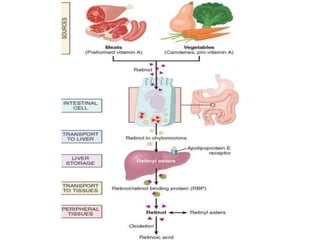
 Vitamin A is the name given to a group of
related compounds
 retinol (vitamin A alcohol),
 retinal (vitamin A aldehyde),
 retinoic acid (vitamin A acid)
 The generic term retinoids encompasses
vitamin A in its various forms and both
natural and synthetic chemicals that are
structurally related to vitamin A
Functions of vitamin A
 Maintenance of normal vision
 Cell growth and differentiation
 Metabolic effects of retinoids
 Host resistance to infections
Vitamin A Deficiency
 Earliest manifestations of vitamin A
deficiency is impaired vision, particularly in
reduced light (night blindness).
 Persistent deficiency gives rise to a series
of changes involving epithelial metaplasia
and keratinization.
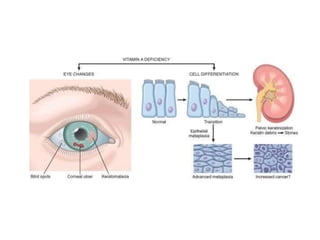
 The most devastating changes occur in the
eyes and are referred to as xerophthalmia
(dry eye).
 First, xerosis conjunctivae
 Buildup of keratin debris in small opaque
plaques (Bitot spots) and, eventually,
 Erosion of the roughened corneal surface with
softening and destruction of the cornea
(keratomalacia) and total blindness.
 Epithelium lining the upper respiratory
passage and urinary tract is replaced by
keratinizing squamous cells (squamous
metaplasia)
 Another very serious consequence is
immune deficiency
 Vitamin A Toxicity
 Acute
 Chronic
 Well-established teratogenic effects of
retinoids – contraindicated in pregnancy
Vitamin D
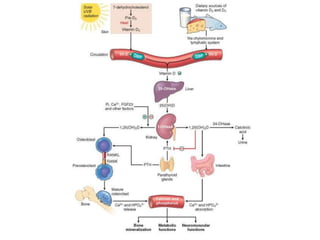
 Major function of the fat-soluble vitamin D
is the maintenance of adequate plasma
levels of calcium and phosphorus
 Metabolic functions,
 Bone mineralization, and
 Neuromuscular transmission
 Rickets (in children whose epiphyses have
not already closed)
 Osteomalacia (in adults), and
 Hypocalcemic tetany [Extracellular
concentration of ionized calcium, which is
required for normal neural excitation and
the relaxation of muscles]
 Normal reference range for circulating 25-
(OH)-D is 20 to 100 ng/mL;
 concentrations of less than 20 ng/mL
constitute vitamin D deficiency
 Causes
 Diet deficiency
 Limited exposure to sunlight
 Renal disorder
Morphology.
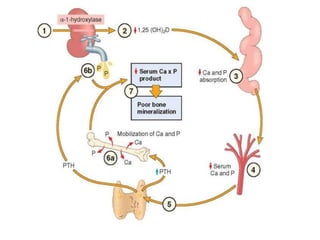
 Basic derangement in both rickets
and osteomalacia is an excess of
unmineralized matrix
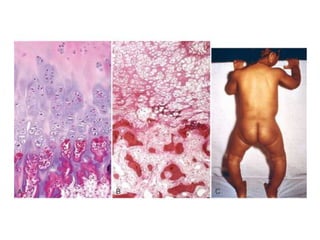
Rickets
 Most common during the first year of life.
 The gross skeletal changes depend on
 the severity and duration of the process
 the stresses to which individual bones are
subjected.
 During the nonambulatory stage of infancy,
the head and chest sustain the greatest
stresses.
 Craniotabes
 Frontal bossing and a squared appearance
to the head
 Rachitic rosary
 Pigeon breast deformity
 Ambulating child deformities are
likely to affect the spine, pelvis,
and tibia
lumbar lordosis and bowing of the
legs
 In adults, the lack of vitamin D deranges
the normal bone remodeling that occurs
throughout life.
 Production the excess of persistent
osteoid that is characteristic of
osteomalacia.
 Bone is weak and vulnerable to gross
fractures or microfractures, which are most
likely to affect vertebral bodies and femoral
necks.
Non-Skeletal Effects of Vitamin
D
 Effective against infection by
Mycobacterium tuberculosis (stimulates
the synthesis of cathelicidin, an
antimicrobial peptide from the defensin
family)
 Innate and adaptive immunity
 Gene expression (>200 genes)
 Ca colon, prostrate, breast
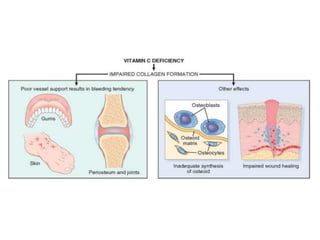
Vitamin C (Ascorbic Acid)
 Scurvy, characterized principally by
 bone disease in growing children and
 by hemorrhages and healing defects in both
children and adults
 Vitamin C is present in milk and some
animal products (liver, fish) and is
abundant in a variety of fruits and
vegetables
Function
 Best-established function of vitamin C is
the activation of prolyl and lysyl
hydroxylases from inactive precursors,
providing for hydroxylation of procollagen
 Collagen, which normally has the highest
content, of hydroxyproline, particularly in
blood vessels, accounts for the
predisposition to hemorrhages in scurvy
 Antioxidant properties
 scavenge free radicals directly and
 Act indirectly by regenerating the antioxidant
form of vitamin E
MINERAL DEFICIENCIES
Vitamin & Mineral Deficiency

Vitamin & Mineral Deficiency

  • 1.
  • 2.
     Thirteen vitaminsare necessary for health  Vitamins A, D, E, and K are fat-soluble, and all others are water-soluble
  • 3.
     The distinctionbetween fat- and water- soluble vitamins is important.  Fat-soluble vitamins are more readily stored in the body, but they may be poorly absorbed in fat malabsorption disorders
  • 4.
     A deficiencyof vitamins may be  primary (dietary in origin) or  secondary because of disturbances in intestinal absorption, transport in the blood, tissue storage, or metabolic conversion
  • 5.
    Vitamin A  VitaminA is the name given to a group of related compounds  retinol (vitamin A alcohol),  retinal (vitamin A aldehyde),  retinoic acid (vitamin A acid)  The generic term retinoids encompasses vitamin A in its various forms and both natural and synthetic chemicals that are structurally related to vitamin A
  • 7.
    Functions of vitaminA  Maintenance of normal vision  Cell growth and differentiation  Metabolic effects of retinoids  Host resistance to infections
  • 8.
    Vitamin A Deficiency Earliest manifestations of vitamin A deficiency is impaired vision, particularly in reduced light (night blindness).  Persistent deficiency gives rise to a series of changes involving epithelial metaplasia and keratinization.
  • 9.
     The mostdevastating changes occur in the eyes and are referred to as xerophthalmia (dry eye).  First, xerosis conjunctivae  Buildup of keratin debris in small opaque plaques (Bitot spots) and, eventually,  Erosion of the roughened corneal surface with softening and destruction of the cornea (keratomalacia) and total blindness.
  • 10.
     Epithelium liningthe upper respiratory passage and urinary tract is replaced by keratinizing squamous cells (squamous metaplasia)  Another very serious consequence is immune deficiency
  • 12.
     Vitamin AToxicity  Acute  Chronic  Well-established teratogenic effects of retinoids – contraindicated in pregnancy
  • 13.
    Vitamin D  Majorfunction of the fat-soluble vitamin D is the maintenance of adequate plasma levels of calcium and phosphorus  Metabolic functions,  Bone mineralization, and  Neuromuscular transmission
  • 14.
     Rickets (inchildren whose epiphyses have not already closed)  Osteomalacia (in adults), and  Hypocalcemic tetany [Extracellular concentration of ionized calcium, which is required for normal neural excitation and the relaxation of muscles]
  • 17.
     Normal referencerange for circulating 25- (OH)-D is 20 to 100 ng/mL;  concentrations of less than 20 ng/mL constitute vitamin D deficiency  Causes  Diet deficiency  Limited exposure to sunlight  Renal disorder
  • 18.
    Morphology.  Basic derangementin both rickets and osteomalacia is an excess of unmineralized matrix
  • 19.
    Rickets  Most commonduring the first year of life.  The gross skeletal changes depend on  the severity and duration of the process  the stresses to which individual bones are subjected.
  • 20.
     During thenonambulatory stage of infancy, the head and chest sustain the greatest stresses.  Craniotabes  Frontal bossing and a squared appearance to the head  Rachitic rosary  Pigeon breast deformity
  • 22.
     Ambulating childdeformities are likely to affect the spine, pelvis, and tibia lumbar lordosis and bowing of the legs
  • 23.
     In adults,the lack of vitamin D deranges the normal bone remodeling that occurs throughout life.  Production the excess of persistent osteoid that is characteristic of osteomalacia.  Bone is weak and vulnerable to gross fractures or microfractures, which are most likely to affect vertebral bodies and femoral necks.
  • 24.
    Non-Skeletal Effects ofVitamin D  Effective against infection by Mycobacterium tuberculosis (stimulates the synthesis of cathelicidin, an antimicrobial peptide from the defensin family)  Innate and adaptive immunity  Gene expression (>200 genes)  Ca colon, prostrate, breast
  • 25.
    Vitamin C (AscorbicAcid)  Scurvy, characterized principally by  bone disease in growing children and  by hemorrhages and healing defects in both children and adults  Vitamin C is present in milk and some animal products (liver, fish) and is abundant in a variety of fruits and vegetables
  • 26.
    Function  Best-established functionof vitamin C is the activation of prolyl and lysyl hydroxylases from inactive precursors, providing for hydroxylation of procollagen  Collagen, which normally has the highest content, of hydroxyproline, particularly in blood vessels, accounts for the predisposition to hemorrhages in scurvy
  • 27.
     Antioxidant properties scavenge free radicals directly and  Act indirectly by regenerating the antioxidant form of vitamin E
  • 29.