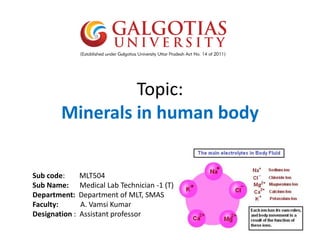
Topic:
Minerals in human body
Sub code: MLT504
Sub Name: Medical Lab Technician -1 (T)
Department: Department of MLT, SMAS
Faculty: A. Vamsi Kumar
Designation : Assistant professor
Course outcomes
• Provide technical information about test
results;
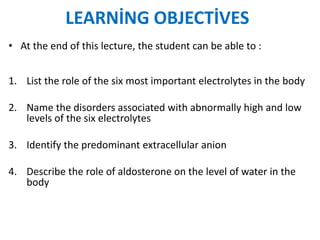
LEARNİNG OBJECTİVES
• At the end of this lecture, the student can be able to :
1. List the role of the six most important electrolytes in the body
2. Name the disorders associated with abnormally high and low
levels of the six electrolytes
3. Identify the predominant extracellular anion
4. Describe the role of aldosterone on the level of water in the
body
Contents
• Introduction to Electrolytes
• Electrolyte balance
• Homeostasis
• Imbalance disorders
• Acid –Base Balance
• conclusion
Erwin Schrodinger
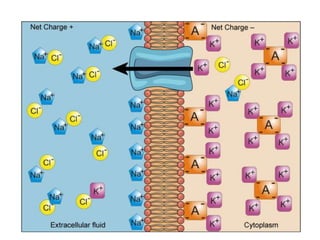
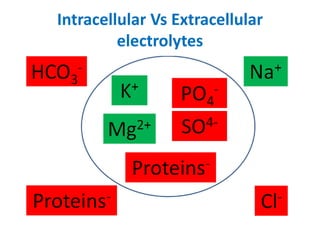
Intracellular Vs Extracellular
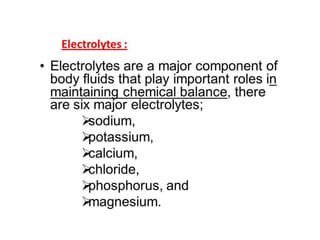
electrolytes
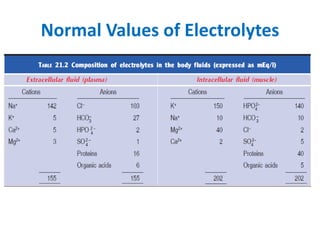
Normal Values of Electrolytes
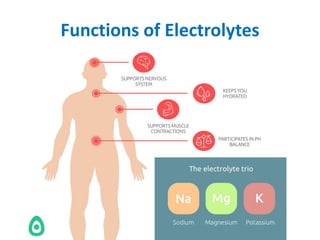
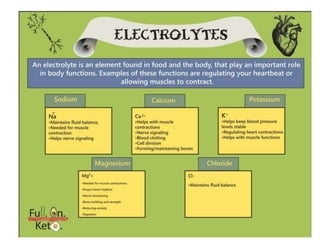
Functions of Electrolytes
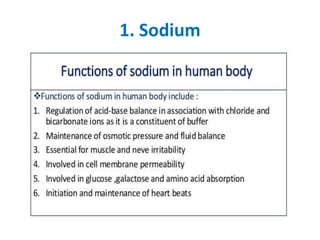
1. Sodium
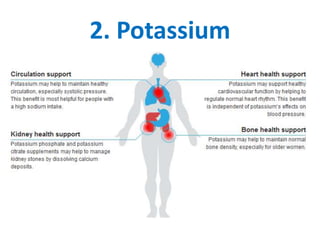
2. Potassium
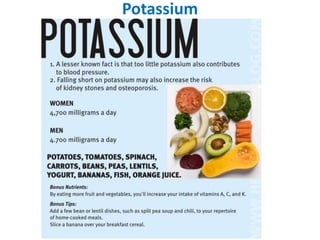
Potassium
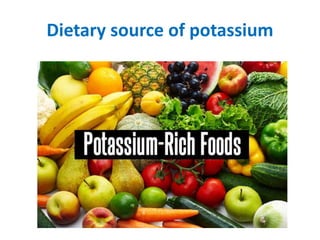
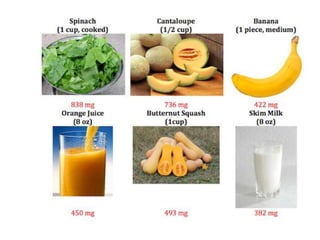
Dietary source of potassium
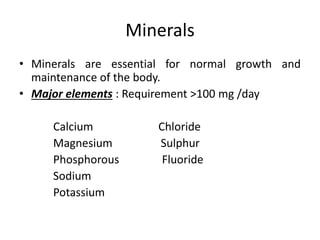
Minerals
• Minerals are essential for normal growth and
maintenance of the body.
• Major elements : Requirement >100 mg /day
Calcium Chloride
Magnesium Sulphur
Phosphorous Fluoride
Sodium
Potassium
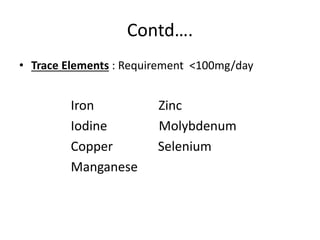
Contd….
• Trace Elements : Requirement <100mg/day
Iron Zinc
Iodine Molybdenum
Copper Selenium
Manganese
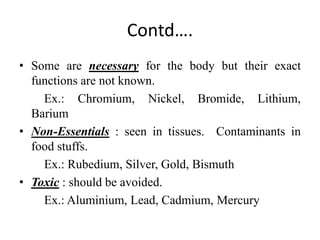
Contd….
• Some are necessary for the body but their exact
functions are not known.
Ex.: Chromium, Nickel, Bromide, Lithium,
Barium
• Non-Essentials : seen in tissues. Contaminants in
food stuffs.
Ex.: Rubedium, Silver, Gold, Bismuth
• Toxic : should be avoided.
Ex.: Aluminium, Lead, Cadmium, Mercury
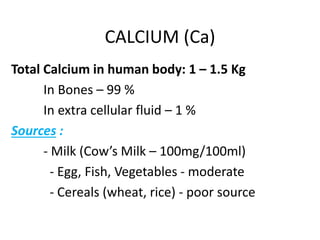
CALCIUM (Ca)
Total Calcium in human body: 1 – 1.5 Kg
In Bones – 99 %
In extra cellular fluid – 1 %
Sources :
- Milk (Cow’s Milk – 100mg/100ml)
- Egg, Fish, Vegetables - moderate
- Cereals (wheat, rice) - poor source
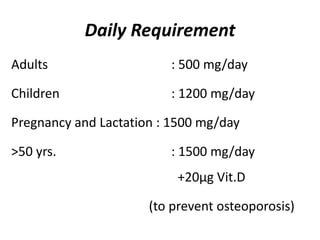
Daily Requirement
Adults : 500 mg/day
Children : 1200 mg/day
Pregnancy and Lactation : 1500 mg/day
>50 yrs. : 1500 mg/day
+20µg Vit.D
(to prevent osteoporosis)
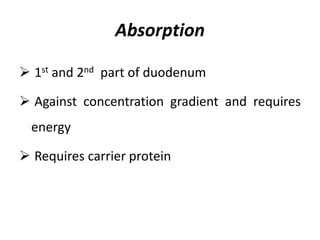
Absorption
 1st and 2nd part of duodenum
 Against concentration gradient and requires
energy
 Requires carrier protein
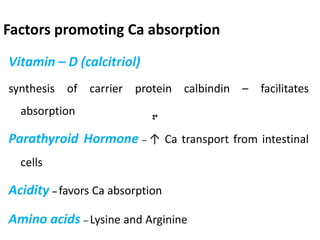
Factors promoting Ca absorption
Vitamin – D (calcitriol)
synthesis of carrier protein calbindin – facilitates
absorption
Parathyroid Hormone – ↑ Ca transport from intestinal
cells
Acidity – favors Ca absorption
Amino acids – Lysine and Arginine
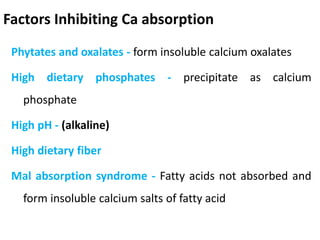
Factors Inhibiting Ca absorption
Phytates and oxalates - form insoluble calcium oxalates
High dietary phosphates - precipitate as calcium
phosphate
High pH - (alkaline)
High dietary fiber
Mal absorption syndrome - Fatty acids not absorbed and
form insoluble calcium salts of fatty acid
Functions
1. Bones & Teeth :
Formation of bone & teeth.
Bones are reservoir for Ca in the body.
Osteoblasts → bone deposition
Osteoclasts → demineralization.
2. Muscle Contraction :
Ca mediates excitation & contraction of muscle
fibers.
Ca interacts with Troponin-C to trigger muscle
contraction.
Ca activates ATPase, ↑ interaction between
actin and myosin.
3. Nerve Conduction :
Transmission of nerve impulses from pre-
synaptic to post-synaptic region.
4. Secretion of hormones :
Mediates the secretion of Insulin, PTH,
Calcitonin, Vasopressin etc.
5. Second Messenger :
Ca & cyclic AMP are 2nd messengers of different
hormones. Eg: Glucogan
6. Membrane integrity & Permeability :
Influences transport of number of substances
across the membranous barrier.
7. Blood Coagulation :
Factor IV in blood coagulation cascade.
prothrombin → Thrombin
8. Action on Heart :
Ca prolongs Systole.
↑ Ca concentration → ↑ myocardial
contractility
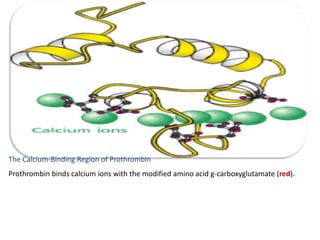
The Calcium-Binding Region of Prothrombin
Prothrombin binds calcium ions with the modified amino acid g-carboxyglutamate (red).
9. Activation of Enzymes :
Calmodulin – Ca binding regulatory protein.
Binds with 4 Ca ions and leads to activation
of enzymes.
Plasma Calcium
Normal Plasma / Serum Calcium : 9 – 11 mg / dl
Ionized Calcium : 5 mg/dl
Protein bound Calcium : 4 – 5 mg/dl
Complexed with phosphate/citrate/ bicarbonate :
about 1 mg/dl
Homeostasis of Ca
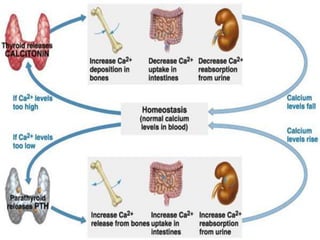
The major factors that regulate the plasma
Calcium
• Calcitriol
• Parathyroid hormone
• Calcitonin
Calcitriol
• ↑ intestinal absorption of Ca.
• Stimulates Ca uptake by osteoblasts and
promotes Calcification.
P T H
Elevates serum Ca
• Demineralization of bone (Osteoclasts)
• Increases Ca reabsorption by renal tubules
• Increases intestinal absorption of Ca by
promoting synthesis of Calcitriol
Calcitonin
secreted by Para follicular cells of Thyroid gland
Lowers the serum Ca levels
• Calcification of bone (by osteoblasts)
• Increases the excretion of Ca into urine
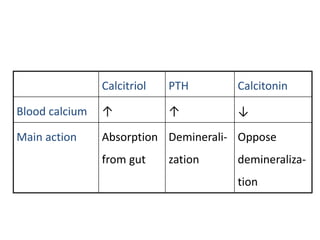
Calcitonin & PTH are directly antagonistic
Calcitriol PTH Calcitonin
Blood calcium ↑ ↑ ↓
Main action Absorption
from gut
Deminerali-
zation
Oppose
demineraliza-
tion
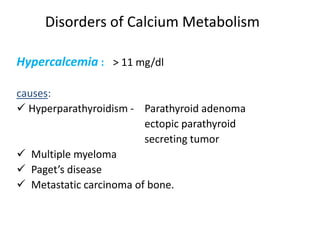
Disorders of Calcium Metabolism
Hypercalcemia : > 11 mg/dl
causes:
 Hyperparathyroidism - Parathyroid adenoma
ectopic parathyroid
secreting tumor
 Multiple myeloma
 Paget’s disease
 Metastatic carcinoma of bone.
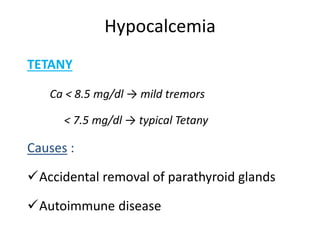
Hypocalcemia
TETANY
Ca < 8.5 mg/dl → mild tremors
< 7.5 mg/dl → typical Tetany
Causes :
Accidental removal of parathyroid glands
Autoimmune disease
Symptoms :
• Neuromuscular irritability
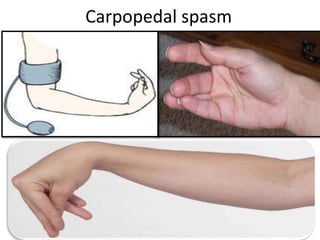
• Carpopedal spasms
• Laryngismus → stridor (noisy breathing)
laryngeal spasms may lead to death.
Signs : Chovstek’s sign +
Trousseau’s sign +
↑ Q-T interval in ECG
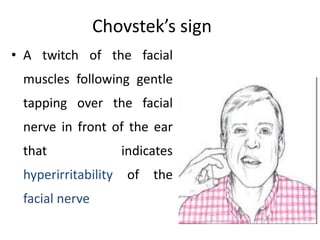
Chovstek’s sign
• A twitch of the facial
muscles following gentle
tapping over the facial
nerve in front of the ear
that indicates
hyperirritability of the
facial nerve
Trousseau’s sign
• A test for latent tetany in which carpal spasm is
induced by inflating a sphygmomanometer cuff
on the upper arm to a pressure exceeding
systolic blood pressure for 3 minutes.
Carpopedal spasm
IRON (Fe)MINERALS
INTRODUCTION
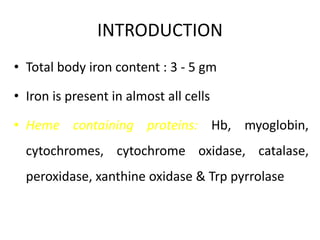
• Total body iron content : 3 - 5 gm
• Iron is present in almost all cells
• Heme containing proteins: Hb, myoglobin,
cytochromes, cytochrome oxidase, catalase,
peroxidase, xanthine oxidase & Trp pyrrolase
Contd….
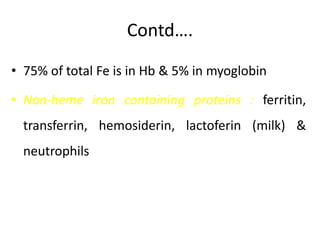
• 75% of total Fe is in Hb & 5% in myoglobin
• Non-heme iron containing proteins : ferritin,
transferrin, hemosiderin, lactoferin (milk) &
neutrophils
BIOCHEMICAL FUNCTIONS
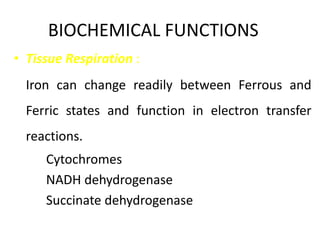
• Tissue Respiration :
Iron can change readily between Ferrous and
Ferric states and function in electron transfer
reactions.
Cytochromes
NADH dehydrogenase
Succinate dehydrogenase
Contd.…
• Transport of gases :
Able to bind with molecular O2 and CO2.
The main function is to coordinate the O2 molecule
into heme of hemoglobin, so that it can be
transported from the lungs to the tissues.
Contd….
• Oxidative Reactions :
Component of various oxidoreductase enzymes
-vital role in oxidative reactions.
Contd….
• Immune Response :
Required for effective activity of lysosomal
enzyme peroxidase – helps in phagocytic and
bactericidal activity of neutrophils.
Requirement
• Indian diet contain >10 – 20 mg of Iron.
only about 10% of it is absorbed.
• 1 mg is eliminated each day from human body
by shredding of skin epithelial cells & cells lining
urinary tract & small extent in urine + sweat.
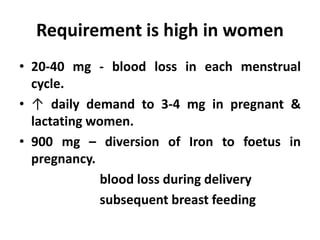
Requirement is high in women
• 20-40 mg - blood loss in each menstrual
cycle.
• ↑ daily demand to 3-4 mg in pregnant &
lactating women.
• 900 mg – diversion of Iron to foetus in
pregnancy.
blood loss during delivery
subsequent breast feeding
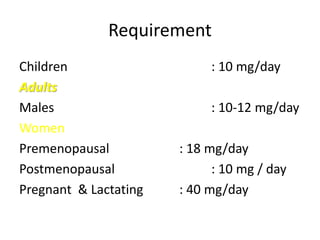
Requirement
Children : 10 mg/day
Adults
Males : 10-12 mg/day
Women
Premenopausal : 18 mg/day
Postmenopausal : 10 mg / day
Pregnant & Lactating : 40 mg/day
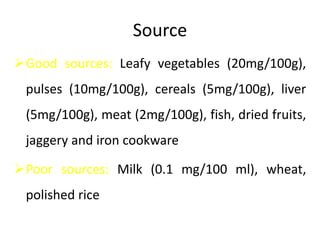
Source
Good sources: Leafy vegetables (20mg/100g),
pulses (10mg/100g), cereals (5mg/100g), liver
(5mg/100g), meat (2mg/100g), fish, dried fruits,
jaggery and iron cookware
Poor sources: Milk (0.1 mg/100 ml), wheat,
polished rice
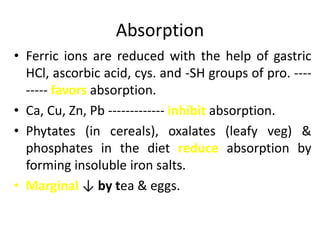
Absorption
• Ferric ions are reduced with the help of gastric
HCl, ascorbic acid, cys. and -SH groups of pro. ----
----- favors absorption.
• Ca, Cu, Zn, Pb ------------- inhibit absorption.
• Phytates (in cereals), oxalates (leafy veg) &
phosphates in the diet reduce absorption by
forming insoluble iron salts.
• Marginal ↓ by tea & eggs.
Regulation of Absorption
Mucosal block theory
• Absorbed by upper part of duodenum
• Homeostasis is maintained at the level of
absorption
–Iron stores depleted - absorption ↑
–Iron stores adequate - absorption ↓
• Only Fe++ (ferrous) form is absorbed
and not Fe+++ (ferric) form.
Contd….
• Ferrous Iron binds to mucosal cell protein called
Divalent Metal Transporter - 1 (DMT-1).
• This bound Iron is then transported into the
mucosal cell.
• Unabsorbed Iron is excreted.
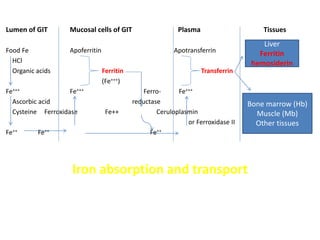
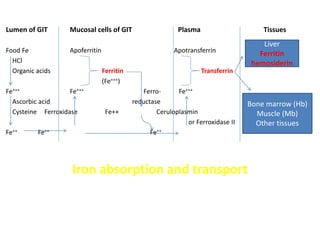
Lumen of GIT Mucosal cells of GIT Plasma Tissues
Food Fe Apoferritin Apotransferrin
HCl
Organic acids Ferritin Transferrin
(Fe+++)
Fe+++ Fe+++ Ferro- Fe+++
Ascorbic acid reductase
Cysteine Ferroxidase Fe++ Ceruloplasmin
or Ferroxidase II
Fe++ Fe++ Fe++
Iron absorption and transport
Liver
Ferritin
hemosiderin
Bone marrow (Hb)
Muscle (Mb)
Other tissues
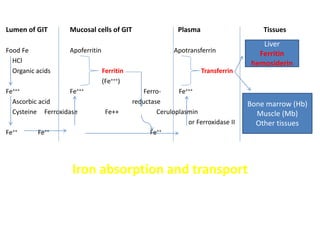
Inside the mucosal cell…..
• Iron oxidized to ferric state.
complexed with apoferritin to form Ferritin.
• Ferric Iron is released, reduced to Ferrous state
crosses the cell membrane.
Lumen of GIT Mucosal cells of GIT Plasma Tissues
Food Fe Apoferritin Apotransferrin
HCl
Organic acids Ferritin Transferrin
(Fe+++)
Fe+++ Fe+++ Ferro- Fe+++
Ascorbic acid reductase
Cysteine Ferroxidase Fe++ Ceruloplasmin
or Ferroxidase II
Fe++ Fe++ Fe++
Iron absorption and transport
Liver
Ferritin
hemosiderin
Bone marrow (Hb)
Muscle (Mb)
Other tissues
In the blood stream….
• Reoxidized to Ferric state by Ceruloplasmin
• Ferric Iron bound with Transferrin and
transported to tissues.
Lumen of GIT Mucosal cells of GIT Plasma Tissues
Food Fe Apoferritin Apotransferrin
HCl
Organic acids Ferritin Transferrin
(Fe+++)
Fe+++ Fe+++ Ferro- Fe+++
Ascorbic acid reductase
Cysteine Ferroxidase Fe++ Ceruloplasmin
or Ferroxidase II
Fe++ Fe++ Fe++
Iron absorption and transport
Liver
Ferritin
hemosiderin
Bone marrow (Hb)
Muscle (Mb)
Other tissues
Excretion
One-way element (very little of it is excreted)
Almost no iron is excreted through urine
Any type of bleeding will cause the loss
Normal level in plasma -------- 50 - 175 µg/dl
Deficiency
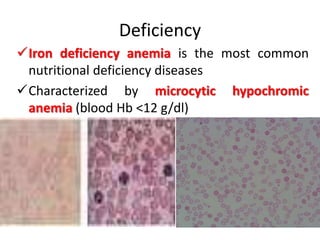
Iron deficiency anemia is the most common
nutritional deficiency diseases
Characterized by microcytic hypochromic
anemia (blood Hb <12 g/dl)
Iron deficiency anemia
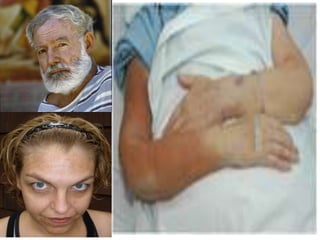
Clinical Manifestations:
Anemia, Apathy
Achlorhydria
Impaired attention, Irritability, Lowered memory
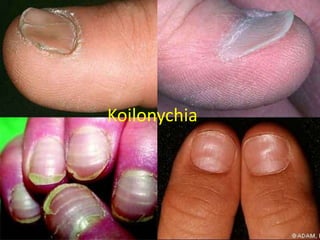
Koilonychia (spoon nails)
Koilonychia
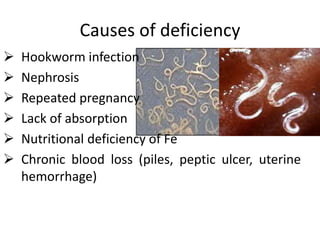
Causes of deficiency
 Hookworm infection
 Nephrosis
 Repeated pregnancy
 Lack of absorption
 Nutritional deficiency of Fe
 Chronic blood loss (piles, peptic ulcer, uterine
hemorrhage)
Toxicity
HEMOSIDEROSIS --------- uncommon
Occurs in persons receiving repeated blood
transfusion (in hemophilia, hemolytic anemia).
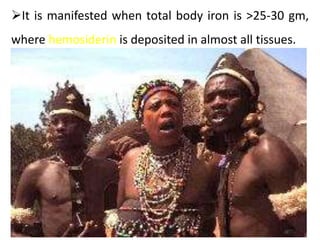
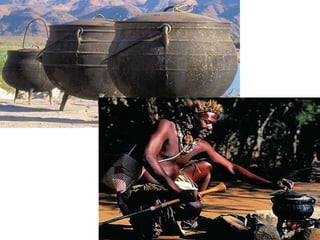
Common in Bantu tribe, because of staple diet,
corn, is low in phosphates, and their habit of
cooking foods in iron vessels.
It is manifested when total body iron is >25-30 gm,
where hemosiderin is deposited in almost all tissues.
Hemochromatosis
• Primary Hemochromatosis :
- genetic disorder – excessive storage of Iron
in tissues → tissue damage.
• Secondary Hemochromatosis :
- repeated blood transfusions
- excessive oral intake of Iron
eg. as in African Bantu tribes
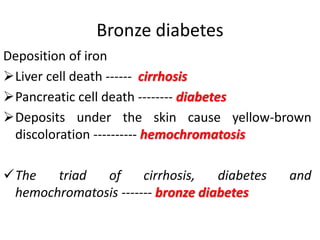
Bronze diabetes
Deposition of iron
Liver cell death ------ cirrhosis
Pancreatic cell death -------- diabetes
Deposits under the skin cause yellow-brown
discoloration ---------- hemochromatosis
The triad of cirrhosis, diabetes and
hemochromatosis ------- bronze diabetes
PHOSPHOROUS
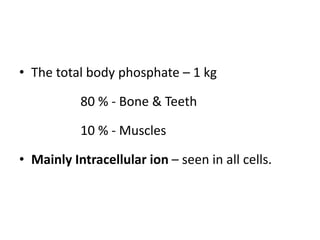
• The total body phosphate – 1 kg
80 % - Bone & Teeth
10 % - Muscles
• Mainly Intracellular ion – seen in all cells.
Functions
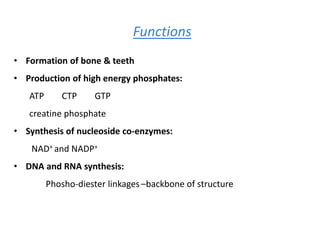
• Formation of bone & teeth
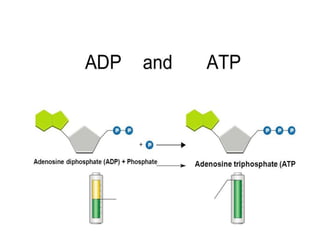
• Production of high energy phosphates:
ATP CTP GTP
creatine phosphate
• Synthesis of nucleoside co-enzymes:
NAD+ and NADP+
• DNA and RNA synthesis:
Phosho-diester linkages –backbone of structure
Contd….
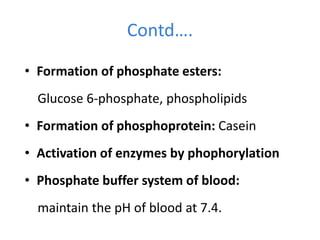
• Formation of phosphate esters:
Glucose 6-phosphate, phospholipids
• Formation of phosphoprotein: Casein
• Activation of enzymes by phophorylation
• Phosphate buffer system of blood:
maintain the pH of blood at 7.4.
Requirement & Sources
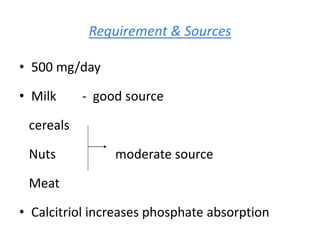
• 500 mg/day
• Milk - good source
cereals
Nuts moderate source
Meat
• Calcitriol increases phosphate absorption
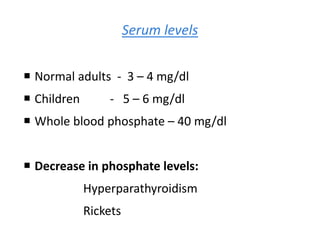
Serum levels
 Normal adults - 3 – 4 mg/dl
 Children - 5 – 6 mg/dl
 Whole blood phosphate – 40 mg/dl
 Decrease in phosphate levels:
Hyperparathyroidism
Rickets
SODIUM
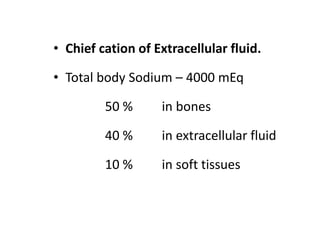
• Chief cation of Extracellular fluid.
• Total body Sodium – 4000 mEq
50 % in bones
40 % in extracellular fluid
10 % in soft tissues
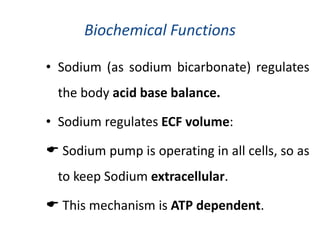
Biochemical Functions
• Sodium (as sodium bicarbonate) regulates
the body acid base balance.
• Sodium regulates ECF volume:
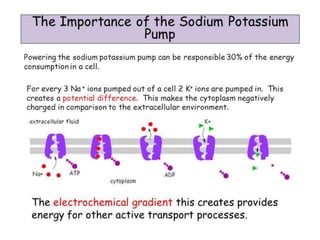
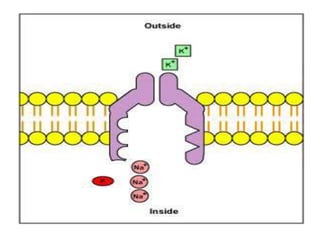
 Sodium pump is operating in all cells, so as
to keep Sodium extracellular.
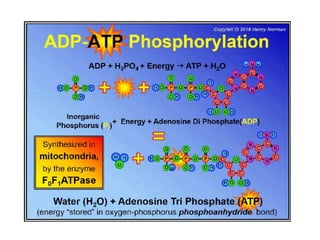
 This mechanism is ATP dependent.
• Required for maintenance of osmotic
pressure and fluid balance.
• Necessary for normal muscle irritability and
cell permeability.
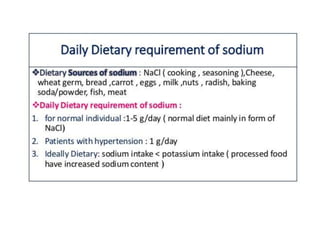
Daily requirement
• Normal diet contains 5 – 10 gm of sodium
mainly as sodium chloride
• Sources :
Common salt used in cooking medium
Bread whole grains
Nuts leafy vegetables
Eggs Milk
Absorption
• Readily absorbed in the GI tract.
very little < 2 % is found in faeces.
In Diarrhea – large quantities of sodium
is lost in faeces.
Excretion
• Kidney – major route of sodium excretion
• 800 gm/day of Na filtered in glomuruli
99 % - reabsorbed by proximal convoluted
tubule.
↑ reabsorption in distal tubules controlled
by aldosterone.
• In edema – water & sodium content of the
body increase.
• Diuretic drugs – excrete Na also along with
water.
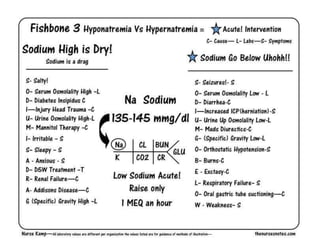
Normal Values
• In plasma - 136 – 145 mEq/L
• In cells - 35 mEq/L
Mineralocorticoids influence Na metabolism
in adrenocortical insufficiency
↓ plasma Na
↑ urinary excretion of Na
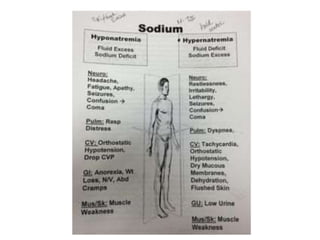
Hypernatremia
• Cushing’s disease
• Prolonged cortisone therapy
• In dehydration – water predominantly lost
the blood volume decreased with
apparent ↑conc. of sodium
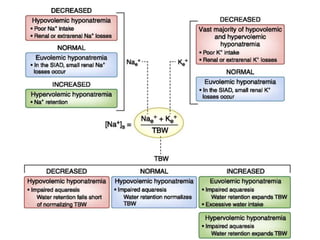
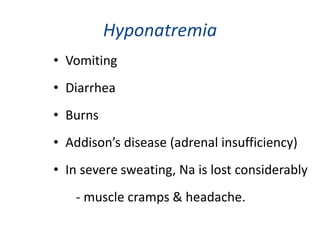
Hyponatremia
• Vomiting
• Diarrhea
• Burns
• Addison’s disease (adrenal insufficiency)
• In severe sweating, Na is lost considerably
- muscle cramps & headache.
Biochemical estimation
• Flame photometer
• Ion selective electrodes
POTASSIUM
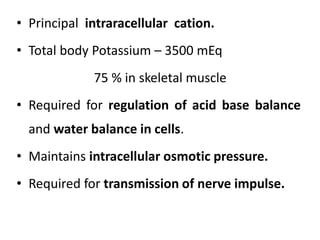
• Principal intraracellular cation.
• Total body Potassium – 3500 mEq
75 % in skeletal muscle
• Required for regulation of acid base balance
and water balance in cells.
• Maintains intracellular osmotic pressure.
• Required for transmission of nerve impulse.
• Enzyme – Pyruvate kinase (of glycolysis) depend
on K+ for optimal activity.
• Adequate intracellular concentration of K+ is
necessary for proper biosynthesis of proteins by
ribosomes.
• Extracellular K+ influences cardiac muscle
activity.
Dietary requirement
• 3 – 4 g / day
• Sources :
Banana Potato
Orange Beans
Pineapple Chicken
Liver
Tender coconut water – rich source
Absorption & excretion
• Absorption: From GI tract – very efficient
(90%)
• In diarrhea – good proportion of K+ is lost in feces
• Excretion : Through urine
• Aldosterone ↑excretion of potassium.
Normal values
• In plasma : 3.4 – 5.0 mEq/L
• In whole blood : 50 mEq/L
Either high or low concentrations are
dangerous since K+ affects contractility of
cardiac muscle
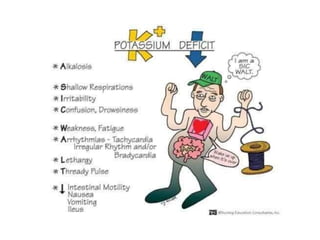
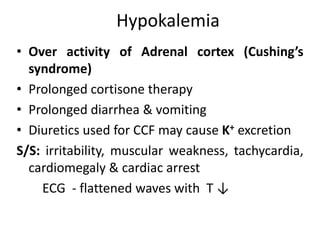
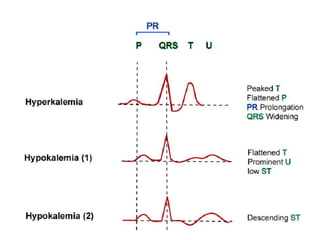
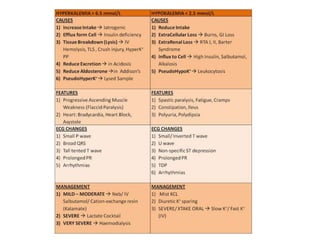
Hypokalemia
• Over activity of Adrenal cortex (Cushing’s
syndrome)
• Prolonged cortisone therapy
• Prolonged diarrhea & vomiting
• Diuretics used for CCF may cause K+ excretion
S/S: irritability, muscular weakness, tachycardia,
cardiomegaly & cardiac arrest
ECG - flattened waves with T ↓
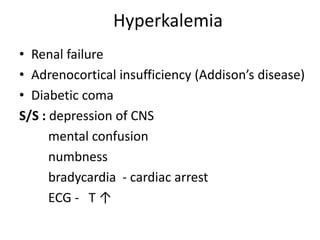
Hyperkalemia
• Renal failure
• Adrenocortical insufficiency (Addison’s disease)
• Diabetic coma
S/S : depression of CNS
mental confusion
numbness
bradycardia - cardiac arrest
ECG - T ↑
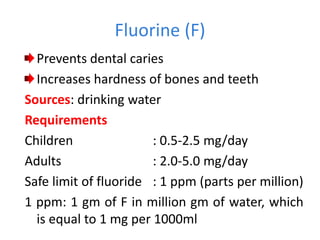
Fluorine (F)
Prevents dental caries
Increases hardness of bones and teeth
Sources: drinking water
Requirements
Children : 0.5-2.5 mg/day
Adults : 2.0-5.0 mg/day
Safe limit of fluoride : 1 ppm (parts per million)
1 ppm: 1 gm of F in million gm of water, which
is equal to 1 mg per 1000ml
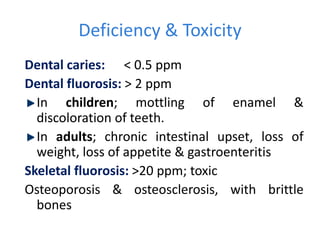
Deficiency & Toxicity
Dental caries: < 0.5 ppm
Dental fluorosis: > 2 ppm
In children; mottling of enamel &
discoloration of teeth.
In adults; chronic intestinal upset, loss of
weight, loss of appetite & gastroenteritis
Skeletal fluorosis: >20 ppm; toxic
Osteoporosis & osteosclerosis, with brittle
bones
Contd.
Ligaments of spine & collagen of bones get
calcified
Genu valgum: advanced cases of skeletal
fluorosis (stiff joints)
Plasma: normal value : 4 µg/dl
fluorosis : 50 µg/dl
Iodine
• Total body iodine : 25-30 mg (80% in thyroid
gland)
Formation of thyroid hormones (T3 & T4)
Requirements:
Children : 40-120 µg/day
Adults : 100-150 µg/day
Pregnant women : 175 µg/day
Commercial source: seaweeds
Other sources: drinking water, vegetables, fruits,
iodized salt
Absorption: small intestine
only 30% of iodine in food is absorbed
Goiterogenous substances prevent absorption of
iodine
Eg: i, Cabbage & tapioca contain thiocyanate,
which inhibits iodine uptake by thyroid
ii, Mustard seed contains thiourea, which
inhibits iodination of thyroglobulin
Storage: iodothyroglobulin (glycoprotein)
Excretion: mainly through urine and also through
bile, saliva and skin
Plasma: 4-10 µg/dl
Deficiency:
Children : cretinism
Adults : goiter, hypothyroidism, myxedema
Zinc
Total body Zn: 2 gm (99% is intracellular)
60% in skeletal muscle
30% in bones
Prostate gland contains 100 µg/g & liver 50 µg/g
Sources: grains, beans, nuts, cheese, eggs, milk,
meat & shell fish
Absorption: duodenum
Cu, Ca, Cd, Fe & phytate interfere absorption.
Storage: in liver with a specific protein,
metallothionine.
Biochemical functions
 Cofactor for more than 300 enzymes eg:
carboxy peptidase, carbonic anhydrase, ALP, LDH,
ADH, superoxide dismutase & glutamate
dehydrogenase.
 Participate in the metabolism of carbohydrates,
lipids, proteins & nucleic acids.
 Required for transcription and translation.
Stabilizes insulin, when stored in β- cells of
pancreas.
Promotes the synthesis of retinol binding
protein.
Gusten, Zn containing protein in saliva, is
important for taste sensation.
Role in growth, reproduction & wound healing.
Requirement:
Children : 5-10 mg/day
Adults : 10-15 mg/day
Pregnancy & lactation: 15-20 mg/day
Deficiency:
• Hypogonadism
• Growth failure
• Impaired wound healing
• Decreased taste and smell acuity
Plasma : 50-150 µg/dl
COPPER (Cu)
MINERALS
Introduction
Total body Cu is 100 mg; quantitatively this is
next to iron and zinc
It is seen in muscles, liver, bone marrow, brain,
kidney, heart and hair
Cu containing enzymes:
Ceruloplasmin, cyt. oxidase, cyt. C, tyrosinase,
lysyl oxidase, ALA synthase, monoamine
oxidase, cytosolic superoxide dismutase, uricase
and phenol oxidase
Requirement & Sources
Infants & children : 1.5-3 mg/day
Adults : 2-3 mg/day
Sources:
• Cereals, meat, liver, kidney, egg yolk, nuts and
green leafy vegetables
• Milk is a poor source
Absorption
Mainly from duodenum and is mediated by a Cu
binding protein (metallothionein)
Only about 10% of dietary Cu is absorbed
Rate of absorption is reduced by phytates, Ca,
Fe, Zn and Mo in the intestines
Storage: liver & bone marrow
Transport: albumin
Excretion: bile
Urine doesn't contain Cu in normal
circumstances
Plasma copper: 100-200 µg/dl
 95% is tightly bound to ceruloplasmin
 Small fraction (5%) is loosely held to histidine
residues of albumin
 Normal serum conc. of ceruloplasmin: 25-50
mg/dl
Deficiency
microcytic normochromic anemia
Fragility of arteries, deminiralization of bones,
demyelination of neural tissue, myocardial fibrosis,
hypopigmentation of skin, greying of hair
Minke’s kinky hair syndrome: results from
defective cross linking of connective tissue due to
Cu deficiency
Wilson’s hepatolenticular degeneration
Rare (1 in 50,000)
Cu deposition
Liver : hepatic cirrhosis
Brain (lenticular nucleus): brain necrosis
Kidney : renal damage
Chronic toxicity may lead to diarrhea and blue-
green discoloration of saliva.
Selenium (Se)
Least abundant and most toxic of essential
elements
Sources
Plants (varies with soil content), meat, sea foods
Requirements
Children : 10-30 µg/day
Adult male : 40-70 µg/day
female : 45-55 µg/day
Pregnancy & lactation: 65-75 µg/day
Biochemical functions
Acts as a nonspecific intracellular antioxidant by
providing protection against peroxidation in
tissues and cell membranes.
Complementary to vit. E; availability of vit. E
reduces the Se requirement.
Glutathione peroxidase protects the cells
against the damage caused by H2O2
.
Protects from developing liver cirrhosis.
Conversion of T4 to T3 by 5´- deiodinase.
Plasma Se
Normal value : 13 µg/dl
Most of the Se in blood is a part of
glutathoine reductase.
Inside the cells, it exists as selenocysteine and
selenomethionine.
Absorption: duodenum
Se is carcinogenic in animals, its oncogenic
influence in man is not established.
Deficiency
Marginal deficiency; when soil content is low.
In animals; hepatic necrosis, retarded growth,
muscular degeneration, infertility.
In humans; congestive cardiomyopathy
(Keshan disease) in China.
Toxicity: selenosis ( 900 µg/day)
Hair loss, dermatitis, irritability, purple streaks
in nails, falling of nails, diarrhea and garlicky
odor in breath (dimethyl selenide).
Minerals

Minerals

  • 1.
    Topic: Minerals in humanbody Sub code: MLT504 Sub Name: Medical Lab Technician -1 (T) Department: Department of MLT, SMAS Faculty: A. Vamsi Kumar Designation : Assistant professor
  • 2.
    Course outcomes • Providetechnical information about test results;
  • 3.
    LEARNİNG OBJECTİVES • Atthe end of this lecture, the student can be able to : 1. List the role of the six most important electrolytes in the body 2. Name the disorders associated with abnormally high and low levels of the six electrolytes 3. Identify the predominant extracellular anion 4. Describe the role of aldosterone on the level of water in the body
  • 4.
    Contents • Introduction toElectrolytes • Electrolyte balance • Homeostasis • Imbalance disorders • Acid –Base Balance • conclusion
  • 14.
  • 23.
  • 25.
    Normal Values ofElectrolytes
  • 26.
  • 29.
  • 34.
  • 35.
  • 36.
  • 41.
    Minerals • Minerals areessential for normal growth and maintenance of the body. • Major elements : Requirement >100 mg /day Calcium Chloride Magnesium Sulphur Phosphorous Fluoride Sodium Potassium
  • 42.
    Contd…. • Trace Elements: Requirement <100mg/day Iron Zinc Iodine Molybdenum Copper Selenium Manganese
  • 43.
    Contd…. • Some arenecessary for the body but their exact functions are not known. Ex.: Chromium, Nickel, Bromide, Lithium, Barium • Non-Essentials : seen in tissues. Contaminants in food stuffs. Ex.: Rubedium, Silver, Gold, Bismuth • Toxic : should be avoided. Ex.: Aluminium, Lead, Cadmium, Mercury
  • 44.
    CALCIUM (Ca) Total Calciumin human body: 1 – 1.5 Kg In Bones – 99 % In extra cellular fluid – 1 % Sources : - Milk (Cow’s Milk – 100mg/100ml) - Egg, Fish, Vegetables - moderate - Cereals (wheat, rice) - poor source
  • 45.
    Daily Requirement Adults :500 mg/day Children : 1200 mg/day Pregnancy and Lactation : 1500 mg/day >50 yrs. : 1500 mg/day +20µg Vit.D (to prevent osteoporosis)
  • 46.
    Absorption  1st and2nd part of duodenum  Against concentration gradient and requires energy  Requires carrier protein
  • 47.
    Factors promoting Caabsorption Vitamin – D (calcitriol) synthesis of carrier protein calbindin – facilitates absorption Parathyroid Hormone – ↑ Ca transport from intestinal cells Acidity – favors Ca absorption Amino acids – Lysine and Arginine
  • 48.
    Factors Inhibiting Caabsorption Phytates and oxalates - form insoluble calcium oxalates High dietary phosphates - precipitate as calcium phosphate High pH - (alkaline) High dietary fiber Mal absorption syndrome - Fatty acids not absorbed and form insoluble calcium salts of fatty acid
  • 49.
    Functions 1. Bones &Teeth : Formation of bone & teeth. Bones are reservoir for Ca in the body. Osteoblasts → bone deposition Osteoclasts → demineralization.
  • 50.
    2. Muscle Contraction: Ca mediates excitation & contraction of muscle fibers. Ca interacts with Troponin-C to trigger muscle contraction. Ca activates ATPase, ↑ interaction between actin and myosin.
  • 51.
    3. Nerve Conduction: Transmission of nerve impulses from pre- synaptic to post-synaptic region. 4. Secretion of hormones : Mediates the secretion of Insulin, PTH, Calcitonin, Vasopressin etc.
  • 52.
    5. Second Messenger: Ca & cyclic AMP are 2nd messengers of different hormones. Eg: Glucogan 6. Membrane integrity & Permeability : Influences transport of number of substances across the membranous barrier.
  • 53.
    7. Blood Coagulation: Factor IV in blood coagulation cascade. prothrombin → Thrombin 8. Action on Heart : Ca prolongs Systole. ↑ Ca concentration → ↑ myocardial contractility
  • 54.
    The Calcium-Binding Regionof Prothrombin Prothrombin binds calcium ions with the modified amino acid g-carboxyglutamate (red).
  • 55.
    9. Activation ofEnzymes : Calmodulin – Ca binding regulatory protein. Binds with 4 Ca ions and leads to activation of enzymes.
  • 56.
    Plasma Calcium Normal Plasma/ Serum Calcium : 9 – 11 mg / dl Ionized Calcium : 5 mg/dl Protein bound Calcium : 4 – 5 mg/dl Complexed with phosphate/citrate/ bicarbonate : about 1 mg/dl
  • 57.
    Homeostasis of Ca Themajor factors that regulate the plasma Calcium • Calcitriol • Parathyroid hormone • Calcitonin
  • 58.
    Calcitriol • ↑ intestinalabsorption of Ca. • Stimulates Ca uptake by osteoblasts and promotes Calcification.
  • 59.
    P T H Elevatesserum Ca • Demineralization of bone (Osteoclasts) • Increases Ca reabsorption by renal tubules • Increases intestinal absorption of Ca by promoting synthesis of Calcitriol
  • 60.
    Calcitonin secreted by Parafollicular cells of Thyroid gland Lowers the serum Ca levels • Calcification of bone (by osteoblasts) • Increases the excretion of Ca into urine Calcitonin & PTH are directly antagonistic
  • 61.
    Calcitriol PTH Calcitonin Bloodcalcium ↑ ↑ ↓ Main action Absorption from gut Deminerali- zation Oppose demineraliza- tion
  • 63.
    Disorders of CalciumMetabolism Hypercalcemia : > 11 mg/dl causes:  Hyperparathyroidism - Parathyroid adenoma ectopic parathyroid secreting tumor  Multiple myeloma  Paget’s disease  Metastatic carcinoma of bone.
  • 64.
    Hypocalcemia TETANY Ca < 8.5mg/dl → mild tremors < 7.5 mg/dl → typical Tetany Causes : Accidental removal of parathyroid glands Autoimmune disease
  • 65.
    Symptoms : • Neuromuscularirritability • Carpopedal spasms • Laryngismus → stridor (noisy breathing) laryngeal spasms may lead to death. Signs : Chovstek’s sign + Trousseau’s sign + ↑ Q-T interval in ECG
  • 66.
    Chovstek’s sign • Atwitch of the facial muscles following gentle tapping over the facial nerve in front of the ear that indicates hyperirritability of the facial nerve
  • 67.
    Trousseau’s sign • Atest for latent tetany in which carpal spasm is induced by inflating a sphygmomanometer cuff on the upper arm to a pressure exceeding systolic blood pressure for 3 minutes.
  • 68.
  • 69.
  • 70.
    INTRODUCTION • Total bodyiron content : 3 - 5 gm • Iron is present in almost all cells • Heme containing proteins: Hb, myoglobin, cytochromes, cytochrome oxidase, catalase, peroxidase, xanthine oxidase & Trp pyrrolase
  • 71.
    Contd…. • 75% oftotal Fe is in Hb & 5% in myoglobin • Non-heme iron containing proteins : ferritin, transferrin, hemosiderin, lactoferin (milk) & neutrophils
  • 72.
    BIOCHEMICAL FUNCTIONS • TissueRespiration : Iron can change readily between Ferrous and Ferric states and function in electron transfer reactions. Cytochromes NADH dehydrogenase Succinate dehydrogenase
  • 73.
    Contd.… • Transport ofgases : Able to bind with molecular O2 and CO2. The main function is to coordinate the O2 molecule into heme of hemoglobin, so that it can be transported from the lungs to the tissues.
  • 74.
    Contd…. • Oxidative Reactions: Component of various oxidoreductase enzymes -vital role in oxidative reactions.
  • 75.
    Contd…. • Immune Response: Required for effective activity of lysosomal enzyme peroxidase – helps in phagocytic and bactericidal activity of neutrophils.
  • 76.
    Requirement • Indian dietcontain >10 – 20 mg of Iron. only about 10% of it is absorbed. • 1 mg is eliminated each day from human body by shredding of skin epithelial cells & cells lining urinary tract & small extent in urine + sweat.
  • 77.
    Requirement is highin women • 20-40 mg - blood loss in each menstrual cycle. • ↑ daily demand to 3-4 mg in pregnant & lactating women. • 900 mg – diversion of Iron to foetus in pregnancy. blood loss during delivery subsequent breast feeding
  • 78.
    Requirement Children : 10mg/day Adults Males : 10-12 mg/day Women Premenopausal : 18 mg/day Postmenopausal : 10 mg / day Pregnant & Lactating : 40 mg/day
  • 79.
    Source Good sources: Leafyvegetables (20mg/100g), pulses (10mg/100g), cereals (5mg/100g), liver (5mg/100g), meat (2mg/100g), fish, dried fruits, jaggery and iron cookware Poor sources: Milk (0.1 mg/100 ml), wheat, polished rice
  • 80.
    Absorption • Ferric ionsare reduced with the help of gastric HCl, ascorbic acid, cys. and -SH groups of pro. ---- ----- favors absorption. • Ca, Cu, Zn, Pb ------------- inhibit absorption. • Phytates (in cereals), oxalates (leafy veg) & phosphates in the diet reduce absorption by forming insoluble iron salts. • Marginal ↓ by tea & eggs.
  • 81.
    Regulation of Absorption Mucosalblock theory • Absorbed by upper part of duodenum • Homeostasis is maintained at the level of absorption –Iron stores depleted - absorption ↑ –Iron stores adequate - absorption ↓ • Only Fe++ (ferrous) form is absorbed and not Fe+++ (ferric) form.
  • 82.
    Contd…. • Ferrous Ironbinds to mucosal cell protein called Divalent Metal Transporter - 1 (DMT-1). • This bound Iron is then transported into the mucosal cell. • Unabsorbed Iron is excreted.
  • 83.
    Lumen of GITMucosal cells of GIT Plasma Tissues Food Fe Apoferritin Apotransferrin HCl Organic acids Ferritin Transferrin (Fe+++) Fe+++ Fe+++ Ferro- Fe+++ Ascorbic acid reductase Cysteine Ferroxidase Fe++ Ceruloplasmin or Ferroxidase II Fe++ Fe++ Fe++ Iron absorption and transport Liver Ferritin hemosiderin Bone marrow (Hb) Muscle (Mb) Other tissues
  • 84.
    Inside the mucosalcell….. • Iron oxidized to ferric state. complexed with apoferritin to form Ferritin. • Ferric Iron is released, reduced to Ferrous state crosses the cell membrane.
  • 85.
    Lumen of GITMucosal cells of GIT Plasma Tissues Food Fe Apoferritin Apotransferrin HCl Organic acids Ferritin Transferrin (Fe+++) Fe+++ Fe+++ Ferro- Fe+++ Ascorbic acid reductase Cysteine Ferroxidase Fe++ Ceruloplasmin or Ferroxidase II Fe++ Fe++ Fe++ Iron absorption and transport Liver Ferritin hemosiderin Bone marrow (Hb) Muscle (Mb) Other tissues
  • 86.
    In the bloodstream…. • Reoxidized to Ferric state by Ceruloplasmin • Ferric Iron bound with Transferrin and transported to tissues.
  • 87.
    Lumen of GITMucosal cells of GIT Plasma Tissues Food Fe Apoferritin Apotransferrin HCl Organic acids Ferritin Transferrin (Fe+++) Fe+++ Fe+++ Ferro- Fe+++ Ascorbic acid reductase Cysteine Ferroxidase Fe++ Ceruloplasmin or Ferroxidase II Fe++ Fe++ Fe++ Iron absorption and transport Liver Ferritin hemosiderin Bone marrow (Hb) Muscle (Mb) Other tissues
  • 88.
    Excretion One-way element (verylittle of it is excreted) Almost no iron is excreted through urine Any type of bleeding will cause the loss Normal level in plasma -------- 50 - 175 µg/dl
  • 89.
    Deficiency Iron deficiency anemiais the most common nutritional deficiency diseases Characterized by microcytic hypochromic anemia (blood Hb <12 g/dl)
  • 90.
    Iron deficiency anemia ClinicalManifestations: Anemia, Apathy Achlorhydria Impaired attention, Irritability, Lowered memory Koilonychia (spoon nails)
  • 91.
  • 92.
    Causes of deficiency Hookworm infection  Nephrosis  Repeated pregnancy  Lack of absorption  Nutritional deficiency of Fe  Chronic blood loss (piles, peptic ulcer, uterine hemorrhage)
  • 93.
    Toxicity HEMOSIDEROSIS --------- uncommon Occursin persons receiving repeated blood transfusion (in hemophilia, hemolytic anemia). Common in Bantu tribe, because of staple diet, corn, is low in phosphates, and their habit of cooking foods in iron vessels.
  • 94.
    It is manifestedwhen total body iron is >25-30 gm, where hemosiderin is deposited in almost all tissues.
  • 96.
    Hemochromatosis • Primary Hemochromatosis: - genetic disorder – excessive storage of Iron in tissues → tissue damage. • Secondary Hemochromatosis : - repeated blood transfusions - excessive oral intake of Iron eg. as in African Bantu tribes
  • 97.
    Bronze diabetes Deposition ofiron Liver cell death ------ cirrhosis Pancreatic cell death -------- diabetes Deposits under the skin cause yellow-brown discoloration ---------- hemochromatosis The triad of cirrhosis, diabetes and hemochromatosis ------- bronze diabetes
  • 99.
  • 100.
    • The totalbody phosphate – 1 kg 80 % - Bone & Teeth 10 % - Muscles • Mainly Intracellular ion – seen in all cells.
  • 101.
    Functions • Formation ofbone & teeth • Production of high energy phosphates: ATP CTP GTP creatine phosphate • Synthesis of nucleoside co-enzymes: NAD+ and NADP+ • DNA and RNA synthesis: Phosho-diester linkages –backbone of structure
  • 102.
    Contd…. • Formation ofphosphate esters: Glucose 6-phosphate, phospholipids • Formation of phosphoprotein: Casein • Activation of enzymes by phophorylation • Phosphate buffer system of blood: maintain the pH of blood at 7.4.
  • 103.
    Requirement & Sources •500 mg/day • Milk - good source cereals Nuts moderate source Meat • Calcitriol increases phosphate absorption
  • 104.
    Serum levels  Normaladults - 3 – 4 mg/dl  Children - 5 – 6 mg/dl  Whole blood phosphate – 40 mg/dl  Decrease in phosphate levels: Hyperparathyroidism Rickets
  • 105.
  • 106.
    • Chief cationof Extracellular fluid. • Total body Sodium – 4000 mEq 50 % in bones 40 % in extracellular fluid 10 % in soft tissues
  • 107.
    Biochemical Functions • Sodium(as sodium bicarbonate) regulates the body acid base balance. • Sodium regulates ECF volume:  Sodium pump is operating in all cells, so as to keep Sodium extracellular.  This mechanism is ATP dependent.
  • 109.
    • Required formaintenance of osmotic pressure and fluid balance. • Necessary for normal muscle irritability and cell permeability.
  • 110.
    Daily requirement • Normaldiet contains 5 – 10 gm of sodium mainly as sodium chloride • Sources : Common salt used in cooking medium Bread whole grains Nuts leafy vegetables Eggs Milk
  • 111.
    Absorption • Readily absorbedin the GI tract. very little < 2 % is found in faeces. In Diarrhea – large quantities of sodium is lost in faeces.
  • 112.
    Excretion • Kidney –major route of sodium excretion • 800 gm/day of Na filtered in glomuruli 99 % - reabsorbed by proximal convoluted tubule. ↑ reabsorption in distal tubules controlled by aldosterone.
  • 113.
    • In edema– water & sodium content of the body increase. • Diuretic drugs – excrete Na also along with water.
  • 114.
    Normal Values • Inplasma - 136 – 145 mEq/L • In cells - 35 mEq/L Mineralocorticoids influence Na metabolism in adrenocortical insufficiency ↓ plasma Na ↑ urinary excretion of Na
  • 115.
    Hypernatremia • Cushing’s disease •Prolonged cortisone therapy • In dehydration – water predominantly lost the blood volume decreased with apparent ↑conc. of sodium
  • 116.
    Hyponatremia • Vomiting • Diarrhea •Burns • Addison’s disease (adrenal insufficiency) • In severe sweating, Na is lost considerably - muscle cramps & headache.
  • 117.
    Biochemical estimation • Flamephotometer • Ion selective electrodes
  • 118.
  • 119.
    • Principal intraracellularcation. • Total body Potassium – 3500 mEq 75 % in skeletal muscle • Required for regulation of acid base balance and water balance in cells. • Maintains intracellular osmotic pressure. • Required for transmission of nerve impulse.
  • 120.
    • Enzyme –Pyruvate kinase (of glycolysis) depend on K+ for optimal activity. • Adequate intracellular concentration of K+ is necessary for proper biosynthesis of proteins by ribosomes. • Extracellular K+ influences cardiac muscle activity.
  • 121.
    Dietary requirement • 3– 4 g / day • Sources : Banana Potato Orange Beans Pineapple Chicken Liver Tender coconut water – rich source
  • 122.
    Absorption & excretion •Absorption: From GI tract – very efficient (90%) • In diarrhea – good proportion of K+ is lost in feces • Excretion : Through urine • Aldosterone ↑excretion of potassium.
  • 123.
    Normal values • Inplasma : 3.4 – 5.0 mEq/L • In whole blood : 50 mEq/L Either high or low concentrations are dangerous since K+ affects contractility of cardiac muscle
  • 124.
    Hypokalemia • Over activityof Adrenal cortex (Cushing’s syndrome) • Prolonged cortisone therapy • Prolonged diarrhea & vomiting • Diuretics used for CCF may cause K+ excretion S/S: irritability, muscular weakness, tachycardia, cardiomegaly & cardiac arrest ECG - flattened waves with T ↓
  • 125.
    Hyperkalemia • Renal failure •Adrenocortical insufficiency (Addison’s disease) • Diabetic coma S/S : depression of CNS mental confusion numbness bradycardia - cardiac arrest ECG - T ↑
  • 126.
    Fluorine (F) Prevents dentalcaries Increases hardness of bones and teeth Sources: drinking water Requirements Children : 0.5-2.5 mg/day Adults : 2.0-5.0 mg/day Safe limit of fluoride : 1 ppm (parts per million) 1 ppm: 1 gm of F in million gm of water, which is equal to 1 mg per 1000ml
  • 127.
    Deficiency & Toxicity Dentalcaries: < 0.5 ppm Dental fluorosis: > 2 ppm In children; mottling of enamel & discoloration of teeth. In adults; chronic intestinal upset, loss of weight, loss of appetite & gastroenteritis Skeletal fluorosis: >20 ppm; toxic Osteoporosis & osteosclerosis, with brittle bones
  • 128.
    Contd. Ligaments of spine& collagen of bones get calcified Genu valgum: advanced cases of skeletal fluorosis (stiff joints) Plasma: normal value : 4 µg/dl fluorosis : 50 µg/dl
  • 129.
    Iodine • Total bodyiodine : 25-30 mg (80% in thyroid gland) Formation of thyroid hormones (T3 & T4) Requirements: Children : 40-120 µg/day Adults : 100-150 µg/day Pregnant women : 175 µg/day
  • 130.
    Commercial source: seaweeds Othersources: drinking water, vegetables, fruits, iodized salt Absorption: small intestine only 30% of iodine in food is absorbed Goiterogenous substances prevent absorption of iodine Eg: i, Cabbage & tapioca contain thiocyanate, which inhibits iodine uptake by thyroid ii, Mustard seed contains thiourea, which inhibits iodination of thyroglobulin
  • 131.
    Storage: iodothyroglobulin (glycoprotein) Excretion:mainly through urine and also through bile, saliva and skin Plasma: 4-10 µg/dl Deficiency: Children : cretinism Adults : goiter, hypothyroidism, myxedema
  • 132.
    Zinc Total body Zn:2 gm (99% is intracellular) 60% in skeletal muscle 30% in bones Prostate gland contains 100 µg/g & liver 50 µg/g Sources: grains, beans, nuts, cheese, eggs, milk, meat & shell fish
  • 133.
    Absorption: duodenum Cu, Ca,Cd, Fe & phytate interfere absorption. Storage: in liver with a specific protein, metallothionine.
  • 134.
    Biochemical functions  Cofactorfor more than 300 enzymes eg: carboxy peptidase, carbonic anhydrase, ALP, LDH, ADH, superoxide dismutase & glutamate dehydrogenase.  Participate in the metabolism of carbohydrates, lipids, proteins & nucleic acids.  Required for transcription and translation.
  • 135.
    Stabilizes insulin, whenstored in β- cells of pancreas. Promotes the synthesis of retinol binding protein. Gusten, Zn containing protein in saliva, is important for taste sensation. Role in growth, reproduction & wound healing.
  • 136.
    Requirement: Children : 5-10mg/day Adults : 10-15 mg/day Pregnancy & lactation: 15-20 mg/day Deficiency: • Hypogonadism • Growth failure • Impaired wound healing • Decreased taste and smell acuity Plasma : 50-150 µg/dl
  • 137.
  • 138.
    Introduction Total body Cuis 100 mg; quantitatively this is next to iron and zinc It is seen in muscles, liver, bone marrow, brain, kidney, heart and hair Cu containing enzymes: Ceruloplasmin, cyt. oxidase, cyt. C, tyrosinase, lysyl oxidase, ALA synthase, monoamine oxidase, cytosolic superoxide dismutase, uricase and phenol oxidase
  • 139.
    Requirement & Sources Infants& children : 1.5-3 mg/day Adults : 2-3 mg/day Sources: • Cereals, meat, liver, kidney, egg yolk, nuts and green leafy vegetables • Milk is a poor source
  • 140.
    Absorption Mainly from duodenumand is mediated by a Cu binding protein (metallothionein) Only about 10% of dietary Cu is absorbed Rate of absorption is reduced by phytates, Ca, Fe, Zn and Mo in the intestines Storage: liver & bone marrow Transport: albumin
  • 141.
    Excretion: bile Urine doesn'tcontain Cu in normal circumstances Plasma copper: 100-200 µg/dl  95% is tightly bound to ceruloplasmin  Small fraction (5%) is loosely held to histidine residues of albumin  Normal serum conc. of ceruloplasmin: 25-50 mg/dl
  • 142.
    Deficiency microcytic normochromic anemia Fragilityof arteries, deminiralization of bones, demyelination of neural tissue, myocardial fibrosis, hypopigmentation of skin, greying of hair Minke’s kinky hair syndrome: results from defective cross linking of connective tissue due to Cu deficiency
  • 143.
    Wilson’s hepatolenticular degeneration Rare(1 in 50,000) Cu deposition Liver : hepatic cirrhosis Brain (lenticular nucleus): brain necrosis Kidney : renal damage Chronic toxicity may lead to diarrhea and blue- green discoloration of saliva.
  • 144.
    Selenium (Se) Least abundantand most toxic of essential elements Sources Plants (varies with soil content), meat, sea foods Requirements Children : 10-30 µg/day Adult male : 40-70 µg/day female : 45-55 µg/day Pregnancy & lactation: 65-75 µg/day
  • 145.
    Biochemical functions Acts asa nonspecific intracellular antioxidant by providing protection against peroxidation in tissues and cell membranes. Complementary to vit. E; availability of vit. E reduces the Se requirement. Glutathione peroxidase protects the cells against the damage caused by H2O2 . Protects from developing liver cirrhosis. Conversion of T4 to T3 by 5´- deiodinase.
  • 146.
    Plasma Se Normal value: 13 µg/dl Most of the Se in blood is a part of glutathoine reductase. Inside the cells, it exists as selenocysteine and selenomethionine. Absorption: duodenum Se is carcinogenic in animals, its oncogenic influence in man is not established.
  • 147.
    Deficiency Marginal deficiency; whensoil content is low. In animals; hepatic necrosis, retarded growth, muscular degeneration, infertility. In humans; congestive cardiomyopathy (Keshan disease) in China. Toxicity: selenosis ( 900 µg/day) Hair loss, dermatitis, irritability, purple streaks in nails, falling of nails, diarrhea and garlicky odor in breath (dimethyl selenide).