Chapter # 21
XII FDC Prepared By: Sidra Javed
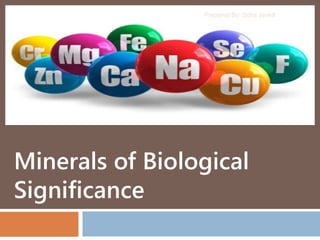
Minerals of Biological
Significance
Prepared By: Sidra Javed
Minerals
 Inorganic elements essential to the nutrition of
humans
 5% human body weight is mineral matter
 Vital to all mental & physical processes
 Play several key roles in overall health and well
being
 Help chemical reactions take place in cells
 Help muscles contract
 Keep the heart beating
Prepared By: Sidra Javed
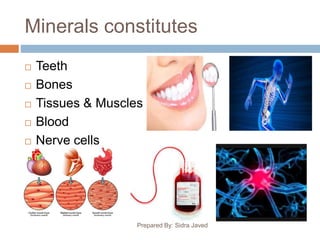
Minerals constitutes
 Teeth
 Bones
 Tissues & Muscles
 Blood
 Nerve cells
Prepared By: Sidra Javed
Minerals are necessary for
 Transmission of messages through nervous
system
 Digestion
 Metabolism
 Utilization of all nutrients in foods
 Absorption of Vitamins
 Ca is needed for Vitamin C
 Zn for Vitamin A
 Mg for Vitamin B Complex
 Se for Vitamin E
Prepared By: Sidra Javed
Minerals are categorized as:
 Major Minerals
 Sodium
 Potassium
 Chloride
 Calcium
 Magnesium
 Phosphorous
 Trace Elements
 Iron
 Zinc
 Copper
 Chromium
 Fluoride
 Iodine
Prepared By: Sidra Javed
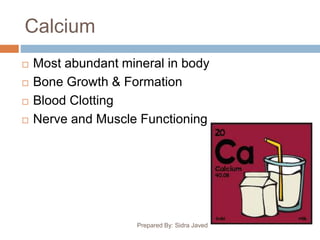
Calcium
 Most abundant mineral in body
 Bone Growth & Formation
 Blood Clotting
 Nerve and Muscle Functioning
Prepared By: Sidra Javed
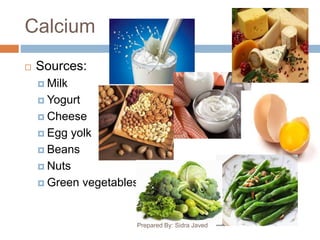
Calcium
 Sources:
 Milk
 Yogurt
 Cheese
 Egg yolk
 Beans
 Nuts
 Green vegetables
Prepared By: Sidra Javed
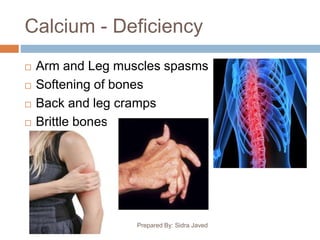
Calcium - Deficiency
 Arm and Leg muscles spasms
 Softening of bones
 Back and leg cramps
 Brittle bones
Prepared By: Sidra Javed
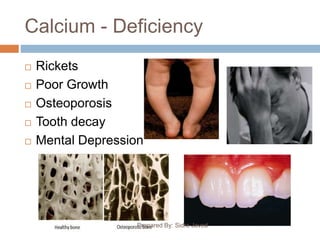
Calcium - Deficiency
 Rickets
 Poor Growth
 Osteoporosis
 Tooth decay
 Mental Depression
Prepared By: Sidra Javed
Significance of Calcium
Prepared By: Sidra Javed
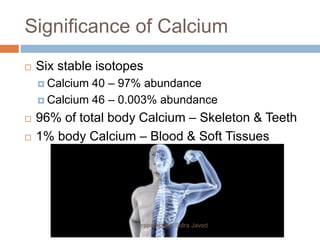
 Six stable isotopes
 Calcium 40 – 97% abundance
 Calcium 46 – 0.003% abundance
 96% of total body Calcium – Skeleton & Teeth
 1% body Calcium – Blood & Soft Tissues
Significance of Calcium
Prepared By: Sidra Javed
 Integrity of whole body system depends upon
Vitamin D status
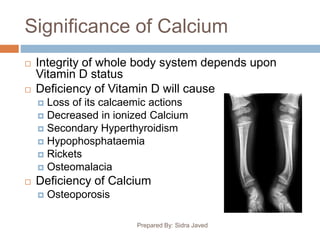
 Deficiency of Vitamin D will cause
 Loss of its calcaemic actions
 Decreased in ionized Calcium
 Secondary Hyperthyroidism
 Hypophosphataemia
 Rickets
 Osteomalacia
 Deficiency of Calcium
 Osteoporosis
Major Functions of Calcium are:
Prepared By: Sidra Javed
 Structural function
 Stores in bones / skeleton
 Electrophysiological
 Carries charges during an action potential across
membrane
 Intracellular regulator
 As a Cofactor for extracellular enzymes and
regulatory proteins
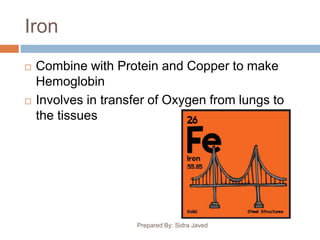
Iron
 Combine with Protein and Copper to make
Hemoglobin
 Involves in transfer of Oxygen from lungs to
the tissues
Prepared By: Sidra Javed
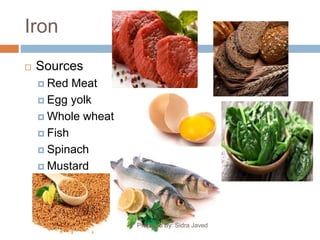
Iron
 Sources
 Red Meat
 Egg yolk
 Whole wheat
 Fish
 Spinach
 Mustard
Prepared By: Sidra Javed
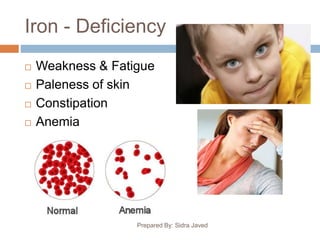
Iron - Deficiency
 Weakness & Fatigue
 Paleness of skin
 Constipation
 Anemia
Prepared By: Sidra Javed
Significance of Iron
Prepared By: Sidra Javed
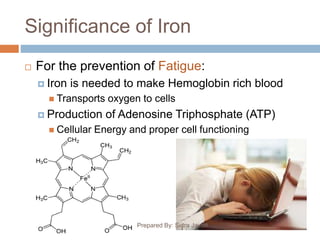
 For the prevention of Fatigue:
 Iron is needed to make Hemoglobin rich blood
 Transports oxygen to cells
 Production of Adenosine Triphosphate (ATP)
 Cellular Energy and proper cell functioning
Significance of Iron
Prepared By: Sidra Javed
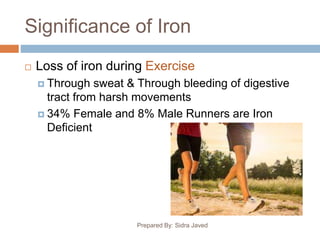
 Loss of iron during Exercise
 Through sweat & Through bleeding of digestive
tract from harsh movements
 34% Female and 8% Male Runners are Iron
Deficient
Significance of Iron
Prepared By: Sidra Javed
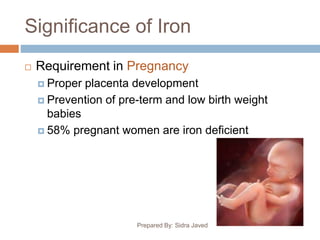
 Requirement in Pregnancy
 Proper placenta development
 Prevention of pre-term and low birth weight
babies
 58% pregnant women are iron deficient
Significance of Iron
Prepared By: Sidra Javed
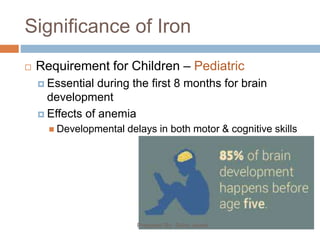
 Requirement for Children – Pediatric
 Essential during the first 8 months for brain
development
 Effects of anemia
 Developmental delays in both motor & cognitive skills
Significance of Iron
Prepared By: Sidra Javed
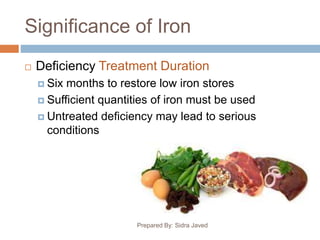
 Deficiency Treatment Duration
 Six months to restore low iron stores
 Sufficient quantities of iron must be used
 Untreated deficiency may lead to serious
conditions
Significance of Iron
Prepared By: Sidra Javed
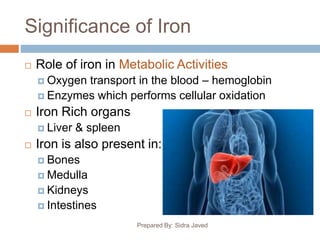
 Role of iron in Metabolic Activities
 Oxygen transport in the blood – hemoglobin
 Enzymes which performs cellular oxidation
 Iron Rich organs
 Liver & spleen
 Iron is also present in:
 Bones
 Medulla
 Kidneys
 Intestines
Phosphorous
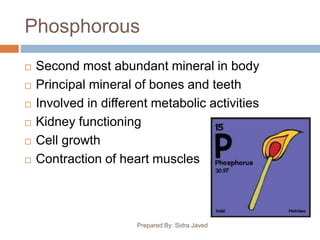
 Second most abundant mineral in body
 Principal mineral of bones and teeth
 Involved in different metabolic activities
 Kidney functioning
 Cell growth
 Contraction of heart muscles
Prepared By: Sidra Javed
Phosphorous
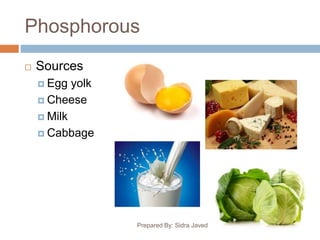
 Sources
 Egg yolk
 Cheese
 Milk
 Cabbage
Prepared By: Sidra Javed
Phosphorous - Deficiency
Prepared By: Sidra Javed
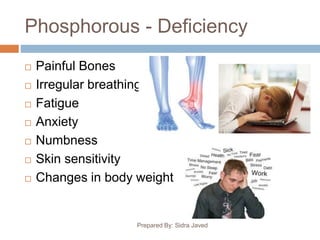
 Painful Bones
 Irregular breathing
 Fatigue
 Anxiety
 Numbness
 Skin sensitivity
 Changes in body weight
Significance of Phosphorus
Prepared By: Sidra Javed
 Human body contains 1lb (454 g) Phosphorus
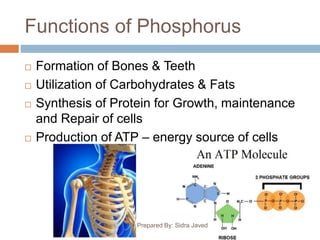
 Component of Adenosine Triphosphate (ATP)
 Found in blood, muscles, nerves and in
Calcium phosphate – Bones and Teeth
 Organic Phosphate, ferric phosphate and
Calcium phosphate are added to foods
 Dicalcium Phosphate is added to animal food
Functions of Phosphorus
Prepared By: Sidra Javed
 Formation of Bones & Teeth
 Utilization of Carbohydrates & Fats
 Synthesis of Protein for Growth, maintenance
and Repair of cells
 Production of ATP – energy source of cells
Functions of Phosphorus
Prepared By: Sidra Javed
 Works with Vitamin B complex
 Contraction of muscles
 Kidney Functions
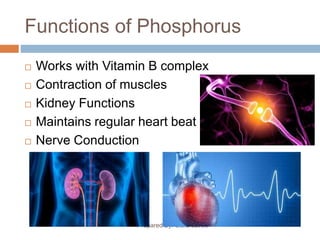
 Maintains regular heart beat
 Nerve Conduction
Zinc
Prepared By: Sidra Javed
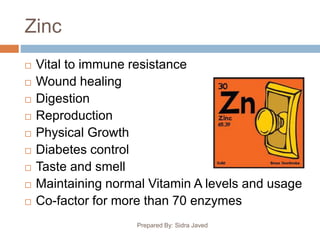
 Vital to immune resistance
 Wound healing
 Digestion
 Reproduction
 Physical Growth
 Diabetes control
 Taste and smell
 Maintaining normal Vitamin A levels and usage
 Co-factor for more than 70 enzymes
Zinc
Prepared By: Sidra Javed
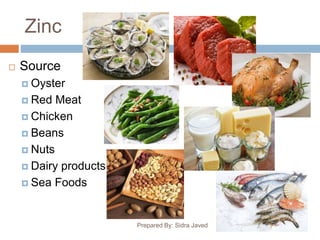
 Source
 Oyster
 Red Meat
 Chicken
 Beans
 Nuts
 Dairy products
 Sea Foods
Zinc - Deficiency
Prepared By: Sidra Javed
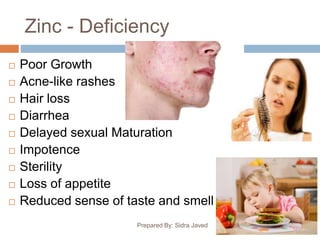
 Poor Growth
 Acne-like rashes
 Hair loss
 Diarrhea
 Delayed sexual Maturation
 Impotence
 Sterility
 Loss of appetite
 Reduced sense of taste and smell
Zinc - Deficiency
Prepared By: Sidra Javed
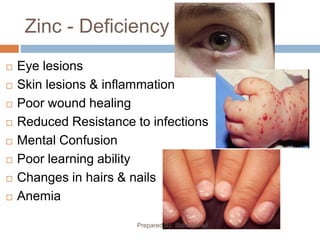
 Eye lesions
 Skin lesions & inflammation
 Poor wound healing
 Reduced Resistance to infections
 Mental Confusion
 Poor learning ability
 Changes in hairs & nails
 Anemia
Significance of Zinc
Prepared By: Sidra Javed
 Most important of all minerals
 Works with more than 100 enzymes
 Removal of Zinc can cause:
 Loss of metabolic activity
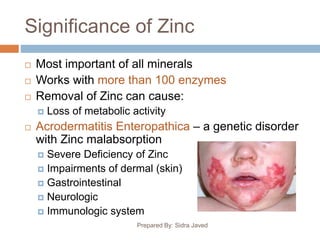
 Acrodermatitis Enteropathica – a genetic disorder
with Zinc malabsorption
 Severe Deficiency of Zinc
 Impairments of dermal (skin)
 Gastrointestinal
 Neurologic
 Immunologic system
Loss of Zinc
Prepared By: Sidra Javed
 Through Gastrointestinal Tract
 Almost half of total body zinc is lost
 Considered amount of zinc is secreted through bile
 Most of it is reabsorbed
 An important point in regulation of Zinc levels in body
 Through Urine
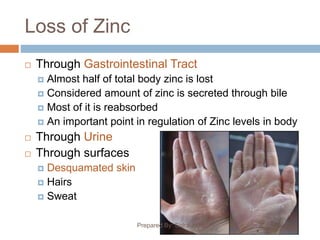
 Through surfaces
 Desquamated skin
 Hairs
 Sweat
Prepared by, Sidra Javed
Prepared By: Sidra Javed

Minerals

  • 1.
    Chapter # 21 XIIFDC Prepared By: Sidra Javed
  • 2.
  • 3.
    Minerals  Inorganic elementsessential to the nutrition of humans  5% human body weight is mineral matter  Vital to all mental & physical processes  Play several key roles in overall health and well being  Help chemical reactions take place in cells  Help muscles contract  Keep the heart beating Prepared By: Sidra Javed
  • 4.
    Minerals constitutes  Teeth Bones  Tissues & Muscles  Blood  Nerve cells Prepared By: Sidra Javed
  • 5.
    Minerals are necessaryfor  Transmission of messages through nervous system  Digestion  Metabolism  Utilization of all nutrients in foods  Absorption of Vitamins  Ca is needed for Vitamin C  Zn for Vitamin A  Mg for Vitamin B Complex  Se for Vitamin E Prepared By: Sidra Javed
  • 6.
    Minerals are categorizedas:  Major Minerals  Sodium  Potassium  Chloride  Calcium  Magnesium  Phosphorous  Trace Elements  Iron  Zinc  Copper  Chromium  Fluoride  Iodine Prepared By: Sidra Javed
  • 7.
    Calcium  Most abundantmineral in body  Bone Growth & Formation  Blood Clotting  Nerve and Muscle Functioning Prepared By: Sidra Javed
  • 8.
    Calcium  Sources:  Milk Yogurt  Cheese  Egg yolk  Beans  Nuts  Green vegetables Prepared By: Sidra Javed
  • 9.
    Calcium - Deficiency Arm and Leg muscles spasms  Softening of bones  Back and leg cramps  Brittle bones Prepared By: Sidra Javed
  • 10.
    Calcium - Deficiency Rickets  Poor Growth  Osteoporosis  Tooth decay  Mental Depression Prepared By: Sidra Javed
  • 11.
    Significance of Calcium PreparedBy: Sidra Javed  Six stable isotopes  Calcium 40 – 97% abundance  Calcium 46 – 0.003% abundance  96% of total body Calcium – Skeleton & Teeth  1% body Calcium – Blood & Soft Tissues
  • 12.
    Significance of Calcium PreparedBy: Sidra Javed  Integrity of whole body system depends upon Vitamin D status  Deficiency of Vitamin D will cause  Loss of its calcaemic actions  Decreased in ionized Calcium  Secondary Hyperthyroidism  Hypophosphataemia  Rickets  Osteomalacia  Deficiency of Calcium  Osteoporosis
  • 13.
    Major Functions ofCalcium are: Prepared By: Sidra Javed  Structural function  Stores in bones / skeleton  Electrophysiological  Carries charges during an action potential across membrane  Intracellular regulator  As a Cofactor for extracellular enzymes and regulatory proteins
  • 14.
    Iron  Combine withProtein and Copper to make Hemoglobin  Involves in transfer of Oxygen from lungs to the tissues Prepared By: Sidra Javed
  • 15.
    Iron  Sources  RedMeat  Egg yolk  Whole wheat  Fish  Spinach  Mustard Prepared By: Sidra Javed
  • 16.
    Iron - Deficiency Weakness & Fatigue  Paleness of skin  Constipation  Anemia Prepared By: Sidra Javed
  • 17.
    Significance of Iron PreparedBy: Sidra Javed  For the prevention of Fatigue:  Iron is needed to make Hemoglobin rich blood  Transports oxygen to cells  Production of Adenosine Triphosphate (ATP)  Cellular Energy and proper cell functioning
  • 18.
    Significance of Iron PreparedBy: Sidra Javed  Loss of iron during Exercise  Through sweat & Through bleeding of digestive tract from harsh movements  34% Female and 8% Male Runners are Iron Deficient
  • 19.
    Significance of Iron PreparedBy: Sidra Javed  Requirement in Pregnancy  Proper placenta development  Prevention of pre-term and low birth weight babies  58% pregnant women are iron deficient
  • 20.
    Significance of Iron PreparedBy: Sidra Javed  Requirement for Children – Pediatric  Essential during the first 8 months for brain development  Effects of anemia  Developmental delays in both motor & cognitive skills
  • 21.
    Significance of Iron PreparedBy: Sidra Javed  Deficiency Treatment Duration  Six months to restore low iron stores  Sufficient quantities of iron must be used  Untreated deficiency may lead to serious conditions
  • 22.
    Significance of Iron PreparedBy: Sidra Javed  Role of iron in Metabolic Activities  Oxygen transport in the blood – hemoglobin  Enzymes which performs cellular oxidation  Iron Rich organs  Liver & spleen  Iron is also present in:  Bones  Medulla  Kidneys  Intestines
  • 23.
    Phosphorous  Second mostabundant mineral in body  Principal mineral of bones and teeth  Involved in different metabolic activities  Kidney functioning  Cell growth  Contraction of heart muscles Prepared By: Sidra Javed
  • 24.
    Phosphorous  Sources  Eggyolk  Cheese  Milk  Cabbage Prepared By: Sidra Javed
  • 25.
    Phosphorous - Deficiency PreparedBy: Sidra Javed  Painful Bones  Irregular breathing  Fatigue  Anxiety  Numbness  Skin sensitivity  Changes in body weight
  • 26.
    Significance of Phosphorus PreparedBy: Sidra Javed  Human body contains 1lb (454 g) Phosphorus  Component of Adenosine Triphosphate (ATP)  Found in blood, muscles, nerves and in Calcium phosphate – Bones and Teeth  Organic Phosphate, ferric phosphate and Calcium phosphate are added to foods  Dicalcium Phosphate is added to animal food
  • 27.
    Functions of Phosphorus PreparedBy: Sidra Javed  Formation of Bones & Teeth  Utilization of Carbohydrates & Fats  Synthesis of Protein for Growth, maintenance and Repair of cells  Production of ATP – energy source of cells
  • 28.
    Functions of Phosphorus PreparedBy: Sidra Javed  Works with Vitamin B complex  Contraction of muscles  Kidney Functions  Maintains regular heart beat  Nerve Conduction
  • 29.
    Zinc Prepared By: SidraJaved  Vital to immune resistance  Wound healing  Digestion  Reproduction  Physical Growth  Diabetes control  Taste and smell  Maintaining normal Vitamin A levels and usage  Co-factor for more than 70 enzymes
  • 30.
    Zinc Prepared By: SidraJaved  Source  Oyster  Red Meat  Chicken  Beans  Nuts  Dairy products  Sea Foods
  • 31.
    Zinc - Deficiency PreparedBy: Sidra Javed  Poor Growth  Acne-like rashes  Hair loss  Diarrhea  Delayed sexual Maturation  Impotence  Sterility  Loss of appetite  Reduced sense of taste and smell
  • 32.
    Zinc - Deficiency PreparedBy: Sidra Javed  Eye lesions  Skin lesions & inflammation  Poor wound healing  Reduced Resistance to infections  Mental Confusion  Poor learning ability  Changes in hairs & nails  Anemia
  • 33.
    Significance of Zinc PreparedBy: Sidra Javed  Most important of all minerals  Works with more than 100 enzymes  Removal of Zinc can cause:  Loss of metabolic activity  Acrodermatitis Enteropathica – a genetic disorder with Zinc malabsorption  Severe Deficiency of Zinc  Impairments of dermal (skin)  Gastrointestinal  Neurologic  Immunologic system
  • 34.
    Loss of Zinc PreparedBy: Sidra Javed  Through Gastrointestinal Tract  Almost half of total body zinc is lost  Considered amount of zinc is secreted through bile  Most of it is reabsorbed  An important point in regulation of Zinc levels in body  Through Urine  Through surfaces  Desquamated skin  Hairs  Sweat
  • 35.
    Prepared by, SidraJaved Prepared By: Sidra Javed