MINERALS
Dr. Farhana Atia
Assistant Professor (Biochemistry)
Nilphamari Medical College, Nilphamari
Bangladesh
Minerals
Minerals are inorganic elements required in small
amounts by the body (micronutrients).
• Widely distributed in food
• Requirement vary from g/day [Na, Ca], mg/day [Fe, Zn] or
µg/day [Iodine]
• Mixed diet provide sufficient amount
• Insufficient intake produce deficiency sign (anemia,
cretinism, goiter)
• Excessive intake may be toxic
 Minerals are absorbed from
small intestine either
 by active transport or
 by carrier mediated diffusion
 Calcium absorption: depends
on vitamin D
 Zinc absorption: zinc binding
ligand
 Iron absorption is limited &
strictly controlled
 Functions of minerals
 Formation of bones
& teeth
 Fluid balance
 Nerve conduction
 Muscle contraction
 Signaling
 Catalysis (as enzyme
cofactors)
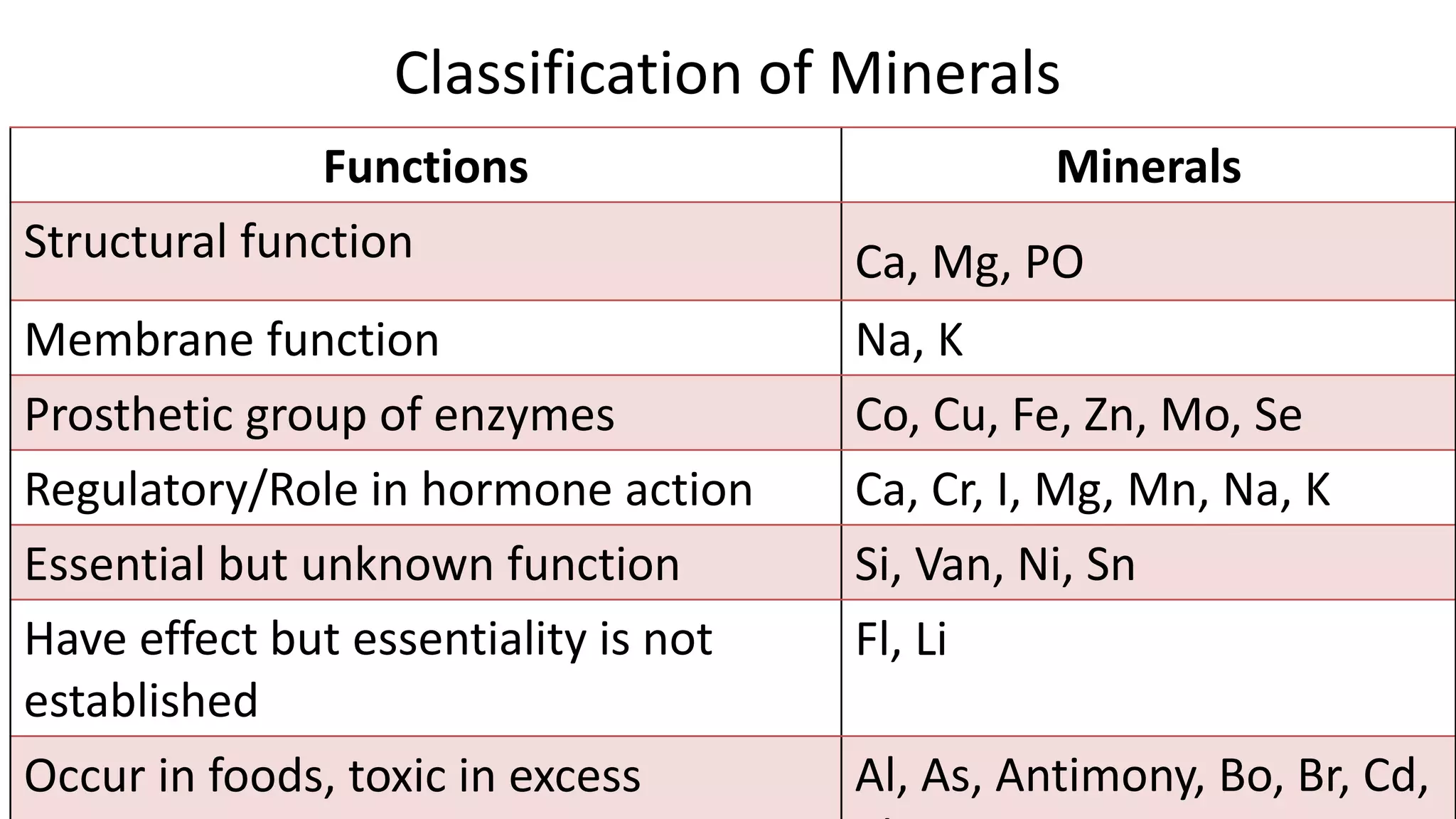
Classification of Minerals
Functions Minerals
Structural function Ca, Mg, PO
Membrane function Na, K
Prosthetic group of enzymes Co, Cu, Fe, Zn, Mo, Se
Regulatory/Role in hormone action Ca, Cr, I, Mg, Mn, Na, K
Essential but unknown function Si, Van, Ni, Sn
Have effect but essentiality is not
established
Fl, Li
Occur in foods, toxic in excess Al, As, Antimony, Bo, Br, Cd,
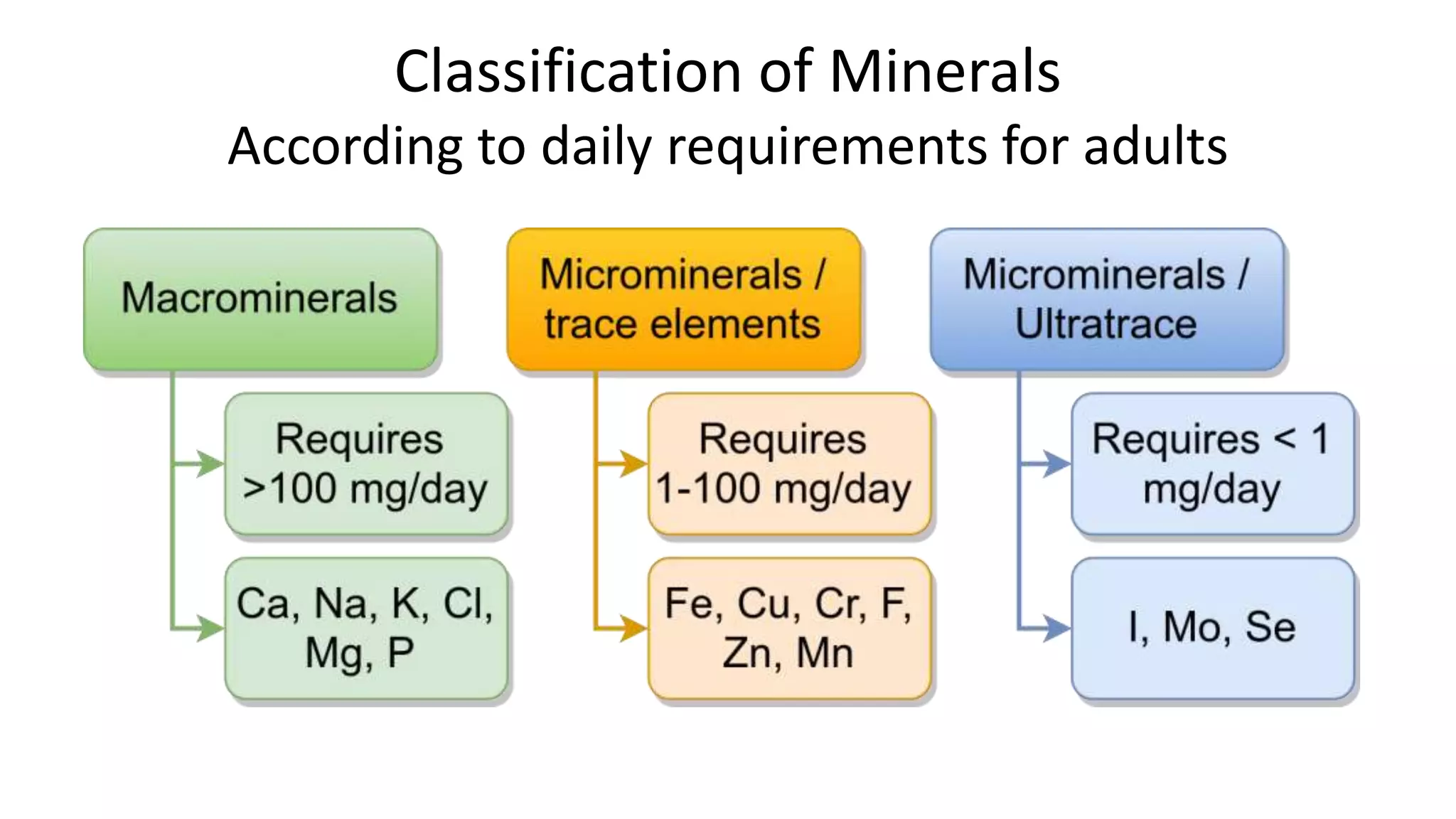
Classification of Minerals
According to daily requirements for adults
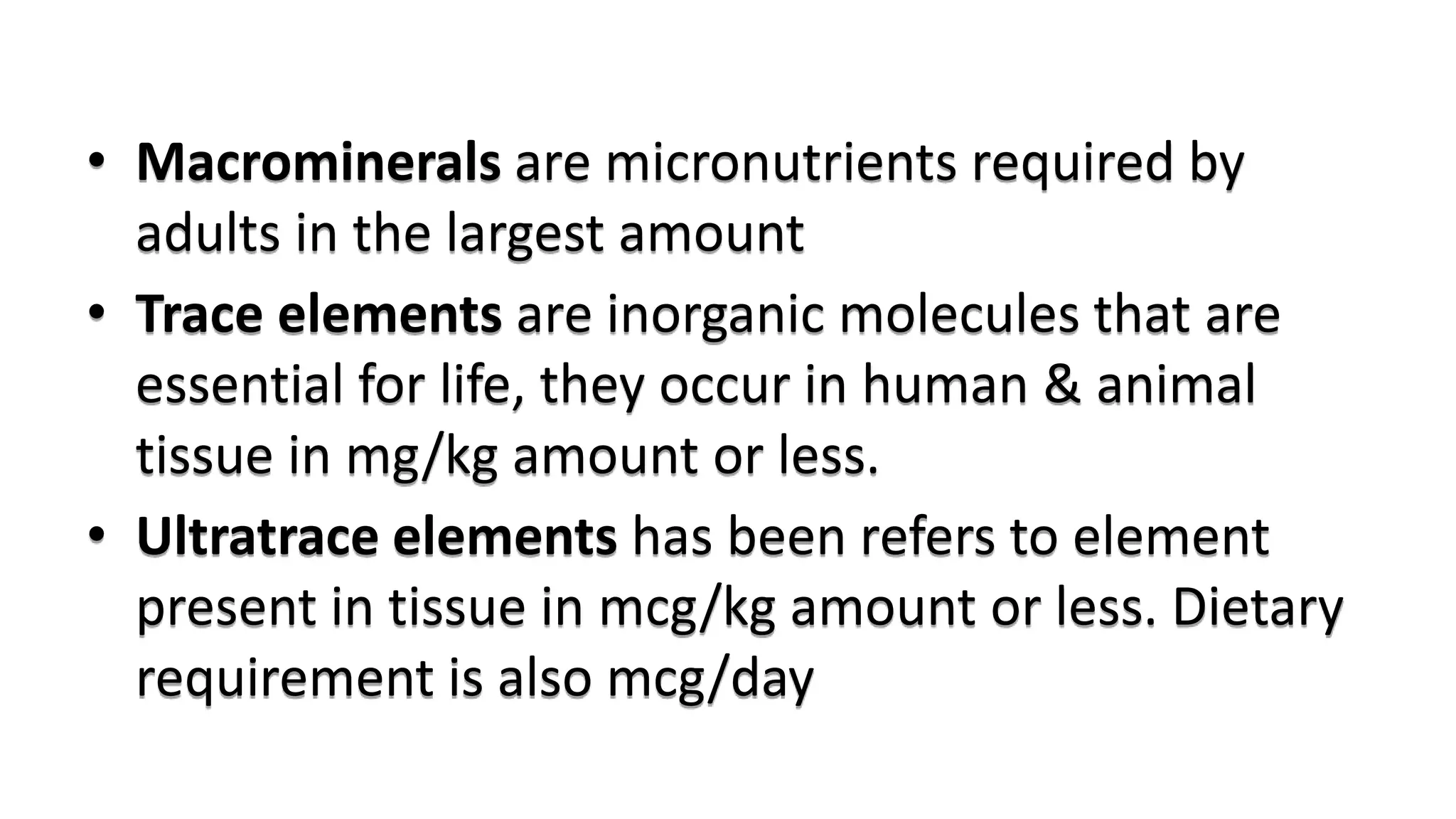
• Macrominerals are micronutrients required by
adults in the largest amount
• Trace elements are inorganic molecules that are
essential for life, they occur in human & animal
tissue in mg/kg amount or less.
• Ultratrace elements has been refers to element
present in tissue in mcg/kg amount or less. Dietary
requirement is also mcg/day
Sodium
• Distribution in body
– 50% - Bones
– 40% - ECF
– 10% -Soft tissues
• RDA : 1000-3000mg
• Dietary source-
Table salt
Salty food
Bread
Whole grains
Leafy vegetables
Fruits
Baking soda
Nuts
Egg
Milk
Functions of Sodium
• Regulates acid base balance
• Maintain osmotic pressure & fluid balance.
• Necessary for normal muscle irritability & cell permeability.
• Role in intestinal absorption of glucose, galactose & amino
acids.
• Involved in initiation & maintenance of heartbeat.
Deficiency: Excess:
Dehydration
Acidosis
Tissue atrophy
Edema
Hypertension
Banana
Orange
Pineapple
Potato
Beans
Chicken
Liver
Coconut water
Potassium
 RDA: 3-4 gm
 Dietary source:
Deficiency
• Acidosis
• Renal damage
• Cardiac arrest
Potassium
FUNCTIONS
 Maintains intracellular
osmotic pressure
 Regulates acid base balance
 Water balance
 Transmission of nerve impulse
 CO₂ transport
Fluoride
 Distribution
 Bones
 Teeth
 RDA: 3.5 - 4 mg
 Source:
 Drinking water
 Sea food
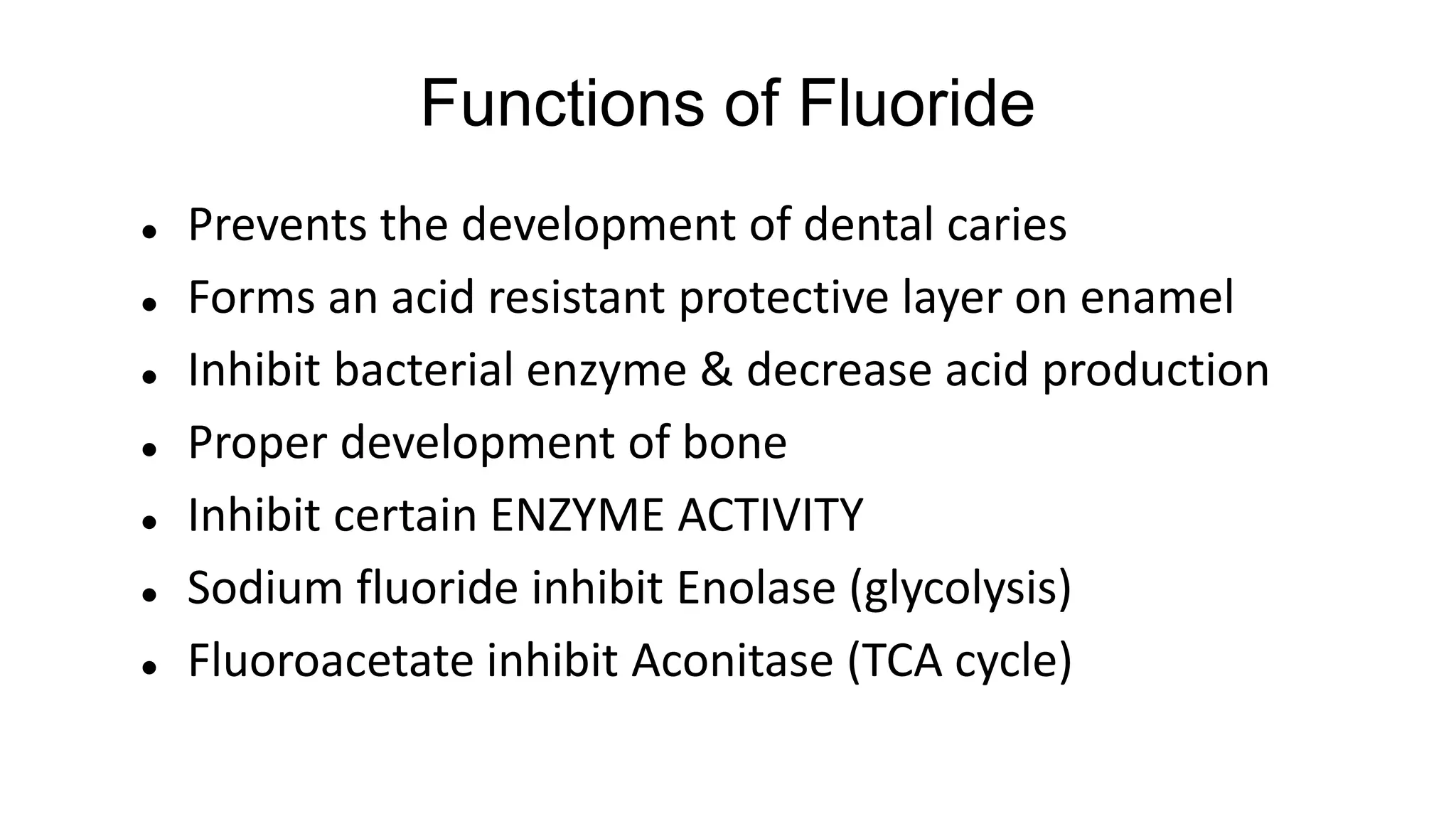
Functions of Fluoride
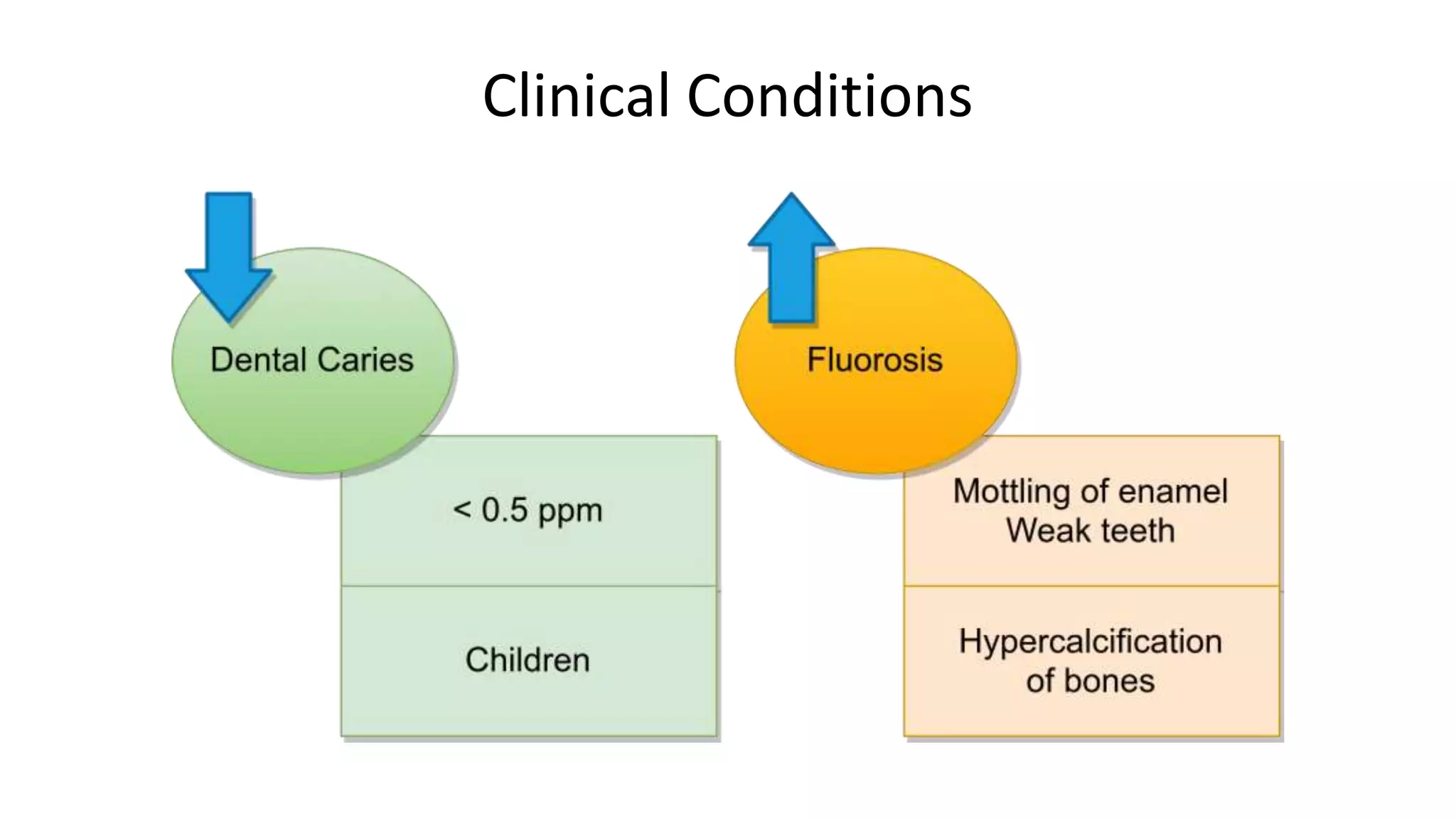
 Prevents the development of dental caries
 Forms an acid resistant protective layer on enamel
 Inhibit bacterial enzyme & decrease acid production
 Proper development of bone
 Inhibit certain ENZYME ACTIVITY
 Sodium fluoride inhibit Enolase (glycolysis)
 Fluoroacetate inhibit Aconitase (TCA cycle)
Clinical Conditions
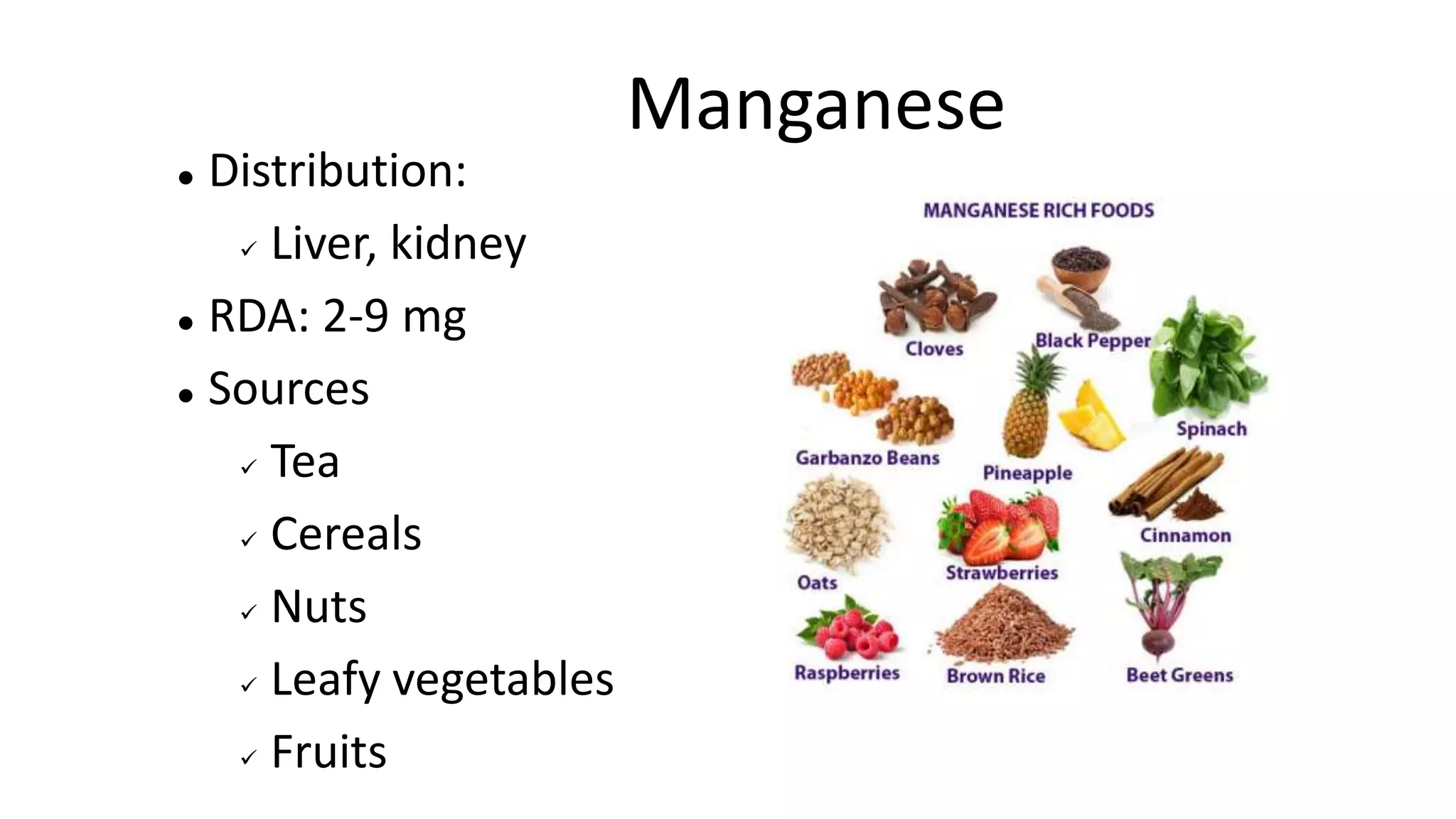
Manganese
 Distribution:
 Liver, kidney
 RDA: 2-9 mg
 Sources
 Tea
 Cereals
 Nuts
 Leafy vegetables
 Fruits
Functions of Manganese
 Cofactors for several enzymes
 Required for bone formation, normal
functioning of nervous system
 Synthesis of mucopolysaccharides &
glycoproteins
 Necessary for synthesis of hemoglobin &
cholesterol
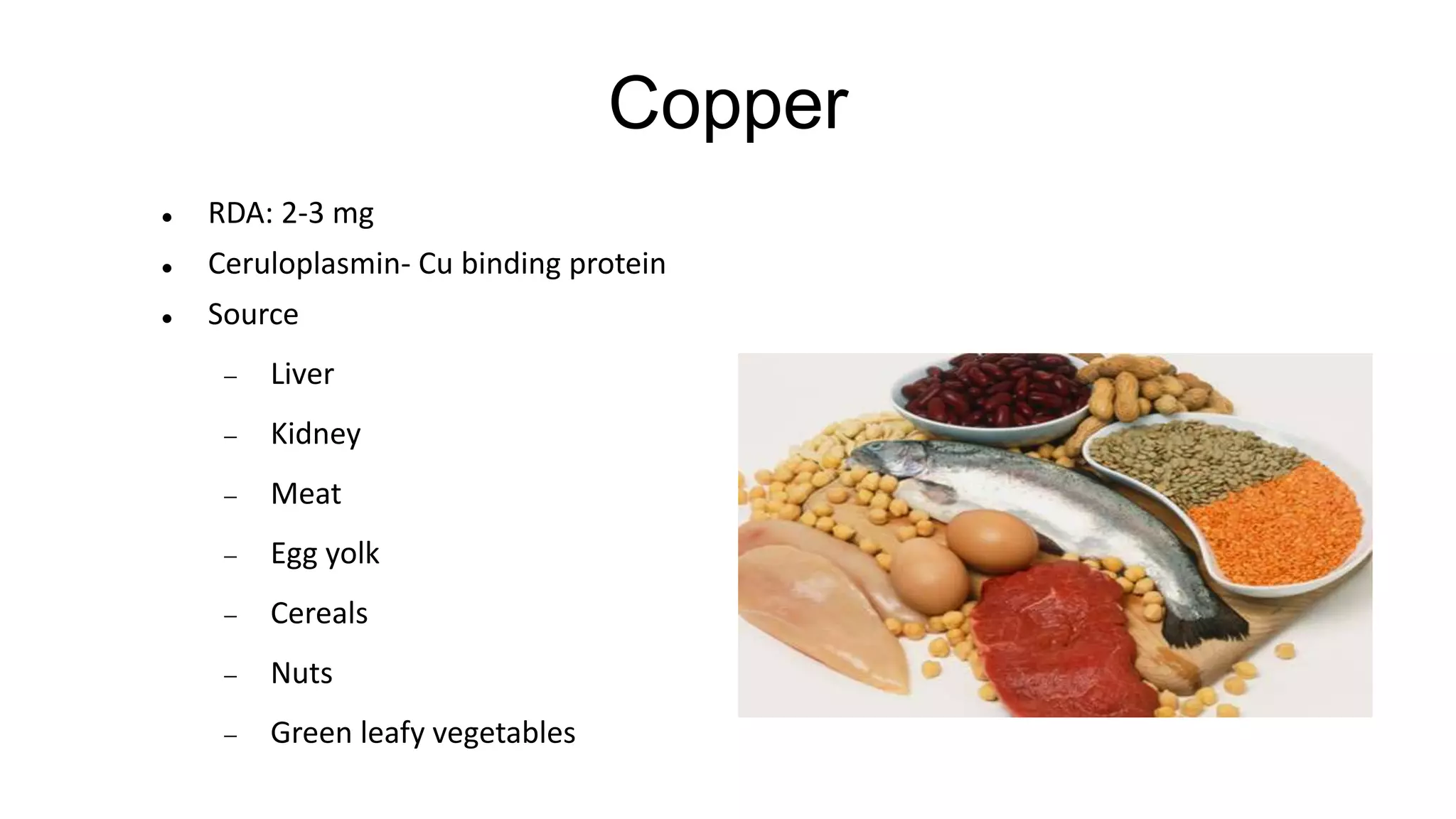
Copper
 RDA: 2-3 mg
 Ceruloplasmin- Cu binding protein
 Source
 Liver
 Kidney
 Meat
 Egg yolk
 Cereals
 Nuts
 Green leafy vegetables
Functions of Copper
 Constituent of several enzymes
 Hemoglobin synthesis
 Collagen synthesis
 Ceruloplasmin: involved in conversion of Fe⁺⁺ to
Fe⁺⁺⁺
 Melanin & PL synthesis
 Development of bone & nervous system
Clinical Conditions
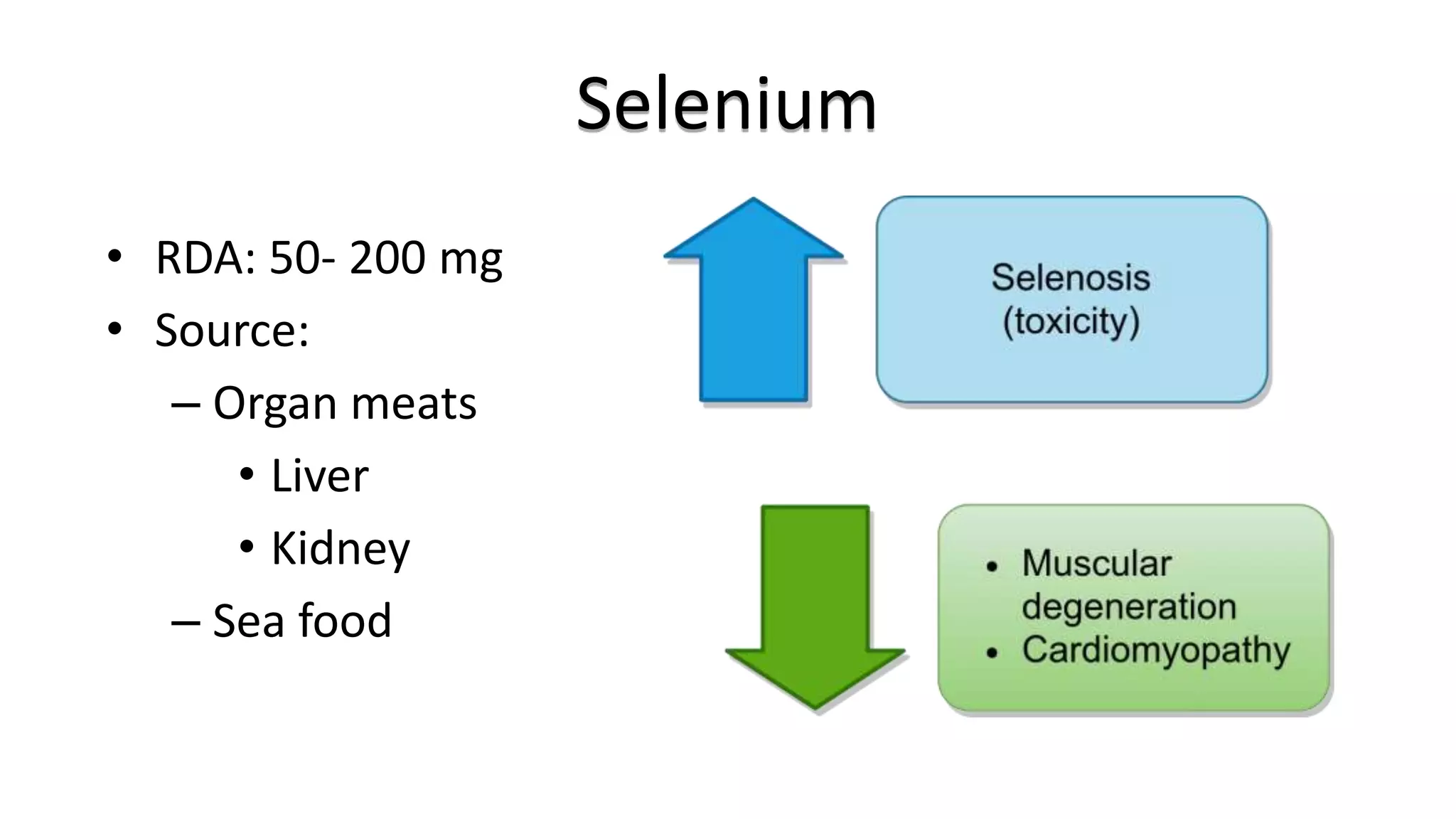
Selenium
• RDA: 50- 200 mg
• Source:
– Organ meats
• Liver
• Kidney
– Sea food
Functions of Selenium
• Prevents hepatic necrosis, muscular dystrophy
• Maintains structural integrity of biological membrane
• Selenocysteine- considered as 21st amino acid
• Prevents lipid peroxidation & protect cells against the
free radicals
• Binds certain heavy metals & protects body
• Se containing enzyme
– Converts T₄ to T₃
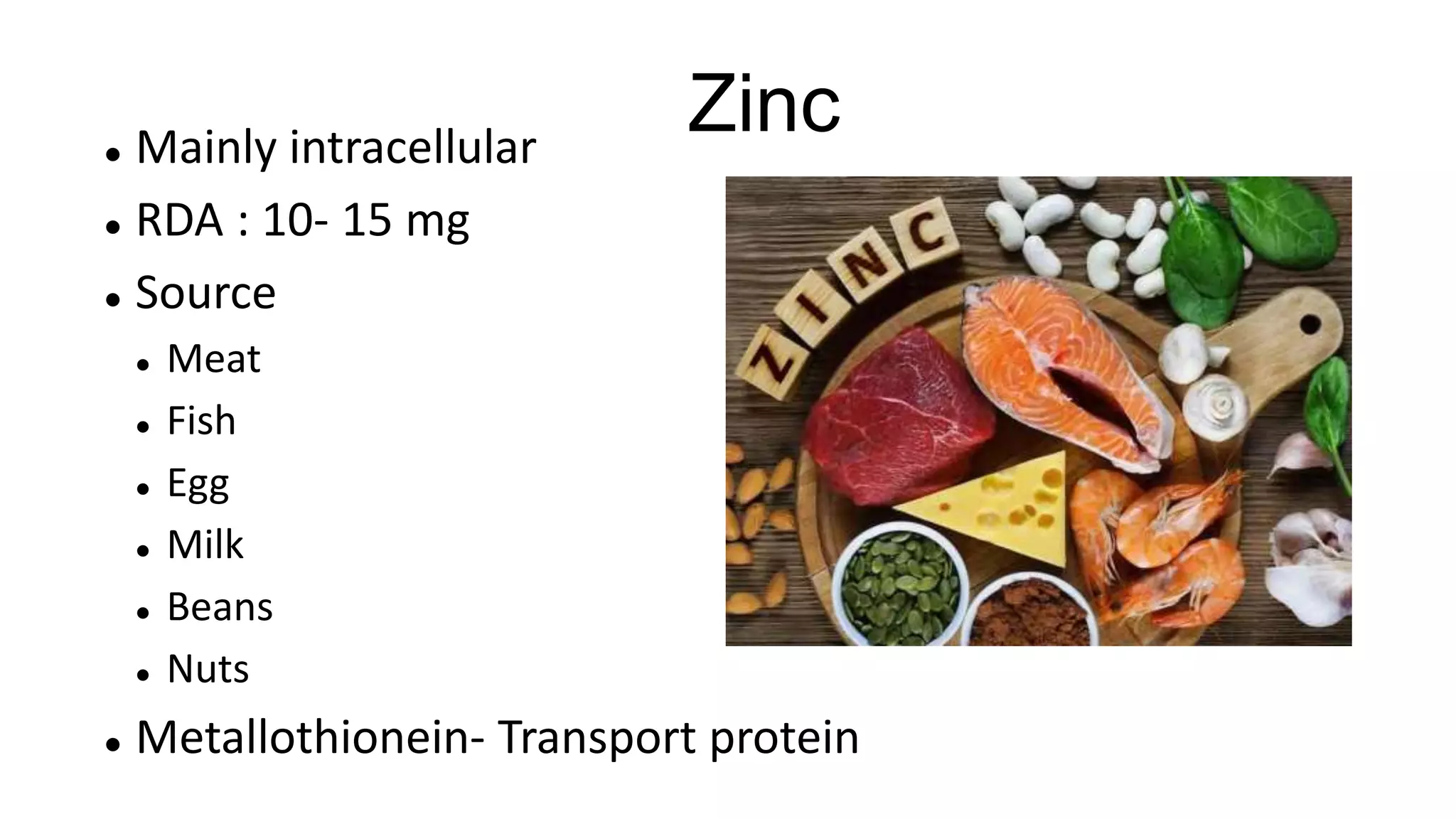
Zinc Mainly intracellular
 RDA : 10- 15 mg
 Source
 Meat
 Fish
 Egg
 Milk
 Beans
 Nuts
 Metallothionein- Transport protein
Functions of Zinc
• Essential component of several enzymes (carbonic
anhydrase, superoxide dismutase)
• Antioxidant– protects the body against free radical damage
• Helps in storage & secretion of Insulin from pancreas
• Maintain normal serum Vitamin A. Synthesis of retinol
binding protein
• Wound healing, enhance cell growth & division
• Essential for reproduction
• Important for taste sensation
Clinical Conditions
Iodine
• Distribution: Thyroid gland (80%), muscle,
salivary gland, ovaries
• RDA : 100- 150 mcg
: 200 mcg (in pg)
• Source
– Sea food
– Drinking water
– Vegetables & fruits (growing on seaboard)
– Iodized salt
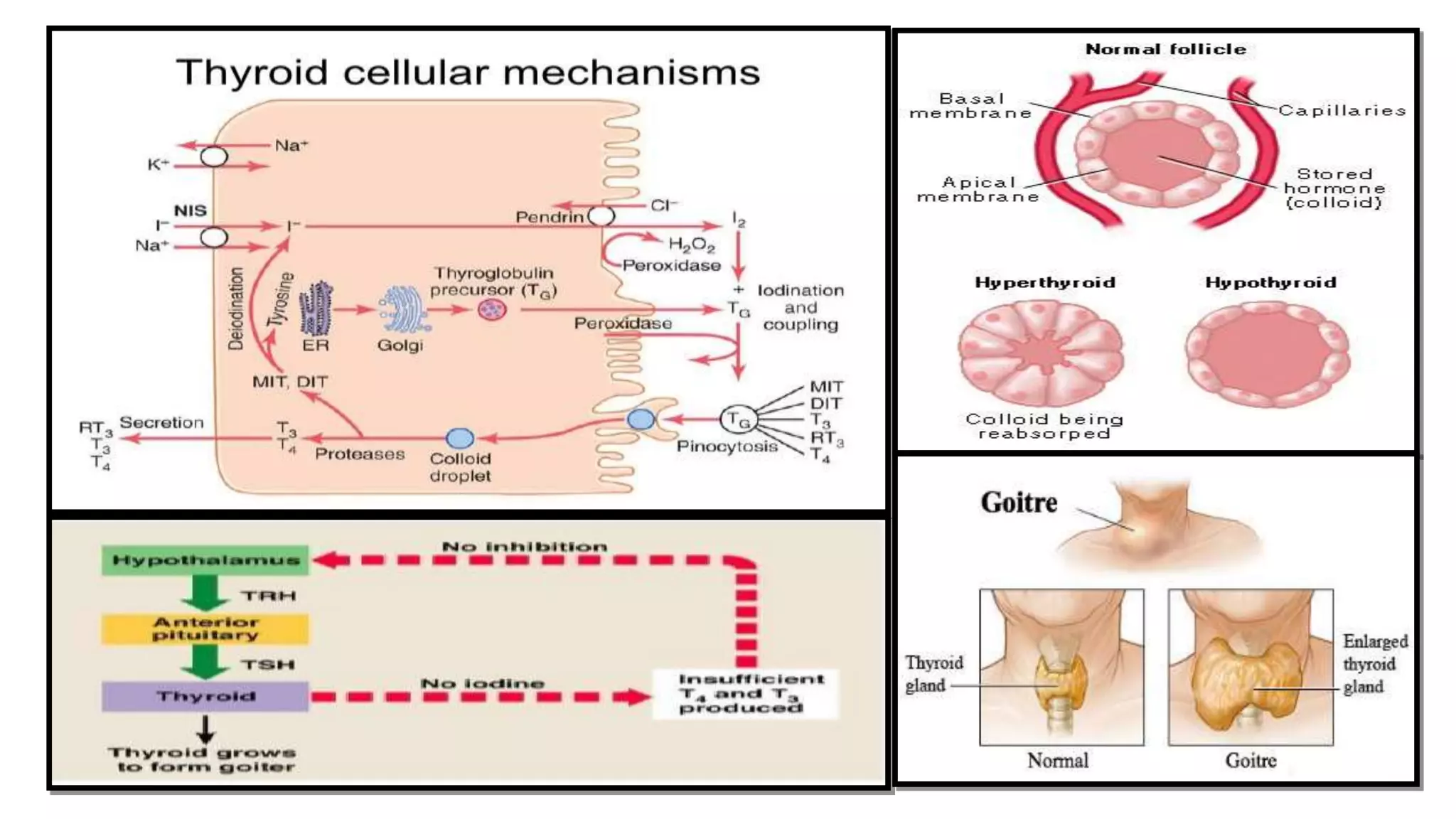
• Functions of Iodine
– Constituent of thyroid hormone: T₄ (thyroxine) & T₃
(triiodothyronine)
– Regulate cellular oxidation
– Crucial for growth & development (as TH)
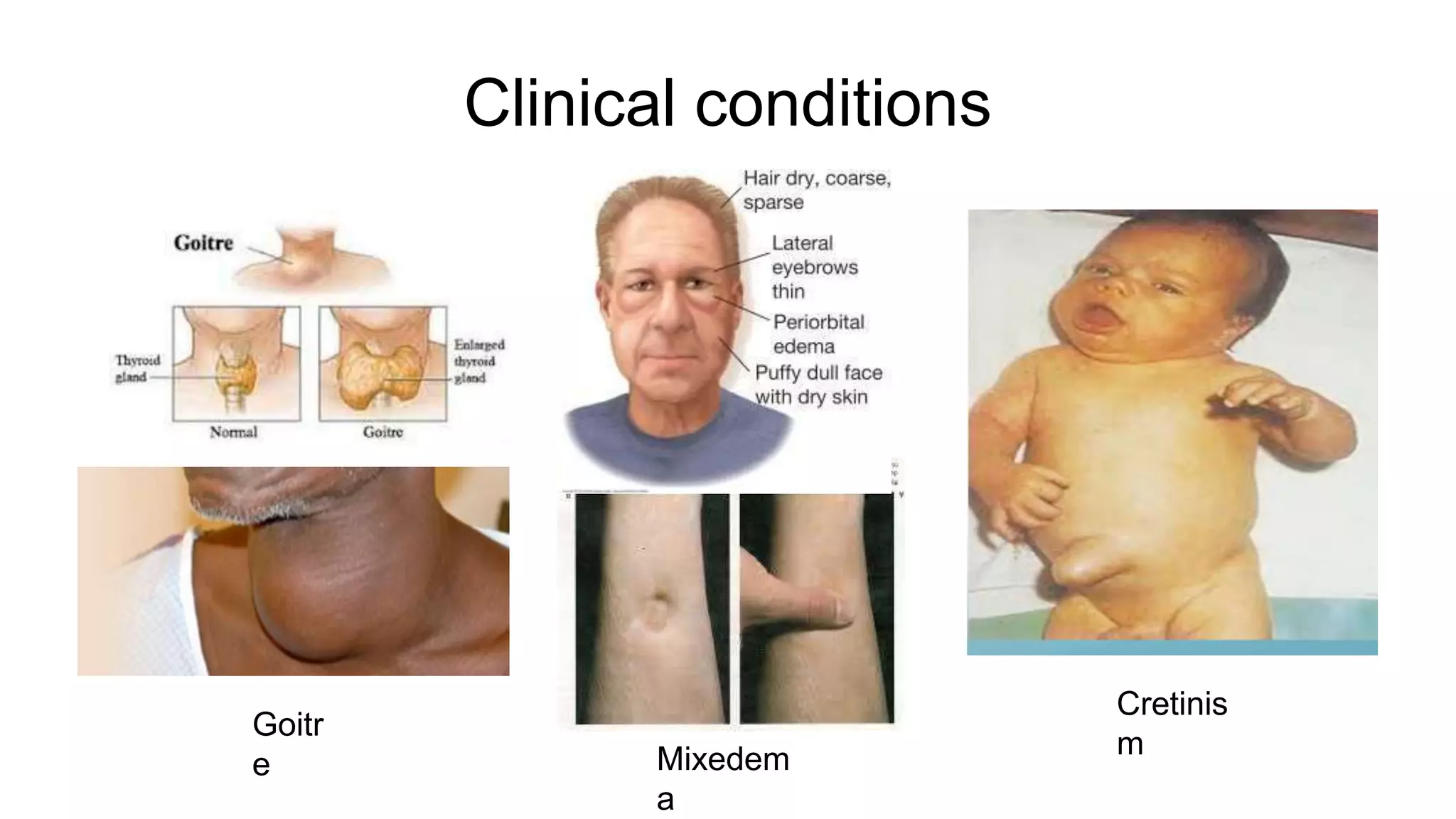
• Deficiency
– Goitre
– Myxedema (adult)
– Cretinism (children)
Clinical conditions
Goitr
e Mixedem
a
Cretinis
m
IRON
• Total body iron: 3- 4 gm
• RDA
– Male : 10 mg
– Female: 18 mg
– 10% of dietary iron is absorbed (1- 2mg)
• Source: Liver
Meat
Heart
Kidney
Fish
Leafy vegetables
Pulses
Cereals
Apples
Dried fruits
Functions of Iron
 Constituent of several proteins/enzymes- hemoglobin,
myoglobin, cytochromes, xanthine oxidase, catalase,
peroxidase.
 Transport of O₂ & CO₂ (Hb & myoglobin)
 Necessary for electron transport chain & oxidative
phosphorylation (Cytochromes & some nonheme
protein)
 Phagocytosis & killing of bacteria by neutrophils
Clinical Conditions
 Iron deficiency anemia
(Hypochromic
Mycrocytic Anemia)
 Hemochromatosis
 Hemosiderosis
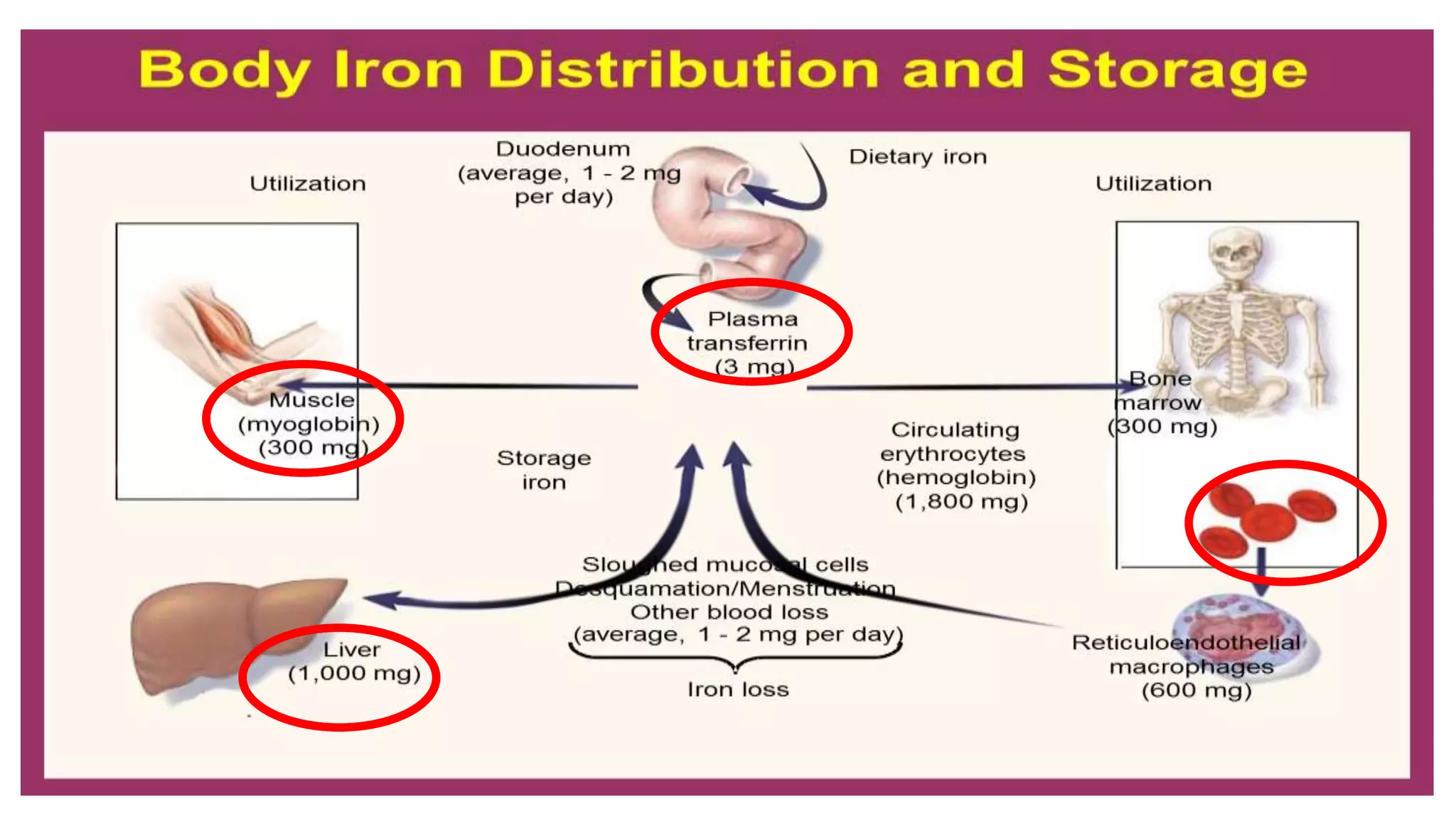
Transferrin Hemoglobin
in RBC
Myoglobin &
enzyme
Stored
(Ferritin)
3-4 mg 2500 mg 300 mg 1000 mg
Iron Distribution in 70 kg adult male
Total: 3-4 gm (In female: 100-400 mg less)
Absorption & loss: 1 mg/day (Female: 1.5-2 mg/day)
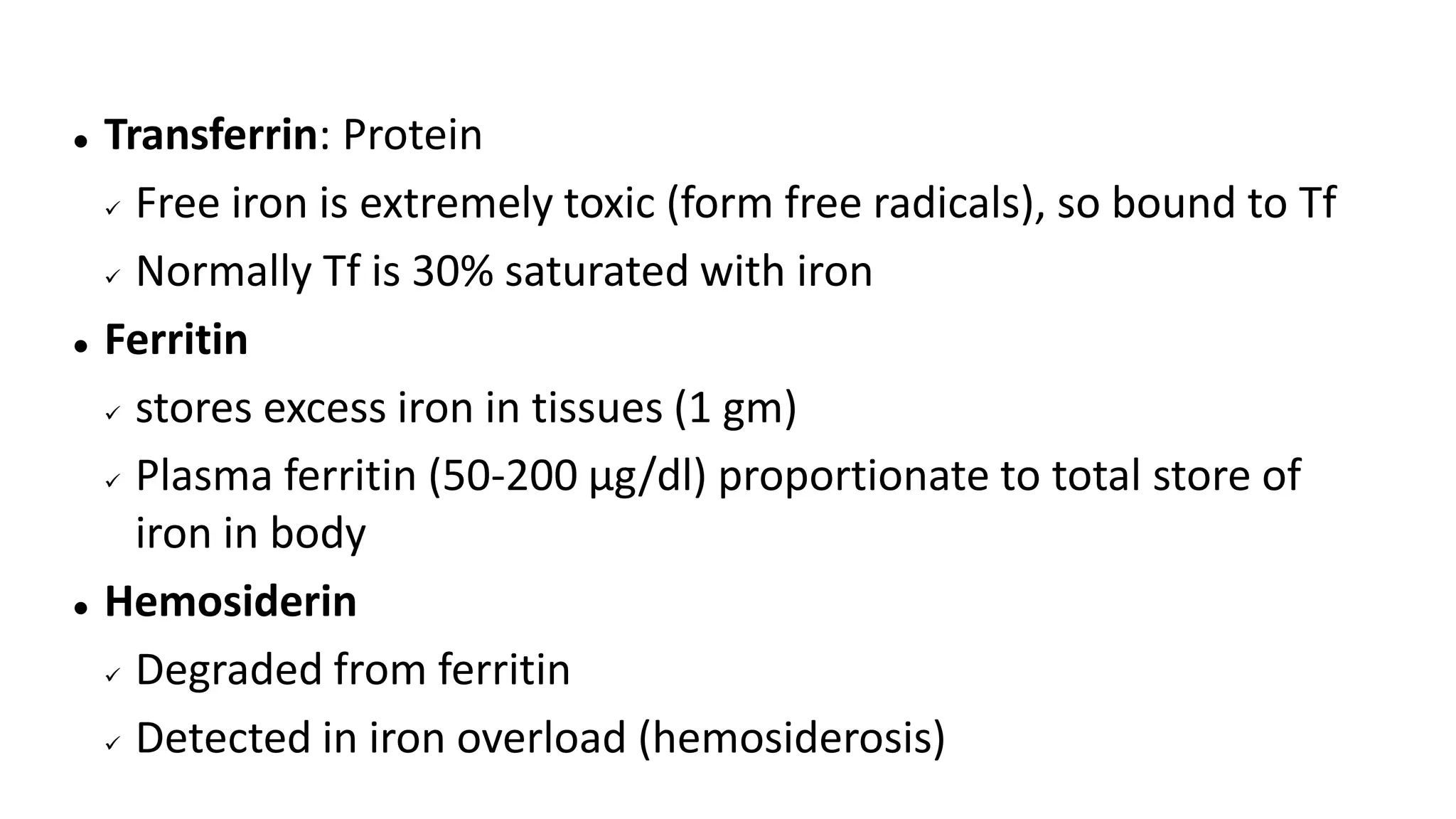
 Transferrin: Protein
 Free iron is extremely toxic (form free radicals), so bound to Tf
 Normally Tf is 30% saturated with iron
 Ferritin
 stores excess iron in tissues (1 gm)
 Plasma ferritin (50-200 µg/dl) proportionate to total store of
iron in body
 Hemosiderin
 Degraded from ferritin
 Detected in iron overload (hemosiderosis)
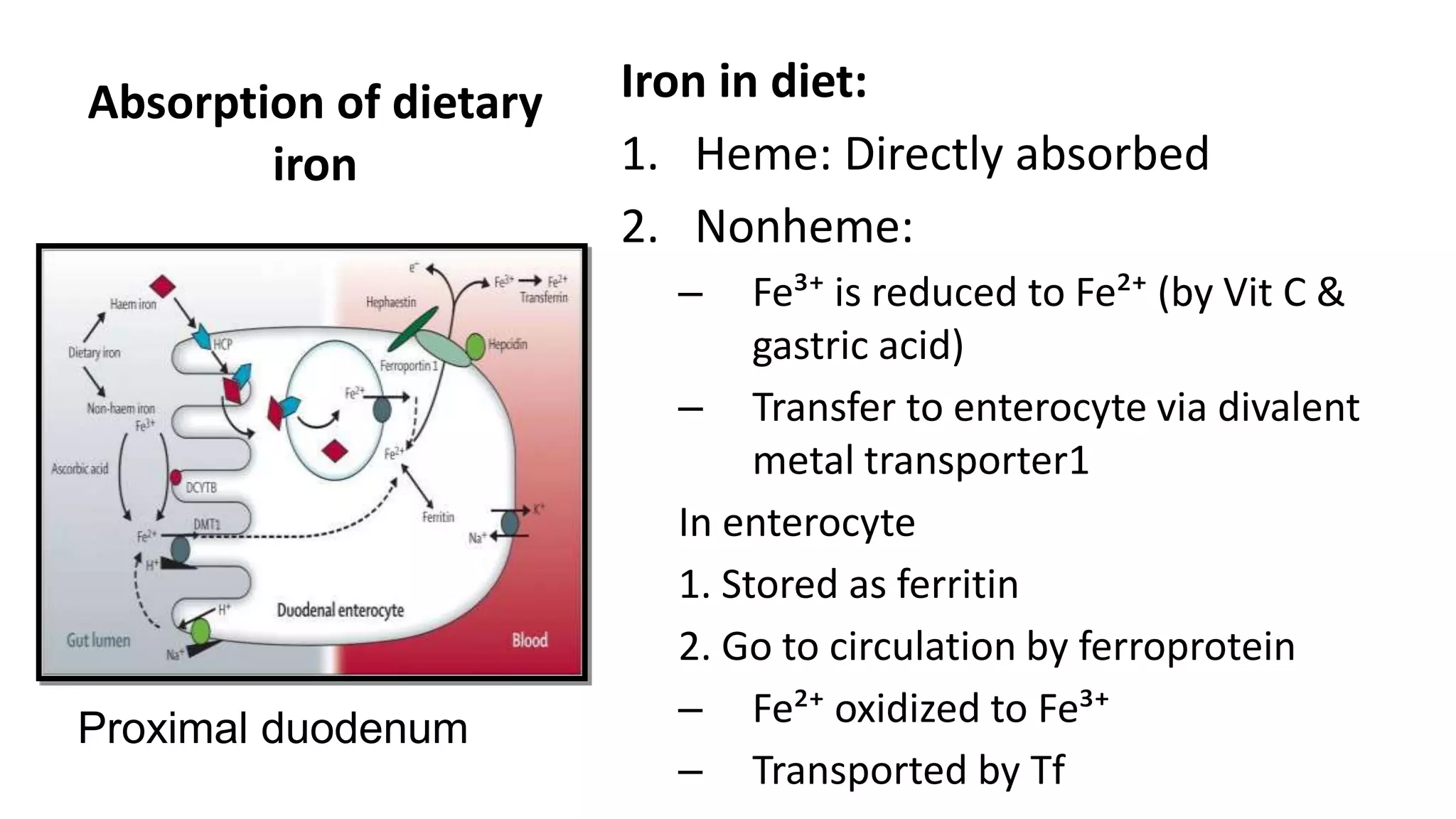
Absorption of dietary
iron
Iron in diet:
1. Heme: Directly absorbed
2. Nonheme:
– Fe³⁺ is reduced to Fe²⁺ (by Vit C &
gastric acid)
– Transfer to enterocyte via divalent
metal transporter1
In enterocyte
1. Stored as ferritin
2. Go to circulation by ferroprotein
– Fe²⁺ oxidized to Fe³⁺
– Transported by Tf
Proximal duodenum
RBC life span: 120 days
Damaged erythrocytes are phagocytosed by macrophages of RES
Hb → Heme [+ globin]→ Fe+ Biliverdin
3-4 mg
20-25mg/d
5mg/d
2500mg
1000mg
CALCIUM
 Most abundant mineral in the body
 Total Ca: 1- 1.5 kg
 99% Bones, teeth
 1% Outside skeletal tissue but have wide variety of
functions
 RDA
 Adult : 800 mg
 Children : 800-1200 mg
 Pg, lactation : 1500 mg
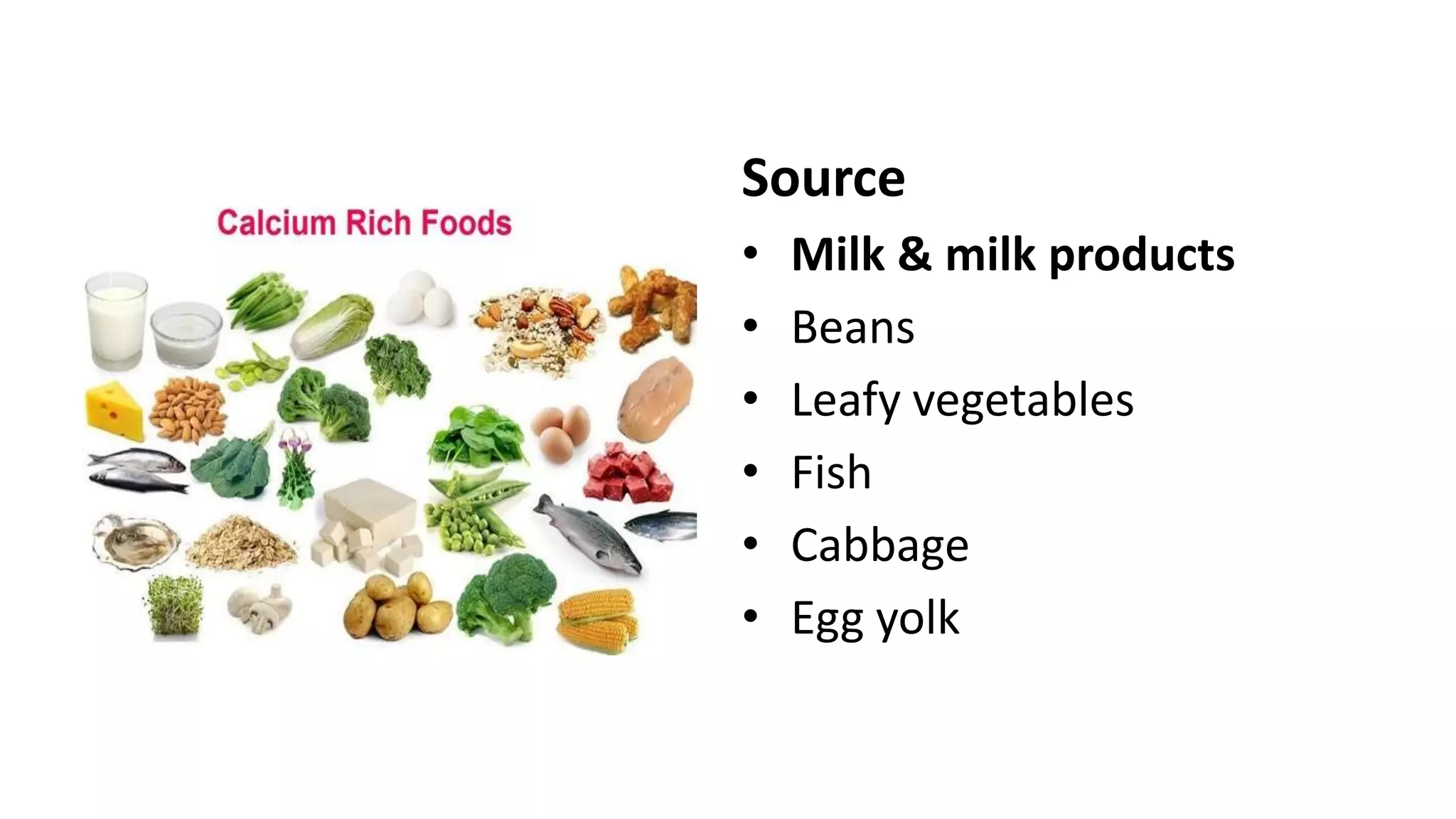
Source
• Milk & milk products
• Beans
• Leafy vegetables
• Fish
• Cabbage
• Egg yolk
Distribution of plasma Calcium (2.5 mmol/l)
Hormonal Regulation of Calcium
3 hormones are primarily concerned
Calcitriol/active V-D
PTH
Calcitonin (Ca lowering hormone)
Others
Glucocorticoid
GH
Estrogen
Growth factors
PO₄ regulating hormone affect Ca metabolism
Vitamin D & Ca Homeostasis
Condition GIT Bone Kidney
↓ [Ca] ↑ Ca
absorption
↑ mobilization Active vit D formation
↑ [Ca] ↓ Ca
absorption
[+] Calcitonin
[-] Ca mobilization
↑ excretion (calcitonin)
↓ reabsorption (PTH)
Inactive vit D formation
↓ vit D No absorption [+] Ca mobilization
(PTH)
↓ excretion (PTH)
↑ reabsorption (PTH)
↑ vit D ↑ absorption ↑↑ mobilization
↑ accumulation
↑ excretion (calcitonin)
Inactive vit D formation
Functions of Calcium
• Activation of enzymes
– Calmodulin (Ca binding regulatory protein) binds 4 Ca⁺⁺ →
activation of enzyme protein kinase
– Directly activate
• Pancreatic lipase
• Enzyme of coagulation pathway
• Act on muscle
– Excitation & contraction of muscle fibre by increasing action
of actin & myosin
– Decrease neuromuscular irritability
• Secretion of hormones
– Insulin
– PTH
– Calcitonin
– Vasopressin etc.
• Act as 2nd messenger
• Reduce vascular permeability
• Act as coagulation factor
• Help in bone & teeth formation
Functions of Calcium
Clinical condition
 Hypercalcemia
 Hypocalcemia
 Rickets
 Osteoporosis
Hypocalcaemic tetany
Osteoporosis
Minerals as Nutrients

Minerals as Nutrients

  • 1.
    MINERALS Dr. Farhana Atia AssistantProfessor (Biochemistry) Nilphamari Medical College, Nilphamari Bangladesh
  • 2.
    Minerals Minerals are inorganicelements required in small amounts by the body (micronutrients). • Widely distributed in food • Requirement vary from g/day [Na, Ca], mg/day [Fe, Zn] or µg/day [Iodine] • Mixed diet provide sufficient amount • Insufficient intake produce deficiency sign (anemia, cretinism, goiter) • Excessive intake may be toxic
  • 3.
     Minerals areabsorbed from small intestine either  by active transport or  by carrier mediated diffusion  Calcium absorption: depends on vitamin D  Zinc absorption: zinc binding ligand  Iron absorption is limited & strictly controlled  Functions of minerals  Formation of bones & teeth  Fluid balance  Nerve conduction  Muscle contraction  Signaling  Catalysis (as enzyme cofactors)
  • 4.
    Classification of Minerals FunctionsMinerals Structural function Ca, Mg, PO Membrane function Na, K Prosthetic group of enzymes Co, Cu, Fe, Zn, Mo, Se Regulatory/Role in hormone action Ca, Cr, I, Mg, Mn, Na, K Essential but unknown function Si, Van, Ni, Sn Have effect but essentiality is not established Fl, Li Occur in foods, toxic in excess Al, As, Antimony, Bo, Br, Cd,
  • 5.
    Classification of Minerals Accordingto daily requirements for adults
  • 6.
    • Macrominerals aremicronutrients required by adults in the largest amount • Trace elements are inorganic molecules that are essential for life, they occur in human & animal tissue in mg/kg amount or less. • Ultratrace elements has been refers to element present in tissue in mcg/kg amount or less. Dietary requirement is also mcg/day
  • 7.
    Sodium • Distribution inbody – 50% - Bones – 40% - ECF – 10% -Soft tissues • RDA : 1000-3000mg • Dietary source- Table salt Salty food Bread Whole grains Leafy vegetables Fruits Baking soda Nuts Egg Milk
  • 8.
    Functions of Sodium •Regulates acid base balance • Maintain osmotic pressure & fluid balance. • Necessary for normal muscle irritability & cell permeability. • Role in intestinal absorption of glucose, galactose & amino acids. • Involved in initiation & maintenance of heartbeat. Deficiency: Excess: Dehydration Acidosis Tissue atrophy Edema Hypertension
  • 9.
  • 10.
    Deficiency • Acidosis • Renaldamage • Cardiac arrest Potassium FUNCTIONS  Maintains intracellular osmotic pressure  Regulates acid base balance  Water balance  Transmission of nerve impulse  CO₂ transport
  • 11.
    Fluoride  Distribution  Bones Teeth  RDA: 3.5 - 4 mg  Source:  Drinking water  Sea food
  • 12.
    Functions of Fluoride Prevents the development of dental caries  Forms an acid resistant protective layer on enamel  Inhibit bacterial enzyme & decrease acid production  Proper development of bone  Inhibit certain ENZYME ACTIVITY  Sodium fluoride inhibit Enolase (glycolysis)  Fluoroacetate inhibit Aconitase (TCA cycle)
  • 13.
  • 14.
    Manganese  Distribution:  Liver,kidney  RDA: 2-9 mg  Sources  Tea  Cereals  Nuts  Leafy vegetables  Fruits
  • 15.
    Functions of Manganese Cofactors for several enzymes  Required for bone formation, normal functioning of nervous system  Synthesis of mucopolysaccharides & glycoproteins  Necessary for synthesis of hemoglobin & cholesterol
  • 16.
    Copper  RDA: 2-3mg  Ceruloplasmin- Cu binding protein  Source  Liver  Kidney  Meat  Egg yolk  Cereals  Nuts  Green leafy vegetables
  • 17.
    Functions of Copper Constituent of several enzymes  Hemoglobin synthesis  Collagen synthesis  Ceruloplasmin: involved in conversion of Fe⁺⁺ to Fe⁺⁺⁺  Melanin & PL synthesis  Development of bone & nervous system
  • 18.
  • 19.
    Selenium • RDA: 50-200 mg • Source: – Organ meats • Liver • Kidney – Sea food
  • 20.
    Functions of Selenium •Prevents hepatic necrosis, muscular dystrophy • Maintains structural integrity of biological membrane • Selenocysteine- considered as 21st amino acid • Prevents lipid peroxidation & protect cells against the free radicals • Binds certain heavy metals & protects body • Se containing enzyme – Converts T₄ to T₃
  • 21.
    Zinc Mainly intracellular RDA : 10- 15 mg  Source  Meat  Fish  Egg  Milk  Beans  Nuts  Metallothionein- Transport protein
  • 22.
    Functions of Zinc •Essential component of several enzymes (carbonic anhydrase, superoxide dismutase) • Antioxidant– protects the body against free radical damage • Helps in storage & secretion of Insulin from pancreas • Maintain normal serum Vitamin A. Synthesis of retinol binding protein • Wound healing, enhance cell growth & division • Essential for reproduction • Important for taste sensation
  • 23.
  • 24.
    Iodine • Distribution: Thyroidgland (80%), muscle, salivary gland, ovaries • RDA : 100- 150 mcg : 200 mcg (in pg) • Source – Sea food – Drinking water – Vegetables & fruits (growing on seaboard) – Iodized salt
  • 25.
    • Functions ofIodine – Constituent of thyroid hormone: T₄ (thyroxine) & T₃ (triiodothyronine) – Regulate cellular oxidation – Crucial for growth & development (as TH) • Deficiency – Goitre – Myxedema (adult) – Cretinism (children)
  • 26.
  • 28.
    IRON • Total bodyiron: 3- 4 gm • RDA – Male : 10 mg – Female: 18 mg – 10% of dietary iron is absorbed (1- 2mg) • Source: Liver Meat Heart Kidney Fish Leafy vegetables Pulses Cereals Apples Dried fruits
  • 29.
    Functions of Iron Constituent of several proteins/enzymes- hemoglobin, myoglobin, cytochromes, xanthine oxidase, catalase, peroxidase.  Transport of O₂ & CO₂ (Hb & myoglobin)  Necessary for electron transport chain & oxidative phosphorylation (Cytochromes & some nonheme protein)  Phagocytosis & killing of bacteria by neutrophils
  • 30.
    Clinical Conditions  Irondeficiency anemia (Hypochromic Mycrocytic Anemia)  Hemochromatosis  Hemosiderosis
  • 31.
    Transferrin Hemoglobin in RBC Myoglobin& enzyme Stored (Ferritin) 3-4 mg 2500 mg 300 mg 1000 mg Iron Distribution in 70 kg adult male Total: 3-4 gm (In female: 100-400 mg less) Absorption & loss: 1 mg/day (Female: 1.5-2 mg/day)
  • 33.
     Transferrin: Protein Free iron is extremely toxic (form free radicals), so bound to Tf  Normally Tf is 30% saturated with iron  Ferritin  stores excess iron in tissues (1 gm)  Plasma ferritin (50-200 µg/dl) proportionate to total store of iron in body  Hemosiderin  Degraded from ferritin  Detected in iron overload (hemosiderosis)
  • 34.
    Absorption of dietary iron Ironin diet: 1. Heme: Directly absorbed 2. Nonheme: – Fe³⁺ is reduced to Fe²⁺ (by Vit C & gastric acid) – Transfer to enterocyte via divalent metal transporter1 In enterocyte 1. Stored as ferritin 2. Go to circulation by ferroprotein – Fe²⁺ oxidized to Fe³⁺ – Transported by Tf Proximal duodenum
  • 35.
    RBC life span:120 days Damaged erythrocytes are phagocytosed by macrophages of RES Hb → Heme [+ globin]→ Fe+ Biliverdin 3-4 mg 20-25mg/d 5mg/d 2500mg 1000mg
  • 36.
    CALCIUM  Most abundantmineral in the body  Total Ca: 1- 1.5 kg  99% Bones, teeth  1% Outside skeletal tissue but have wide variety of functions  RDA  Adult : 800 mg  Children : 800-1200 mg  Pg, lactation : 1500 mg
  • 37.
    Source • Milk &milk products • Beans • Leafy vegetables • Fish • Cabbage • Egg yolk
  • 38.
    Distribution of plasmaCalcium (2.5 mmol/l)
  • 39.
    Hormonal Regulation ofCalcium 3 hormones are primarily concerned Calcitriol/active V-D PTH Calcitonin (Ca lowering hormone) Others Glucocorticoid GH Estrogen Growth factors PO₄ regulating hormone affect Ca metabolism
  • 40.
    Vitamin D &Ca Homeostasis Condition GIT Bone Kidney ↓ [Ca] ↑ Ca absorption ↑ mobilization Active vit D formation ↑ [Ca] ↓ Ca absorption [+] Calcitonin [-] Ca mobilization ↑ excretion (calcitonin) ↓ reabsorption (PTH) Inactive vit D formation ↓ vit D No absorption [+] Ca mobilization (PTH) ↓ excretion (PTH) ↑ reabsorption (PTH) ↑ vit D ↑ absorption ↑↑ mobilization ↑ accumulation ↑ excretion (calcitonin) Inactive vit D formation
  • 41.
    Functions of Calcium •Activation of enzymes – Calmodulin (Ca binding regulatory protein) binds 4 Ca⁺⁺ → activation of enzyme protein kinase – Directly activate • Pancreatic lipase • Enzyme of coagulation pathway • Act on muscle – Excitation & contraction of muscle fibre by increasing action of actin & myosin – Decrease neuromuscular irritability
  • 42.
    • Secretion ofhormones – Insulin – PTH – Calcitonin – Vasopressin etc. • Act as 2nd messenger • Reduce vascular permeability • Act as coagulation factor • Help in bone & teeth formation Functions of Calcium
  • 43.
    Clinical condition  Hypercalcemia Hypocalcemia  Rickets  Osteoporosis Hypocalcaemic tetany Osteoporosis