SODIUM, POTASSIUM
AND CHLORIDE
NUR IZZATUL NAJWA BINTI SHARUPUDDIN
082015100036
NUR FARRA NAJWA BINTI ABDUL AZIM
082015100035
RATTAPONG A/L BON LEE
082015100037
LEARNING OBJECTIVES
AT THE END OF THIS SEMINAR, STUDENTS SHOULD BE ABLE
TO:
• KNOW THE DIETARY SOURCE
• KNOW THE REQUIREMENT DAILY ALLOWANCE
(RDA)
• KNOW THE IMPORTANCE
• KNOW THE FUNCTION
• KNOW THE DISORDER
OF SODIUM, POTASSIUM AND CHLORIDE
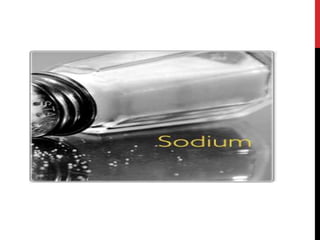
SODIUM
• Cation in extracellular fluid
• 50% in bone, 40% in extracellular fluid
and 10% in soft tissues
• Normal serum reference range : 135- 145
meq/L
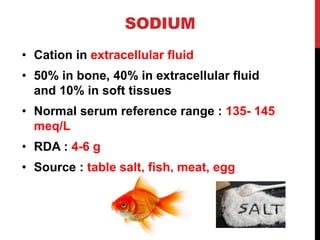
• RDA : 4-6 g
• Source : table salt, fish, meat, egg
SODIUM
• Absorption through small intestine and
large intestine
• From intestinal lumen -> intestinal
mucosal cells, sodium enters passively
• Intercellular sodium moves into ECF by
sodium pump
• Secreted through urine
SODIUM
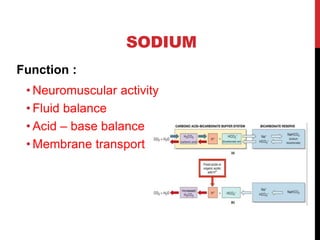
Function :
• Neuromuscular activity
• Fluid balance
• Acid – base balance
• Membrane transport
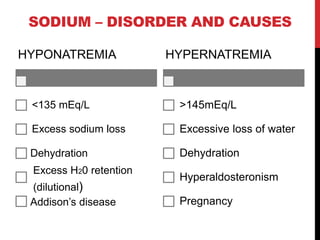
SODIUM – DISORDER AND CAUSES
HYPONATREMIA
<135 mEq/L
Excess sodium loss
Dehydration
Excess H20 retention
(dilutional)
Addison’s disease
HYPERNATREMIA
>145mEq/L
Excessive loss of water
Dehydration
Hyperaldosteronism
Pregnancy
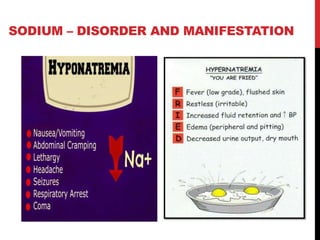
SODIUM – DISORDER AND MANIFESTATION
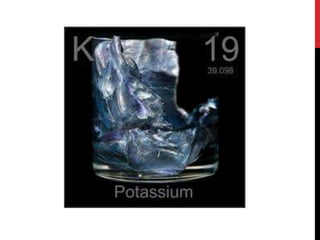
POTASSIUM
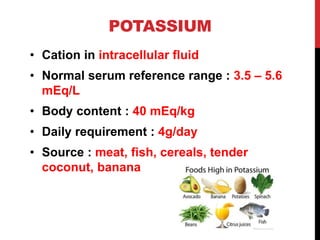
• Cation in intracellular fluid
• Normal serum reference range : 3.5 – 5.6
mEq/L
• Body content : 40 mEq/kg
• Daily requirement : 4g/day
• Source : meat, fish, cereals, tender
coconut, banana
POTASSIUM
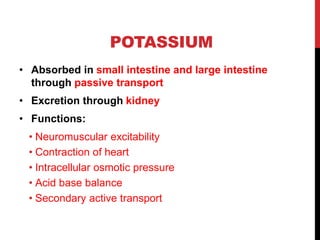
• Absorbed in small intestine and large intestine
through passive transport
• Excretion through kidney
• Functions:
• Neuromuscular excitability
• Contraction of heart
• Intracellular osmotic pressure
• Acid base balance
• Secondary active transport
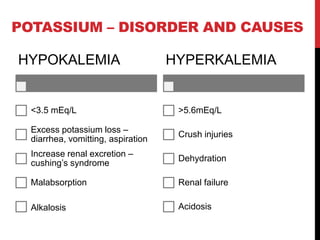
HYPOKALEMIA
<3.5 mEq/L
Excess potassium loss –
diarrhea, vomitting, aspiration
Increase renal excretion –
cushing’s syndrome
Malabsorption
Alkalosis
HYPERKALEMIA
>5.6mEq/L
Crush injuries
Dehydration
Renal failure
Acidosis
POTASSIUM – DISORDER AND CAUSES
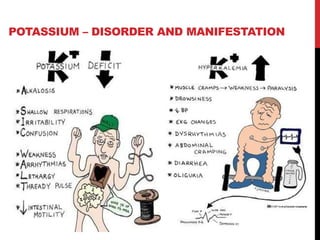
POTASSIUM – DISORDER AND MANIFESTATION
CHLORIDE
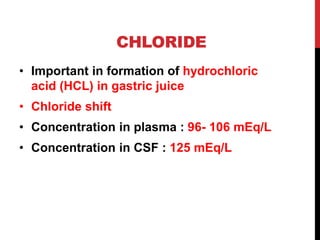
• Important in formation of hydrochloric
acid (HCL) in gastric juice
• Chloride shift
• Concentration in plasma : 96- 106 mEq/L
• Concentration in CSF : 125 mEq/L
CHLORIDE
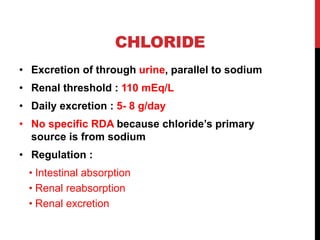
• Excretion of through urine, parallel to sodium
• Renal threshold : 110 mEq/L
• Daily excretion : 5- 8 g/day
• No specific RDA because chloride’s primary
source is from sodium
• Regulation :
• Intestinal absorption
• Renal reabsorption
• Renal excretion
CHLORIDE
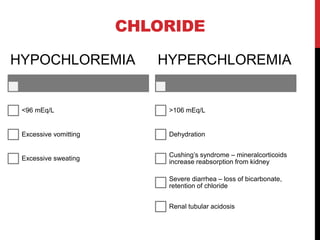
HYPOCHLOREMIA
<96 mEq/L
Excessive vomitting
Excessive sweating
HYPERCHLOREMIA
>106 mEq/L
Dehydration
Cushing’s syndrome – mineralcorticoids
increase reabsorption from kidney
Severe diarrhea – loss of bicarbonate,
retention of chloride
Renal tubular acidosis
SUMMARY
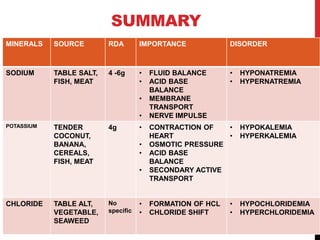
MINERALS SOURCE RDA IMPORTANCE DISORDER
SODIUM TABLE SALT,
FISH, MEAT
4 -6g • FLUID BALANCE
• ACID BASE
BALANCE
• MEMBRANE
TRANSPORT
• NERVE IMPULSE
• HYPONATREMIA
• HYPERNATREMIA
POTASSIUM TENDER
COCONUT,
BANANA,
CEREALS,
FISH, MEAT
4g • CONTRACTION OF
HEART
• OSMOTIC PRESSURE
• ACID BASE
BALANCE
• SECONDARY ACTIVE
TRANSPORT
• HYPOKALEMIA
• HYPERKALEMIA
CHLORIDE TABLE ALT,
VEGETABLE,
SEAWEED
No
specific
• FORMATION OF HCL
• CHLORIDE SHIFT
• HYPOCHLORIDEMIA
• HYPERCHLORIDEMIA
REFERENCE
• DM Vasudevan (2011), Textbook of
Biochemistry for Medical Students, (6th
edition) : Electrolyte and Water Balance
Sodium, potassium and chloride

Sodium, potassium and chloride

  • 1.
    SODIUM, POTASSIUM AND CHLORIDE NURIZZATUL NAJWA BINTI SHARUPUDDIN 082015100036 NUR FARRA NAJWA BINTI ABDUL AZIM 082015100035 RATTAPONG A/L BON LEE 082015100037
  • 2.
    LEARNING OBJECTIVES AT THEEND OF THIS SEMINAR, STUDENTS SHOULD BE ABLE TO: • KNOW THE DIETARY SOURCE • KNOW THE REQUIREMENT DAILY ALLOWANCE (RDA) • KNOW THE IMPORTANCE • KNOW THE FUNCTION • KNOW THE DISORDER OF SODIUM, POTASSIUM AND CHLORIDE
  • 4.
    SODIUM • Cation inextracellular fluid • 50% in bone, 40% in extracellular fluid and 10% in soft tissues • Normal serum reference range : 135- 145 meq/L • RDA : 4-6 g • Source : table salt, fish, meat, egg
  • 5.
    SODIUM • Absorption throughsmall intestine and large intestine • From intestinal lumen -> intestinal mucosal cells, sodium enters passively • Intercellular sodium moves into ECF by sodium pump • Secreted through urine
  • 6.
    SODIUM Function : • Neuromuscularactivity • Fluid balance • Acid – base balance • Membrane transport
  • 7.
    SODIUM – DISORDERAND CAUSES HYPONATREMIA <135 mEq/L Excess sodium loss Dehydration Excess H20 retention (dilutional) Addison’s disease HYPERNATREMIA >145mEq/L Excessive loss of water Dehydration Hyperaldosteronism Pregnancy
  • 8.
    SODIUM – DISORDERAND MANIFESTATION
  • 10.
    POTASSIUM • Cation inintracellular fluid • Normal serum reference range : 3.5 – 5.6 mEq/L • Body content : 40 mEq/kg • Daily requirement : 4g/day • Source : meat, fish, cereals, tender coconut, banana
  • 11.
    POTASSIUM • Absorbed insmall intestine and large intestine through passive transport • Excretion through kidney • Functions: • Neuromuscular excitability • Contraction of heart • Intracellular osmotic pressure • Acid base balance • Secondary active transport
  • 12.
    HYPOKALEMIA <3.5 mEq/L Excess potassiumloss – diarrhea, vomitting, aspiration Increase renal excretion – cushing’s syndrome Malabsorption Alkalosis HYPERKALEMIA >5.6mEq/L Crush injuries Dehydration Renal failure Acidosis POTASSIUM – DISORDER AND CAUSES
  • 13.
    POTASSIUM – DISORDERAND MANIFESTATION
  • 15.
    CHLORIDE • Important information of hydrochloric acid (HCL) in gastric juice • Chloride shift • Concentration in plasma : 96- 106 mEq/L • Concentration in CSF : 125 mEq/L
  • 16.
    CHLORIDE • Excretion ofthrough urine, parallel to sodium • Renal threshold : 110 mEq/L • Daily excretion : 5- 8 g/day • No specific RDA because chloride’s primary source is from sodium • Regulation : • Intestinal absorption • Renal reabsorption • Renal excretion
  • 17.
    CHLORIDE HYPOCHLOREMIA <96 mEq/L Excessive vomitting Excessivesweating HYPERCHLOREMIA >106 mEq/L Dehydration Cushing’s syndrome – mineralcorticoids increase reabsorption from kidney Severe diarrhea – loss of bicarbonate, retention of chloride Renal tubular acidosis
  • 18.
    SUMMARY MINERALS SOURCE RDAIMPORTANCE DISORDER SODIUM TABLE SALT, FISH, MEAT 4 -6g • FLUID BALANCE • ACID BASE BALANCE • MEMBRANE TRANSPORT • NERVE IMPULSE • HYPONATREMIA • HYPERNATREMIA POTASSIUM TENDER COCONUT, BANANA, CEREALS, FISH, MEAT 4g • CONTRACTION OF HEART • OSMOTIC PRESSURE • ACID BASE BALANCE • SECONDARY ACTIVE TRANSPORT • HYPOKALEMIA • HYPERKALEMIA CHLORIDE TABLE ALT, VEGETABLE, SEAWEED No specific • FORMATION OF HCL • CHLORIDE SHIFT • HYPOCHLORIDEMIA • HYPERCHLORIDEMIA
  • 19.
    REFERENCE • DM Vasudevan(2011), Textbook of Biochemistry for Medical Students, (6th edition) : Electrolyte and Water Balance