CALCIUM, PHOSPHORUS,
POTASSIUM
DISORDERS
GROUP MEMBERS
TASHFEEN GULFRAZ
IQRA NOOR
AYESHA RUBAB
CALCIUM
Tashfeen gulfraz
OUTLINE
● Introduction
● Functions
● Deficiency
● The Recommended Daily Allowance (RDA)
● Disease Prevention
● Lead toxicity
● Food sources
INTRODUCTION
● Calcium is a major constituent of bones and teeth and also plays an essential role as second
messenger in cell-signaling pathways.
● Circulating calcium concentrations are tightly controlled by the parathyroid hormone (PTH) and
vitamin D at the expense of the skeleton when dietary calcium intakes are inadequate.
● Calcium is the most abundant mineral in the human body.
➔ About 99% of the calcium in the body is found in bones and teeth,
➔ while the other 1% is found in the blood and soft tissue.
● Calcium concentrations in the blood and fluid surrounding the cells (extracellular fluid) must be
maintained within a narrow concentration range for normal physiological functioning.
Functions
1. Structural:
● Calcium is a major structural element in bones and teeth.
● The mineral component of bone consists mainly of hydroxyapatite[Ca10(PO4)6(OH)2] crystals,
which contain large amounts of calcium, phosphorus, and oxygen.
● Bone is a dynamic tissue that is remodeled throughout life.
● Bone cells called osteoclasts begin the process of remodeling by dissolving or resorbing bone.
● Bone-forming cells called osteoblasts then synthesize new bone to replace the bone that was
resorbed.
● During normal growth, bone formation exceeds bone resorption. Osteoporosis may result when
bone resorption chronically exceeds formation
2 . Calcium homeostasis:
3. Cell Signaling:
Calcium plays a role in
➔ mediating the constriction and relaxation of blood vessels (vasoconstriction and
vasodilation)
➔ nerve impulse transmission, muscle contraction
➔ and the secretion of hormones like insulin
4. Regulation of protein function:
● Calcium is necessary to stabilize a number of proteins, including enzymes, optimizing their
activities.
● The binding of calcium ions is required for the activation of the seven "vitamin K-dependent"
clotting factors in the coagulation cascade.
Deficiency
A low blood calcium level (hypocalcemia) usually implies abnormal parathyroid function since the skeleton
provides a large reserve of calcium for maintaining normal blood levels, especially in the case of low
dietary calcium intake.
Other causes of abnormally low blood calcium concentrations include
● chronic kidney failure, vitamin D deficiency,
● low blood magnesium levels often observed in cases of severe alcoholism.
Magnesium deficiency can impair parathyroid hormone (PTH) secretion by the parathyroid glands and
lower the responsiveness of osteoclasts to PTH.
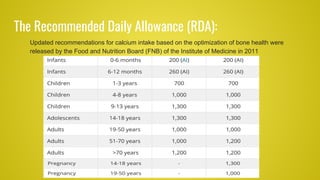
The Recommended Daily Allowance (RDA):
Updated recommendations for calcium intake based on the optimization of bone health were
released by the Food and Nutrition Board (FNB) of the Institute of Medicine in 2011
Disease Prevention:
Osteoporosis
Osteoporosis is a skeletal disorder in which bone mass and strength are compromised, resulting in
an increased risk of fracture. Sustaining a hip fracture is one of the most serious consequences of
osteoporosis. Nearly one-third of those who sustain osteoporotic hip fractures enter nursing homes
within a year following the fracture, and one person in four dies within one year of experiencing an
osteoporotic hip fracture. Despite being a common diagnosis in postmenopausal women,
osteoporosis also affects 4%-6% of men over the age of 50 years.
Kidney stone:
Approximately 6% of women and 15% of men in industrialized countries will have a kidney stone
during their lifetime. Most kidney stones are composed of calcium oxalate or calcium phosphate.
Subjects with an abnormally high level of calcium in the urine (hypercalciuria) are at higher risk of
developing kidney stones (a process called nephrolithiasis)
Hypocalcemia:
Hypocalcaemia, also spelled hypocalcemia, is low calcium levels in the blood serum. The normal
range is 2.1–2.6 mmol/L (8.8–10.7 mg/dL, 4.3–5.2 mEq/L) with levels less than 2.1 mmol/L defined
as hypocalcemia.
Mildly low levels that develop slowly often have no symptoms.
Otherwise symptoms may include
● Numbness
● Muscle spasms
● Seizures
● Confusion
● cardiac arrest
Common causes include hypoparathyroidism and vitamin D deficiency.
Others causes include kidney failure, pancreatitis, calcium channel blocker overdose,
rhabdomyolysis, tumor lysis syndrome, and medications such as bisphosphonates.
Osteopenia
Osteopenia refers to bone density that is lower than normal peak density but not low enough to be
classified as osteoporosis.
What causes osteopenia?
Bones naturally become thinner as people grow older because, beginning in middle age, existing
bone cells are reabsorbed by the body faster than new bone is made.
What are the risk factors?
● family history of low BMD
● being older than age 50
● menopause before age 45
● not getting enough exercise
● a poor diet, especially one lacking calcium and vitamin D
● drinking too much alcohol or caffeine
Lead Toxicity:
● Children who are chronically exposed to lead, even in small amounts, are more likely to develop
learning disabilities, behavioral problems, and to have low IQs.
● Deficits in growth and neurological development may occur in the infants of women exposed to lead
during pregnancy and lactation.
● In adults, lead toxicity may result in kidney damage and high blood pressure.
● In 2012, the US Centers for Disease Control and Prevention set the reference value for blood lead
concentration at 5 micrograms per deciliter (mg/dL) to identify children at risk. Yet, there is no known
blood lead concentration below which children are 100% safe.
● Adequate calcium intake could be protective against lead toxicity in at least two ways. Increased
dietary intake of calcium is known to decrease the gastrointestinal absorption of lead. Once lead
enters the body it tends to accumulate in the skeleton, where it may remain for more than 20 years.
Adequate calcium intake also prevents lead mobilization from the skeleton during bone
demineralization
● Lead in the blood of a pregnant woman is readily transported across the placenta resulting in fetal
lead exposure at a time when the developing nervous system is highly vulnerable.
Food Sources:
PHOSPHORUS
Iqra Noor
INTRODUCTION:
Phosphorus is an essential structural component of cell membranes and nucleic acids but is also involved
in several biological processes, including;
1. bone mineralization
2. energy production
3. cell signaling through phosphorylation reactions
4. regulation of acid-base homeostasis.
Phosphorus is an essential mineral that is required by every cell in the body for normal function. Bound to
oxygen in all biological systems, phosphorus is found as phosphate (PO43-) in the body. Approximately
85% of the body's phosphorus is found in bones and teeth
Functions:
○ Protein Synthesis
○ Energy Production
○ Secondary Functions
The Recommended Daily Allowance (RDA):
Deficiency diseases
1. Hypophosphatemia
● Serum level low than 2.5 mg/dl.
● Symptoms
○ Muscle weakness
○ paralysis
○ Respiratory depression
● Causes
○ Decreased intake or malabsorption
○ Decreased renal reabsorption (hyperparathyroidism, fanconi’s, vitamin D deficiency,
medications)
○ Transcellular shift (catecholamines, theophylline, respiratory alkalosis)
2. Osteomalacia,
● condition in which the bones of an adult progressively soften because of inadequate
mineralization of the bone.
● Osteomalacia may occur after several pregnancies or in old age, resulting in increased
susceptibility to fractures.
● Symptoms
○ bone pain
○ Weakness
○ spasms of the hands or feet.
● Cause
○ lack of dietary vitamin D
○ inadequate exposure to sunlight (necessary for the formation of vitamin D in the
body)
○ impaired function of one of the organs involved in the absorption or metabolism of
the bone minerals or vitamin D
3. Rickets
● Disease of infancy and childhood characterized by softening of the bones, leading to
abnormal bone growth and caused by a lack of vitamin D in the body.
3. Osteoporosis
● Metabolic bone disorder
● The result in decrease bone mass.
● Bones become porous, brittle and abnormally vulnerable to fracture.
● The disorder is most common in postmenopausal women over age 50.
POTTASSIUM
Ayesha Rubab
INTRODUCTION:
● Potassium is a mineral that your body needs to work properly.
● It is a type of electrolyte.
● It helps your nerves to function and muscles to contract.
● It helps your heartbeat stay regular.
● It also helps move nutrients into cells and waste products out of cells.
● A diet rich in potassium helps to offset some of sodium's harmful effects on blood pressure.
Functions:
1. Maintenance of membrane potential
2. Cofactor for enzymes
● A limited number of enzymes require the presence of potassium for their activity.
● The activation of sodium, potassium-ATPase requires the presence of sodium and potassium.
● The presence of potassium is also required for the activity of pyruvate kinase, an important enzyme
in carbohydrate metabolism
The Recommended Daily Allowance (RDA):
Disease Prevention:
1. Stroke
A stroke occurs when the blood supply to part of your brain is interrupted or severely reduced, depriving
brain tissue of oxygen and nutrients. Within minutes, brain cells begin to die.
Symptoms
● Paralysis or numbness of the face, arm or leg.
● Trouble with seeing in one or both eyes.Headache.
● Trouble with walking.
Causes
A stroke occurs when the blood supply to your brain is interrupted or reduced. This deprives your brain of
oxygen and nutrients, which can cause your brain cells to die.
A stroke may be caused by a blocked artery (ischemic stroke) or the leaking or bursting of a blood vessel
(hemorrhagic stroke). Some people may experience only a temporary disruption of blood flow to their
brain
2. Osteoporosis:
3. Kidney stones:
● Abnormally high urinary calcium (hypercalciuria) increases the risk of developing kidney stones.
● In individuals with a history of developing calcium-containing kidney stones, increased dietary acid
load was significantly associated with increased urinary calcium excretion.
● Increasing dietary potassium (and alkali) intake by increasing fruit and vegetable intake or by taking
potassium bicarbonate supplements has been found to decrease urinary calcium excretion.
Treating imbalanced potassium levels
Hypokalemia
● Potassium supplements are usually the first course of action for levels that are too low.
● Supplements are mostly effective if your kidneys are in good shape.
● Severe hypokalemia may require intravenous treatment, especially if you’re experiencing an
abnormal heartbeat.
● Potassium-sparing diuretics can rid the body of excess sodium. This will help normalize electrolyte
levels.
Hyperkalemia
● Mild cases of hyperkalemia can be treated with prescription medications that decrease potassium
excretion.
● Other methods include diuretics or an enema.
● Severe cases may require more complex treatments.
● Kidney dialysis can remove potassium.
Thank
You !

Calcium, phosphorus, potassium

  • 1.
  • 2.
  • 3.
    OUTLINE ● Introduction ● Functions ●Deficiency ● The Recommended Daily Allowance (RDA) ● Disease Prevention ● Lead toxicity ● Food sources
  • 4.
    INTRODUCTION ● Calcium isa major constituent of bones and teeth and also plays an essential role as second messenger in cell-signaling pathways. ● Circulating calcium concentrations are tightly controlled by the parathyroid hormone (PTH) and vitamin D at the expense of the skeleton when dietary calcium intakes are inadequate. ● Calcium is the most abundant mineral in the human body. ➔ About 99% of the calcium in the body is found in bones and teeth, ➔ while the other 1% is found in the blood and soft tissue. ● Calcium concentrations in the blood and fluid surrounding the cells (extracellular fluid) must be maintained within a narrow concentration range for normal physiological functioning.
  • 5.
    Functions 1. Structural: ● Calciumis a major structural element in bones and teeth. ● The mineral component of bone consists mainly of hydroxyapatite[Ca10(PO4)6(OH)2] crystals, which contain large amounts of calcium, phosphorus, and oxygen. ● Bone is a dynamic tissue that is remodeled throughout life. ● Bone cells called osteoclasts begin the process of remodeling by dissolving or resorbing bone. ● Bone-forming cells called osteoblasts then synthesize new bone to replace the bone that was resorbed. ● During normal growth, bone formation exceeds bone resorption. Osteoporosis may result when bone resorption chronically exceeds formation
  • 6.
    2 . Calciumhomeostasis:
  • 7.
    3. Cell Signaling: Calciumplays a role in ➔ mediating the constriction and relaxation of blood vessels (vasoconstriction and vasodilation) ➔ nerve impulse transmission, muscle contraction ➔ and the secretion of hormones like insulin 4. Regulation of protein function: ● Calcium is necessary to stabilize a number of proteins, including enzymes, optimizing their activities. ● The binding of calcium ions is required for the activation of the seven "vitamin K-dependent" clotting factors in the coagulation cascade.
  • 8.
    Deficiency A low bloodcalcium level (hypocalcemia) usually implies abnormal parathyroid function since the skeleton provides a large reserve of calcium for maintaining normal blood levels, especially in the case of low dietary calcium intake. Other causes of abnormally low blood calcium concentrations include ● chronic kidney failure, vitamin D deficiency, ● low blood magnesium levels often observed in cases of severe alcoholism. Magnesium deficiency can impair parathyroid hormone (PTH) secretion by the parathyroid glands and lower the responsiveness of osteoclasts to PTH.
  • 9.
    The Recommended DailyAllowance (RDA): Updated recommendations for calcium intake based on the optimization of bone health were released by the Food and Nutrition Board (FNB) of the Institute of Medicine in 2011
  • 10.
    Disease Prevention: Osteoporosis Osteoporosis isa skeletal disorder in which bone mass and strength are compromised, resulting in an increased risk of fracture. Sustaining a hip fracture is one of the most serious consequences of osteoporosis. Nearly one-third of those who sustain osteoporotic hip fractures enter nursing homes within a year following the fracture, and one person in four dies within one year of experiencing an osteoporotic hip fracture. Despite being a common diagnosis in postmenopausal women, osteoporosis also affects 4%-6% of men over the age of 50 years. Kidney stone: Approximately 6% of women and 15% of men in industrialized countries will have a kidney stone during their lifetime. Most kidney stones are composed of calcium oxalate or calcium phosphate. Subjects with an abnormally high level of calcium in the urine (hypercalciuria) are at higher risk of developing kidney stones (a process called nephrolithiasis)
  • 11.
    Hypocalcemia: Hypocalcaemia, also spelledhypocalcemia, is low calcium levels in the blood serum. The normal range is 2.1–2.6 mmol/L (8.8–10.7 mg/dL, 4.3–5.2 mEq/L) with levels less than 2.1 mmol/L defined as hypocalcemia. Mildly low levels that develop slowly often have no symptoms. Otherwise symptoms may include ● Numbness ● Muscle spasms ● Seizures ● Confusion ● cardiac arrest Common causes include hypoparathyroidism and vitamin D deficiency. Others causes include kidney failure, pancreatitis, calcium channel blocker overdose, rhabdomyolysis, tumor lysis syndrome, and medications such as bisphosphonates.
  • 12.
    Osteopenia Osteopenia refers tobone density that is lower than normal peak density but not low enough to be classified as osteoporosis. What causes osteopenia? Bones naturally become thinner as people grow older because, beginning in middle age, existing bone cells are reabsorbed by the body faster than new bone is made. What are the risk factors? ● family history of low BMD ● being older than age 50 ● menopause before age 45 ● not getting enough exercise ● a poor diet, especially one lacking calcium and vitamin D ● drinking too much alcohol or caffeine
  • 13.
    Lead Toxicity: ● Childrenwho are chronically exposed to lead, even in small amounts, are more likely to develop learning disabilities, behavioral problems, and to have low IQs. ● Deficits in growth and neurological development may occur in the infants of women exposed to lead during pregnancy and lactation. ● In adults, lead toxicity may result in kidney damage and high blood pressure. ● In 2012, the US Centers for Disease Control and Prevention set the reference value for blood lead concentration at 5 micrograms per deciliter (mg/dL) to identify children at risk. Yet, there is no known blood lead concentration below which children are 100% safe. ● Adequate calcium intake could be protective against lead toxicity in at least two ways. Increased dietary intake of calcium is known to decrease the gastrointestinal absorption of lead. Once lead enters the body it tends to accumulate in the skeleton, where it may remain for more than 20 years. Adequate calcium intake also prevents lead mobilization from the skeleton during bone demineralization ● Lead in the blood of a pregnant woman is readily transported across the placenta resulting in fetal lead exposure at a time when the developing nervous system is highly vulnerable.
  • 14.
  • 15.
  • 16.
    INTRODUCTION: Phosphorus is anessential structural component of cell membranes and nucleic acids but is also involved in several biological processes, including; 1. bone mineralization 2. energy production 3. cell signaling through phosphorylation reactions 4. regulation of acid-base homeostasis. Phosphorus is an essential mineral that is required by every cell in the body for normal function. Bound to oxygen in all biological systems, phosphorus is found as phosphate (PO43-) in the body. Approximately 85% of the body's phosphorus is found in bones and teeth
  • 17.
    Functions: ○ Protein Synthesis ○Energy Production ○ Secondary Functions
  • 18.
    The Recommended DailyAllowance (RDA):
  • 19.
    Deficiency diseases 1. Hypophosphatemia ●Serum level low than 2.5 mg/dl. ● Symptoms ○ Muscle weakness ○ paralysis ○ Respiratory depression ● Causes ○ Decreased intake or malabsorption ○ Decreased renal reabsorption (hyperparathyroidism, fanconi’s, vitamin D deficiency, medications) ○ Transcellular shift (catecholamines, theophylline, respiratory alkalosis)
  • 20.
    2. Osteomalacia, ● conditionin which the bones of an adult progressively soften because of inadequate mineralization of the bone. ● Osteomalacia may occur after several pregnancies or in old age, resulting in increased susceptibility to fractures. ● Symptoms ○ bone pain ○ Weakness ○ spasms of the hands or feet. ● Cause ○ lack of dietary vitamin D ○ inadequate exposure to sunlight (necessary for the formation of vitamin D in the body) ○ impaired function of one of the organs involved in the absorption or metabolism of the bone minerals or vitamin D 3. Rickets ● Disease of infancy and childhood characterized by softening of the bones, leading to abnormal bone growth and caused by a lack of vitamin D in the body.
  • 21.
    3. Osteoporosis ● Metabolicbone disorder ● The result in decrease bone mass. ● Bones become porous, brittle and abnormally vulnerable to fracture. ● The disorder is most common in postmenopausal women over age 50.
  • 23.
  • 24.
    INTRODUCTION: ● Potassium isa mineral that your body needs to work properly. ● It is a type of electrolyte. ● It helps your nerves to function and muscles to contract. ● It helps your heartbeat stay regular. ● It also helps move nutrients into cells and waste products out of cells. ● A diet rich in potassium helps to offset some of sodium's harmful effects on blood pressure.
  • 25.
    Functions: 1. Maintenance ofmembrane potential
  • 26.
    2. Cofactor forenzymes ● A limited number of enzymes require the presence of potassium for their activity. ● The activation of sodium, potassium-ATPase requires the presence of sodium and potassium. ● The presence of potassium is also required for the activity of pyruvate kinase, an important enzyme in carbohydrate metabolism
  • 27.
    The Recommended DailyAllowance (RDA):
  • 28.
    Disease Prevention: 1. Stroke Astroke occurs when the blood supply to part of your brain is interrupted or severely reduced, depriving brain tissue of oxygen and nutrients. Within minutes, brain cells begin to die. Symptoms ● Paralysis or numbness of the face, arm or leg. ● Trouble with seeing in one or both eyes.Headache. ● Trouble with walking. Causes A stroke occurs when the blood supply to your brain is interrupted or reduced. This deprives your brain of oxygen and nutrients, which can cause your brain cells to die. A stroke may be caused by a blocked artery (ischemic stroke) or the leaking or bursting of a blood vessel (hemorrhagic stroke). Some people may experience only a temporary disruption of blood flow to their brain
  • 29.
    2. Osteoporosis: 3. Kidneystones: ● Abnormally high urinary calcium (hypercalciuria) increases the risk of developing kidney stones. ● In individuals with a history of developing calcium-containing kidney stones, increased dietary acid load was significantly associated with increased urinary calcium excretion. ● Increasing dietary potassium (and alkali) intake by increasing fruit and vegetable intake or by taking potassium bicarbonate supplements has been found to decrease urinary calcium excretion.
  • 30.
    Treating imbalanced potassiumlevels Hypokalemia ● Potassium supplements are usually the first course of action for levels that are too low. ● Supplements are mostly effective if your kidneys are in good shape. ● Severe hypokalemia may require intravenous treatment, especially if you’re experiencing an abnormal heartbeat. ● Potassium-sparing diuretics can rid the body of excess sodium. This will help normalize electrolyte levels.
  • 31.
    Hyperkalemia ● Mild casesof hyperkalemia can be treated with prescription medications that decrease potassium excretion. ● Other methods include diuretics or an enema. ● Severe cases may require more complex treatments. ● Kidney dialysis can remove potassium.
  • 33.