MICROENCAPSULATION
Presented by:
Chinchole Pravin Sonu
(M.PHARM 2nd SEM)
DEPARTMENT OF PHARMACEUTICS & QUALITY ASSURANCE
R. C. Patel Institute of Pharmaceutical Education and
Research, shirpur.
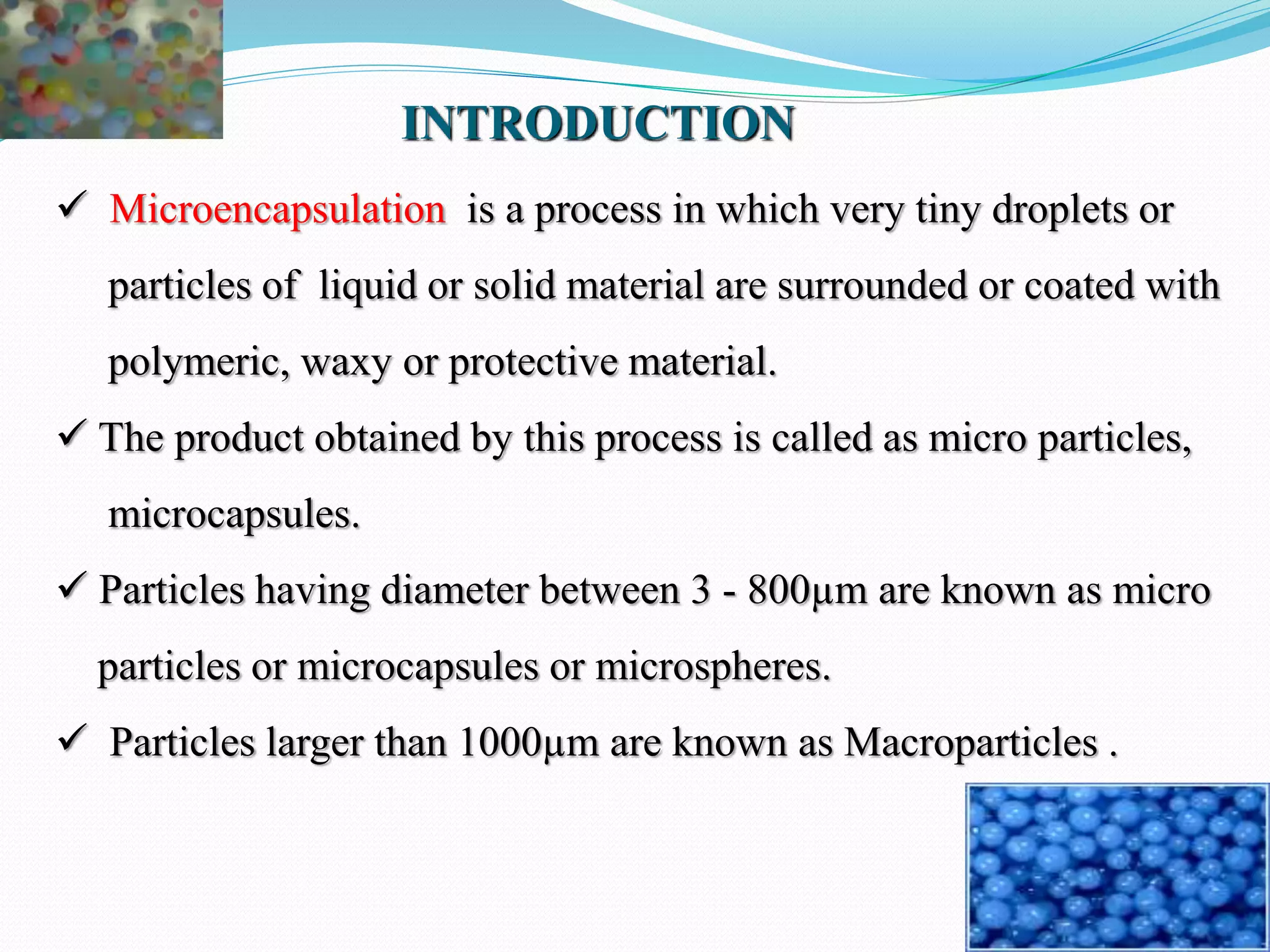
 Microencapsulation is a process in which very tiny droplets or
particles of liquid or solid material are surrounded or coated with
polymeric, waxy or protective material.
 The product obtained by this process is called as micro particles,
microcapsules.
 Particles having diameter between 3 - 800µm are known as micro
particles or microcapsules or microspheres.
 Particles larger than 1000µm are known as Macroparticles .
INTRODUCTION
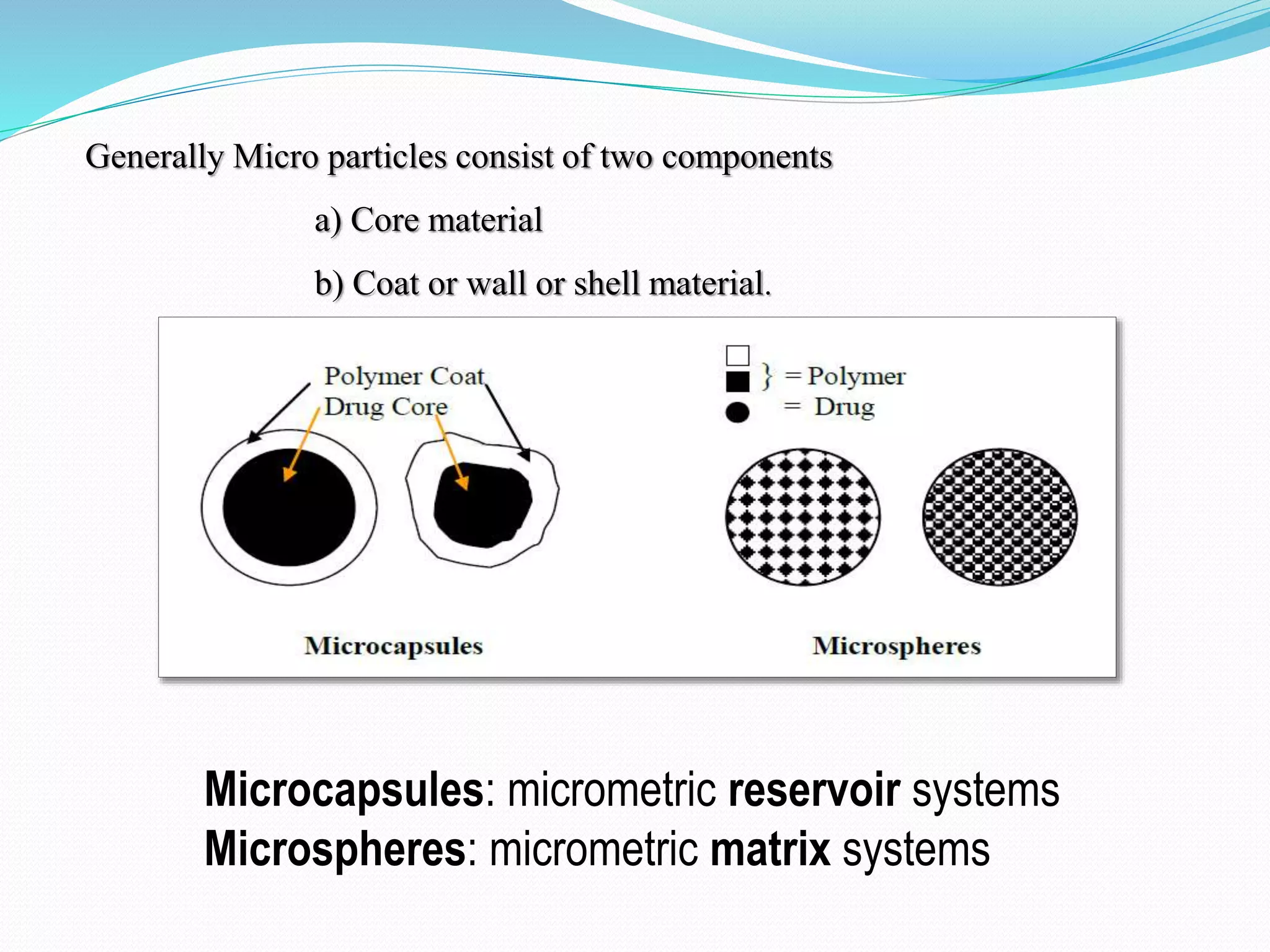
Generally Micro particles consist of two components
a) Core material
b) Coat or wall or shell material.
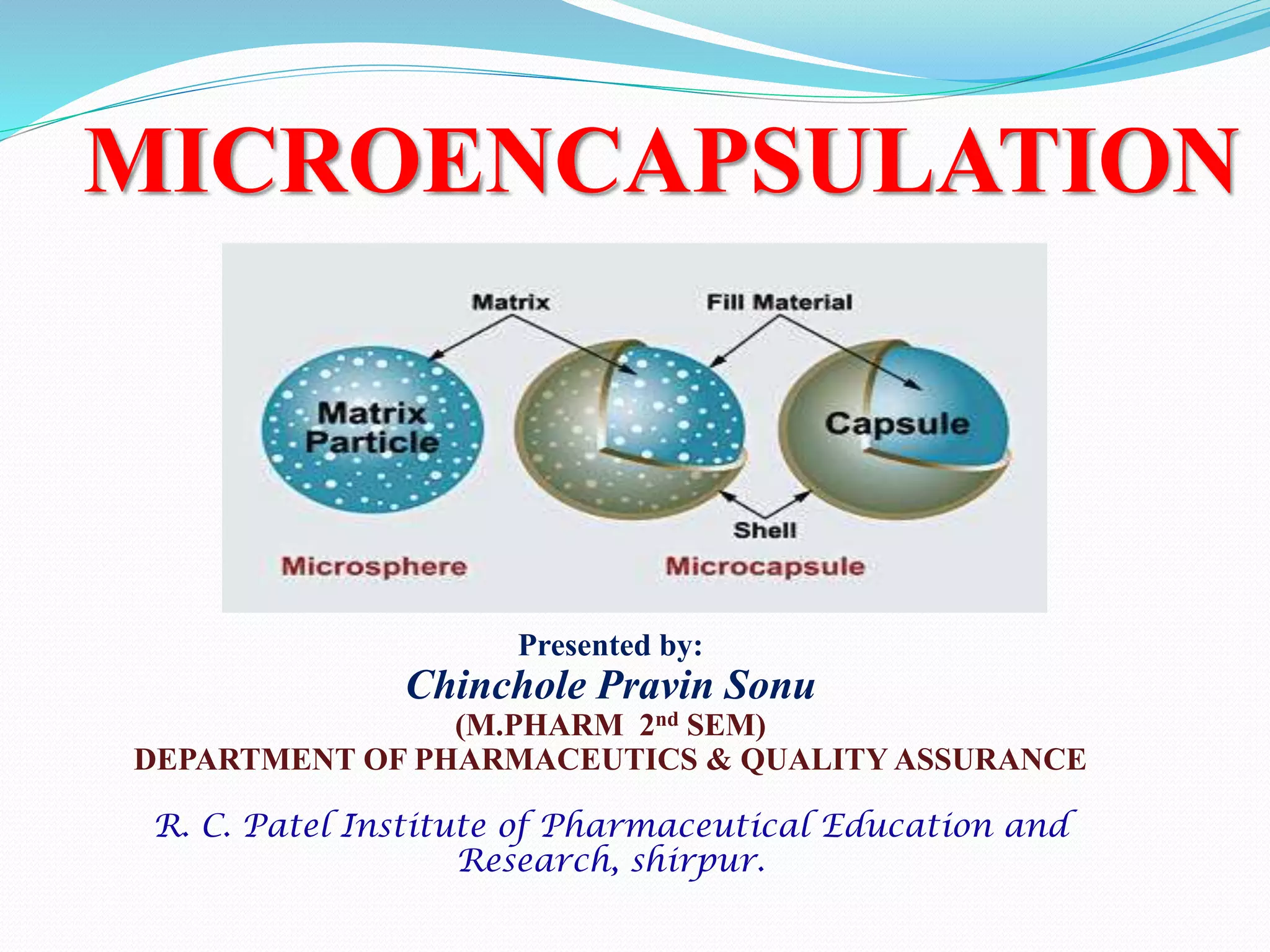
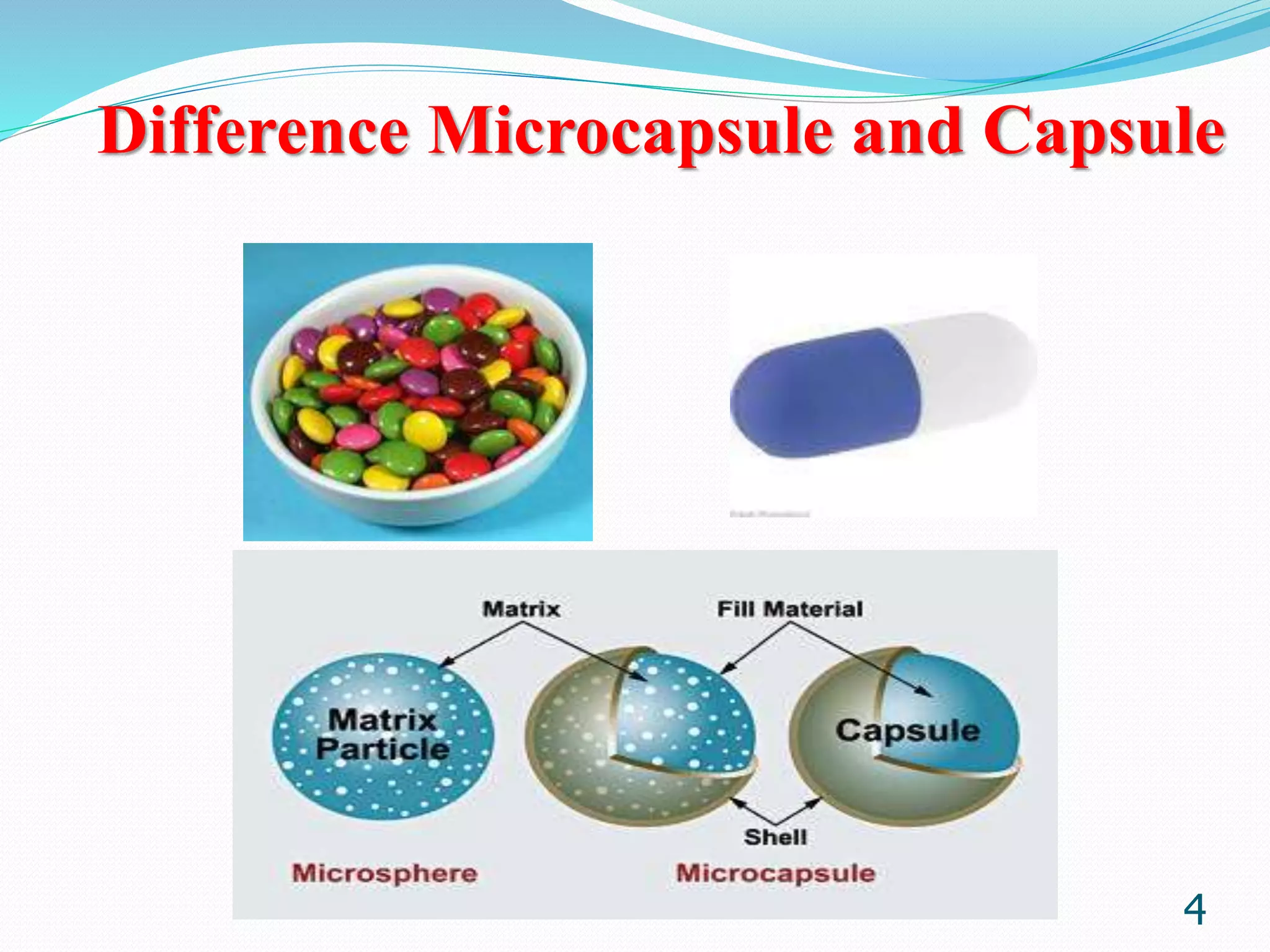
Microcapsules: micrometric reservoir systems
Microspheres: micrometric matrix systems
Difference Microcapsule and Capsule
4
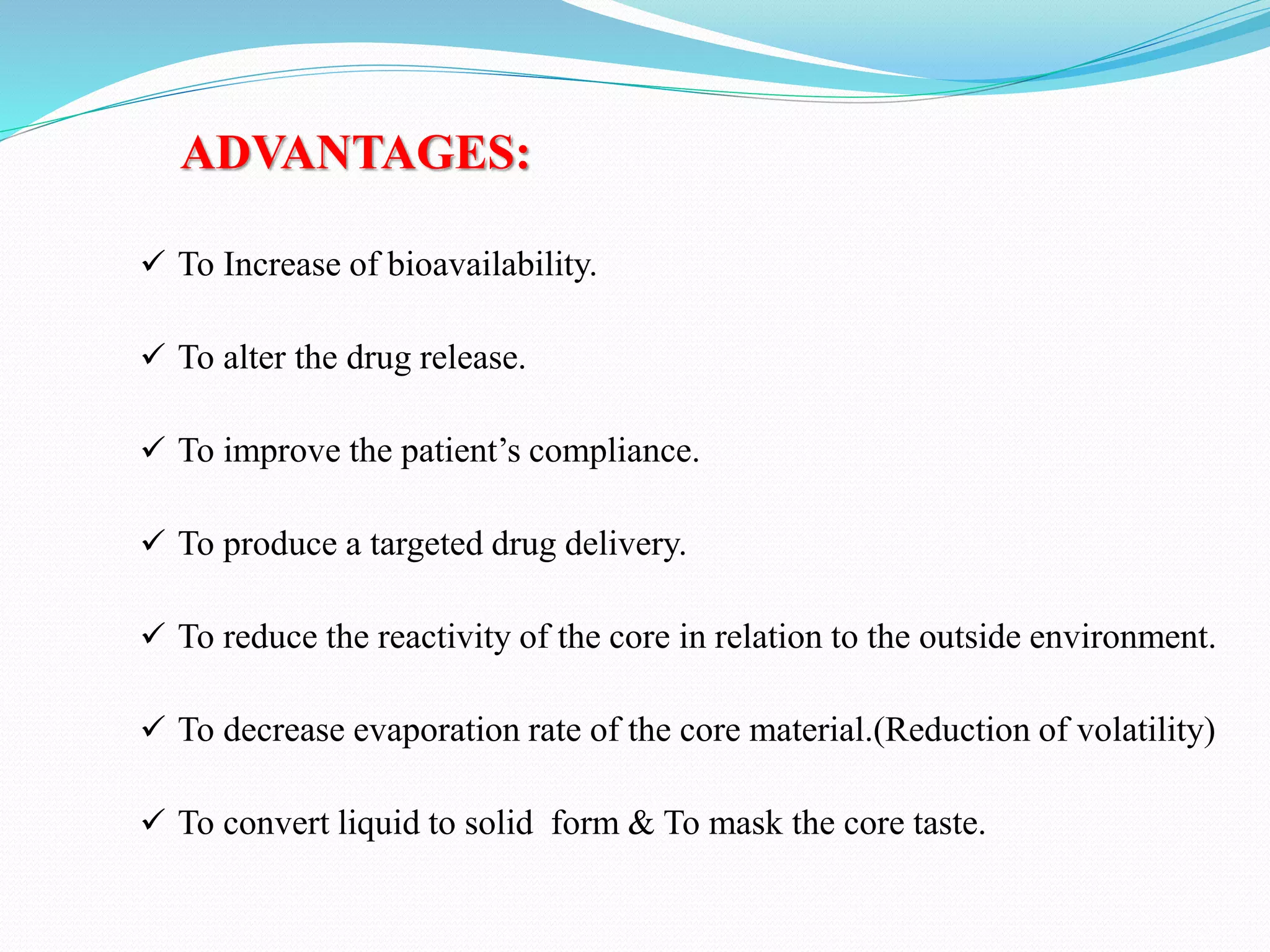
ADVANTAGES:
 To Increase of bioavailability.
 To alter the drug release.
 To improve the patient’s compliance.
 To produce a targeted drug delivery.
 To reduce the reactivity of the core in relation to the outside environment.
 To decrease evaporation rate of the core material.(Reduction of volatility)
 To convert liquid to solid form & To mask the core taste.
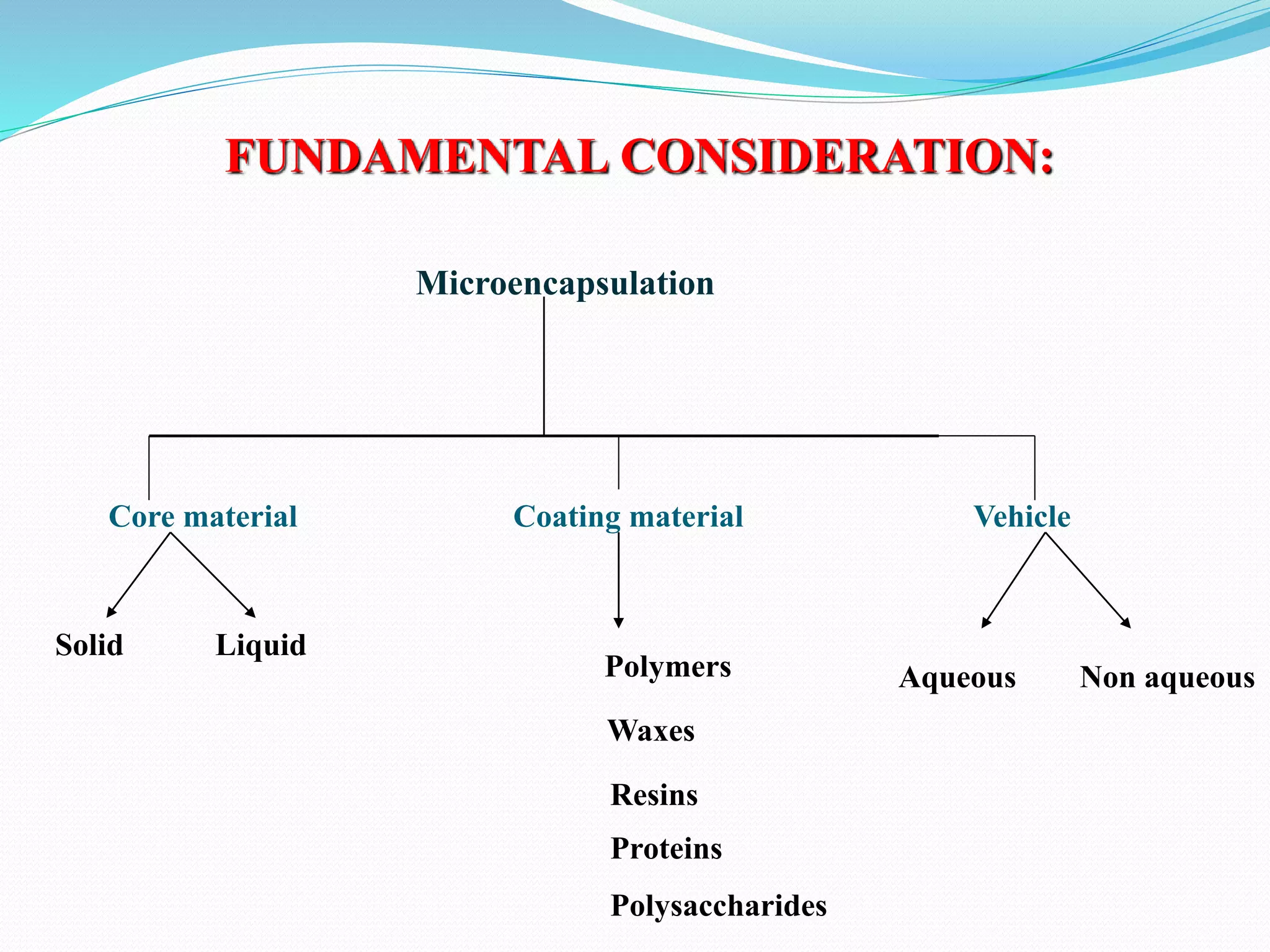
Core material Coating material Vehicle
Solid Liquid
Microencapsulation
Polymers
Waxes
Aqueous Non aqueous
Resins
Proteins
Polysaccharides
FUNDAMENTAL CONSIDERATION:
7
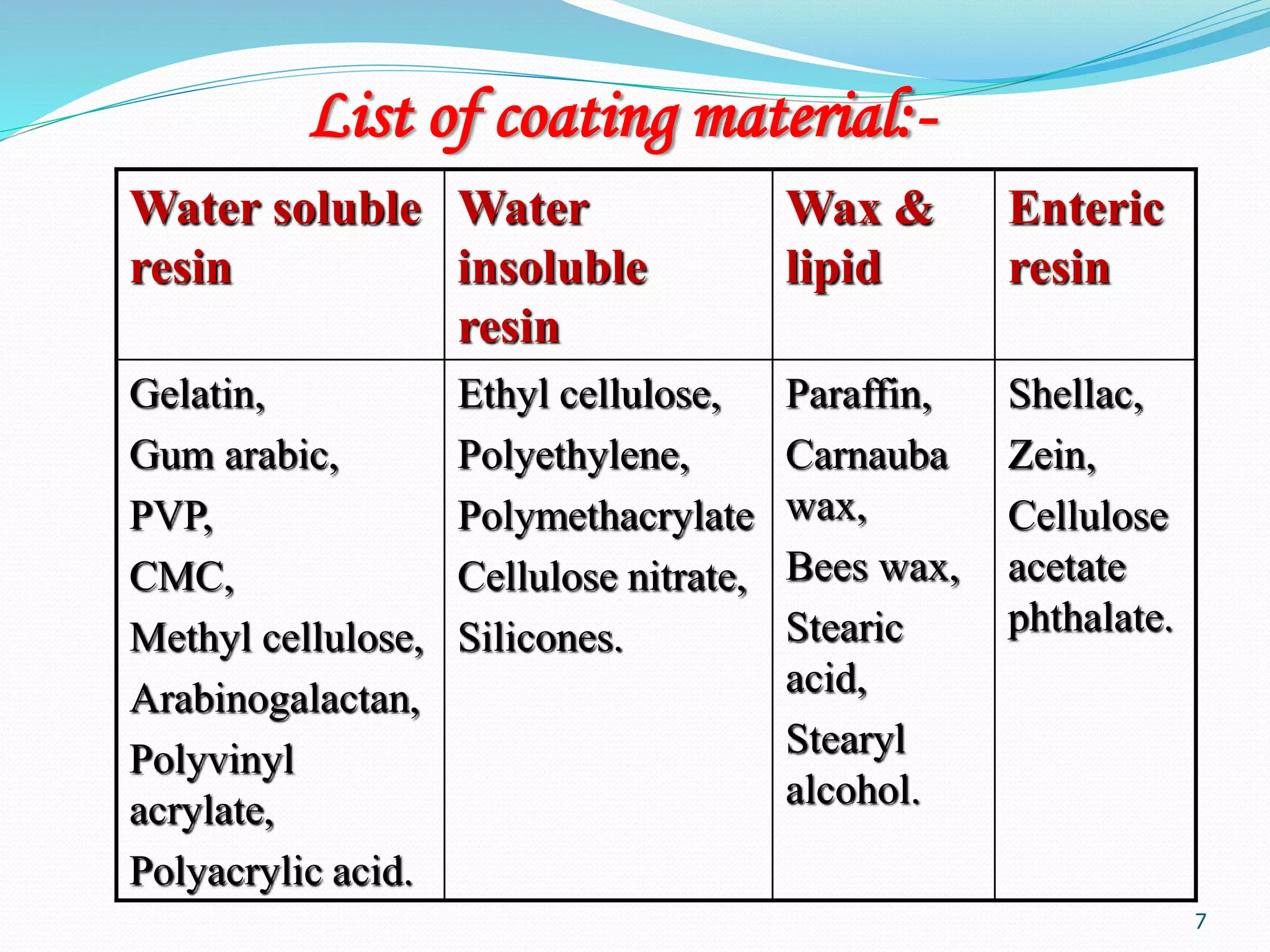
List of coating material:-
Water soluble
resin
Water
insoluble
resin
Wax &
lipid
Enteric
resin
Gelatin,
Gum arabic,
PVP,
CMC,
Methyl cellulose,
Arabinogalactan,
Polyvinyl
acrylate,
Polyacrylic acid.
Ethyl cellulose,
Polyethylene,
Polymethacrylate
Cellulose nitrate,
Silicones.
Paraffin,
Carnauba
wax,
Bees wax,
Stearic
acid,
Stearyl
alcohol.
Shellac,
Zein,
Cellulose
acetate
phthalate.
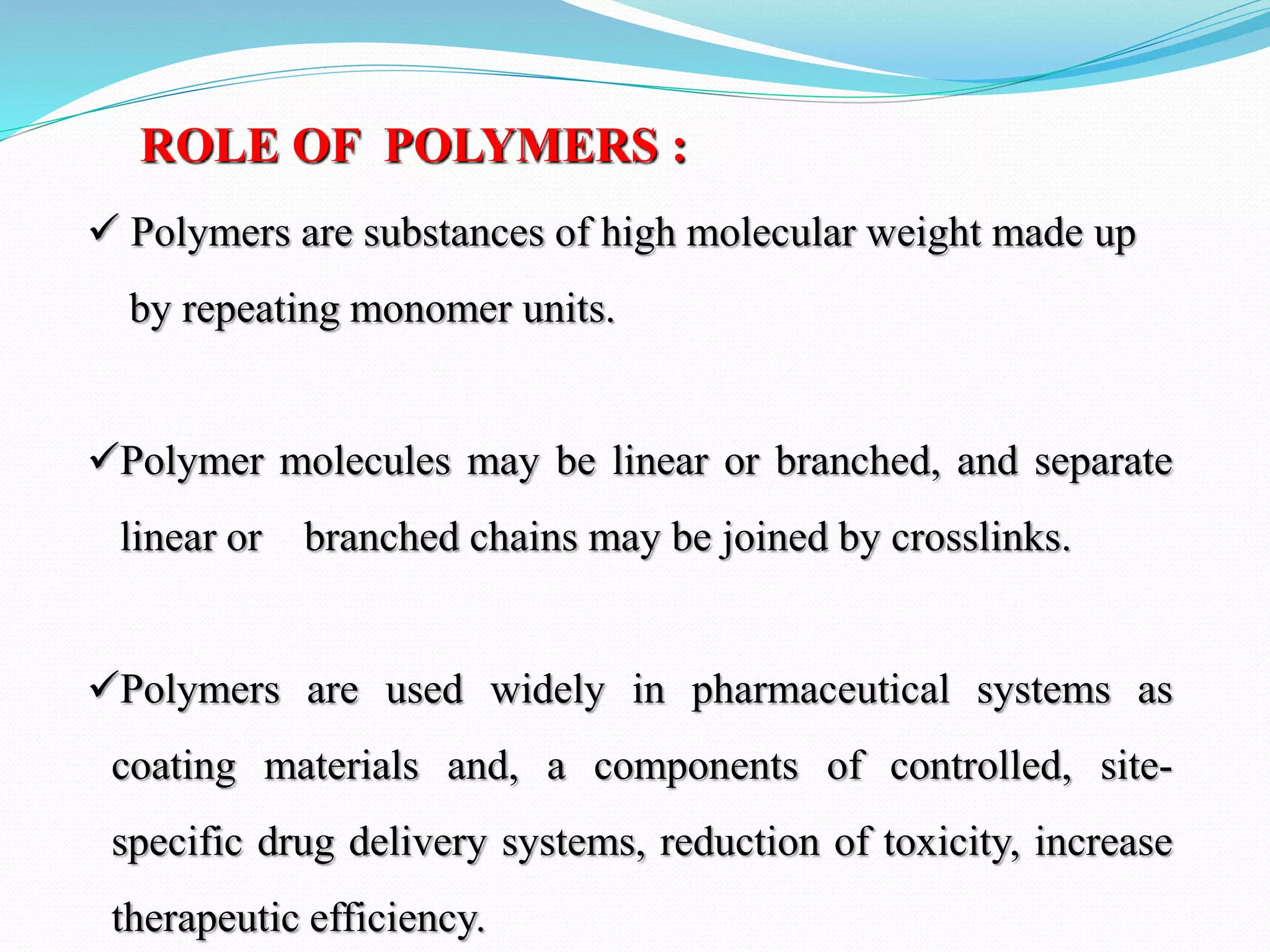
ROLE OF POLYMERS :
 Polymers are substances of high molecular weight made up
by repeating monomer units.
Polymer molecules may be linear or branched, and separate
linear or branched chains may be joined by crosslinks.
Polymers are used widely in pharmaceutical systems as
coating materials and, a components of controlled, site-
specific drug delivery systems, reduction of toxicity, increase
therapeutic efficiency.
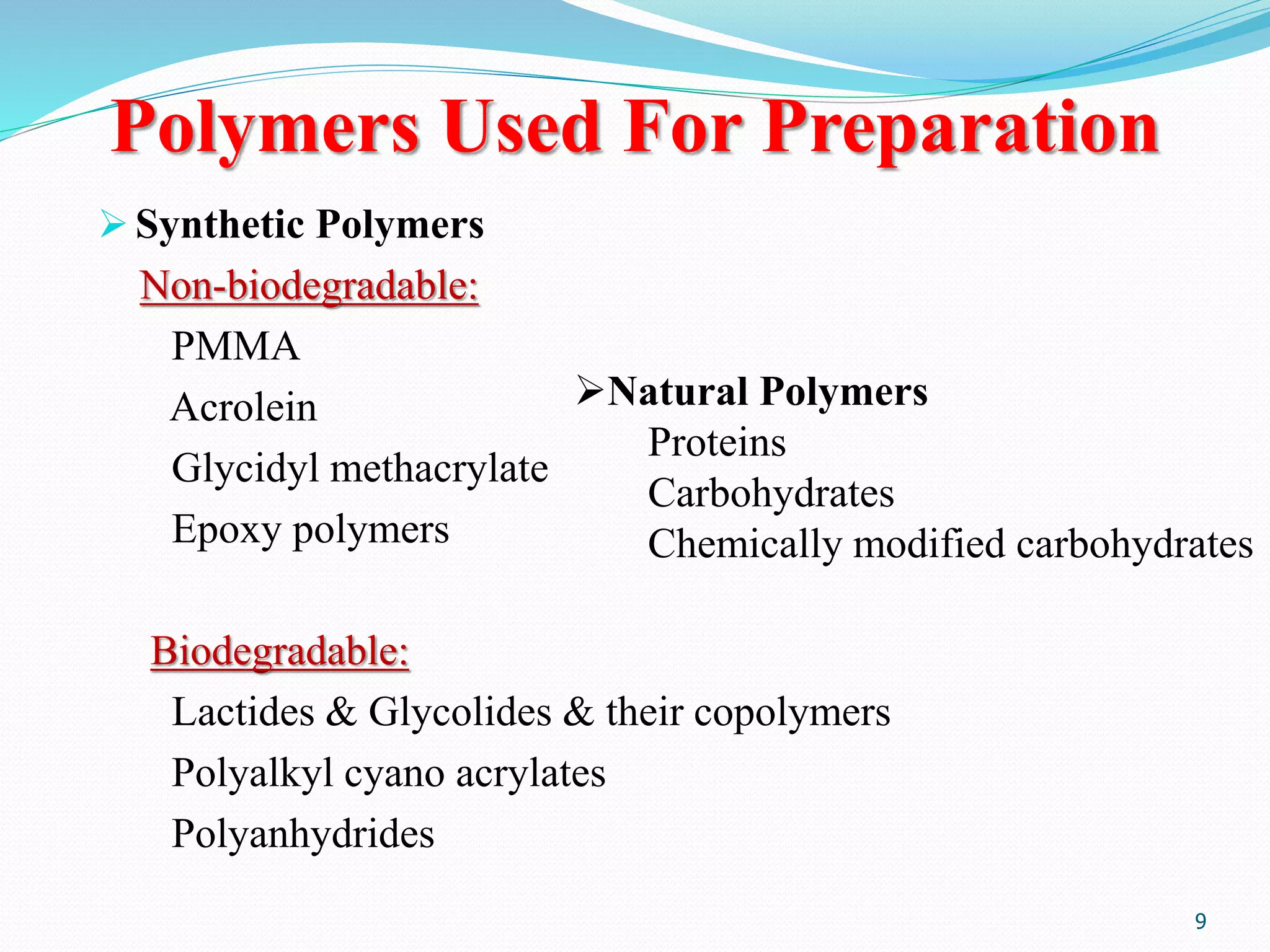
Polymers Used For Preparation
Synthetic Polymers
Non-biodegradable:
PMMA
Acrolein
Glycidyl methacrylate
Epoxy polymers
Biodegradable:
Lactides & Glycolides & their copolymers
Polyalkyl cyano acrylates
Polyanhydrides
9
Natural Polymers
Proteins
Carbohydrates
Chemically modified carbohydrates
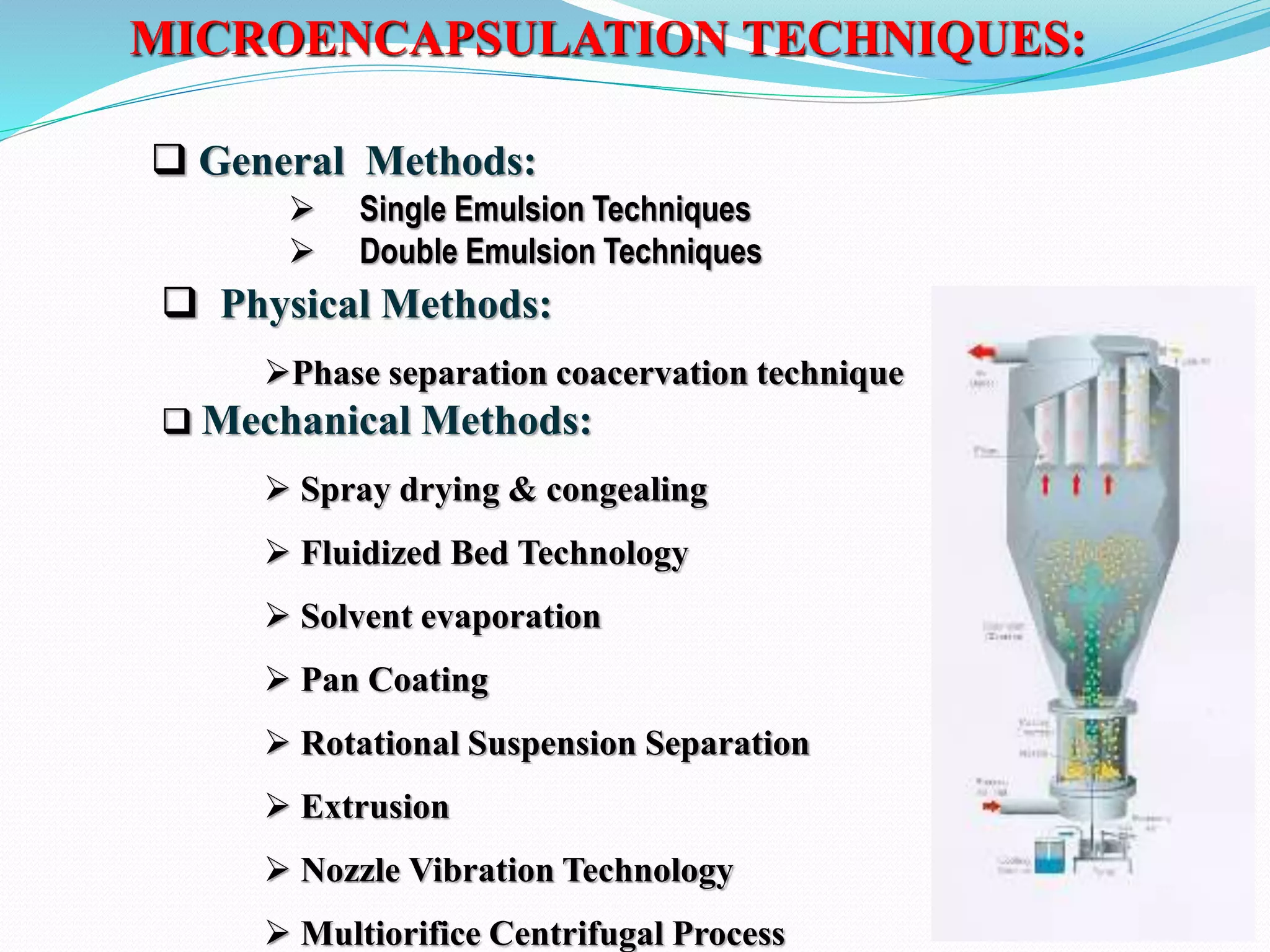
MICROENCAPSULATION TECHNIQUES:
 Physical Methods:
Phase separation coacervation technique
 Mechanical Methods:
 Spray drying & congealing
 Fluidized Bed Technology
 Solvent evaporation
 Pan Coating
 Rotational Suspension Separation
 Extrusion
 Nozzle Vibration Technology
 Multiorifice Centrifugal Process
 Single Emulsion Techniques
 Double Emulsion Techniques
 General Methods:
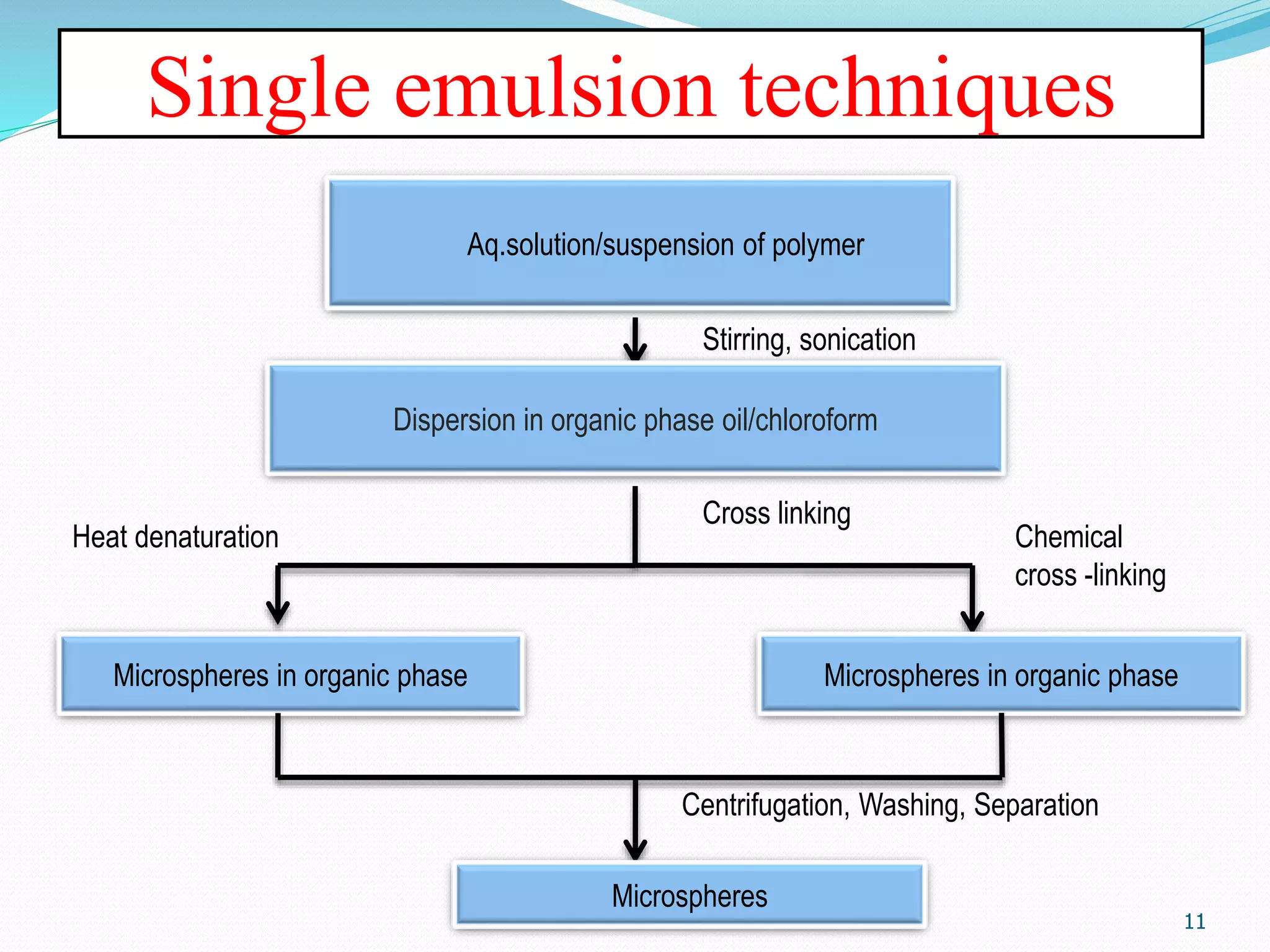
Single emulsion techniques
11
Aq.solution/suspension of polymer
Dispersion in organic phase oil/chloroform
Stirring, sonication
Cross linking
Heat denaturation Chemical
cross -linking
Microspheres in organic phase Microspheres in organic phase
Microspheres
Centrifugation, Washing, Separation
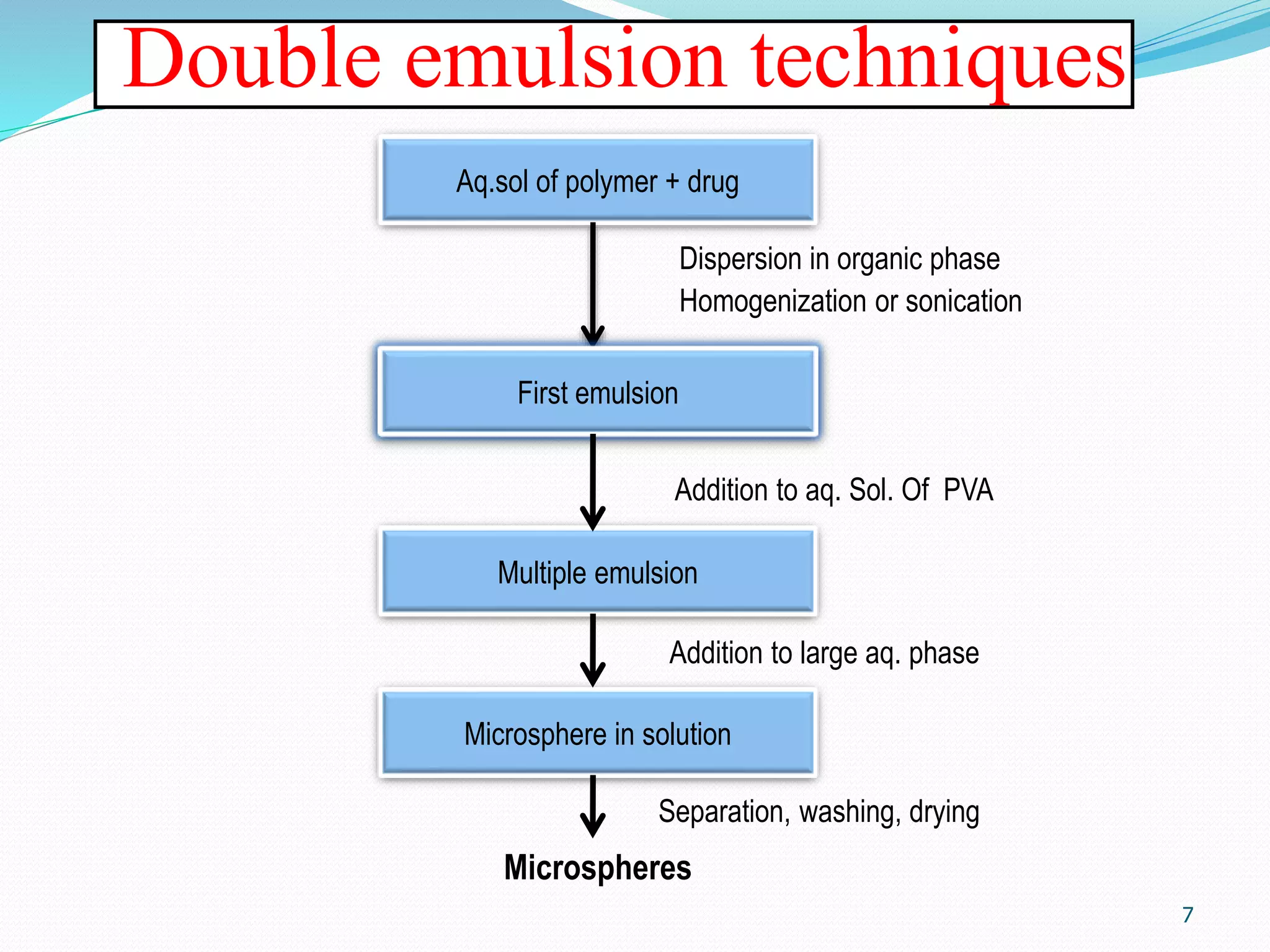
Double emulsion techniques
7
Aq.sol of polymer + drug
Dispersion in organic phase
Homogenization or sonication
First emulsion
Microsphere in solution
Multiple emulsion
Addition to aq. Sol. Of PVA
Addition to large aq. phase
Separation, washing, drying
Microspheres
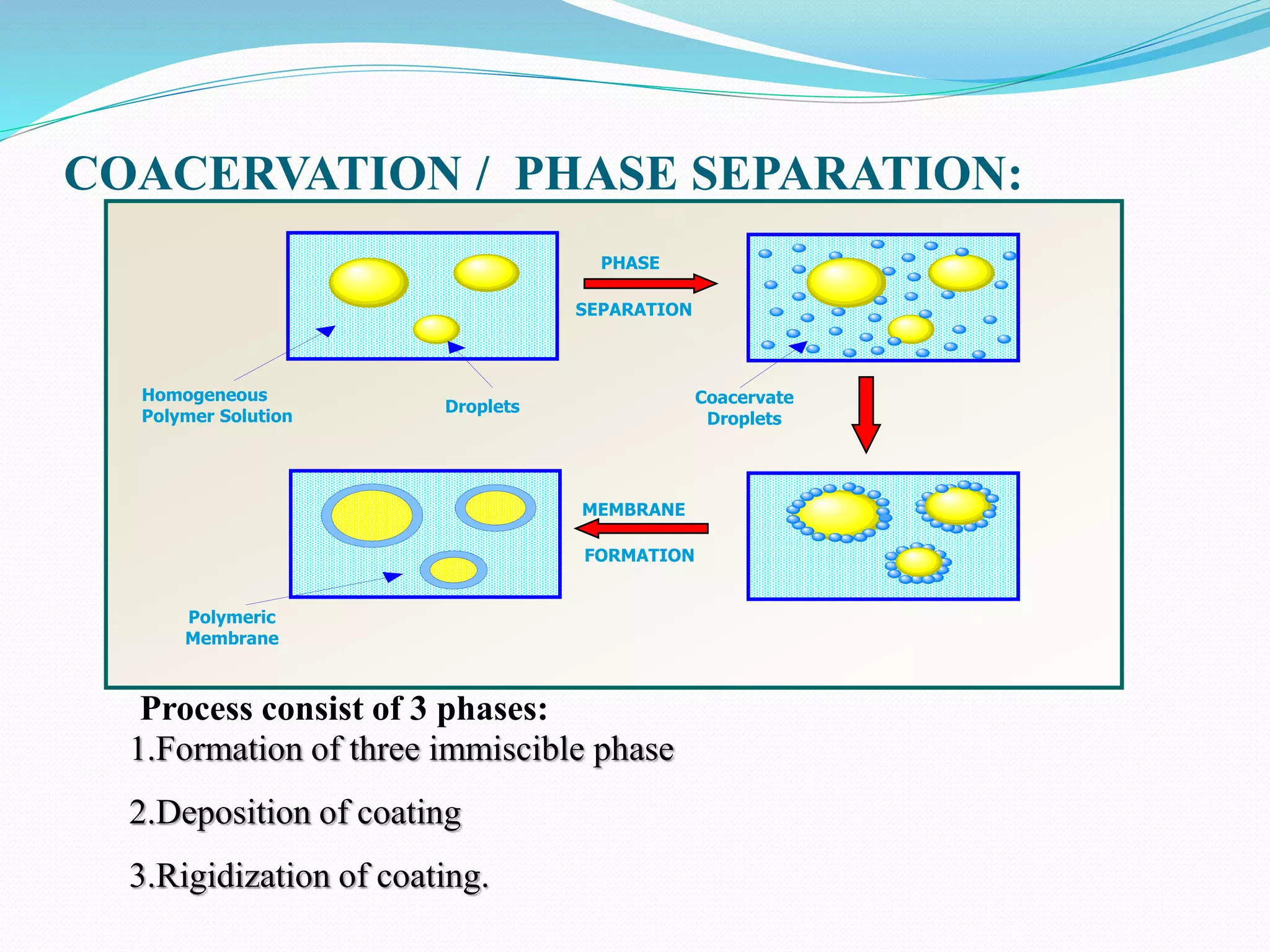
COACERVATION / PHASE SEPARATION:
Polymeric
Membrane
Droplets
Homogeneous
Polymer Solution
Coacervate
Droplets
PHASE
SEPARATION
MEMBRANE
FORMATION
1.Formation of three immiscible phase
2.Deposition of coating
3.Rigidization of coating.
Process consist of 3 phases:
Phase Separation Coacervation Technique
14
Aq/ organic solution polymer
Drug
Drug dispersed or dissolved in the polymer solution
Phase separation induced by different means
Polymer rich globules
Hardening
Microspheres in aq/ organic phase
Separation, Drying
MICROSPHERES
15
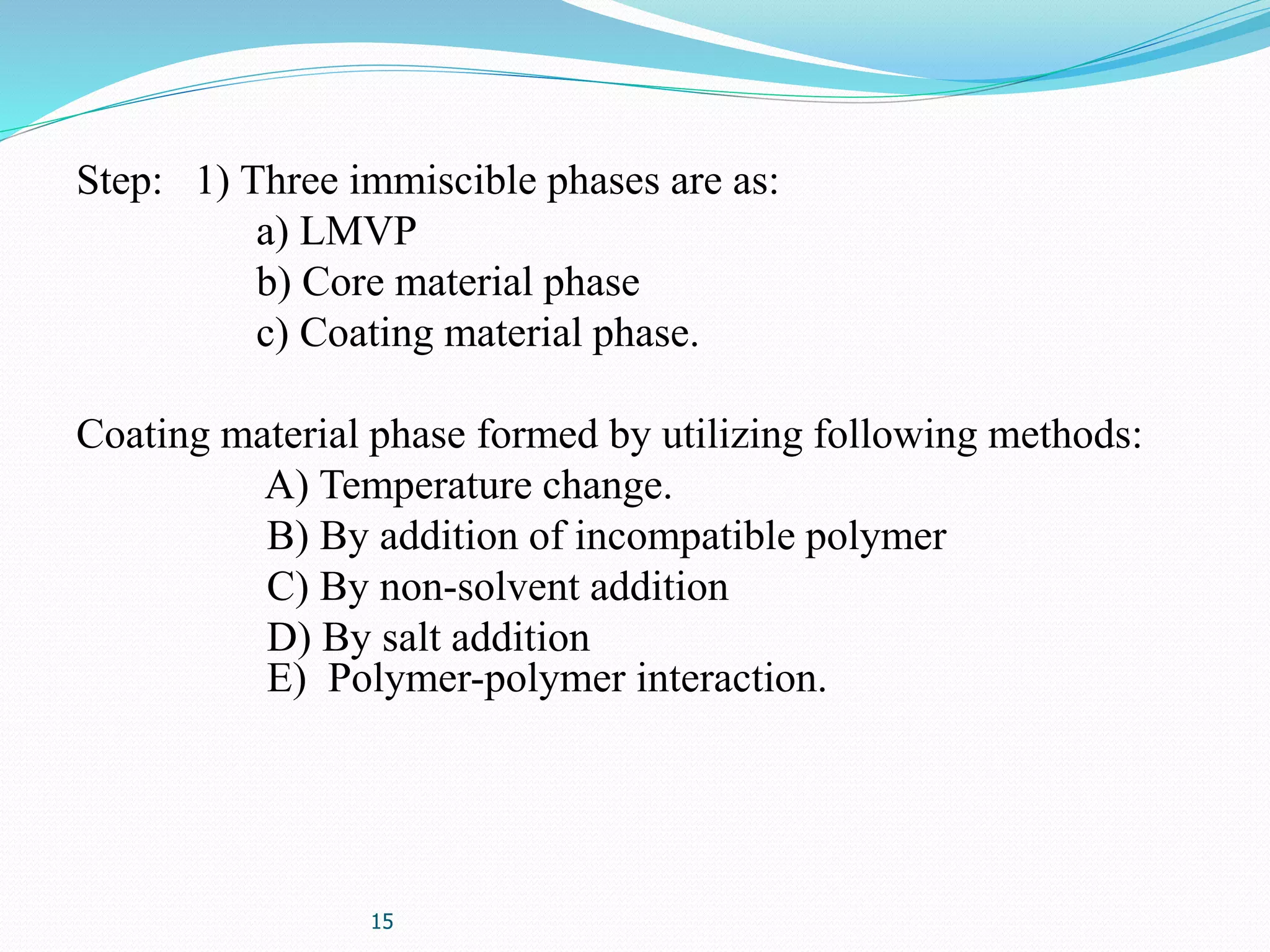
Step: 1) Three immiscible phases are as:
a) LMVP
b) Core material phase
c) Coating material phase.
Coating material phase formed by utilizing following methods:
A) Temperature change.
B) By addition of incompatible polymer
C) By non-solvent addition
D) By salt addition
E) Polymer-polymer interaction.
16
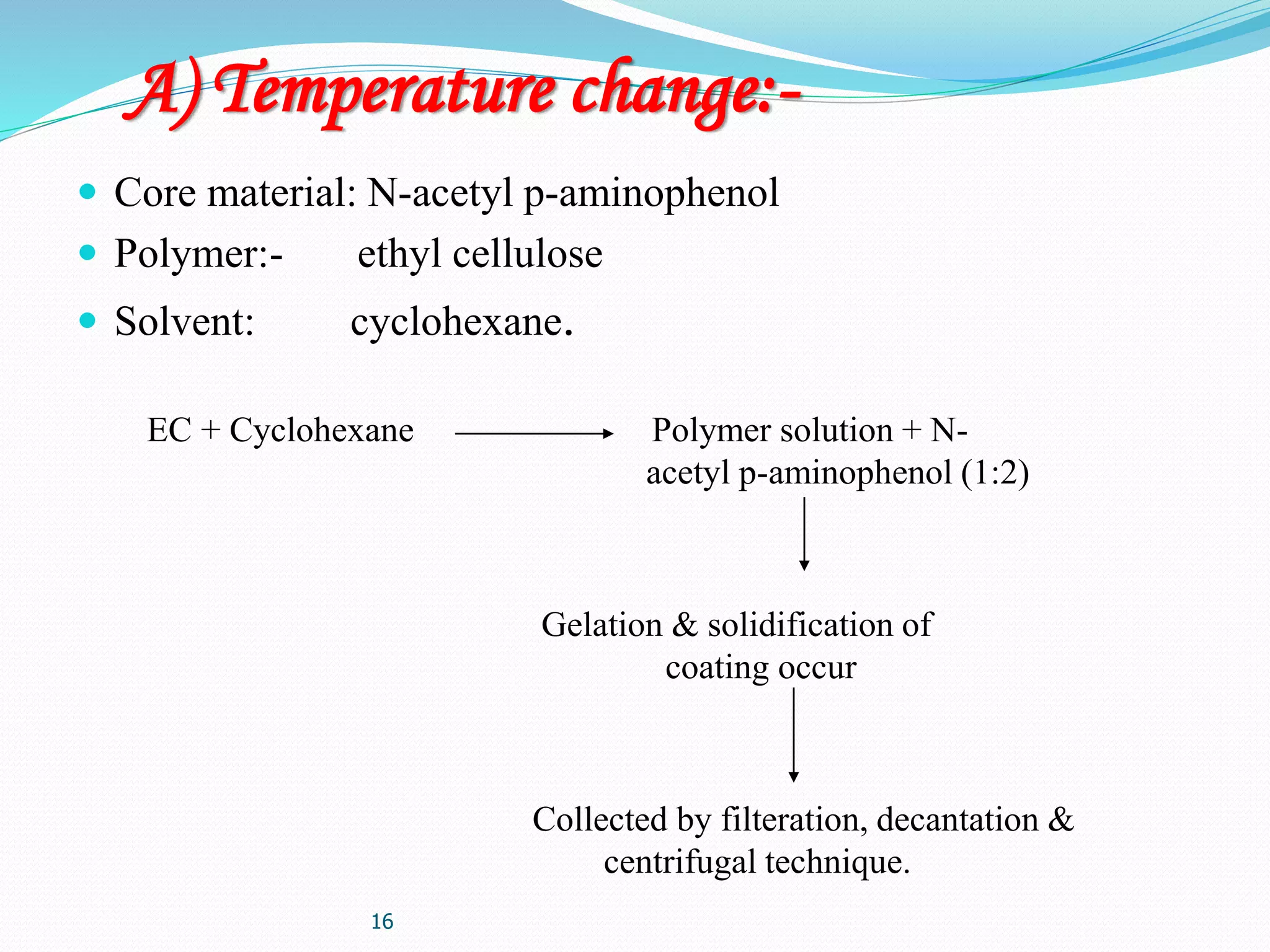
A) Temperature change:-
 Core material: N-acetyl p-aminophenol
 Polymer:- ethyl cellulose
 Solvent: cyclohexane.
EC + Cyclohexane Polymer solution + N-
acetyl p-aminophenol (1:2)
Gelation & solidification of
coating occur
Collected by filteration, decantation &
centrifugal technique.
17
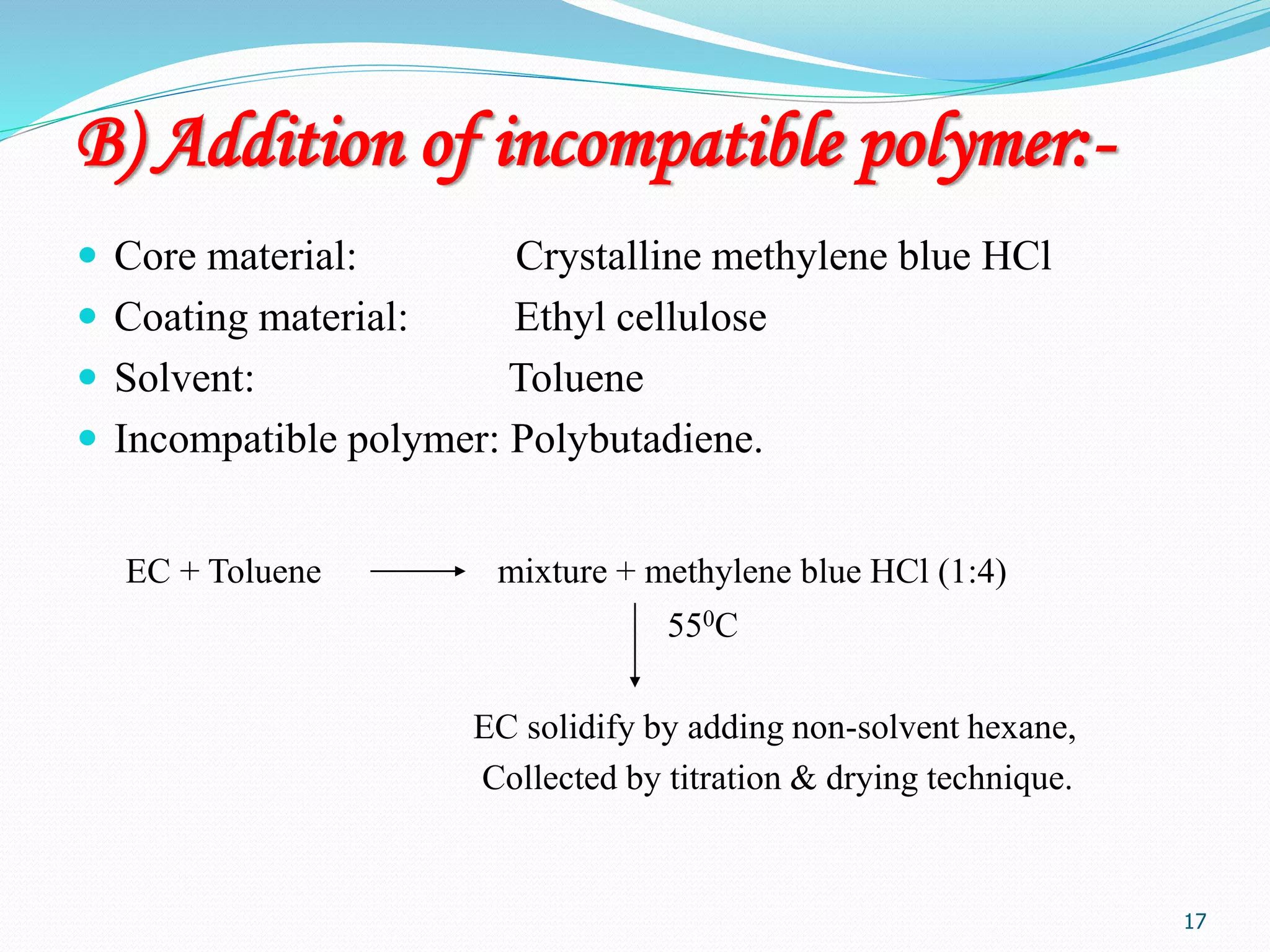
B) Addition of incompatible polymer:-
 Core material: Crystalline methylene blue HCl
 Coating material: Ethyl cellulose
 Solvent: Toluene
 Incompatible polymer: Polybutadiene.
EC + Toluene mixture + methylene blue HCl (1:4)
550C
EC solidify by adding non-solvent hexane,
Collected by titration & drying technique.
18
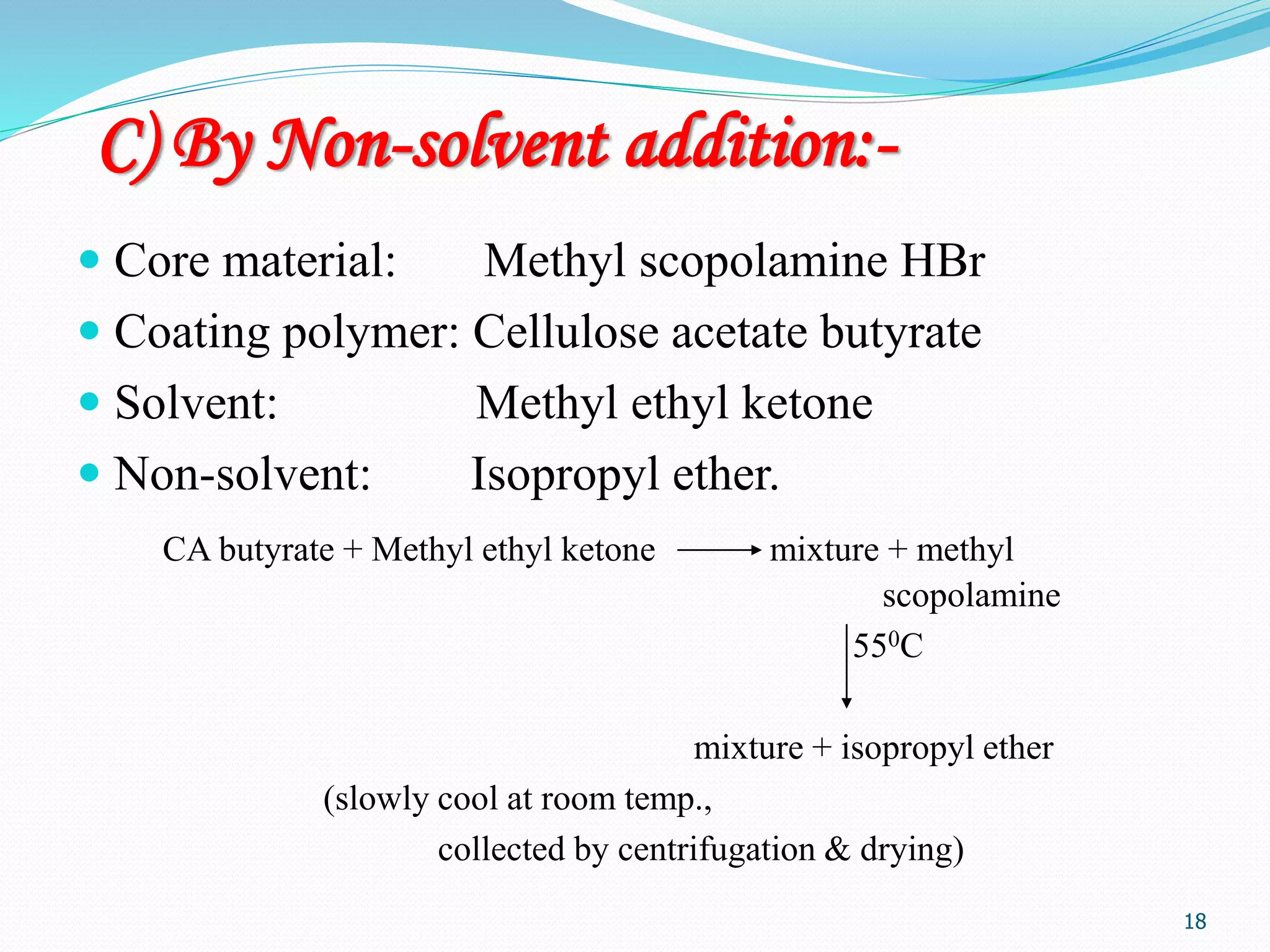
C) By Non-solvent addition:-
 Core material: Methyl scopolamine HBr
 Coating polymer: Cellulose acetate butyrate
 Solvent: Methyl ethyl ketone
 Non-solvent: Isopropyl ether.
CA butyrate + Methyl ethyl ketone mixture + methyl
scopolamine
550C
mixture + isopropyl ether
(slowly cool at room temp.,
collected by centrifugation & drying)
19
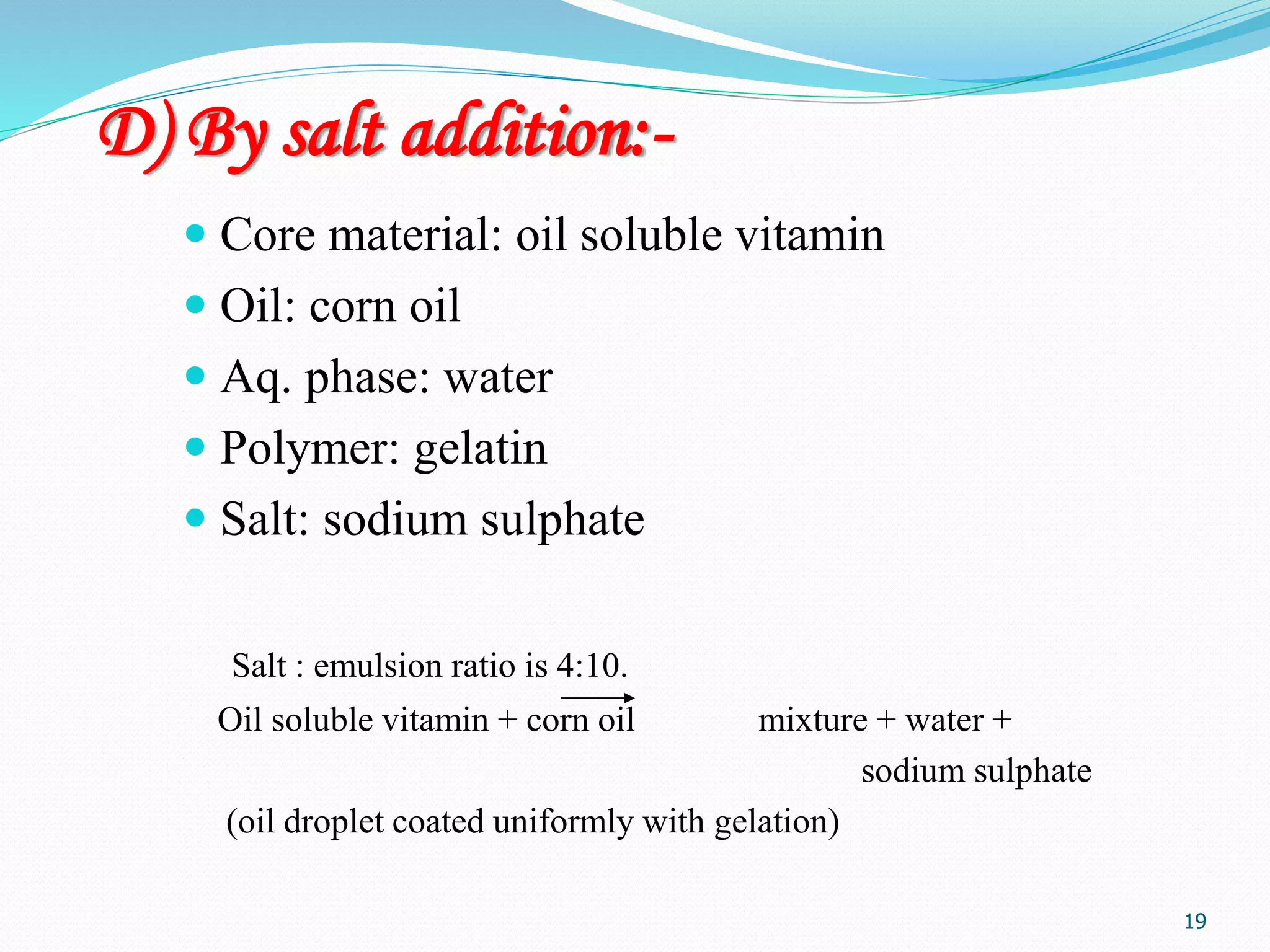
D) By salt addition:-
 Core material: oil soluble vitamin
 Oil: corn oil
 Aq. phase: water
 Polymer: gelatin
 Salt: sodium sulphate
Salt : emulsion ratio is 4:10.
Oil soluble vitamin + corn oil mixture + water +
sodium sulphate
(oil droplet coated uniformly with gelation)
20
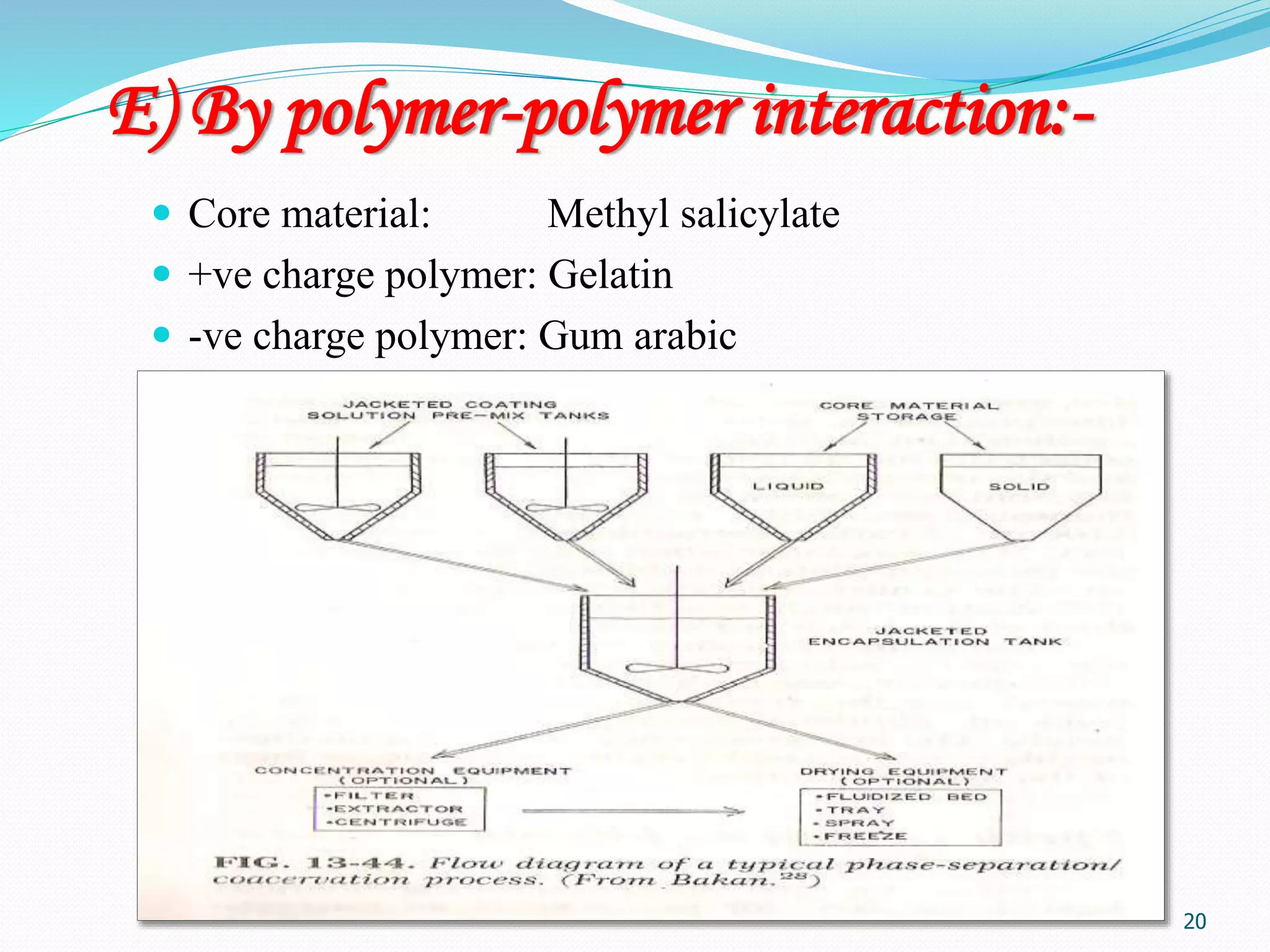
E) By polymer-polymer interaction:-
 Core material: Methyl salicylate
 +ve charge polymer: Gelatin
 -ve charge polymer: Gum arabic
21
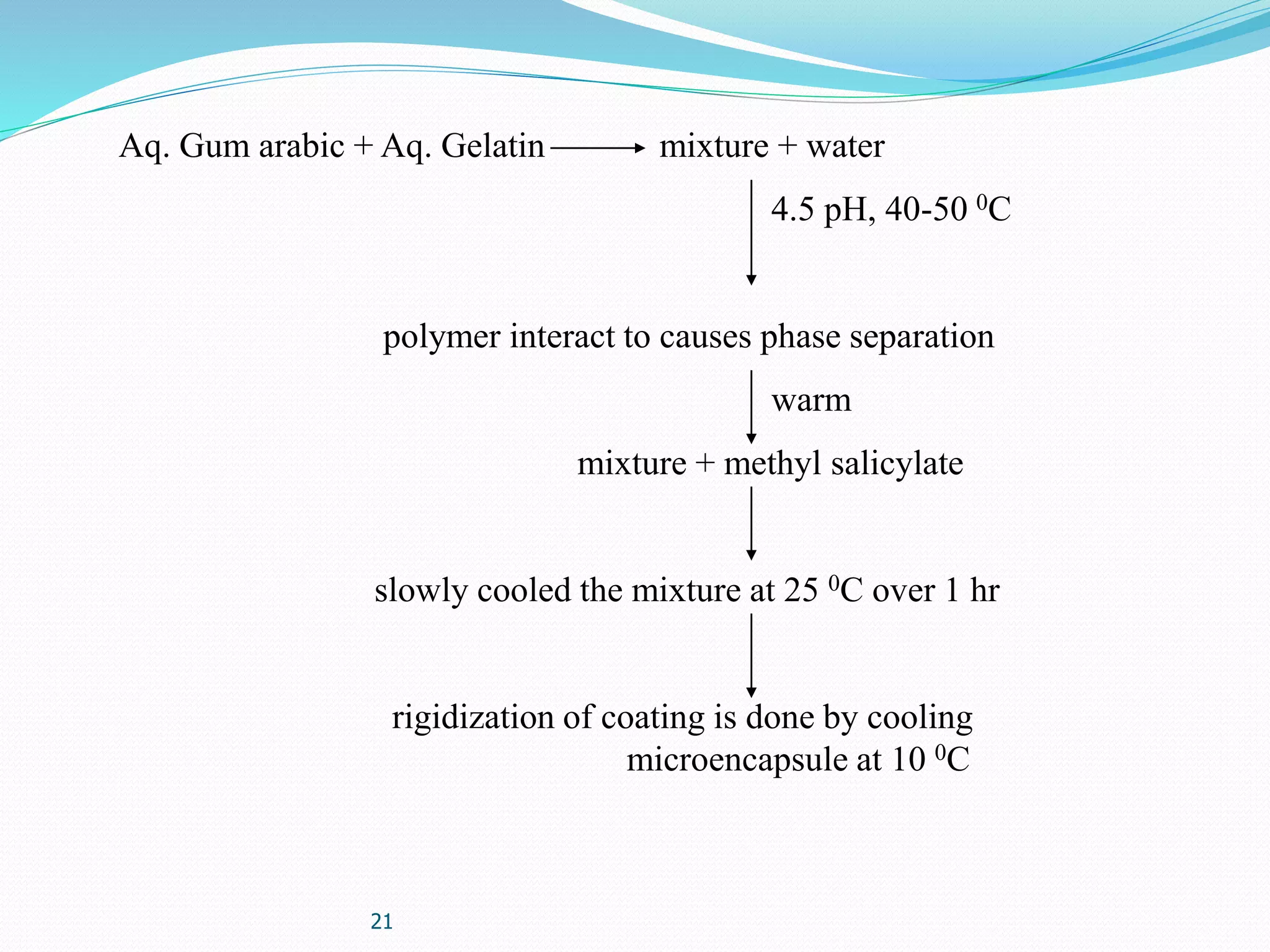
Aq. Gum arabic + Aq. Gelatin mixture + water
4.5 pH, 40-50 0C
polymer interact to causes phase separation
warm
mixture + methyl salicylate
slowly cooled the mixture at 25 0C over 1 hr
rigidization of coating is done by cooling
microencapsule at 10 0C
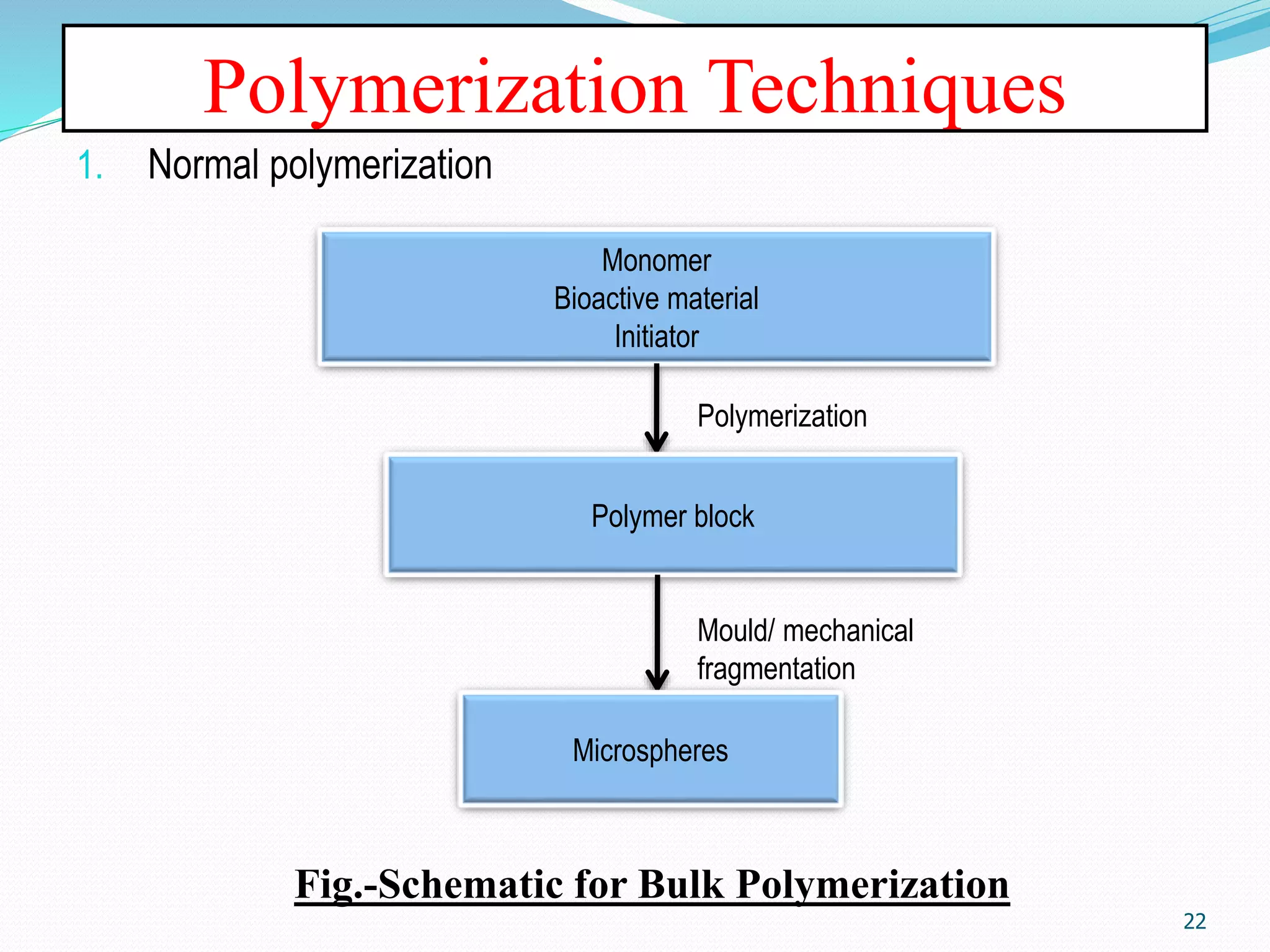
Polymerization Techniques
1. Normal polymerization
22
Monomer
Bioactive material
Initiator
Polymer block
Microspheres
Polymerization
Mould/ mechanical
fragmentation
Fig.-Schematic for Bulk Polymerization
2. Interfacial Polymerization1,4
23
Monomer/
Bioactive material
Aq. Solution of NaOH with Initiator,
Surfactant above CMC Stabilizer
Dispersion with vigorous
stirring
Micellar solution of polymer in aq. medium
Polymerization
Microspheres formation
Separation, Washing, Drying
Microspheres
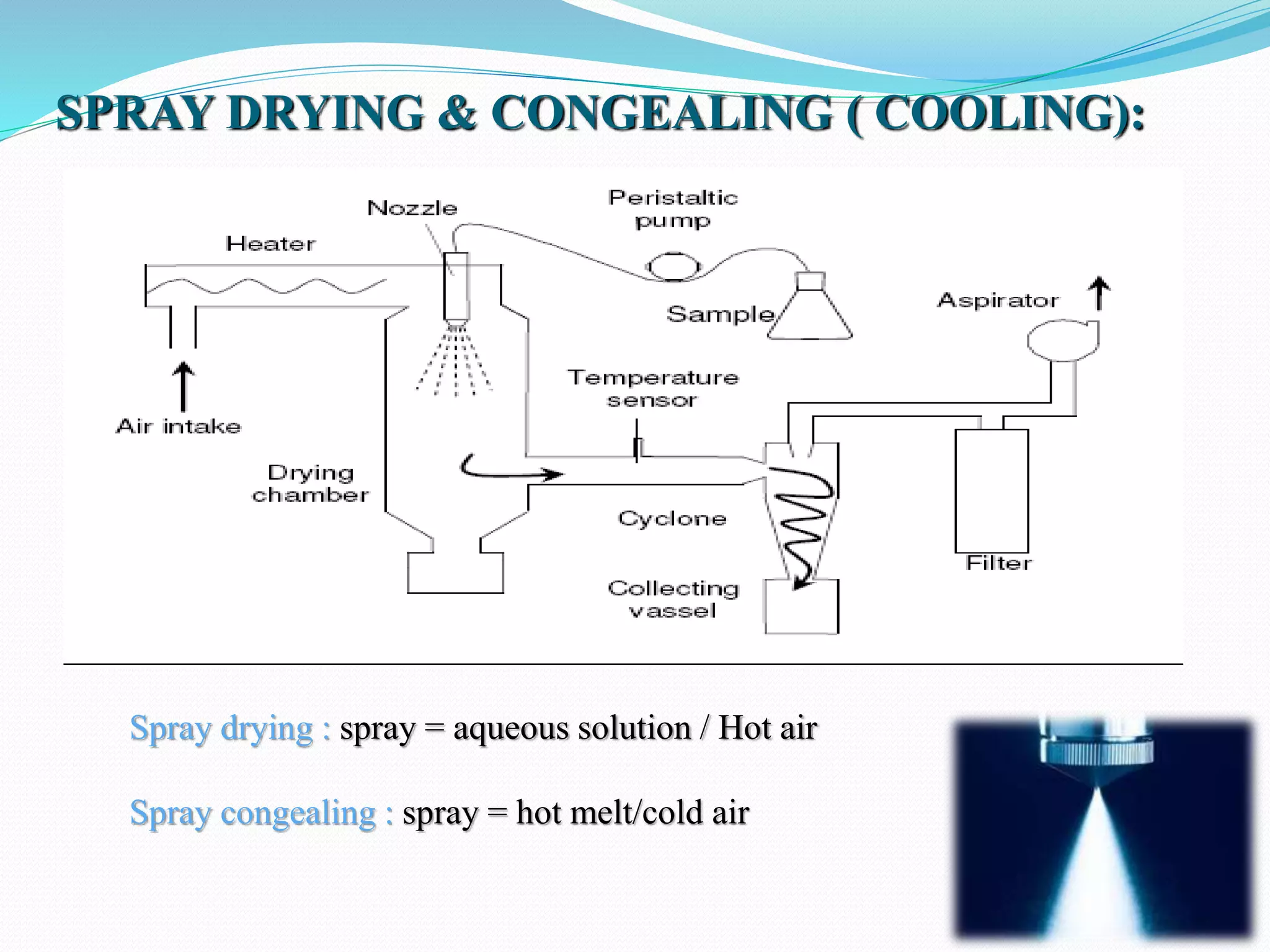
SPRAY DRYING & CONGEALING ( COOLING):
Spray drying : spray = aqueous solution / Hot air
Spray congealing : spray = hot melt/cold air
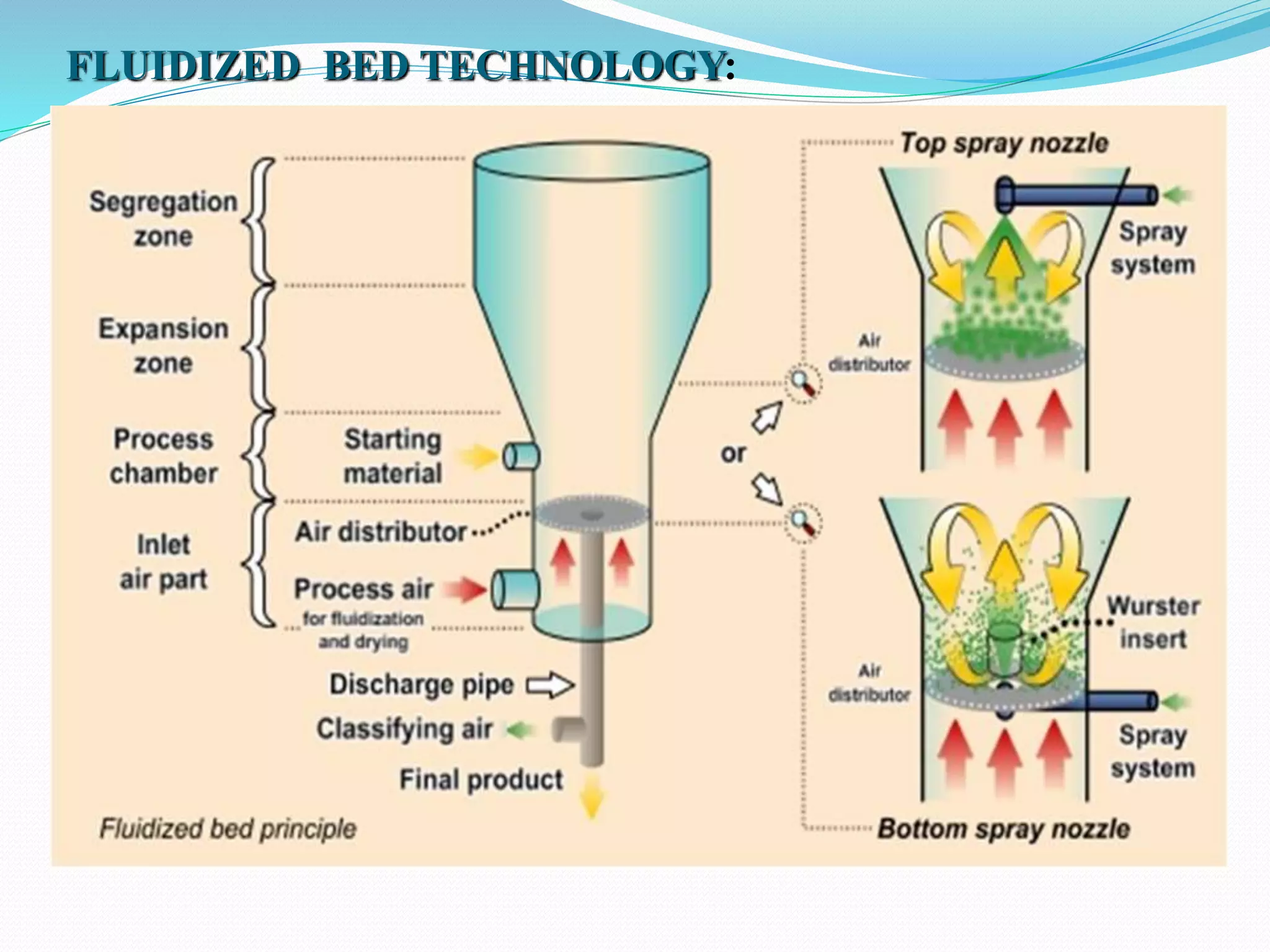
FLUIDIZED BED TECHNOLOGY:
Polymer
+ Volatile organic solvent
Organic Polymeric Phase
Formation of Oil-in-Water
Emulsion
Solvent Evaporation
Particle Formation by
Polymer Precipitation
RECOVERY OF POLYMERIC
MICROPARTICLES
Temperature increase
Active
Ingredient
Addition into an aqueous
phase (+o/w stabilizer)
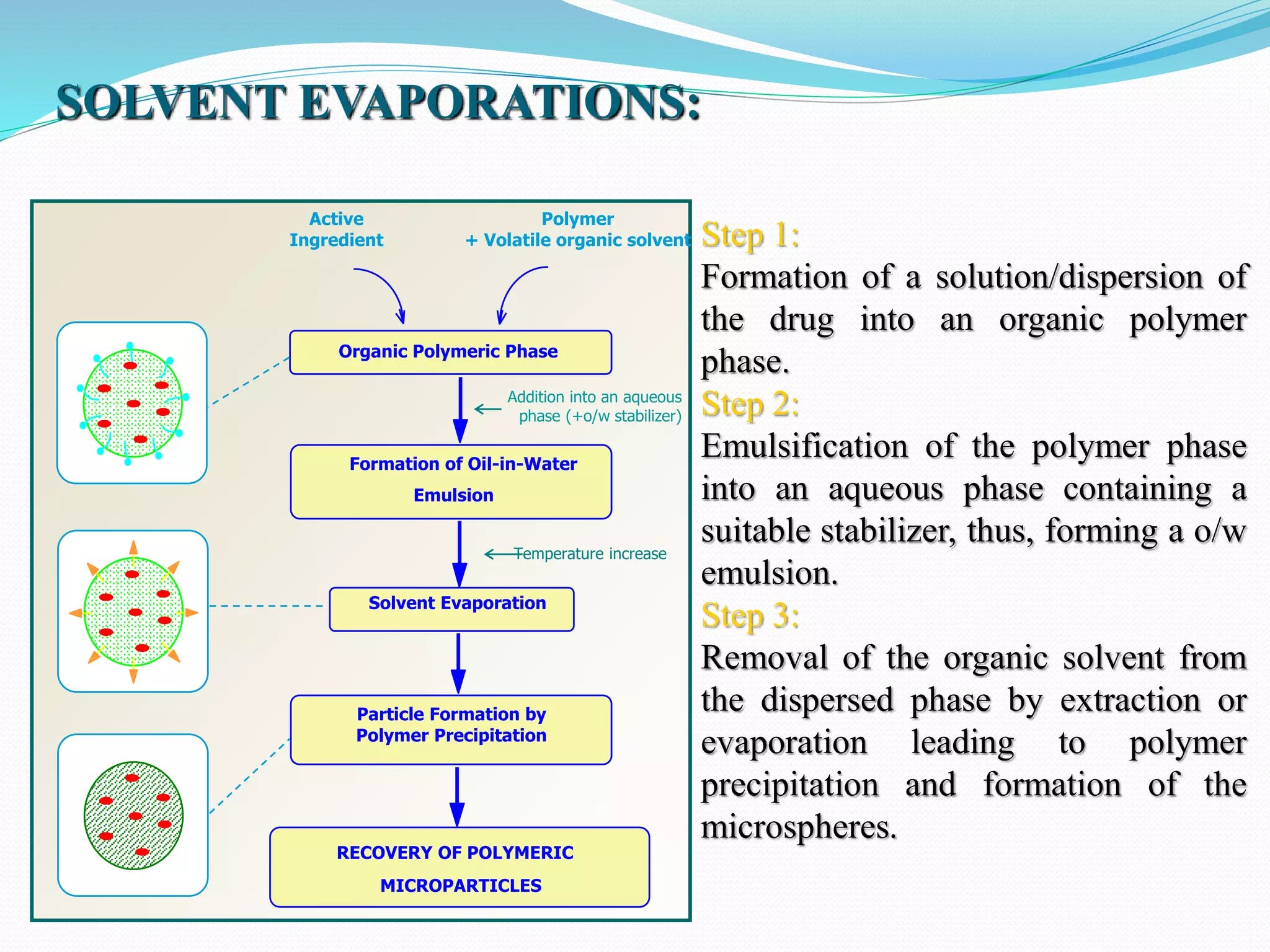
SOLVENT EVAPORATIONS:
Step 1:
Formation of a solution/dispersion of
the drug into an organic polymer
phase.
Step 2:
Emulsification of the polymer phase
into an aqueous phase containing a
suitable stabilizer, thus, forming a o/w
emulsion.
Step 3:
Removal of the organic solvent from
the dispersed phase by extraction or
evaporation leading to polymer
precipitation and formation of the
microspheres.
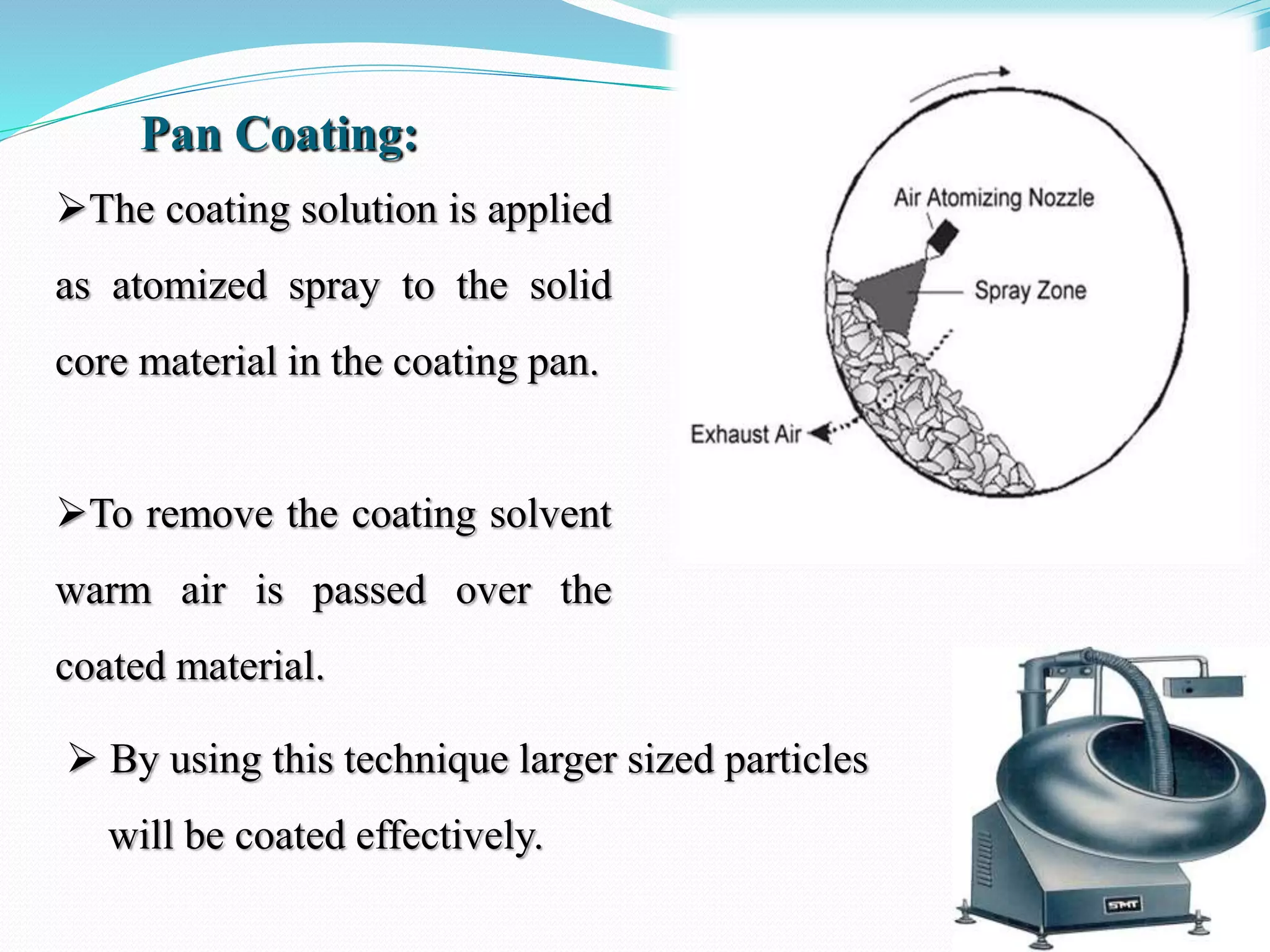
Pan Coating:
The coating solution is applied
as atomized spray to the solid
core material in the coating pan.
To remove the coating solvent
warm air is passed over the
coated material.
 By using this technique larger sized particles
will be coated effectively.
Rotational Suspension Separation:
Individual core particles coated with a film of shell formation are flung off the
edge of the rotating disk along with droplets of pure coating material.
 When the shell formation is solidified,(e.g.. by cooling) microcapsules are
produce.
 In this process, core material
dispersed in a liquid shell
formation is fed onto a rotating
disk.
A flat disk is shown, but conical
or bowl shaped disks can be used.
EXTRUSION:
 This method was first patented in 1957.
 The process involves forcing a core material dispersed in a molten
carbohydrate mass through a series of dies, into a bath of dehydrating
liquid.
 When contact with the liquid is made, the carbohydrate case hardens to
entrap the core material.
 The extruded filaments are separated from the liquid bath, dried using an
anti-caking agent such as calcium tripolyphosphate .
 This process is particularly useful for heat labile substances such as flavors,
vitamin C and colors.
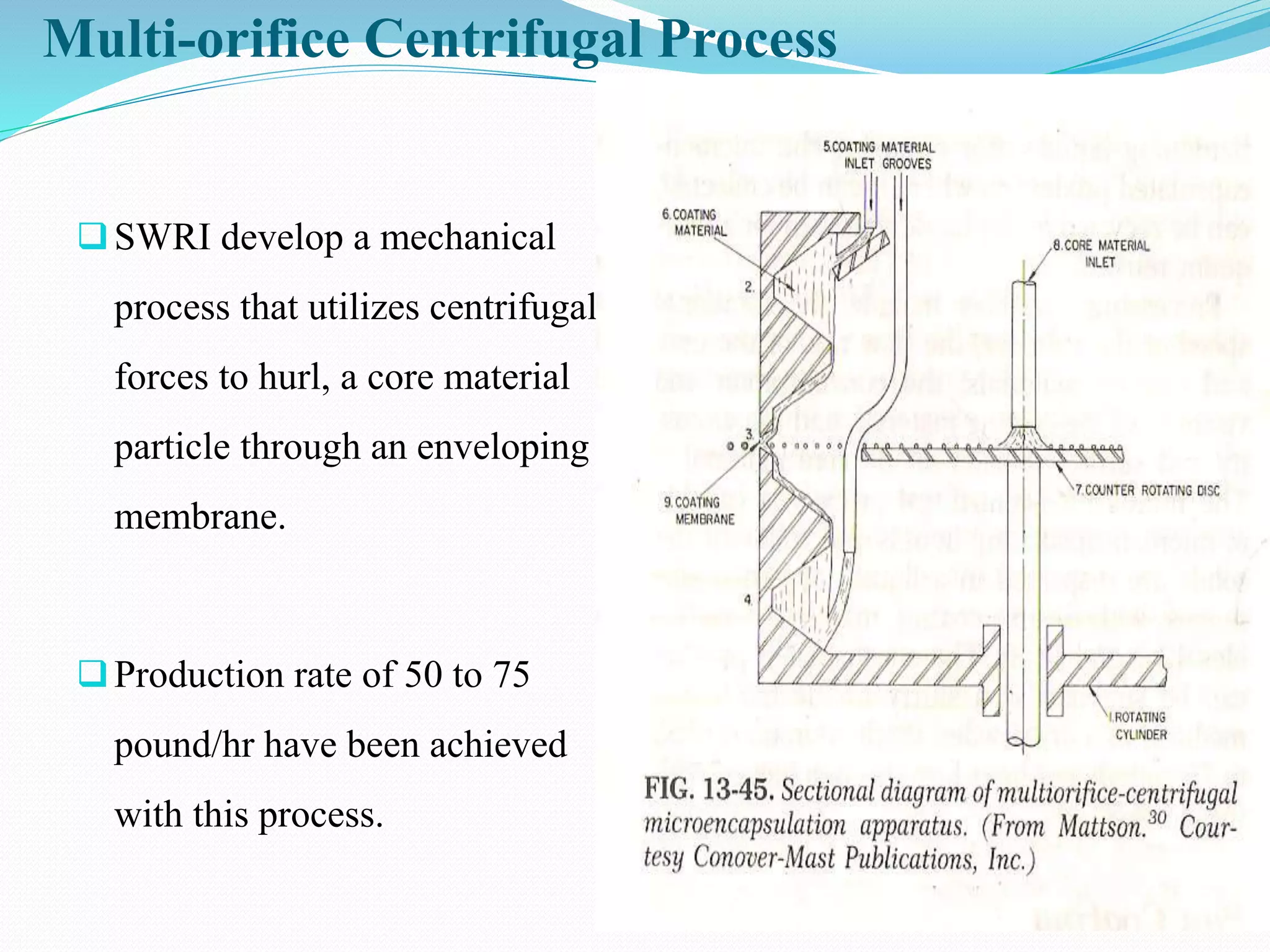
Multi-orifice Centrifugal Process
SWRI develop a mechanical
process that utilizes centrifugal
forces to hurl, a core material
particle through an enveloping
membrane.
Production rate of 50 to 75
pound/hr have been achieved
with this process.
30
Centrifugal extrusion:
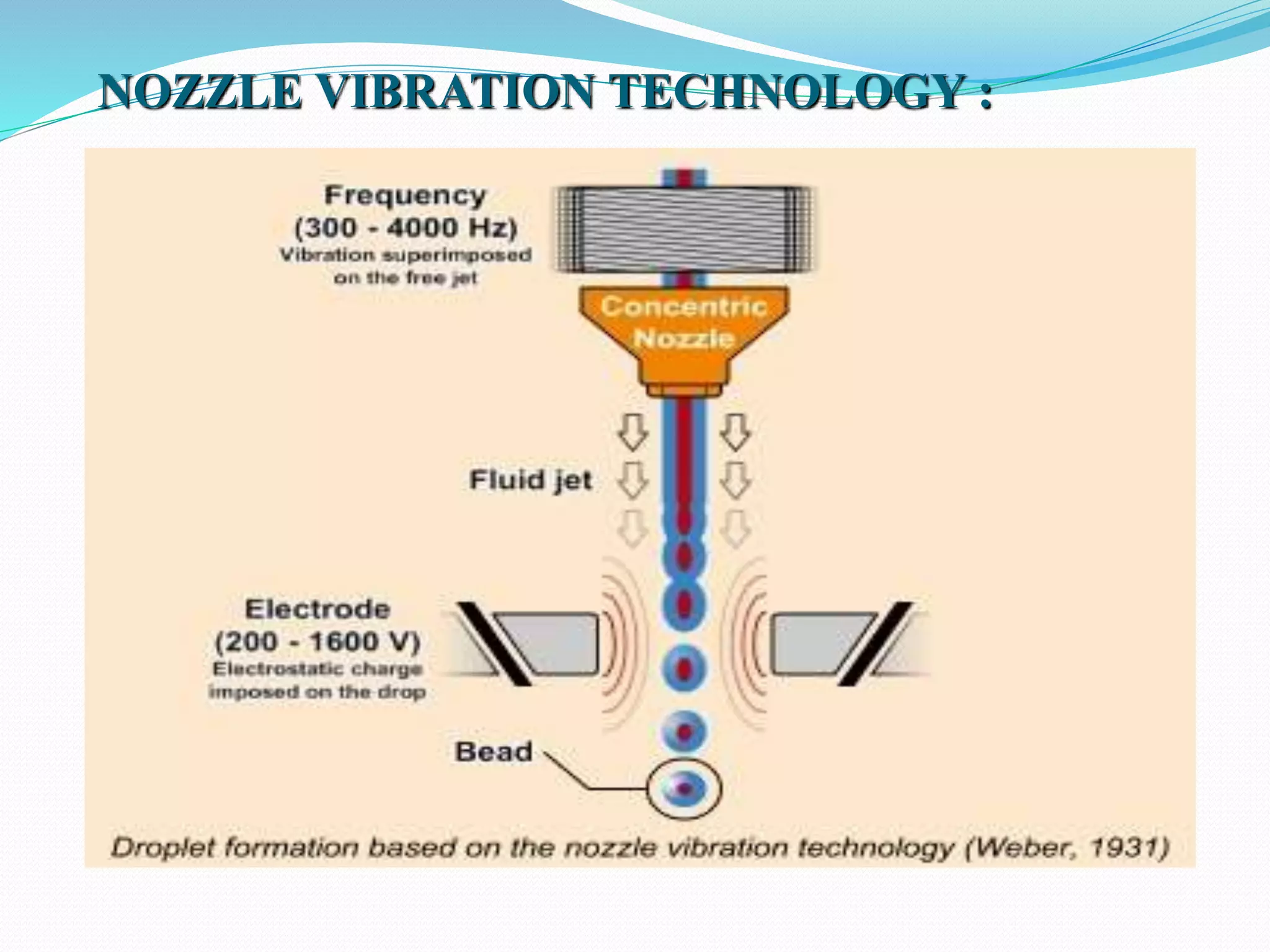
NOZZLE VIBRATION TECHNOLOGY :
33
Microencapsulation processes & their applicabilities:-
process Applicable
core material
Approx. particle
size (micron)
Air suspension solid 35-5000
Coacervation phase
separation
Solid & liquid 2-5000
Pan coating solid 600-5000
Spray drying & spray
congealing
Solid & liquid 600.
34
Evaluation of Microencapsulation:-
1) Morphology
2) Drug content
3) Bulk density
4) Angle of repose
5) Particle size determination
6) Determination of % drug entrapment
7) In vitro dissolution
8) Stability studies.
Partical Size and Shape:
 Conventional light microscopy-
Used to determine the shape and outer structure of the microparticles.
 Scanning electron microscopy-
It can be used for the investigation of double walled systems.
 Conflocal fluorescence microscopy-
35
 used for the structure characterization of multiple walled
microspheres.
 It allows visualization and characterization of structures not only on
the surface, but also inside the particals.
Electron spectroscopy for chemical analysis:
 Used to determine surface chemistry of the microspheres.
 ESCA provides a means for the determination of the atomic
composition of the surface.
 The spectra obtained using ECSA can be used to determine the surface
degradation of the biodegradable microspheres.
36
Attenuated total reflectance Fourier Transform- Infrared Spectroscopy
 FT-IR is used to determine the degradation of the polymeric matrix of the
carrier system.
 The IR beam passing through the ATR cell reflected many times through
the sample to provide IR spectra mainly of surface material.
 The ATR-FTIR provides information about the surface composition of the
microspheres.
37
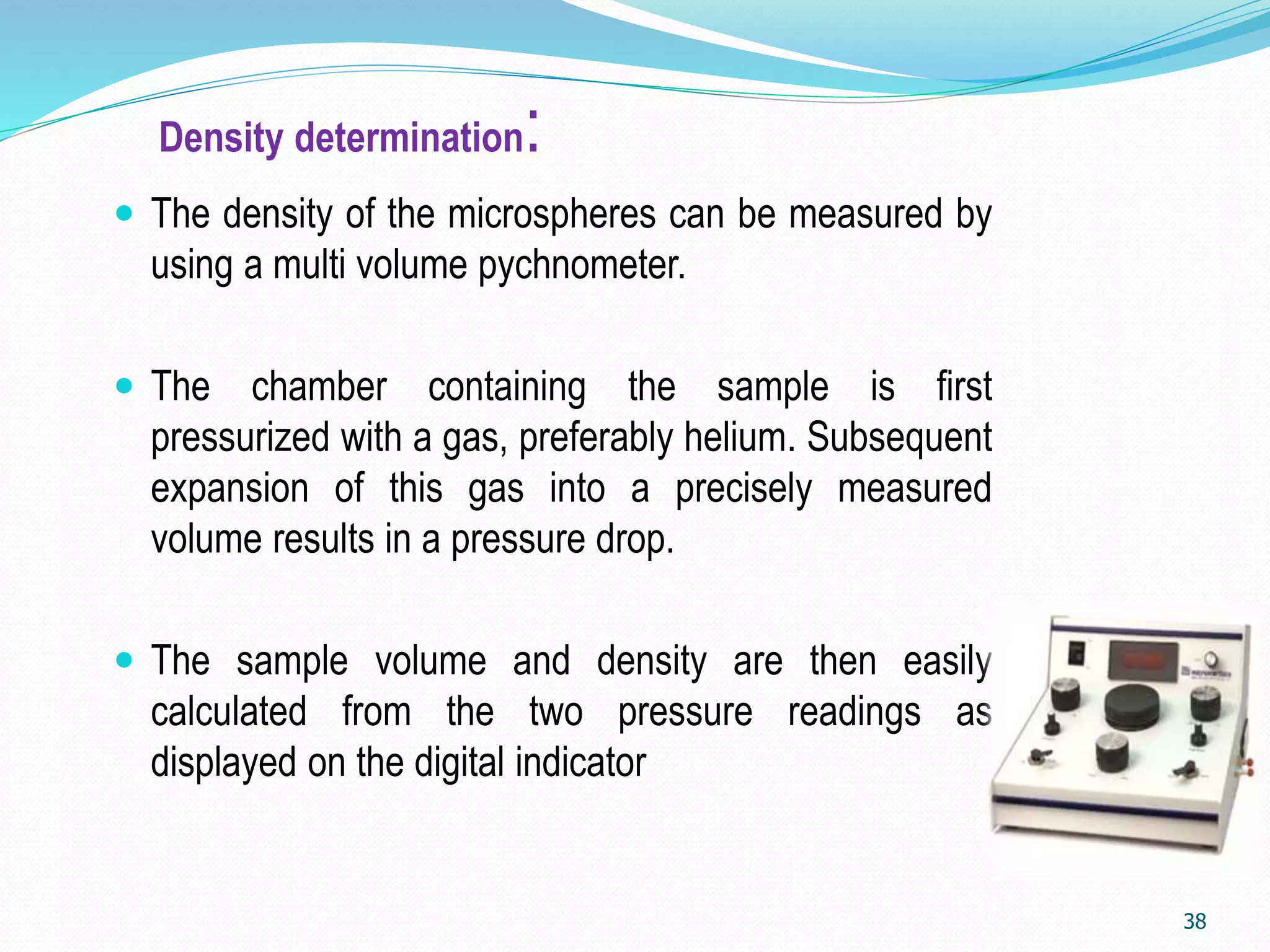
Density determination:
 The density of the microspheres can be measured by
using a multi volume pychnometer.
 The chamber containing the sample is first
pressurized with a gas, preferably helium. Subsequent
expansion of this gas into a precisely measured
volume results in a pressure drop.
 The sample volume and density are then easily
calculated from the two pressure readings as
displayed on the digital indicator
38
Isoelectric point:
 The micro electrophoresis is an apparatus used to measure the
electrophoretic mobility of microspheres from which the isoelectric
point can be determined.
 By using this data the electrical mobility of the particle can be
determined.
39
Angle of contact
 The angle of contact is measured to determine the wetting property of
a micro particulate carrier.
 It determines the nature of microspheres in terms of hydrophilicity or
hydrophobicity.
 The angle of contact is measured at the solid/air/water interface.
40
Release Studies
 Release studies for microspheres in phosphate saline buffer of Ph
7.4,are carried out using-
1. Rotating paddle apparatus
2. Dialysis method
41
 The drugs could be released through the microspheres by
any of the three methods.
Osmotically driven burst mechanism
 Pore diffusion mechanism
Erosion or degradation of the polymer
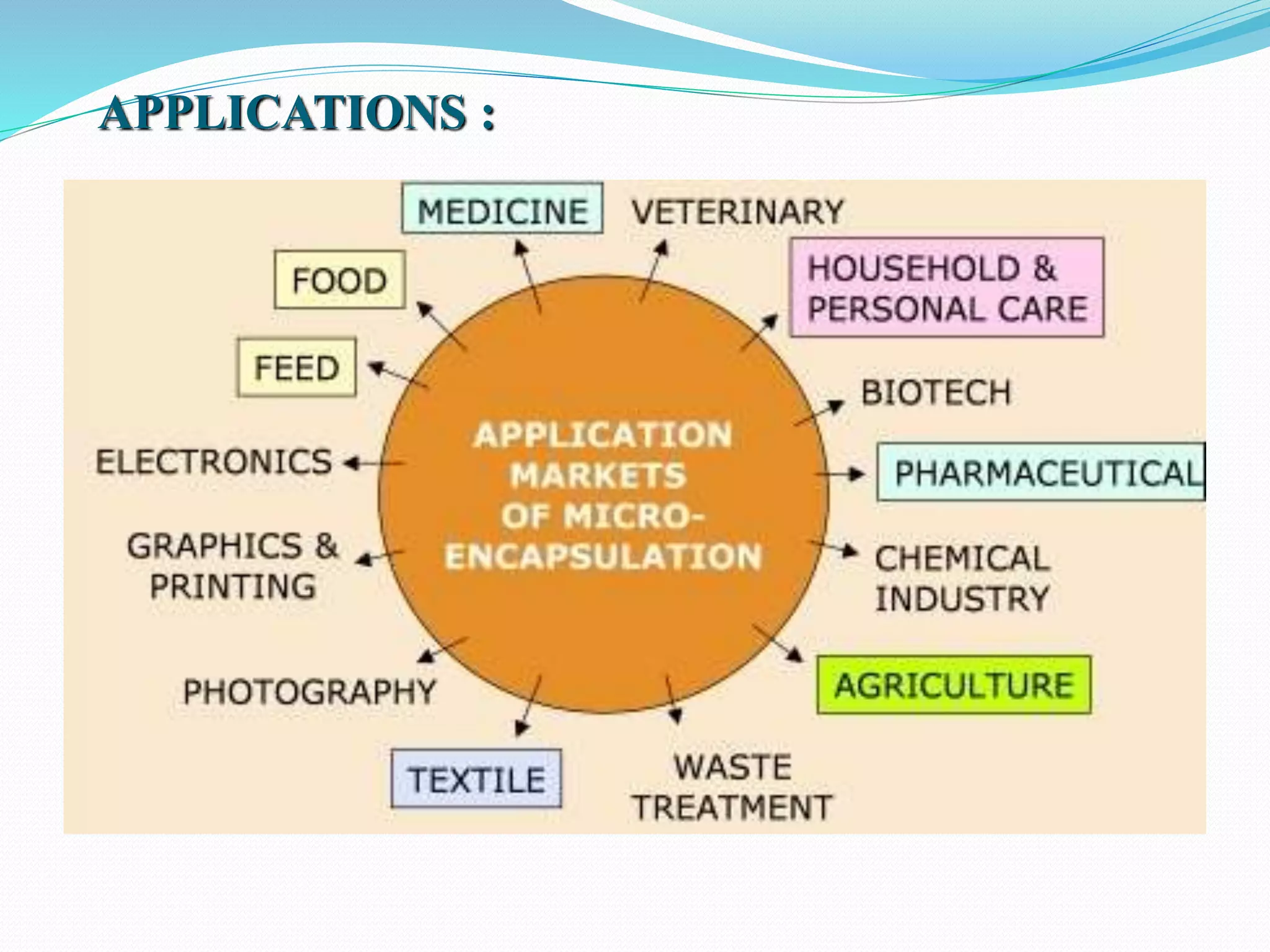
APPLICATIONS :
43
Application:-
 Taste masking e.g. acetaminophen.
 Sustain release e.g. aspirin, isosorbide dinitrate.
 Conversion of liquid to solid e.g. clofibrate
 Odor masking e.g. castor oil, cysteine.
 Reducing gastric irritation e.g. phenylbutazone.
 Stabilization to oxidation e.g. vitamin
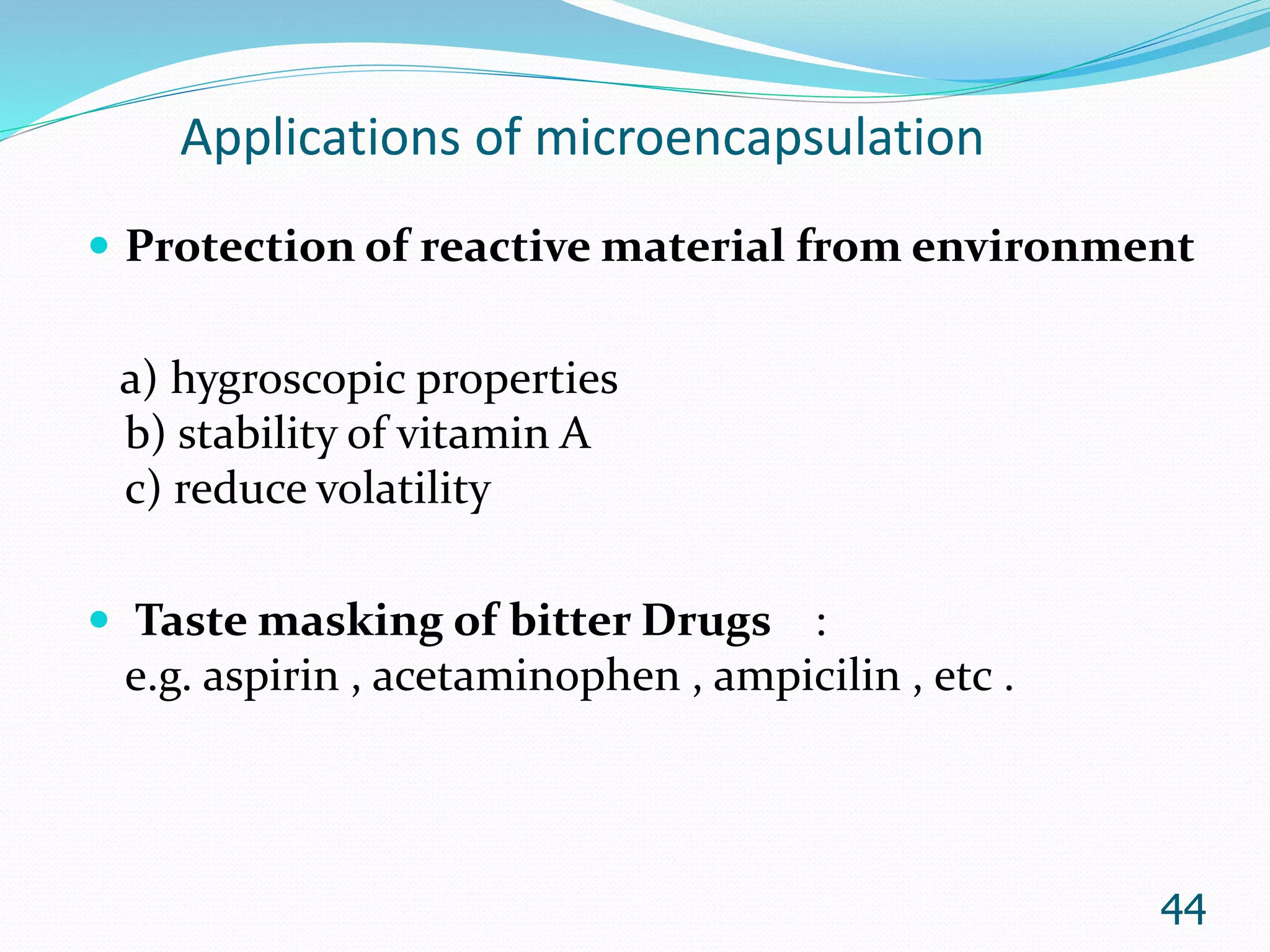
Applications of microencapsulation
 Protection of reactive material from environment
a) hygroscopic properties
b) stability of vitamin A
c) reduce volatility
 Taste masking of bitter Drugs :
e.g. aspirin , acetaminophen , ampicilin , etc .
44
Means of handling liquid as solid2
e.g. eprazonium
45
Taste masking of bitter Drugs2,7 :
e.g. aspirin , acetaminophen , ampicilin , etc
46
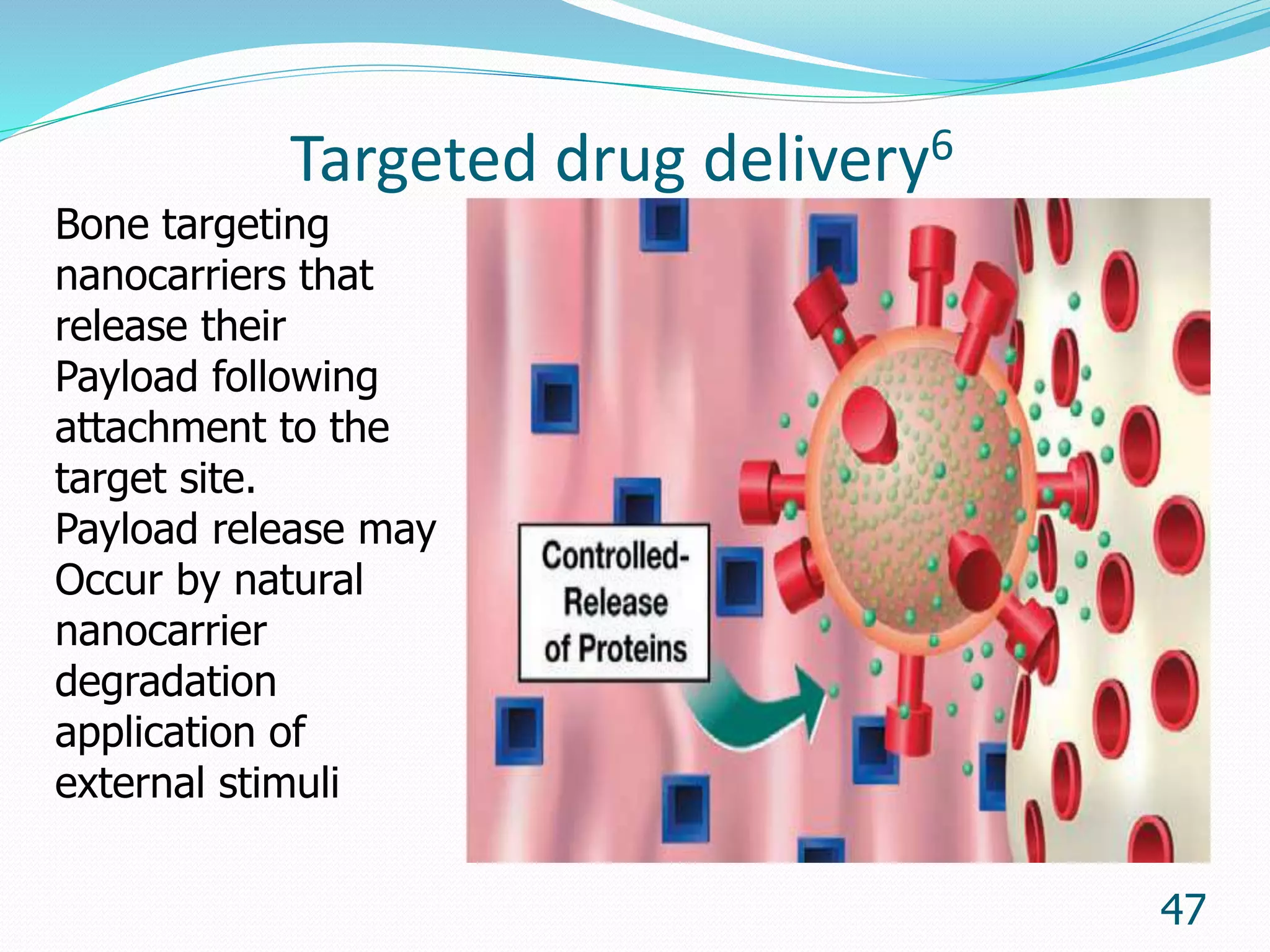
Targeted drug delivery6
47
Bone targeting
nanocarriers that
release their
Payload following
attachment to the
target site.
Payload release may
Occur by natural
nanocarrier
degradation
application of
external stimuli
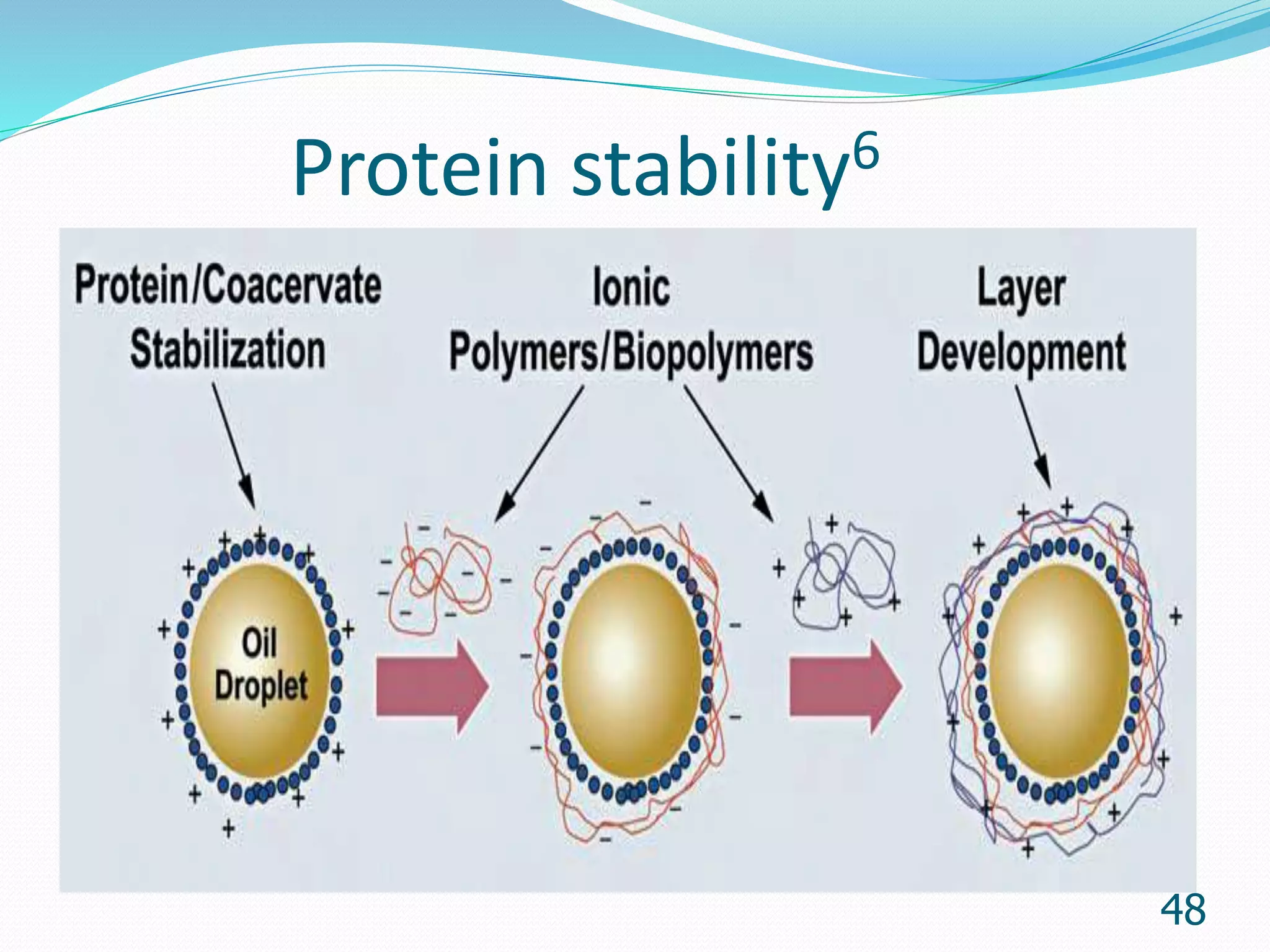
Protein stability6
48
Drug delivery
 Microencapsulation as controlled release delivery
systems.
 These systems allow controlling the rate, duration
and distribution of the active drug. With these
systems, micro particles sensitive to the biological
environment are designed to deliver an active drug in
a site-specific way (stomach, colon, specific organs).
 One of the main advantages of such systems is to
protect sensitive drug from gastric environment. and
to reduce the number of drug administrations for
patient.
49
Agricultural and Industrial
 Pesticides, fungicides and fumigants
 Animal feeds, seeds
 Veterinary formulations
 Paints and coatings
 Catalysts, resins, adhesives
 Pigments, dyes, colorants
 Lubricants and additives
 Inks
 Toys and novelty items
CONCLUSION:
 The microencapsulation technique offers a variety of opportunities such as
protection and masking, reduced dissolution rate, facilitation of handling, and
spatial targeting of the active ingredient.
 This approach facilitates accurate delivery of small quantities of potent drugs,
reduced drug concentrations at sites other than the target organ or tissue and
protection of labile compounds before and after administration and prior to
appearance at the site of action.
 In future by combining various other approaches, microencapsulation
technique will find the vital place in novel drug delivery system.
References:
Books:
1. “The Theory & Practice of Industrial Pharmacy” by Lachman & liberman,
Third edition 1991, Varghese publication house, Page no. 412
2. Encyclopedia of pharmaceutical Technology by Swarbrick & Boylan 1994,
Page no. volume I:3, II:403, III.21,31,283, IX:423-439, VIII:206,210,213, X:3,
XII:295.
3. Targeted & Controlled Drug Delivery (Novel Carrier System) by Vyas & Khar,
CBS Publication, 2004,Page no.13, 325, 418.
4. The Design & Manufactures Of Medicines By Michal E. Aulton , Third
edition , Page no.81.
5. Pharmaceutical Dosage Forms & Drug Delivery System by Ansel’s Hawards,
Nicholas.
6. Physical Pharmacy by Martin , Fourth edition, Page no. 516,575.
7. Biopharmaceutics & Pharmacokinetics By Brahmankar & Jaiswal, First
edition, Vallabh prakashan, Page no. 359.
8. Conrolled Drug Delivery by Robinson & Lee ,Second edition, Vol. 29, Page
no.384,388,450.
9. Controlled & Novel Drug Delivery by N. K. Jain, First edition , 2004, CBS
publication, Page no. 237
Web. Address:
10. www. microtecklabs.com/technical_overview.pdf
11. www.pharmainfo.in
12. www.books.google.in
13. www.sid.irlen/vewssid/J.pdf
14. www.globalresearchonline.nel
15. www.pharmatext.org
16. www.rmz.mg.com

Microsphere & microcapsules

  • 1.
    MICROENCAPSULATION Presented by: Chinchole PravinSonu (M.PHARM 2nd SEM) DEPARTMENT OF PHARMACEUTICS & QUALITY ASSURANCE R. C. Patel Institute of Pharmaceutical Education and Research, shirpur.
  • 2.
     Microencapsulation isa process in which very tiny droplets or particles of liquid or solid material are surrounded or coated with polymeric, waxy or protective material.  The product obtained by this process is called as micro particles, microcapsules.  Particles having diameter between 3 - 800µm are known as micro particles or microcapsules or microspheres.  Particles larger than 1000µm are known as Macroparticles . INTRODUCTION
  • 3.
    Generally Micro particlesconsist of two components a) Core material b) Coat or wall or shell material. Microcapsules: micrometric reservoir systems Microspheres: micrometric matrix systems
  • 4.
  • 5.
    ADVANTAGES:  To Increaseof bioavailability.  To alter the drug release.  To improve the patient’s compliance.  To produce a targeted drug delivery.  To reduce the reactivity of the core in relation to the outside environment.  To decrease evaporation rate of the core material.(Reduction of volatility)  To convert liquid to solid form & To mask the core taste.
  • 6.
    Core material Coatingmaterial Vehicle Solid Liquid Microencapsulation Polymers Waxes Aqueous Non aqueous Resins Proteins Polysaccharides FUNDAMENTAL CONSIDERATION:
  • 7.
    7 List of coatingmaterial:- Water soluble resin Water insoluble resin Wax & lipid Enteric resin Gelatin, Gum arabic, PVP, CMC, Methyl cellulose, Arabinogalactan, Polyvinyl acrylate, Polyacrylic acid. Ethyl cellulose, Polyethylene, Polymethacrylate Cellulose nitrate, Silicones. Paraffin, Carnauba wax, Bees wax, Stearic acid, Stearyl alcohol. Shellac, Zein, Cellulose acetate phthalate.
  • 8.
    ROLE OF POLYMERS:  Polymers are substances of high molecular weight made up by repeating monomer units. Polymer molecules may be linear or branched, and separate linear or branched chains may be joined by crosslinks. Polymers are used widely in pharmaceutical systems as coating materials and, a components of controlled, site- specific drug delivery systems, reduction of toxicity, increase therapeutic efficiency.
  • 9.
    Polymers Used ForPreparation Synthetic Polymers Non-biodegradable: PMMA Acrolein Glycidyl methacrylate Epoxy polymers Biodegradable: Lactides & Glycolides & their copolymers Polyalkyl cyano acrylates Polyanhydrides 9 Natural Polymers Proteins Carbohydrates Chemically modified carbohydrates
  • 10.
    MICROENCAPSULATION TECHNIQUES:  PhysicalMethods: Phase separation coacervation technique  Mechanical Methods:  Spray drying & congealing  Fluidized Bed Technology  Solvent evaporation  Pan Coating  Rotational Suspension Separation  Extrusion  Nozzle Vibration Technology  Multiorifice Centrifugal Process  Single Emulsion Techniques  Double Emulsion Techniques  General Methods:
  • 11.
    Single emulsion techniques 11 Aq.solution/suspensionof polymer Dispersion in organic phase oil/chloroform Stirring, sonication Cross linking Heat denaturation Chemical cross -linking Microspheres in organic phase Microspheres in organic phase Microspheres Centrifugation, Washing, Separation
  • 12.
    Double emulsion techniques 7 Aq.solof polymer + drug Dispersion in organic phase Homogenization or sonication First emulsion Microsphere in solution Multiple emulsion Addition to aq. Sol. Of PVA Addition to large aq. phase Separation, washing, drying Microspheres
  • 13.
    COACERVATION / PHASESEPARATION: Polymeric Membrane Droplets Homogeneous Polymer Solution Coacervate Droplets PHASE SEPARATION MEMBRANE FORMATION 1.Formation of three immiscible phase 2.Deposition of coating 3.Rigidization of coating. Process consist of 3 phases:
  • 14.
    Phase Separation CoacervationTechnique 14 Aq/ organic solution polymer Drug Drug dispersed or dissolved in the polymer solution Phase separation induced by different means Polymer rich globules Hardening Microspheres in aq/ organic phase Separation, Drying MICROSPHERES
  • 15.
    15 Step: 1) Threeimmiscible phases are as: a) LMVP b) Core material phase c) Coating material phase. Coating material phase formed by utilizing following methods: A) Temperature change. B) By addition of incompatible polymer C) By non-solvent addition D) By salt addition E) Polymer-polymer interaction.
  • 16.
    16 A) Temperature change:- Core material: N-acetyl p-aminophenol  Polymer:- ethyl cellulose  Solvent: cyclohexane. EC + Cyclohexane Polymer solution + N- acetyl p-aminophenol (1:2) Gelation & solidification of coating occur Collected by filteration, decantation & centrifugal technique.
  • 17.
    17 B) Addition ofincompatible polymer:-  Core material: Crystalline methylene blue HCl  Coating material: Ethyl cellulose  Solvent: Toluene  Incompatible polymer: Polybutadiene. EC + Toluene mixture + methylene blue HCl (1:4) 550C EC solidify by adding non-solvent hexane, Collected by titration & drying technique.
  • 18.
    18 C) By Non-solventaddition:-  Core material: Methyl scopolamine HBr  Coating polymer: Cellulose acetate butyrate  Solvent: Methyl ethyl ketone  Non-solvent: Isopropyl ether. CA butyrate + Methyl ethyl ketone mixture + methyl scopolamine 550C mixture + isopropyl ether (slowly cool at room temp., collected by centrifugation & drying)
  • 19.
    19 D) By saltaddition:-  Core material: oil soluble vitamin  Oil: corn oil  Aq. phase: water  Polymer: gelatin  Salt: sodium sulphate Salt : emulsion ratio is 4:10. Oil soluble vitamin + corn oil mixture + water + sodium sulphate (oil droplet coated uniformly with gelation)
  • 20.
    20 E) By polymer-polymerinteraction:-  Core material: Methyl salicylate  +ve charge polymer: Gelatin  -ve charge polymer: Gum arabic
  • 21.
    21 Aq. Gum arabic+ Aq. Gelatin mixture + water 4.5 pH, 40-50 0C polymer interact to causes phase separation warm mixture + methyl salicylate slowly cooled the mixture at 25 0C over 1 hr rigidization of coating is done by cooling microencapsule at 10 0C
  • 22.
    Polymerization Techniques 1. Normalpolymerization 22 Monomer Bioactive material Initiator Polymer block Microspheres Polymerization Mould/ mechanical fragmentation Fig.-Schematic for Bulk Polymerization
  • 23.
    2. Interfacial Polymerization1,4 23 Monomer/ Bioactivematerial Aq. Solution of NaOH with Initiator, Surfactant above CMC Stabilizer Dispersion with vigorous stirring Micellar solution of polymer in aq. medium Polymerization Microspheres formation Separation, Washing, Drying Microspheres
  • 24.
    SPRAY DRYING &CONGEALING ( COOLING): Spray drying : spray = aqueous solution / Hot air Spray congealing : spray = hot melt/cold air
  • 25.
  • 26.
    Polymer + Volatile organicsolvent Organic Polymeric Phase Formation of Oil-in-Water Emulsion Solvent Evaporation Particle Formation by Polymer Precipitation RECOVERY OF POLYMERIC MICROPARTICLES Temperature increase Active Ingredient Addition into an aqueous phase (+o/w stabilizer) SOLVENT EVAPORATIONS: Step 1: Formation of a solution/dispersion of the drug into an organic polymer phase. Step 2: Emulsification of the polymer phase into an aqueous phase containing a suitable stabilizer, thus, forming a o/w emulsion. Step 3: Removal of the organic solvent from the dispersed phase by extraction or evaporation leading to polymer precipitation and formation of the microspheres.
  • 27.
    Pan Coating: The coatingsolution is applied as atomized spray to the solid core material in the coating pan. To remove the coating solvent warm air is passed over the coated material.  By using this technique larger sized particles will be coated effectively.
  • 28.
    Rotational Suspension Separation: Individualcore particles coated with a film of shell formation are flung off the edge of the rotating disk along with droplets of pure coating material.  When the shell formation is solidified,(e.g.. by cooling) microcapsules are produce.  In this process, core material dispersed in a liquid shell formation is fed onto a rotating disk. A flat disk is shown, but conical or bowl shaped disks can be used.
  • 29.
    EXTRUSION:  This methodwas first patented in 1957.  The process involves forcing a core material dispersed in a molten carbohydrate mass through a series of dies, into a bath of dehydrating liquid.  When contact with the liquid is made, the carbohydrate case hardens to entrap the core material.  The extruded filaments are separated from the liquid bath, dried using an anti-caking agent such as calcium tripolyphosphate .  This process is particularly useful for heat labile substances such as flavors, vitamin C and colors.
  • 30.
    Multi-orifice Centrifugal Process SWRIdevelop a mechanical process that utilizes centrifugal forces to hurl, a core material particle through an enveloping membrane. Production rate of 50 to 75 pound/hr have been achieved with this process. 30
  • 31.
  • 32.
  • 33.
    33 Microencapsulation processes &their applicabilities:- process Applicable core material Approx. particle size (micron) Air suspension solid 35-5000 Coacervation phase separation Solid & liquid 2-5000 Pan coating solid 600-5000 Spray drying & spray congealing Solid & liquid 600.
  • 34.
    34 Evaluation of Microencapsulation:- 1)Morphology 2) Drug content 3) Bulk density 4) Angle of repose 5) Particle size determination 6) Determination of % drug entrapment 7) In vitro dissolution 8) Stability studies.
  • 35.
    Partical Size andShape:  Conventional light microscopy- Used to determine the shape and outer structure of the microparticles.  Scanning electron microscopy- It can be used for the investigation of double walled systems.  Conflocal fluorescence microscopy- 35  used for the structure characterization of multiple walled microspheres.  It allows visualization and characterization of structures not only on the surface, but also inside the particals.
  • 36.
    Electron spectroscopy forchemical analysis:  Used to determine surface chemistry of the microspheres.  ESCA provides a means for the determination of the atomic composition of the surface.  The spectra obtained using ECSA can be used to determine the surface degradation of the biodegradable microspheres. 36
  • 37.
    Attenuated total reflectanceFourier Transform- Infrared Spectroscopy  FT-IR is used to determine the degradation of the polymeric matrix of the carrier system.  The IR beam passing through the ATR cell reflected many times through the sample to provide IR spectra mainly of surface material.  The ATR-FTIR provides information about the surface composition of the microspheres. 37
  • 38.
    Density determination:  Thedensity of the microspheres can be measured by using a multi volume pychnometer.  The chamber containing the sample is first pressurized with a gas, preferably helium. Subsequent expansion of this gas into a precisely measured volume results in a pressure drop.  The sample volume and density are then easily calculated from the two pressure readings as displayed on the digital indicator 38
  • 39.
    Isoelectric point:  Themicro electrophoresis is an apparatus used to measure the electrophoretic mobility of microspheres from which the isoelectric point can be determined.  By using this data the electrical mobility of the particle can be determined. 39
  • 40.
    Angle of contact The angle of contact is measured to determine the wetting property of a micro particulate carrier.  It determines the nature of microspheres in terms of hydrophilicity or hydrophobicity.  The angle of contact is measured at the solid/air/water interface. 40
  • 41.
    Release Studies  Releasestudies for microspheres in phosphate saline buffer of Ph 7.4,are carried out using- 1. Rotating paddle apparatus 2. Dialysis method 41  The drugs could be released through the microspheres by any of the three methods. Osmotically driven burst mechanism  Pore diffusion mechanism Erosion or degradation of the polymer
  • 42.
  • 43.
    43 Application:-  Taste maskinge.g. acetaminophen.  Sustain release e.g. aspirin, isosorbide dinitrate.  Conversion of liquid to solid e.g. clofibrate  Odor masking e.g. castor oil, cysteine.  Reducing gastric irritation e.g. phenylbutazone.  Stabilization to oxidation e.g. vitamin
  • 44.
    Applications of microencapsulation Protection of reactive material from environment a) hygroscopic properties b) stability of vitamin A c) reduce volatility  Taste masking of bitter Drugs : e.g. aspirin , acetaminophen , ampicilin , etc . 44
  • 45.
    Means of handlingliquid as solid2 e.g. eprazonium 45
  • 46.
    Taste masking ofbitter Drugs2,7 : e.g. aspirin , acetaminophen , ampicilin , etc 46
  • 47.
    Targeted drug delivery6 47 Bonetargeting nanocarriers that release their Payload following attachment to the target site. Payload release may Occur by natural nanocarrier degradation application of external stimuli
  • 48.
  • 49.
    Drug delivery  Microencapsulationas controlled release delivery systems.  These systems allow controlling the rate, duration and distribution of the active drug. With these systems, micro particles sensitive to the biological environment are designed to deliver an active drug in a site-specific way (stomach, colon, specific organs).  One of the main advantages of such systems is to protect sensitive drug from gastric environment. and to reduce the number of drug administrations for patient. 49
  • 50.
    Agricultural and Industrial Pesticides, fungicides and fumigants  Animal feeds, seeds  Veterinary formulations  Paints and coatings  Catalysts, resins, adhesives  Pigments, dyes, colorants  Lubricants and additives  Inks  Toys and novelty items
  • 51.
    CONCLUSION:  The microencapsulationtechnique offers a variety of opportunities such as protection and masking, reduced dissolution rate, facilitation of handling, and spatial targeting of the active ingredient.  This approach facilitates accurate delivery of small quantities of potent drugs, reduced drug concentrations at sites other than the target organ or tissue and protection of labile compounds before and after administration and prior to appearance at the site of action.  In future by combining various other approaches, microencapsulation technique will find the vital place in novel drug delivery system.
  • 52.
    References: Books: 1. “The Theory& Practice of Industrial Pharmacy” by Lachman & liberman, Third edition 1991, Varghese publication house, Page no. 412 2. Encyclopedia of pharmaceutical Technology by Swarbrick & Boylan 1994, Page no. volume I:3, II:403, III.21,31,283, IX:423-439, VIII:206,210,213, X:3, XII:295. 3. Targeted & Controlled Drug Delivery (Novel Carrier System) by Vyas & Khar, CBS Publication, 2004,Page no.13, 325, 418. 4. The Design & Manufactures Of Medicines By Michal E. Aulton , Third edition , Page no.81. 5. Pharmaceutical Dosage Forms & Drug Delivery System by Ansel’s Hawards, Nicholas. 6. Physical Pharmacy by Martin , Fourth edition, Page no. 516,575. 7. Biopharmaceutics & Pharmacokinetics By Brahmankar & Jaiswal, First edition, Vallabh prakashan, Page no. 359. 8. Conrolled Drug Delivery by Robinson & Lee ,Second edition, Vol. 29, Page no.384,388,450. 9. Controlled & Novel Drug Delivery by N. K. Jain, First edition , 2004, CBS publication, Page no. 237
  • 53.
    Web. Address: 10. www.microtecklabs.com/technical_overview.pdf 11. www.pharmainfo.in 12. www.books.google.in 13. www.sid.irlen/vewssid/J.pdf 14. www.globalresearchonline.nel 15. www.pharmatext.org 16. www.rmz.mg.com