

1
Presented by:
Chinchole Pravin Sonu
(M.PHARM 2nd
SEM)
DEPARTMENT OF PHARMACEUTICS & QUALITY ASSURANCE
R. C. Patel Institute of Pharmaceutical Education and
Research, shirpur.
CONTENT
Introduction
Advantages & Disadvantages
Principle of osmosis
General Consideration
Factor affecting drug release rate
Classification
Recent advances & evaluation parameter
Characteristics of osmotic pump
Some commercially marketed osmotic system
References
2
Introduction
In recent years, considerable attention has been made on the
development of Novel drug delivery system(NDDS).
Reasons for this are:
Relatively low development cost & time required for introducing
NDDS as compared to New chemical entity(NCE).
In the form of NDDS, an existing drug can get a new life, there by
increasing its market value, competitiveness,& patent life.
 Majority of controlled release forms fall in category of matrix,
reservoir, or osmotic system
3
Controlled Drug Delivery
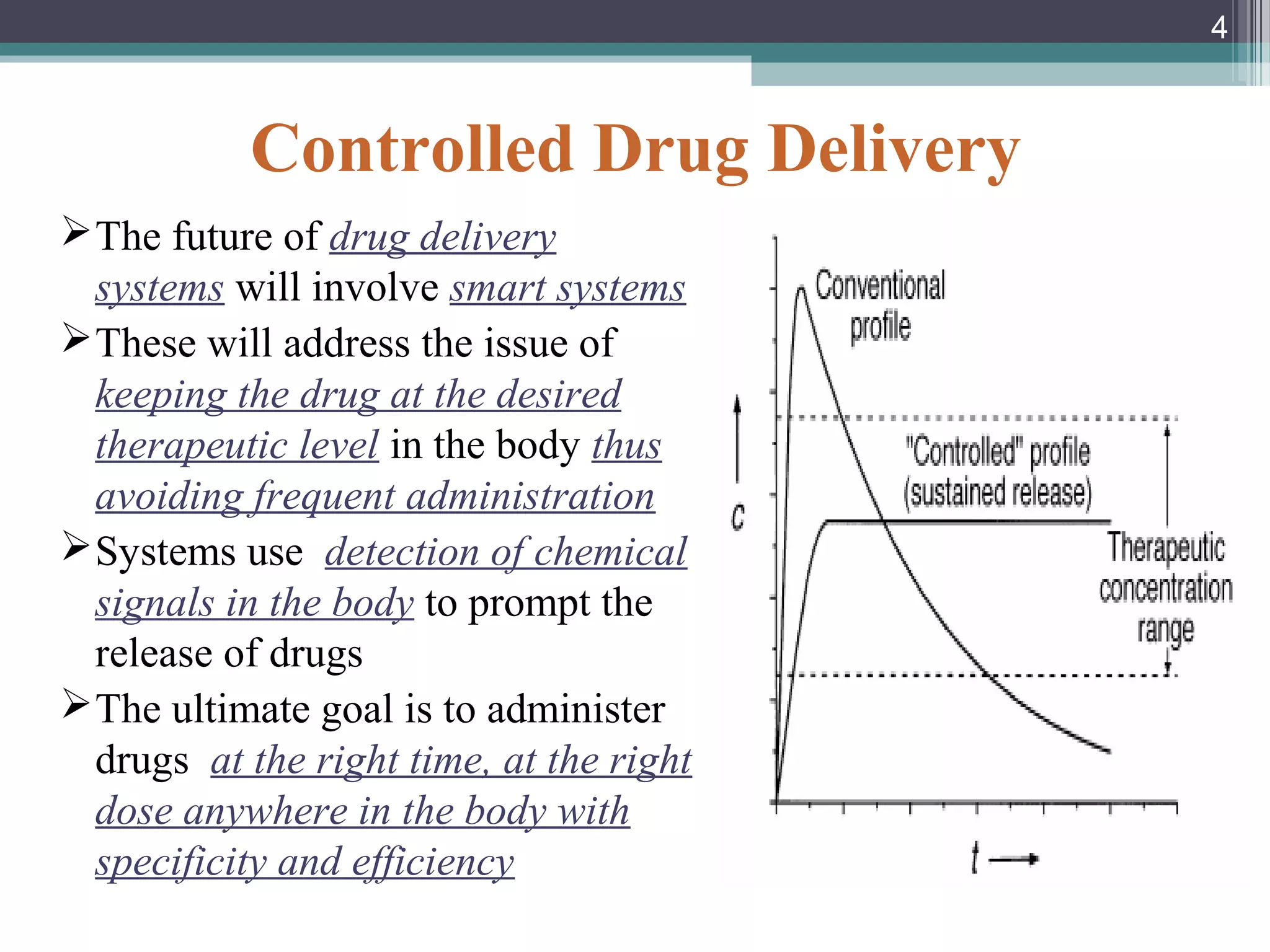
The future of drug delivery
systems will involve smart systems
These will address the issue of
keeping the drug at the desired
therapeutic level in the body thus
avoiding frequent administration
Systems use detection of chemical
signals in the body to prompt the
release of drugs
The ultimate goal is to administer
drugs at the right time, at the right
dose anywhere in the body with
specificity and efficiency
4
5
Osmotically controlled drug delivery
system
It can be employed as oral drug delivery system or implantable
device.
It utilizes the principle of osmotic pressure for the delivery of
drug.
They are also known as GITS(Gastro-intestinal therapeutic
system) and today different types of oral osmotic pumps are
available.
6
Advantages & Disadvantages
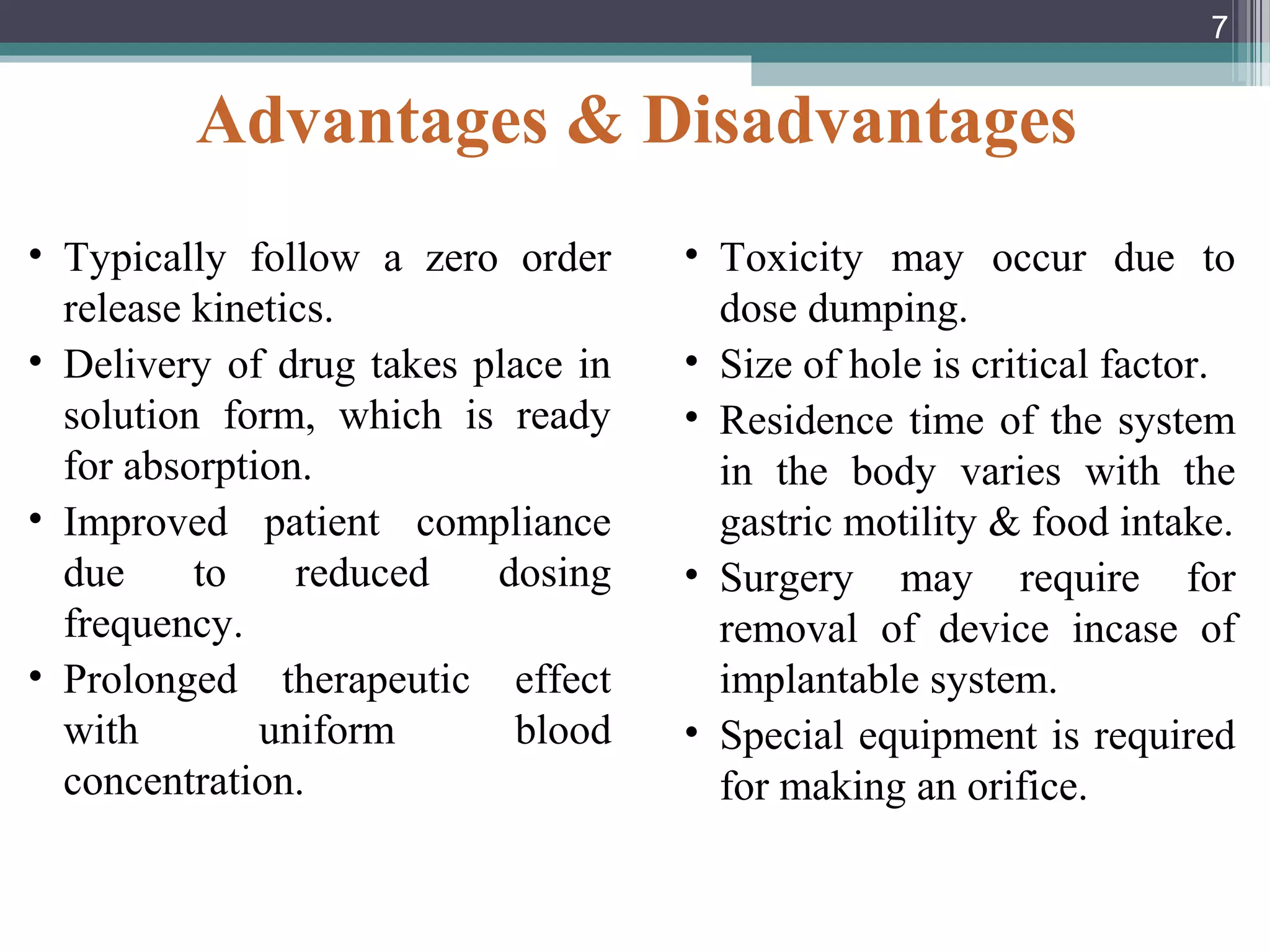
• Typically follow a zero order
release kinetics.
• Delivery of drug takes place in
solution form, which is ready
for absorption.
• Improved patient compliance
due to reduced dosing
frequency.
• Prolonged therapeutic effect
with uniform blood
concentration.
• Toxicity may occur due to
dose dumping.
• Size of hole is critical factor.
• Residence time of the system
in the body varies with the
gastric motility & food intake.
• Surgery may require for
removal of device incase of
implantable system.
• Special equipment is required
for making an orifice.
7
Principle of Osmosis
8
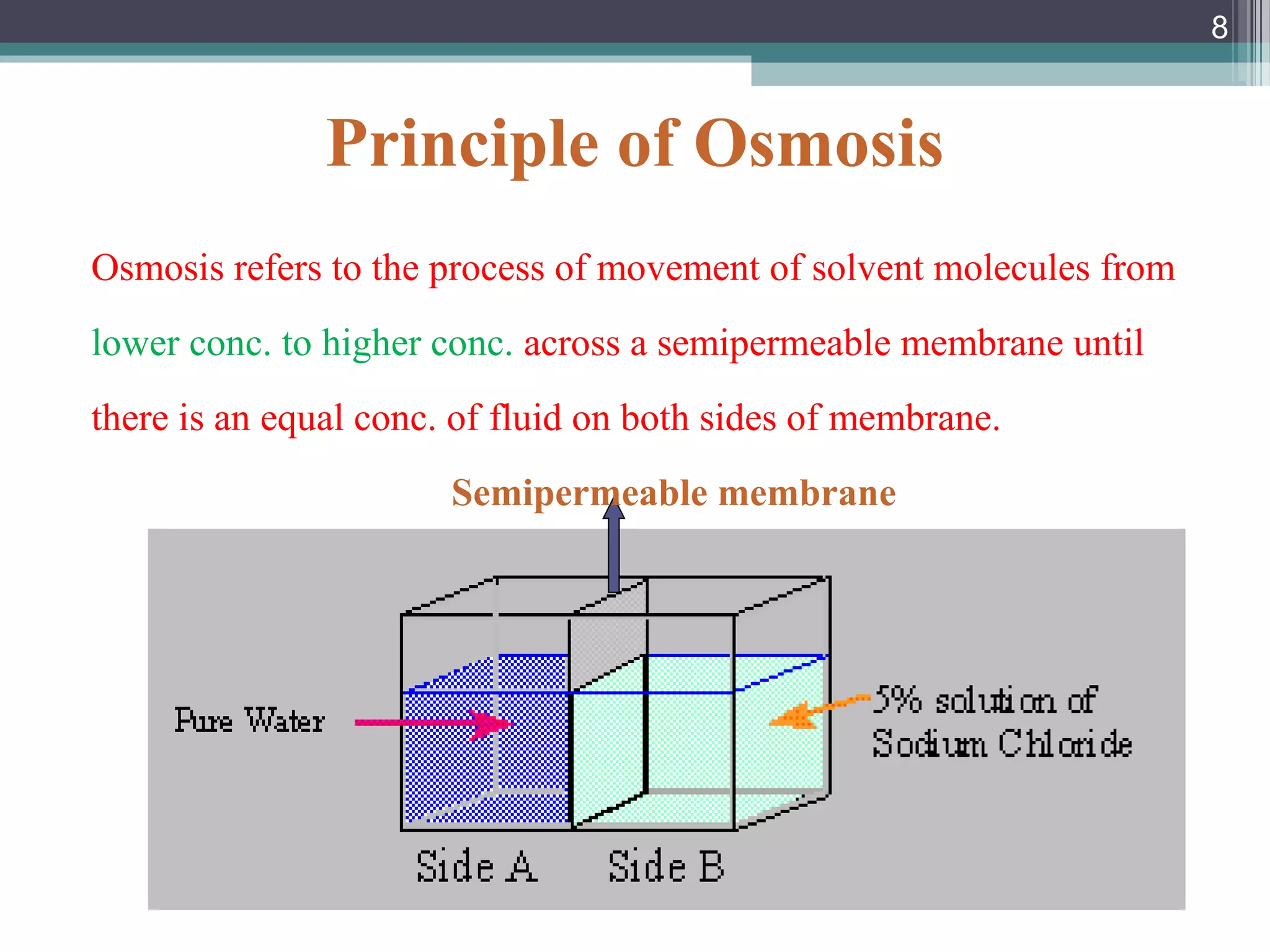
Osmosis refers to the process of movement of solvent molecules from
lower conc. to higher conc. across a semipermeable membrane until
there is an equal conc. of fluid on both sides of membrane.
Semipermeable membrane
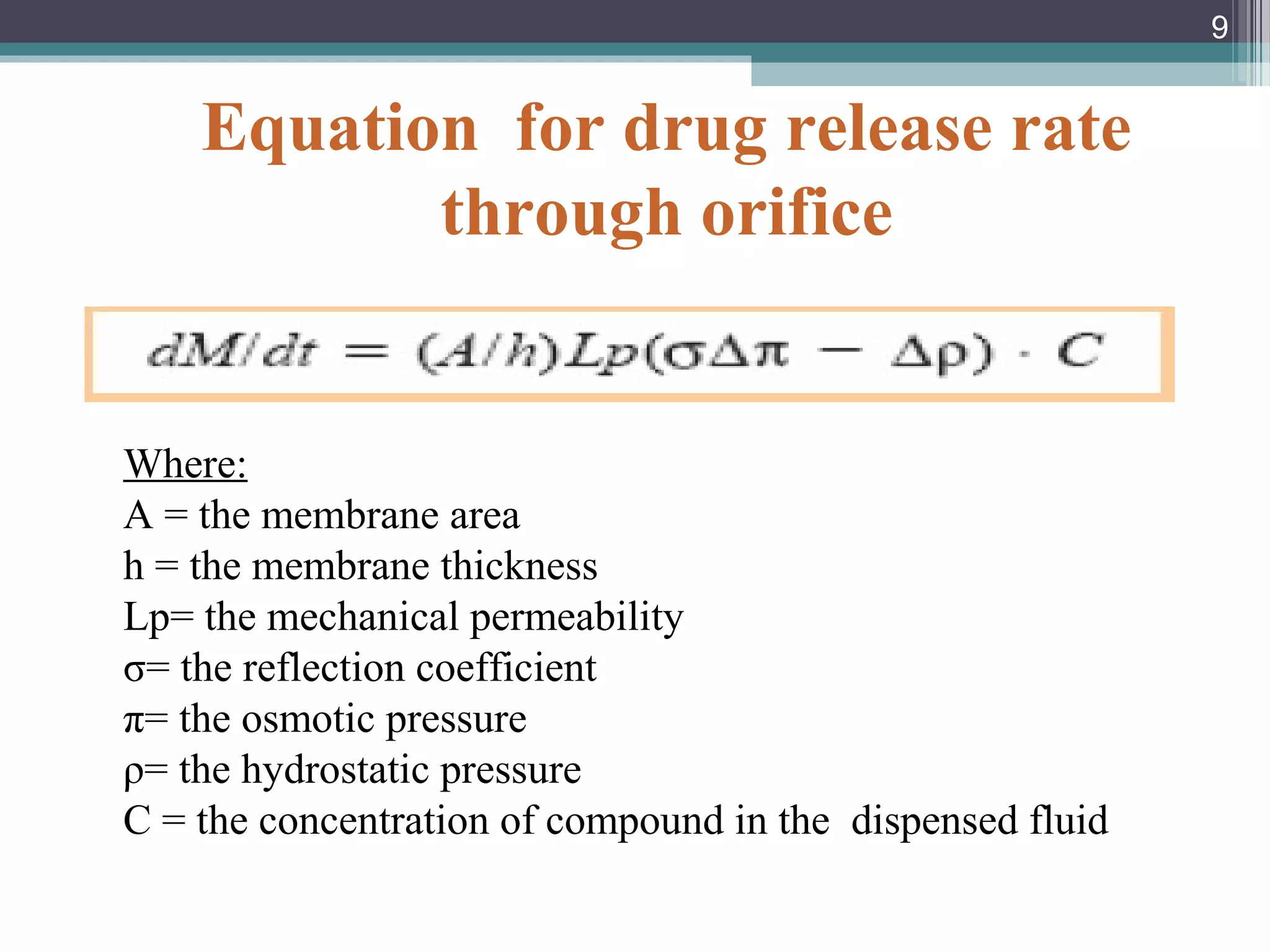
Equation for drug release rate
through orifice
Where:
A = the membrane area
h = the membrane thickness
Lp= the mechanical permeability
σ= the reflection coefficient
π= the osmotic pressure
ρ= the hydrostatic pressure
C = the concentration of compound in the dispensed fluid
9
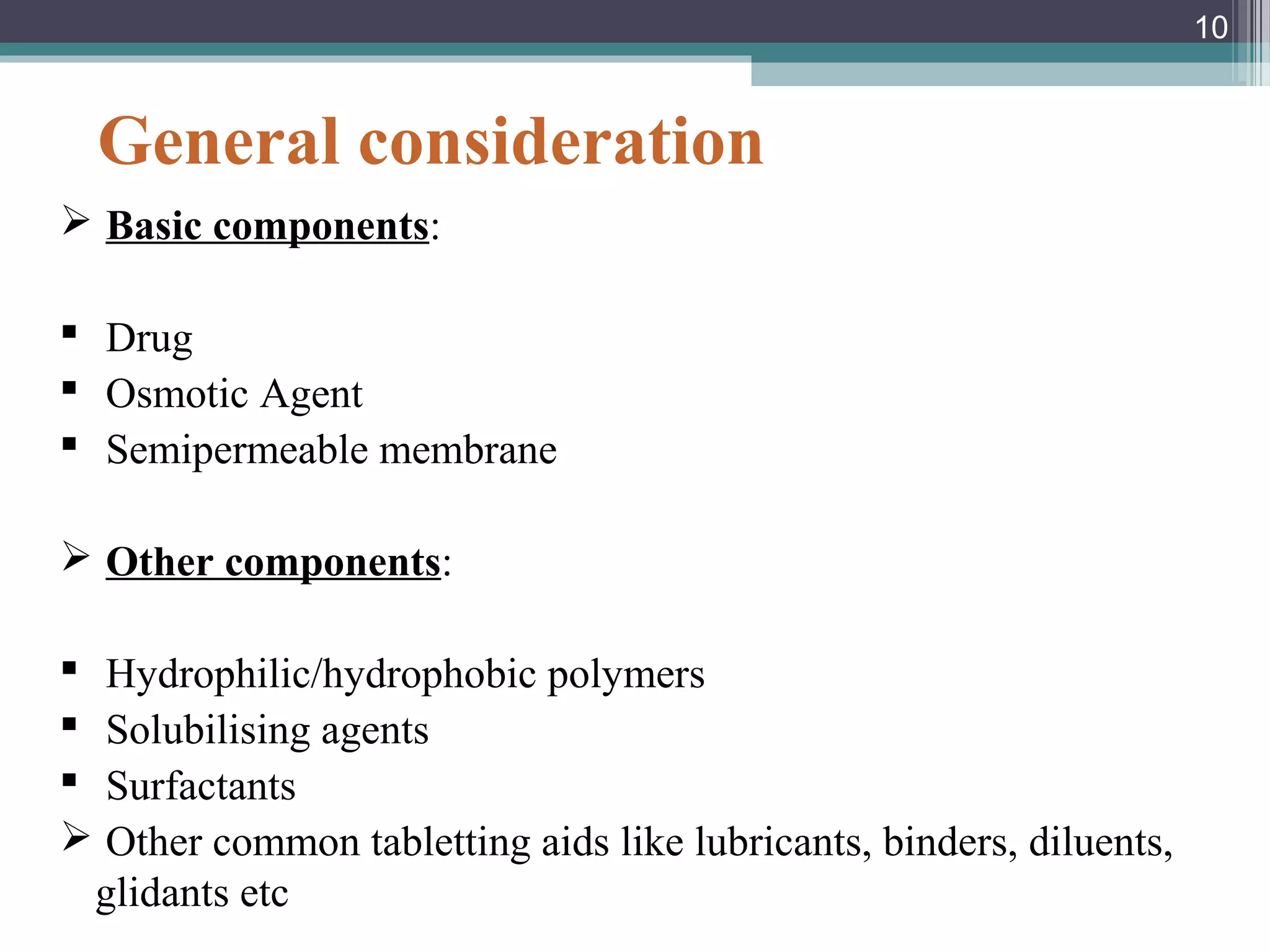
General consideration
 Basic components:
 Drug
 Osmotic Agent
 Semipermeable membrane
 Other components:
 Hydrophilic/hydrophobic polymers
 Solubilising agents
 Surfactants
 Other common tabletting aids like lubricants, binders, diluents,
glidants etc
10
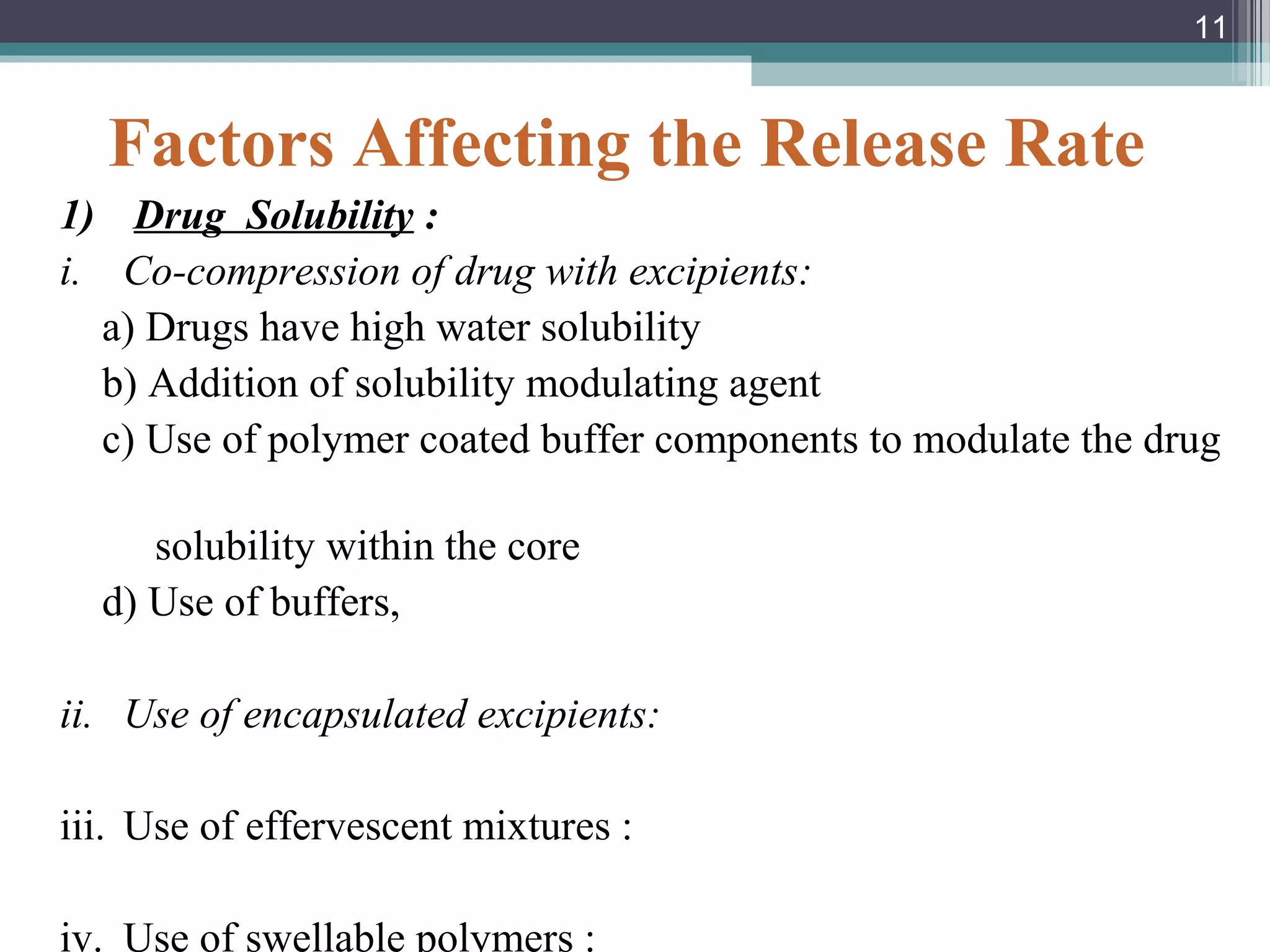
Factors Affecting the Release Rate
1) Drug Solubility :
i. Co-compression of drug with excipients:
a) Drugs have high water solubility
b) Addition of solubility modulating agent
c) Use of polymer coated buffer components to modulate the drug
solubility within the core
d) Use of buffers,
ii. Use of encapsulated excipients:
iii. Use of effervescent mixtures :
iv. Use of swellable polymers :
11
Factors Affecting the Release Rate
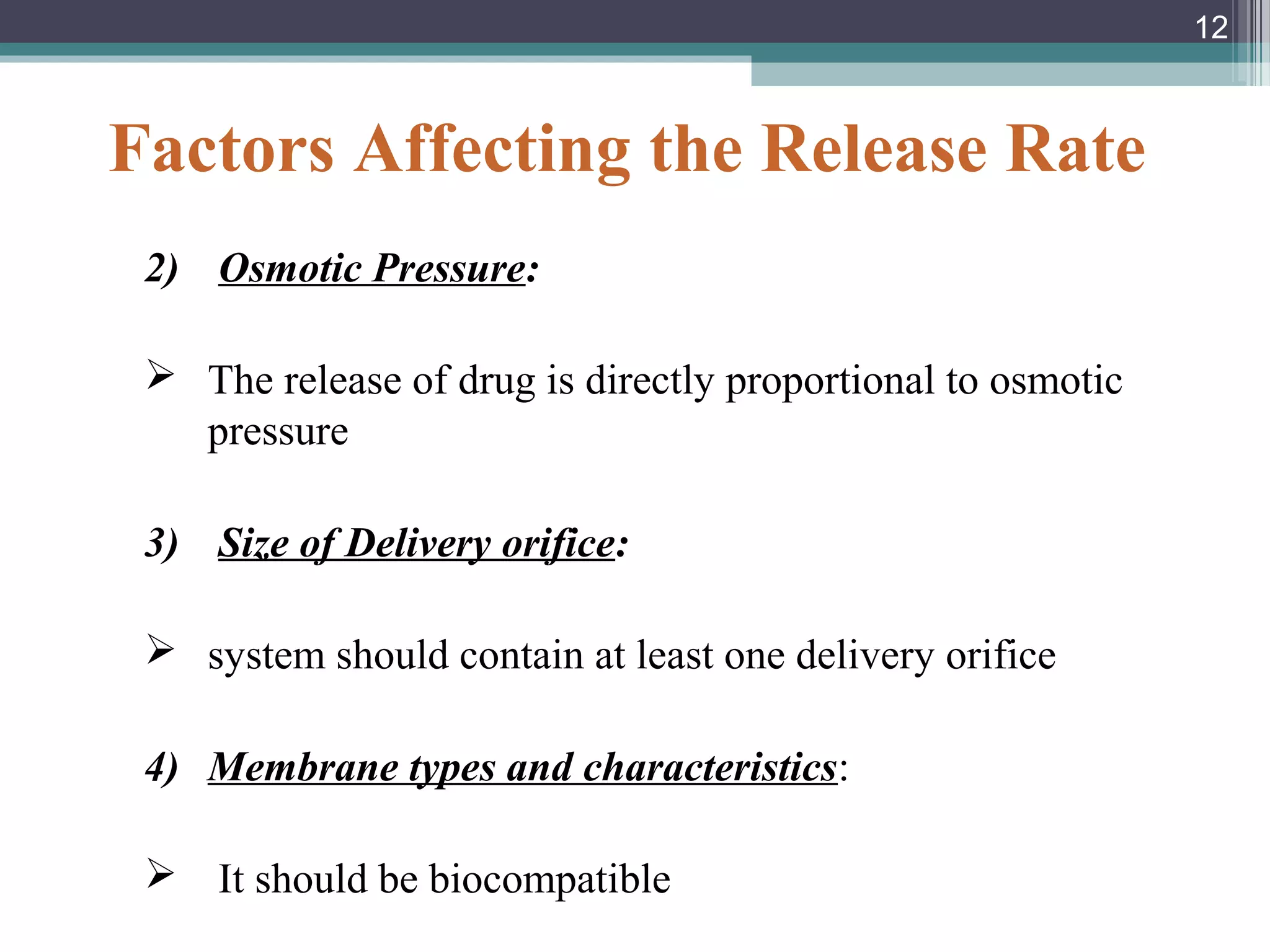
2) Osmotic Pressure:
 The release of drug is directly proportional to osmotic
pressure
3) Size of Delivery orifice:
 system should contain at least one delivery orifice
4) Membrane types and characteristics:
 It should be biocompatible
12
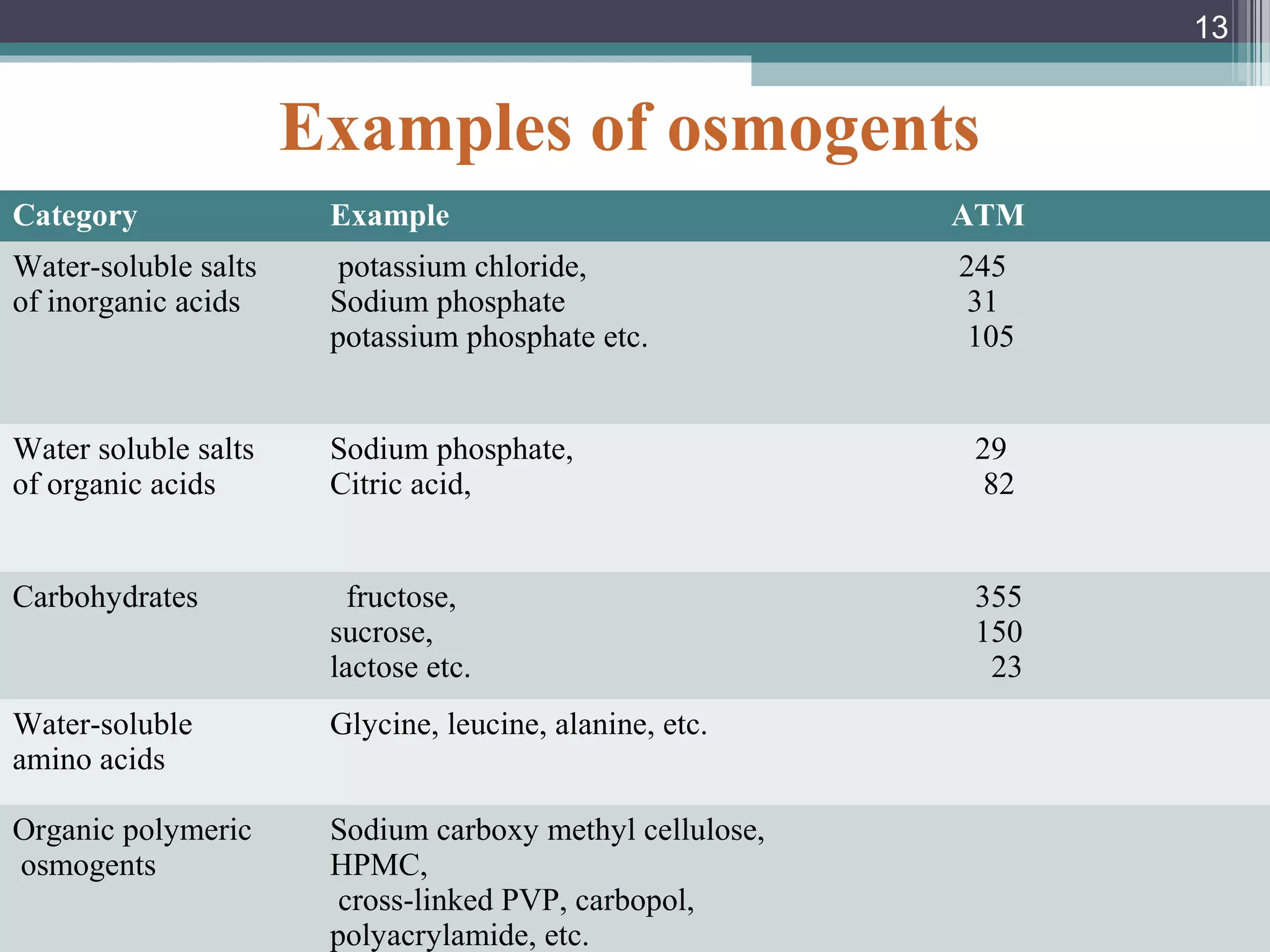
Examples of osmogents
Category Example ATM
Water-soluble salts
of inorganic acids
potassium chloride,
Sodium phosphate
potassium phosphate etc.
245
31
105
Water soluble salts
of organic acids
Sodium phosphate,
Citric acid,
29
82
Carbohydrates fructose,
sucrose,
lactose etc.
355
150
23
Water-soluble
amino acids
Glycine, leucine, alanine, etc.
Organic polymeric
osmogents
Sodium carboxy methyl cellulose,
HPMC,
cross-linked PVP, carbopol,
polyacrylamide, etc.
13
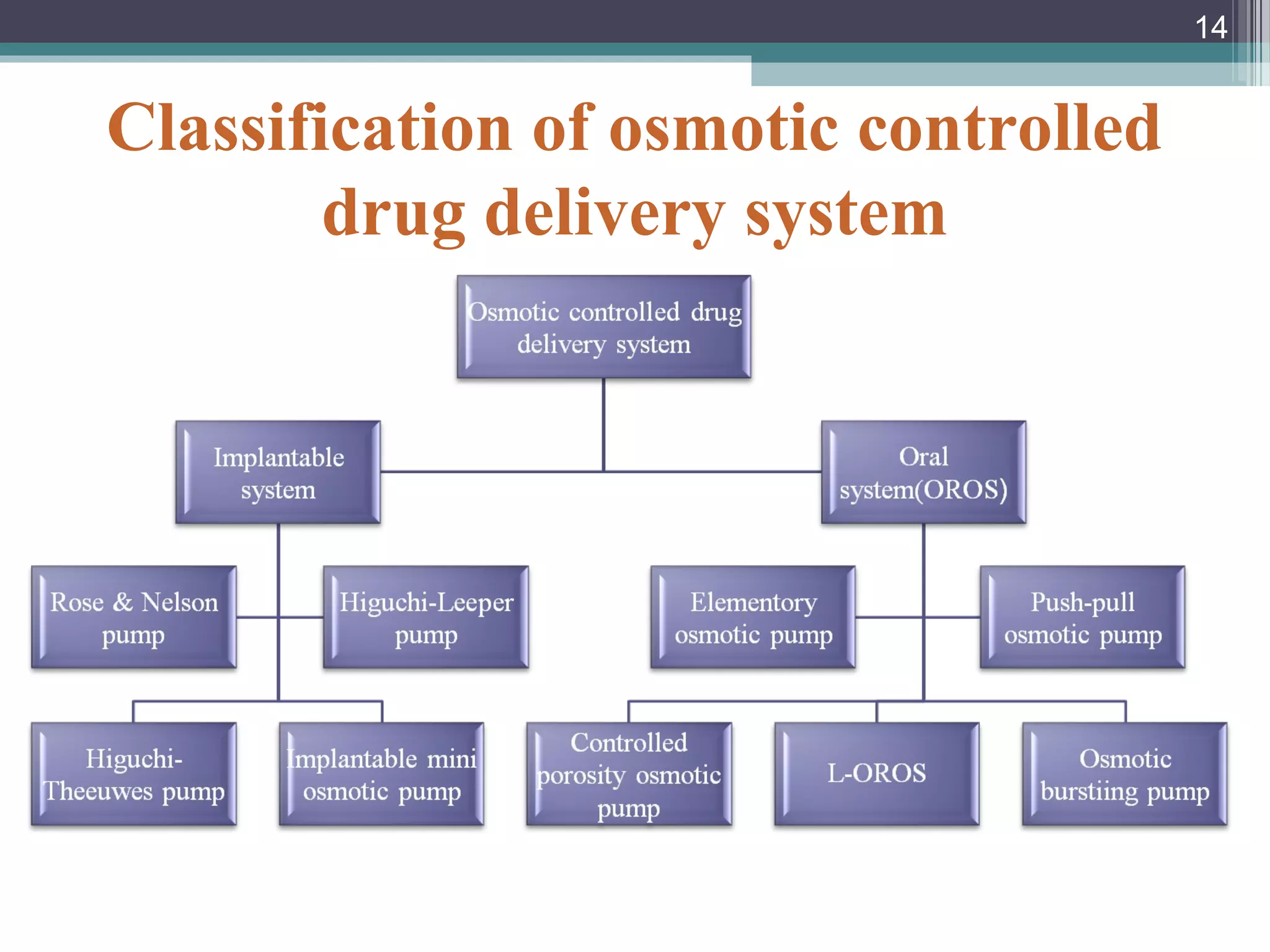
Classification of osmotic controlled
drug delivery system
14
Implantable osmotic pump
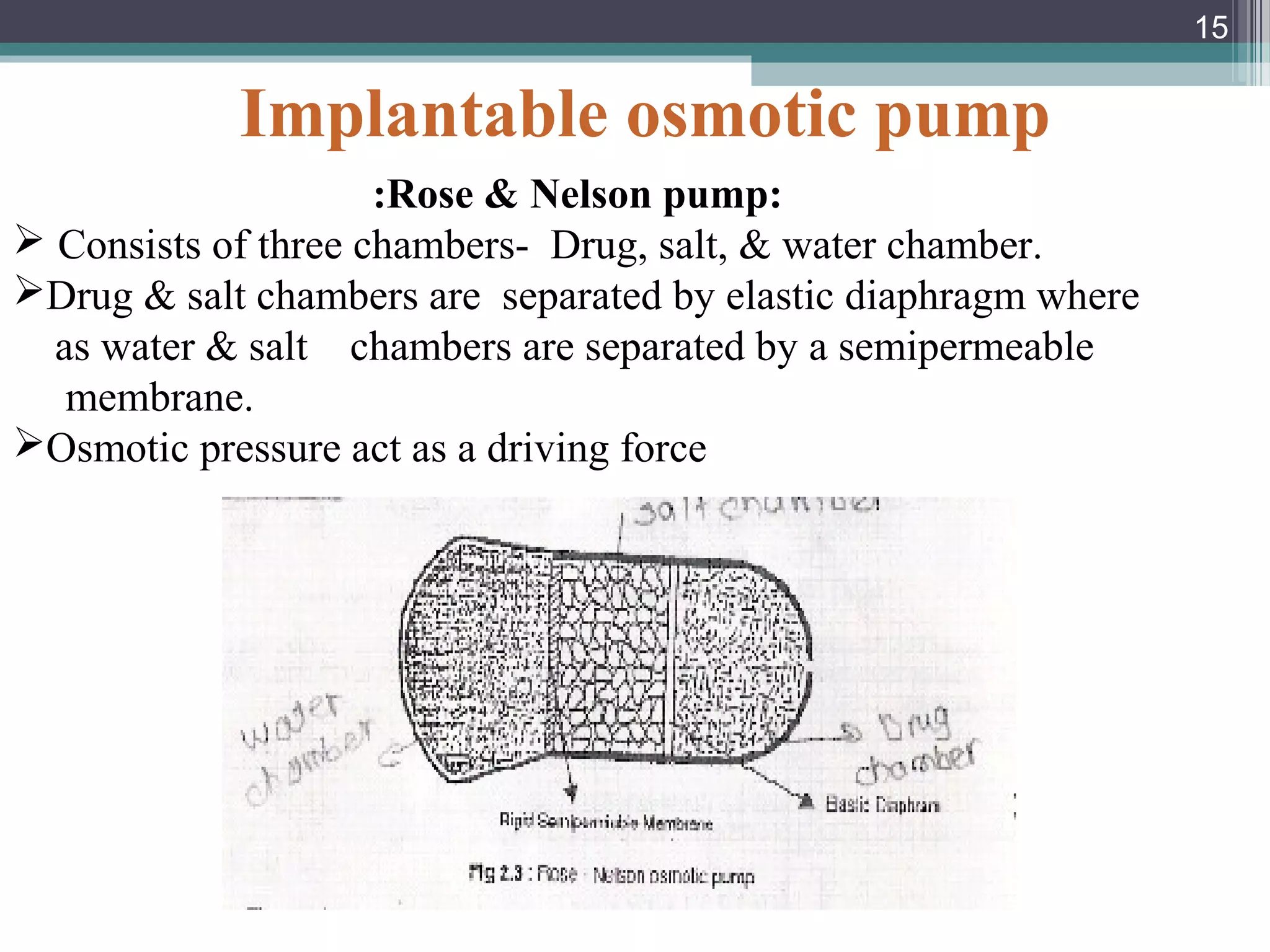
:Rose & Nelson pump:
 Consists of three chambers- Drug, salt, & water chamber.
Drug & salt chambers are separated by elastic diaphragm where
as water & salt chambers are separated by a semipermeable
membrane.
Osmotic pressure act as a driving force
15
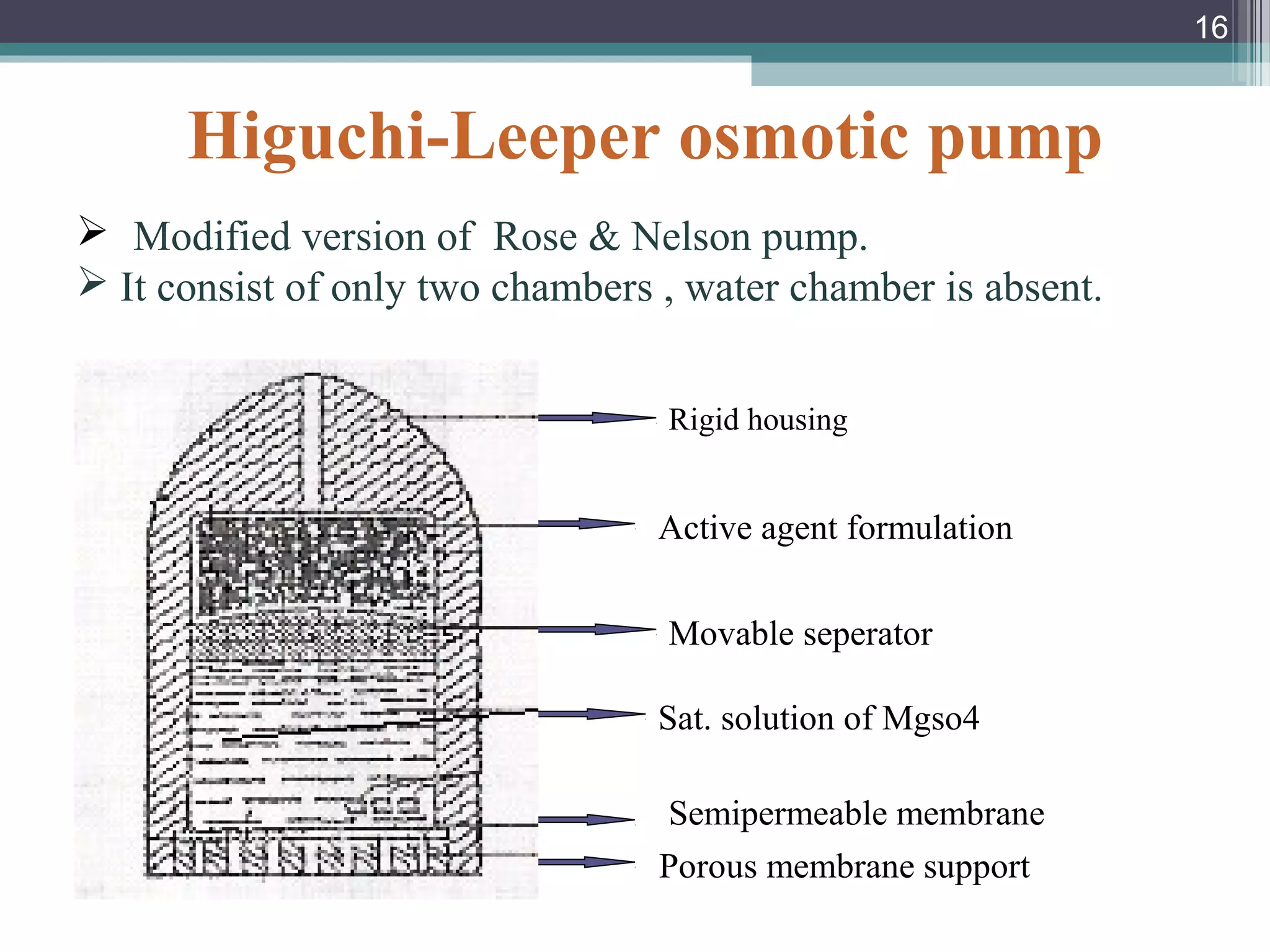
Higuchi-Leeper osmotic pump
Rigid housing
Active agent formulation
Movable seperator
Sat. solution of Mgso4
Semipermeable membrane
Porous membrane support
 Modified version of Rose & Nelson pump.
 It consist of only two chambers , water chamber is absent.
16
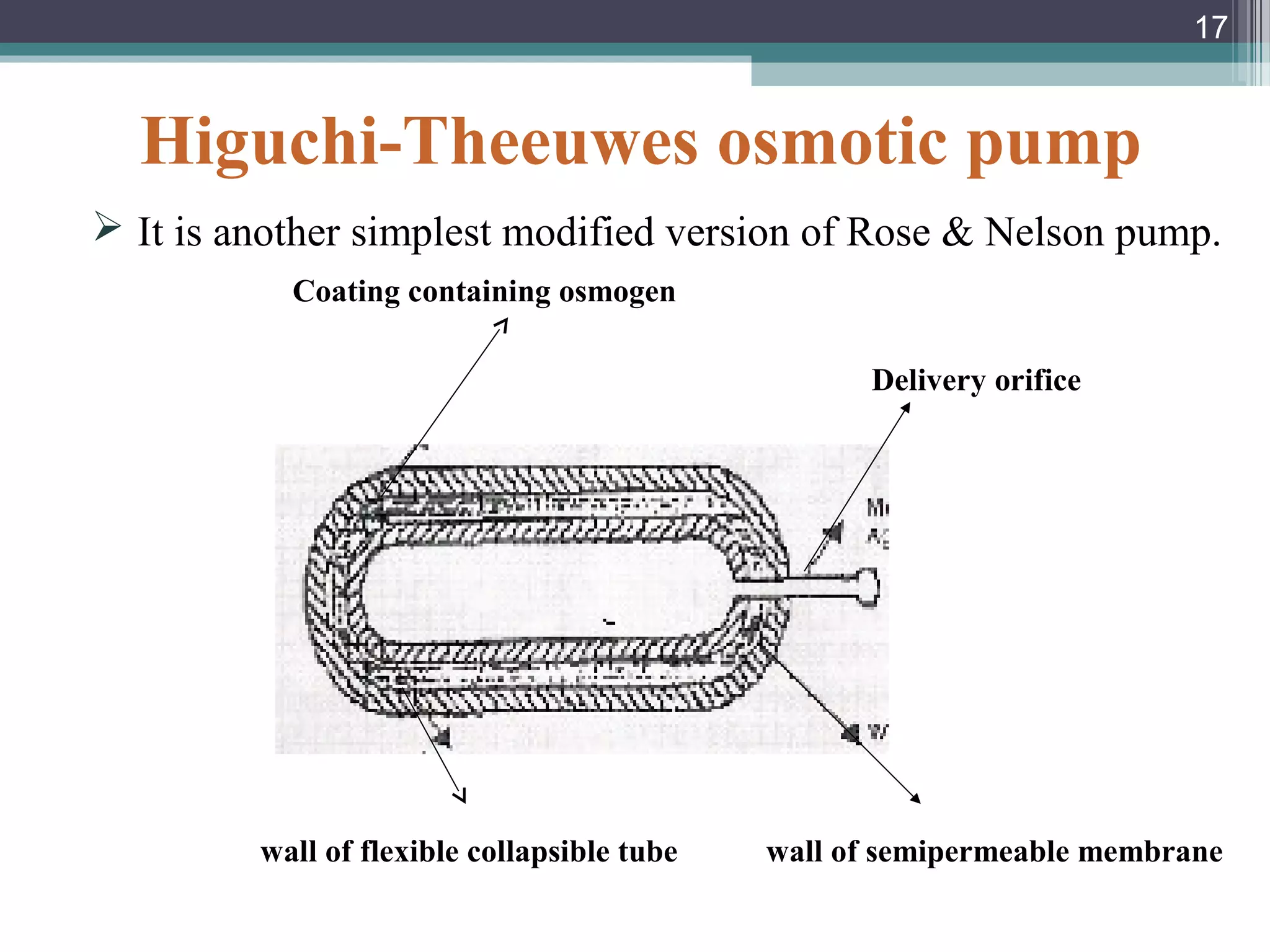
Higuchi-Theeuwes osmotic pump
 It is another simplest modified version of Rose & Nelson pump.
Coating containing osmogen
Delivery orifice
wall of flexible collapsible tube wall of semipermeable membrane
17
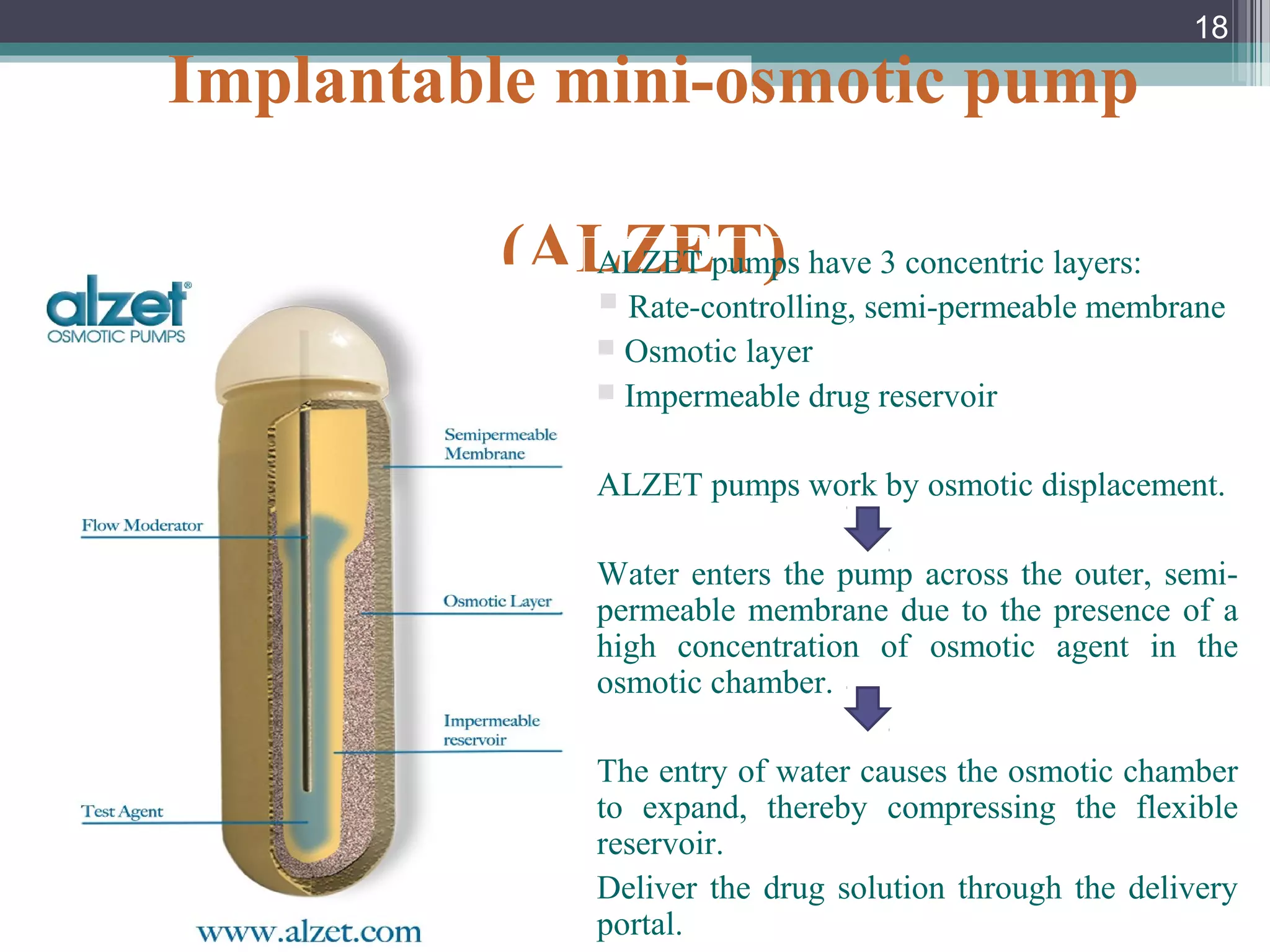
Implantable mini-osmotic pump
(ALZET)ALZET pumps have 3 concentric layers:
 Rate-controlling, semi-permeable membrane
 Osmotic layer
 Impermeable drug reservoir
ALZET pumps work by osmotic displacement.
Water enters the pump across the outer, semi-
permeable membrane due to the presence of a
high concentration of osmotic agent in the
osmotic chamber.
The entry of water causes the osmotic chamber
to expand, thereby compressing the flexible
reservoir.
Deliver the drug solution through the delivery
portal.
18
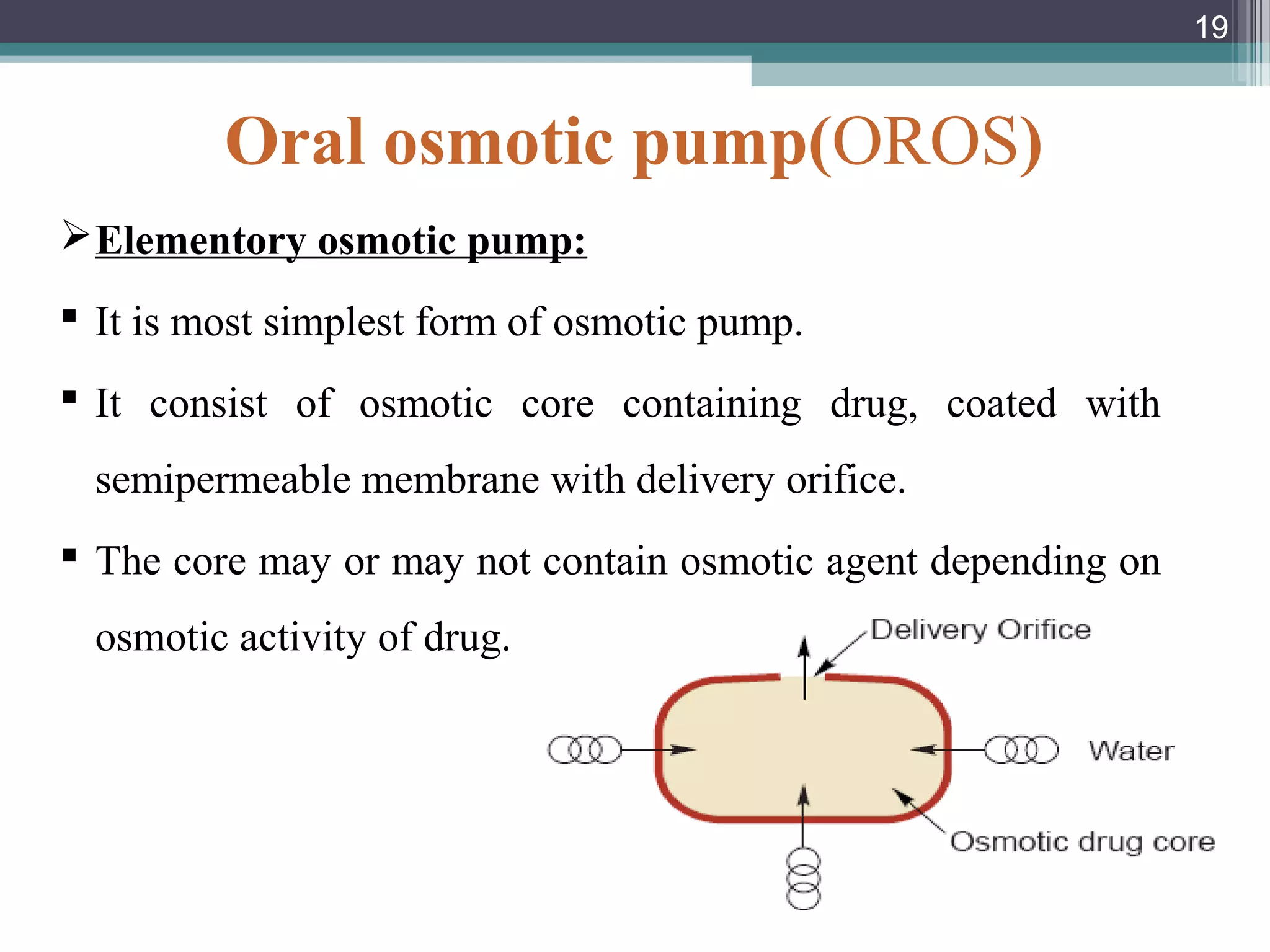
Oral osmotic pump(OROS)
Elementory osmotic pump:
 It is most simplest form of osmotic pump.
 It consist of osmotic core containing drug, coated with
semipermeable membrane with delivery orifice.
 The core may or may not contain osmotic agent depending on
osmotic activity of drug.
19
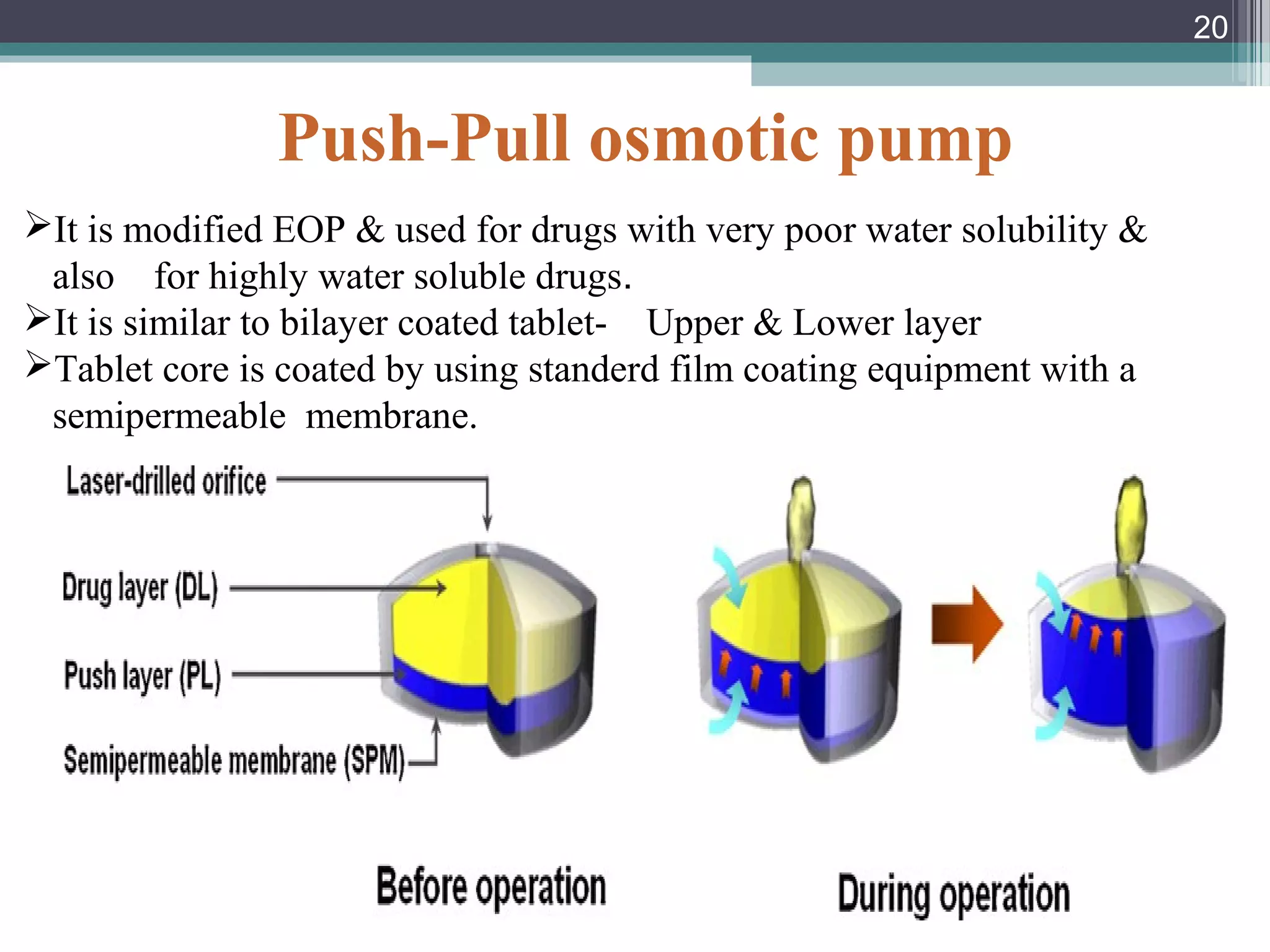
Push-Pull osmotic pump
It is modified EOP & used for drugs with very poor water solubility &
also for highly water soluble drugs.
It is similar to bilayer coated tablet- Upper & Lower layer
Tablet core is coated by using standerd film coating equipment with a
semipermeable membrane.
20
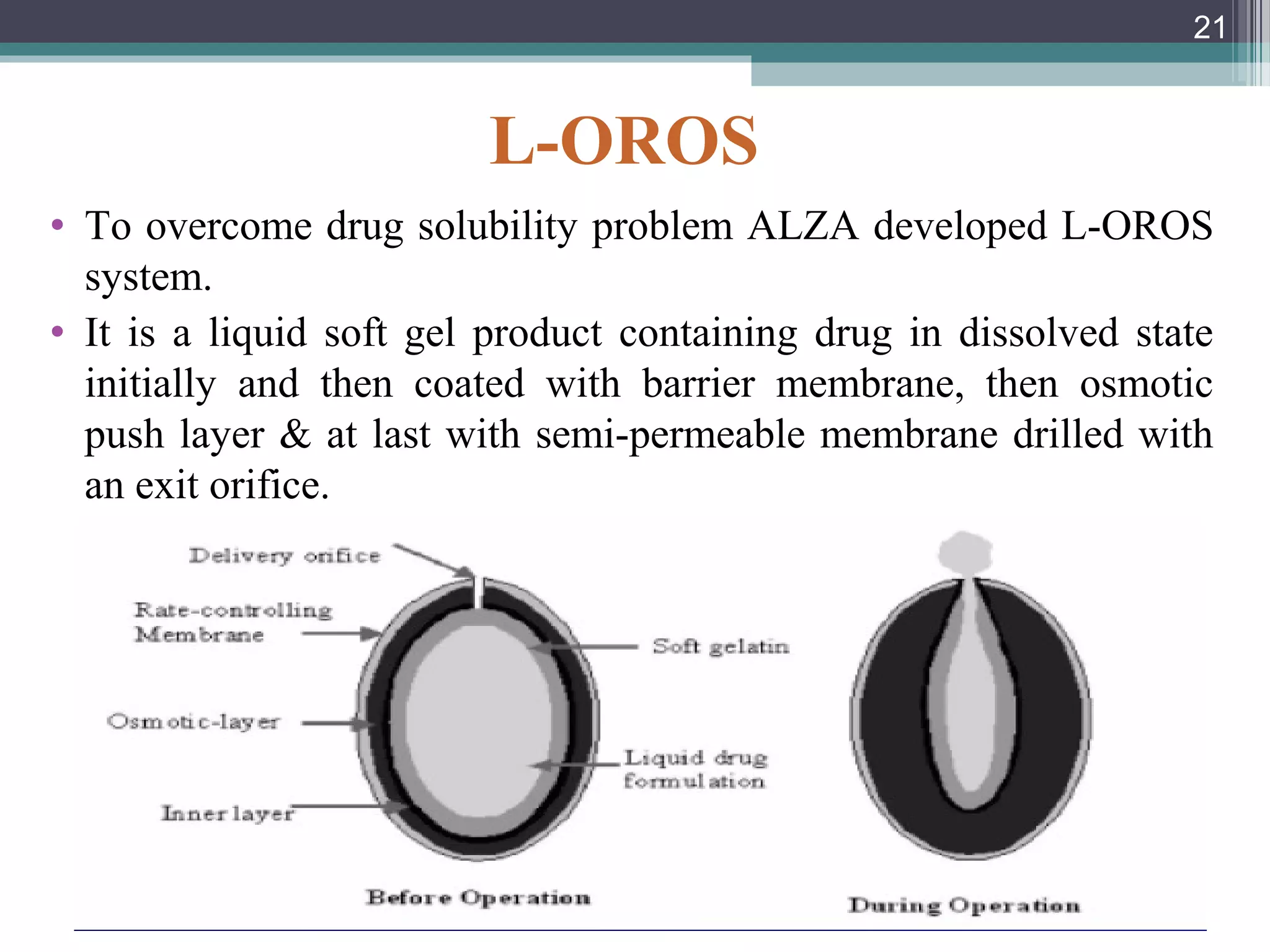
L-OROS
• To overcome drug solubility problem ALZA developed L-OROS
system.
• It is a liquid soft gel product containing drug in dissolved state
initially and then coated with barrier membrane, then osmotic
push layer & at last with semi-permeable membrane drilled with
an exit orifice.
21
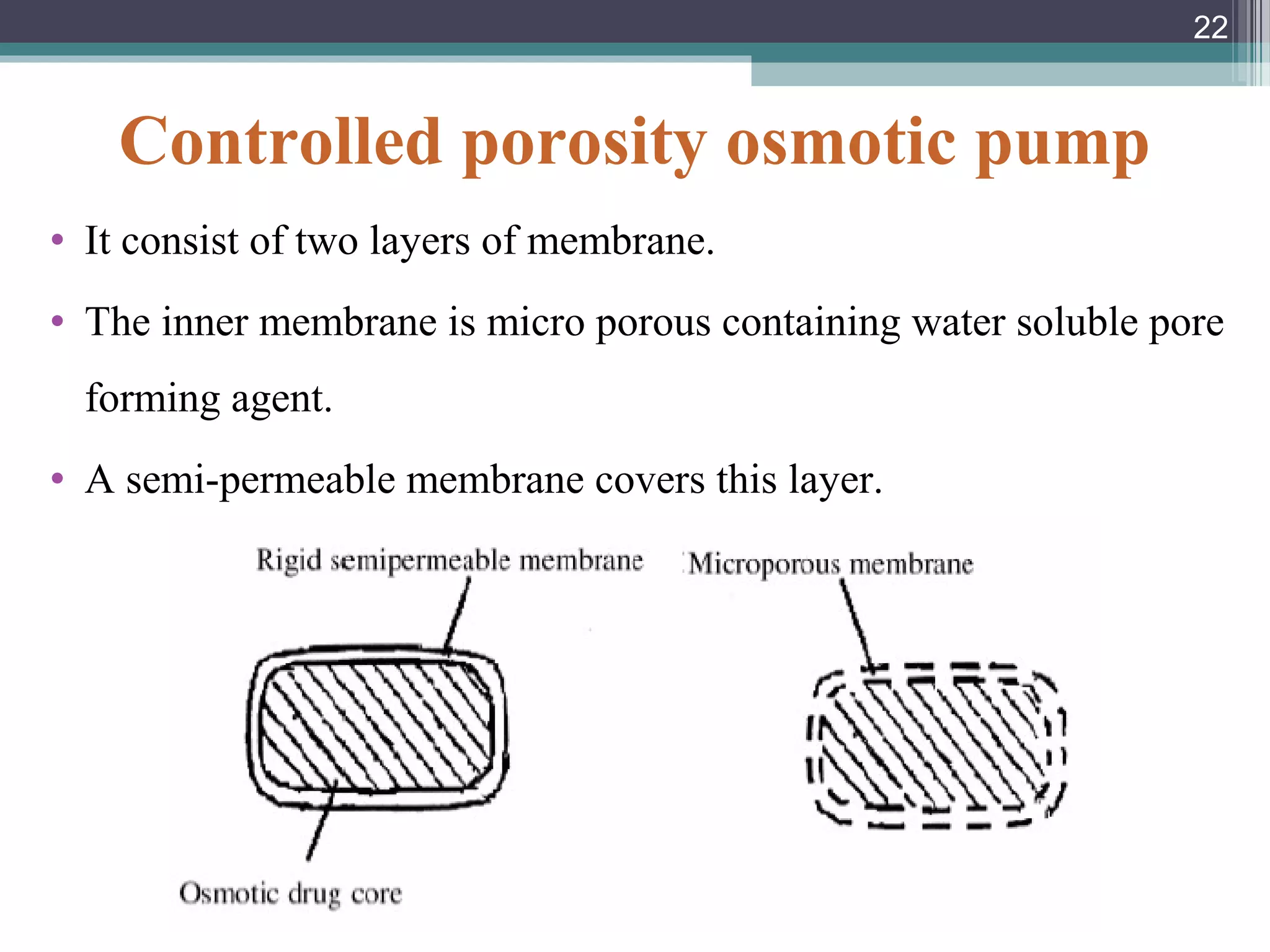
Controlled porosity osmotic pump
• It consist of two layers of membrane.
• The inner membrane is micro porous containing water soluble pore
forming agent.
• A semi-permeable membrane covers this layer.
22
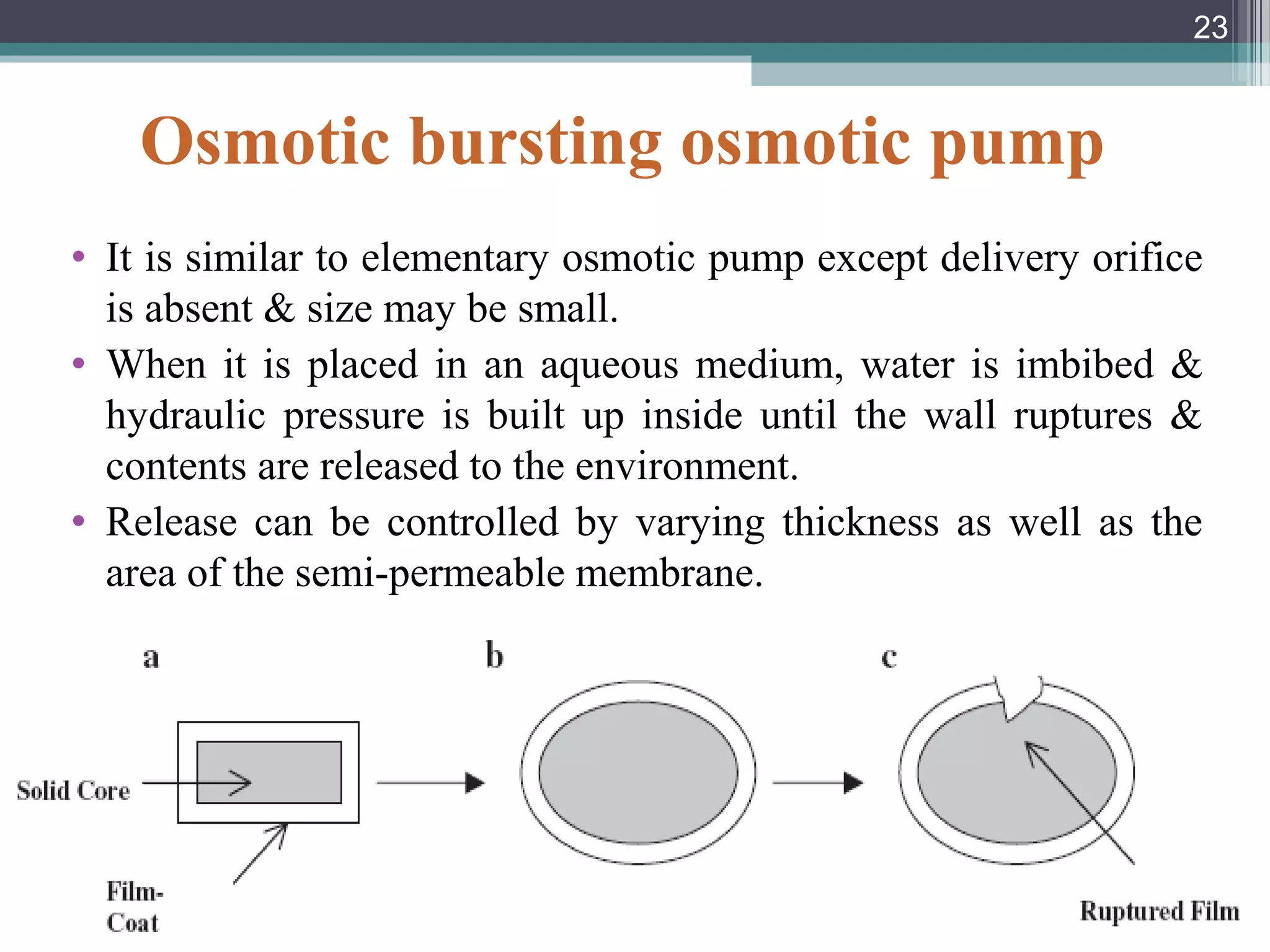
Osmotic bursting osmotic pump
• It is similar to elementary osmotic pump except delivery orifice
is absent & size may be small.
• When it is placed in an aqueous medium, water is imbibed &
hydraulic pressure is built up inside until the wall ruptures &
contents are released to the environment.
• Release can be controlled by varying thickness as well as the
area of the semi-permeable membrane.
• This system is useful to provide pulsated release.
23
Method for preparation orifice
a) Laser drilling
b) Use of modified punches
c) Systems with passageway formed in situ
d) Use of pore formers
24
Recent advance work
 Osmotically driven protein release :
e.g., Bovine serum albumin (BSA) prepared using
trehalose, NaCl, poly(trimethylene carbonate) and
poly(trimethylene carbonate-co-d,l- lactide)
Evaluation parameter
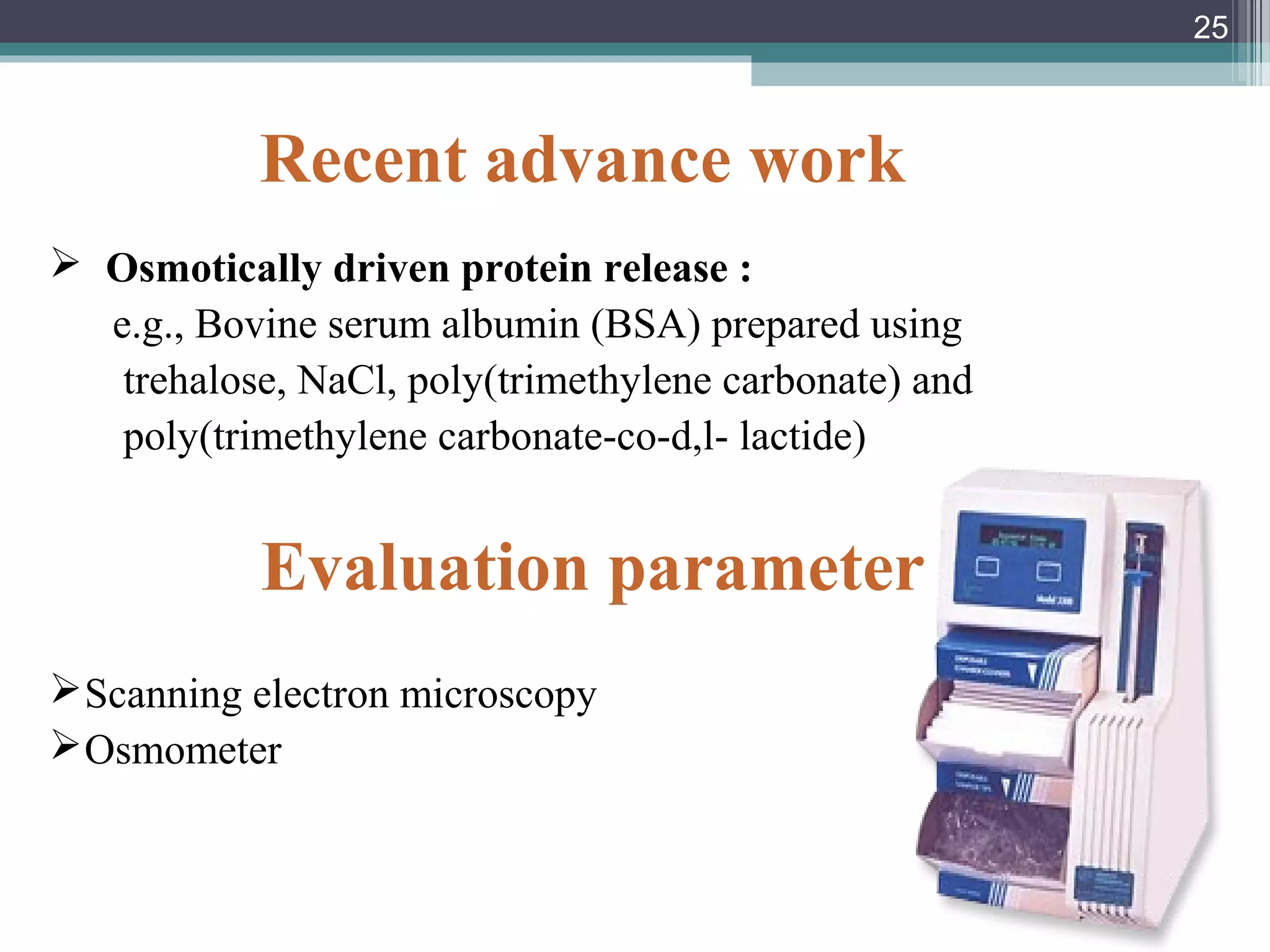
Scanning electron microscopy
Osmometer
25
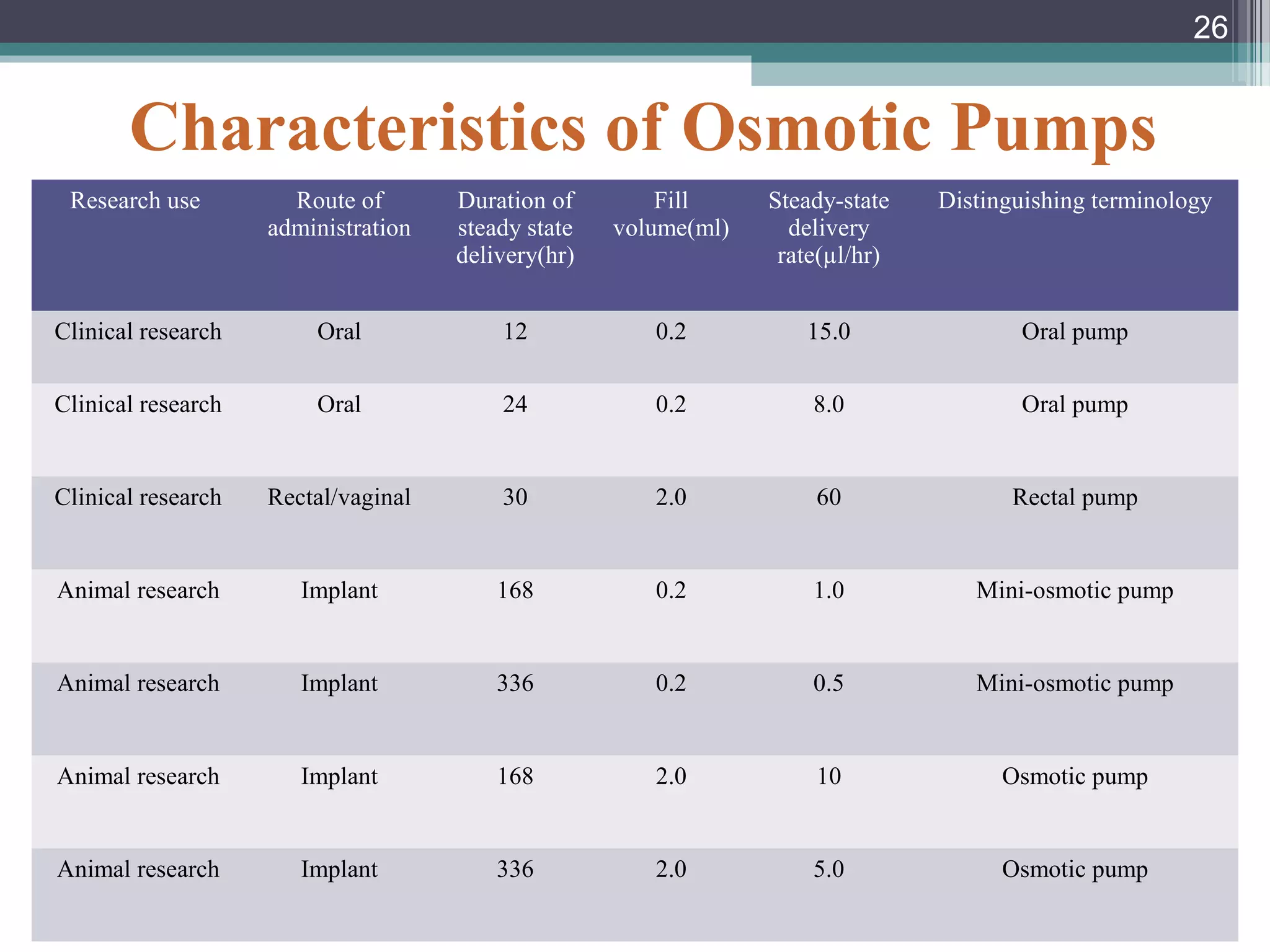
Characteristics of Osmotic Pumps
Research use Route of
administration
Duration of
steady state
delivery(hr)
Fill
volume(ml)
Steady-state
delivery
rate(µl/hr)
Distinguishing terminology
Clinical research Oral 12 0.2 15.0 Oral pump
Clinical research Oral 24 0.2 8.0 Oral pump
Clinical research Rectal/vaginal 30 2.0 60 Rectal pump
Animal research Implant 168 0.2 1.0 Mini-osmotic pump
Animal research Implant 336 0.2 0.5 Mini-osmotic pump
Animal research Implant 168 2.0 10 Osmotic pump
Animal research Implant 336 2.0 5.0 Osmotic pump
26
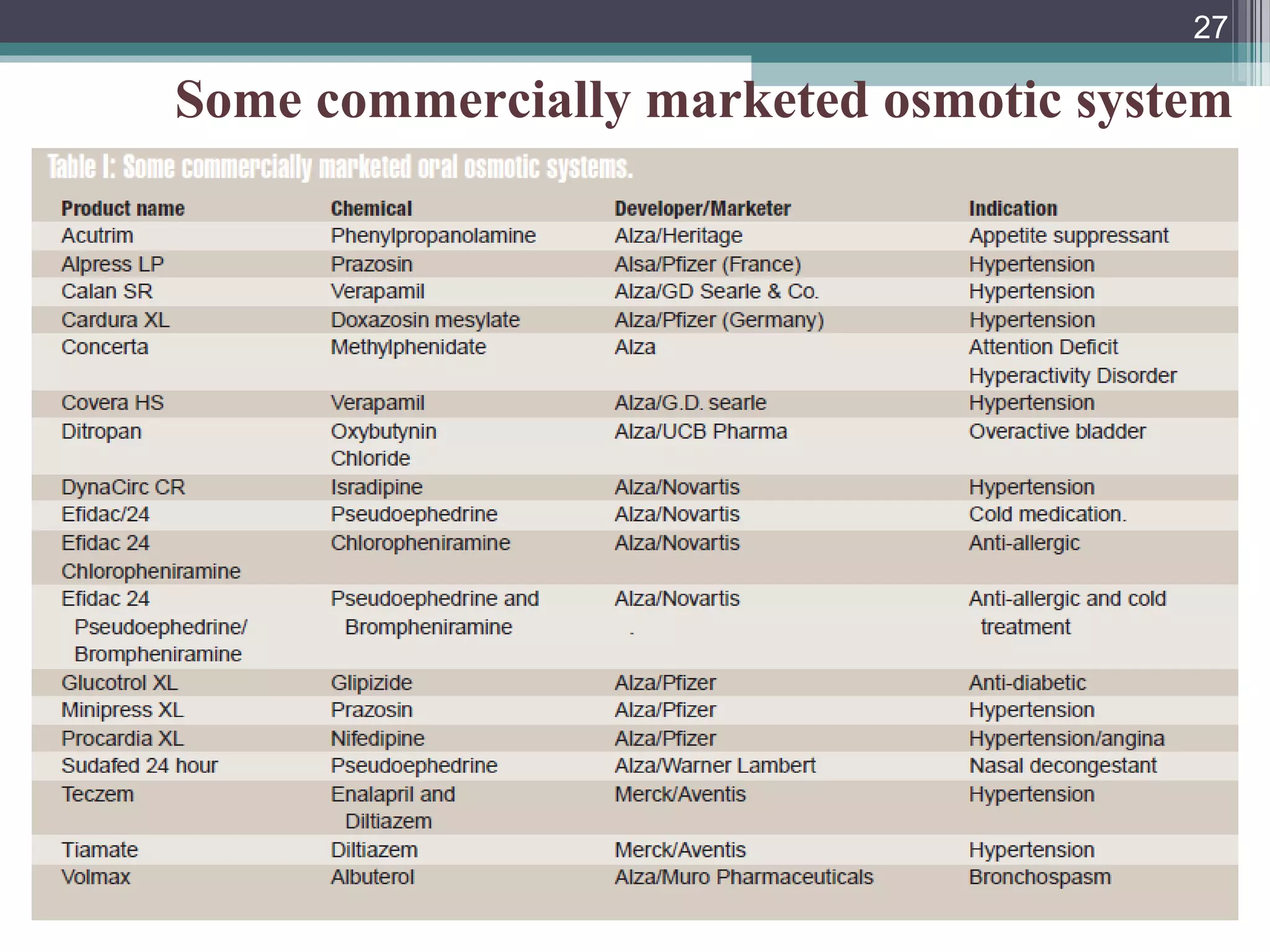
Some commercially marketed osmotic system
27
References
• Joseph R. Vincent H., “Controlled drug delivery, fundamentals
Applications” , second edition, published by marcel dekker,
published at New York Press , Vol - 29 , 263, 414, 498.
• Yei w. chein, “Novel drug delivery system”, published by Marcel dekker,
published at New York Press, Vol - 50, 18-19,142,450.
• S.P.Vyas , R .K. Khar, “ Targated & contrlled drug delivery, Novel carrier
system” , CBS publishers & Distributors, 477-499.
• D.M. Brahmankar, S.B. Jaiswal, “ Biopharmaceutics & Pharmacokinetics
” , Vallabh prakashan, 353
28
References
• N.K.Jain , “Advances in controlled & novel drug delivery” ,19-37.
• Aditya M. Kaushal and Sanjay Garg , An Update on Osmotic Drug
Delivery Patents, Pharmaceutical Technology August 2003,38-44
• Salish sharma , “Osmotic Controlled Drug Delivery “ Pharmainfonet .com
Vol 3 issued 3 in 2008.
• Frank Gaebler , Coherent, and Graham Coffee, Laser Drilling Enables
Advanced Drug Delivery Systems
29
30
Factors Affecting the Release Rate :
d) development of hydrostatic pressure within the core which may
lead to deformation
4-Membrane types and characteristics:
The membrane must possess certain performance Criteria:
a) Sufficient wet strength and water permeability
b) It should be selectively permeable to water
c) Should be biocompatible
d) Effectively isolating the dissolution process from the gut
environment
e) The SPM must be 200–300
31
Factors Affecting the Release Rate :
2-Osmotic Pressure:
a)The release rate of drug from an osmotic system is directly
proportional to the osmotic pressure of the core formulation
b)The osmotic pressure gradient between inside the compartment and
the external environment should be optimized to control rate of drug
release
c)It is possible to achieve and maintain a constant osmotic pressure by
maintaining a saturated solution of osmotic agent in the compartment
3-Size of Delivery orifice:
a)Osmotic delivery systems contain at least one delivery orifice in the
membrane for drug release.
b)The size of delivery orifice must be optimized in order to control the
drug release from osmotic systems.
c)If the size of delivery orifice is too small zero-order delivery will be
affected because of:
32
Limitations and Adverse Effects :some cases have been reported regarding the limitations
and adverse effects of these types of systems:
�During quality control of nifedipine GITS tablets,
it was observed that several batches showed different release patterns of
the drug.
Magnetic resonance imaging (MRI) was used to evaluate the GITS
tablets. It was found that non uniform coating around the tablet produce
different membrane thicknesses, which was responsible
for differences in release patterns among different batches
33
Factors Affecting the Release Rate :
2-Use of encapsulated excipients:
a)Solubility of poorly water soluble drug, was improved by incorporation of
encapsulated excipients (pH-controlling excipient) within the capsule device.
b)Formulated as mini-tablets, which coated with a rate controlling membrane to
prolong its availability within the core.
3-Use of effervescent mixtures :
a)Use of effervescent mixture, can be another approach
to deliver poorly water-soluble drugs from osmotic dosage forms
b) After administration, the effervescent mixture containing the drug is delivered
under pressure through the delivery orifice in the membrane. Ex of
effervescent
34
Factors Affecting the Release Rate :
4-Use of swellable polymers :
a) Swellable polymers can be utilized for osmotic delivery
of drugs having poor aqueous solubility.
b) The formulation mainly consists of a compartment, containing the
drug, swelling agents, and osmagents, coated with a rate controlling
membrane
c) Vinylpyrrolidone/ vinyl acetatecopolymer and polyethylene oxide were
used as swelling agent
d) Uniform rate of swelling of these polymers ensures that the drug is
released at a relatively constant rate.
e) Also, the pressure produced during swelling does not lead to rupture of
the system.
35
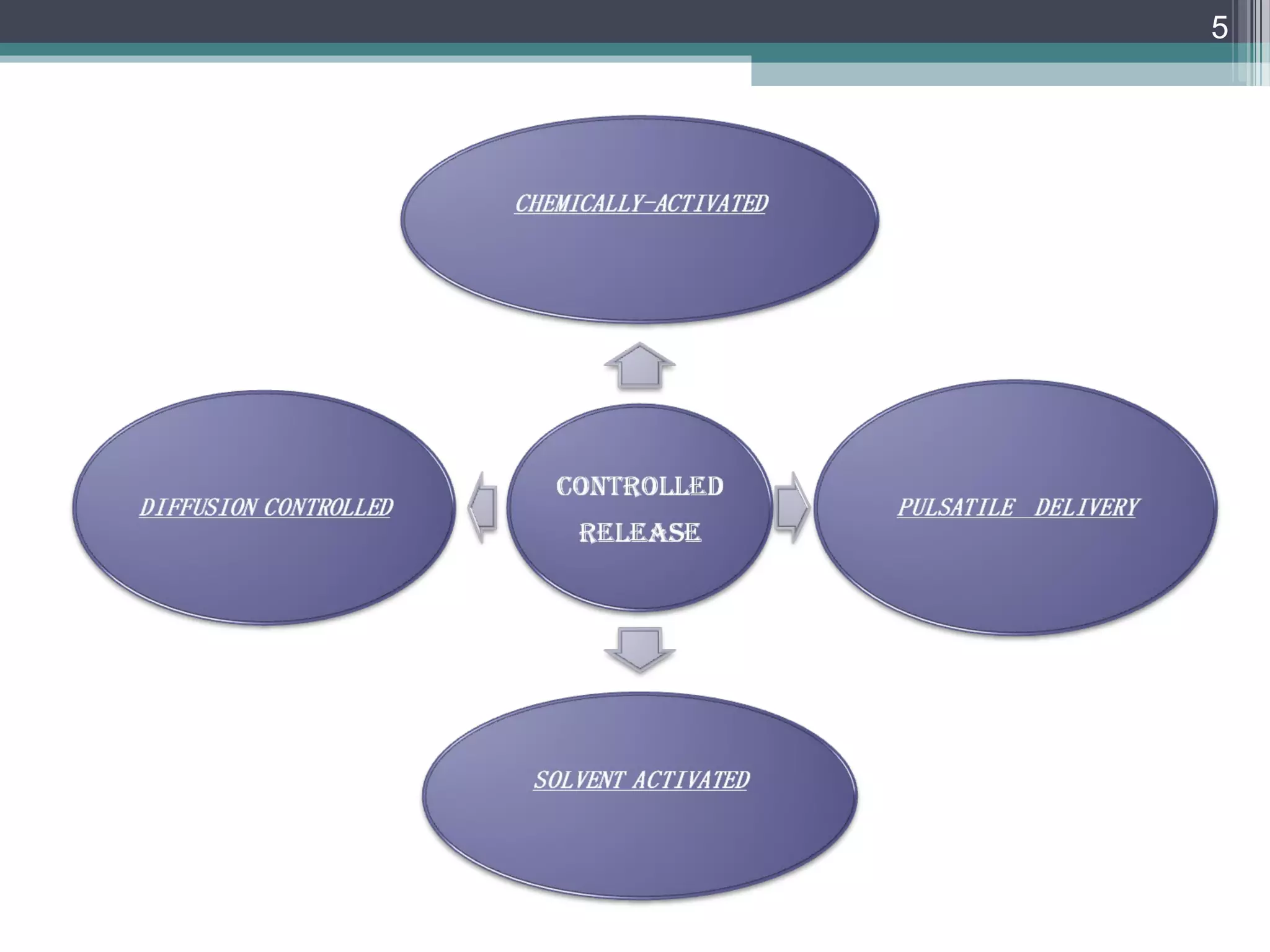
Matrix
Devices
Membrane
Devices
Diffusion-
Controlled
Controlled
Release
Systems
Biodegradable
Systems
Pendant
Chain Systems
Chemically-
Controlled
Solvent-
Activated
Osmotically-
Controlled
Swelling-
Controlled
Rupture-
Controlled
Pulsatile
Delivery
Single
Pulse
Osmotically
Ruptured
Polymer
Dissolution
Polymer
Melting
Multiple
Pulse
Electrically-
Stimulated
Ultrasonically-
Controlled
Magnetically-
Controlled
Temperature-
Controlled
Ionic-Strength
Dependent
pH-Sensitive
36
Very rapid gelling and nearly complete hydration of OCAS delivery system in the upper GI tract ensures drug release
throughout the entire GI tract,
including the colon where water is poorly available. Reprinted from European Urology Supplements, 4(2), Michel MC,
Korstanje C, KrauwinkelW, Kuipers M,
The pharmacokinetic profile of tamsulosin oral controlled absorption system (OCAS1), pp 15–24, 2005, with permission
from European Association of
Urology [8].
37
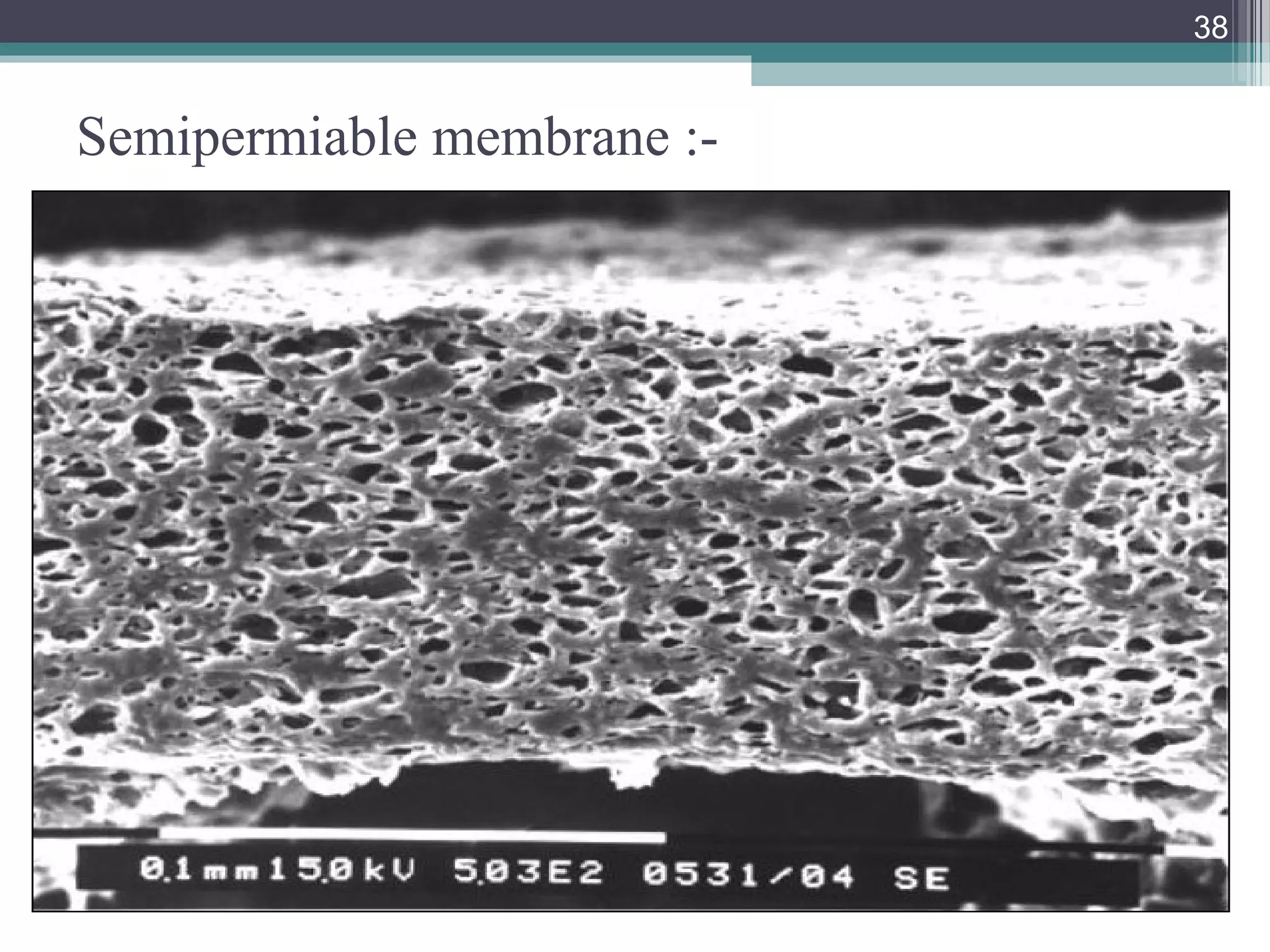
Semipermiable membrane :-
38

Osmatically Controlled Drug Delivery System

  • 1.
    1 Presented by: Chinchole PravinSonu (M.PHARM 2nd SEM) DEPARTMENT OF PHARMACEUTICS & QUALITY ASSURANCE R. C. Patel Institute of Pharmaceutical Education and Research, shirpur.
  • 2.
    CONTENT Introduction Advantages & Disadvantages Principleof osmosis General Consideration Factor affecting drug release rate Classification Recent advances & evaluation parameter Characteristics of osmotic pump Some commercially marketed osmotic system References 2
  • 3.
    Introduction In recent years,considerable attention has been made on the development of Novel drug delivery system(NDDS). Reasons for this are: Relatively low development cost & time required for introducing NDDS as compared to New chemical entity(NCE). In the form of NDDS, an existing drug can get a new life, there by increasing its market value, competitiveness,& patent life.  Majority of controlled release forms fall in category of matrix, reservoir, or osmotic system 3
  • 4.
    Controlled Drug Delivery Thefuture of drug delivery systems will involve smart systems These will address the issue of keeping the drug at the desired therapeutic level in the body thus avoiding frequent administration Systems use detection of chemical signals in the body to prompt the release of drugs The ultimate goal is to administer drugs at the right time, at the right dose anywhere in the body with specificity and efficiency 4
  • 5.
  • 6.
    Osmotically controlled drugdelivery system It can be employed as oral drug delivery system or implantable device. It utilizes the principle of osmotic pressure for the delivery of drug. They are also known as GITS(Gastro-intestinal therapeutic system) and today different types of oral osmotic pumps are available. 6
  • 7.
    Advantages & Disadvantages •Typically follow a zero order release kinetics. • Delivery of drug takes place in solution form, which is ready for absorption. • Improved patient compliance due to reduced dosing frequency. • Prolonged therapeutic effect with uniform blood concentration. • Toxicity may occur due to dose dumping. • Size of hole is critical factor. • Residence time of the system in the body varies with the gastric motility & food intake. • Surgery may require for removal of device incase of implantable system. • Special equipment is required for making an orifice. 7
  • 8.
    Principle of Osmosis 8 Osmosisrefers to the process of movement of solvent molecules from lower conc. to higher conc. across a semipermeable membrane until there is an equal conc. of fluid on both sides of membrane. Semipermeable membrane
  • 9.
    Equation for drugrelease rate through orifice Where: A = the membrane area h = the membrane thickness Lp= the mechanical permeability σ= the reflection coefficient π= the osmotic pressure ρ= the hydrostatic pressure C = the concentration of compound in the dispensed fluid 9
  • 10.
    General consideration  Basiccomponents:  Drug  Osmotic Agent  Semipermeable membrane  Other components:  Hydrophilic/hydrophobic polymers  Solubilising agents  Surfactants  Other common tabletting aids like lubricants, binders, diluents, glidants etc 10
  • 11.
    Factors Affecting theRelease Rate 1) Drug Solubility : i. Co-compression of drug with excipients: a) Drugs have high water solubility b) Addition of solubility modulating agent c) Use of polymer coated buffer components to modulate the drug solubility within the core d) Use of buffers, ii. Use of encapsulated excipients: iii. Use of effervescent mixtures : iv. Use of swellable polymers : 11
  • 12.
    Factors Affecting theRelease Rate 2) Osmotic Pressure:  The release of drug is directly proportional to osmotic pressure 3) Size of Delivery orifice:  system should contain at least one delivery orifice 4) Membrane types and characteristics:  It should be biocompatible 12
  • 13.
    Examples of osmogents CategoryExample ATM Water-soluble salts of inorganic acids potassium chloride, Sodium phosphate potassium phosphate etc. 245 31 105 Water soluble salts of organic acids Sodium phosphate, Citric acid, 29 82 Carbohydrates fructose, sucrose, lactose etc. 355 150 23 Water-soluble amino acids Glycine, leucine, alanine, etc. Organic polymeric osmogents Sodium carboxy methyl cellulose, HPMC, cross-linked PVP, carbopol, polyacrylamide, etc. 13
  • 14.
    Classification of osmoticcontrolled drug delivery system 14
  • 15.
    Implantable osmotic pump :Rose& Nelson pump:  Consists of three chambers- Drug, salt, & water chamber. Drug & salt chambers are separated by elastic diaphragm where as water & salt chambers are separated by a semipermeable membrane. Osmotic pressure act as a driving force 15
  • 16.
    Higuchi-Leeper osmotic pump Rigidhousing Active agent formulation Movable seperator Sat. solution of Mgso4 Semipermeable membrane Porous membrane support  Modified version of Rose & Nelson pump.  It consist of only two chambers , water chamber is absent. 16
  • 17.
    Higuchi-Theeuwes osmotic pump It is another simplest modified version of Rose & Nelson pump. Coating containing osmogen Delivery orifice wall of flexible collapsible tube wall of semipermeable membrane 17
  • 18.
    Implantable mini-osmotic pump (ALZET)ALZETpumps have 3 concentric layers:  Rate-controlling, semi-permeable membrane  Osmotic layer  Impermeable drug reservoir ALZET pumps work by osmotic displacement. Water enters the pump across the outer, semi- permeable membrane due to the presence of a high concentration of osmotic agent in the osmotic chamber. The entry of water causes the osmotic chamber to expand, thereby compressing the flexible reservoir. Deliver the drug solution through the delivery portal. 18
  • 19.
    Oral osmotic pump(OROS) Elementoryosmotic pump:  It is most simplest form of osmotic pump.  It consist of osmotic core containing drug, coated with semipermeable membrane with delivery orifice.  The core may or may not contain osmotic agent depending on osmotic activity of drug. 19
  • 20.
    Push-Pull osmotic pump Itis modified EOP & used for drugs with very poor water solubility & also for highly water soluble drugs. It is similar to bilayer coated tablet- Upper & Lower layer Tablet core is coated by using standerd film coating equipment with a semipermeable membrane. 20
  • 21.
    L-OROS • To overcomedrug solubility problem ALZA developed L-OROS system. • It is a liquid soft gel product containing drug in dissolved state initially and then coated with barrier membrane, then osmotic push layer & at last with semi-permeable membrane drilled with an exit orifice. 21
  • 22.
    Controlled porosity osmoticpump • It consist of two layers of membrane. • The inner membrane is micro porous containing water soluble pore forming agent. • A semi-permeable membrane covers this layer. 22
  • 23.
    Osmotic bursting osmoticpump • It is similar to elementary osmotic pump except delivery orifice is absent & size may be small. • When it is placed in an aqueous medium, water is imbibed & hydraulic pressure is built up inside until the wall ruptures & contents are released to the environment. • Release can be controlled by varying thickness as well as the area of the semi-permeable membrane. • This system is useful to provide pulsated release. 23
  • 24.
    Method for preparationorifice a) Laser drilling b) Use of modified punches c) Systems with passageway formed in situ d) Use of pore formers 24
  • 25.
    Recent advance work Osmotically driven protein release : e.g., Bovine serum albumin (BSA) prepared using trehalose, NaCl, poly(trimethylene carbonate) and poly(trimethylene carbonate-co-d,l- lactide) Evaluation parameter Scanning electron microscopy Osmometer 25
  • 26.
    Characteristics of OsmoticPumps Research use Route of administration Duration of steady state delivery(hr) Fill volume(ml) Steady-state delivery rate(µl/hr) Distinguishing terminology Clinical research Oral 12 0.2 15.0 Oral pump Clinical research Oral 24 0.2 8.0 Oral pump Clinical research Rectal/vaginal 30 2.0 60 Rectal pump Animal research Implant 168 0.2 1.0 Mini-osmotic pump Animal research Implant 336 0.2 0.5 Mini-osmotic pump Animal research Implant 168 2.0 10 Osmotic pump Animal research Implant 336 2.0 5.0 Osmotic pump 26
  • 27.
    Some commercially marketedosmotic system 27
  • 28.
    References • Joseph R.Vincent H., “Controlled drug delivery, fundamentals Applications” , second edition, published by marcel dekker, published at New York Press , Vol - 29 , 263, 414, 498. • Yei w. chein, “Novel drug delivery system”, published by Marcel dekker, published at New York Press, Vol - 50, 18-19,142,450. • S.P.Vyas , R .K. Khar, “ Targated & contrlled drug delivery, Novel carrier system” , CBS publishers & Distributors, 477-499. • D.M. Brahmankar, S.B. Jaiswal, “ Biopharmaceutics & Pharmacokinetics ” , Vallabh prakashan, 353 28
  • 29.
    References • N.K.Jain ,“Advances in controlled & novel drug delivery” ,19-37. • Aditya M. Kaushal and Sanjay Garg , An Update on Osmotic Drug Delivery Patents, Pharmaceutical Technology August 2003,38-44 • Salish sharma , “Osmotic Controlled Drug Delivery “ Pharmainfonet .com Vol 3 issued 3 in 2008. • Frank Gaebler , Coherent, and Graham Coffee, Laser Drilling Enables Advanced Drug Delivery Systems 29
  • 30.
  • 31.
    Factors Affecting theRelease Rate : d) development of hydrostatic pressure within the core which may lead to deformation 4-Membrane types and characteristics: The membrane must possess certain performance Criteria: a) Sufficient wet strength and water permeability b) It should be selectively permeable to water c) Should be biocompatible d) Effectively isolating the dissolution process from the gut environment e) The SPM must be 200–300 31
  • 32.
    Factors Affecting theRelease Rate : 2-Osmotic Pressure: a)The release rate of drug from an osmotic system is directly proportional to the osmotic pressure of the core formulation b)The osmotic pressure gradient between inside the compartment and the external environment should be optimized to control rate of drug release c)It is possible to achieve and maintain a constant osmotic pressure by maintaining a saturated solution of osmotic agent in the compartment 3-Size of Delivery orifice: a)Osmotic delivery systems contain at least one delivery orifice in the membrane for drug release. b)The size of delivery orifice must be optimized in order to control the drug release from osmotic systems. c)If the size of delivery orifice is too small zero-order delivery will be affected because of: 32
  • 33.
    Limitations and AdverseEffects :some cases have been reported regarding the limitations and adverse effects of these types of systems: �During quality control of nifedipine GITS tablets, it was observed that several batches showed different release patterns of the drug. Magnetic resonance imaging (MRI) was used to evaluate the GITS tablets. It was found that non uniform coating around the tablet produce different membrane thicknesses, which was responsible for differences in release patterns among different batches 33
  • 34.
    Factors Affecting theRelease Rate : 2-Use of encapsulated excipients: a)Solubility of poorly water soluble drug, was improved by incorporation of encapsulated excipients (pH-controlling excipient) within the capsule device. b)Formulated as mini-tablets, which coated with a rate controlling membrane to prolong its availability within the core. 3-Use of effervescent mixtures : a)Use of effervescent mixture, can be another approach to deliver poorly water-soluble drugs from osmotic dosage forms b) After administration, the effervescent mixture containing the drug is delivered under pressure through the delivery orifice in the membrane. Ex of effervescent 34
  • 35.
    Factors Affecting theRelease Rate : 4-Use of swellable polymers : a) Swellable polymers can be utilized for osmotic delivery of drugs having poor aqueous solubility. b) The formulation mainly consists of a compartment, containing the drug, swelling agents, and osmagents, coated with a rate controlling membrane c) Vinylpyrrolidone/ vinyl acetatecopolymer and polyethylene oxide were used as swelling agent d) Uniform rate of swelling of these polymers ensures that the drug is released at a relatively constant rate. e) Also, the pressure produced during swelling does not lead to rupture of the system. 35
  • 36.
  • 37.
    Very rapid gellingand nearly complete hydration of OCAS delivery system in the upper GI tract ensures drug release throughout the entire GI tract, including the colon where water is poorly available. Reprinted from European Urology Supplements, 4(2), Michel MC, Korstanje C, KrauwinkelW, Kuipers M, The pharmacokinetic profile of tamsulosin oral controlled absorption system (OCAS1), pp 15–24, 2005, with permission from European Association of Urology [8]. 37
  • 38.