Targeted Drug Delivery System
FACILITATED TO:
Dr. Anita Desai
HOD Dept.of Pharmaceutics
H.S.K.College of Pharmacy
Bagalkot
PRESENTED BY:
Ismail Makanadar
MPhram 2nd Sem
Dept.of Pharmaceutics
H.S.K.College of Pharmacy
Bagalkot
1
Contents
• Introduction
• Concept
• Ideal Characters
• Advantages
• Carrier or markers
• Events and Biological Processes
2
INTRODUCTION :
‘Targeted drug delivery system is a special form of
drug delivery system where the medicament is selectively
targeted or delivered only to its site of action or
absorption and not to the non-target organs or tissues or
cells.’
• It is a method of delivering medication to a patient in a
manner that increases the concentration of the medication in
some parts of the body relative to others.
• Targeted drug delivery seeks to concentrate the medication in
the tissues of interest while reducing the relative concentration
of the medication in the remaining tissues.
• This improves efficacy and reduce side effects.
3
OBJECTIVE :
•To achieve a desired pharmacological response at a selected sites
without undesirable interaction at other sites, there by the drug
have a specific action with minimum side effects & better
therapeutic index.
•Ex- In cancer chemotherapy and enzyme replacement
therapy.
4
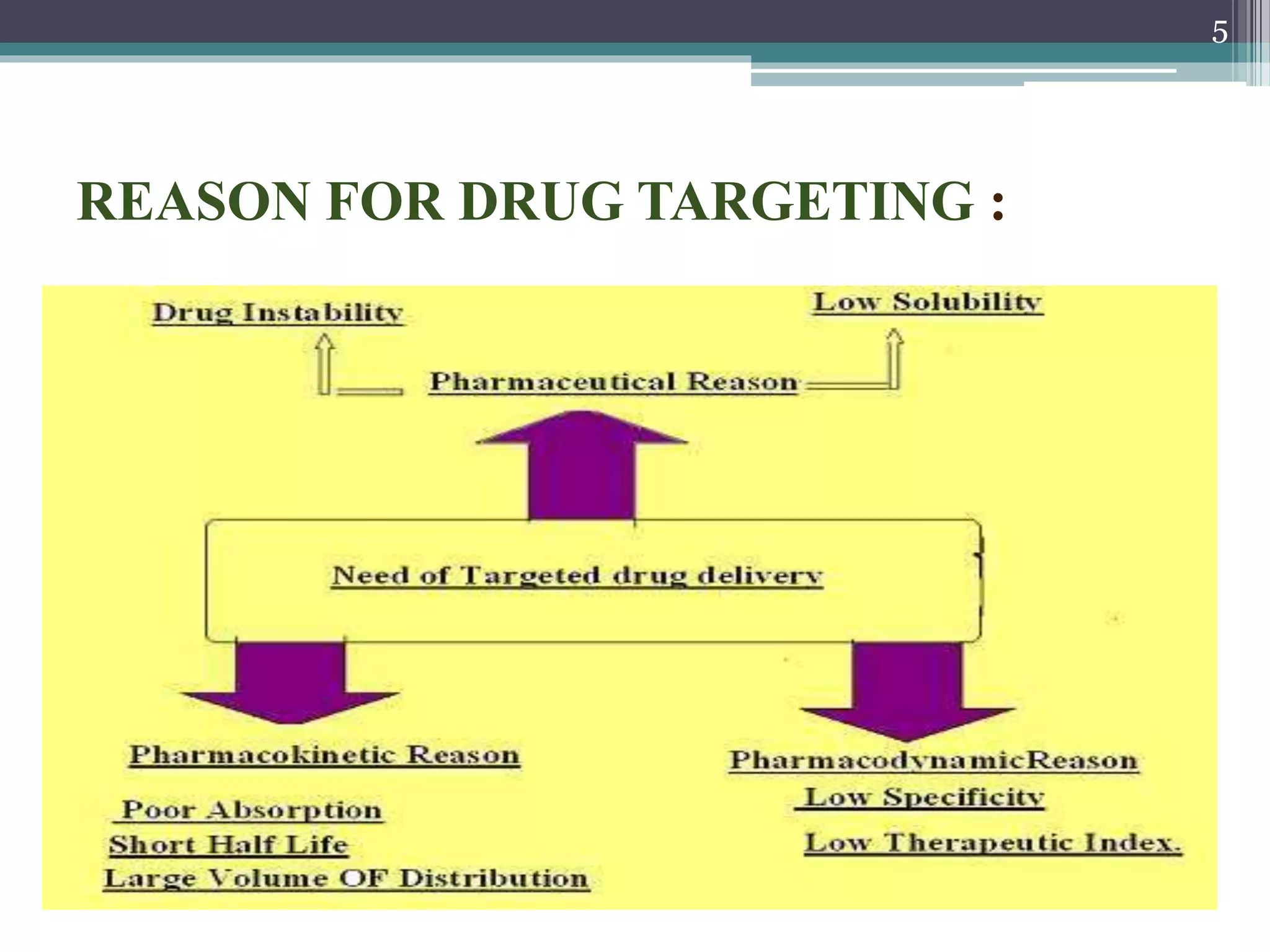
REASON FOR DRUG TARGETING :
5
IDEAL CHARACTERISTICS :
• It should be nontoxic, biocompatible, biodegradable, and
physicochemical stable invivo and invitro.
• Restrict drug distribution to target cells or tissues or organs and
should have uniform capillary distribution.
• Controllable and predicate rate of drug release.
• Drug release does not effect the drug action.
• Therapeutic amount of drug release.
• Carriers used must be bio-degradable or readily eliminated
from the body without any problem and no carrier induced
modulation of diseased state.
• The preparation of the delivery system should be easy or
reasonably simple, reproductive and cost effective.
6
ADVANTAGES :
• Drug administration protocols may be simplified.
• Toxicity is reduced by delivering a drug to its target site, there by
reducing harmful systemic effects.
• Drug can be administered in a smaller dose to produce the desire
effect.
• Avoidance of hepatic first pass metabolism.
• Enhancement of the absorption of target molecules such as peptides
and particulates.
• Dose is less compared to conventional drug delivery system.
• No peak and valley plasma concentration.
• Selective targeting to infections cells that compareto normal
cells.
7
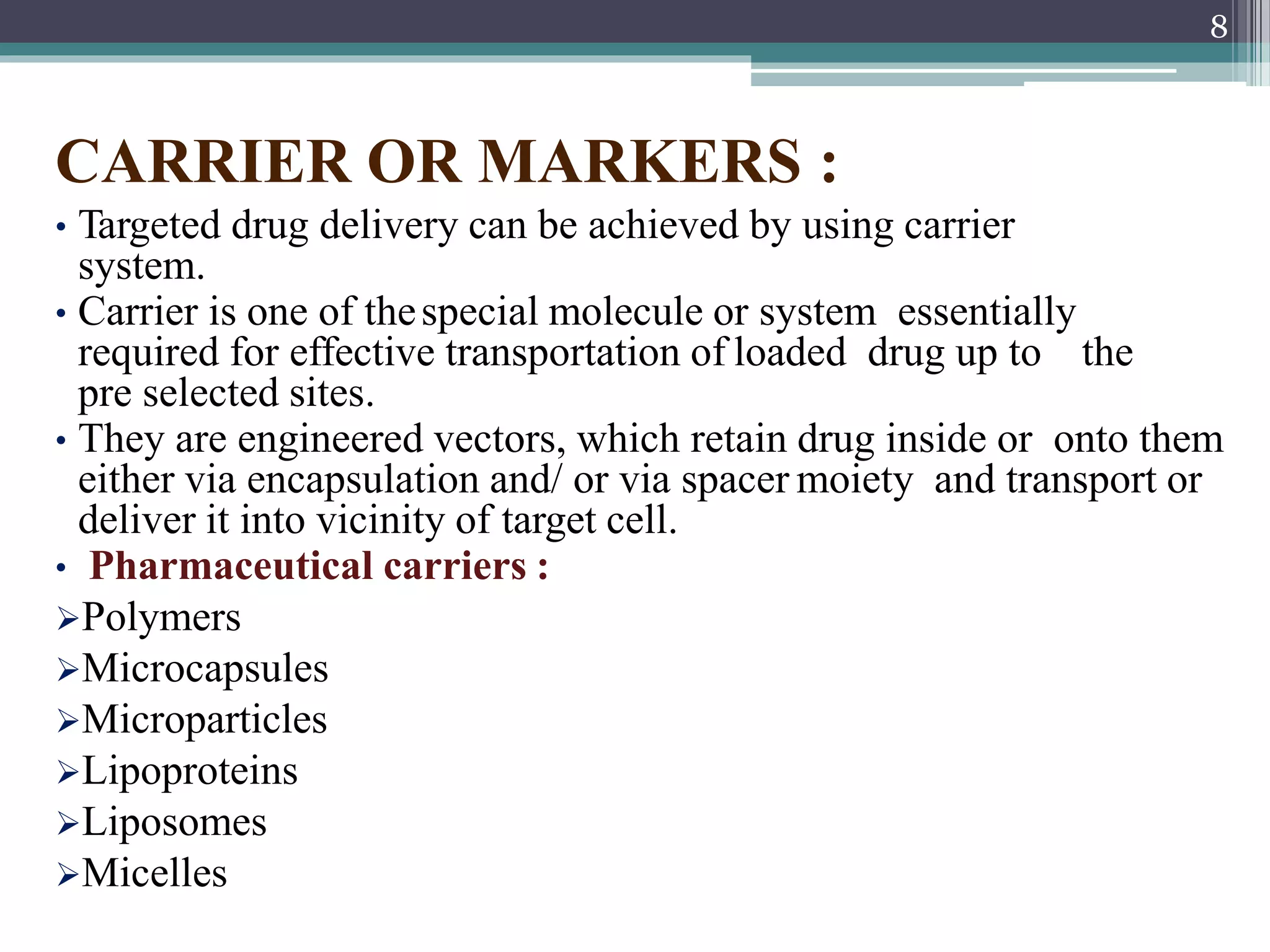
CARRIER OR MARKERS :
• Targeted drug delivery can be achieved by using carrier
system.
• Carrier is one of thespecial molecule or system essentially
required for effective transportation of loaded drug up to the
pre selected sites.
• They are engineered vectors, which retain drug inside or onto them
either via encapsulation and/ or via spacer moiety and transport or
deliver it into vicinity of target cell.
• Pharmaceutical carriers :
Polymers
Microcapsules
Microparticles
Lipoproteins
Liposomes
Micelles
8
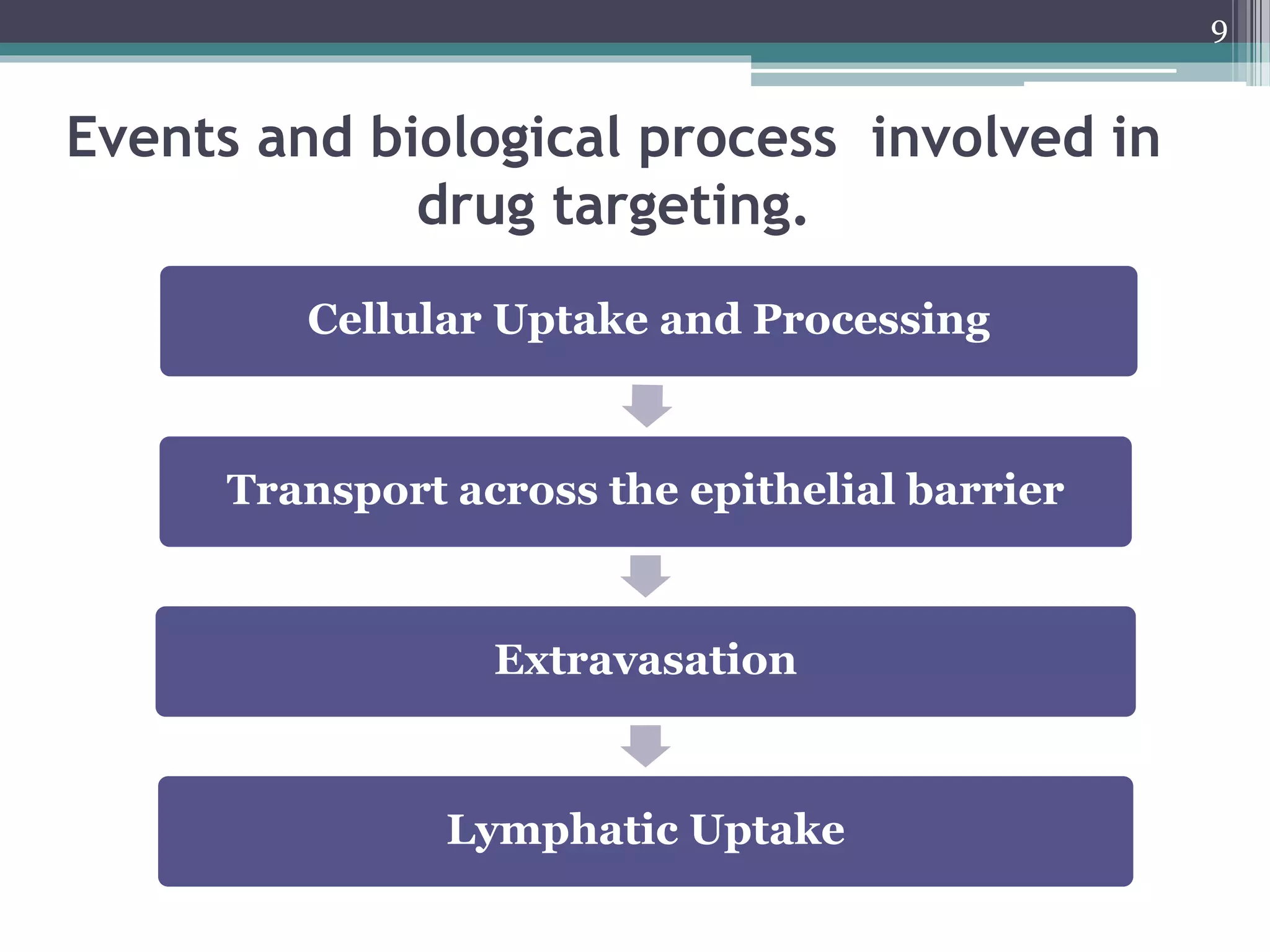
Events and biological process involved in
drug targeting.
Cellular Uptake and Processing
Transport across the epithelial barrier
Extravasation
Lymphatic Uptake
9
Cellular Uptake and Processing
• Following administration low molar mass drugs can
enter into or pass through various cells by simple
diffusion process.
• Targeted drug delivery usually have macro molecular
assemblies hence cannot enter by such simple process.
Hence take up by a process called
ENDOCYTOSIS
• Steps involved :
• Internalization of the plasma membrane
• Concomitant with engulfment of extracellular material
10
11
Compared with phagocytosis pinocytosis is a universal
phenomenon in all the cells pinocytosis does not require any
external stimulus
Pinocytosis is divided into two types:
 Fluid phases pinocytosis
 Adsorptive pinocytosis
Compared with phagocytosis fluid phase pinocytic capture of
molecules is relatively slower being directly proportional to
the concentration and size dependant
12
Transport across the epithelial barrier
• The oral, buccal, nasal, vaginal, and rectal cavities are
internally lined with one or more layers of epithelial cells
• Depending on the position and function in the body
epithelial cells can be varied forms
• Three layer physiology:
• Epithelial
• Lamia propria
• Basal lamina
• Low molar mass drugs cross the above by passive
difussion carrier mediated systems selective and non-
selective endocytosis
13
 The polar materials diffuse through tight junctions of
epithelial cells
 Passive transport is usually higher in damaged mucosa
whereas active transport depends on structural integrity of
epithelial cells
 Positively charged particles showed increased uptake than
negatively charged counterparts.
 Absoption of drugs from buccal via transcellular and
paracellular later being dominant
• Ex-vaginal cavity could be an effective delivery site for
certain pharmaceuticals Such as calcitonin for the treatment
of postmenopausal osteoporosis
• It was demonstrated that when delivered vaginally first
undergo uterine pass effect suggesting that the vaginal route
can be useed to target to the uterus
14
Extravasation
• Many diseases result from the dysfunction of cells
located outside the cardiovascular system thus for a drug
to exert its therapeutic effects it must exit from the
central circulation this process of trans vascular
exchange is called Extravasation which is governed by
blood capillary walls
• Factors that control permeability of capillaries
• Structure of the capillary wall
• Pathological condition
• Rate of blood and lymph supply
• Physicochemical factors of drug
15
• The structure of the blood capillary varies in different
organs tissues.
• It consists of a single layer of endothelial cells joined
together by intercellular juctions
• Depending on the morphology and continuity of the
endothelial layer and the basement membrane blood
capillaries are divided into
• Continuous
• Fenestraded
• Sinusoidal
16
17
 Continuous capillaries are common and widely distributed
in the body exhibit tight inter endothelial junctions and an
uninterrupted basement membrane
 Fenestrated capillaries shows interendothelial gaps of 20-
80nm
 Sinusoidal capillaries show inter endothelial gaps of 150nm
Depending on the tissue or organ the basal membrane is
either absent ex-liver or present in discontinuous ex-spleen
and bone marrow
 Macromolecules can transverse the normal endothelium by
passive process such as nonspecific fluid phase trans
capillary Pinocytosis and passage through inter endothelial
junctions gaps or fenestrate or by receptor-mediated
transport systems
18
• Organs such as the lung with very large surface areas have a
proportionately large total permeability and consequently a
high extravasation
• Depends on charge shape, size, HLB, characteristics of
macromolecules
• The endothelium of brain is the strongest of all endothelia
formed by continous nonfenestrated endothelial cells which
show no pinocytic activity
• Soluble macromolecules permeate the endothelial barrier
more readily than particulate macromolecules the rate of
movement of fluid across the endothelium appears to be
directly related to the diff between the hydrostatic and
osmotic forces
19
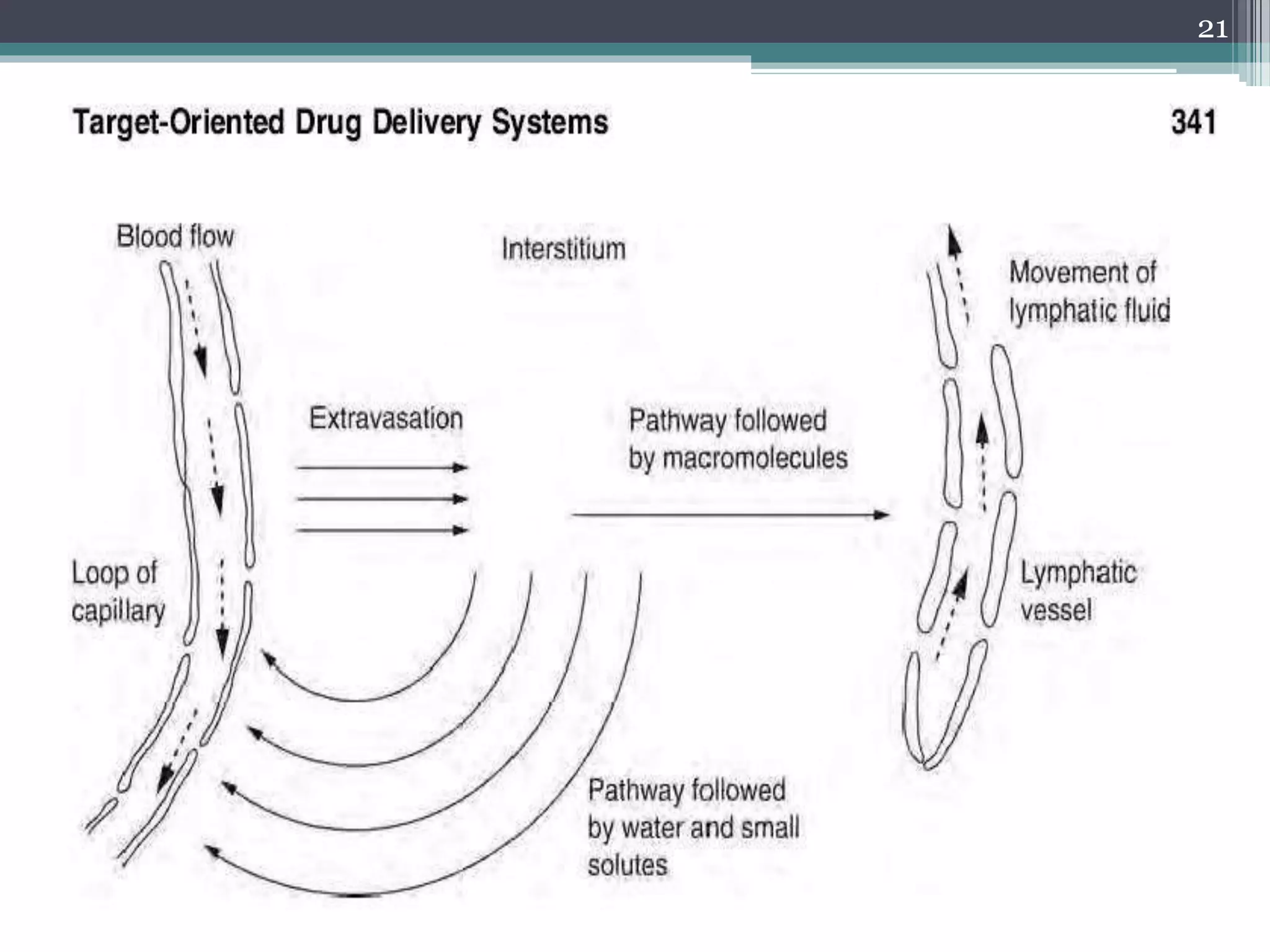
Lymphatic Uptake
• Following extravasation drug molecules can either
reabsorb into the blood stream directly or enter into the
lymphatic system and return with the lymph to the blood
circulation
• Also drugs administered by subcutaneous intracellular
transdermal peritoneal routes can reach the systemic
circulation by lymphatic system
20
21
• Factors know to influence the clearance of drugs from
interstitial sites
 Route of administration
 Size and surface characteristics of particles
 Formulation medium
 The composition and
 pH of the interstitial fluid and
 Disease within the interstitium
• The direct delivery of drugs into lymphatics has been
proposed as a potential approach to kill malignant lymphoid
cells located in lymph nodes
22
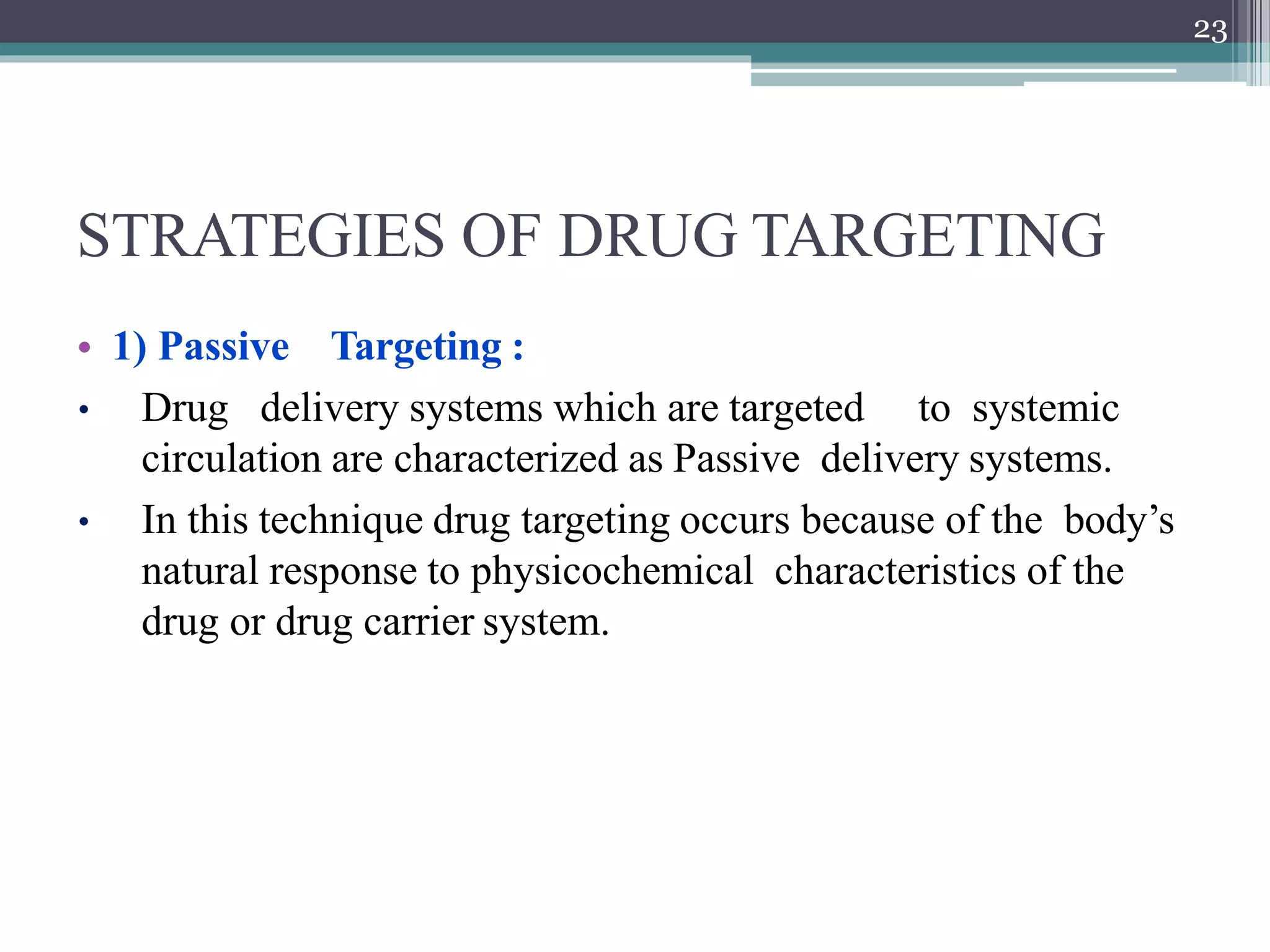
STRATEGIES OF DRUG TARGETING
• 1) Passive Targeting :
• Drug delivery systems which are targeted to systemic
circulation are characterized as Passive delivery systems.
• In this technique drug targeting occurs because of the body’s
natural response to physicochemical characteristics of the
drug or drug carrier system.
23
24
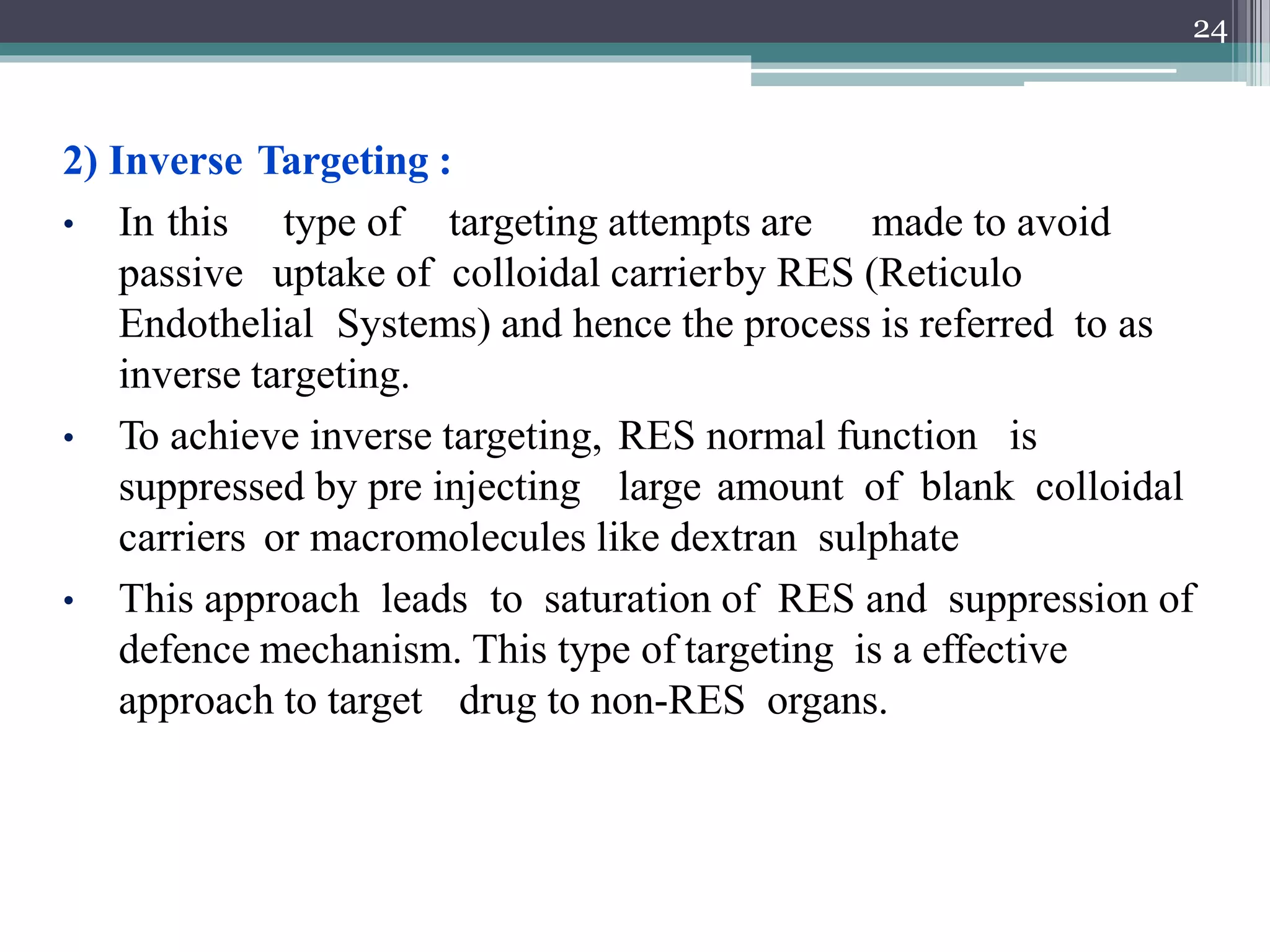
2) Inverse Targeting :
• In this type of targeting attempts are made to avoid
passive uptake of colloidal carrierby RES (Reticulo
Endothelial Systems) and hence the process is referred to as
inverse targeting.
• To achieve inverse targeting, RES normal function is
suppressed by pre injecting large amount of blank colloidal
carriers or macromolecules like dextran sulphate
• This approach leads to saturation of RES and suppression of
defence mechanism. This type of targeting is a effective
approach to target drug to non-RES organs.
25
3)Active Targeting :
• In this approach carrier system bearing drug
reaches to specific site on the basis of modification
made onits surface ratherthan natural uptake by RES.
• Surface modification technique include coating of surface
with eithera bioadhesive, nonionic surfactant or specific
cell or tissue antibodies (i.e. monoclonal antibodies) or by
albumin protein.
3 Types
o First order targeting (organ compartmentalization).
o Second order targeting (cellular targeting).
o Third order targeting (intracellular targeting).
26
4) Ligand Mediated Targeting : Achieved using specific
mechanisms such as receptor dependent uptake of natural LDL
particles and synthetic lipid microemulsions of partially
reconstituted LDL particles coated with the apoproteins.
5) Physical Targeting :
• In this type of targeting some characteristics of environment
changeslike pH, temperature, light intensity,electric field,
ionic strength small and even specific stimuli like glucose
concentration are used to localize the drug carrier to
predetermined site.
• This approach was found exceptional for tumour targeting as
well as cytosolic delivery of entrapped drug or genetic material.
27
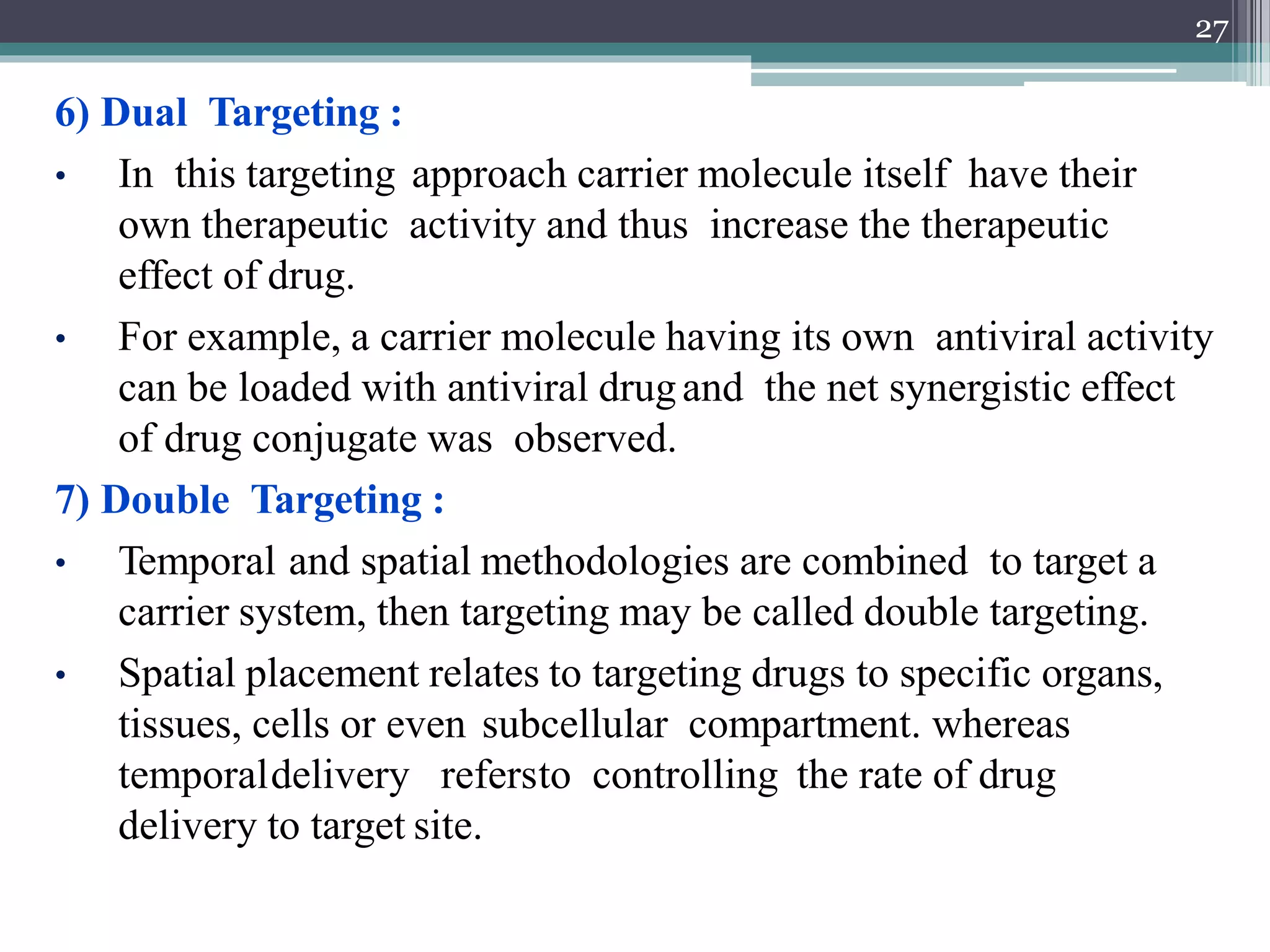
6) Dual Targeting :
• In this targeting approach carrier molecule itself have their
own therapeutic activity and thus increase the therapeutic
effect of drug.
• For example, a carrier molecule having its own antiviral activity
can be loaded with antiviral drugand the net synergistic effect
of drug conjugate was observed.
7) Double Targeting :
• Temporal and spatial methodologies are combined to target a
carrier system, then targeting may be called double targeting.
• Spatial placement relates to targeting drugs to specific organs,
tissues, cells or even subcellular compartment. whereas
temporaldelivery refersto controlling the rate of drug
delivery to target site.
References:
• S.P Yyas and R.K Khar Controlled drug Delivery
concepts and advances Vallabh prakashan first edition
• www.wikipedia.com
28
Thank You
29

Targeted drug delivery system

  • 1.
    Targeted Drug DeliverySystem FACILITATED TO: Dr. Anita Desai HOD Dept.of Pharmaceutics H.S.K.College of Pharmacy Bagalkot PRESENTED BY: Ismail Makanadar MPhram 2nd Sem Dept.of Pharmaceutics H.S.K.College of Pharmacy Bagalkot 1
  • 2.
    Contents • Introduction • Concept •Ideal Characters • Advantages • Carrier or markers • Events and Biological Processes 2
  • 3.
    INTRODUCTION : ‘Targeted drugdelivery system is a special form of drug delivery system where the medicament is selectively targeted or delivered only to its site of action or absorption and not to the non-target organs or tissues or cells.’ • It is a method of delivering medication to a patient in a manner that increases the concentration of the medication in some parts of the body relative to others. • Targeted drug delivery seeks to concentrate the medication in the tissues of interest while reducing the relative concentration of the medication in the remaining tissues. • This improves efficacy and reduce side effects. 3
  • 4.
    OBJECTIVE : •To achievea desired pharmacological response at a selected sites without undesirable interaction at other sites, there by the drug have a specific action with minimum side effects & better therapeutic index. •Ex- In cancer chemotherapy and enzyme replacement therapy. 4
  • 5.
    REASON FOR DRUGTARGETING : 5
  • 6.
    IDEAL CHARACTERISTICS : •It should be nontoxic, biocompatible, biodegradable, and physicochemical stable invivo and invitro. • Restrict drug distribution to target cells or tissues or organs and should have uniform capillary distribution. • Controllable and predicate rate of drug release. • Drug release does not effect the drug action. • Therapeutic amount of drug release. • Carriers used must be bio-degradable or readily eliminated from the body without any problem and no carrier induced modulation of diseased state. • The preparation of the delivery system should be easy or reasonably simple, reproductive and cost effective. 6
  • 7.
    ADVANTAGES : • Drugadministration protocols may be simplified. • Toxicity is reduced by delivering a drug to its target site, there by reducing harmful systemic effects. • Drug can be administered in a smaller dose to produce the desire effect. • Avoidance of hepatic first pass metabolism. • Enhancement of the absorption of target molecules such as peptides and particulates. • Dose is less compared to conventional drug delivery system. • No peak and valley plasma concentration. • Selective targeting to infections cells that compareto normal cells. 7
  • 8.
    CARRIER OR MARKERS: • Targeted drug delivery can be achieved by using carrier system. • Carrier is one of thespecial molecule or system essentially required for effective transportation of loaded drug up to the pre selected sites. • They are engineered vectors, which retain drug inside or onto them either via encapsulation and/ or via spacer moiety and transport or deliver it into vicinity of target cell. • Pharmaceutical carriers : Polymers Microcapsules Microparticles Lipoproteins Liposomes Micelles 8
  • 9.
    Events and biologicalprocess involved in drug targeting. Cellular Uptake and Processing Transport across the epithelial barrier Extravasation Lymphatic Uptake 9
  • 10.
    Cellular Uptake andProcessing • Following administration low molar mass drugs can enter into or pass through various cells by simple diffusion process. • Targeted drug delivery usually have macro molecular assemblies hence cannot enter by such simple process. Hence take up by a process called ENDOCYTOSIS • Steps involved : • Internalization of the plasma membrane • Concomitant with engulfment of extracellular material 10
  • 11.
  • 12.
    Compared with phagocytosispinocytosis is a universal phenomenon in all the cells pinocytosis does not require any external stimulus Pinocytosis is divided into two types:  Fluid phases pinocytosis  Adsorptive pinocytosis Compared with phagocytosis fluid phase pinocytic capture of molecules is relatively slower being directly proportional to the concentration and size dependant 12
  • 13.
    Transport across theepithelial barrier • The oral, buccal, nasal, vaginal, and rectal cavities are internally lined with one or more layers of epithelial cells • Depending on the position and function in the body epithelial cells can be varied forms • Three layer physiology: • Epithelial • Lamia propria • Basal lamina • Low molar mass drugs cross the above by passive difussion carrier mediated systems selective and non- selective endocytosis 13
  • 14.
     The polarmaterials diffuse through tight junctions of epithelial cells  Passive transport is usually higher in damaged mucosa whereas active transport depends on structural integrity of epithelial cells  Positively charged particles showed increased uptake than negatively charged counterparts.  Absoption of drugs from buccal via transcellular and paracellular later being dominant • Ex-vaginal cavity could be an effective delivery site for certain pharmaceuticals Such as calcitonin for the treatment of postmenopausal osteoporosis • It was demonstrated that when delivered vaginally first undergo uterine pass effect suggesting that the vaginal route can be useed to target to the uterus 14
  • 15.
    Extravasation • Many diseasesresult from the dysfunction of cells located outside the cardiovascular system thus for a drug to exert its therapeutic effects it must exit from the central circulation this process of trans vascular exchange is called Extravasation which is governed by blood capillary walls • Factors that control permeability of capillaries • Structure of the capillary wall • Pathological condition • Rate of blood and lymph supply • Physicochemical factors of drug 15
  • 16.
    • The structureof the blood capillary varies in different organs tissues. • It consists of a single layer of endothelial cells joined together by intercellular juctions • Depending on the morphology and continuity of the endothelial layer and the basement membrane blood capillaries are divided into • Continuous • Fenestraded • Sinusoidal 16
  • 17.
  • 18.
     Continuous capillariesare common and widely distributed in the body exhibit tight inter endothelial junctions and an uninterrupted basement membrane  Fenestrated capillaries shows interendothelial gaps of 20- 80nm  Sinusoidal capillaries show inter endothelial gaps of 150nm Depending on the tissue or organ the basal membrane is either absent ex-liver or present in discontinuous ex-spleen and bone marrow  Macromolecules can transverse the normal endothelium by passive process such as nonspecific fluid phase trans capillary Pinocytosis and passage through inter endothelial junctions gaps or fenestrate or by receptor-mediated transport systems 18
  • 19.
    • Organs suchas the lung with very large surface areas have a proportionately large total permeability and consequently a high extravasation • Depends on charge shape, size, HLB, characteristics of macromolecules • The endothelium of brain is the strongest of all endothelia formed by continous nonfenestrated endothelial cells which show no pinocytic activity • Soluble macromolecules permeate the endothelial barrier more readily than particulate macromolecules the rate of movement of fluid across the endothelium appears to be directly related to the diff between the hydrostatic and osmotic forces 19
  • 20.
    Lymphatic Uptake • Followingextravasation drug molecules can either reabsorb into the blood stream directly or enter into the lymphatic system and return with the lymph to the blood circulation • Also drugs administered by subcutaneous intracellular transdermal peritoneal routes can reach the systemic circulation by lymphatic system 20
  • 21.
  • 22.
    • Factors knowto influence the clearance of drugs from interstitial sites  Route of administration  Size and surface characteristics of particles  Formulation medium  The composition and  pH of the interstitial fluid and  Disease within the interstitium • The direct delivery of drugs into lymphatics has been proposed as a potential approach to kill malignant lymphoid cells located in lymph nodes 22
  • 23.
    STRATEGIES OF DRUGTARGETING • 1) Passive Targeting : • Drug delivery systems which are targeted to systemic circulation are characterized as Passive delivery systems. • In this technique drug targeting occurs because of the body’s natural response to physicochemical characteristics of the drug or drug carrier system. 23
  • 24.
    24 2) Inverse Targeting: • In this type of targeting attempts are made to avoid passive uptake of colloidal carrierby RES (Reticulo Endothelial Systems) and hence the process is referred to as inverse targeting. • To achieve inverse targeting, RES normal function is suppressed by pre injecting large amount of blank colloidal carriers or macromolecules like dextran sulphate • This approach leads to saturation of RES and suppression of defence mechanism. This type of targeting is a effective approach to target drug to non-RES organs.
  • 25.
    25 3)Active Targeting : •In this approach carrier system bearing drug reaches to specific site on the basis of modification made onits surface ratherthan natural uptake by RES. • Surface modification technique include coating of surface with eithera bioadhesive, nonionic surfactant or specific cell or tissue antibodies (i.e. monoclonal antibodies) or by albumin protein. 3 Types o First order targeting (organ compartmentalization). o Second order targeting (cellular targeting). o Third order targeting (intracellular targeting).
  • 26.
    26 4) Ligand MediatedTargeting : Achieved using specific mechanisms such as receptor dependent uptake of natural LDL particles and synthetic lipid microemulsions of partially reconstituted LDL particles coated with the apoproteins. 5) Physical Targeting : • In this type of targeting some characteristics of environment changeslike pH, temperature, light intensity,electric field, ionic strength small and even specific stimuli like glucose concentration are used to localize the drug carrier to predetermined site. • This approach was found exceptional for tumour targeting as well as cytosolic delivery of entrapped drug or genetic material.
  • 27.
    27 6) Dual Targeting: • In this targeting approach carrier molecule itself have their own therapeutic activity and thus increase the therapeutic effect of drug. • For example, a carrier molecule having its own antiviral activity can be loaded with antiviral drugand the net synergistic effect of drug conjugate was observed. 7) Double Targeting : • Temporal and spatial methodologies are combined to target a carrier system, then targeting may be called double targeting. • Spatial placement relates to targeting drugs to specific organs, tissues, cells or even subcellular compartment. whereas temporaldelivery refersto controlling the rate of drug delivery to target site.
  • 28.
    References: • S.P Yyasand R.K Khar Controlled drug Delivery concepts and advances Vallabh prakashan first edition • www.wikipedia.com 28
  • 29.