Bacterial metabolisms and nutrient acquisition.Lecture (2).pdf
1.
Bacterial Metabolism andNutrient
Acquisition
Advanced Bacteriology (630)
Prepared by
Dr. Mona Albureikan
2.
WHAT IS BACTERIALMETABOLISM?
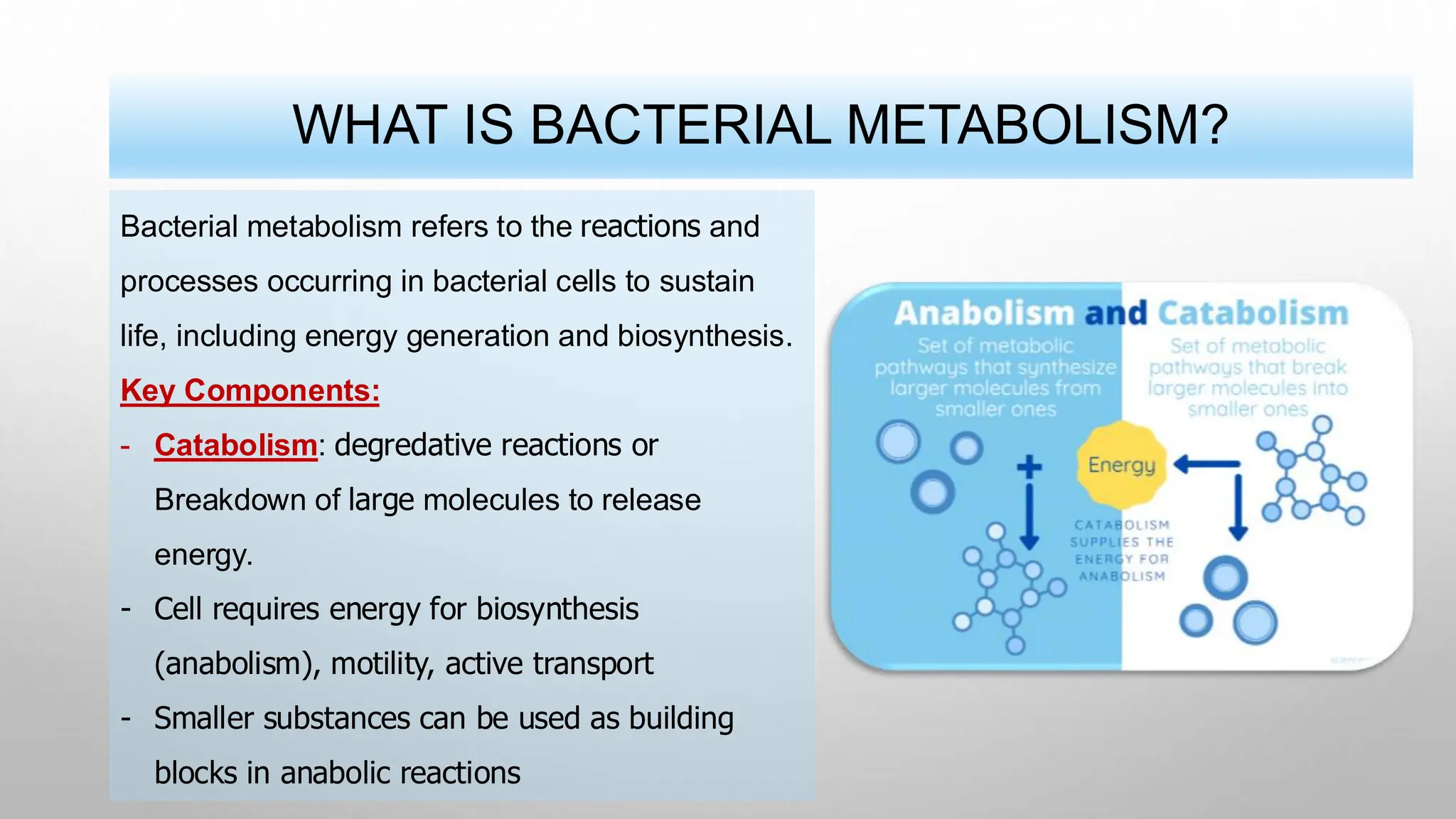
Bacterial metabolism refers to the reactions and
processes occurring in bacterial cells to sustain
life, including energy generation and biosynthesis.
Key Components:
- Catabolism: degredative reactions or
Breakdown of large molecules to release
energy.
- Cell requires energy for biosynthesis
(anabolism), motility, active transport
- Smaller substances can be used as building
blocks in anabolic reactions
3.
WHAT IS BACTERIALMETABOLISM?
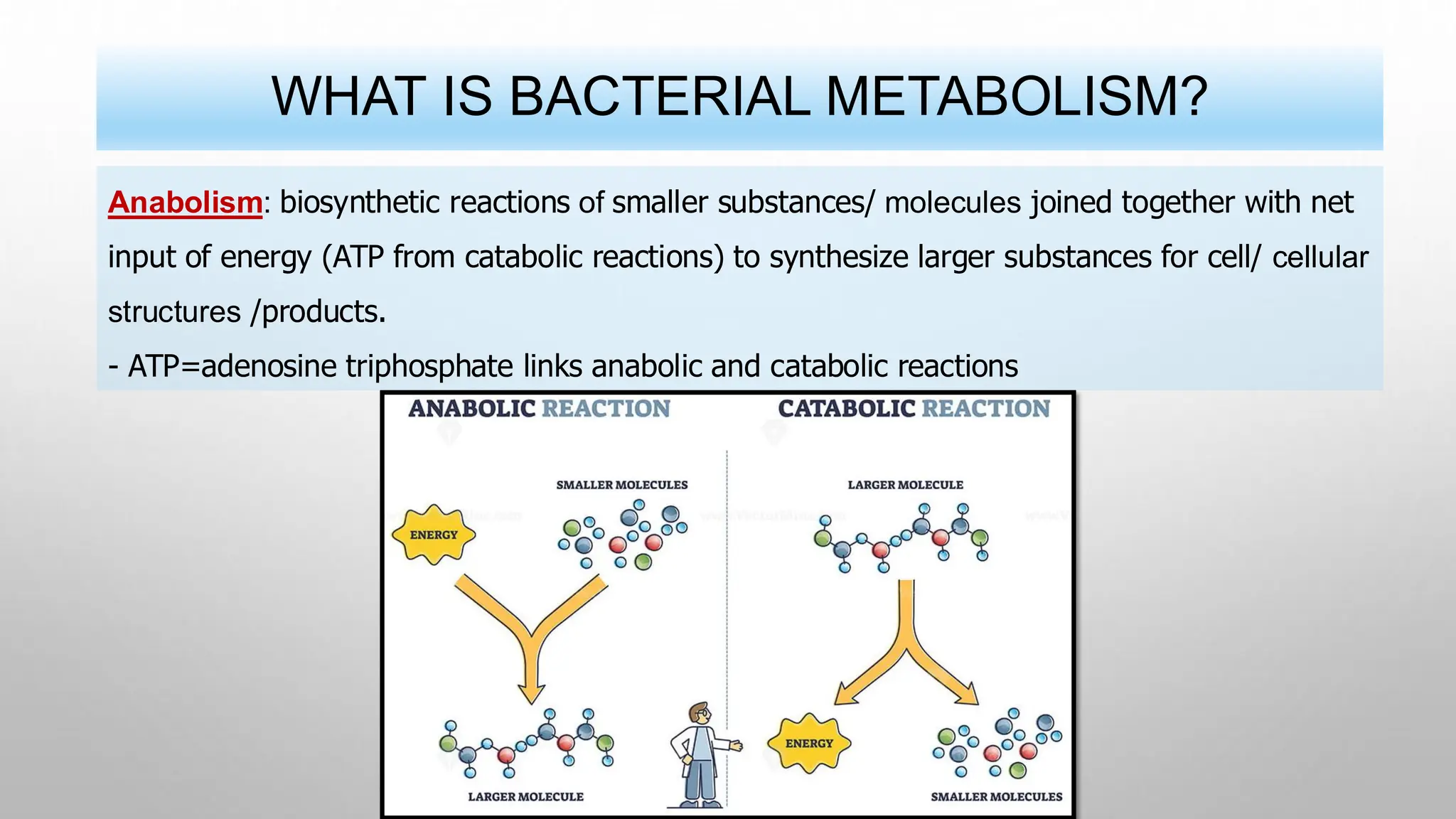
Anabolism: biosynthetic reactions of smaller substances/ molecules joined together with net
input of energy (ATP from catabolic reactions) to synthesize larger substances for cell/ cellular
structures /products.
- ATP=adenosine triphosphate links anabolic and catabolic reactions
4.
ENERGY CAPTURE VIAELECTRON TRANSFER
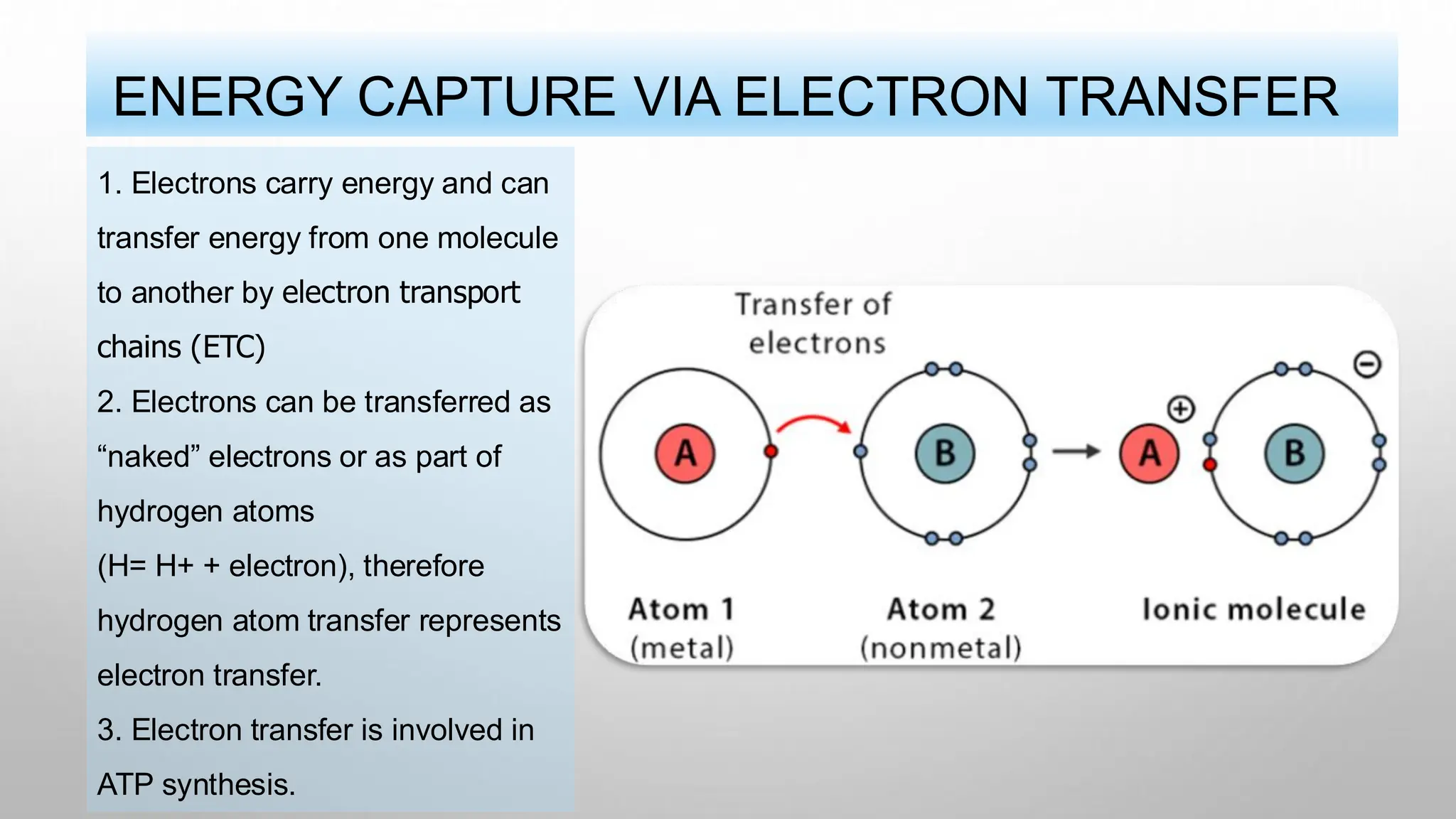
1. Electrons carry energy and can
transfer energy from one molecule
to another by electron transport
chains (ETC)
2. Electrons can be transferred as
“naked” electrons or as part of
hydrogen atoms
(H= H+ + electron), therefore
hydrogen atom transfer represents
electron transfer.
3. Electron transfer is involved in
ATP synthesis.
5.
TYPES OF ELECTRONTRANSFER
1.Oxidation: loss of electrons to an electron acceptor
2. Reduction: gain of electrons from an electron donor
3. Redox reactions: one substance loses electrons and another substance accepts those electrons
6.
TYPES OF ELECTRONTRANSFER
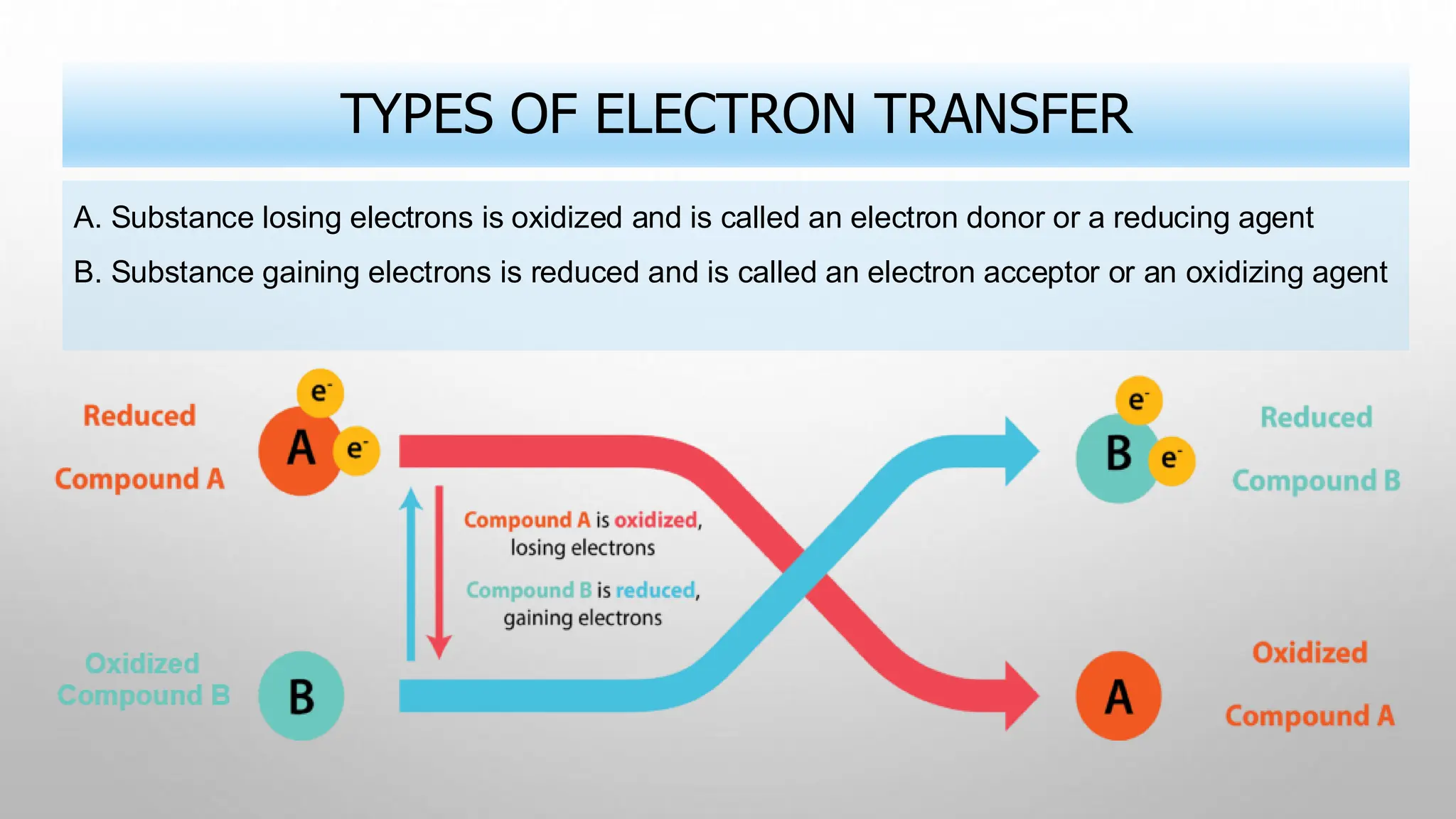
A. Substance losing electrons is oxidized and is called an electron donor or a reducing agent
B. Substance gaining electrons is reduced and is called an electron acceptor or an oxidizing agent
7.
TYPES OF ELECTRONTRANSFER
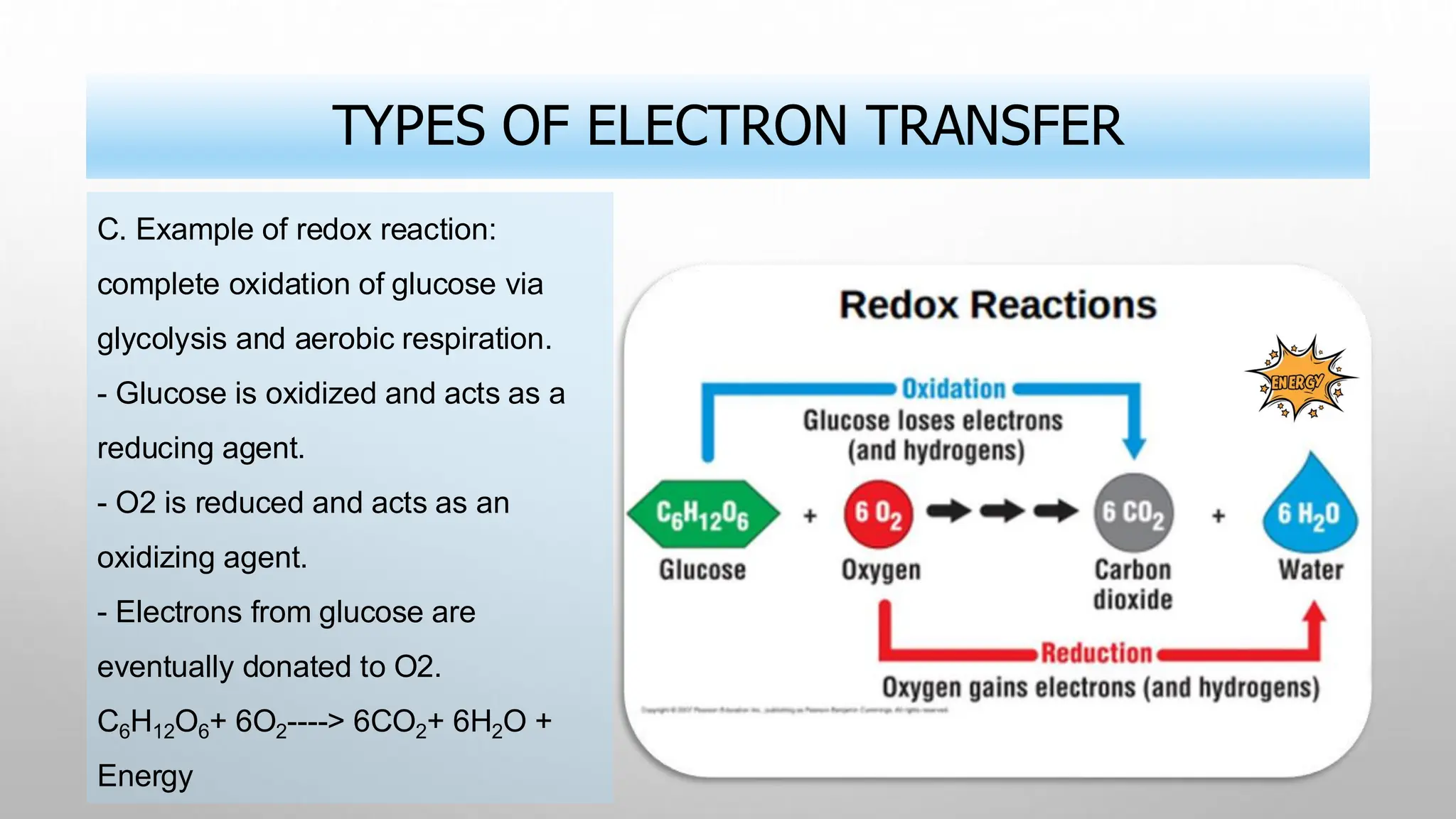
C. Example of redox reaction:
complete oxidation of glucose via
glycolysis and aerobic respiration.
- Glucose is oxidized and acts as a
reducing agent.
- O2 is reduced and acts as an
oxidizing agent.
- Electrons from glucose are
eventually donated to O2.
C6H12O6+ 6O2----> 6CO2+ 6H2O +
Energy
8.
TYPES OF ELECTRONTRANSFER
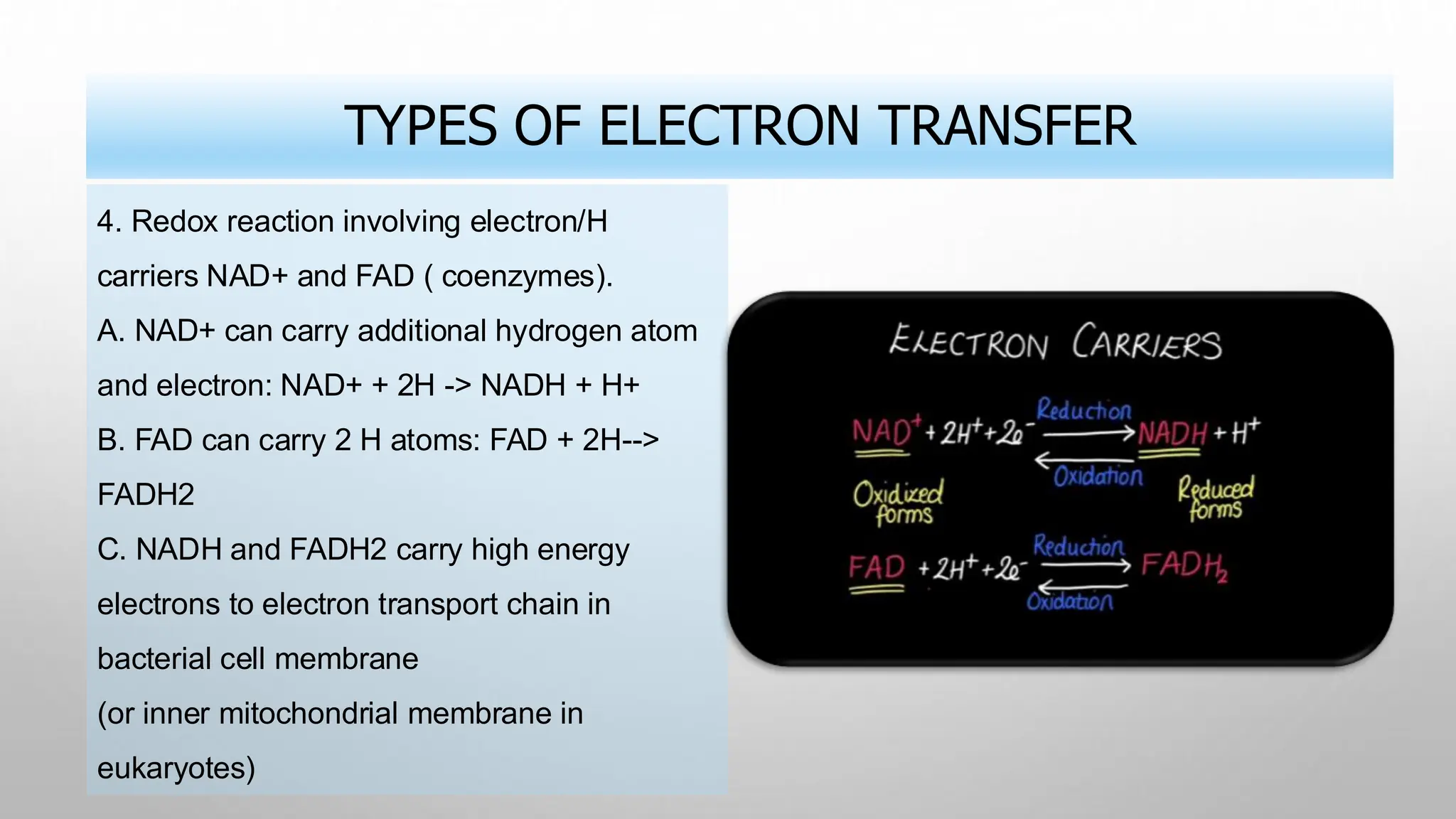
4. Redox reaction involving electron/H
carriers NAD+ and FAD ( coenzymes).
A. NAD+ can carry additional hydrogen atom
and electron: NAD+ + 2H -> NADH + H+
B. FAD can carry 2 H atoms: FAD + 2H-->
FADH2
C. NADH and FADH2 carry high energy
electrons to electron transport chain in
bacterial cell membrane
(or inner mitochondrial membrane in
eukaryotes)
9.
METABOLIC REACTIONS INCELLS REQUIRES
1. Metabolic reactions occur too slowly in cells to
sustain life
2. Increasing temperature to increase reaction rates
would kill cells (denaturation proteins/DNA)
3. Therefore, all cells have protein catalysts called
enzymes to increase reaction rates
a. Catalysts: substances that lower the activation
energy of chemical reactions
b. Activation energy: energy required to start
chemical reactions
10.
ENZYME STRUCTURE ANDFUNCTION
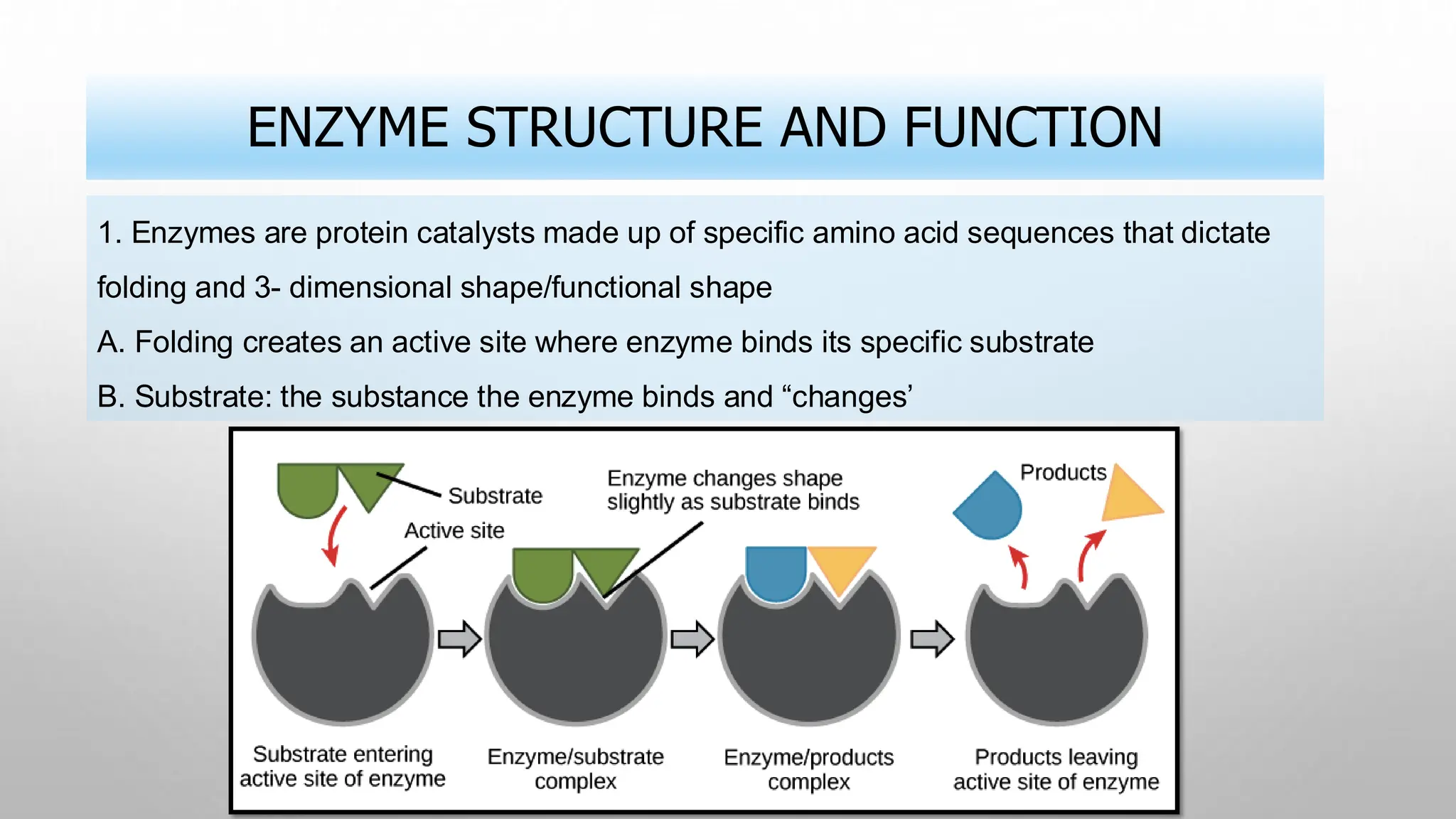
1. Enzymes are protein catalysts made up of specific amino acid sequences that dictate
folding and 3- dimensional shape/functional shape
A. Folding creates an active site where enzyme binds its specific substrate
B. Substrate: the substance the enzyme binds and “changes’
11.
ENZYME STRUCTURE ANDFUNCTION
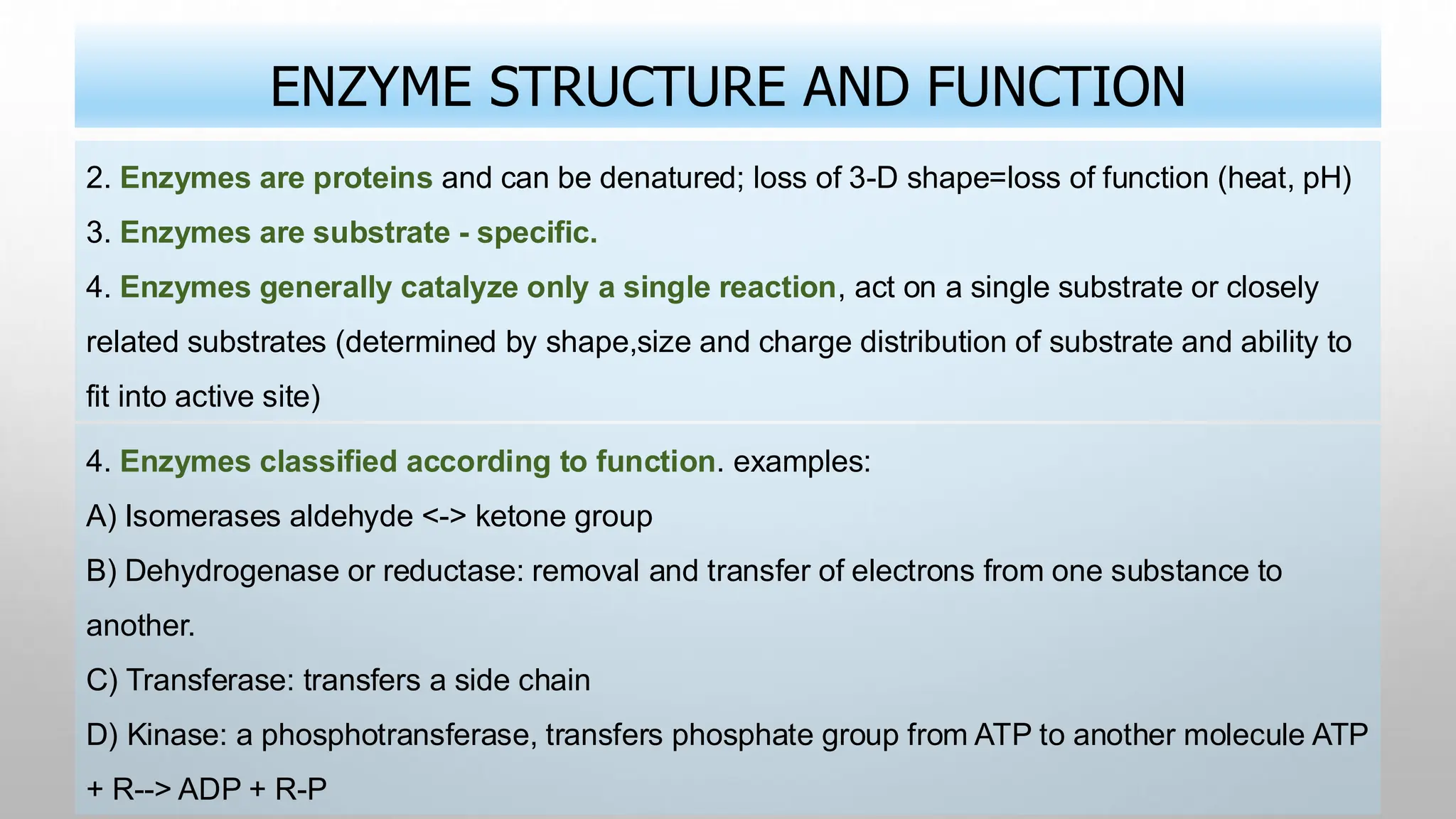
2. Enzymes are proteins and can be denatured; loss of 3-D shape=loss of function (heat, pH)
3. Enzymes are substrate - specific.
4. Enzymes generally catalyze only a single reaction, act on a single substrate or closely
related substrates (determined by shape,size and charge distribution of substrate and ability to
fit into active site)
4. Enzymes classified according to function. examples:
A) Isomerases aldehyde <-> ketone group
B) Dehydrogenase or reductase: removal and transfer of electrons from one substance to
another.
C) Transferase: transfers a side chain
D) Kinase: a phosphotransferase, transfers phosphate group from ATP to another molecule ATP
+ R--> ADP + R-P
12.
ENZYME STRUCTURE ANDFUNCTION
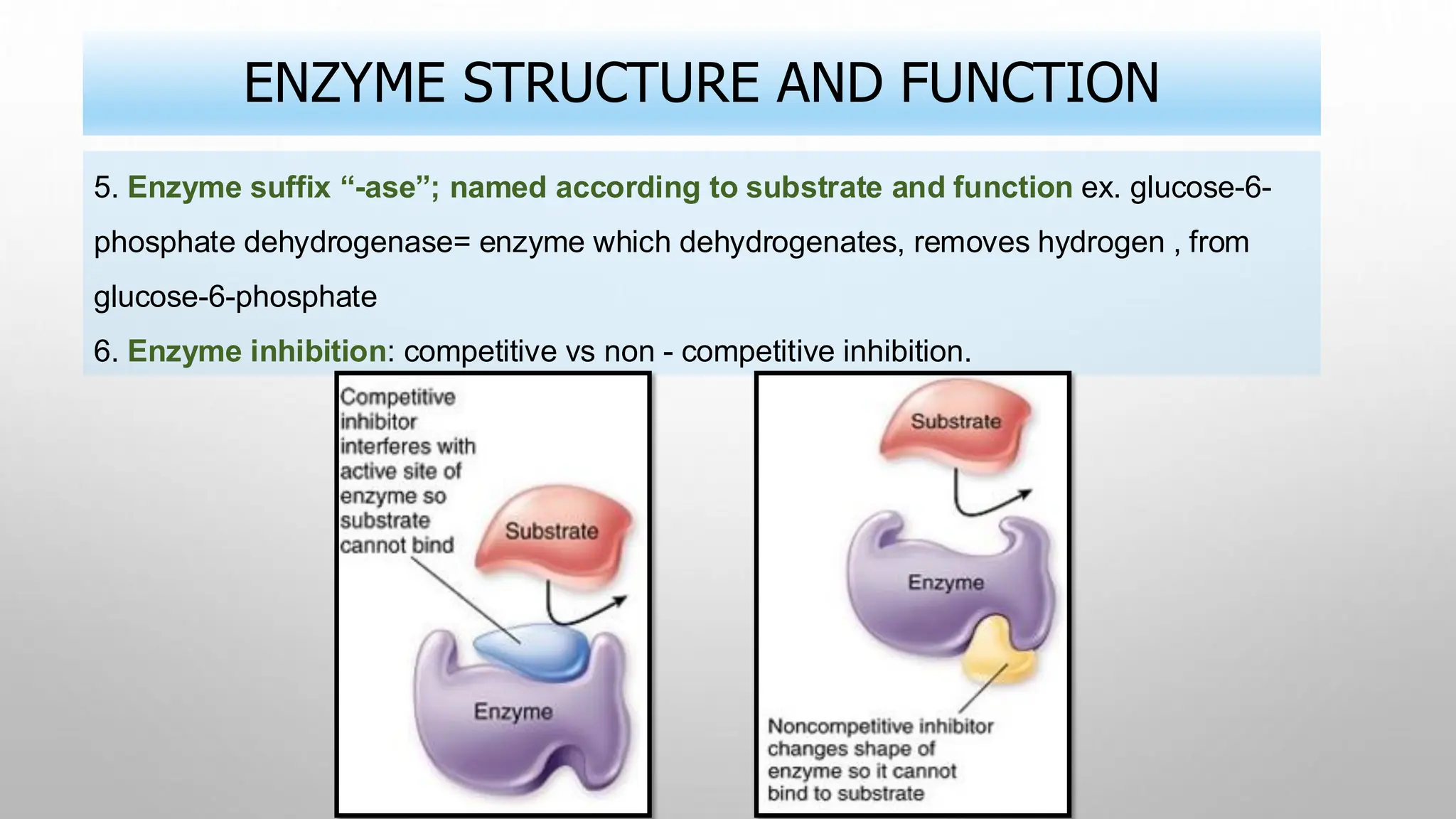
5. Enzyme suffix “-ase”; named according to substrate and function ex. glucose-6-
phosphate dehydrogenase= enzyme which dehydrogenates, removes hydrogen , from
glucose-6-phosphate
6. Enzyme inhibition: competitive vs non - competitive inhibition.
13.
ENZYME STRUCTURE ANDFUNCTION
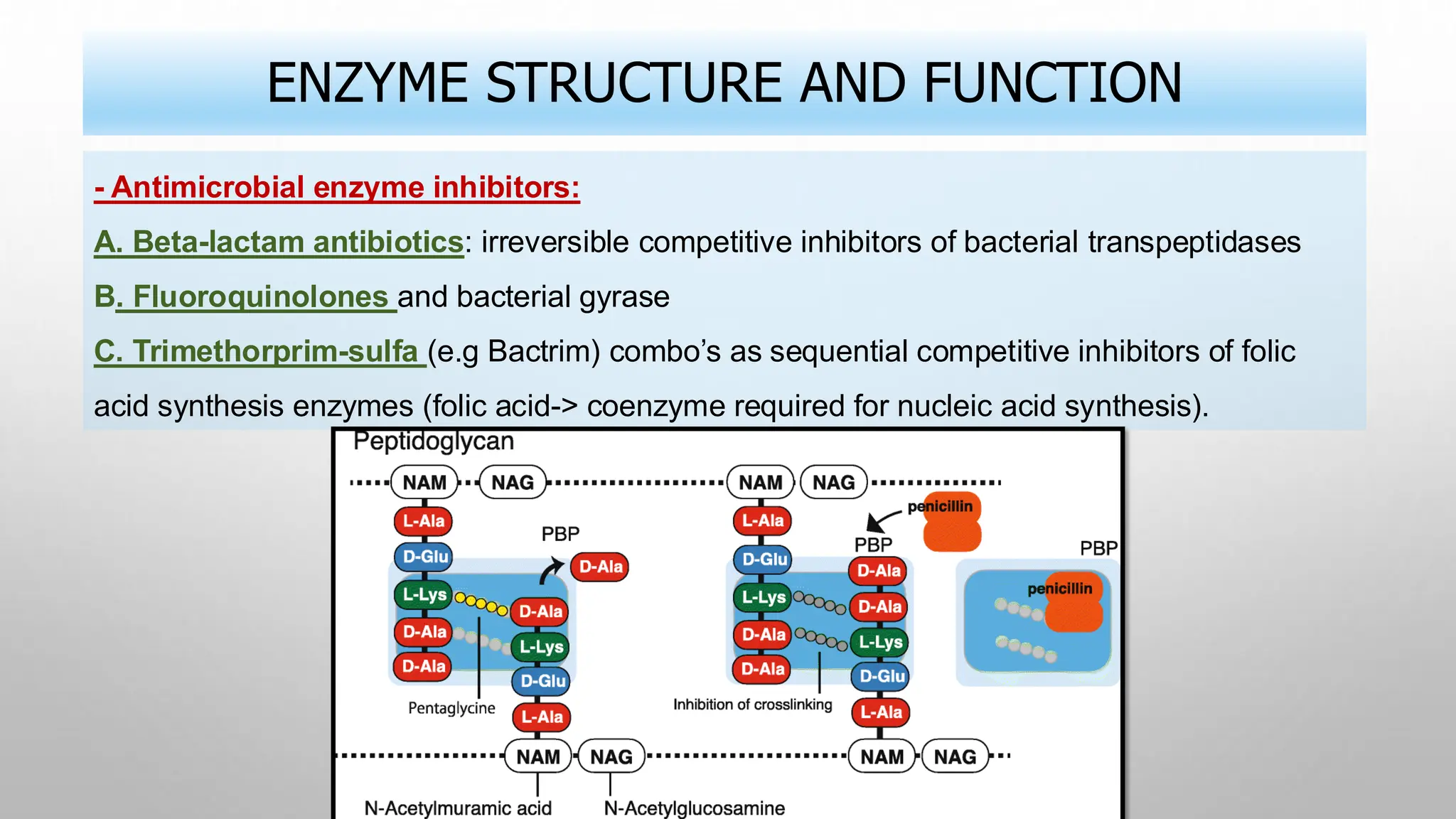
- Antimicrobial enzyme inhibitors:
A. Beta-lactam antibiotics: irreversible competitive inhibitors of bacterial transpeptidases
B. Fluoroquinolones and bacterial gyrase
C. Trimethorprim-sulfa (e.g Bactrim) combo’s as sequential competitive inhibitors of folic
acid synthesis enzymes (folic acid-> coenzyme required for nucleic acid synthesis).
14.
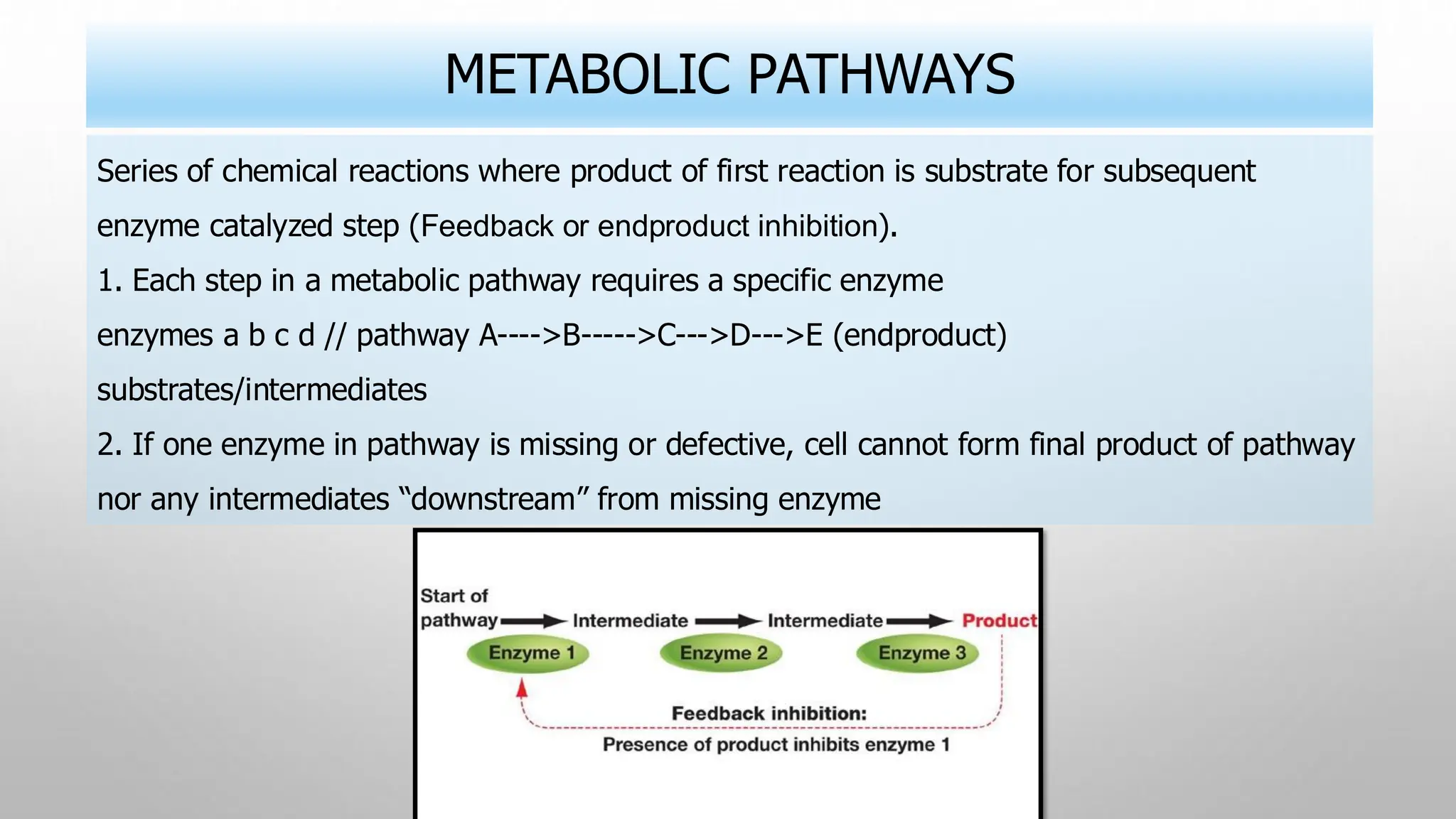
METABOLIC PATHWAYS
Series ofchemical reactions where product of first reaction is substrate for subsequent
enzyme catalyzed step (Feedback or endproduct inhibition).
1. Each step in a metabolic pathway requires a specific enzyme
enzymes a b c d // pathway A---->B----->C--->D--->E (endproduct)
substrates/intermediates
2. If one enzyme in pathway is missing or defective, cell cannot form final product of pathway
nor any intermediates “downstream” from missing enzyme
15.
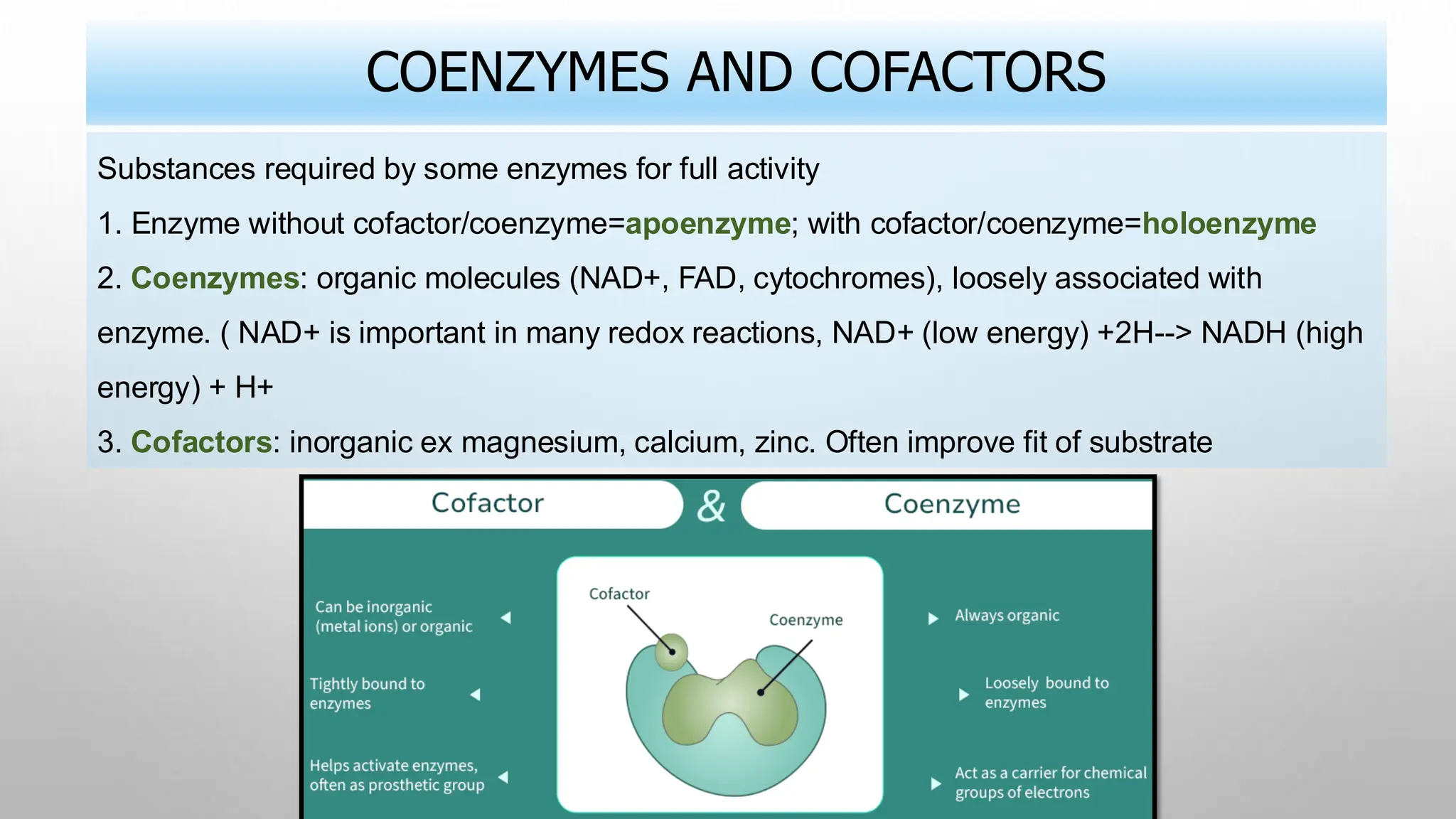
COENZYMES AND COFACTORS
Substancesrequired by some enzymes for full activity
1. Enzyme without cofactor/coenzyme=apoenzyme; with cofactor/coenzyme=holoenzyme
2. Coenzymes: organic molecules (NAD+, FAD, cytochromes), loosely associated with
enzyme. ( NAD+ is important in many redox reactions, NAD+ (low energy) +2H--> NADH (high
energy) + H+
3. Cofactors: inorganic ex magnesium, calcium, zinc. Often improve fit of substrate
16.
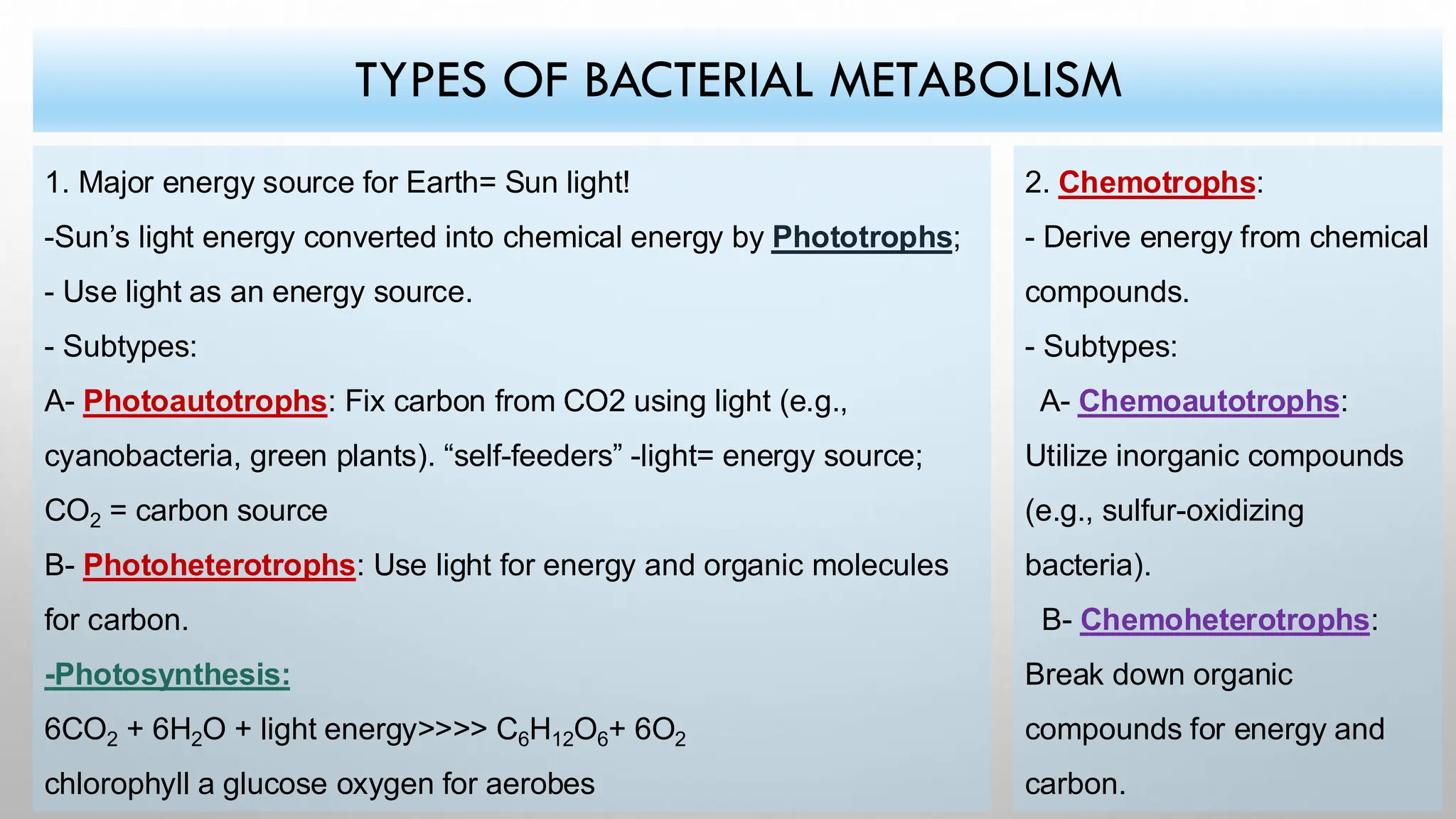
TYPES OF BACTERIALMETABOLISM
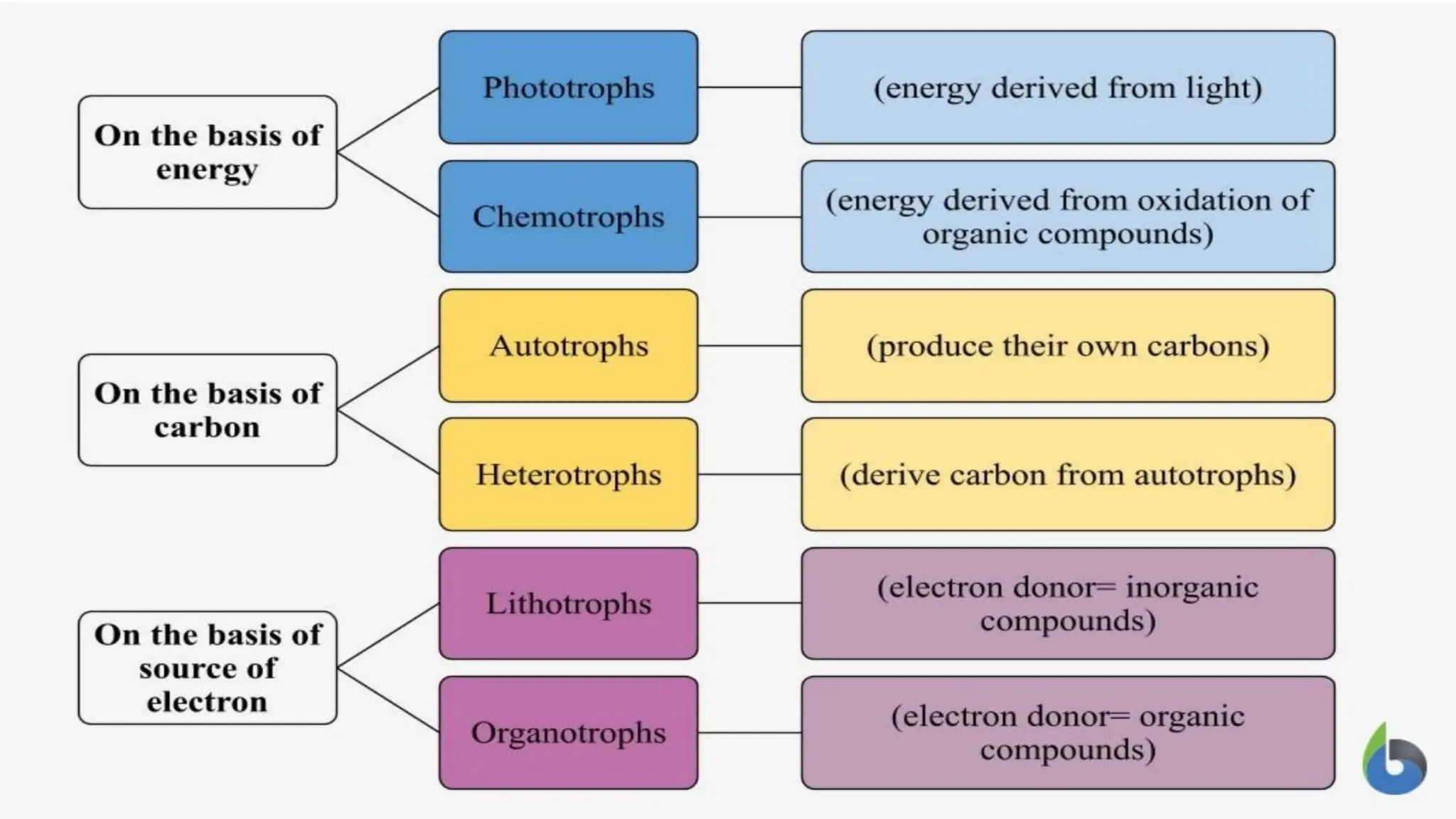
1. Major energy source for Earth= Sun light!
-Sun’s light energy converted into chemical energy by Phototrophs;
- Use light as an energy source.
- Subtypes:
A- Photoautotrophs: Fix carbon from CO2 using light (e.g.,
cyanobacteria, green plants). “self-feeders” -light= energy source;
CO2 = carbon source
B- Photoheterotrophs: Use light for energy and organic molecules
for carbon.
-Photosynthesis:
6CO2 + 6H2O + light energy>>>> C6H12O6+ 6O2
chlorophyll a glucose oxygen for aerobes
2. Chemotrophs:
- Derive energy from chemical
compounds.
- Subtypes:
A- Chemoautotrophs:
Utilize inorganic compounds
(e.g., sulfur-oxidizing
bacteria).
B- Chemoheterotrophs:
Break down organic
compounds for energy and
carbon.
17.
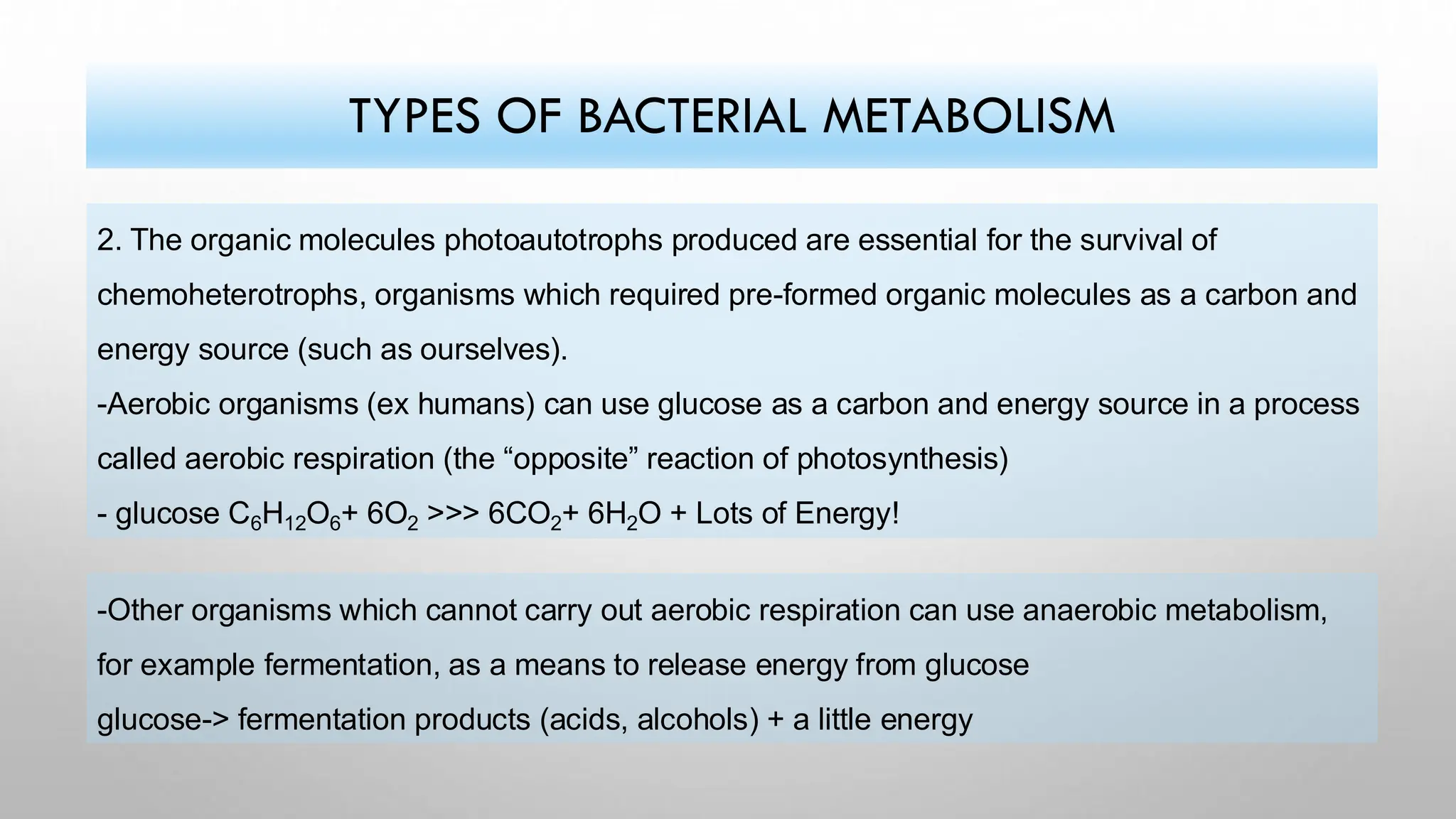
2. The organicmolecules photoautotrophs produced are essential for the survival of
chemoheterotrophs, organisms which required pre-formed organic molecules as a carbon and
energy source (such as ourselves).
-Aerobic organisms (ex humans) can use glucose as a carbon and energy source in a process
called aerobic respiration (the “opposite” reaction of photosynthesis)
- glucose C6H12O6+ 6O2 >>> 6CO2+ 6H2O + Lots of Energy!
TYPES OF BACTERIAL METABOLISM
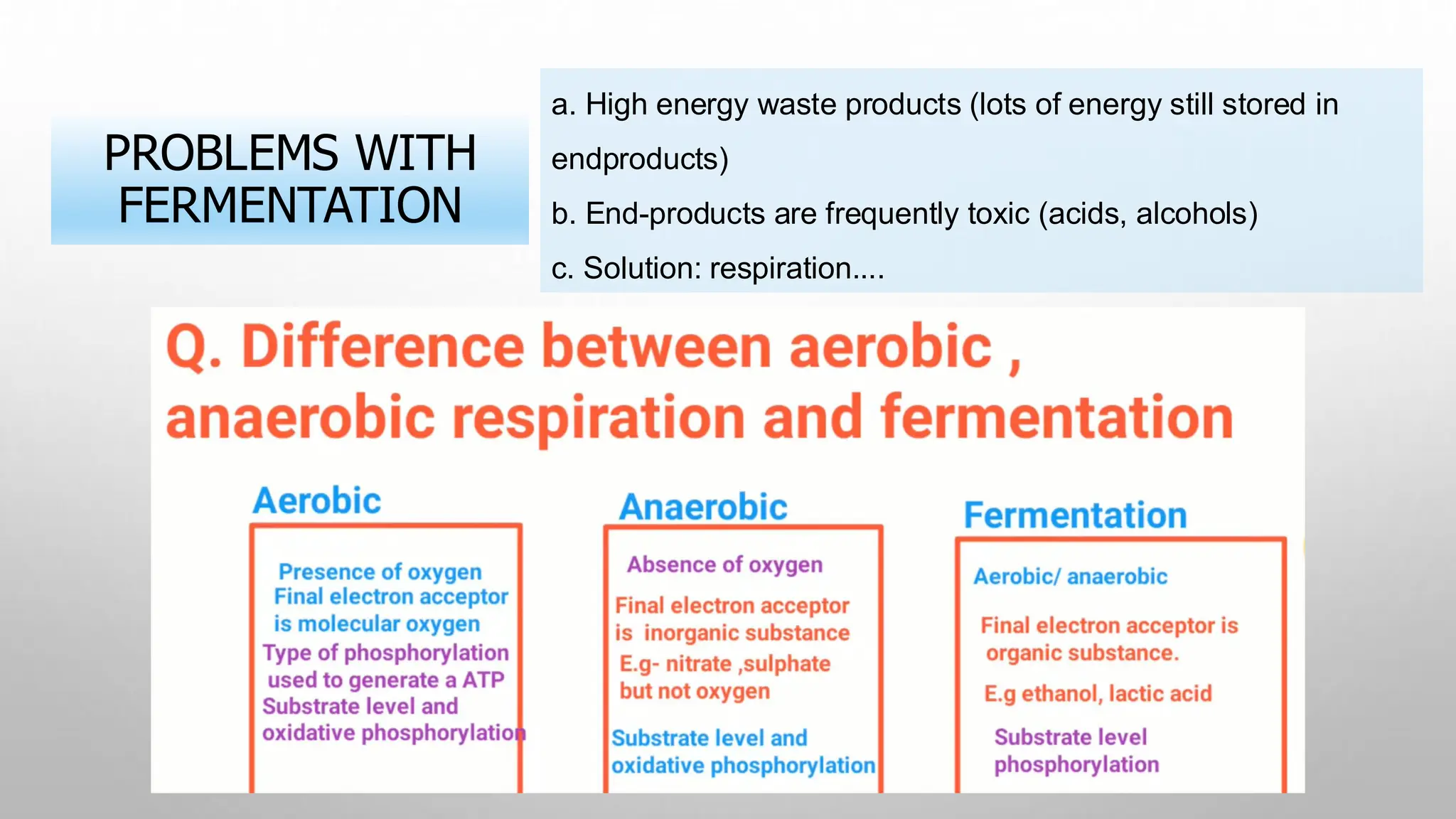
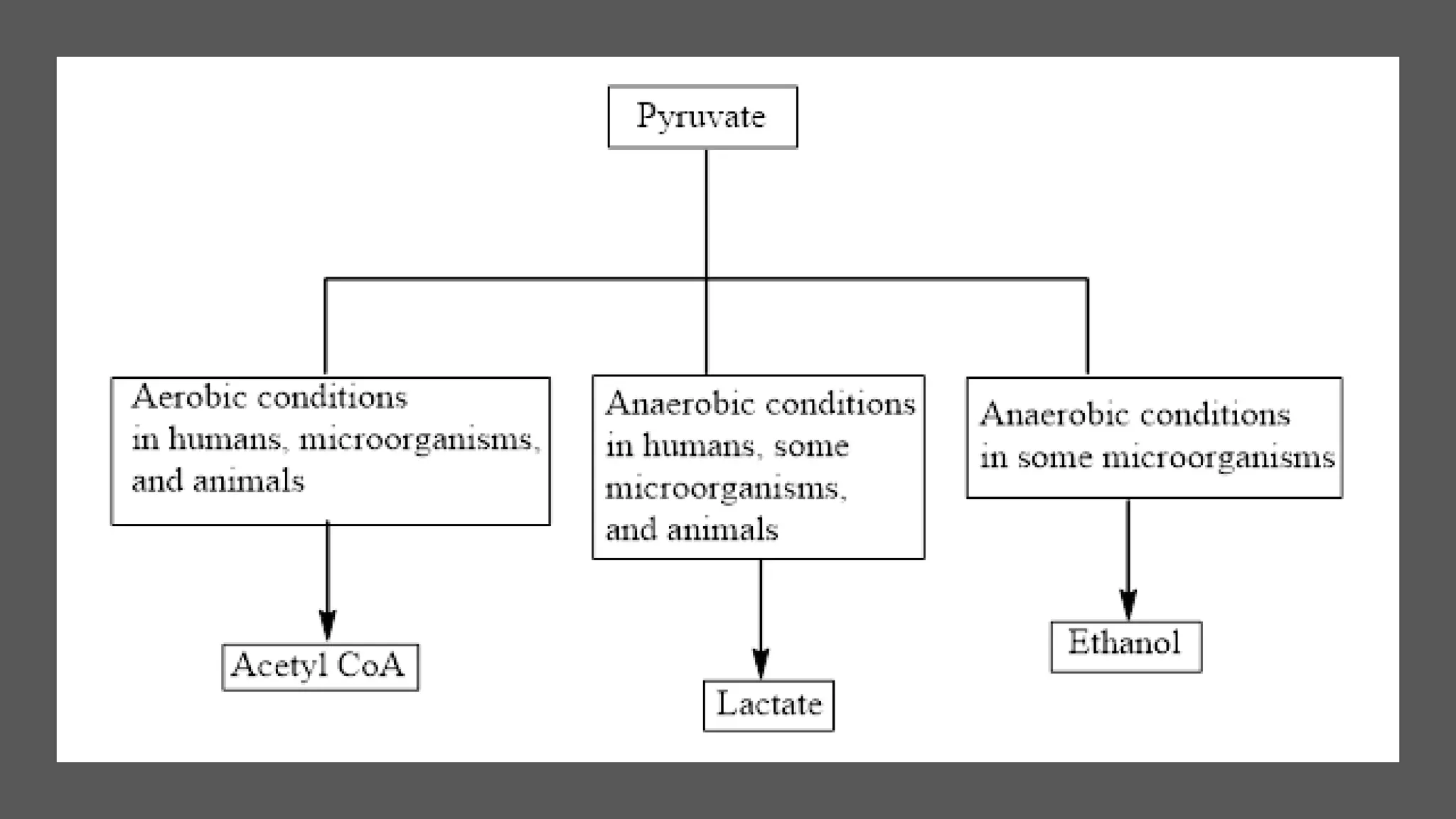
-Other organisms which cannot carry out aerobic respiration can use anaerobic metabolism,
for example fermentation, as a means to release energy from glucose
glucose-> fermentation products (acids, alcohols) + a little energy
18.
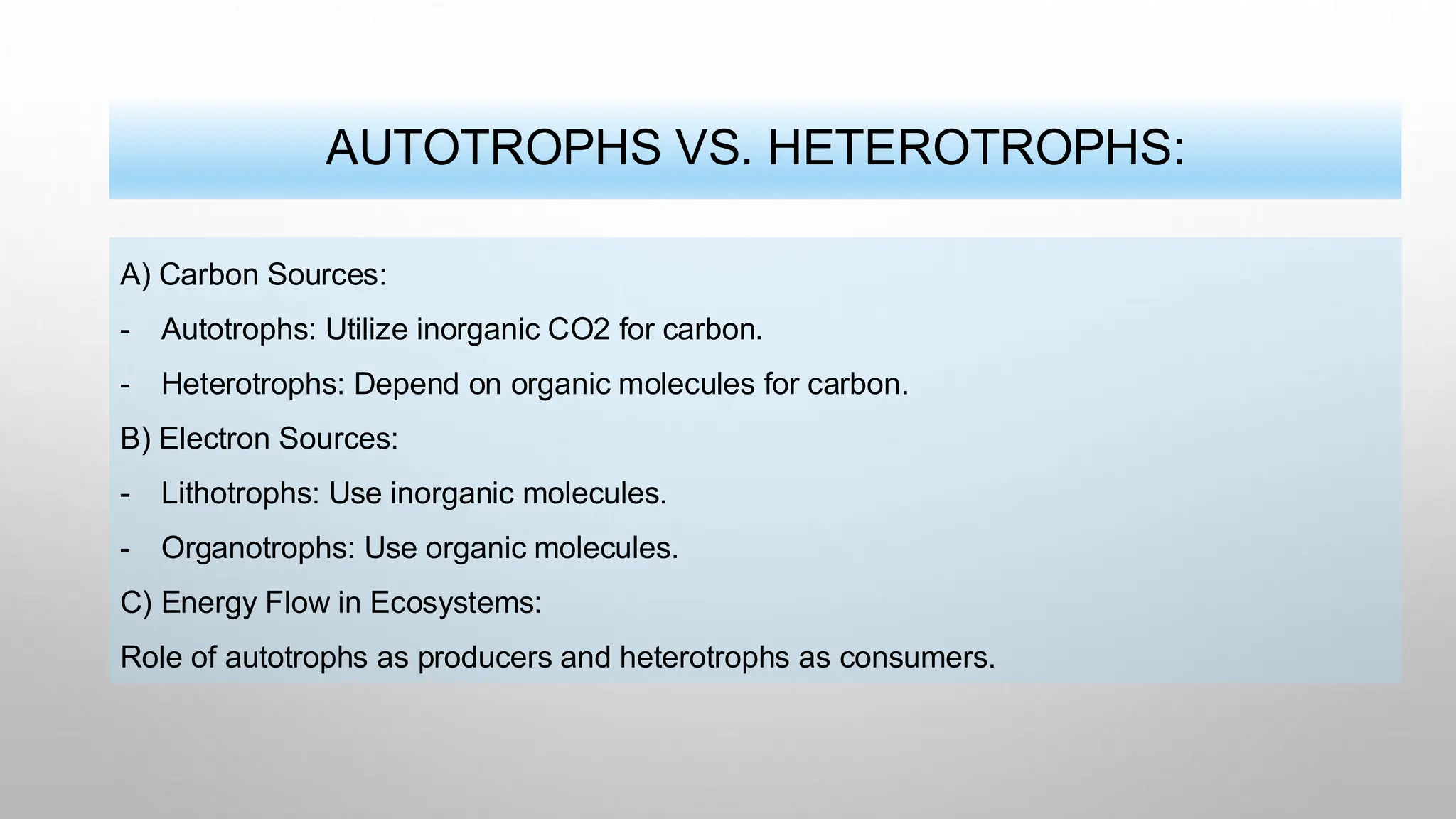
AUTOTROPHS VS. HETEROTROPHS:
A)Carbon Sources:
- Autotrophs: Utilize inorganic CO2 for carbon.
- Heterotrophs: Depend on organic molecules for carbon.
B) Electron Sources:
- Lithotrophs: Use inorganic molecules.
- Organotrophs: Use organic molecules.
C) Energy Flow in Ecosystems:
Role of autotrophs as producers and heterotrophs as consumers.
20.
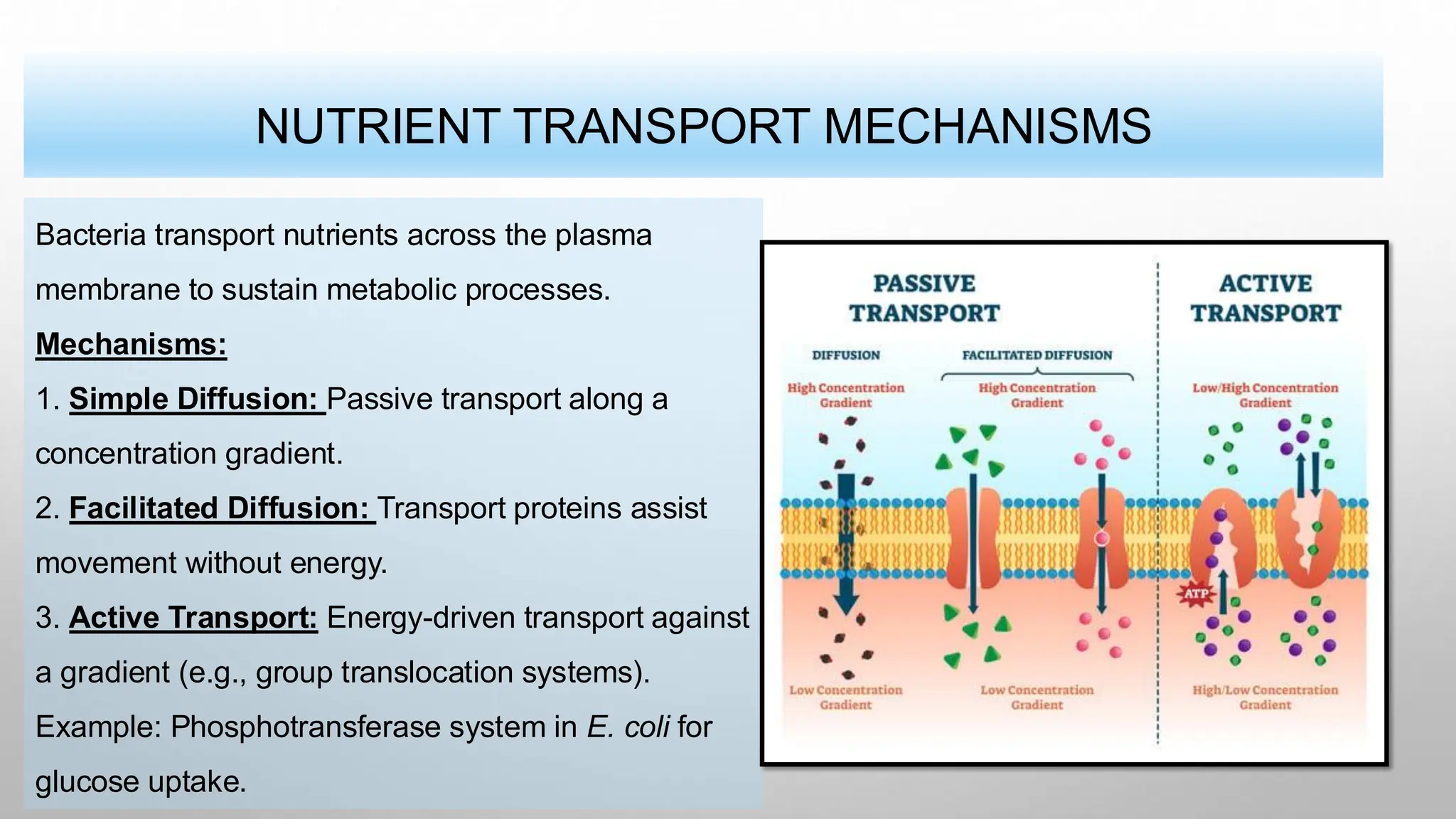
NUTRIENT TRANSPORT MECHANISMS
Bacteriatransport nutrients across the plasma
membrane to sustain metabolic processes.
Mechanisms:
1. Simple Diffusion: Passive transport along a
concentration gradient.
2. Facilitated Diffusion: Transport proteins assist
movement without energy.
3. Active Transport: Energy-driven transport against
a gradient (e.g., group translocation systems).
Example: Phosphotransferase system in E. coli for
glucose uptake.
METABOLIC PROCESSES OFBACTERIA
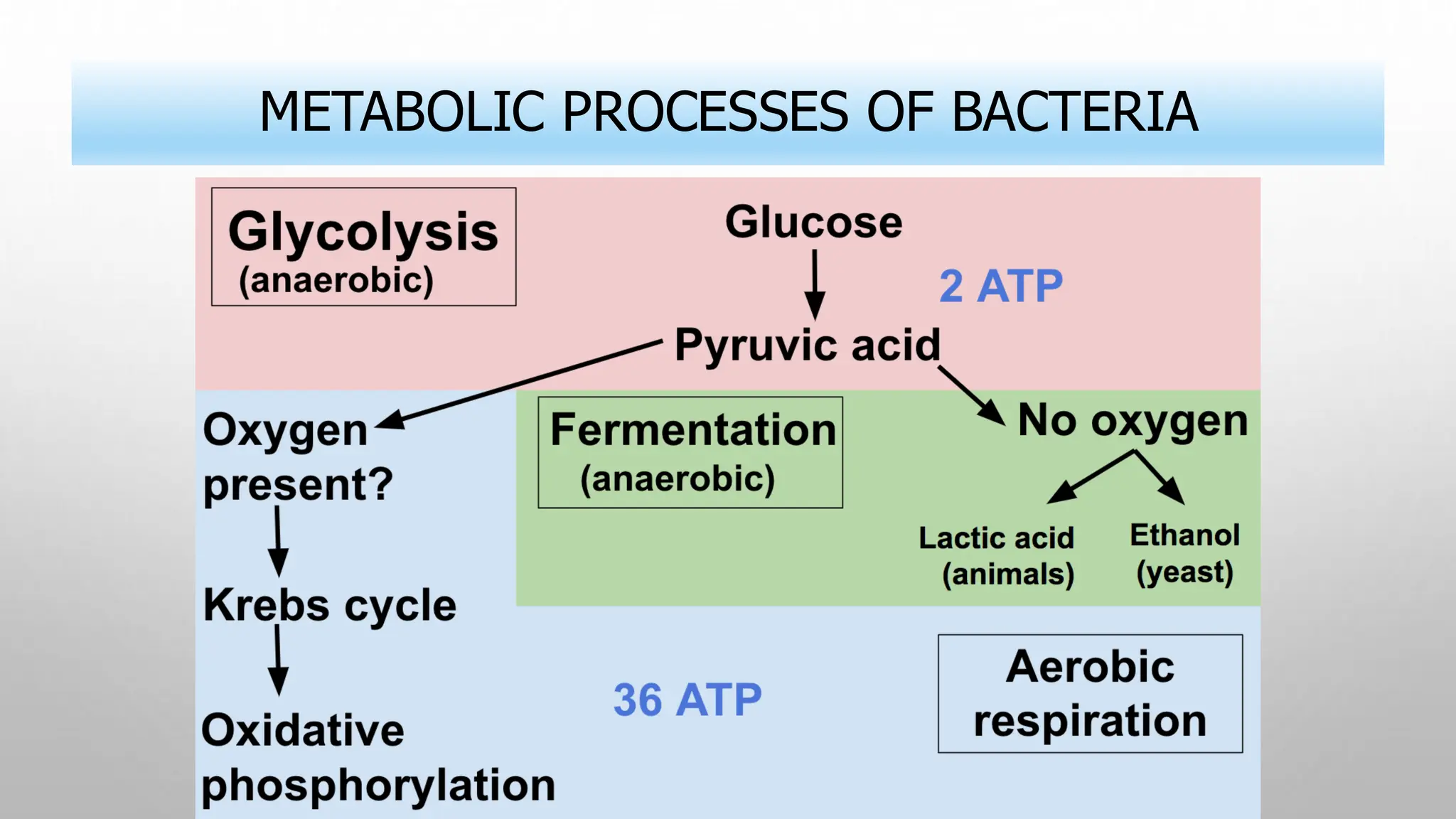
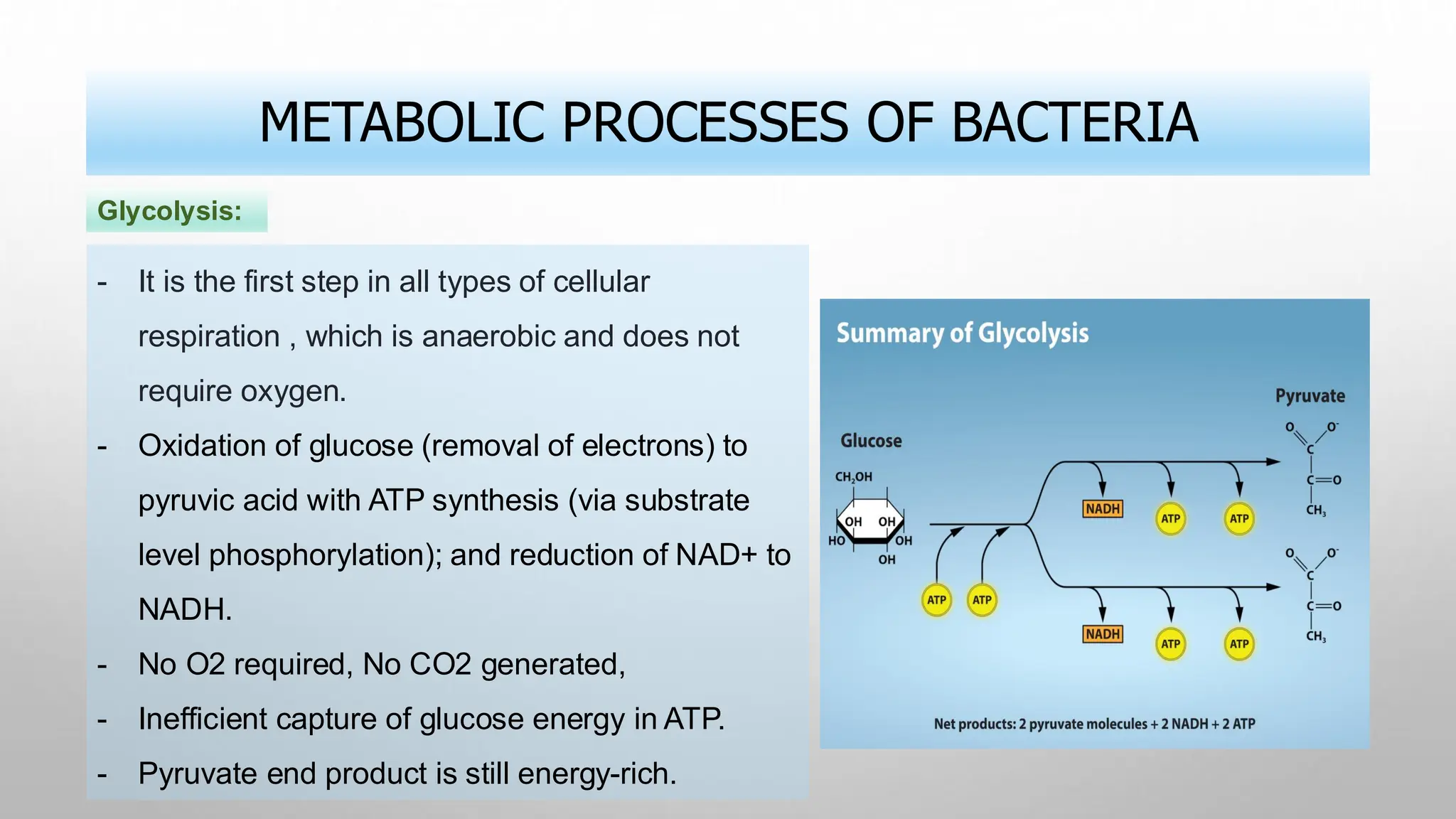
- It is the first step in all types of cellular
respiration , which is anaerobic and does not
require oxygen.
- Oxidation of glucose (removal of electrons) to
pyruvic acid with ATP synthesis (via substrate
level phosphorylation); and reduction of NAD+ to
NADH.
- No O2 required, No CO2 generated,
- Inefficient capture of glucose energy in ATP.
- Pyruvate end product is still energy-rich.
Glycolysis:
23.
METABOLIC PROCESSES OFBACTERIA
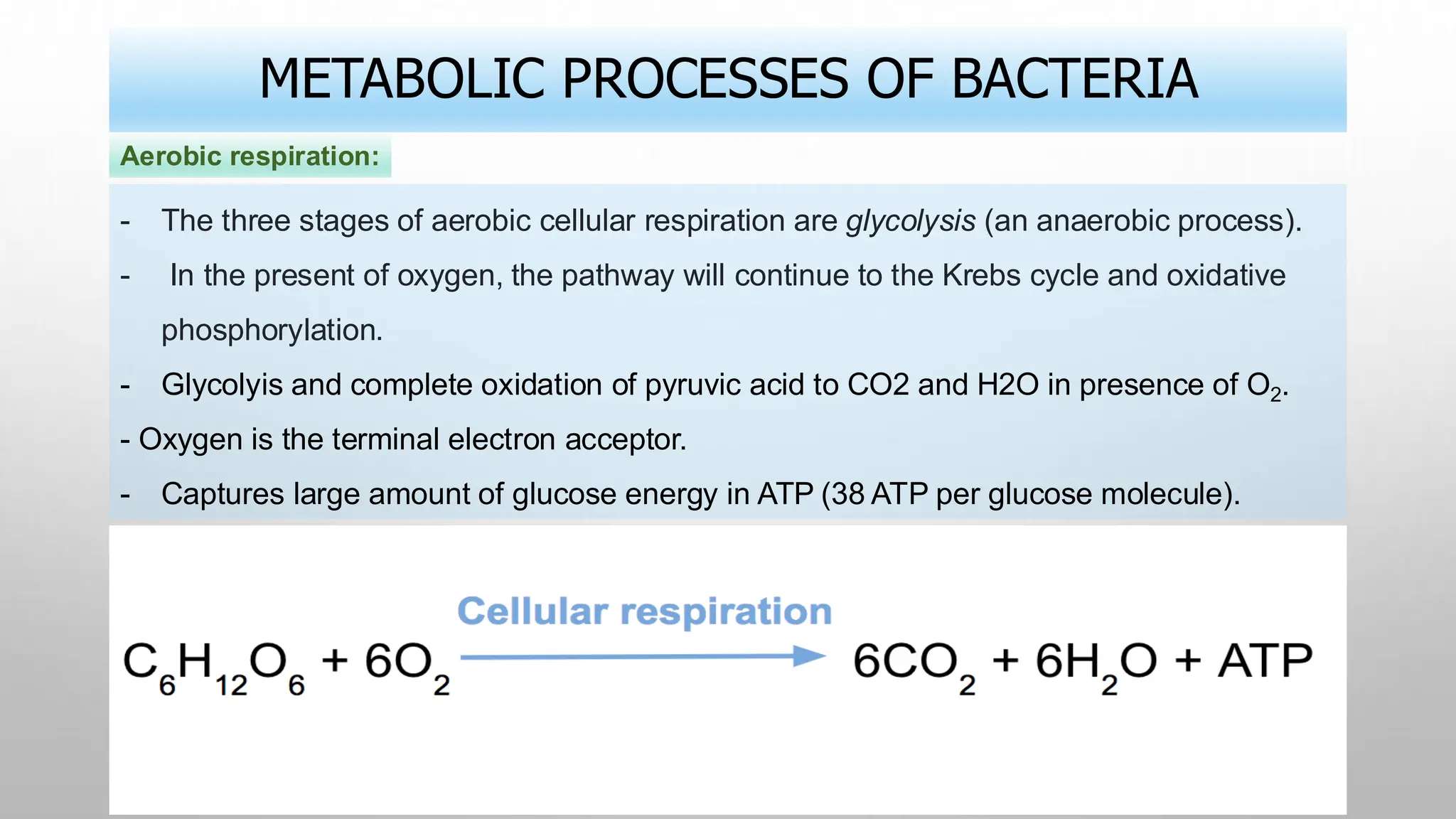
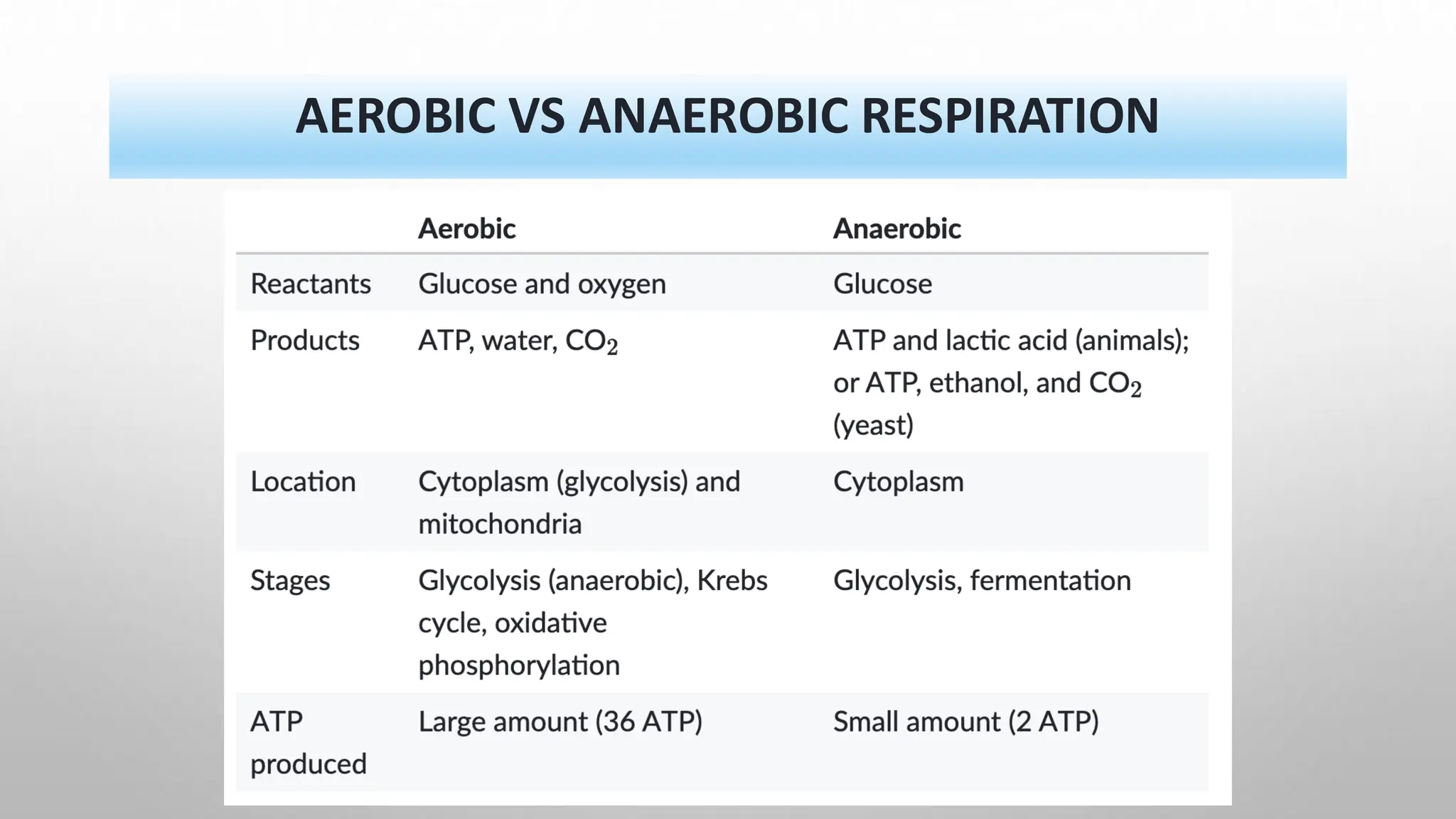
- The three stages of aerobic cellular respiration are glycolysis (an anaerobic process).
- In the present of oxygen, the pathway will continue to the Krebs cycle and oxidative
phosphorylation.
- Glycolyis and complete oxidation of pyruvic acid to CO2 and H2O in presence of O2.
- Oxygen is the terminal electron acceptor.
- Captures large amount of glucose energy in ATP (38 ATP per glucose molecule).
Aerobic respiration:
24.
METABOLIC PROCESSES OFBACTERIA
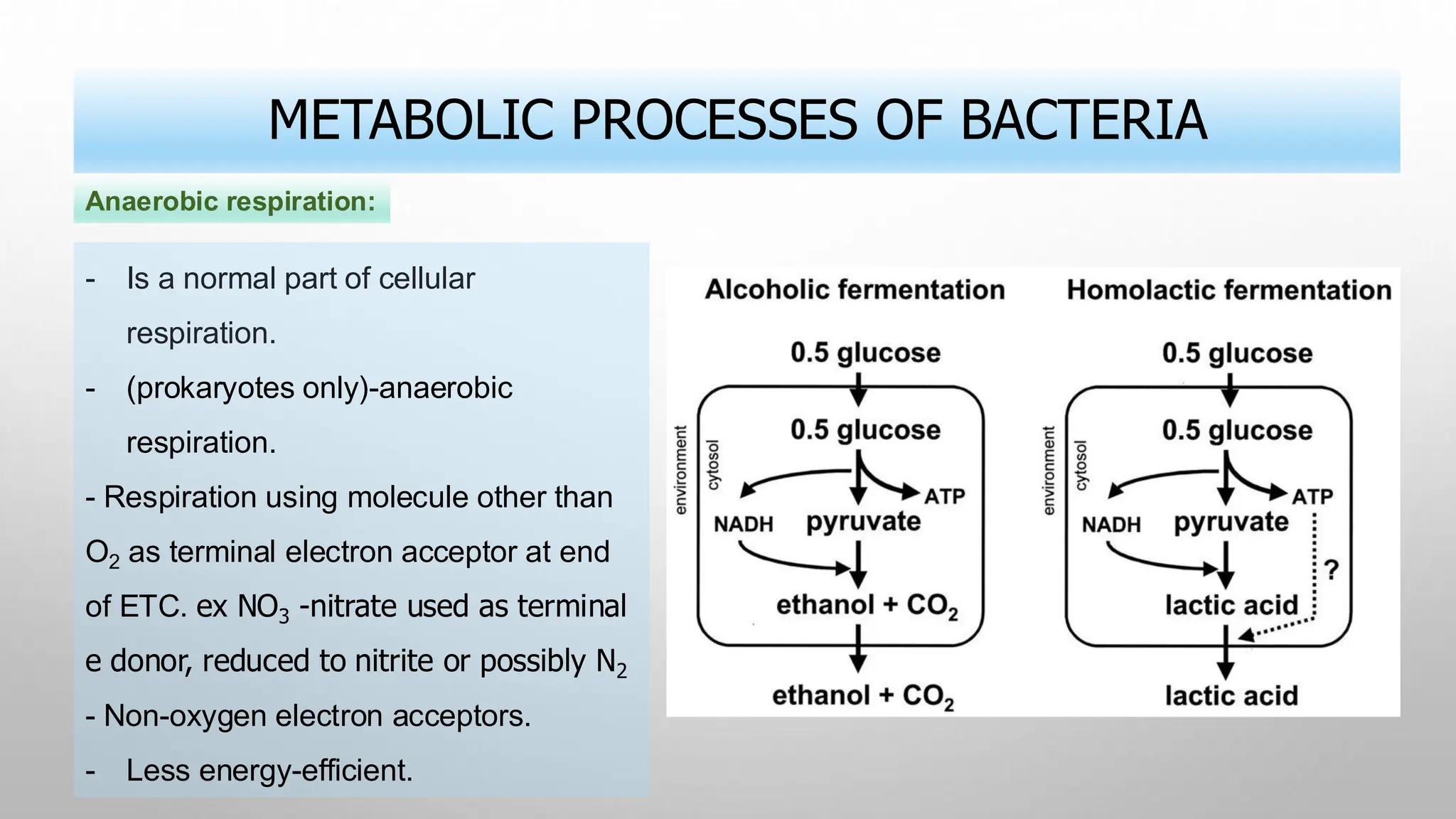
- Is a normal part of cellular
respiration.
- (prokaryotes only)-anaerobic
respiration.
- Respiration using molecule other than
O2 as terminal electron acceptor at end
of ETC. ex NO3 -nitrate used as terminal
e donor, reduced to nitrite or possibly N2
- Non-oxygen electron acceptors.
- Less energy-efficient.
Anaerobic respiration:
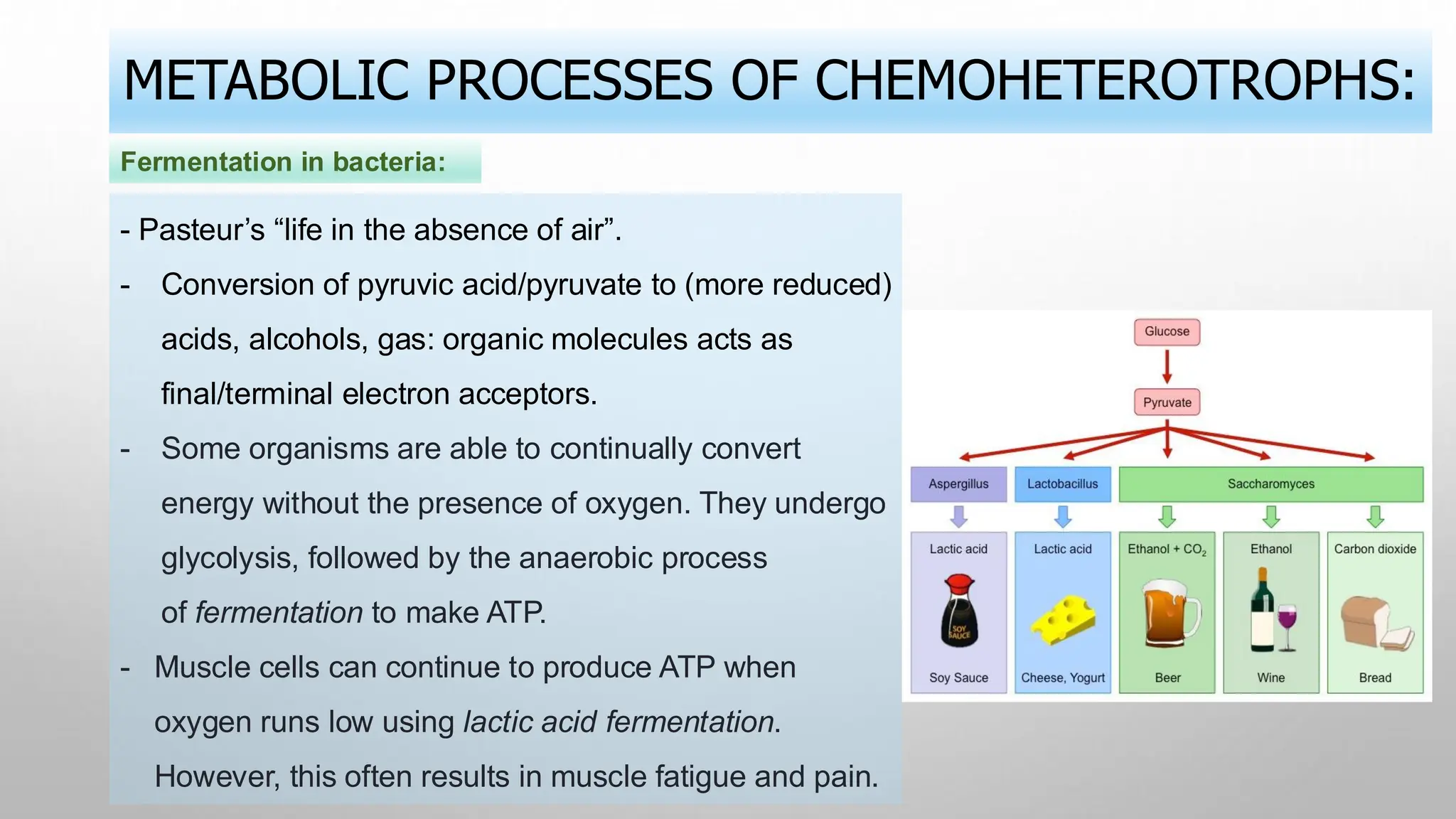
- Pasteur’s “lifein the absence of air”.
- Conversion of pyruvic acid/pyruvate to (more reduced)
acids, alcohols, gas: organic molecules acts as
final/terminal electron acceptors.
- Some organisms are able to continually convert
energy without the presence of oxygen. They undergo
glycolysis, followed by the anaerobic process
of fermentation to make ATP.
- Muscle cells can continue to produce ATP when
oxygen runs low using lactic acid fermentation.
However, this often results in muscle fatigue and pain.
METABOLIC PROCESSES OF CHEMOHETEROTROPHS:
Fermentation in bacteria:
27.
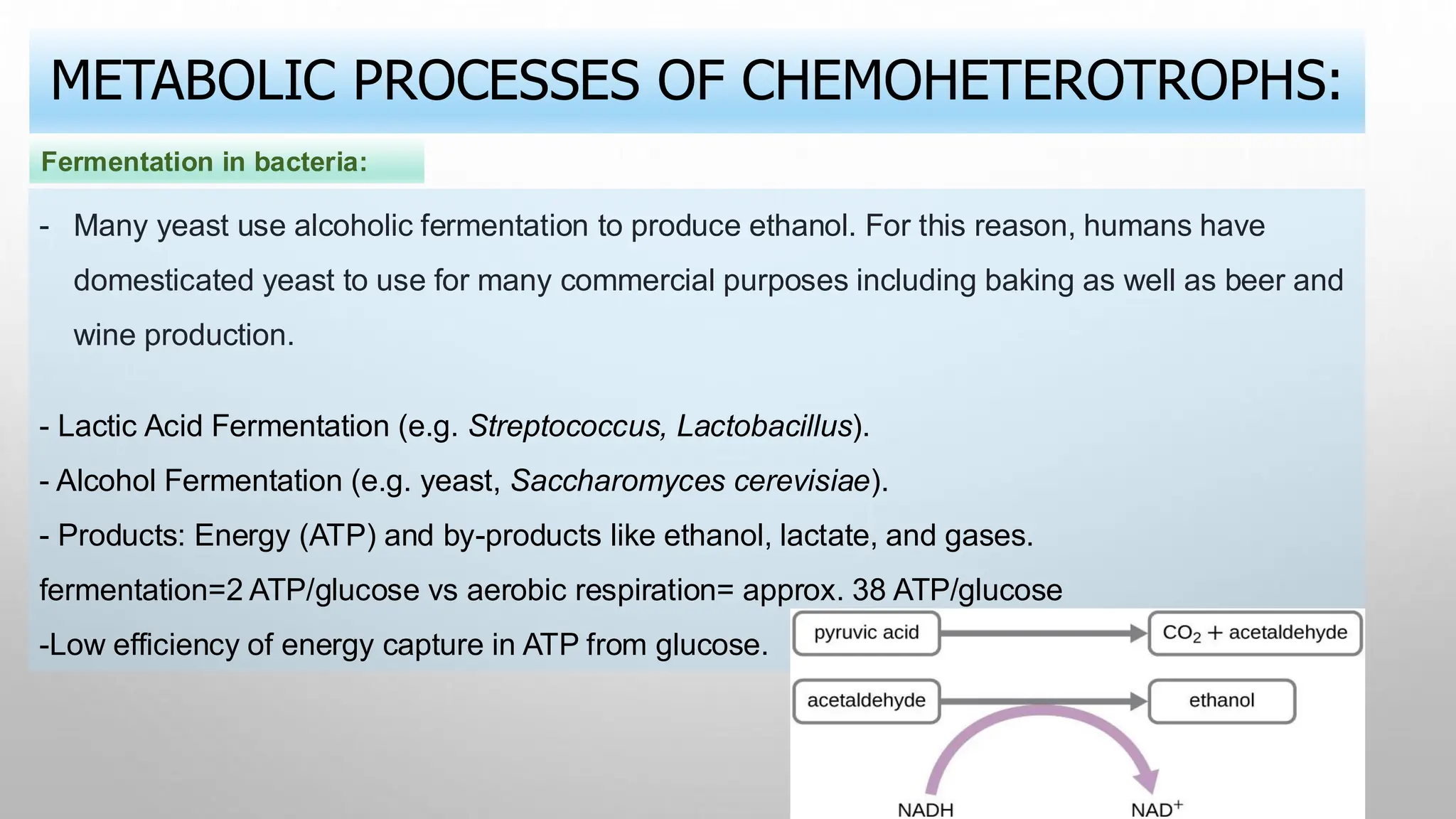
- Many yeastuse alcoholic fermentation to produce ethanol. For this reason, humans have
domesticated yeast to use for many commercial purposes including baking as well as beer and
wine production.
- Lactic Acid Fermentation (e.g. Streptococcus, Lactobacillus).
- Alcohol Fermentation (e.g. yeast, Saccharomyces cerevisiae).
- Products: Energy (ATP) and by-products like ethanol, lactate, and gases.
fermentation=2 ATP/glucose vs aerobic respiration= approx. 38 ATP/glucose
-Low efficiency of energy capture in ATP from glucose.
METABOLIC PROCESSES OF CHEMOHETEROTROPHS:
Fermentation in bacteria:
28.
PROBLEMS WITH
FERMENTATION
a. Highenergy waste products (lots of energy still stored in
endproducts)
b. End-products are frequently toxic (acids, alcohols)
c. Solution: respiration....
IMPORTANCE OF BACTERIALMETABOLISM
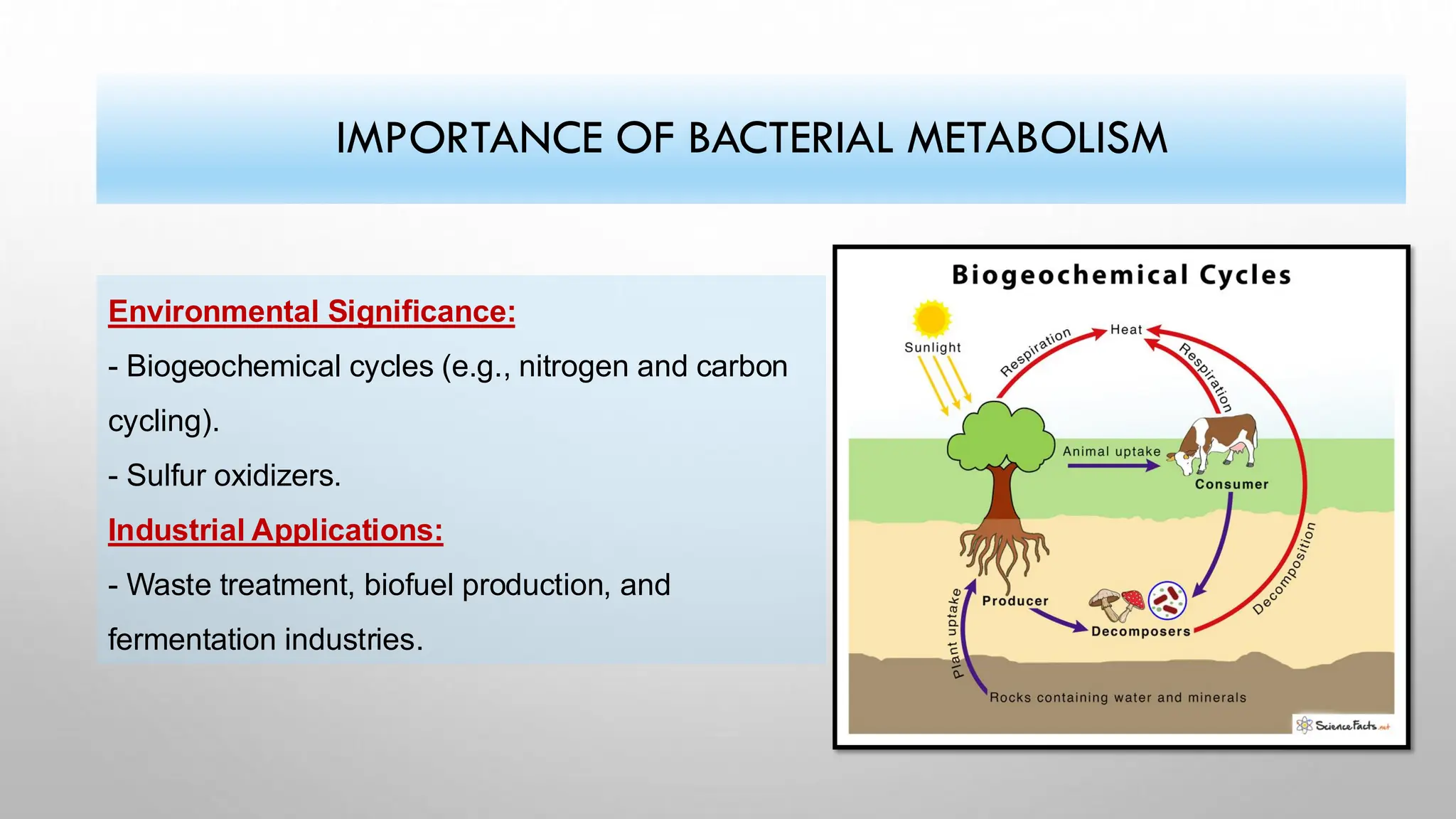
Environmental Significance:
- Biogeochemical cycles (e.g., nitrogen and carbon
cycling).
- Sulfur oxidizers.
Industrial Applications:
- Waste treatment, biofuel production, and
fermentation industries.
32.
IMPORTANCE OF BACTERIALMETABOLISM
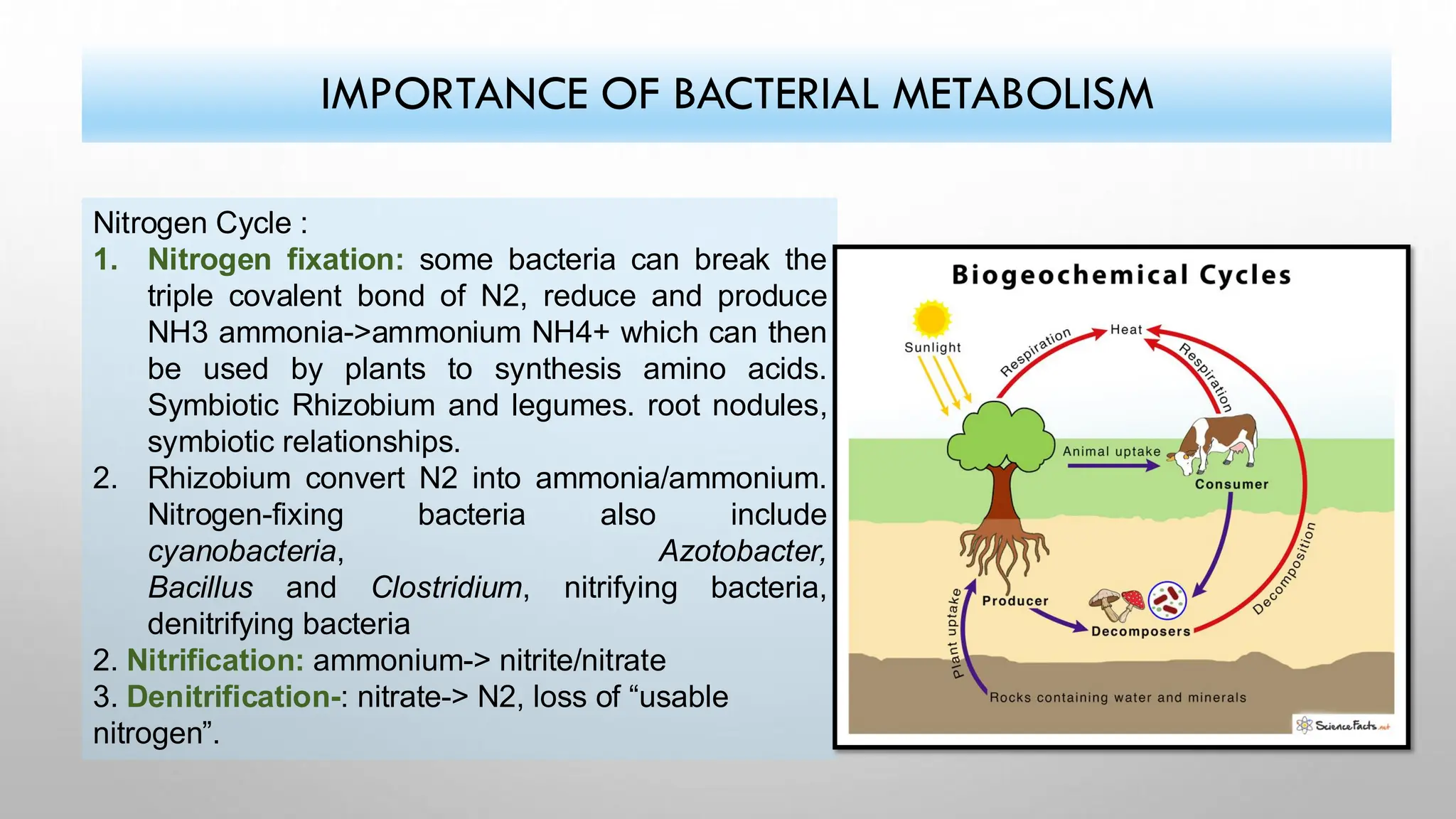
Nitrogen Cycle :
1. Nitrogen fixation: some bacteria can break the
triple covalent bond of N2, reduce and produce
NH3 ammonia->ammonium NH4+ which can then
be used by plants to synthesis amino acids.
Symbiotic Rhizobium and legumes. root nodules,
symbiotic relationships.
2. Rhizobium convert N2 into ammonia/ammonium.
Nitrogen-fixing bacteria also include
cyanobacteria, Azotobacter,
Bacillus and Clostridium, nitrifying bacteria,
denitrifying bacteria
2. Nitrification: ammonium-> nitrite/nitrate
3. Denitrification-: nitrate-> N2, loss of “usable
nitrogen”.
33.
REFERENCES
• 1. HOGG,S. (2013). ESSENTIAL MICROBIOLOGY, SECOND EDITION. WILEY-BLACKWELL.
• - SECTIONS RELATED TO BACTERIAL METABOLISM, NUTRIENT ACQUISITION, AND TRANSPORT
MECHANISMS.
• 2. ADDITIONAL SOURCES AND SCIENTIFIC ARTICLES SUPPORTING CONCEPTS IN BACTERIAL
METABOLISM AND NUTRIENT TRANSPORT.
• 3.HTTPS://BIO.LIBRETEXTS.ORG/COURSES/SACRAMENTO_CITY_COLLEGE/SCC%3A_BIOLOGY_440
_(CARBERRY-GOH)/BIO_440_MICROBIOLOGY_CHAPTERS/5%3A_BACTERIAL_METABOLISM